Politik, Kultur, Geschichte, Wirtschaft, Internet und andere Aspekte über den Süd-Kaukasus // Politic, Culture, History, Economy, Internet And Other Aspects About South-Caucasus // Re-Blogged & Posted By Ralph Hälbig
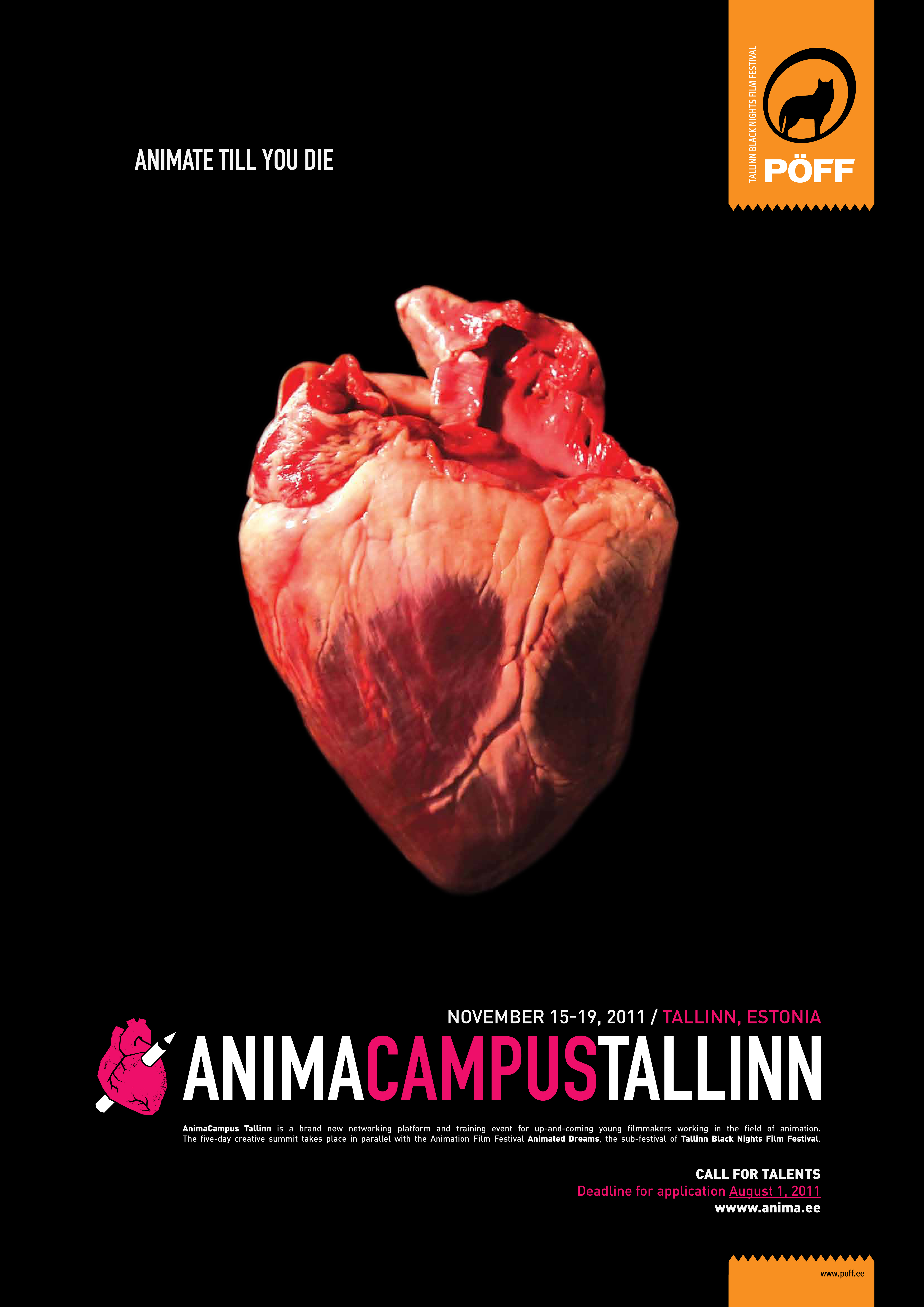
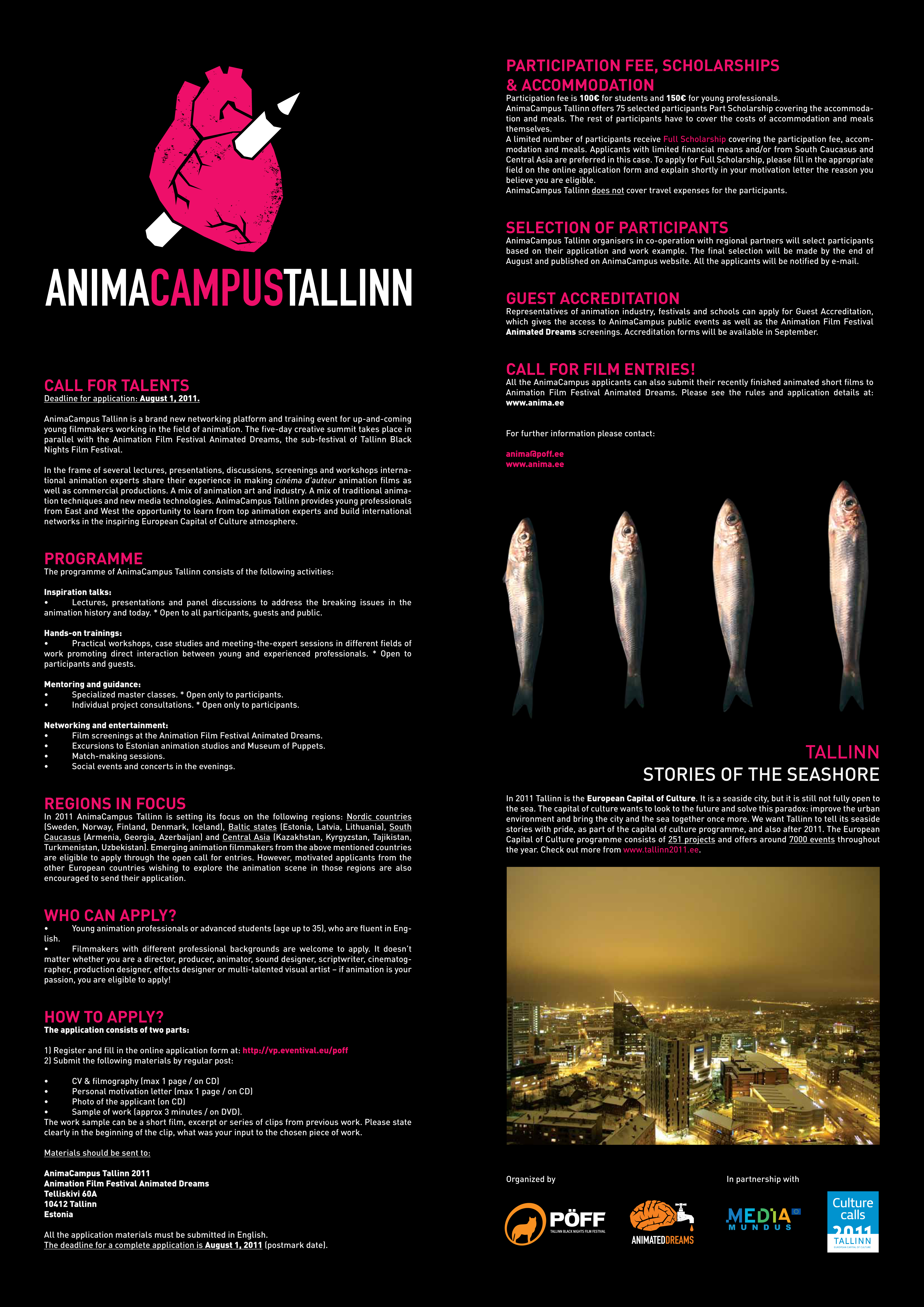
This year Tallinn Black Nights Film Festival and Animation Film Festival Animated Dreams in Estonia are launching AnimaCampus Tallinn, a brand new networking platform and training event for up-and-coming young filmmakers working in the field of animation. The five-day creative summit will take place in parallel with Animated Dreams in November. Our focus regions are: Nordic countries, Baltic States, South Caucasus and Central Asia. Info of the event is attached to the letter.
I red your blog and I was hoping that you might have some contacts of people/organizations related to animation from South Caucasus. I would be so grateful if you could share them.
Maybe you could consider publishing information about our event. Here is AnimaCampus information 2011.anima.ee
Thank you for a reply!
Kind regards Kairi Vihman Assistant/Editor of AnimaCampus Tallinn
Tallinn Black Nights Film Festival Telliskivi 60a, 10412 Tallinn, Estonia
The complexity of the challenges facing the Caucasus makes it a litmus test for Turkey’s new foreign policy. The region illuminates the strengths and weaknesses of “zero problems with neighbours”, as well as the need to encourage “zero problems between neighbours” in pursuit of Turkish interests. Turkey’s influence in the Caucasus provides a strong opportunity to help resolve the region’s political and security challenges. However Ankara’s recent efforts in the region have been largely unsuccessful, due to economic dependencies, domestic politics and the reality of regional geopolitics. Recent diplomacy in the Caucasus demonstrates that ‘zero problems with neighbours’ is not always a successful approach.
Alexander Jackson is Senior Editor of the Caucasian Review of International Affairs. He holds an MA in War Studies from Kings College London, with a focus on Caspian politics and security issues.
Hiermit lade ich Euch herzlich zur Vernissage am Donnerstag, dem 30. Juni um 15:30 Uhr in HAUS DER KÜNST MÜNCHEN (www.grossekunstausstellungmuenchen.de) ein ! ich werde dort 2 Arbeiten ausstellen.
Adresse:
Haus der Kunst München Prinzregentenstraße 1, 80538 München
Ich würde mich auf jeden Fall sehr freuen, wenn ich Euch dort wieder sehe!
we are currently looking for four participants (two male and two female) aged 18-25 and residing in Germany for the Youth Exchange 'European Youth after Dictatorships: Perspective from Today!' to be held in Georgia this automn. The planned dates are October 21-30. The project has been submitted to the Estonian National Agency for funding on 1st of June and a final answer will be given by the end of July. However, we are already looking for the group of participants !
Application deadline: June 30th 2011
Please feel free to forward this email to anyone who might be interested!
Kind regards Tiphaine Coulardeau
---
Youth Exchange European Youth after Dictatorship: Perspectives from Today!
October 21-30 2011
Venue : Kobuleti, Georgia
The youth exchange oeEuropean Youth after Dictatorship: Perspectives from Today will deal with historical heritage of authoritarian regimes in the perception of young people. The participants will reflect on the influence of their countries past on today´s life and if authoritarian thinking and structures are still determining nowadays daily and political realities. In the frame of the youth exchange its participants will debate and exchange impressions and ideas from countries with a authoritarian nationalistic, socialistic and fascistic past and elaborate on means to overcome the heritage of the past.
Therefore, a variety of non-formal educational tools such workshops, social theatre, and young people led workshops, feedback and evaluation sessions, cultural evenings organised by the participants, and local excursions will be integral parts of the project. A central element of the youth exchange is a visit to the European Union Monitoring Visit to Georgia during which the participants can see the impact of the past on today´s reality in Georgia. The project will gather 32 young people from eight countries in Kobuleti, Georgia.
Objectives:
- To encourage young people to reflect on the heritage of authoritarian regimes in Europe
- To share and discuss past and current historical developments in Europe
- To empower and motivate young people to take an active role in shaping Europe´s future
- To elaborate creative means of reconciliation and a peaceful living together of formerly opposing communities
Content:
Dealing with the Past
European History
Conflicts in Europe, particularly of the involved promoters´ countries
Role of youth in democratisation processes
Participants:
4 participants per organisation plus one group leader each / a total of 32 participants from 8 countries
Spain, Germany, Estonia, Hungary and Georgia, Armenia, Azerbaijan, Russia
Conditions:
As the project seeks funding by the Youth in Action Programme accommodation and food will be provided by the organizers. Travel costs to the venue and back will be covered 70%. The visa costs for entering Georgia will be covered 100%. Participation Fees: 16 EUR.
Applicants:
We are looking only for the participants representing Germany. Conditions: full residence in Germany, age 18-25, basic level of English, interest in the topic. Please send a CV in English to eif.germany@googlemail.com
mentionning the title of the project you apply for. Deadline for application: June 30th 2011
The project is at the phase of funding process and will take place only upon a positive answer of the European Commission for funding.
Von Géraldine Schwarz und Alexandre Ifi – ARTE GEIE / Berlin Factory Production – Deutschland 2011 Georgien bietet weißen Farmern aus Südafrika neues Land und eine neue Nationalität. Die Georgier wollen damit ihrer post-sowjetisch unterentwickelten Landwirtschaft zu nie gekannter Produktivität verhelfen. Und die Afrikaaners, die weißen Farmer aus Südafrika, finden in Georgien eine neue Heimat – fern von all den Ungewissheiten und den Bedrohungen durch die zögerliche Rückgabe des Landes an die Schwarzen Farmer.
Die Familie Venter ist aus ihrem verlorenen Paradies in Südafrika ausgezogen, zunächst in eine runtergekommene Wohnung mitten in Tiflis, als Zwischenstation auf ihrem Weg nach neuem Land. Sie sind überrascht von der Herzlichkeit der Menschen und von den mittelalterlichen Methoden der georgischen Landwirtschaft. Sie flüchteten vor den Morddrohungen ihres schwarzen Nachbarn in Südafrika, der nichts lieber haben wollte als ihr Land – aber die Regierung dort ist schwer in Verzug geraten mit dem Rückkauf des Weißen Landes für die Schwarzen – das schürt die Spannungen zwischen Schwarz und Weiß. Piet Kemp bewirtschaftet seine neue Farm bereits seit zwei Monaten mit ein paar Helfern, seine Frau und sein Enkel sind noch in Südafrika geblieben, wenn alles gut geht, kommen sie bald nach. Mit seinen 68 Jahren steht er ganz am Anfang eines neuen Lebens ohne Aussicht auf Frühpensionierung. Unsere Reporter haben die Familien Kemp und Venter in Südafrika und in Georgien besucht – zwei von 90 Afrikaanern, die auf Einladung der georgischen Regierung schon durch das Land fuhren auf der Suche nach einer neuen Heimat – 40 von ihnen sind seitdem ernsthaft interessiert und neun Farmer haben sich bereits entschieden, für immer nach Georgien zu ziehen.
+++
Georgien bietet weißen Farmern aus Südafrika neues Land und eine neue Nationalität. Die Georgier wollen damit ihrer post-sowjetisch unterentwickelten Landwirtschaft zu nie gekannter Produktivität verhelfen. Und die Afrikaaners, die weißen Farmer aus Südafrika, finden in Georgien eine neue Heimat – fern von all den Ungewissheiten und den Bedrohungen durch die zögerliche Rückgabe des Landes an die Schwarzen Farmer.
Die Kunstausstellung „3 x Heimat Kaukasus“ findet nun doch unter Teilnahme des georgischen Künstlerpaars Liana Nakashidzeund Mirian Japaridzestatt. Mit Erleichterung nahmen die Initiatorin der Ausstellung, die Gesellschaft für Ausgleich und Verständigung im Kaukasus, sowie ihr Vorsitzender Lothar de Maizière die erneute Zusage des georgischen Künstlerpaars zur Kenntnis. Im Vorfeld der Ausstellung waren die Künstler mehrfach in die georgische Botschaft bestellt worden. Offenbar waren sie unter Druck gesetzt worden. Am Montagabend hatten sie schließlich ihre Teilnahme abgesagt. Zur Begründung gaben sie private Bedenken an. Nach kritischen Medienreaktionen meldete sich die georgische Botschafterin in Berlin, Gabriele von Habsburg, bei Lothar de Maizière und signalisierte Unterstützung für die Schau.
Von Habsburg, selbst Bildhauerin und Kunstprofessorin, kündigte an, anlässlich der Ausstellungseröffnung am 29. Juni im Art Place Berlin im Hotel Park Inn am Alexanderplatzein Grußwort sprechen zu wollen. Daraufhin teilten die Maler Nakashidze und Japaridze der Kuratorin Friederike von Sehmsdorf mit, sich doch wieder beteiligen zu wollen (bis 15.8., Alexanderplatz 7, täglich 9 – 22 Uhr, Eintritt frei ).
Erklärtes Ziel der weltweit ersten gemeinsamen Ausstellung russischer, georgischer und abchasischer Künstler nach dem Fünf-Tage-Krieg 2008 ist es, den Dialog in der Kaukasusregion zu fördern. Die politische Situation ist nach wie vor angespannt: Nach einer Reihe vereitelter Attentate auf georgischem Boden hatte Tiflis Anfang Juni gedroht, die Genfer Vermittlungsgespräche mit Russland einzustellen.
"3 Times Caucasus" An showcase by artists from Russia, Georgia and Abkhazia Curator: Friederike Sehmsdorf
Once again the language of art is building a bridge between peoples - but this time too there were some difficulties to overcome.
The exhibition is an initiative of: "Society for reconciliation and understanding in the Caucasus" ("Gesellschaft fuer Ausgleich und Verstaendigung im Kaukasus e. V." / GAViK, Berlin).
The Caucasus as a melting pot of many cultures is one of the oldest cultural regions of the world. It is home to various ethnic groups. The artistic landscape of this region is just as varied and multilayered as the countryside of the Caucasus.
The exhibition brings together artists with different backgrounds and persuasions. It shows both, local works as well as works which deal with the international modernity.
Exhibition: June 30th - August 15th, 2011
Speakers at the opening: Lothar de Maiziére Former Prime Minister Chairman of the Petersburger Dialog e.V.
www.letuscook.destellt eine zweisprachige – deutsch-georgische Webseite dar. Hier
finden Sie verschiedenste Rezepte zum Nachkochen sowie Tipps und Tricks
für Anfänger und Kochliebhaber. Die Rezepte sind schrittweise
beschrieben und mit dazugehörigen Fotos unterstützt. Ich möchte Sie gerne dazu auffordern mir Ihre Rezepte und Bilder zu schicken. Ich hoffe, dass mit Hilfe von www.letuscook.de oder www.facebook.com/Letuscook.de ein interessanter Informations- und Meinungsaustausch zwischen den beiden „Sprachseiten“ zu Stande kommt. Ihre Meinungen, Vorschläge und Verbesserungswünsche sind sehr willkommen.
Ich stehe Ihnen für die Fragen gerne zu Verfügung.
Ich hoffe, www.letuscook.de gefällt Ihnen und inspiriert Sie und natürlich hoffe ich, Sie schauen öfters mal vorbei. Viel Spaß beim Nachkochen!
Translate in your Language
OAT Gallery and artcafe 144 stairs in Tbilisi
in old tbilisi
under the narikala fortress
- artcollection
- exhibitions and events
- home cuisine
- private dinners and parties
- guest studio for rent
Lohnenswert: Dokumentarfilm von Ruth OlshanWIE LUFT ZUM ATMENist eine Reise in ein kleines Land zwischen Asien und Europa, das zu unrecht zwischen den Grenzen der Kulturen vergessen wird: Georgien, das hier in seiner ganzen Schönheit, seinem Zauber und seiner Vielfältigkeit eingefangen ist. Der Dokumentarfilm von Ruth Olshan entdeckt vor allem die beeindruckende Musik Georgiens, in der die kulturelle Identität seiner Bewohner tief verwurzelt ist. In den fast verloren gegangenen und wieder entdeckten Gesängen und Tänzen, die die UNESCO auf die Liste des Weltkulturerbes gesetzt hat, meint man Stimmen und Lieder aus einer vergangenen Zeit zu hören.
Musik sei für sie so wichtig wie die Luft zum Atmen, erzählt eine Protagonistin im Film und man versteht sie sofort. Ruth Olshans vielschichtiges Porträt eines Landes, seiner Menschen und ihrer Musik zeigt, was das Besondere an der georgischen Musik ist: die Lebendigkeit der Folklore im Alltag, die aufrecht erhaltene Tradition, die in den Texten gespeicherten Mythen, das soziale Erleben der Musik, die regionale Unterschiedlichkeit der Kultur, und die Musiker, die die Musik heute auch in Pop- und Jazzbereiche weiterführen."Großartige Bilder, sympathische Protagonisten und schöne, unvertraute Musik!" (filmdienst)
"Ruth Olshan hat einen sehr feinen Musikfilm gemacht, der einen Ort 90 Minuten zum Klingen bringt" (zitty)
"Eine berückende Hommage an ein Volk, dessen große Kultur durchströmt wird von Gesang" (Rheinischer Merkur)
"Folklore kann ganz schön cool sein!" (Die Welt)
"Ein ‚Hit’ für musikbegeisterte Weltreisende im Kino!" (programmkino.de)
Ruth Olshan in her film portrays musicians who work with different approaches: a male choir searching and cultivating old folk songs in the Caucasus region, a female choir, a school dance company and musicians who enhance Georgian folk music. There is a common denominator that links the diverse protagonists in Olshan’s film: Singing, dancing and music are crucial elements of their lifestyle. Music is as important as “air to breath,” explains the director of the female choir . The subtle camera work discreetly catches moments and spontaneous encounters, showing that the rehearsals and the singing brings moments to these women where they are taken away from their normal course of life. For life in Rustavi, a small town near Tiflis, seems bleak. The industry is dead, the unemployment rate is enormous. You ask yourself how people can live. The choir women’s beauty and positive energy exude an affirmative sign of life, even in mournful moments. Men and women sing and dance both joy and sorrow off their chest. In Georgia, music seems to be omnipresent, almost existential. Even if a young singer does not think folk music is “sexy”, he still gets hooked. It gets under his skin. The film pays tribute to this fascination, vitality, and spiritedness.