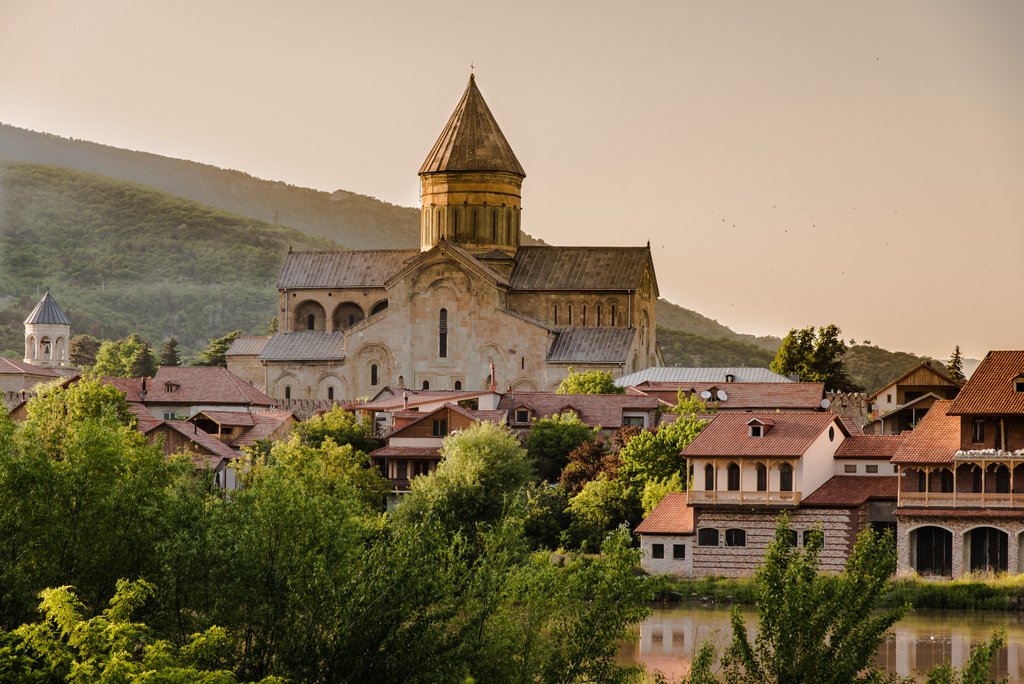
(haytoug.org) The petroglyphs, or rock engravings, of Ughtasar can be found all over Yerevan; they are inscribed onto silver jewelry, painted onto coffee cups, traced into hand-made pottery, and they adorn the walls of cafes. Reaching the actual petroglyphs of Ughtasar (“ught” meaning camel and “sar” meaning mountain, due to the resemblance of its peaks to the humps of a camel) can be a bit of a challenge, and as with most of Armenia’s noteworthy sites this provides half of the trip’s excitement and intrigue.
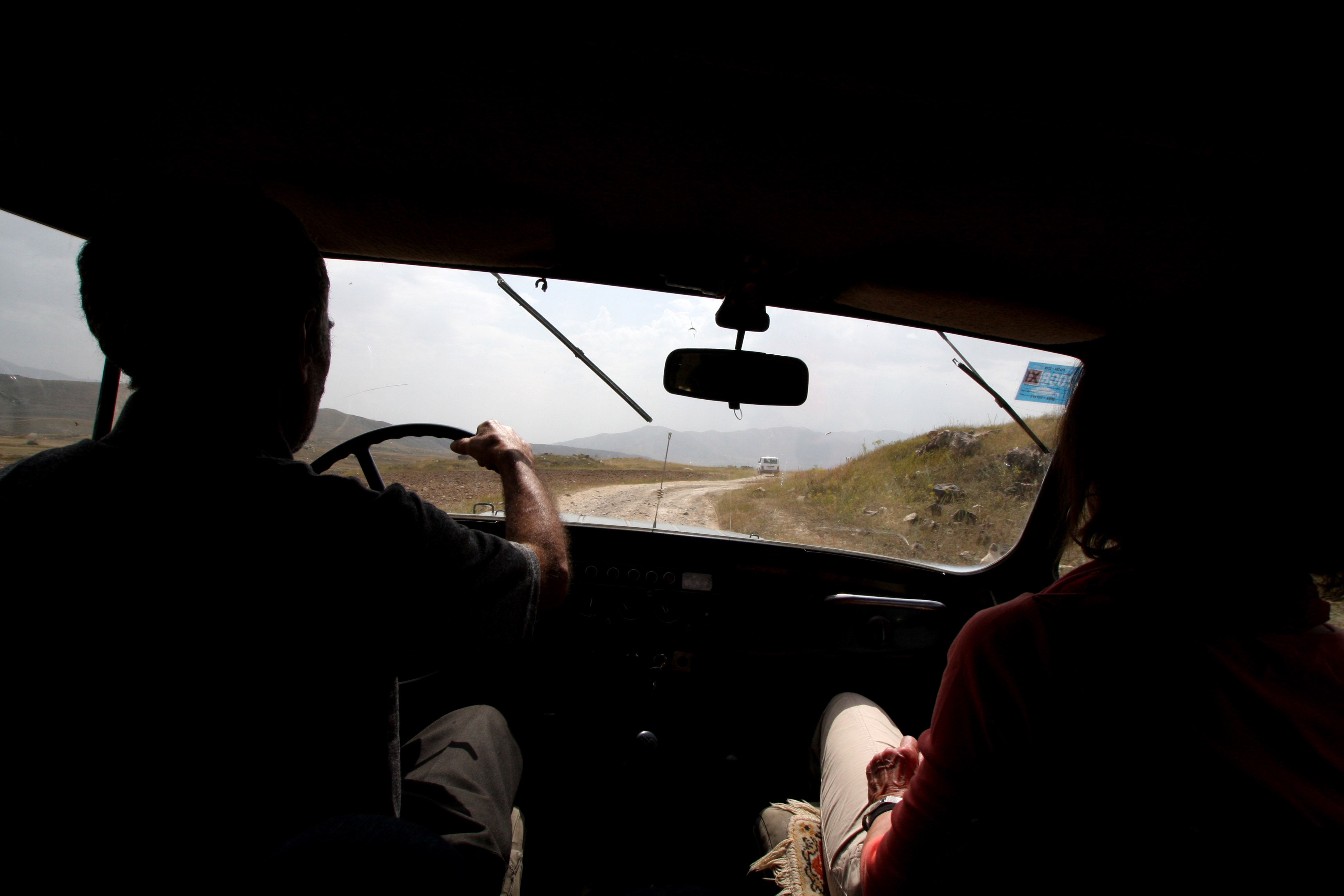 Located in the Syunik mountain range about 20 miles from Sisian in southern Armenia, the petroglyphs can only be accessed by an uphill climb in a Soviet-era UAZ. UAZ stands for Ulyanovsky Avtomobilny Zavod, or the Ulyanovsk Automobile Plant where the sturdy Russian 4×4 is manufactured. The trek up the mountain is much like riding Disneyland’s beloved Indiana Jones Adventure 200 times without stopping. Your slight, unassuming Armenian driver will be transformed into a superb navigator at the helm, maneuvering through ditches and over large boulders with ease as you bounce around the back of the UAZ desperately trying to absorb some of the pristine scenery without knocking your head against the window too many times. At some point after the first hour of driving you have no choice but to get out of the vehicle and continue on foot, as the road becomes too steep for even the tank-like UAZ to scale it with so many passengers. This is the part of the trip when some members of your party, possibly your father or mother, will start cursing the moment they agreed to come here with you in the first place; this was, after all, supposed to be a vacation.
After you pass the worst of it and can climb back into the car, it’s only a short drive to the lake and the petroglyphs at the top of the mountain. The first glimpse of the small, crystalline glacial lake makes the drive worth it, no matter how much you may have been knocked around: it is glass-like and still, providing a perfect mirror of the sky and the surrounding peaks, and over 2,000 decorated rock fragments extend to the foot of the mountain. If the sun is shining, the rocks glisten with a greenish iridescence. The petroglyphs, some believed to date back to the Paleolithic Era (12,000 BCE), are carved onto dark brownish-black volcanic stones left behind by an extinct volcano. Although the site was discovered in the early 20th century, it was not really studied until the 1920s and again in the late 1960s; it is still not fully understood today.
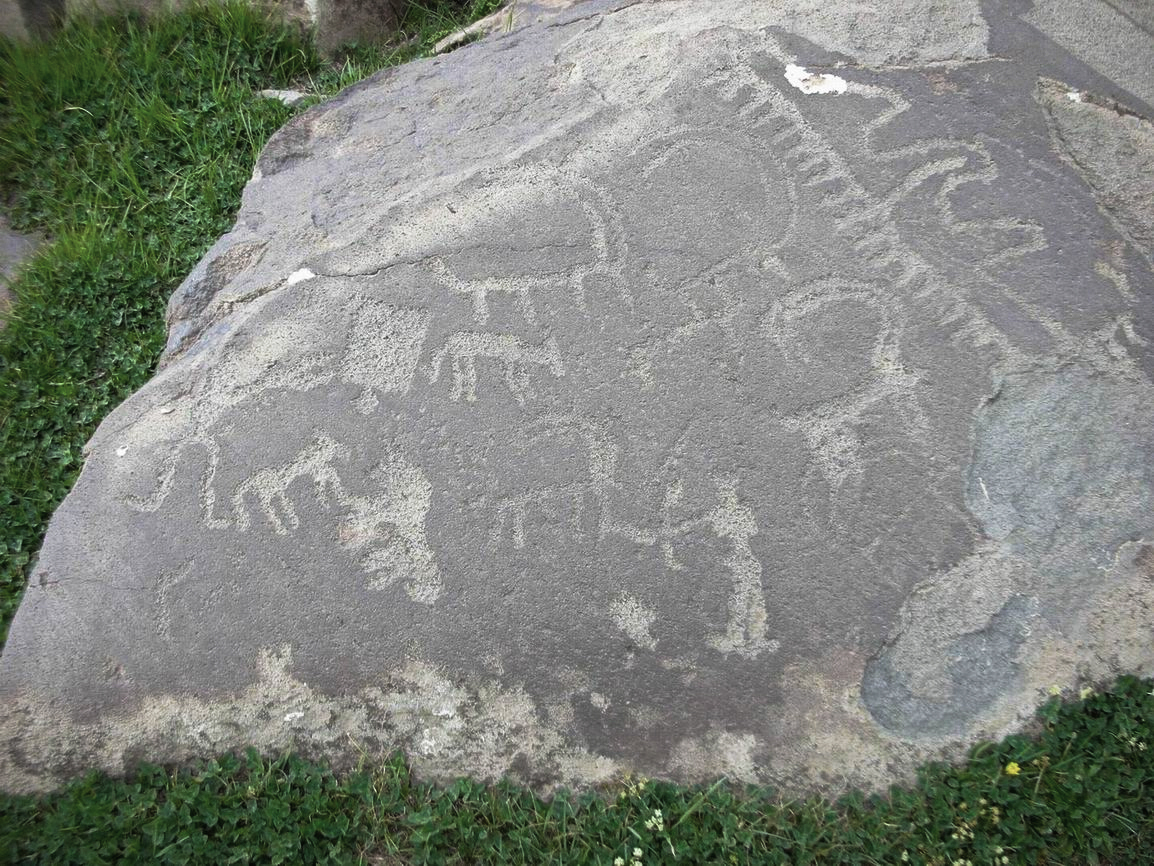 The carvings on the rock fragments depict hunting scenes, a wide array of animals, spirals, circles and geometric shapes, and even zodiac signs. Research suggests that the area served as a temporary dwelling for nomadic cattle-herding tribes, and studies of the rock carvings indicate that they were in use for hundreds of years, with peoples of later eras adding their ownengravings to the stones. According to the research of Hamlet Martirosyan, the pictograms of Ughtasar represent a writing system called “goat writing”.
Many scholars believe that this was due to the large number of goats drawn on the stones, but according to Martirosyan it is because in the ancient Armenian language, the words “goat” and “writing” were homonyms (words of differing meaning that sound the same). They would use these homonyms to express concepts through pictures, thus the abstract concept of “writing” (which in ancient Armenian can be expressed with words like “shar” – arrange, “sarel” – compile, “tsir” – a line) found its reflection in the representation of a goat (“zar”), because the words for “writing” and “goat” sounded the same. As English speakers, we can think of it as representing the pronoun “you” with a picture of a ewe (a female sheep). Goats are a prevalent theme on the stones, possibly because the word “dig” in ancient Armenian meant goat and was close enough to “diq,” the ancient word for gods. By combining abstract signs with the images of animals and people in horizontal or vertical rows, prehistoric engravers were able to convey specific messages.
The true beauty of Ughtasar lies in its seemingly untouched nature. You won’t find traces of khorovadz (barbeque) fires next to the lake or trash sprinkled among the rocks; there isn’t a visitor center selling mugs and postcards; there are no tour guides hounding you to listen to the history of the petroglyphs. You are free to roam the mountainside and sit among the prehistoric graphic expressions, pondering what might have caused ancient Armenians to scale the uninviting peaks and leave their mark. At about 10,500 feet above sea level, the air is some of the cleanest you’ll breathe in Armenia outside of a climb to the top of Mount Aragats, Armenia’s highest point. Due to its elevation the climate is always crisp and patches of snow speckle the mountain year-round.
Today, the mountain perch hosts annual spiritual gatherings and retreats. Surrounded by the marks of peoples past, modern visitors partake in the same natural beauty, serenity, and mystery that the lake has provided for thousands of years.
When you finally reach Sisian again after practically tumbling down the mountainside, you feel like you’ve just returned from a trip to the moon or some equally far-flung and unreachable place. You feel as if you’re waking from a dream, a dream whose constant jerking scenery caused you to fall from your bed, hitting your head a few times along the way. You are left with some amazing bruises to help you recall it instantly for days to come.