Showing posts with label CCAT. Show all posts

Tuesday, April 08, 2014

ART: GeoAIR Bulletin #1, 2014 from Tbilisi/Georgia (geoair.blogspot.de)

GeoAIR
RESIDENCY: January-March 2014

January-February
Sezgin Boynik and Minna Henriksson (Finland) stayed for two months in Georgia. Activities implemented by them in the framework of GeoAIR residency included: Presentation by Minna Henriksson - Art and Power @ CCA-Tbilisi 14.01.2014; Public Lecture “Nationalism and Contemporary Art” - 23.01.2014 @ Ilia State University. SEE VIDEO; Presentation by Sezgin Boynik - "History and Forms of Situationist International" @ CCA-Tbilisi 29.01.2014

Additionally, presentation of works by Sezgin Boynik and Minna Henriksson created during their stay at GeoAIR residency took place at Nectar Gallery 26.02.2014. Minna Henriksson presented the newspaper Golden Dragon and Silver Star - New Georgia: Change of Symbols after the fall of the Soviet Union as a result of an art workshop around the topics of power, politics and symbols and in a collaboration with CCA-Tbilisi. Sezgin Boynik presented his publication ‘Still Stealing Steel: Historical Materialistic Study of Zaum’. Still Stealing Steel is ideological diary which attempts to theorize zaum as an indispensable political language, and experimenting on ways how to conceptualize the use-value of such expressions. >>>

The residency stay at GeoAIR was supported by the Arts Promotion Centre Finland.

March
Oleksandr Burlaka's (Ukraine) practice as an architect questions and studies the role, ideology and responsibility of architects today. Oleksandr has been contributing to Soviet Modernism 1955-1991: Unknown History published by Vienna Centre of Architecture, where he was responsible for research and collecting materials on that topic. During his residency together with GeoAIR, Oleksandr worked on the mapping of Soviet Modernist buildings in Tbilisi. As a result, online map with visual material will be published. >>>

Also, Oleksanrd Burlaka participated in public discussion organised by GeoAIR and Docomomo Georgia with the topic: "Laguna Vere" and forgotten architecture "Monuments" of Soviet Modernism."

Residency was part of program organized in the frame of the EU project SPACES. The SPACES project is financed by the European Union through the Eastern Partnership Culture Programme. 


RESIDENCY: April-June 2014 (upcoming)

April
Levente Polyák - KÉK (Hungary), Šárka Svobodová and Jaroslav Sedlak - 4AM (Czech Republic) in collaboration with  GeoAIR will work on a project VCEE (Vacant Central and Eastern Europe). For this we organize 10-Day workshops in Tbilisi. The Vacant Central and Eastern Europe project follows the project VAC (Vacant Central Europe) initiated in 2013 by KÉK -Hungarian Contemporary Architecture Centre. It aims to address the problem of vacancy by mapping empty properties, by researching planning instruments, architectural tools and by exchanging experiences and strategies of intervention that make the temporary use of empty properties and their conversion for another use possible. >>>

Residency and workshop are part of program organized in the frame of the EU project SPACES. The SPACES project is financed by the European Union through the Eastern Partnership Culture Programme.

Geraldine Paoli (Morocco, France) - artist, curator, founder and director of PALIMPSESTE.
During her residency, together with GeoAIR Geraldine Paoli will work on the conceptual framework and possible participants from Georgian side for an upcoming project for 2015 "Resonants Confluence".

Residency is supported by French Institute of Georgia.

May-June
Though the collaboration with AIRLAB at Tirana Institute for Contemporary Art (TICA), Albanian artist Donika Cina will have a residency stay at GeoAIR. She was invited specially to participate in the project "Discover Eliava Market". The project sets the goal to demarginalize micro space of the street market and draw attention of the society to the issue of reduction of negative impact on environment, as well as effective use of resources (among them energy resources) through cultural intervention, establishment of a dialogue between different social and professional groups of the society and support of the experience sharing. she will work on and develop the project together with Georgian artist.
The project "Discover Eliava Market" is implemented in the frame of EC funded (cultural program) project Green Art Lab Alliance (GALA).

TICA AIRLAB is supported by Prince Claus Fund, Network Partnership Program.


RESIDENCY EXCHANGES

AIRLAB at Tirana Institute for Contemporary Art (TICA) will host Georgian artist, Keto Logua within their yearly theme: Storytelling as artistic practice.
TICA AIRLAB is supported by Prince Claus Fund, Network Partnership Program.
GeoAIR collaborated with TICA AIRLAB in selection process of the artist from Georgia. In exchange, Albanian artist is participating in GeoAIR residency program.

K.A.I.R will host Georgian documentary film maker Ana Tsimintia for two month residency in Košice, Eastern Slovakia (June and July 2014). In the frame of European Capital of Culture the NGO Košice 2013 is running an international Artist-in-Residence-program for the artists from all over the world and out of all artistic disciplines and expressions. Open call and selection was organised as a collaboration between K.A.I.R and GeoAIR.


COLLABORATIVE CULTURAL PROJECTS

February, 2014 - GeoAIR started the project "Cooking Imaginations - Tbilisi Migrant Stories", which addresses the issue of migration, foodways and public space in Tbilisi, as well as the practice of interdisciplinary collaboration in contemporary art. Intensive fieldwork will be followed by public cooking events, international residencies and other activities addressing topics within the project >>> 
The project is supported by Prince Claus Fund.

February 14-16, 2014 - In the framework of SUPERMARKET 2014 – Stockholm Independent Art Fair GeoAIR presented itself in collaboration with artist run Gallery Nectar.
Nini Palavandishvili from GeoAIR participated in panel discussion with a topic: Life Beyond Budgets – a panel discussion about alternative financial strategies. >>>

March 26-30, 2014 -
Sophia Lapiashvili from GeoAIR took part in the Partner Forum of Tandem /Shaml project in Tunis.  It is a program for cultural exchange between Europe and the Arab-Mediterranean region, started in partnership with MitOst (Germany), Al Mawred Al Thaqafy – Culture Resource (Cairo) and Anadolu Kültür (Istanbul). Tandem Shaml offers eight cultural organisations based in Germany and other European countries (incl. Turkey and Georgia) a unique opportunity to establish long-term cooperation links with partner organisations from the Arab countries across the Mediterranean.

The programme is supported by the Robert Bosch Stiftung, Stichting DOEN and Mimeta.


ARCHIDROME – CONTEMPORARY ART ARCHIVE AND DISCUSSIONS

24.03.2014 @ Club Frontline Georgia GeoAIR and Docomomo Georgia organised public discussion: "Laguna Vere" and forgotten architecture "Monuments" of Soviet Modernism"

During recent period we have been systematically witnessing functional and aesthetical impoverishment of city of Tbilisi. Hence, losing uniquely preserved city’s recreational spots and significant architectural buildings/constructions dating from the Soviet era. One of the symbols of Soviet Georgian modernist architecture, the Swimming complex "Laguna Vere" might be facing the same threat by becoming a victim of the tendency. >>>

Discussion was realised in the frame of the EU project SPACES.
This project is funded by the European Union through the Eastern Partnership Culture Programme.

Sincerely yours, GeoAIR team.
Inline image 1


www.geoair.blogspot.com

Saturday, August 31, 2013

ART: Publication 1st Tbilisi Triennial. Offside Effect. Out Now. (metropolism-webshop.com)

Offside Effect(metropolism-webshop.com) Over the last decade, art education has been confronted time and again with neoliberal thought and attitudes. Although the debate on artistic research demands space for a free artistic space for thought, it also seems necessary now to raise the question regarding the potential of educational platforms outside the Bologna rules.
The 1st Tbilisi Triennial (Offside Effect, Tbilisi 2012), curated by Henk Slager and Wato Tsereteli, concentrated on this specific issue. In a forum-like display system, a number of keynote artists (among others Anton Vidokle, Stephan Dillemuth, Marion von Osten) and lecturers in collaboration with their students from a dozen of experimental academies from all over the world presented their strategic ways of working.

CCA Tbilisi served as the base for the 1st Tbilisi Triennial. On the outside wall of CCA, Marion von Osten created a statistic mural connecting education, migration, and debts. Frankfurt's Staedelschule realized the Crypt-bar for screenings, readings, drinks and inter-disciplinary relaxation. F+F (Zurich) developed the Unexpected Sites Effect project that transformed the neo-liberal 'living from art' into a free 'living for art'. In Mildred's Lane's (New York) living room situation visitors were invited to actively participate in a research project pointing to a revolutionary, rigorously rethinking of the contemporary art complex. Across from the CCA building, in the Vladimir Kurtishvili Memorial House, the atmosphere was more contemplative: the Maumaus program (Lisbon) reflected on a number of parameters significant for contemporary art practice.

The presentations in the Literature Museum were mainly discursive or even counter-discursive. Kaywon College (Young June Lee, Seoul) focused on a reversed educational practice. Kadir Has University's (Inci Eviner, Istanbul) performative project Acting in the Library revealed the discursive domain of archiving and descriptive knowledge. CCA Tbilisi's Informal Masters Program (Wato Tsereteli, Katharina Stadler) engaged in an exploration of exporting creativity to non-art contexts. Annette Krauss (MaHKU Utrecht) organized a test-site in the form of a para-educational department directed towards the significance of 'unlearning'.

Two context-specific case studies were presented on the second floor. One presentation dealt with the situation of the colonial adoption of art education in Africa and the significance of informal institutes for developing an alternative discourse departing from Addis Contemporary (Lucrezia Cippitelli). Another presentation by the doctoral program of the Finnish Academy of Fine Arts (Jan Kaila, Sami van Ingen) demonstrated how an art university could give an idiosyncratic interpretation of artistic freedom by giving shelter to vulnerable image productions.

For the Georgian National Museum, a clean display system was based on the vernacular architecture and its inherent curatorial logic. Rene Francisco (ISA Habana) showed documentary work related to his Pedagogia Pragmatica workshops taking place outside the art academy in Havana's urban landscape. Tiong Ang's Pavilion of Distance project (MaHKU, Utrecht) was initiated as an experimental platform to pursue a collective artistic production. Stephan Dillemuth (Munich) translated the lecture The Academy and the Corporate Public in an installation drawing attention to issues such as bohemian research and squatted institutional spaces.

The venue Europe House mainly showed archiving presentations. Some presentations gave a survey of various experimental education platforms such as the documentation of Anton Vidokle's unitednationsplaza project, a display of the curricular structure of the experimental seminar program of ICA Yerevan (Armenia), and the activities of Visual Culture Research Center (Kiev) shown in the logic of an application form. Other presentations showed documentation of the various Tbilisi Triennial workshops, such as Sarah Cowles' Ruderal Academy Project, Nedko Solakov's Selling & Buying, and Rainer Ganahl's Reading Lenin's Imperialism. Also in Europe House, Tara McDowell (San Francisco) lectured weekly on the topical meaning of historical models of alternative academies.

Previous to the Triennial's opening, the above sketched ideas, perspectives, and strategies were presented and discussed in a two-day forum in Tbilisi's Goethe Institute. Critical referents were Irena Popiashvili (Tbilisi) and Mick Wilson (Gothenburg).

The editorial logic of the Offside Effect publication follows the line-up of presentations, workshops, and seminars. The publication's ultimate goal is to not only document the 1st Tbilisi Triennial, but to also incite further diagnoses and developments in the debate on current art academies and their contexts.

Editor: Henk Slager
Final Editor: Annette W. Balkema Design: Joris Kritis
More information
This publication was also made possible by the support of the Utrecht School of the Arts, the Mondriaan Fund and the Tbilisi Embassy of the Kingdom of the Netherlands.

Tuesday, May 14, 2013

SPACES: “Travelling Foodways. Betlemi Quarter Stories” (geoair.blogspot.de)

GeoAIR

(geoair.blogspot.de) May 17th 2013, Betlemi Quarter, Tbilisi
17:00-21:00

Betlemi Quarter is a very old historical part of Tbilisi, where people of different ethnic groups lived throughout years. It was revitalized by ICOMOS Georgia and local community. Project addresses the issue of displacement and “migrants’” lives through transforming their household and foodways in the engaged artistic works, transforming their stories and private space into public. During the project we worked with people of three different ethnic groups, which have been living in Betlemi Quarter for generations - Greeks, Armenians and Jewish. 

It is a popular understanding that Tbilisi has been multi-cultural ever since its existence and people of different ethnic and cultural backgrounds have lived here in peace. This might be referring to 'the traditional groups' living in here, but again recent changes in the history, political developments and gentrification processes show active displacement of these ethnic groups to outskirts of the city, for example Kurds are almost invisible in their original place. 

Foodways have always been an important aspect of one's identity, as well as crucial for the communication between people. Hence, with the project of cooking food linked to their ethnic identity, as well as telling stories and serving it publicly, distributing artistic leaflets about the 'cooking events', providing the information through media and by creating art projects regarding the matter, the project aims to provide communication between and raise awareness of different groups in contemporary Tbilisi.

The project also involves young professionals and on this case introduces them anthropological approach and interdisciplinary collaboration in contemporary art. By involving young professionals from socio-cultural anthropology and arts, we aimed to demonstrate and teach-in-practice how the knowledge can be transformed in the applied site-specific project and benefit its participants. Therefore, it also demonstrates how the linkage of prior research and intended artistic practice can be an important source for further creative exploration and application in practice.  

Three “migrant” groups living in Betlemi Quarter were selected for the project and extensive fieldwork was carried out with them, including placing emphasis on their foodways and households. Based on the information obtained from the fieldwork, selected artists (visual artist, photographers, graphic designers from Tbilisi State Academy of Arts and CCA Tbilisi) collaborated with anthropologists (students from Tbilisi State University) for transforming the findings of their household (visual appearance, stories, artifacts) into publication and outdoor public cooking events. For each public cooking event we produced small fanzines. Foodways and food-related practices are the big part of the project, showing how migrants’ identity is seen and expressed in food and while making food of their own culture in a different country, what remains of their own and what transforms to the specifics of the host country, what external contacts are made to their home communities for keeping the foodways of their own.

Therefore, placing emphasis on this aspect we link to and elucidate how the environment they live in, both interior and exterior is affected and the other way around. Moreover, the living environment represented in outdoor space will serve as a place for eating where the audience is invited to try the food of “migrants”, as well as exchange stories of migration, history of their home country, recipes and extend it from there.

During the festival day, chosen three families will publicly cook their ethnic food and audience will have a possibility to taste it in or close by their houses, hear their (hi)stories etc. Guests will also have a chance to get involved in the cooking process and share their culinary stories. Moreover, on festival day specially prepared brochures, containing recipes and different textual and/or visual material of these families, will be distributed. Guests are asked for small monetary contribution, which will lay a foundation for next year Betlemi Quarter Festival.

Within this project we also plan workshop for children/youngsters regarding recycling material, which we will collect on spot after public joint cleaning project (with the active involvement of students). Workshop will concentrate mainly on raising awareness on environment, and reusing plastic bottles and bags, for gardening and creating small art works. Workshop will be led by CCA Tbilisi students.


Festival programe

1.Garden  on Wheels 
“Garden On The Wheels” is two trailers with plants. After finding a place, trailers are transformed into the garden, which has its own infrastructure: benches, small library, projection screen.
17:00-19:00
Project is financed by The Swiss Agency for Development and Cooperation (SDC) / The Swiss Development Cooperation for the South Caucasus. The project has been awarded The Culture and Management Lab (CML) Grant.
dooronthecorner.blogspot.com

2. SPACES: Travelling Foodways. Betlemi Quarter Stories

The project aims showing the diversity of Old Tbilisi through food culture and supports raising awareness about various ethnic groups living in Tbilisi, by presenting and spreading their (hi)stories to broader audience.
18:00 - Nazi Beridze (2.1.)
19:00 - Larisa Mezhdoiani (2.2.)
20:00 - Lala Karaiani (2.3.)
www.spacesproject.net

3. Concert
19:30 

4. Screening of short film directed by local kids about the Betlemi Quarter.
20:00–21:00

Exhibition of Samson Lejava and Asmat Oqropiridze’s works / Family collection of musical  instruments.

5. Backgammon contest in Ateshgah yard.
 
6. Visit to Ateshgah and entertainment;
Get to know the history of Ateshgah.

7. Recycling material workshop by CCA Tbilisi students.

8. Exhibition of works by Betlemi Quarter kids.

9. Exhibition of works by Tbilisi State Academy of Arts student.
 
10. Works by “Artist Studio - Workshop 49.”

11. Presentation of original pot flowers, creation of handmade flower crowns and flower compositions.

12.Exhibition of handmade objects - cultural fair.

13. Tree of wishes

Collecting ideas, wishes for the next festival, imagining the postcard of Tbilisi.

14. Plein air and exhibition of Murtaz Shvelidze.

18:30-19:10

Clown for kids

Performance by Pantomime Theater

The project is initiated by GeoAIR (Nini Palavandishvili and Data Chigholashvili) in collaboration with ICOMOS Georgia and anthropology and graphic faculty students (Ana Benidze, Anna Gzirishvili, Maja Malinovska, Ana Ramazashvili, Nini Khuroshvili, Tatia Khutsishvili, Irakli Sharvadze).

This project is funded by the European Union through the Eastern Partnership Culture Programme.

Printing of the accompanying publications is supported by Tbilisi Center of Cultural Events.  

Wednesday, January 12, 2011

ART: ON THE WAY -- (An exhibition project) in Tbilisi (Georgia)


Upcoming: 21 JAN 18:00 @ CCA- Tbilisi

ARTISTS: Dima Dadiani / Giorgi Jorjoliani / Qristine Kakabadze / Dato Margiani / Konstantin Mindadze / Maya Sumbadze / Curatore: Wato Tsereteli

The development of an artistic production, the process itself offers to the author surprises, accidents and unexpected moves, but those unique stages are only visible for the artist only. The spectator mostly gets to see final products of the creative work. ON THE WAY is an attempt to create visual, audio, textual and environmental platform, which can allow to the viewer to experience the exceptional production practice.


more: http://www.cca.ge
twitter.com/CCA_Tbilisi

Saturday, December 04, 2010

CALL: CCAT - Art course in Tbilisi (cca.ge )

Center of Contemporary Art Tbilisi – CCAT
Short term course on 'Modernism in Georgia' in English.

Course info
Literary salons, dada poetry, silent films, innovative stage design, futurist books and bohemian life were blooming in Georgia in the period 1918-1921, a time of political and creative freedom. This came to and end with the arrival of the communist revolution. The Soviet regime restricted free artistic expression and banned all expression of modernist art. Artists as well as their work suffered greatly from this censorship.
The course is an introduction to modern art that originated in the early 1920's in Georgia. Along with works of modernist artists that revolutionized the conventions of representation, photographs that captured modern life and modernist buildings in the streets of old Tbilisi will also be discussed. Anyone who has an interest in art and would like to increase his understanding of Georgian Art is invited to join.
The course covers artists who were recently rediscovered and re-estimated by art historians: painter David Kakabadze, poet and artist Iliazd, painter Kirill Zdanevichakli, stage designers Petre Otskheli and Irakli Gamrekeli, painter and photographer Dimitri Shevardnadze and film makers Mikheil Kalatozishvili and Konstantine Mikaberidze.
The lectures, discussions and presentations will take place at the CCAT building in the Marjanishvili district, starting January 2011. The course includes 12 lectures of two hours as well as a visit to the Museum of Fine Arts and a city tour in the old part of Tbilisi. The course fee is 180 EUR.
The course tutor is Lali Pertenava, an art historian specialized in modern, soviet and post-soviet art in Georgia. She graduated in art history at Tbilisi state University; she also studied modern and contemporary art at George Washington University.


For more information on the course (timetable) or CCAT: www.cca.ge
Wato Tsereteli: +995 77 468446;
wato@cca.ge

Upcoming course
The next course will cover 'Culture and society of 60s Georgia'. It focuses on the avantgarde art movement in the 60s that led to the deconstruction of socialist realism and caused a cultural upheaval in Georgian theatre, film and literature.

About CCAT
The Center of Contemporary Art Tbilisi (CCAT) was founded by Georgian artists and researchers in order to provide artists with exhibition space, resources and professional support. With the donation of a building from TBC Bank, financial support by the Swiss Development and Cooperation Agency (SDC) and material support by Ertoba and Caparol the Center officially opened its doors on October 1, 2010.
CCAT offers the following: a 9-month post-graduate art programa, an exhibition space and promotion of contemporary Georgian artists. The Center is also involved in research. A group of CCAT art historians are researching Georgian art history from modernism till now with the aim of bringing to light a part of Georgian art history that has largely been forgotten due to Soviet censorship.


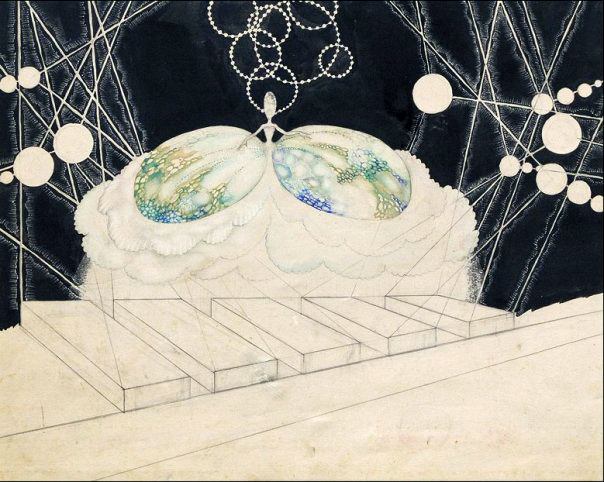
ART: Petre Otskheli, 1920s