Showing posts with label Traditional Law. Show all posts
Showing posts with label Traditional Law. Show all posts
Wednesday, April 03, 2019
SHORTFILM: Dinola - film which are based on a true story in Georgia Svaneti. By Mariam Khatchvani
Director Mariam Khatchvani
Film Producer Vladimer Kacharava
In the cold mountains of Georgia, a widow is forced to marry another man and leave her life and child behind.
Dinola is a child living in the village of Ushguli, in Georgia. Her father has just died, and the whole village is taking part in the funeral ceremonies. Her little friend asks if her mother has already left, but the girl says no, and doesn’t even understand why she would do such a thing. In fact, though, that’s the cruel fate that awaits her: as per the local tradition, the first man to forcibly impose his will to marry the widow, will have every right to take her away – and the child will be left behind, alone and abandoned.
Based on the true experience of director Mariam-Bakacho Khatchvani (მარიამ ხაჭვანი)’s grandmother, this short film wants to give a voice to the lives of thousands of women in the region of Svaneti, Georgia, one of the remotest parts of the continent, where, until only fifty years ago, this cycle of abandonment was repeated continuously. In addition to being an act of social protest, Dinola also opens a window onto places unknown to most people, uncovering traditions and customs that have hardly ever been narrated to an international audience.
This foray into a new world is unsettling and fascinating at the same time: the blinding white of the snow-covered landscape and the stark contrast of the medieval houses that stand dark upon it are visually striking. It takes just a few frames to feel the atmosphere of this hard and traditional people, witnessed in a solemn moment of mourning, all wearing dark clothes and accepting their inescapable reality in a dignified silence.
It’s the personal and participated yet highly stylized direction that raises this short above the usual account of social issues. It ‘s rare to find this kind of careful historical and social reconstruction combined with such a unique aesthetic. We take part in the excruciating pain of the mother, we are moved by the despair of the abandoned child who tries to follow in the footsteps of her mother in the midst of the snow, but we are also overwhelmed by the beauty of the place that’s presented before our eye, an almost alien land that appears to be suspended in time.
Dinola, presented in competition in many international festivals, was recently nominated for Best Short Film at the European Film Awards. This film is another example of the power that lies in the short film medium, managing to convey information about traditions and showing remote places almost completely unknown to most people.
We interviewed the director to find out more about this world and what inspired her to tell this story.
Hi Mariam, can you tell us more about the ‘Svanish Law’ you mention at the end of the film? Is it still in effect?
There used to be a tradition that if a woman became a widow, she had to get married to whatever man asked to marry her, regardless of love or her free will, because had she refused to, the man would threaten to kill her family. If the woman got married for a second time against her will, the dead husband’s family would not allow her to take her child with her, because they didn’t want their grandchild to grow up with another family, as it was considered absolutely shameful in the village. Dinola takes place about 80 years ago, when my grandmother was a child, but this ‘law’ was still in effect until about 40-50 years ago, and now things have changed – but not so much.
So the story portrayed in Dinola is very personal to you, is it exactly what happened to your grandmother? Yes, this story is about my grandmother. When she was a child, her mother left her and when she woke up and was looking for her mother, she went outside barefoot on the snow and followed her mother’s footprints crying. When she told me her story, it was so shocking to me that I decided to make a film as close to an actual documentary as possible, to show the real difficulties in the mother-children relationship that time, because it was the same for everyone living in that area…That’s why when I was a shooting the short I did my best to put real emotions into the film. My grandmother is 90 years old now and when she saw Dinola, she told me that she found it very funny that the child in the film is wearing socks, as she was barefoot…
What are your motivations as a filmmaker?
I wanted to show the world how interesting my culture is, because no one knows about Svaneti, where I was born, even some Georgians…
What are your plans for the future? Are you gonna make a feature film inspired by Dinola?
I am working on the feature film project, DEDE, it will be focused on the woman’s life. It’ll be like a counterpart to Dinola, and the main character will be the mother of the child. The movie will be about love, traditions and the crazy, interesting and difficult life in Ushguli. Located in Svaneti, the mountainous area of Georgia, Ushguli is called the hat of Europe, because it’s the highest settlement in this continent, you can feel like touching the sky, winter lasts eight months and at during that time roads are blocked, and people became ruthless because of this strict environment and extreme conditions. I will start shooting in August, I’ll cover four seasons in the film, I want to make it like a documentary, with regular people from the area, not actors, to achieve more realism as possible. My village is the so beautiful, it is a paradise for me and this is why I think the Ushgulians never leave the area despite the hard life.
Flavia Ferrucci (Source: goodshortfilms.it/dinola)
In deutsch: filmfestivalcottbus.de


Saturday, January 25, 2014
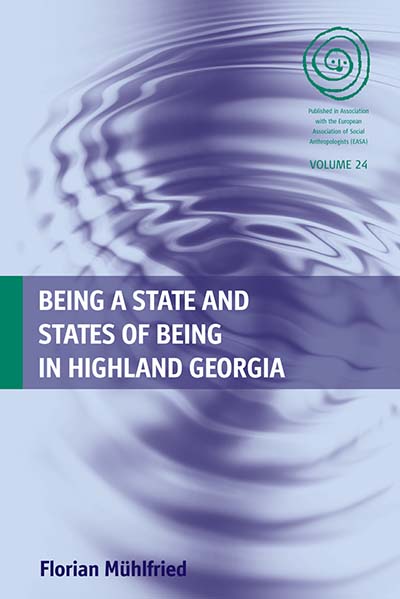
SCIENCE: Being A State and States Of Being in Highland Georgia. By Florian Mühlfried (berghahnbooks.com)
“It is an important contribution to the anthropology of the state, the Caucasus and it especially helps to conceptualise a group of people without falling in the trap of ethnic ‘groupism’, so present in many writings on the Caucasus.” · Stephane Voell, Philipps University Marburg
“This is an exceptionally ambitious study… it is highly original – no one else has written about these mountains before!” · Chris Hann, Max Planck Institute Halle
“I found this to be a delightful manuscript on a badly needed subject.” · Bruce Grant, New York University
“This book … will point the way to promising avenues for future research on the cultural and religious practices of the peoples of the Caucasus (and doubtless elsewhere).” · Kevin Tuite, University of Montréal
(berghahnbooks.com) The highlands region of the republic of Georgia, one of the former Soviet Socialist Republics, has long been legendary for its beauty. It is often assumed that the state has only made partial inroads into this region, and is mostly perceived as alien. Taking a fresh look at the Georgian highlands allows the author to consider perennial questions of citizenship, belonging, and mobility in a context that has otherwise been known only for its folkloric dimensions. Scrutinizing forms of identification with the state at its margins, as well as local encounters with the erratic Soviet and post-Soviet state, the author argues that citizenship is both a sought-after means of entitlement and a way of guarding against the state. This book not only challenges theories in the study of citizenship but also the axioms of integration in Western social sciences in general.
Florian Mühlfried teaches in the Caucasus Studies Program at the Friedrich Schiller University of Jena. Previously, he was a research assistant at the Max Planck Institute for Social Anthropology and a visiting professor at the University of Campinas, Brazil. He is he author of Post-Soviet Feasting: The Georgian Banquet in Transition (2006, in German) and co-edited Exploring the Edge of Empire: Soviet Era Anthropology in the Caucasus and Central Asia with Sergey Sokolovskiy (2012).
Series: Volume 24, EASA Series
+++
 Contents
Illustrations
Acknowledgments
Acknowledgments
Introduction
Chapter 1. Of a Mobile Field
Chapter 2. Of Hidden Treasures in the Mountains and a State that Comes and Goes
Chapter 3. Of Reborn Citizens in a Post-Soviet Landscape
Chapter 4. Of Three Ways to Be a State
Chapter 5. Of Triple Winning and Simple Losing
Chapter 2. Of Hidden Treasures in the Mountains and a State that Comes and Goes
Chapter 3. Of Reborn Citizens in a Post-Soviet Landscape
Chapter 4. Of Three Ways to Be a State
Chapter 5. Of Triple Winning and Simple Losing
Conclusion
Appendix
Bibliography
Index
Bibliography
Index
Saturday, October 06, 2012
PUBLICATION: No. 42: Traditional Law in Georgia (css.ethz.ch)
Editor(s): Stéphane Voell
Series: Caucasus Analytical Digest (CAD)
Issue: 42
Publisher(s): Center for Security Studies (CSS), ETH Zurich; Research Centre for East European Studies, University of Bremen; Institute for European, Russian and Eurasian Studies, George Washington University
Publication Year: 2012
 (css.ethz.ch) This issue of the CAD examines the role of
traditional law in Georgia. Stéphane Voell argues that despite a new
political environment created by the strengthening of the state
administration and the work of law-enforcement agencies after the Rose
Revolution, traditional law remains an important frame of reference for
the Svan population. Lavrenti Janiashvili studies the practice of
traditional law in Svaneti in Soviet times as an important part of
Georgia's legal history that sheds light on contemporary practices. Elke
Kamm examines the practice of bride kidnapping in Tetritskaro, Georgia
and explains that it was considered by Georgian ethnographers as an
alternative form of marriage that allowed men to marry without going
into debt and still occurs nowadays, though rarely. Natia Jabaladze
studies the custom of blood feud among Svan migrants in the region of
Kvemo-Kartli in Georgia and observes that this tradition remains more
alive in self-representation among Svans than in practice.
(css.ethz.ch) This issue of the CAD examines the role of
traditional law in Georgia. Stéphane Voell argues that despite a new
political environment created by the strengthening of the state
administration and the work of law-enforcement agencies after the Rose
Revolution, traditional law remains an important frame of reference for
the Svan population. Lavrenti Janiashvili studies the practice of
traditional law in Svaneti in Soviet times as an important part of
Georgia's legal history that sheds light on contemporary practices. Elke
Kamm examines the practice of bride kidnapping in Tetritskaro, Georgia
and explains that it was considered by Georgian ethnographers as an
alternative form of marriage that allowed men to marry without going
into debt and still occurs nowadays, though rarely. Natia Jabaladze
studies the custom of blood feud among Svan migrants in the region of
Kvemo-Kartli in Georgia and observes that this tradition remains more
alive in self-representation among Svans than in practice.TRADITIONAL LAW IN GEORGIA
Nagorno-Karabakh, Adjara, South Ossetia, Abkhazia
Local Legal Conceptions in Svan Villages in the Lowlands 2
By Stéphane Voell, Marburg
Traditional Law in Soviet Times 5
By Lavrenti Janiashvili, Tbilisi
The Resurgence of Blood Feud in the Georgian Lowlands 7
By Natia Jalabadze, Tbilisi
The Pride of Being Kidnapped: Women’s Views on Bride Kidnapping in Tetritskaro, Georgia 10
By Elke Kamm, Marburg
CHRONICLE
From 10 to 21 September 2012 12
Download:
Monday, December 14, 2009
MAGAZIN: ein BLICK GEORGIEN - Heft 3 (einblickgeorgien.blogspot.com)

Buch: ein Blick Georgien. Analyse, Fakten, Reflexionen. (Hrsg. von Marika Lapauri-Burk)
Preis 5,-Euro + Versand
Bestellung unter: info@lile.de
++++
Inhalt:
Vorwort der Herausgeber
Georgien – Europa/Asien?
Dr. Lascha Bakradse
Kosmopolitismus und Patriotismus
Wascha-Pschawela
Wenn Du mich nicht als Gleichen behandelst ...
Recht der Bergvölker - Schwüre auf Gleichheit und Treue für den Kaukasischen Frieden
Michael Kurdiani, Avtandil Arabuli und Giorgi Davitaschwili
Abchasien (Teil 1, Fortsetzung folgt)
Prof. Dr. Mariam Lortkipanidse, Prof. Dr. Giorgi Otchmesuri
Warum wir als Europäer niemals in Europa ankommen ....
Dr. Frank Tremmel
Monday, June 08, 2009
BLOG: Research project “The Revitalisation of Traditional Law in the Republic of Georgia. (projectgeorgia.wordpress.com)
Dr. Stéphane Voell and Elke Kamm - there first research period in Georgia is approaching. They booked a flight on the 4th of July to Tbilisi. Then will start their 3 months field research, which they will be complete next year with an additional 8 months research. In the first weeks they will visit the different places their Georgian colleagues Natia and Lavenrenti propose as their main research sites. These are places in Kvemo Kartli or in neighbouring regions.
The Volkswagen Foundation gave the reaearch group a sign, that their research project “The Revitalisation of Traditional Law in the Republic of Georgia” might well be approved. All were all very enthusiastic about the good news. For years the reaearcher was planning this research project. At the moment Stéphane Voell did send the last version to the foundation in January 2008 he really did not expect that the application might be successful. Stéphane Voell did not think, that his project was bad. But since 2003 he was working on different versions that he presented at various institutions, but without much success.
Shortly after the so-called “cease fire” the research project was approved.
Here is the blog: projectgeorgia.wordpress.com
The Volkswagen Foundation gave the reaearch group a sign, that their research project “The Revitalisation of Traditional Law in the Republic of Georgia” might well be approved. All were all very enthusiastic about the good news. For years the reaearcher was planning this research project. At the moment Stéphane Voell did send the last version to the foundation in January 2008 he really did not expect that the application might be successful. Stéphane Voell did not think, that his project was bad. But since 2003 he was working on different versions that he presented at various institutions, but without much success.
Shortly after the so-called “cease fire” the research project was approved.
Here is the blog: projectgeorgia.wordpress.com
RÜCKBLICK: Die Revitialisierung von traditionellem Recht in Georgien: Vorstellung eines neuen Forschungsprojekts in der Marburger Völkerkunde.
Elke Kamm M.A. und Dr. Stéphane Voell hielten einen Vortag Anfang Februar. Leider erfuhr ich das jetzt erst. Jedoch möchte ich das nachreichen, da ich beide als Fachkundige für traditionelles Recht vorstellen möchte. Zur Zeit forschen sie darüber in Georgien und Deutschland. Begleitend zu ihrem Projekt haben sie auch einen Blog ins Leben gerufen.
AnthroLab: Vortrag zu traditionellem Recht in Georgien
Zweiter Vortrag des neuen "Marburger AnthroLab"
Zeit: 05.02.2009 18:00 h Ort: Kugelhaus, Seminarraum 1 OG., Kugelgasse 10,
Referent/Beteiligte: Elke Kamm M.A., Dr. Stéphane Voell
Weitere Informationen:
Die Revitialisierung von traditionellem Recht in Georgien: Vorstellung eines neuen Forschungsprojekts in der Marburger Völkerkunde
Traditionelles Recht gewinnt im postsozialistischen Georgien zunehmend an Bedeutung. Ehrvorstellungen und Clanstrukturen beeinflussen wirtschaftliche Aktivitäten. Blutrache tritt in verschiedenen Regionen Georgiens auf. Privatisierungen nach dem Ende des Sozialismus führen noch heute zu Landkonflikten, die verstärkt mit traditionellem Recht verhandelt werden. Viele Konflikte werden außergerichtlich nach traditionellen Vorgaben über Älteste und lokale Mediatoren gelöst. Dieses Wiedererwachen der Tradition im Recht ist Thema des Forschungsprojekts. Zwei Fragen stehen im Mittelpunkt der Forschung: Was sind die Rahmenbedingungen und Prozesse, die zu einer Revitalisierung von traditionellem Rechts führen? Wer greift wann und warum auf dieses Recht zurück?
Elke Kamm M.A. und Dr. Stéphane Voell
Wissenschaftliche Mitarbeiter im Fachgebiet Völkerkunde des Instituts für Vergleichende Kulturforschung der Philipps-Universität Marburg.
Zur Projektdarstellung hie >>>
Revitalisation of Traditional Law in the Republic of Georgia
Forschungsprojekt des Instituts für Vergleichende Kulturforschung (FG Völkerkunde) in Zusammenarbeit mit dem I.Djavakhishvili Institut für Geschichte und Ethnographie der Georgischen Akademie der Wissenschaften in Tbilisi.
Projektleitung: Prof. Dr. Mark Münzel, Dr. Stéphane Voell
Wissenschaftliche Mitarbeiter: Dr. Natia Jalabadze (Tbilisi), Dr. Lavrenti Janiashvili (Tbilisi), Elke Kamm M.A. (Marburg), Dr. Stéphane Voell (Marburg),
Konzeption: Dr. Stéphane Voell, in Zusammenarbeit mit Dr. Natia Jalabadze
Laufzeit: 2009-2011
Finanzierung: Volkswagen-Stiftung (Projektdarstellung bei VW)
Traditionelles Recht gewinnt im postsozialistischen Georgien wieder zunehmend an Bedeutung. Ehrvorstellungen und Clanstrukturen beeinflussen wirtschaftliche Aktivitäten. Blutrache tritt in verschiedenen Regionen Georgiens auf. Privatisierungen nach dem Ende des Sozialismus führen noch heute zu Landkonflikten, die verstärkt mit traditionellem Recht verhandelt werden. Viele Konflikte werden außergerichtlich nach traditionellen Vorgaben über Älteste und lokale Mediatoren gelöst. Dieses Wiedererwachen der Tradition im Recht ist Thema des Forschungsprojekts. Zwei Fragen stehen im Mittelpunkt der Forschung: Was sind die Rahmenbedingungen und Prozesse, die zu einer Revitalisierung von traditionellem Rechts führen? Wer greift wann und warum auf dieses Recht zurück? - Es wird auch untersucht, ob man überhaupt von einer Revitalisierung sprechen kann bzw. ob traditionelles Recht eine postsozialistische Erfindung ist oder eine historische Kontinuität aufweist.
Bisherige Forschungen zum traditionellen Recht fanden in Georgien meist in entlegenen und kaum bewohnten Hochlandregionen statt, die nur wenig in staatliche Strukturen eingegliedert sind. In vorliegendem Projekt geht es jedoch gerade darum, wie traditionelles Recht in Beziehung zu Staat und Zivilgesellschaft angewendet wird. Die Forschung findet daher im georgischen Tiefland, in Kvemo Kartli, statt. Hier sind staatliche Administration und Zivilgesellschaft präsent. Traditionelles Recht ist hier alltägliche Praxis.
Das Forschungsteam umfasst je zwei Forscher aus Georgien und Deutschland. Gemeinsam werden sie an dem Projekt arbeiten und elf Monate in Georgien forschen. Zusammen untersuchen sie die folgenden Fragen: Was wird überhaupt als traditionelles Recht in Georgien bezeichnet? In welchen Zusammenhängen kommt traditionelles Recht zur Anwendung und in welchen nicht? Wie reagiert die staatliche Administration auf die Praxis traditionellem Rechts? Spielt die Religion bzw. deren Vertreter eine Rolle in traditionellen Rechtsverfahren?
Die Projektmitarbeiter arbeiten an vier individuellen Forschungsprojekten, die die aktuelle Praxis des traditionellen Rechts exemplarisch herausarbeiten. Voell untersucht die Verwendung von traditionellem Recht durch Nichtregierungsorganisationen für Konfliktvermittlung. Jalabadze beschäftigt sich mit dem Wiederauftreten der Blutrache im georgischen Tiefland. Die Bedeutung von Ehrvorstellungen im sozialen Alltag, besonders in Bezug zur Rolle der Frau, steht im Zentrum der Forschungen von Kamm. Janiashvili arbeitet zu der Relevanz des traditionellen Rechts im Sozialismus und ob dessen heutige Praxis eine Neuerfindung oder ob vor Ort eine Kontinuität zu beschreiben ist.
Blog zu Projekt hier >>>
Weitere Informationen zum "Marburger AnthroLab" hier >>>
Veranstalter:IVK-Völkerkunde
AnthroLab: Vortrag zu traditionellem Recht in Georgien
Zweiter Vortrag des neuen "Marburger AnthroLab"
Zeit: 05.02.2009 18:00 h Ort: Kugelhaus, Seminarraum 1 OG., Kugelgasse 10,
Referent/Beteiligte: Elke Kamm M.A., Dr. Stéphane Voell
Weitere Informationen:
Die Revitialisierung von traditionellem Recht in Georgien: Vorstellung eines neuen Forschungsprojekts in der Marburger Völkerkunde
Traditionelles Recht gewinnt im postsozialistischen Georgien zunehmend an Bedeutung. Ehrvorstellungen und Clanstrukturen beeinflussen wirtschaftliche Aktivitäten. Blutrache tritt in verschiedenen Regionen Georgiens auf. Privatisierungen nach dem Ende des Sozialismus führen noch heute zu Landkonflikten, die verstärkt mit traditionellem Recht verhandelt werden. Viele Konflikte werden außergerichtlich nach traditionellen Vorgaben über Älteste und lokale Mediatoren gelöst. Dieses Wiedererwachen der Tradition im Recht ist Thema des Forschungsprojekts. Zwei Fragen stehen im Mittelpunkt der Forschung: Was sind die Rahmenbedingungen und Prozesse, die zu einer Revitalisierung von traditionellem Rechts führen? Wer greift wann und warum auf dieses Recht zurück?
Elke Kamm M.A. und Dr. Stéphane Voell
Wissenschaftliche Mitarbeiter im Fachgebiet Völkerkunde des Instituts für Vergleichende Kulturforschung der Philipps-Universität Marburg.
Zur Projektdarstellung hie >>>
Revitalisation of Traditional Law in the Republic of Georgia
Forschungsprojekt des Instituts für Vergleichende Kulturforschung (FG Völkerkunde) in Zusammenarbeit mit dem I.Djavakhishvili Institut für Geschichte und Ethnographie der Georgischen Akademie der Wissenschaften in Tbilisi.
Projektleitung: Prof. Dr. Mark Münzel, Dr. Stéphane Voell
Wissenschaftliche Mitarbeiter: Dr. Natia Jalabadze (Tbilisi), Dr. Lavrenti Janiashvili (Tbilisi), Elke Kamm M.A. (Marburg), Dr. Stéphane Voell (Marburg),
Konzeption: Dr. Stéphane Voell, in Zusammenarbeit mit Dr. Natia Jalabadze
Laufzeit: 2009-2011
Finanzierung: Volkswagen-Stiftung (Projektdarstellung bei VW)
Traditionelles Recht gewinnt im postsozialistischen Georgien wieder zunehmend an Bedeutung. Ehrvorstellungen und Clanstrukturen beeinflussen wirtschaftliche Aktivitäten. Blutrache tritt in verschiedenen Regionen Georgiens auf. Privatisierungen nach dem Ende des Sozialismus führen noch heute zu Landkonflikten, die verstärkt mit traditionellem Recht verhandelt werden. Viele Konflikte werden außergerichtlich nach traditionellen Vorgaben über Älteste und lokale Mediatoren gelöst. Dieses Wiedererwachen der Tradition im Recht ist Thema des Forschungsprojekts. Zwei Fragen stehen im Mittelpunkt der Forschung: Was sind die Rahmenbedingungen und Prozesse, die zu einer Revitalisierung von traditionellem Rechts führen? Wer greift wann und warum auf dieses Recht zurück? - Es wird auch untersucht, ob man überhaupt von einer Revitalisierung sprechen kann bzw. ob traditionelles Recht eine postsozialistische Erfindung ist oder eine historische Kontinuität aufweist.
Bisherige Forschungen zum traditionellen Recht fanden in Georgien meist in entlegenen und kaum bewohnten Hochlandregionen statt, die nur wenig in staatliche Strukturen eingegliedert sind. In vorliegendem Projekt geht es jedoch gerade darum, wie traditionelles Recht in Beziehung zu Staat und Zivilgesellschaft angewendet wird. Die Forschung findet daher im georgischen Tiefland, in Kvemo Kartli, statt. Hier sind staatliche Administration und Zivilgesellschaft präsent. Traditionelles Recht ist hier alltägliche Praxis.
Das Forschungsteam umfasst je zwei Forscher aus Georgien und Deutschland. Gemeinsam werden sie an dem Projekt arbeiten und elf Monate in Georgien forschen. Zusammen untersuchen sie die folgenden Fragen: Was wird überhaupt als traditionelles Recht in Georgien bezeichnet? In welchen Zusammenhängen kommt traditionelles Recht zur Anwendung und in welchen nicht? Wie reagiert die staatliche Administration auf die Praxis traditionellem Rechts? Spielt die Religion bzw. deren Vertreter eine Rolle in traditionellen Rechtsverfahren?
Die Projektmitarbeiter arbeiten an vier individuellen Forschungsprojekten, die die aktuelle Praxis des traditionellen Rechts exemplarisch herausarbeiten. Voell untersucht die Verwendung von traditionellem Recht durch Nichtregierungsorganisationen für Konfliktvermittlung. Jalabadze beschäftigt sich mit dem Wiederauftreten der Blutrache im georgischen Tiefland. Die Bedeutung von Ehrvorstellungen im sozialen Alltag, besonders in Bezug zur Rolle der Frau, steht im Zentrum der Forschungen von Kamm. Janiashvili arbeitet zu der Relevanz des traditionellen Rechts im Sozialismus und ob dessen heutige Praxis eine Neuerfindung oder ob vor Ort eine Kontinuität zu beschreiben ist.
Blog zu Projekt hier >>>
Weitere Informationen zum "Marburger AnthroLab" hier >>>
Veranstalter:IVK-Völkerkunde
Subscribe to:
Posts (Atom)