Showing posts with label anthropology. Show all posts

Wednesday, August 12, 2020

BOOK: Ethnography and Folklore of the Georgia-Chechnya Border. Images, Customs, Myths & Folk Tales of the Peripheries. By Shorena Kurtsikidze & Vakhtang Chikovani

The aim of this book is to acquaint a wide audience with the traditional culture of the Christian and Muslim highlanders who live on the border of Europe and Asia in the central part of the Caucasus Main Mountain Range. Under one cover, the publication features unique materials on visual anthropology, ethnography, mythology, and folklore of the region. The book portrays the mysterious subgroup of Georgian highlanders, the Khevsur, who are considered to be the champions of Georgian patriotism and at the same time, according to one popular theory, are believed to be direct descendants of the last Crusaders. Featuring 158 black and white original photographs and accompanying explanatory texts, the publication gives a detailed description of the exotic religious institutions and examples of material culture of this group of highlanders, illustrating the closeness of their lifestyle to the ways of the Frankish crusaders. The emphasis is on the spheres of folk culture that bear clear traces of centuries of confrontations between two ethnic groups: Christian Georgian highlanders and their neighbors, Muslim Vainakh or Chechen and Ingush. The authors attempt to show how the traditional mode of life of the highlanders affects the contemporary ethnic and political situation in the region. The publication includes original translations of Georgian folk tales and myths. The latter are narratives representing mythologized chronicles of “holy wars” of old times once carried out on the border of Europe and Asia by the ancestors of the Khevsurs. Shorena Kurtsikidze and Vakhtang Chikovani are cultural anthropologists and natives of Georgia. They have been teaching the Georgian language, culture, and folklore courses at the University of California, Berkeley. Both authors are affiliates of the Institute of Slavic, East European and Eurasian Studies at the same university and regularly give talks and public lectures about Georgia and the Caucasus.

Link: amazon.de

Tuesday, February 27, 2018

BOOK: Sacred Places, Emerging Spaces. Religious Pluralism in the Post-Soviet Caucasus. Edited by Tsypylma Darieva, Florian Mühlfried, & Kevin Tuite (berghahnbooks.com)

Source: berghahnbooks.com


Reviews
“This volume shares in a rich resurgence of writing on religious activity across the former Soviet Union and particularly in areas of the Caucasus, offering sharp insight into arguably one of the most popular religious traditions, shrine pilgrimage, about which we know surprisingly little. The editors have gathered the highly qualified scholars for the task, including a number of specialists from the Caucasus proper.” • Bruce Grant, New York University

Description
Though long-associated with violence, the Caucasus is a region rich with religious conviviality. Based on fresh ethnographies in Georgia, Armenia, Azerbaijan, and the Russian Federation, Sacred Places, Emerging Spaces discusses vanishing and emerging sacred places in the multi-ethnic and multi-religious post-Soviet Caucasus. In exploring the effects of de-secularization, growing institutional control over hybrid sacred sites, and attempts to review social boundaries between the religious and the secular, these essays give way to an emergent Caucasus viewed from the ground up: dynamic, continually remaking itself, within shifting and indefinite frontiers.

Tsypylma Darieva is a senior research fellow at the Centre for East European and International Studies (ZOiS) in Berlin and is teaching at Humboldt University Berlin. Her research and teaching interests include anthropology of migration, diaspora and homeland, urbanity, and sacred places in Central Eurasia. She has conducted fieldwork in Azerbaijan, Armenia, Kazakhstan, and Germany. Darieva is the author of Russkij Berlin: Migranten und Medien in Berlin und London (LIT, 2004), co-editor of Cosmopolitan Sociability: Locating Transnational Religious and Diasporic Networks (Routledge, 2011), Urban Spaces after Socialism: Ethnographies of Public Places in Eurasian Cities (Campus, 2011) and of the forthcoming volume Sakralität und Mobilität in Südosteuropa und im Kaukasus.

Florian Mühlfried is a social anthropologist in the Caucasus Studies Program at the Friedrich Schiller University of Jena. Previously, he was a research fellow at the Max Planck Institute for Social Anthropology and a visiting professor at UNICAMP, Brazil. He has published the monograph Being a State and States of Being in Highland Georgia (Berghahn, 2014), a book on feasting in Georgia (ibidem, 2006), and edited the volume Mistrust: Ethnographic Approximations (Transcript, 2018).

Kevin Tuite is Professor of Anthropology at the Université de Montréal. He also directed the Caucasus Studies Program at the FSU-Jena from 2011 to 2014. His publications include Language, Culture and Society: Key Topics in Linguistic Anthropology (co-edited with Christine Jourdan) (Cambridge, 2006).

Contents

List of Illustrations
Acknowledgements

Introduction
Tsypylma Darieva, Florian Mühlfried and Kevin Tuite

Chapter 1. Between ‘Great’ and ‘Little' Traditions? Situating Shia Saints in Contemporary Baku
Tsypylma Darieva

Chapter 2. Women as Bread-Bakers and Ritual-Makers: Gender, Visibility and Sacred Space in Upper Svaneti
Nino Tserediani, Kevin Tuite and Paata Bukhrashvili

Chapter 3. The Chain of Seven Pilgrimages in Kotaik, Armenia: Between Folk and Official Christianity
Levon Abrahamian, Zaruhi Hambardzumyan, Gayane Shagoyan and Gohar Stepanyan

Chapter 4. Sacred Sites in the Western Caucasus and the Black Sea Region: Typology, Hybridization, Functioning
Igor V. Kuznetsov

Chapter 5. The Power of the Shrine and Creative Performances in Ingiloy Sacred Rituals
Nino Aivazishvili-Gehne

Chapter 6. Accompanying the Souls of the Dead: The Transformation of Sacral Time and Encounters
Hege Toje

Chapter 7. Not Sharing the Sacra
Florian Mühlfried

Chapter 8. Informal Shrines and Social Transformations: The Murids as New Religious Mediators among Yezidis in Armenia
Hamlet Melkumyan

Chapter 9. Sharing the Not-Sacred: Rabati and Displays of Multiculturalism
Silvia Serrano

Index

Friday, June 09, 2017

FILMPRÄSENTATION: Cinematographia musicae popularis: Table Songs of Kakheti. Ein Film von Hugo Zemp und Nona Lomidze

Dienstag, 20. Juni, 18:30 Uhr

Ort: Diplomatische Akademie, Favoritenstraße 15a, 1040 Wien

Anmeldung erforderlich unter krammer@mdw.ac.at

Eine gemeinsame Veranstaltung der Botschaft von Georgien anlässlich des 25-jährigen Jubiläums der diplomatischen Beziehungen zwischen Georgien und Österreich, des Instituts für Volksmusikforschung und Ethnomusikologie der Universität für Musik und darstellende Kunst Wien und der Österreichischen Orient-Gesellschaft Hammer-Purgstall.

Mit freundlichen Grüßen,

Mag.ª Regina Kamauf Leiterin des Informationszentrums für Zentralasien und Südkaukasien

Österreichische Orient-Gesellschaft Hammer-Purgstall
Orient-Akademie
A-1010 Wien
Dominikanerbastei 6/6
http://www.orient-gesellschaft.at/


der.org/table songs of kakheti


Table Songs of Kakheti - PREVIEW
by Hugo Zemp and Nona Lomidze
color, 80 min with 4 min of extras, 2016
in Georgian
with English subtitles

At the foot of the Caucasus, the Kakheti province of eastern Georgia is famous for its wine and its polyphonic songs. Banquets with their alternation of ritualized toasts and collective singing are considered by Georgians as a major component of national identity. Verbal art and musical art are bound together in a unique way.

Georgian banquets conventionally are the prerogative of men. Master folk singer Andro Simashvili, known as Andro Papa, leads his friends at a classical men’s banquet. On the other hand, renowned female singer Leila Legashvili is the toastmaster at a women’s banquet, where Andro Simashvili is an honored guest. Long songs and elaborate toasts are shown in their integrality, revealing important insights into Georgian cultural values.


“This is a very interesting and pleasant film packed with highly elaborate examples of traditional/folk creativity. It features Andro Simashvili - the expert and performer of ancient folk songs. The film is full of humor, Kakhetian life situations and relationships, and shows many Georgian table songs. It preserves many interesting material which makes it very important for the next generations. Thanks to everyone who helped to make this film, Andro Papa and his singing became eternal.” — Anzor Erkomaishvili, President of the International Centre of Georgian Folk Song, Tbilisi, Georgia

“This documentary is delightful, possibly the best film about Georgian village singers that I have seen. Not only the music, but the very feel of Kakhetian village, with its live humor, even the smell of traditional food, is all there in the film!” — Joseph Jordania, University of Melbourne, Australia
“Table Songs of Kakheti is Zemp's fourth Georgian-music documentary that I have seen. It is as instructive, and entertaining, as his earlier work. As a teacher, I have shown the earlier films to undergraduate anthropology students who's reactions have been very positive. An obvious choice for anthropologists teaching about folk music or concepts of traditional culture, gender, social change, and doubtless many other topics. I highly recommend it.” — Kevin Tuite, Université de Montréal, Canada
  
Related Resources
Read the article
"A Man Can Sing and Play Better than a Woman" by Nino Tsitsisvili, originally published in the journal Ethnomusicology, 50(3), 2006
Related FilmsMusic of Georgia (Caucasus) Series
Polyphony of Ceriana: The Compagnia Sacco


Further Links:
http://www.naturjuuz.ch/hugo-zemp
https://www.accademia-belcanto.com/deutsch/referenten-2016/nona-lomidze/


Thursday, May 11, 2017

BOOK: Georgian Portraits. Essays on the Afterlives of a Revolution. By Katrine Gotfredsen, Martin Demant Frederiksen (zero-books.net)

(zero-books.net) The ethnographic portraits telling the story of the social and political aftermaths of revolution.

Georgian Portraits chronicles everyday life in the Republic of Georgia in the decade that followed the Rose Revolution of 2003. Recent anthropological developments argue for the use of “afterlives” as an analytical notion through which to understand processes of socio-political change. Based on a series of portraits, Martin Demant Frederiksen and Katrine Bendtsen Gotfredsen employ the theory of social afterlives to examine the role of revolution in the formation of a modern Georgia. The book contributes to a deeper understanding of life in the aftermath of political reform, depicting the hopefulness of the Georgian population, but also the subsequent return to political disillusionment which lead them to a revolution in the first place.

REVIEWS & ENDORSEMENTS

What happens after a revolution, when the bright and shiny finish has worn off its ideals? Capturing the weirdness and the wonder of post-revolutionary Georgia, Frederiksen and Gotfredsen also capture people's very real struggles to get by, their fears of war and their dreams of a "European" future. Beautifully and hauntingly written, this book captures not only Georgia's politics, but its soul. ~ Elizabeth Cullen Dunn, author of Privatizing Poland: Baby Food, Big Business and the Remaking of Labor

Revolutions are as much made of dreams as real events, and these dreams have afterlives as ghosts as the revolutionary hope fades into disappointment or despair. Writing the history of a revolutionary period is difficult, especially writing one that deals with the fundamentally emergent nature of a revolutionary period, as this one does, embracing the confusion of tenses in which the present is pregnant with the future and the future becomes a past as a condition of narration. This book tracks the lively history of Rose Revolutionary Georgia in a lovely and vivid manner, an engaging narrative full of lively characters, beginning always from small things and local perspectives that show the Rose Revolutionary period as a series of hopes and dreams, programs and disappointments. Misha Saakashvili appears throughout, sometimes as a real historical person, sometimes also an imagined demiurge, sometimes a fraudulent trickster. The ways a revolution changes a society are here portrayed from many perspectives, and the way the revolutionary dreams sometimes became haunting ghosts shows how a single moment can become a whole period of social life. ~ Paul Manning, author of Love Stories: Private Love and Public Romance in Georgia

This book is crafted as a compendium of tacit knowledge about Georgia, harboring an array of insights that capture the tensions and ambiguities of a country that finds itself back from the future and poised between assembly and disassembly. The image of the portrait is therefore very accurate, reflecting the make-believe realities and re-enactments faced by the authors. Thumbing through its pages, I discovered how anthropological variations can be interwoven through biographies, social affects and political afterlives. This type of scholarship is not only inspiring and informative, but also pleasure to read. Georgia is a country for storytellers and vernacular Sisyphus of life, being Martin Demant Frederiksen and Katrine Bendtsen Gotfredsen the perfect example of this contagious ardor. The intimate and sharp look achieved by the authors makes this collection an important milestone in the discussion of contemporary social dynamics in Eastern Europe and the understanding of human condition overall. ~ Francisco Martínez, author of Playgrounds and Battlefields: Critical Perspectives of Social Engagement


+++


Katrine Bendtsen Gotfredsen holds a PhD in anthropology from the University of Copenhagen. She has done extensive fieldwork in the Republic of Georgia focusing on subjects such as history, identity, morality, and uncertainty in the context of social and political transformation. Works include her PhD dissertation, “Evasive politics: Paradoxes of history, nation, and everyday communication in the Republic of Georgia” (2013) and the journal articles “Void pasts and marginal presents: On nostalgia and obsolete futures in the Republic of Georgia” (Slavic Review, 2014) and “Enemies of the people: Theorizing dispossession and mirroring conspiracy in the Republic of Georgia” (Focaal, 2016). She is currently lecturer in Caucasus Studies at Malmö University and Programme Manager for Eastern Europe and the Caucasus in the Danish NGO Cross Cultures.


Martin Demant Frederiksen is assistant professor at the Department of Cross-Cultural and Regional Studies, University of Copenhagen, Denmark. He holds a PhD in anthropology and has conducted a total of 22 months of ethnographic fieldwork in the Republic of Georgia since 2006 in the cities Tbilisi, Batumi and Ambrolauri. His work focuses on subcultures (such as youth criminals and declared nihilists), urban development, temporality and socio-political change. He is author of the monograph "Young Men, Time, and Boredom in the Republic of Georgia" (2013) and co-editor of the anthology "Ethnographies of Grey Zones in Eastern Europe" (2015). Aside from research and teaching, he is co-founder and co-editor of the independent art-zine "a...issue".

Tuesday, January 05, 2016

GEORGIA: Polaroids of Rabati. By Jacopo Miglioranzi (riowang.blogspot.it)

Jacopo Miglioranzi does research in the anthropology of religion in the Southern Georgian town of Akhaltsikhe among the local Armenians and Georgians. About the Jews of the town he has earlier written in río Wang. His further essays can be read here.


Tolerance. A new word. Until some times ago, you could see it, written in great letters, on a large panel. Tolerance, this was received by the citizens and visitors who entered Rabati. The oldest neighborhood of the city of Akhaltsikhe. To enter the neighborhood, you have to cross a wide road, then take a narrow road under the bridge of the old and disused railway. Two streets. Two forms of tolerance. To the left, the fortress of Rabati, a symbol of tolerance. Tourists, travelers, backpackers, border-crossers. Young people taking photos and letting themselves be photographed. Brides dressed in white. To the right, Rabati. The neighborhood. Tourists, travelers, backpackers, border-crossers. Young people taking photos and letting themselves be photographed. Brides dressed in white, a few. Men smoke their cigarettes nervously. A yellow marshrutka, without wheels, lies dying on the railway embankment. I climb up to the dying tracks. Armenian men. Georgian men. Turkish men. Armenian taxi drivers. Georgian taxi drivers. Turkish buses. Georgian buses. Cars. Police patrol. More taxis. Shopping bags. Women with children. Armenian boys. Georgian boys. Armenian girls. Georgian girls. Russian tourists. Polish tourists. Couples on motorbikes. Cyclists.

further text here >>>

Wednesday, October 15, 2014

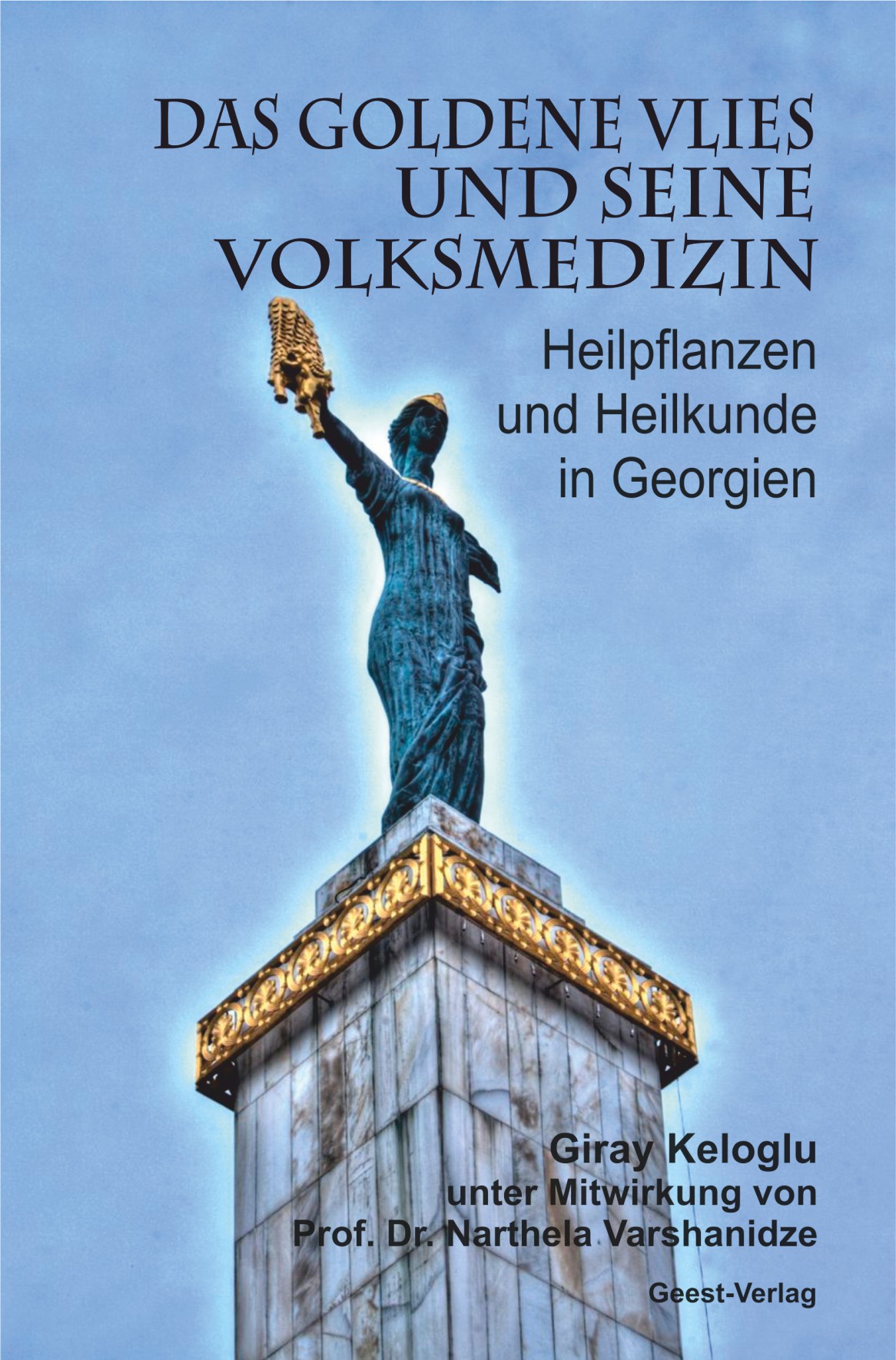
BUCH: Keloglu, Giray unter Mitarbeit von Prof. Dr. Narthela Varshanidze: Das Goldene Vlies und seine Volksmedizin - Heilpflanzen und Heilkunde in Georgien

Keloglu, Giray unter Mitarbeit von Prof. Dr. Narthela Varshanidze, Associated Professor of Biology
University of Rustaveli – Batumi/Georgien
Das Goldene Vlies und seine Volksmedizin. Heilpflanzen und Heilkunde in Georgien
Geest-Verlag 2013, ca.610 S., 19,80 Euro

Das Buch gibt mit einer Auswahl von 150 Heilpflanzen einen Überblick über die Georgische Volksmedizin. Keine zufällige Auswahl, vielmehr vor allem Heilpflanzen, die auch in Deutschland bekannt sind. Dem Leser bietet sich damit die Möglichkeit, sein Wissen über die Anwen­dungsmöglichkeiten von Heilpflanzen zu erweitern oder auch ganz neu zu schaffen. Erklärtes Ziel des Autors ist es, das Wissen der Volksmedizin über die Wirkung der Heilpflanzen in einfacher und zugleich verantwortlicher Weise zu vermitteln. Zugleich vermittelt er uns damit ein Bewusst-sein zum verantwortungsvollen Umgang mit der Natur und ihren wichtigen Ressourcen auch vor unserer Haustür.

Giray Keloglu knüpft mit seinem Buch über die Volksmedizin in Georgien an eige­ne Traditionen an, wurde sein Großvater doch in Tiflis geboren, sein Vater in Aser­baid­schan. Er selbst erblickte in Kars, in der Türkei, das Licht der Welt, lebt aber bereits seit seinem ersten Lebensjahr in Deutschland, wo er auch Schule und Aus­bildung absolvierte. Sein gesellschaftliches und ökologisches Engagement (Mitglied bei den Grünen, aktives Engagement in den Bereichen Um­weltschutz, Integration, Soziales und Ju­gend) führte ihn näher an Fragen der Volks­medizin und Heilkunde, ließ ihn eine Heilpraktiker- und eine Phyto­therapie-Aus­bildung bei Arnd Groeneveld absol­vie­ren. 2009 begann er mit den Arbeiten an die­sem Buch, seit 2010 mit Unterstützung der University of Rustaveli – Batumi / Georgien, insbesondere mit Prof. Dr. Narthela Varshanidze.

Die vorgestellten Heilpflanzen

1 Ackerschachtelhalm
2 Ackerstiefmütterchen
3 Adjarisches Alpenveilchen
4 Adlerfarn
5 Amerikanische Gleditschie
6 Bergminze
7 Birke
8 Bischofskraut
9 Blauer Eukalyptus
10 Bocks-Hauhechel
11 Breitwegerich
12 Chinesischer Tee
13 Chrysantheme
14 Dreiblättriger Fieberklee
15 Dreiteiliger Zweizahn
16 Echte Feige
17 Echte Goldrute
18 Echte Kamille
19 Echte Nelkenwurz
20 Echte Walnuss
21 Echter Alant
22 Echter Baldrian
23 Echter Ehrenpreis
24 Echter Eibisch
25 Echter Hopfen
26 Echter Lorbeer
27 Echter Seidelbast
28 Echter Wurmfarn
29 Echtes Johanniskraut
30 Echtes Leinkraut
31 Echtes Tausendgüldenkraut
32 Fichte
33 Flatter-Binse
34 Flohknöterich
35 Frauenmantel
36 Gartenbohne
37 Gartenpetersilie
38 Gemeine Schafgarbe
39 Gemeine Wegwarte
40 Gemeiner Dost (Oregano)
41 Gemeiner Fenchel
42 Gemeiner Kürbis
43 Gemeiner Spargel
44 Gemeiner Stechapfel
45 Gewöhnliche Berberitze
46 Gewöhnliche Rosskastanie
47 Gewöhnlicher Beifuß
48 Gewöhnlicher Schneeball
49 Gewöhnliches Hirtentäschel
50 Gewöhnliches Seifenkraut
51 Gewürzsumach
52 Goethe-Pflanze
53 Granatapfel
54 Griechische Baumschlinge
55 Große Klette
56 Gundermann
57 Gurke
58 Hanf
59 Heidelbeere
60 Herbstzeitlose
61 Herzgespann (fünflappig)
62 Himbeere
63 Huflattich
64 Hundsrose
65 Immergrüne Magnolie
66 Japanische Wollmispel
67 Kahles Bruchkraut
68 Kalmus
69 Kartoffel
70 Kastanienbraunes Zypergras
71 Kaukasische Fetthenne (Mauerpfeffer)
72 Kaukasische Linde
73 Kaukasische Schneerose
74 Kaukasische Tollkirsche
75 Kaukasisches Maiglöckchen
76 Kaukasusapfel
77 Kaukasus-Tanne
78 Keulen-Bärlapp
79 Kiefer Sosnovkii
80 Kirschbaum
81 Kiwi
82 Klebriger Salbei
83 Kleinblütige Königskerze
84 Kleines Immergrün
85 Knoblauch
86 Knollensellerie
87 Kolchischer Efeu
88 Koriander
89 Kornelkirsche
90 Kratzbeere
91 Krauser Ampfer
92 Kriechquecke
93 Kümmel
94 Lakritze (Süßholz)
95 Lorbeerkirsche
96 Löwenzahn
97 Mais
98 Meerrettich
99 Orthosiphon (Echter Katzenbart)
100 Paprika (Spanischer Pfeffer)
101 Passionsblume
102 Preiselbeere
103 Primel (Schlüsselblume)
104 Quitte
105 Radieschen
106 Rhododendron
107 Ringelblume
108 Rosafarbene Catharante
109 Rossminze
110 Rostfarbiger Fingerhut
111 Rote Bete
112 Roter Fingerhut
113 Rotklee
114 Sal-Weide
115 Sanddorn
116 Saumfarn
117 Scharfer Mauerpfeffer
118 Scheinhanf
119 Schiefer Schillerporling
120 Schlangen-Knöterich
121 Schöllkraut
122 Schwarze-Erle
123 Schwarze Johannisbeere
124 Schwarzer Holunder
125 Schwarzer Nachtschatten
126 Schwarzes Bilsenkraut
127 Sommer Knotenblume
128 Spitzwegerich
129 Strohblume, Stark durftende
130 Sumpfhelmkraut
131 Tintenfisch-Aloe
132 Vogelbeere
133 Vogelknöterich
134 Walderdbeere
135 Waldmeister
136 Wald-Sanikel
137 Wald-Ziest
138 Wasserpfeffer
139 Weinrebe
140 Weißbeerige Mistel
141 Weißdorn
142 Weißdorn (fünfgriffiger)
143 Weißer Germer
144 Weißkohl
145 Wermut
146 Wilde Malve
147 Wilde Möhre
148 Woronow Schneeglöckchen
149 Zitrone
150 Zitronenmelisse (Melisse)
151 Zwergholunder (Attich)

AmazonShop: Books, Maps, Videos, Music & Gifts About The Caucasus

Sunday, January 26, 2014

NEW PUBLICATION: Caucasus Conflict Culture: Anthropological Perspectives on Times of Crisis. Voell, Stéphane and Ketevan Khutsishvili (eds.) 2013 (caucasusconflict.wordpress.com)

(caucasusconflict.wordpress.com) Voell, Stéphane and Ketevan Khutsishvili (eds.) 2013. Caucasus Conflict Culture: Anthropological Perspectives on Times of Crisis (Curupira Workshop, 18). Marburg: Curupira. 296 pp.
“At beginning there was a conference in Tbilisi. At the end there is this book. The latter is closely related to the former. The book would not have been possible without the initial conference. But the conference and the book are very different from each other. In November 2011 the Institute of Ethnology of the Ivane Javakhishvili Tbilisi State University hosted the conference ‘Caucasus, Conflict, Culture: First Symposium on Anthropology and the Prevention of Conflicts in Armenia, Azerbaijan and Georgia‘ (CCC1). The event was organised together with the Department of Cultural and Social Anthropology of the Philipps-Universität Marburg. It was probably the first purely anthropological conference (just three years after the Georgian-Russian War in August 2008) to deal with conflictual relations in the South Caucasus, focussing on the perspective ›from below‹ and including numerous local scholars. Many papers given at CCC1 referred explicitly or implicitly to the conflict-torn Caucasian present. The presenters touched a wide variety of topics, from mass protest rallies in Yerevan preceding the Nagorno-Karabakh war to staged skirmishes between prominent chefs in local restaurants, enacting a culture war on which nation supposedly invented which dish.” (Khutsishvili/Voell in the Preface of the book).
The cover image for this book is a detail of a collage by the artist and film maker Sergey Parajanov (1924-1990). It is taken from collage from the series ‘Several Episodes from Gioconda’s Life’ (1989). The same image was used for the programme booklet of the conference CCC1. We used to call it ‘Mona Lisa in Conflict’. We can use this picture for the cover with the kind permission of the ›Sergey Parajanov Museum‹ in Yerevan.
(note: Even though the books has been officially published in 2013 for some ‘technical’ reason it will only be available in the next days to come).
The edited volume contains the following chapters:
  • Ketevan Khutsishvili and Stéphane Voell. Preface
  • Stéphane Voell. Going Beyond Essentialism: Introduction
  • Mkhitar Gabrielyan and Artak Dabaghyan. At Borders as in Islands: Steps of Anthropology into the Field
  • Levon Abrahamian and Gayane Shagoyan. Rallies as Festival and the Festival as a Model for Rallies
  • Philipp Naucke. Gene Sharp: Nonviolent Action and the Rose Revolution – On the Confusion of Political and Scholarly Success
  • Sergey Rumyansev and Sevil Huseynova. Peaceful Interethnic Cooperation during the Nagorno-Karabakh Crisis: a Criticism of Attempts to Essentialise Conflicts
  • Arsen Hakobyan. New Life in a New Space: the Appropriation of ‘Alien’ Space Armenian Refugees in the Village of Dzyunashogh
  • Ilham Abbasov. From ›Friendship of Peoples‹ to a Discourse of ‘Tolerance’: Constructing Ethnic Boundaries in Post-Soviet Azerbaijan
  • Sascha Roth. The Making of Home, the Making of Nation: Cultural Notions of Conflict and Displacement in Post-Soviet Azerbaijan
  • Yulia Antonyan. Reminiscences of the Future: the Social Life of Monuments in Refugee-Villages
  • Tea Kamushadze. Conceptualisation of the Past: the Place of the Socialist City in Georgian National History
  • Melanie Krebs. Negotiating Cosmopolitanism in Baku
  • Sevil Huseynova. Ethno-cultural Diversity in the Imperial and Post-Imperial City: Communal Violence, Nationalist Conflicts and Interethnic Cooperation in Baku in the 19th-21st Centuries
  • Nino Aivazishvili-Gehne. Ingiloy – Ingiloi: the Ethnicity and Identity of a Minority in Azerbaijan
  • Natia Jalabadze and Lavrenti Janiashvili. Perspectives for the Integration of Ethnic Minorities in a 
    Multicultural Region: the Example of Kvemo Kartli
  • Giorgi Cheishvili and Natalie Wahnsiedler. Student’s Report on ‘Caucasus, Conflict, Culture 1′

Saturday, January 25, 2014

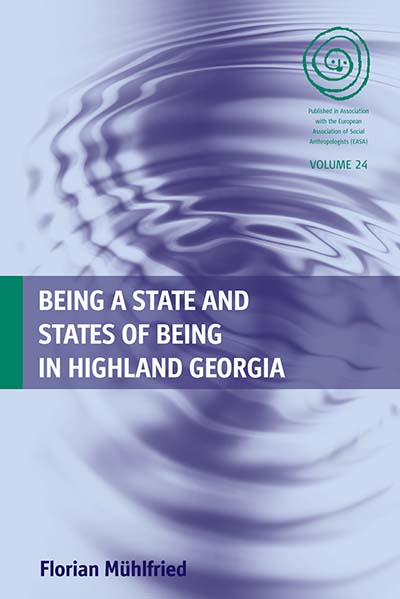
SCIENCE: Being A State and States Of Being in Highland Georgia. By Florian Mühlfried (berghahnbooks.com)

“It is an important contribution to the anthropology of the state, the Caucasus and it especially helps to conceptualise a group of people without falling in the trap of ethnic ‘groupism’, so present in many writings on the Caucasus.”  ·  Stephane Voell, Philipps University Marburg
“This is an exceptionally ambitious study… it is highly original – no one else has written about these mountains before!”  ·  Chris Hann, Max Planck Institute Halle
“I found this to be a delightful manuscript on a badly needed subject.”  ·  Bruce Grant, New York University
“This book … will point the way to promising avenues for future research on the cultural and religious practices of the peoples of the Caucasus (and doubtless elsewhere).”  ·  Kevin Tuite, University of Montréal
(berghahnbooks.com) The highlands region of the republic of Georgia, one of the former Soviet Socialist Republics, has long been legendary for its beauty. It is often assumed that the state has only made partial inroads into this region, and is mostly perceived as alien. Taking a fresh look at the Georgian highlands allows the author to consider perennial questions of citizenship, belonging, and mobility in a context that has otherwise been known only for its folkloric dimensions. Scrutinizing forms of identification with the state at its margins, as well as local encounters with the erratic Soviet and post-Soviet state, the author argues that citizenship is both a sought-after means of entitlement and a way of guarding against the state. This book not only challenges theories in the study of citizenship but also the axioms of integration in Western social sciences in general.
Florian Mühlfried teaches in the Caucasus Studies Program at the Friedrich Schiller University of Jena. Previously, he was a research assistant at the Max Planck Institute for Social Anthropology and a visiting professor at the University of Campinas, Brazil. He is he author of Post-Soviet Feasting: The Georgian Banquet in Transition (2006, in German) and co-edited Exploring the Edge of Empire: Soviet Era Anthropology in the Caucasus and Central Asia with Sergey Sokolovskiy (2012).
+++

Contents

Illustrations
Acknowledgments
Introduction
Chapter 1. Of a Mobile Field
Chapter 2. Of Hidden Treasures in the Mountains and a State that Comes and Goes
Chapter 3. Of Reborn Citizens in a Post-Soviet Landscape
Chapter 4. Of Three Ways to Be a State
Chapter 5. Of Triple Winning and Simple Losing
Conclusion
Appendix
Bibliography
Index

Wednesday, December 18, 2013

ESSAY: Short overview of wine in Georgia. Written by Ulrica Söderlind (heritagedaily.com)

Short overview of wine in Georgia

(heritagedaily.com) According to a Georgian legend, God took a supper break while he was creating the world.

He became so involved in his meal that he by accident tripped over the high peaks of the Caucasus and as a result he spilled his own food onto the land below. The land below blessed with the scarps of Heavens table was Georgia.

Georgia (Sakartvelo) is a transcontinental country in the Caucasus region, situated at the dividing line between Europe and Asia. The country´s geographical location with borders to the Black Sea, the modern Russian federation, Turkey, Armenia and Azerbaijan, has meant that through pre-history and history it has been a crossroad between the East and the West.

Due to its location, the country has been invaded several times over the course of history by for example the Greeks, Persians and the Ottomans, to name just a few. The invasions mean that much of the antique and Islamic worldview still exists at the country’s borders- which are a unique cultural situation. The invasions have also left its footprints on Georgia’s food- and drinking habits and traditions. This has resulted in the existence of many different gastronomical and culinary branches in the foodway’s of today’s Georgia.

Wine

The beginning of human civilizations is closely connected to the development of agriculture and the history of cultivated plants, and Georgia played a crucial role in this process. One of the reasons for that is that wine culture in Georgia can be traced to early prehistoric times. The research of linguists indicates that the root of the Indo-European term for ‘wine’ – u(e/o) iano which means wine – might derive from the Georgian word Rvino [Rvino].

These linguists are of the opinion that the word would have been transferred into the Proto-Indo- Europian language before this language started to separate into its various branches in the fourth millenium B.C. The separation transformed the word in different ways, leading to the English ‘wine’, Italian ‘wino’, and Russian ‘vino’, to give but a few examples.

The archaeological discovery of cultivated vines in Georgia supports the linguistic theory of the origin of the word ‘wine’. Cultivated grape pips have been found on the archaeological site ‘Shulaveris Gora’ (situated in the trans-caucasus region of modern Georgia). The site is dated to sixth – fourth millienium B.C. and belongs to the Shulaveri-Shomu Tepe chalcolithic culture.

Even if there is a large time span for the culture itself C14 (Radiocarbon dating is a radiometric dating method that uses (14C) to determine the age of carbonaceous materials up to about 60,000 years old) analyses of the cultural layer where the pips were found gives a dating of 6625±210 years millenium B.C. At other sites belonging to the Shulaveri-Shomu Tepe culture a ceramic vessel which had ornamentation in relief was found. The ornamentation appears to show grapes and could very well be the earliest ‘label’ for grapes and wine that it is known of today. In the vessel also sediment was found that after analysis showed too consisted of wine residue.

After the initial evidence of cultivated grapes and of wine-making. cultivated grape pips were found in many other archaeological sites dating to the Bronze Age, Antiquity, and the Middle Ages. This indicates a situation of continuity in the cultivating grapes of Georgia. It is not until the Bronze Age that table grapes for eating are found which indicates that humans in the earlier chalcolitic societies cultivated vines and grapes for wine-making and not for eating.

Wine was, therefore, the primary reason why the vine was cultivated.

It is not only grape pips that appear in the archaeological sites that can be linked to wine. At a site belonging to the Trialeti Culture (third – second millenium B.C.) a superb example of toreutic art, a silver wine cup richly decorated, was found. This cup has become known as the “Silver Cup Of Trialeti”. There is ongoing debate about what the scene depicted on the cup means.

Some researchers state that it is a depiction of the God Mithra surrounded by worshipers, and of the tree of life. Others, however, are of the opinion that the depiction is that of the God Mithra surrounded by hops and worshippers drinking haoma . Mithra means ‘contact’ or ‘pact’ and these terms are closely associated with a God known among the Persians around 1200 B.C. Mithra was understood as a personification of the sun and a God of justice. The God Mithra is often described as a forerunner of the God Mithras who became known as a very important God in Greece and Rome during Antiquity. The people of Georgia worked not only in silver during their middle Bronze Age period; they also mastered the art of working in gold as is evident from the discovery of a wine cup made of a gold sheet dating from that period. The cup, which has a double wall and hollow legs, is richly decorated with sardonic, lapis lazuli, red jasper, agate, and amber stones. The cup is a stunning example of glass- pasted filigree work.

During an archaeological excavation in 2006 (Mtskheta, the old capital of Georgia) a small bronze figurine depicting a ‘Tamada’, holding a drinking horn in his right hand, was found. The figurine is dated to the beginning of first millennium B.C . To this day; the Tamada is the toastmaster at banquets or special dinners in Georgia. The occasions on which the Tamada is present are called ‘supra’ (table).The Tamada’s main task at the supra is to salute the toasts. The Tamada is elected at the beginning of the supra and it is considered a great honour to be so selected for this function. A supra goes on for hours and the Tamada gives the toasts in a special order.

The first toast is for the host and his family; thereafter follows a toast for the mother country of Georgia, then toast to the memory of the deceased heroes of the country and families of Georgia, followed by a toast to parents (especially mothers), friends, relatives, and the future of Georgia, to name a few of the toasts performed at a supra. Usually the guests empty their wine glasses on each toast and the glasses are filled again for the following toasts. No wine is drunk between the toasts. When the Tamada has given the last toast and rises up from the table the banquet or dinner, this is a signal that the event is over.

A special kind of artifact known as a ‘kvevris’ has been found in the course of many excavations. A kvevri is a wine vessel which became known as an amphora during Antiquity in Greece and the Roman Empire; In Georgia, however, this kind of vessels has always been termed ‘kvevris’and still is. It is known from sites that can be dated as far back as Antiquity, that the kvevris was placed up to its neck in the ground and then filled with grape juice.

The kvevris was sealed with a lid and the juice was left to ferment. The wine-farmer looked after the fermentation process until the wine was ready. The wine was then transferred to bags made of animal skins. In Georgia, there is no tradition of carrying wine in kvevris; skin bags have been used for this purpose since antiquity – perhaps even at an earlier period also.

There are many reasons for this, including the fact that it was easier to carry a skin bag full of wine on one’s back than to transport a hard kvevris. Furthermore, the skin bags did not break as easily as the kvevri did during transportation on ships or in chariots. The kvevris was mainly used for during the fermentation process of the wine. However, it is evident from several archaeological sites that, during Antiquity the kvevris were also used for non-cremation burials.

Georgia was one of the world’s first Christian countries, and dates such as 337 A.D. and 319 A.D. have been put forward for the country’s adoption of Christianity . Georgia’s conversion to Christianity is closely linked to St. Nino. According to one tradition, St. Nino was from Kolastra, Cappadocia (in today’s Turkey) and she was a relative of St. George (the patron saint of Georgia). She was said to have come to Georgia from Constantinople. Other sources claim that she came from Rome, Jerusalem or Gaul. According to legend, St. Nino saw the

Virgin Mary in a dream and she told Nino that she should enter Georgia with a cross made of the wood of vine stocks. When Nino woke up from her dream she found herself holding two pieces of wood from vine stocks and she tied them together with her own hair. With this cross made of wine she fled Roman persecution in Cappadocia and made her way into Georgia and started to teach Christianity.

The legend also tells that she performed miraculous healing and converted the Georgian queen, Nana, and eventually the pagan king, Mirian III, of Iberia. Mirian III declared Christianity an official religion in c. 327 A.D. and Nino continued her missionary activities among Georgians until her death in 338 or 340 A.D.

St. Nino’s tomb is still shown at the Bodbe Monastery in Kakheti – which is also the main wine region– in eastern Georgia. She has become one of the most venerated saints of the Georgian Orthodox Church and her attribute, a Grapevine cross, is a unique cross in the Christian world. Since, according to the legend, it was the Virgin Mary, who told St. Nino to go to Georgia and teach Christianity, the Grapevine cross became a symbol for and of Georgian Christianity.

Wine also plays a very important role in the daily lives of the Georgians (not only in a religious worship) that can be classified as sacred. One example of this is when for example a family is moving from a homestead and there is land connected to it. The family or a member of the family makes sure that a jar of wine is left in the soil and family members comes back to attend it.

As mentioned earlier in the text, Georgia as a nation has been invaded several times and other times been under occupation; for example under the Soviet era. The politics of the statesmen of the Soviet Union tried to forbid wine in Georgia during a period. This did not turn out very well since the Georgians always found a way to drink wine, both on a day to day basis and at festivas.

One way was for example to serve the wine from teapots etc. Even today the Russian government are using wine export as a mean of control since there is an embargo against Georgia to export wines to Russia and the Kremlin, even if there has been some discussion lately about letting Georgia export wine once again to Russia.

Header Image : Kvevris during an excavation at Atskuri church, Georgia , 2006. © Söderlind, Ulrica

Written by Ulrica Söderlind

HeritageDaily : Archaeology News : Archaeology Press Releases

© Copyright 2013 Ulrica Söderlind, All rights Reserved. Written For: HeritageDaily - Archaeology News

ESSAY: What can be learned about the Georgian cuisine through the paintings of Nikolos Pirosmani? Written by Ulrica Söderlind (heritagedaily.com)

What can be learned about the Georgian cuisine through the paintings of Nikolos Pirosmani?

(heritagedaily.com) Since most of the research that has been done regarding Pirosmani and his work has been carried out by Georgians most of the research has also been published in Georgian.

Since I do not have enough knowledge in the Georgian language it means that the language barrier does not make it possible to read the books in Georgian. However there has been some attempt to present Pirosmani and his work in English and some new publications has been published in three languages, namely Georgian, Russian and English. There is also some websites dedicated to Pirosmani in English. I have due to the fact of the language barrier choosed to use three books that deal with Pirosmani in English.

Pirosmanis life, an overview

Among the researchers there are different opinions about Nikoloz Piromanashvili (Pirosmanis) birth and death dates and the place of his birth. Some mean that he was born in 1853 and others mean that he was born sometime during the years 1865-1866. Some researchers say he was born in the village of Mirzaani in the region of Kakheti in eastern Georgia, others mean that he was born in Shulaveri after the father Aslan Pirosmanashvili moved from the village Mirzaani to work in Shulaveri in the 1860`s as a hired hand at Akhverdi Kalantov´s vineyards. Aslan brought his already existing family with him to settle down at the Kalamtov´s, the family consisted of his second wife Tekle Toklikasvili, the elder son Ivane (Giorgi) and two daughter, one of the daughters was born before the move and Nikoloz eldest brother Giorgi passed away at the age of 15 in Shulaveri and the father soon followed. Shortly after the passing of the father Nikoloz mother fell ill and pasted away after a short while.

The researchers also parts what happened to Pirosmani after his father’s passing, some say he left for Tbilisi before his mother’s passing, while others say he left after her passing. Regardless of which Nikoloz and his two sister was left orphaning’s after the passing of both parents. One sister got married and the other sister, named Peputsa returned to Mirzaani. The information about Nikoloz childhood is scares but it is believed that the boy was taken into the Kalantrov`s family and they took him to Tbilisi in the mid 1870´s and the family treated him more like a child of their own then a servant, he even had his own room. He was taught to read, Georgian at first and then Russian and was often taken to the theatre and around this time he started to draw. Nikoloz read newspapers and magazines in the family library and listen to conversations that took part about politics, art and literature when the family had guests.

It seems like Pirosmani made his first steps towards independence at the age of 26 or 27 when he started a workshop and started to paint signboards along with Georgy Zaziashvili, the business ended in bankruptcy. Some researcher means that Pirosmani left his host family after having fallen in love with a young widow of the family and when he told her about his feelings in a letter and that they were not answered by the young woman he decided to leave the household.

After the business had failed Pirosmani accepted a work at the railway as a brakeman. He kept this job for three and a half years and because of his self-neglect and the hard working conditions on the platform of goods wagons ever open to winds, he undermined his health severely, he left the railway at the turn of 1893 or 1894. After the railway Nikoloz started up a new business a market for dairy products, milk, butter and cheese, first from a barrow and then from a small shop of his own. He decorated his shop with his own signboards. As earlier Nikoloz took in a partner into the business and for some time it looked like the business was in bloom and very fruitful, however several years later the both partners where ruined, this time totally. It is not known for sure or not if Nikoloz had a romantic relationship with a French chanteuse by the name of Margarita.

The documentation regarding Nikoloz life and whereabouts are scares after he went into bankruptcy but it is believed that he went to see his sister Peputsa in Mirzaani from time to time and build a new house for her. Nikoloz whereabouts in Tbilisi varied from time to time, it seems like he did not care much where he was living, for some time he stayed with his friend Bego Yaksiyev and other time he stayed at the places where he worked. This places was taverns and restaurants where he worked and painted the walls with different kind of motifs, he also painted a lot of billboards for the restaurant and shopkeepers. At time he rented so called lodgins, as a rule a cellar, a cubicle beneath a flight of stairs or a shed. An upended crate served as a table, and a few brick-propped planks as a bed.

A stump of a candle or a kerosene lamp furnished light. Eyewitnesses to his poor homes states that the walls was hanged with his paintings. Since there is a lot of uncertainty regarding the painter’s life the researchers are not in agreement over if the artist carried out his work at restaurants and taverns for food and drink, especially vodka in the latter case and if he was under constant intoxication of alcohol or not while he was working. Some say that he could not have been, since it would not be possible to paint the way he did under constant influence of alcohol. It seems however that he was a poor man that had found his calling and that he painted from his heart, mind and soul and did not take a lot of money for his work, he mainly asked the owners of the restaurants and taverns to pay what they thought the work was worth, most of the time the payment was low and he gave away a lot of his work for free as well. It seems sure however that he got paid in food and meals, at least for as long it took him to finish his work a part from the cost of the paint and other working material.

It seems like Pirosmanis first official recognition came in 1913 when some of his paintings was exhibit in Moscow, and in 1916 there was an one day exhibition of his work in Tbilisi, it seems like this two exhibitions was the only ones that was given during the artists lifetime. As well as there is different opinions about the birthdate of Pirosmani the date of his passing is also under debate, some say he passed away on the 14th of March 1919 at Aramiants hospital and was put to rest at the Petre-Pavle´s cemetery while other says the day of his passing was the night before Easter, 4th of May 1918 at the Mikhailov Hospital and was buried on the 9th of May at the Kukia cemetery, in a separate place for unknown diseases. Exhumation works have been undertaken at both the cemeteries twice in order to locate Pirosmanis grave, in 1963 and 1969, both search has been proofed to be unsuccessful. Since Pirosmanis grave seem to be lost he has been given a symbolic grave with a memorial in the Mtatsminda cemetery. What is agreed upon is that Pirosmani died miserably poor. Pirosmani is today considered to be the great national painter of Georgia and has inspired a lot of artist and painters after him such as for example Picasso. After his passing Pirosmanis paintings has been on exhibition 76 times between the years 1919-2008 all around the world.

Pirosmanis art

It is very uncertain how many works Pirosmani produced during his lifetime. According to eyewitnesses that claims to have seen a lot of the works that the painter carried out in Tbilisi he could have produced as much as two thousand pieces, these reports of the eyewitnesses are of course impossible to verify. Most of the work the artist did directly on the walls of the restaurants and taverns are most likely gone forever if there are not found under some whitewash when the restaurants or taverns will be under reconstruction.

For the moment there is no telling in how many frescos that has been lost by the artist hand due to the fact that they were done straightly on the walls of the establishments. Up on till this day a little over 200 paintings has survived and it might be so that more will come to the surface in the future among them paintings that today are considered to be lost. The artist himself seldom dated his own works, there is however an exception in the group of paintings between 1916-1917 that the artist himself dated.

Pirosmani did not have any special schooling and empirically he created and evolved his own style. It seems like that one of the sources that inspired the artist was rustic folk arts and crafts of Georgia that was transformed into the painters colour range, rhythm and spatial concept. It also seems like the artist was in some extent influenced by the Iranian influences that could be found in Tbilisi during his lifetime. It seems like Pirosmani took what inspired him and absorbed it into his own perspective and talent.

The tempo the artist painted in and which is the second factor of Pirosmanis style depended not only on the artist creative requirements and mentality, but on such purely external circumstances as the need to paint as much as possible and consequently to paint quickly. Judging from the few known facts Pirosmani painted with fantastic speed. For the smaller portraits he needed about 30 minutes, for the average size paintings three or four hours and for the bigger works, he needed but a day or two, it did not take him more than five or six days to paint his epics though they were several meters long and were populated with dozens of personages. The speed which Pirosmani painted is considered to be all more amazing in that he never had the time to prepare, to give thought to concept, composition and detail, to do any primary sketches and so on.

Pirosmani used for the bulk of his work Russian or foreign, primarily British factory made oil paints of high quality and standard except during the first world war when he was forced to work with white powder colour which he mixed with frying oil in jars in much the same manner as a house painter. All the artwork is made in oil, except the murals which he made in distemper straight onto the stuccoed and whitewashed wall devoid of any special treatment to ensure permanence.

He also used oils when decorating window panels. It is hard to say if he used wooden panels for support, there is nothing to suggest that he did. Most of the very few paintings done on an ordinary primed canvas were produced at an earlier stage, which shows that thought Pirosmami was familiar with canvas and could obtain it, he rejected it for certain practical reasons, painting mostly on sheet iron, oilcloth and cardboard. All of the painter’s signboards as well as two of his still life were painted on sheet iron. Though able to withstand heavy pressure the thick roofing iron used was powerless against corrosion which gradually eroded the paintings. Due to the erosion of the signboard the shop and restaurant keepers preferred to have new signs painted on an old one that had been scraped clean. During wartimes privation and ruin some of the signboards were torn down to make stovepipes. Pirosmanis own favorite medium was the black oilcloth that was not cheap.

The paintings on oilcloth has survived not only because the paints were of top quality and so swiftly applied without any over painting, but also because the oilcloth´s chemical composition is very similar to that of oils. In many of the artist’s paintings the black of the oilcloth has even been integrated into the picture itself. In such cases, either slightly touched up or not at all, it serves to bring out details that were to have been painted black in the first place. This represents a peculiar manner of what can be termed as topsy-turvy painting, not in dark colour`s on a light background but in light colours on a dark background. The colour frame Pirosmani used might seem to be narrow; sometimes he used five or six colours in a painting, sometimes only three. In general it can be said that Pirosmanis total palette consisted of cobalt blue, ultramarine, zinc or lead white, chromium oxide, pale ochre, cadmium yellow, strontium yellow, cadmium orange, English red, green, umber and black.

It is under discussion how many of Pirosmanis paintings that have survived, but at least 217 have been attributed to the artist, apart from these 217 paintings there are other paintings that are under scrutiny if they are made by Pirosmani or not. In the following I have only used the 217 survival paintings that has been attributed to the artist and not the once that are still under scrutiny. A part from the remaining 217 paintings there is also an existing inventory of paintings believed to be lost today, their number is 57.

Source: Kuznetsov, Earst (ed),Niko, Pirosmani, Leningrad, 1983: 278-311. 

Graph 1. The number of representation of foodstuff and categories in the 217 official Pirosmani paintings that are remaining today.

Graph 1 show the number of representations of foodstuff and the categories in the 217 official Pirosmani paintings that are remaining today, out of the 217 paintings 71 of them have depictions of foodstuffs in them.

The foodstuffs have been divided into the following categories; milk, chicken/birds, meat/animals, wine, grapes, sugar, tea, fish, drinking, dining, fruits, eggs, cakes, waterbarels, cook, mtsvadi, bread, pumpkin, nuts and vegetables. The depictions of wine and wine drinking are most frequently represented in the paintings with a little more than 30 times, depictions of drinking and dining follows closely after wine. Chicken/birds and bread are also in the top of depicted foodstuff by Pirosmani. Followed by foodstuff such as grapes, fish, vegetables, fruit, cakes, meat/animals, egg, pumpkin, milk, waterbarells, mtsvadi, nuts, beer, sugar and tea.

Graph 2. The number of representation of foodstuff and categories in the 57 paintings of Pirosmani that is believed to be lost today.

Source: Kuznetsov, Earst (ed) ,Niko, Pirosmani, Leningrad, 1983:314. 

Graph 2 show the numbers of presentation of foodstuff and categories in the 57 paintings of Pirosmani that is believed to be lost today. The categories of foodstuff is as follows: Shaslyks (Shaslyks is the same dish as Mtsvadi in Georgian), chicken, snacks, fruit, wine, sugar, tea, fish grapes, drinking, dining and beer. Out of the 57 paintings that are believed to be lost today, out of the 57 paintings 14 have depictions of foodstuff according to the existing descriptions of the paintings.

If one compare Graph 1 and 2 it is a different between the different food categories, in the missing paintings fruit and dining is in the lead, followed by wine, drinking, shaslyks, chicken, fish, snacks, sugar, tea and beer. As well as for graph 1 and 2 the same painting can have several components of different group of foodstuffs in them so each category has been counted separately. There is a difference between the categories of foodstuff in the remaining paintings and the missing ones, there is 21 categories in the remaining paintings and 12 categories in the missing paintings. All of the categories in the missing paintings are also represented in the remaining paintings except the category snacks. It is not possible from the existing inventory of the lost paintings to try to find out what the snacks category existed of. Interesting to see in the two graphs is that sugar, tea and beer are amongst the categories that are the least depicted just once or twice.


Source : Wiki Commons
When one is discussion the categories of egg and cakes, they appears in the same kind of motivs in Pirosmanis works and the overall theme is Easter. The most common combination is red eggs, easter cake, a table and the easter lamb. One of the remaining paintings with eggs and cakes that differs from the others is Pirosmanis version of Christs ascending to Heaven, in the foreground the eggs and cake is in focus.

To the left one of Pirosmanis version of Easter with the lamb, cake, eggs and table and to the right the artist version of Christ’s ascending to heaven with the cake and eggs in the foreground.

A difference between the paintings is that on the one to the left there is no wine as it is on the one to the right.

Source : Wiki CommonsThe Easter lamb painting is done with oil on oilcloth and Christ’s ascending is oil on tin (after Kobakhidze, without year:102, 110).

Two paintings that in this article have been chosen to illustrate Pirosmanis way of depicting feasts, both paintings are oil on oilcloths (after Kobakhidze, without year:169, 186).

What is interesting in the context of feasting is how Pirosmani choose to lay out the different foodstuffs on the table or the tablecloth.

If one study the compositions of the foodstuff and dishes in the remaining paintings Pirosmanis compositions are very similar to each other in this

category of paintings. Around the laid out tablecloth on the ground or on the table a group of guests or family members are gathered for a feat.

The beverage on this occasions is always wine, depicted either in big kvevris or in carafe, animal skins filled up with wine or/and from drinking horns. There is always bread on the tablecloth and then the different dishes can vary from each other in the paintings in numbers but there is always roasted bird (most likely chicken), some form of vegetables (in most cases radishes and pumpkins, sometimes cucumbers and spring onions), some kind of fish, mtsvadi (barbeque) and sometimes some other meat dish. The selection of dishes and foodstuff by Pirosmani is small and narrow in these paintings.

There is not that many still lifes by the artists hand that has survived that are categorized as still life, the number of them are only five. They are made with either oil on oilcloth or oil on tin and they differ from each other in size and contents. The still life in illustration 6 shows a lot of foodstuffs, mostly not processed, such a suckling pigs, birds, different kind of fishes, bodies of smaller animals such as lamb, mtsvadi, fresh grapes, pears, radishes but one also finds processed food such as sausage’s and wine in bottles. There is one still life that differs from the others since the depiction on that still life clearly is connected to Easter with the red eggs, Easter cake, fishes and wine.The major part of the paintings with grapes is from grape harvest and pressing the grapes directly after the harvest.

Closing discussion

This paper has been about how Georgia’s national painter Nikoloz Pirosmani depicted the nation’s food and beverage in his art and the paintings has been studied solely from a food and beverage perspective and not from an art critic’s point of view. Regardless of his own poverty Pirosmani did by no means use cheap paint or art material for his work. It seems like his employers paid for the material that was expensive foreign oil colours and the black oilcloth that he preferred to paint on if he was not painting straightly on the walls of the taverns or restaurants or if the employers wanted some other material for their signboards, such as tin.

As have been mentioned earlier in the text, it is an ongoing debate on how many of Pirosmanis paintings that has survived, but it seems that 217 of them have been acknowledge to his hand and at least 57 have gone missing that there is an inventory of.

Graph 3. The different kind of food categories in percentage in the remaining paintings by the hands of Pirosmani.

Source: Kuznetsov, Earst (ed),Niko, Pirosmani, Leningrad, 1983: 278-311. 

Graph 4. The different kind of food categories in percentage in the paintings believed to be lost according to inventory by the hands of Pirosmani.

Source: Kuznetsov, Earst (ed) ,Niko, Pirosmani, Leningrad, 1983:314. 

Graphs 3 and 4 show the different kind of food categories in percentage in both the remaining paintings and the ones that are believed to be lost. The categories are made by me, maybe someone else would have made another kind of categorization for the paintings. Since Pirosmanis paintings are very rich in details most of the paintings contains more than one category of foodstuff, like the paintings of feast or/and dining and drinking or grape harvesting. Among the remaining paintings wine is peaking over the other categories while the peak in the lost paintings belongs equally to fruits and dining.

Grapes comes in a number six among the paintings that still remains among us today. I would have thought that grapes would have had a higher place since grapes are so vital to the Georgian nation as a whole, especially in the wine producing areas of the country. Still today the young members of the families take great pride and joy in participating in the grape harvest and the following event of pressing the grapes barefooted, I can imagine that it was the same or maybe even more so during Pirosmanis time period. The country itself has a very long history of winemaking, the oldest evidence of cultivated grapes dates to the sixth – fourth millienium B.C. (Shulaveri-Shomu Tepe chalcolithic culture).

Bread comes in as the third category in the remaining paintings and is totally absence in the missing ones. Bread is very common in Pirosmanis paintings, especially in the ones that are depicting feasts or dining and drinking. The most common bread that is depicted is what is called tone bread. Even today among the Georgians a meal is not considered to be complete if there is no bread on the table, regardless of the number of dishes that are placed on the table. The only times when bread is not served is when one eats Khachapuri, Khinkali or Rhomi.

The tone bread is baked in a special oven called ‘tone’ . This kind of oven is designed to provide very high, dry heat. Fuel for the fire is provided by charcoal which lines the bottom of the structure. In order to produce temperatures approaching 900 degrees Fahrenheit (480 degrees Celsius), bakers maintain a long vigil to keep the oven’s coals continually burning. At such high temperatures, the bread made in a Tone oven develops a very crisp outer layer without sacrificing moistness on the inside, the tone bread is mainly made when the customer’s order it. As well as winemaking have a very long history in Georgia, so does bread, wheat has been found at the same sites as the mentioned cultivated grape pips above.

The categories of eggs and cakes are missing in the paintings believed to be lost even if they can be found among the remaining ones. What are meant here is the red Easter eggs and Easter cakes that accompany each other in the paintings together with the Easter lamb in all the paintings accept Pirosmanis version of Christ ascending to Heaven, where there is no lamb, but wine, eggs and cakes. The paintings with the Easter lamb have been a subject for the researchers to comment on. Georgia was one of the world’s first Christian countries, and dates such as 337 A.D. and 319 A.D. have been put forward for the country’s adoption of Christianity, only Armenia was Christianized before Georgia. Even with the early baptism of the nation some say that the Georgian kept the pre-Easter custom of bringing home a lamb which they would adore with gaily coloured ribbons and feed on fresh, green grass; only for later to slaughter the animal for the Easter table. This custom which can be traced back to the pre-Christian era was integrated into Eastern Christianity´s rituals.

The lamb was viewed as the redemptive sacrifice. Today Easter is considered to be one of the most, if not the most important feast or holiday in the Orthodox Church and the main religion in Georgia and more than 65 % of Georgia´s inhabitants confess themselves to the Georgian Orthodox Church and the Patriarch is held in very high regard.

How religious Pirosmani was himself is hard to say since there is no records that tells about it and why he painted Easter in several paintings is hard to say, either he received an order to do so or he did it only for himself and by his own mind, regardless of the reasons it is difficult to assume that he was not a believer in the Christian faith. The tenderness that can be seen in the Easter paintings can be a clue or an indicator of Pirosmanis own personal believes. From the food perspective I find it very interesting that the artist painted the religious holiday of Easter but not for example Christmas.

Something that is striking in both graphs nr 3 and 4 is how few times Pirosmani depicted categories such as sugar, tea and beer, one can wonder why that is? Either he did not like this foodstuffs or he did not get any more orders to paint them, just one or two in each category exists today and specially tea is interesting since Georgia has been nation with a lot of tea farmers, especially during the Soviet era and has exported large quantities of tea. Georgians in general still drinks a lot of different kinds of teas.

Another thing that is striking when one study Pirosmanis painting from a food perspective, specially the paintings of the feasts or dining and drinking is that in those paintings no one drinks beer, only wine and that the composition of the meal in itself is more or less the same with bread, wine, some kind of vegetables, meat dish, birds. The selection of dishes in the meal of feast is very limited and that is surprising considering how a Georgian table is laid out today and it seems like the very large and big feast called “Supra” has a very long history in Georgia. What was the reason for Pirosmanis limited selection of dishes in this kind of paintings?

Not an easy question to answer at all, it might be so that the ones who ordered the paintings settled with this limited selection and considered the dishes to be genuine Georgians or the artist himself had no wish to depict a larger selection of dishes even if he could. But if this selection was considered to be representative for the genuine dishes of the country why are the national dishes such as Khachapuri or Khinkali and the sauce Tkhemali missing? That is a question that still remains to be answered. Today when one walks the streets of for example Tbilisi replicas of Pirosmanis paintings hangs at the door of Khinkali restaurants and also inside the establishments. Of course economy and money can be one valid reason for the limited selections of the dishes, simply that there was not enough money to pay for more paint to fill out the feast with. However I do not really believe in that since a lot of the feast paintings are large in size and have required a lot of paint and cloth.

Since some of the paintings that have survived are so called still life it is beyond any doubt that the artist was able to depict other foodstuff then the ones on the feast paintings, the still life´s differs somewhat from the feast paintings in that the food stuff on them mostly are raw and not processed in any way. One finds, raw fish, bodies of smaller animals such as lamb, fresh vegetables, nuts, pumpkin and fruits but also wine but no beer on them. The still life´s are stunning in its simplicity since the black oilcloth is what gives the foodstuff it´s glow, they foodstuff really stands out from the paintings due to the artists technique of using the black oilcloth, the contrast from the black background and the colour´s are really eye catching and that is most likely the idea in order to lure customers into the shops, restaurants and taverns.

Another thing that is striking in the remaining paintings is that there is no restaurant or tavern environments depicted even if Pirosmani spent as it seems most of his time in this kind of establishments. To conclude one can say that by studying Pirosmanis remaining paintings from a food perspective one get a small glimpse of Georgia´s vivid food and drinking culture, the glimpse that either the painter himself or his employees or both choose to show for their own reasons and there is no traces of the restaurant or/and tavern environments. To study Pirosmanis paintings from the above mentioned perspective gives an introduction to the foodway’s of Georgia and if one want´s to learn more about it one should continue towards other sources or go and pay a visit to the country.

My analyze and discussion of Pirosmanis work from a food perspective shall not be seen as a definitive results and I do not claim it to be since there is always an opportunity that more paintings will rise to the surface and can be acknowledge as work by Pirosmanis hand.

Written by Ulrica Söderlind

more:
Georgia’s food and drinking culture in the eyes of Nikoloz Pirosmani [pdf]
The Gastronomic Man And Georgias Food Culture [pdf]
An Interdisciplinary Approach to the Foodways of Georgia [pdf]
Introduction to the Foodways of Georgia [pdf] 

References

Chorgolashvili, Mamia, Pirosmani-so life begins with death, Tbilisi, 2011.

Kobakhidze, Nino (ed), Pirosmani, Tbilisi, without year.

Kuznetsov, Earst (ed),Niko, Pirosmani, Leningrad, 1983.

© Copyright 2013 Ulrica Söderlind, All rights Reserved. Written For: HeritageDaily - Archaeology News