Tuesday, January 12, 2010

PHOTOGRAPHY: Showcase: Trouble on the Line (photography by Rena Effendi). By Kerri MacDonald (lens.blogs.nytimes.com)

In Azerbaijan, every story revolves around oil. There are the good stories about new construction, a growing cultural scene and budding business opportunities. But there are others, too — about changing neighborhoods, environmental degradation and poverty.

with 19 amazing photos (slideshow) >>>

Pipe Dreams: A Chronicle of Lives Along the Pipeline,” a new book by the 32-year-old Azerbaijini photographer Rena Effendi, effectively brings an 1,100-mile-long underground pipeline into the light of the day. With a grant from Getty Images, she traveled along its route, from Baku, Azerbaijan; through Tbilisi, Georgia; to Ceyhan, Turkey. She found a collapsing Soviet-era infrastructure and refugees living hopelessly among ruins and decay.

The idea of a Baku-Tbilisi-Ceyhan pipeline, from the Caspian Sea to the Mediterranean, took hold in the 1990s. The structure was completed in 2005.

Ms. Effendi is often asked why she photographed something buried underground. “I’m not interested in the physical presence of the pipeline,” she said over the phone from Baku, where she lives with her husband and a three-month-old daughter. “I think the pipeline has enough political and social presence for me to really care about taking photos.”

“There is human cost,” she said.

Originally a painter, Ms. Effendi began photographing in 2001, inspired by pictures taken by her father, a biologist of butterflies. She studied with Sanan Aleskerov, has won international words and recently joined Institute for Artist Management.

At home, however, some people are surprised to meet a woman photographer. Some even remonstrate, she said: “Aren’t you supposed to be at home and take care of your family and cook and stuff like that?”

“They sometimes advise me to go and take pictures of beautiful places,” she added.

But living in heavily polluted Baku, Ms. Effendi finds herself surrounded by scenes that are less than picture-perfect. The first photographs she included in “Pipe Dreams” were shot in Mahalla, a neighborhood she calls “a bastion of poverty and tradition.” Its small repair shops, mullahs, fortune-tellers and sunflower-seed salesmen are disappearing.

The change can be seen in the faces of Ms. Effendi’s subjects. Her black-and-white images, fraught with emptiness, simultaneously convey change and stasis. They also evoke the very personal interactions she had with those along the pipeline route.

Andy Patrick, the founder and executive director of FiftyCrows Foundation, which promotes socially conscious photography, said Ms. Effendi has an unusual relationship with her subjects.

“She has that ability to stay kind of invisible, which really helps,” he said. “But if you’re only invisible, then you don’t have a connection with your subject, and Rena, she’s really able to connect with her subject.”

Walking through Mahalla, Ms. Effendi recalled, she was invited into a home to photograph a man’s mother on her deathbed.

“It was sort of like in a dream,” Ms. Effendi said. “I couldn’t believe he asked me to do that. I walked in and I saw this woman. She was lying and breathing heavily. To me, this was like the demise of a neighborhood.”


source: lens.blogs.nytimes.com

PHOTOGRAPHY: Foundry Photojournalism Workshop in Istanbul (foundryphotoworkshop.org)

My friend Rena Effendi wrote me an email today with the offer for a Photojournalism Workshop. It takes place in Istanbul this year in June (more info on the site) and it will be a great group of internationally recognized photographers teaching together. Rena Effendi is very excited to be teaching with them too. There is reduced tuition for regional photographers (including the Caucasus region) so perhaps it will be interesting for people living in Georgia, Armenia and Azerbaijan. The working language of the workshop is English.

RENA EFFENDI: Born in 1977 in Baku, Azerbaijan, Rena Effendi has been photographing since 2001. From the outset, Effendi has focused her documentary work on the oil industry’s effects on people’s lives in her own country. As a result, she followed a 1,700 km oil pipeline through Georgia and Turkey, collecting stories along the way. This work of six years was published in 2009 in her first book “Pipe Dreams: A Chronicle of Lives along the Pipeline”.

Effendi has won several international photography awards including the “Fifty Crows” Documentary Photography award, Mario Giacomelli Memorial Fund award, and Getty Images Editorial grant. In 2005 she participated in the World Press Photo Joop Swart Masterclass. In 2007, she was chosen by the Photo District News magazine as one of 30 emerging photographers to watch. In 2008 Rena Effendi won the National Geographic “All Roads” photography award. Her work was exhibited world wide including at the “Visa Pour l’Image” Festival of Photojournalism in Perpignan, France, at the 52nd Venice Biennale in Italy and at the Istanbul Biennial.

Rena Effendi’s work has been widely published in Newsweek, Time, The Financial Times, International Herald Tribune, Marie Claire, L’Uomo Vogue, Courrier International, Le Monde, National Geographic and others. She is represented by the Institute for Artist Management worldwide and Agency.Photographer.RU in Russia.

About the workhop ... a little history >>>

Instructors:
Ron Haviv
Andrea Bruce
Stephanie Sinclair
David Gutenfelder
David Bathgate
Lynsey Addario
John Moore
Guy Calaf
Henrik Kastenskov
Eros Hoagland
Adriana Zehbrauskas
Anastasia Taylor-Lind
Tewfic El-Sawy
Rena Effendi
Jared Moossy
Jon Vidar
and more to be announced in coming weeks…*

* instructors and guests are slated to appear; however, the demands of international reportage and assignments may require lineup changes (
more…)

Monday, January 11, 2010

BBC: Rena Effendi: SHOOTING THE PIPELINES OF AZERBAIJAN in: The Strand - Tuesday 15th December 2009 (bbc.co.uk)


Listen now (28 minutes)


A remarkable book capturing the forgotten, neglected faces of oil boom in the Causcasus. Azerbaijani photographer Rena Effendi.


AVAILABILITY:

Available to listen.

Last broadcast on Wed, 16 Dec 2009, 13:32 on BBC World Service (see all broadcasts).

SYNOPSIS

The best of the world's arts, film, music, literature and music brought to you every day. Presented by Mark Coles.

On the programme today; The Addams Family tread the boards. Zambia's growing film industry.Photographer Rena Effendi has documented the lives of ordinary people affected by the vast pipeline snaking its way through Azerbaijan and Introducing...Isabelle Olivier - The French harpist whose new album brings in influences from jazz blues and Korean music.

Born in Baku, Azerbaijan, Rena Effendi has documented the lives of ordinary people affected by the vast pipeline snaking its way through Azerbaijan, Georgia and Turkey.

The project was supposed to improve their situation. But, Reni's photos tell a different story and show the real impact of the global demand for oil.

Photo: Snow in Otagli village, Turkey. 2007 © 2009 Rena Effendi, Baku.

Rena's exhibition and book launch are part of the Buta Festival of Azerbaijani Arts in London, which runs until 7th March 2010.

www.refendi.com

WRITER: James Hopkin from Great Britain about Georgia (jameshopkin.org)

Matthias Unger told me that I can meet James Hopkin in Berlin. Some times ago I have seen his website anywhere ... and I discovered that he wrote something about Georgia and made podcasts for the BBC about this territory as well.
James Hopkin's Georgian Trilogy on BBC Radio 4 - Three short stories about Georgia ('A Peacock in Sulphur', 'The Wurst Express from Kakheti' and 'The Soul is Missing Fairy-Tales!') will be broadcast on BBC Radio 4 on February 9th. 10th, 11th.


Sunday, January 10, 2010

BOOK: Travels in the Central Caucasus and Bashan: Including Visits to Ararat and Tabreez and Ascents of Kazbek and Elbruz. By Douglas W. Freshfield

Paperback: 546 pages
Publisher: Adamant Media Corporation (25 Dec 2000)
ISBN-10: 1402184484
ISBN-13: 978-1402184482

This Elibron Classics book is a facsimile reprint of a 1869 edition by Longmans, Green, and Co., London.

Volltext


Douglas William Freshfield (April 27, 1845 – February 9, 1934) was a British lawyer, mountaineer and author, who edited the Alpine Journal from 1872 to 1880. He was an active member of the Royal Geographical Society and the Alpine Club and served as President of both organizations.

Born in London, Freshfield was the only son of Henry Ray Freshfield and his wife Jane Quinton Crawford. His father was a notable lawyer and member of the family firm of Freshfields and his mother was the daughter of William Crawford MP for the City of London (1833-1841), who had made a fortune in the East India Company. In an interview with Adolfo Hess, Freshfield recalls that his family loved to take long holidays in the summer of up to five weeks. He recalls that when he was 6, they visited Lodore Falls in the Lake District where he was disappointed that the waterfall was slowed due to a sandbank. The following year they travelled to Scotland. In 1854, they travelled to the Swiss Alps, going from Basel to Chamonix[1]. His father attached great importance to preserving open spaces for public enjoyment and was active in campaigns to save Hampstead Heath and Ashdown Forest.
Freshfield was educated at
Eton College, and University College, Oxford, where he obtained a degree in civil law and history. He was called to the bar in 1870.

Freshfield was a keen traveller and mountaineer. From his childhood acquired a deep love of the mountains and was particularly fond of the Alps. Hovever by his twenties, he was already venturing further afield. In 1868 he made an attempt on Elbrus with his Balkarian guide Akhia Sottaev, and although they failed to reach the higher Western summit, Freshfield was the first foreigner to reach the Eastern Summit.
Freshfield led an exploration of the
Caucasus and was the first man, officially, to conquer Kazbek with guides from the village Gergeti. He described the denuded territories of Abkhazia in a moving chapter on 'The Solitude of Abkhazia', in The Exploration of the Caucasus published in 1892.
In 1899 Douglas Freshfield travelled to Green Lakes accompanied by the Italian photographer
Vittorio Sella. He conducted expeditions around Kangchenjunga (Khangchendzonga) and set out with his party to trek in a circle around Kangchenjunga from the North. When he arrived safely in at Dzongri, he lit a big bonfire, which could be seen from Darjeeling and the Governor of Bengal ordered a Gun Salute to be fired in his honour. He also become the first mountaineer to examine the western face of Kangchenjunga, which rises from the Kanchenjunga Glacier. Freshfield described Siniolchu as “The Most Superb Triumph of Mountain Architecture and The Most Beautiful Snow Mountain in the World”.
In 1905 he attempted to climb
Rwenzori Abruzzi in Uganda but failed due to bad weather. However the Freshfield Pass on the mountain was named after him.

Freshfield wrote extensively about travel and the Alps, editing the Alpine Journal from 1872 to 1880. He was a Fellow of the Royal Geographical Society and became its Joint Secretary in 1881. At that time he was living at Stanhope Gardens, and by 1891 at Camden Hill, Hampstead. He was president of the Alpine Club from 1893 to 1895, Chairman of the Society of Authors from 1908 to 1909, and President of the Association of Geographical Teachers from 1897 to 1910.
In 1904, he was President of the Geographical Section of the
British Association. He was awarded the Founder's Gold Medal of the Royal Geographical Society in 1903, became a Vice-President of the Society in 1906 and its President from 1914 until 1917. He became a Trustee of the RGS in 1924. University College, Oxford made him an Honorary Fellow, and he was awarded Honorary degrees of Doctor of Civil Laws at the University of Oxford and the University of Geneva


Travels in the Central Caucasus and Bashan including Visits to Ararat and Tabreez and Ascents of Kazbek and Elbruz, London, Longmans, Green and Co., 1869
Italian Alps: Sketches in the Mountains of Ticino, Lombardy, the Trentino, and Venetia, 1875, new ed. 1937
The Exploration of the Caucasus, London, Edward Arnold, 1896 'Round Kangchinjinga (Kangchenjunga)', Alpine Journal, Vol. XX, no. 149, August 1900
Round Kangchenjunga: A Narrative of Mountain Travel and Exploration, London, Edward Arnold, 1903. Dedicated to
Joseph Dalton Hooker
Hannibal Once More (1914)
The Life of Horace Benedict de Saussure (with the collaboration of F. Montagnier), London, Edward Arnold, 1920 Below the Snow Line, London, Constable and Co., 1923


Interview with D.W. Freshfield by Adolfo Hess (Italian)
Forest Row Village Hall History
Violet Needham Society

AmazonShop: Books, Maps, Videos, Music & Gifts About The Caucasus

Saturday, January 09, 2010

ARTISTS: Meeting With Two Georgian Artists in Berlin - Tolia Astali & Lado Beroza

Some days ago I was together with two nice young artists from Georgia in Berlin. Lado Beroza invited me in his flat. Tolia Astali came later ... and we had a nice conversation about many themes. It was amazing to speak with both about their experiences between Europe and Georgia and also about their artwork. They spoke about the difficults with modern sculptors in Georgia and much more. I was very glad for me to know this georgian artists and I am very exciting about the development of their work in the future.
Both are very competent to reflect promblems in artworld and as well as in their homecountry.
Next time I hope I can give here more news about Tolia Astali & Lado Beroza. You can visualize your own insight in the art of sculptors in follow links.


LINKS:
http://ladoberoza.com
http://www.petrarinckgalerie.de/tolia-astali
http://www.siebenachtneun.de

Astali / Peirce, II II IX 2009, dust, aluminium, carton, ca.70 x 60 x 45 cm

Ein echtes Highlight: das extrem reduzierte und fragile dreiteilige Ensemble von Tolia Astali und Dylan Peirce. Und trotz der qualitativen Schwankungen tut es hier ganz gut, eben nicht 40.000 Jahre Kulturgeschichte von den Bildern abkratzen zu müssen, bevor man die Kunst zu Gesicht bekommt. (taz.de)

The works of Tolia Astali and Dylan Peirce are built as part of a process that involves the simultaneous construction and destruction of forms, that are then coalesced into structures that carry the mark and journey of their making. To this extent the works are as open in their direction as they are in the history that is inscribed within and on the surface. With the use of materials such as fiberglass and polyester, epoxy, cardboard, paper, clay, lead, glass and liquids, they cultivate a vocabulary of marks, surfaces and events such as breakage, flaring, the bent, the corrugated, that speak motifs both organic and mechanistic. With a particular emphasis on decay (when objects perish the surface cracks to reveal the interior structure of its making), the artists aspire to create structures that might serve as a starting point for associative speculation, as well as offer a sort of inner map to the forms that inform them. Of particular importance to the two artists, is the thought that beneath the level of semiotic and narrative meaning, there is a more elementary level of forms that communicate with each other, interacting, echoing, reverberation, transforming one into the other... as Zizek would have it, it is this background and working of "proto-reality", this pre-narrative sphere, that provides the fiber and density of artistic, cinematic and literary experience—it is this density, and the anxious feeling that ensue from its relentless forming, that they seek through their work methods and the materials they make use of in their effort to situate this experience in space and time.
Astali & Peirce have been collaborating since 2000, when they met on the graduate program at Chelsea College of Art in London, UK. Together they have shown work consisting of sculptures, drawings, photographic prints, as well as sound and video installations, throughout Europe and North America, including at Fordham Gallery, London, UK (2001), Kunstwerke, Berlin (2003), galerie l'Oeil de poisson in Quebec city (2007) and Glassbox in Paris (2008). Tolia Astali was born in Tbilisi, Georgia and Dylan Peirce was born in Paris, France. They live and work in Berlin, Germany.
La Centrale would like to thank our artists, members, the Conseil des arts et des lettres du Québec, the Canada Council for the Arts, Conseil des arts de Montréal, les Brasseurs RJ and, for the transportation of the artists, the Goethe-Institut Montreal and the Consulat général de France à Québec. (
lacentrale.org)

Eiserne Bögen von Astali und Peirce in der Galerie Petra Rinck
Das Künstlerpaar Tolia Astali and Dylan Peirce vertritt einen neuen Minimalismus. Zwei Bolzen werden in den Boden der Galerie gedübelt. Daran werden zwei schmale Eisenbleche mithilfe von Schrauben befestigt.
Mit diesem geringen Aufwand an Material und Handwerkskunst gelingt es den Bildhauern, eine neue Vitalität zu erzeugen. Die Bleche schnellen in den Raum und beugen sich dabei leicht zueinander.
Es entsteht ein architektonisches Gebilde in der Art eines Torbogens, der jedoch in seiner Spitze offen bleibt. Aus einem ähnlich minimalistischen Konzept sind auch Reliefs entwickelt. Astali und Peirce haben gefärbten, schwarzweißen Kunststoff auf Glasplatten gegossen.
Der Betrachter meint, merkwürdige, dick-pastige Fotos vor sich zu haben und sucht in der undefinierbaren Masse vergeblich nach dem Sinn der Augentäuschung. (
wz-wuppertal.de)

Friday, January 08, 2010

PHOTOGRAPHY: Rena Effendi in conversation with Paul Lowe

12. Jan. 10 18.30 - 21.30 - HOST Gallery - London
1-5 Honduras Street, EC1Y 0TH London

Paul Lowe will be talking to award-winning Azeri photographer Rena Effendi about her first UK exhibition (at Host gallery), and her new series of work, Pipe Dreams, which explores the lives of people living along 1,700 km of pipeline through Azerbaijan, Georgia and Turkey. The result is a fascinating collection of images which reflect the harsh realities of life as well as moments of unexpected beauty amongst the bleak landscape.

Effendi has won several international photography awards including the Fifty Crows Documentary Photography award, Mario Giacomelli Memorial Fund award, and Getty Images Editorial grant. In 2005 she participated in the World Press Photo Joop Swart Masterclass. In 2007, she was chosen by Photo District News as one of 30 emerging photographers to watch. And in 2008 Effendi won the National Geographic All Roads photography award. Her work has been exhibited worldwide.

Paul Lowe is an award-winning freelance photographer and teacher living and working between Sarajevo and London. He is currently developing an online educational programme for developing-world photographers in conjunction with the World Press Photo Foundation in Amsterdam, and is the director of the MA Photojournalism and Documentary Photography course at the London College of Communication.


Tuesday 12 January 2010,
6.30pm for a prompt 7pm start
After 7pm rsvps can not be guarenteed a seat.

Door entry is £5 Foto8 Magazine members and students, and £8 to all others
Please email
rsvp [at] foto8.com to reserve your place

BUCHVORSTELLUNG: SpiegelBilder Erfahrungen der deutsch-georgischen Zusammenarbeit - 08.01.2010, 19:00 Uhr (spiegelbilder.pressguide.info)

Liebe Freunde,

nachdem ich unser Buch “SpiegelBilder – Erfahrungen der deutsch-georgischen Zusammenarbeit” Mitte Dezember im Terzo Mondo vorgestellt hatte, bot mir Lia Wittek an, die Lesung in einem anderen Rahmen noch einmal zu machen.

Sie stellt dafür Räume in ihren Haus in Reinickendorf zu Verfügung und lädt aus ihrem großen Freundes- und Bekanntenkreis Gäste ein, darunter Vertreter der georgischen Botschaft in Berlin.

Zu dieser Lesung mit kleinem Empfang

am kommenden Freitag, 08.01.2010 um 19:00 Uhr

möchte ich auch Euch herzlich einladen und würde mich über euer Erscheinen sehr freuen.

Adresse:
Familie Wittek
Horber Str. 18
13469 Berlin-Reinickendorf

Im Anhang schicke ich einen Auszug aus dem Stadtplan mit, auf dem auch die Verkehrsverbindungen zu sehen sind.

Der Band “SpiegelBilder” versammelt insgesamt 32 Interviews mit Deutschen und Georgiern, die ihre persönlichen Erfahrungen mit der jeweils anderen Kultur schildern und viele interessante Meinungen zu Georgien, seiner Kultur, seiner Geschichte, seinen Problemen äußern.

Ein paar weitere Vor-Informationen zum Buch gibt es auf der Webseite:
www.spiegelbilder.pressguide.info
Eine Rezension von Helga Kotthof gibt es auf:
http://home.ph-freiburg.de/kotthofffr/kotthofffr/literatur/SpiegelBilder.pdf

Ich freue mich auf euer Kommen und verbleibe
mit den besten Wünschen für das Neue Jahr und herzlichen Grüßen,

LUDMILLA
KLOTZ
Uhlandstr. 193
10623 Berlin

Tel.: +49-(0)30-896 140 40
Mobil: +49-(0)1577-460 22 81
e-mail:
Ludmilla.Klotz@gmail.com

Wednesday, January 06, 2010

NEWS: RFE/RL Caucasus Report 1/5/2010 (rferl.org)

A review of RFE/RL reporting and analysis about the countries of the South Caucasus and Russia's North Caucasus region.

For more stories on the Caucasus, please visit and bookmark our Caucasus page .

Has The 2013 Georgian Presidential Campaign Already Started? Mikheil Saakashvili's second term as Georgian president does not expire for another three years. But the preparations for municipal elections in late May 2010, including that for Tbilisi mayor, already increasingly resemble the first stage in what promises to be a no-holds-barred fight to succeed him. More

Georgia's Russian-Language TV Venture Georgia has launched a new Russian-language television channel that critics say will fan tensions with Russia, still high after the brief 2008 war between the two countries. More

Low Turnout, Alleged Violations Mar Azerbaijani Local Elections Voters from three villages in Azerbaijan's Sabirabad Raion staged a protest on December 28 against perceived procedural violations during the December 23 municipal elections. More

Playing Into Moscow's Hands Paul Goble says few can doubt that recent Russian claims that Georgia is providing support for Islamist and nationalist militants in the North Caucasus are absurd provocations. But he also says even fewer in Tbilisil seem to recognize that far more is riding on their responses. More

No End In Sight To Daghestan Presidential Cliff-Hanger While some have construed Russian President Dmitry Medvedev's assertion that new elections will take place in several municipalities in Daghestan as setting a laudable precedent for annulling local ballots that are openly and blatantly rigged, others see it as way of not reappointing Mukhu Aliyev as the republic's president. More

Breaking Down The Azerbaijani-Iranian Border "The New York Times" yesterday highlighted Tehran's fears of its "increasingly aggressive separatist groups," so a rare video dug up by RFE/RL's Azerbaijani Service is an interesting reminder. More

Ill Armenian Oppositionist Returned To Jail Imprisoned Armenian opposition figure Sasun Mikaelian was returned to jail on December 28 after spending more than three weeks in a civilian hospital in Yerevan, RFE/RL's Armenian Service reports. More

Georgia Denounces Rosneft-Abkhazia Deal The Georgian Foreign Ministry says an oil agreement between Russian oil company Rosneft and the separatist region of Abkhazia is a violation of Georgian and international laws, RFE/RL's Echo of the Caucasus reports. More

Requiem For The Revolutions As Europe this year marked two decades since the fall of the Iron Curtain, the wave of democratic expansion that swept across the former Soviet space appeared to be ebbing. Has the democratic dream of 1989 run its course? More

Defector Describes 'Amoral' Conditions In South Ossetia Twenty-five-year-old Vitaly Khripun, a border guard with the Russian Federal Security Service in South Ossetia, defected from his post on December 21 and has asked for political asylum in Georgia. Khripun was serving in the Java district along the administrative border that has separated South Ossetia from Georgia proper since last year's five-day war between Russia and Georgia. In his first interview since his defection, Khripun says he was motivated to act by the culture of corruption and crue More

Not Such A Riot Armenian riot police have long been accused by civic groups of using disproportionate force against citizens. More

Picking Up The Pieces Of The Georgian War Memorial Tragedy If the story of Georgia's destroyed Glory Memorial began as a tragedy, it is ending as farce. Today, Moscow Mayor Yury Luzhkov picked up on Vladimir Putin's wily proposal that the Soviet-era Kutaisi monument -- razed, with tragic consequences, by order of Georgian President Mikheil Saakashvili -- be rebuilt in a more appreciative city. More

Putin Piles On As Georgia Grapples With War Memorial Tragedy The fallout continues in Georgia over the fatal demolition of a war memorial in the western city of Kutaisi. More

Georgian President Blasted Over Monument's Demolition The demolition of a Soviet-era war memorial in the western Georgian city of Kutaisi was meant to make space for a new parliament building. But many opponents say the act shows blatant disregard for the country's World War II sacrifices, and the death of a mother and daughter in the blast has only increased their anger. More

Russia Marks 130 Years Since Stalin's Birth Russia is marking the 130th anniversary of the birth of Soviet leader Josef Stalin with medals and marches in his honor, as well as an exhibition that shows his crude and vindictive side. But even as many Russians continue to revere Stalin as a strong leader, others remember his cruel legacy as the man responsible for millions of deaths during his nearly 30-year rule. More

REPRESSION: Meinungsfreiheit in Aserbeidschan - Blühende Korruption. Von Bernhard Clasen (taz.de)

Kritische Journalisten haben im Lande des diktatorischen Aliew-Clans ein schweres Dasein – davon zeugt der Fall Ejnulla Fatullajew. Freunde fürchten, dass Fatullajew in Haft nicht sicher ist.

Ejnulla Fatullajew, Herausgeber der regierungskritischen Zeitung Reales Aserbaidschan ... Mehrere Regierungen und Menschenrechtsorganisationen haben sich in der Vergangenheit für den Journalisten und politischen Gefangenen eingesetzt. In Kürze steht nun eine Entscheidung des Europäischen Gerichtshofs für Menschenrechte in Straßburg zu dem Fall an. Beobachter gehen davon aus, dass das Gericht Aserbaidschan auffordern wird, den Journalisten freizulassen. Dies scheinen auch die Sicherheitsbehörden so zu sehen. Für die Menschenrechtlerin Saida Godschamanly ist es eindeutig, dass dem Journalisten das Heroin untergeschoben wurde, um so mit einem neuen Prozess dessen erwartete Freilassung verhindern zu können.

Aserbaidschan ist fest in der Hand der Familie Aliew. Heydar Aliew und sein Sohn Ilcham Aliew, der nach dem Tod des Vaters Präsident des Landes wurde, haben es geschafft, zwischen den widerstrebenden Interessen von Mächten wie dem Iran, Russland, den USA zu lavieren und so weitgehende Unabhängigkeit zu bewahren – in vielerlei Hinsicht.

Eine hatte der ehemalige Menschenrechtsbeauftragte der Bundesregierung, Günter Nooke, bei seinem Aserbaidschan-Besuch im Juli erfahren müssen, als sein aserbaidschanischer Dolmetscher Emin Milli, der zwei Jahre lang das Büro der Friedrich-Ebert-Stiftung in Baku geleitet hatte, Stunden vor Nookes Ankunft verhaftet und Wochen später unter einer fingierten Anklage zu einer zweieinhalbjährigen Haftstrafe verurteilt worden war.

Bei so viel Personenkult sprechen böse Zungen schon von "Heydarstan".

Unterdessen fürchten Menschenrechtler um das Leben des inhaftierten Journalisten Ejnulla Fatullajew. Im August 2009 war Nowrusali Mamedow, Chefredakteur der Zeitung Tolyscho sado, unter merkwürdigen Umständen in der Haft umgekommen. Ein ähnliches Schicksal, so der aserbaidschanische Menschenrechtler Avas Hasanov, könnte auch Ejnulla Fatullajew drohen.

Der ganze Text >>>

Monday, January 04, 2010

NEW ECONOMIC SCHOLL GEORGIA (NESG): International Events in January 2010 (nesg.net)

New Economic School – Georgia in cooperation with Friedrich Naumann Foundation – Germany is organizing several international events in Georgia and Armenia:

1. Seminar "Culture of liberty?"
Date and Time: Saturday, 24 January 2010; 10:30 – 20:00;
Place of the Seminar: NESG Office, (4 Sanapiro Street, 7th floor) Tbilisi, Georgia;
Lecturers: Prof. Peter Mentzel, Liberty Fund, USA and Gia Jandieri, Vice-President of NESG;
Topics of the seminar: Is there culture of liberty? Role of Private Property; Rule of Law vs. Supremacy of Law; Toleration and Liberalism; Liberalism and International Relations; Problems of democratic decision-making;
Participants from: Georgia;
Working Language: English/Georgian;
How to apply: Please indicate seminar that you are applying for and send your CV to projects manager of NES-G Nino Gorgadze at
ninogorgadze@gmail.com or mob.: 858 676730.

2. International seminar "Economic Way of Thinking"
Date and Time: 25-26 January 2010;
Place of the Seminar: Resort Tsakhnadzor, Armenia;
Lecturers: Prof. Peter Mentzel, Liberty Fund, USA; Martin Chren & Martin Menšík from Hayek Foundation, Slovakia; Paata Sheshelidze, President of NESG; Gia Jandieri, Vice-President of NESG;
Topics of the seminar: The logic of life; Basic economic concepts; Problems of centralized decision-making; Sound policy is sound politics; Is there a 'Culture of Liberty? Role of Private Property; Rule of Law vs. Supremacy of Law; Toleration and Liberalism; Liberalism and International Relations; Problems of democratic decision-making;
Participants from: Georgia, Armenia;
Working Language: English/Russian (Advance level of Russian is required);
How to apply: Please indicate seminar that you are applying for and send your CV to projects manager of NES-G Nino Gorgadze at
ninogorgadze@gmail.com or mob.: 858 676730.

3. Seminar "Basic Economic Concepts"
Date and Time: 27 January 2010; 10:30 – 20:00;
Place of the Seminar: NESG Office, (4 Sanapiro Street, 7th floor) Tbilisi, Georgia;
Lecturers: Martin Chren & Martin Menšík from Hayek Foundation, Slovakia; Paata Sheshelidze, President of NESG; Topics of the seminar: The logic of life; Basic economic concepts; Problems of centralized decision-making; Sound policy is sound politics;
Participants from: Georgia;
Working Language: English/Georgian;
How to apply: Please indicate seminar that you are applying for and send your CV to projects manager of NES-G Nino Gorgadze at
ninogorgadze@gmail.com or mob.: 858 676730.

4. International Winter Academy "Economic Way of Thinking"
Date and Time: 28-31 January 2010;
Place of the Seminar: Resort Bakuriani, Georgia;
Lecturers: Prof. Peter Mentzel, Liberty Fund, USA; Martin Chren & Martin Menšík from Hayek Foundation, Slovakia; Paata Sheshelidze, President of NESG; Gia Jandieri, vice-President of NESG;
Topics of the seminar: The logic of life; Is there a 'Culture of Liberty? Economic way of thinking; Basic economic concepts; Rule of Law vs. Supremacy of Law; Free trade, protectionism, and the law of comparative advantage; Market & State; Liberalism and International Relations; Puzzles and paradoxes in economics; Toleration and Liberalism; Problems of centralized decision-making; Problems of democratic decision-making; Sound policy is sound politics;
Participants from: Georgia, Armenia, Azerbaijan;
Working Language: English (Advance level of English is required);


How to apply: Please fill and send attached Application form to projects manager of NES-G Nino Gorgadze at ninogorgadze@gmail.com or mob.: 858 676730.

Deadline for all applications: January 18, 18:00.

Selected persons will be informed and interviewed by representatives of NESG.
For questions please contact projects manager of NES-G Nino Gorgadze at
ninogorgadze@gmail.com or mob.: 858 676730.

Kind Regards, Tamar Khvtisiashvili

Sunday, January 03, 2010

FILM: Keinen Schritt zurück? " Warum Stalin immer noch in Wolgograd steckt.(trialog-online.org)

Am 10.01.2010, 18.00 Uhr gibt es den Dokumentarfilm "Keinen Schritt zurück? Warum Stalin immer noch in Wolgograd steckt" im Kino Krokodil, Greifenhagener Str. 32, 10437 Berlin zu sehen.

Der Film ist im Rahmen des Projekts "Mythos Stalingrad - Modernes Wolgograd. Erinnerung im Objektiv" entstanden (Regie: Simon Wordtmann). Er beschäftigt sich mit deutsch-russischer
Erinnerungskultur und der Frage, ob und wie sich diese verändern wird, wenn die Erlebnisgeneration den nachfolgenden Generationen nicht mehr aus erster Hand von ihren Erinnerungen an die Kriegszeit erzählen kann.


Der Eintritt ist frei. Getränke gibt es zu fairen Preisen an der Kino-Bar. Wir freuen uns auf viele interessierte Besucher und eine spannende Diskussion!

Anna Brixa und Irina Rubina,
Projektleiterinnen "Mythos Stalingrad - Modernes Wolgograd. Erinnerung im Objektiv"

Trailer >>>

Mehr Infos zum Projekt >>>

Zu den Projektergebnissen >>>

Wer Wolgograd sagt, muss auch Stalingrad sagen. An kaum einem anderen Ort der Welt ist der Zweite Weltkrieg wohl heute noch derart präsent wie in dieser russischen Stadt an der Wolga, die erst 1961 ihren neuen Namen bekam. Bekannt bleibt sie dennoch als Stalingrad, wo der
Befehl "Keinen Schritt zurück!" zur bitteren Angriffstaktik russischer Kriegsführung wurde. Als viele Jahre danach - im Mai 2009 - Tausende zu den jährlichen Siegesfeierlichkeiten am Fuße der Mutter Heimat zusammen strömen, zeigt sich, wie sehr Stalin auch heute noch in Wolgograd steckt.


Dieser Film nimmt Sie mit an den Ort, wo einst die Schlacht um Stalingrad zu einem der grausamsten Höhepunkte des Zweiten Weltkriegs wurde. Er fragt Kinder, Jugendliche, Erwachsene und auch alte Menschen, die diese Zeit noch selbst miterlebt haben, wie es um die
Zukunft der Erinnerung steht - und was ihnen dieser 9. Mai, der "Tag des Sieges über das faschistische Deutschland", bedeutet. Im deutsch-russischen Dialog zeigt sich außerdem, wie sehr Wahrnehmung und Denkweisen über Vergangenes durch Kultur und Gesellschaft geprägt
sind.


Regie: Simon Wordtmann
Kamera: Ragna Vogel und Simon Wordtmann
Musik: Evgeny Beleninov, Andrej Lakisov, Simon Wordtmann
Untertitel: Irina Rubina, Anna Brixa und Simon Wordtmann
Länge: ca. 55 Minuten
Russland/Deutschland 2009


Das Projekt wurde gefördert von der Friedrich-Ebert Stiftung Moskau, der Stiftung Deutsch-Russischer Jugendaustausch, dem Goethe-Institut München und dem Verein Jugend International.

Saturday, January 02, 2010

PHOTOGRAPHY: "Tbilissi, at night". Multimedia slide in the French dailynews Le Monde (lemonde.fr)

Very nice slideshow in the french newspaper LE MONDE about the capital of Georgia, Tbilisi.

slideshow >>>

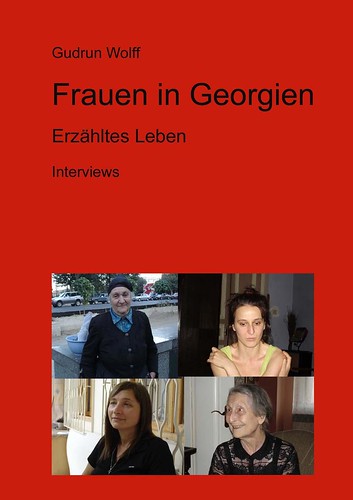
RADIO & PODCAST: Frauen in Georgien – erzähltes Leben. 3.1. zwischen 18.05 und 19.00 (wdr3.de)

Am 3.1. zwischen 18.05 und 19.00 kam auf WDR 3 ein 6-Minüter über "Frauen in Georgien". Hier der Link/Podcast (zum nachhören!): www.wdr3.de/resonanzen-weltweit

herausgegeben von Gudrun Wolff

Rund vier Millionen Menschen leben in Georgien, diesem uralten Kulturland zwischen Kaukasus und Schwarzem Meer. "Garten Gottes" wird es genannt: Denn als Gott die Länder an die Völker der Erde verteilte, verspäteten sich die Georgier, so die Legende. Sie hatten gefeiert und alles um sich herum vergessen. Gott hatte ein Nachsehen und überließ sein letztes Stückchen Erde dem singenden, fröhlichen Volk: seinen Garten eben. Die Autorin Gudrun Wolff interviewte zehn Frauen unterschiedlicher Generationen. Die Georgierinnen erzählen aus ihrer Familien- und Lebensgeschichte, die oft geprägt ist von patriarchalischen Geschlechterbeziehungen. Sie berichten über gesellschaftliche Umbrüche und geben den Kriegen im "Garten Gottes" Anfang der neunziger Jahre, zwischen ihrem Land und Abchasien, Südossetien, Russland, ein konkretes Gesicht.


Andrea Lieblang stellt das Buch vor

Frauen in Georgien – erzähltes Leben
herausgegeben von Gudrun Wolff
1. Auflage 2009
ISBN 978-3-00-027842-6
10,80 Euro


Zu bestellen über: www.frauen-in-georgien.pressguide.info

AmazonShop: Books, Maps, Videos, Music & Gifts About The Caucasus