Showing posts with label David Mdzinarishvili. Show all posts

Thursday, October 17, 2013

FOTOREPORTAGE: Abenteuerliche Seilbahn-Stadt in Georgien. Von David Mdzinarishvili (sueddeutsche.de)

A 60-year-old cable car passes above the town of Chiatura

(sueddeutsche.de) Der Weg zur Arbeit, zur Schule und zum Arzt ist in der georgischen Stadt Tschiatura luftig und klapprig. Manche Strecken sind ausschließlich mit 60 Jahre alten Seilbahnen zu bewältigen. Sie wurden gebaut, als in Tschiatura noch der Mangan-Abbau florierte. Der Fotograf David Mdzinarishvili ist für diese Fotos in einer Blechbüchse über Felsen und Schluchten gefahren.

Die Stadt Tschiatura liegt 220 Kilometer nordwestlich der georgischen Hauptstadt Tiflis am Kaukasus. Wer in der Stadt herumkommen will, hat vielerorts nur zwei Möglichkeiten: Er kann steile Felswände hinaufklettern und Schluchten herunterschlittern oder mit einer der 60 Jahre alten Seilbahnen hoch über der Stadt an Drahtseilen entlang gleiten. Mut kostet auf jeden Fall beides. Denn Technik und Material wurden nie erneuert, seit die Bergbau-Industrie nicht mehr floriert. Die Seilbahnen sind ein Relikt aus der Sowjet-Ära. Sie wurden gebaut, um den Abbau von Mangan zu erleichtern. Mit diesem Metall kann zum Beispiel Stahl gehärtet werden.

Die Seilbahnen gehören zwar den Bergbauunternehmen, werden aber als öffentliche Verkehrsmittel genutzt. Mit 15 von 21 Seilbahnen für den Personenverkehr fahren Arbeiter und Bewohner bis heute. Sie überwinden teilweise Steigungen von 48 Grad. Manchmal muss dabei mit Muskelkraft nachgeholfen werden.

A commuter pushes a 60-year-old cable car in the town of Chiatura

Das Seilbahnnetz von Tschiatura wurde seit Jahrzehnten kaum baulich verändert und renoviert. Die ersten Kabinen fuhren 1954. Im Vergleich zu hochmodernen Seilbahnen sehen sie aus wie Blechbüchsen. Die Fotos machte David Mdzinarishvili im September 2013.

A 60-year-old cable car passes above the town of Chiatura

Die Bahnen werden bis heute von Hand gesteuert. Zum Beispiel von dem 32-jährigen Georgier Lasha Ghughunishvili.

Ghughunishvili operates cable cars from his booth in the town of Chiatura

Von dieser Talstation können die Bewohner von Tschiatura in drei verschiedene Richtungen fahren. Das Bild wurde während eines Stromausfalls aufgenommen - der Verkehr war vorübergehend lahmgelegt.

People pass a cable car station that is not running during a power cut in the town of Chiatura

Die Seilbahn-Routen für den Personenverkehr sind insgesamt sechs Kilometer lang. Bis heute sind sie die schnellsten und praktischsten Fortbewegungsmittel für die Bewohner. Für Gütercontainer gibt es spezielle Strecken.

A cable car passes above the town of Chiatura

Bei den meisten Seilbahnen in Tschiatura sind zwei Kabinen an einem Seil befestigt. Sie halten und bremsen sich gegenseitig. Mit Motorkraft wird eine Kabine heruntergefahren, die andere wird von deren Gewicht zeitgleich hochgezogen.

A commuter looks out from a cable car in the town of Chiatura

Selten sitzen die Bewohner von Tschiatura allein in einer Kabine. Meistens warten die Arbeiter an den Stationen, bis auf beiden Seiten drei oder vier Menschen mit der Seilbahn fahren wollen.


Erst bei genauem Hinsehen erkennt man die beiden blauen Seilbahn-Kabinen hoch über Tschiatura. Die Landschaft ist geprägt von steilen Bergen und Schluchten.Vor fünf Jahren riss das Zugseil einer Seilbahn, das Bremssystem funktionierte nicht. Mehrere Stunden lang sollen die Passagiere über der Stadt gehangen haben, bis ein Rettungstrupp aus der Hauptstadt Tiflis anrückte. Für Besucher ist jede Fahrt eine Mutprobe.

Cable cars pass above an industrial area in Chiatura

Nicht nur die Seilbahnen, auch viele Wohnhäuser in Tschiatura sind marode. Mehr als 16.000 Menschen leben in der Stadt. Einst sollen es doppelt so viele gewesen sein, die weitgehend vom Bergbau gelebt haben. Heute stehen viele Wohnungen leer. Gas- und Wasserleitungen sind teilweise verrottet.

A cable car passes above apartment buildings in the town of Chiatura

Vor der Abfahrt verschließt eine Bahnbegleiterin die Türen. Auf einigen Strecken ist die Fahrt kostenlos, auf anderen müssen die Fahrgäste ein paar Cent zahlen. Immerhin ist der Nervenkitzel mit einer Achterbahnfahrt vergleichbar.

A conductor closes the doors of a 60-year-old cable car before its departure in the town of Chiatural

Wednesday, March 06, 2013

PODCAST: Why Stalin Remains Popular in Parts of Former Soviet Union (theworld.org)


People carry red flags and a portrait of the late Soviet leader Joseph Stalin during a ceremony to mark the 60th anniversary of his death in his hometown of Gori. (Photo: REUTERS/David Mdzinarishvili)
Photo: REUTERS/David Mdzinarishvili)


(theworld.org) Soviet dictator Joseph Stalin was one of the most murderous dictators of the 20th century. During his 30 year rule, tens of millions of Soviet citizens were arrested, deported, or executed. And yet a new survey of Russians and other ex-Soviets finds that far from being reviled, Stalin is widely admired, six decades after his death. That’s especially true in the former Soviet Republic of Georgia.
Tom De Waal, a senior associate at the Carnegie Endowment for International Peace, says Stalin is a figure not just of the past, but of the present.

“He’s very much there in the heads of the people all across what’s the former Soviet Union,” – which is why the Carnegie Endowment commissioned this survey on attitudes towards the dead dictator.

De Waal says support for Stalin, who died 60 years ago this week, has actually increased since the end of the Soviet Union. While Russians acknowledge that Stalin was responsible for the deaths of millions of innocent people, a majority say, more importantly, he saved the Soviet people from Nazi Germany.

That’s Russia.

But how is Stalin viewed in Georgia? After all, the most powerful dictator in Russian history was a cobbler’s son from Georgia. Traveling around Georgia, De Waal says he noticed pictures of Stalin everywhere. Yet until now, no one had ever commissioned a poll on attitudes towards Stalin in Georgia.

De Waal says they found that a whopping 45 percent of Georgians have a positive view of Stalin, “which is really quite shocking to anyone who knows Stalin as one of the great murderers of the 20th century.”
Only 20 percent had an unfavorable view of him.

“And he was really very cruel in Georgia, especially,” says Lasha Bakradze, director of the Georgian State Museum of Literature in Tbilisi.

Even though he’s Georgian, Bakradze was also taken aback to discover that so many of his countrymen admire Stalin.

“On one side, we like democracy, but on the other, we say Stalin wasn’t such a bad guy. It makes no sense.”
Bakradze says this kind of thinking is common in post-Soviet countries.

“People don’t see the big problem. They say, on one side he was killing many people, he was a butcher, but on the other side, okay, he was a big personality and somehow we like him.”

Bakradze thinks that for Georgians, this has nothing to do with nostalgia for Soviet times, nor is it a fondness for dictators.

“They are somehow proud of Stalin because he was a Georgian, and this mass murderer is a famous Georgian outside of Georgia.”

Bakradze teaches a college course on Soviet history, and he’s amazed at how little his students actually know about Georgia’s most famous — or infamous — son.

After Stalin’s death, Nikita Khrushchev denounced the crimes of his predecessor in a secret speech to Communist party officials in l956. Khrushchev also tore down all statues of Stalin, and erased his name from streets and towns across the Soviet Union.

But Stalin never really disappeared from Soviet Georgia. His childhood home in the town of Gori became something of a shrine, with a 20-foot bronze statue of him nearby.

Three years ago, Georgia’s pro-western President Mikheil Saakashvili had the statue taken down. Bakradze thought it was a bad idea, and spoke out against it.

“I think before we take down the monument,” he says, “we have to have a big discussion of Stalin period and Soviet period in Georgian history, which we haven’t ever had.”

Georgian President Saakashvili could have started that conversation, says Tom De Waal of the Carnegie Endowment, but he didn’t.

“Funnily enough, it’s exactly what Khrushchev did 50 years before, when he in the middle of night took Stalin out of the mausoleum in Red Square where he was lying next to Lenin. People woke up the next morning, and Stalin was gone. Saakashvili did the exact same thing in Gori. He took down the big Stalin statue. No public consultation.”

De Waal says that isn’t proper de-Stalinization.

“It’s removing the symptoms of Stalin, but it’s not removing the real Stalin from people’s minds.”
After the statue came down, there was a huge backlash. Now there’s a plan to put the statue back up, but just down the street.

Lasha Bakradze says Georgia, and other post Soviet countries, need to regain their historical memory.
“I think many, many problems which we have are problems coming from the Soviet times, problems of building democracy, independent thinking, and son on. And when we know better about Soviet times we will understand ourselves better. And we can solve these problems maybe easier than we are doing now.”
Stalin’s life and legacy would be a good place to start.
 

+++

In 2005, The World’s Patrick Cox visited Stalin’s home town of Gori (now in Georgia). Since then, the Georgian government has pulled down a statue of Stalin in Gori’s main square. But some local are as pro-Stalin as ever.


Read more:

Thursday, February 21, 2013

BILDER AUS ASERBAIDSCHAN: Die Ölarbeiter von Baku. Von David Mdzinarishvili (zeit.de)


(zeit.de) Ohne seine Ölvorräte wäre Aserbaidschan ein anderes Land. Seit dem 19. Jahrhundert wird um die Hauptstadt Baku Erdöl gefördert. Bis heute steuern die Erlöse aus dem Ölexport – auch nach Europa – mehr als die Hälfte zum Bruttoinlandsprodukt des Landes bei. Doch statt der weiteren Wirtschaftsentwicklung zu dienen, fließt viel Geld in Prunkbauten und die Armee des autokratischen Präsidenten Ilham Alijew. Zugleich hält der Boom der Ölindustrie andere Branchen klein. Aserbaidschaner, die nicht im Ölgeschäft arbeiten, haben wenig vom Reichtum ihres Landes.

12 Bilder hier >>>

Thursday, May 31, 2012

BLOG: Taking on Saakashvili. By Haley Sweetland Edwards (latitude.blogs.nytimes.com)

The Georgian-born billionaire Bidzina Ivanishvili.
The Georgian-born billionaire Bidzina Ivanishvili. Photo David Mdzinarishvili/Reuters


(latitude.blogs.nytimes.com) TBILISI, Georgia – On Sunday afternoon, Nika Tavadze led me backstage at the Marjanishvili Theater and into a small dressing room plastered with photographs, programs and curling posters of old plays.


Many Georgians would recognize Tavadze from his two decades playing leading roles on Georgia’s stages, and for his chiseled good looks — a friend described him as “the Brad Pitt of Georgia”— but I hadn’t come to ask about that. I wanted to know how he had found himself playing a bit part in the heated piece of political theater that’s been sweeping Georgia for the past six months.


Here’s the plot. Along with thousands of other actors, directors, artists, teachers and poets in this poor, South Caucasus nation, Tavadze’s meager salary has been quietly subsidized for the past 15 years by a once-reclusive Georgian-born billionaire, Bidzina Ivanishvili, who made a fortune in banking and investments after the fall of the Soviet Union. He is worth an estimated $6.4 billion.


Francois Lenoir/Reuters President Mikheil Saakashvili of Georgia. “He was like a phantom,” Tavadze told me. “We would all receive his money, but no one ever saw his face.”


All that changed six months ago when Ivanishvili announced he would enter politics as an opposition leader, becoming, overnight, the most credible threat to President Mikheil Saakashvili since his rise to power during the peaceful Rose Revolution in 2003. Saakashvili has long been a darling of the West for his promises to remake Georgia as a beacon of democracy in its rough neighborhood.


In October, Ivanishvili accused Saakashvili of faking his democratic aspirations and amassing a “total monopoly of power.” Ivanishvili assembled an opposition coalition, Georgian Dream, to take on the ruling party during this year’s parliamentary elections, scheduled for October. He also promised to defeat Saakashvili himself should the president run in next year’s race for prime minister.


And with that began a six-month mud-slinging, with both men claiming to be the savior of the country’s rickety democracy. Debate often veered toward the subject of Ivanishvili’s alleged “vote buying” through his vast network of patronage — hence Tavadze’s walk-on role in the theater of national politics.


Almost immediately after Ivanishvili entered the fray, Saakashvili and his party loyalists began behaving like goons. (A United Nations rapporteur put it a little more diplomatically: The Georgian government’s “generally positive trajectory” is in danger, he wrote in February, of succumbing to “a widespread climate of fear, intimidation and arbitrary restrictions of fundamental freedoms.”) In October, Ivanishvili was stripped of his Georgian citizenship on the basis of an infrequently-applied law (he’s currently appealing), and in the following months, his businesses and colleagues were subjected to police harassment, surveillance and arrest on trumped up charges, according to Irakli Alasani, Georgia’s former ambassador to the United Nations and now a prominent member of Ivanishvili’s Georgian Dream coalition.


Last month, the ominously-titled Chamber of Control, Georgia’s internal auditing agency, hauled in more than 100 Ivanishvili supporters, subjecting each to private interrogations lasting for several hours. Amnesty International called it a case of voter intimidation.


It’s easy to see why Saakashvili and his cronies would see Ivanishvili, whose wealth is roughly half of Georgia’s G.D.P., as an enormous threat. Over the past decade and a half, Ivanishvili has been dispensing gifts not only to cultural elites like Tavadze, but to the needy, too, paying for health care for poor children and subsidizing the meager pensions of the elderly and disabled. In his hometown of Chorvila, everyone got a brand new roof. He’s also contributed an estimated $600 million to a variety of government projects, one of Ivanishvili’s aides told me, helping to build everything from military barracks to schools.


In Georgia, where a significant portion of the population lives below the poverty line and the unemployment rate hovers at 16 percent, funding like that is not incidental, and it’s completely reasonable for the government to pass electoral reforms limiting corporate donations and strictly auditing campaign funding.


But the way Saakashvili’s government has gone about it — namely, passing two problematic amendments in December, and unleashing the Chamber of Control in March — has been duplicitous, undemocratic and downright disheartening, particularly for the international community, which has sunk more than $4 billion dollars into Georgia since 2008 on the hope that it would actually become that beacon of democracy that Saakashvili promised.


To take the broad view on Georgia’s future, it doesn’t much matter who wins the parliamentary horserace this year. What matters is that Georgia’s fragile democracy survives its first gloves-off electoral competition. It has been easy for Saakashvili to espouse the value of democracy when he has not faced a credible competitor. Now that he is up against a titan, he must live up to his democratic promises.


At the very least, in the coming months, Georgia’s increasingly heated political theater must be allowed to play out under the harsh scrutiny of a national and international spotlight.


Haley Sweetland Edwards is a freelance writer living in Tbilisi, Georgia.

Friday, April 06, 2012

ARTIKEL: Georgien: Saakaschwili legt Rivalen Steine in den Weg – "Moskowskije Nowosti" (de.ria.ru)

Bidsin Iwanischwili
© REUTERS/ David Mdzinarishvili
(de.ria.ru) Der 56-jährige Milliardär Bidsina Iwanischwili als größter politischer Rivale des georgischen Präsidenten Michail Saakaschwili darf nicht bei den Parlamentswahlen im Oktober kandidieren, schreibt die Zeitung „Moskowskije Nowosti“ am Donnerstag.

Die Behörden haben gestern Iwanischwili die Wiedereinbürgerung verweigert, dessen georgische Staatsbürgerschaft im Oktober 2011 von Präsident Saakaschwili per Dekret aberkannt worden war. Begründet wurde das damit, dass der Oligarch bereits die russische und die französische Staatbürgerschaft hätte. Wenige Tage zuvor hatte er aber seine politischen Ambitionen als Herausforderer von Präsident Saakaschwili zum Ausdruck gebracht.

Iwanischwili versuchte, die Aufhebung des Präsidentenerlasses vor Gericht durchzusetzen, allerdings erfolglos: Nur die Staatsbürgerschaft seiner Gattin Jekaterina Chwedelidse wurde wiederhergestellt. Sie wird offenbar die von Iwanischwili gegründete Partei „Georgischer Traum“ bei der Parlamentswahl anführen, falls es ihm nicht gelingt, einen georgischen Pass zu bekommen.

Ende 2011 hatte der Milliardär seine russische Staatsbürgerschaft aufgegeben.

Weil Iwanischwili nach Angaben des georgischen Justizministeriums nach wie vor französischer Staatsbürger ist, kann er keinen georgischen Pass bekommen. Deshalb müsse er sich unmittelbar an den Präsidenten wenden, der dann eine Entscheidung treffen werde. Wie viel Zeit dieses Verfahren in Anspruch nehmen könnte, ist jedoch unbekannt.

Iwanischwilis Anwalt Sakari Kuznaschwili sagte der „Moskowskije Nowosti“, die vom Justizministerium genannten Gründe für die Absage seien „illegal und aus dem Finger gesogen, weil jede Person, die um eine Wiederherstellung ihrer Staatsbürgerschaft ersucht, immer Bürger eines anderen Staates ist.“ Iwanischwilis Anwälte wollen Einspruch gegen die Entscheidung des Justizministeriums einlegen.

Der Milliardär rechnete offensichtlich damit, dass die georgischen Behörden sich nicht über die Empfehlungen aus dem Westen hinwegsetzen werden, alle Oppositionskräfte an der Wahl teilnehmen zu lassen.

Der georgische Experte Sosso Ziskarischwili erwartet demnächst „neue und deutlichere Signale von den westlichen Partnern, die jetzt keine Illusionen haben sollten, dass Saakaschwili die bevorstehende Wahl transparent und demokratisch durchführen würde“. Im Februar hatte der georgische Staatschef im Parlament versprochen, freie Wahlen durchzuführen. Zugleich sagte er, dass er alles für den Sieg seiner Partei tun werde.

Der demokratische US-Kongressabgeordnete Jim McDermott hatte sogar die Einstellung der Finanzhilfe für Georgien gefordert, wenn die für den Herbst angesetzte Parlamentswahl nicht nach demokratischen Regeln verlaufen sollte. Ob die Abstimmung demokratisch ist, soll das US-Außenministerium bestätigen. Seit 1991 hat Tiflis von Washington insgesamt drei Milliarden Dollar erhalten. In diesem Jahr soll es sich um 85 Millionen Dollar handeln. Der neue US-Botschafter in Georgien, Richard Norland, der sein Amt im Herbst antritt, sprach sich ebenfalls dafür aus, die Verwendung der Finanzhilfe genauer zu überprüfen.

Mitte April wird in Georgien US-Außenministerin Hillary Clinton erwartet, die sich nicht nur mit der Staatsführung, sondern auch mit Oppositionsvertretern treffen wird. Womöglich wird sie Saakaschwili warnen, dass die Nichtzulassung Iwanischwilis zur Wahl böse Folgen haben könnte.

Die Partei „Georgischer Traum“ gilt als stärkster Gegner der Regierungspartei „Vereinte nationale Bewegung“ bei der Parlamentswahl. Sollte Iwanischwili eine georgische Staatsbürgerschaft nicht zurückerhalten, dann wird seine Frau Jekaterina Chwedelidse in den Wahlkampf ziehen. In diesem Fall wäre aber der Erfolg seiner Partei fraglich. Laut Umfragen unterstützen bis zu 70 Prozent der Georgier die Wiedereinbürgerung des Milliardärs.

Friday, January 07, 2011

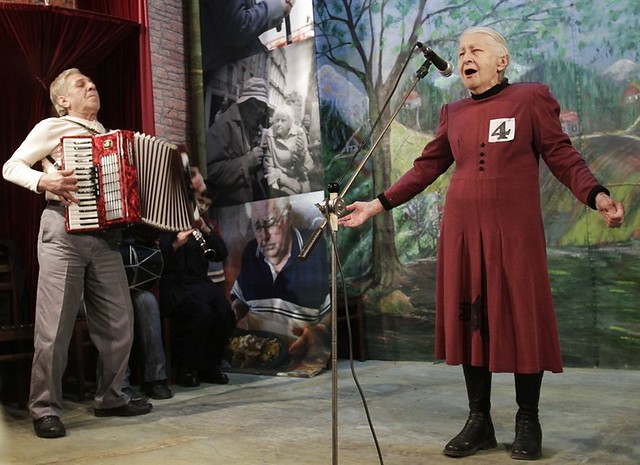
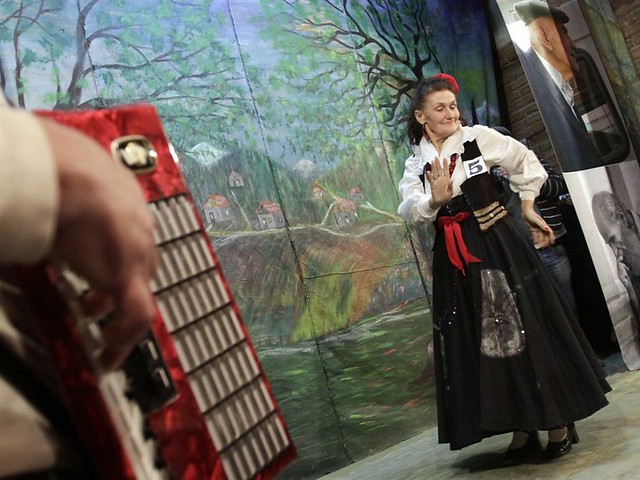
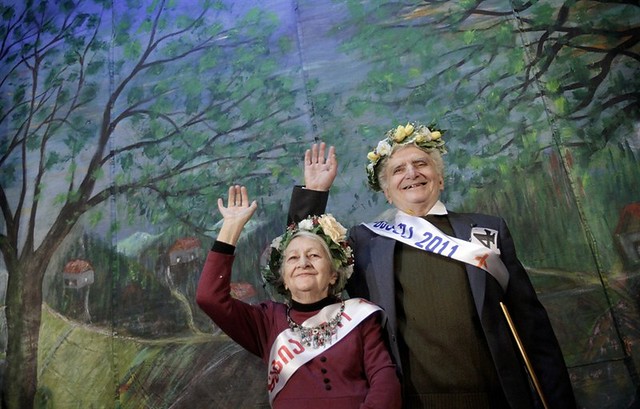
PHOTOGRAPHY: Works by David Mdzinarishvili. Tsiuri Kaka"Super Grandmother and Super Grandfather" winners selected in Tbilisi, Georgia

Carissa Ray writes: This competition to acknowledge the elderly residents of Tbilisi is pretty darn sweet. Click "Show more" below to see more contestants and the winners.
Source: photoblog.msnbc.msn.com

David Mdzinarishvili: Reuters Photographer in South Caucasus based in Tbilisi Georgia. Here I speak only for myself. more: twitter.com/#!/DavidMdzin


Tsiuri Kakabadze (R), 80, performs during the "Super Grandmother and Super Grandfather" contest in Tbilisi January 5, 2011. Twenty-four participants aged over 70 from all over Georgia attended the contest.


Marika Sikharulidze, 84, (R) and Vakhtang Goguadze, 70, wait backstage during the "Super Grandmother and Super Grandfather" contest in Tbilisi on Jan. 5.


Lira Arabuli, 72, performs during the "Super Grandmother and Super Grandfather" contest in Tbilisi on Jan. 5.


Tsiuri Kakabadze, 80, (L) and Yuri Merabov, 77, wave to spectators after winning the "Super Grandmother and Super Grandfather" contest in Tbilisi on Jan. 5.


Flickr >>>