Showing posts with label Sukhumi. Show all posts

Saturday, September 28, 2013

PHOTO ESSAY: Georgia: Two Decades Later, Still Searching for the Missing. By Paul Rimple, Molly Corso, and Justyna Mielnikiewicz (eurasianet.org)

(photogallery: eurasianet.org) The last time 76-year-old Venera Oshoridze saw her son, Kakha, was September 15, 1993.

A pensive 20-year-old who loved his friends, his mother’s fried potatoes, and dreamed of going to college, Kakha volunteered to fight in the Abkhaz war just days before Tbilisi lost the battle for Sokhumi on September 27, 1993.
“He wasn’t like the others. He was a quiet boy, always thinking about something,” Oshoridze said, pointing to photo of a serious young man with solemn brown eyes. 

Both of Oshoridze’s sons went to war, but while her elder son returned, Kakha vanished without a trace. Like nearly 2,000 other men and women (most of them Georgian) from the 1992-1993 war between Tbilisi and separatist forces in Abkhazia, he has been missing for the past two decades. 

Immediately after the conflict, Oshoridze started looking for her son, as scores of Abkhaz and Georgian parents joined forces to locate, identify and, when possible, rebury their children. 

The grassroots effort, eventually led by the Georgian non-governmental organization Molodini (Expectations) and the Abkhaz NGO Mothers of Abkhazia for Peace & Social Justice, used personal connections and references from government officials to find answers. 

Georgian parents like Oshoridze traveled to Abkhazia to search, learning firsthand of their children’s deaths through scraps of clothing and body remains. Working together with the Abkhaz, they unearthed and identified bodies based on fragments -- a bandaged arm, dollars folded in a pocket, the remains of a synthetic jacket.

Eventually, the bilateral search helped return 314 bodies to Abkhaz and Georgian families, according to historian Vladimir Dobordjginidze, who, together with the current Georgian state minister for reintegration, Paata Zakareishvili, was involved in the initial project. 

Finding the missing and returning the dead, noted Dobordjginidze, whose son, Zura, disappeared during the fight for Sokhumi, is a non-political issue that provided a connection between Abkhaz and Georgians. “We had great contacts [with the Abkhaz],” he said. “My son died, but that does not mean I am mad at them. We met as ordinary people.”

The Abkhaz also emphasize the “humanitarian” nature of the initiative. “In the Caucasus, it’s important to go to your loved one’s grave. [It’s] like a birthday,” said Asida Lomaia, a project associate for the Mothers of Abkhazia for Peace & Social Justice. Her cousin, Arzamet Tarba, is among those missing. 

“It doesn't matter what nationality -- you keep hope that they may be alive.”
The 2008 war between Russia and Georgia, which resulted in Moscow formally acknowledging breakaway Abkhazia and South Ossetia as independent states, has complicated the search for the missing.


The last exchange, in 2006, involved the return of 62 bodies from a mass grave of 95 Georgians at Sokhumi’s Babushera Airport. (And the return of the living as well -- two young women, said Dobordjginidze).

Another two bodies from Sokhumi were sent to Georgian families “via independent channels” this spring, according to Leonid Lakerbaia, Abkhazia’s de-facto prime minister.


The 2008 war heightened the sensitivity of these joint searches for both sides, but also provided a new urgency for finding the missing. Inspired by the success of an ICRC-organized mission in breakaway South Ossetia, the Abkhaz and Georgians agreed to a Red-Cross proposal for a similar format for identifying the missing from the 1992-1993 war.

Kakhaber Kemoklidze, head of the analytical department at the Ministry of Interior Affairs in Tbilisi, said the ministry, which keeps records on missing individuals from the Abkhaz war, is willing to help efforts to locate and identify the missing. But, Kemoklidze added, it is as much an issue of trust as it is of political will.

Cooperation with de-facto Abkhaz authorities has not always been easy, Kemoklidze noted, adding that the ICRC’s role as mediators is “really important and invaluable.”

Lakerbaia agreed that the present operation would not be possible without the Red Cross’ help. “I don’t see any straight cooperation with Georgia possible,” he said, “but we have a common goal -- to find unknown remains, identify them and return them to their relatives. That’s the main task for all of us.”

Under the ICRC’s oversight, two official representatives from each side meet once a year in neutral locations, such as Istanbul, Kyiv and Yerevan, to compare and exchange lists of names and information on gravesites. The information includes how bodies were buried, their condition, and the names of any witnesses of the death or burial. 

Agreement now has been reached to continue the search at Sokhumi’s Glory Park, where the bodies and remains of 63 unknown individuals are buried. The ICRC recently sent DNA samples from this first batch of remains, exhumed by Argentine forensic scientists, to Zagreb, Croatia for comparison with DNA from families of the missing. Russia, which has troops stationed in Abkhazia, is not involved in the process.

Meanwhile, the families wait. “The exhumation process for many mothers is a starting process of non-acceptance to acceptance. The families need some sense of closure,” said Khatuna Logua, a psychologist at the ICRC office in Sokhumi.
Psychological counselling for these families, whether in Sokhumi or Georgian-controlled territory, has not been an official priority. “Some people don’t want to believe their relatives are dead,” said Logua. “You hear people talk of fantasies of secret prisons [containing the missing] on both sides.”

So far, noted Oshonidze and other Georgian parents, time has worked against identification efforts. Surviving family members of the missing have died or moved, taking with them vital information that could help identify bodies.
For Georgian pensioner Tristin Andriadze, whose son, Konstantin, went missing in October 1993, the only hope is that families on both sides will be given another chance to find their loved ones. “After so many years, it is likely they are dead, but, in my heart, I still have hope that something will be found; at least, where they were buried,” he said. 

Editor's Note: 
Molly Corso is a freelance journalist who also works as editor of Investor.ge, a monthly publication by the American Chamber of Commerce in Georgia. Paul Rimple is a freelance reporter based in Tbilisi. Justyna Mielnikiewicz is a freelance photojournalist also based in Tbilisi.

Saturday, October 10, 2009

BLOG: Photos from Sukhumi (cyxymu.livejournal.com)


Friday, August 21, 2009

PHOTOGRAPHY: Сухуми, май 2009 г (cyxymu.livejournal.com)

Сухуми cyxymu is one of the well-known blogger from the sout caucasian area. On his blog there was a hacker attack weeks ago. But for me ... very often I visited his blog. The photographies in this blog are very amazing. Differents moods and facts of realty from Abkhasia you can watch there.

Sunday, July 05, 2009

NEWS: 3 Jul 09 | Caucasus Reporting Service 500 (iwpr.net)

Baku’s Warming Ties to Israel Anger Iran
Tehran’s attempt to scupper Israeli president’s visit gets nowhere, as Baku decides ties to Israel take priority over Islamic solidarity. By Kenan Guluzade in Baku (CRS No. 500, 3-July-09)
UN Withdrawal Leaves Border Georgians Fearful
Georgian minority in Abkhazia feels especially exposed now international monitor are packing their bags. By Irakli Lagvilava in Zugdidi and Anaid Gogorian in Sukhum (CRS No. 500, 3-July-09)
Armenia: Departing Phone Giant Claims Unfair Competition
Russian firm’s pull-out reignites debate on extent of illegal imports. By Armenak Chatinian in Yerevan (CRS No. 500, 3-July-09)

Saturday, June 06, 2009

REISE: Wie kommt man von der Krim über Abchasien nach Georgien? Ist das möglich?

Mein Freund, der Filmemacher und Regieassistent Sebastian kaiser plant eventuell im Sommer auf die Krim zu fahren und von dort nach Georgien weiterzureisen. Von Kertsch auf der Krim kann man mit der Fähre nach Russland übersetzen; von dort würde er sich irgendwie nach Sotschi durchschlagen. Die Frage ist jetzt, wie er von Sotschi nach Tblissi kommt? Kann da jemand mit Informationen weiterhelfen? Am liebsten würde er ja durch Abchasien fahren, also erst nach Suchumi und von dort dann irgendwie, wenn es geht mit dem Zug, nach Tblissi. Er möchte gern wissen, ob das möglich ist. Noch ein paar konkrete Fragen:

1) Kommt man als Deutscher nach Abchasien rein, wenn ja, mit welchem Visum? Wo bekomme ich dieses Visum, an der Grenze oder in der Botschaft (wenn ja, in welcher)?
2) Weißt jemand, ob es ein durchgehendes Transportmittel von Suchumi nach Tblissi gibt, Bus oder Zug?
3) Wenn man nicht durch Abchasien fahren kann, weißt Du, wie ich von Suchumi sonst nach Tiblissi komme? Gibt es zum Beispiel einen Zug, der von Sotschi über Wladikawkas nach Tblissi führt?


Es wäre wirklich toll, wenn jemand mir mit Infos weiterhelfen könnte!

Viele Grüße aus dem kalten Berlin
Sebastian Kaiser

Kontakt: skaberlin@web.de

Wednesday, June 03, 2009

PHOTOGRAPHY: Sukhumi - May 2009 (cyxymu.livejournal.com)

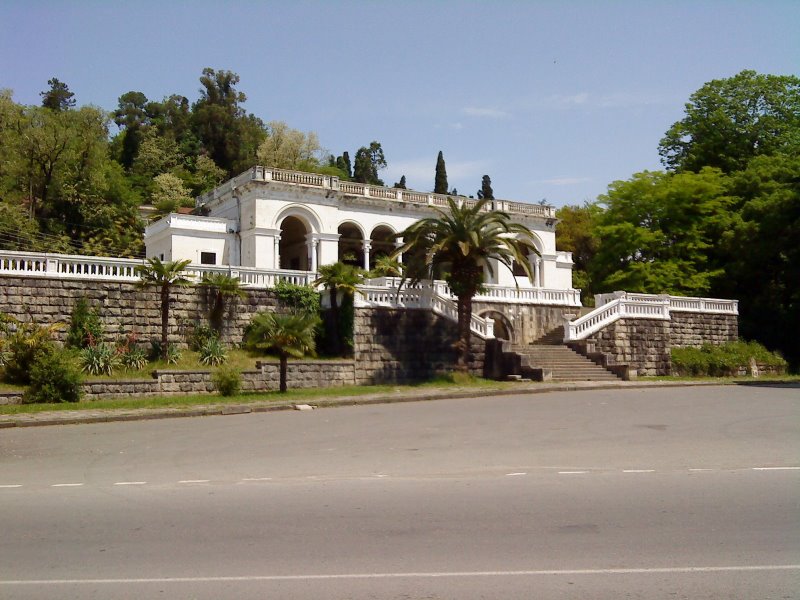
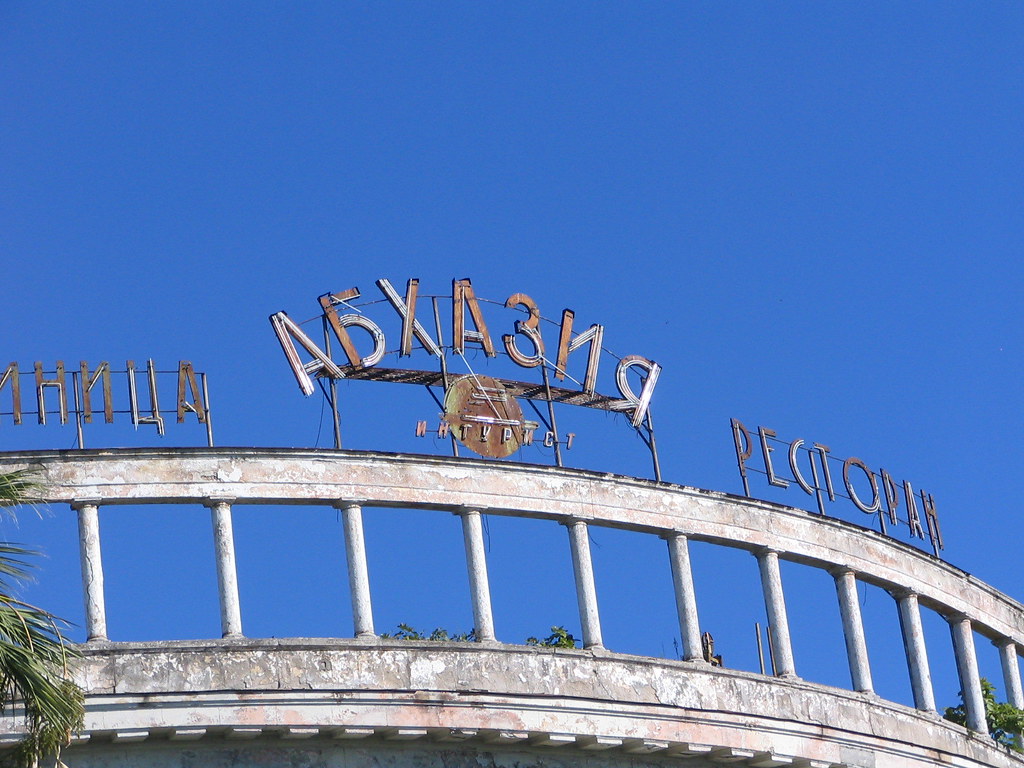
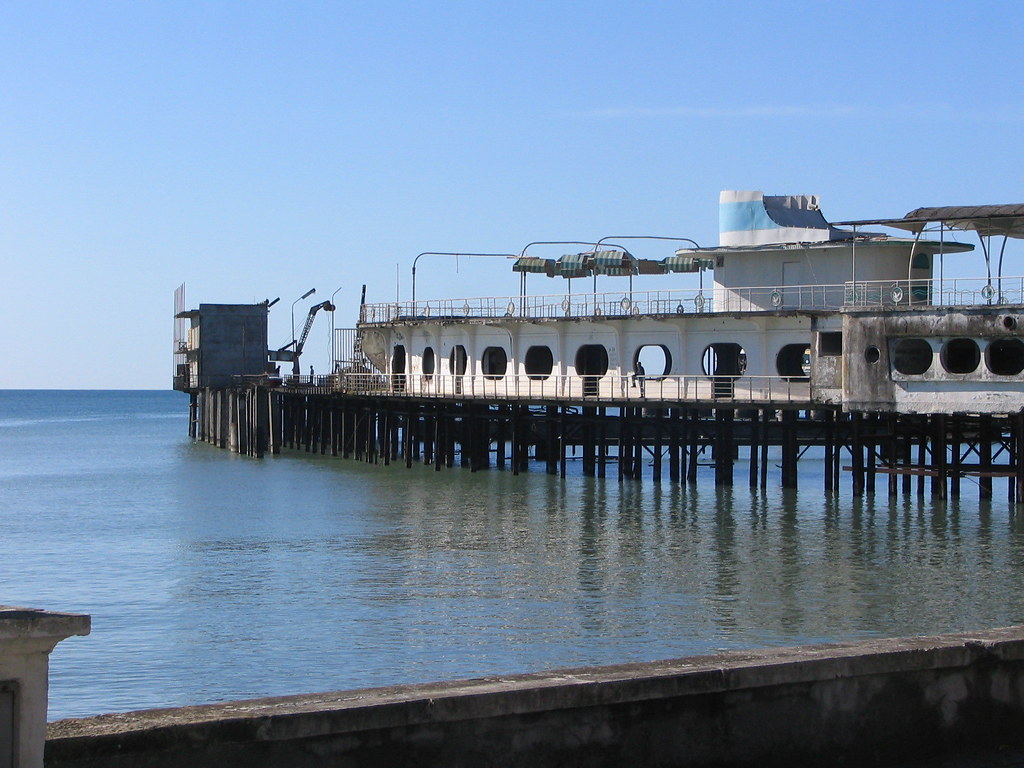
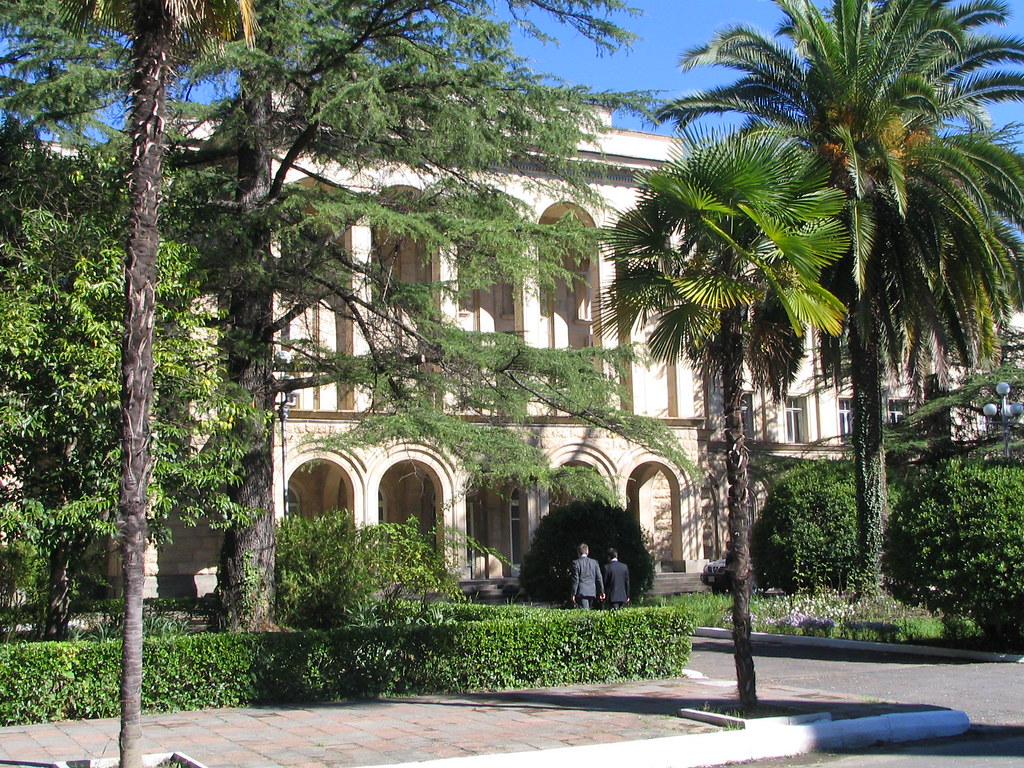
Today I find in my google-reader very interesting photos about Sukhumi again. In the last weeks I posted here some photos from this blog. Sukhumi looks like an old diva. You can feel the charm of this city from earlier times. But now the city is also in the late spring very empty. The streets are without traffic and human life. It is a synonym for a paradies without people.

more photos here >>>


app. photos from june in Sukhumi >>>

Saturday, May 30, 2009

BLOG: Georgien gewinnt den Fashion-Krieg (caucasusreports.blogspot.com)

Das Benetton geschäft in Georgien war für einige Tage proteshalber geschlossen aufgrund der türkischen Initiative ein gleichnamiges geschäft in Suchumi, der Hauptstadt der separatistischen Region Abchasien zu öffnen. "Protest gegen die Eröffnung eines Geschäftes in Suchumi" konnte man in den Schaufenstern des Benetton-Geschäftes in Tbilisi lesen.

Abchasien ist eine separatistische Region Georgiens nach dem Bürgerkrieg inden frühen 90-igern; Russland hat es als unabhängigen Staat anerkannt. Die Georgier jedoch betrachten Abchasien als einen Teil ihres souveränen Territoriums.

Jedes internationale Investment ohne die Erlaubnis Georgiens wird kriminalisiert.

A statement said the company had reversed its decision to "decrease tension that would have nothing to do with a commercial firm".

Der ganze Text (in englisch - by Matthew Collin) >>>

Friday, May 29, 2009

PHOTOGRAPHY: Sukhumi 2009. (cyxymu.livejournal.com)


more photos >>>

Saturday, August 23, 2008

OPEN-DEMOCRACY: Russia, Iran and the War in The Caucasus. (opendemocracy.net)

Russia and Iran: crisis of the west, rise of the rest, Paul Rogers
The military and political leaders of the United States and Europe could be forgiven in August 2008 for recalling the English phrase "it never rains, but it pours". For they are currently faced by a series of security problems in relation to Russia, Afghanistan and Iran, each of which is testing in its own right but which together strain their resources (and perhaps nerves) to the limit. These are only part of a chain of problems for strategists of the "west"
(a category... more »

Before and after war, Zygmunt Dzieciolowski
The Abkhaz capital Sukhumi never was just a Black Sea holiday resort, unlike the towns of Pitsunda and Gagra. It was always an administrative centre, capital of the region.
The Parliament, National Security Council and Ministry of Foreign Affairs occupy a block of buildings looking out over the sea. Once, a statue of Lenin adorned the square. While Lenin has gone, this part of Sukhumi still looks like a Soviet theme park, separated from the outside world as it has been for years.
... more »

Russian war and Georgian democracy, Ghia Nodia
Russia says it has started pulling back from Georgian soil, but there are few if any signs that it means business. Therefore, the war is not over yet. Despite this, Neal Ascherson and Ivan Krastev have on openDemocracy already started taking stock of the possible results of the war. I will join them in these attempts - though all of us should understand that while Russia continues trying to change the situation on the ground through military means, any such assessments can only be rather... more »

openDemocracy.net/Russia reports, debates and blogs the Georgia war

Friday, August 15, 2008

NEWS: 14 Aug 08 | Caucasus Reporting Service 454

IWPR IN ACTION: NEW: Rolling News of Georgian Crisis in Russian

Abkhaz Open "Second Front"
Abkhaz seize key valley held by Georgian troops dealing further blow to beleaguered Tbilisi government. By Inal Khashig in Sukhum (CRS No. 454, 14-Aug-08)

Armenia Offers Safe Haven for Fleeing Georgians
Thousands cross border, as opposition blames president for delay in returning from Olympics. By Naira Melkumian in Yerevan and Bavra (CRS No. 454, 14-Aug-08)

Thursday, June 05, 2008

ARTIKEL: Fast alles, was ein Staat so braucht

Sehr geehrte Damen und Herren, liebe Südkaukasus-Interessierte, anbei ein journalistisches Stück über Abchasien aus der Berliner Zeitung, mit einigen – wie ich finde – recht authentischen Schilderungen.

Mit freundlichen Grüßen

Walter Kaufmann
-------------------------------------------
Walter Kaufmann
Director
Heinrich Boell Foundation
Regional Office South Caucasus
5, Radiani str., 0179 Tbilisi, Georgia
T: +995-32-227705
F: +995-32-912897
E:
kaufmann@boell.ge
http://www.boell.ge/


Abchasien kämpft um seine Unabhängigkeit, Georgien hält dagegen. Das kleine Land am Rande des Kaukasus rückt erneut ins Zentrum der Weltpolitik
Von Christian Esch, Berliner Zeitung, 03.06.2008

SUCHUMI. Das Meer, das alles sieht und alles vergisst, liegt glatt und ruhig in der Sonne. Am Ufer, im Schatten der Seepromenade, plätschert das Gespräch der alten Männer an den Dominotischen - so wie es gestern schon plätscherte und vorgestern, vor dem Krieg. Damals, als Suchumi noch der glückliche Ort eines Weltreichs war und nicht die Hauptstadt eines halb zerstörten, halb entvölkerten Zwergstaates.

mehr >>>

Wednesday, August 22, 2007

PHOTOGRAPHY:

Photos from Sukhumi, Abkhasia


Uploaded on August 21, 2007 by Faranji

More from Abkhazia

Thursday, July 12, 2007

BLOG:

Lyndon Allin descovered a blog about Abkhasia & Sukhumi

The article there are here: Russia, Georgia: Visas, Wine and the WTO
Sunday, June 3rd, 2007 @ 16:05 UTC by Lyndon Allin


Cyxymu is the most widely read and commented on blog about Abkhazia that I’ve seen. It’s written, I believe, by a refugee (or, rather, internally displaced person) from the conflict. The blog’s full title is “Memories of Sukhumi, the war, and pain,” which gives you some idea of its focus, although recently the author has written a bit about the conflict in South Ossetia as well. It often has photos of Sukhumi and other places in Abkhazia, along with reminiscences from the blog’s author or others in the comments section, and it has a consistent community of readers/commenters who guarantee a lively dialogue and often add their own very interesting information about goings-on in Abkhazia.


Source: cyxymu.livejournal.com

Artur Papyran - also a writer from Global Voice - about Nagorno Karabakh

Nagorno Karabakh conflict: “Liberated Territories” in Focus Artur Papyan · 15:31

The Armenian blogosphere is full of speculations about the seven regions in Azerbaijan currently under the control of Armenian and Karabakh forces, which are referred to as the “Liberated Territories” by those with a more nationalistic perspective. Now that the parliamentary elections are behind us the international community is once ... 3 comments · »»