Showing posts with label Tinatin Gurchiani. Show all posts

Tuesday, April 21, 2015

DOC MARKET: Focus 2015 | Georgia - Georgia in focus at Swiss film festival (agenda.ge)

Salomé Jashi, Bakhmaro (2011)
(agenda.ge) Georgia will be at the heart of the prestigious documentary film festival, Visions du Réel 2015.

Georgia, a little-known filmmaking nation, will feature in the Focus section of the festival, held from April 19 to 22 in Nyon, Switzerland.

Festival guests will have the possibility to discover contemporary Georgian documentary cinematographic landscape through six projects and 15 films, which will feature in the 2015 Focus.

Festival organisers said the aim of the Focus section was to "shed light on contemporary film production and stimulate international collaboration with Georgia”.

"Georgia has always offered very high-quality film. You only need to think of all the great filmmakers that have come from this country – such as Otar Iosseliani, Michail Ciaureli, Eldar and Giorgi Shengelaia, Tenghiz Abuladze – to be convinced of this," said director of Visions du Reel Luciano Baritone.

"At the moment, this country has many highly talented directors and producers, particularly in the documentary field. For Visions du Réel, the choice to highlight Georgia is a manner of supporting this creative impetus,” Barisone said.

At the festival newcomer filmmakers will get the chance to personally present their projects alongside screening of their films.

Representatives of the Nyon film festival will have already chosen six Georgian projects, from which one will be awarded the title of winner and receive a prize of 10 000 Swiss Franc ($10,437 USD) by ‘visions sud est’ for Most Promising Project.


Selected projects – Focus Georgia 2015

City of the Sun, by Rati Oneli
Didube, The Last Stop, by Shorena Tevzadze
Love Song. Pastorale, by Tinatin Gurchiani
Tariela, Tariela, by Giorgi Mrevlishvili
The Pioneers' Palace, by Ana Tsimintia
The Station, by Salome Jashi

At the final part of the festival, a Georgian evening will be held where Georgian culture will be showcased from all angles.

The Focus section of the Visions du Réel is supported by the Swiss Agency for Development and Cooperation (SDC), the ‘visions sud est’ fund and the Georgian National Film Centre.

+++

(visionsdureel.ch) For the fifth time, Visions du Réel and the DOCM shed light on a budding yet little-known filmmaking country. The Focus aims to draw attention to committed directors and captivating films, as well as encouraging international collaboration within co-production and distribution. Georgia will be at the heart of the 2015 Focus.

Georgia is at the heart of the 2015 Focus.

Georgia has always offered very high-quality film. You only need to think of all the great filmmakers that have come from this country – such as Otar Iosseliani, Michail Ciaureli, Eldar and Giorgi Shengelaia, Tenghiz Abuladze – to be convinced of this”. At the moment, this country has many highly talented directors and producers, particularly in the documentary field. For Visions du Réel, the choice to highlight Georgia is a manner of supporting this creative impetus.

Luciano Barisone, Director of Visions du Réel

The Focus talk welcomes Georgian guests (directors, producers, institutional representatives) who explore the Georgian cinematographic landscape of the past decade as well as the current production and funding situation. Furthermore, five selected projects are presented by their directors/producers with an opportunity for one-to-one meetings. A prize of 10'000 CHF will be awarded by visions sud est to the most promising project.

In parallel, the Festival also program about ten Georgian projects as part of the Focus section.

Selected projects – Focus Georgia 2015

City of the Sun, by Rati Oneli | Géorgie – OFA/Liber8Films, Dea Kulumbegashvili and Jacob Sebiskveradze
Didube, The Last Stop, by Shorena Tevzadze | Géorgie – Real E.T. Films, Nikoloz Gogochuri
Love Song. Pastorale., by Tinatin Gurchiani | Géorgie – TT Films, Tamar Gurchiani
Tariela, Tariela, by Giorgi Mrevlishvili | Géorgie – Caucasian Filmodrom, Rusudan Pirveli
The Pioneers' Palace, by Ana Tsimintia | Géorgie/Lituanie – Matchhouse Films /Anaben Film, Esma Berikishvili and Bernardas Andriusis
The Station, by Salomé Jashi | Géorgie/Allemagne – Sakdoc/inselfilm, Salomé Jashi, Urte Fink and Gregor Streiber

Films programmed – 2015 Focus Georgia

Akhmeteli Street No.4, by Archil Khetagouri, Georgia, 2006, 65'
America in One Room, by David Kandelaki, Georgia, 2007, 53'
Reflection, by Giorgi Mrevlishvili, Georgia/Germany, 2010, 11'
Bakhmaro, by Salomé Jashi, Georgia, 2011, 58'
Biblioteka, by Ana Tsimintia, Georgia/Lituania, 2014, 54'
The Bridge, by Vano Arsenishvili and Nino Orjonikidze, Georgia, 2005, 33'

Let You Always Sing, Mother!, by Zurab Inushvili, Georgia, 2008, 75'
The Machine Which Makes Everything Disappear, by Tinatin Gurchiani, Georgia, 2012, 97'
Meidan, Nave of the World, by Dato Janelidze, Georgia, 2005, 50'

The Pipeline Next Door, by Nino Kirtadzé, Georgia/France, 2005, 90'

Pirimze, by Sophia Tabatadze, Georgia/Germany, 2015, 41'
The Ruler, by Shalva Shengeli, Georgia, 2014, 53'
Speechless, by Salomé Jashi, Géorgie, 2009, 12'
Lives in Transit, by Tamuna Jalaghania-Brisson et Valérie Léon, Georgia/France, 2010, 33'

Will There Be a Theatre up There?, by Nana Janelidze, Georgia, 2011, 55'

visions sud est 2015 award | Focus Georgia

The Swiss fund production helper visions sud es in collaboration with Visions du Réel and with the support of the Swiss agency for Development and Cooperation (SDN), supports cinematographic productions from Asia, Africa, Latin America and Eastern Europe. It aims to make the promotion of these films internationally and guarantees their distribution in Switzerland.

visions sud est will award a 10.000 CHF prize to the most promising projet.

Tuesday, October 07, 2014

FILM: Georgia’s female filmmakers shine at Korean film festival (agenda.ge)

(agenda.ge) The work of some of Georgia’s leading female filmmakers will reach an international audience when it goes on show at one of Korea’s top film festivals this month.


"A Story of Mountainous Racha",
1930 by first female film director Nutsa Gogoberidze
Twelve films with Georgian female directors will be showcased at the 19th Busan International Film Festival (BIFF) in South Korea.

This year the BIFF established a special program devoted to Georgia in order to introduce newly emerged female directors and highlight their significance in Georgian cinema history. The work of male Georgian filmmakers will also be presented at BIFF.

+++

"The Power of Georgian Women Filmmakers is not only significant for showing films directed by women but this is an opportunity to show social issues, contradiction, discrimination and conflict seen in Georgia through 12 films by female directors. Regardless of gender, the new cinematic aesthetics of Georgian films will be delivered to audiences,” stated the BIFF website."

+++

This year’s special program will feature 12 films including A Story of Mountainous Racha directed in 1930 by Georgia’s first female film director Nutsa Gogoberidze.

As well as holding this impressive title, Gogoberidze was the start of a three generational line of female film directors. Her daughter Lana Gogoberidze directed Day is Longer than Night, which was introduced at the Cannes International Film Festival in 1984, and her granddaughter Salome Alexi currently worked as a film producer and director.

The BIFF will create an opportunity for viewers to watch works from all three women in the Gogoberidze family, as well as works from other Georgian female directors.

While the work of female Georgian filmmakers will be honoured, other Georgian movies by male filmmakers will also be presented at BIFF.

In the World Cinema section of the festival, 55 films from 33 countries will take part, including Georgian film Corn Island, directed by George Ovashvili. The film wowed critics at July's 49th Karlovy Vary Film Festival where it won the $25,000 Crystal Globe top prize.

The focus of the BIFF was to introduce new films and first-time directors, especially those from Asian countries. Another notable feature was the event’s appeal to young people, in terms of the youthful audience it attracted and through its efforts to develop and promote young talent.

The work of Georgian female filmmakers at BIFF is:


Sunday, February 09, 2014

KULTUR: Georgien zu Gast im Gasteig - Veranstaltungsreihe "Tiflis - Leben in einer neuen Zeit" (in-tiflis.de)

(in-tiflis.de) Zwischen dem 19. März und 8. April 2014 in München


Fünf Veranstaltungen widmen sich in diesem Frühjahr im Münchner Gasteig der gegenwärtigen Kultur und Gesellschaft Georgiens. Ein eindrucksvolles Porträt des aufstrebenden Landes setzt sich wie ein Mosaik zusammen aus der Darstellung des Lebensalltags von Menschen in der Hauptstadt Tiflis und aus dem jüngsten Schaffenswerk von Künstlern und Literaten.

Das südkaukasische Land Georgien war in den gut 20 Jahren seit dem Zerfall der Sowjetunion zunächst von Not, fehlender Infrastruktur, Alltagskriminalität und Korruption geprägt, befindet sich jedoch nun in einer Phase wirtschaftlichen Aufschwungs, demokratische Aufbruchsstimmung macht sich breit. Wie spiegelt sich dies im Leben einzelner Menschen wider?

In einer Fotoausstellung samt begleitender Buchpublikation porträtiert die Münchnerin Lisa Fuhr

34 Menschen in Tiflis und spürt somit die heutige gesellschaftliche Realität Georgiens auf. Begleitend dazu finden eine Lesung mit bekannten Autoren des Landes, ein Chorkonzert mit georgischer Musik in ihrer typischen Polyphonie, die Vorführung eines jungen, vielfach international prämierten Dokumentarfilmes und ein Vortrag zur neueren Geschichte des Landes statt:

FOTOAUSSTELLUNG „Tiflis – Leben in einer neuen Zeit" 
19. März bis 8. April 2014. Gasteig München, Glashalle 1. OG – Eintritt frei

Lisa Fuhr, Fotografin, Projektinitiatorin und Veranstalterin, begegnete 34 Menschen in Tiflis, die verschiedenen Generationen, sozialen Milieus und ethnischen oder religiösen Gemeinschaften angehören. Manche sind noch von der sowjetischen Zeit geprägt, andere haben kaum mehr Erinnerung daran. Für manche haben sich die Lebensperspektiven zum Positiven verändert, andere mussten sich von ihren ursprünglichen Lebensentwürfen verabschieden und sich völlig neu positionieren. Die Menschen werden in ihrem unmittelbaren Umfeld gezeigt, ob zu Hause oder am Arbeitsplatz, und sind als Porträts in Form von Bild und Text ausgestellt.

PUBLIKATION "Tiflis - Leben in einer neuen Zeit: 34 Porträts" von Lisa Fuhr
icon verlag, München. Erscheinungsdatum: Mitte März 2014

Parallel zur Ausstellung erscheint eine Publikation, die das Leben der 34 interviewten Personen ausführlich in Wort und Bild darstellt. Das Vorwort stammt von Dato Turaschwili, der sein eigenes literarisches Werk im Rahmen des weiteren Veranstaltungsprogramms in München vorstellen wird.

LESUNG „Postsowjetische Literatur aus Georgien“
20. März 2014, 20 Uhr. Gasteig München, Raum 0.131 – Eintritt frei

Zu Gast sind zwei renommierte, mehrfach prämierte georgische Gegenwartsautoren, die Umbruch und Transformation in ihrer Gesellschaft miterlebt haben und in ihrer Literatur auf unterschiedliche Art darstellen.

Beso Khvedelidze gilt als Meister der georgischen ‚short story‘. Seine Texte überraschen durch surreale Wendungen, die von der absurden Lebenswirklichkeit in Zeiten gesellschaftlichen Umbruchs inspiriert sind.

Dato Turaschwili schreibt Prosatexte, Theaterstücke, Reiseberichte und Drehbücher. Als sozial und politisch engagierter Autor verfasste er den Roman „Die Jeans-Generation“, der von spätsowjetischen Jugendlichen in ihrem Streben nach Freiheit handelt. Die deutsche Ausgabe erscheint im Herbst 2014 im Wagenbach Verlag.

Der Frankfurter Literatursalon EUTERPE lädt zu dieser Lesung ein. Sie wird moderiert von Manana Tandaschwili, Professorin für kaukasische Sprachwissenschaften an der Frankfurter Goethe-Universität. Es übersetzt Anastasia Kamarauli.

CHORKONZERT „Iberisi“
23. März 2014, 11 Uhr. Gasteig München, Black Box – Eintritt 12 Euro, erm. 8 Euro

Der einzigartige Klang Georgiens beruht auf sieben Polyphonien aus den verschiedenen Regionen des Landes und wurde über Jahrhunderte weitergegeben. Manche Lieder gelten als die ältesten überlieferten Melodien der Welt und wurden in das UNESCO-Weltkulturerbe aufgenommen. Der gemischte Chor Iberisi unter der Leitung von Davit Kintsurashvili ist im Münchner Raum angesiedelt und wird bei diesem besonderen Konzert Lieder mit christlich-orthodoxer wie auch weltlicher Tradition darbieten.

FILMVORFÜHRUNG „The Machine which Makes Everything Disappear“ von Tinatin Gurchiani
(Dokumentarfilm Georgien / Deutschland, 2012) 97 Minuten. Georgisch mit englischen Untertiteln.
3. April 2014, 20 Uhr. Gasteig München, Vortragssaal der Bibliothek – Eintritt 7 Euro, erm. 5 Euro

Wie leben, fühlen, träumen junge Menschen in Georgien? Die unter anderem auf dem Sundance Festival 2013 mit dem Preis für die beste Regie ausgezeichnete Filmemacherin Tinatin Gurchiani begab sich für ihr Debüt auf ein Experiment und lud mehrere 15- bis 23-Jährige zu einem Filmcasting ein. Aus den Begegnungen mit der Kamera entfalteten sich berührende Lebensgeschichten. Die Regisseurin wird bei der Filmvorführung anwesend sein.

VORTRAG von Lasha Bakradze „Sowjetgeorgien – ein Rückblick“
6. April 2014, 20 Uhr. Gasteig München, Vortragssaal der Bibliothek – Eintritt frei

Der Germanist und Historiker Lasha Bakradze, der heute in vielen Bereichen des Kulturlebens von Tiflis tätig ist, blickt in seinem Vortrag auf die politischen und gesellschaftlichen Entwicklungen der letzten hundert Jahre in seiner Heimat zurück: von der kurzzeitigen Unabhängigkeit des Landes am Ende des ersten Weltkrieges, über die Sowjetherrschaft und dem ambivalenten Verhältnis zum Nachbarn Russland nach der Unabhängigkeit 1990 bis hin zur Hoffnung der Menschen auf eine bessere Zukunft, die nun seit den Regierungswahlen 2012 im Land zu verspüren ist. Um zu verstehen, was es mit dem „Leben in einer neuen Zeit“ auf sich hat, lohnt sich ein Blick in die Vergangenheit.

HINTERGRUND

Das Projekt „Tiflis – Leben in einer neuen Zeit“ entstammt der Privatinitiative von Lisa Fuhr. Die Münchner Fotografin und Autorin hielt sich im Laufe der letzten drei Jahre mehrmals in Tiflis auf und drang voller Neugier immer tiefer in Kultur und Gesellschaft des Landes ein. Die studierte Anglistin, die zuvor jahrelang für das Goethe-Institut tätig war und später als Übersetzerin für Film und Fernsehen arbeitete, erklärt selbst: „Schon immer habe ich mich dafür interessiert, in anderen Ländern hinter die Kulissen zu schauen, immer hat mich der Blick ins Leben einzelner Menschen mehr interessiert als die leichter zugänglichen Schönheiten eines Landes. Mit Georgien weckte nun zum ersten Mal eine Region der ehemaligen Sowjetunion mein Interesse. Der Faszination des Südkaukasus mit seiner bewegten Geschichte des Vielvölkerstaates konnte ich mich nicht entziehen.“

Das Projekt wird gefördert vom Kulturreferat der Landeshauptstadt München, der Münchner Stadtbibliothek, der Robert-Bosch-Stiftung sowie dem Georgischen Verein in Deutschland e.V.

Veranstaltungsort:
Gasteig Kulturzentrum München, Rosenheimer Straße 5, 81667 München, www.gasteig.de

Kontakt für weitere Informationen:
Lisa Fuhr
Telefon +49 (0)89 34 44 14
presse@in-tiflis.de
www.in-tiflis.de

Bildauswahl:
Pressebilder in hoher Auflösung und Bildmaterial zu den einzelnen Veranstaltungen finden Sie unter http://www.lisa-fuhr.de/pressematerial/
Bitte verwenden Sie als Bildinformation den jeweiligen Dateinamen.

Saturday, March 02, 2013

DOCUMENTARY: The Machine Which Makes Everything Disappear


Directed by Tinatin Gurchiani
An Icarus Films release

For more info, or to order: icarusfilms.com

A filmmaker puts out a casting call for young adults, aged 15- to 23. The director wants to make a film about growing up in her home country, Georgia, and find commonalities across social and ethnic lines. She travels through cities and villages interviewing the candidates who responded and filming their daily lives.

The boys and girls who responded to the call are radically different from one another, as are their personal reasons for auditioning. Some want be movie stars and see the film as a means to that end; others want to tell their personal story. One girl wants to call to account the mother who abandoned her; one boy wants to share the experience of caring for his handicapped family members; another wants to clear the name of a brother, currently serving a jail sentence.

Together, their tales weave a kaleidoscopic tapestry of war and love, wealth and poverty, creating an extraordinarily complex vision of a modern society that still echoes with its Soviet past.

**Best Director, World Cinema Documentary, 2013 Sundance Film Festival
**Best Georgian Film, 2012 Tblisi International Film Festival
**2013 Documentary Fortnight, MoMA
**2013 True/False Film Festival
**2013 Thessaloniki International Documentary Festival
**2012 DOK Leipzig
**2012 IDFA, Amsterdam 2012
**2013 Göteborg International Film Festival
**2013 ZagrebDox, Croatia
**2013 One World HRFF Prague
**2013 Hong Kong Film Festival

Sunday, January 27, 2013

VIDEO: The Georgian Filmmaker Tinatin Gurchiani - Sundance 2013 Award (youtube.com)


Tinatin Gurchiani awarded at Sundance Film Festival 2013 for a best director of documentary in international films competition for her movie - The Machine Which Makes Everything Disappear

თინათინ გურჩიანი, სანდენსის ფესტივალი 2013, პრიზი საუკეთესო საერთაშორისო დოკუმენტური ფილმის რეჟისურისთვის ფილმისთვის, "მანქანა, რომელიც ყველაფერს გააქრობს"

more here: georgien.blogspot.de/Tinatin Gurchiani

Sunday, January 20, 2013

INTERVIEW: Tinatin Gurchiani about her Film "The Machine Which Makes Everything Disappear" (allaboutindiefilmmaking.com)


(allaboutindiefilmmaking.com) Road to Sundance 2013: The Machine Which Makes Everything Disappear, directed by Tinatin Gurchiani
Tinatin Gurchiani (Photo credit: Levan Kherkheulidze)

Tell us about your film. What inspired you to make it?
My film is The Machine Which Makes Everything Disappear, and it will be in the World Documentary Competition category. My inspiration was my own search to try to bridge the gap I felt between two worlds.

I lived for a long time in Europe. I studied there. When I came back, I had many ideas for fiction films. But here I noticed that the stories I wanted to tell didn’t match the people I met. You know when you look at a person you can imagine what their background is, what stories they could tell. And I had changed while in Europe, and my stories just weren’t compatible with the Georgian people anymore.

So, instead of trying to force the people to fit my stories, I thought I needed to find out these peoples, my peoples, real stories, to find out how we can come together again. I wanted to find the commonalities (universal truths), that would bridge this gap.

What do you love about your film?
What I love about this film is the people, and how they open themselves up to you completely. How ready they are to expose their basic core - their desire, despair and dreams. They act in front of the camera as in front of the court of God - just really, honest, naked, helpless and intense.  It was their one chance and they could say only the most important truths in their heart, the most essential pieces of their soul. And they try - with the help of the magic of cinema and the camera they are standing in front of - to create moments of eternity for themselves, out of their ordinary human lives.  I love this energy in our film. It is unique. I hope this film will make you happy in a strange way even if its not a happy film, but because of all those beautiful people.

How long did it take you to make your film?
This film was made in one breath, in a trance-like state by passionate people,  all of us was on the border between dreaming and perfect concentration. The reason for this was that we had very very low budget for this film. So we had to be very focused in our work. I counted that the money we had would be enough for 20 shooting days, so I tried to do the best possible in this time. The editing period was about two very intense months, without breaks or weekends. And we wrote the musical score over 5 sleepless days via Skype, because the composer was in Germany and I was in Georgia. It was like we were all together: crew, actors, myself – one organism and everything we did moved towards the completion of the film.

How did you finance your film?
We got some support from the Georgian National Filmcenter, about 20,000 USD, and a little bit of support from Goethe Institute and Robert Bosch Foundation for research. This subsidy from the Georgian National Filmcenter was the largest sum that anyone in Georgia can get for a documentary. The problem was that this money had to be spent by the end of the year, so in 6 months. It was very difficult to start with such a small sum, but we decided not to wait because films have to be made when they “burn." This means, when they are potent and passionate and not just when there is enough money. So all of us worked for many months without payment, but full of heart and enthusiasm. And then, when we had the material edited, there was a lot of interest in it and we were able to find post-production companies that were willing to help us in the post-production for free. There were so many people who they supported  us so that the film could be finished without money. Dok-Incubator, especially helped us. It is a unique documentary workshop in Europe, that supports films in the rough cut stage, in order to emphasise their international potential and help them to break into the market.

What was the most challenging part of the filmmaking process and how did you overcome it?
I worked on this film very intuitively, even irrationally--like writing a poem, but in this case I had real people with real dramas in it. It was emotionally very charged and intense. I had never been in situations like this before. The biggest challenge was staying with each protagonist a maximum of two or three days and then to go. I would become completely immersed in the most personal issues of their lives, and then we would have to go our separate ways. I became very close with these people, and had to find a way to show the truth of their stories while keeping in mind how showing this film around the world would impact their lives.

Tell us about your experience getting into Sundance. 
After the film was completed (only a couple of days before!), we had a national première  at DOK_Leipzig and IDFA. Many important international experts saw our film there and loved it, so they asked us to try to submit to Sundance, even though the deadline had passed. And of course they recommend the film to them as well. So we tried our luck and got the invitation.

If you had to make the film all over again, would you do anything different?
I think I would change a lot, but it doesn’t make sense to think about it--it would make me crazy and anyway it would be a different film. I've changed, the time and circumstances around me have changed and this would have a lot of influence on it. Now this film is ready and interesting and exciting for me as well. I can watch over it like a child. I raised it, but it's grown up and out in the real world. It has some qualities I hoped for, some I would preferred to be otherwise, but I can’t change them. Now I’m also like a part of audience and can emotionally react as all of you seeing this film.

What’s next for your film? Do you have distribution? If so, when and how can people see it and if not, what are your hopes for the film?
This film gets a lot of invitations every month from all around the world and I have to travel a lot. Of course, is always very exciting for me to see how the people with very different background react, to see if they laugh and cry at the same moments as I do or as audiences in my own country do.
For The Machine Which Makes Everything Disappear we  already have the World Sales-Deckert Distribution, with a lot of influencing european directors of our days,  but we got also great distributor-Icarus Films-especially for North American countries. We hope a big U.S. audience will see our film.
Jonathan Miller, head of Icarus Films, said: "After such a hectic year in 2012, it's wonderful to begin 2013 with a lovely, unexpected film from a new talent, and from a land we know too little about. I think people will fall in love with the film the way we did. It may be winter, but it didn't feel that way watching Tinatin's film. We can't wait to bring it to American audiences."

For me, already new projects form in my mind and I will work on them as soon as possible. I have to take care of them. I miss the shootings, the magic atmosphere around film. I already have a screenplay written for a fiction film and I’m very excited about it. It’s a drama about a man, who decided to give everything to others but trying not to get (trying to refuse) anything back. I’m thinking about it, in which country I will realize it. And I also have 2 feature documentaries I work on.

Can you provide any advice to other filmmakers who dream of getting their films made and into Sundance?
Please fight for your film! Believe, trust in yourself and your film and try to make films, you are passionate for, you have need for. Have an individual vision and try not to make compromises--that is what I can advise people.

Sundance 2013: Icarus Films Nabs 'The Machine Which Makes Everything Disappear' (thewrap.com)

(thewrap.com) Icarus Films has acquired North American rights to "The Machine Which Makes Everything Disappear."

The documentary offers a penetrating look at life in Georgia -- the former member of communist Russia, and not the home of Atlanta. It is making its U.S. premiere at the Sundance Film Festival this week and competing for the world documentary prize.

Directed by the young Georgian filmmaker Tinatin Gurchiani, the film tracks her search for young adults in her native land, aged 15-23, in order to make a film about growing up in the Eurasian country. Her goal is to try to make sense of a region and a land that has yet to fully shake off its Soviet past.

Icarus plans to release the film theatrically, although dates have not been set, a spokesman told TheWrap.

The deal was negotiated by Icarus Films president Jonathan Miller and Deckert Distribution's Heino Deckert.

"I think people will fall in love with the film the way we did. It may be winter, but it didn't feel that way watching Tinatin's film," Miller said in a statement. "We can't wait to bring it to American audiences."

Wednesday, November 07, 2012

FESTIVAL: The Machine Which Makes Everything Disappear. By Tinatin Gurchiani (idfa.nl)


(idfa.nl) A filmmaker returns to her home country of Georgia to make a documentary about the lives of young people there. Wanting to get in touch with youngsters from every social background and part of the country, she announces through a variety of channels that she's going to organize a casting call. The leitmotif of this film is the search for the ideal protagonist, with interviews with the candidates and scenes from their day-to-day lives. The boys and girls responding to the call are radically different from one another, as are their personal reasons for auditioning. Some want be famous movie stars, while others simply want to tell their story. And one girl wants to call her mother to account, after having been abandoned by her years before. Thirteen-year-old Ramin has to work hard in the small mountain village where he lives, helping care for his handicapped family members. And Gotcha defends his brother, who's serving 25 years in jail. These extraordinary and touching stories about war, love, dreams and poverty paint a kaleidoscopic picture of a modern society that still echoes with its Soviet past.

+++

Georgia 2011. A film director announces a casting for 15-23 year old youth. Here are many people who answer the call: some are ready to share their sentimental stories or seek the strength to carry out their major resolutions... A film about how beautiful life can be and how difficult when you dream of being a hero. The protagonists of this film live and dream this heroism, whether they run from reality or face it head-on. They are old and they are very young, just beginning their lives. But they are all united in the poetry of searching.

Thursday, November 01, 2012

TRAILER: The Machine Which Makes Everything Disappear. A film by Tinatin Gurchiani (youtube.com)


Auf Dok Leipzig:
CINESTAR 5, 01.11.2012, 20:00
CINESTAR 7, 03.11.2012, 10:30

(starbase.dok-leipzig.de) Wettbewerb für junges Kino

Georgien, Deutschland / 2012 / 95 minuten / georgisch / englisch Untertitel / Weltpremiere

more: georgien.blogspot.de

Saturday, October 20, 2012

DOKFILM FESTIVAL: The Machine Which Makes Everything Disappear. A film by Tinatin Gurchiani - in Leipzig (dok-leipzig.de)


Auf Dok Leipzig:
CINESTAR 5, 01.11.2012, 20:00
CINESTAR 7, 03.11.2012, 10:30

(starbase.dok-leipzig.de)  


Credits

Produzent: Tamar Gurchiani, Alethea Ltd
Regisseur: Tinatin Gurchiani
Musik: Mahan Mobashery, Marian Mentrup
Kamera: Andreas Bergmann
Schnitt: Nari Kim, Doreen Ignaszewski
Buch: Tinatin Gurchiani
Ton: Marian Mentrup, Michael Krajczok


more: dok-leipzig.de

KATALOGTEXT
+++

(dokincubator.net) The Film is about a search for identity and sense of life in nowadays Georgia, which is a combination of the Soviet past and a modern state.

A film director returns to her home country after a long break. She wants to shoot a film and is in search for a main character – a present time hero. She announces a casting among 15-23 year old youngsters in order to find him. An announcement regarding casting for selection of a film actor is made through TV and social network channels Search for the hero takes place at different locations: villages and the cities, mountains and plains, prison, IDP shelter, fields and upscale clubs. There are a lot of people who come to the casting on their own. They all have different motivation: some are interested in becoming part of a film, some want to be like Jean-Claude Van Damme, the others are ready to share their sentimental stories or seek for strength to carry out their major resolutions, Some of the guests laugh, some go away disappointed, just try to make a good impression, tell us about their unrealized dreams, real heroes. Those who prove to be interesting enough are followed through various dramatic situations. For example, at a boarding school of a mountainous region and wedding of local Moslems, or in an abandoned city of coal miners, settlement of internally displaced persons in a province or in a modern district of the capital. Very often encounters are comic, melancholic or full of unpredictable things and tragic events. Casting moves from place to place and presents a clear and moving portrayal of a new generation, which lives at the crossroads of cultures, information, times and locations and vainly looks for his own self in the realm of metamorphosis and cataclysms in Georgia and as well as beyond its borders. It provides us with kaleidoscopic picture of new generation with human faces. Each participant of the casting is very different from the others based on their stories, geographic, religious or social backgrounds.

Casting and search for the hero is a part, which will unites the film structure Despite the fact that protagonists are portrayed in the film only through their monologues or dramartic story telling, they produce very sharp, “naked” and authentic images. They tell about the experienced wars, powerty and happiness – major moments of their lives. Some of them establish a strong presence through their monologues, the others are followed through their stories without any comment.

more >>>


Tamar Gurchiani /GE/
PRODUCER
1992 – 1997 Oriental Studies, Hebrew and Aramaic Philology, Tbilisi Djavakhishvili State University Tbilisi and Albert-Ludwig University Freiburg (1995-1997); 1997 – 2001 PhD at the Tbilisi Djavakhishvili State University and Friedrich-Alexander University Erlangen-Nuremberg; 2005 – 2006 Cultural Manager of the Robert Bosch Foundation at Filmhaus Nuernberg (in the program “Cultural managers from Central and Eastern Europe”); 2003 – 2005 Program Coordinator of the SDC training programe for South Caucasus Film Community – AVANTI (www.focal.ch/avanti); 2006 – 2009 Open Society Georgia Foundation and Heinrich Boell Foundation South Caucasus, coordinator of the South Caucasus Documentary Film Festival of Peace and Human Rights “Nationality: human”; April 2009 – current Program Director and founding member of Alethea – Cultural and Event Management Ltd (www.alethea-events.com); Since January 2011 Cultural program manager and Robert Bosch Foundation’s cultural manager at Europe House Georgia, 1, Freedom Square, Tbilisi (www.europehousegeorgia.org)

Filmography
“Sxvagan-Away” , feature film, 65 min, 2011, Georgia/Germany
“Machine, That Makes Everything Dissapear”, in Postproduktion, 2012, Georgia

Tinatin Gurchiani /GE/
DIRECTOR
After diploma with Honors at the Ivane-Janakhishvili Tbilisi State University and a postgraduate study at the Faculty of Psychology at Albert-Ludwig University Freiburg/Germany and the University of Graz, Austria

A study of Film and TV Director at the Film and Television University Konrad Wolf (HFF), Babelsberg, Germany (Diploma with Honors 2009).

Honors/Awards
2011 – Nominee for First Steps Award 2011 for “Sxvagan-Away” in the Category “Middle-Length- Feature Film” by German Fim Academy
Winner of the National Film Support Fund for a Documentary about young generation in Georgia „Machine, That Makes Everything Disappear”
2011 – Winner of the Goethe Institute Tbilisi fund for a documentary about young generation
„Machine, That Makes Everything Disappear”
Winner of the Robert Bosch Competition „Border Crossers“
Winner of Competition „Best Documentary about Alzheimer Disease“ for „Time of Souls“ (2008)
Winner DAAD-Award 2007 for Artistic and Social Engagement in Film of Go-East
Festival 2007 for “Frauenbilder”, also Official Selection DOK Leipzig

Filmography
“Sunday”, Documentary, 16 mm, 30 min, 2004, Germany
“Somewhere Nowhere”, Feature film, Video, 15 min., 2004, Germany
“Moment”, Feature film, 16 mm, 15 min, 2005, Germany
“Killers”, Feature film, video, 2006, Germany
“Iranian Women”, Documentary, Video, 15 min., 2007, Germany/Iran
“Time of Souls”, Documentary, Video, 35 min.,2008, Germany
“Sxvagan-Away”, Feature film, 65 min, 2011, Georgia/Germany
“Machine, That Makes Everything Dissapear”, Documentary, 90 min, in Postproduktion, 2012

Doreen Ignaszewski /DE/ & Nari Kim /DE/
EDITORS
Nari Kim was born in 1982, South Korea, decided to live in Germany at the age of twenty and began to work in german film and television field with being “lost in translation”. In 2011 graduated with a degree Diplom Schnittmeisterin in Montage at University of Film and Television “Konrad Wolf” Potsdam-Babelsberg. In 2010, edited her first feature film “Away”. Since 2005 working as a freelance editor in Berlin and Seoul. She also directed several short films and experimental videos. “Machine, That Makes Everything Dissapear” is her third film with Tinatin Gurchiani.

Alethea Ltd.
9, Barnoff street
0179 Tbilisi
Georgia

Tuesday, November 09, 2010

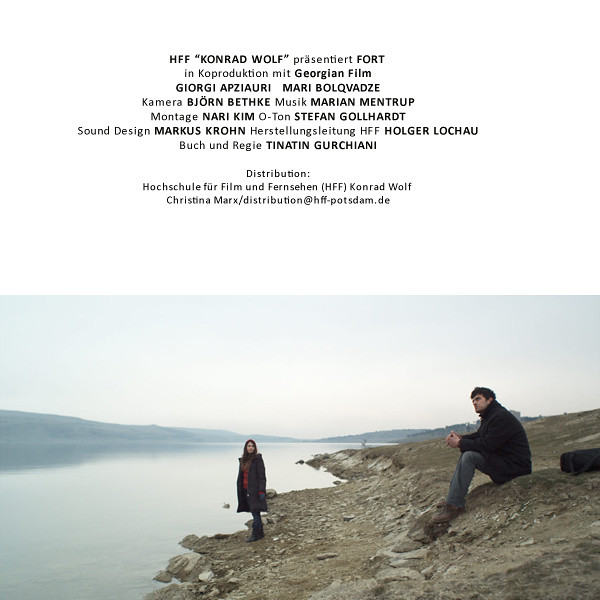
TEAM-PREMIERE: Fort - ein Film von Tinatin Gurchiani


Liebes Team, Freunde und Kollegen, wir freuen uns, Ihnen unseren Film präsentieren zu dürfen, der in Georgien gedreht und gerade fertiggestellt wurde. Es ist ein Film über Suchende, - über Menschen, die sich treu bleiben wollen und versuchen, aus ihrem Alltag auszubrechen, -ohne Gedanken darüber, wohin.

Fort - ein Film von Tinatin Gurchiani (OmU, 70 Minuten, Farbe, HFF/Georgian Film 2010)

die Teampremiere findet statt:
am Sa, den 13.11.2010 um 19.00 Uhr in Berlin, im Kino Arsenal,
Adresse: Potsdamer Straße 2.

Preview HFF
am Do, den 11.11.2010 um 17.00 Uhr in Potsdam, im großen Kino (R 1102) in der HFF Konrad Wolf,
Adresse: Marlene-Dietrich-Allee 11.

Wir würden uns freuen, Euch dort zu sehen!