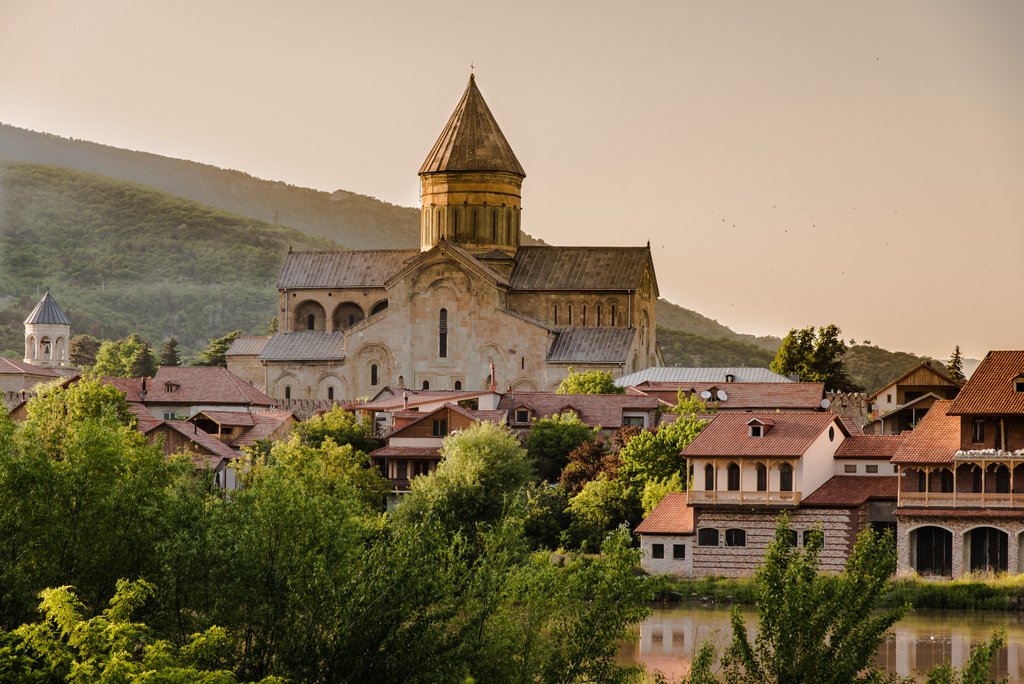
Showing posts with label Human Science. Show all posts

Friday, March 23, 2018

BOOK: The Caucasus. A History. By James Forsyth (cambridge.org)

(cambridge.org) For the first time, this major new survey of the Caucasus traces a unified narrative history of this complex and turbulent region at the borderlands of Europe, Asia and the Middle East, from prehistory to the present. For thousands of years the Caucasus has formed the intersection of routes of migration, invasion, trade and culture, and a geographical bridge between Europe and Asia, subject to recurring imperial invasion. Drawing on sources in English, Russian, Persian and Arabic, amongst others, this authoritative study centres on the region's many indigenous peoples, including Abkhazians, Armenians, Azerbaijanis, Chechens and Circassians, and their relations with outsiders who still play an important part in the life of the region today. The book presents a critical view of the historical role of Russian imperialism in events in the Caucasian countries, and the violent struggle of some of these peoples in their efforts to establish a precarious independence.

A fascinating new survey of the Caucasus which provides a unified narrative history of this complex and turbulent region at the borderlands of Europe, Asia and the Middle East, from prehistory to the present. For thousands of years the Caucasus has formed a hub of intersecting routes of migration, invasion, trade and culture and a geographical bridge between Europe and Asia, subject to recurring imperial invasion. Drawing on sources in English, Russian and translations from Persian and Arabic, this authoritative study centres on the region's indigenous peoples, including Abkhazians, Armenians, Azerbaijanis, Chechens, Daghestanis, Circassians, and Georgians, and their relations with outsiders who still play a part in the life of the region today. The book presents a critical view of the role of Russian imperialism in the Caucasian countries and the desperate struggle of most of its native peoples in their efforts to establish a precarious independence.


An authoritative and comprehensive history of the Caucasus and its peoples from prehistory to the present Treats the Caucasus as a distinct region in its own right, highlighting its relationship with its Middle Eastern neighbours Highlights the region's long struggle against Iranian, Turkish and Russian domination

Read more at cambridge.org/caucasus history

Table of Contents

Introduction
1. Caucasian origins
2. Early medieval Caucasia: the seventh to tenth centuries
3. The Caucasus, Persia, Turkestan, Azerbaijan, Europe: 10th–12th centuries
4. The later Crusades, Mongols and Ottoman Turks 13th–15th centuries
5. Georgia, Shirvan and North Caucasus to the 15th century
6. Caucasia between Persia and Ottoman Turkey
7. The Caucasus and the Russians
8. Caucasia in the eighteenth century
9. Russia's conquest of the Caucasus
10. World War and Russian revolution
11. Independent Armenia, Azerbaijan, Georgia and North Caucasus
12. White Russians, native insurrection, Bolshevik conquest
13. The North and South Caucasus peoples 1920–39
14. The Second World War, Beria and Stalin
15. Caucasia from Stalin's death to the 1980s (1)
16. Caucasia from Stalin's death to the 1980s (2)
17. The Caucasus and the end of the Soviet Union
18. Armenia, Karabagh, Azerbaijan
19. Georgia 1987–93
20. North Caucasus 1987–93
21. The Caucasus enters the twenty-first century
22. Russian arbitrary politics and Georgian resurgence
Bibliography.

James Forsyth is former Reader and Head of the Department of Russian at the University of Aberdeen. His publications include A History of the Peoples of Siberia (Cambridge, 1992).

Look Inside

    more links:
    The Caucasus: A History (Englisch). Von James Forsyth
    The caucasus by James Forsyth 
    James Forsyth: The Caucasus. A History. Cambridge, New York: Cambridge University Press, 2013
    Book Review: Caucasus Natives Neglected As Olympics Close in Sochi [themoscowtimes.com]
    Eingebettet, nicht eingefroren. Konflikte und Regime im Kaukasus: Ein Literaturbericht [eurozine.com]

    Thursday, May 11, 2017

    BOOK: Georgian Portraits. Essays on the Afterlives of a Revolution. By Katrine Gotfredsen, Martin Demant Frederiksen (zero-books.net)

    (zero-books.net) The ethnographic portraits telling the story of the social and political aftermaths of revolution.

    Georgian Portraits chronicles everyday life in the Republic of Georgia in the decade that followed the Rose Revolution of 2003. Recent anthropological developments argue for the use of “afterlives” as an analytical notion through which to understand processes of socio-political change. Based on a series of portraits, Martin Demant Frederiksen and Katrine Bendtsen Gotfredsen employ the theory of social afterlives to examine the role of revolution in the formation of a modern Georgia. The book contributes to a deeper understanding of life in the aftermath of political reform, depicting the hopefulness of the Georgian population, but also the subsequent return to political disillusionment which lead them to a revolution in the first place.

    REVIEWS & ENDORSEMENTS

    What happens after a revolution, when the bright and shiny finish has worn off its ideals? Capturing the weirdness and the wonder of post-revolutionary Georgia, Frederiksen and Gotfredsen also capture people's very real struggles to get by, their fears of war and their dreams of a "European" future. Beautifully and hauntingly written, this book captures not only Georgia's politics, but its soul. ~ Elizabeth Cullen Dunn, author of Privatizing Poland: Baby Food, Big Business and the Remaking of Labor

    Revolutions are as much made of dreams as real events, and these dreams have afterlives as ghosts as the revolutionary hope fades into disappointment or despair. Writing the history of a revolutionary period is difficult, especially writing one that deals with the fundamentally emergent nature of a revolutionary period, as this one does, embracing the confusion of tenses in which the present is pregnant with the future and the future becomes a past as a condition of narration. This book tracks the lively history of Rose Revolutionary Georgia in a lovely and vivid manner, an engaging narrative full of lively characters, beginning always from small things and local perspectives that show the Rose Revolutionary period as a series of hopes and dreams, programs and disappointments. Misha Saakashvili appears throughout, sometimes as a real historical person, sometimes also an imagined demiurge, sometimes a fraudulent trickster. The ways a revolution changes a society are here portrayed from many perspectives, and the way the revolutionary dreams sometimes became haunting ghosts shows how a single moment can become a whole period of social life. ~ Paul Manning, author of Love Stories: Private Love and Public Romance in Georgia

    This book is crafted as a compendium of tacit knowledge about Georgia, harboring an array of insights that capture the tensions and ambiguities of a country that finds itself back from the future and poised between assembly and disassembly. The image of the portrait is therefore very accurate, reflecting the make-believe realities and re-enactments faced by the authors. Thumbing through its pages, I discovered how anthropological variations can be interwoven through biographies, social affects and political afterlives. This type of scholarship is not only inspiring and informative, but also pleasure to read. Georgia is a country for storytellers and vernacular Sisyphus of life, being Martin Demant Frederiksen and Katrine Bendtsen Gotfredsen the perfect example of this contagious ardor. The intimate and sharp look achieved by the authors makes this collection an important milestone in the discussion of contemporary social dynamics in Eastern Europe and the understanding of human condition overall. ~ Francisco Martínez, author of Playgrounds and Battlefields: Critical Perspectives of Social Engagement


    +++


    Katrine Bendtsen Gotfredsen holds a PhD in anthropology from the University of Copenhagen. She has done extensive fieldwork in the Republic of Georgia focusing on subjects such as history, identity, morality, and uncertainty in the context of social and political transformation. Works include her PhD dissertation, “Evasive politics: Paradoxes of history, nation, and everyday communication in the Republic of Georgia” (2013) and the journal articles “Void pasts and marginal presents: On nostalgia and obsolete futures in the Republic of Georgia” (Slavic Review, 2014) and “Enemies of the people: Theorizing dispossession and mirroring conspiracy in the Republic of Georgia” (Focaal, 2016). She is currently lecturer in Caucasus Studies at Malmö University and Programme Manager for Eastern Europe and the Caucasus in the Danish NGO Cross Cultures.


    Martin Demant Frederiksen is assistant professor at the Department of Cross-Cultural and Regional Studies, University of Copenhagen, Denmark. He holds a PhD in anthropology and has conducted a total of 22 months of ethnographic fieldwork in the Republic of Georgia since 2006 in the cities Tbilisi, Batumi and Ambrolauri. His work focuses on subcultures (such as youth criminals and declared nihilists), urban development, temporality and socio-political change. He is author of the monograph "Young Men, Time, and Boredom in the Republic of Georgia" (2013) and co-editor of the anthology "Ethnographies of Grey Zones in Eastern Europe" (2015). Aside from research and teaching, he is co-founder and co-editor of the independent art-zine "a...issue".

    Tuesday, October 18, 2011

    KONFERENZ: 'Armenier in Wirtschaft, Kultur u. Politik des oest. Europa (1000-1900)', Leipzig 24.-25.11.2011

    Projektgruppe "Armenier in Wirtschaft und Kultur Ostmitteleuropas (14.-19. Jahrhundert)", Geisteswissenschaftliches Zentrum Geschichte und Kultur Ostmitteleuropas, Universität Leipzig (GWZO)
    24.-25.11.2011, Leipzig, GWZO, Specks Hof, Reichsstr. 4-6, Aufgang A,
    4. Stock, 04109 Leipzig

    Deadline: 18.11.2011

    Im Laufe ihrer jahrhundertelangen Siedlungsgeschichte in der östlichen Hälfte Europas übten die Armenier einen nachhaltigen Einfluss auf das Wirtschaftsleben, aber auch auf Kultur und Kunst verschiedener Regionen zwischen Schwarzem Meer, Adria und Baltikum aus. In Landschaften wie Siebenbürgen, Pannonien und Galizien, vor allem aber in Städten wie Stanislawów/Ivano-Frankivsk, Lemberg/Lwów/L'viv und Kamieniec Podolski/Kamjaniec'-Podil's'kyj in der Westukraine und im heute zu Rumänien gehörenden Elisabethstadt /Erzsébetváros/Dumbraveni sind die Spuren einstiger armenischer Präsenz nach wie vor unübersehbar. Umgekehrt nahm auch die armenische Kultur wichtige Impulse aus Europa auf, etwa in der Religion, Kunst und Architektur, im Buchhandel und Buchdruck.

    Ungeachtet dieser vielfältigen Folgen hat das Wirken der Armenier in den Ländern westlich des Kaukasus verhältnismäßig wenig wissenschaftliche Aufmerksamkeit erfahren. In diese Forschungslücke will die Jahrestagung des Geisteswissenschaftlichen Zentrums Geschichte und Kultur Ostmitteleuropas an der Universität Leipzig stoßen. Sie bringt WissenschaftlerInnen verschiedener Disziplinen zusammen, die sich mit einem breiten Spektrum von Aspekten armenischer Präsenz in Ostmittel- und Osteuropa auseinandersetzen und die Ergebnisse ihrer Forschungsarbeiten einem interessierten Publikum präsentieren. Thematische Schwerpunkte sind dabei der Ost-West-Handel armenischer Kaufleute, die armenische Siedlungsgeschichte auf der Krim, die armenische Kunstproduktion in Ostmitteleuropa und die armenischen Minderheiten in den Imperien der Romanovs und Habsburger.

    Die Jahrestagung wird mit einem Grußwort des Botschafters der Republik Armenien in Deutschland, Armen Martirosyan, und einem Auftaktvortrag von Professor Fikret Adanir von der Sabanci Üniversitesi Istanbul über "Ostmitteleuropa und der Kaukasus" eröffnet. Die Referenten kommen aus Armenien, der Ukraine, Polen, Ungarn und den Niederlanden.

    +++


    Donnerstag, 24.11.2011, 18:00

    Auftaktvortrag von Fikret Adanir (Istanbul): Ostmitteleuropa und der Kaukasus

    Freitag, 25.11.2011

    09:00 - 11:00

    1. Panel: Armenier im Ost-West-Handel in Mittelalter und Früher Neuzeit - Moderation: Fikret Adanir (Istanbul)

    Stefan Troebst (Leipzig): Osteuropa im globalen Netzwerk der Armenischen Handelskompanie Isfahans

    René Bekius (Amsterdam): Armenian Merchants of Amsterdam in the 17th and 18th Centuries

    Klaus Schneiderheinze (Bochum): Der Orienthandel Polens in der Frühen Neuzeit und die Armenier

    11:30 - 13:00

    2. Panel: Die Krim als kulturelles Zentrum der Armenier - Moderation: Christian Lübke (Leipzig)

    Oleksandr Osipian (Kramatorsk): Trans-Cultural Trade in Late Medieval Eastern Europe: The Strategies of Integration of Armenian Merchants from the Crimea

    Levon Chookaszian (Erevan): Armenian Book-Illumination of Crimea and the Art of Miniaturist Grigor Sukiasants (14th Century)

    Irina Hajuk (L'viv): The Cultural Life of the Crimean Armenians on the Base of the Artefacts from the State Museum of Crimea

    14:00 - 15:30

    3. Panel: Armenische Kunst und Künstler im frühneuzeitlichen Ostmitteleuropa - Moderation: Arnold Bartetzky (Leipzig)

    Waldemar Deluga (Warschau): Armenian Art between Gdansk and Lviv

    Márta Nagy (Debrecen): Grigor der Erleuchter in ostmitteleuropäischen Darstellungen

    Joanna Rydzkowska (Torun): The World of Animals and Fantastic Creatures in Armenian Manuscript from the Polish-Lithuanian Commonwealth in the 16th - 18th Centuries

    Marina Dmitrieva (Leipzig): Indogermanische Gegenwartsstreifzüge eines Kunstforschers: Josef Strzygowsky und seine Studien zur Baukunst Armeniens

    16:00 - 17:30

    4. Panel: Armenier in den Imperien der Habsburger und Romanovs im 18. und 19. Jahrhundert - Moderation: Armenuhi Drost-Abgarjan (Halle/Saale)

    Bálint Kovács (Leipzig): Formen der Selbstbestimmung bei den Armeniern in Siebenbürgen (17.-19. Jh.)

    Tamara Ganjalyan (Leipzig): Armenische Kolonien und imperiale Politik im vorrevolutionären Russland

    Iván Bertényi (Budapest): Politiker armenischer Abstammung in Ungarn zur Zeit des Dualismus

    +++

    Prof. Dr. Stefan Troebst
    GWZO, Reichsstr. 4-6
    04109 Leipzig
    (0341) 97-35 560
    (0341) 97-35 569
    troebst@uni-leipzig.de

    Das Geisteswissenschaftliche Zentrum Geschichte und Kultur Ostmitteleuropas (GWZO), ein An-Institut der Universität Leipzig, wird vom Freistaat Sachsen grundfinanziert. Die Projektarbeit wird gegenwärtig hauptsächlich vom Bundesministerium für Bildung und Forschung (BMBF) gefördert. Das Zentrum erforscht zurzeit in 20 Projektgruppen, deren Arbeitsfelder zeitlich vom frühen Mittelalter bis in die Gegenwart reichen, interdisziplinär und in vergleichender Perspektive Geschichte und Kultur der Region zwischen Ostsee, Schwarzem Meer und Adria. Sein Fächerspektrum umfasst Kulturwissenschaft im weiten Sinn, insbesondere Geschichtswissenschaft, Kunstgeschichte, Archäologie, Literatur- und Medienwissenschaft, Sprachwissenschaft und Ethnologie. Dabei stützt sich das GWZO auf ein dichtes Netz von Kooperationsbeziehungen mit Forschungseinrichtungen in Ostmitteleuropa sowie in anderen Teilen Europas und in Übersee.

    Friday, September 16, 2011

    CONFERENCE: Figure and Ornament. Aesthetics, Art and Architecture in the Caucasus Region, from 400 to 1700 (geschichte.hu-berlin.de)

    Veranstalter: George Chubinashvili National Research Centre, Tbilisi; Kunsthistorisches Seminar, Universität Basel; Kunsthistorisches Institut in Florenz - Max-Planck-Institut

    Datum, Ort: 29.11.2011-01.10.2011, Tbilisi (Georgia), Georgian National Museum, 3, Rustaveli Ave, Tbilisi 0105 (Georgia)

    +++

    Figure and ornament have generally been considered as opposites. Figurative representations, however, can be ornamented or framed by ornaments, and ornaments are frequently formed by repeated figural motives, such as animals or plants. In fact, ornaments and figures are related in manifold ways and define or articulate pictorial or architectonic spaces, elaborating various aesthetic concepts. Traditionally, the distinction between figure and ornament has been understood as a consequence of specific religious belief systems and their attitude towards images. Whereas medieval Western and Byzantine Christian art has primarily been considered as figurative even if images have not always been uncontested, Islamic art, in turn, has often been perceived as iconophobic and mainly ornamental. Recent art historical research has strongly argued against such polarization, indeed the respective role of figure and ornament can no longer be seen as a basic difference between "Christian" and "Islamic" art. This opens a wide range of new questions especially for regions where Christians and Muslims were neighbours or have interacted over the centuries.

    Under these premises, the conference will be dedicated to the various relationships between figure and ornament in the arts of the Caucasus from the Middle Ages until the early 17th century, in particular in Georgia, Armenia, Eastern Anatolia and Azerbaijan, also including Iran. While the current debates on the coexistence of and the cultural exchange between Christianity and Islam are mainly concentrated on the Mediterranean, the conference will take a closer look at the region between the Black Sea and the Caspian Sea, which has hardly been considered from this perspective. From early times, the Caucasian area has been characterized by an encounter and conflict between the Greco-Roman and Persian or Central Asian worlds of the Middle Ages and by the formation of Georgian and Armenian Christianity relating to Byzantium on the one hand and various Islamic cultures on the other. However, religion represents just one major aspect for understanding the arts of the Caucasian area, and another no less important aspect concerns the competing or related models of kingship and monarchical representation, often transcending religious divisions.

    The cultures the conference will discuss are not to be seen as given or static units but as having been formed and transformed in relation and interaction with each other. Thus, on the one hand, the conference examines the cultural transfer of phenomena beyond regions and borders, and on the other hand it aims to diagnose and compare the elaboration of different visual cultures in the Caucasus and their aesthetics regarding figure and ornament.

    +++

    29th September

    10.00
    Welcome
    Marika Didebulidze (Tbilisi), Barbara Schellewald (Basel) and Gerhard Wolf (Florence)

    10.30
    Manuela DeGiorgi (Florence/Lecce) and Annette Hoffmann (Florence)
    Figure and Ornament. Conceptual and Aesthetical Considerations for an Introduction

    11.00 break

    SPACES, FRAMES AND SURFACES
    Chair: Marika Didebulidze (Tbilisi)

    11.30
    Nina Chichinadze (Tbilisi)
    Framing the Sacred: Repoussé Revetments of Medieval Georgian Painted Icons

    12.15
    Ekaterina Gedevanishvili (Tbilisi)
    Representation of the Saints Making the limitless Sacral Space

    13.00 lunch

    14.30
    Margaret Graves (Glasgow)
    Figural Necessity? Architecture as Ornament in the Secular Sphere

    RELATIONSHIPS IN FORM AND CONTENT
    Chair: Barbara Schellewald (Basel)

    15.15
    Barbara Schellewald (Basel)
    Image versus Ornament or vice versa?

    16.00
    Kitty Machabeli (Tbilisi)
    Ornament – Figure – Symbols (Early Medieval Georgian Reliefs)

    16.45 break

    17.15
    Vera Beyer (Berlin)
    Ornaments and Figures. Contextualising an Ornament within a Miniature in a Manuscript of Nizamis Iskandername (Topkapi H. 788 f.319r)

    18.00
    Simon Rettig (Berlin)
    Tricky Images? Analysing the Presence of Figurative Elements in Persian Ornamental Illuminations

    30th September

    BETWEEN FIGURE AND ORNAMENT
    Chair: Manuela DeGiorgi (Florence/Lecce)

    9.30
    Dionysios Mourelatos (Athens)
    Interpretation of motifs in royal panels. The case of a panel at Sinai

    10.15
    Maria Raffaella Menna (Viterbo)
    Paintings of Ishkhani Cathedral (Tao-Klarjeti) (1032): Between Figure and Ornament

    11.00 break

    11.30
    Joachim Gierlichs (Berlin)
    Figur und Ornament an mittelalterlichen Bauten im Kaukasus und in Anatolien

    12.15
    Antony Eastmond (London)
    Between Figure and Ornament: the Functions of Text on Georgian Icons

    13.00 lunch

    PATTERNS AND FUNCTIONS
    Chair: Nino Kavtaria (Tbilisi)

    14.30
    Bärbel Dümler (Tübingen)
    Meaning and Function of Geometrical and Vegetable Ornamentation within the Iconographic Program of Armenian Khachkars

    15.15
    Sophia Vassilopoulou (Berlin)
    Secular or mystical? - The image of a “couple around a tree” on Persian lustre tiles

    16.00 break

    16.30
    Leila Khuskivadze (Tbilisi)
    The Issue of Cultural Correlation (In the Ornamental Repoussé Art)

    17.15
    David Khoshtaria (Tbilisi) and Marcus Bogisch (Copenhagen)
    Palmettes with Concentric Ribs. Study of an Ornament in Medieval Georgian Art and Beyond

    18.00
    Nino Kavtaria (Tbilisi)
    Canon Tables Types, Ornamental Decorations and Aesthetics of the XI-XIII Century Georgian and Armenian Book Art

    1st October

    MIGRATIONS
    Chair: Gerhard Wolf (Florence)

    10.00 Eka Quatshatadze (Tbilisi)
    Seljuk Ornament in Georgian and Armenian Architectural Sculpture

    10.45
    Alexander Saminski (Moscow)
    The Canon Tables in the Program of Illumination of the Mokvy Gospels

    11.30 break

    12.00 Iván Szántó (Vienna)
    Figures on Canvas, Ornaments on Silk: the Caucasian Element in the Art of Early-Modern Eurasia

    12.45
    Tamar Khundadze and Ana Shanshiashvili (Tbilisi)
    Figures and Ornament Confirming Georgian Diplomatic and Missionary Activities in the North Caucasus

    13.30 lunch

    ENCOUNTERS
    Chair: David Khoshtaria (Tbilisi)

    15.00
    Irine Giviashvili (Tbilisi)
    Meeting of Two Traditions: Sculptures of the Georgian Church in Armenian Ani

    15.45
    Sarah Laporte-Eftekharian (Paris)
    Figure and Ornament – the Case of Bethlehem Church in New Julfa

    16.30 break

    17.00
    Christiane Esche-Ramshorn (Cambridge)
    Western Image and Armenian Ornament: The Dominican Monasteries at the Ararat and in Nachitschevan/Azerbaijan and their Arts

    17.45
    Gerhard Wolf (Florence)
    Figure/Ornament and the Question of Caucasian Aesthetics. Concluding remarks

    18.30
    FINAL DISCUSSION
    with Marika Didebulidze, Barbara Schellewald and Gerhard Wolf

    POSTER SECTION
    Marina Kevkhishvili (Florence/Berlin)
    Medien der Heiligenverehrung in Svanetien – Bild, Text, Ritual

    +++

    Kontakt: Marina Kevkhishvili
    E-mail:
    kevkhishvili@khi.fi.it

    Natia Natsvlishvili
    E-mail:
    natsvlishvili@gch-centre.ge

    URL:
    Further information

    URL zur Zitation dieses Beitrages
    http://hsozkult.geschichte.hu-berlin.de/termine/id=17231

    Copyright (c) 2011 by H-Net and Clio-online, all rights reserved. This work may be copied and redistributed for non-commercial, educational use if proper credit is given to the author and to the list. For other permission, please contact
    H-SOZ-U-KULT@H-NET.MSU.EDU .

    Tuesday, January 11, 2011

    CONFERENCE: New trends in the study of the history at the onset of the 21st century: Ancient Near Eastern and Mediterranean Crossroads Conference

    pdf >>>

    New trends in the study of the history at the onset of the 21st century: Ancient Near Eastern and Mediterranean Crossroads Conference (ANEMCC)
    4-5 February 2011, Tbilisi, Georgia

    The Conference is organized as the second act of the project "Conceptions of „Eternal Capitals‟ – From Ancient Cosmopolitan Cities to Modern Megapolises".

    The project is supported by the Programme of the Open Society Institute, Higher Education Support Program Regional Seminar For Excellence in Teaching, ReSET, Tbilisi Iv. Javakhishvili State University, Faculty of Humanities.

    When Fernard Braudel wrote his pioneering book on the history of the Mediterranean region, the study of large-scale entities (spatial and temporal) constituted a theme of central importance for all scientific disciplines, especially the humanities. At the time, social sciences operated under the rubric of what is broadly known as the "modernist" paradigm, which professed to have developed effective criteria for clearly defining units of analysis and for explaining the historical trajectory of these units. A cardinal element of this intellectual tradition has been the firm belief that the units established by science were not only epistemologically but also ontologically valid. In Braudel's case for instance, "environment", "institutions" and "individuals" were "real" and not "fictive" classificatory distinctions. Of pivotal significance on the other hand, has been the acknowledgement that the writing of "history" had greater analytical potential in so far as it could prioritize large-scale over small-scale units; it is for this reason precisely that Braudel's core concept of the "long durée" involved the meticulous diachronic study of "institutions" and the "environment" but to a lesser extent, of "individuals".

    Over the past few decades however, this mode of thinking has been put under severe scrutiny and in certain respects, has been heavily criticized. At the same time, the birth of a new paradigm -that of "postmodernism"- has lead to a shift of attention from the "general" to the "particular". The reasons for this paradigmatic shift are to be traced in contemporary concerns on (i) the conscious neglect of social diversity in social studies, (ii) the empowerment of the "whole" and the simultaneous "disempowerment" of the "individual", (iii) the tendency to attribute an obvious surplus of analytical weight on "global" as opposed to "local" processes, (iv) the great emphasis laid on the reconstruction of a single "history" and the denial of the possibility that multiple "histories" are actually at work and (v) the belief that so far, all aforementioned trends were seen as an achievement and guarantee of scientific "objectivity" and "truth". At the onset of the 21st century, the "postmodern" paradigm has taken an entirely different trajectory. Its main aim has been to create an arena of scientific discourse which:

    1. encourages epistemological and ontological multivocality instead of absolutist/monolithic narratives
    2. sees boundaries as the product of social negotiation and practical performance and not as predetermined, arbitrary constructs 2
    3. and finally, chooses to emphasize movement and fluidity (in our ways of thinking and in our ways of living) as opposed to stasis.


    In the light of all these developments, the idea of an "Ancient History", appears to require some degree of modification; indeed, for some scholars, it would even necessitate the abandonment of the term altogether. The Conference : "New trends in the study of the history at the onset of the 21st century’ embarks on the investigation of this very issue: how has the "postmodern" paradigm affected our understanding of the past and to what extent should we allow the further penetration of its principles (diversity, fluidity, mobility, macro-social processes, urbanism) to the practice of the general history?

    For the purposes of this conference, two broad thematic sessions have been established. Scholars are invited to contribute papers pertinent to issues such as cultural diffusion and indigenous development, local identity and global process, actor-network theory, world-systems theory, time-geography, population movement, object biographies, trade and gift exchange, islandscapes vs. landscapes, travel and transport technologies, colonization, colonies vs. empires, issues of social urbanism and etc. The second session broadens the conference themes and adopts an interdisciplinary debate concerning the sociopolitical implications of the "postmodern" agenda in the present and the impact of this agenda on the study of the Ancient Near East and Mediterranean past.

    The aim of this conference is to bring together researchers working on different aspects and to encourage the sharing and examination of a wide spectrum of themes and problems. Moreover, it will provide an excellent opportunity for interdisciplinary collaboration and will hopefully help to forge and identify new methodologies for dealing with the now widely acknowledged complexity of the Ancient Studies.

    The conference will take place in Tbilisi, Iv. Javakhishvili State University, 4-5 February 2011.

    Presentations will be 20 minutes in length and will be followed by additional time for discussion. The proceedings of the Conference will be published.

    Organizing Committee:
    Prof. Eka Avaliani, Iv. Javakhishvili State University, Georgia
    Prof. Gocha Tsetskhladze, The University of Melbourne, Australia
    Prof. Ligia Ruscu, Babes- Bolyai University, Romania
    Prof. Maia Gambashidze, Iv. Javakhishvili State University, Georgia
    Prof. Iulian Moga, University Al.I Cuza Iasi, Romania
    Prof. Nino Chikovani, Iv. Javakhishvili State University, Georgia
    Prof. Bejan Djavakhia, Iv. Javakhishvili State University, Georgia
    Prof. Vaja Kiknadze, Iv. Javakhishvili State University, Georgia

    Thursday, August 12, 2010

    NEW BOOK: Politik und Erinnerung. Der Diskurs über den Armeniermord in der Türkei zwischen Nationalismus und Europäisierung. Von Seyhan Bayraktar

    www.transcript-verlag.de
    August 2010, 314 S., kart., 29,80 €
    ISBN 978-3-8376-1312-4 Reihe
    Global Studies

    Schlagworte:
    Erinnerungspolitik, Völkermord an den Armeniern, EU und Türkei, Europäisierung, Politische Kommunikation


    Adressaten: Politikwissenschaft (Internationale Beziehungen), Soziologie, Geschichtswissenschaft

    Der problematische Umgang der Türkei mit dem Mord an den Armeniern während des Ersten Weltkriegs wird in der kontroversen Debatte um den EU-Beitritt der Türkei zwar viel beachtet, ist bislang aber kaum systematisch untersucht worden: Wie haben sich der Erinnerungsdiskurs und die Vergangenheitspolitik in der Türkei im Zeitverlauf entwickelt? Welche Rolle spielt nationale Identität? Wie wirkt sich der internationale Druck aus, der die Europafähigkeit der Türkei zunehmend an deren Anerkennung des Völkermordcharakters der Vertreibungspolitik koppelt?Die Vertreibung der Armenier ist zwar von einem randständigen Thema in den Mittelpunkt der gesellschaftlichen Auseinandersetzung in der Türkei gerückt. Seyhan Bayraktar kann aber anhand der beteiligten Akteure, diskursiven Rahmungen und vergangenheitspolitischen Maßnahmen zeigen, dass dieser Wandel keine paradigmatische Abkehr vom Leugnungsdiskurs bedeutet, sondern für eine zunehmend ausgefeiltere Deutung der Geschichte steht, die sowohl innen- als auch außenpolitisch strategiefähig ist.

    Seyhan Bayraktar (Dr. rer. soc.) arbeitet am Forschungsbereich Öffentlichkeit und Gesellschaft (fög) der Universität Zürich. Ihre Forschungsschwerpunkte sind Politische Kommunikation, Türkei, Europäische Union, Migration und Nationalismus. www.foeg.uzh.ch

    Leseprobe (PDF-Datei)

    AmazonShop: Books, Maps, Videos, Music & Gifts About The Caucasus

    Tuesday, April 20, 2010

    PUBLICATION: Essays on History of the South Caucasian Countries (A Multi-perspective View of History)

    In November 2007, the Analytical Centre on Globalisation and Regional Cooperation together with its partners, Public Union of the Azerbaijan Historians and Caritas Georgia, initiated a meeting of historians and civic activists of Armenia, Azerbaijan and Georgia. The meeting was organised with assistance of Caritas France.

    Such a framework for cooperation was chosen because the experience of the recent few years’ developments in the South Caucasus had showed that many problematic issues in relations between the peoples of the region arise because of different interpretation of historical facts, different views and approaches to events that occurred in the South Caucasus. Therefore, it was needed to organise regular meetings and to develop cooperation between historians and civic activists of Armenia, Azerbaijan and Georgia.

    The main result of the aforementioned meeting was the communiqué adopted on 13 November 2007. In the communiqué it was, particularly, said:

    After having the debates and discussions we, participants of the working meeting, state that it is important and beneficial for the peoples of the South Caucasus:
    - To organise meetings of civil activists and historians of the South Caucasian countries on regular basis that helps to create an atmosphere of tolerance, respect, and mutual understanding;
    - We are interested in publishing joint articles and essays in scientific journals and non-affiliated magazines, as proposed by some of the participants of the working meeting;
    - The Tbilisi initiative of the Council of Europe, providing for a joint project on Caucasus History, is a positive example of cooperation of historians from the South Caucasian countries;
    - This format is one of the directions for continued efforts of our countries’ citizens aimed to the development of civil society, finding historical factors that keep us together, democratisation and European integration of the South Caucasian countries.

    During the aforementioned meeting, the participants showed great interest for the working session dedicated to the experience of Armenian, Azerbaijani and Georgian historians who had worked together on a book titled The History of Caucasus. That project was frozen in 2003 because of several disagreements between Armenian and Azerbaijani experts (we consider that one of the main reasons for such a failure had been the extremely different task assigned to the experts – to write joint history of the South Caucasian countries and to overcome all differences in approach). On the other side, the work that was done deserves close attention, because it was a positive example of cooperation between historians of three countries. We offered the authors who had worked on that project – Armen Khachikyan from Armenia, Aydin Aslanov from Azerbaijan and Paata Ramishvili from Georgia – to go back to the accomplished work and, using the experience they had gained, to prepare new essays on history of their respective countries, centred on a multi-perspective view. New essays would be based on the previously used materials, as well as would count on the new factors that emerged during the recent 10-12 years. In fact, that meant publishing the first comprehensive joint work of Armenian, Azerbaijani and Georgian historians.

    The newly-published book, Essays on History of the South Caucasian Countries, contains essays about the historical past of the peoples of the South Caucasus, from the ancient times till the establishment of the Soviet authority in the region. We hope that the book will be interesting and useful for the readers. The first part of the book reveals the historical context of the development of the South Caucasus from the ancient times till the establishment of the Soviet authority in the region, and the second part presents the cultural treasures of the South Caucasian countries. The book contains a number of illustrations.

    Being addressed to both scientific and popular audiences, Essays on History of the South Caucasian Countries is addressed to a wide circle of readers, first of all, to civil society institutions, academics, state institutions, younger generation, as well as international organisations concerned with peacemaking and development of cooperation in the South Caucasus.

    The authors worked on the book for near two years. They attempted to let the readers know about the main instances in the history of the three countries. It was important not just to provide some information, but also to introduce the readers to the neighbour peoples’ views to the same events, so the peoples of the region might develop tolerance and mutual understanding. Besides, the book provides different interpretations of a number of regional events, using a multi-perspective approach; in fact, that means having three different viewpoints on certain historical events. That is also important for readers living in the region, as well as outside, because they may see how contemporary historians from the South Caucasian countries interpret the historical events. It is natural that historians from different countries have different approaches according to their personal, cultural and national identities.

    Such an approach has important characteristics:
    1. The society of each country may get familiar with the viewpoints of others on the same historical events.
    2. Historians from each country may have an opportunity to discuss the viewpoints of their colleagues from other countries within a scientific framework.
    3. Being better informed will let the societies of three countries to develop dialogue.

    So, the essays in the first part of the book may not match each other. Sometimes they may contain conflicting statements. As a result, any impartial reader will have to think. Any reader may choose one of the explanations for historical events, but it should be remembered that other explanations, which lead to other interpretations, also have the right to exist.

    Finally, let us congratulate the historians and civil societies of the South Caucasian countries for publishing of the book, which is the first example of joint scientific work of academics from Armenia, Azerbaijan and Georgia in the period of independence of our countries.


    Stepan Grigoryan,
    Chairman of the Analytical Centre on Globalisation and Regional Cooperation (ACGRC)

    www.acgrc.am


    BOOK: Positive Examples of Coexistence from the History of Peoples and States of the South Caucasus (antares.am)

    Yerevan 2009

    Positive Examples of Coexistence from the History of Peoples and States of the South Caucasus. Collection of papers by historians and analysts from Armenia, Azerbaijan and Georgia (Yerevan, Armenia). – Yer.: Antares, 2009 - 140 pages.

    Edited by Stepan Grigoryan

    This book is published by the Analytical Centre on Globalisation and Regional Cooperation (ACGRC) with support of Caritas France. The opinions expressed in this book are opinions of the authors from Armenia, Azerbaijan and Georgia, and may differ from the official opinions of ACGRC and Caritas France.
    ISBN 978-9939-51-162-7

    © ACGRC, 2009

    Contents:

    Editor’s note
    Stepan Grigoryan ... page 5

    Armenia
    Haykaz Hovhannisyan. Caucasian Home: History and Reality Mikayel Zolyan. Armenians and Georgians: Divided By Common History ... page 11

    Azerbaijan
    Sevil Huseynova. Azerbaijanis and Armenians in Georgia: Spaces of Coexistence Sergey Rumyantsev.
    Beyond Enmity: Everyday Practices of Mutual Help in Situations of Conflics ... page 33

    Georgia
    Tamara Sikharulidze. From the History of Azerbaijani-Georgian Relations
    Liana Davlianidze. From the History of Armenian-Georgian Relations ... page 57

    Armenia
    David Petrosyan. Armenia Now: Inside and Outside ... page 87

    Azerbaijan
    Rauf Rajabov. Azerbaijan: From Financial Security towards Regional Priorities in Foreign Policy ... page 105

    Georgia
    Vakhtang Kolbaya. Georgia Now: The Situation after the Russo-Georgian War ... page 121


    About the authors ... page 137

    Armenia
    Haykaz Hovhannisyan - Caucasian Home: History and Reality
    Mikayel Zolyan - Armenians and Georgians: Divided By Common History


    Editor’s note
    Stepan Grigoryan

    In November 2007, the Analytical Centre on Globalisation and Regional Cooperation (Armenia) organised, in cooperation with its partners – Public Union of the Azerbaijan Historians and Caritas Georgia – a meeting of historians and civic activists from Armenia, Azerbaijan and Georgia. The meeting was organised with support of the Caritas France foundation in Tsakhkadzor (Armenia).
    This framework of cooperation was chosen because the experience of developments in the South Caucasus during previous years had shown that many problems in relations between peoples of the region had been a consequence of different interpretation of historical facts, different perceptions and approaches to historical events, and because of absence of papers and
    books on history written in cooperation by scholars from three South Caucasian countries. Therefore, it was important to organise meetings and facilitate cooperation between historians and civic activists from Armenia, Azerbaijan and Georgia.
    The main outcome of the mentioned working meeting was the communiqué adopted on November 13, 2007. The participants stated, particularly, that direct contacts are important as they let to understand each other better and to exchange information about global, regional and local processes; emphasised their interest in possible submission of common publications to academic and professional journals; stated that such a framework is one of the ways for continued efforts towards development of civil society, for searching common elements in our peoples’ historical past, and for democratisation and European integration of the South Caucasian countries; expressed interest in a deeper study of European experience of dealing with historical problems, which may contribute towards reconciliation and establishing an environment of peace and neighbourly relations in the South Caucasus.
    Working meeting participants also expressed their distress concerning the reality in which the scientific potential of our countries is being used mainly for proving ancient roots and superiority of every people instead of working on common scientific and educational projects. Yet, science and education have a great potential for restoration of trust between our peoples and may serve as a fine instrument for development of neighbourhood and cooperation in the
    region.
    The problems are aggravated by the unsolved conflicts that make the situation more difficult. It is, therefore, very important to establish contacts and stimulate cooperation between historians and civic activists in Armenia, Azerbaijan and Georgia. There are many positive historical examples of coexistence and cooperation between peoples of the South Caucasus; study of such examples and making them available to our societies is an important task.
    This book is a collection of papers about the history of relations between Armenians, Azerbaijanis and Georgians. The first part of the book contains papers written by prominent scholars – Haykaz Hovhannisyan and Mikayel Zolyan from Armenia, Sevil Huseynova and Sergey Rumyantsev from Azerbaijan, and Tamara Sikharulidze and Liana Davlianidze from Georgia.
    The authors have done meticulous archive work and analysis, and found a great number of examples of positive experiences in coexistence of the South Caucasian peoples. It is interesting that such examples include both the short periods when Armenia, Azerbaijan and Georgia were independent and time when our peoples fought for their rights and independence, protecting their identities and culture.
    In the second part of the book civic activists with expertise in different areas – David Petrosyan from Armenia, Rauf Rajabov from Azerbaijan and Vakhtang Kolbaya from Georgia – provide analyses of the contemporary political, socioeconomic and international standing of Armenia, Azerbaijan and Georgia.
    This book contains scientific and analytical materials and may be interesting for a wide circle of readers, first of all, for representatives of civil society institutions, scientific community, state institutions, journalists, young citizens, as well as international organisations working towards reconciliation, establishment of peace and cooperation.
    I believe that the time has come for thinking over many issues and attempting to live in accordance with contemporary ideas and approaches. That is the demand of time and future of the South Caucasian peoples.
    Finally, I express our sincere gratitude to the Caritas France foundation for supporting our initiatives and making possible publishing of this book. Stepan Grigoryan - chairman of the board of the Analytical Centre on Globalisation and Regional Cooperation.

    July 27, 2009

    Positive Examples of Coexistence from the
    History of Peoples and States of the South Caucasus

    «ANTARES» Publishing House
    Yerevan–0009, Mashtots ave. 50a/1
    Tel.` +(374 10) 58 10 59, 56 15 26
    Tel./Fax` +(374 10) 58 76 69
    antares@antares.am
    www.antares.am


    more here: www.acgrc.am

    Wednesday, September 09, 2009

    SCIENCE: A skull that rewrites the history of man (independent.co.uk)

    It has long been agreed that Africa was the sole cradle of human evolution. Then these bones were found in Georgia...
    By Steve Connor, Science Editor


    The conventional view of human evolution and how early man colonised the world has been thrown into doubt by a series of stunning palaeontological discoveries suggesting that Africa was not the sole cradle of humankind. Scientists have found a handful of ancient human skulls at an archaeological site two hours from the Georgian capital, Tbilisi, that suggest a Eurasian chapter in the long evolutionary story of man.
    The skulls, jawbones and fragments of limb bones suggest that our ancient human ancestors migrated out of Africa far earlier than previously thought and spent a long evolutionary interlude in Eurasia – before moving back into Africa to complete the story of man.
    Experts believe fossilised bones unearthed at the medieval village of Dmanisi in the foothills of the Caucuses, and dated to about 1.8 million years ago, are the oldest indisputable remains of humans discovered outside of Africa.


    full article >>>

    Related articles
    Steve Connor: Out of Africa... and back again? The story of humans unravels

    PALEOANTHROPOLOGY: Fossil find in Georgia challenges theories on early humans. By Ian Sample (guardian.co.uk)

    Early humans may have taken a detour into Eurasia before embarking on their epic journey out of Africa, according to new fossil evidence.
    Palaeontologists in
    Georgia have unearthed remains of five primitive humans that date back to 1.8m years ago, suggesting some of our oldest ancestors lived in the region at the time.
    The partial skeletons, which represent the earliest humans discovered outside Africa, challenge the theory that our ancestors evolved entirely on the continent and left the cradle of humanity only 60,000 years ago.
    David Lordkipanidze, director of the Georgian National Museum, said the primitive humans were short, with small brains and strongly developed legs. Other remains suggest they lived alongside predators including sabre-toothed cats.
    The
    fossils are thought to be early Homo erectus, a forerunner of modern humans, which lived in Africa 2m years ago. Lordkipanidze said some Homo erectus may have left Africa for Eurasia before returning much later.
    The fossils were uncovered at the Dmanisi archaeological site south-west of the Georgian capital of Tbilisi. Remains thought to belong to two males and three females were found next to stone tools and animal bones bearing cut marks, suggesting the species prepared meat for food.
    "The Dmanisi fossils are extremely important in showing us a very primitive stage in the
    evolution of Homo erectus," said Chris Stringer, head of human origins at the Natural History Museum in London. "They raise important questions about where that species originated."
    By piecing the skeletal remains together, researchers estimate they stood about 1.5 metres tall and had brains a little more than half the size of those in modern humans.
    Lordkipanidze said: "The Dmanisi people were almost modern in body proportions and were highly efficient walkers and runners. Their arms moved in a different way, and their brains were tiny compared to ours. They were sophisticated tool makers with high social and cognitive skills."

    text >>>