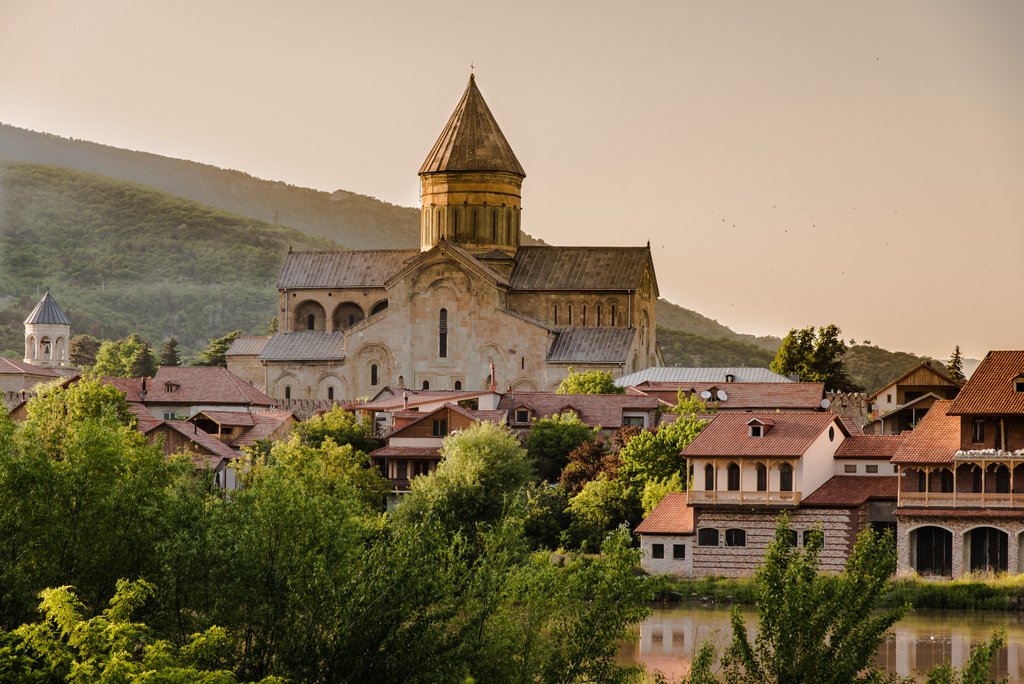
Today I received this letter for a call for student prgramms in Feorgia (Tbilisi) ...
I always enjoy reading your blog and following the latest events in the South Caucasus. My name is Bram Houben and I am a recent graduate of the Institute for Conflict Analysis and Resolution (ICAR) at George Mason University in Arlington, Va. Throughout my studies I have focused on the South Caucasus and worked on several projects in the region.
At the moment, I'm working together with one of my professors to provide other students the exciting opportunity to participate in a study abroad course that will take place in Tbilisi next summer. To truly reach students worldwide I would like to ask you, if at all possible, to share this exciting announcement on your blog.
Please click on this link for more information about the course or visit crdc.gmu.edu.
I would really appreciate the opportunity to share this course with your blog audience.
Thank you so much and please let me know if you have any questions or if you want me to compose a specific posting to put on your blog.
Sincerely,
Bram Houben
Center for World Religions, Diplomacy and Conflict Resolution (CRDC)
Institute for Conflict Analysis and Resolution George Mason University
Office Phone: (703) 993-4473
Office Fax: (703) 993-1302
crdc.gmu.edu
+++
CONFLICT RESOLUTION IN THE SOUTH CAUCASUS
NOW ACCEPTING APPLICATIONS
SPACE IS LIMITED - DEADLINE DEC 10TH – APPLY TODAY!
May 27th- June 5th, 2011 3 CREDITS $3695 w/o Airfare
DESCRIPTION: This exciting new program brings you to the heart of conflict in the South Caucasus. The course will take place in Tbilisi, Georgia with lectures by a variety of specialists, including academics and practitioners. Formal sessions are complemented by various site visits, governmental and non-governmental, to encourage a more comprehensive understanding of the multifaceted issues affecting societies in conflict.
The program aims to provide context for understanding the change that the South Caucasus has experienced during the past years, opportunities for understanding conflict tensions surrounding inter-community relations, and the aftermath of wars involving South Ossetians, Abkhaz, Russians, and Georgians, as well as the conflict over Karabakh. Related dynamics in the North Caucasus and globally will also be considered.
INSTRUCTOR: Dr. Susan Allen Nan will lead this program. Dr. Nan is a scholar-practitioner of conflict resolution whose main focus is on the South Caucasus. She also works on evaluating conflict resolution initiatives and community conflict resolution approaches. She has engaged long-term in conflict resolution in Eurasia, as well as contributing to a variety of initiatives in Eastern Europe.
APPLICATION PROCESS: In order to be eligible for the course in the Caucasus, participants must submit a CV (or resume), a personal statement of no more than one page explaining why they want to participate and a photocopy of their passport to Program Director, Bram Houben at ahouben@gmu.edu
PROGRAM FEE & DETAILS: $3,695.00
Program fee includes double-occupancy hotel lodging; daily breakfast; most other meals; in-country ground transportation; airport transfer; emergency evacuation insurance; pre-departure orientation; cultural excursions; course trainers and speakers costs; Tuition for 3 Credits (CONF 399*/695); but NOT international airfare.
ELIGIBILITY: Conflict Resolution in the South Caucasus is open to all Mason and Non-Mason bachelors, Ms and Ph.D students as a 3 credit course and to non-students as a professional development seminar. Mason students can take the course as CONF 385*/399*/695 (Other options may be available – check with your advisor).
*Please check with your advisor
IMPORTANT NOTICE: Master Students graduating in the Spring 0f 2011 are still eligible to walk during the May Graduation Ceremony while enrolled in this class.
CRDC website
CRDC International Courses webpage
DR. SUSAN ALLEN NAN IN THE NEWS
The roles of conflict resolution scholars in Georgian-Abkhaz and Georgian-South-Ossetian conflict
Susan Allen Nan Faculty Page
Interview Susan Allen Nan
Susan Allen Nan, Assistant Professor at the Institute for Conflict Analysis and Resolution at George Mason University, commenting on the different approaches of presidential candidates Obama and McCain to Russia and the challenges in the US Russia relationship following the outbreak of violence in Georgia and South Ossetia. Nan contends that McCain's rhetoric has been inflammatory, with name-calling that leaves little room for a productive Russian response while Obama's rhetoric has been just as strong, while leaving the door open for negotiation and collaboration. Interview conducted on September 24th, 2008. Video courtesy of Al Jazeera English.
Showing posts with label Obama. Show all posts
Showing posts with label Obama. Show all posts
Tuesday, November 16, 2010


Saturday, October 10, 2009
ARTIKEL: Abkommen zwischen Armenien und Türkei (tagesschau.de)
Die verfeindeten Nachbarn Armenien und die Türkei gehen aufeinander zu und wollen ein historisches Abkommen unterzeichnen: Darin werden die Aufnahme diplomatischer Beziehungen als auch die Öffnung der Grenzen vereinbart. Doch viele Armenier sind skeptisch. Sie befürchten den Ausverkauf ihrer nationalen Interessen.
Von Silvia Stöber, tagesschau.de, zzt. Jerewan
Der ganze Text >>>
weitere Links:
Trotz Protesten: Armeniens Präsident sieht «keine Alternative» zum Vertrag von Zürich
Ankara und Eriwan versöhnen sich
Über eine Million Armenier in den Tod geschickt
Die Türkei und Armenien wollen sich aussöhnen – trotz Vorbehalten in beiden Ländern
Türkei und Armenien: Feinde werden Freunde
Türkei-Armenien: Viele Hürden auf dem Weg zum Ende einer Feindschaft
Großer Schritt in Richtung Versöhnung
Armenien-Türkei: Annäherungsabkommen ist besiegelt
Armenien und Türkei besiegeln Friedenskurs
Turkish diplomats are increasingly listened to: French political expert
Turkey, Armenia sign historic accord
Thousands March In Yerevan Against Turkish-Armenian Deal
Turkey And Armenia Sign Historic Accord, Establishing Diplomatic Relations
Armenia and Turkey normalise ties
Photograher: Arsineh Khachikian
Arsineh currently lives and works in Yerevan, Armenia as a freelance graphic designer and photographer. Her expertise is in concept development, image building, identity branding and publishing. She has received the Indie Music Award for Best CD packaging, the Armenian Music Award for Best Album Cover in 2002 and 2005, and was nominated for the same category in 2003. Arsineh recently published her first autobiographical book expressed through her photography, titled "My Nation: The Trails and Trials of an Armenian Repatriate." link: http://www.mynation.am
Von Silvia Stöber, tagesschau.de, zzt. Jerewan
Der ganze Text >>>
weitere Links:
Trotz Protesten: Armeniens Präsident sieht «keine Alternative» zum Vertrag von Zürich
Ankara und Eriwan versöhnen sich
Über eine Million Armenier in den Tod geschickt
Die Türkei und Armenien wollen sich aussöhnen – trotz Vorbehalten in beiden Ländern
Türkei und Armenien: Feinde werden Freunde
Türkei-Armenien: Viele Hürden auf dem Weg zum Ende einer Feindschaft
Großer Schritt in Richtung Versöhnung
Armenien-Türkei: Annäherungsabkommen ist besiegelt
Armenien und Türkei besiegeln Friedenskurs
Turkish diplomats are increasingly listened to: French political expert
Turkey, Armenia sign historic accord
Thousands March In Yerevan Against Turkish-Armenian Deal
Turkey And Armenia Sign Historic Accord, Establishing Diplomatic Relations
Armenia and Turkey normalise ties
Photograher: Arsineh Khachikian
Arsineh currently lives and works in Yerevan, Armenia as a freelance graphic designer and photographer. Her expertise is in concept development, image building, identity branding and publishing. She has received the Indie Music Award for Best CD packaging, the Armenian Music Award for Best Album Cover in 2002 and 2005, and was nominated for the same category in 2003. Arsineh recently published her first autobiographical book expressed through her photography, titled "My Nation: The Trails and Trials of an Armenian Repatriate." link: http://www.mynation.am
Friday, July 17, 2009
ARTICLE: Turkish-Armenian Rapprochement and Obama’s Policy in The Caucasus
By Vahan Dilanyan
The developments from the Russian-Georgian war of last August, to the global financial crisis brought about essential changes in the political situation in the Caucasus. All the energy programs that have until now been implemented in the region, having Armenia debarred from, have always made the Caucasus “incomplete” in terms of regional security. The Baku-Tbilisi-Ceyhan and Baku-Supsa pipelines blocked during August war asserted the time for “political railroads, roads and pipelines” is over and that the Caucasus would be more secure if it were full of “economic cross-roads”. In these circumstances, Turkish and Armenian leaders took historic and courageous steps on reconciliation of their over 15 years “closed” relationships. The rapprochement of Turkey and Armenia considers being “a new Door” for resolution the vacuum in the region and creation of good atmosphere for future regional intimacy.
In 1993 Turkey closed the borders with Armenia regarding Nagorno-Karabakh war between Azerbaijan and Armenians. Ankara has always set preconditions on Armenia to opening the borders; withdrawal of Armenian troops from Nagorno-Karabakh and refusal of Armenian Genocide done by Ottoman Turks in 1915. Instead, Yerevan has been demanding the opening of the border and the establishment of diplomatic relations "without any precondition."
Turkey and Armenia intensified their negotiations in August 2007 with diplomats regularly meeting in Geneva to discuss the issues related to reconciliation. With President Abdullah Gul's visit to Yerevan in September last year to attend a Turkish-Armenian soccer match, and the meeting between Armenian President Serzh Sarkisian and Turkish Prime Minister Tayip Erdogan in January 2009 during World Economic Forum in Davos, indicated the political will of both sides about proceeding with rapprochement. The next meeting of Armenian and Turkish Presidents in Prague on the 8th May 2009 was the “verification of common wishes”; “We agreed to respect the agreement reached,” the Armenian President told reporters.
Since mid 1990s US has worked intensively on establishing a dialogue between Turks and Armenians through meetings among Civil society actors. Both of these two nations entertained big hopes with President-elect Obama. The recent visit to Ankara of US President made obvious that US fully supports the started dialogue between Ankara and Yerevan. “An open border would return the Turkish and Armenian people to a peaceful and prosperous coexistence that would serve both of your nations. That is why the United States strongly supports the full normalization of relations between Turkey and Armenia.”- President Obama stated in the Turkish Parliament. Back then both Turks and Armenians were impatient to observe president Obama’s annual April 24 statement, the day when the world’s Armenians commemorate the historical tragedy. Barrack Obama’s campaign promise was to call the mass slaughter of Ottoman Armenians in 1915 a “Genocide”.
Turkey is sensitive about Genocide issue. It had several times been stated by Turkish side that the incremental diplomatic progress could well be lost if Obama recognizes Armenian Genocide. The “solution” was found in April 22, when Turkey and Armenia, together with the Swiss mediators, signed a joint statement saying: “The two parties have achieved tangible progress and mutual understanding in this process and have agreed on a comprehensive framework for the normalization of bilateral relations in a mutually satisfactory manner.” In this context, a road-map has been identified. Later on April 24 American President tried to please all sides, by uttering the Armenian term “Medz Yeghern”, meaning “great calamity” and praising Turkey’s and Armenia’s peacemaking efforts. The Turkish newspaper Hurriyet writes, Turkey signed the agreement under US pressure to escape from the Obama’s possible pronunciation of the term “Genocide”.
The US State Department welcomed the agreement. "It has long been and remains the position of the United States that normalization should take place without preconditions and within a reasonable timeframe," said spokesman Robert Wood. It was obvious that the “road-map” was one of the achievements of Obama’s policy in the Caucasus. It essentially refreshed the US traditional position in Turkish-Armenian dialogue process and balanced the recently activated Russian influence over it.
Baku is distressed about Turkish-Armenian rapprochement as it has always had Turkey's sympathy over Azerbaijan regarding the Nagorno-Karabakh issue. The road-map alarmed the possible end of “one nation-two states” Azeri-Turkish concept as no mention of the Karabakh precondition was there in the agreement. Yet the philosophy of Obama’s security policy considers the opening of Armenian-Turkish borders as a “clue” of re-establishing “Trust” in the region and a stimulus to settle the Karabakh conflict. The "positive mood" created by the Turkish-Armenian roadmap, "gives a new energy to accelerate our work to help resolve the Nagorno-Karabakh conflict" said Matthew Bryza, US Co-Chair of the OSCE Minsk Group.
Turkish-Armenian intimacy will also destroy the “century wall” between US and Russia. Armenia is the only country bordering Turkey, a NATO member, where Russia has troops, the only Russian military presence in the Caucasus. After the borders open and diplomatic relations establish, there will be no need of Russian troops presence. It will assist NATO’s enlargement towards the East, and US could see Turkey as a “controller” in the Caucasus. Turkish-Armenian intimacy could positively influence the possible formation of a dialogue between Iran and West taking Armenia’s friendly relations with Iran.
Therefore, this will have a regional re-balancing role on the Russia dimension. The latter though, meets several challenges. Turkey imports 65% of its natural gas and 25% of its oil from Russia, Armenia's railroads belong to Russian Railways and 70 % of the energy sector of the country also is owned by Russians. These facts create obstacles on Armenia’s entire integration to the West through Turkey. However, the re-opening of Kars-Gyumri rail-road, which could be one of the 1st steps of the road-map, is welcomed by Russia as well. Moscow now supports the Turkish-Armenian rapprochement while it has always been worried about loosing control in the Caucasus if Armenia integrates with Turkey. The August war has “cut” Russia’s “connections” with the South. Now it needs to functionalize “alternative connections”, through Armenia and Turkey, while trying to isolate Georgia. Moscow’s will to buy Azerbaijan’s gas which is considered to become one of the main suppliers for Nabucco, and the intention to realize the Russia-Azerbaijan-Iran railroad project, pursues the same purpose.
It should be noted that the Turkey’s recently activated “eastern initiative” has formed a new environment for Turkish-Russian rapprochement. US should take into consideration the recent actions by Turkey; the fact that Turkey, being a NATO member, kept a neutral position in Russian-Georgian war and the “Security Platform in Caucasus” offered by Turkey without the consent of the United States. However, Obama’s opposition on the war in Iraq, which caused Turkey to turn away from the US, has created a good atmosphere to re-evaluate the American-Turkish partnership. The recent visit of president Obama to Turkey was a big boost towards this end. The US full support on Turkish-Armenian dialogue adds on to the reconsideration of the Turkish role in key energy pipelines. In this case, if Turkey, under US pressure, manages to reach to stabilized relations with Armenia, new routes for natural gas to Europe could open up in the future, decreasing Russian leverage against Europe. The law of Geopolitics highlights that the closeness of two Eurasian Powers’ interests is timely, and that they naturally confront. Thus, Turkey should realize the rapprochement with Russian isn’t long-lasting. Besides, Obama’s new administration should coordinate efforts on keeping up with its traditional image on Turkish-Armenian dialogue formation, which will affect the resolution of other conflicts in the region, create a “window of opportunity” for alternative energy projects and move the Caucasus states towards a common secure future.
Euro-Atlantic Quarterly /2 - 2009/
Article, “Turkish-Armenian Rapprochement and Obama’s Policy in The Caucasus” published in Euro-Atlantic Quarterly in Slovak (2/2009 edition).
It was published a week ago and will appear on the EAQ website later.
I am sending you the English version of it.
Best regards,
Euro-Atlantic Quarterly is about security, defense and international issues. It is a magazine of the Slovak Atlantic Commission. SAC is the member of the Atlantic Treaty Association http://www.ata-sec.org/.
------------------------
Vahan Dilanyan
Chairman, Political Developments Research Centre
Yerevan, Armenia
http://vahand.wordpress.com/
(+374) 94 806 098
The developments from the Russian-Georgian war of last August, to the global financial crisis brought about essential changes in the political situation in the Caucasus. All the energy programs that have until now been implemented in the region, having Armenia debarred from, have always made the Caucasus “incomplete” in terms of regional security. The Baku-Tbilisi-Ceyhan and Baku-Supsa pipelines blocked during August war asserted the time for “political railroads, roads and pipelines” is over and that the Caucasus would be more secure if it were full of “economic cross-roads”. In these circumstances, Turkish and Armenian leaders took historic and courageous steps on reconciliation of their over 15 years “closed” relationships. The rapprochement of Turkey and Armenia considers being “a new Door” for resolution the vacuum in the region and creation of good atmosphere for future regional intimacy.
In 1993 Turkey closed the borders with Armenia regarding Nagorno-Karabakh war between Azerbaijan and Armenians. Ankara has always set preconditions on Armenia to opening the borders; withdrawal of Armenian troops from Nagorno-Karabakh and refusal of Armenian Genocide done by Ottoman Turks in 1915. Instead, Yerevan has been demanding the opening of the border and the establishment of diplomatic relations "without any precondition."
Turkey and Armenia intensified their negotiations in August 2007 with diplomats regularly meeting in Geneva to discuss the issues related to reconciliation. With President Abdullah Gul's visit to Yerevan in September last year to attend a Turkish-Armenian soccer match, and the meeting between Armenian President Serzh Sarkisian and Turkish Prime Minister Tayip Erdogan in January 2009 during World Economic Forum in Davos, indicated the political will of both sides about proceeding with rapprochement. The next meeting of Armenian and Turkish Presidents in Prague on the 8th May 2009 was the “verification of common wishes”; “We agreed to respect the agreement reached,” the Armenian President told reporters.
Since mid 1990s US has worked intensively on establishing a dialogue between Turks and Armenians through meetings among Civil society actors. Both of these two nations entertained big hopes with President-elect Obama. The recent visit to Ankara of US President made obvious that US fully supports the started dialogue between Ankara and Yerevan. “An open border would return the Turkish and Armenian people to a peaceful and prosperous coexistence that would serve both of your nations. That is why the United States strongly supports the full normalization of relations between Turkey and Armenia.”- President Obama stated in the Turkish Parliament. Back then both Turks and Armenians were impatient to observe president Obama’s annual April 24 statement, the day when the world’s Armenians commemorate the historical tragedy. Barrack Obama’s campaign promise was to call the mass slaughter of Ottoman Armenians in 1915 a “Genocide”.
Turkey is sensitive about Genocide issue. It had several times been stated by Turkish side that the incremental diplomatic progress could well be lost if Obama recognizes Armenian Genocide. The “solution” was found in April 22, when Turkey and Armenia, together with the Swiss mediators, signed a joint statement saying: “The two parties have achieved tangible progress and mutual understanding in this process and have agreed on a comprehensive framework for the normalization of bilateral relations in a mutually satisfactory manner.” In this context, a road-map has been identified. Later on April 24 American President tried to please all sides, by uttering the Armenian term “Medz Yeghern”, meaning “great calamity” and praising Turkey’s and Armenia’s peacemaking efforts. The Turkish newspaper Hurriyet writes, Turkey signed the agreement under US pressure to escape from the Obama’s possible pronunciation of the term “Genocide”.
The US State Department welcomed the agreement. "It has long been and remains the position of the United States that normalization should take place without preconditions and within a reasonable timeframe," said spokesman Robert Wood. It was obvious that the “road-map” was one of the achievements of Obama’s policy in the Caucasus. It essentially refreshed the US traditional position in Turkish-Armenian dialogue process and balanced the recently activated Russian influence over it.
Baku is distressed about Turkish-Armenian rapprochement as it has always had Turkey's sympathy over Azerbaijan regarding the Nagorno-Karabakh issue. The road-map alarmed the possible end of “one nation-two states” Azeri-Turkish concept as no mention of the Karabakh precondition was there in the agreement. Yet the philosophy of Obama’s security policy considers the opening of Armenian-Turkish borders as a “clue” of re-establishing “Trust” in the region and a stimulus to settle the Karabakh conflict. The "positive mood" created by the Turkish-Armenian roadmap, "gives a new energy to accelerate our work to help resolve the Nagorno-Karabakh conflict" said Matthew Bryza, US Co-Chair of the OSCE Minsk Group.
Turkish-Armenian intimacy will also destroy the “century wall” between US and Russia. Armenia is the only country bordering Turkey, a NATO member, where Russia has troops, the only Russian military presence in the Caucasus. After the borders open and diplomatic relations establish, there will be no need of Russian troops presence. It will assist NATO’s enlargement towards the East, and US could see Turkey as a “controller” in the Caucasus. Turkish-Armenian intimacy could positively influence the possible formation of a dialogue between Iran and West taking Armenia’s friendly relations with Iran.
Therefore, this will have a regional re-balancing role on the Russia dimension. The latter though, meets several challenges. Turkey imports 65% of its natural gas and 25% of its oil from Russia, Armenia's railroads belong to Russian Railways and 70 % of the energy sector of the country also is owned by Russians. These facts create obstacles on Armenia’s entire integration to the West through Turkey. However, the re-opening of Kars-Gyumri rail-road, which could be one of the 1st steps of the road-map, is welcomed by Russia as well. Moscow now supports the Turkish-Armenian rapprochement while it has always been worried about loosing control in the Caucasus if Armenia integrates with Turkey. The August war has “cut” Russia’s “connections” with the South. Now it needs to functionalize “alternative connections”, through Armenia and Turkey, while trying to isolate Georgia. Moscow’s will to buy Azerbaijan’s gas which is considered to become one of the main suppliers for Nabucco, and the intention to realize the Russia-Azerbaijan-Iran railroad project, pursues the same purpose.
It should be noted that the Turkey’s recently activated “eastern initiative” has formed a new environment for Turkish-Russian rapprochement. US should take into consideration the recent actions by Turkey; the fact that Turkey, being a NATO member, kept a neutral position in Russian-Georgian war and the “Security Platform in Caucasus” offered by Turkey without the consent of the United States. However, Obama’s opposition on the war in Iraq, which caused Turkey to turn away from the US, has created a good atmosphere to re-evaluate the American-Turkish partnership. The recent visit of president Obama to Turkey was a big boost towards this end. The US full support on Turkish-Armenian dialogue adds on to the reconsideration of the Turkish role in key energy pipelines. In this case, if Turkey, under US pressure, manages to reach to stabilized relations with Armenia, new routes for natural gas to Europe could open up in the future, decreasing Russian leverage against Europe. The law of Geopolitics highlights that the closeness of two Eurasian Powers’ interests is timely, and that they naturally confront. Thus, Turkey should realize the rapprochement with Russian isn’t long-lasting. Besides, Obama’s new administration should coordinate efforts on keeping up with its traditional image on Turkish-Armenian dialogue formation, which will affect the resolution of other conflicts in the region, create a “window of opportunity” for alternative energy projects and move the Caucasus states towards a common secure future.
Euro-Atlantic Quarterly /2 - 2009/
Article, “Turkish-Armenian Rapprochement and Obama’s Policy in The Caucasus” published in Euro-Atlantic Quarterly in Slovak (2/2009 edition).
It was published a week ago and will appear on the EAQ website later.
I am sending you the English version of it.
Best regards,
Euro-Atlantic Quarterly is about security, defense and international issues. It is a magazine of the Slovak Atlantic Commission. SAC is the member of the Atlantic Treaty Association http://www.ata-sec.org/.
------------------------
Vahan Dilanyan
Chairman, Political Developments Research Centre
Yerevan, Armenia
http://vahand.wordpress.com/
(+374) 94 806 098
Friday, July 10, 2009
ARTICLE: A moment of truth for Obama in Moscow. By M K Bhadrakumar (atimes.com)
In the annals of Russian-American summitry, Moscow has never before choreographed a welcoming ceremony for the visiting United States president in this fashion. The dramatic run-up to the arrival of US President Barack Obama in Moscow on Monday underscores the complexities of the context in which the two countries are going through at the summit.
full text >>>
Ambassador M K Bhadrakumar was a career diplomat in the Indian Foreign Service. His assignments included the Soviet Union, South Korea, Sri Lanka, Germany, Afghanistan, Pakistan, Uzbekistan, Kuwait and Turkey.
full text >>>
Ambassador M K Bhadrakumar was a career diplomat in the Indian Foreign Service. His assignments included the Soviet Union, South Korea, Sri Lanka, Germany, Afghanistan, Pakistan, Uzbekistan, Kuwait and Turkey.
Thursday, July 09, 2009
ANALYSIS: OBAMA’S RUSSIA VISIT EASES GEORGIANS’ FEARS OF RENEWED CONFLICT WITH MOSCOW (eurasianet.org)
By Giorgi Lomsadze 7/09/09
US President Barack Obama and Russian President Dmitry Medvedev’s early July summit may not have resolved the Georgia-Russia conflict, but, for many Georgians, it did succeed in allaying fears of a fresh military confrontation with Moscow. Nevertheless, worries persist about whether or not Obama’s words of reconciliation will have a permanent effect on the Kremlin.
full article >>>
US President Barack Obama and Russian President Dmitry Medvedev’s early July summit may not have resolved the Georgia-Russia conflict, but, for many Georgians, it did succeed in allaying fears of a fresh military confrontation with Moscow. Nevertheless, worries persist about whether or not Obama’s words of reconciliation will have a permanent effect on the Kremlin.
full article >>>
Saturday, June 13, 2009
ANALYSIS: Steinmeier in Russia
By STEFAN NICOLA (UPI Europe Correspondent)
BERLIN, June 11 (UPI) -- German Foreign Minister Frank-Walter Steinmeier on a visit to Moscow urged the Kremlin to accept a U.S. offer to cooperate on nuclear disarmament.
"With the entry into office of President (Barack) Obama, there is a genuine chance for new cooperation between the United States, the European Union and Russia," Steinmeier said Wednesday in a speech to the Russian Academy of Sciences. "The ghost of the Cold War has been banished."
full analysis >>>
BERLIN, June 11 (UPI) -- German Foreign Minister Frank-Walter Steinmeier on a visit to Moscow urged the Kremlin to accept a U.S. offer to cooperate on nuclear disarmament.
"With the entry into office of President (Barack) Obama, there is a genuine chance for new cooperation between the United States, the European Union and Russia," Steinmeier said Wednesday in a speech to the Russian Academy of Sciences. "The ghost of the Cold War has been banished."
full analysis >>>
Wednesday, April 29, 2009
ARTICLE: "We Are All Armenians", Hugh Pope in The Wall Street Journal (crisisgroup.org)
27 April 2009
The Wall Street Journal
Obama was right not to jeopardize reconciliation between Ankara and Yerevan.
President Barack Obama trod a fine moral line this month between his past campaign promises to use the word genocide to describe the World War I massacres of Armenians in the Ottoman Empire and his present opportunity to nurture normalization between Armenia and Turkey. But his compromise was no capitulation to the realpolitik of U.S.-Turkish strategic interests, as some Armenians may suspect and some Turks may hope. It is actually a challenge to both parties to move beyond the stalemates of history.
full article >>>
The Wall Street Journal
Obama was right not to jeopardize reconciliation between Ankara and Yerevan.
President Barack Obama trod a fine moral line this month between his past campaign promises to use the word genocide to describe the World War I massacres of Armenians in the Ottoman Empire and his present opportunity to nurture normalization between Armenia and Turkey. But his compromise was no capitulation to the realpolitik of U.S.-Turkish strategic interests, as some Armenians may suspect and some Turks may hope. It is actually a challenge to both parties to move beyond the stalemates of history.
full article >>>
Tuesday, February 17, 2009
ARTICLE: McCain & Obama Are Both Wrong on Georgia (opendemocracy.net)
Patrik Shirak, 30 - 09 - 2008
The next American president, together with the efforts from European allies, must address failed strategies of the past in order to prevent the West (and Georgia for that matter) from stumbling into an expanded war in the Caucasus.
After watching the first presidential debate between Sen. John McCain and Sen. Barack Obama, one of the only lasting thoughts on my mind was how over-simplified they present the ongoing conflicts in Georgia to the American public, and how dead wrong they both are in seeking to address them.
Friday, February 13, 2009
ARTICLE: Russia's Coming War with Georgia (jamestown.org)
Could this Obama's test that Biden predicted?
Six months after the French-brokered agreement ended the Russo-Georgia war on August 12, 2008 the ceasefire continues to be fragile with constant incidents that both sides describe as "provocations." Last month the Defense Ministry of the separatist South Ossetia said Georgia was moving troops towards its border (RIA-Novosti, January 9). This week the South Ossetian authorities again accused Georgia of "increasing preparations to begin an aggression" and firing two RPG-7 shells at the South Ossetian capital Tskhinvali and accused EU observers that monitor the Georgian side of the ceasefire line of turning a blind eye to the alleged Georgian military buildup. On January 26, Tbilisi signed an agreement with the EU observer mission to limit its armed presence near South Ossetia and Abkhazia to one battalion (500 men) and exclude all heavy weapons. The South Ossetian authorities called this agreement a sham to cover "the preparation of an aggression" (Interfax, February 9).
The EU monitors in turn say they found no evidence of Georgian troop concentrations near South Ossetia or Abkhazia, or preparations for military action. The EU observer mission announced it would be willing to investigate Ossetian accusations of Georgia's shelling of Tskhinvali, if it is granted access to the city (Novosti-Gruzia, February 11). This week the South Ossetian police detained two OSCE observers for "illegally crossing into South Ossetian territory" and after three hours expelled them to Georgian-controlled territory. The OSCE protested that the incident had "violated the diplomatic status of the observers." Tbilisi called the incident a "provocation." The South Ossetian authorities accusing the OSCE and EU observers of siding with Georgia, said they were "systematically crossing into South Ossetia and increasing tension in the region." Since last August, foreign observers are not allowed to enter South Ossetia. The authorities in Tskhinvali say they may allow the OSCE back in only after its recognition of South Ossetia's sovereignty (Interfax, February 11).
After the war with the central authorities in Tbilisi in 1991-1992 during and after the collapse of the Soviet Union, separatist South Ossetia continued to be geographically and economically part of Georgia. The borders were open and trade was brisk. Ossetians and the Georgians living in South Ossetia were earning a living on transit trade and contraband through Ossetia into Russia. Now the transit trade is dead and the depleted population of South Ossetia, from where the ethnic Georgians have been ethnically cleansed, is surviving on only limited aid. The only mountain road from South Ossetia to Russia, as always during winter, has been closed by snow for weeks (RIA-Novosti, January 7).
South Ossetia, isolated and with its "independence" unrecognized by the international community, is in crisis. This may explain the constant bellicose statements coming from Tskhinvali: renewed military confrontation may seem the only way to end the unacceptable status quo, established by the August 12 ceasefire.
The belligerence of the separatists is actively supported by Moscow, which has its own reasons to detest the status quo. The Russian Foreign Minister Sergei Lavrov announced, "Russia is concerned about Georgian troop concentrations near the borders of South Ossetia and Abkhazia" (RIA-Novosti, January 16). EU assurances that there is no "troop concentration" are not accepted. This week the Russian permanent representative in the OSCE, Anvar Azimov, announced, "The Georgians are concentrating troops and heavy weapons, building new bases and checkpoints." Azimov accused the EU observers of impotence and illegally trying to move their operations into Abkhazia and South Ossetia (RIA-Novosti, February 11).
The ceasefire last August has left the strategically important Russian base in Armenia cut off with no overland military transit connections. The number of Russian soldiers in Armenia is limited to some 4000, but during 2006 and 2007 large amounts of heavy weapons and supplies were moved in under an agreement with Tbilisi from bases in Batumi and Akhalkalaki (Georgia). At present there are some 200 Russian tanks, over 300 combat armored vehicles, 250 heavy guns and lots of other military equipment in Armenia - enough to fully arm a battle force of over 20,000 (Nezavisimoye Voyennoye Obozrenie, August 20, 2004). Forces in Armenia can be swiftly expanded by bringing in manpower by air transport from Russia. Spares to maintain the armaments may also be shipped in by air, but if a credible overland military transit link is not established within a year or two, there will be no possibility to either replace or modernize equipment. The forces will consequently degrade, undermining Russia's commitment to defend its ally Armenia and Moscow's ambition to reestablish its dominance in the South Caucasus.
Azerbaijan has accused Russia of handing over to the Armenian military Russian armament holdings on Armenian territory: including 21 tanks, 44 CAVs, 30 guns, other military equipment and munitions (http://www.bakililar.az/, January 10). The Azeris have rejected Russian denials (Interfax, January 20). It is clear that Azerbaijan will not permit military transit into Armenia and Georgia will not do so without serious concessions from Russia on Abkhazia and South Ossetia.
While snow covers the Caucasian mountain passes until May, a renewed war with Georgia is impossible. There is hope in Moscow that the Georgian opposition may still overthrow Mikheil Saakashvili's regime or that the Obama administration will somehow remove him. However, if by May, Saakashvili remains in power, a military push by Russia to oust him may be seriously contemplated. The constant ceasefire violations could escalate to involve Russian servicemen - constituting a public casus belli. The desire by the West to "reset" relations with Moscow, putting the Georgia issue aside, may be interpreted as a tacit recognition of Russia's right to use military force.
Six months after the French-brokered agreement ended the Russo-Georgia war on August 12, 2008 the ceasefire continues to be fragile with constant incidents that both sides describe as "provocations." Last month the Defense Ministry of the separatist South Ossetia said Georgia was moving troops towards its border (RIA-Novosti, January 9). This week the South Ossetian authorities again accused Georgia of "increasing preparations to begin an aggression" and firing two RPG-7 shells at the South Ossetian capital Tskhinvali and accused EU observers that monitor the Georgian side of the ceasefire line of turning a blind eye to the alleged Georgian military buildup. On January 26, Tbilisi signed an agreement with the EU observer mission to limit its armed presence near South Ossetia and Abkhazia to one battalion (500 men) and exclude all heavy weapons. The South Ossetian authorities called this agreement a sham to cover "the preparation of an aggression" (Interfax, February 9).
The EU monitors in turn say they found no evidence of Georgian troop concentrations near South Ossetia or Abkhazia, or preparations for military action. The EU observer mission announced it would be willing to investigate Ossetian accusations of Georgia's shelling of Tskhinvali, if it is granted access to the city (Novosti-Gruzia, February 11). This week the South Ossetian police detained two OSCE observers for "illegally crossing into South Ossetian territory" and after three hours expelled them to Georgian-controlled territory. The OSCE protested that the incident had "violated the diplomatic status of the observers." Tbilisi called the incident a "provocation." The South Ossetian authorities accusing the OSCE and EU observers of siding with Georgia, said they were "systematically crossing into South Ossetia and increasing tension in the region." Since last August, foreign observers are not allowed to enter South Ossetia. The authorities in Tskhinvali say they may allow the OSCE back in only after its recognition of South Ossetia's sovereignty (Interfax, February 11).
After the war with the central authorities in Tbilisi in 1991-1992 during and after the collapse of the Soviet Union, separatist South Ossetia continued to be geographically and economically part of Georgia. The borders were open and trade was brisk. Ossetians and the Georgians living in South Ossetia were earning a living on transit trade and contraband through Ossetia into Russia. Now the transit trade is dead and the depleted population of South Ossetia, from where the ethnic Georgians have been ethnically cleansed, is surviving on only limited aid. The only mountain road from South Ossetia to Russia, as always during winter, has been closed by snow for weeks (RIA-Novosti, January 7).
South Ossetia, isolated and with its "independence" unrecognized by the international community, is in crisis. This may explain the constant bellicose statements coming from Tskhinvali: renewed military confrontation may seem the only way to end the unacceptable status quo, established by the August 12 ceasefire.
The belligerence of the separatists is actively supported by Moscow, which has its own reasons to detest the status quo. The Russian Foreign Minister Sergei Lavrov announced, "Russia is concerned about Georgian troop concentrations near the borders of South Ossetia and Abkhazia" (RIA-Novosti, January 16). EU assurances that there is no "troop concentration" are not accepted. This week the Russian permanent representative in the OSCE, Anvar Azimov, announced, "The Georgians are concentrating troops and heavy weapons, building new bases and checkpoints." Azimov accused the EU observers of impotence and illegally trying to move their operations into Abkhazia and South Ossetia (RIA-Novosti, February 11).
The ceasefire last August has left the strategically important Russian base in Armenia cut off with no overland military transit connections. The number of Russian soldiers in Armenia is limited to some 4000, but during 2006 and 2007 large amounts of heavy weapons and supplies were moved in under an agreement with Tbilisi from bases in Batumi and Akhalkalaki (Georgia). At present there are some 200 Russian tanks, over 300 combat armored vehicles, 250 heavy guns and lots of other military equipment in Armenia - enough to fully arm a battle force of over 20,000 (Nezavisimoye Voyennoye Obozrenie, August 20, 2004). Forces in Armenia can be swiftly expanded by bringing in manpower by air transport from Russia. Spares to maintain the armaments may also be shipped in by air, but if a credible overland military transit link is not established within a year or two, there will be no possibility to either replace or modernize equipment. The forces will consequently degrade, undermining Russia's commitment to defend its ally Armenia and Moscow's ambition to reestablish its dominance in the South Caucasus.
Azerbaijan has accused Russia of handing over to the Armenian military Russian armament holdings on Armenian territory: including 21 tanks, 44 CAVs, 30 guns, other military equipment and munitions (http://www.bakililar.az/, January 10). The Azeris have rejected Russian denials (Interfax, January 20). It is clear that Azerbaijan will not permit military transit into Armenia and Georgia will not do so without serious concessions from Russia on Abkhazia and South Ossetia.
While snow covers the Caucasian mountain passes until May, a renewed war with Georgia is impossible. There is hope in Moscow that the Georgian opposition may still overthrow Mikheil Saakashvili's regime or that the Obama administration will somehow remove him. However, if by May, Saakashvili remains in power, a military push by Russia to oust him may be seriously contemplated. The constant ceasefire violations could escalate to involve Russian servicemen - constituting a public casus belli. The desire by the West to "reset" relations with Moscow, putting the Georgia issue aside, may be interpreted as a tacit recognition of Russia's right to use military force.
Monday, February 09, 2009
ARTICLE: Biden Says NATO Move Up to Tbilisi (moscowtimes.ru)
MUNICH, Germany -- U.S. Vice President Joe Biden said Sunday that it was up to Georgia to decide whether it would become a member of NATO.
Asked after meeting Georgian President Mikheil Saakashvili if he was in favor of the U.S. ally joining NATO, he said: "I'm in favor of Georgia's continued independence and autonomy. That is a decision for Georgia to make."
The previous U.S. administration of President George W. Bush pressed last year for Georgia to be admitted to the alliance but ran into opposition from Germany and France. Biden's comments, on the sidelines of the annual Munich Security Conference, appeared to suggest President Barack Obama's administration might be less aggressive in its backing for Georgia's NATO bid.
German Chancellor Angela Merkel said at the conference that Georgia would join NATO some day, but set no time.
full text >>>
Asked after meeting Georgian President Mikheil Saakashvili if he was in favor of the U.S. ally joining NATO, he said: "I'm in favor of Georgia's continued independence and autonomy. That is a decision for Georgia to make."
The previous U.S. administration of President George W. Bush pressed last year for Georgia to be admitted to the alliance but ran into opposition from Germany and France. Biden's comments, on the sidelines of the annual Munich Security Conference, appeared to suggest President Barack Obama's administration might be less aggressive in its backing for Georgia's NATO bid.
German Chancellor Angela Merkel said at the conference that Georgia would join NATO some day, but set no time.
full text >>>
ENERGY: David Plouffe and the Call of Oil (harpers.org)
By Ken Silverstein
Barack Obama took office just a few weeks ago and already David Plouffe, his campaign manager, appears to be doing quite well for himself. He’s already signed a lucrative book deal, which seems fair enough, but now he’s flying off to oil-rich Azerbaijan at the invitation of a pro-democracy front group that works closely with the ruling despot. According to Radio Free Europe, Plouffe will be giving a speech and also be meeting with President Ilham Aliyev, who inherited power from his father, a former KGB chieftain who took over the country when the Soviet Union collapsed.
Wednesday, February 04, 2009
NACHRICHTEN: Kaukasus-Konflikt: Schweizer Topdiplomatin nimmt Arbeit auf
In Russland stellt sich die Glaubensfrage Frankfurter Allgemeine Zeitung - vor 9 Stunden gefunden
Die Liste der Fehler reicht vom Krieg gegen Georgien über den Gaskonflikt mit Georgien bis hin zu unnötig provozierten Verstimmungen mit dem Westen.
Diplomatie: Russland und USA wollen Beziehungen verbessern ZEIT ONLINE -3. Febr. 2009
Die Beziehungen der beiden Länder sind seit dem russischen Militäreinsatz gegen den US-Verbündeten Georgien im vergangenen August äußerst angespannt. ...
USA und Russlands vereinbaren enge KooperationderStandard.at
Schlechte Verpflegung Russischer Soldat desertiert nach Georgien WELT ONLINE -30. Jan. 2009
Kuzerhand desertierte der Soldat und sucht nun Schutz in Georgien.
vor 8 Stunden gefunden
Anschlag trifft Achillesferse der Nato WELT ONLINE - vor 14 Stunden gefunden
Möglich wäre es, den Nachschub per Schiff nach Georgien, Russland oder in die Türkei zu bringen.
Deutsche Welle -28. Jan. 2009
Abgeordnete aus rund 50 Ländern wollten bei einer Debatte im Europarat Wege aus Georgiens Krise finden. Pragmatismus oder Festhalten am Status quo? ...
Südossetien: Humanitäre Lage weiter ernstFOCUS Online
Russland/Georgien: Verletzung des Kriegsrechts durch alle Parteien ...Human Rights Watch
Die Liste der Fehler reicht vom Krieg gegen Georgien über den Gaskonflikt mit Georgien bis hin zu unnötig provozierten Verstimmungen mit dem Westen.
Diplomatie: Russland und USA wollen Beziehungen verbessern ZEIT ONLINE -
Die Beziehungen der beiden Länder sind seit dem russischen Militäreinsatz gegen den US-Verbündeten Georgien im vergangenen August äußerst angespannt. ...
USA und Russlands vereinbaren enge Kooperation
Schlechte Verpflegung Russischer Soldat desertiert nach Georgien WELT ONLINE -
Kuzerhand desertierte der Soldat und sucht nun Schutz in Georgien.
US-Basen in Georgien gegen Russen in Abchasien ? russland-aktuell.ru - 3. Febr. 2009
Tiflis und Washington verhandeln nun offenbar über die Eröffnung von US-Militärbasen in Georgien. Die USA seien "besorgt" über die Absicht Moskaus, ...
Russische Analyse: Unsere Armee kann Polen nicht besiegen Polskaweb News - Tiflis und Washington verhandeln nun offenbar über die Eröffnung von US-Militärbasen in Georgien. Die USA seien "besorgt" über die Absicht Moskaus, ...
Möglich wäre es, den Nachschub per Schiff nach Georgien, Russland oder in die Türkei zu bringen.
Deutsche Welle -
Abgeordnete aus rund 50 Ländern wollten bei einer Debatte im Europarat Wege aus Georgiens Krise finden. Pragmatismus oder Festhalten am Status quo? ...
Südossetien: Humanitäre Lage weiter ernst
Russland/Georgien: Verletzung des Kriegsrechts durch alle Parteien ...
Georgien und Armenien fit für den ökologischen Landbau fruchtportal.de (Pressemitteilung) - 1. Febr. 2009
In Armenien und Georgien wurden mittlerweile eine Reihe von landwirtschaftlichen Betrieben und Verarbeitern von den Kontrollstellen CAUCASCERT und ECOGLOBE ...
14. Jan. 2009
Europa plant neue Gas-Pipelines durch den Kaukasus. Russland sind sie ein Dorn im Auge.
ngarn erhofft finanziellen Anschub für geplante Nabucco-Pipeline Financial Times Deutschland -27. Jan. 2009
Über die geplante Pipeline Nabucco, die Erdgas aus dem Kaukasus unter Umgehung Russlands nach Europa bringen soll, beraten am Dienstag in Budapest ...
EU will Nabucco-Pipeline voranbringenDeutsche Welle
Viele europäische Staaten wollen sich durch die Nabucco-Pipeline ...sueddeutsche.de
Erstes Nabucco-Gipfeltreffen nach der GaskriseWirtschaftsBlatt.at
vor 23 Stunden gefunden
Der Fünftagekrieg im Kaukasus sei nicht als periphere Episode abzutun; er habe den "Blick in Abgründe" gelenkt.
In Armenien und Georgien wurden mittlerweile eine Reihe von landwirtschaftlichen Betrieben und Verarbeitern von den Kontrollstellen CAUCASCERT und ECOGLOBE ...
Kaukasus-Konflikt: Schweizer Topdiplomatin nimmt Arbeit auf drs.ch - vor 1 Stunde gefunden
Im Auftrag der EU muss sie die Hintergründe des Georgien-Konflikts ausleuchten. Heidi Tagliavini und ihre Mitarbeitenden sollen die Ursachen und den Ablauf ...
Ein Aufbruch in der Abrüstungspolitik
sueddeutsche.de -vor 4 Stunden gefunden
Und nicht erst der Georgien-Krieg hat gezeigt: Selbst vor unseren eigenen Haustür ist die Gefahr militärischer Auseinandersetzungen nicht gebannt.
Russlands Über-Konzern gerät unter Druck Handelsblatt -29. Jan. 2009
Ethnische Säuberungen in Südossetien WELT ONLINE -25. Jan. 2009
Januar 2009, 02:22 Uhr Berlin - In einem umfassenden Bericht über den Georgien-Krieg im August wirft die Menschenrechtsorganisation Human Rights Watch ...
Bericht wirft Russland ethnische Säuberungen vorWELT ONLINE
Kaukasus-Konflikt: Russland plant Marinestützpunkt in georgischer ... FOCUS Online -26. Jan. 2009
Nach dem militärischen Konflikt zwischen Russland und Georgien im vergangenen August, plant Russland ein Marinestützpunkt.
Moskau warnt Nato vor Militarisierung Georgiens und Flächenbrand ... RIA Novosti -28. Jan. 2009
"Denn Georgien ist für die Nato ein wichtiger Vorposten im Kaukasus."
Energie Russland will Gas-Bypass durch den Kaukasus verhindern WirtschaftsWoche - Im Auftrag der EU muss sie die Hintergründe des Georgien-Konflikts ausleuchten. Heidi Tagliavini und ihre Mitarbeitenden sollen die Ursachen und den Ablauf ...
Ein Aufbruch in der Abrüstungspolitik
sueddeutsche.de -
Und nicht erst der Georgien-Krieg hat gezeigt: Selbst vor unseren eigenen Haustür ist die Gefahr militärischer Auseinandersetzungen nicht gebannt.
Russlands Über-Konzern gerät unter Druck Handelsblatt -
Ethnische Säuberungen in Südossetien WELT ONLINE -
Januar 2009, 02:22 Uhr Berlin - In einem umfassenden Bericht über den Georgien-Krieg im August wirft die Menschenrechtsorganisation Human Rights Watch ...
Bericht wirft Russland ethnische Säuberungen vor
Kaukasus-Konflikt: Russland plant Marinestützpunkt in georgischer ... FOCUS Online -
Nach dem militärischen Konflikt zwischen Russland und Georgien im vergangenen August, plant Russland ein Marinestützpunkt.
Moskau warnt Nato vor Militarisierung Georgiens und Flächenbrand ... RIA Novosti -
"Denn Georgien ist für die Nato ein wichtiger Vorposten im Kaukasus."
Europa plant neue Gas-Pipelines durch den Kaukasus. Russland sind sie ein Dorn im Auge.
ngarn erhofft finanziellen Anschub für geplante Nabucco-Pipeline Financial Times Deutschland -
Über die geplante Pipeline Nabucco, die Erdgas aus dem Kaukasus unter Umgehung Russlands nach Europa bringen soll, beraten am Dienstag in Budapest ...
EU will Nabucco-Pipeline voranbringen
Viele europäische Staaten wollen sich durch die Nabucco-Pipeline ...
Erstes Nabucco-Gipfeltreffen nach der Gaskrise
Trotz Gasstreits: EU will Beziehungen zur Ukraine ausbauen Deutsche Welle - 27. Jan. 2009
... den Bau der geplanten Pipeline Nabucco voranzutreiben, die Gas aus dem Kaukasus unter Umgehung Russlands nach Europa bringen soll. ...
Alles eine Frage der roten Linien Frankfurter Allgemeine Zeitung - ... den Bau der geplanten Pipeline Nabucco voranzutreiben, die Gas aus dem Kaukasus unter Umgehung Russlands nach Europa bringen soll. ...
Der Fünftagekrieg im Kaukasus sei nicht als periphere Episode abzutun; er habe den "Blick in Abgründe" gelenkt.
Erdogan blockiert "Nabucco" nicht
Deutsche Welle -19. Jan. 2009
... dass Ankara das Projekt der "Nabucco-Pipeline" für Gaslieferungen aus dem Kaukasus unter Umgehung von Russland und der Ukraine weiter unterstützen wird. ...
Türkei stellt Nabucco-Pipeline infrageHandelsblatt
Erdogan will mit Volldampf in die EUDeutsche Welle
Deutsche Welle -
... dass Ankara das Projekt der "Nabucco-Pipeline" für Gaslieferungen aus dem Kaukasus unter Umgehung von Russland und der Ukraine weiter unterstützen wird. ...
Türkei stellt Nabucco-Pipeline infrage
Erdogan will mit Volldampf in die EU
Wir Europäer müssen mit einer Stimme sprechen Bundesregierung (Pressemitteilung) - vor 9 Stunden gefunden
In den letzten Monaten gab es auf der Welt beunruhigende Entwicklungen: Der Krieg im Kaukasus war die erste militärische Auseinandersetzung im 21. Jahrhundert
In den letzten Monaten gab es auf der Welt beunruhigende Entwicklungen: Der Krieg im Kaukasus war die erste militärische Auseinandersetzung im 21. Jahrhundert
Was Barack Obama erwartet Tagesspiegel - 19. Jan. 2009
Russlands Machtanspruch im Kaukasus und in Energiefragen steht dem entgegen. Nur in einem Bereich erwarten Experten eine Verbesserung der Zusammenarbeit: ...
Russlands Machtanspruch im Kaukasus und in Energiefragen steht dem entgegen. Nur in einem Bereich erwarten Experten eine Verbesserung der Zusammenarbeit: ...
Friday, November 14, 2008
PRESSESCHAU: Russische Beziehungen, EU-Gipfel, Georgien-Konflikt & Energiestrategie der EU (euro|topics)
Europäische Presseschau vom 14/11/2008
TOP-THEMA
Russische Beziehungen
Bei einem Treffen im südfranzösischen Nizza will die EU ihre Verhandlungen über ein Partnerschaftsabkommen mit Russland wiederaufnehmen. Die Verhandlungen waren wegen des Georgien-Konflikts vorübergehend ausgesetzt worden. Die europäische Presse diskutiert die anstehenden Probleme und die Erwartungen an den Gipfel.
Corriere della Sera - Italien
Das Hauptproblem für die Tageszeitung Corriere della Sera ist die Abhängigkeit der EU von russischen Energielieferungen: "Der politische Himmel über Nizza ist heute bleiern. Schwer wie ein Felsbrocken liegt der kaum noch zu ignorierende Durst nach Energie auf dem Verhandlungstisch. Die EU versucht, ihre Gasleitungen aus den Klauen des russischen Bären zu befreien, während [der russische Premierminister Wladimir] Putin in die entgegengesetzte Richtung arbeitet. Die EU will einen Notstandsring der Energieversorgung von der niederländischen Windenergie und der norwegischen Wasserenergie bis hin zu den transsaharischen Gasleitungen aus Nigeria und dem Gas aus Aserbaidschan schaffen, um sich selbst versorgen zu können, sobald der Kreml den Gashahn zudreht. Die 27 EU-Länder importieren 61 Prozent ihres Bedarfs aus Russland, sieben, darunter die baltischen Länder, sind komplett von Moskau abhängig. Diese Situation ist zu riskant.“ (14.11.2008)
» zum ganzen Artikel (externer Link, italienisch)
Mehr aus der Presseschau zu den Themen » Internationale Beziehungen, » EU-Politik, » Russland, » Europa
Alle verfügbaren Texte von » Luigi Offeddu
Frankfurter Rundschau - Deutschland
Der Einfluss der EU auf dem Kaukasus sei begrenzt, meint die Frankfurter Rundschau: "Es gibt keine Alternative zum Dialog mit Russland, aber in der Kaukasus-Frage werden die Europäer früher oder später zur Kenntnis nehmen, dass ihr Einfluss begrenzt ist. Die Diplomaten beteuern, in den Verhandlungen über die Partnerschaft würden die Streitpunkte, inklusive der Lage in Georgien, immer wieder angesprochen. Bei allem Respekt vor den Brüsseler Beamten, Europas Ministern und ihren Regierungschefs: Vermutlich sind die Russen nur mäßig beeindruckt, wenn EU-Vertreter routinemäßig die Kritik an den Zuständen im Kaukasus herunterspulen. Die Annahme, Europa könne mit Beharrlichkeit die territoriale Integrität Georgiens wiederherstellen, dürfte sich als frommer Wunsch erweisen." (14.11.2008)
» zur Homepage (Frankfurter Rundschau)
Mehr aus der Presseschau zu den Themen » EU-Erweiterung / Nachbarschaft, » EU-Politik, » Russland, » Europa
Delo - Slowenien
''Es ist an der Zeit, dass Brüssel und Washington aufhören so zu tun, als wäre im August im Kaukasus nichts passiert,“ schreibt die Tageszeitung Delo. "Früher oder später müssen sie das tun, was Russland am 26. August getan hat - die Selbstständigkeit Abchasiens und Südossetiens anerkennen. Das ist langfristig wahrscheinlich unausweichlich. Der einzige Weg für Georgien wieder die Kontrolle über die beiden Provinzen zu übernehmen, ist ein neuer Krieg, den Georgien natürlich gewinnen muss. Aufgrund der Präsenz der russischen Armee, die im August bewiesen hat, dass sie eine derartige Lösung nicht zulassen wird, ist das fast unmöglich. Mit einer schnellstmöglichen Formalisierung der neuen Realität würde der Westen letztendlich auch Georgien aus der Agonie befreien. Würde sich die georgische Führung, anstatt sich mit der erneuten Kontrolle über die Provinzen zu beschäftigen, an die Standards westlicher Institutionen annähern, würde das Land sicher nicht mehr lange vor den Toren der Nato stehen und Georgien könnte seine Vorbehalte als voll berechtigtes EU-Mitglied in Brüssel zum Ausdruck bringen." (14.11.2008)
» zum ganzen Artikel (externer Link, slowenisch)
Mehr aus der Presseschau zu den Themen » Internationale Beziehungen, » EU-Erweiterung / Nachbarschaft, » Sicherheitspolitik / Krisen / Kriege, » Europa, » Georgien
Alle verfügbaren Texte von » Polona Frelih
Berlingske Tidende - Dänemark
Das Verhältnis zu Russland zu bestimmen werde eine der ersten Aufgaben des neu gewählten US-Präsidenten Barack Obama sein, schreibt die Tageszeitung Berlingske Tidende. Dies sei alles andere als einfach. "Der Kurs, den Russland verfolgt, ist immer weniger demokratisch. Das parlamentarische System ist außer Kraft gesetzt. Es besteht nahezu ein Einparteiensystem. [Wladimir] Putins Partei, Geeintes Russland, hat zwei Drittel der Parlamentssitze inne ... Vor diesem Hintergrund ist es eigentümlich, dass die EU-Länder so weit voneinander entfernt stehen, wenn es darum geht, Druck auf Russland auszuüben, um es zu einer Entwicklung hin zu mehr Demokratie zu veranlassen. Einige EU-Länder scheinen stärker an den regelmäßigen Gaslieferungen aus Russland interessiert zu sein als an der Frage, was Russland eigentlich vorhat. Das kann Obama Probleme bereiten. Er braucht die Unterstützung der Europäer. Aber das erfordert ein geeintes Europa. Und ein solches existiert im Verhältnis zu Russland nicht." (14.11.2008)
» zum ganzen Artikel (externer Link, dänisch)
Mehr aus der Presseschau zu den Themen » Internationale Beziehungen, » EU-Politik, » Dänemark, » Russland, » Europa, » USA
Postimees - Estland
Neue Energiestrategie der EU
Die EU-Kommission hat am Donnerstag eine neue Strategie zur Sicherung der Energieversorgung in Europa vorgestellt. Die Tageszeitung Postimees lobt die neue Strategie, die die Position gegenüber Gaslieferanten wie Russland stärken soll: "Bislang war es meistens so, dass jeder EU-Mitgliedsstaat selbst zusehen musste, wie und woher er seine Energie bezog. Die neue Strategie lässt sich dagegen kurz so beschreiben, dass die Mitglieder ein gemeinsames Versorgungsnetz aufbauen und den Verbrauch gemeinsam kontrollieren. Für Estland und die baltischen Staaten wäre eine Umsetzung dieses Plans ein enormer Fortschritt. Dreht beispielsweise Russland den Hahn zu oder erhöht es den Preis auf ungerechtfertigte Weise, springen die anderen über das gemeinsame Netz ein. Gewiss, es wird noch Jahre dauern, bis diese Strategie wirklich umgesetzt ist. Aber es ist wichtig, dass dieses Projekt nicht durch die Eigeninteressen einzelner Mitglieder zum Erliegen kommt.“ (14.11.2008)
» zum ganzen Artikel (externer Link, estnisch)
Mehr aus der Presseschau zu den Themen » EU-Politik, » Energie, » Estland, » Russland, » Europa
TOP-THEMA
Russische Beziehungen
Bei einem Treffen im südfranzösischen Nizza will die EU ihre Verhandlungen über ein Partnerschaftsabkommen mit Russland wiederaufnehmen. Die Verhandlungen waren wegen des Georgien-Konflikts vorübergehend ausgesetzt worden. Die europäische Presse diskutiert die anstehenden Probleme und die Erwartungen an den Gipfel.
Corriere della Sera - Italien
Das Hauptproblem für die Tageszeitung Corriere della Sera ist die Abhängigkeit der EU von russischen Energielieferungen: "Der politische Himmel über Nizza ist heute bleiern. Schwer wie ein Felsbrocken liegt der kaum noch zu ignorierende Durst nach Energie auf dem Verhandlungstisch. Die EU versucht, ihre Gasleitungen aus den Klauen des russischen Bären zu befreien, während [der russische Premierminister Wladimir] Putin in die entgegengesetzte Richtung arbeitet. Die EU will einen Notstandsring der Energieversorgung von der niederländischen Windenergie und der norwegischen Wasserenergie bis hin zu den transsaharischen Gasleitungen aus Nigeria und dem Gas aus Aserbaidschan schaffen, um sich selbst versorgen zu können, sobald der Kreml den Gashahn zudreht. Die 27 EU-Länder importieren 61 Prozent ihres Bedarfs aus Russland, sieben, darunter die baltischen Länder, sind komplett von Moskau abhängig. Diese Situation ist zu riskant.“ (14.11.2008)
» zum ganzen Artikel (externer Link, italienisch)
Mehr aus der Presseschau zu den Themen » Internationale Beziehungen, » EU-Politik, » Russland, » Europa
Alle verfügbaren Texte von » Luigi Offeddu
Frankfurter Rundschau - Deutschland
Der Einfluss der EU auf dem Kaukasus sei begrenzt, meint die Frankfurter Rundschau: "Es gibt keine Alternative zum Dialog mit Russland, aber in der Kaukasus-Frage werden die Europäer früher oder später zur Kenntnis nehmen, dass ihr Einfluss begrenzt ist. Die Diplomaten beteuern, in den Verhandlungen über die Partnerschaft würden die Streitpunkte, inklusive der Lage in Georgien, immer wieder angesprochen. Bei allem Respekt vor den Brüsseler Beamten, Europas Ministern und ihren Regierungschefs: Vermutlich sind die Russen nur mäßig beeindruckt, wenn EU-Vertreter routinemäßig die Kritik an den Zuständen im Kaukasus herunterspulen. Die Annahme, Europa könne mit Beharrlichkeit die territoriale Integrität Georgiens wiederherstellen, dürfte sich als frommer Wunsch erweisen." (14.11.2008)
» zur Homepage (Frankfurter Rundschau)
Mehr aus der Presseschau zu den Themen » EU-Erweiterung / Nachbarschaft, » EU-Politik, » Russland, » Europa
Delo - Slowenien
''Es ist an der Zeit, dass Brüssel und Washington aufhören so zu tun, als wäre im August im Kaukasus nichts passiert,“ schreibt die Tageszeitung Delo. "Früher oder später müssen sie das tun, was Russland am 26. August getan hat - die Selbstständigkeit Abchasiens und Südossetiens anerkennen. Das ist langfristig wahrscheinlich unausweichlich. Der einzige Weg für Georgien wieder die Kontrolle über die beiden Provinzen zu übernehmen, ist ein neuer Krieg, den Georgien natürlich gewinnen muss. Aufgrund der Präsenz der russischen Armee, die im August bewiesen hat, dass sie eine derartige Lösung nicht zulassen wird, ist das fast unmöglich. Mit einer schnellstmöglichen Formalisierung der neuen Realität würde der Westen letztendlich auch Georgien aus der Agonie befreien. Würde sich die georgische Führung, anstatt sich mit der erneuten Kontrolle über die Provinzen zu beschäftigen, an die Standards westlicher Institutionen annähern, würde das Land sicher nicht mehr lange vor den Toren der Nato stehen und Georgien könnte seine Vorbehalte als voll berechtigtes EU-Mitglied in Brüssel zum Ausdruck bringen." (14.11.2008)
» zum ganzen Artikel (externer Link, slowenisch)
Mehr aus der Presseschau zu den Themen » Internationale Beziehungen, » EU-Erweiterung / Nachbarschaft, » Sicherheitspolitik / Krisen / Kriege, » Europa, » Georgien
Alle verfügbaren Texte von » Polona Frelih
Berlingske Tidende - Dänemark
Das Verhältnis zu Russland zu bestimmen werde eine der ersten Aufgaben des neu gewählten US-Präsidenten Barack Obama sein, schreibt die Tageszeitung Berlingske Tidende. Dies sei alles andere als einfach. "Der Kurs, den Russland verfolgt, ist immer weniger demokratisch. Das parlamentarische System ist außer Kraft gesetzt. Es besteht nahezu ein Einparteiensystem. [Wladimir] Putins Partei, Geeintes Russland, hat zwei Drittel der Parlamentssitze inne ... Vor diesem Hintergrund ist es eigentümlich, dass die EU-Länder so weit voneinander entfernt stehen, wenn es darum geht, Druck auf Russland auszuüben, um es zu einer Entwicklung hin zu mehr Demokratie zu veranlassen. Einige EU-Länder scheinen stärker an den regelmäßigen Gaslieferungen aus Russland interessiert zu sein als an der Frage, was Russland eigentlich vorhat. Das kann Obama Probleme bereiten. Er braucht die Unterstützung der Europäer. Aber das erfordert ein geeintes Europa. Und ein solches existiert im Verhältnis zu Russland nicht." (14.11.2008)
» zum ganzen Artikel (externer Link, dänisch)
Mehr aus der Presseschau zu den Themen » Internationale Beziehungen, » EU-Politik, » Dänemark, » Russland, » Europa, » USA
Postimees - Estland
Neue Energiestrategie der EU
Die EU-Kommission hat am Donnerstag eine neue Strategie zur Sicherung der Energieversorgung in Europa vorgestellt. Die Tageszeitung Postimees lobt die neue Strategie, die die Position gegenüber Gaslieferanten wie Russland stärken soll: "Bislang war es meistens so, dass jeder EU-Mitgliedsstaat selbst zusehen musste, wie und woher er seine Energie bezog. Die neue Strategie lässt sich dagegen kurz so beschreiben, dass die Mitglieder ein gemeinsames Versorgungsnetz aufbauen und den Verbrauch gemeinsam kontrollieren. Für Estland und die baltischen Staaten wäre eine Umsetzung dieses Plans ein enormer Fortschritt. Dreht beispielsweise Russland den Hahn zu oder erhöht es den Preis auf ungerechtfertigte Weise, springen die anderen über das gemeinsame Netz ein. Gewiss, es wird noch Jahre dauern, bis diese Strategie wirklich umgesetzt ist. Aber es ist wichtig, dass dieses Projekt nicht durch die Eigeninteressen einzelner Mitglieder zum Erliegen kommt.“ (14.11.2008)
» zum ganzen Artikel (externer Link, estnisch)
Mehr aus der Presseschau zu den Themen » EU-Politik, » Energie, » Estland, » Russland, » Europa
Wednesday, November 12, 2008
ARTIKEL: Realismus bezüglich Russland (timesonline.co.uk)
The Times - Großbritannien
Die Tageszeitung The Times verteidigt die Wiederaufnahme der Gespräche zwischen der EU und Russland - trotz der Spannungen wegen Georgien - und argumentiert, dass nur Diplomatie westliche Ziele erreichen kann: "Russlands jüngste Politik war alles andere als kooperativ. Es hat einen reizbaren Nationalismus offenbart, weltweit anti-amerikanische Gefühle gefördert, war beim Kosovo hinderlich und hat sein Veto gegen UN-Resolutionen zum Iran und Simbabwe eingelegt. An dem Tag, an dem Barack Obama [zum US-Präsidenten] gewählt wurde, zog es Russland vor, ihm nicht zu gratulieren, sondern eine Drohung auszusprechen, Raketen in Königsberg zu stationieren - als Antwort auf US-Pläne für einen Raketenabwehrschild in Polen und Tschechien. Russland muss immer noch wegen Georgien zur Verantwortung gezogen werden. Aber die richtige Antwort ist, so wie sie es war, als die Sowjetunion die westlichen Interessen aktiv untergraben hatte, Diplomatie. Die muss vielfältig sein. Abrüstungsgespräche wurden 1989 nicht wegen Afghanistan aufgegeben, noch sollten andere westliche Ziele, einschließlich der Kontakte von Volk zu Volk, wegen Georgien aufgegeben werden." (12.11.2008)
Realism about Russia
However obstructive Moscow's policies, only diplomacy can achieve Western goals
» zum ganzen Artikel (externer Link, englisch)
Mehr aus der Presseschau zu den Themen » Internationale Beziehungen, » EU-Erweiterung / Nachbarschaft, » Sicherheitspolitik / Krisen / Kriege, » Russland, » Europa
Die Tageszeitung The Times verteidigt die Wiederaufnahme der Gespräche zwischen der EU und Russland - trotz der Spannungen wegen Georgien - und argumentiert, dass nur Diplomatie westliche Ziele erreichen kann: "Russlands jüngste Politik war alles andere als kooperativ. Es hat einen reizbaren Nationalismus offenbart, weltweit anti-amerikanische Gefühle gefördert, war beim Kosovo hinderlich und hat sein Veto gegen UN-Resolutionen zum Iran und Simbabwe eingelegt. An dem Tag, an dem Barack Obama [zum US-Präsidenten] gewählt wurde, zog es Russland vor, ihm nicht zu gratulieren, sondern eine Drohung auszusprechen, Raketen in Königsberg zu stationieren - als Antwort auf US-Pläne für einen Raketenabwehrschild in Polen und Tschechien. Russland muss immer noch wegen Georgien zur Verantwortung gezogen werden. Aber die richtige Antwort ist, so wie sie es war, als die Sowjetunion die westlichen Interessen aktiv untergraben hatte, Diplomatie. Die muss vielfältig sein. Abrüstungsgespräche wurden 1989 nicht wegen Afghanistan aufgegeben, noch sollten andere westliche Ziele, einschließlich der Kontakte von Volk zu Volk, wegen Georgien aufgegeben werden." (12.11.2008)
Realism about Russia
However obstructive Moscow's policies, only diplomacy can achieve Western goals
» zum ganzen Artikel (externer Link, englisch)
Mehr aus der Presseschau zu den Themen » Internationale Beziehungen, » EU-Erweiterung / Nachbarschaft, » Sicherheitspolitik / Krisen / Kriege, » Russland, » Europa
Friday, November 07, 2008
NACHRICHTEN: "Obamas Russland-Kurs schon im Härtetest - Georgien bleibt der Testfall"
Die Milde des russischen Machos Nach einem kriegerischen Sommer ... sueddeutsche.de - 4. Nov. 2008
Damit aber würde der Norden aus dem russischen Staatsgebiet ausscheiden müssen - oder das gesamte Ossetien doch nicht in die Eigenständigkeit, sondern unter ...
Vom Musterschüler zum Sorgenkind Deutschlandradio - vor 35 Minuten gefunden
Der georgische Angriff löst eine Gegenreaktion Russlands aus und beschert Georgien eine Niederlage auf ganzer Linie: Mehrere hundert Menschen sterben, ...
Russland trumpft auf: Europas Herausforderung derStandard.at - vor 1 Stunde gefunden
Er beschuldigte die USA, an der weltweiten Finanzkrise ebenso schuld zu sein wie am Ausbruch des Georgien-Kriegs
Rede zur Lage der Nation Wie der Kreml Obama begrüßt Frankfurter Allgemeine Zeitung - Frankfurt, Germany
... den Moskau brutal genutzt hat, um in den abtrünnigen georgischen Gebieten Abchasien und Südossetien in seinem Sinne vollendete Tatsachen zu schaffen.
Obamas Russland-Kurs schon im Härtetest derStandard.at - Wien, Austria
Georgien bleibt der Testfall.
Botschafter in Georgien: Keine Gewalt, sondern Dialog (18:37) Georgien Nachrichten - Germany
Berlusconi will Falschinformationen über Georgien-Krieg bereinigen RIA Novosti - Moscow, Russia
MOSKAU, 06. November (RIA Novosti). Die internationale Gemeinschaft ist über die Ursachen des jüngsten Kaukasus-Konfliktes falsch informiert gewesen, ...
Georgien wirft Kreml Kriegserklärung an demokratische Welt vor RIA Novosti - Moscow, Russia
Georgien stehe in diesem Kampf an der vordersten Linie.
"Ein Alleingang Russlands im Karabach-Konflikt wäre unsinnig" Deutsche Welle - Germany
Nach Südossetien: Georgien rügt Russland wegen aggressiver Politik RIA Novosti - Moscow, Russia
... weiterhin eine Politik, die nur als aggressiv bewertet werden kann", zitiert die Nachrichtenagentur Novosti-Georgien die Worte der Außenministerin.
Ukrainisches Parlament erwägt Moratorium für Waffenexporte nach ... RIA Novosti - Moscow, Russia
Nach dem jüngsten Kaukasus-Krieg kann das ukrainische Parlament (Rada) ein Moratorium für Waffenlieferungen an Georgien verhängen.
EU sieht Mandat ihrer Beobachter für ganz Georgien (13:51) Georgien Nachrichten - Germany
Russland und die von Russland unterstützten abtrünnigen Teilrepubliken in Georgien sehen dies anders.
Nach Kaukasus-Krieg: Aserbaidschan pumpt wieder Öl nach Georgien RIA Novosti - Moscow, Russia
Das Unternehmen BP-Azerbaijan hat die im August wegen des Georgien-Konflikts gestoppte Lieferung von aserbaidschanischem Öl durch die Baku-Supsa-Pipeline ...
Bericht über neuen Todesfall in abtrünniger Teilrepublik in ... Georgien Nachrichten - vor 8 Stunden gefunden
In der abtrünnigen Teilrepublik Südossetien in Georgien soll ein Mann durch den Schuss eines Scharfschützen ums Leben gekommen.
Außenminister aus Georgien und Deutschland kritisieren russische ... Georgien Nachrichten - vor 11 Stunden gefunden
Russland setzt seine aggressive Politik gegenüber Georgien ungeachtet aller Vorwürfe aus dem Ausland unbeirrt weiter fort.
Damit aber würde der Norden aus dem russischen Staatsgebiet ausscheiden müssen - oder das gesamte Ossetien doch nicht in die Eigenständigkeit, sondern unter ...
Vom Musterschüler zum Sorgenkind Deutschlandradio - vor 35 Minuten gefunden
Der georgische Angriff löst eine Gegenreaktion Russlands aus und beschert Georgien eine Niederlage auf ganzer Linie: Mehrere hundert Menschen sterben, ...
Russland trumpft auf: Europas Herausforderung derStandard.at - vor 1 Stunde gefunden
Er beschuldigte die USA, an der weltweiten Finanzkrise ebenso schuld zu sein wie am Ausbruch des Georgien-Kriegs
Rede zur Lage der Nation Wie der Kreml Obama begrüßt Frankfurter Allgemeine Zeitung - Frankfurt, Germany
... den Moskau brutal genutzt hat, um in den abtrünnigen georgischen Gebieten Abchasien und Südossetien in seinem Sinne vollendete Tatsachen zu schaffen.
Obamas Russland-Kurs schon im Härtetest derStandard.at - Wien, Austria
Georgien bleibt der Testfall.
Botschafter in Georgien: Keine Gewalt, sondern Dialog (18:37) Georgien Nachrichten - Germany
Berlusconi will Falschinformationen über Georgien-Krieg bereinigen RIA Novosti - Moscow, Russia
MOSKAU, 06. November (RIA Novosti). Die internationale Gemeinschaft ist über die Ursachen des jüngsten Kaukasus-Konfliktes falsch informiert gewesen, ...
Georgien wirft Kreml Kriegserklärung an demokratische Welt vor RIA Novosti - Moscow, Russia
Georgien stehe in diesem Kampf an der vordersten Linie.
"Ein Alleingang Russlands im Karabach-Konflikt wäre unsinnig" Deutsche Welle - Germany
Nach Südossetien: Georgien rügt Russland wegen aggressiver Politik RIA Novosti - Moscow, Russia
... weiterhin eine Politik, die nur als aggressiv bewertet werden kann", zitiert die Nachrichtenagentur Novosti-Georgien die Worte der Außenministerin.
Ukrainisches Parlament erwägt Moratorium für Waffenexporte nach ... RIA Novosti - Moscow, Russia
Nach dem jüngsten Kaukasus-Krieg kann das ukrainische Parlament (Rada) ein Moratorium für Waffenlieferungen an Georgien verhängen.
EU sieht Mandat ihrer Beobachter für ganz Georgien (13:51) Georgien Nachrichten - Germany
Russland und die von Russland unterstützten abtrünnigen Teilrepubliken in Georgien sehen dies anders.
Nach Kaukasus-Krieg: Aserbaidschan pumpt wieder Öl nach Georgien RIA Novosti - Moscow, Russia
Das Unternehmen BP-Azerbaijan hat die im August wegen des Georgien-Konflikts gestoppte Lieferung von aserbaidschanischem Öl durch die Baku-Supsa-Pipeline ...
Bericht über neuen Todesfall in abtrünniger Teilrepublik in ... Georgien Nachrichten - vor 8 Stunden gefunden
In der abtrünnigen Teilrepublik Südossetien in Georgien soll ein Mann durch den Schuss eines Scharfschützen ums Leben gekommen.
Außenminister aus Georgien und Deutschland kritisieren russische ... Georgien Nachrichten - vor 11 Stunden gefunden
Russland setzt seine aggressive Politik gegenüber Georgien ungeachtet aller Vorwürfe aus dem Ausland unbeirrt weiter fort.
Monday, July 28, 2008
NEWS: Georgia News Digest 07-28-08
A service of the Georgian Foundation for Strategic and International Studies
Attached PDF file easily navigable with Bookmarks pane
Archives and associated files at groups.google.com/group/genewsfiles (from February 2008) and groups.google.com/group/genews (before February 2008)
Abkhazia
1. US calls for Abkhazia peace talks without preconditions
2. US diplomat in Abkhazia to arrange peace talks
3. U.S. has own unadvertised Georgian-Abkhaz settlement plan
4. US diplomat urges Abkhazia to attend peace talks in Germany
5. US diplomat urges Georgia, Abkhazia to start "direct dialogue"
6. US diplomat hopes to "persuade" separatists to attend talks in Berlin
7. Meetings in Georgia's Abkhazia "constructive"
8. Abkhaz leader, US diplomat discuss Georgian-Abkhaz settlement
9. Controversy over U.S. diplomat’s ‘troops pull out’ remarks
10. What did Bryza actually say?
11. Georgia can count on Germany: Germany believes Abkhazia is an inseparable part of Georgia
12. Steinmeier's mission: To resolve the conflict or to defuse the crisis?
13. Ambassador discusses Abkhaz possible participation in Berlin meeting
14. Pundit urges Abkhazia to attend conflict settlement talks in Berlin
15. Russia to start railway forces pullout on July 30
16. MPs assess Russian minister's statement
17. Abkhaz official rejects talks in Berlin
18. Abkhazia doesn't mind Friends to Georgia meeting, discontent with timing
19. Abkhazia insists on fulfillment of its conditions
20. Russia playing "simple game" in Georgia's breakaway regions
21. Sukhumi ready for talks with Tbilisi after troop withdrawal from Kodori
22. Abkhazia repeats demands for resumption of talks with Georgia
23. Separatists insist on pulling out troops from gorge
24. Tbilisi favors 'internationalizing' Georgian-Abkhaz settlement
25. Alibi for Gazprom
26. Abkhazia press summary
27. Abkhaz police officers beat down Georgian citizen to death
28. Abkhaz police kills elderly Georgian in Gali district
29. Gali diary
South Ossetia
30. Blast kills one in Tskhinvali
31. Peacekeepers claim Georgian drone overflight in S. Ossetia
32. Peacekeepers register unmanned aircraft flights over Georgia's South Ossetia
33. Aircraft spotted over Georgian-Ossetian conflict zone
Foreign relations
34. Statement of Senator Obama on tensions in the Caucasus region between Georgia and Russia
35. Obama and the German question [excerpt]
36. A change election abroad, too [excerpt]
37. More reports from Russian TV on Caucasus 2008 military exercise
38. Rally held in front embassy
39. Russia behind Georgia cyberwar?
40. Russians negative about Georgia, indifferent to Saakashvili
41. Armenia misses the trans-Caucasus train
42. Yerevan says ethnic Armenians facing "political persecution" in Georgia
43. Consul General in Trabzon Mikatsadze meets Erzurum governor
Politics and media
44. Georgian opposition bails
45. Amendments to party financing and the impact on Georgia’s democracy
46. Opposition party activist arrested in Georgia
47. Georgia seeks extradition of ex-governor from France
48. What will happen to the media?
49. Batumelebi newspaper to appeal to Adjara Regional Prosecutor’s Office
50. Rezonansi demands facts of journalists’ harassment to be investigated and offenders to be held responsible Business and economics
51. Business sector to save USD 90 million every year
52. NBG to allocate regular issue of bonds under governmental debt
53. Trout-keeping farm opened in Borjomi with MCG funds
54. The iron silk road advances further
55. Saakashvili speaks about importance of railway
56. Energy Ministry announces tender to develop scheme for hydraulic-power potential in Kur and Khrami Rivers
Misc.
57. The empty frame: Reclaiming Georgian cinema’s legacy
58. Brigade general visits Ganmukhuri
59. Ex-Priest released from jail
60. Tbilisi’s River Mtkvari slow to develop
61. Giving children their right to be citizens
62. USAID opens new office and celebrate 15 years in Georgia
63. Ancient text returns to Georgia
Jonathan Kulick, Ph.D., Director of Studies, Georgian Foundation for Strategic and International Studies, 3a Chitadze, Tbilisi 0108, Georgia (Republic), jonathan.kulick@gfsis.org, office: +995 32 47 35 55, mobile: +995 95 33 33 40, USA voicemail: 310.928.6814
Attached PDF file easily navigable with Bookmarks pane
Archives and associated files at groups.google.com/group/genewsfiles (from February 2008) and groups.google.com/group/genews (before February 2008)
Abkhazia
1. US calls for Abkhazia peace talks without preconditions
2. US diplomat in Abkhazia to arrange peace talks
3. U.S. has own unadvertised Georgian-Abkhaz settlement plan
4. US diplomat urges Abkhazia to attend peace talks in Germany
5. US diplomat urges Georgia, Abkhazia to start "direct dialogue"
6. US diplomat hopes to "persuade" separatists to attend talks in Berlin
7. Meetings in Georgia's Abkhazia "constructive"
8. Abkhaz leader, US diplomat discuss Georgian-Abkhaz settlement
9. Controversy over U.S. diplomat’s ‘troops pull out’ remarks
10. What did Bryza actually say?
11. Georgia can count on Germany: Germany believes Abkhazia is an inseparable part of Georgia
12. Steinmeier's mission: To resolve the conflict or to defuse the crisis?
13. Ambassador discusses Abkhaz possible participation in Berlin meeting
14. Pundit urges Abkhazia to attend conflict settlement talks in Berlin
15. Russia to start railway forces pullout on July 30
16. MPs assess Russian minister's statement
17. Abkhaz official rejects talks in Berlin
18. Abkhazia doesn't mind Friends to Georgia meeting, discontent with timing
19. Abkhazia insists on fulfillment of its conditions
20. Russia playing "simple game" in Georgia's breakaway regions
21. Sukhumi ready for talks with Tbilisi after troop withdrawal from Kodori
22. Abkhazia repeats demands for resumption of talks with Georgia
23. Separatists insist on pulling out troops from gorge
24. Tbilisi favors 'internationalizing' Georgian-Abkhaz settlement
25. Alibi for Gazprom
26. Abkhazia press summary
27. Abkhaz police officers beat down Georgian citizen to death
28. Abkhaz police kills elderly Georgian in Gali district
29. Gali diary
South Ossetia
30. Blast kills one in Tskhinvali
31. Peacekeepers claim Georgian drone overflight in S. Ossetia
32. Peacekeepers register unmanned aircraft flights over Georgia's South Ossetia
33. Aircraft spotted over Georgian-Ossetian conflict zone
Foreign relations
34. Statement of Senator Obama on tensions in the Caucasus region between Georgia and Russia
35. Obama and the German question [excerpt]
36. A change election abroad, too [excerpt]
37. More reports from Russian TV on Caucasus 2008 military exercise
38. Rally held in front embassy
39. Russia behind Georgia cyberwar?
40. Russians negative about Georgia, indifferent to Saakashvili
41. Armenia misses the trans-Caucasus train
42. Yerevan says ethnic Armenians facing "political persecution" in Georgia
43. Consul General in Trabzon Mikatsadze meets Erzurum governor
Politics and media
44. Georgian opposition bails
45. Amendments to party financing and the impact on Georgia’s democracy
46. Opposition party activist arrested in Georgia
47. Georgia seeks extradition of ex-governor from France
48. What will happen to the media?
49. Batumelebi newspaper to appeal to Adjara Regional Prosecutor’s Office
50. Rezonansi demands facts of journalists’ harassment to be investigated and offenders to be held responsible Business and economics
51. Business sector to save USD 90 million every year
52. NBG to allocate regular issue of bonds under governmental debt
53. Trout-keeping farm opened in Borjomi with MCG funds
54. The iron silk road advances further
55. Saakashvili speaks about importance of railway
56. Energy Ministry announces tender to develop scheme for hydraulic-power potential in Kur and Khrami Rivers
Misc.
57. The empty frame: Reclaiming Georgian cinema’s legacy
58. Brigade general visits Ganmukhuri
59. Ex-Priest released from jail
60. Tbilisi’s River Mtkvari slow to develop
61. Giving children their right to be citizens
62. USAID opens new office and celebrate 15 years in Georgia
63. Ancient text returns to Georgia
Jonathan Kulick, Ph.D., Director of Studies, Georgian Foundation for Strategic and International Studies, 3a Chitadze, Tbilisi 0108, Georgia (Republic), jonathan.kulick@gfsis.org, office: +995 32 47 35 55, mobile: +995 95 33 33 40, USA voicemail: 310.928.6814
Subscribe to:
Posts (Atom)