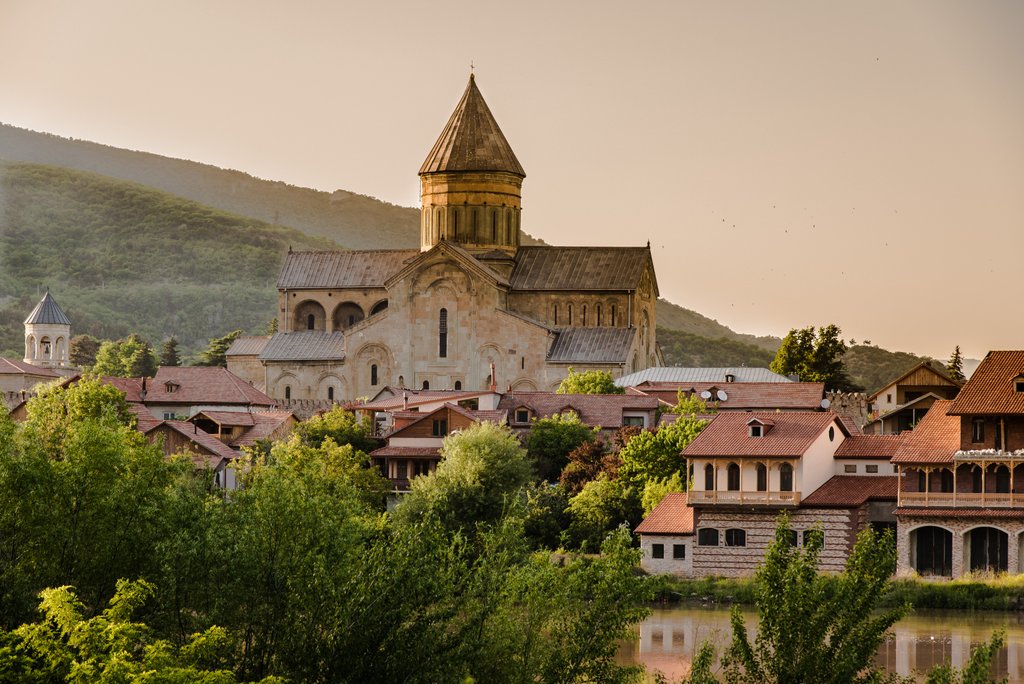
(kulturkind-berlin.de) In the frame of Georgia being the Guest of Honour country at the 2018 Frankfurter Buchmesse the association kulturkind eV Berlin is organizing an interdisciplinary workshop named ‘My Image of Georgia’ in 2017, 12-14 September. The workshop will take place in Tbilisi, organized in cooperation with the Georgian National Book Center. Georgian illustrators, book artists and children´s book authors are invited to send a call for application. Deadline: August 21, 2017.
Download here: Call for application
Description
The workshop will help to produce a stronger body of work for the presentation of Georgian illustration art at 2018 Frankfurter Buchmesse. Goal is to develop answers to the question: Which image are Georgia and its culture reflecting and how does this image influence its people? We will find various, maybe unexpected answers of what the culture of Georgia characterizes and what it stands for. We work with different creative methods for idea generation and include elements of design thinking. By iterating our results through the whole workshop process, we validate our ideas along the way to find the best solution in the end.
Illustrators are invited to submit their applications for participating in the workshop. Players from the field of book art and children´s literature in general are welcome to participate in the workshop and submit their application as well. The programme is open to applicants who live and work in Georgia and have an affinity to the Georgian culture. Prerequisite for participation are soft skills like empathy, enthusiasm and openness towards experimental strategies for solutions. The number of participants is limited.
The participation is free of charge. Teaching materials and food are included. Participants are responsible for their own travel and lodging.
Showing posts with label Education. Show all posts
Friday, August 04, 2017
CALL FOR APPLICATIONS: “My Image of Georgia” workshop (kulturkind-berlin.de)
Labels:
Bookfair,
Call,
Education,
Georgian National Book Center,
Workshop
Sunday, January 10, 2016
LÄNDERABEND: Minderheiten in Georgien. Recht auf Leben? (copernicus-stipendium.de)
Am Mittwoch, 13.01.2016, um 19 Uhr
Ort: MitOst e.V., Alt-Moabit 90, 10559 Berlin
(copernicus-stipendium.de) Georgien ist ein Land, in dem die verschiedenen ethnischen, religiösen und sexuellen Minderheiten immer zusammen gelebt haben. Historisch waren die Georgier besonders tolerant gegenüber anderen. Die Lage des Landes begünstigt eine vielfältige und multikulturelle Gesellschaft. Aber gibt es unter dieser Toleranz versteckten Rassismus oder Sexismus?
Die orthodoxe Kirche ist sehr stark in Georgien. Manche Gläubigen denken, dass sexuelle Minderheiten gar kein Recht auf das Wort, auf die Wahl und überhaupt, auf das Leben haben. Warum sind gerade Mitglieder einer Institution, die Toleranz predigt, dieser Meinung? Wird das Thema einfach falsch verstanden?
Eine der größten ungelösten Fragen in Georgien ist laut der EU der Schutz der Minderheiten. Seit die georgische Regierung ein Antidiskriminierungsgesetz geschaffen hat, gibt es starke Proteste. Von der Bevölkerung wurde dieses Gesetz so aufgefasst, dass ihre eigenen Rechte zu Gunsten der Minderheiten eingeschränkt würden, während jene zusätzliche Privilegien erhielten, die sie nicht verdienten. Ist das Gesetz nun realistisch anwendbar und auch gewollt oder war es vielmehr ein gezielter formaler Schritt in Richtung EU, der aber ohne Folgen blieb? Ist die Regierung überhaupt dazu in der Lage, die Mentalität der Bevölkerung zu verändern?
Die georgische Stipendiatin Mariam Kikvidze (Studiengang: Rechtswissenschaft) beschäftigt sich neben dem Studium mit verschiedenen Projekten, die Menschen- und Minderheitenrechte betreffen. In ihrem Vortrag wird sie versuchen ihre persönlichen Erfahrungen einzubringen und das Problem von mehreren Seiten zu beleuchten.
Unser Verein lädt die Teilnehmer im Anschluss an die Veranstaltung zu weiteren Gesprächen im informellen Rahmen bei einem kleinen Buffet mit Getränken (georgischem Wein) und selbst zubereiteten georgischen Spezialitäten ein. Der Eintritt ist frei. Spenden für die Arbeit des Vereins sind willkommen. Diese Einladung kann gerne an Freunde und andere Interessenten weitergegeben werden!
Copernicus Berlin e.V. ist ein von Studierenden, Absolventen und jungen Berufstätigen ehrenamtlich getragener gemeinnütziger Verein, der in den dreizehn Jahren seines Bestehens 82 Studenten aus 21 Ländern ein Studium in Berlin ermöglicht hat. Neben dem Studium an einer deutschen Universität absolvieren die Stipendiaten ein mehrwöchiges Praktikum und werden von Mentoren intensiv und persönlich betreut. Das Stipendium wird über Stiftungsgelder, Spenden und Patenschaften finanziert. Ein besonderer Aspekt des Copernicus-Stipendienprogramms ist die Unterbringung und Verpflegung der Stipendiaten in Berliner Gastfamilien.
weitere Informationen:
www.copernicus-stipendium.de,
berlin@copernicus-stipendium.de
Labels:
Berlin,
Copernicus Berlin e.V.,
Education,
Minority,
MitOst e.V.,
Studies
Friday, November 21, 2014
CALL: Applications to United World Colleges (UWC) for 2015-2017 are now open.
Applications to United World Colleges (UWC) for 2015-2017 are now open. Don’t miss your chance to become a part of the UWC community and continue your education in a truly international environment! In 2015 five different UWC colleges offered 8 places for Georgian students. There are places at UWC Adriatic in Italy, UWC Dilijan in Armenia, UWC Pearson College in Canada, UWC Robert Bosch College in Germany and UWC Maastricht in the Netherlands.
UWC was founded in 1962 with the vision of bringing together young people from all over the world and offering an educational experience based on shared learning, collaboration and understanding. UWC delivers a challenging and transformative educational experience to over 7,500 students each year, inspiring them to work towards a more peaceful and sustainable future. UWC has 15 colleges in Armenia, the USA, Canada, Germany, Italy, the Netherlands, Norway, Great Britain, Bosnia and Herzegovina, Costa Rica, Swaziland, India, Singapore, Hong Kong and China. All colleges have distinctive characteristics, yet share the same mission and values. More than 50,000 students from over 181 countries have studied at UWC schools, colleges and programmes.
Students from different countries are selected by the National Committees of their home countries. Currently, there are National Committees and selection contacts in over 140 countries. Admission is on a competitive basis, emphasizing applicants’ individual merit and performance. The UWC National Committee of Georgia, established in 2013, is the organization that selects students from Georgia to attend UWC colleges. In 2014, 4 students from Georgia were nominated to 3 different UWC colleges, and in early September they began their studies in Armenia, Great Britain, Germany. The students shared their first impressions about studies at the new college and you can view their feedback here.
The applications to UWC will be accepted until 18 December 2014. In order to apply for 2015 admission to UWC, candidates must meet the following selection criteria:
citizen of Georgia;
your age upon commencing studies (1 September 2015) – 16-18 years;
strong academic aptitude;
fluent English or the ability to learn it;
combination of leadership and high moral traits and commitment to public service.
We look forward to receiving your applications and wish you success in enrollment!
You can learn more about UWC colleges and selection process at UWC Georgia webpage: ge.uwc.org
Email: nc_georgia@uwc-georgia.org
Facebook: facebook.com/UWC-Georgia
Monday, January 13, 2014
VOLONTARIAT: Armenien - März 2013
EVS Volontariat in
Armenien
2 TeilnehmerInnen für ein
spannendes, vielseitiges EVS-Projekt in Armenien gesucht
(ab März 2014, 9
Monate)
Die “Austrian Helsinki Association – For Human Rights and Int. Dialogue” (Wien) bietet gemeinsam mit einer der führenden Menschenrechtsorganisationen Armeniens, dem “Helsinki Cititzens’ Assembly – Vanadzor office (HCAV)” (http://www.hcav.am), ein European Volunteer Service Volontariat im Rahmen des European Partnership an.
Wir suchen ab März 2014 zwei aufgeschlossene, neugierige und engagierte Person (bis 30 Jahre, nur Englischkenntnisse erforderlich, in Österreich wohnhaft), mit speziellem Interesse für Menschenrechte und internationale Zusammenarbeit, die das HCAV bei seiner vielfältigen Arbeit (Schwerpunkte: human rights, peace building, civil initiatives) unterstützen möchten.
Das Engagement wird über den gesamten Zeitraum von Wien aus begleitet, in Vanadzor stehen Mentoren Rat und Antwort. Die Volontäre soll je nach Kenntnis und Interesse die Organisation bei der Durchführung von Events (zb. Human Rights Film Festival, Int. Human Rights Day) und
praktischer Menschenrechtsarbeit unterstützen. Eine vielseitige Tätigkeit in einem jungen Team garantiert einen spannenden Austausch mit lokalen AktivistInnen, und es bestehen viele Möglichkeiten der persönlichen Weiterentwicklung und Erfahrungssammlung in einer interessanten Umgebung.
Neben einer umfassenden Vorinformation geben wir Unterstützung bei der Reisevorbereitung und ermöglichen ein Treffen mit ehemaligen EVS Volontären in Vanadzor.
Weiters stellt das Programm bereit:
• Eine kompetente, organisatorische Betreuung
• Unterkunft, Verpflegung
• Eine kompetente, organisatorische Betreuung
• Unterkunft, Verpflegung
• Sprachtraining (Armenisch/Russisch, keine
Vorkenntnisse erforderlich)
• Ausreichend Taschengeld
• Fortbildungsmöglichkeiten vor Ort sowie Seminar Teilnahmen mit
anderen Europäischen Freiwilligen (teilweise verpflichtend, in Österreich sowie Tbilisi, Georgien)
Die aufnehmende Organisation hat bereits Erfahrung mit Volontären und bietet die ideale Infrastruktur für einen Einsatz; es handelt sich hierbei um die 3. Runde des erfolgreichen Projekts. Vanadzor ist die 3. größte Stadt des Landes und befindet sich in unweiter Nähe einiger UNESCO Denkmäler Armeniens und ist gut mit Yerevan und Tbilisi öffentlich verbunden.
Für weitere Informationen -
http://www.jugendinaktion.at/ start.asp?ID=129&b=10,
http://ec.europa.eu/youth/evs/ aod/hei_f ...
8001041049,
http://www.hcav.am
Deadline: 22.01.2013, Rückmeldungen zur Bewerbung sowie Auswahl bis Ende Jänner 2013.
Ansprechperson: Interessensbekundungen (CV sowie kurzes Motivationsschreiben von max. 1 Seite, beides auf Englisch) an: evsviennavanadzor@gmail.com
• Ausreichend Taschengeld
• Fortbildungsmöglichkeiten vor Ort sowie Seminar Teilnahmen mit
anderen Europäischen Freiwilligen (teilweise verpflichtend, in Österreich sowie Tbilisi, Georgien)
Die aufnehmende Organisation hat bereits Erfahrung mit Volontären und bietet die ideale Infrastruktur für einen Einsatz; es handelt sich hierbei um die 3. Runde des erfolgreichen Projekts. Vanadzor ist die 3. größte Stadt des Landes und befindet sich in unweiter Nähe einiger UNESCO Denkmäler Armeniens und ist gut mit Yerevan und Tbilisi öffentlich verbunden.
Für weitere Informationen -
http://www.jugendinaktion.at/
http://ec.europa.eu/youth/evs/
http://www.hcav.am
Deadline: 22.01.2013, Rückmeldungen zur Bewerbung sowie Auswahl bis Ende Jänner 2013.
Ansprechperson: Interessensbekundungen (CV sowie kurzes Motivationsschreiben von max. 1 Seite, beides auf Englisch) an: evsviennavanadzor@gmail.com
Saturday, December 14, 2013
BILDUNG: Dringend Gastfamilien für junge Georgier gesucht! (yfu.de)
Austauschorganisation sucht Gastfamilien für Austauschschüler aus Georgien
Das gemeinnützige Deutsche Youth For Understanding Komitee e.V. (YFU) sucht deutschlandweit Gastfamilien für vier junge Georgier, die im August/September für ein Austauschjahr nach Deutschland kommen. Die Austauschschüler müssen Anfang nächster Woche ihr Visum beantragen, wofür sie die Adresse ihrer Gastfamilie brauchen. YFU sucht daher dringend Familien, die sie ab August/September aufnehmen – gegebenenfalls auch nur für einige Wochen!
Die Jugendlichen gehen hier ein Jahr lang zur Schule und teilen wie ein neues Familienmitglied den Alltag ihrer Gastfamilien. Dies ermöglicht ihnen, Deutschland und die deutsche Sprache intensiv kennenzulernen. Die Gastfamilien entdecken im Gegenzug eine andere Kultur im eigenen Zuhause und erweitern ihre Familie um ein neues, internationales Mitglied. Grundsätzlich kann jedes Paar und jede Familie Gastfamilie werden: Ob mit eigenen Kindern oder ohne, ob in der Stadt oder auf dem Land. Auch beruflich sehr eingespannte Eltern oder Alleinerziehende sind herzlich eingeladen. Interessierte können sich – gern möglichst schnell – bei YFU melden. Kontakt: 040 227002-778 oder gastfamilien@yfu.de
Monday, March 04, 2013
BILDUNG: Virtuelle Schulpartnerschaften - eTwinning - auch in Armenien, Aserbaidschan, Georgien
Mit dem Start von «eTwinning Plus» könnten auch Schüler aus diesen Ländern «bei interkulturellen Projekten mitmachen und gleichzeitig ihre Kenntnisse in Fremdsprachen und Informationstechnologien verbessern», betonte die zuständige EU-Kommissarin Androulla Vassiliou. Allein in Deutschland nehmen nach Angaben der EU-Kommission 5.148 Schulen am «eTwinning» teil; europaweit sind es 100.000 Schulen in 33 europäischen Ländern.
Labels:
Armenia,
Azerbaijan,
Development,
e-learning,
Education,
EU,
Europe,
Georgia
Thursday, February 14, 2013
VIDEO: "Warum Deutsch?" mit Maia Panjikidze
Labels:
Education,
german,
Goethe Institut Tbilisi,
Maya Panjikidze,
Video,
YouTube
Saturday, January 19, 2013
SEMINAR: Carl Friedrich Goerdeler-Kolleg für Good Governance
Das Kolleg qualifiziert die nächste Generation von Führungskräften aus
Armenien, Aserbaidschan, Belarus, Georgien, Moldau, Russland, der Türkei
und der Ukraine im Bereich Good Governance weiter und unterstützt so verantwortungsvolles und nachhaltiges Handeln im öffentlichen Sektor dieser Länder.
20 deutschsprachige Young Professionals sind eingeladen, sich ueber ein Jahr hinweg fortzubilden und an einem eigenen Projekt in ihrer Heimatinstitution zu arbeiten. Das Programm beginnt mit einem dreiwoechigen Seminar in Berlin und Warschau vom 31. August bis 21. September 2013 und schliesst im August 2014 mit einem Seminar in Berlin ab.
Die Seminarsprache ist deutsch.
Weitere Informationen finden Sie im Anhang und unter www.goerdeler-kolleg.de. Der Bewerbungsschluss ist am 28. Februar 2013.
Labels:
Berlin,
Call,
Development,
Education,
Governance,
Seminar
Wednesday, December 19, 2012
WISSENSCHAFT: „Der neue Kaukasus beginnt an den Universitäten“. Von Tanja Eisenach (idw-online.de)
(idw-online.de) Otto-Friedrich-Universität Bamberg
Giorgi Khubua hat sein ganzes berufliches Leben an Universitäten verbracht und eine rein akademische Karriere eingeschlagen. Er studierte Jura in Tiflis und kam für Forschungsarbeiten zum ersten Mal mit 30 Jahren nach Deutschland. Seitdem lehrte und forschte er an Universitäten in Tiflis, Speyer, Heidelberg, Hannover, Jena und München. Von 2006 bis 2010 war Giorgi Khubua Rektor der Staatlichen Universität in Tiflis und damit vornehmlich mit administrativen Aufgaben betraut – „mit der Gefahr der wissenschaftlichen Dequalifikation“, wie er zugibt.
In der Zeit seines Rektorates gab es auch erste Kontakte zwischen ihm und der Bamberger Universitätsleitung. Als Rektor kämpfte er für die Freiheit der Wissenschaft: Die Universität Tiflis wahrte Distanz zur Politik, es gab kritische Veröffentlichungen der Professoren. „Die Universität darf keine Zweigstelle der Politik sein“, fordert der Wissenschaftler. Er ist sich bis heute nicht sicher, ob es diese Haltung war, die seine Karriere in Georgien beendete. „Vielleicht waren wir zu idealistisch. Nach den Wahlen und der Rosenrevolution 2003 haben wir gehofft, Georgien würde sich an demokratischen Standards nach europäischem Vorbild orientieren.“
2010 gab es verschiedene Vorwürfe gegen seine Person. Khubua versuchte zwar zunächst, seinen und vor allem den guten Ruf der Universität zu schützen, die sich auch zu Sowjetzeiten für Freiheit und Unabhängigkeit eingesetzt hatte. Die Professoren standen zu ihm. Trotzdem trat er unter politischem Druck gegen ihn und seine Familie im August 2010 als Rektor zurück, ein Jahr später wurde ihm auch sein Lehrstuhl entzogen. Zu diesem Zeitpunkt arbeitete er bereits an der Universität in Jena, finanziert durch Stipendien der Alexander-von-Humboldt-Stiftung, des DAAD und der Volkswagenstiftung. Seit August 2012 ist er Gastprofessor am Institut für Geographie der Otto-Friedrich-Universität Bamberg, wo er das Wintersemester 2012/13 lehrend und forschend verbringend wird.
„Von dem, was man heute an den Universitäten denkt, hängt ab, was morgen auf den Plätzen und Straßen gelebt wird“
An seinem Glauben an die Wissenschaft konnten weder die Vorwürfe noch der politische Druck etwas ändern. Für Khubua ist eine wissenschaftliche Kooperation die Grundlage für politische Zusammenarbeit in der konfliktträchtigen Region Kaukasus, in der unterschiedlichste religiöse, ethnische und politische Interessen aufeinanderprallen und immer wieder zu blutigen Auseinandersetzungen führen. Seine politische Vision: die Entwicklung einer gemeinsamen kaukasischen Identität. „Im Moment steht die nationale Zugehörigkeit und Ethnozentrismus im Vordergrund.“ Die aktuellen Herausforderungen können die Nationalstaaten allein jedoch nicht lösen, dafür seien sie zu klein: Demokratie etablieren, Militärkonflikte vermeiden, Korruption bekämpfen, wirtschaftliche Stabilität schaffen. „Für die Politik ist es jedoch unpopulär und ein sehr unsympathischer Gedanke, eigene Souveränität aufzugeben, um eine regionale Institution zu gründen, die über den Nationalstaaten steht.
Der Wissenschaftler denkt dabei an eine Institution wie es die EU für Europa war. „Auch wenn das fast wie eine politische Utopie klingt.“ Für eine regionale Kooperation sei zuerst eine kritische Selbstreflexion der beteiligten Länder notwendig, und die könne am besten innerhalb der Wissenschaft beginnen. „Denn Wissenschaft ist mobiler, dynamischer und nicht der politischen Konjunktur unterworfen“, erklärt Khubua. „Der neue Kaukasus beginnt an den Universitäten. Schon der spanische Philosoph José Ortega y Gasset erklärte: Von dem, was man heute an den Universitäten denkt, hängt ab, was morgen auf den Plätzen und Straßen gelebt wird.“ Wenn der Diskurs erst einmal gestartet sei, werde er in Bewegung bleiben, auf wissenschaftliche Kooperation werden Kooperationen in weiteren Feldern folgen.
Kaukasus-Kompetenzzentrum in Bamberg
Doch damit eine solche wissenschaftliche Kooperation gelingt, braucht es neutrale Dritte – eine deutsche Universität wie Bamberg beispielsweise. Die Universität plant deshalb, ihre Kooperationen im Kaukasus zu intensivieren. Im September 2012 war eine Bamberger Delegation in Kutaisi (Georgien), um weitere Vorbereitungen für deren Masterstudiengang European Studies zu treffen: Georgische Studierende werden nun voraussichtlich ab dem Wintersemester 2014/15 ein Auslandssemester in Bamberg absolvieren. „Wir haben ohnehin vorhandene Module für diesen Studiengang ausgewiesen und bekommen dafür Austauschstudierende und damit auch Austauschplätze“, erklärt der Vizepräsident für Lehre und Studierende, Prof. Dr. Sebastian Kempgen.
Auch mit Eriwan (Armenien) soll ein Austauschprogramm vor allem im Bereich Geschichte, Politik und Kultur aufgebaut werden. Prof. Dr.-Ing. Rainer Drewello, Direktor des Instituts für Archäologie, Denkmalkunde und Kunstgeschichte an der Universität Bamberg, ist darüber hinaus gefragter Fachmann für Restaurationsvorhaben an Weltkulturerbestätten in Armenien. Das größte Projekt wird aber ein Kompetenzzentrum für die Region Kaukasus in Bamberg sein. „Im Augenblick diskutieren wir ganz unterschiedliche Kooperationsformen, zwischen einzelnen Instituten, wie z.B. Politikwissenschaft, Kommunikationswissenschaft oder Germanistik bis hin zu einem gemeinsamen Area-Studies-Studiengang“, resümiert der Vizepräsident. Dabei wolle man die vornehmlich linguistischen Kompetenzen, die bereits an anderen Universitäten etabliert sind, nicht duplizieren, sondern eine interdisziplinäre Kombination aus Sprach-, Geschichts- und Kulturstudien anbieten, die mit geographischem, politischem, wirtschaftlichem und sozialwissenschaftlichem Verständnis für die Region angereichert wird.
Auch die Virtuelle Hochschule Bayern (vhb) soll mit ihren Möglichkeiten einbezogen werden. „Konkurrierende Projekte an anderen bayerischen Universitäten sind nicht in Sicht“, gibt Präsident Prof. Dr. Dr. habil. Godehard Ruppert seine Einschätzung wieder. Ein Stellenwunsch sei beim bayerischen Wissenschaftsministerium hinterlegt, denn: „Ohne zusätzliche Ressourcen geht es im Augenblick nicht. Erst wenn die großen Studierendenjahrgänge die Universität verlassen haben, ergibt sich unter Umständen eine Möglichkeit, neue Bereiche auch mit eigenen Ressourcen zu stärken“, so der Präsident. Die Universität Bamberg bringe jedenfalls für das Vorhaben beste inhaltliche Voraussetzungen mit, da sie mit den Fächern Slavistik, Turkologie und Iranistik bereits die Nachbarregionen abdecke.
Das bestätigt auch Giorgi Khubua, und er ist sich sicher: „Dies alles kann helfen, eine kaukasische Identität zu schaffen“. Die wäre dann zwar künstlich konstruiert – das sei die europäische aber ebenfalls. „Ich fühle mich noch nicht als Kaukasier, sondern als Georgier. Aber der europäische Gedanke gibt mir Hoffnung für den Kaukasus.“
Kontakt:
Otto-Friedrich-Universität Bamberg
Tanja Eisenach, Pressereferentin
Kapuzinerstraße 16
96047 Bamberg
Tel. +49 (0) 951 / 863 1023
Ansprechpartner:
Prof. Dr. Giorgi Khubua
Tel.: 0176-32475521
E-Mail: giorgi.khubua@uni-bamberg.de
Monday, November 05, 2012
CALL: Cooperation with cultural managers from Armenia, Azerbaijan and Georgia (europehousegeorgia.org)
(europehousegeorgia.org) Call for proposals for cultural managers from Armenia, Azerbaijan and Georgia Europe House Georgia in cooperation with MitOst Berlin is pleased to invite cultural managers from Armenia, Azerbaijan and Georgia to participate in the training program for cultural managers aiming at building confidence within each of the three South Caucasus countries through fostering and forging co-operation in the cultural sector whilst strengthening cultural institutions in Armenia, Azerbaijan and Georgia as well as the professional qualifications of their cultural managers.
- Increasing trust resulting in an improved environment and building confidence between the populations of the territories involved in conflicts (Armenia and Azerbaijan) and neighbouring countries (Azerbaijan, Armenia and Georgia) through cultural projects.
- Improving the qualification of cultural managers through trainings in cultural project management, strategic management and European policies and instruments as well as study visits to German cultural institutions.
- Strengthening cultural institutions and creating a common platform where young professionals will develop joint project proposals for future initiatives. Supervised by mentors, participating cultural managers will improve the organisational structures of their cultural institutions through innovation. The training component will be actively used for developing this innovative approach. The implementation of new strategy and efficient management in the institutions will be supervised during two seminars by experienced mentors from Germany. The project, therefore, will combine the strengthening of the professional skills of individual cultural managers and the capacity building of cultural institutions.
- Creating and building long-term co-operation between selected organizations from the South Caucasus and Germany.
The program foresees following activities:
- Training in cultural management and strategic development for cultural institutions, Tbilisi December 9 – 15, 2012
- Study visit to Germany in February 2013 including a seminar in trans-cultural project management and study visits to cultural institutions
- Working sessions during the preparation of the strategies with mentors.
Cultural managers should have at least 5 years of working experience at cultural institutions in their home countries or abroad or as freelance managers, have strong interest in international cooperation and strategic planning of the cultural institutions they represent of their own projects/initiatives; have good knowledge of English, Russian or German language.
The program is funded by the Black Sea Trust, a project of the German Marshall Fund of the United States, and the Robert Bosch Foundation.
Applicants should send their CV, motivation letter and one recommendation letter from their work place or a representative of a partner organization (if freelance) before November 20 to tamuna_gurchiani@yahoo.com and maia.nikolaishvili@eh.org.ge
For more information about Europe House Georgia and MitOst e.V. please visit our websites: www.europehousegeorgia.org and www.mitost.org
Contact Details:
Tamuna Gurchiani
Europe House
1, Freedom Square
Tbilisi 0105, Georgia
Tel. +995-32-247-03-12
Mob.+995-595-38-44-68
e-mail: tamuna_gurchiani@yahoo.com
Labels:
Armenia,
Azerbaijan,
Call,
Culture,
Development,
Education,
Europe House,
Georgia,
Manager,
MitOst e.V.,
NGO,
South-Caucasus,
Tamuna Gurchiani
PANEL: On Global Environmental Change, Conflict or Cooperation - a Talk & open panel of Günter Bächler (europehousegeorgia.org)
(europehousegeorgia.org) The Tbilisi State Academy of Arts request the pleasure of your company
at a Talk & open panel of Günter Bächler,
Ambassador of Switzerland to Georgia
On Global Environmental Change,
Conflict or Cooperation
7 November, 2012, at 5.00 p.m.
Big Exhibition Hall, Tbilisi State Academy of Arts, 22 Griboyedov st.
Labels:
Conflict,
Discussion,
Education,
Environment,
Europe House,
Georgia,
Globalization,
Günter Bächler
Location:
Alexander Griboedov St, Tiflis, Georgien
Saturday, November 03, 2012
EDUCATION: Armenia-Norway Exchange Programme (ntnu.edu)
Source: ntnu.edu
The Norwegian University of Science and Technology (NTNU) invites
students from our collaboration institutions in Armenia to apply for a
scholarship within the framework of Armenia-Norway Exchange Programme.
The Scholarship is open for students applying for admission to Master's
Programmes and PhD Programmes at NTNU. In addition to the Student
Exchange Program, a project to support Armenian-Norwegian cooperation in
the field of small hydropower and environmental protection is being
launched in 2011. The project will be implemented over a period of three
years, led by Norsk Energi with grant funding from the Norwegian
Ministry of Foreign Affairs. The candidates qualifying for the Student
Exchange Program will have the opportunity to be involved also in this
project.
Eligible universities:
American University of Armenia
State Engineering University of Armenia
Yerevan State University of Architecture and Construction
Programmes of study offered by NTNU within the programme:
-MSc in Electric Power Engineering
http://www.ntnu.edu/studies/mselpower
-MSc in Hydropower Development
http://www.ntnu.edu/studies/msb1
-PhD in Electric Power Engineering
http://www.ntnu.edu/studies/phelkt
-PhD in Energy and Process Engineering
http://www.ntnu.edu/studies/phenpro
-PhD in Hydraulic and Environmental Engineering
http://www.ntnu.edu/studies/phvann
MSc:
Master's degree is a graduate level-degree that involves two years of study. The first year consists of a series of 6 basic courses and a larger group of projects where the students apply knowledge from the other courses. The final year consists of four compulsory advanced courses in the fall, while the entire spring semester is dedicated to the Master's thesis. Students will be able to choose the topic of their Master's thesis within areas where NTNU offers special qualifications.
PhD:
A candidature in the doctoral programme involves three years of study and research totaling 180 credits. The exchange students from Armenia are welcome to apply for 12 months/1 year stay at NTNU, while the rest of the research will be done from Armenia. The final plan for the PhD Programme will be designed in consultation with the candidate, the supervisor and department depending on the subject area for the dissertation and the candidates need and preferences.
Eligible Applicants:
When applying to a Master's Programme, applicants must have a Bachelor's degree or equivalent with significant relevance to the proposed field of study. When applying to a PhD Programme, applicants must have a Master's degree or equivalent education, which is approved by the faculty where you want to study. All eligible candidates have to be in good academic standing.
The Scholarship covers:
- A monthly allowance regulated by the Norwegian State Educational Loan Fund
(9100NOK per month)
– Travel expenses – one round-trip to your home country per year.
English Proficiency Requirements:
All programmes of study will be taught in English. Applicants are therefore required to take the TOEFL/IELTS. For further information about NTNU's English proficiency requirements as well as possible exemptions to the TOEFL/IELTS test, please see our website:
http://www.ntnu.edu/studies/langcourses/languagerequirements
Required documents:
MSc
Documents you need to prepare for the final application:
- Certified copies of the pages of your passport showing your photo, your full name, your date of birth and your nationality;
- Officially certified copies of all your educational certificates including: Diploma/ certificate/ transcript from Higher Secondary School;
– TOEFL or IELTS-results when applicable (if not forwarded directly to NTNU from ETS)
- A letter of motivation (1/2-1 page) and you CV;
- Letters of recommendation and letters from employers confirming work experience.
PhD
- CV;
- Recommendation letters from Vice Chancellor or Head of Department showing the need for staff training at PhD level at the home institution;
– Research proposal of minimum 4 A4 pages;
- Official certified copies of diploma/ transcripts from bachelor's and master's degrees;
- TOEFL/ IELTS test if not exempted from the English language requirements.
Deadlines:
MSc:
The preliminary application deadline is December 1, with the final application deadline of February 1 for applicants who have passed preliminary screening. The preliminary applications will be processed after 1 December, and students may expect a reply in early January. Those students you get their preliminary application approved will receive a final application form by e-mail. The final application form must be returned to us along with all the necessary documentation by 1 February. Students who do not pass the preliminary screening will also receive an e-mail.
PhD:
Autumn term: 1.5.
Spring term: 1.10.
June 13, 2012
Link: armacad.info
Saturday, September 29, 2012
RESEARCH: Presentation of the Regional Scholarship Programme in Yerevan (ge.boell.org)
The scholarship program is orientated expressly at social science research in the South Caucasus.
It endeavors to:
support young social scientists in carrying out individual and interdisciplinary research;
enact a methodological and substantive renewal of the study of history and social sciences in the South Caucasus; promote regional cooperation among young academics in the South Caucasus.
This year, the Heinrich Böll Foundation South Caucasus Regional Office announces a call for applications for obtaining funding for research projects in 2013. In this regard, the Foundation is pleased to invite interested young researchers and representatives of civil society in Armenia to the presentation of its Regional Scholarship Programme in Yerevan on Wednesday, 3 October, 2012, at 18:00.
Address: 15, Charents str., Yerevan (Library of the Institute of Archeology and Ethnography of the National Academy of Sciences of Armenia)
Labels:
Archaeology,
Call,
Education,
Ethnology,
Foundation,
Heinrich-Böll-Stiftung,
Research,
social science,
South-Caucasus,
Yerevan
Location:
Charents St, Jerewan, Armenien
Friday, September 14, 2012
CALL: BBC Training: Call for Applicants in Armenia
The BBC is leading a series of workshops, as part of the EU-funded Media Neighbourhood Project, in the areas of professional journalism, new media, and management. BBC and EU experts will deliver workshops for three different groups of participants across 15 countries in the Middle East, Eastern Europe and Caucasus.
Media Neighbourhood
Media Neighbourhood is a three- year training programme for journalists, editors and managers from broadcast, print and online. It is funded by the European Union and delivered by a consortium led by BBC Media Action.
The programme has two main aims.
• To strengthen the professional capacity of journalists, particularly in the areas of media independence and online media.
• To improve the reporting of EU social, economic and political policies within the Middle East, Eastern Europe and Caucasus
If you currently work in the media in Armenia you may wish to apply for one of the workshops.
Please select one of the three workshops below (BBC News Reporting Course,
Multi-Platform Ethical Journalism or Professional and Financial Independence).
Please note, if we are unable to offer you your first choice we may offer you a place on one of our other courses.
Workshops will be held in Armenia led by senior journalists and highly- experienced trainers from the BBC, AFP and the other international media organisations in the consortium. The training will be practical and hands on.
Courses
1) BBC News Reporting Course – 19-21 November 2012 (TBC)
• Making stories relevant and engaging for the audience
• Understanding the EU and its relationship with its neighbours
• Journalistic ethics
• Effective news gathering
• Professional interviewing techniques
Requirements
• You will have worked in an established media outlet of any platform for at least 2 years as a reporter or editor.
• Ideally you will have an interest in covering international news, especially concerning the EU and related subjects.
You will be expected to attend two, three full-day workshops, which will be held within a year of each other. Between the two workshops you will be expected to produce a portfolio of stories, which will be evaluated during the 2nd workshop by professional media trainers.
2) Multi-Platform Ethical Journalism 14-15 February 2013 (TBC)
• Basics of multi-platform journalism
• Creating professional content for on-line
• Techniques of mobile reporting
• Ethics and responsibilities of on-line journalism
• Citizen journalism
• Building on-line communities, involving the audience
• Search Engine Optimization
• Blogging, Social Media and Online Curation.
Requirements: you will have one or more of the following:
• Basic experience as a multi-media journalist
• Current involvement in multi-media or on-line journalism
• Experience in blogging and the use of social media for news production, distribution and citizen activism
• Editorial experience in multi-media environment
This is a 2 full- day course
3) Media Managers and Senior Editors on Professional and Financial Independence- 11-13 February 2013 (TBC)
• Business planning
• Strategic marketing
• Developing practical tools - mechanics of selling advertising preparing price lists, negotiation techniques
• Effective broadcast scheduling
• Managing multi-platform content
• Newsroom management, including integrated newsrooms
• Foreign desk management
• EU and its policies towards your country and region
• HR development
• Winning donor grants and project management
Requirements: you will have experience in one or more of the following areas:
• Current managerial or senior editorial position in a media outlet
• Media sales
• Programming or scheduling
• Audience research
• Newsroom management or foreign desk management
• News producer
• Media business management
• Donor relations and project management
This is a 3 full-day course
Application and Information
To apply please send a CV and a letter outlining your experience and your suitability to media.neighbourhood@bbc.co.uk by 24th September 2012. Please also specify the course you are applying for.
Please include the names and current email addresses and phone numbers of at least two referees at a senior level with whom you have worked and whom you would be happy for us to contact.
Labels:
Armenia,
BBC,
Call,
Caucasus,
Education,
Journalism,
Journalists,
Media,
Training
Location:
Armenien
Tuesday, September 11, 2012
SEMINAR: Two-year Master’s Degree Program in Journalism and Media Management in Tbilisi, Georgia (jnews.am)
(jnews.am) The Georgian Institute of Public Affairs (GIPA) is pleased to announce scholarships for Armenian students to study journalism at the Caucasus School of Journalism and Media Management (CSJMM).
The program includes four semesters of study from October 2012 to May 2014. The students will spend their first and fourth semesters in Yerevan and their second and third semesters in Tbilisi. The core program, thesis defense and final project, and graduation will take place in Tbilisi, Georgia (January-December 2013).
While studying in Georgia, students will receive monthly stipends for housing and food expenses. Each student will also receive funding for an internship with a media organization abroad. All tuition costs are covered by the program. The program is funded by the U.S. Embassy in Armenia.
The mission of this master program is to teach students the principles and techniques of journalism. This includes the gathering of information via interviewing and documents; the analysis of this information and the use of this information to impartially and accurately tell stories in words, graphics, photographs, audio and video. These stories should serve the public and promote social justice. The Program teaches students to simplify complex matters for a general audience and to investigate wrongdoing; how to provide a public forum, via social media and other interactive venues, so that the public feels empowered to take action in its best interests. In addition, the program provides knowledge on how to analyze original research and write a research paper. Teaching students research includes helping them develop their analytical, critical and creative thinking skills. The program gives students opportunity to specialize in media management or multi-media journalism. The program is taught in English and is targeted for international audience. CSJMM seeks to accomplish this mission by providing a practice-based education taught by international and Georgian faculty in a state-of-art multimedia lab.
Students of the CSJMM are main beneficiaries of the Multimedia Education Center (MEC), which is an innovative education center, which provides a multipurpose learning environment for students and recent graduates of journalism programs.
GIPA-Place To Go!
Starting from September, 2011, CSJMM master programs are offered in partnership with The University of South Carolina's School of Journalism and Mass Communications. Under the scope of this partnership, professors from the United States give lectures at CSJMM. In addition to this The South Carolina University Professor Keith Kenney is actively involved in the school management. Due to a grant from the U.S. Department of State, the two schools are participating in a three-year partnership program to improve the standard of journalism instruction and to assist in the institutional development of CSJMM.
Deadline for applications is September 30, 2012 at 16:00.
ENTRANCE TESTS:
English language test (institutional TOEFEL Pbt)
Interview with the selection committee
APPLICANTS MUST HAVE:
Bachelor’s and/or master’s degree in any field (including media management and journalism);
Good command of English;
Commitment to pro-active journalism;
REQUIRED DOCUMENTS:
Completed application form (hard copy)
Copy of bachelor’s or master’s degree diploma (previous training or education in journalism not required)
Passport copy
Statement of purpose (in English, max 300 words)
2 recommendations (in English, max 200 words)
Required documents will be accepted from 12:00 to 16:00, Monday to Friday, from August 20 to September 30, 2012. Address: 13 Mashtots ave. 2nd floor., Yerevan, Armenia
Application form can be downloaded here.
For more information, please contact Suren Deheryan, national coordinator in Armenia at e-mail address: deheryan@gmail.com (Subject: GIPA).
The program includes four semesters of study from October 2012 to May 2014. The students will spend their first and fourth semesters in Yerevan and their second and third semesters in Tbilisi. The core program, thesis defense and final project, and graduation will take place in Tbilisi, Georgia (January-December 2013).
While studying in Georgia, students will receive monthly stipends for housing and food expenses. Each student will also receive funding for an internship with a media organization abroad. All tuition costs are covered by the program. The program is funded by the U.S. Embassy in Armenia.
Students of the CSJMM are main beneficiaries of the Multimedia Education Center (MEC), which is an innovative education center, which provides a multipurpose learning environment for students and recent graduates of journalism programs.
GIPA-Place To Go!
Starting from September, 2011, CSJMM master programs are offered in partnership with The University of South Carolina's School of Journalism and Mass Communications. Under the scope of this partnership, professors from the United States give lectures at CSJMM. In addition to this The South Carolina University Professor Keith Kenney is actively involved in the school management. Due to a grant from the U.S. Department of State, the two schools are participating in a three-year partnership program to improve the standard of journalism instruction and to assist in the institutional development of CSJMM.
Deadline for applications is September 30, 2012 at 16:00.
ENTRANCE TESTS:
English language test (institutional TOEFEL Pbt)
Interview with the selection committee
APPLICANTS MUST HAVE:
Bachelor’s and/or master’s degree in any field (including media management and journalism);
Good command of English;
Commitment to pro-active journalism;
REQUIRED DOCUMENTS:
Completed application form (hard copy)
Copy of bachelor’s or master’s degree diploma (previous training or education in journalism not required)
Passport copy
Statement of purpose (in English, max 300 words)
2 recommendations (in English, max 200 words)
Required documents will be accepted from 12:00 to 16:00, Monday to Friday, from August 20 to September 30, 2012. Address: 13 Mashtots ave. 2nd floor., Yerevan, Armenia
Application form can be downloaded here.
For more information, please contact Suren Deheryan, national coordinator in Armenia at e-mail address: deheryan@gmail.com (Subject: GIPA).
Thursday, August 09, 2012
STUDIES: Dmanisi Summer School 27.08. until 07.09.2012 (museum.ge)

For application contact:
Apllication Form: museum.ge/application dmanisi school (eng.pdf)
Dmanisi Summer School Program
The Dmanisi Summer School combines theoretical and practical training. The lectures will be led by Georgian scientists – specialists in social sciences. The topics covered include: history, art and archaeology of Georgia, also ethnology and numismatics. More in details: Georgian medieval archaeological sites; ethnogenesis of Georgia based on anthropological materials; collections kept in the Georgian National Museum; history of Georgian monastic life; ethnic groups of Georgia; material and religious culture of the different ethnic groups living in Georgia; Georgian marital art etc.
![]() |
Dmanisi Summer School
27.08-07.09-2012 The Georgian National Museum with the support of Shota Rustaveli National Science Foundation announces the opening of a new international project – “Dmanisi Summer School” from 27 August 2012 to 7 September 2012.
The focus of the school is
the Georgian Studies - a field of humanities covering Georgian history,
religion, linguistics and culture.
The Summer School is open to Georgian and international Bachelor, Master, PhD students or graduates interested in our heritage and in the disciplines related to Georgian history. The school is located at the Dmanisi Archaeological Museum research base-camp in the village of Patara Dmanisi, 85 km south-west from Tbilisi, in the east Georgia. Aims: • Offering new theoretical and practical experience in the disciplines related to the history of Georgia. • Acquiring better knowledge of the modern research methodologies in Georgian Studies. • Improving cultural and academic relations between Georgian and foreign participants. • Popularizing Georgian heritage and promoting Georgian Studies. • Presenting various collections from the Georgian National Museum. • Supporting the development of cultural tourism in Georgia. Educational program is led by Georgian scientists specialized in social sciences and consists of theoretical and practical training. The topics covered are the following: art, history, and archaeology of Georgia, also ethnology and numismatics. The program comprises of the workshops, discussions between the participants and the lecturers as well as screening of the documentaries. Field trips to the Georgian historical sites and museums are included. At the end of the program participants will be asked to prepare a small presentation. Maximum number of students: 10 Language: English (and Georgian with translation into English) Tuition fee: free At the end of the course participants will receive certificates. Application deadline is the 10th of August 2012. Send your application form/inquiries to the following email: dmanisisummerschool@gmail.com More information: museum.ge |
The program includes discussions between the participants and the lecturers; at the end of the course all the participants will be asked to make a small project-presentation on their own. Students will have a unique opportunity to work in team, exchange the knowledge and prepare presentation at the field.
Participants will get acquainted with the original and photo-illustrated material and cultural heritage kept in the Georgian National Museum.
The guided tour will be organized at the archaeological site of Dmanisi. The tour will cover: Dmanisi paleoanthropological site, Dmanisi Bronze age dwelling, Dmanisi medieval city and its structures: parts of the city, dwellings, workspaces, cultural and religious buildings, self-defense system of the city – fortress and the secret tunnel; the suburbs of the medieval city and the cemeteries of different religious groups: Christian-Orthodox (Georgian); Christian- Gregorian (Armenian), and Islamic.
Practical experience can be acquired by the archaeological field-work dealing with the methodologies of the excavation, excavations itself, fixation of artifacts and immovable monuments, planning and mapping (both mechanical and with total mapping station), photo fixation; description of the stratigraphy and of the recovered artifacts.
The practical work also includes laboratory work: preparation, restoration and conservation of the archaeological findings.
Additionally, the workshops in experimental archaeology, ethnography - traditional design of clothing and ceramics, and Georgian marital art will be organized.
The field trips in the historical places and museums in Georgia will be planned; it will be possible to visit local exhibitions.
The material resources of the summer school are provided by the archaeological museum research camp in Dmanisi and consist of field laboratory, lecture-room, living camp with kitchen, bathrooms and bedrooms, also transportation.
Source: museum.ge/Program (eng.pdf)
Wednesday, August 01, 2012
LERNEN: Georgien sucht deutsche Muttersprachler (tlg.gov.ge).
(tlg.gov.ge) Georgien sucht deutsche Muttersprachler, die bereit sind, mindestens sechs Monate an einer georgischen Schule die dortigen Deutsch-Lehrkräfte beim Unterrichten zu unterstützen.
Deutsch vermitteln in Georgien? Freiwillligen-Programm der georgischen Regierung für deutschen muttersprachlichen Unterricht an georgischen Schulen!
Georgien sucht deutsche Muttersprachler, die bereit sind, mindestens sechs Monate an einer georgischen Schule die dortigen Deutsch-Lehrkräfte beim Unterrichten zu unterstützen.
Das Programm richtete sich ursprünglich an englische Muttersprachler; es wurde nun aber auch für Deutsch geöffnet.
Bewerbungen sind direkt über die Internetseite von Teach and Learn möglich. Eine Übersicht über die erforderlichen Bewerbungsunterlagen in deutscher Sprache finden Sie auf der Webseite der Deutschen Botschaft in Tiflis, www.tiflis.diplo.de
Location:
Georgien
Subscribe to:
Posts (Atom)