Showing posts with label Mestia. Show all posts

Thursday, July 24, 2014

EXHIBITION: The famous Italian photographer and mountaineer Vittorio Sella at Svaneti Museum of History and Ethnography (museum.ge)

(museum.geGeorgian National Museum, Embassy of Italy in Georgia and National Geographic Georgia, present photo exhibition by famous Italian photographer and mountaineer Vittorio Sella at Svaneti Museum of History and Ethnography. Opening event will take place on 24 of July 2014, at 2 p.m.

Vittorio Sella (1859 -1943) was an Italian photographer and mountaineer, who took photographs of mountains which are regarded as some of the finest ever made. His contribution to geography, ethnography and development of Alpinizm is outstanding.

Vitorio Sella was born in Biella, Italy in the foothills of the Alps and acquired his interest in photography from his father, Giuzeppe Venanzio Sella and in alpinism from his uncle, Quintino Sella, scientist and politician, who was also the founder of the Italian Alpine Club.

Vitorio Sella made a number of significant climbs in the Alps and participated in numerous expeditions on four continents, including three travels to the Caucasus in 1889, 1890 and 1896.

Svanetian villages, landscapes, ethnography, families, culture, portraits and other significant details perfectly pictured by Sella will be presented for public at Svneti Museum of History and Ethnography for the first time. After decade, author's works return to the place where photographer was travelling.

The majority of photographs taken during the Caucasian expeditions is connected with Svaneti. In his diaries, Sella writes about Svans as the original, proud and noble people. Rezo Tabukashvili, famous Georgian film director, made a wonderful film "Vittorio Sella" in 1980.

Amazed with the beauty of the Caucasus, different regions of Georgia and with Svaneti in particular, Vittorio Sella left the wonderful photographs and important documents of our country to the world and the future generations.

Adress: Svaneti Museum of History and Ethnography. Mestia, 7 A. Ioseliani Street.

Thursday, April 18, 2013

EXHIBITION: BLACK.SEE des Berliner Architekten Jürgen Mayer H. in EIGEN + ART Lab (jmayerh.de)

EIGEN+ART Lab 


(jmayerh.de) SAVE THE DATE: Gallery Weekend Berlin +++ 26. - 28. April 2013
    
BERLIN: Gallery Weekend

Zwischen Freitag, dem 26. April und Sonntag, dem 28. April 2013 öffnen über 50 Berliner Galerien ihre Türen für Besucher zum diesjährigen Gallery Weekend Berlin. Am Freitag, den 26. April 2013 starten die offiziellen Eröffnungen um 18 - 21 Uhr.

In unserer Galerie EIGEN + ART Berlin zeigen wir die Einzelausstellung crt.mgn von Carsten Nicolai. Im EIGEN + ART Lab präsentieren wir die Rauminstallation  


BLACK.SEE des Berliner Architekten Jürgen Mayer H.

An den folgenden Tagen Samstag, 27. April und Sonntag, 28. April 2013, haben alle Galerien von 11 bis 19 Uhr geöffnet.

Öffnungszeiten Galerie EIGEN + ART zum Gallery Weekend Berlin vom 26. - 28. April 2013

Freitag, 26. April    11 - 21 Uhr
Samstag, 27. April     11 - 19 Uhr
Sonntag, 28. April    11 - 19 Uhr

www.gallery-weekend-berlin.de

Carsten Nicolai // EIGEN + ART Berlin
11. April - 18. Mai 2013

Adresse
Galerie EIGEN + ART Berlin . Auguststraße 26 . 10117 Berlin
Tel.: +49 (0)30 - 280 66 05 / Fax: +49 (0)30 - 280 66 16 / berlin@eigen-art.com

Jürgen Mayer H. // EIGEN + ART Lab
9. April - 25. Mai 2013

Adresse
EIGEN + ART Lab . Auguststraße 11-13 . 10117 Berlin
Tel.: +49 (0)30 - 246 28 40 / Fax: +49 (0)30 - 246 284 20 / berlin@eigen-art.com


Sonderveranstaltung zum Gallery Weekend Berlin
Freitag, 26. April 2013, 11 Uhr
iPad App Launch in collaboration mit Rignier Gallery App


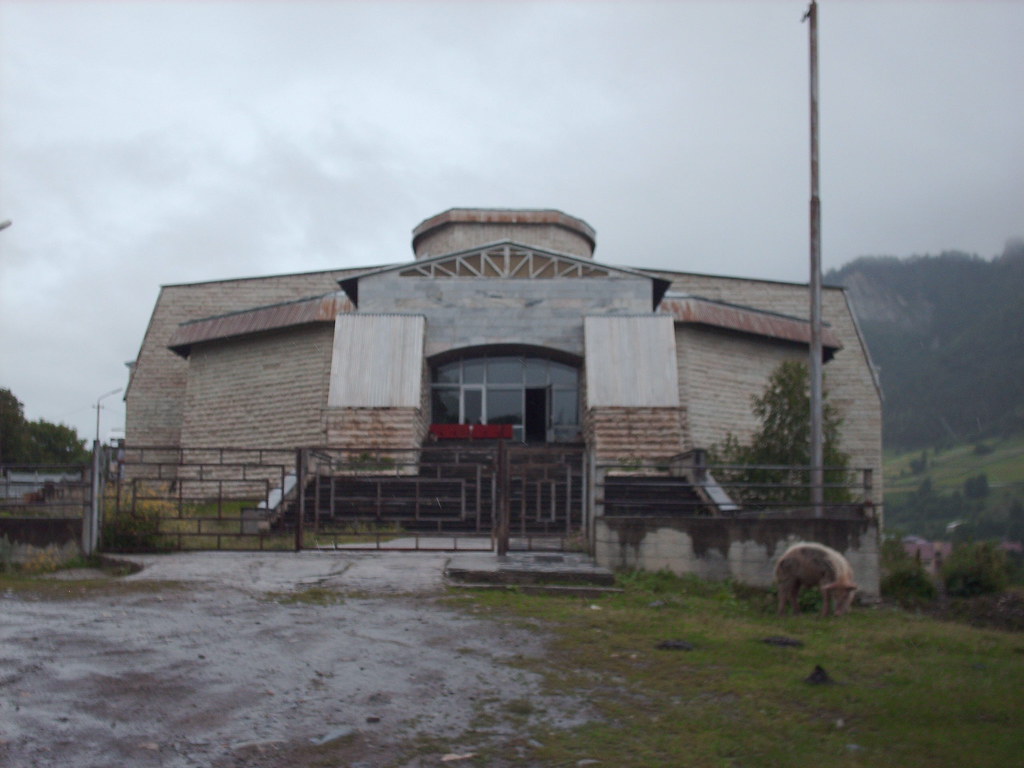
J. MAYER H. - House of Justice / Civic Centre, Mestia, Georgia
more projects:
jmayerh.de/ BATUMI PAVILLON
jmayerh.de/ House of Justice Mestia
jmayerh.de/Mestia Airport
jmayerh.de/Police Station Mestia
jmayerh.de/Rest Stops Gori
jmayerh.de/Check Point Sarpi
jmayerh.de/Cicic Centre Gori
jmayerh.de/Civic Centre Mestia

+++

Jürgen Mayer H.BLACK.SEEEIGEN + ART Lab9. April - 25. April 2013
Am 9. April 2013 eröffnet im EIGEN + ART Lab eine Einzelausstellung mit Werken von Jürgen Mayer H.. In den Räumlichkeiten des Lab zeigt er eine speziell entwickelte Rauminstallation aus Skulpturen und Wandmalereien, sowie eine Auswahl an Zeichnungen, Objekten, Collagen und Fotografien. Mit seinem Team J. MAYER H. arbeitet er in multidisziplinärer Raumforschung am Verhältnis von Körper, Natur und Technologie.

2013_JMayerH_balck_see„Lazika am Schwarzen Meer – der exotische Name klingt nach dem Schauplatz eines Films oder eines Romans. Und tatsächlich ist die Stadt in Georgien insofern mit einer Fiktion verbunden, als sie nicht existiert. Noch nicht. Denn bis heute ist sie Entwurf geblieben. Und doch gibt es von ihr schon etwas zu sehen. Am Ende der bereits gebauten Magistrale, am Pier des zukünftigen Hafens, türmt sich wie eine erstarrte Gischtwelle ein schneeweißes Gebilde auf, dessen waffelartige Struktur es trotz seiner großen Höhe zart wirken lässt. Zunächst assoziiert man eine Funktionalität, einen futuristischen Leuchtturm etwa oder eine Forschungsstation. Doch der Bau von Jürgen Mayer H. ist frei von jeder konkreten Benutzbarkeit und somit vor allem eines: eine verbindende Geste zwischen Land und Meer, ein Spiel mit organoiden Volumina, mit materieller Gebundenheit und Leere, mit Schwerkraft und Schwebezustand. Die „Lazika Pier Sculpture“ macht etwas erfahrbar, was sie als funktionales Bauwerk vielleicht nicht leisten könnte: Sie zeigt das vielfältige Potenzial einer freien Raumkonstruktion und trägt auf diese Weise die Vision der geplanten Stadt symbolisch in sich.

Konstruktionen – ob materiell oder gedanklich – machen es uns Menschen leichter, etwas wiederzuerkennen und als verständlich anzusehen. Diese Wiedererkennbarkeit, die der Bestätigung von Erfahrungen und Erwartungen dient, erlaubt es uns, Objekte, Räume oder Situationen als real zu bezeichnen. Zu solchen Konstruktionen zählen die bewährten Parameter des Architektonischen, die das Tragen und Lasten von Massen auch visuell widerspiegeln, ebenso wie Oberflächenstrukturen oder Muster, durch die wir glauben, einen Raum bemessen, einschätzen und kontrollieren zu können. All diese (rationalen) Konstruktionen jedoch sind (irrational) tröstliche Hilfsmittel, die uns von der großen Ungewissheit über die menschliche Existenz fernhalten und uns Sicherheit im Hier und Jetzt vermitteln. Wir brauchen alle Arten von Konstruktionen, denn sie geben uns Hoffnung und Halt. Jedenfalls vermeintlich.

Aus dieser ambivalenten Perspektive auf das Konstruktive lässt sich auch die Rauminstallation „BLACK.SEE“ betrachten, die Jürgen Mayer H. speziell für die Räume des EIGEN + ART Lab geschaffen hat. Die Installation verbindet eine schwarze, frei im Raum stehende Skulptur mit riesigen, gleichfalls dunklen Wandmalereien. Das dreidimensionale Element besteht aus hohen Platten, die dergestalt ausgefräst wurden, dass sich ihre Flächigkeit nahezu vollständig aufgelöst hat. Seine gitterartige, unregelmäßige Formation wirkt rudimentär und unvollständig. Ob das Objekt Rest einer ehemals zusammenhängenden Konstruktion ist, eines komplexeren Ganzen, möglicherweise ein vergrößertes Detail von Mikrostrukturen? In direkter Beziehung zu dem schwarzen Raumgebilde stehen die umbrafarbenen Wandmalereien. Als geheimnisvolle Muster laufen sie über Wände und Decken, scheinen das Gebilde – ebenso fragmentarisch wie dieses – fortzusetzen. Die Malereien wirken wie die Schatten der Skulptur, verzerrt von einer nicht lokalisierbaren Lichtquelle. 

Das Formvokabular, auf das Jürgen Mayer H. seit langem zurückgreift und auch bei der Installation
„BLACK.SEE“ einsetzt, entstammt sogenannten Datensicherungsmustern. Diese finden sich beispielsweise auf den Innenseiten von Briefumschlägen, die von Ämtern oder Banken versandt werden. Ihre stark verdichtete Optik soll persönliche Briefinhalte vor Indiskretion schützen und sensible Daten unsichtbar machen, indem sie eine Sphäre exklusiven Wissens vorgibt. Doch ob das analoge, antiquiert anmutende Verfahren heute noch von Bedeutung ist, bleibt fraglich; vor dem Hintergrund einer hochtechnologisierten, digital geprägten Welt wirkt es eher metaphorisch. Denn es gibt mittlerweile andere, weitaus raffiniertere Möglichkeiten, in den Besitz geheimer Daten zu gelangen.

Mit seiner Installation „BLACK.SEE“ scheint Jürgen Mayer H. auf das trügerische Versprechen von Strukturen anzuspielen – und zwar nicht nur von Strukturen, die den Schutz persönlicher Daten suggerieren. Es geht um Strukturen und Konstruktionen ganz generell, die unser Vertrauen in sehr viel weiter reichendem Maße beanspruchen und eine scheinbare Sicherheit vermitteln. Wenn Mayer H. seine im Raum befindliche, kryptische Skulptur mit verzerrten, unwirklichen Schatten kombiniert, werden nicht nur Ursache und Wirkung im physikalischen Sinne voneinander unabhängig gemacht. Der Raum erweitert sich damit auch um Wahrnehmungsqualitäten, die einen stärker produktiv beschäftigen als das in sich Logische und sofort Einleuchtende – etwa das Beunruhigende, Fehlende, Missverständliche, Undefinierbare, Riskante, Instabile oder Vieldeutige. Zwar wird einer rationalen Konstruktion in unserem Kulturkreis mehr Berechtigung zugestanden, Realität darzustellen, als dem Imaginären. Doch erst die Gesamtheit aller sinnlichen Qualitäten bildet das vollständige Potenzial eines Erfahrungsraums. 

Dass unsere Raumwahrnehmung eine stets subjektive, nie völlig berechenbare und sich ständig verändernde Größe ist, war Künstlern und künstlerisch Tätigen schon immer bewusst – über alle kreativen Gattungen hinweg. Vor allem seit den 1960er Jahren haben Architekten, bildende Künstler, Choreografen und Komponisten den Erfahrungsraum mit bewusst geschaffenen Leerstellen, mit disparaten Materialien, Fragmentarischem, unorthodoxen Bewegungsabläufen oder neuen Klangmustern aufgebrochen und damit erweitert. Donald Judd, Dan Flavin oder Fred Sandback beispielsweise haben sich mit dem real vorgefundenen wie dem imaginären Raum gleichermaßen befasst. Naturgemäß noch von rein analogen Raumerfahrungen ausgehend, haben sie die Gültigkeit unserer Orientierungsmaßstäbe gezielt in Frage gestellt. Nicht selten haben sie sich dabei Systemen des Seriellen und industriell Standardisierten bedient – Strukturen also, die dem alltäglichen Denken entstammen und dadurch jenes Vertrauen einflößen, das sie jedoch nicht uneingeschränkt verdienen. Die Künstler haben erkannt, dass Konstruktionen nicht nur Orientierung bieten, sondern durchaus auch einengen können.

Auch Jürgen Mayer H. bewegt sich mit seinen ungewöhnlichen Formfindungen und Raumbildungen entgegen herkömmlicher Vorstellungen, etwa von Architektur als etwas klar Definiertem oder typologisch Einzuordnendem. Ebenso wie die Bestandteile eines organischen Systems scheinen auch Mayer H.s Raumsetzungen Elemente eines größeren, überwiegend nicht zu entschlüsselnden Kontexts zu sein. Sie agieren und reagieren folgerichtig (aber nur scheinbar logisch) und könnten sich unter Umständen auch sprunghaft verändern. Sie sind – im selben Maße wie das Organische – hochkomplex, aber unberechenbar. In diesem Sinne ist das vollständige Erschließen eines Raums von Jürgen Mayer H. kein gelingender, aber auch kein zwingend geforderter Zustand.

Diese Haltung ist der bildenden Kunst insbesondere nach dem Ende der Moderne immanent, wenn sie die Dominanz alles Systematischen, Strukturellen und Konstruktiven aufbricht und sich immer wieder bewusst dem Dysfunktionalen, dem noch Unfertigen, Anti-Konstruktiven oder alternativ Ästhetischen zuwendet. In der digitalen Welt des 21. Jahrhunderts, in der sich die Abhängigkeit von technologischen Systemen verstärkt, fällt jeder Konstruktionsfehler, jede unerwartete Abweichung als Kontrollverlust um so eklatanter auf. In dieser Situation ist es eine Chance, dem Unberechenbaren offen und vertrauensvoll entgegenzutreten. Immer bedeutsamer wird es, gerade jene Denkansätze weiter zu entwickeln, die rein rationale Konstruktionen nicht bieten können. Genau aus diesem Grund ist eine Haltung, wie sie Jürgen Mayer H. konsequent verfolgt, ebenso zeitgenössisch wie notwendig.

Bernhart Schwenk, Kurator für Gegenwartskunst, Pinakothek der Moderne, München
  
Jürgen Mayer H. (*1965 Stuttgart) studierte Architektur an der Universität Stuttgart, The Cooper Union New York und an der Princeton University. J. MAYER H., von Jürgen Mayer H. 1996 in Berlin gegründet, arbeitet an den Schnittstellen von Architektur, Design und Neuen Medien. Von Installationen bis zu internationalen städtebaulichen Interventionen entstehen Projekte als multidisziplinäre Raumforschung zum Verhältnis von Körper, Natur und Technologie. Internationale Ausstellungen und Sammlungen u.a.: Museum of Modern Art, New York; San Francisco Museum of Modern Art; Sammlung Staatliche Museen zu Berlin – Preußischer Kulturbesitz; Deutsches Architekturmuseum, Frankfurt a. M.; Sammlung Vitra Design Museum und Art Institute of Chigago. Lehrtätigkeit u.a an der Harvard University in Cambridge, an der Columbia University in New York und an der Universität der Künste Berlin. Internationale Auszeichnungen: u.a. Mies van der Rohe Award for European Architecture, 2003, Holcim Award Europe Bronze, 2005 und Gewinner des Audi Urban Future Award, 2010.

Source: eigen-art.com/lab
 

Friday, October 12, 2012

REPORTAGE: Die christlichen Heiden des Kaukasus. Von Tatjana Montik (derstandard.at)

(derstandard.atGeorgien ist im Westen vor allem durch seine brisante geopolitische Lage und den Konflikt mit Russland bekannt. Zu seinen landschaftlich und kulturell reizvollsten Regionen zählt Swanetien im Großen Kaukasus.

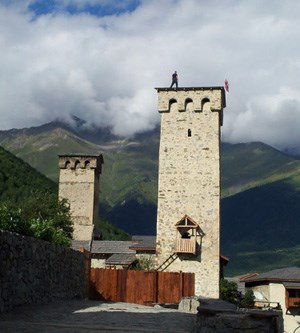
Zwei der dutzenden Wehr- und Fluchttürme in Swanetiens 
Hauptort Mestia, die mit staatlicher Hilfe renoviert wurden. Die Zahl 
ihrer Türme gab über Wohlstand und  Einfluss einer Familie Auskunft. Zur
 Zeit der Blutrache dienten sie ganzen Clans als Zufluchtsorte.
Mestia - Wer heute nach Swanetien reist, erfährt die Geschichte, die Traditionen und die legendäre Gastfreundschaft dieses kaukasischen Volkes hautnah. Dazu braucht man nur in einer der zahlreichen Gastfamilien Unterkunft zu finden. Und das Angebot ist groß und günstig: rund 25 Euro pro Person und Nacht mit Vollpension. Mestia, Swanetiens "Hauptstadt", ist derzeit eine einzige Baustelle. Es wird renoviert und gebaggert, die Zentralstraße wird neu gepflastert, die alten Häuser werden mit neuen Dächern, Fenstern und Holzbalkonen versehen.

Über die Swanen erzählt man sich in Georgien so einiges. Etwa dass sie trotz ihres christlich-orthodoxen Glaubens heimliche Heiden geblieben seien (siehe Wissen). Oder dass Frauen nie allein nach Swanetien reisen dürften, weil die swanischen Männer unberechenbar seien.

Unsere Gastfamilie ist jene von Murad und Larissa Margiani. Murad ist Architekt, gebürtiger Mestianer, während seine Frau Ukrainerin aus Sibirien ist. Nach der Heirat zog sie in die Heimat ihres Mannes, um nach swanischer Tradition ihren alten Schwiegereltern einen sorglosen Lebensabend zu sichern. "Diese gute Tradition, die Alten zu verehren und für sie zu sorgen, war mir sofort sympathisch", erzählt Larissa, "denn dann weiß man sicher, dass man selber im hohen Alter gut aufgehoben ist." Inzwischen steht Larissa selber an der Spitze einer Großfamilie, die sie mit ihren drei Söhnen reicher gemacht hat.

Die georgische Gastfreundschaft ist bekannt und berühmt. Hier in Swanetien, in der Margiani-Familie, bekommt man das Gefühl, dass die Gastgeber nur für ihren Besuch da sind. Vom Zimmerbalkon aus bietet sich ein wunderbarer Blick auf ganz Mestia, dessen zahllose Türme und auf den Kaukasus mit über 4000 Meter hohen Gipfeln.

Jede Mahlzeit wird zu einem lukullischen Fest, bei dem eine Mischung aus georgischen, russischen und ukrainischen Speisen dargeboten wird. Hausgemachter Topfen und Matsoni, georgisches Joghurt, Palatschinken, dünn wie feine Spitze, die mit hausgemachten Marmeladen serviert werden, pikant gewürztes Fleischragout mit jungen Erdäpfeln und milchsauer eingelegten Gürkchen, nach frischen Kräutern duftender Bohneneintopf, zarte Jungsaiblinge, Salatvariationen, Zwetschkensoßen, vieles mit mit dem berühmten, aromatisch-pikanten swanischen Gewürzsalz versehen.

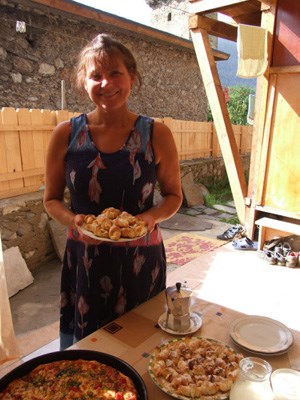
Gastgeberin Larissa Margiani mit einigen Köstlichkeiten ihrer vielfältigen Küche.
Gastgeberin Larissa Margiani
Larissa Margiani kümmert sich um Haushalt und Landwirtschaft, betreut die Gäste. Daneben führt sie Touristengruppen durch das Hausmuseum, während ihr Mann bei der Restaurierung der zahlreichen Wehrtürme mitarbeitet. Als sie 1985 nach Swanetien kam, gab es hier weder Wasserleitung noch Kanalisation. "Gewaschen habe ich am Fluss, das Wasser holte ich vom Brunnen. Und in den wilden 90ern, als hier Banditenwillkür und Mangel an allen Waren des täglichen Bedarfs herrschte, habe ich sogar gelernt, Seife selber zu kochen", erinnert sich die gebürtige Sibirierin ukrainischer Abstammung.

Durch die Entwicklung der touristischen Infrastruktur, im Sommer wie im Winter, haben die Swanen nach und nach mehr Beschäftigung bekommen und ihren Lebensstandard verbessert, berichtet Larissa. Deshalb hat sie sich vor den Parlamentswahlen für die Vereinigte Nationale Bewegung, die Partei von Präsident Michail Saakaschwili engagiert und Unterschriften gesammelt.

Umstrittener Bauboom

"So viel wurde in letzter Zeit bei uns bewegt und gemacht. Es gibt Familien, die sich ohne die staatlichen Hilfen eine gründliche Hausrenovierung nie hätten leisten können." Damit spricht sie den von Saakaschwili im ganzen Land ausgelösten Bauboom an, der in manchen Bereichen, etwa bei teuren Repräsentativbauten, nicht unumstritten ist.

Bei der Führung durch das Museum der Margianis besichtigt man nicht nur ein typisches swanisches Haus aus dem 12. Jahrhundert mit Inventar und den familieneigen Friedhof, sondern man besteigt auch einen der berühmten über 20 Meter hohen Wehrtürme von Mestia und erfährt Details über Sitten und Alltag der Swanen.

Noch bis vor kurzem war in Swanetien die Blutrache verbreitet, die sich oft nicht nur auf eine, sondern auf zwei oder drei Generationen ausdehnte. Zwischen den Clans wurden regelrechte Rachefeldzüge ausgetragen, de nen bis zu 14 Männer auf jeder Seite zum Opfer fielen.

Und um sich vor diesen Rachezügen zu schützen, flüchtete der ganze Familienclan in einen seiner Wehrtürme, der mit Vorräten versorgt und durch unterirdische Gänge mit dem Haus und dem nahe liegenden Wald verbunden war. Manche Familien lebten bis zu einem Jahr in ihren Türmen.

Laut einer Statistik kamen etwa zwischen 1917 und 1924 in Swanetien 600 Männer durch Vendetta ums Leben. Bis heute ist die Blutrache nicht völlig verschwunden. Man praktiziere sie bloß auf eine andere Weise, indem man die gesamte Sippe aus dem Dorf verbanne, erzählt unsere Führerin. Und für einen Swanen gebe es keine schlimmere Strafe, als seine Heimat zu verlieren.

Von Reichtum und Einfluss einer swanischen Familie zeugte unter anderem die Zahl ihrer Wehrtürme. Die einzigartige Bauart der Türme, denen ein eierförmiges Fundament zugrunde liegt, erwies sich über Jahrhunderte als sicherer Schutz auch vor Naturgewalten, etwa Lawinen.

Georgiens Schatzkammer

Der Familie Margiani gehörten einmal acht Türme, von denen vier noch heute stehen, und ein eigener Friedhof. In dieser Friedhofskirche sowie in den anderen über die Berge verstreuten zahlreichen Kirchen, von denen viele mit wertvollen Fresken geschmückt sind, wurden die Schätze des Dorfes, alte Bücher und Schriften aufbewahrt.

Einiges an Kunstgegenständen kam aus ganz Georgien nach Swanetien, denn diese Region war durch ihre schwer erreichbare Lage mitten in den Bergen vor Kriegen und anderen großen Konflikten bewahrt geblieben. Der Legende nach suchten hier die Argonauten nach dem Goldenen Vlies. Swanische Künstler waren für ihre einzigartigen Gravuren auf Ikonen berühmt. Viele dieser Ikonen gibt es noch heute zu sehen, unter anderem in der reichhaltigen Sammlung des Ethnografischen Museums von Mestia, das nach zweijähriger Renovierung in diesem Herbst wiedereröffnet werden soll.

Viele alte Kirchen liegen am Weg zum Dorf Uschguli, 40 Kilometer von Mestia entfernt. Uschguli, das wie andere alte Ortschaften zum Unesco-Weltkulturerbe gehört, ist das höchstgelegene Dorf Europas und das zweithöchste der Welt. (Tatjana Montik, DER STANDARD, 2.10.2012)

Wissen: "Dünne Wand" zwischen den Welten

Swanetien ist eine historische Region Georgiens im Großen Kaukasus. Es schließt im Westen an die abtrünnige Region Abchasien an, die von Russland (aber nicht international) als unabhängiger Staat anerkannt wird, ebenso wie Südossetien seit dem georgisch-russischen Krieg im August 2008.

Die Teilregionen Oberswanetien (Georgisch: Semo Swaneti) und Niederswanetien (Kwemo Swaneti) werden durch das Swanische Gebirge getrennt. In Oberswanetien leben heute etwa 45.000 Menschen. Seine Bergdörfer gehören zum Weltkulturerbe der Unesco. Hauptort der gesamten Region ist Mestia.

Die Swanen werden sowohl von den Griechen als auch von den Römern erwähnt. Das Für-stentum Swanetien gliederte sich etwa im 12. Jahrhundert dem georgischen Königreich an.

Für gläubige Swanen existiert zwischen Diesseits und Jenseits nur eine "dünne Wand", sodass die Verstorbenen einen wichtigen Teil ihres kulturellen und religiösen Lebens darstellen. Sie glauben, dass ihre verstorbenen Angehörigen sich um das Seelenheil der Lebenden kümmern. Zum Dank werden beim Lipanali-Fest (18. Jänner) die Seelen der Verstorbenen bis zum nächsten Morgen in den Häusern ihrer lebenden Angehörigen bewirtet.

Gottesdienste werden außen an der Kirche abgehalten, wo auch weltliche Persönlichkeiten wie Könige abgebildet sind. Das Kircheninnere ist den Seelen der Verstorbenen vorbehalten. (red)

Thursday, August 16, 2012

BLOG: Svaneti, as good as it gets! Text and photo Eistein Guldseth, 2012 (gotocaucasus.com)

The dramatic nature of Svaneti is dominated by the mighty Mount Ushba with it's caracteristic double-speared summit at 4710 meters. It's regarded as one of the most difficult mountains to climb in the Caucasus.
Original Post With Perfect Photos!! >>>

(gotocaucasus.com) SVANETI IS THE MOST EXTREME part of Georgia. I have been traveling in Georgia since 2004, but there has always been something stopping me from carrying out my Svaneti trip. One year there was terrible weather, another year the region was seized by Gen. Kvitsianis paramilitary forces. Something has always been in the way. But this year we went, and what a trip it was. But the backdrop was rather tragic:

Four Ukrainian climbers had an accident on Mt. Ushba the week before. Two of them died. During the rescue operation, two Chech climbers who disappeared after an accident in 1974 were also found.

How to get there

From Tbilisi you drive to Zugdidi, and take the road to Mestia wich is the centre of Svaneti. It is about 130 kms drive. No need for any 4WD. But beware of falling rocks when its raining. You can also go by plane, as the city has a small airport. But it's not Mestia you want to see. That is Ushguli, the World heritage site, and for that you need a 4WD. It's 44 km into the mountains and at 2200 meters altitude. More about that later.

First you go to Hotel Mestia.

Mestia is a dustbowl, but Hotel Mestia as an oasis. Here you get high quality food and great accomodations. The first thing you do is go to Vitali Japaridze at Hotel Mestia and order his Svaneti special "kubdari", a bread with very spicy meat inside. All food is cooked on a traditional stove with firewood. The hotel is a perfect basecamp for trekking. Vitali will give you all information you need. If you prefer more modest accomodations there are a lot of guesthouses available for self household.

Svaneti is for trekkers and climbers.

The hardcore climbers try Mt. Ushba. It's 4710 meters high summit has claimed many lives through the years. Most professionals these days hire local guides. There is of course Mt. Shkhara in Ushguli. It's considered to be Georgia's highest mountain (5068 m) and Europe’s fourth highest after Elbrus (5643m), Dychtau (5204m) and Koshtan (5151 m) according to Summitpost org. You can also hire a guide and spend four days trekiking from Mestia to Ushguli. You can also drive from Mestia to Ushguli. For that 44km trip (one way) you need a 4WD, patience and 3 hours. The track is easy. There are lots of possibilities, just ask Vitaly, or check out internet. For me Ushguli was the ultimate goal.

On UNESCOS word heritage site list

I quote the UNESCO site here: "The mountainous region of Upper Svaneti occupies the upper reaches of the lnguri river basin, between the Caucasus and Svaneti ranges. The characteristic landscape of Upper Svaneti is formed by small villages, dominated by their church towers and situated on the mountain slopes, with a natural environment of gorges and alpine valleys and a backdrop of snow-covered mountains. The most notable feature of the settlements is the abundance of towers, especially in Mestia and the frontier villages, such as Ushguli and Latali".

VIDEO: Lipaanali (ლიფაანალი) in Georgia (Caucasus). Posted by Nika Gobejishvili (youtube.com)

(youtube.com) Lipaanali festival is celebrated in Svaneti one day before Epiphany, on January 18th. During this festival souls of ancestors or "didebuli" (the majestic ones) are invited from the western entrance of a local church all the way to each family's home, where they stay till the next morning. Every family carefully prepares for this ritual. The day the souls are invited, "adgom", is spent cleaning and scrubbing the house. As they say in Svaneti, - "the spirits will not enter the house during adgom, unless all bits of fat are cleaned." The Georgian Orthodox Church assigns its heaviest fasting to this day, while Svans developed a folk ritual around it.

The head of the family puts several kveri (small, round bread with a filling, "lemzir" in Svanian) and zedashe (best quality wine used for religious rituals) on a wooden tray, goes to the western entrance of a local church and asks the Lord to let his ancestors out of heaven. After this, he returns back home, all the while praying and asking his ancestors to follow him. The rest of the family waits inside the house with a table full of special dishes ready for the "guests". After midnight, during epiphany, an especially rich feast is organized by the family. The didebuli are entertained during the whole night. Family members tell fairy tales, sing and play on Chuniri, and try to imagine those who have passed away. A special table is laid out for the didebuli where no living person is allowed to sit. The chairs are pulled out, which makes it seem like there are actually souls sitting on them. On Saturday evening the didebuli leave for Lalkhori (a gathering) where they discuss the fate of the family and what will happen to it over the next year. The souls are said to protect their descendants this way. On Sunday the souls return from Lalkhori and the family greets them with hot porridge. Lipaanali lasts until the following Monday. On Monday morning, "joodi" (long morning), the souls are seen off. Every member of the family needs to be up before sunrise. The family blesses their ancestor's feast table, after which the head of the family takes milk with honey, pours it bit by bit on the ground and prays, - "m'jaar Tuaar shukvaru jaarkh " - "may you have sunny roads". We asked the Svans whether they truly believed in souls of their ancestors visiting them, to which they responded by telling convincing stories about their existence. 

Original Source: youtube.com/kaukasiologie


Assistent: Madona Chamgeliani

Thursday, May 31, 2012

DOKUMENTARFILM: Die Swanen - Leben mit den Ahnen (arte.tv)


Seit Jahrhunderten siedelt der georgische Volksstamm der Swanen in einem Hochtal, umschlossen von den rund 5.000 Meter hohen Gipfeln des Kaukasus-Massivs. Isoliert durch die Abgeschiedenheit der Berge, haben die Swanen bis heute eine eigene Kultur und eine eigene Sprache bewahren können. Die Wirtschaftsweise der Menschen hat sich hier seit Jahrhunderten kaum verändert. Noch heute transportieren die Swanen schwere Lasten auf den traditionellen Ochsenschlitten über das unwegsame Gelände. Mit einfachen Geräten ringen sie ihren kargen Böden das Nötigste zum Leben ab.


Die frühe Christianisierung der Swanen führte zur Entwicklung volkseigener Praktiken. Neben einem ausgeprägten Ikonenkult pflegen die Menschen hier ein besonderes Verhältnis zu ihren Verstorbenen. Sie glauben fest daran, dass die Seelen der Toten in regelmäßigen Abständen wieder zurückkehren und sich die Ahnen weiter um das Heil der Lebenden kümmern. Das ist ein Grund, warum die Swanen ihr Land so gut wie nie verlassen.


Die rund 40 Dörfer Swanetiens sind geprägt von mittelalterlichen Wehrtürmen. Fast jeder Hof hat einen solchen Turm. In Kriegszeiten oder während Blutfehden boten sie den Sippen Schutz vor ihren Feinden. Obwohl Swanetien offiziell zu Georgien gehört, haben die Swanen eine eigene lokale Gerichtsbarkeit. In Streitfällen schlichtet ein Ältestenrat. Kapitalverbrechen wie Mord oder Totschlag bedeuten auch heute noch Fehde und Blutrache. Swanetien steht für ein Leben wie in vormodernen Zeiten.


(Deutschland, 2011, 43mn)
ZDF


Erstausstrahlungstermin: Heute, 16:45


weitere Ausstrahlungstermine: Mittwoch, 6. Juni 2012, 08:55


Link: videos.arte.tv

Sunday, March 11, 2012

VIDEO: Totenkult aus Svanetien - Lipaanal ist die Tradition, die gestorbenen Familienmitglieder nach Hause einzuladen. Von Elguja Dadunashvili (youtube.de)

 
Lipaanal ist die Tradition, die gestorbenen Familienmitglieder nach Hause einzuladen und sie für gewisse Zeit zu bewirten. Lipanaali beginnt am 18. Januar und dauert bis zum darauf folgenden Montag. Das Fest wird, mit geringen Unterschieden, in Ober- und Niederswanetien begangen.

Autor: Elguja Dadunashvili
Assistiert von Madona Chamgeliani

Der Film basiert auf Feldforschungsmaterialien, gesammelt in Georgien, in den Dörfern Latali im Bezirk Mestia und Udabno im Bezirk Sagaredsho in den Jahren 2007 - 08

Tuesday, January 11, 2011

SKI: Weekend Tour to Svaneti (skigeorgia.ge)

Program
Detailed Itinerary

Day 1/ Tbilisi – Mestia
In the morning fly to Mestia – center of Svaneti province by 19 seats Plane. Arrive to Mestia. Transfer tohotel. Whole day in Mestia for skiing and own arrangements. Overnight at hotel. (-/-/-)

Day 2/ Mestia – Tbilisi
Breakfast at hotel. Free morning for skiing and own arrangements. Transfer to the local airport and flyback to Tbilisi. End of Services. (B/-/-)

Tour Price:
(Based on hotel Tetnuldi in Mestia)
From 385 GEL Per/Person

Price Includes:
Airfare – Tbilisi – Mestia – Tbilisi

Accommodation:
Mestia – (1 night) / at 4* hotel ‘Tetnuldi’;
Transfers (2) from local Mestia Airport to hotel;
1 breakfast at hotel ‘Tetnuldi’;

Tour Price:
(Based on local guesthouse in Mestia)
From 380 GEL Per/Person
Price Includes:
Airfare – Tbilisi – Mestia – Tbilisi

Accommodation:
Mestia – (1 night) / at local guesthouse; Clean and nice rooms with shared facilities;
Transfers (2) from local Mestia Airport to guesthosue;
1 breakfast at local guesthouse;
1 dinner at local guesthouse;

*Please kindly note that the tour depends of weather conditions.

EXPLORE GEORGIA LtdAddress: 5, Shevchenko str., 0108, Tbilisi, Georgia
Tel./Fax: (+995 32) 92 19 11
Tel: (+995 32) 180201


more: skigeorgia.ge

Wednesday, November 24, 2010

INTERVIEW: Putting Georgia on the World Map - Georgia striving to become international tourism destination (finchannel.com)

Written by Koka Kalandadze

The FINANCIAL -- Interview with Maia Sidamonidze, Chairwoman of the Georgian National Tourism Agency.

Q. What are the three main challenges that are slowing the development of tourism in Georgia?

A. I think we have quite significant challenges affecting tourism in Georgia. The primary challenge for us is to satisfy the demand for our country, which is potentially huge, and provide this sector with the needed infrastructure. The second challenge is the quality of service in the hospitality sector which is very important in maintaining the amount of tourists, or even increasing them. Thirdly there’s need for an education system, as we need good human skills in this sector. For some reason there is sometimes a negative attitude towards the service sector but we want to popularize this industry in order to make people want to work in it.

Q. How many tourists do you expect this winter and is it likely that hotels may not be able to accommodate tourists at some point?

A. Last year we had 80,000 people going to Bakuriani and Gudauri, if we consider the fact that new infrastructure is developed and new destinations like Mestia have appeared, then it could reach more than 100,000 this year. If for example last year’s number doubled then we wouldn’t have a sufficient amount of hotels to cater to the new demand. In Svaneti there are 450 beds but even though new projects are continuing to come up I’m sure that Svaneti will be full this season.

Q. As statistics show, the bulk of tourists are still flowing in from neighbouring countries and the CIS. Does that mean that the Georgian tourism sector should be oriented more at its neighbours?

A. I think we should maximize our potential when dealing with our neighbour countries. The reason that those people from neighbouring countries are coming here is that they know Georgia well and have a good relationship with us on a country level, they also know that we have a great combination of sea and mountains here. This has been true since the time of the Soviet Union, and they’re closer in mentality to us as well. The primary markets are Azerbaijan, Armenia, Turkey, Ukraine , Belarus, Baltic Countries, Kazakhstan, Israel and Iran.

There’s even greater potential from Asia, America and Western Europe. But if we need to enter those markets then first we need to increase awareness about Georgia and therein lies a problem - concerning international awareness about our country. When people hear about Georgia they still associate it with tense political situations. Secondly we should focus on our strategy in terms of how to enter and brand Georgia on foreign markets, and to supply their demand. We’re working very closely with the private sectors of those countries as well as Georgian ones to provide up to date information on tourist resorts together with having business partnerships so as to have a lot of tourists flowing here.

Q. What new is being done to attract people from European countries and the United States to Georgia?

A. On Western and American markets we need to raise the popularity of Georgia among their people. As we’re not such a rich country to afford to advertise on TV all the time, we need to attend exhibitions, meet and make the right contacts there and provide media tours for them.

We had the Shanghai Expo recently and it was very helpful in increasing awareness of Georgia there. Most of the people at the exhibition didn’t know much about Georgia although they became interested over the course of the event and almost 2 million people visited our stand there, making those people potential tourists for us.

Generally we do a promo campaign when we’re going abroad which involves the following: with the help of our overseas Georgian embassies we arrange meetings with tour operators that are working and then with travel media representatives we do presentations, thereafter inviting them here on a fun trip - which is a familiarization trip, according to the season.

As for the advertising campaigns as you know there was the “Summer in Georgia” video clip which turned out to be quite successful as a bulk of tourists came here following that. In addition for winter we’re planning to do some advertisements too. Nowadays, due to globalization the internet has become one of the cheapest and most effective tools to advertise and do PR campaigns. So this year we’ll be busy with internet activities on blogs, creating new websites as we generally need to increase our internet representation as a lot of tourists are searching for info on the net.

In addition it’s very important to educate the private sector and advise them on how to provide online booking systems and other services for tourists to easily get what they want.

Q. Which types of travel packages could be created to boost the demand in Europe for Georgian tours?

To gain a competitive advantage you need to have very innovative and different packages on offer so as to differentiate from other countries - specific tours combined with low prices. Recently prices for tours to Georgia were cut due to the introduction of low cost airlines. We’re still cheap compared to lots of tourist destinations but perhaps for some people in Baltic countries for example it’s cheaper for them to go to a Scandinavian country rather than come to Georgia, just in terms of price.

Q. What is the brand of Georgia like? How do tourists identify our country?

A. I don’t think we have a strong brand identity or a slogan for Georgia. But at the same time we’re busy working on positioning the country on the world map in terms of all four seasons and diversity.

The word diversity is very well applied to our Georgian tourism brand as the country is rich in natural tourism destinations and all the needed resources in addition to being culturally diverse.

Q. Could you tell us which global travel companies offer travel packages to Georgia?

A. There are travel agencies who are active promoting Georgia. As we have invited them here and tried to arrange meetings with the private sector here. So they are the ones who start negotiating with the private sector and thereafter create the needed travel packages. That’s how it works as if you want to sell a package then you have to have the contact info of the travel agency which is concerned with outgoing tourism. So whenever you have a partnership abroad, they try to sell your packages there. Thus even though you might not have an office in a foreign country, by cooperating with certain agencies you can attract a number of tourists from there.

Recently we made a partnership with the biggest Israeli travel agency called “Flying Carpet” who had thousands of people travelling to Turkey, but then it stopped as you know, so now for 40% of those tourists Georgia is the best tourist destination.

Q. How do you think of and evaluate the prices that hotels or other guest houses charge for tourists in Georgia compared to other countries like Turkey?

A. When we compare Georgia to Turkey, they’re ten years ahead so it’s too difficult to compare prices because their tourism development has a long history which means there’s already established demand. They have many hotels, and at the same time there’s huge competition among those hotels and the prices are regulated on the market.

Although we have an increase in terms of number of tourist in Georgia, the private sector and the market still isn’t regulated, the reason being that there need to be more hotels and restaurants opening and when the competition is high then those hotels will be competing with the prices and services they each offer.

Q. What about advertising or introducing travel packages to global travel agencies, what can be done to brand Georgia there as well?

A. Usually how it’s done as I’ve worked with private sector tourism is that, the hotel for instance that I worked for, did revenue management to maximize distribution channels, and internet is one of the distribution channels. Of course we want to be on trip advisor or hotels.com but actually this is the job of the private sector. As when you go to trip advisor then you need to update information about the tourist destinations and no one will do it for you. Then you have to charge reasonable prices.

But when there’s a situation with the market not being educated I think then it’s our job to provide them with the information. That’s why we’re planning from January to do workshops to present main online booking systems like expedia.com and say that you can book a hotel in Georgia on there.

Actually those leading global travel agencies are working on mass tourism where they can sell a lot of travel packages abroad. Secondly they prioritize the countries in which they’re offering the lowest prices for holidays so as to sell their packages. So they always try to sell packages that are cheap.

Nowadays people don’t use travel agencies as actively as they used to but instead use the internet and all existing travel agencies are now reduced to trying to survive on the market, therefore offering the most affordable prices.

We haven’t contacted those agencies because as the Government we can’t do anything. What we can do is invite them here and tell our travel agencies to meet with them but I don’t think they’ll even be coming here as they’re working on mass tourism.

And actually there are lots of countries missing, like even Switzerland, not to mention our neighbouring countries.

Q. Typing Georgia in to Google brings up a lot of information about the U.S. Georgia. It seems as though the actual Republic of Georgia is not well positioned in Google search. How can the brand of Georgia be better promoted in that respect?

A. When I came here and was appointed as Chairwoman, I together with the communication department at the Ministry of Economy and Sustainable Development tried to contact Google. At first we were fobbed off, but when our new minister Vera Kobalia went to the U.S. she managed to meet with the right people at Google.

As for search engine optimization, the reason Georgia is often overtaken by U.S. Georgia sites is that we need to increase the number of websites about our country. One way to optimize the search is to pay Google an amount of money to position our country first or to put key words on websites so that when people search for relevant info your website comes up first.

Q. Even in Google Images (when typing Georgia in the images search section) there are pictures depicting violence and aggression from the August war, subsequent riots, etc. What can be done to remove those pictures? Can’t you ask Google to help with that? (Despite the fact that it’s automatically generated by Google)

A. This is a problem of globalization. As we’re not China or Cuba and we have democracy in the country, we can’t just ask Google to remove the pictures. It’s impossible because then any country would be asking Google for the same thing. So the only way to beat the situation is to cover those negative pictures with positive ones which is just a matter of time.

Q. What’s the budget of the Department of Tourism and Resorts for 2010/11 and is it enough for the execution of all your plans?

A. Currently our budget is 2.5mln GEL but this is going to be increased for the coming year. This money is used for routine activities, exhibitions, printing brochures, paying salaries etc. but when it comes to advertising then this money isn’t enough of course. But in addition if we need some specific advertisement campaign then we’ll be telling it to the Government and presenting it our project for financing. After which they’ll decide whether or not to grant us the money or not.

Q. What is the advantage of Georgia compared to other well known countries? Why should tourists choose Georgia over Italy, France or Turkey?

A. First of all we are a new destination for the world market. Then we’re offering diverse tourism in Georgia for all four seasons. In addition people of all ages are welcome to come here, as they can come and enjoy hunting, fishing, eco tourism, we’ve lots of very nice lakes and nice coastline in addition to ski resorts, and so forth. This is our main advantage as some countries don’t have this luxury at all.

Q. What about the service sector of tourism in Georgia? Is it satisfactory and what can be done to improve it?

A. Of course the service sector is not satisfactory and there should be a lot of things happening in that respect including changes in the education sector. There are some professional schools but the amount of the professional schools should be increased. There are two training centres, one in Tbilisi and one in Kobuleti. Education is actually a long term strategy and what we can have in the short term is small trainings, to encourage businesses to train their staff and be more competitive.

We also plan to create a special website from January where a tourist can go like tripadvisor.com and post positive as well as negative things about any hotel or service they experienced whilst travelling to Georgia. By doing so we’ll gain lots of information and find out where we are lacking. The mentality of the majority of tourist hotel owners is that they’re not willing to train their staff, so once they see that tourists are actually concerned with the service offered then they’ll be encouraged to do so.

Q. How effective will low cost airlines be in terms of bringing tourists to Georgia?

Do you have any specific figure of bulk increase in number of visitors since Pegasus appeared on the market - and what similar initiatives are there to motivate tourists’ inflow in Georgia? Which internal directions are air flights travelling to, and are any other routes being added in the future?

A. Low cost airlines are very important for us, as we are gaining a cost advantage in this case. Pegasus is very popular now and most of the larger airlines are suffering as a result of it entering the market. There are even further negotiations being held with other low cost airlines, but as they are not yet confirmed, the information remains confidential. Right now is the most passive season for tourism so we can’t even observe how effective low cost airlines are in bringing about a bulk increase of tourists.

As for the domestic flights they are also important, as you know we had flights called Air-Batumi this summer which stopped for various reasons but there will be other ones entering this line as well. As for the Mestia destination, from December there’s going to be a new Airport opened there with flights from Tbilisi to Mestia by airplane.

Q. What kind of tours should be offered in order to attract young tourists? Do you have concrete plans in this regard?

A. When targeting young travellers I think internet is the best way to popularize different destinations and tour packages. Recently we had some offers from Euronews and Fashion TV as they’ve started tourism advertising campaigns for different countries. They’re working on youth as well which is good, but at the same time such advertising would cost us a lot.

Source:
finchannel.com

Sunday, November 07, 2010

BLOG: Der Blues in Svanetien. Ein interessanter Artikel von Paul Rimple. Übersetzt von Ralph Hälbig (tbilisiblues.blogspot.com)

Wieder einmal stieß ich auf den großartigen Blog von Paul Rimple. Seine Berichte sind immer wieder besonders erhellend. Für mich einer der besten Blogs aus der Region. Der letzte Beitrag befasst sich mit Svanetien. Ein Bericht über den Umbruch und über das Althergebrachte zugleich - und wie sich die Rechtsstaatlichkeit gebärdet.

+++

Vor noch nicht allzu langer Zeit warf man den Besuchern Svanetiens vor, entweder unbekümmert zu sein oder an Selbstüberschätzung zu leiden, wenn man ohne Begleitung im Alleingang wagte, die hohen Bergregionen von Svanetien zu besuchen. Svanetien war genauso berüchtigt wie das Pankisi-Tal. Beide Regionen galten als kriminell. Der einzige Unterschied war, dass im Pankisi ein tschetschenisch-georgisches Kartell herrschte, während Svanetien eine homogene Enklave war, beherrscht durch lokale Banditen.

Heute is das anders. Recht und Ordnung - ein Nebeneffekt der Regierung Saakaschwilis - beendeten die Geschichten von Entführungen, High-jackings und dass Touristen mit nichts weiter als ihren Hemden wieder in Tbilisi auftauchten. Die Kriminellen sind zwar nicht verschwunden, aber sie haben aufgehört, Touristen auszurauben.

Jetzt gibt es eine Nationale Bewegung. Es soll Reformen und Entwicklungen geben. In Svanetien gibt es große Pläne. Svanetien soll ein Zermatt des Kaukasus werden. [...] Was bedeutet dies für Svanetien? Was bedeutet das für eine Region, die bekannt für ihre legendären Blutfehden ist? Wo man einen gänzlich anderen Begriff von Gerechtigkeit hat?

Am 3. Mai 2010 (durch Zeugen gesichert - Videomaterial) waren in Samegrelo-Zemo Swanetien der Gouverneur, Zaza Gorozia, der Regionale Polizeichef, Tengiz Gunava, der Polizeichef in Mestia, Giorgi Shedania, sein Stellvertreter Joni Belkania, ein Offizier des Innenministeriums, Ansor Margiani, der Politiker Kandid Kwiziani, der Gouverneur von Mestia Gocha Chelidze, und andere Leute derart verwickelt in einen Akt der Einschüchterung und Einflussmnahme auf die Wahlen in Mestia.

Offenbar wurden 8 Personen aus der Opposition gewaltsam im Verwaltungsgebäude in Mestia festgesetzt und überredet, Protokolle zu unterzeichnen. Darin waren 5 strafrechtliche Verstöße protokolliert: Behinderung der Wahl, Nötigung, Bedrohung, Akt der Gewalt, und Amtsmissbrauch.

Es überrascht nicht, dass nicht eine einzige Anklage gegen einen der Täter vorgebracht worden war, obwohl es eine überwältigende Menge von Beweisen gegen sie geben soll. Die drei Informanten haben jedoch nicht so viel Glück. Neli Naveriani, ein Gemeinderat und Mitglied der mittlerweile aufgelösten "Allianz für Georgien" (Oppositionspartei), wurde verhaftet zusammen mit drei Verwandten wegen Erpressung in einem angeblich unrechtlichen Immobiliengeschäft drangsaliert.

Fragen über Landbesitz ist ein ewiger Streitpunkt zwischen einigen Einheimischen und Leuten aus Tbilisi, weil die Svanen traditionell Eigentumsrechte über Generationen, ohne Urkunden, geltend machen, da es urtümlich kulturell schon immer ihr Land war, während die Regierung darauf abzielt, Land schnell zu kaufen, um die geplante schnelle Entwicklung um- und durchzusetzen.

NGOs wie die Young Lawyer's Association (Gyla) und Menschenrechtsaktivisten sehen den Naveriani Fall als Vergeltung, wohingehend gegen die Übergriffe im Vorfeld nicht vorgegangen wurden ist.

[...]

Die Rechtssprechung selbst und die Repression bzw. Verurteilung und Beurteilung waren dann zunehmend konfus und fragwürdig.

Paul Rimple weißt darauf hin, dass er gesehen habe, wie das System zunächst einen 14-jährigen zu 12 Jahren Haft verurteilte, der nicht mal einen Mann tötete, während 4 Offiziere des Innenministeriums acht und sieben Jahre Gefängnis für den brutalen Mord an dem Bankier Sandro Girgvliani bekamen, bevor sie dann schließlich begnadigt wurden.

[...]

Trotz aller Lippenbekenntnisse zur Justizreform in Georgien, die Räder der georgischen Justiz walzen weiterhin platt, was die Machtverhältnisse in Frage stellen könnte - die Staatsanwaltschaft dreht am Rad. In Georgien arbeitet die Rechtsstaatlichkeit deutlich zugunsten eines Herrschaftsprinzips, welches demokratische und rechtsstaatliche Prozesse unterwandert, ganz anders natürlich ... wie es anderswo außerdem stattfindet ...

Tuesday, November 11, 2008

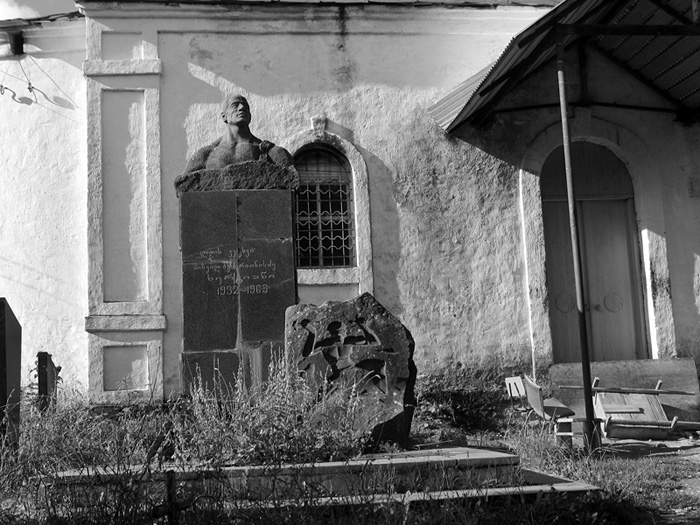
PHOTO: Grave of Misha Khergiani. Von Dato Rostomashvili


Chhumlian Khergiani was born March 23 1932 in Mestia. His father Vissarion climbed successfully in Caucasus, but the first steps in mountain climbing Chhumlian made under the guidance of his uncle Maxim Gvarliani. First accent of Khergiani the young was solo to Mt. Banguryan not far from Mestia. He was 13.
Later Chhumlian went to learn mount climbing to opposite side of Mane Caucasus Ridge in RUSSIA. From that time he became Misha Khergiani, because his name was too difficult for Russians.
After graduating of guide school Misha began to work as instructor in Russian alpine bases. At the same time he made accents for improving of his sports qualification. Soon he became strong leader of young Georgian alpine team.

The most important accents of Misha Khergiani:
1955 Mt.Communism (7495)
1956 Mt.Tyutyu Bashi, North Face
1957 Mt.Dongooz-Oroon (diretissima)
1962 Mt.Communism (7495)
1964 Mt.Ushba North, N-E wall
1967 Mt.Gran Caputsyn, E wall (Bonatti) Mt.Pti Dru, W wall Mt.Gran Joras (Valker)
1969 Mt. Torre Venecia Mt.Bancon

In 1960 Queen Elisabeth II rewarded to him the title of Par of England. Misha was very kind and resounding man so he took a part in every resquire action if he was there. Many years Misha Khergiani was a Champion of the Soviet Union in rock climbing. In Great Britain he was called «Rock Tiger».
On July 4 1969 Misha Khergiani fell down from the rock wall Su-Alto in Italian Dolomites on account of stone fall during his accent with Vyatscheslav Onischenko. Misha was born in mountains and he lived brightly all his short life in mountains. He died in mountains too.
The house which Misha has built in Mestia for his family is his memorial museum now.

Tuesday, September 18, 2007

PHOTOGRAPHY:

Museum Of Georgian Art And History
In Mestia (Svaneti In Georgia)

Uploaded on August 27, 2007 by augustiner05

Monday, July 16, 2007

PHOTOGRAPHY: Mestia In Svaneti


Uploaded on July 15, 2007 by Dato Rostomashvili
Mestia (Georgian: მესტია) is a highland townlet in northwest Georgia, at an elevation of 1.500 meters in the Caucasus Mountains.
According to the current administrative subdivision of Georgia, Mestia is located in the Samegrelo-Zemo Svaneti region (mkhare), some 128 km northeast of the regional capital of Zugdidi. Mestia and the adjoining 132 villages form Mestia District (raioni). Its area is 3,044 km²; population – 14,248 (2,600 in the town itself; 2002 Georgia census). The population is mostly Svans, a cultural subgroup of the Georgians.

Historically and ethnographically, Mestia has always been regarded a chief community of Zemo, or Upper Svaneti province. It was formerly known as Seti (სეთი). Despite its small size, the townlet was an important centre of Georgian culture for centuries and contains a number of medieval monuments - churches and forts - included in a list of UNESCO World Heritage Sites. In 1968, it was granted a status of a townlet (Georgian: daba).The townlet is dominated by stone defensive towers of a type seen throughout Svaneti ("Svan towers").

Unique icons and manuscripts are kept in Mestia Historical-Ethnographic Museum. Mestia is also a center of mountaineer tourism and alpinism.

Tuesday, July 10, 2007

PHOTOGRAPHY:


Grave of Misha Khergiani


Chhumlian Khergiani was born March 23 1932 in Mestia. His father Vissarion climbed successfully in Caucasus, but the first steps in mountain climbing Chhumlian made under the guidance of his uncle Maxim Gvarliani. First accent of Khergiani the young was solo to Mt. Banguryan not far from Mestia. He was 13.

Later Chhumlian went to learn mount climbing to opposite side of Mane Caucasus Ridge in RUSSIA. From that time he became Misha Khergiani, because his name was too difficult for Russians.

After graduating of guide school Misha began to work as instructor in Russian alpine bases. At the same time he made accents for improving of his sports qualification. Soon he became strong leader of young Georgian alpine team.

The most important accents of Misha Khergiani:

1955 Mt.Communism (7495)
1956 Mt.Tyutyu Bashi, North Face
1957 Mt.Dongooz-Oroon (diretissima)
1962 Mt.Communism (7495)
1964 Mt.Ushba North, N-E wall
1967 Mt.Gran Caputsyn, E wall (Bonatti) Mt.Pti Dru, W wall Mt.Gran Joras (Valker)
1969 Mt. Torre Venecia Mt.Bancon

In 1960 Queen Elisabeth II rewarded to him the title of Par of England. Misha was very kind and resounding man so he took a part in every resquire action if he was there. Many years Misha Khergiani was a Champion of the Soviet Union in rock climbing. In Great Britain he was called «Rock Tiger».

On July 4 1969 Misha Khergiani fell down from the rock wall Su-Alto in Italian Dolomites on account of stone fall during his accent with Vyatscheslav Onischenko. Misha was born in mountains and he lived brightly all his short life in mountains. He died in mountains too.

The house which Misha has built in Mestia for his family is his memorial museum now.