Showing posts with label Climbing. Show all posts

Monday, January 29, 2018

VIDEO: Climb Ushba and make a first descent on skis - via @thenorthface ‏


Late season 2017. Samuel Anthamatten, Markus Eder, & Leo Slemett head to Svaneti Georgia to hopefully climb Ushba and make a first descent on skis. This mystical 4710m mountain in the Caucasus Mountains is very remote and must be accessed on foot. Before the ascent the crew gets to warm up the legs and experience some of the best skiing they have ever had in a wild heli-ski session in epic conditions.

Direction: Guido Perrini
Actors: Samuel Anthamatten, Leo Slemett, Markus Eder
Production: Timeline Missions
Production Country: Switzerland, 2017


The 4710-meter-high Mount Ushba has long held a strong attraction for the Swiss freerider Samuel Anthamatten. In July 2017, he traveled to Georgia with Léo Slemett, winner of the Freeride World Tour 2017, and the South Tyrolean freerider Markus Eder, to descend the most distinguishable peak of the Caucasus Mountains for the first time on skis and to find out if the Caucasian powder delivers on its promises.


Main photography by Tero Repo


Sam Anthamatten Interview | The North Face Skier on His Quest to Make History on Mount Ushba. By Stuart Kenny [mpora.com]

Tuesday, September 05, 2017

VIDEO: უშბის სარკე • Ushba's Mirror. Attempt and heavy stonefalls. By Archil Badriashvili


More Videos by Archil Badriashvili

Friday, June 13, 2014

REISE UND ABENTEUER: Geheimtipp in Georgien - Der Berg des Prometheus. Von Stephanie Geiger (nzz.ch)

Schöner Bericht und Foto von Stephanie Geiger hier >>>

(nzz.ch) Der Grosse Kaukasus hat alles zu bieten, was sich Bergsteiger wünschen: einsame Täler, hohe Berge und Touren, die eine echte Herausforderung sind. Trotzdem ist die Gegend bis heute nicht über den Status «Geheimtipp» hinausgekommen.

«Auf einen Berg steigen, und noch dazu auf den Kasbek?» Luisa findet das so abwegig, dass sie unsere Frage noch einmal wiederholt. Luisa, 68 Jahre alt, eine kleine rundliche Frau, graue Haare, blaue Schürze, ist unsere Gastgeberin in Stepanzminda. Das golden schimmernde Kaffeeservice in der Vitrine, ein Teppich an der Wand, eine alte Speisezimmergarnitur, das alles trägt dazu bei, dass sich schnell zu Hause fühlt, wer hier übernachtet. Und wer aus dem Fenster schaut, hat einen phantastischen Blick auf den dritthöchsten Gipfel Georgiens. «Der Kasbek ist ein wunderschöner Berg», sagt Luisa. Doch ihr Herz und die Lunge würden eine Besteigung nicht mehr zulassen.

Viel unberührte Natur

Aber auch früher ist Luisa nie auf die Idee gekommen, auf den Kasbek oder einen anderen Berg zu steigen. Bergsteigen ist an den Südhängen des Grossen Kaukasus längst nicht so verbreitet wie in den Alpen. Dabei hat der Grosse Kaukasus alles zu bieten, was sich Bergsteiger von einem Gebirge wünschen: einsame Täler, hohe Berge und neben gemütlichen Wanderungen auch Touren, die eine echte Herausforderung sind. Schon früh war die Region deshalb auch Ziel von Bergsteigern aus dem Alpenraum. Der deutsche Geograf, Alpinist und Forschungsreisende Gottfried Merzbacher reiste 1891 in den Kaukasus, bestieg den Elbrus und kam auch am Kasbek vorbei. 1903 fuhr eine österreichische Expedition nach Georgien. Die Tiroler bestiegen dort einen 3860 Meter hohen namenlosen Berg, der heute noch als «Tsentsi Tau» im Register des Alpine Club of London zu finden ist, benannt nach Cenzi von Ficker, einer Teilnehmerin der Expedition. Doch nicht nur das: Für ihren Mut bei einer schwierigen Rettung bekam die Innsbruckerin vom Fürsten von Swanetien die Uschba (4737 Meter), einen formschönen Berg mit Doppelgipfel, formell geschenkt.

Über den Status «Geheimtipp» scheint der Grosse Kaukasus aber in Europa in den vergangenen hundert Jahren nicht hinausgekommen zu sein. Als einer der Seven Summits dominiert der Elbrus (5642 Meter) das Bergsteigen in der Region. Die anderen Berge werden meist nur von Bergsteigern aus dem ehemaligen Ostblock in Angriff genommen. Auch hat das georgische Tourismusministerium erst im vergangenen Jahr begonnen, bewusst den naturorientierten Tourismus im Südkaukasus zu vermarkten. Die landschaftliche Vielfalt, das milde Klima und die unberührte Natur sollen Bergsteiger und Wandergruppen locken.

Wir sind mit Otari Jafaridze unterwegs. Mit dem Bergsteigen begonnen hat der Dreissigjährige während des Studiums. Der Kaukasus ist seine Spielwiese. Einmal ist er auch darüber hinausgekommen, bestieg den Khan Tengri (7010 Meter) im Tien Shan in Turkestan. Jetzt ist Otari aber überwiegend mit Trekkinggruppen unterwegs, oder er führt Bergsteiger auf den Kasbek.

Uns bringt Otari zuerst an den Fuss des Tschauchi-Massivs. Die Wolken hängen tief an diesem Augusttag, an dem Otari mit uns von Tbilissi aus auf der Georgischen Heerstrasse vorbei am Heliskiing-Resort Gudauri und über den Kreuzpass Richtung Norden fährt. Kurz vor Stepanzminda verlassen wir die Hauptroute nach Osten. Auf den ersten Kilometern ist die Strasse noch geteert. Zu verdanken ist das dem georgischen Patriarchen. Er kommt aus dem kleinen Ort Sno. Doch hinter Sno verstehen wir, weshalb Otari ein Geländefahrzeug hat. Durch Schlaglöcher, einen reissenden Gebirgsbach und eine holprige, vom Regen ausgewaschene Bergstrasse fahren wir hinauf nach Djuta.

Djuta ist ein kleines Bergdorf. Es soll das am zweithöchsten gelegene Dorf Europas sein, wenn man den Südkaukasus noch zu Europa zählt. Wie so viele abgelegene Dörfer ist auch Djuta vom Aussterben bedroht. Die Jungen gehen weg, weil sie in der Einöde keine Arbeit finden. In seiner bescheidenen Ärmlichkeit ist Djuta aber eine zauberhafte Idylle: vom Regen aufgeweichte Wege; eine alte Frau, die vor ihrem einstöckigen Häuschen in der Sonne sitzt; ein Kaukasischer Hirtenhund, der mit seiner Grösse und dem lauten Gebell fast so furchteinflössend ist wie der Bär, vor dem er seine Herde schützen soll.

Und doch gibt es auch für Djuta ein Fünkchen Hoffnung. Anano, eine junge Frau Ende zwanzig, hat in dieser Einöde, eine Viertelstunde Fussweg oberhalb des Dorfes, eine Hütte gebaut, um Touristen und Einheimischen in der Einsamkeit des Kaukasus Übernachtungsmöglichkeiten zu bieten. Otari hat uns dorthin gebracht, damit wir uns an die Höhe des Kasbek gewöhnen.

Mehr als nur ein Berg

Als wir am nächsten Tag zum Muchadze (3240 Meter) aufbrechen, regnet es in Strömen. Der Weg führt uns durch ein breites Tal am Basislager der Tschauchi-Kletterer vorbei. Doch an diesem frühen Morgen ist das Zeltlager wie ausgestorben. Die einen seien in der Wand, vom Regen überrascht, die anderen noch tief in ihren Schlafsäcken verkrochen, erzählen uns zwei junge Frauen. Das Tschauchi-Massiv ist das berühmteste Klettergebiet im Ostkaukasus, eine Mischung aus Drei Zinnen und Tofana di Rozes, auch deshalb kaukasische Dolomiten genannt. Von den mächtigen Wänden des Tschauchi, die uns am Vortag noch in Staunen versetzt hatten, sehen wir nichts. Sie verstecken sich hinter dichten Regenwolken.

Wir setzen unseren Weg dennoch fort, hinauf zum Gipfel des Muchadze. Die Rhododendren sind schon verblüht. Nur einzelne farbige Blätter lassen erahnen, welches Blütenmeer wir vor wenigen Wochen hier hätten antreffen können. Mit der Höhe mischen sich immer mehr Schneeflocken unter den Regen. Ein eisiger Wind pfeift über den Grat. Wir sind froh, als wir auf dem höchsten Punkt stehen. Dass wir bei diesem fürchterlichen Wetter hinaufgewandert sind, lässt sich einzig mit der Höhenanpassung begründen. Keine Chance auf Wetterbesserung und wieder keine Chance, den Kasbek zu sehen.

Erst am übernächsten Morgen, bei Luisa, geben die Wolken den Blick frei auf unser eigentliches Ziel. Luisa hat uns ein Zimmer gegeben, in dem wir schon vom Bett aus den Kasbek sehen können: die sonnenbeschienenen, strahlend weissen Flanken, die Grashänge weiter unten und auf einer Anhöhe oberhalb von Stepanzminda das Kloster Gergeti. Jetzt verstehen wir, dass der Kasbek nicht einfach nur ein Berg, sondern eine Art Nationalheiligtum ist. Er ist von Mythen umrankt, die bis zu den alten Griechen zurückreichen: Prometheus soll zur Strafe dafür, dass er gegen den Willen des Zeus den Menschen das Feuer gebracht hatte, an den Kasbek gebracht und dort angekettet worden sein. Jeden Tag kam ein Adler, um von seiner Leber zu fressen. Erst Herakles sollte Prometheus viele Jahrhunderte später erlösen, indem er den Adler tötete.

Göttliche Mächte haben Prometheus an den Kasbek gebracht. Wir fahren die ersten Höhenmeter mit Otaris Geländewagen zum Kloster Gergeti hinauf. Von dort führt unser Weg über Moränen und dann einen der Kasbek-Gletscher. Unser erstes Ziel: die Bethlemi-Hütte (3653 Meter), einstmals eine meteorologische Station, benannt nach einem Kloster in der Nähe. Das massige Bauwerk, etwa fünfzig Meter lang, ragt auf der Moräne wie ein mächtiger Dampfer in das Wolkenmeer. Doch die Bethlemi-Hütte ist keine Hütte mit Alpenstandard. Sie ist eine windgeschützte Unterkunft, nicht mehr und nicht weniger. Schmelzwasser tropft uns in der Eingangshalle, einem dunklen schwarzen Loch, auf den Kopf. In den wenigen notdürftig hergerichteten Zimmern gibt es Pritschen, zweistöckig, mit einem abwaschbaren braunen Bezug und etwas Schaumstoff darunter. Nicht einladend, aber praktisch.

Die Politik bleibt im Tal

Weil die Hütte nur begrenzt Schlafplätze hat, campieren die meisten Bergsteiger in Zelten. Schwer beladen schleppen sie ihre Ausrüstung den Berg hinauf. Bequemer ist der Weg, wenn man das Gepäck auf den Rücken von Pferden lädt, die man unten in Stepanzminda mieten kann. Nur runter muss man den schweren Rucksack dann selbst tragen.

Ein buntes Völkchen findet auf der Bethlemi-Hütte zusammen. Die Georgier kennen sich meist. Viele von ihnen gehören zu den Stammgästen. Von den wenigen Georgiern, die auf Berge steigen, kommen alle immer wieder an den Kasbek. Politische Reibereien werden im Tal gelassen. Die Russen, gegen die Georgien vor wenigen Jahren Krieg geführt hat, werden geduldet. Genauso wie die Bergsteiger aus den ehemaligen sowjetischen Bruderländern. Westeuropäer sind hier Exoten und werden vielleicht deshalb auch besonders freundlich empfangen.

Am nächsten Morgen stehen wir früh auf. Otari hat schon eine halbe Stunde vorher begonnen, Wasser zu kochen. Noch in der Dunkelheit marschieren wir los, an steilen Hängen vorbei, von denen immer wieder unberechenbar Steine gross wie Medizinbälle donnern. Erst kurz vor dem Hochlager, wo einige ihre Zelte aufgeschlagen haben, stossen wir auf den Gletscher, auf dem wir dann über einen steilen Aufschwung zum Gipfel hinaufsteigen. Elbrus (5642 Meter), Dychtau (5204 Meter), Koschtantau (5152 Meter) Uschba (4737 Meter), rattert Otari die Namen der Berge herunter, die wir von dort oben sehen können. Und er zählt Gipfel auf, von denen wir noch nie gehört haben. Im Kaukasus gibt es ganz offensichtlich noch viel zu entdecken.

Gut zu wissen

Anbieter: Der Anbieter Top Mountain Tours (www.top-mountain-tours.de) hat in diesem Sommer zwei zehntägige Reisen mit Ziel Kasbek im Angebot. Eine achttägige Kasbek-Besteigung kann bei Diamir (www.diamir.de) gebucht werden. Vor Ort unterstützt die deutschsprachige Agentur Georgia-Insight Reisende bei der Planung einer Kasbek-Besteigung (www.georgia-insight.eu) 

Literatur: Marlies Kriegenherd: Georgien. Erschienen in der Reihe Reise-Know-how, 3., neu bearbeitete und komplett aktualisierte Auflage für 2013/2014, 29.90 Franken.

Thursday, August 16, 2012

BLOG: Svaneti, as good as it gets! Text and photo Eistein Guldseth, 2012 (gotocaucasus.com)

The dramatic nature of Svaneti is dominated by the mighty Mount Ushba with it's caracteristic double-speared summit at 4710 meters. It's regarded as one of the most difficult mountains to climb in the Caucasus.
Original Post With Perfect Photos!! >>>

(gotocaucasus.com) SVANETI IS THE MOST EXTREME part of Georgia. I have been traveling in Georgia since 2004, but there has always been something stopping me from carrying out my Svaneti trip. One year there was terrible weather, another year the region was seized by Gen. Kvitsianis paramilitary forces. Something has always been in the way. But this year we went, and what a trip it was. But the backdrop was rather tragic:

Four Ukrainian climbers had an accident on Mt. Ushba the week before. Two of them died. During the rescue operation, two Chech climbers who disappeared after an accident in 1974 were also found.

How to get there

From Tbilisi you drive to Zugdidi, and take the road to Mestia wich is the centre of Svaneti. It is about 130 kms drive. No need for any 4WD. But beware of falling rocks when its raining. You can also go by plane, as the city has a small airport. But it's not Mestia you want to see. That is Ushguli, the World heritage site, and for that you need a 4WD. It's 44 km into the mountains and at 2200 meters altitude. More about that later.

First you go to Hotel Mestia.

Mestia is a dustbowl, but Hotel Mestia as an oasis. Here you get high quality food and great accomodations. The first thing you do is go to Vitali Japaridze at Hotel Mestia and order his Svaneti special "kubdari", a bread with very spicy meat inside. All food is cooked on a traditional stove with firewood. The hotel is a perfect basecamp for trekking. Vitali will give you all information you need. If you prefer more modest accomodations there are a lot of guesthouses available for self household.

Svaneti is for trekkers and climbers.

The hardcore climbers try Mt. Ushba. It's 4710 meters high summit has claimed many lives through the years. Most professionals these days hire local guides. There is of course Mt. Shkhara in Ushguli. It's considered to be Georgia's highest mountain (5068 m) and Europe’s fourth highest after Elbrus (5643m), Dychtau (5204m) and Koshtan (5151 m) according to Summitpost org. You can also hire a guide and spend four days trekiking from Mestia to Ushguli. You can also drive from Mestia to Ushguli. For that 44km trip (one way) you need a 4WD, patience and 3 hours. The track is easy. There are lots of possibilities, just ask Vitaly, or check out internet. For me Ushguli was the ultimate goal.

On UNESCOS word heritage site list

I quote the UNESCO site here: "The mountainous region of Upper Svaneti occupies the upper reaches of the lnguri river basin, between the Caucasus and Svaneti ranges. The characteristic landscape of Upper Svaneti is formed by small villages, dominated by their church towers and situated on the mountain slopes, with a natural environment of gorges and alpine valleys and a backdrop of snow-covered mountains. The most notable feature of the settlements is the abundance of towers, especially in Mestia and the frontier villages, such as Ushguli and Latali".

Wednesday, August 15, 2012

CAUCASUS: Georgia: Rockclimbing in Chiatura (youtube.com)


Climbing site at Katskhi pole 5 km from Chiatura in West Georgia offers a variety of boltet routes (up to 60m)in excellent limestone 5a - 7b+ in a beautiful valley. www.tourism-association.ge

CLIMBING: 2011: Ushba (4,710m), south pillar, Harakternik. By Lindsay Griffin, Mountain INFO (aaj.americanalpineclub.org)

(aaj.americanalpineclub.org) By Lindsay Griffin, Mountain INFO, from information supplied by Anna Piunova, mountain.ru 

Ushba (4,710m), south pillar, Harakternik. 

http://aaj.americanalpineclub.org/wp-content/uploads/2012/05/PiunovaUshbaSpillarRL4Inchweb.jpg
Ushba from south. Northwest summit (4,694m, left) and Southeast (Main) summit (4,710m). Normal route to Northwest summit (Almer-Cockin, 1888, 4A) reaches gap between summits from far side. (1) Artsishevsiy, 1971, 5B. (2) Grigorenko-Prigoda, 1972, 5B. (3) Myshliaev, 1962, 5B. (4) Voloshanovskiy, 2010. (5) Monogarov, 1960, 5B. (6) Harakternik, 2011, 6A. (7) Kensitskiy, 1972, 5B. (8) Kustovskiy, 1962, 6B. Supplied by Anna Piunova
Ukrainians Igor Chaplinsky, Michel Formin, and Vitali Todorenko climbed directly up the famous south pillar of Ushba, adding 130m of possibly new ground on the steep central section. The center of the pillar was climbed to two-thirds height in 1960 by Monogarov and his team, who then slanted up left, leaving the final prow unclimbed. In 1962 the left flank of the pillar was climbed by Myshliaev (who joined the upper section of the Monogarov route) and the right side by the celebrated Kustovskiy route. In 2010 a Ukrainian team led by Mishel Voloshanovskiy climbed a little left of the Monogarov, joining it as it slants left, and claimed a new line. However, it appears they were close to or on a little-known route climbed in 1981 by Golubev and partners, who also slanted left at Monogarov’s bolts. The climbing history of one of the most famous mountains in the Caucasus is thus complex and not well documented. In 2011 a team from Krasnoyarsk claimed a new line on Ushba, only to find it had been done before. Chaplinksky, Formin, and Todorenko followed the (possibly new) line climbed by Voloshanovskiy but, instead of slanting left, continued up the prow directly to the top of the south pillar.


The south face is ca 1,500m high. In early July the three Ukrainians first climbed 900m up easy rock (2-3) and glacial terrain, followed by 300m on the crest of the ridge to where things became difficult. About nine pitches (max 5b) led to the base of the pillar. The next three pitches gave largely free climbing, up to 6c, with short sections of A2 and A3 (skyhooks and Iron Hawks/birdbeaks). About four more pitches, up to 6c and A3, took them to an overhanging section. To this point they had followed the line climbed in 2010. The next 130m provided the crux, beginning with a 25m overhanging wall (A3). More 6b and aid took them to the top of the pillar.

On the upper section most ascents follow the right side of the final buttress, the Red Corner. These Ukrainians climbed the center in four fine pitches of 6a. They bivouacked on the final ridge and reached the summit at 8 a.m. on July 7. Starting down by the classic 1903 Heibling-Schulz Route (5A) on the southeast and east flanks, they found the snow too dangerous and bivouacked again, continuing their descent early next morning. Total time spent on the mountain was five days, and the route was named Harakternik (6A, 6c and A3). They had been lucky with the weather, which was still a bit wintry, being hampered only by a strong wind.

CLIMBING: 2010: Chaukhi Mountains, by S. Richardson (aaj.americanalpineclub.org)

(aaj.americanalpineclub.org) Chaukhi Mountains, Javakishvili, Perseverance.

By Simon Richardson, Alpine Club

Asatiani south face showing the Normal Route.
During April, while Graham Dudley was making a ski ascent of Kazbek (Kasbegi, or more properly Mkinvartsveri, 5,034m) in the Eastern Caucasus, he noticed an attractive range of lightly glaciated peaks c30km to the southeast, and was determined to come back for a ‘look’. I joined him for a seven-day visit in September.

Research revealed these were the Chaukhi mountains, close to the Russian border and known as the Dolomites of Georgia, boasting fine alpine rock routes. The massif consists of a ridge of unusual, metamorphic, volcanic rock, with four separate summits, the highest, Asatiani, 3,820m. It is surrounded by grassy hills rising to 3,500m, although to the southwest a steep peak holds a big wall that typically takes three days to aid climb and is rarely ascended. The area is attractive and can be reached in a three-hour 4WD from Tbilisi (local bus or normal taxi is much cheaper but slower), and a two-hour walk with horses (cheap and easy to arrange). We established base camp at 42°33.256′ N, 44°46.321′ E.

http://aaj.americanalpineclub.org/wp-content/uploads/2010/12/ChaukhiNFaceRichardson.jpg
The north face of the Chaukhi Group. (A) Asatiani (B) Kameruni, (C) Leonidze, and (D) Javakhishvili. (1) Russian 6A, (2) 4B, (3), 5A. (4) 4A, (5) 5B, (6) 4A, (7) 5A, (8) 5A, and (9) 5B. Simon Richardson
Our stay caused a little local excitement. Apparently we were the first foreigner visitors to climb technical routes. The area is popular with trekkers; we saw a couple of parties each day and invariably they proved to be from Israel. Non local climbing parties, for example from Estonia, have either hill walked or made simple Grade I scrambles. However, we were certainly not the first overseas party as it is possible that Asatiani was first climbed by the Scottish female, Una Cameron (Una Cameron's Climbs and Expeditions), in 1932. Russians must certainly have climbed here, and there was mention of a Czechoslovak team in the 1980s.

Since we knew nothing of the area, we spent our first day climbing the Normal Route on Javakishvili (3,650m), Chaukhi’s second highest summit, with Georgian guide Tito Nadiratze. Graded 3A, this was about Alpine PD, following an easy snow/scree couloir, and then British VD rock to the summit. Next day we climbed the Normal Route on Asatiani. This took a long couloir, then climbed four, long, protectionless pitches up slabs at British Hard Severe. Graded 4A, the route equated to Alpine D-, and descending our line proved quite serious. The first ascent of this peak was made via the southwest ridge at 2, but is apparently rarely repeated these days.

We then took a rest day and our run of good weather ended. I think we were unlucky in this, because the previous eight weeks had been perfect. Thereafter we made three attempts to climb a 5A on the north face of Javakishvili but on each occasion were beaten by cold and rain. However, we managed a route on the south face, which Nadiratze had pointed out to us as unclimbed. On September 10, starting midway between the Nadiradze-Gujabidze route and the ridge of the Normal Route, we followed weaknesses up the face at British VS (not sustained) to join the Normal Route a little before the summit. Our line, named Perseverance, was 320m (around six pitches) and grade 4A. 

http://aaj.americanalpineclub.org/wp-content/uploads/2010/12/JavakhishviliSFaceRichardson.jpg
South face of Javakhishvili with (1) Guiabidez-Nadiradez Route, (2) Perseverance, and (3) Standard Route from south. Simon Richardson
Despite the weather, we managed to do something every day. After our various failed attempts we would go off walking in the rain, eventually reaching the tops of almost all the surrounding 3,500m peaks.

The Chaukhi region is breathtakingly beautiful and very much unknown outside Georgia. The best rock is on the north face of Javakishvili, where routes reached 600m in length. In my opinion a one-week visit to Chaukhi, followed by an ascent of Kazbek, would make an excellent two-week mountaineering holiday.

Thursday, August 02, 2012

KAUKASUS: Der Ushba im Historischen Alpenarchiv (historisches-alpenarchiv.org)

Uschba Nordgipfel, 1936


Uschba, 1936


Auf dem Uschba, 1935


An der Uschba Südwand, 1935


Abstieg vom Uschba Nordgipfel, 1936


Abseilen an der Uschba Südwand, 1935


Weiteres Archivmaterial: www.historisches-alpenarchiv.org

BIOGRAFIE: Das Uschba-Mädl Cenzi von Ficker. Von Gerhard Schirmer (bergnews.com)

Das Uschba-Mädl Cenzi con Ficker
(bergnews.com) 1903 wurde unter der Leitung von Dr. Willi Rickmer-Rickmers eine Kaukasus-Expedition ausgerüstet, an der auch die sehr gewandte Bergsteigerin Cenzi von Ficker teilnahm. Das wichtigste Ziel dieser Kundfahrt war die erste Ersteigung des Uschba-Südgipfels, der eine Seehöhe von 4698 m aufweist.


Der Kaukasus hatte die Bergsteiger schon sehr früh fasziniert. So konnten beispielsweise bereits 1888 Engländer in der Besengi-Gruppe den Schchara ersteigen, 1890 stand der Italiener Vittorio Sella auf dem Zichwarga-Ostgipfel (Laboda- und Sugan-Gruppe) und 1891 erreichten Gottfried Merzbacher und Ludwig Purtscheller den höchsten Punkt des Sullukol-Basch in der Dschailük-Gruppe. Der Uschba-Nordgipfel fiel bereits 1888, der wilde und schwierige Südgipfel war jedoch noch bis 1903 Neuland.


Der geschenkte Berg
Rickmers Expedition wurde jedoch zunächst vom Pech verfolgt. Am 21. Juli stürzte A. Schulze in der Uschba-Schlusswand als Führender einige Meter ins Seil. Er zog sich einige Verletzungen zu und musste abgeseilt werden. Cenzi von Ficker versorgte den Verunglückten, dann stieg man ins Standlager ab. Doch der zähe Schulze gab sich nicht so leicht geschlagen, bereits am 26. Juli stand er gemeinsam mit Helbling, Reichert, Schuster und Weber auf dem Gipfel; die Cenzi war allerdings nicht dabei. Nur 18 Tage danach gelang dann der Seilschaft Georg Leuchs, Hans Pfann und Ludwig Distel die erste vollständige Uschba-Überschreitung von Norden nach Süden. Und dann geschah etwas Seltsames, in der Chronik des Bergsteigens vollkommen Einmaliges: Fürst Tatarchan Dadeschkeliani von Swanetien, der vom Können und vom Mut Cenzi von Fickers tief beeindruckt war, schenkte ihr den Berg Uschba! (Die Schenkungsurkunde bekam später das alpine Museum in München - historisches-alpenarchiv.org) Ganz ohne Gipfelsieg fuhr die Cenzi damals aber nicht nach Hause, sie nahm an der ersten Ersteigung des Schtawler (3976 m) und eines bis dahin namenlosen Gipfels (3860 m) teil, der ihr als "Tsentsi-Tau" zum ewigen Denkmal wurde.


Leilakette vom Gul - Tau (ca. 3200 m) in der Uschbagruppe (Kaukasus)
Schenkungsurkunde Uschba für Cenzi von Ficker


Cenzi von Ficker, die in eine Innsbrucker Gelehrtenfamilie hineingeboren wurde, kam durch ihren Bruder Heinz schon früh mit dem Bergsteigen in Berührung. Über ihn lernte sie zahlreiche Vertreter der damaligen alpinen Elite wie etwa Anton Schönbichler, Otto Ampferer oder Karl Berger kennen, die die ebenso hübsche wie talentierte Cenzi stets gerne auf schwierige Bergtouren im Karwendel und Wetterstein mitnahmen. 1908 heiratete sie den Wiener Rechtsanwalt Dr. Hannes Sild, einen gleichfalls sehr bekannten Bergsteiger, der ihren Bruder Heinz in dessen "führenden" Rolle ablöste.


Der Weltkrieg machte vorerst alle privaten Pläne zunichte. Hannes Sild kämpfte als Offizier bei den Kaiserjägern erst in Galizien, dann an der Dolomitenfront, wo er schließlich 1917 so schwer verwundet wurde, dass er aus dem Kampfgeschehen ausscheiden musste.


Der Uschba aus dem Betschotal um 1929.Schicksalsschläge
Nach Kriegsende - Hannes war inzwischen glücklicherweise wieder genesen - meisterte das Ehepaar die schweren wirtschaftlichen Folgen, die der Zusammenbruch der Monarchie nach sich zog, und brachte es rasch zu beruflichem Erfolg und privatem Wohlstand. Die beiden gingen wieder in die Berge und nahmen dabei auch ihre drei Söhne mit, aus denen bald ebenfalls tüchtige Bergsteiger wurden.


1937 brach über die bisher so glückliche Familie Sild das Unglück herein. Im Hochschwab-Gebiet verunglückte der Sohn Uli tödlich, und wenige Monate später starb der bereits todkranke Vater Hannes. Im Zweiten Weltkrieg fielen die beiden jüngeren Söhne Henning und Meinhart, und damit war die Familie Sild - bis auf die Mutter - ausgelöscht.


In den Folgejahren versuchte Cenzi Sild verzweifelt, der Einsamkeit zu entfliehen. Noch erfreute sie sich bester Gesundheit, und so zog sie ins Karwendelhaus, wo sie den mit ihr eng verbundenen Bewirtschaftern jahrelang eine wertvolle Hilfe war. 1956 erlebte sie urplötzlich einen totalen Zusammenbruch ihrer Kräfte, von dem sie sich nicht mehr erholen sollte. Die Familie Dr. Drexel, mit der sie eng befreundet war, nahm die Schwerkranke auf Burg Stauf bei Nürnberg auf, wo sie nur sechs Tage vor ihrem 78. Geburtstag friedlich entschlafen ist.


Steckbrief
Cenzi Sild, geb. von Ficker, geboren am 1. 9. 1878 in Innsbruck, gestorben am 26. 8. 1956 auf Burg Stauf bei Nürnberg
Gatte: Dr. Hannes Sild, Rechtsanwalt, gest. 1937
Söhne: Uli (abgestürzt 1937), Henning, Meinhart (beide im Zweiten Weltkrieg getötet)


Links
austria-lexikon.at//Biographien/Cenci von Ficker
historisches-alpenarchiv.org/gedenkblatt.pdf
Vergessene Erfolge: Die Anfänge des Damen-Kletterns.pdf
raetia.com/Frauen im Aufstieg.pdf
rb-media.net

Saturday, July 28, 2012

VIDEO: Terra X - 45 - Gletschergold - Die Schatzkammer im Kaukasus (youtube.com)

Im Westen des Kaukasus lebt seit Jahrtausenden völlig isoliert ein kleines Bergvolk: die Swanen. Europa erfährt erstmals um 1900 durch den deutschen Alpinisten Gottfried von ihrer Heimat Swanetien. Auf den Spuren des Bergsteigers gewährt der Film Einblick in uralte sakrale Schatzkammern und die Traditionen der Swanen.

Wednesday, July 25, 2012

PHOTOESSAY: Legends of Khevsureti. By Archil Kikodze (cenn.org)

(cenn.org) Iakhsar (1) rushed into Lake Abudelauri after the devi (2) and killed him there with a whip. The devi shed so much blood that Iakhsar was trapped in the water for three years. The Khevsuretians became sad. They could not help their deity who had saved them. Finally, after three years, a sorcerer advised them to sacrifice a ram from the village of Blo, which had four ears and four horns. The devi's blood subsided, and Iakhsar could get out of the lake.

I tell Eleanor this old legend while we are sitting on the shore of the lake. Lake Abudelauri is too small to be the arena for a fight of two supernatural beings - one kind, one malicious - but the silence around us, the rocky peaks of Chaukhi (3) behind us, and a small lake at the edge of glacial moraines lost in green really create a mystical effect ...

We are in Khevsureti, a region of Georgia where myths are mixed with reality and concrete geography. A young hunter was lost on one of the peaks of Chaukhi - Sindaura when hunting for Caucasian goats. His death gave rise to many folk verses and poems. Mindia,(4) who drank snake's blood when he was in the captivity of enemies, understood the language of plants and animals and became an invincible hero and protector of the Khevsuretians, lived in the village of Amga, in the Arkhoti community, which is at a distance of one days journey from here. The legend about Mindia is one of the most popular legends in Georgia. Many famous writers in different times tried to develop this theme ...

But we do not have far to go to meet a legend. It is near, several meters from us. A high rock rises from the middle of the lake. It is cleft in two - the work of Iakhsar, rescuing the people from the devi. The first stroke of his whip missed the devi and broke the rock ...

The etymology of the word "Khevsureti" belongs to the late middle ages. Formerly, Khevsureti, together with the neighboring region Pshavi, was called Pkhovi. This ancient name is retained in the language of Chechens, neighbors of Khevsuretians, who call then "Pkhie" even now.

Today the proximity of the northern borders is felt as never before. My guest and I felt it in the first village we came to in Khevsureti and at the regional centre of Barisakho. There are a lot of people in military uniform (Khevsuretians, like other mountaineers of Georgia, undergo military training on their native land). The road going to Chechnya is controlled. A military unit is now based in Arkhoti too, where the border three years ago was protected only by several locals. We met the military helicopter several times on the road from Roshka to the lake Abudelauri. The situation is rather depressing for the average tourist, but Eleanor is not an average tourist. She is a writer and adventurer, an experienced naturalist and former member of the Greenpeace. Moreover, she comes from Ireland; therefore the only problem for her is a delicacy of the people of Pshavi - a nutritious but very greasy cottage cheese (we spent some days in Pshavi before coming to Khevsureti). Eleanor hunted for seals and whales and ate uncooked meat together with the Eskimos so as not to offend her hosts. But the cottage cheese did its work, and now she eats only potatoes in Roshka.

At the end of our path we could now see Roshka, where about twenty families sharing one surname - Tsiklauri - live. It is a very large village for Khevsureti and has a great deal of pastures and meadows. The Khevsuretians are very good mowers. They mow on very steep slopes and often have to use climbing equipment. In this regard the denizens of Roshka have easier conditions - their meadows are not so steep. They gather a good harvest of potato, a main crop of our mountains, which Eleanor knows better than I do now.

We reach Roshka in the evening, when the cattle come back from pastures. The villagers, like other Khevsuretians, breed cattle. They used to breed sheep as well, but unlike their neighbors, (the people of Pshavi, Gudamakari and especially Tusheti), they had never engaged in nomadic sheep breeding. Khevsuretians consider pigs to be foul animals, and even now refrain from breeding them. This is probably the influence of their Muslim neighbors. One old villager complained that his son, who lives on the plain, brought him pigs for rearing and offended and dishonored the old man ...

The migration of the people of Khevsureti to the plain started in the nineteenth century, but in the 1950s this voluntary migration became obligatory. At the direction of the government of that time, many high-mountainous villages were deserted. The people from these places settled for the most part in the southeast of Georgia. The majority of their descendants live there even now. As a rule, at least once a year these people visit the mountains to attend the summer pagan holidays or just to see the homeland ...

If you have an occasion to travel with a Khevsuretian going to his native land, it is an unforgettable show. As the road goes up to the mountains and his native land gets closer, the Khevsuretian becomes brighter and more cheerful. The way back to the plain is the opposite. The man who used to laugh and sing a few hours ago now becomes taciturn and sits silent in the car near you. Khevsuretians especially avoid the large capital. If they have a business there, they try to arrange everything very quickly and immediately come back without even visiting their close friends, if such live in the town.

Yesterday Eleanor and I met four Khevsuretians living in Kakheti5 on their way to Arkhoti. They rushed into the village by a car that had broken down several times during their trip, brought out drinks, and the sounds of their feast were heard all night long from the house where they stayed. Everybody knew about the presence of drunken Khevsuretians in the village. But early in the morning, they saddled their horses and headed to their villages by the road through the pass, occasionally shooting from their guns...

We are at home already. Our host Shota came back very tired: all day long he had been dragging hay with the bulls. Shota and his wife Tina have got three daughters and a three year old son Uturga who is supposed to continue the family name. The girls help their mother cook dinner. Tired Eleanor leaves to have a rest, Shota finishes his work in the courtyard. I look at the village from the balcony. I see the cattle coming back from pastures like a live current. Farther on I can see the road going to Northern Khevsureti and the mountain pass, Bears Cross. That part of Khevsureti is still illuminated by the sun, but in Roshka it is evening. An old woman comes out the verandah of the next house and looks over the village with binoculars. Perhaps her cow has not come yet. I go into the house for my camera, but the woman notices me, hides the binoculars, and enters the house grumbling ...

I am thinking about tomorrow and my way back to the large city without pleasure. It is October now and probably I will not be able to come here until next year. Most likely I will be silent and thoughtful on my way back like a real Khevsuretian ...

-----------------------------------------------------

1 A pagan deity of the people living in the mountainous region of Georgia - Tusheti, Pshavi, and Khevsureti.
2 A fabulous monster; a huge, ugly and evil creature having immense strength.
3 The mountains in the Central Caucasus.
4 A hero of Georgian legends.
5 Region in the Southeast part georgia.

Full Photoessay >>>


Archil Kikodze

He is a professional photographer, famous Georgian writer, ethnographer and finally wildlife tracking guide. He has traveled widely in Caucasus and knows every corner of Georgia well with its people’s traditions and culture, that’s why his interesting stories make every trip unforgettable. His photographs have won many awards and have participated in various national and international photo exhibitions. Furthermore Archil has published various articles on environmental, ethnographic and social themes in magazines: “Surviving Together”, “Caucasus Environment”, Horizonti, “Mshvenieri Sakartvelo”, “Tskheli Shokoladi” Author of three guidebooks for developing science tourism in Georgia (Khevi, Svaneti, Bakuriani), Switzerland. At the request of Ministry of Environment of Georgia wrote books on Kolkheti, Tusheti and Vashlovani National Parks and Lagodekhi Reserve.

facebook.com/archil.kikodze
 

Wednesday, August 04, 2010

VIDEO: North Ushba from Georiga (youtube.com)

Thursday, November 05, 2009

HISTORY: Wie die Berge zu ihren Namen kamen ... (derstandard.at)

Eine liebenswürdige Ausnahme im Nomenklaturenkrieg ist eine Namensschenkung im Kaukasus. 1903 war die Bergsteigerin Cenzi von Ficker, Tochter einer Tiroler Gelehrtenfamilie, Mitglied einer erfolgreichen Expedition zum Südgipfel des Uschba (4737 Meter) im Kaukasus. Ihr schenkte - beeindruckt von der attraktiven Alpinistin - der Fürst der kaukasischen Region Swanetien, Tatarchan Dadeschkeliani, urkundlich beglaubigt den Berg Uschba. Cenzi von Ficker gelang zum Abschluss der Expedition noch die Erstbesteigung eines bis dahin namenlosen 3860 Meter hohen Gipfels, der seither als "Tsentsi Tau" im Register des Alpine Club of London vermerkt ist.

photo by Natia Zhorzheta, Ushba in Svaneti

Saturday, November 15, 2008

MOUNTAINIERING: Mt. Kazbeg Final Couloir (5047m) - tourism-association.ge

Photo am 4. November 2008 von Steffen Schülein

Internet:
http://www.tourism-association.ge/
http://travel-in-georgia.blogspot.com/

Tuesday, November 11, 2008

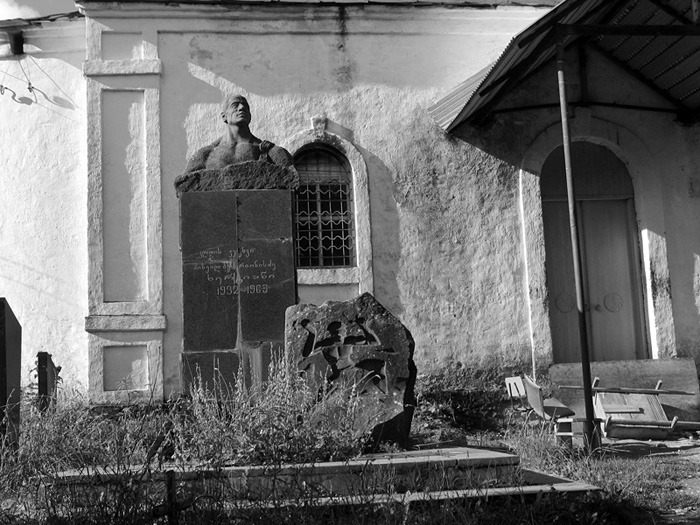
PHOTO: Grave of Misha Khergiani. Von Dato Rostomashvili


Chhumlian Khergiani was born March 23 1932 in Mestia. His father Vissarion climbed successfully in Caucasus, but the first steps in mountain climbing Chhumlian made under the guidance of his uncle Maxim Gvarliani. First accent of Khergiani the young was solo to Mt. Banguryan not far from Mestia. He was 13.
Later Chhumlian went to learn mount climbing to opposite side of Mane Caucasus Ridge in RUSSIA. From that time he became Misha Khergiani, because his name was too difficult for Russians.
After graduating of guide school Misha began to work as instructor in Russian alpine bases. At the same time he made accents for improving of his sports qualification. Soon he became strong leader of young Georgian alpine team.

The most important accents of Misha Khergiani:
1955 Mt.Communism (7495)
1956 Mt.Tyutyu Bashi, North Face
1957 Mt.Dongooz-Oroon (diretissima)
1962 Mt.Communism (7495)
1964 Mt.Ushba North, N-E wall
1967 Mt.Gran Caputsyn, E wall (Bonatti) Mt.Pti Dru, W wall Mt.Gran Joras (Valker)
1969 Mt. Torre Venecia Mt.Bancon

In 1960 Queen Elisabeth II rewarded to him the title of Par of England. Misha was very kind and resounding man so he took a part in every resquire action if he was there. Many years Misha Khergiani was a Champion of the Soviet Union in rock climbing. In Great Britain he was called «Rock Tiger».
On July 4 1969 Misha Khergiani fell down from the rock wall Su-Alto in Italian Dolomites on account of stone fall during his accent with Vyatscheslav Onischenko. Misha was born in mountains and he lived brightly all his short life in mountains. He died in mountains too.
The house which Misha has built in Mestia for his family is his memorial museum now.

Saturday, August 09, 2008

OPEN LETTER: 08-08-08

Seit ein paar Jahren bin ich mit dem Kaukasus verbunden. Angefangen hat es in meiner Jugend. Ich lebte in Ostdeutschland, weltweit bekannt geworden durch den Fall der Mauer. Damals träumte ich beim Lesen und wenn ich an das alpine Bergsteigen fern der Heimat dachte, von der Hohen Tatra, dann vom Kaukasus, dann dachte ich an den Pamir oder an das Altai-Gebirge. Der Everest lag für mich weit weg im Westen. Ich konnte und durfte nicht von dem Höchsten träumen. Ich wollte trotzdem auf einem eisigen und schönen Gipfel stehen und die klare Luft genießen. Beim Abstieg sollte ruhig der Wind an mir zerren, aber ich wollte den Gipfelsieg nach Hause bringen. Es sollte nur eine Geschichte sein, die ich gern weiter erzählen würde.

Älter geworden, nach dem Fall der Mauer in Ostdeutschland, wurde der "Fall der kruden Mauer-Architektur" ein Freiheits-Symbol in Retrospektiven - vor allem im Fernsehen. Seit dem gibt es für mich den klaren Ausblick oder geruhsamen Rückblick nicht mehr. Alle sprangen schon damals nur in den Staub. Die Mauer in Berlin wurde nicht wirklich gestürmt, denn die Leute saßen plötzlich einfach auf ihr. Sie hatten sie mit Hilfe von Räuberleitern erklommen und johlten schlecht gekleidet in die Kameras. Keiner hatte etwas dagegen. Es war unerfindlich. Erst dann bockten sie über und warfen sich in die offenen Arme des Westens zu ebener Erde und erwarteten das Paradies auf Erden. Sie waren nicht wirklich willkommen! Sie hatten ja auch nur ein paar Scheine in der Hand!

Es war nur eine Himmelsrichtung, der sie sich zuwendeten, wie es sich im Laufe der Zeit, andere sprachen damals vom Ende der Geschichte, herausstellte. Mittlerweile werden anderenorts aber wieder Mauern errichtet! Im Osten: Wir wollen es nicht sehen, denn wir leben im Westen! Und die mexikanische Grenzmauer ist hier kaum ein Begriff! Zu weit westlich von hier ... Was die Technik uns bringt, haben wir noch nicht wirklich erfasst. Jedenfalls verschwinden mehr und mehr die Himmelsrichtungen und auch unser Horizont. Wir wollen zum Mars fliegen, warum, dass weiß der liebe Teufel. Unsere Realität wird virtuell.

Die Chinesen haben es mit ihrer Mauer dagegen vor beinah einer Ewigkeit zum Weltwunder gebracht, was aber niemanden mehr wirklich interessiert! Noch ist sie nicht vergessen, was wohl daran liegt, dass sie unverstellbar weitläufig ist, man Eintritt bezahlt und zum Postkartenfetisch herhalten muss. Für uns liegt dieses gigantische Bauwerk aber nur im Osten! China gilt als ein Wunderland, dass uns irgendwie keine Freude bringen will. Asien fördert mit ihren vielen Menschen unsere Komplexe zu Tage! Es ist eben nicht mehr exotisch für uns! Es ist riesig. Irgendwo wächst etwas über uns hinaus. Wir kennen das Gewächs nur nicht, dass über unsere Köpfe hinaus treibt. Wir haben Angst vor der Wucherung.

Vor ein paar Stunden wurde dann in China mit einer Massenparade in einem gigantischen Stadium, gebaut von einem der zehn besten Architekten der Welt, die zeitgenössischen Olympischen Spiele eröffnet und Erinnerungen geweckt. Im Schatten gigantischer Feuerwerke, vielleicht eines der zehn größten Spiele überhaupt, wurde dann beinahe zwangsläufig auf allen Kanälen zeitgleich mit kleinen technischen Videokameras ein kleiner heftiger Krieg in Südossetien dokumentiert, den man noch, in zurückhaltender Weise, als einen eingefrorenen Konflikt bezeichnen wollte, der am Rande eines gewaltsamen Ausbruchs steht.

Klar ist mittlerweile, dass es Tote gab, wobei die Zahl derer, die ihr Leben ließen, medial vage veröffentlicht oder gar ungenannt blieb. Flugzeuge sind abgeschossen wurden, Panzer rollen, Gewehre schießen, Männer werfen sich in den Staub, Kinder werden evakuiert, Frauen sitzen in dunklen Kellern und Politiker geifern wie alte Weiber, wenn man ihnen Glauben schenken würde, und die Waffen selbst - die kennen wir nicht. Aber das kennen wir von der ohnmächtigen Berichterstattung des letzten Balkankrieges und auch aus dem Irak. Im schwarzen Afrika streckten lange Messer zahllose Nachbarn nieder, was auch unsere Vorstellungen übertraf, denn scharfe Klingen sind uns zwar wohl vertraut, doch das Abschneiden ist uns unheimlich. Schon Joseph Conrad berichtete von einzelnen Verwandlungen unserer Spezies ein paar Jahrzehnte zuvor in seinen Stories. Ein Serbe war in jüngster Zeit erst Arzt, dann Therapeut, dann Dichter, dann Redner und Verhetzer, dann Oberoffizier, Massenmörder und dann ein heiliger Wünschelrutengänger. Mit Mimikry hat das sicher nichts zu tun!

Der Überfall im Kaukasus während der Olympic Games geschah in einem unbekannten Randgebiet, wo Menschen leben, die klein, arm, eingezwängt, vielsprachig, uralt, anders, vor Kraft strotzend, selbstbewußt, stolz, ungestüm und orientierungslos in unserer großen weiten Welt sind. Es ist egal wer angefangen hat, denn das ist eine Kinderfrage, die dem Problem aus dem Weg gehen will! Die Menschen dort rieben sich auf in einem steinernen Meer, zwischen Boliden, in der Umgebung von Halbwüsten, inmitten unterschiedlicher Religionen, eingezwängt von Bergmassiven und Imperien und in ihrer Unkenntnis von der großen wirklichen Welt, obwohl sie normalerweise mit dem vielsprachigen Vielvölkergemisch urtümlich immer ganz gut zurecht kamen.

Dagegen träumten Sie oft in ihrem üppigen und kurzen Leben von dem Kind, der Liebe, der Leidenschaft, der Wollust, der Großzügigkeit, den Tod und der Unsterblichkeit. Sie liebten und kämpften für ihre eigene kleine Ewigkeit und das ihrer weit verzweigten Verwandten. Und trotzig nehmen sie deswegen alles zum Anlass, dem Übermaß und der Übermacht zu trotzen, die dem entgegen stehen: Russland, das im Norden ein enormes vernichtendes Potential haben kann - auch für ihr eigenes Volk; Europa, das sich immer noch in einer intelligenten Zurückhaltung und Vornehmheit übt, wenn es gleichzeitig alte Werte und moderne Interessen auf einmal bekunden will; das Heiland Amerika, dass wie üblicherweise wirkungsvoll und abschreckend einschreiten soll. Gegen diese haben die kleinlauten Helden der Berge nun ihr halsbrecherisches und ungerechtes Abenteuer in Angriff genommen - wie Halbstarke, die ihren Vätern etwas beweisen wollen, von denen sie nicht wirklich geliebt wurden, weil diese lieber in dunklen Spelunken für einen Vorteil oder gegen ihre gekränkte Seele zocken, statt mit den Halbwüchsigen eine beschwerliche Wanderung durch Täler auf die lichten Höhen zu unternehmen, dorthin wo Luft für alle da ist – und nicht noch höher hinauf in die kopfschmerzenden Todeszonen, wo man nur mit Hightech und Atemmasken zurecht kommt, und irgendwann trotzdem erstickt, verhungert, verdurstet, erfriert und einsam bleibt - mit der armseligen Zocke auf Tasche.

Ralph Hälbig

Saturday, May 10, 2008

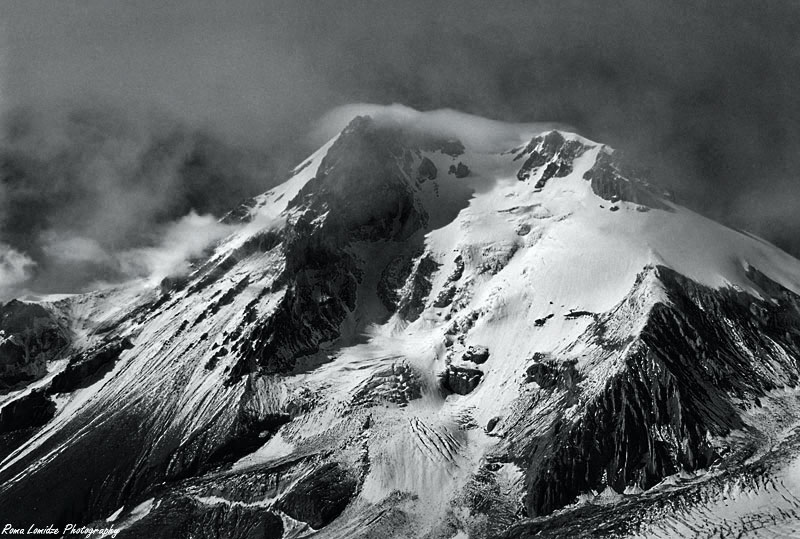
PHOTOGRAPHY: Mount. Kazbek (5068m), Georgia - By Roma Lomidze

Mount. Kazbek (5068m), Georgia

Chaukhi, Georgia

Mount. Kazbek (5068m), Georgia

Gegregi Glacier, 4800m, Near Kazbegi, Georgia

Photos by Roma Lomidze (Alpinist, Photographer, Doctor...)

Thursday, April 24, 2008

CLIMBING ADVENTURE: North Caucasus mountains on Russian-Georgian border.

ON THE RUSSIAN-GEORGIAN BORDER (AP) -- Tears welled in my eyes twice while hiking some of the most beautiful landscapes on the planet - once in mid-retch gag and once in awe-struck wonder.
They were unexpected bookends for a journey that only vaguely resembled the trip I planned for myself and my hiking partner Ben Yeomans. But that's how adventures often happen in Russia -- unexpectedly, with wonder, bewilderment - and occasionally even nausea. more >>>


If You Go...

TIPS: Russia's North Caucasus is a volatile, corrupt and mind-boggling place, a mix of mindsets that is one part holdover Soviet bureaucracy, one part clan-driven, xenophobic distrust, one part anti-terrorist police policies. The rewards are immense if you have a thick skin, willingness to grease a palm or two, and the patience to weather capricious bureaucracy.

TIMING: For trekking or hiking, September is the best time to go, after the crowds have gone and the weather is cooler. July and August are peak hiking and climbing months. Be prepared for long lines of tourists if you are climbing Mount Elbrus. For skiing, snowboarding or ice climbing, late winter from February on is ideal.

VISAS: Most foreigners will need a visa, obtained well in advance, to enter Russia, and will need to register with authorities upon arrival and have permits for visiting Mount Elbrus, the park and border area. You may want to consult with a travel agent experienced in Russian travel.

GETTING THERE: Most routes involve flying to Moscow's Sheremyetevo or Domodedevo airports; then to Mineralniye Vodi, the city nearest Elbrus; then a three-hour drive south to the Baksan River, the jumping off point for Elbrus.

FOR MORE INFORMATION:
* Mount Elbrus & Caucasus English-language Web site: http://www.elbrus.net/home.htm
* Elbrus National Park administrative offices, ul. Lesnaya, 2 Elbrus Kabardino-Balkariya, phone 011-7-(8)866-387-8141
* Guide services based in Russia: Elbrus Navigator,
011-7-866-387-1424 or navi5642@yandex.ru or
* Go-Elbrus Terskol, 011-7-866-387-1335 or http://www.go-elbrus.com.
* Travel agency based in Ireland with experience in travel to Elbrus region:

Monday, April 21, 2008

CLIMBING: Local climber heads to Caucasus Mountains

By Dick Dorworth

Idaho Mountain Express , April 18: Tyler Jones is 25 years old and was born in Sun Valley and graduated from Wood River High School. He was one of those young men who knew what he wanted to do in life at an early age.
When he was 14 years old he announced to a high school class discussing life goals that he wanted to be a mountain climbing guide. He has followed that intention and passion with unerring intensity. Today the 6-foot-1-inch, 175-pound Jones is a guide for Rainier Mountaineering Inc., one of the most respected climbing guide services in America.
Jones' mother, Sharon Pyle, and step-father, Tom Pyle, work for Atkinsons' in Ketchum. His father, Bill Jones, works for Sun Valley Co. Tyler's resume reads in part, "In the last few winters he has been mostly unemployed, out climbing and skiing in western North America, his springs usually spent working and climbing in the Alaska Range, and the past handful of summers he's been guiding up and down Mt. Rainier. His fall is filled with little work, lots of sun and rock climbing.
"In the course of his guiding career he has reached the summit of Mt. Rainier 61 times. He has also been to the top of Mt. McKinley, the highest peak in North America, four times, once as a solo effort. Among his other mountaineering alpine climbs are ascents of Alaska's Mt. Hunter, and Mt. Alberta, Mt. Robson and Mt. Edith Cavell in Canada. And in May, Jones will be part of a trio of American climbers, all of them RMI guides, going to the Caucasus Mountains of the Republic of Georgia, more specifically to the Svaneti region near the village of Ushguli. At 2,200 meters Ushguli is the highest village in Europe and is inhabited by about 200 people.
The expedition is headed by fellow RMI guide Jason Thompson of Bozeman, Mont., who in winter is a professional ski patrolman at Big Sky ski resort. The other member of the group will be Seth Waterfall who, in addition to working as a guide, is a member of the Crystal Mountain, Wash., ski patrol.
Jones and partners will explore this little-known part of the Caucasus with the goal of climbing the 17,060-foot-tall Mount Shkhara. There is very little information available about the climbing and skiing history of this area, but the expedition intends to explore the South Face of Shkhara. From the few photos they have been able to acquire of this face, it appears to rise some 8,000 feet above the valley floor and is split by a massive couloir. They hope to climb and then ski down this couloir.
Jones and his expedition mates believe that the couloir has never been skied, and their expedition overview indicates it could also be a first ascent. As well, the overview states, "While climbing/skiing the couloir is our main objective, this project is about exploring the ski mountaineering possibilities in the range and discovering the Svan people for ourselves."
Since the dissolution of the Soviet Union there has been a certain amount of turmoil and political unrest in Georgia, and travelers have not been permitted to cross the border between Russia and Georgia, though, according to Jones, the border opened up a couple of weeks ago.
Still, to avoid any complications at the border, the group will fly directly from Amsterdam, Holland, to Tbilisi, the capital of Georgia, on May 16. They hope to reach Ushguli sometime between May 18 and 22, depending on travel arrangements.
The expedition is working with the newly formed Svaneti Mountaineering Tourism Center. The center was formed as a local response to the disorder in post-Soviet Georgia, which has deterred interest in traveling to Georgia. The center is part of a movement to change the "current situation of unrest as well as the outlook viewed by potential tourists." The area, according to the expedition overview, has been branded as unsafe, and it contains one side of a major mountain range to be explored.
Jones and mates intend to do a little exploring, a little climbing and a little skiing, and, in the process, "encompass a significant amount of human interaction," including a stay with a host family in Ushguli arranged by the mountaineering center.
The expedition has been awarded a Hans Saari Memorial Fund grant to help pay expenses. Saari, a popular and talented Bozeman ski mountaineer, was killed in a fall in Chamonix, France, several years ago. (Another local, Sara Lundy, received an education scholarship from the Saari Fund to help her participate in the American Mountain Guides Association's ski guide course.)

Wednesday, September 12, 2007

PHOTOGRAPHY:

Ushba - in the Caucasian Mountains of Georgia


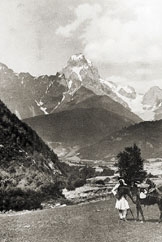
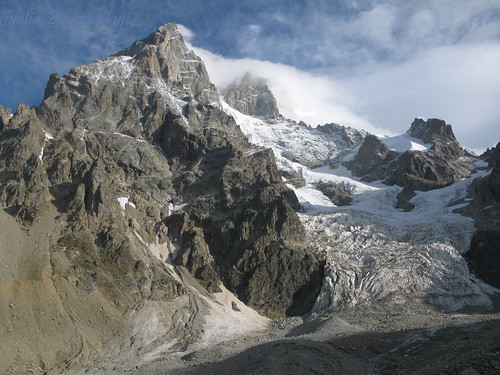
Ushba is one of the most notable peaks of the Caucasus Mountains. It is located in the Svaneti region of Georgia, just south of the border with the Kabardino-Balkaria region of Russia. Although it does not rank in the 10 highest peaks of the range, Ushba is known as the "Matterhorn of the Caucasus" for its picturesque, spire-shaped double summit. Due to its steep profile and unstable weather[citation needed], Ushba is considered by many climbers as the most difficult ascent in the Caucasus. A high number of climbing fatalities occur each year.[citation needed]

Ushba's south summit is slightly higher than its north summit, which has an elevation of 4,690 m (15,387 ft). The north summit was first climbed in 1888 by John Garford Cokklin and Ulrich Almer, while the south summit saw its first ascent in 1903 by a German-Swiss-Austrian expedition led by B. Rickmer-Rickmers.[1]

Ushba's north summit is more accessible than the south summit: the standard route, the Northeast Ridge, ascends from the Russian side of the range to a high plateau and thence to the summit. (Hence a summit ascent on this route technically involves crossing the border.)