Showing posts with label Dato Rostomashvili. Show all posts

Tuesday, November 11, 2008

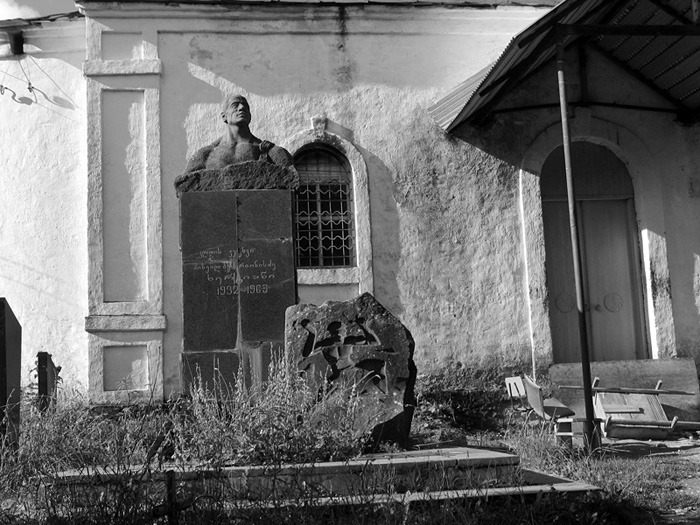
PHOTO: Grave of Misha Khergiani. Von Dato Rostomashvili


Chhumlian Khergiani was born March 23 1932 in Mestia. His father Vissarion climbed successfully in Caucasus, but the first steps in mountain climbing Chhumlian made under the guidance of his uncle Maxim Gvarliani. First accent of Khergiani the young was solo to Mt. Banguryan not far from Mestia. He was 13.
Later Chhumlian went to learn mount climbing to opposite side of Mane Caucasus Ridge in RUSSIA. From that time he became Misha Khergiani, because his name was too difficult for Russians.
After graduating of guide school Misha began to work as instructor in Russian alpine bases. At the same time he made accents for improving of his sports qualification. Soon he became strong leader of young Georgian alpine team.

The most important accents of Misha Khergiani:
1955 Mt.Communism (7495)
1956 Mt.Tyutyu Bashi, North Face
1957 Mt.Dongooz-Oroon (diretissima)
1962 Mt.Communism (7495)
1964 Mt.Ushba North, N-E wall
1967 Mt.Gran Caputsyn, E wall (Bonatti) Mt.Pti Dru, W wall Mt.Gran Joras (Valker)
1969 Mt. Torre Venecia Mt.Bancon

In 1960 Queen Elisabeth II rewarded to him the title of Par of England. Misha was very kind and resounding man so he took a part in every resquire action if he was there. Many years Misha Khergiani was a Champion of the Soviet Union in rock climbing. In Great Britain he was called «Rock Tiger».
On July 4 1969 Misha Khergiani fell down from the rock wall Su-Alto in Italian Dolomites on account of stone fall during his accent with Vyatscheslav Onischenko. Misha was born in mountains and he lived brightly all his short life in mountains. He died in mountains too.
The house which Misha has built in Mestia for his family is his memorial museum now.

Tuesday, August 26, 2008

PHOTO-BLOGs: The Reinvention of Terry Miller & Kill Bill Wedding

A friend from Georgia - Dato Rostomashvili - sent me this link to a photo blog today. It is a great work. More can you find also in Annas photo blog. She traveled together with Uwe in Georgia ...

slideshow by Uwe Schober >>>

uwe schober
documentary photographer
(e) rupertbeagle@mac.com
(w) www.rupertbeagle.com
(b) http://terry-miller.blogspot.com


Links:
terry-miller.blogspot.com
annavonstackelberg.blogspot.com

Tuesday, August 19, 2008
Arriving in Tbilisi...


Tuesday, August 19, 2008 A UN camp for displaced people in Tbilisi


Tuesday, August 19, 2008
Small acts of defiance...


Wednesday, August 20, 2008
Tbilisi today


Thursday, August 21, 2008
To Kaspi, Gori and the Ateni valley...


Monday, August 25, 2008
Back to Gori
Today I went back to Gori (incidentally with Anna, a photojournalism student at LCC, her Georgian husband and a close friend of theirs) to see what the situation is like after the Russian ‘withdrawal’…


Tuesday, August 26, 2008 Putting faces to IDPs


Thursday, 14 August 2008
Kill Bill Wedding

Monday, March 17, 2008

PHOTOGRAPHY: Trolley in Gori

Uploaded on March 17, 2008 by Dato Rostomashvili

Republic of Georgia, Town Gori (hometown of Joseph Stalin)
Trolley is an electric bus powered by two overhead wires, from which it draws electricity using two trolley poles. This one is more than 50 Years old.

Wednesday, March 05, 2008

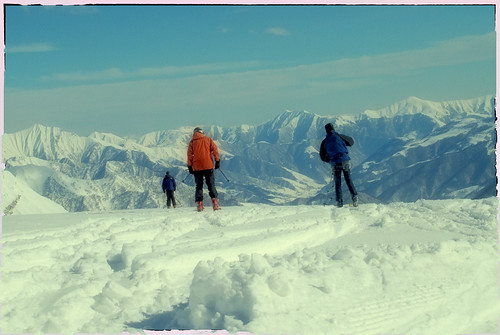
TRAVEL: Skiing in Georgia: Bakuriani and Gudauri - Europe’s best kept secret

By Tamar Khurtsia

Georgian Business Week, March 3: While world’s various ski slopes are already running on snow and ice, local and foreign holidaymakers keep flocking to Georgia’s Gudauri and Bakuriani resorts. It takes about two hours to reach either from the capital, Tbilisi.
In January, when the season was in full swing, 9,000 tourists visited the two resorts combined, meaning that Bakuriani saw 40% more visitors than at that time last year and Gudauri saw 30% more, according to the Department of Statistics. Sopho Mdinaradze, 23, an amateur skier, says Gudauri and Bakuriani “are paradise” for ski-lovers. “Last weekend the weather was excellent and all three chairlifts worked in Gudauri. It was great!”


Gudauri on March 4, 2008 by Dato Rostomashvili

Gudauri in the Greater Caucasus and Bakuriani in the Lesser Caucasus are valuable resorts for Georgia’s tourism industry. During Soviet times Bakuriani was a very popular winter destination, hosting Soviet competitions. Situated 29 km from Borjomi on the northern slope of the Trialeti Range, Bakuriani is 1,700-2,000 metres above sea level. Here a blanket of snow covers the slopes for 4-5 months. However, the resort remains attractive in summer as well, due to its wonderful nature and curative climate. Doctors treating tuberculosis and lung disease sufferers frequently advise them to holiday in Bakuriani, as it is covered with coniferous trees, particularly spruce. “Often it [Bakuriani] gives a better effect than costly medicines,” says therapeutist Tamar Badridze.
Since the collapse of the Soviet Union Gudauri has also emerged to compete with Bakuriani. It is located in the Stepantsminda District, along the Georgian Military Highway near the Cross Pass, 2,196 metres above sea level. For experienced skiers Gudauri provides slalom, giant slalom, super g, speed skiing and heliskiing - one of its most impressive offerings.
Presently both Bakurani and Gudauri are rapidly developing sites with mushrooming lifts and hotels. In Gudauri the first, lower lift station is 1,990 metres above sea level and the top station, called Kudebi (“Tails”) is at 3,007 metres. At Bakuriani, the highest point used for skiing is Mount Kokhta (“Smart”), around 2,200 metres above sea level. Eleven ski runs are currently in use in Bakuriani, together with ropeways, ski-jumps, ski-tracks, cross-country skiing courses, horse-riding facilities and snowmobiles. An average price for renting skis is 5 GEL per hour.
“Gudauri and Bakuriani are terrific, but foreign people have little or no information about them, compared to European resorts,” Sopho says. Statistics appear to confirm this. This year, the Department of Statistics says, only 3% of visitors to Bakuriani came from outside Georgia. 28% of these were Russian, 24% Latvian, another 24% Armenian, 18% from Great Britain and 6% came from Ukraine. “We try to attract foreign tourists to Bakuriani and Gudauri and are developing a promotional campaign. As a result we had many tourists from Great Britain this year,” commented Beka Jakheli, the head of Tourism Department.
The statistics show another interesting tendency. The overwhelming majority of holidaymakers - 97% - organised their stay at Bakuriani or Gudauri on their own. Only 3% asked for help from travel agencies. This choice, they explain, gains them more affordable prices and more importantly, more assurance of finding a proper place to stay. “Last year my friends and I reserved rooms through a Tbilisi-based travel agency and you know what happened? - When we arrived we found the hotel closed. It was only due to open two days later. It was New Year’s Eve and we were just lucky enough to find a home on our own. No hotel room was available,” Nino, 29, complained. But the mix-up led Nino and her companions to pay less for their cheery time in the resort since prices in Bakuriani start from 90 USD for a hotel room, while at family hotels one can find a bedroom for 30 GEL.
However, Nino then had to undergo the discomfort of “handling the travel agency guys” to claim her money back. “I will never trust travel agencies, at least until I forget this incident,” she says. But concerning conditions in the resort, she notes “things are getting better. Every year things are improving in Bakuriani but still there are no entertainment centres, clubs, bars, cafes, fast food outlets and others.” Most visitors seem to agree with her. A survey conducted by the Tourism Department suggests that 55% of the tourists want to see improved fast food service and quality. 17% want better infrastructure and apartments.
“The survey showed many aspects to which we have to pay particular attention for next season. We believe Georgia’s winter resorts will meet European standards and attract more foreigners,” Jakheli says.

Skiing in the Caucasus / View as slideshow >>>
Saturday, February 09, 2008

PHOTOGRAPHY: Georgia, Didgori, Farmers House


Uploaded on January 16, 2007 by Dato Rostomashvili

Tuesday, January 08, 2008

PHOTOGRAPHY: Snow In Tbilisi

Uploaded on January 7, 2008 by Dato Rostomashvili

Tuesday, December 25, 2007

CELEBRATION: MERRY CHRISTMAS !!!

Catholics in Tbilisi made the christmas celebration

Uploaded on December 24, 2007 by Dato Rostomashvili

Sunday, December 16, 2007

PHOTO-REPORTAGE: STUDIOARCI celebratimg Oscar Niemeyer’s 100 years birthday.


Arci and Cid are celebrating, famous Brazilian architect’s Oscar Niemeyer’s 100 years birthday.

Saturday, November 24, 2007

FERNSEHEN: Winter im Kaukasus

Eine Reise ins Land der Türme - Ein Film von Stefan Tolz

MDR FERNSEHEN, So, 25.11., 10:15 Uhr

Eingeschlossen von schneebedeckten Fünftausendern wirkt das kleine kaukasische Dorf Uschguli wie eine einsame uneinnehmbare Festung. Viele der Häuser besitzen einen eigenen Wehrturm, oft jahrhundertealt, der den Bewohnern einst Schutz bot vor Blutrache bei Sippenfehden oder anderen Angriffen. Uschguli gehört zur georgischen Hochgebirgsregion Swanetien, einer Gegend, die im Winter von der Außenwelt vollständig abgeschlossen ist. Der Film zeigt den Alltag der letzten Dorfbewohner, die trotz der harten Lebensbedingungen ihre Heimat nicht verlassen wollen.
Zu ihnen gehören der Bergbauer Roland Tschelidze und der Mechaniker und Traktorfahrer Bido Tschkadua. Ihre Brüder sind längst in die Städte abgewandert, und auch ihre Söhne zieht es ins Tal. Roland, der Bergbauer, will nicht weg wegen des Ansehens, das seine Familie genießt - die Tschelidzes stellen sogar den Bürgermeister. Bido Tschkadua, dem Mechaniker, fehlt der innere Antrieb. Der Witwer, der den Tod seiner Frau durch einen Unfall sogar selbst verschuldet hat, möchte wegen ihres Grabes das Bergdorf nicht verlassen.
Das Räumfahrzeug, mit dem er früher zur Sowjetzeit den Weg zum Dorf frei machte, rostet in der Nähe seines Hauses vor sich hin. Benzin oder gar Ersatzteile sind nicht zu haben. Der Film beschreibt die Tage rund um das orthodoxe Weihnachts- und Neujahrsfest in Uschguli. Für die Dorfbewohner ist die Festtagsstimmung getrübt, denn ihr Bürgermeister wurde auf der Heimreise von der Provinzhauptstadt ausgeraubt. Er hatte die Löhne und Pensionen für die nächsten Monate dabei - nun ist das Geld weg. Der Zuschauer erhält Einblicke in eine Welt, die nicht nur fern und fremd ist, sondern so abgeschieden, dass Leben in ihr stets auch Überleben heißt.

Quelle: MDR >>>


Uploaded on September 24, 2007 by Dato Rostomashvili

Photos from Svaneti or Svanetia - Photos, Life & Stories: slideshow >>>

Friday, November 23, 2007

PHOTOGRAPHY: Photos from Georgia (Magnum Photos)


Nino Rhamishvili, the grand dame of the georgian ballet; photo: Thomas Dvorzak

Dato Rostomashvili posted on his blog about photography some awesome pictures from famous photographers from the legendary agency MAGNUM PHOTOS ...

www.magnumphotos.com

Thursday, November 08, 2007

PHOTOREPORTAGE:

7 November Tbilisi Demonstration

Girl running from Gas and Water Attak

Georgian police unleashed tear gas and water cannon on protestors calling for the resignation of President Mikhail Saakashvili. The clashes began at around 8 a.m. local time when police moved in to disperse around 100 protestors, including 47 hunger strikers, who had been camped outside the parliament building in the capital Tbilisi for the past six-days.

A further 3,000 had gathered in a show of support as demonstrators fled the gas, security forces in riot gear chased them through the streets beating them with batons. It is the first time the government had used force against the protestors, who accuse Saakashvilli of economic mismanagment, corruption and authoritarianism.

Demonstrants returning gas tubes Back to Police!


Police throwing Gas tubes

2 November: Four years after Georgia's so-called Rose Revolution, thousands of protesters are demanding the resignation of President Mikhail Saakashvili. They gathered outside parliament in Tbilisi in a defiant challenge to the pro-Western leader. The US-educated lawyer was swept to power promising democracy and an end to corruption. He wants to take Georgia into NATO and the European Union, and frequently flaunts his democratic credentials.But critics say that is a facade that marks an authoritarian streak and an intolerance of dissent. Opponents also want early parliamentary elections, and Presidential powers to be limited.Georgia's fractured opposition united in September when one of Saakashvili's former close colleagues was arrested. Ex-Defence Minister Irakly Okruashvili had, just days earlier, announced he was creating a rival political party. He had also levelled criminal accusations against the President.

7 November: Georgian police unleashed tear gas and water cannon on protestors calling for the resignation of President Mikhail Saakashvili. The clashes began at around 8 a.m. local time when police moved in to disperse around 100 protestors, including 47 hunger strikers, who had been camped outside the parliament building in the capital Tbilisi for the past six-days.A further 3,000 had gathered in a show of support as demonstrators fled the gas, security forces in riot gear chased them through the streets beating them with batons. It is the first time the government had used force against the protestors, who accuse Saakashvilli of economic mismanagment, corruption and authoritarianism.

November Disorder in Tbilisi (Set) by Dato Rostomashvili

POTOGALLERY by Alex Kedelashvili

Saturday, November 03, 2007

PHOTOREPORTAGE:

Demonstration in Tbilisi - 02.11.2007

by Dato Rostomashvili

Four years after Georgia's so-called Rose Revolution, thousands of protesters are demanding the resignation of President Mikhail Saakashvili. They gathered outside parliament in Tbilisi in a defiant challenge to the pro-Western leader. The US-educated lawyer was swept to power promising democracy and an end to corruption. He wants to take Georgia into NATO and the European Union, and frequently flaunts his democratic credentials.

But critics say that is a facade that marks an authoritarian streak and an intolerance of dissent. Opponents also want early parliamentary elections, and Presidential powers to be limited.

Georgia's fractured opposition united in September when one of Saakashvili's former close colleagues was arrested. Ex-Defence Minister Irakly Okruashvili had, just days earlier, announced he was creating a rival political party. He had also levelled criminal accusations against the President.


Photo and Text on November 2, 2007 by Dato Rostomashvili

Thursday, August 23, 2007

PHOTOGRAPHY: Racha, village Shqmeri (1720m). Text & Photos on August 16, 2007 by Dato Rostomashvili


Valiko, 98 Years old


Text & Photos on August 16, 2007 by Dato Rostomashvili
Racha-Lechkhumi and Kvemo Svaneti (Georgian: რაჭა-ლეჩხუმი და ქვემო სვანეთი Račha-Lečxumi da Kvemo Svaneti) is a region in northwestern Georgia which includes the historical provinces of Racha, Lechkhumi and Kvemo Svaneti (i.e., Lower Svaneti). It covers an area of 4,954 km² and has a population of 50,969 (2002 census). It is the most sparsely populated region in the country. The capital is Ambrolauri.
 Racha 12 photos

Monday, August 20, 2007

NEW BLOG:

Dato Rostomashvili
Random articles about photography and photographers Updated Weekly

www.photobarry.blogspot.com

Monday, August 13, 2007

STUDY & CULTURE: Svaneti and Its Inhabitants. By Roland Topchishvili

(Ethno-historical Studies)

The Georgian people are one of those, who have maintained selfhood among old nations up to date. The Georgian state, which was formed on the verge of IV-III centuries B.C., besides the Georgian population, included non-Georgians as well. At the same time, according to the Georgian historical sources, the non-Georgian population was thought as a part of the Georgian nation. According to the mentioned historical sources, the linguistic moment did not matter. Georgian-speaking Megrels, Svans and Dvals were considered as Georgians. Megrels and Svans consider themselves Georgians even today and in their opinion, they speak old Georgian language. As for Dvalis, it is difficult to say anything about their language today. As scientists suppose (taking into consideration onomastics data), the Dval language was one of the Georgian languages which was placed between Svan and Megrelian and moreover, it had the common with the latter (R. Topchishvili, Issues of Settling Ossethians in Georgia and Ethno-history of Shida (Inner) Kartli, Tbilisi, 1997, pp. 6-72; The same author, Ethno-historical Etudes, Tbilisi, 2005, pp.169-189). Tsova-tushi people have their own spoken language (Batsburi). They think that they are Georgians, too. Mentioned languages used to be only the family spoken languages for centuries and from the sociolinguistic point of view, they are equal to the Georgian language dialects. The state, official, church and literary language was only Georgian in Svaneti as well as in Samegrelo and Dvaleti.

Thus the Georgian nation has always been a union of people speaking several languages. The fact that the language is not the basic determiner of ethnos can be proved by several analogies from the ethnic history of the world people. For example, lower German speech is different from literary German – "plat-Deutch". Mordovians speak two languages (Erzian and Moksha). It is known that during his visit in Moscow, when Mao-Dze-Dun made his speech at M. Lomonosov University, many of Chinese students listened to the text with the help of an interpreter.

During the whole long history of Georgia, Svaneti has been its historical-geographical and historical-ethnographical part. It had the different status both in the unified Georgian state and West Georgia (first it was the part of Egrisi or Colkheti, then Abkhazia). In comparison to other historical-ethnographical parts of Georgia, as mentioned above, Svaneti has been distinguished by having its own family spoken language (one of the Georgian languages). At the same time, the inhabitants of Svaneti have always considered themselves as the inseparable part of the Georgian ethnos. In this case, language was not a precondition for them to realize themselves as different ethnos. Even today the Svans think that the old Georgian lexical units have been maintained by the Svan language. In this view, the question asked by a six-year-old girl is very remarkable: "What is for water in Svanuri?" And the answer was followed by her: "lits". In Georgian "litslitsi" of water (a glass full of water) is the same as Svan or old Georgian word "lits".

full pdf-document >>>

Monday, July 16, 2007

PHOTOGRAPHY: Mestia In Svaneti


Uploaded on July 15, 2007 by Dato Rostomashvili
Mestia (Georgian: მესტია) is a highland townlet in northwest Georgia, at an elevation of 1.500 meters in the Caucasus Mountains.
According to the current administrative subdivision of Georgia, Mestia is located in the Samegrelo-Zemo Svaneti region (mkhare), some 128 km northeast of the regional capital of Zugdidi. Mestia and the adjoining 132 villages form Mestia District (raioni). Its area is 3,044 km²; population – 14,248 (2,600 in the town itself; 2002 Georgia census). The population is mostly Svans, a cultural subgroup of the Georgians.

Historically and ethnographically, Mestia has always been regarded a chief community of Zemo, or Upper Svaneti province. It was formerly known as Seti (სეთი). Despite its small size, the townlet was an important centre of Georgian culture for centuries and contains a number of medieval monuments - churches and forts - included in a list of UNESCO World Heritage Sites. In 1968, it was granted a status of a townlet (Georgian: daba).The townlet is dominated by stone defensive towers of a type seen throughout Svaneti ("Svan towers").

Unique icons and manuscripts are kept in Mestia Historical-Ethnographic Museum. Mestia is also a center of mountaineer tourism and alpinism.

Friday, January 26, 2007

Tbilisi view from "kus tba"(Turtle Lake)

Uploaded on January 25, 2007 by Dato Rostomashvili

Wednesday, January 24, 2007

Telavi In The Winter

Monday, December 18, 2006

PHOTOGRAPHY:
Tbilisi - Ende November 2006

Uploaded on November 27, 2006 by Dato Rostomashvili