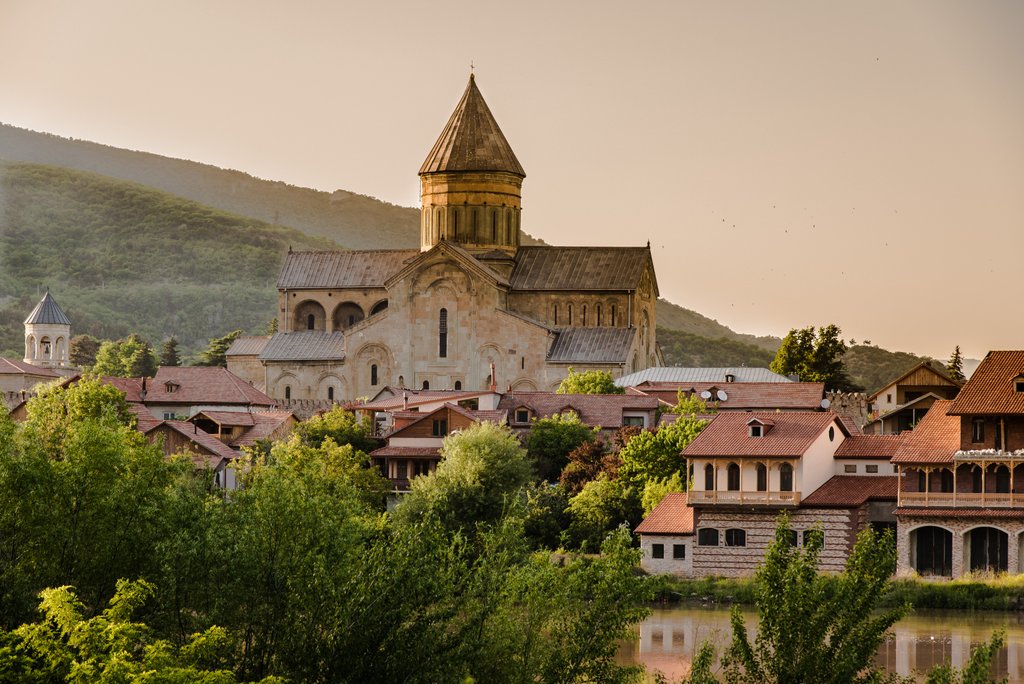
Showing posts with label Military Highway. Show all posts

Wednesday, November 16, 2011

UMWELT: Schwerpunkt - Umweltforschung in Georgien (geb.uni-giessen.de)

Von Ina Keggenhoff, Tatjana Keller, Mariam Elizbarashvili, Ramin Gobejishvili und Lorenz King (in: Spiegel der Forschung · Nr. 2/2011)

Anzahl und Ausmaß von Hochwasserereignissen und Murgängen in der Region Kazbegi entlang der historisch wichtigen Heerstraße von der georgischen Hauptstadt Tiflis über den Großen Kaukasus nach Russland sind in der jüngsten Vergangenheit stark angestiegen. Zudem sind im Zuge des Baus der Pipeline Baku-Tiflis-Ceyhan (BTC -Pipeline) auch in der Region Bakuriani des Kleinen Kaukasus vermehrt Hanginstabilitäten durch großflächige Eingriffe in die Landschaft aufgetreten. Inwieweit der Klimawandel und Starkregenereignisse Auslöser von häufigeren Massenbewegungen und Hochwasserereignissen sind, das wird im Rahmen der Teilprojekte B1 "Klimawandel" und B2 "Massenbewegungen" des Forschungsprojektes amies untersucht.


Der ganze Artikel (pdf) >>>

KONTAKT
Prof. Dr. Lorenz King
Justus-Liebig-Universität
Institut für Geographie
Senckenbergstraße 1
35390 Gießen
Telefon: 0641 99-36205
Lorenz.King@geogr.uni-giessen.de

+++

Der neue „Spiegel der Forschung“ ist gerade erschienen – diesmal mit dem Schwerpunktthema „Umweltforschung in Georgien“. Außerdem enthält das Wissenschaftsmagazin der Justus-Liebig-Universität Gießen noch einen Bericht über Studien zu Sozialen Ängsten aus der Psychologie, einen Artikel aus der Evangelischen Theologie zum Thema „Luther und der Islam“ und eine ausführliche Beschreibung der jüngsten Lehr- und Forschungsgrabung der Klassischen Archäologie auf Zypern in Zusammenarbeit mit belgischen Archäologen von der „Vrije Universiteit Brussels“.

Das Heft 2-2011 des „Spiegels der Forschung“ liegt im Hauptgebäude der Universität (Ludwigstraße 23) aus und in den nächsten Tagen auch beim Informationsschalter der Universitätsbibliothek (Otto-Behaghel-Straße 8) und in der Bereichsbibliothek im Philosophikum II, oder es kann bei der Pressestelle der Universität kostenlos angefordert werden (pressestelle@uni-giessen.de). Auch im Netz ist diese Ausgabe bereits in der Elektronischen Bibliothek der Universität Gießen unter www.uni-giessen.de/spiegel-der-forschung zu finden.

Georgien ist seit der Erklärung seiner Unabhängigkeit im Jahr 1991 dramatischen Transformationsprozessen ausgesetzt. Diese Prozesse führten zu gesellschaftlichen Veränderungen, wie Verarmung gefolgt von Migration, und haben auch erhebliche Umweltprobleme und einen Rückgang der Biodiversität verursacht. Der Klimawandel hat die Umweltprobleme noch verstärkt. Interdisziplinäre Forschungen mit dem Ziel, die Lebensqualität der Bewohner und eine nachhaltige Landnutzung in diesem Teil der Erde zu fördern, sind daher dringend erforderlich. In dem dreijährigen Forschungsprojekt "amies" (analysing multiple interrelationships between environmental and societal processes in mountainous regions of Georgia) forschen in zwei Regionen des Großen und des Kleinen Kaukasus Wissenschaftlerinnen und Wissenschaftler der Universität Gießen gemeinsam mit Kollegen aus Georgien. Als Ergebnis sollen Empfehlungen für staatliche und nichtstaatliche Organisationen in Georgien erarbeitet werden.

Unter dem Titel „Gold schürfen – Gift ernten“ geht es in dem Artikel aus der Bodenkunde um die Belastung von Böden mit Schwermetallen und deren Auswirkungen auf die Nahrungskette im Mashavera-Tal im Südosten von Georgien. Die fruchtbaren Böden der Region sind mit den Schwermetallen Cadmium, Kupfer und Zink belastet. Diese stammen aus dem Abraum und Abwasser eines Gold- und Kupfertagebaus im Oberlauf des Mashavera.

Soziale Ängste gehen häufig einher mit Abhängigkeitserkrankungen, darunter vor allem Alkoholismus. In früheren Studien der Psychologen konnte bereits gezeigt werden, dass emotionale Gesichter unter Alkoholgabe als weniger bedrohlich wahrgenommen werden. Dies könnte ein Grund dafür sein, warum Personen mit Sozialer Phobie oft angeben, Alkohol zur Angstreduktion einzusetzen. In der aktuellen Studie mit Personen mit Sozialer Phobie wird die Wirkung von Alkohol auf die Informationsverarbeitung von sozialen Reizen untersucht.

Zwischen Christen und Muslimen hat es seit der Entstehung des Islam immer wieder Versuche gegeben, sich über Dialoge einander anzunähern. Auch in der Reformationszeit setzte man sich mit dem Islam, der immer stärker ins Abendland vordrang, in Gestalt „des Türken“ auseinander. Luthers Türkenschriften von 1529 und 1530 zeigen allerdings: Ihm ging es – im unmittelbaren Kontext der Bedrohung Wiens durch die Osmanen – keineswegs um einen Dialog oder gar um ein besseres Verständnis des Islam. Die Zielscheibe Luthers ist eindeutig der Papst und weniger „der Türke“.

Nach längerer Unterbrechung gibt es seit diesem Jahr wieder eine archäologische Forschungsgrabung an der Justus-Liebig-Universität Gießen, die auch das praxisbezogene Lehrangebot der Klassischen Archäologie erweitert. Im April 2011 wurde bei einer mehrwöchigen Kampagne in Zusammenarbeit mit belgischen Archäologen von der „Vrije Universiteit Brussels“ ein bedeutender Handelsplatz der späten Bronzezeit an der Südküste Zyperns untersucht: „Hala Sultan Tekke“. Die Ergebnisse dieser Untersuchung sind über den lokalen Befund hinaus von Bedeutung und bilden damit den Grundstein für künftige Forschungen.

Zu guter Letzt dann: „Lernen durch Lehren: Studis spielen den Prof“. Anfang November wurde die Hermann-Hoffmann-Akademie für junge Forscher an der Universität Gießen eingerichtet. Hier können einerseits Schülerinnen und Schüler unter Anleitung von Studierenden aktiv im Bereich Biologie forschen. Lernen durch Lehren heißt andererseits die Devise für Studierende der Lehramtsfächer, die hier didaktisch und methodisch innovative Konzepte der pädagogischen Arbeit erproben können.


Quelle: www.idw-online.de

Mehr zu Georgien:

Spiegel der Forschung 28 (2011) Nr. 2, S. 04-15
Waldhardt, Rainer ; Abdaladze, Otar ; Otte, Annette ; Simmering, Dietmar

Schwerpunkt - Umweltforschung in Georgien : Landschaftswandel im Kaukasus Georgiens. Interdisziplinäre Forschung für eine nachhaltigere Zukunft

Spiegel der Forschung 28 (2011) Nr. 2, S. 16-23
Keggenhoff, Ina ; Keller, Tatjana ; Elizbarashvili, Mariam ; Gobejishvili, Ramin ; King, Lorenz

Schwerpunkt - Umweltforschung in Georgien : Naturkatastrophen durch Klimawandel im Kaukasus? Hochwasser und Hanginstabilitäten in Georgien immer häufiger

Spiegel der Forschung 28 (2011) Nr. 2, S. 24-31
Otte, Annette ; Akhaltkatsi, Maia ; Nakhutsrishvili, George ; Simmering, Dietmar ; Waldhardt, Rainer

Schwerpunkt - Umweltforschung in Georgien : Phytodiversität in Georgien : Die Bedeutung von Standort und Landnutzung im Großen und Kleinen Kaukasus

Spiegel der Forschung 28 (2011) Nr. 2, S. 32-41
Volz, Jennifer ; Chkoidze, Nino ; Leonhäuser, Ingrid-Ute

Schwerpunkt - Umweltforschung in Georgien : Landwirtschaftliche Transformation in Georgien

Spiegel der Forschung 28 (2011) Nr. 2, S. 42-52
Felix-Henningsen, Peter ; Narimandize-King, Eliso ; Steffens, Diedrich ; Schnell, Sylvia ; Hanauer, Thomas ; Jung, Stephan ; Kaplan, Hülya

Schwerpunkt - Umweltforschung in Georgien : Gold Schürfen – Gift ernten. Bergbaubedingte Schwermetallbelastung von Böden im Südosten von Georgien

Saturday, February 21, 2009

STATEMENT: Weathering the Storm: A Commentary on Armenia and the Economics of Defense (armenianow.com)

In a region that has only recently witnessed a war between Russia and Georgia, defense and security issues remain priority concerns. But over the past few years, the increase in defense spending among the countries of the region has raised new concerns over the implications from such an arms race.

In addition, there is a related worry over the long-term impact from such a militarization of the region, especially for Armenia, as Azerbaijan has been using its oil wealth to fuel ever-larger defense budgets. Most worrying for Armenia, the constant drone of Azerbaijan’s militant rhetoric to “solve” the Nagorno Karabagh conflict by force has been bolstered by several years of billion-dollar-plus defense budgets. That combination of militant rhetoric and military spending now poses one of the most serious threats to regional security and stability.

[...]


The Risk of Hostilities & the “Hostilities of Risk”

The second factor of defense economics is the relationship between the risk of hostilities and the “hostilities of risk.” Notably, there is an inverse relationship between an increasing level of the risk of hostilities and an increasingly hostile level of risk, affirmed by the fact that international capital may pull out of a region once it becomes too dangerous to operate or too unstable to protect investments.

Ironically, this rather basic business maxim poses more of a threat to Azerbaijan than to Armenia. It also means that by aspiring to replace Armenia as the region’s dominant military power and threatening to retake Karabakh by force, Azerbaijan may soon face a worried group of investors who may decide that the risk outweighs the profit in Azerbaijan. And Azerbaijan is especially vulnerable to any downturn in investor confidence because of its over-reliance on foreign capital amid falling oil prices and due to a lack of industry beyond its energy sector.

Richard Giragosian is the director of the Yerevan-based Armenian Center for National and International Studies (ACNIS), and has worked as a consultant for various international organizations including the OSCE, World Bank, and regularly contributes to Jane's, RFE/RL, and Newsweek International, among other publications. Giragosian is a former professional staff member of the US Congress. "Weathering the Storm" is a weekly column exclusively for ArmeniaNow.

Sunday, August 26, 2007

PHOTOGRAPHY:

When silence took a holiday
Awaiting the masses as clouds pass by


Uploaded on August 13, 2007 by Morten Oddvik

Tsminda Sameba (Set) : A beautiful church perched on top of the Gergeti hill nearby the village of Kazbegi in the Caucausian mountain range. When we visited on a foggy and rainy Sunday in June it was a religous festival and crowds hiked up the mounain in high heels and t-shirts.It was a revalation in relgious commitment and reverence.

Georgian Military Highway (Set) : The Georgian Military Road (Военно-Грузинская дорога [Voyenno-Gruzinskaya doroga] in Russian is a historic name of the main route through the Caucasus from Georgia to Russia.It runs between Tbilisi (Georgia) and Vladikavkaz (Russia) and follows the traditional route used by invaders and traders throughout the ages. The road stretches some 208 kilometers through the Terek valley, crosses the Rocky Ridge (хребет Скалистый) in the Darial Gorge, then leads through the canyon of the Baidarka River to the mountain pass, from where it goes down to the valley of the Tetri Aragvi River and leads to Tbilisi along the right bank of the Kura (Mtkvari) River. The road was completed by the Russian military in 1799. After Georgia decided to join the Russian Empire in 1801, the Russians began improving the surfacing of the road and finished by 1863. The Georgian Military Road played an important role in the economic development of Transcaucasia.The road reaches an altitude of 2379 meters (7815 feet) as it traverses the mountains. Among the scenic attractions found along its course are Mount Kazbek, Darial Gorge, Gergeti Trinity Church, the ancient town of Mtskheta (once Georgia's capital), the Jvari Monastery of the 6th century, the medieval fortress of Ananuri and Zemo Avchala, a hydroelectric dam.The importance of the Georgian Military Highway as a through route has diminished in recent years, mainly because of delays at the border crossing between Russia and Georgia, and even, on occasions, the complete closure of that border post.

Friday, July 20, 2007

NEWS:


19 Jul 07 Caucasus Reporting Service 402

Special Report: Military Build-Up in the Caucasus

Georgia’s Big Military Spending Boost
Government says sharp rise in defence spending will professionalise army but questions are asked about why the money is being spent. By Koba Liklikadze in Tbilisi (CRS No. 402 19-Jul-07)
Armenia Concerned at Caucasus Arms Race
Could dissolution of CFE treaty herald outbreak of conflict in the Caucasus? By David Petrosian in Yerevan (CRS No. 402 19-Jul-07)
Azerbaijan Flexes Military Muscles
Calls for Baku to quit CFE treaty as it boosts defence spending. By Jasur Mamedov in Baku (CRS No. 402 19-Jul-07)


18 Jul 07 Caucasus Reporting Service 401

Karabakh Election Closely Fought
Observers say that official Karabakh Armenian candidate not assured of victory. By Ashot Beglarian in Stepanakert (CRS No. 401, 18-July-07)

Thursday, July 05, 2007

TOURISM:


Rafting within the Caucasian Mountains, Georgia, Caucasus


Uploaded on July 5, 2007 by Paata Vardanashvili

It is Adventure club "Jomardi"

Jomardi in old Georgian language means "smart and sportive" or in one word "adventurer". Rafting tours is

Mtiuleti's Aragvi: Tour duration – 1.5 h.; Start place – Pasanauri; Difficulty rate - 2-2.5; price 17 $ per prs.

Pshavi's Aragvi: Tour duration – 2.0 h.; Difficulty rate - 2-2.5; Start place – 5 km. above Magaroskari; price 20 $ per prs.

Mtkvari: Tour duration – 2 days tour; Start place – Vil. Mirashkhani; Difficulty rate - 2-3; price 60$ per prs.

In price are included – meal, guide, overnighting in tents

Tours are made with standard rafting boats (8 independent air chambers) and are leaded by qualified guides. All participants must have a swimming skills and must wear helms and life jackets (included in tour price)

Payment should be done in Georgian Lari of rate National Bank of Georgia.

for more information see: www.jomardi.ge


Comment by Paata: Strong places for rafting is in Tskheniskali, Rioni and Enguri. They are very strong rivers ...

Sunday, July 01, 2007

MILITÄR:

Neue "Amerikaner" in Russlands Hinterhof
(derStandard.at)

Wladimer Chachibaia, der Vizestabschef der georgischen Armee ist stolz auf seine Truppe "made in USA":
Die Armee wird auf dem Übungsgelände Telavi von den Amerikanern trainiert, die neuen Handbücher sind Übersetzungen aus britischen, türkischen und US-Beständen, die Armeeführung ist nach Nato-Standard umgebaut. 85 Prozent der Reformen für den Status als Nato-Beitrittskandidat seien erfüllt, heißt es im Hauptquartier in Brüssel. Während andere ihre Truppen aus dem Irak abziehen, stockt Georgien sein Kontingent auf 2000 Soldaten auf.

Unbeirrt von jeglichen geopolitischen Allianzen, Strategien und Interessen grenzt man sich militärisch von Russland ab, ist dem Artikel zu entnehmen und tut alles für den NATO-Beitritt. Selbst an den Irak-Einsätzen übt man keine Zweifel.
Während Russland in Wien nun dieser Tage eine Reform des KSE-Abrüstungsvertrags erzwingen will, hat Georgiens Regierung ein neues Rekordbudget für die Armee vorgelegt: knapp eine Million Lari, umgerechnet 420.000 Euro.

Der ganze Text: Nichts zeigt wohl besser Russlands dramatischen Machtverlust im eigenen Hinterhof als ein Besuch im Verteidigungsministerium der Republik Georgien.

Monday, June 18, 2007

PHOTOGRAPHY:


Trip along the Military Highway to Kazbegi


Saturday, May 19, 2007

PHOTOGRAPHY:
View from the Georgian Military Road
(Georgia, one of the former republics of USSR - Union of Soviet Socialist Republics,
today is independent country)

View on a Gudauri village from the Georgian Military Road

Wednesday, May 09, 2007

KULTUR:

Kaukasus: Unter Bergbauern im Tor der Völker
04.05.2007 19:09 DANIELA HAUSSMANN (Die Presse)


Eine Reise durch drei Jahrtausende entlang der „Georgischen Heerstraße“ nach Tiflis.

Mehr: HINTER 700 BERGEN. Georgien gestern, heute

Wednesday, January 25, 2006

Notes Of Climbers About The Caucasus

(Quelle: http://de.wikipedia.org/wiki/Elbrus)

Jerome DaSilva - Canada. jeromejdasilva@yahoo.com

My trip with Nikolai was excellent. It was well organized and things seemed to go as planned except for a few minor hassels at the airport. This being said I was expecting more hassels. The Caucasus region was friendlier, and appeared safer than I had expected. Accommodations in Terskol were spartan, however it was very clean, and there was lots of food. There was no hot water, only luke warm. The acclimatization hikes we did were actually quite impressive. They were merely hikes, but the scenery and views were great. We went up Elbrus by way of the gondola, and while on the mountain stayed in huts. We did not stay in the barrels, but another hut a short distance away. This was great. It was quiet, relatively clean, and had great views. We also spent a night in the silver hut (or priut). I did not like this hut as much. It was stuffy, and not as clean. It was also quite loud with other climbers getting ready to go early in the morning. I did become quite ill from the altitude, and Nikolai was very experienced with the treatment (descent, descent. descent). He took me back down to the valley for a night, and afterwards we were able to make it to the summit with no problems. I cannot say enough good things about Nikolai. He is a very strong climber and guide with a wealth of climbing experience. He is also very cautious and conscientious. His English is great and he made excellent arrangements for us in terms of drivers and accommodations. I would recommend bringing some comfort food and snacks, as the food in Terskol was healthy and plentiful but "not like home". Communication in Terskol was difficult so let your family know that they might not here from you. Overall it was a great trip that exceeded all my expectations. I felt very safe and well guided with Nikolai, and the Caucasus Mountains were beautiful. Thanks Nikolai for taking me to the top of Europe.


James Wilde (USA) <
jameswilde@web.de>
On Wednesday, April 30th, at 12:15 local time my guide Nikolai Savine and I reached the summit of Mount Elbrus (5642 meters) under blue skies and warm conditions for the area. The summit marked the second of the seven summits of the world for me and brought me great pleasure.The trip was marked with varying weather conditions. Upon arrival, fresh snow 2 feet deep in the valley had caused power outages and we had to stay in darkness and without heat in our first night. Temperatures were -20 degrees Celcius and wind was blowing to 40 kilometers per hour on our first day on the mountain. We slept most of our nights above 3700 meters (above 11,000 feet) in the barrel huts. As we were part of the first groups of the season to arrive, the huts and kitchen required "digging out" from the winter snows. The trails which were created every day in the deep snow, were covered every night by snow in the windy conditions. Unlike Kilimanjaro, we had to carryin everything ourselves.Luckily, the weather cleared on our third day, creating warmer conditions for our trek to the upper parts of the mountain. Radiation from the sun was high and the -20 degree temperatures up high (very mild for 17+K feet) were very bearable in the afternoon.On the day before our summit attempt we moved the Priutt Refuge of 11 (an old hotel which had burned down 3 years ago) where we spent the night at 4200 meters. It was from this point that we started out trek to the summit the following morning at 4 AM.The last to start and having not taken advantage of the snow cats which run up to 4700 meters, we were in for a long day. By 5:45 AM, we reached the Pashtukov Rocks where the other teams had been dropped by the snow cat taxi service. We were only 30 minutes behind the other teams at this point. In the cold, thin air at the rocks of Pashtukov, we had to put on our crampons for the ice fields and glacier areas which laid ahead.As sun broke, we were still a good two hour hike to the traverse leading us to the flat traverse to the saddle (half way poit to the top). Nikolai, having warned me several times of our fast pace, insisted on the patience required to get us to the summit. If it were not for his instruction, I believe we would have had to turn around.By 8:30 AM we reached the traverse which was not much of a respite. Nikolai yelled to me, "Mt Blanc is finished." He meant that the traditional peak of Europe which Western Europeans had recognized during the communist era was now below us. We still had 800 vertical meters to climb.Two hours from the saddle between the east and west peaks of the two-headed volcano, we sat and had a drink of lemonade and tea. Very dehydrated and tired, I finished the last drops of liquids which I had brought with me, ate a chocolate bar, and we moved on. It was at this point where we overtook many of the teams that began before us. The traverse looked so easy and the distance to the saddle was easily underestimated as was the case most of the day. Sun, ice, and the constant glare made it difficult to judge distances.At 10 AM, we finally reached the saddle, a traditional stopping place where climbers tend to sleep before making the final push to the top of Europe's highest mountain. The saddle, was littered with remnants of vomit, feces (diarrhea), urine and an old hut which did not stand the test of the harsh conditions. Most people who feel weak or suffer from the altitude tend to call this their summit though it still lies 400 meters below the peak.With a short rest, we push up the steep, icy slopes of the West peak of Elbrus. Wind and cold conditions had shaped the snow into hard, breaking wave-like shapes, allowing for good places of purchase for our crampons. It seemed that we could see the summit. However, what we saw was a false peak. After 40 minutes, we reached this false peak and saw the actual peak "only 500 distance meters away, about 1600 feet." The last 500 meters of somewhat flat walking took us almost an hour to cover. The thin air enable us only to go at a moderate tempo, some would call it crawling.At 12:15, we found ourselves on the last slope of 5 vertical meters where Nikolai was so kind as to give over the lead and take some of the most remarkable pictures I have seen, while I summited.Elbrus sits above the Bahksan valley of the Caucasus between the Black and Caspian Seas. Though it is less than 20 KM (12 miles) from the border of Georgia, it is a very popular tourist spot for Russians, Austrians, and Germans. I encountered only the normal Russian problems while in the area (inconsistant opening hours, unreliable infrastructure and Spartan living arrangement when in the valley). Having expected this as a minimum, my expectations were exceeded. The comraderie, willingness to help, and flexibility which Nikolai provided made for a very comfortable trip when we were off the mountain. As well, his English is excellent and enjoys explaining mountaineering techniques, the history of the area, and the geology of the mountains surrounding. He has over 30 years of mountaineering experience and has climbed Elbrus over 50 times. I can recommend him highly as a guide in the Russian Mountains.As an addendum to the trip, Nikolai helped me to organize a helicopter boarding trip. The helicopter was safe, the trip was exciting and successful and for Heli boarding standards, very inexpensive. Cost for 5 days, 6 runs per day with and internal costs within Russia (transfers, hotels, food etc runs about 2700 dollars). For those of you interested, I would love to return next February or March for the powder season


Egfried Miller (Austria) -E.Miller@lks.at in German and English

Wir, eine Gruppe 5 österreichischer Bergsteiger, waren Anfang Mai 2003 im Kaukasus. Wir sind anfänglich in das Alpincamp Ullutau (Adyrsutal) gefahren, wo wir traumhafte Schneeverhältnisse vorfanden. Wir wurden dort sehr gut versorgt, ein eigenes Haus mit Ofen und Vollpension. Die Gegend hinterläßt einen gewaltigen alpinen Eindruck. Wir haben dort oben nur 2 andere Schibergsteiger gesehen, es ist sehr einsam. Weiters konnten wir uns im Adyrsutal bei aussergewöhnlich schönen Schitouren - unter anderen Gumachi und Mestiatau - gut auf den Elbrus vorbereiten.
Im Anschluss bestiegen wir mit Schi den Elbrus und fuhren direkt vom Gipfel mit Schi wieder ab zur "Silverhut" (ehemalige Prijut 11), wo wir von Nicolai wie immer bestens und viel zu ausreichend versorgt wurden.
Die Schneeverhältnisse in der Region waren sehr gut, wir konnten noch bis ins Tal abfahren.
Wir bekamen Nicolai von Bekannten empfohlen, und möchten und können uns dem völlig anschließen. Nicolai ist ein absolut ehrlicher, sehr zuvorkommender Mann. Er holte uns am Flughafen in Minvody ab, und organisierte genau den Plan, den wir vorher per Email vereinbart haben. Kleinere und größere Ändernungen (z.B. eine weitere Nacht im Hotel im Tal anstatt der vorbestellten Tonnen, Terminänderungen auf der Silverhut,...) waren nicht im geringsten die Rede wert, organisierte Internet, Email,... . Nicolai hat uns durch seine Umsicht und Freundlichkeit jeden Tag überrascht, er hat für uns am Elbrus gekocht und uns dabei bestens versorgt. Die Schitouren haben wir immer alleine gemacht, Nicolai hat uns dann immer schon mit Tee und Bier erwartet. Er hat sehr gute Kontakte im gesamten Elbrusgebiet, was die Sache sehr angenehm macht. Eine Reise ohne Führer können wir uns nicht vorstellen.
Wir danken Nicolai ausdrücklich für die wunderschöne Reise, und dass er uns am Ende noch persönlich seine Heimatstadt Moskau gezeigt hat - sehr empfehlenswert.
Wohin wir auch immer in Russland reisen werden, auch für eine Moskaureise, wir werden es mit Nicolai machen. In Österreich muss man einen so ehrlichen, netten Mensch wie Nicolai erst einmal finden. Vielen Dank.

Just for Nicolai, I translate it now for you that you know - I write it down shortend:
We are a group of 5 Skiingtourists from Austria, have been in Caucasus in Mai.First we were in Alpincamp Ullutau, best for skiing, best snow, lonely. We had an house with heating and have been fully served. Mountains made: Gumachi, Mestiatau. Than Elbrus with skis - going down with skis directly from the top. Best conditions. Nicolai waited and cooked for us in best way in Silverhut.
Snow was very good in whole Caucausus, also weather.
Nicolai was recommeded to us from friends.Nicolai is absolutly honest, a very friendly man, he organized the trip in perfect way, how we talked about in Email. The changes of reservation of the mountain huts have never been a problem - in Austria and Europe it would be a problem.
Nicolai cooked for us,and has been here for everything, brought informations, organized using the internet. Waited for us with tea and beer,... . He knows many peoples in caucasusregion, what is very important.
We thank Nicolai for the wonderful trip, at the end he showed us his hometown Moskau - very, very good - it is his city! Never visit Moskau without Nicolai.
If we come again to Russia, Moskau - we make it just with Nicolai, and really just with him.
In Austria it is not easy to find a man so friendly and honest as Nikolai. Thank you very much.
19. Jan. 2006 Rappo
Climbing of Ushba, Elbrus. June, 2005. 47 photos. ... Climbing of Elbrus, Ushba. 1998-2005. 66 photos
2. Juli 2005 Rappo
Sogar mit Drahtseilbahn, Sessellift, Hütten, der Elbrus, Europas höchster Berg (5642m, 18510ft), ist erreichbar aber ungezähmt. Full Text and Thank You To The Blog: Mountaineering: Travelogue Elbrus Nördlich von Swanetien mit seinem ...
Hans Heiner Buhr (Kaukasus-Reisen) und Diamir Er...
13. Jan. 2006 Rappo
Link: Touren auf den Elbrus 2006. Russland - Kaukasus - Expedition zum Gipfel des Elbrus 11 Tage Bergexpedition oder 8 Tage Kurzexpedition. Ziel dieser beliebten Reise ist der höchste Berg des Kaukasus, der Elbrus. ...
Mount Elbrus The Caucasus
11. Dez. 2005 Rappo
Mount Elbrus. The Caucasus.
AlexMountain School presents:Central Caucasus, Cli...
12. Jan. 2006 Rappo
Climbing of Ushba, Elbrus. June, 2005. 47 photos. Climbing and mountaineering in Caucasus Selected photos of the different climbing trips and ascents in Caucasus. Climbing of Elbrus, Ushba. 1998-2005. 66 photos ...
Central Caucasus, Climbing Ushba from the North "S...
12. Jan. 2006 Rappo
Climbing of Ushba, Elbrus. June, 2005. 47 photos. Climbing and mountaineering in Caucasus Selected photos of the different climbing trips and ascents in Caucasus. Climbing of Elbrus, Ushba. 1998-2005. 66 photos ...
Die Georgische Heerstraße
6. Sept. 2005 Rappo
(Wahrscheinlich sieht der echte aber doch anders aus als mein Elbrus. Wenngleich nicht steiler, zackiger oder schneebedeckter.) März 2003, Florian Edlbauer weiter >>> * Alexandre Dumas: Gefährliche Reise durch den wilden Kaukasus: ...
CAUCASUS Caucasus is a mountainous country stretch...
11. Dez. 2005 Rappo
Today are popular 1-2 complication category treks in mountains with altitude less 3000 m in the first half of May just the same as mass climbings on Elbrus and Kazbek. During winter period ( early spring and autumn too) in connection ...

Tuesday, January 17, 2006

Wallfahrt in den Wolken
Eine Kirche in den Bergen des Kaukasus ist Schauplatz
religiöser und heidnischer Riten

Von Daniela Haußmann und Timo Vogt
Die Fahrt auf der „Georgischen Heerstraße“ ist eine Reise durch die Zeit. Sie verbindet nicht nur Russland mit Tiflis. Sie führt in eine fremde Welt, die teilweise so altertümlich ist wie ihr georgischer Name „Sarkatwelo“. Er meint das Land zwischen Schwarzem und Kaspischem Meer, das im Norden vom Großen und im Süden vom Kleinen Kaukasus eingerahmt wird. Tausende machen sich alljährlich auf zu einer Wallfahrt in das kleine Städtchen Kasbegi, um „Maria Entschlafung“, den höchsten Feiertag der orthodoxen Kirche, zu begehen. Einheimische wie weit Gereiste sammeln sich auf dem Marktplatz für den Marsch hinauf in 2 200 Meter Höhe. Scharenweise klettern sie im Schatten des Kasbek, des höchsten Felsmassivs im Kaukasus, hinauf zum Kloster Tsminda-Sameba. Früh morgens taucht die Sonne den 5 000 Meter hohen Giganten in ein glänzendes Licht. Adler kreisen über den Türmen der Kirche.

[mehr ...]

Friday, January 13, 2006

LITERATURE: Konrad and Alexandra. A Novel By Rolf Gross

With historical illustrations.
Pacific Palisades 1999, Revised 2004

LIST OF CHARACTERS IN "KONRAD AND ALEXANDRA"
(* = historic Personality)

Konrad Rost + Alexandra DadianiOtto + Sophia: children of Konrad and Alexandra

Relatives of Alexandra in Georgia
Irakli Dadiani + Tamara (Deda) Chavchavadze: parents of Alexandra, Professor in Tiflis
Niko + Otar Dadiani: brothers of Alexandra, St. Petersburg + München
George Dadiani: half-brother of Irakli Dadiani, master of Zugdidi
Ilia Chavchavadze* + Olga Guramishvili*: uncle of A., Poet, Politician, Tiflis and Kvarebi
George + David Chavchavadze: brothers of Deda, masters of Tsinandali
Luarsab Tarchan-Mouravi + Sophia Bagrationi: uncle + godmother of A., master of Kaspi
David and Asmat Dadeshkeliani: uncle of A., parents of Tamara D.-Nomikoff
Tamara Dadeshkeliani: revolutionary, wife of Vladimir Nómikoff

Friends of Konrad + Alexandra
Arthur Leist*: German linguist + floklorist, Tbilisi
Henri Helvajian: goldsmith and Sufi, Tiflis
Persephone, aka Brimo: Sufi sheikh and friend of A.’s mother, Tiflis
Dato Ortaladze: A.'s abductor, physician, Tbilisi
Christine Ortaladze: wife of Dato, Tbilisi
Joachim von Bredow + Clara von Arnim: German consul in Tiflis + embassador Istanbul
Walter + Sally Wolfson: art dealer and historian, Fiesole
Katharina (Weißhuber) : painter, Fiesole + München
Martiros + Izabel Sisakian: Armenian painter + wife, St. Petersburg
Vladimir Nómikov: friend of K + A., poet + writer, St. Petersburg
Prof. Robert Dahl + Marie-Elisabeth Dahl: psychiatrist + Prof. of Psychology, München
Claudia + Friedrich Dahl: children of Prof. Dahl, München
Clara Westhoff*: sculptress, wife of Rainer Maria Rilke
Wassily Kandinsky*: Russian painter, München
Friedrich von Bredow: brother of Joachim v. Bredow
Helene von Üxküll: physician, A.'s colleague, St. Petersburg
Bertha Eberle, Sagdulla Bakhrami: students of A.lexandra, Tbilisi
Susanne Eberle: daughter of Bertha Eberle, Tbilisi
Asmat ("Little Asmat") : daughter of Tamara Dadeshkeliani-Nómikoff

Other Persons
Gabriele Münter*: painter, woman friend of Kandinsky
Arnold Schönberg*, Anton v. Webern*, Richard Strauss*: composers, Wien and München
Anna Akhmátova*, Marina Tsvetáeva*, A. Blok*: Russian poets, St. Petersburg
Savva Mamonov: Russian Industrialist, art collector, emigrant, Paris
Amedeo Modigliani*: Italian painter, Paris
Graf von der Schulenburg*: German consul and ambassador, Tbilisi
Katharina Rost: wife of Otto Rost, my mother
Merab Djibladze: my friend, Professor atTbilisi University
Andrea, Cornelius Rost: my wife and son
Eliso Abashidze: pianist, daughter of Sophia Rost

Table of Contents - Click on the underlined links
1. Konrad's Watch
2. Konrad in Georgia 1898
3. Tiflis 1898
3. Alexandra Dadiani, Tiflis 1898
4. Chekhov's "Chaika" Henri the Goldsmith
5. Alexandra's Necklace
6. Riding Lessons
7. The Engagement
8. A Sufi Sema
9. Ilia Chavchavadze
9. New Year 1899
10. Alexandra's Abduction
11.Easter at Zedazeni
12.The Wedding
13.Venice 1899
14.Fiesole 1899
15.Summer Ball, St. Pertersburg 1899
16.Medical Studies
17.Becky's Museum
18.Otto's Birth 1900
19.Vladimir, St. Petersburg 1904
20.The Theosophists' Reception
21.Berlin 1904
22.Rheinsberg 1904
23.Munich 1904
24.The Dahl's House, Katharina, 1904
25.Claudia and Dioskorides, 1904
26.A Pilgrimage to Andechs
27.Theosophical Party at the Dahls
28.A Menage a Trois
29.Fashing, Munich 1905
30.Walking on Ice
31.Chamber Music, Munich 1905
32.Alexandra Learns Driving, Italy 1905
33.Fiesole 1905
34.Alexandra's Time
35.Clara Westhoff, 1905
36.Summer 1905 in Ca' Savio
37.Snowbound in Eydtkuhnen, 1905
38.Return to St. Petersburg, 1905
39.Exploring St. Petersburg 1906
40.Pregnant Alexandra and Her Two Men
41.Uncle Muravi's Benz, Tiflis 1907
42.Family Reunion, Tiflis 1907
43.Niko and Claudia's Wedding, Tiflis 1907
44.The Dadiani Castle, Zugdidi 1907
45.Strange Happenings, Svaneti 1907
46.Calling the Dead, Svaneti 1907
47.Gocha, Svaneti 1907
48.Playing Games, St. Petersburg, 1907- 1910
49.Konrad Learns Chinese
50.Maritial Restlessness, 1908
51.A Stunning Discovery, Paris 1981
52.Alexandra in Paris, 1911
53.Konrad in China, 1911-1912
54.Konrad's Return from China, 1912
55.Alexandra's Journey to Munich, 1913
56.Dahl's Examination of Alexandra, 1913
57.Kandinsky, Murnau 1913
58.Alexandra's Return to Tiflis, 1913
59.St. Petersburg, Winter 1913 - 1914
60.The War Years, St. Petersburg 1914 - 1917
61.Their Flight to Georgia, 1918
62.Tbilisi 1918
63.Alexandra at Forty, Tbilisi 1918
64.German Troops in Tbilisi, 1918 - 1919
65.A Visit to Tbilisi, 1982
66.Alexandra's Letters, 1983
67.A Concert in Kreuth, April 1989


Appendices:
1.
Sources
2. Horoscopes of Konrad and Alexandra


Mail coach on the Georgian Military Road, 1896

Mount Kazbeg from the village of Kazbegi, 1890s

Tiflis and the Kura from Mt. Mtatsminda, 1890s

Persian Rugdealer and Russian Buyer, Tiflis Bazaar, 1890s

Alaverdoba, 1890s

Ilia Chavchavadze's study in his Tbilisi town-house, 1890s

Dancers in a Mavlevi-Sufi Sema

Tuesday, November 01, 2005

Georgian Travels

I found a greatful website about travels in Georgia/Caucasus with fine excellent depictions and photos.

"In writing these pages and looking again at the hundreds of photos from my Georgian travels, I realize that Georgia is the land which next to Greece has given me most spiritually, visually, and in understanding human nature. "

Look here:

* Victor Djorbenadze's Wedding Cathedral
* Twenty-five Years Tbilisi
* A Market Day in Tbilisi
* Mt. Kazbeg and the Georgian Military Road
* Kakheti: Alaverdi and Shuamta
* Uplistsikhe and the Frescoes of Ateni
* Kartli: Mtskheta, Tsilkani, Shiomgvime, and Zedazeni
* Mysterious Shavnabada
* The Blue Frescoes of Khintsvisi
* Mingrelia, the Frescoes at Ubisi and Tsalentsikha
* Svanetia in the Snow
* The People of Khevsureti and Svaneti (Jeffrey Carr-Harris)
* The Desert of David Garedja and the Frescoes at Udabno
* Maps