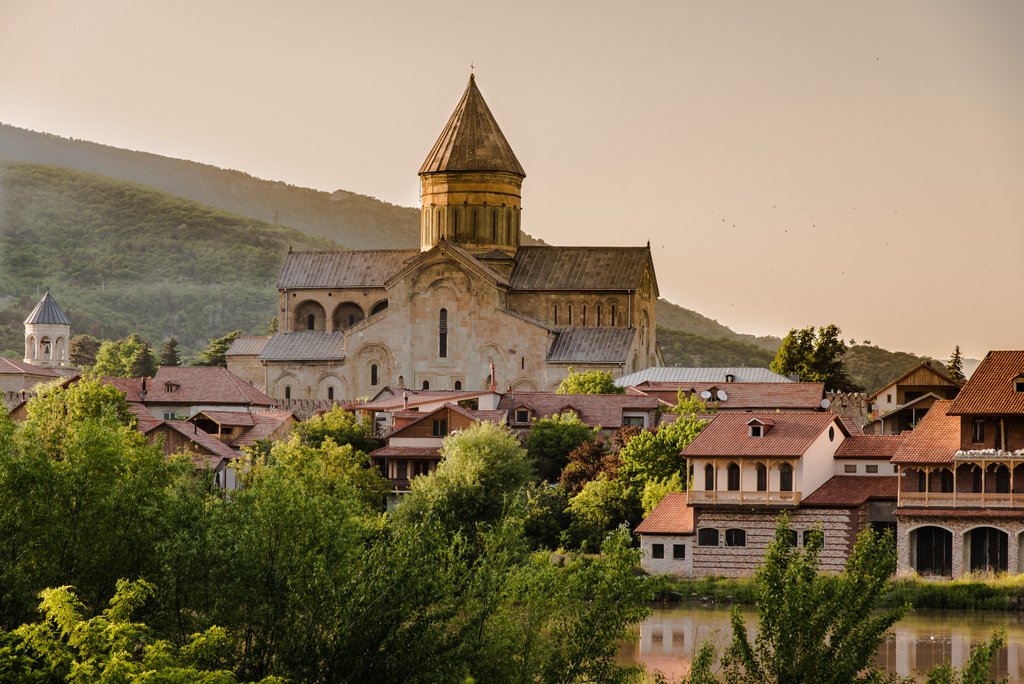
Tbilisi, Georgia, 28 – 30 April 2013
Conference Themes
The end of the Cold War has fundamentally changed the nature of borders within the emerging political spaces of the former Soviet Union. The collapse of the Soviet Union created thousands of kilometres of new state borders which have been redefined in terms of national sovereignty, as frames for free and sovereign action, but which also have becomes sites of hardening, closure, of new visa restrictions and, perhaps most seriously, of territorial conflict. This conference will focus on Post-Soviet states and their borders. But it is not simply about state borders as such – it is also about border conflicts, patterns of economic, political and social interaction, and actual and potential projects of regional cooperation andthe geopolitical role of the European Union in contributing to regional stability.
This conference is timely in that it will bring together researchers who been studying regional issues in Eastern Europe, the Caucasus, Central Asia and the Black Sea. Furthermore, a major objective of the conference is to debate the role and aims of the EU in redefinition, negotiation and conflict over post-Soviet space. This includes local perceptions of the evolving quality of the EU’s social and political influence within Post-Soviet contexts, e.g. in countries such as Georgia, Armenia, Belarus, Azerbaijan, Moldova, Tajikistan and Ukraine.
Possible topics for panels and papers include:
Post-Soviet nation-building:e.g. through the renegotiation of state-society relations, new interpretations of history, identity-politics, etc.
Post-Soviet politics of borders: e.g. in terms of visa restrictions and the shrinking of CIS free visa areas, migration policies, local border regimes, etc.
Regional practices and political language of cooperation within different regional contexts (in particular Caspian Sea, Black Sea, Southern Caucasus and Eastern Europe)
Natural resources, borders and interstate conflicts within different regional contexts
Europeanization and Neighborhood relations: e.g. as manifested in discourses and practices of regional co-operation and institutional engagement (partly within the context of potential EU membership) between the EU as a political actor and its neighbors
The Black Sea as political/economic region and shifting Black Sea geopolitics
In addition to this research focus, we will welcome panels and papers that address borders and border-related issues more generally.
Organisers:
- Georgian Institute of Public Affairs
- University of Eastern Finland – Karelian Institute and VERA Centre for Russian and Border Studies
- University of Warsaw - European Institute for Regional and Local Development (Euroreg)
- Carleton University - Centre for Governance and Public Management
Fees: Participation fees of ca. 100 USD per person (75 USD for students) will be charged in order to cover local organization costs. Participant number will be approximately 40-50
Conference days are 28 and 29 April 2013
Excursion: Starting on 30 April there will be a 1 - 1,5 day excursion to border regions (TBA)
Deadlines and abstracts:
Proposals for panels as well as individual presentations will be accepted. Please include the following information (max. 300 words per paper)
• Name of authors/contributors
• Institutional affiliations, titles
• Contact: telephone, fax, email, mailing address
• Title of the paper
• Abstract: Subject, empirical frame, analytical approach, theme
Send your proposals via email in Word format to
james.scott@uef.fi and gorzelak@post.pl
Conference Dates and Deadlines:
December 15th 2012 : deadline for submitting abstracts and proposals
December 2012 : proposals selection and notification sent to presenters
March, 15th 2013 : submission of papers to discussants
April 28th-30th 2013: Conference in Tbilisi.
Showing posts with label ENP. Show all posts
Showing posts with label ENP. Show all posts
Thursday, November 15, 2012
CALL - for Papers and Panels - Borders, Cooperation and Regional Conflict in Post-Soviet Contexts: Between Integration and Disintegration?


Thursday, August 09, 2012
CALL: Cultural Diplomacy – Training Programme For Eastern Partnership Cultural Managers
The Contrapunctum Foundation together with the Centre of Cultural Management in Lviv and New Art Union in Tbilisi are pleased to announce the 1st edition of the Polish-EaP cultural cooperation programme “Cultural diplomacy - training programme for EaP cultural managers”.
We invite to participate all cultural managers active in the Eastern Partnership countries: from the city officials in charge of cultural policies, representatives of Ngo’s and public institutions to freelancers.
The programme will enable the participants to analyse the European and Polish system of culture management, fundraising and lobbing opportunities, international cooperation and partnerships building, linking culture and commercial sector within the creative industries.
The project will also create the platform for meetings and collaboration between Polish and EaP cultural managers.
PROJECT SCHEDULE
1. Application procedure: July 26th – August 25th
2. Local seminars:
a) Lviv: September 22nd
b) Tbilisi: September 27th
3. Study visit to Warsaw: October 18th – 28th
4. Sum-up conference – Kyiv: November 9th
PROJECT SYLLABUS IN SHORT
1. Local seminars in Lviv & Tbilisi:
- diagnosis and analysis of existing and preparing cultural policies,
- European legislation; financial and non-financial support mechanisms,
- international cooperation & networks
- top European subjects: market intelligency, audience development, creative sector, media literacy, copyrights and media freedom
2. Study visit to Warsaw:
- strategies of cities and regions development
- Polish models of culture management: public, private and 3rd sector;
- Preparation of international projects
- Meetings and visits to the Warsaw leading cultural institutions
3. Conference in Kyiv:
- EuroEast culture – good practices;
- The future of support programmes for EaP countries;
- Creative Europe and its planned shape;
- Presentation of results and recommendations after the “Cultural diplomacy” programme.
ELIGIBILITY CRITERIA
The project is open for all cultural managers, having the EaP country citizenship and working actively in one of the EaP countries. You don’t have to already get the Schengen visa in advance; the valid passport will be enough to apply for the visa, once you are accepted for the programme.
The official language of the whole programme is English. To be an active participant, it’s compulsory to have a good knowledge of English: both written and spoken.
HOW TO APPLY
To apply for the participation in the programme you need to go through 2-phase application form. The 1st part contains mostly your personal data to be verified by the application operator. Then, you will get the instruction for your e-mail address about how to access the 2nd part of application. In the 2nd part you will have to put all the important information about your education, experience, previous career & plans for the future.
The link to the 1st part of application:
The deadline for submitting the 2nd part of applications is: August 25th, so please start to fill the forms at least 5 days earlier, so that we could verify your personal data.
Once you sent the application, by clicking the button “Submit” you will no longer have the access to correct or change it.
The results of application process will be announced by August 31st.
The list of qualified participants will contain the people we would like to invite for the opening seminars:
- from Belarus, Moldova & Ukraine – to Lviv on September 22nd;
- from Armenia, Azerbaijan and Georgia – to Tbilisi on September 27th.
After the seminars, the final decision about the participants of study visit will be made. Please note, that participation in the seminar is one of the requirements of approval for the study visit.
COSTS REIMBURSEMENT & LOGISTICS
For the people qualified for the local seminars we cover the following costs:
a) accommodation costs for the people travelling over 200 km;
b) travel costs on the basis of valid train/bus/flight ticket - reimbursement;
The study visit to Warsaw participants will be offered:
a) bus/train/flight tickets provided by the programme operator;
b) accommodation in 2-/3- rooms in the nice hostel, located in the Warsaw city centre
c) full board
All the participants of Warsaw study visit will be also invited to attend the Kyiv conference; for the best selected by the project team we cover the costs of accommodation & travel.
The project is organized due to the cooperation and financial support of the City of Warsaw.
Monday, August 06, 2012
FORSCHUNG: Georgiens Weg nach Europa. Prof. Dr. Merab Turava forscht als Alexander von Humboldt-Stipendiat an der Universität Jena. (juraforum.de)
 |
| Prof. Dr. Merab Turava |
Im Rahmen seines Forschungsaufenthaltes nimmt Prof. Turava das georgische Strafrecht unter die Lupe: vor allem jene Bereiche, die auch für die EU von zentralem Interesse sind. „Das betrifft etwa Gesetze zur Ahndung bzw. Vorbeugung von organisierter Kriminalität, Menschenhandel, Geldwäsche, Korruption oder Terrorismus“, zählt der Gastwissenschaftler auf, der an seiner Heimatuniversität das Department für Strafrecht leitet. Diese Probleme seien nur in der internationalen Zusammenarbeit zu lösen, weshalb die EU mit ihren Nachbarstaaten entsprechende Kooperationsabkommen vereinbart hat. „Im Rahmen dieser europäischen Nachbarschaftspolitik orientiert sich Georgien an europäischen Rahmenvorschriften und setzt sie in das eigene Recht um“, erläutert der georgische Gast.
Das aber brauche Zeit und politischen Willen. Welche Defizite das georgische Recht derzeit noch aufweist, wie das Land weiter an europäische Standards herangeführt werden kann und welche Perspektiven sich für Georgien als Partner der EU insgesamt bieten, diesen Fragen geht der Forscher jetzt in Jena nach. Stadt und Universität sind ihm dabei nicht neu: Bereits 1990 – mitten in der Wende-Zeit – hat Merab Turava die Friedrich-Schiller-Universität das erste Mal besucht.
Gastgeber und jetziger Kooperationspartner ist sein hiesiger Fachkollege Prof. Dr. Heiner Alwart. Mit dem Inhaber des Jenaer Lehrstuhls für Strafrecht und Strafprozessrecht verbindet Prof. Turava bereits eine langjährige Kooperation: Die beiden arbeiten seit 2006 in einem von der VolkswagenStiftung geförderten Projekt zusammen, das eine Verbesserung der georgischen Juristenausbildung zum Ziel hat. „Wir haben ein zeitgemäßes wissenschaftliches Lehrbuch in georgischer Sprache erstellt und ein modernes Curriculum für georgische Studierende entwickelt“, nennt Prof. Alwart zentrale Ergebnisse dieses Projekts.
Der juristische Nachwuchs in Georgien soll auch von der aktuellen Forschung profitieren. Neben seiner Forschungsarbeit möchte Prof. Turava ein Lehrkonzept entwickeln, das die Strukturen des europäischen Rechtssystems für georgische Studierende „übersetzt“. „Schließlich sind die heutigen Studierenden die Juristen von morgen, die als Anwälte oder Richter arbeiten und auf die georgische Gesellschaft und Politik Einfluss nehmen“, resümiert der Rechtswissenschaftler von der Universität in Tbilisi.
Die Friedrich-Schiller-Universität Jena unterhält intensive Kontakte nach Georgien. So verbindet sie mit der Staatlichen Universität Tbilisi, an der Prof. Turava mehrere Jahre tätig war, seit 1966 ein Freundschaftsvertrag, der 1994 in Form eines Partnerschaftsabkommens erneuert worden ist.
Kontakt:
Prof. Dr. Merab Turava, Prof. Dr. Heiner Alwart
Rechtswissenschaftliche Fakultät der Friedrich-Schiller-Universität Jena
Carl-Zeiß-Str. 3, 07743 Jena
Tel.: 03641 / 942323, 03641 / 942300
Weitere Informationen: www.uni-jena.de
Quelle: idw-online.de
Saturday, July 14, 2012
BOOK: 'Understanding European Neighbourhood Policies' . Ed. by Edmund Ratka and Olga A. Spaiser.
(nomos-shop.de) Beim Nomos-Verlag wurde vor kurzem ein umfangreicher Sammelband zur Nachbarschaftspolitik der EU unter dem Titel 'Understanding European Neighbourhood Policies' veröffentlicht. Der Band enthält sowohl theoretische Beiträge als auch Analysen zur Umsetzung der ENP in der südlichen und östlichen 'Nachbarschaft' der EU und könnte demnach für jene, die sich mit dem Thema beschäftigen, von Interesse sein.
Die Europäische Union und ihre Mitgliedstaaten haben ein komplexes Netz an verschiedenen Politiken gegenüber den Ländern und Regionen in der unmittelbaren und erweiterten Nachbarschaft der EU entwickelt. Gerade im Zuge der Transformationsprozesse in der arabischen Welt werden diese zunehmend auf den Prüfstand gestellt. Eine Neubewertung und Anpassung der „europäischen Nachbarschaftspolitiken“ setzt indes ein umfassendes Verständnis von deren Entstehung, Umsetzung und Wirksamkeit voraus.
Vor diesem Hintergrund unternimmt dieser Band eine multiperspektivische Analyse der europäischen Politik gegenüber Nordafrika, dem Nahen Osten und der Golfregion sowie gegenüber dem Balkan, Russland, der Schwarzmeerregion, dem Südkaukasus und Zentralasien.
Ein Schwerpunkt wird dabei auf die an der Politikformulierung beteiligten Akteure sowie auf deren oftmals divergierende Perzeptionen der Nachbarregionen gelegt. Der Band untersucht außerdem Interaktionsprozesse wie Europäisierung, die zwischen den Mitgliedstaaten, EU-Institutionen und den Zielregionen wirken. Des Weiteren werden theoretische und methodische Ansätze diskutiert und weiterentwickelt, mit denen der fragmentierte und zugleich verwobene Charakter der „Nachbarschaftspolitiken“ erfasst werden kann.
Das Werk ist Teil der Reihe Münchner Beiträge zur europäischen Einigung, Band 22.
Part III
European Neighbourhood Policies towards the East
Carrots, Sticks and Regional Cooperation: A Critical Analysis of the EU’s
Approaches towards the Black Sea Region. By Alina Homorozean
Georgia and the Eastern Partnership: Progress, Problems and Prospects. By David Rinnert
EU-Russia Relations and the Eastern Partnership. By Sebastian Schäffer
The Russian ‘Other’: The Impact of National Identity Construction on EU-Russia
Relations. By Marco Siddi
Germany’s Influence on EU Foreign Policy: The Case of the EU Strategy
for Central Asia. By Olga A. Spaiser
AmazonShop: Books, Maps, Videos, Music & Gifts About The Caucasus
Thursday, July 05, 2012
POSITION: Deutsche Außenpolitik und Östliche Partnerschaft (dgap.org)
(dgap.org) Positionspapier der Expertengruppe Östliche Partnerschaft
06.02.2012 | von Markus Meckel, Georg Milbradt, Friedbert Pflüger, Christian Schwarz-Schilling, Rainder Steenblock, Rita Süssmuth, Günter Verheugen, Karsten D. Voigt, Gereon Schuch, Irene Hahn
DGAPstandpunkt 1, 6. Februar 2012, 4 S.
 In dem sieben Punkte umfassenden Positionspapier fordern acht hochrangige Persönlichkeiten aus der Politik ein stärkeres Engagement Deutschlands in Osteuropa und dem Kaukasus. „Die Östliche Partnerschaft ist von zentraler Bedeutung“ für die deutsche und die EU-Außenpolitik. Die Bundesregierung solle einen Sonderbeauftragten ernennen, der dazu die deutsche Position einbringt.
 downloads
Thursday, May 10, 2012
ENP: EU Eastern Partnership: Visa liberalisation and mobility. By Stepan Grigoryan (eaq.sk)
(eaq.sk) I believe we need to cooperate with the European Union. And I think that the future of the South Caucasus is connected with Europe! Alternative to this is our countries turned into half stable systems, without democracy, with high level corruption and without a system of values (this we can see from the example of some countries in Middle East or in the Post-soviet territory).

The Eastern Partnership Civil Society Forum was established on 17 November 2009 in Brussels. The best, most innovative recommendations given by participants in the Civil Society Forum were presented to the foreign ministers of Eastern Partnership member states on 8 December 2009. Analytical Centre on Globalization and Regional Cooperation (ACGRC) also participated in that forum, and our proposal about visa facilitation for citizens of Eastern Partnership countries was submitted to the European Commission. Eastern Partnership Civil Society Forum is an important innovation, since it lets to use the potential existing in Eastern Partnership countries. It also provided conditions for the multilateral dialogue – government, civil society and EU, and for cooperation between Eastern Partnership countries.
Armenian NGOs participate actively in the Eastern Partnership programme. There is a civil society National Platform of Eastern Partnership in Armenia. ACGRC is the active participant in this platform. Also ACGRC is the member of Coalition for the European Continent Undivided by Visa Barriers. This organization was launched at meeting in Warsaw on November 26, 2010 on the initiative of the Stefan Batory Foundation. Today more than 30 non-governmental organizations from different parts of Europe are its members. The coalition takes joint actions to speed up the process of EU visa liberalization with the countries of the Eastern Partnership.
Of course, Eastern Partnership may facilitate the visa issue, that’s very important for the youth, for non-governmental organizations and for businessmen. Eastern Partnership may also help in opening the labour market for some specialists in our countries. That’s very important for all of us.
It’s well known that Moldova and Georgia are seriously forward in the issues of Association Agreement and, in particular, in the agreement on visa facilitation with EU. However I would like to note that in recent 1 and a half year the government of Armenia has also started to work actively with EU on these issues.
The result of this work is that on February 27 the European Union and the Government of Armenia launched negotiations on two agreements to facilitate respectively the procedures for issuing short-stay visas, as well as the readmission of irregular migrants. The visa facilitation and readmission negotiations with Armenia follow the political commitment taken at the Prague Eastern Partnership Summit in May 2009 regarding the improvement of people to people contacts. The EU has already launched a Mobility Partnership with Armenia in October 2011, binding framework for managing movements of people, in which ten EU Member States participate (Belgium, Bulgaria, the Czech Republic, France, Germany, Italy, the Netherlands, Poland, Romania and Sweden).
We welcome that Armenian government activated its participation in Eastern Partnership and shows political will for realization of those reforms which are necessary for signing the Association Agreement with EU. For moving forward the negotiations with the EU on visa facilitation serious legislative changes are needed, serious reforms in such issues as police, migration service, protection of personal data, border service and etc.
At the end of 2001 ACGRC with his partners (Caucasus Institute for Peace, Democracy and Development from Georgia, Center for Economic and Social Development from Azerbaijan, Institute for Development and Social Initiatives “Viitorul” from Moldova, Europe without Barriers from Ukraine and Office for a democratic Belarus) realized monitoring of viza liberalization technical criteria fulfillment Pilot Project. The monitoring was initiated and supported by the Stefan Batory Foundation.
Apart from that, on 25 February 2012 ACGRC in cooperation with the Coalition for the European Continent Undivided by Visa Barriers organized a conference in Armenia “The EU and the Eastern Partnership countries: prospects and barriers for the visa liberalization”. The speakers were: H.E Zohrab Mnatsakanian (Deputy Minister of Foreign Affairs of Armenia), H.E Traian Hristea (Ambassador, Head of the EU Delegation to Armenia), Elenoora Vergeer (Policy Advisor on Migration, European Union Advisory Group to Armenia), Joanna Fomina (coordinator of Friendly EU Visa project at the Stefan Batory Foundation), Boris Navasardian (President, Yerevan Press Club), Olga Stuzhinskaya (Office for a democratic Belarus) and Leonid Litra (Institute for Development and Social Initiatives “Viitorul”). The participants were well-known experts-analysts from Belgium, Poland, Armenia, Georgia, Ukraine, Belarus and Moldova.
All these activities show that in particular Armenia actively works on reforms: only during last several months the parliament of Armenia ratified a lot of European conventions connected with the migration issues, readmission, struggle against corruption, transnational organized crimes, trafficking, spreading of drugs, personal data protection and also adopted new laws (for example on issuing biometric passports) and made changes in Criminal and Administrative Codex. The government of Armenia made several decisions directly connected with the negotiations on visa-facilitation.
All these speak about positive tendencies in the negotiations of Association Agreement between EU and the government of Armenia. As we think a new and most important stage is coming in the process of cooperation of EU and Armenia: the beginning of implementation of decisions made by the Armenian side. Here education of the staff (customs and border service, police and etc.) is very important and also their technical supply which must realize decisions of the government.
Author is Chairman of the Board of the Analytical Centre on Globalization and Regional Cooperation (ACGRC) in Yerevan, Armenia. This report was made at the "1st EU-Eastern Partnership Forum" (March 22-24, 2012 in Tbilisi, Georgia).
Tuesday, March 29, 2011
PAPER: SWP-Analyse, Oestliche Partnerschaft der EU in Georgien (swp-berlin.org)
Bei der Stiftung Wissenschaft und Politik wurde gestern ein detailliertes Working Paper zur Östlichen Partnerschaft der EU und ihrer Umsetzung in Georgien veröffentlicht. Die 25-seitige Analyse mit dem Titel 'The Eastern Partnership in Georgia - Increasing Efficiency of EU Neighborhood Policies in the South Caucasus?' kann unter folgendem Link heruntergeladen werden: www.swp-berlin.org
Sunday, March 06, 2011
PAPER: Pathologies of Europeanization - Fighting Corruption in the Southern Caucasus. By Tanja A. Börzel and Yasemin Pamuk (.euce.org)
Freie Universität Berlin 21/02/2011
Full-text paper: euce.org.pdf
ABSTACT Studies on “Neighbourhood Europeanization” have shown that the EU’s capacity to hit across its borders has been limited. Our paper argues that the EU has induced some formal institutional change, which, however, has helped to stabilize rather than change existing regimes. Thus, we do observe the Europeanization of domestic structures of formerly Soviet republics, which, however, appears to have opposite effects of what the EU intends to achieve with its ENP. In order to explore these pathologies of Europeanization, we focus on the EU’s attempts to promote good governance, and in particular the fight against corruption. The PostSoviet area features some of the most corrupt countries in the world, including the Southern Caucasus region. High adaptation costs and limited incentives render Armenia, Azerbaijan, and Georgia least likely cases for Europeanization and domestic change. Our comparative study will show that despite high misfit and low pressure for adaptation from above and below, all three have responded to the EU’s demands for good governance introducing similar formal institutional changes. Yet, rather than systematically fighting corruption, incumbent regimes have instrumentalized the EU selectively implementing anti-corruption policies to cut the power resources of their political opponents.
Authors' Address: SFB 700 “Governance in Areas of Limited Statehood"
Freie Universität Berlin
Full-text paper: euce.org.pdf
ABSTACT Studies on “Neighbourhood Europeanization” have shown that the EU’s capacity to hit across its borders has been limited. Our paper argues that the EU has induced some formal institutional change, which, however, has helped to stabilize rather than change existing regimes. Thus, we do observe the Europeanization of domestic structures of formerly Soviet republics, which, however, appears to have opposite effects of what the EU intends to achieve with its ENP. In order to explore these pathologies of Europeanization, we focus on the EU’s attempts to promote good governance, and in particular the fight against corruption. The PostSoviet area features some of the most corrupt countries in the world, including the Southern Caucasus region. High adaptation costs and limited incentives render Armenia, Azerbaijan, and Georgia least likely cases for Europeanization and domestic change. Our comparative study will show that despite high misfit and low pressure for adaptation from above and below, all three have responded to the EU’s demands for good governance introducing similar formal institutional changes. Yet, rather than systematically fighting corruption, incumbent regimes have instrumentalized the EU selectively implementing anti-corruption policies to cut the power resources of their political opponents.
Authors' Address: SFB 700 “Governance in Areas of Limited Statehood"
Freie Universität Berlin
Binger Str.40, 14197 Berlin
Tel.: +49 (0) 30 838 54830
Email: tanja.boerzel@fu-berlin.de
Web: www.sfb-governance.de
www.euce.org
Tel.: +49 (0) 30 838 54830
Email: tanja.boerzel@fu-berlin.de
Web: www.sfb-governance.de
www.euce.org
Wednesday, March 02, 2011
BOOK: An Appraisal of the EU’s Trade Policy towards its Eastern Neighbours: The Case of Georgia (ceps.eu)
Authors: Patrick Messerlin, Michael Emerson, Gia Jandieri and Alexandre Le Vernoy
In: EU Neighbourhood Policy
CEPS Paperbacks
source: ceps.eu
In: EU Neighbourhood Policy, CEPS Paperbacks
Date of publication: 01 March 2011
Pages: 121
File type: pdf
634.2 KB
Can't download?
Download
This study, conducted by researchers at Sciences Po in Paris, CEPS and the New Economic School of Georgia, assesses the present state of the EU-Georgia discussions on a free trade agreement and finds there is an urgent need for the European Commission to reshape its approach. To this end, the authors put forward concrete proposals that should be set in motion well before the autumn 2011 Eastern Partnership Summit.
In: EU Neighbourhood Policy
CEPS Paperbacks
source: ceps.eu
In: EU Neighbourhood Policy, CEPS Paperbacks
Date of publication: 01 March 2011
Pages: 121
File type: pdf
634.2 KB
Can't download?
Download
This study, conducted by researchers at Sciences Po in Paris, CEPS and the New Economic School of Georgia, assesses the present state of the EU-Georgia discussions on a free trade agreement and finds there is an urgent need for the European Commission to reshape its approach. To this end, the authors put forward concrete proposals that should be set in motion well before the autumn 2011 Eastern Partnership Summit.
Monday, January 31, 2011
SONDERBERICHT: EU-Hilfsinstrumente für den Südkaukasus liefern gemischte Ergebnisse * (eca.europa.eu)
EUROPÄISCHER RECHNUNGSHOF
PRESSEMITTEILUNG
ECA/11/1
Luxemburg, den 31. Januar 2011
in english: Special Report: EU aid instruments in the Southern Caucasus produce mixed results*
Eine Prüfung des neuen Europäischen Nachbarschafts- und Partnerschaftsinstruments (ENPI) durch den Europäischen Rechnungshof hat ergeben, dass bedingt durch eine unzulängliche Vorbereitung sowie die begrenzte Nutzung der verfügbaren Finanzinstrumente seitens der Europäischen Kommission sowohl der Start des ENPI im südlichen Kaukasus als auch die ersten Ergebnisse in der Region unterschiedlich ausfielen.
Das ENPI soll die Nachbarschaftspolitik der Europäischen Union unterstützen, durch die engere Beziehungen zwischen der EU und ihren südlichen und östlichen Nachbarländern geschaffen werden sollen. Das ENPI wurde im Jahr 2007 als neuer Rahmen für die Planung und Abwicklung der Hilfsmaßnahmen zugunsten von 17 Partnerländern und -gebieten geschaffen. Es ist das wichtigste Finanzierungsinstrument der EU für die drei Länder im südlichen Kaukasus (Armenien, Aserbaidschan und Georgien), die der Hof in seinem Bericht "Wurde das neue Europäische Nachbarschafts- und Partnerschaftsinstrument im südlichen Kaukasus erfolgreich auf den Weg gebracht und erzielt es Ergebnisse?" betrachtet.
Aufgrund der Prüfung des von der Kommission zur Festlegung der prioritären Ziele der EU-Hilfe herangezogenen mehrjährigen Planungssystems, der Ergebnisse der ersten Aktionsprogramme und der bereitgestellten Hilfe gelangt der Hof zu der Schlussfolgerung, dass der langwierige Programmierungs- und Konzeptionsprozess für das sich rasch wandelnde, von Konflikten erschütterte Umfeld im südlichen Kaukasus nicht geeignet war und für die Relevanz der Hilfsmaßnahmen ein Risiko darstellte. Außerdem wurden Programmierung und Konzeption der Hilfe nicht ausreichend über einen strukturierten Dialog mit den begünstigten Ländern gesteuert, weil der Prozess vorwiegend durch die internen Abläufe der Kommission bestimmt wurde.
Die Ergebnisse fielen in den drei Ländern unterschiedlich aus. In Armenien wirkte sich die ENPI-Unterstützung positiv auf die Stärkung des Reformprozesses im Bereich der beruflichen Aus- und Weiterbildung aus, während in Aserbaidschan bei der Reform des Energiesektors kaum Fortschritte erzielt wurden. In Georgien hatte die Hilfe lediglich begrenzte Auswirkungen auf die Reform des öffentlichen Finanzmanagements, und in der Konfliktregion Abchasien hat sich das ENPI noch nicht als geeignetes Instrument für Vertrauensbildung und wirtschaftliche Rehabilitation erwiesen. Die Twinning-Maßnahmen für die Zusammenarbeit zwischen den Verwaltungen der begünstigten Länder und den entsprechenden Verwaltungen in den EU-Mitgliedstaaten waren in allen drei Ländern noch nicht über die Vorbereitungsphase hinaus.
Die Einführung von sektorbezogener Budgethilfe und Twinning gab der Kommission Alternativen zu den Projekten der Technischen Hilfe an die Hand, die für frühere Hilfsprogramme typisch waren. Die vorrangige Verwendung von Budgethilfen ging jedoch nicht mit einer ausreichenden Vorbereitung einher, was die Leistungserbringung beeinträchtigte. Der Hof ist der Ansicht, dass sich durch eine stärkere Straffung des Programmierungs- und Konzeptionsprozesses und den selektiveren Einsatz sektorbezogener Budgethilfen mit der gewährten Hilfe wirksamere Ergebnisse erzielen lassen.
+++
ECA – PRESSESTELLE
12, rue Alcide De Gasperi – 1615 Luxemburg, LUXEMBURG
Tel.: (+352) 4398 45410 – Fax: (+352) 4398 46410 – Mobiltelefon (+352) 621 55 22 24
E-Mail: press@eca.europa.eu
* Diese Pressemitteilung stellt eine Zusammenfassung dar. Der vom Rechnungshof angenommene Sonderbericht ist auf der Website des Hofes (www.eca.europa.eu) verfügbar und wird demnächst in gedruckter Form veröffentlicht.
PRESSEMITTEILUNG
ECA/11/1
Luxemburg, den 31. Januar 2011
in english: Special Report: EU aid instruments in the Southern Caucasus produce mixed results*
Eine Prüfung des neuen Europäischen Nachbarschafts- und Partnerschaftsinstruments (ENPI) durch den Europäischen Rechnungshof hat ergeben, dass bedingt durch eine unzulängliche Vorbereitung sowie die begrenzte Nutzung der verfügbaren Finanzinstrumente seitens der Europäischen Kommission sowohl der Start des ENPI im südlichen Kaukasus als auch die ersten Ergebnisse in der Region unterschiedlich ausfielen.
Das ENPI soll die Nachbarschaftspolitik der Europäischen Union unterstützen, durch die engere Beziehungen zwischen der EU und ihren südlichen und östlichen Nachbarländern geschaffen werden sollen. Das ENPI wurde im Jahr 2007 als neuer Rahmen für die Planung und Abwicklung der Hilfsmaßnahmen zugunsten von 17 Partnerländern und -gebieten geschaffen. Es ist das wichtigste Finanzierungsinstrument der EU für die drei Länder im südlichen Kaukasus (Armenien, Aserbaidschan und Georgien), die der Hof in seinem Bericht "Wurde das neue Europäische Nachbarschafts- und Partnerschaftsinstrument im südlichen Kaukasus erfolgreich auf den Weg gebracht und erzielt es Ergebnisse?" betrachtet.
Aufgrund der Prüfung des von der Kommission zur Festlegung der prioritären Ziele der EU-Hilfe herangezogenen mehrjährigen Planungssystems, der Ergebnisse der ersten Aktionsprogramme und der bereitgestellten Hilfe gelangt der Hof zu der Schlussfolgerung, dass der langwierige Programmierungs- und Konzeptionsprozess für das sich rasch wandelnde, von Konflikten erschütterte Umfeld im südlichen Kaukasus nicht geeignet war und für die Relevanz der Hilfsmaßnahmen ein Risiko darstellte. Außerdem wurden Programmierung und Konzeption der Hilfe nicht ausreichend über einen strukturierten Dialog mit den begünstigten Ländern gesteuert, weil der Prozess vorwiegend durch die internen Abläufe der Kommission bestimmt wurde.
Die Ergebnisse fielen in den drei Ländern unterschiedlich aus. In Armenien wirkte sich die ENPI-Unterstützung positiv auf die Stärkung des Reformprozesses im Bereich der beruflichen Aus- und Weiterbildung aus, während in Aserbaidschan bei der Reform des Energiesektors kaum Fortschritte erzielt wurden. In Georgien hatte die Hilfe lediglich begrenzte Auswirkungen auf die Reform des öffentlichen Finanzmanagements, und in der Konfliktregion Abchasien hat sich das ENPI noch nicht als geeignetes Instrument für Vertrauensbildung und wirtschaftliche Rehabilitation erwiesen. Die Twinning-Maßnahmen für die Zusammenarbeit zwischen den Verwaltungen der begünstigten Länder und den entsprechenden Verwaltungen in den EU-Mitgliedstaaten waren in allen drei Ländern noch nicht über die Vorbereitungsphase hinaus.
Die Einführung von sektorbezogener Budgethilfe und Twinning gab der Kommission Alternativen zu den Projekten der Technischen Hilfe an die Hand, die für frühere Hilfsprogramme typisch waren. Die vorrangige Verwendung von Budgethilfen ging jedoch nicht mit einer ausreichenden Vorbereitung einher, was die Leistungserbringung beeinträchtigte. Der Hof ist der Ansicht, dass sich durch eine stärkere Straffung des Programmierungs- und Konzeptionsprozesses und den selektiveren Einsatz sektorbezogener Budgethilfen mit der gewährten Hilfe wirksamere Ergebnisse erzielen lassen.
+++
ECA – PRESSESTELLE
12, rue Alcide De Gasperi – 1615 Luxemburg, LUXEMBURG
Tel.: (+352) 4398 45410 – Fax: (+352) 4398 46410 – Mobiltelefon (+352) 621 55 22 24
E-Mail: press@eca.europa.eu
* Diese Pressemitteilung stellt eine Zusammenfassung dar. Der vom Rechnungshof angenommene Sonderbericht ist auf der Website des Hofes (www.eca.europa.eu) verfügbar und wird demnächst in gedruckter Form veröffentlicht.
Wednesday, September 08, 2010
ARTIKEL: Deutschland will Georgien helfen. Ein Unruheherd am Kaukasus (european-circle.de)
 Das Land südlich des Kaukasus war früher Teil der Sowjetunion, und sein Name ist mit einem der schlimmsten kommunistischen Diktatoren des 20. Jahrhunderts verbunden, denn der ist dort geboren: Josef Stalin. Georgien sucht nun die Nähe zur Europäischen Union. Das hat zur Jahresmitte 2010 der georgische Außenminister Grigol Waschadse bei einem offiziellen Besuch in Berlin mehr als deutlich gemacht. Und dieses Bestreben will die Bundesrepublik Deutschland nach besten Kräften unterstützen. So Bundesaußenminister Guido Westerwelle in den gemeinsamen Berliner Begegnungen. Er lobte "die bisherigen wirtschaftlichen und politischen Reformen der georgischen Regierung"; aber dann kam der diplomatisch verbrämte Haken: Westerwelle "ermunterte die Führung in Tiflis, in ihren Anstrengungen für mehr Demokratie und Rechtstaatlichkeit nicht nachzulassen".
Staatspräsident regiert mit Zwei-Drittel-Mehrheit
Das hat seine Gründe. Georgien nennt sich eine "Demokratische Republik", die allerdings von Staatspräsident Micheil Saakaschwili – er ist seit 2004 im Amt – mehr als straff geführt wird; er steht laut Verfassung an der Spitze der Exekutive. Bei den Wahlen von 2008 erhielt seine Partei "Vereinigte Nationalbewegung" 119 von 150 Parlamentssitzen: Eine Opposition ist nur marginal vorhanden. Insgesamt boykottiert ein Großteil der oppositionellen Abgeordneten derzeit die Arbeit des Parlaments – etliche hatten ihr Mandat gar nicht angenommen. Die demokratischen Strukturen Georgiens sind derzeit also wenig ausgeprägt.
Streit um zwei "abtrünnige" autonome Gebiete
Das innere Gefüge des Staates also, das nur nach außen stabil wirkt, wird zur Zeit zugleich erschüttert durch Auseinandersetzungen, die innen- wie außenpolitische Facetten haben. Angelpunkt sind die beiden autonomen Gebiete Südossetien und Abchasien. Sie sind seit dem Krieg zwischen Georgien und Russland vor zwei Jahren völlig außer Kontrolle der Regierung in Tiflis geraten. Dort sollen inzwischen die Russen Boden-Luft-Raketen vom Typ S-300 stationiert haben. Und Flüchtlinge aus der Region haben mit Demonstrationen vor der US-Botschaft in Tiflis gegen Übergriffe der georgischen Polizei und der Behörden geklagt. Anfang August 2010 kamen Hilferufe über das Internet.
Den Menschen aus diesen als "abtrünnig bezeichneten" Regionen wird nicht getraut; sie werden offenbar als Unruhestifter angesehen und entsprechend isoliert.
Georgien von Deutschland rasch anerkannt
Georgien hat sich mit der Unabhängigkeit am 9. April 1991 aus der damaligen Sowjetunion getrennt – diese löste sich selber erst am 25. Dezember 1991 auf. Seitdem arbeiten die Bundesrepublik Deutschland und Georgien eng zusammen, soweit es möglich ist. Deutschland war auch das erste Land, das Tiflis als einen unabhängigen Staat anerkannte. Logische Folge daraus ist, dass sich Berlin im Rahmen der Europäischen Union für eine Annäherung Georgiens und der gesamten Kaukasusregion an Europa einsetzt. Schließlich ist Deutschland wirtschaftlich der viertgrößte europäische Handelspartner und nach den USA der größte bilaterale Partner Georgiens in der Entwicklungszusammenarbeit.
Hoffnung auf "Östliche Partnerschaft"
So waren sich die beiden Außenminister Westerwelle und Waschadse bei ihrem jüngsten Treffen in Berlin darin einig, das Projekt der "Östlichen Partnerschaft" zu intensivieren. Hauptziel ist, die 27 EU-Mitgliedstaaten und die sechs Hauptstaaten der Kaukasus-Region politisch wie wirtschaftlich einander anzunähern. Diese "Östliche Partnerschaft" war am 7. Mai 2009 bei einem Gipfeltreffen in Prag begründet worden. Die Außenminister treffen sich jährlich, die Staats- und Regierungschefs alle zwei Jahre. Auf dem Gründungsgipfel vor zwei Jahren hatten auf Einladung der EU die Ukraine, die Republik Moldau, Weißrussland, Aserbaidschan, Armenien – und Georgien teilgenommen. Diese Länder profitieren bereits von dieser "Östlichen Partnerschaft" der EU: Bis zum Jahr 2013 sollen etwa 600 Millionen Euro Aufbau und Investitionshilfe in die Kaukasusregion fließen.
[KS]
Thursday, June 24, 2010
DISKUSSION: 11. Außenpolitische Jahrestagung 2010: "Europas Osten", 7./8.10.10 (boell.de)
Europas Osten
Impulse für die Politik der EU gegenüber ihren östlichen Nachbarn
Datum: Donnerstag, 7. und Freitag, 8. Oktober 2010
Ort: Beletage der Heinrich-Böll-Stiftung, Schumannstraße 8, 10117 Berlin-Mitte
Die Interessen der Europäischen Union an ihren östlichen Grenzen sind vielfältig.Russland ist der wichtigste Gaslieferant der EU, Länder wie Belarus, Ukraine und Georgien liegen entlang wichtiger Transitrouten. Außerdem sind mit derEU-Osterweiterung die Sicherheitsprobleme der östlichen Nachbarstaaten zuEU-Sicherheitsproblemen geworden.
 Erhebliche Stabilitätsrisiken an den EU-Außengrenzen Alle Länder dieser Region sind nach dem Zerfall der Sowjetunion in tiefe Transformationskrisen geraten. In den meisten haben sich autoritäre Formenvon Herrschaft verfestigt. Chronische Menschenrechtsverletzungen, wirtschaftliche Monopolstrukturen und massive Korruption bedeuten aber langfristig erhebliche Stabilitätsrisiken an den Außengrenzen der EU. Es liegt daher in ihrem eigenenInteresse, den Gesellschaften in Osteuropa beim Aufbau demokratisch und rechtsstaatlich verfasster Gemeinwesen zu helfen.
Bisher kann von einer kohärenten, an gemeinsamen europäischen Interessen ausgerichteten und mit klaren Botschaften operierenden Politik gegenüber Russland und den Ländern der "Eastern Partnership" keine Rede sein. Die unterschiedlichen Haltungen bei alten und neuen EU-Mitgliedern müssen respektiert und in einem offenen Konsultationsprozess möglichst ausgeglichenwerden, um zu einer gemeinsamen Politik gegenüber dem Osten Europas zugelangen. Wir sehen darin eine europapolitische Kernaufgabe der nächsten Jahre.
Welche konstruktive Rolle sollte die EU im Osten Europas verfolgen? Mit der außenpolitischen Jahrestagung 2010 will die Heinrich-Böll-Stiftung Impulsegeben für eine gesamteuropäische und transatlantische Debatte darüber, welche konstruktive Politik die EU im Osten Europas verfolgen sollte, um jenseits geopolitischer Nullsummen-Spiele Sicherheit, Rechtsstaatlichkeit und nachhaltige Entwicklung zu befördern.
Wir möchten mit Ihnen über folgende Fragen diskutieren:
* Wie sollte Europa im Jahr 2025 aussehen?
* Wie könnte sich ein EU-Russland-Verhältnis gestalten, das von Kooperationgeprägt ist, ohne von exklusiven „Einflusszonen“ auszugehen?
* Welches Sicherheitssystem benötigt Europa im 21. Jahrhundert, um eineeine europäische Spaltung zu verhindern?
* Welche Lehren können aus dem Georgien-Krieg für ähnliche Konfliktpotentiale in der östlichen Nachbarschaft gezogen werden?
* Welche Perspektiven einer nachhaltigen Energiesicherheit gibt es für Europa?
* Lässt sich die demokratische Transformation im Osten Europas nur mit einer EU-Beitrittsperspektive konsolidieren?
Projektleitung und Information:
Marc Berthold,
Referent Außen- und Sicherheitspolitik, berthold@boell.de
Melanie Sorge,
Politische Beraterin/ Projektmanagerin, melanie@boellstiftung.org
Anmeldung unter: www.boell.de
Impulse für die Politik der EU gegenüber ihren östlichen Nachbarn
Datum: Donnerstag, 7. und Freitag, 8. Oktober 2010
Ort: Beletage der Heinrich-Böll-Stiftung, Schumannstraße 8, 10117 Berlin-Mitte
Die Interessen der Europäischen Union an ihren östlichen Grenzen sind vielfältig.Russland ist der wichtigste Gaslieferant der EU, Länder wie Belarus, Ukraine und Georgien liegen entlang wichtiger Transitrouten. Außerdem sind mit derEU-Osterweiterung die Sicherheitsprobleme der östlichen Nachbarstaaten zuEU-Sicherheitsproblemen geworden.
Erhebliche Stabilitätsrisiken an den EU-Außengrenzen Alle Länder dieser Region sind nach dem Zerfall der Sowjetunion in tiefe Transformationskrisen geraten. In den meisten haben sich autoritäre Formenvon Herrschaft verfestigt. Chronische Menschenrechtsverletzungen, wirtschaftliche Monopolstrukturen und massive Korruption bedeuten aber langfristig erhebliche Stabilitätsrisiken an den Außengrenzen der EU. Es liegt daher in ihrem eigenenInteresse, den Gesellschaften in Osteuropa beim Aufbau demokratisch und rechtsstaatlich verfasster Gemeinwesen zu helfen.Bisher kann von einer kohärenten, an gemeinsamen europäischen Interessen ausgerichteten und mit klaren Botschaften operierenden Politik gegenüber Russland und den Ländern der "Eastern Partnership" keine Rede sein. Die unterschiedlichen Haltungen bei alten und neuen EU-Mitgliedern müssen respektiert und in einem offenen Konsultationsprozess möglichst ausgeglichenwerden, um zu einer gemeinsamen Politik gegenüber dem Osten Europas zugelangen. Wir sehen darin eine europapolitische Kernaufgabe der nächsten Jahre.
Welche konstruktive Rolle sollte die EU im Osten Europas verfolgen? Mit der außenpolitischen Jahrestagung 2010 will die Heinrich-Böll-Stiftung Impulsegeben für eine gesamteuropäische und transatlantische Debatte darüber, welche konstruktive Politik die EU im Osten Europas verfolgen sollte, um jenseits geopolitischer Nullsummen-Spiele Sicherheit, Rechtsstaatlichkeit und nachhaltige Entwicklung zu befördern.
Wir möchten mit Ihnen über folgende Fragen diskutieren:
* Wie sollte Europa im Jahr 2025 aussehen?
* Wie könnte sich ein EU-Russland-Verhältnis gestalten, das von Kooperationgeprägt ist, ohne von exklusiven „Einflusszonen“ auszugehen?
* Welches Sicherheitssystem benötigt Europa im 21. Jahrhundert, um eineeine europäische Spaltung zu verhindern?
* Welche Lehren können aus dem Georgien-Krieg für ähnliche Konfliktpotentiale in der östlichen Nachbarschaft gezogen werden?
* Welche Perspektiven einer nachhaltigen Energiesicherheit gibt es für Europa?
* Lässt sich die demokratische Transformation im Osten Europas nur mit einer EU-Beitrittsperspektive konsolidieren?
Projektleitung und Information:
Marc Berthold,
Referent Außen- und Sicherheitspolitik, berthold@boell.de
Melanie Sorge,
Politische Beraterin/ Projektmanagerin, melanie@boellstiftung.org
Anmeldung unter: www.boell.de
Thursday, May 27, 2010
DISKUSSION: Die "Östliche Partnerschaft" das neue Nachbarschaftsprogramm der Europäischen Union
Öffentliche Podiums- und Diskussionsveranstaltung
Im Mai 2009 wurde die 'Östliche Partnerschaft' von der Europäischen Union und Armenien, Aserbaidschan, Belarus, Georgien, Moldawien und der Ukraine verabschiedet. Das Programm zielt vor allem auf ökonomische Reformen in diesen Partnerländern ab. Konkrete erste Projekte sind u. a. ein integriertes Grenzverwaltungsprogramm, Förderung regionaler Strommärkte, der Energieeffizienz und erneuerbarer Energieträger.
Wie weit sind die genannten Projekte gediehen? Wie steht es um die Kooperation der Partnerländer miteinander? Inwiefern sind Drittländer beteiligt?
Veranstalter: Friedrich-Naumann-Stiftung für die Freiheit in Kooperation mit der Handelskammer Hamburg und dem Ost- und Mitteleuropaverein Hamburg
Der Eintritt ist kostenfrei.
WO: Handelskammer Hamburg, Adolphsplatz 1, 20457 Hamburg.
WANN: Donnerstag, 27. Mai 2010, 19.30 bis 21.30 Uhr
Im Mai 2009 wurde die 'Östliche Partnerschaft' von der Europäischen Union und Armenien, Aserbaidschan, Belarus, Georgien, Moldawien und der Ukraine verabschiedet. Das Programm zielt vor allem auf ökonomische Reformen in diesen Partnerländern ab. Konkrete erste Projekte sind u. a. ein integriertes Grenzverwaltungsprogramm, Förderung regionaler Strommärkte, der Energieeffizienz und erneuerbarer Energieträger.
Wie weit sind die genannten Projekte gediehen? Wie steht es um die Kooperation der Partnerländer miteinander? Inwiefern sind Drittländer beteiligt?
Veranstalter: Friedrich-Naumann-Stiftung für die Freiheit in Kooperation mit der Handelskammer Hamburg und dem Ost- und Mitteleuropaverein Hamburg
Der Eintritt ist kostenfrei.
WO: Handelskammer Hamburg, Adolphsplatz 1, 20457 Hamburg.
WANN: Donnerstag, 27. Mai 2010, 19.30 bis 21.30 Uhr
Friday, May 14, 2010
DISKUSSION: "Die Rolle der EU im Südkaukasus" am Di, 18.05.2010 (gruene-bundestag.de)
Sehr geehrte Damen und Herren, liebe Freundinnen und Freunde !
Wir freuen uns, Ihnen und Euch heute den Ersatztermin für unsere Podiumsdiskussion
"Die Rolle der EU im Südkaukasus- Konfliktlösungen im Rahmen der Östlichen Partnerschaft"
mitteilen zu können.
Die Diskussion wird am Dienstag, 18.5.2010 von 19 bis 21 Uhr im Paul-Löbe-Haus, Saal 4.600 stattfinden.
Wir hoffen sehr, dass dieser Termin möglichst vielen passt und bitten um erneute Anmeldung bis zum 12.5.2010 über den Link: www.gruene-bundestag.de
Wir entschuldigen uns für die Umstände, die Ihnen und Euch aufgrund der Terminverschiebung entstehen und freuen uns auf die Diskussion.
Mit freundlichen Grüßen
Viola Von Cramon
Büro Viola von Cramon, MdB
Sprecherin für die Auswärtigen Beziehungen der EU
Obfrau im Sportausschuss
Deutscher Bundestag
Fraktion B90/GRÜNE
Platz der Republik 1
11011 Berlin
E-Mail: viola.voncramon.ma11@bundestag.de
Tel. 030 227 72280
Wir freuen uns, Ihnen und Euch heute den Ersatztermin für unsere Podiumsdiskussion
"Die Rolle der EU im Südkaukasus- Konfliktlösungen im Rahmen der Östlichen Partnerschaft"
mitteilen zu können.
Die Diskussion wird am Dienstag, 18.5.2010 von 19 bis 21 Uhr im Paul-Löbe-Haus, Saal 4.600 stattfinden.
Wir hoffen sehr, dass dieser Termin möglichst vielen passt und bitten um erneute Anmeldung bis zum 12.5.2010 über den Link: www.gruene-bundestag.de
Wir entschuldigen uns für die Umstände, die Ihnen und Euch aufgrund der Terminverschiebung entstehen und freuen uns auf die Diskussion.
Mit freundlichen Grüßen
Viola Von Cramon
Büro Viola von Cramon, MdB
Sprecherin für die Auswärtigen Beziehungen der EU
Obfrau im Sportausschuss
Deutscher Bundestag
Fraktion B90/GRÜNE
Platz der Republik 1
11011 Berlin
E-Mail: viola.voncramon.ma11@bundestag.de
Tel. 030 227 72280
Wednesday, November 18, 2009
EU CIVIL SOCIETY: Civil Society Forum Strengthens The Eastern Partnership (egovmonitor.com)
More than 200 Civil Society representatives from Armenia, Azerbaijan, Belarus, Georgia, Republic of Moldova, Ukraine, the EU Member States, international organizations and networks as well as third countries are gathering in Brussels on 16-17 November for the first Eastern Partnership Civil Society Forum.
Tuesday, May 26, 2009
SCIENCE: PUBL.-Caucasian Review of International Affairs, Spring 09 issue (cria-online.org)
Vol. 3 (2) - Spring 2009 issue of the Caucasian Review of International Affairs (CRIA)
is now available on-line at www.cria-online.org. The Table of Contents of the Issue is attached below.
Deadline for submission of papers for the next issue (Summer 2009) is June 30, 2009. Manuscript guidelines can be found at here >>>
Yours Faithfully,
Nasimi Aghayev
Editor-in-ChiefCaucasian Review of International Affairs
www.cria-online.org
ISSN: 1865-6773
TABLE OF CONTENTS, CRIA, Vol. 3 (2), SPRING 09
- Note from the Editor-In-Chief (p. 120)
Nasimi Aghayev (http://www.cria-online.org/7_1.html)
Research Papers
- Implications of Kosovo, Abkhazia and South Ossetia for International Law: The Conduct of the Community of States in Current Secession Conflicts (pp. 121-142)
by Heiko Krueger (http://www.cria-online.org/7_2.html)
- The European Union’s Eastern Partnership: Chances and Perspectives (pp. 143-155)
by Marcin Łapczyński (http://www.cria-online.org/7_3.html)
- Democratic Transition in Georgia: Post-Rose Revolution Internal Pressures on Leadership (pp. 156-171)
by Jesse David Tatum (http://www.cria-online.org/7_4.html)
- Decision-Making and Georgia’s Perpetual Revolution: The Case of IDP Housing (pp. 172-180)
by Till Bruckner (http://www.cria-online.org/7_5.html)
- Victimisation of Female Suicide Bombers: The Case of Chechnya (pp. 181-188)
by Nino Kemoklidze (http://www.cria-online.org/7_6.html)
- Dutch Disease in Uzbekistan? (pp. 189-209)
by Michael P. Barry (http://www.cria-online.org/7_7.html)
- How the West Was Won: China’s Expansion into Central Asia (pp. 210-218)
by Henryk Szadziewski (http://www.cria-online.org/7_8.html)
Comments
- Split in the Russian Political Tandem Putin-Medvedev? (pp. 219-226)
by Eberhard Schneider (http://www.cria-online.org/7_9.html)
- Georgia and Russia: The “Unknown” Prelude to the “Five Day War” (pp. 227-232)
by Martin Malek (http://www.cria-online.org/7_10.html)
Book Review
- “Handbook of International Humanitarian Law” by Dieter Fleck (pp. 233-236)
Review
by Pierre-Emmanuel Dupont (http://www.cria-online.org/7_11.html)
Interview
- “Federalization Remains the Best Way for Georgia to Avoid Outbreaks of Further Internal Disputes” (pp. 237-241)
Interview with Prof. George Hewitt, London School of Oriental & African Studies, UK (http://www.cria-online.org/7_12.html)
CRIA is a Germany-registered quarterly peer-reviewed free, non-profit and online academic journal. The Review is committed to promote a better understanding of the regional affairs by providing relevant background information and analysis, as far as the Caucasus in general, and the South Caucasus in particular are concerned. CRIA also welcomes lucid, well-documented papers on other countries and regions including especially Turkey, Iran, Central Asia, Russia, Ukraine, Eastern Europe as well as on all aspects of international affairs, from all political viewpoints. CRIA is indexed/abstracted in Directory of Open Access Journals, ProQuest Research Library, EBCOhost Research Database, Ulrich’s Periodicals Directory, Deutsche Nationalbibliothek, etc.
AmazonShop: Books, Maps, Videos, Music & Gifts About The Caucasus
is now available on-line at www.cria-online.org. The Table of Contents of the Issue is attached below.
Deadline for submission of papers for the next issue (Summer 2009) is June 30, 2009. Manuscript guidelines can be found at here >>>
Yours Faithfully,
Nasimi Aghayev
Editor-in-ChiefCaucasian Review of International Affairs
www.cria-online.org
ISSN: 1865-6773
TABLE OF CONTENTS, CRIA, Vol. 3 (2), SPRING 09
- Note from the Editor-In-Chief (p. 120)
Nasimi Aghayev (http://www.cria-online.org/7_1.html)
Research Papers
- Implications of Kosovo, Abkhazia and South Ossetia for International Law: The Conduct of the Community of States in Current Secession Conflicts (pp. 121-142)
by Heiko Krueger (http://www.cria-online.org/7_2.html)
- The European Union’s Eastern Partnership: Chances and Perspectives (pp. 143-155)
by Marcin Łapczyński (http://www.cria-online.org/7_3.html)
- Democratic Transition in Georgia: Post-Rose Revolution Internal Pressures on Leadership (pp. 156-171)
by Jesse David Tatum (http://www.cria-online.org/7_4.html)
- Decision-Making and Georgia’s Perpetual Revolution: The Case of IDP Housing (pp. 172-180)
by Till Bruckner (http://www.cria-online.org/7_5.html)
- Victimisation of Female Suicide Bombers: The Case of Chechnya (pp. 181-188)
by Nino Kemoklidze (http://www.cria-online.org/7_6.html)
- Dutch Disease in Uzbekistan? (pp. 189-209)
by Michael P. Barry (http://www.cria-online.org/7_7.html)
- How the West Was Won: China’s Expansion into Central Asia (pp. 210-218)
by Henryk Szadziewski (http://www.cria-online.org/7_8.html)
Comments
- Split in the Russian Political Tandem Putin-Medvedev? (pp. 219-226)
by Eberhard Schneider (http://www.cria-online.org/7_9.html)
- Georgia and Russia: The “Unknown” Prelude to the “Five Day War” (pp. 227-232)
by Martin Malek (http://www.cria-online.org/7_10.html)
Book Review
- “Handbook of International Humanitarian Law” by Dieter Fleck (pp. 233-236)
Review
by Pierre-Emmanuel Dupont (http://www.cria-online.org/7_11.html)
Interview
- “Federalization Remains the Best Way for Georgia to Avoid Outbreaks of Further Internal Disputes” (pp. 237-241)
Interview with Prof. George Hewitt, London School of Oriental & African Studies, UK (http://www.cria-online.org/7_12.html)
CRIA is a Germany-registered quarterly peer-reviewed free, non-profit and online academic journal. The Review is committed to promote a better understanding of the regional affairs by providing relevant background information and analysis, as far as the Caucasus in general, and the South Caucasus in particular are concerned. CRIA also welcomes lucid, well-documented papers on other countries and regions including especially Turkey, Iran, Central Asia, Russia, Ukraine, Eastern Europe as well as on all aspects of international affairs, from all political viewpoints. CRIA is indexed/abstracted in Directory of Open Access Journals, ProQuest Research Library, EBCOhost Research Database, Ulrich’s Periodicals Directory, Deutsche Nationalbibliothek, etc.
AmazonShop: Books, Maps, Videos, Music & Gifts About The Caucasus
Wednesday, March 25, 2009
INTERVIEW: Georgia on my mind…with: Juliette Le Dore, European Commission Young Expert in Georgia 23 March 2009 - Issue : 826 (neurope.eu)
Juliette Le Dore is the former Press Officer for Human Rights Watch that took a step in a new direction and went to Tbilisi in Georgia as an expert working for the European Commission and reporting back on what is happening there and also aiding the local community as effectively as possible in whatever way the Commission is involved. Through a series of emails and notes with Alia Papageorgiou she tells New Europe about her experience and how this move has impacted on her. So what are you doing in Georgia and how did you get there? I am working for the European Commission delegation in Tbilisi as a Young Expert. It’s a two year contract.
Are you still working on Human Rights Watch issues whilst you’re there or is this a 100 percent European Commission related project?
It’s a 100 percent EC job What do you have to do as an expert every day? Describe for us a normal day? I was assigned to the Economic section, so I am following everything that touches economic reforms in Georgia, the aftermath of the financial crisis, the Public Finance reforms, poverty reduction and income generation etc. I am also following some Human Rights Projects. Every day is different, sometimes packed with meetings with NGO’s, officials, International organizations, coordination meetings etc, sometimes I am in the field visiting projects and meeting with the population, sometimes there are calmer days and I take advantage of them to write reports and do some reading...How do you see the situation in Georgia now?
Due to the conflict last August, the loss of the two provinces Abkhazia and South Ossetia, and the outbreak of the economic crisis, the situation is quite tense both politically and economically in Georgia.
What would it mean if the observers were removed from Georgia and are the rumours that they will be leaving Georgia became true - does this mean that Russia will be more easily led to continue acts against Georgia do you think?
Those observers are part of the EU monitoring mission in Georgia, a provision of the agreement signed in Moscow by Presidents Sarkozy and Medvedev to put an end to the conflict. Their role is to monitor that there are no incidents near the borders of the two secessionist provinces. Their mission will not be ended in the coming months, they should continue to do their work in Georgia, especially since the renewal of the OSCE mission in Georgia’s mandate is not secured.
How do the people respond to you?
Georgian people are very pro-European, so we are welcomed in a very warm way. But there are reforms that are not easy to implement politically and that need urgently to go ahead. Fortunately, the Georgian government understands that those reforms are crucial to make Georgia stronger, more democratic, more powerful and more independent.
Are there many NGO’s and much interest in the EU in Tbilisi?
The NGO landscape is very vibrant in Georgia, with quite a number of them being very active in very different fields. They know the EU and we closely work with them in a very productive manner, financing their projects, giving them training, coordinating with them etc. The collaboration is usually excellent.
What has been the best moment so far?
There have been many. Watching some Georgian traditional dancers in Tbilisi (those dances are simply beautiful), discovering the amazing beauty of the Caucasus mountains, visiting small orthodox churches in Tbilisi... It’s a very nice country to live and work in.
Are you constantly writing reports?
No, I am also travelling to the regions to visit the projects we are financing and meet with the population. I am also meeting with officials, NGO’s, International organisations counterparts, attending conferences and workshops, and of course...writing reports, but mainly on very concrete projects or on the economic situation, both being very interesting to write.
What is the hardest thing about living in Tbilisi? Do you feel any danger or threat on a regular basis?
Tbilisi is the contrary of a difficult city to live in. People are extremely welcoming, art is everywhere, be it paintings in shops, jazz music in cafes, dance in restaurants, and literature discussions with taximen! All the expats here tell you how much they enjoy living here, and after one month, I must say I agree!
EUROPEAN COMMISSION’S INVOLVEMENT IN TBILISI
The EC Delegation to Georgia opened in Tbilisi in 1995 and in Armenia in 1999. The Delegation has a full diplomatic status and its role is to facilitate the development of relations between the Governments of Georgia and Armenia on the one hand and the EU institutions on the other. The Delegation represents the European Commission and ensures bilateral relations in the political, economic, commercial and co-operation fields. We are also here to promote and protect EU’s interests and values and pursue the EU’s policies in all areas.
The Delegation’s main tasks can be described under three headings: Political relations, Economic and Trade relations and Co-operation and External assistance. In carrying out our tasks we aim to maintain and develop good and effective contacts with our government partners in Georgia and the Republic of Armenia, as well as with EU Member States, international organisations and, where necessary, third countries. We observe and report regularly to Headquarters on political, social and economic developments in Georgia and Armenia. We seek to ensure coherence between the Commission’s trade policies, its economic and development cooperation activities and other external policy activities in our host countries.
As regards the co-operation and external assistance, this is shaped in a combination of countryspecific, regional and global strategic objectives. We have the Partnership and Cooperation Agreements, providing for close political relations as well as economic, social, financial and cultural cooperation. There is also the European Neighbourhood Policy (ENP). The objective of the ENP is to share the EU’s stability, security and prosperity with neighbouring countries, offering them closer political, security, economic and culture cooperation. It will also open up a possibility to the countries to participate in EU programmes and to have a stake in the EU’s internal market, which will strongly support their own political and economic reforms.
The objectives of the European Neighbourhood Policy (ENP) and ENP Action plans for Georgia and Armenia are reflected in our cooperation and external assistance programmes. The ENP marks the beginning of a new chapter in the relationship between the EU and the partner countries Georgia and Armenia. During the period 1992 – 2006, the EU, through the European Commission, provided assistance to Georgia to a value of 502 million Euro. For Armenia, the assistance amounted to 386 million Euro. If you cannot find the information you are looking for, or do not understand some of the information given, do not hesitate to contact us, either in the Delegation in Tbilisi or in Yerevan. We have modest library facility, but more importantly staff members that are willing and able to assist you in your queries.
source: www.neurope.eu
Tuesday, February 24, 2009
EU: Zu östlicher Partnerschaft der EU gehören auch Russland und die Türkei (focus.de)
Außenminister Steinmeier: "Zu östlicher Partnerschaft der EU gehören auch Russland und die Türkei"
Zum Kooperationsangebot der EU an östliche EU-Nachbarstaaten gehören nach Außenminister Frank-Walter Steinmeier auch die Zusammenarbeit mit der Türkei und Russland. Auf einem Treffen der EU-Außenminister verteidigt Steinmeier auch ein umstrittenes Partnerschaftsangebot an Weißrussland.
Die EU will ihre östlichen Nachbarstaaten finanziell stärker unterstützen. Beim EU-Außenministertreffen in Brüssel zeichnete sich nach Angaben von Bundesaußenminister Frank-Walter Steinmeier am Montag Unterstützung für den Vorschlag der EU-Kommission ab, die bis 2013 eingeplanten Mittel von 250 Millionen Euro auf 600 Millionen Euro aufzustocken. Steinmeier sprach sich zudem dafür aus, im Rahmen der Östlichen Partnerschaft auch die Zusammenarbeit mit der Türkei und Russland zu vertiefen. Die Östliche Partnerschaft ist ein Kooperationsangebot der EU an die ehemaligen Sowjetrepubliken Ukraine, Georgien, Armenien, Aserbaidschan, Weißrussland und Moldawien. Bei bestimmten Projekten sollten aber auch weitere Länder mitwirken dürfen, sagte Steinmeier. „Dazu gehören nach unseren Vorstellungen auch Russland und die Türkei.“
Der ganze Text >>>
Zum Kooperationsangebot der EU an östliche EU-Nachbarstaaten gehören nach Außenminister Frank-Walter Steinmeier auch die Zusammenarbeit mit der Türkei und Russland. Auf einem Treffen der EU-Außenminister verteidigt Steinmeier auch ein umstrittenes Partnerschaftsangebot an Weißrussland.
Die EU will ihre östlichen Nachbarstaaten finanziell stärker unterstützen. Beim EU-Außenministertreffen in Brüssel zeichnete sich nach Angaben von Bundesaußenminister Frank-Walter Steinmeier am Montag Unterstützung für den Vorschlag der EU-Kommission ab, die bis 2013 eingeplanten Mittel von 250 Millionen Euro auf 600 Millionen Euro aufzustocken. Steinmeier sprach sich zudem dafür aus, im Rahmen der Östlichen Partnerschaft auch die Zusammenarbeit mit der Türkei und Russland zu vertiefen. Die Östliche Partnerschaft ist ein Kooperationsangebot der EU an die ehemaligen Sowjetrepubliken Ukraine, Georgien, Armenien, Aserbaidschan, Weißrussland und Moldawien. Bei bestimmten Projekten sollten aber auch weitere Länder mitwirken dürfen, sagte Steinmeier. „Dazu gehören nach unseren Vorstellungen auch Russland und die Türkei.“
Der ganze Text >>>
Tuesday, December 23, 2008
NACHRICHTEN: Geheime Gespräche zwischen Moskau und Tiflis? OSZE muss Georgien verlassen!!!
OSZE-Mission in Georgien wird nicht verlängert tagesschau.de
Georgien Nachrichten - Aussenpolitik: OSZE muss Georgien verlassen ... Georgien Nachrichten - Aussenpolitik: OSZE muss Georgien verlassen: Keine Zeugen für ethnische Säuberungen.
RUSSLAND: Nähern sich Kreml und Georgien an? Die Presse - Wien, Austria
Vier Monate nach dem Kaukasus-Krieg führen Russland und Georgien angeblich geheime Gespräche über eine Wiederaufnahme ihrer diplomatischen Beziehungen.
Neuer Angriff auf Journalisten in Georgien (16:00) Georgien Nachrichten - Germany
Die beiden unabhängigen Journalisten Maka Ziklauri und Irakli Goguadse haben sich über einen neuen Angriff von Seiten der georgischen Regierung ...
Lawrow: USA halten ihr Versprechen in Bezug auf Georgien nicht RIA Novosti - Moscow, Russia
Der russische Außenminister Sergej Lawrow wirft den USA vor, ihre Versprechungen in Bezug auf Georgien nicht einzuhalten.
Moskauer Machtdemonstration sueddeutsche.de - München, Bayern, Germany
Die letzte unabhängige Institution verlässt Georgien: Im Januar muss die Organisation für Sicherheit und Zusammenarbeit in Europa ihre Zelte in Tiflis abbrechen.
Georgien soll Angriff auf Abtrünnige seit 2005 geplant haben RIA Novosti - Moscow, Russia
Georgien hat sich auf einen Angriff auf Abchasien und Südossetien im Voraus vorbereitet, äußerten russische Ermittler unter Berufung auf Pläne, ...
Russland in der Krise Milliarden für die Militärss ueddeutsche.de - München, Bayern, Germany
Baubeginn für Pipeline zwischen Iran und Armenien für 2009 geplant RIA Novosti - Moscow, Russia
Der Baubeginn für eine Pipeline zwischen dem Iran und Armenien, über die Ölprodukte nach Armenien befördert werden sollen, ist für 2009 geplant.
ENP Country Report: Armenia-Netzwerke und Cluster ENP Country Report: Armenia.
Georgien: Russland verhindert Verlängerung der OSZE-Mission ZEIT ONLINE - Hamburg, Germany
Die OSZE-Beobachtermission in Georgien wird nicht fortgesetzt. Russland hat die Verhandlungen blockiert und die Mission somit aufgelöst.
Neuer Sieg gegen Georgien: Russlands zwingt OSZE zum Ende der ... Georgien Nachrichten - Germany
Russland hat im Kampf gegen die Staaten Westeuropas einen neuen Sieg errungen und die Mission der OSZE in Georgien zum Ende verurteilt.
Russland stellt sich quer sueddeutsche.de - München, Bayern, Germany
Die OSZE-Mission in Georgien begann 1992 und umfasst derzeit 200 Mitarbeiter.
Russland verhindert weitere Mission in Georgien Handelsblatt - Düsseldorf, Germany
Gegen die Stimmen aller anderen Mitgliedstaaten hat Russland hat am Montag eine Verlängerung der OSZE-Beobachtermission in Georgien verhindert.
Kaukasus-Konflikt Ein Krieg, der sich lohnte Frankfurter Allgemeine Zeitung - Frankfurt, Germany
OSZE zieht Beobachter aus Georgien ab Europa Deutsche Welle ... Zum Jahreswechsel muss die OSZE Georgien verlassen.
Eurozine - Krieg im Kaukasus - Der Krieg zwischen Georgien und Russland war der sechste Krieg im Kaukasus seit 1991. Diese Region ist damit der konflikt- und kriegsträchtigste Raum in der Welt.
Geheime Gespräche zwischen Moskau und Tiflis? DAS JOURNAL - WIEN
"Völkermord" in Südossetien sueddeutsche.de - München, Bayern, Germany
Der zweiwöchige bewaffnete Kaukasus-Konflikt zwischen Russland und Georgien hatte Anfang August begonnen.
Kaukasus-Gespräche stocken Neues Deutschland - Germany... und dessen abtrünnige Regionen – Südossetien und Abchasien – seit Mitte Oktober in Genf nach einer Lösung für die Konflikte im südlichen Kaukasus. ...
Georgien Nachrichten - Aussenpolitik: OSZE muss Georgien verlassen ... Georgien Nachrichten - Aussenpolitik: OSZE muss Georgien verlassen: Keine Zeugen für ethnische Säuberungen.
RUSSLAND: Nähern sich Kreml und Georgien an? Die Presse - Wien, Austria
Vier Monate nach dem Kaukasus-Krieg führen Russland und Georgien angeblich geheime Gespräche über eine Wiederaufnahme ihrer diplomatischen Beziehungen.
Neuer Angriff auf Journalisten in Georgien (16:00) Georgien Nachrichten - Germany
Die beiden unabhängigen Journalisten Maka Ziklauri und Irakli Goguadse haben sich über einen neuen Angriff von Seiten der georgischen Regierung ...
Lawrow: USA halten ihr Versprechen in Bezug auf Georgien nicht RIA Novosti - Moscow, Russia
Der russische Außenminister Sergej Lawrow wirft den USA vor, ihre Versprechungen in Bezug auf Georgien nicht einzuhalten.
Moskauer Machtdemonstration sueddeutsche.de - München, Bayern, Germany
Die letzte unabhängige Institution verlässt Georgien: Im Januar muss die Organisation für Sicherheit und Zusammenarbeit in Europa ihre Zelte in Tiflis abbrechen.
Georgien soll Angriff auf Abtrünnige seit 2005 geplant haben RIA Novosti - Moscow, Russia
Georgien hat sich auf einen Angriff auf Abchasien und Südossetien im Voraus vorbereitet, äußerten russische Ermittler unter Berufung auf Pläne, ...
Russland in der Krise Milliarden für die Militärss ueddeutsche.de - München, Bayern, Germany
Baubeginn für Pipeline zwischen Iran und Armenien für 2009 geplant RIA Novosti - Moscow, Russia
Der Baubeginn für eine Pipeline zwischen dem Iran und Armenien, über die Ölprodukte nach Armenien befördert werden sollen, ist für 2009 geplant.
ENP Country Report: Armenia-Netzwerke und Cluster ENP Country Report: Armenia.
Georgien: Russland verhindert Verlängerung der OSZE-Mission ZEIT ONLINE - Hamburg, Germany
Die OSZE-Beobachtermission in Georgien wird nicht fortgesetzt. Russland hat die Verhandlungen blockiert und die Mission somit aufgelöst.
Neuer Sieg gegen Georgien: Russlands zwingt OSZE zum Ende der ... Georgien Nachrichten - Germany
Russland hat im Kampf gegen die Staaten Westeuropas einen neuen Sieg errungen und die Mission der OSZE in Georgien zum Ende verurteilt.
Russland stellt sich quer sueddeutsche.de - München, Bayern, Germany
Die OSZE-Mission in Georgien begann 1992 und umfasst derzeit 200 Mitarbeiter.
Russland verhindert weitere Mission in Georgien Handelsblatt - Düsseldorf, Germany
Gegen die Stimmen aller anderen Mitgliedstaaten hat Russland hat am Montag eine Verlängerung der OSZE-Beobachtermission in Georgien verhindert.
Kaukasus-Konflikt Ein Krieg, der sich lohnte Frankfurter Allgemeine Zeitung - Frankfurt, Germany
OSZE zieht Beobachter aus Georgien ab Europa Deutsche Welle ... Zum Jahreswechsel muss die OSZE Georgien verlassen.
Eurozine - Krieg im Kaukasus - Der Krieg zwischen Georgien und Russland war der sechste Krieg im Kaukasus seit 1991. Diese Region ist damit der konflikt- und kriegsträchtigste Raum in der Welt.
Geheime Gespräche zwischen Moskau und Tiflis? DAS JOURNAL - WIEN
"Völkermord" in Südossetien sueddeutsche.de - München, Bayern, Germany
Der zweiwöchige bewaffnete Kaukasus-Konflikt zwischen Russland und Georgien hatte Anfang August begonnen.
Kaukasus-Gespräche stocken Neues Deutschland - Germany... und dessen abtrünnige Regionen – Südossetien und Abchasien – seit Mitte Oktober in Genf nach einer Lösung für die Konflikte im südlichen Kaukasus. ...
Monday, May 26, 2008
UPCOMING CONFERENCE: European Neighbourhood Policy and the South Caucasus
Wilton ParkTbilisi, June 2-5program at wiltonpark.org.uk/documents/conferences/WP915/pdfs/WP915prog.pdf
How is the EU's European Neighbourhood Policy (ENP) operating in the South Caucasus? What are the prospects for investment, trade, aid, energy and environmental co-operation in the region? Which policies can best help promote stability, democracy, and prosperity? What are the prospects for conflict resolution in the region? How can Black Sea regional co-operation contribute to closer relations?
How is the EU's European Neighbourhood Policy (ENP) operating in the South Caucasus? What are the prospects for investment, trade, aid, energy and environmental co-operation in the region? Which policies can best help promote stability, democracy, and prosperity? What are the prospects for conflict resolution in the region? How can Black Sea regional co-operation contribute to closer relations?
Subscribe to:
Posts (Atom)