Showing posts with label Society. Show all posts

Friday, January 03, 2014

PHOTOREPORTAGE: Four Rooms. By Giorgi Amuni Shengelia (giorgi-amuni-shengelia.ideastap.com/four-rooms)

(giorgi-amuni-shengelia.ideastap.com/four-rooms) The most of Georgian familes destroy when women leave families and can't see their children and husbands. It is too hard for children to live without their mothers

Four Rooms
Khatuna, 40, 8 monthe in Italy. She is praying. She left a child in Georgia, who got married recently. Khatuna was not able to attend her child's wedding celebration.


the reportage here:  
giorgi-amuni-shengelia.ideastap.com/four-rooms

Wednesday, December 18, 2013

INTERVIEW: Stalin-Kult in Georgien: "Wir müssen uns trauen, auch unangenehme Fragen zu stellen" (Lasha Bakradze) (tagesspiegel.de)

(tagesspiegel.de) Das Gespräch führte Jana Demnitz 

Bildergalerie: Stalin-Verehrung in Georgien


Bild schließen

Lasha Bakradze, Historiker und Leiter des georgischen Literaturmuseums in TiflisFoto Jana Demnitz


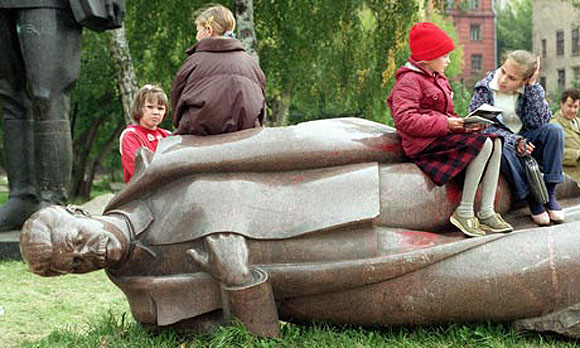
In der Ukraine wurde eine Lenin-Statur erst kürzlich vom Sockel gerissen. In Georgien soll nach nur drei Jahren eine Stalin-Statur wieder aufgestellt werden. Ein Interview über die Stalin-Verehrung mit dem georgischen Historiker Lasha Bakradze.

In Stalins Geburtsstadt Gori erlebt der Besucher ein bizarres Schauspiel. Stalin-Büsten, Stalin-Portraits, Stalin-Fotos. In diesem "Erinnerungsmuseum" werden weder Stalins Verbrechen noch die der kommunistischen Herrschaft ausführlich aufgearbeitet und thematisiert. Dabei wurden allein zwischen 1921 und 1941 72.000 Georgier erschossen und 200.000 deportiert. Wie beurteilen Sie als Historiker das aktuelle Verhältnis der Georgier zu der 70-jährigen sowjetischen Okkupation und Stalin selbst?

Ich glaube, zunächst muss man die kommunistische Ideologie bis zur georgischen Unabhängigkeit 1991 und die Stalin-Ära bis 1953 von einander trennen.

Meiner Meinung nach hat die in Georgien sehr verbreitete Stalin-Verehrung weniger etwas mit einem nostalgischen Rückblick auf die Sowjetzeit und der kommunistischen Herrschaft zu tun als vielmehr mit der Tatsache, dass Stalin ein Georgier war. Das sind ganz primitive Gründe und Verhaltensweisen. Da müssen wir uns gar nichts vormachen. Er war ein starker Georgier, der über ein großes Reich herrschte. Für viele Georgier ist das immer noch ein Grund, stolz zu sein. Sogar die Georgier, die antikommunistisch und antisowjetisch eingestellt waren, haben Sympathien für ihn. Ich habe oft Georgier sagen hören, wir wurden von Stalin unterdrückt und geknechtet, aber zumindest hat er auch das restliche Imperium geknechtet. Das ist einer dieser idiotischen Gründe, warum die Menschen ihn heute immer noch verehren.

Können Sie konkrete Zahlen über die Stalin-Verehrung in Georgien nennen?

Im vergangenen Jahr wurde von der Carnegie Stiftung für internationalen Frieden eine soziologische Umfrage in Russland, Armenien, Aserbaidschan und in Georgien zur Einstellung gegenüber Stalin durchgeführt. In Georgien war das bisher die erste wissenschaftliche Untersuchung dieser Art überhaupt. Demnach haben 45 Prozent der Georgier eine positive Einstellung gegenüber Stalin, 69 Prozent bezeichnen ihn sogar als einen "weisen Anführer". Ich hatte erwartet, dass viele Menschen ihn immer noch sympathisch finden, aber ich hatte nicht erwartet, dass es mehr Georgier als Russen sind. Die Stalin-Verehrung in Russland von rund 28 Prozent hat aber andere Gründe, die zudem vom Putin-Regime sehr gefördert wird. Putin betrachtet Stalin als Hauptfigur der alten Sowjetunion, um den Mythos des starken Führers aufrecht zu erhalten. Für ihn ist das ein Mittel des eigenen Machterhalts.

Wie erklären Sie sich diese mehrheitlich positive Einstellung gegenüber Stalin in Georgien?

Die Georgier haben sich bisher nicht ernsthaft mit Stalins Verbrechen auseinandergesetzt. Es gibt so gut wie keine Bücher auf Georgisch, die Stalin als Massenmörder und seine Verbrechen behandeln. In der Schule lernen die Kinder nicht, was detailliert das Totalitäre an dem Stalin-System war. Dabei forcierte Stalin gerade hier in Georgien auf brutalste Weise die Sowjetisierung. Er wollte Moskau beweisen, er ist kein georgischer Patriot.

In Deutschland begann gleich nach dem Fall des Hitler-Regimes mit den Nürnberger Prozessen die Aufarbeitung des Naziregimes. In den 1960er Jahren fragten die Jungen die Alten, was habt ihr damals eigentlich getan. So etwas gab es weder in der Sowjetunion noch in Georgien nicht. In den 1990er Jahren hatten wir hier fundamentale Probleme. Für diese kritische Aufarbeitung war keine Zeit. Aber auch heute wollen sich immer noch nicht viele Menschen mit dieser traumatischen Stalin-Zeit auseinandersetzen. Es gibt viele Bücher darüber auf Russisch und in anderen Sprachen, aber eben nicht auf Georgisch. Es gibt dazu so wenig Literatur, dass es schon peinlich ist. Wenn an den Schulen, in den Universitäten und auch im Fernsehen ausführlicher über die Verbrechen informiert werden würde, wäre schon viel getan in diesem Land.

Direkt im Zentrum von Tiflis gibt es seit wenigen Jahren das "Museum der sowjetischen Okkupation". Ist dieses Museum, wenn es um eine kritische Auseinandersetzung mit der georgischen Geschichte geht, also nur ein Tropfen auf dem heißen Stein?

Absolut! Zudem findet in diesem Museum der Okkupationsgeschichte eine komplette Schwarz-Weiß-Malerei statt. Dafür habe ich das Museum auch schon mehrfach kritisiert. Schon der Name sagt ja, wir sind nur okkupiert worden. Das stimmt auch. 1921 wurde Georgien okkupiert und annektiert. Aber alles was danach kam wie die Kollaboration – darüber wird geschwiegen. Aber man kann der Sowjetzeit in Georgien nicht gerecht werden, wenn man sagt, wir sind nur okkupiert worden und ich habe meine Hände in Unschuld gewaschen. Dieses Museum wird der Realität nicht gerecht. Hier in Georgien waren 70 Jahre die Kommunisten an der Macht. Mit Ausnahme von wenigen Menschen haben die meisten mit ihnen kollaboriert. Eine Aufarbeitung wird nicht glücken, wenn wir Georgier uns nicht selbst kritisch fragen, warum das so war.

Sehen Sie dennoch Tendenzen einer schrittweisen Annäherung an dieses Thema?

Es scheint langsam ein Interesse daran zu geben. Vor allem auch in diesem Jahr, wo in verschiedenen Dörfern und Städten Stalin-Denkmäler wieder aufgetaucht sind. Ich habe selbst an mehreren Diskussionen dazu teilgenommen. Solche Debatten und Gesprächsrunden erlebe ich in dieser Form zum ersten Mal in Georgien. Ende der 1980er Jahre während der Perestroika wurde kurzzeitig schon einmal viel darüber geschrieben. Für viele waren das schockierende Geschichten. Mehr als zwanzig Jahre sind seit dem Zerfall der Sowjetunion vergangenen, vielen Menschen geht es langsam wirtschaftlich besser. Jetzt könnte die Zeit für die Aufarbeitung gekommen sein. Wir haben aber auch viel Zeit verloren. Heute leben nur noch sehr wenige Opfer und Täter, die über die Verbrechen in der Stalin-Ära sprechen können. Zusammen mit ein paar Mitstreitern habe ich deshalb die Gruppe "Topographie des Terrors" gegründet. Wir bieten Führungen zu Häusern hier in der Altstadt von Tiflis an, wo wir den Menschen erzählen, was unter der kommunistischen Herrschaft hinter diesen Fassaden passiert ist.

Wie zu besten Sowjetzeiten wird im Stalin-Museum in Gori mit diversen Exponaten an den Diktator erinnert. Was denken Sie über diese Art der Erinnerung?

Es ist ein schockierender Ort. Man überlegt schon seit Jahren, was man mit diesem Museum machen soll. Meiner Meinung nach gibt es jetzt unter der neuen Regierung tatsächlich den politischen Willen, etwas in Gori zu verändern. Im Kulturministerium wurde eine kleine Gruppe von Historikern und Ministeriumsmitarbeitern gegründet, die ernsthaft überlegt, was mit dem Stalin-Museum passieren soll. So grotesk dieses Museum auch ist, in der seit Jahrzehnten nicht veränderten Ausstellungsform ist es auch einmalig. Und diese Einmaligkeit muss bewahrt werden. Aber neben dieser primitiven, geschichtsfälschenden Stalin-Darstellung muss es in Zukunft auch eine parallele Ausstellung dazu geben. Es muss gezeigt werden, wie Geschichte zu Propagandazwecken genutzt wird. Wenn wir das schaffen, dann wird dieses Museum wirklich einmalig sein. Die internationalen Besucher werden auch weiterhin dorthin kommen, aber vor allem wird es eine Bildungsstätte für die Georgier sein.

In wenigen Tagen soll direkt vor dem Museum eine Stalin-Statur aufgebaut werden, die erst vor drei Jahren entfernt wurde. Wird ein in Stein gemeißelter Stalin bald wieder auf die Menschen in Gori hinunter schauen?

Die Statur wurde vor drei Jahren in einer Nacht- und Nebelaktion beseitigt. Ich war damals dagegen, weil ich der Meinung war, die Menschen müssten erst über Stalins Verbrechen aufgeklärt werden, weil sonst genau das passieren könnte, was jetzt droht. Nach drei Jahren wird Stalin aus irgendeiner dunklen Ecke wieder vorgekramt. Der jetzige Wiederaufbau wäre noch peinlicher, als wenn die Statur bis heute dort stehen geblieben wäre.

Ich hoffe dennoch, dass mehr und mehr Menschen beginnen werden, über die Rolle von Stalin und die Rolle der Georgier im Kommunismus zu diskutieren. Vor allem die jungen Leute müssen verstehen, aus welcher Realität wir kommen. In der Bevölkerung sind immer noch sehr stark die sowjetischen Verhaltensmuster wie Obrigkeitsdenken und Kritiklosigkeit verankert. Über viele Themen wird nach wie vor nicht gesprochen. Daran merkt man, wie viel Sowjetisches in den Köpfen noch vorhanden ist. Wenn wir uns damit nicht auseinandersetzen, werden diese Verhaltensweisen immer weiter fortgesetzt. Man darf vor diesen zum Teil traumatischen Geschichten nicht die Augen verschließen. Wir Georgier müssen uns trauen, auch unangenehme Fragen zur unserer jüngeren Geschichte zu stellen. Wir können nicht in die Zukunft gehen, wenn wir uns dieser Zeit nicht stellen.

Tuesday, May 21, 2013

PRESSEMITTEILUNG: Demonstration gegen homophobe Ausschreitungen und für den säkularen und toleranten Staat in Georgien

WO? Am 23. Mai 2013 um 18.00 Uhr vor der Georgischen Botschaft in Berlin

Am 17. Mai 2013 haben georgische Staatsbürger in der Hauptstadt Tbilissi anlässlich des "internationalen Tags gegen Homophobie und Transphobie (IDAHO)" gegen Intoleranz und Homophobie eine Schweigedemonstration veranstaltet. Mehrere tausend Gegendemonstranten, die von Priestern der georgisch-orthodoxen Kirche angeführt wurden, durchbrachen die Polizeiabsperrungen und griffen die LGTB-Aktivisten/innen an. Die Priester riefen außerdem zur Gewalt gegen Homosexuelle und MenschenrechtlerInnen auf und sprachen Morddrohungen aus. Nur mit großer Mühe und nach langem Zögern, gelang es der Polizei die LGTB-Aktivisten/innen vor der exzessiven Gewalt der Ultraorthodoxen zu schützen und mit Bussen in Sicherheit zu bringen. Die Ultraorthodoxen bewarfen die Busse daraufhin mit Steinen und versuchten weiterhin Gewalt gegen die LGBT-Aktivisten/innen auszuüben. Es gab viele Verletzte.

Die Regierung Iwanischwili ist, trotz der verbalen Verurteilung der Gewalt untätig geblieben. Die Folge dieser Untätigkeit ist eine Hexenjagd auf Homosexuelle in der Hauptstadt Tbilissi. Mehrere Aktivisten/innen berichten von anhaltenden Schikanen. Inakzeptabel und empörend waren Äußerungen einiger Vertreter der parlamentarischen Mehrheit, die LGTB-Aktivisten/innen hätten durch ihre Kundgebung die Gewalt provoziert. Heute geht es nicht nur um die Rechte einer Minderheit, sondern um die demokratische Grundordnung Georgiens. Wenn die georgisch-orthodoxe Kirche die Grundsätze der Verfassung nicht anerkennt, den georgischen Staatsbürgern ihr Recht auf freie Entfaltung abspricht, zur Gewalt aufruft, Gewalt ausübt und diese Gewalt außerdem noch unbestraft bleibt, dann ist die Regierung nicht in der Lage, die demokratische Grundordnung in Georgien zu schützen und aufrechtzuerhalten.

Wir fordern den georgischen Staat zum Schutz aller seiner Bürger und zur Einhaltung der Verfassung auf!

Wir fordern die juristische Verfolgung aller Gewalttäter, seien es Geistliche oder Privatpersonen!

Wir fordern die Deutsche Bundesregierung auf, die georgische Regierung zum Schutz der Freiheit und Demokratie in Georgien zu ermahnen!

Wir fordern deutsche Stiftungen auf, Finanzierung der georgisch-orthodoxen Kirche einzustellen!

Tuesday, March 12, 2013

SOCIETY: Stalin’s Long but Contradictory Shadow (imrussia.org)

(imrussia.org) Monday, 11 March 2013 8:54 PM

On March 5, Russians observed the sixtieth anniversary of the death of Josef Stalin, with the country divided over whether to view him as a tyrant who butchered millions of people or as a savior who defeated Hitler and transformed the nation into a superpower. Donald N. Jensen, Resident Fellow at the Center for Transatlantic Relations at the Johns Hopkins School of Advanced International Studies, notes that the current Russian regime frequently relies on Stalinist symbols and habits of governance.


Hundreds of people laid carnations on Stalin’s grave in Red Square, where his body was buried in 1961 after it had lain next to Lenin’s in a mausoleum for over eight years. Communist Party leader Gennady Zyuganov praised Stalin as a symbol of Russia’s “great victories” and said that Russia needs to draw on his “unique experience” in order to overcome its problems today. The Communist daily Sovetskaya Rossiya ran a cover story on Stalin entitled “His Time Will Come.”

Stalin’s image is widely used on Victory Day, the date on which Russians celebrate the end of World War II, but, as observers note, “the 1930s-era purges, the murderous collectivisation of the peasantry, and the feared network of Gulag camps that together claimed millions of lives are largely absent from public discourse.” Moreover, the Communist Party has collected 100,000 signatures on a petition to restore Volgograd’s postwar name, Stalingrad. (That German officials today would express similar nostalgia for the Third Reich is almost unthinkable.) Nevertheless, a sizeable minority of the Russian public sees Stalin as a dictator whose crimes have yet to be fully acknowledged. The cover of the liberal Moscow News on Tuesday proclaimed, “Stalin. Farewell” and depicted his face scribbled over with graffiti. On few other issues—including the assessment of Mikhail Gorbachev’s role in the death of the USSR and Russia’s tumultuous years after 1991—are Western and Russian views so divergent.

The discord over Stalin’s role reflects a deeper conflict over how Russians see themselves. “The two views of Stalin,” according to Masha Lipman of the Carnegie Moscow Center, coexist in equal measure, split between the “public perception of Stalin as both a tyrant to blame for the deaths of millions and a wise and powerful leader who won the war against Hitler. In the minds of many Russians, in fact, the two perceptions are commonly combined.” The poet Anna Akhmatova, who lost her husband in Stalin’s camps and whose son spent 14 years there, wrote that after Stalin’s death “the two Russia’s faced each other—those who went to prison and those who sent them there.”

The discord over Stalin’s role reflects a deeper conflict over how Russians see themselves.

A new report by Lipman and three other colleagues published earlier this month by the Carnegie Endowment finds that support for Stalin has actually increased since the fall of the Soviet Union. Stalin is today the uncontested leader on Russians’ list of great historical figures, placed ahead of Lenin and Peter the Great. The Carnegie report offers several reasons for this “Stalin Puzzle”: support for Stalin may be more of a reflection of dependency and confusion than genuine support for dictatorship; Stalin is still admired as a wartime leader, especially among the elderly; and de-Stalinization has been a half-hearted effort. Lev Gudkov, president of the well-regarded Levada Center and a coauthor of the Carnegie report, believes that Stalin’s continued popularity is partly due to disappointment with political liberalization. Stalin, he argues, is a symbol for the perceived failings of liberal democracy. According to Gudkov, the biggest rise in Stalin’s reputation occurred after Putin came to power in 2000 and “launched a comprehensive program to ideologically reeducate society.”

The Carnegie report contends that Putin has deliberately manipulated Stalin’s image to reinforce his effort to build a “power vertical” in Russia. The Russian president has generally abstained from public criticism of Stalin. He and his team have minimized the high human cost of the Gulag, forced collectivization, and industrialization. Putin has restored Soviet-era symbols and focused on “achievements” during that era rather than Stalin’s crimes. Many Russians have been angered by government-sponsored textbooks that portray Stalin in a largely positive light, stressing the leader’s “effective management” of the 1930 industrialization campaign.

Putin’s appointment of controversial historian Vladimir Medinsky as Minister of Culture has faced particular criticism and sparked concerns that state-enforced “patriotism” is on the Kremlin’s agenda. Medinsky, the author of numerous works of “history,” has been accused of dubious scholarship, plagiarism, and propaganda. One of Medinsky’s favorite topics is World War II. He claims that Soviet troops never really invaded or occupied Poland or the Baltic States, but only “incorporated” them. Medinsky believes that only 10 percent of returning Soviet prisoners of war were sent to the Gulag, a conclusion rejected by almost all other historians, and that a photo showing Soviet and German troops together celebrating their joint victory over Poland in Brest-Litovsk on September 22, 1939, was “photoshopped.”

Stalin is losing his power to attract or repel Russians who are more urbanized, self-sufficient, and critical of their county's history.

To be sure, President Putin has made a few attempts to honor Stalin’s victims. Most notably, in October 2007, he attended a memorial service at the Butovo shooting range near Moscow, the second-largest Soviet-era execution ground, where more than 20,000 people—including peasants, factory workers, Czarist military officers, Russian Orthodox clergymen (most notably Metropolitan Seraphim (Chichagov) of Leningrad), German Communists, writers, invalids, and even Moscow’s Chinese launderers—were shot between 1937 and 1938 at the height of Stalin’s Great Terror. Putin used the occasion to urge that political arguments be “creative rather than destructive.” The visit seemed half-hearted to many human rights observers, however, because an August ceremony to erect a shrine to victims was not attended by any Kremlin officials and fell during a Duma election campaign.

Gennady Zyuganov, leader of the second-largest party caucus in the Russian parliament, does not hide his admiration for Stalinism.

From the beginning, some Russians tried to forget. After World War II, an apple orchard and strawberry patches were planted over the dead buried at Butovo. It was said that the fruit grew unusually large there. The government gave the property to the Russian Orthodox Church in 1995, but, with the exception of the religious celebrations held by the Patriarch every year, the district—now dotted with flowers and birch trees—is often empty, and few schoolchildren visit. Much construction has occurred in the area in recent years, transforming Butovo into a comfortable and convenient place to live that is popular with Moscow’s middle-class businessmen and, it is said, mafia bosses.

The Carnegie report finds that, despite continued argument over the Great Dictator, Russian society displays a growing indifference toward Stalin, especially among young people. Stalin is losing his power, the report concludes, to attract or repel Russians who are more urbanized, self-sufficient, and critical of their country's history. However, given a regime today that so frequently relies on Stalinist symbols and habits of governance—though it is both unwilling and unable to embark upon the dictator’s totalitarian path—the decision to sweep aside the question of Stalin’s role in Russian history is unlikely to lessen its enduring influence.

Monday, September 03, 2012

GEORGIA: Orthodox Church Looks Askance at Proliferation of Yoga Studies. By Molly Corso (eurasianet.org)

(eurasianet.org) A growing number of Georgians are turning to yoga to shake off the stress of daily life. But their quest for inner calm and smaller waists is generating hostility from the powerful Georgian Orthodox Church.

Over the past two years, yoga has gone from a largely unknown Eastern tradition to a popular fitness routine in the Georgian capital, Tbilisi. Georgian National Yoga Federation President Giorgi Berdzenishvili, a passionate practitioner for the past 15 years, called the trend a “dynamic” process that started under former Soviet leader Mikheil Gorbachev’s glasnost’ policies in the late 1980s.

Yoga is growing in popularity in Georgia, particularly among Georgians who have traveled abroad - or those who are seeking help with back pain. (Photo: Molly Corso)During the Soviet era, when religious beliefs were discouraged, yoga tended to be viewed as a fringe health-oriented practice, devoid of spirituality, Berdzenishvili noted. But slowly, over the past several years, amid increased Internet usage and travel abroad, yoga has moved into the mainstream in Georgian society.

Today, yoga’s popularity is at an all-time high, instructors say. Classes are full, leading to the opening of several new studios in Tbilisi over the past year. This phenomenon has some Georgian Orthodox priests worried, due to yoga’s spiritual roots in Hinduism, and its perceived association with Buddhism.

While the Patriarchy, the body that governs the Georgian Orthodox Church, did not respond to requests from EurasiaNet.org for the Church’s official position on yoga, dozens of websites devoted to the faith have published articles and blogs that are critical of the practice.

Orthodoxy.ge, a website run by priests at Sioni Cathedral, the former headquarters of the Georgian Orthodox Church, warns the faithful that yoga is full of false “charms” that lure people away from God.

In a long entry entitled “Eastern Culture,” the priests caution that even people who perform “simple yoga exercises … gradually develop some spiritual thoughts” (a broad reference to meditation) that are not compatible with Christianity.

The Church is widely viewed as the most trusted institution in Georgia, and, by extension, Georgian Orthodox priests often wield considerable influence, providing guidance on everything from family planning to purchasing a car.

Local yoga instructors told EurasiaNet.org that priests’ concerns about yoga have stopped some Georgians from taking up the discipline, and have prompted others to abandon it. Mariam Ubilava, a certified yoga teacher at Sun Yoga Tbilisi, said that newcomers often ask before class if meditation is part of the program. “Georgians don’t like meditation so much,” Ubilava said. “Georgians are very strong in their religion and they think if they start meditation, this is related to Buddha and India, and they avoid [it].”

Three years ago, when 38-year-old Nino Kokosadze decided to take up yoga, she noticed that some of the women attending her early morning yoga classes bowed out of the group after their priests “forbade” them from attending.

Kokosadze, who turned to yoga to help with chronic back pain, decided after a few lessons to check with her priest as well. “I am Orthodox, a religious person and already six years I am attending church,” she said during a break at an outdoor yoga session not far from downtown Tbilisi. But Kokosadze’s priest took a more tolerant view. “I told him that some priests prohibited it,” she recounted. “He said that those who know what is yoga won’t prohibit it.”

Many Georgians simply need more information about yoga and meditation, said yoga instructor Ubilava. “[Meditation] doesn’t mean that you become Buddhist or following [sic] the Buddhist religion. It means you forget your daily life, meditate on something.”

Nidhin Kochath Sugathan, a yoga instructor from the Indian state of Kerala, agrees, saying he’d encountered the same concern when he started teaching at Tbilisi’s Yoga Ananda studio. “Georgians had the wrong knowledge that yoga means sitting in the lotus position and chanting only,” Sugathan said.

With time, as practitioners realized that “[b]y chanting one ‘Om,’ they’re not going to change their religion,” the objections vanished, he said.

Nonetheless, after conversations with priests, National Yoga Federation President Berdzenishvili decided to develop a more culturally sensitive version of yoga practice for use in the federation’s classes; one that focuses on fitness, rather than meditation, and does not encourage participants to adopt yoga “spiritual names” or specific forms of dress.

Olga Ramer, the owner of Tbilisi Yoga Cave, one of the first yoga studios to open in the city, noted, that most Georgians today appear as interested in both the spiritual and physical aspects of yoga. “I would say there are more expats who are interested just in [the] physical part,” Ramer said. “The locals who come are actually very spiritual and they want both the physical and the spiritual.”

Those dual aspects of yoga have paid off for Kokosadze, who says that, after three years of regular yoga practice, her back is feeling better and her spiritual life has improved with the stronger powers of concentration acquired from yoga. The three-hour church services she attends each week “pass like a minute because now I am focused on what is happening.”

“[Yoga] has really helped me to concentrate on the main thing,“ she said. “You realize what is the most important in your life.”

Editor's note: Molly Corso is a freelance journalist who also works as editor of Investor.ge, a monthly publication by the American Chamber of Commerce in Georgia.

Sunday, June 24, 2012

FOOD & WINE: The Georgian Wine Society (georgianwinesociety.co.uk)

(georgianwinesociety.co.uk) Wine lovers have a lot to thank Georgia for. It is widely believed that this is where wine production first began, over 7000 years ago. In fact, our word “wine” is derived from “gvino” – the Georgian word for wine. Archaeological remains suggest that as early as 4000 BC grape juice was being placed in underground clay jars, or Kvevri, to ferment during the winter.

The vine is central to Georgian culture and tightly bound to their religious heritage. It is common for families throughout Georgia to grow their own grapes and produce wine. Feasting and hospitality are central pillars of Georgian culture, and traditional banquets are presided over by a toastmaster, or Tamada, who proposes numerous toasts throughout the meal, and ensures the wine flows liberally.

Georgia is a land famed for its natural bounty. These days there are over 500 species of grape in Georgia, a greater diversity than anywhere else in the world, with around 40 of these grape varieties being used in commercial wine production. Conditions are well suited for viticulture: summers are rarely excessively hot, winters are mild and frost-free. In addition, the mountains around the vineyards are full of natural springs, and rivers drain mineral-rich waters into the valleys. All this means that Georgian wines have a reputation for being exceptionally pure.

Around 150 million litres of wine are produced each year in Georgia, with around 45 000 hectares of vineyards under cultivation. There are 18 Specific Viticulture Areas (a local analogy of the Controlled Appellations of Origin) where the grape variety, planting density and yield per hectare is controlled by Ministry of Agriculture, and where the grape yield per hectare is limited to 8 tons.

Georgia’s wines fall into several zones: Kakheti and Kartli in the east, and Imereti, Samegrelo, Guria, Ajaria, and Abkhazia in the west. By far the most important of these is Kakheti, which produces 70% of all Georgian wine. The map below shows where these can be found, along with the most important Specific Viticulture Areas.

http://georgianwinesociety.co.uk/wp-content/uploads/2009/05/georgian-map.jpg


One of Georgia’s great wine making traditions, which one cannot help noticing when coming across these wines for the first time, is its medium sweet wines, which appear in both red and white varieties. The Georgian Wine Society stocks a number of these wines, including the famous Kindzmarauli, the less well known but highly regarded varieties of Ojaleshi and Pirosmani, and the magisterial Khvanchkara, the favourite wine of one of Georgia’s most important sons, Joseph Stalin.

Traditionally, medium sweet wines were produced in the mountainous areas where, due to climate and soil conditions, late harvest and early winter prevented fermentation and the wine stayed sweet. This type of wine was therefore generally used for local and quick consumption, because in spring, when the temperature rose, the wines tended to re-ferment and spoil. Nowadays, famous Georgian semi-sweet wines such as Kindzmarauli and Khvanchkara are specifically created to preserve their high sugar content.

There has never been a better time to bring Georgian wines to the UK public. New levels of investment in the Georgian wine industry mean that there are some really fabulous wines emerging from the country, which must be on the list of any serious wine devotee. We hope you enjoy them.

Wednesday, March 30, 2011

EINLADUNG: Internationalen Armin T. Wegner Tagen 2011 (armin-t-wegner.de)

Liebe Mitglieder der Armin T. Wegner Gesellschaft,

wir laden Sie ganz herzlich zu den Internationalen Armin T. Wegner Tagen 2011 und unserer alljährlichen Mitgliederversammlung in Wuppertal ein.

Um die eigentliche Mitgliederversammlung haben wir wieder ein interessantes Programm zusammengestellt, dessen Höhepunkt das Passionskonzert am 2. April um 18.00 Uhr in der Immanuelskirche in Wuppertal-Oberbarmen mit dem Oratorium für den ermordeten Journalisten Hrant Dink sein wird.

Ich möchte noch darauf hinweisen, dass nach zwei Jahren wieder der Vorstand der Armin T. Wegner Gesellschaft neu gewählt wird und Sie deshalb bitten, Nominierungen für den Vorstand einzureichen sowie zahlreich zur Mitgliederversammlung zu kommen, um sich an dieser Wahl zu beteiligen.

Berlin, den 10. Februar 2011
Thomas Flügge
Vorsitzender der Armin T. Wegner Gesellschaft Internationale Armin T. Wegner Tage 2011 vom 2. – 3. April in Wuppertal

Weitere Informationen unter :
www.armin-t-wegner.de
www.armin-t-wegner.us

Thursday, January 27, 2011

CALL: CfP: Political Transformation and Social Change in the South Caucasus', GE 24.-25.6.2011 (ascn.ch)

ASCN Annual Conference (pdf >>>)

"Political Transformation and Social Change in the South Caucasus: The Case of Georgia", 24-25 June 2011, Georgia

Call for contributions

Interested young researchers (PhD candidates) are invited to apply to participate in the ASCN Annual Conference that will take place in Georgia from 24 to 25 June 2011.

The main objectives of the conference are to:

. provide opportunities for researchers dealing with Georgia to meet, network, exchange and discuss their research projects, results and ideas

. discuss the challenges, the contradictions and ambivalences of the transformation process with which social sciences are confronted in Georgia

Eligible candidates

. PhD students dealing with Georgia, and eager to present and discuss their research work with colleagues from the region and beyond (especially current PhD projects and/or research results) that can be related to the topic "Political Transformation and Social Change in Georgia".

. The contributions to be presented must deal specifically with Georgia. Contributions with a comparative dimension may be accepted.


Topics

Proposals must be linked to one of the following themes:
- identities, ethnicity and conflicts
- civil society, social networks and social capital
- state structures, elites and governance
- economic and social development

The selected candidates will be able to present and discuss their work in one of the thematic workshops. Researchers financed by ASCN will also present their research projects, methodology-related issues and results. For more information about the ASCN current research
projects, please go to the ASCN website, section Research.

Deadlines

All interested candidates should submit their short CV (1 page), an abstract of their contribution to be presented at the conference (300 to 500 words) and a short motivation letter by 14 March 2011 at the latest, through
info@ascn.ch. All documents need to be merged into a single pdf file. The selection process will be completed and announced by 8 April 2011.

For those accepted, the University of Fribourg will cover travel and accommodation expenses, and/or provide
opportunities for co-financing if the costs in individual cases exceed the average expenses per participant coming to the conference. The selected participants will be informed about the programme and specific workshops of the conference, as well as the technical details in due time. The organisers reserve the right to limit the number of applicants accepted to participate in the conference.

About ASCN

The Academic Swiss Caucasus Net (ASCN) is a programme aiming to promote social sciences and humanities in the South Caucasus. The different activities foreseen in the programme aim to contribute to the emergence of a new generation of talented researchers. Promising
junior researchers are supported through research projects, capacity-building trainings and scholarships. The emphasis of the programme is on the promotion of individuals. In order to ensure sustainability, the ASCN programme puts emphasis on international networking and thus promotes cooperation between scholars based in the South Caucasus and scholars in Switzerland.

Website
www.ascn.ch, "Events" section

Further Information
Denis Dafflon, ASCN Programme Coordinator
info@ascn.ch; denis.dafflon@unifr.ch

+++

Denis Dafflon
Programme Coordinator
ACADEMIC SWISS CAUCASUS NET (ASCN)
University of Fribourg / Interfaculty Institute for Central and
Eastern Europe (IICEE)
Bd de Pérolles 90
1700 Fribourg/Switzerland
Phone: +41 26 300 79 82
Mobile: +41 79 303 43 44
E-mail: denis.dafflon@unifr.ch
Website:
www.ascn.ch

Tuesday, June 29, 2010

MAGAZIN: Armenisch-Deutschen Korrespondenz (deutscharmenischegesellschaft.de)

ADK 148, die aktuelle Ausgabe der Armenisch-Deutschen Korrespondenz, Organ der Deutsch-Armenischen Gesellschaft (DAG), ist erschienen!

Einzelexemplare können gegen Rechnung erworben werden (7,- € zzgl. Porto (Inland) / 9,- € zzgl. Porto (Ausland)). Interessenten möchten sich bitte direkt an die Schriftleitung der ADK, Dr. Raffi Kantian , wenden.

Wer an einem ADK-Abonnement interessiert ist, lädt das Aboformular von der Webseite der DAG herunter bzw. kontaktiert die Schriftführerin der DAG, Dr. Susanne Dibbelt .

Für Nichtmitglieder beträgt das Jahresabonnement (4 Hefte) bei Einzelpersonen 25,- EUR, bei Institutionen 30,- EUR.

Inhalt
Liebe Leser 1

Armenien & Kaukasus
Konfliktgebiet Berg-Karabach 2
Auf dem Vormarsch 4
Karabach hat gewählt - zum fünften Mal 5
Unparteiisch? 6
Suspendiert 6
Die Menschenrechte in Armenien 7
Armenien als Reiseziel 9

Armenien & Deutschland
Aghet – ein Völkermord 13
Genozid an den Armeniern 15
Hakkı Keskin & Aghet 15
„Amnesie ist keine Grundlage für Frieden und Versöhnung“ 16
Günter Grass zum türkischen Tabu 18

Türkei & Orient
Die geostrategischen Ambitionen der Türkei, Teil 1 19
Wenn Mutige zum Erinnern anhalten 23
Wenn das Schweigen sich Schicht um Schicht lüftet, Teil 2 26
Kilikien 1909; Teil 1 31

Aus Religion & Kirche
Religiöse Führer: Den Frieden sondieren 36
Kirche in Halle geweiht 37

Kunst & Wissenschaft
Anahit Toptchian: Und seine Seele empörte sich 38
Arshile Gorkys Identität überprüfend 40
Richard Kloian † 43
Kristina Altunjan im Porträt 44
Vergessen! Vergessen? 46
Die armenischen Flüchtlinge in Armenien: Dsjunaschogh, Teil 1 49
„Kaukasische Rochade“ 51
Die bildliche Darstellung des missionarischen Erfolges
im späten Osmanischen Reich 52
Jaroslav Daškevyč † 55
Achtamar 56

Veranstaltungen
Zum 95. Mal – der 24. April 57
Dreifaches Gedenken in Hamburg 58
Gedenkveranstaltung im Französischen Dom 59
Zwischen Leugnung und Wirkung 60
Tagung in Arzach 61
Armin T. Wegner-Ausstellung in Solingen 62

Bücher, Zeitschriften & CDs
Im Fadenkreuz von Chanson und Jazz 64
Grigor der Erleuchter und die Christianisierung Armeniens 65

In Kürze 67

Wednesday, June 23, 2010

FOUNDATION: The European Azerbaijan Society (TEAS), London, UK (t-e-a-s.eu)

Self-description:

"The European Azerbaijan Society (TEAS) was launched in November 2008, having been initially established four years earlier as the London Azerbaijan Society. Its objective is to promote Azerbaijan to international audiences and create a sense of community for expatriate Azeris.
There are hundreds of TEAS members, and the Society regularly organises Azeri events across Europe in order to raise awareness of the unique, rich and varied culture of the region. TEAS also operates as a networking forum, focusing on areas such as business development, diplomatic relations, culture and education to promote greater understanding and co-operation between Europe and Azerbaijan."

Wednesday, November 18, 2009

EU CIVIL SOCIETY: Civil Society Forum Strengthens The Eastern Partnership (egovmonitor.com)

More than 200 Civil Society representatives from Armenia, Azerbaijan, Belarus, Georgia, Republic of Moldova, Ukraine, the EU Member States, international organizations and networks as well as third countries are gathering in Brussels on 16-17 November for the first Eastern Partnership Civil Society Forum.

Friday, April 24, 2009

PHOTOGRAPHY: Marika Amurvelashvili (amurvelashvili.ge)

A friend sent me this link to the homepage of the photographer Marika Amurvelashvili. I couldn't find any information in the internet for publishing here ;-).

Great photos from her work and some informations about this person can you see here: www.amurvelashvili.ge

Last year on December 26 Sheraton Metechi Palace Hotel hosted the journalists’ awards ceremony to recognize the excellence in the social coverage.

One of the winners were awarded in four categories was Marika Amurvelashvili:

1. Best television report – Temur Bardzimashvili;
2. Best radio report – Jimsher Rekhviashvili and Goga Aptsiauri;
3. Best article – Maka Jaiani;
4. Best photo report – Marika Amurvelashvili.

The contest was supported by IC Group insurance company having set a special prize – 1-year health insurance for all four categories. Journalists, civil sector representatives and MPs attended the awards ceremony. (source: http://media.ge/eng)

Friday, March 13, 2009

NEWS: 13 Mar 09 | Caucasus Reporting Service 484 (iwpr.net)

Georgia Opposition Vow to Topple Saakashvili
President’s enemies say huge street protests next month, will end his rule - but not everyone is convinced. By Mikhail Vignansky in Tbilisi (CRS No. 484, 13-Mar-09)

Armenian Gays Face Long Walk to Freedom
Society remains as relentlessly homophobic here as elsewhere in the Caucasus, but activists say there some grounds for hope. By Vahan Ishkhanian in Yerevan (CRS No. 484, 13-Mar-09)
Karabakh Refugees Take Dim View of New Homes
They say living conditions in new settlements provided by authorities almost unbearable. By Sabina Vagifqyzy in Beylaqan (CRS No. 484, 13-Mar-09)

NACHRICHTEN: Der Patriarch übernimmt die Familienplanung. (idea.de)

In einem christlichen Nachrichtenportal in Deutschland fand ich Folgendes: Erst wird beinahe freudig eine Statistik angeführt, dass trotz des Krieges die Geburtenraterate gestiegen sei. Das klingt verwunderlich, aber die Soziologen heben ja manchmal absurd erscheinende Statistiken zutage, die man sich selbst überhaupt nicht erklären kann, wobei die Absurdität der Realität dann analytisch erklärt wird. Doch in in Georgien ist der Fall nicht so kompliziert. Liest man den Text weiter, erfährt man erstaunliches. Nicht hat ein Krieg die Beölkerungszahl schrumpfen lassen, sondern der Patriarch Elia II. versprach, bei einer kirchlich geschlossenen Ehe, die Kosten für jedes dritte geborene Kind zu übernehmen. Interessant ist, wie man sich um das Anwachsen der Schafsherde bemüht. Was wird da im Schilde geführt? Und wie reagiert denn die Poltik darauf? Gibt es in Georgien überhaupt soetwas wie ein Sozial- und Familienministerium?

Ein Land zu entwickeln besteht ja nicht nur in solch einer kruden Familienpolitik. Was sollen die Erst- und Zeitgeborenen wohl dazu sagen? Wie steht es um Bildung und Wohlstand, Voraussetzungen für die Entwicklung eines Selbstbewußtseins?
Der Patriarch zog jetzt (s)eine Erfolgsbilanz: „Pille und Abtreibung dürfen wir nicht nur mit Verboten bekämpfen. Angesichts der familien- und kinderfeindlichen Einstellung der heutigen Gesellschaft müssen wir christlichen und kinderreichen Familien auch finanziell beistehen.“

Ich sage dazu nur, wer eins und eins zusammen zählen kann, wird nicht immer zwei bekommen ... ;-)

Sunday, March 08, 2009

BUCHMESSE LEIPZIG 2009: Kai Ehlers, Titel Russland - Herzschlag einer Weltmacht (leipzig-liest.de)

Intime Einblicke in ein Russland mit Zukunft
13. März 2009, 12:30 - 13:00 Uhr

Eine bescheidene Etagenwohnung in einem Moskauer Vorort ist Schauplatz eines Dialogs zwischen dem deutschen Russlandforscher Kai Ehlers und dem russischen Schriftsteller und Journalisten Jefim Berschin. Im Gedankenaustausch treffen Skepsis und Sympathie, Innen- und Außenperspektive aufeinander. Authentische Einblicke in die Umwälzungen der nachsowjetischen Ära öffnen sich und Grundmotive russischer Mentalität, Geschichte und Kultur, geografischer und geopolitischer Besonderheiten werden sichtbar, die Russlands Entwicklung geprägt haben und sich nur auf seinem Boden entfalten konnten.
Kai Ehlers und sein Gesprächspartner zeichnen ein kritisch-differenziertes Bild Russlands und gehen zugleich mit westlichen Klischees scharf ins Gericht. Die jüngste Geschichte Russlands von der dogmatischen Verhärtung unter dem Sowjetregime über die Auflösung staatlicher Ordnung während der Jelzin-Ära bis hin zur Restauration unter Putin zeigt ein Land der Extreme und Widersprüche, das in einer kritisch-distanzierten, seelenlosen Betrachtung nicht erfasst werden kann. Der Sachlichkeit von Berichten und Analysen werden deshalb die Unmittelbarkeit des Gesprächs und die Betroffenheit, die sich in Briefen über die Ereignisse der letzten zwanzig Jahre ausdrückt, an die Seite gestellt.
Recherchen vor Ort – zwischen St. Petersburg und dem Altai, zwischen dem Kaukasus und Wladiwostok – sind Grundlage für ein Gesamtbild Russlands, das geostrategische Aspekte ebenso umfasst wie die Lebenssituation der Bevölkerung in den Städten und auf dem Land, das die Machtelite in und außerhalb des Kremls ebenso einschließt wie die Kultur der Wolgavölker oder das Schicksal der Menschen in den Krisengebieten innerhalb und an den Grenzen Russlands. Wie von selbst richtet sich dabei der Blick auf die Überlebensstrategien der russischen Bevölkerung während der Zeiten der «Verwirrung», der «Smuta», und auf die Besonderheit russischer Gemeinschaftskräfte.

Moderation Jonathan Stauffer
Veranstalter
Pforte Verlag, Schweiz
Ort Leipzig liest Forum Halle 4, Stand D111

AmazonShop: Books, Maps, Videos, Music & Gifts About The Caucasus

Tuesday, February 17, 2009

BLOG: 180 Families in Ingushetia Currently Involved in Blood Feuds (windowoneurasia.blogspot.com)

By Paul Goble

Vienna, February 15 – Ingush President Yunus-Bek Yevkurov yesterday appealed to the 180 families in his North Caucasus republic who are now involved in blood feuds to resolve their differences and allow law enforcement agencies there to bring to justice those guilty of the crimes which have triggered these disputes up to now.

full article >>>

Paul Goble is a longtime specialist on ethnic and religious questions in Eurasia. Most recently, he was director of research and publications at the Azerbaijan Diplomatic Academy. Earlier, he served as vice dean for the social sciences and humanities at Audentes University in Tallinn and a senior research associate at the EuroCollege of the University of Tartu in Estonia. While there, he launched the “Window on Eurasia” series. Prior to joining the faculty there in 2004, he served in various capacities in the U.S. State Department, the Central Intelligence Agency and the International Broadcasting Bureau as well as at the Voice of America and Radio Free Europe/Radio Liberty and at the Carnegie Endowment for International Peace. He writes frequently on ethnic and religious issues and has edited five volumes on ethnicity and religion in the former Soviet space. Trained at Miami University in Ohio and the University of Chicago, he has been decorated by the governments of Estonia, Latvia and Lithuania for his work in promoting Baltic independence and the withdrawal of Russian forces from those formerly occupied lands. Mr. Goble can be contacted directly at paul.goble@gmail.com

Monday, February 09, 2009

ARTIKEL: „Was ist nur aus uns Armeniern geworden?“ (nachrichten.at)

Diesem Bericht widerstehen selbst Armenier in ihrem Kommentaren. Könnte es sein, dass sie sich verletzt in ihrem Stolz fühlen? Sicher geht es nicht allen Menschen in Armenien so schlecht, wie hier beschrieben, aber Einzelfälle sind es meines Erachtens auch nicht. Warum sich das nicht einmal genauer ansehen, wie in diesem Einzelfall? Hier geht es einer alten Frau offenbar nicht gut. Sie ist hoffnungslos - das wird einfach nur beschrieben. Unverständlich für mich ist, dass hier wieder selbsternannte Hobby-Historiker von früheren Zeiten faseln ... Ich verstehe nicht was sie mir sagen wollen in ihren Kommentaren, wenn es hier doch einfach nur um ein Schicksal einer über 70jährigen Frau geht!

„Was ist nur aus uns Armeniern geworden?“
Will man die Not in Armenien nur halbwegs realistisch beschreiben, dann müsste man eigentlich neue Wörter erfinden. Die Lebensumstände in der ehemaligen Sowjetrepublik übertreffen die schlimmsten Vorstellungen.

Der ganze Text >>>

Wednesday, December 17, 2008

NEWS: 11 Dec 08 | Caucasus Reporting Service 472

Georgia: Economic Slump Hurting
Once buoyant economy is hit by downturn and war over South Ossetia. By Tamar Khorbaladze in Tbilisi (CRS No. 472 11-Dec-08)

Monday, September 15, 2008

TOUS AU MEETING POUR LA PAIX AU SUD CAUCASE

By Seymur Kazimov

Armenian diaspora in Paris is organizing raly against Georgia and Azerbaijan and calls it "Peace in the Caucasus". Armenians claim Karabakh and Djavakheti and call it "Peace". Please inform Georgian MFA, civil society, media, memebrs of Georgian Parlaiment and Georgian diaspora in France. Try to make it public and discussed in international media, french media. This is how Armenians help Georgia in hard times. Unbelievable! Here is the info in french >>>

Sunday, August 17, 2008

FERNSEHEN: Georgien: Reise durch ein zerrissenes Land (LIVESTREAM MDR.DE)

Live-Steam: Windrose extra 17.08.2008 16:05 Uhr
Ein Film von Mathias Schaefer

Panzer, zerbombte Häuser, flüchtende Menschen – der Konflikt im Südkaukasus hält die Welt in Atem und richtet alle Blicke auf Georgien. Doch wie sieht der Alltag aus? [mehr]

Links in MDR.DE
Zum Livestream der Windrose, Sonntag 16:05 Uhr