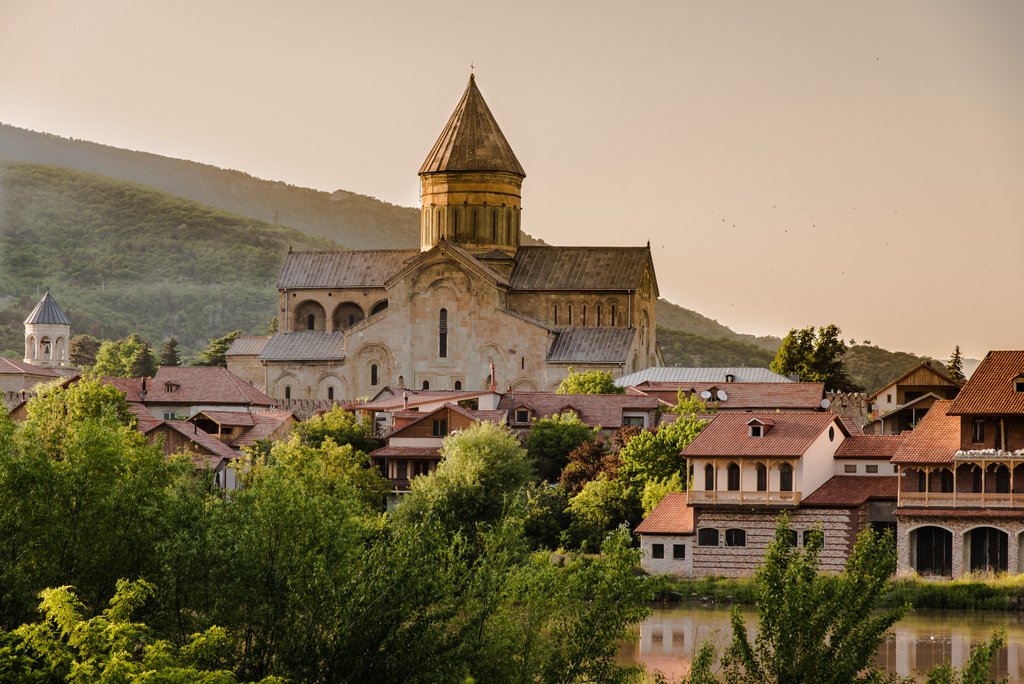
This video is about Making Wine in a Qvevri in the country Georgia - in twitter: @winetrailtravel
Showing posts with label twitter. Show all posts
Showing posts with label twitter. Show all posts
Tuesday, May 26, 2020


Wednesday, December 12, 2018
PUBLIC LECTURE: Heinrich Boell Foundation South Caucasus regional office presents: Florian Mühlfried's "Moments of mistrust in South Caucasus". via @Boell_SC
On December 7, 2018, Heinrich Boell Foundation's South Caucasus organized a public lecture with social anthropologist Florian Muehlfried.
Moments of mistrust in South Caucasus is his article, published at Heinrich Boell Foundation's website. You can read the article here: Moments of Mistrust in the South Caucasus [ge.boell.org]
Facebook: facebook.com/hbf.caucasus
Twitter: twitter.com/Boell_SC
Website: ge.boell.org
Tuesday, September 18, 2018
LITERATURE: Aka Morchiladze & Nino Haratischwili about #Georgia - Made by Characters
72 Georgian Characters are presented by Georgian National Book Center in a special video within the project Georgia Guest of Honour at the Frankfurter Buchmesse 2018.
Aka Morchiladze and Nino Haratischwili, the key speakers of the project are talking about 15 century old history of Georgian literature and multinatural Culture
georgia-characters.com
facebook.com/GeorgienEhrengastFrankfurterBuchmesse2018
Georgia – Made by Characters - Frankfurt Book Fair [pdf]
zeitblatt.com/georgia-made-by-characters-der-ehrengast-der-frankfurter-buchmesse-2018
Georgia Made by Characters [flickr.com]
twitter.com/geo_characters
Thursday, August 09, 2018
LITERATUR: Ruska Jorjoliani: Du bist in einer Luft mit mir
 |
La Stampa
Zwei Freunde, die russische Revolution, Verrat und der "graue Niedergang der großen Ideale" - das alles, dabei zwischen Zarenzeit, Revolution und den 50ern hin- und herspringend und mit einer ordentliche Prise Ironie gewürzt - verarbeitet die georgische Autorin Ruska Jorjoliani in ihrem Debütroman "Du bist in einer Luft mit mir". Lesen Sie hier einen Auszug.
Ruska Jorjoliani: Du bist in einer Luft mit mir
Roman
Aus dem Italienischen von Barbara Sauser
Rotpunktverlag, Zürich 2018. 216 Seiten, gebunden, 22 Euro
Erscheint am 23. Juli 2018
Mehr Informationen beim Rotpunktverlag
Klappentext: Dimitri und Viktor wachsen in Miroslaw auf, wo Pferdemistinseln die schlammige Hauptstraße zieren. Das kyrillische Abc lernen sie beim alten Diakon, Dimitri hat gern Metaphern, während Viktor Linien in sein Notizbuch kritzelt. Nach ihrer Studienzeit in Moskau hocken sie, nun Lehrer und Ingenieur und beide Nachwuchs erwartend, im Abstellraum des Schulhauses und gönnen sich täglich eine Partie Schach. Nur über die Revolution sind sie geteilter Meinung, und als Dimitri eines Tages das Leninporträt in hohem Bogen aus dem Fenster des Klassenzimmers wirft, wird sein Freund gegen ihn aussagen.
Dieses Verhängnis können die Kinder, Kirill und Sascha, die später wie Brüder sind und reden und sich kleiden wie ihr Lieblingsdichter Puschkin, nur erahnen. Aber einem von ihnen, schließlich in die Jahre gekommen und "Buchstabenhüter" an der Solschenizyn-Bibliothek, verdanken wir die Geschichte: Er erschafft mit dieser ironischen doppelten Familiensaga, die spielerisch zwischen der Zarenzeit, der russischen Revolution und dem "grauen Niedergang der großen Ideale" hin- und herspringt, ein neues literarisches Genre - und kann so doch noch die Hoffnung auf einen Dichter aus Miroslaw erfüllen.

Mehr:
twitter.com/ruskajorjoliani
facebook.com/ruska.jorjoliani
Saturday, August 04, 2018
#GeorgianWine: Amber Revolution. How the World learnded to love #OrangeWine. By Simon J Woolf - Review by David Crossley [wideworldofwine.co]
 |
Photo: Sarah May Grunwald
|
We often think of orange wines in connection with amphora, and specifically the Georgian qvevri, a clay vessel with a small aperture, traditionally buried in the ground, in which the wine more or less makes itself. What we should remember is that amber/orange wine is actually made in a range of containers, even including epoxy tanks and stainless steel.
Full text here ...
Amber Revolution – How the World Learned to Love Orange Wine is written by Simon J Woolf, with a Foreword by Les Caves’ Doug Wregg, who has probably imported significantly more different orange wines into the UK than anyone else has, or will. The book is published in The Netherlands by Morning Claret (www.themorningclaret.com) at €35/£30, and in the USA by Interlink Books, Northampton, Massachusetts ($35). I understand that wider UK and European distribution will be forthcoming within a couple of months, but contact Simon Woolf on the above link for sales enquiries in the meantime.
more:
twitter.com/simonjwoolf
www.themorningclaret.com/
Thursday, February 15, 2018
MUSIC: Moonlight Daughter - by Nino Arobelidze
Girl Named Nino is a band, artist and an album. It is the brainchild of Nino Arobelidze, Chicago-based singer, multi- instrumentalist from Tbilisi, Georgia. Nino's songwriting and multi-disciplinary pursuits have brought her into various collaborations in film, dance theater and television, including writing original songs for the documentary film; Our Blood is Wine (Music Box Films 2018).
more: www.girlnamednino.com
more links:
facebook.com/girlnamednino
twitter.com/girlnamednino
youtube.com/girlnamednino
instagram.com/girlnamednino
plus.google.com/+GirlNamedNino
bandsintown.com
more: www.girlnamednino.com
more links:
facebook.com/girlnamednino
twitter.com/girlnamednino
youtube.com/girlnamednino
instagram.com/girlnamednino
plus.google.com/+GirlNamedNino
bandsintown.com
Tuesday, January 16, 2018
DOCUMENTARY: Men Between Mountains: Masculinity in Georgia. Photography by Ian McNaught Davis, @ianmc0davis
Ian McNaught Davis long-term photography project explores facets of masculinity in the post-Soviet republic of Georgia.
Wedged amongst the rugged and formidable Caucuses Mountains, Georgia lies at the crossroads of Asia, Europe and the Middle East. Because of its explosive location, it has clashed with empires for centuries, including the Romans, Persians, Byzantines, Arabs, Khazars, Arabs, Turks, Mongols and Russians.
He is interested in photographing moments that reflect manhood in a battle-hardened society that finds itself in a state of limbo – when warriors have no wars to fight – and the shift in gender roles that war can leave in its wake.
Georgia it finds itself in fascinating time of transition. Paradoxes and contradictions abound in this small country. Secular attitudes collide with the dogma of the Orthodox Christian Church, and city-dwellers must negotiate their paternalistic family loyalties and traditions rooted in the countryside and villages.
For him, its political and ideological landscapes seem apt locations to explore the murkiness and complexities of masculinity.
His work can be viewed at www.ianmcnaughtdavis.com
Facebook: facebook.com/ianmcnaughtd
Twitter: twitter.com/ianmc0davis
Vimeo: vimeo.com/ianmcnaughtdavis
Instagram: instagram.com/ianmc0davis
Friday, April 07, 2017
PHOTOGRAPHY: Very cool photo series presented on Tamara Natenadze Photo Blog. By Timothy M. Bowser
This is an interesting look but one that I cannot say I've shared in. I've spent over three years living among Adjarians and spending much time in the highlands and villages of Xulo. There is a dark dignity to the photos presented here, and the people do have this dignity but I do not feel that there is the darkness illustrated here. I do not imply darkness as a mood or feeling, only the lens through which the photographer chose to portray her subjects. I have always found the highlanders to be amazingly open and joyous. I've spent a few Shuamtoba festivals at Beshumi and Goderdzi. They are riots of color, wrestling, horse racing, dance, and song. Marriages are conducted before the community and drunken fights are pretty common. The days leading up to the festivals were filled with merriment and obscene amounts of drinking. I've partook. Remember these are Muslim populations. The idea/s that we know anything about the Muslim world in Adjara is correct in the photographer/author's opening assessment. We do not know much about it. What we think we know about the populations of Adjara are most likely mistaken and wrought with unwarranted prejudices. One thing mentioned in the article and I find a truism is that the households would fall apart without the women managing them and they are present at the supras but are only periphery participants. Very cool photo series presented on Tako's blog. I found the smaller village Shuamtoba festival very interesting.
Timothy M. Bowser (e-portfolio)
Tim Bowser's Blog: beyondbatumi.com
beyondbatumi@gmail.com
facebook.com/beyondbatumi
Twitter @beyondbatumi


Tamara Natenadze Photo Blog: takonatenadzeajara.blogspot.de
Timothy M. Bowser (e-portfolio)
Tim Bowser's Blog: beyondbatumi.com
beyondbatumi@gmail.com
facebook.com/beyondbatumi
Twitter @beyondbatumi


Tamara Natenadze Photo Blog: takonatenadzeajara.blogspot.de
Tuesday, March 07, 2017
CLASSIC MUSIC: The Amazing Georgian Pianist Elisso Bolkvadze (www.elisso-bolkvadze.com)
(www.elisso-bolkvadze.com) Born in Tbilisi, Georgia, in the family of poets and writers, Elisso Bolkvadze began her musical study at the early age of four and performed her first concert with orchestra attheage of seven.
She’s a musician with numerous talents with an outstanding sensibility and brilliant virtuosity. As described by legendary Maestro Zubin Mehta, she is a pianist with a "complete control over the instrument”.
A superstar in her country of birth, prize winner of many international piano world competitions, Elisso Bolkvadze was awarded with "The Medal of Georgian Government” – one of the most prestigious national honors.
The Georgian artist has established herself as a vivid cultural heritage protector and became UNESCO Artist for Peace in 2015.
Bolkvadze is actively engaged in charity actions in order to help young talents and founded Charity Foundation "Lyra” in 2013, in her homeland Georgia.
She began her piano studies at the local Conservatory and continued in Moscow Conservatory with Tatiana Nikolaeva.
Her musical career and development as an artist was greatly influenced by musician and Doctor of Philosophy, Michel Sogny and his unique Piano Method.
Her performance highlights have included collaborations with: Czech National Symphony Orchestra, Santa Fe Festival Orchestra, Lithuanian National Orchestra, National Philharmonic of Ukraine and Lviv, Innsbruck Symphony Orchestra, TheGewandhaus Orchestra, France National Orchestra, Arkansas Symphony Orchestra, St. Petersburg Philharmonic, Krakow Philharmonic, Orchestre Colonne, United Nations Symphony Orchestra, Georgian Opera State Orchestra, Qatar Philharmonic.
She also tours with recital concerts in Asia, America and Europe, playing Mozart, Beethoven, Schubert, Debussy, Prokofiev and Chopin. As an Artist of Distinction, she will perform Mozart piano concerto N21 for the season opening in Maumelle Performing Art Center in USA with Arkansas Symphony Orchestra and Philip Mann as a conductor.
She recorded several albums for Sony BMG and Cascavelle Lable, performing piano concertos by Beethoven, Rachmaninoff and Liszt.
In 2015 Bolkvadze released an album "Prokofiev, Schubert” with Lable Audite that had a great critical acclaim and granted the title «Pianist Maestro».
As an artist actively engaged in cultural and human rights actions, Elisso Bolkvadze gave a charity concert in collaboration with the Embassy of Georgia, in March 2014 at Victoria Hall Geneva, She played Saint-Saens piano concerto N2 with the United Nations Orchestra for supporting Georgian children that have suffered from war. As well as series of charity concerts in Georgia in order to help individual patients and children affected by cancer.
In 2013 she founded Batumi International Music Festival on the shore of the Black Sea. It’s an important cultural highlight in Georgia, where artists of different cultures gather to create musical excellence. One of the main inspirations of the festival is to broaden the power of cultural dialogue, unify people around high values and become one of the important bridges of building peace around the world.
For her outstanding contribution to the development of culture and personal commitment to cultural exchanges between France and Georgia, Elisso Bolkvadze received the distinction of Chevalier des Arts et Lettres by French Republic in October 2015.
more videos are here: Youtube Channel by Elisso Bolkvadze
Please follow Ellisso on her twitter channel: twitter.com/e_bolkvadze
Feature Interview: Elisso Bolkvadze. By Esther Basha (MGBH)
A recent recipient of prestigious UNESCO Award Artists for Peace, the beautiful Elisso Bolkvadze juggles her busy life of an internationally recognized piano performer, organizer of Batumi Music Fest, Director of Lyra Charitable Foundation for young musicians and Co-Director of Michel Sogny’s SOS Talents Foundation. Does she have time to stop and smell the roses? We caught Ms. Bolkvadze during one of her rare quiet moments for a feature interview. >>> magazine.pianoperformers.org/Interview with Elisso Bolkvadze

 |
| On Stage: Elisso Bolkvadze |
She’s a musician with numerous talents with an outstanding sensibility and brilliant virtuosity. As described by legendary Maestro Zubin Mehta, she is a pianist with a "complete control over the instrument”.
A superstar in her country of birth, prize winner of many international piano world competitions, Elisso Bolkvadze was awarded with "The Medal of Georgian Government” – one of the most prestigious national honors.
The Georgian artist has established herself as a vivid cultural heritage protector and became UNESCO Artist for Peace in 2015.
Bolkvadze is actively engaged in charity actions in order to help young talents and founded Charity Foundation "Lyra” in 2013, in her homeland Georgia.
She began her piano studies at the local Conservatory and continued in Moscow Conservatory with Tatiana Nikolaeva.
Her musical career and development as an artist was greatly influenced by musician and Doctor of Philosophy, Michel Sogny and his unique Piano Method.
Her performance highlights have included collaborations with: Czech National Symphony Orchestra, Santa Fe Festival Orchestra, Lithuanian National Orchestra, National Philharmonic of Ukraine and Lviv, Innsbruck Symphony Orchestra, TheGewandhaus Orchestra, France National Orchestra, Arkansas Symphony Orchestra, St. Petersburg Philharmonic, Krakow Philharmonic, Orchestre Colonne, United Nations Symphony Orchestra, Georgian Opera State Orchestra, Qatar Philharmonic.
She also tours with recital concerts in Asia, America and Europe, playing Mozart, Beethoven, Schubert, Debussy, Prokofiev and Chopin. As an Artist of Distinction, she will perform Mozart piano concerto N21 for the season opening in Maumelle Performing Art Center in USA with Arkansas Symphony Orchestra and Philip Mann as a conductor.
She recorded several albums for Sony BMG and Cascavelle Lable, performing piano concertos by Beethoven, Rachmaninoff and Liszt.
In 2015 Bolkvadze released an album "Prokofiev, Schubert” with Lable Audite that had a great critical acclaim and granted the title «Pianist Maestro».
As an artist actively engaged in cultural and human rights actions, Elisso Bolkvadze gave a charity concert in collaboration with the Embassy of Georgia, in March 2014 at Victoria Hall Geneva, She played Saint-Saens piano concerto N2 with the United Nations Orchestra for supporting Georgian children that have suffered from war. As well as series of charity concerts in Georgia in order to help individual patients and children affected by cancer.
In 2013 she founded Batumi International Music Festival on the shore of the Black Sea. It’s an important cultural highlight in Georgia, where artists of different cultures gather to create musical excellence. One of the main inspirations of the festival is to broaden the power of cultural dialogue, unify people around high values and become one of the important bridges of building peace around the world.
For her outstanding contribution to the development of culture and personal commitment to cultural exchanges between France and Georgia, Elisso Bolkvadze received the distinction of Chevalier des Arts et Lettres by French Republic in October 2015.
more videos are here: Youtube Channel by Elisso Bolkvadze
Please follow Ellisso on her twitter channel: twitter.com/e_bolkvadze
Feature Interview: Elisso Bolkvadze. By Esther Basha (MGBH)
A recent recipient of prestigious UNESCO Award Artists for Peace, the beautiful Elisso Bolkvadze juggles her busy life of an internationally recognized piano performer, organizer of Batumi Music Fest, Director of Lyra Charitable Foundation for young musicians and Co-Director of Michel Sogny’s SOS Talents Foundation. Does she have time to stop and smell the roses? We caught Ms. Bolkvadze during one of her rare quiet moments for a feature interview. >>> magazine.pianoperformers.org/Interview with Elisso Bolkvadze

Saturday, December 17, 2016
#GEORGIANWINE: Georgia: The Land Where Wine Was Born. Documentary by Isabelle Legeron
Georgia - The Land Where Wine Was Born!
Isabelle first became interested in Georgia when she tasted Prince Makashvili (now renamed 'Our Wine') wines at a Slow Food event in France. She had been interested in wines made in clay pots for a while and knew the technology came from Georgia but had not realised how ubiquitous these ancient pots were in the country or in fact that it was probably in fact in one of these that wine was born some 8000 years ago in the south Caucasus.
A chance meeting in 2008 found her exploring the country and eventually filming a documentary about the dying art of the Qvevri (also spelled Kvevri), which helped raise awareness nationally and internationally about the uniqueness of Georgian wine and the plight of its few remaining artisan potters who were acting as custodians of one of the oldest wine technologies in the world.
The film helped contribute to what eventually became a reversal of fortunes for the dying art. Today Qvevris are not only formally recognized by the UNESCO list of Intangible Heritage of Humanity but many Qvevri-makers around the country now have waiting lists of clients, including Isabelle herself who created 2000 bottles of a natural Georgian orange wine in Kvevri.
THAT CRAZY FRENCH WOMAN in Georgia was broadcast on Travel Channel in 117 countries and 20 languages.
Wine lovers have a lot to thank Georgia for.This is where wine production first began, over 7000 years ago.Archaeological remains suggest that as early as 4000 BC grape juice was being placed in underground clay jars, or Kvevri, to ferment during the winter.
Georgia is a land famed for its natural bounty. These days there are over 500 species of grape in Georgia, a greater diversity than anywhere else in the world, with around 40 of these grape varieties being used in commercial wine production.
The vine is central to Georgian culture and tightly bound to their religious heritage. It is common for families throughout Georgia to grow their own grapes and produce wine. Feasting and hospitality are central pillars of Georgian culture, and traditional banquets are presided over by a toastmaster, or Tamada, who proposes numerous toasts throughout the meal, and ensures the wine flows liberally.
more: www.isabellelegeron.com @isabellelegeron
Friday, October 03, 2014
REZENSION: Nino Haratischwilis „Das achte Leben (Für Brilka)“ – Über die Unausweichlichkeit dieser beispielhaften Leben. Von Bernd Schneid (medienobservationen.lmu.de)
 (medienobservationen.lmu.de) Diesen Herbst wird die deutsche Literaturlandschaft endlich um einen großen neuen Roman reicher. Reich nicht nur ob sein es Umfangs von fast 1300 Seiten, sondern reich auf Grund seiner 107 Jahre umfassenden erzählten Zeit, die einen anderen Blickwinkel auf da s vermeintlich bekannte 20. Jahrhundert liefert. Einen Blickwinkel auf das Jahrhundert der ehemaligen Sowjetunion und auf den Verfall der georgischen Familie Jaschi, auf ihre Schicksale, ihre Lieben, Geburten,
Tode und ihre fluchbehafteten Schokoladengeheimnisse.
(medienobservationen.lmu.de) Diesen Herbst wird die deutsche Literaturlandschaft endlich um einen großen neuen Roman reicher. Reich nicht nur ob sein es Umfangs von fast 1300 Seiten, sondern reich auf Grund seiner 107 Jahre umfassenden erzählten Zeit, die einen anderen Blickwinkel auf da s vermeintlich bekannte 20. Jahrhundert liefert. Einen Blickwinkel auf das Jahrhundert der ehemaligen Sowjetunion und auf den Verfall der georgischen Familie Jaschi, auf ihre Schicksale, ihre Lieben, Geburten,
Tode und ihre fluchbehafteten Schokoladengeheimnisse.
Ein achtes Leben? Keine einfache 8, auch nicht die 9 Leben einer Katze können diesen Roman zusammenfassen, sondern ∞ wie unendlich. So beginnt der Roman und so schließt sich auch der Kreis oder besser das Möbiusband, das diesen grandiosen Roman umfasst. Zentrum der Jahrhunderterzählung ist die georgische Familie Jaschi aus Tbilissi in der auch die Autorin Nino Haratischwili 1983 geboren wurde und die neben ihrer Arbeit als Theaterregisseurin und Dramatikerin bisher die beiden Romane "Juja" und "Mein sanfter Zwilling" veröffentlicht hat.
"Das achte Leben (Für Brilka)" ist zweifelsohne ein literarischer Durchbruch. Es sind die acht Leben der familiär sich forterzählenden ProtagonistInnen des Romans, die den Schrecklichkeiten des 20. Jahrhunderts im "sowjetischen" Umfeld zu trotzen versuchen: Stasia, Christine, Kostja, Kitty, Elene, Daria, Niza und zu guter Letzt Brilka (die auch eigentlich Anastasia heißt, den Bezug zur Urgroßmutter mit demselben Namen herstellt und so einen Bogen von 1900 bis über 2000 spannt).
Parallel wird von Niza (der Erzählerin, die Historikerin ist) dann auch noch die Geschichte des 20. Jahrhunderts sehr versiert zusammengefasst. Das ist sowohl die Geschichte der ehemaligen Sowjetunion, als auch letztlich die der europäischen und internationalen Geschichte, die unausweichlich miteinander verknüpft sind, mit ihren Weltkriegen, dem Kalten Krieg, über die Perestroika und so weiter.
Die komplex verwobenen Paargeschichten um Stasia und Simon, Christine und Rabas, Gula und Andro, Kostja und Kitty, Kitty und Fred, Kitty und Giorgi und all den folgenden sind beeindruckend angeordnet und spiegeln eine lange literarische Tradition. Nicht von ungefähr kann man ein paar bekannte Namen aus der Weltliteratur finden, wie die bereits erwähnte Anastasia oder Daria und Kitty, die man aus Tolstois "Anna Karenina" kennt oder in anderer Form und Tradition bei Flauberts Emma Bovary und Fontanes Effi Briest findet, deren ProtagonistInnen in „Das achte Leben (Für Brilka)“ mit einer aktualisierten Durchschlagkraft auferstehen.
Doch in Haratischwilis Romanepos geht es nicht allein um Gefühl und Verführung, um das Anna-Karenina-Prinzip der glücklichen oder unglücklichen Familien, das ja Nabokov in seinem Roman "Ada, oder Das Verlangen" schon kongenial anders interpretiert und übersetzt hat, um das Prinzip jener Familien, die sich gleichen oder unterscheiden; nein, es geht nicht nur um Ehen und Ehebrüche, um Züge, Kutschen und Duelle, Grafen und weite Felder, wie das in vielen Kolportagen serialisiert wurde. Im „achten Leben“ geht es um diese Metaphern und Motive als die existentiellen Themen eben dieser Weltliteratur, aktualisiert für das 20. Jahrhundert.
Es scheint fast so, als ob die Weltkriege nie geendet haben und sich stattdessen immer wieder fortpflanzten. All die in der Erzählung gewählten Orte wie Klassenzimmer oder Druckereien werden im Roman umfunktioniert zu schrecklichen Heterotopien mit Folter und Vergewaltigungen, einem totalitären Staat und nie zu tilgender Schuld. Die Orte verlieren ihre ursprüngliche Bedeutung und werden zum Trauma der jeweiligen Verhältnisse. Edith Piafs "La Foule" liefert der Erzählerin Niza in einer ihrer schwersten Stunden einen besonders bitteren Soundtrack, der einem den Hals zuschnürt.
Doch eines zeigt Haratischwilis Romanepos neben all dem Grauen: dass die ProtagonistInnen immer Sinn und Hoffnung aufrechterhalten, auch wenn es manchmal kaum möglich ist, einen unbedingten Lebenswillen und eine Hingabe an das Leben. Das dicht konstruierte Handlungsgefüge verwendet hierfür ebenfalls eine aktualisierte Tradition des magischen Realismus, wie ihn z.B. schon Bulgakow in "Der Meister und Margarita" vertreten hat. Ob Schicksal, Faktum oder Magie, die individuell-kollektiven ProtagonistInnen sind in eine historische Differenz eingeschrieben, für die jegliche Deterritorialisierung unmöglich ist und für die es keine staatliche Sicherheit mehr geben kann.
„Das achte Leben (Für Brilka)“ verdient Raum, um all die Verwebungen zu analysieren, die Haratischwili herstellt. In Motiven und Symbolen wird die Geschichte der Sowjetunion, mit Georgien, Tbilissi und den Kleinen großen Männern oder Diktatoren, verknüpft. Das Rezept für eine besondere und „magische“ Schokolade stellt sich gegenüber die als Intertexte fungierenden Zitate von Anna Achmatowa bis David Bowie. Auch ein epischer Witz aus Dantes Inferno reflektiert mit dem Figurenpersonal aus all den Schwestern, Brüdern, Männern, Frauen, Kindern, Gespenstern und dem unendlichen Meer zwischen Himmel und Chaos, den ewigen Kreislauf zwischen Schöpfung und Zerstörung.
Wenn man also bemäkeln wollte, dass es unrealistisch sei, dass sich die Figuren immer wieder treffen, dass es artifiziell konstruiert erscheint, dass gerade die und der schließlich zueinander finden und der und die aneinander zerbrechen, ob hier, ob dort: es ist nicht zufällig. Nein, die spannende Struktur des Romans macht diesen familiären Stamm notwendig. Die Familie Jaschi ist das Gewebe dieses Teppichs. Ihre über fünf Generationen und acht Schicksale ausgebreitete Geschichte ist eben nicht wahllos, sondern ergibt am Ende eine spezielle und doch allgemeine Chronik des 20. Jahrhunderts. Ob in Tbilisi, Moskau, Berlin oder Paris, die Charaktere – allen voran die im Westen als Protests ängerin erfolgreiche Kitty – liefern einen individuell-kollektiven Spiegel der Geschichte.
In „Das achte Leben (Für Brilka)“ entfaltet sich kein purer sozialer Realismus, sondern eine magische Realismus-Möglichkeit, die unabdingbar mit der Erzählerin Niza verbunden ist, die bis hin zur Urgroßmutter Anastasia zurückblickt und die unbeugsame Realität der Zeit, der Gesellschaft und ihrer ProtagonistInn en zeigt. Das süße Zauberrezept des Schokoladenfabrikanten und Ururgroßvaters von Niza ist das magische Serum, das gar nicht anders kann, als ein letztes Geheimnis aufzubewahren. Was aber ist das Geheimnis dieses süßen Familienfluchs? Gibt es den überhaupt? Sollte er bewahrt werden? Darauf gibt die Erzählung letzten Endes die einzig mögliche Antwort. Denn Adressatin dieses Epos ist für Niza die 13-jährige Nichte Brilka, die als Endpunkt dieser besonderen und dennoch beispielhaften Figuren das gegenwärtigste Leben im Gefüge dieser fluchbeladenen Familie repräsentiert. Wenn Niza am Ende diesen roten Schokoladenfaden endlich kappt, schließt sich der Kreis erst wirklich.
Die Literatur steht hier am Umschlagpunkt zur Geschichte, die Literatur und der unendliche Wunsch zu erzählen, die Wahrhaftigkeit auszusprechen, das Schweigen zu durchbrechen und immer wieder die ursprüngliche Liebesbeziehung jede r Botschaft als transsubstantiellen Akt zu zeigen. Denn nicht immer – oder sogar nie – steckt tatsächlich ein Familienfluch hinter einer geheimen Schokoladenmischung, sondern es ist die Unausweichlichkeit von Hippolyte Taines Diktum temps, race, milieu, dem die ProtagonistInnen ausgesetzt sind. Dagegen hilft tat sächlich nur das unendliche Weitererzählen, ein bisschen Magie und die Sendung von Liebesbotschaften, die Kitty persönlich in ihren Liedern verpackt und um die ganze Welt schickt.
Die literarischste Metaphorik zeigt der Roman in diesem Sinne mit dem Teppich und seiner Herstellung. Man muss sich die ProtagonistInnen als Teppichwirkerinnen vorstellen, ständig am familiären Text webend, die das Geflecht, das diese beispielhaften Leben miteinander verknüpft, anordnen, in eine Ordnung bringen, die wahrhaftig ist, erotisch, grausam, rührselig, ohnmächtig, mächtig, aber auch komisch und zärtlich. Allezeit jedoch ist die Erzählung von einer tiefen Ehrlichkeit durchzogen, die gegen das Schweigen der Macht anschreibt und eine Notwendigkeit des immerwährenden Versuchs des Erzählens deutlich macht. Nicht allein für Niza wird das notwendig, die in ihrer Funktion als direkte Erzählerin des Romans fungiert, sondern auch im Hinblick auf die vielleicht zukünftige Erzählerin Brilka, für die Ni za die Familienchronik niederschreibt. Brilkas Roman jedoch bleibt ungeschrieben, muss noch geschrieben werden, wie de r Erzähler in Dostojewskis Roman "Die Brüder Karamasov" das schon mit Aljoscha angedeutet hat. Denn auch Niza kann die Unendlichkeit dieser Erzählungen nicht allein tragen. Aber sie kann Verantwortung übernehmen. Für ihre Nichte. Und das tut sie mit ihrer Erzählung. Sie durchbricht das Schweigen.
Leben ist im „achten Leben“ Erzählen, unendliches Erzählen, wie in Tausendundeiner Nacht, gegen den Tod, gegen die Gra uen des 20. Jahrhunderts, ob in der Gefangenschaft von Sultanen oder einem gewissen Generalissimus (wie Stalin hier nur genannt wird). Die Geschichten sind Teppiche und Schichten aus Geschichten, die Ebene um Ebene verwoben sind, Faden um Faden verknüpfen, abschneiden und wieder neu aufnehmen. Haratischwilis Romanepos zeigt die Unausweichlichkeit dieser beispielhaften Leben. Es liegt nicht alles in der Hand der Figuren. Schreckliche Dinge passieren.Die Zukunft bleibt in einem gewissen Nebel. Es kann jedenfalls kein einfaches Happy End geben. Das Erzählen muss weitergehen.
Kurzum, Nino Haratischwili hat mit „Das achte Leben (FürBrilka)“ einen existentiellen und historisch bedeutsamen Gesellschafts- und Familienroman der deutschen Gegenwartsliteratur geschrieben, der noch lange nachhallen wird. Die deutsche Literatur wird mit diesem Roman durch eine unerwartete deutsch-georgische Verbindung und Freundschaft bereichert. Und letzten Endes geht es in diesem Gefüge um nichts anderes als um eine Leerstelle, das titelgebende ac hte Buch als achtes Leben von Brilka, das noch nicht geschrieben ist. Es bleibt der Wunsch nach einem Zustand der Geschichte im Werden.
Und letzten Endes geht es in diesem Gefüge um nichts anderes als um den Wunsch nach dem, was Don DeLillo ans Ende seines großen Romanepos Unterwelt als letztes Wort stellt: ...
+++
Blog von Bernd Schneid: ecrinautik.blog.de
phil. Bernd Schneid, born in 1978. 1995 Education as an machining mechanic. 2004 Study in German Literature, Theatre Studies and American Literature in Munich. 2009 completion as Master of Arts. Then doctorate to spring 2012 in Literature and Media Studies. Since 2013 Assistant to the Board for an Association for Psychotherapists and freelance Author.
Focus: phenomenology, psychoanalysis, poststrukturalism, deconstruction, media theories, theatre, film, television and epicity.
Books about Shakespeare and the return of the epic in Quality-TV exemplified on The Sopranos and Lost.
PDF: medienobservationen.lmu.de/pdf
twitter: twitter.com/Ecrinautik
Wednesday, February 05, 2014
DISKUSSION: Dokumentation "Brot & Spiele" zur Eröffnung der Winterspiele 2014 in Sotschi am 7. Februar 2014 in Berlin
Einladung zu Film & Diskussion am 7. Februar 2014 in Berlin
"Brot & Spiele" zur Eröffnung der Winterspiele 2014 in Sotschi
 Zu Beginn der Olympischen Winterspiele in Sotschi 2014 am 7. Februar laden iDecembrists e.V. und die Humboldt Universität zu Berlin zur Film- und Diskussionsveranstaltung "Brot & Spiele" ein.
Sotschi 2014 ist ein Medienereignis, bei dem schon im Vorfeld die kontroversen Positionen ausgespielt wurden, was einen kritischen Blick auf die russische sowie die deutsche Medienöffentlichkeit erfordert. Doch was bedeutet das Mammutprojekt Sotschi 2014 für ein Russland, das zunehmend die Großmachtrolle anstrebt, für die Kaukasus- Region, was sagt seine Umsetzung aus? Was verspricht der Ausbau einer Wintersportmetropole auf der einstigen Sowjetischen Riviera, was macht Sotschi 2014 für die multiethnische Lokalbevölkerung, indigene Kaukasus-Völker und die nahe Georgisch-Abchasische Grenzregion aus?
Diesen Fragen, darunter der Menschenrechtsproblematik, der Tscherkessen-Frage, den Plänen der Kurortentwicklung im Kaukasus und realen Zukunftsaussichten für die Region nach Sotschi 2014, gehen wir mit Experten und Vertretern der Russischen Föderation in der Diskussion nach.
Podium
o Dr. Uwe Halbach, Kaukasus-Experte bei der Stiftung Wissenschaft und Politik
o Stefan Melle, Geschäftsführer des Deutsch-Russischen-Austausches e.V.
o Jakob Rühle, Produzent bei Sinafilm GmbH (angefragt)
o Ein Vertreter der Russischen Botschaft ist angefragt
Moderation: Moritz Gathmann, Journalist
Film-Preview
Als Preview werden spannende Ausschnitte aus "Constructing Sochi" gezeigt (2014, Regie: Steffi Wurster, OmdU). Die Dokumentation ist in Sotschi zwischen 2010 und 2013 als Langzeitbeobachtung entstanden, und feiert schon im Februar in Berlin Premiere. Ihre Protagonisten sind Einwohner, die dem Jahrhundertbau weichen mussten, Glamour- Politiker, Öko-Aktivisten, Bauarbeiter. Die Dokumentation bleibt ausgewogen und differenziert, zeigt aber gleichzeitig ungeschönt die Realität der teuersten Winterspiele der Welt. Produzent Jakob Rühle (Sinafilm GmbH) führt in den Film ein. Weitere Informationen: http://sinafilm.de/constructing-sotschi/
Ort: Humboldt Universität zu Berlin, Dorotheenstraße 26, Hörsaal 207, 2. OG
Zeit: Freitag, 7. Februar 2014, 18 Uhr
Eintritt frei, Spenden erbeten
www.idecembrists.de
Mehr zu Sotschi: https://twitter.com/TerekMedia
"Brot & Spiele" zur Eröffnung der Winterspiele 2014 in Sotschi

Sotschi 2014 ist ein Medienereignis, bei dem schon im Vorfeld die kontroversen Positionen ausgespielt wurden, was einen kritischen Blick auf die russische sowie die deutsche Medienöffentlichkeit erfordert. Doch was bedeutet das Mammutprojekt Sotschi 2014 für ein Russland, das zunehmend die Großmachtrolle anstrebt, für die Kaukasus- Region, was sagt seine Umsetzung aus? Was verspricht der Ausbau einer Wintersportmetropole auf der einstigen Sowjetischen Riviera, was macht Sotschi 2014 für die multiethnische Lokalbevölkerung, indigene Kaukasus-Völker und die nahe Georgisch-Abchasische Grenzregion aus?
Diesen Fragen, darunter der Menschenrechtsproblematik, der Tscherkessen-Frage, den Plänen der Kurortentwicklung im Kaukasus und realen Zukunftsaussichten für die Region nach Sotschi 2014, gehen wir mit Experten und Vertretern der Russischen Föderation in der Diskussion nach.
Podium
o Dr. Uwe Halbach, Kaukasus-Experte bei der Stiftung Wissenschaft und Politik
o Stefan Melle, Geschäftsführer des Deutsch-Russischen-Austausches e.V.
o Jakob Rühle, Produzent bei Sinafilm GmbH (angefragt)
o Ein Vertreter der Russischen Botschaft ist angefragt
Moderation: Moritz Gathmann, Journalist
Film-Preview
Als Preview werden spannende Ausschnitte aus "Constructing Sochi" gezeigt (2014, Regie: Steffi Wurster, OmdU). Die Dokumentation ist in Sotschi zwischen 2010 und 2013 als Langzeitbeobachtung entstanden, und feiert schon im Februar in Berlin Premiere. Ihre Protagonisten sind Einwohner, die dem Jahrhundertbau weichen mussten, Glamour- Politiker, Öko-Aktivisten, Bauarbeiter. Die Dokumentation bleibt ausgewogen und differenziert, zeigt aber gleichzeitig ungeschönt die Realität der teuersten Winterspiele der Welt. Produzent Jakob Rühle (Sinafilm GmbH) führt in den Film ein. Weitere Informationen: http://sinafilm.de/constructing-sotschi/
Ort: Humboldt Universität zu Berlin, Dorotheenstraße 26, Hörsaal 207, 2. OG
Zeit: Freitag, 7. Februar 2014, 18 Uhr
Eintritt frei, Spenden erbeten
www.idecembrists.de
Mehr zu Sotschi: https://twitter.com/TerekMedia
Wednesday, January 08, 2014
DISKUSSION: 'Sotschi und das Internet – Vor Olympia weitet RUS die Kontrolle aus', Berlin 15.1.2014 (reporter-ohne-grenzen.de)
am Mittwoch, 15. Januar - von 19.00 bis 20.30 Uhr
im Veranstaltungszentrum Supermarkt
Brunnenstrasse 64, 13355 Berlin
(reporter-ohne-grenzen.de) Vor den Olympischen Winterspielen in Sotschi kontrolliert die russische Führung das Internet stärker als je zuvor: Die Behörden führen eine schwarze Listeoe verbotener Webseiten und haben allein im vergangenen Jahr mehr als 15.000 Seiten gesperrt " vorgeblich, um Kinder vor Pornografie und das Land vor Extremisten zu schützen. Auf YouTube erscheinen kompromittierende Videos über Regimegegner. Bezahlte Blogger greifen in Debatten ein.
Neue Gesetze verlangen die flächendeckende Einführung von Deep Packet Inspection " einer Technologie, mit der E-Mails und Chatforen gezielt nach unliebsamen Inhalten durchsucht und gefiltert werden können. Zu den Olympischen Spielen wird die Kontrolle noch einmal verstärkt: Der Inlandsgeheimdienst FSB wird den Telefon- und Datenverkehr in Sotschi umfassend überwachen.
Dienen diese Instrumente tatsächlich nur dazu, das Land vor Extremisten oder moralisch zweifelhaften Inhalten zu schützen? Welche Seiten werden tatsächlich blockiert? Ist mit der zunehmenden Internetkontrolle der letzte Ort des freien Wortes in Russland in Gefahr? Welche Folgen hat das für Journalisten und für zivilgesellschaftliche Initiativen?
Darüber diskutiert Reporter ohne Grenzen mit zwei führenden Internetexperten aus Russland:
 ANDREJ SOLDATOW ist Russlands wichtigster Experte für Onlineüberwachung. Seit 2000 betreibt der investigative Journalist die Nachrichtenseite agentura.ru, eine der besten Quellen über die Aktivitäten des russischen Geheimdienstes. Soldatow hat für die kremlkritische Zeitung Nowaja Gaseta gearbeitet und berichtet regelmäßig für Radio Free Europe, die BBC und The Moscow Times über Terrorismus und Überwachung. Über seine Recherchen haben auch deutsche Medien breit berichtet [spiegel.de]. Wegen seiner Texte wurde er mehrmals vom Geheimdienst FSB verhört. 2008 veröffentlichte Soldatow zusammen mit Irina Borogan das Buch: The New Nobility. The Restoration of Russia's Security State and the Enduring Legacy of the KGB, das weltweit in sechs Sprachen erschien.
 ALEXEJ SIDORENKO ist Internetaktivist und bloggt (zum Beispiel unter dem Twitter-Namen @sidorenko_intl) zu Themen der Online-Redefreiheit. Eist Geschäftsführer des Projektes te-st.ru, das russische Nichtregierungsorganisationen und IT-Fachleute zusammenbringt, um die Onlinekompetenzen zivilgesellschaftlicher Initiativen zu stärken und ihre Vernetzung untereinander zu fördern.
Von 2009 bis 2012 analysierte er die Entwicklung des russischen Internets für RuNet Echo, ein Projekt der internationalen Blogger- und Bürgerjournalistenplattform Global Voices Online. Nach den verheerenden Waldbränden im Sommer 2010 entwickelte er zHelp Mapoe, ein Crowdsourcing-Projekt zur Unterstützung der Opfer. Für Reporter ohne Grenzen berichtet Sidorenko regelmäßig über Internetfreiheit und Veränderungen der Medienlandschaft in Russland.
ALEXEJ SIDORENKO ist Internetaktivist und bloggt (zum Beispiel unter dem Twitter-Namen @sidorenko_intl) zu Themen der Online-Redefreiheit. Eist Geschäftsführer des Projektes te-st.ru, das russische Nichtregierungsorganisationen und IT-Fachleute zusammenbringt, um die Onlinekompetenzen zivilgesellschaftlicher Initiativen zu stärken und ihre Vernetzung untereinander zu fördern.
Von 2009 bis 2012 analysierte er die Entwicklung des russischen Internets für RuNet Echo, ein Projekt der internationalen Blogger- und Bürgerjournalistenplattform Global Voices Online. Nach den verheerenden Waldbränden im Sommer 2010 entwickelte er zHelp Mapoe, ein Crowdsourcing-Projekt zur Unterstützung der Opfer. Für Reporter ohne Grenzen berichtet Sidorenko regelmäßig über Internetfreiheit und Veränderungen der Medienlandschaft in Russland.
Moderation: CHRISTIAN MIHR, (twitter.com/cmihr) Geschäftsführer von Reporter ohne Grenzen
Die Veranstaltung findet auf Englisch statt. Bitte melden Sie sich unter rog@reporter-ohne-grenzen.de an.
INTERVIEWANGEBOT: Am Tag der Veranstaltung stehen Andrej Soldatow und Alexej Sidorenko für Interviews (auf Englisch und Russisch) zur Verfügung.
Pressekontakt:
Reporter ohne Grenzen
Ulrike Gruska / Christoph Dreyer
presse@reporter-ohne-grenzen.de
www.reporter-ohne-grenzen.de
T: +49 (0)30 60 98 95 33-55
Terror im Namen der Ahnen [tagesschau.de]
Zensur in Russland Seiten sperren jetzt ganz einfach [taz.de]
Putin macht Sotschi zur Festung [sueddeutsche.de]
Kurz vor Olympia: Islamisten rekrutieren Russen [focus.de]
Massenfestnahmen in Wolgograd [nzz.ch]
Zunehmender Terror vor Olympia [dw.de]
«Festung Sotschi» - Geheimdienste und Armee sichern Olympia [europeonline-magazine.eu]
Russland macht Sotschi zur Festung [faz.net]
US-Skiteam engagiert Sicherheitsfirma für Sotschi [sueddeutsche.de]
Olmypia in Russland: Sotschi ist eine Hochsicherheitszone [deutsch-tuerkische-nachrichten.de]
So weiträumig riegelt Putin Sotschi ab [20min.ch]
Olympia in Sotschi: Sicherheit um jeden Preis [dw.de]
Fortress Sochi: Russia’s Security Plan Risks Killing the Olympic Spirit Read more: Sochi Olympics: Russian Security Measures May Kill Olympic Spirit | TIME.com [world.time.com]
Vladimir Putin makes final inspection of Sochi's 'ring of steel' security [telegraph.co.uk]
Russia Launches Sochi Clampdown One Month Before Olympics [rferl.org]
Sunday, October 27, 2013
POLITIC: Live Blog: 2013 Presidential Elections (transparency.ge)

Saakashvili and his United National Movement party rebuilt a failed state and managed to successfully battle everyday corruptmargion, including cutting red tape and implementing a strict zero-tolerance policy towards low-level bribery. The party was also responsible for introducing a number of innovative transparency and open data policies.
While the government succeeded in building institutions and infrastructure, it failed to make similar progress in developing democratic standards. The party’s rule has shown increasingly autocratic tendencies, as it exerted its influence over courts, major TV stations and large parts of the private sector.
During the United National Movement’s time in power, the government also deprived people of their property without adequate compensation, and the Ministry of Interior began the unchecked monitoring of electronic communication. An archive of secretly recorded videos of public figures was created and people close to the government received land plots for token amounts of money.
Only one year ago, Georgia saw its first democratic transition of power when the Georgian Dream coalition, led by billionaire Bidzina Ivanishvili, defeated the United National Movement in parliamentary elections after opposition-leaning TV stations aired footage showing the torture and sexual abuse of prisoners.
Now Georgia faces another election, but the next president will be stripped of much of his or her power as constitutional changes come into force that strengthen the role of the prime minister and parliament.
A total of 23 candidates qualified to run for head of state, with three strong candidates: Georgian Dream candidate Giorgi Margvelashivli, a professor of philosophy who recently served as minister of education; United National Movement candidate Davit Bakradze, a former speaker of parliament; and Nino Burjanadze, who has served twice as acting president and was speaker of parliament from 2001 to 2008.
Resource abuse down
Transparency International Georgia monitored the pre-election period and found that there were far fewer cases of misuse of administrative resources for electoral purposes by the new government than had been the case before previous elections, contributing to a more peaceful and competitive pre-election environment.In one incident, however, the police searched the house of a regional staff member of the Davit Bakradze campaign at six in the morning, claiming they had learned that the United National Movement activist was storing arms and explosives. No arms, however, were found on the premises.
There were also a number of cases where civil servants of local government bodies attended political rallies during working hours in violation of the law. During previous elections, government employees had often been pressured to attend ruling party campaign events – but not so this time. In the months following the change of power, a significant number of civil servants and officials were replaced in both central and local government bodies.
The pre-election media environment has improved significantly from previous elections: the Georgian media seems to have overcome the extreme political polarisation it showed in previous years and this time provided by and large fair and balanced coverage.
While the Georgian Public Broadcaster is stuck in a major leadership and financial crisis, private media no longer faced significant undue interference in their work. However, candidates faced few critical questions and scrutiny from reporters, who often focused on covering campaign statements.
Close watch on party funding
Our chapter in Georgia is also closely monitoring the finances of political parties, as it has in past years. Political parties and candidates have to regularly report all donations they received as well as their monthly expenditures ahead of elections – data that is then published online by the State Audit Office.Georgian citizens are allowed to donate a maximum of 60,000 Georgian Lari (about US$36,400) to political parties, while legal entities are banned from making any contributions.
Using its scraped copy of the Georgian company registry, our chapter has been matching public datasets to show which businesses are owned or managed by donors.
The level of reported contributions remained fairly low, but Transparency International Georgia highlighted that an amount of 50,000 Georgian Lari from the director of a company that appears to be owned by Prime Minister Bidzina Ivanishvil, through shell companies, is potentially problematic. The company has been awarded several non-competitive contracts from the Ministry of Interior this year.
On election day, our chapter will deploy volunteer observers to more than 300 polling stations across the country to monitor the voting process.
In 2012, Transparency International Georgia was able to prove that in two separate polling stations, election protocols had been falsified to award the district’s parliamentary seat to the United National Movement. The fraud could only be detected because the Central Election Commission releases the results for every precinct and scans of the protocols from every polling station online – the protocols on the commission website showed different results than the copies that the chapter’s observers had obtained from the station after the counting had been completed. The results from the stations were annulled, and re-elections shifted the seat in parliament to the candidate of the Georgian Dream.
Polls suggest that Margvelashivli might receive close to 50 per cent of the vote. If no candidate receives at least half of the vote, the two leading contestants will compete in a second round. Margvelashivli has repeatedly stated that he will drop out of the race if he is not winning in the first round.
His mentor, Prime Minister Bidzina Ivanisvhili, has stated that a few days after the inauguration of the next president, he will resign after only one year in office and will present his successor as prime minister to the public, saying that he achieved his goal – to trigger a change of power.
For ongoing updates about the elections, follow @TIGeorgiaEng and #GVote on Twitter.
Press contact(s):
Chris SandersManager, Media and Public Relations
press@transparency.org
+49 30 3438 20 666
Mathias Huter
Senior Analyst, Transparency International Georgia
mathias@transparency.ge
Transparency International Georgia
27 October 2013
LiveBlog [transparency.ge] >>>
Tuesday, August 20, 2013
PHOTO: Monk takes devotion to new heights. By Amos Chapple & Lauren Russell (cnnphotos.blogs.cnn.com)

(cnnphotos.blogs.cnn.com) Maxime the monk lives on a pillar. When he wants to step down out of the clouds, the 59-year-old scales a 131-foot ladder, which takes him about 20 minutes.
After living on Katskhi pillar for 20 years, Maxime’s climbs have slowed, but having worked as a crane operator in a past life, he’s never feared heights.
Photographer Amos Chapple heard about Maxime while working in the country of Georgia, and when he first arrived and asked to go up, he was told no. Only priests and some of the troubled young men learning from Maxime and living in a monastery underneath the pillar were allowed to go up.
Chapple stayed with the men at the base for four days before he was told he could ascend the pillar. He participated in prayers seven hours a day, including four-hour night prayers from 2 a.m. to sunrise. When he was finally going up to Maxime’s home, rain clouds rolled in and the sun was setting. The iron ladder was “very dicey,” Chapple said.
“I put so much time into getting permission that I said it was too late to be scared,” he said.
While with Maxime at the top, Chapple said he was worried he would run out of light for the climb down and that it would start raining, but as he looked out at the clouds at eye level and the distance between he and the ground, he appreciated the quiet of the elevated home.
“You could feel one with the weather,” he said.
Maxime said he needs the silence of the top of the pillar.
“It is up here in the silence that you can feel God's presence," he told Chapple in Russian.
Stylites, or pillar saints, began after Simeon Stylites the elder in Syria first moved atop a pillar in 423 to cut himself off from worldly temptations. Stylites were most common in eastern Europe during the latter part of the fifth century, but the practice has since been abandoned.
Katskhi pillar had sat idly since the 15th century when the Islamic Ottomans invaded Georgia. No one had even been to the top for centuries until an alpinist climbed it and found the remains of a chapel and the skeleton of a Stylite in 1944.
Maxime told Chapple he “drank, sold drugs, everything” as a young man. After serving time in prison, he decided he needed a change.
“I used to drink with friends in the hills around here and look up at this place, where the land met the sky,” Maxime told Chapple. “We knew the monks had lived up there before, and I had great respect for them.”
Maxime took monastic vows in 1993 and climbed the tower to start a new life. For the first two years, he slept in a fridge to protect himself from the elements. He now has a bed inside a cottage where he sleeps.
“It’s more about the isolation than suffering,” Chapple said.
Followers send supplies up to Maxime with a winch, and the monk comes down once or twice a week for night prayers with the men staying at the monastery.
His climbs have slowed, and once Maxime is no longer able to move up and down the ladder, he will stay at the top until he dies.
A crypt holding the bones of a Stylite who lived and died at the Katskhi pillar lies under the chapel.
When Chapple asked Maxime if his bones would be stored in the same crypt, Chapple said the monk stretched out his arms in his charismatic way and said, “Of course!”
– Lauren Russell, CNN
Amos Chapple | Maxime The Pillar Saint [thetravelphotographer.blogspot.de]
 I have no chance of being a Stylite saint...(or being a saint for that
matter) since I feel uncomfortable with heights. Not to the extent of
being acrophobic, but enough that I think twice before looking out of a
skyscraper balcony or even floor to ceiling windows.
I have no chance of being a Stylite saint...(or being a saint for that
matter) since I feel uncomfortable with heights. Not to the extent of
being acrophobic, but enough that I think twice before looking out of a
skyscraper balcony or even floor to ceiling windows.CNN featured a photo essay by Amos Chapple on Maxime, a monk who lives on a mountain pillar in the country of Georgia. To get to his aerie where he lived for 20 years, the 59-year-old scales a 131-foot ladder, which takes him about 20 minutes.
Maxime follows the ancient tradition of the Stylites (aka Pillar-Saints), a type of Christian ascetics who in the early days of the Byzantine Empire stood on pillars preaching, fasting and praying. They believed that doing so would ensure the salvation of their souls. The first Stylite was Simeon who climbed a pillar in Syria in 423 and lived there for 39 years until his death.
The monk told Chapple that it was up on his perch that he could feel God's presence. The pillar is called Katskhi pillar, and stood unvisited since the 15th century when the Ottomans invaded Georgia. No one had even been to the top for centuries until an alpinist climbed it and found the remains of a chapel and the skeleton of a Stylite in 1944.
Amos Chapple started as a newspaper photographer in New Zealand, including two years at the country’s largest daily, The NZ Herald, before moving to London and working full-time for a project to photograph all of the world’s UNESCO World Heritage Sites. He now works freelance and, as of the past year, has been specializing in photographs of the world’s ”beautiful secrets”. It’s a kind of travel photography, but by making sure each site is little-known, and has an interesting back story, it is proving popular with newspapers and magazines throughout Europe
Subscribe to:
Posts (Atom)