Friday, July 06, 2012

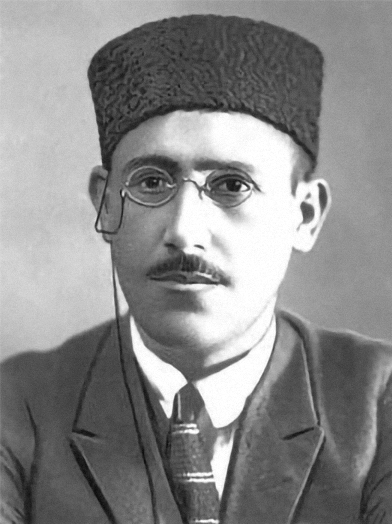
VORTRAG: Husein Javid. Literatenschicksale in der Zeit des Stalinismus. Von Prof. Dr. Rahilya Geybullaeva

Liebe Kaukasusinteressierte und Mitglieder von EuroKaukAsia e.V.,

wir möchten Sie gerne auf zwei interessante Veranstaltungen in Berlin hinweisen. Die Veranstaltungen finden in Zusammenarbeit des Lehrstuhls für Geschichte Aserbaidschans (HU Berlin) und KAD e.V. statt.

Wir freuen uns auf Ihr Kommen und anregende Abende!

Herzliche Grüße
i.A. des Vorstandes
Julia Stadtfeld

Sehr geehrte Damen und Herren,
KAD e.V. möchte Sie auf zwei interessante Veranstaltungen im Juli 2012 aufmerksam machen:

1. Im Rahmen der Lehrveranstaltungen des Lehrstuhls "Geschichte Aserbaidschans" findet am Donnerstag, den 12. Juli 2012, um 14.15 Uhr – 16.00 Uhr eine Öffentliche Vorlesung zum Thema:

File:Hüseyn Cavid.jpg"Husein Javid. Literatenschicksale in der Zeit des Stalinismus"
(in englischer Sprache)

mit Frau Prof. Dr. Rahilya Geybullaeva (Slawische Universität Baku) statt.

Ort der Veranstaltung: Gebäude der Humboldt-Universität, Hausvogteiplatz 5–7 (Berlin-Mitte), Hörsaal 0109

Gäste sind herzlich willkommen!

Humboldt-Universität zu Berlin
Philosopische Fakultät I
Insitut für Geschichtswissenschaften
Geschichte Aserbaidschans , Sitz Friedrichstraße 191-193 , Raum 5101
Telefon: (030) 2093-70588
Fax: (030) 2093-70644
Postanschrift: Unter den Linden 6, 10099 Berlin

+++

2. In der Zusammenarbeit mit dem Lehrstuhl "Geschichte Aserbaidschans" der HU lädt das KAD e. V. Sie herzlich zu einem Treffen und einer Gesprächsrunde zum Thema:

"Entwicklungswege und aktuelle Themen in der aserbaidschanischen Literatur"
mit Frau Prof. Dr. Rahilya Geybullayeva (Baku) ein.

Das Treffen wird in aserbaidschanischer Sprache stattfinden.

Termin: Freitag, den 13.07.2012, um 19:00 Uhr, Katharinenstr.9, 10711 Berlin (KAD e.V.)*

Die Veranstalter würden sich freuen, Sie an diesen Abenden begrüßen zu dürfen.

Mit freundlichen Grüssen

Veranstalter

Katharinenstr.9, 10711 Berlin
Tel: +49(0) 30 89 04 66 30
Fax: +49(0) 30 89 04 66 32

VIDEO: On the Farm, After the Fall - May 2011. By Julie Dressner (video.nytimes.com)


(video.nytimes.com) A trip to the post-Soviet republic of Georgia where agritourism draws visitors eager to help out with the farm chores and reap the bounty at the dinner table.

Journeys: In Former Soviet Georgia, Two Families and the Art of Hospitality

Justyna Mielnikiewicz for The New York Times


Shorena at the Nikolaishvili house. More Photos » 
Vazha and his vines. More Photos »

By Published: May 27, 2011

FIRST the roasted eggplant arrived, topped with walnut paste and pomegranate seeds, followed by seared red peppers glistening with oil, and a salad of cucumbers and tomatoes, scattered with herbs. Then bread from a nearby kiln, a soul mate for the homemade cheese, which was akin to mozzarella with a sour kick. The two women of the house soon shuttled in with carafes of red and white wine, squeezed from grapes tended on the surrounding land and coaxed to life in cisterns out back. It was a fine finale — or so we thought — for our first lunch at a small farmstead in Georgia, the fertile backyard of the former Soviet Union.

We smiled and thanked the women. They chuckled, as if to say: silly guests, that does not make for a Georgian meal. And as a fire crackled in the hearth, they kept crowding the broad wooden table with platters — chicken grilled under a brick, chubby spiced meat dumplings, stuffed cabbage and numerous accompaniments.

“Almost everything that we eat here, we grow on our own,” our host, Vazha Nikolaishvili, later told us.

We marveled at the repast, as well as the location: Kakheti, a lush region of Eastern Georgia known for its winemaking, where blooming agritourism ventures offer a chance to see how private farming has revived since the end of the dismal collective agriculture of Communism.

Last fall, joined by my wife and three children, I journeyed two hours by car from the Georgian capital of Tbilisi to Kakheti, but decided against a hotel in favor of a three-day stay with the Nikolaishvili family in the village of Tsinandali. On our arrival, we were greeted by Vazha, the patriarch of the family, a charming and chatty man who looked like Pablo Picasso.

During a tour of the property in the shadow of the Caucasus Mountains, he explained in a raspy voice how he produces wine from grapes that he tends around his house and on 15 acres nearby. He also has persimmon, and other fruit trees, and raises vegetables as well.

“When we harvest grapes and other crops, my friends, my son’s friends, come to help us, 50 or 60 men come to help us,” he said. “My wealth is my friends.”

The Nikolaishvili family has even branched into organic crops, and has helped to champion an association of Georgian organic producers called Elkana, a nongovernmental association that is trying to nurture organic farming across the country.

In recent years, local growers like the Nikolaishvilis have begun to throw open their doors to tourists, showing off Georgia’s robust traditions of hospitality, which endured even during the Soviet era. Back then, Georgia was a popular vacation spot for the Communist elite, with its soaring mountains and Black Sea coast. Even now, Georgian cuisine has a cherished niche throughout the former Soviet Union — a jazzy cousin to more staid Slavic food.

The accommodations at the Nikolaishvili’s were not fancy: the five of us slept in a couple of rustic bedrooms in the main house; the bathroom was in a separate building a short walk away. In the spring and fall, nighttime temperatures can dip close to freezing. A wood stove in the kitchen provided heat, though it did not always reach our bedrooms. (Guests are welcome year-round, though the nonwinter months are preferable. Call 995-99-260-215 or e-mail nik.nikolaishvili@gmail.com for reservations.)

Still, we were treated warmly by Mr. Nikolaishvili and his family, who delighted in describing rural customs and teaching us to cook Georgian specialties. The price was more than reasonable — $35 a night per person, including copious quantities of that delicious food and house wine. (Fresh-squeezed grape juice for the children, too.)

Mr. Nikolaishvili, 62, and his wife, Tina, 58, did not speak English, so we communicated with them in Russian, which they learned during Soviet times. Their English-speaking son, Niko, 35, and daughter-in-law, Shorena, 26, were at the ready to translate for foreigners.

Of course, it was not all eating and chatting — there was work to be done.

From the first milking of their cow at dawn to the baking of bread at night, we took part in the farm’s chores. Vazha demonstrated how the grapes were picked, pressed and fermented, especially the classic Georgian varietals, rkatsiteli (white) and saperavi (red). Though he has his own label, he said that most of his yield — he produces as many as 70,000 bottles a year — he sells wholesale. He also distills chacha, a punch-to-the-gut brew made from grape skins and other remains of the fermentation process.

The alluring property was covered with grapevines on trellises, and the children played tag around the vegetable plots in the waning autumn sunlight.

They also loved loitering in the kitchen with Tina and Shorena, learning how to cook dishes like the spiced meat dumplings called khinkali. “That’s not quite right,” Shorena gently chided, holding up a lumpy dumpling that looked as if it had been mangled by a toddler. Everyone laughed, and started over again.

The highlight of our time in the kitchen was making walnut bars called churchkhela, a cherished harvest event in Georgia. The women boiled a pot of fresh grape juice, vigorously stirring it and thickening it with flour. The children took strings of walnuts and dipped them into the mixture, forming a gooey coating. The strings were hung to dry around the house, the treats later gnawed upon for the rest of the trip.

Vazha liked nothing more than to pour a glass of rkatsiteli — or several — and sit in front of the fire in the dining room and talk. He recalled that he learned the virtues of hospitality from his grandfather, who planted the ancestors of some of the grape vines still on the property. When someone stopped by, whether for business or pleasure, his grandfather first ushered them to the table.

“Whatever there was in the house, it could be anything, it could be something simple — salt and bread, cheese and greens — he would pour wine and only after that would he ask, ‘What is the purpose of your visit, what do you need, how can I help you?’ “Mr. Nikolaishvili said.

“Why are we alive?” he added, rhetorically. “Isn’t it to meet people, to offer them a good meal, to share a meal with them? Georgians love having guests, and we want the entire world to know that.”

A version of this article appeared in print on May 29, 2011, on page TR7 of the New York edition with the headline: Home Cooking in Georgia (Not That One). 


Multimedia
Slide Show
Home Cooking in Georgia (Not That One)

Thursday, July 05, 2012

POSITION: Deutsche Außenpolitik und Östliche Partnerschaft (dgap.org)

(dgap.org) Positionspapier der Expertengruppe Östliche Partnerschaft


DGAPstandpunkt 1, 6. Februar 2012, 4 S.

DGAPstandpunkt 1, 6. Februar 2012, 4 S.In dem sieben Punkte umfassenden Positionspapier fordern acht hochrangige Persönlichkeiten aus der Politik ein stärkeres Engagement Deutschlands in Osteuropa und dem Kaukasus. „Die Östliche Partnerschaft ist von zentraler Bedeutung“ für die deutsche und die EU-Außenpolitik. Die Bundesregierung solle einen Sonderbeauftragten ernennen, der dazu die deutsche Position einbringt. 


FEATURE: Islamization of Russia. Photographs and Text by Oxana Onipko (reportagebygettyimages.com)


(reportagebygettyimages.com) Russia has always bordered Europe and the Orient. Russian-led Soviet imperialism found a way to make it work. Institutionalized atheism, personality cults, the homogeneity of the working class and other forms of entrenched propaganda unified peoples of diverse ethnicities and cultures. Communism’s fall created an ideology vacuum, rekindling the latent passions of religion. Orthodox Christianity versus Islam is a new chapter in the nation’s ages old struggle of East vs. West.

In recent years, the East has gained dominance as pan-Slavism has splintered along geo-political lines. Coupled with this, the population of Russia is in decline. Meanwhile, millions of Muslims arrive from the violent Caucasus mountain region and the destitute former Soviet republics of Central Asia for cheap manual labor jobs.

The massive rise in numbers and the visible spread of Islam has sparked ethnic hatred in many. There is not enough room in Moscow's Mosques anymore so people are worshiping on the street. The World Bank estimates that 12.3 million migrants now live in Russia. Second only to the United States. “Russia for Russians!” is the new battle cry from the mouths of ultra-nationalists who see their motherland as a fortress under siege.

Violence from Islamic extremists is the principle fear among Russians. The 1990s saw continuous armed conflict throughout the Caucasus. Most notably two ferocious wars in Chechnya resulted in high casualties, long-term psychological scarring, and deep-rooted senses of mistrust, animosity and foreboding toward the entire region.

The recent March 2010 terrorist attack in Moscow by female suicide bombers from Dagestan, next to Chechnya, has crystallized many of these fears. More than 40 people were killed, and over 100 injured. The latest in a long string of violence “bleeding” from the Caucasus into Russia proper. Since the 1990s Russia has been continually struck by serious acts of terrorist violence; the Nord-Ost theatre hostage takeover and the Belsan school tragedy for example. The responsibility for these acts along with train and apartment blasts has been claimed by the self-styled mujahideen leaders of the “Caucasus Emirate” whose stated goal is to establish strict Sharia law in the region.

The movement has links to the al-Qaeda terrorist network. Foreigner fighters from the Middle East and Afghanistan have been documented fighting alongside locals. In particular, Afghanis who fought for years against the Soviet armed forces have played a significant role in the tactical training and preparation.

It is understandable why some Russians are concerned. But concern is no excuse for hate and fear-inspiring demagoguery.

Since 2009 I have been documenting Islam in Russia. I gained access to these people by spending hours at Moscow's central mosque and engaging them in long conversation. Eventually I learned about the various ethnic and cultural subgroups and made my way into people's homes and social units. The concept of "Islamization" became clear when I began to interact with a group of Russian converts to Islam from Orthodox Christianity. Their experiences and problems of fitting into society with a new religion and identity are indicative of a larger trend about Islam in Russia.

I have completed much work in Moscow and am now focusing my attention on the Caucasus region, Chechnya, Dagestan, and Ingushetia. The region is critical to my project.

Since the installation of Moscow-backed Ramzan Kadyrov as the head of the Chechen Republic, the situation has stabled considerably. Post-war reconstruction of the capital city Grozny included “Europe’s largest mosque”. Also a course of moderate Islam as religious education has been instigated in public elementary schools. While Kadyrov himself has called for all women to wear headscarves. But even with improvement, according to US human rights watchdog group Freedom House Chechnya is one of the most oppressive regimes in the world along with North Korea and Burma.

Considerably less stable than Chechnya are the territories of Dagestan and Ingushetia. Kadyrov has succeeded in pushing much of the separatist Islamic guerrilla activity into these neighboring lands.

Here Russian Federation forces continue to fight an increasingly horrific campaign against an insurgency increasing in size and tenacity. But, away from the headlines, the conflict is taking its toll on ordinary people and families.

Every month brings new disappearances and murders. Often, the family members claim their loved ones have no connection to the militants, and it almost always remains unknown what, if anything, they have done to deserve such harsh punishment. There is no rhyme or reason to the pseudo-judicial executions, as if a misplaced word here or there, is sufficient invitation for a visit by a shadowy squad of men.

There are 55 BW images in the full edit and are available upon request.

Web:  
onipko.photoshelter.com
lightstalkers.org/oxana_onipko

AWARD: Rena Effendi on the shortlist for the global award in photography and sustainability (prixpictet.com)

(prixpictet.com) Rena Effendi +++ Still Life in the Zone


Gas masks scattered on the floor of a school lobby in the abandoned city of Prypiat. As a result of the nuclear accident and the subsequent...<br><a href='/portfolios/power-shortlist/rena-effendi/rena-effendi-still-life-004/'>More information</a>Twenty-six years after the disaster, the effects of the Chernobyl nuclear accident are both visible like scars and invisible like air. While access to the area surrounding Reactor #4 is restricted with barbed wire and police checkpoints, more than 200 people – mostly elderly women – inhabit the 30 km area around it, now called the Zone of Alienation. These women survived the famine of Stalin’s blockade, Nazi occupation in WWII, and only days after the worst nuclear accident in the world’s history chose to return home. “A pigeon flies close to its nest! Those who left are dying of sadness…” – explains Maria Vitosh, one of the survivors.

Birch tree growing through the floor of an abandoned GYM in the ghost town of Pripyat. Following the radioactive fallout after the nuclear accident...<br><a href='/portfolios/power-shortlist/rena-effendi/rena-effendi-still-life-010/'>More information</a>Focusing on still life images – victuals, household items, relics of the disaster – I use the prism of Nature Morte to portray both the long-term effects of this nuclear catastrophe, and the power and persistence of the human spirit in the face of devastation. I am also fascinated by the earth’s ability to teem with life, not long after annihilation. The death-infused lives of the Chernobyl women, as seen through objects from their daily life, personify the promise and paradox of power – in reference to the dangers of nuclear energy and the awesome human will to survive. The story of Chernobyl turns Nietzsche’s dictum on its head – that which makes us stronger can also kill us.

+++

Rena Effendi grew up in the USSR – witnessing her country’s rough path to independence, one marred by war, political instability and economic collapse. Educated as a linguist, she took her first photographs in 2001 after attending private painting classes. Ever since, she has photographed issues of conflict, social justice, and the oil industry’s effects on people and the environment.

From 2002-2008, she followed a 1,700 km pipeline through Azerbaijan, Georgia and Turkey documenting the impact this multi-billion dollar project had on the impoverished farmers, fishermen and other citizens. Close to a hundred million dollars worth of oil is pumped daily to the West, however the people above ground live in desolation and despair in the shadow of false promises by governments and corporations to improve their lives. This six year journey became her first book – Pipe Dreams: A Chronicle of Lives Along the Pipeline, published by Schilt in 2009. The project received numerous awards including: the Getty Images Editorial grant, the Fifty Crows International Fund Award and the Magnum Foundation Caucasus Photographer Award. Pipe Dreams was exhibited at the 52nd Venice Biennial, the 2009 Istanbul Biennial and the Breda Museum of Art in the Netherlands amongst others.

Sine 2007 she has covered a wide range of stories in the post-Soviet region together with Turkey and Iran, including the 2008 Russia – Georgia conflict, female victims of heroin and sex trafficking in Kyrgyzstan and survivors of the Chernobyl nuclear disaster. In 2008, Rena received the National Geographic ‘All Roads’ photography award for her portrayal of the disappearing culture of the Khinaliq village in the mountains of Azerbaijan. This work was exhibited in Washington DC and at the United Nations offices in New York.

In 2011, Rena Effendi received the Prince Claus Fund Award for Cultural Development, and moved to Cairo where she currently focuses on issues surrounding the Egyptian Christian minority in the post-revolution era; for this project, she received a grant from the Magnum Foundation Emergency Fund.


The shortlist for the Prix Pictet, the award devoted to photography and sustainability, features an array of talent on the theme of 'power'. UK photographer Edmund Clark explores Guantánamo Bay, Robert Adams takes a stark look at deforestation in the US north-west, and Azerbaijan artist Rena Effendi finds the elderly people still living in Chernobyl's 'zone of alienation'. Here is a selection of the images in the running

Rena Effendi, from the series Still Life in the Zone (Gas Masks Scattered on the Floor of a School Lobby in the Abandoned City of Prypiats. As a Result of the Nuclear Accident and the Subsequent Radioactive Fallout the Entire Population of Prypiats Had Been Evacuated and Never Returned Home, Chernobyl, Ukraine, December 2010)

FEATURE: The Caucasus - A Place Seldom Seen Photographs and Text by Marko Kokic / ICRC (reportagebygettyimages.com)

Download pdf >>>

(reportagebygettyimages.com) In Spring 2011, I travelled as a staff photographer for the International Committee of the Red Cross (ICRC) to the Caucasus. This part of the world is little known. But because of the work of the ICRC I was able to visit and photograph people and places that we don’t hear much about, much less see.

My journey into South Ossetia began down a long dark guarded tunnel cut through the Greater Caucasus Mountains. Since the August 2008 hostilities, it is the only way in and the only way out. Beyond the tunnel, destroyed villages line the road leading to Tskhinval/Tskhinvali, the capital of a contested land recognized as a country by a handful of states. There are an estimated thirty thousand people remaining in South Ossetia. The most vulnerable are the elderly living scattered in destroyed and abandoned villages. They are poor, helpless and often alone. In South Ossetia the ICRC is the only international humanitarian organization providing these people with food, and other assistance.

Since the fall of the Soviet Union, the North Caucasus has been marked by bloodshed and insecurity. Over the past few years, this region of the Russian Federation has seen a spiralling of violence between members of armed opposition groups and local and federal authorities. Today the life of the population in the North Caucasus is still affected by frequent security incidents.

In Ingushetia I met people who had fled fighting in Chechnya and North Ossetia years ago. Yet they continue to live in derelict collective centres for displaced people, some of them since the early 1990's. They have little choice but to call decrepit temporary shelters home. Here elderly people are either too poor to return home or have nothing to go back to. The young have little or no opportunity to find work.

In the neighbouring Chechen Republic I saw Grozny, its capital, undergoing a massive facelift. New buildings rose from the rubble in a frenzy of construction financed in large part by Moscow. Bullet and bomb scarred walls were quickly being covered over in an effort to leave the dark past of two bloody conflicts behind. Notwithstanding the reconstruction efforts, long-lasting humanitarian consequences of past conflicts will be felt for years to come. A striking example is the problem of the missing. The authorities speak of about 700 missing security services and military personnel. In addition, the ICRC has over 2300 registered cases of missing people but has so far been unable to provide families with any answers as to the fate of their missing loved ones.

Over the past few years, as regularly reported in the local and national press but less so in international media, hundreds of people have been being killed, wounded and detained. In Dagestan I met with families who have lost their breadwinner to armed violence. The ICRC supports the most vulnerable among these families. For instance, it provides families of detainees with a means to start their own small businesses and helps family members to visit their detained relative, some of whom are held thousands of kilometres away. The ICRC itself visited people detained in relation with the situation in the North Caucasus between 1999 and 2004.

My journey ended in a small town in North Ossetia called Beslan, in a school gymnasium turned shrine in memory of hundreds of innocent children and adults who were killed during a hostage crisis in September 2004. The portraits of victims hang on scorched walls amongst candles and flowers. Handwritten epitaphs from friends, family and schoolmates adorn the same walls.

It’s impossible to adequately distil all these places, people, stories and tragedies into a single idea or conclusion, much less into a photo. But I am reminded of one unlikely image – it’s of a brick wall in Grozny with a faded message spray-painted on it. I was told that it dates back to the war years in the 1990’s when it was not uncommon for people to write on their homes in the hope that they would be spared. The message is as pertinent today as it was then. It pleads with those fighting to protect the innocent sheltered behind the wall and reminds the rest of us not to forget these people and their troubles. It’s a quiet cry for help. It reads, “people live here”.

+++


Reportage by Getty Images just published The Caucasus - A Place Seldom Seen, by ICRC staff photographer Marko Kokic.

Mr. Kokic's striking black and white photographs document life in South Ossetia, Ingushetia, Chechnya, Dagestan and North Ossetia, regions where the ICRC has been active for years.

We don't hear much about the humanitarian situation of thousands of people affected by violence, insecurity and poverty in the Caucasus, much less see it, but life is grim for many.

Among the 30,000 people who live in South Ossetia, many of them are elderly, poor and vulnerable. They often live in deserted villages. The North Caucasus continues to be affected by violence, with frequent clashes between armed groups and Russian Federation authorities. In Ingushetia, hundreds of families displaced by past conflcits still live in derelict collective centers, too often with little or no economic opportunities. In Dagestan, Mr. Kokic met with families who have lost their breadwinner to armed violence. Many are extremely vulnerable and supported by the ICRC. Grozny, in the Chechen Republic, is undergoing a massive facelift but the long-lasting humanitarian consequences of past conflicts continue to be felt. The ICRC has documented over 2,300 cases of missing people but been able to provide very few answers to surviving families.

Mr. Kokic says he chose to focus on the lives of the people we serve instead of our operations in the region, a luxury few photographers working for humanitarian agencies enjoy. The results are stark portraits of people living on the margins and trying to survive. They are hard to forget.

PHOTOESSAY: Paying for Babies in Nagorno-Karabakh. By Kerri MacDonald (lens.blogs.nytimes.com)


(lens.blogs.nytimes.com) When a couple marries in Nagorno-Karabakh, the government gives them a cash reward of $780. More money comes their way after the birth of their first child — and their second, third and fourth. Families with six children under the age of 18 receive a house.

This week’s Sunday Review features a series of powerful images by Anastasia Taylor-Lind, a member of the VII photo agency. Ms. Taylor-Lind, who is based in London, documented the “birth encouragement program” in Nagorno-Karabakh. The disputed region in the southern Caucasus fell into conflict in 1988 which escalated shortly before the Soviet Union collapsed and ethnic Armenians went to war with Azerbaijan. The goal of the program is to repopulate the country, where tens of thousands have been displaced.


The photos — women in their late teens and early 20s with their babies and young children — are from Ms. Taylor-Lind’s project the “National Womb.” They appeared online on Saturday.(slideshow here)

Much of Ms. Taylor-Lind’s work is focused on women and women’s issues — from “Women of the Cossack Resurgence” to “No Friends But the Mountains.” She worked on “The National Womb” as part of the 2011 Joop Swart Masterclass, which was based upon the theme Respect. She spoke about the project in a video for Canon Professional Network.

+++

Anastasia Taylor-Lind is a member of the VII Photo agency. She is based in the Middle East where she works for clients such as GEO Germany and the Sunday Times Magazine. She has been exhibited internationally in such spaces as the Saatchi Gallery in London, the Oude Kerk in Amsterdam and Fovea Exhibitions in New York. She has received a number of photography awards from the likes of The Guardian, Deutsche Bank and Canon Italy, as well as being a 2011 FNAC Grant winner. She studied at the University of Wales Newport and the London College of Communications.

Wednesday, July 04, 2012

PHOTOGRAPHY: Not One Moment, but Years. Interview with Temo Bardzimashvili. By By Zara Katz (lens.blogs.nytimes.com)

(lens.blogs.nytimes.com) Temo Bardzimashvili, a freelance photographer, received his master’s degree in 2009 from the Caucasus School of Journalism and Media Management. He has published work in The Washington Post, Bloomberg News, The Financial Times and The National, an English-language newspaper in Abu Dhabi. Mr. Bardzimashvili lives in Tbilisi, Georgia.

His conversation with Zara Katz has been edited.

Q. What is going on in this image?
A. I took this during the celebration of Ramadan in Azerbaijan. It is in an Azeri village where I was working on a project about Meskhetian Turks last year. In this village, most of the population is Azeri but about 25 percent are Meskhetian. This image is describing the end of the Ramadan prayer. In this mosque, most of the worshipers are Meskhetian.

Q. Why did you choose this image?
A. I can’t say that this is my favorite image but it is symbolic for me. It represents the multi-layeredness of images. I like images that people tend to return to, when the viewer is struck not only by the visual attractiveness, but also the tiny details that they discover later. Also, this particular photograph symbolizes quite a long time. It is not one particular moment that creates this image, but the whole period of time taking photos.

DESCRIPTION
Nasrollah Kasraian: Celebration of Pir-e-Shahriar festival in the village of Oraman, Iran. Inspiration: From “Our Homeland Iran”
Photographer: Nasrollah Kasraian
I have taken pictures in different mosques and prayers during the last five years. Sometimes when you take a picture you try to concentrate on one element, like shoes. When people enter a mosque, they take their shoes off. It is visually attractive. Shoes are symbolic – they represent the worshiper. Of course I have taken pictures with shoes in mosques. But in this picture, I saw elements of all my previous mosque pictures and prayer pictures.

Q. When did you first see this photo?
A. I discovered him a year and a half ago during a trip to Tehran. I was looking for a photo book that was about Tehran and was lucky to come across this book called “Our Homeland Iran.” He is one of the greatest photographers that I have seen. He is really deep and operates with colors very well.

Most important for me was something that I discovered later when I checked on his background: He is one of those photographers who works on long-term projects. It took him 10 to 12 years to make this book. He said he worked on this photograph for two years to take this particular image. He was looking for the right situation and the right light.

Q. How did this image influence your work?
A. Most of the time we take snapshots. There might be good snapshots, but we don’t let ourselves work on images for a sufficient amount of time. To me, the Kasraian picture is a long-term picture. He had taken other pictures from other ceremonies which led to this image.

Working for a long time is not the only means of taking a good picture. Also, getting close to people. In order to get a deep picture you have to go through some stages to get there.

Just like Kasraian, I like to work on covering different ethnicities and traditions. Kasraian took an image of not a single person, but an ethnic group.

Follow @nytimesphoto and @ZaraKatZ on Twitter.

PODCAST: Chinkali. Georgische Nudeltaschen. Von Irma Britze-Shiolashvili (funkhauseuropa.de)

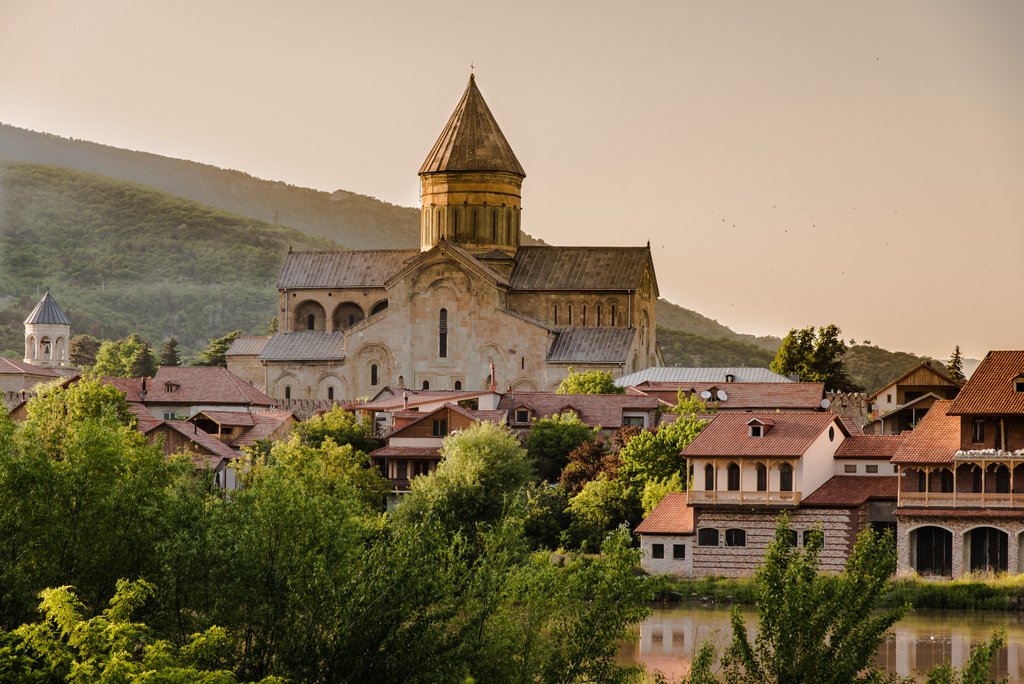
(funkhauseuropa.de) Hackfleisch, Zwiebeln, Mehl, schwarzer Pfeffer, Salz und Koriander: das sind die Zutaten für Chinkali. Diese Spezialität aus der Küche Georgiens ist vergleichbar mit schwäbischen Maultauschen oder italienischen Ravioli. Jedoch sind Chinkali viel größer. Das Gericht stammt ursprünglich aus dem georgischen Hochgebirge. Die Städte Duscheti, Pasanauri und Mzcheta sind für eine besondere Qualität der Chinkali bekannt.


(12.06.12), 3'03

Chinkali+++ Zutaten

Für die Füllung:

750 g Lammhack oder gemischtes Schweine- und Rinderhack
Salz
Schwarzer Pfeffer
3 große Zwiebeln, sehr fein gehackt
1 Bund Koriander, fein gehackt

Für den Teig:

650 Mehl
ca. 150 ml Lauwarmes Salzwasser

Zubereitung

Das Hackflesich mit Salz, Pfeffer, Zwiebeln, Koriander und dem lauwarmem Wasser verkneten.

Aus Mehl und Salzwasser einen glatten Teig zubereiten, dünn ausrollen und Kreise mit einem Glas ausstechen.

Die Kreise nochmal ausrollen, so dass die Ränder dünner und die Flächen größer werden, dann einen Esslöffel gewürztes Hackfleisch in die Mitte von jedem Kreis geben. Die Teigränder in der Mitte über der Füllung zusammenraffen und vorsichtig miteinander verkneten; so dass ein kleines Päckchen entsteht.

Die Chinkali in einen großen Topf mit kochendem, wenig gesalzenem Wasser geben und leicht sieden lassen, dabei ab und zu mit einem Holzlöffel im Wasser bewegen. Wenn die Chinkali an der Oberfläche schwimmen, noch ca. 10 Minuten weitersieden lassen. Dann mit einem Schaumlöffel aus dem Wasser heben, mit schwarzem Pfeffer bestreuen und heiß servieren.

(Irma Britze-Shiolashvili)

LITERATURE: Lesung und Gespräch mit Irma Schiolashwili

Die in Deutschland lebende georgische Journalistin und Lyrikerin Irma Schiolashwili stellt im Deutschen Lesesaal Tbilissi ihren neuen Gedichtband "Eine Brücke aus bunten Blättern" vor, der 2012 in Deutschland erschienen ist.

Wir laden Sie herzlich zu einer deutsch-georgischen Lesung und zum Gespräch mit der Autorin ein.

Termin: 12. Juli 2012, 18:00 Uhr
Ort: Konferenzsaal der Nationalbibliothek (neben dem Deutschen Lesesaal), Lado Gudiaschwili Str. 7, Gebäude 3, 0107 Tbilissi.

+++

Irma Shiolashvili, * 1974 in Georgien, schrieb schon während ihrer Schulzeit Gedichte, die in verschiedenen Sammelbänden veröffentlicht wurden. 1991-1996 studierte sie an der Universität Tbilissi Journalistik. Nebenbei arbeitete sie in der Kulturabteilung des staatlichen Fern-sehens, wo sie Fernsehsendungen über zeitgenössische georgische Schriftsteller produzierte. 1992 wurde ihr erstes Buch „Nicht-existierendes Wort“ im Verlag „Merani“ veröffentlicht. Durch Vermittlung der bekannten Dichterin Ana Kalandadse wurde sie im Jahre 1995 eines der jüngsten Mitglieder des georgischen Schriftstellerverbandes. Es folgten weitere Buchveröffentlichungen 1996, 2002 und 2009. 

1999 ging sie nach Deutschland und studierte in Bonn für ihre Dissertation über georgische und deutsche politische Nachkriegslyrik, mit der sie 2005 am Institut für Literatur der Georgischen Akademie der Wissenschaften promovierte. Seit dieser Zeit produziert sie im Bürgerfunk „LoCom“ (Bonn) zweisprachige Sendungen für das „deutsch-georgische Kulturmagazin“. 2007 wurde sie in die Europäische Autorenvereinigung „Die Kogge“ auf-genommen. Ihre Gedichte wurden auch ins Russische übersetzt und als Buch veröffentlicht. Irma Shiolashvili lebt mit ihrer Familie in Bonn.


Irma Shiolashvili Eine Brücke aus bunten Blättern . Gedichte.  Übersetzungen von Agnes Giesbrecht-Gossen, Irma Berscheid-Kimeridze, Heide Rieck, Thomas Berscheid und Joachim Britze. Kaukasische Bibliothek Band 3 . Hrsg. Uli Rothfuss (Lyrik- Sammlung) 84 S. ISBN: 978-3-86356-025-6, € [D] 12,80-- € [AT] 12,80-- SFr [CH] 18,-- 


AmazonShop: Books, Maps, Videos, Music & Gifts About The Caucasus

REISE: Neue Airlines für Georgien. Von Stefan Eiselin. (aerotelegraph.com)


Airbus A319 von Fly Georgia: Flotte soll ausgebaut werden.
(aerotelegraph.com) Der Staat im Kaukasus will zum Drehkreuz werden. Neue Airlines entstehen und auch ausländische Airlines entdecken das Ziel.
Mitte Juni wurde das allererste Flugzeug in Dublin in den Farben der neuen Airline bemalt. Und auf Anfang Juli wurde der Airbus A319-111 mit der Immatrikulation EI-EWF von Irland nach Tiflis überführt. Bald schon soll er ab der georgischen Hauptstadt Passagiere nach Düsseldorf, Dubai, Delhi, London und Rom fliegen. Und in wenigen Wochen ist geplant, eine zweite Maschine des gleichen Typs in die Flotte aufzunehmen. Man wolle eine «Weltklasse-Airline für Georgien sein, eine die neue Standards in Qualität und Service bietet und bequeme Verbindungen zwischen Tiflis und Europa, der GUS, dem Nahen Osten und Asien», beschreibt sich das junge Unternehmen selbst. Wann genau die private Fluggesellschaft den Betrieb aufnehmen wird, steht allerdings noch nicht fest. Beim Aufbau des Betriebs half das Beratungsunternehmen TASC Aviation aus den Vereinigten Arabischen Emiraten.

Fly Georgia setzt auf das wachsende Interesse von Geschäftsleuten an der ehemaligen Sowjetrepublik im Kaukasus. 2012 soll die Wirtschaft um 6 Prozent wachsen, 2013 immerhin noch um 5,5 Prozent, schätzt der Internationale Währungsfonds. Die schwache Infrastruktur und chronische Stromausfälle sind inzwischen als bremsende Probleme überwunden. Georgien gilt vor allem als Transitland für Pipelines. Auch Touristen, die am Schwarzen Meer Erholung suchen, will Fly Georgia anlocken. Doch die junge Fluglinie ist nicht alleine. Alitalia, Aegean Airlines, Air Astana, Estonian Air, Qatar Airways und Wizz Air fliegen seit neuestem ebenfalls nach Georgien. Aerosvit, Lufthansa, Pegasus Airlines, S7 und Turkish Airlines steuern die junge Republik schon länger an. Und neben der Nationalairline Georgian Airways setzt auch die neue dieses Potenzial setzt auch Air Caucasus, ein Projekt von arabischen und georgischen Investoren.

Diverse Abkommen

Die Regierung in Tiflis unterstützt den Aufbau der Luftfahrt kräftig. So verschärfte sie die Aufsicht um das Image einer unsicheren Flugregion loszuwerden. Und sie investierte kräftig in den Ausbau der Flughäfen des Landes. Zudem schließt sie Luftverkehrsabkommen mit diversen Staaten, wie etwa den Vereinigten Arabischen Emiraten oder Südkorea, schreibt das Capa Centre for Aviation.

For information and media contact
info@flygeorgia.com

Tuesday, July 03, 2012

ARTICLE: The Warming of the Caspian Cold War. By Casey Michel (registan.net)

(registan.net) The Caspian Sea first crept into the world’s cognizance sometime in 1873. Utilizing machinery constructed in nearby Bibi-Heybat Bay, jutting to the south of Baku, oil workers installed the world’s first offshore and machine-drilled wells, setting their engineering skills on the viscous black gold roiling underneath the Absheron peninsula. Gas-lit lamps and foreign nationals soon peopled the Azeri capital, and, by 1900, Baku boasted more than 3,000 of these primitive pump-derricks.

The Great Caspian Boom had begun.*

*Other major events of 1873: The Khanate of Khiva signs a peace treaty with Tsar Alexander II, turning the khan’s kingdom into a Russian protectorate; slaves are freed in Puerto Rico; and Levi Strauss and Jacob Davis receive patents for plugging copper rivets in denim pants, a harbinger of America’s dominant fashion over the next 150 years. One of these is clearly more important than the others.

Broken only by the October Revolution and consequent collapse some 70 years later, Baku’s spent over a century pumping a wealth of the world’s oil, relegated especially within the post-Soviet sphere. Privatization saw the pools gobbled by a few international players, and the Baku-Tbilisi-Ceyhan pipeline – in which BP, Chevron, and Statoil grab nearly 50 percent of the earnings – stretches some 1,100 miles into the Mediterranean, channeling up to one million barrels of crude per day. (It’s the second-longest pipeline in a former Soviet land, falling only to the blithely named Friendship Pipeline.) Even though Azerbaijan’s not quite as reliant on the fields as it once was, and even though the rising sea level will make the oil harvest marginally tougher, Baku realizes that there’s still gold in ‘em waters.

Of course, the rest of the littoral nations – Russia, Iran, Turkmenistan, and Kazakhstan – realize this as well, which has given Joshua Kucera ample room to detail the growing naval arms race swirling the Caspian:

While the world focuses on the possibility of an Israeli attack on Iran, a little-noticed arms buildup has been taking place to Iran’s north, among the ex-Soviet states bordering the Caspian. Twenty years after the collapse of the Soviet Union created three new states on the sea, their boundaries have still not been delineated. And with rich oil and natural gas fields in those contested waters, the new countries – Azerbaijan, Kazakhstan, and Turkmenistan – are using their newfound riches to protect the source of that wealth.

The arms-growth, as can be imagined, is a bit peculiar. Russia and Kazakhstan – the latter of which is the largest land-locked country in the world – share notably warm relations; Turkmenistan’s displayed little bellicosity during these nascent decades; and Azerbaijan should, as Kucera points out, be preoccupied with maintaining its western front in Nagorno-Karabakh. Iran, meanwhile, sees itself marginally propped through Russia’s unwillingness to cater to any wholesale embargo of Iranian oil, and both have shown strong alliance in maintaining Assad’s goons outside Damascus.*

*This Russo-Iranian relationship is fascinating, and speaks to Putin’s marked, if mendacious, diplomatic skills. The man’s both carrot-and-sticking Tehran, balancing Syrian arms transport with deceptively strong rhetoric as to why Russia’d long prevent Iran from obtaining nuclear weapons. The duplicity’s breathtaking, deft, and unpredictable. 

 The underlain thesis of Kucera’s article, mentioned toward the end, is that each nation ratchets its increasing arms potential as a nominally defensive measure. I’ve not yet seen any notion of First-Strike Capability, the kind buttressing US-Soviet Cold War rhetoric, bandied about the Caspian; rather, all weaponized increase is played as a means of counteracting a neighbor’s purportedly offensive move. Everyone’s claiming territorial integrity, and nothing more. They’re just protecting their own.

This is, of course, bunk. Just as in any arena in its near abroad, Russia views the Caspian as its backyard. The former Soviet satellites – while nominally entrusted to Moscow’s protection – will continue to distance themselves from any Russian irredentism: their people won’t have it, and their pockets won’t risk it. And Iran, caught between ever-converging rocks and hard places, cannot afford to let any border go untouched – hello, submarines – especially in light of increased Israeli-Azeri cooperation. The countries are feigning defense, to no one’s deception.

And suddenly, where was once theorized a potential conflict, we may now see the fruits of this arms race. Last month Turkmenistan sent off an exploratory vessel to conduct seismic experiments near the Kyapaz oil and gas field, estimated to hold up to 50 million tons of oil. (Ashgabat refers to it as the Serdar field.) The vessel was picked up by an Azeri patrol boat and promptly rerouted it back to its point of origin. The Turkmenistani Foreign Ministry called the return part of a series of “illegal measures,” accusing Azerbaijan of “provocations.” Baku’s ABC news agency, meanwhile, wrote, “Turkmenistan is clearly ready to unleash war with Azerbaijan.” (Propagandizing is nothing especial in this area, but you gotta admire a bit of the surety here.)

Now, in the latest diplomatic maneuver, Turkmenistan, the hermitic recluse, has taken an interesting step and reached out to third-party moderators. Oil and Gas Minister Kakageldy Abdyllayev said that Ashgabat was planning to take its claims for the oil fields – which also include Guneshli/Omar and Chirag/Osman – to the United Nations’ International Court of Justice. Azerbaijan’s claimed that the two nations had negotiated a moratorium on exploring disputed areas. Turkmenistan’s playing dumb, arguing that no agreement ever existed – and that such exploratory missions are thusly fair game.

Of course, if the surrounding nations can’t even determine whether to term the Caspian a “sea” or a “lake” – though this is a bit understandable, as there are oil-field implications depending on either definition – it’s tough to believe that an agreement between Baku and Ashgabat existed about the Kyapaz/Serdar field. Likewise, it’s tough to imagine that Turkmenistan would purposefully provoke the notably stroppy Azeris, especially if they’d already had an agreement set upon. Still, RFE/RL concurs with Baku, writing that “[i]n 2008, the two countries’ leaders signed an agreement calling for the two Caspian littoral states to refrain from exploratory or extraction activities in the area until the dispute is resolved.”

As it is, it’s unclear as to how the UN will rule on the matter – it’ll likely find a path of least resistance in implementing the EU-proposed trans-Caspian pipeline between the two nations, which could circumvent Russia’s current stranglehold on Caspian oil. That being said, given the UN’s relative impotence in the region, a ruling may have little to no effect on the nations’ encroachment. Russia’s in a sound position as mediator — but it will likely, viz. Syria, deter any quick resolution, all the likelier if it means delaying the potential underwater pipeline. And so the arms race grows, and a cold war simmers.

In a perfect world, this dispute would be the impetus for the five countries to finally delineate and demarcate their Caspian claims. But … that’s not going to happen. Three hundred and sixty-five million barrels not nearly enough to stem this Great Aquatic Game, and a toothless UN resolution is not going to make these two autocracies – or the three others – edge any closer to détente. This mini-Cold War’s been gestating for years. And now, things begin to bubble.

BRITISH COUNCIL: Teaching Centre Opening In Georgia (britishcouncil.org/ge)

We are delighted to announce exciting opportunity for managers, English language teachers and learners of English.

The British Council has offices in more than 100 countries. We have Teaching Centres in 40 countries. For the first time since its foundation in 1993, the British Council in Georgia will open a teaching centre in September 2012.

The Georgia British Council Teaching offer currently combines two strands:

* the 'Rustaveli Avenue' school which provides teaching to the general public in its Rustaveli Avenue premises and off-site in organisations' premises.
* the 'ILIA State University' school which provides teaching to undergraduates at the university (the 'internal' programme and to the general public in university premises (the 'external' programme).

The operations in Rustaveli Avenue and ILIA State University join our world-wide network of British Council teaching centres, delivering high quality language teaching to students. We will be providing updated information on our website, Facebook and Twitter.

To apply for the positions of managers and teachers of English, download the Particular of Posts and Application form from our website www.britishcouncil.org/ge

Monday, July 02, 2012

PODCAST: Hörbuch der Woche. Andreas Rebers, "Der Kleine Kaukasus". Von Andre Damm (mdr.de/mdr-info)

POCAST >>> 

Der kleine Kaukasus - Heimatgeschichte deluxe

Andreas Rebers reist zurück in seine Kindheit in den 1960er und 1970er Jahren und beschreibt mit lakonischem Humor und präzisen Erinnerungen die Liebe zu seiner Heimat, dem kleinen Kaukasus. Er erzählt von Hausschlachtungen, Kinderlandverschickungen, kleinen Verbrechen und großen Dummheiten. Die Geschichten sind so liebevoll und vielfältig, wie die Sorten Haue, die es zwischendrin immer mal wieder gab. Es liest Schauspieler Joachim Krol.

Andreas Rebers - Der kleine Kaukasus
3 CDs, 210  Minuten
Random House Audio
ISBN: 978-3-8371-1326-6


Erinnerungen führen uns in die Vergangenheit, aber unsere Träume sind es, die uns weiterbringen. Jedoch ist die Zeit untreu. Im Laufe des Lebens nimmt die Vergangenheit quantitativ zu und irgendwann hat es sich ausgeträumt. Andreas Rebers hat schon auf der ganzen Welt Akkordeon gespielt und er beschreibt es als ein Stück Heimat zum Mitnehmen. Deshalb heißt sein Roman auch Der kleine Kaukasus - ein Heimatroman wie er im Buche steht. Gepaart mit autobiografischen Erinnerungen und Science-Fiction, entstehen fantastische Geschichten voller Witz und Komik, die nie zustande gekommen wären, wenn Professor Doktor Swoboda Manshari nicht den Wunsch gehabt hätte, das Gehirn von Rebers aus seiner angestammten Umgebung zu frickeln, um herauszufinden, was in diesem Kopf vorgeht. Was dadurch ans Licht kommt, ist mehr als unterhaltsam.


Über den Autor
Der Autor, Musiker und Kabarettist Andreas Rebers, geboren 1958, gehört zu den renommiertesten und kreativsten Künstlern der deutschsprachigen Kabarettszene. Er ist gern gesehener Gast in allen namhaften Kabarettsendungen. Das ehemalige Mitglied der Münchner Lach- und Schießgesellschaft wurde unter anderem mit dem Deutschen Kleinkunstpreis sowie dem Salzburger Stier ausgezeichnet. Seine erfolgreichen Soloprogramme veröffentlicht WortArt bereits seit 2000. Im Frühjahr 2011 folgte eine Live-Aufnahme seines aktuellen Programms Ich regel das.


„Der kleine Kaukasus“ von Andreas Rebers: Ein paar Gedanken - Von Nina Böhm (le-chat-noir.net)


Wir alle tragen Erinnerungen an unsere Heimat und unsere Kindheit mit uns herum. Wir alle erzählen gerne von der guten oder schlechten alten Zeit. „Früher war alles besser“ hat für jeden seine eigene Bedeutung. Andreas Rebers lässt uns in seinem ersten Buch „Der kleine Kaukasus – Heimatgeschichten“ genau dies mit seinen eigenen Augen sehen.


In kleinen Anekdoten gepaart mit wohl dosierter Fiktion erzählt er die Geschichte seiner Familie, seines Heranwachsens und seiner Heimat. Der kleine Kaukasus das ist er selbst, aber auch die Gegend im Weserbergland, in der er mit seiner doch ziemlich bunten Familie aufwuchs.


Ich möchte an dieser Stelle keine der üblichen ach so geistreichen Inhaltsangaben liefern und ich bin mir sicher andere absolut hochgeschätzte Kollegen werden zu Hauf nach bewussten und unbewussten Anaphern oder dem einen oder anderen Hendiadyoin suchen, ich will dieses Buch einfach nur jedem ans Herz legen, der das Leben an sich ein wenig tiefer überdenkt, der die kleinen Momente schätzt, der mit viel Humor an das Dasein herangeht.


Wer sich für Kabarett interessiert, wird die Programme von Andreas Rebers nach der Lektüre von „Der kleine Kaukasus“ mit anderen Augen sehen und so manch einen Moment besser oder anders verstehen. Alle, die Kabarett nicht so unbedingt mögen, werden sich in dem Buch jedoch auch gut wiederfinden, da es, wie gesagt, kleine Geschichten und Erinnerungen sind, sensibel und mit einem wunderbaren Augenzwinkern erzählt. Ein Stückchen Literatur, das in meinem Bücherregal einen besonderen Platz bekommen wird und das ich sicherlich immer wieder gerne herausziehen werde.


+++


Dass Andreas Rebers eine rege Fantasie hat, die gerne auch mal wunderbar skurrile Züge annehmen kann, wissen wir alle. Wer sich davon nun nicht mehr nur im Publikum vor irgendwelchen Bühnen oder vor dem Fernsehgerät sitzend überzeugen, sondern die Welt des Herrn Rebers zu sich nach Hause holen möchte, kann dies nun tun. Nein, ich spreche nicht von einer CD und er kommt auch nicht persönlich in unsere Wohnzimmer! Am 8. November erscheint der erste Roman von Andreas Rebers.


Der kleine Kaukasus – Heimatgeschichten“ erscheint im WortArt Verlag und dieser sagt dazu Folgendes: „Eigentlich ist eine Kindheit in den sechziger Jahren nichts Ungewöhnliches. Jedoch ist die Kindheit des Autors in jeder Hinsicht etwas Besonderes. Es gibt wohl nur wenige Familien, in denen Krieg und die Deutsche Teilung so irrwitzige Blüten getrieben haben, wie in dieser.


Da ist zum einen der Vater in dessen Gehirn sich im zweiten Weltkrieg ein Granatsplitter eingenistet hat, und zum anderen die schlesische Mutter die mit rauer Herzlichkeit und Liebe ihre vielen Kinder verhaut, um die Großfamilie unter Kontrolle zu halten. Dass das nicht so einfach ist, liegt einerseits an dem Haus, das der Vater seiner Familie baut, zum anderen an der kruden Fantasie des Autors, der inmitten des familiären Chaos von seiner Karriere und einer eigenen Mikrophon Show träumt. Liebevolle und vielfältige Geschichten. Eine Reise mit Herz.“


Wir sprechen schon jetzt unsere Empfehlung für dieses Buch aus und können euch natürlich mehr sagen, sobald wir es selbst gelesen haben. Sonst wird das Ganze auch schwer. Wobei so manch einem Journalisten gelingt dieses Kunststück ja trotzdem immer wieder ...

AmazonShop: Books, Maps, Videos, Music & Gifts About The Caucasus