Mit einem Trick durchstreiften wagemutige DDR-Bürger auf eigene Faust die Sowjetunion. Heute sind sie Manager, Professor oder Präsident
Wer "unerkannt durch Freundesland" reiste, den reizte nicht nur das Verbotene und Ungewisse, ihn trieb auch das Verlangen, dem Staat etwas Freiheit abzuringen; "sich etwas herausnehmen, was für einen nicht vorgesehen war", wie der 50-jährige Krüger heute sagt. Mit echter Reisefreiheit sei das nicht zu verwechseln, aber es sei eine Art "Lockerungsübung" gewesen. Nicht wenige, die das Abenteuer wagten, sind heute IT-Spezialisten, Verleger und Manager, aber auch Oberbürgermeister, Mathematikprofessor oder wie Thomas Krüger Präsident der Bundeszentrale für politische Bildung.
Der ganze Artikel >>>
mehr:
artour MDR FERNSEHEN 03.06.2010 22:05 Uhr
"Transit" – Verbotenes Abenteuer Sowjetunion
"Transit - Illegal durch die Weiten der Sowjetunion"
Sieger des Globetrotter Reisebuchpreises 2010
Unerkannt durch Freundesland: www.unerkanntdurchfreundesland.de
AmazonShop: Books, Maps, Videos, Music & Gifts About The Caucasus
Friday, June 18, 2010


FILM: Movie review: 'Anton Chekhov's The Duel' (latimes.com)
By Kenneth Turan, Los Angeles Times Film Critic
June 18, 2010
Dover Kosashvili directs an expert literary adaptation of the Russian writer's tale of love and lethargy in the Caucasus.

June 18, 2010
Dover Kosashvili directs an expert literary adaptation of the Russian writer's tale of love and lethargy in the Caucasus.

Calling a film "Anton Chekhov's The Duel" underscores the Russian writer's pride of place as the prime mover in this expert literary adaptation. But if it weren't for the masterful work of director Dover Kosashvili, this rich, evocative film wouldn't have nearly the impact it does.
Israeli director Kosashvili seems at first glance an unlikely choice to direct screenwriter Mary Bing's pointed English-language adaptation of Chekhov's novella about love and lassitude in the Caucasus, the longest work of narrative fiction, in fact, in the great writer's portfolio.
But Kosashvili's family has roots in the region, having immigrated to Israel from Georgia, and the director's first film, 2001's exceptional "Late Marriage," shares with this one a feeling for the intricacies of emotional entanglements and an empathy for those in impossible dilemmas of their own making, individuals who would like to be better people but find the task beyond them.
source: www.latimes.com
FILMFESTIVAL: NEW GEORGIAN CINEMA at TOFIFEST Film festival in Poland (tofifest.pl)
 BIAFF management with support of GNFC (Georgian National Film Center) presents NEW GEORGIAN CINEMA at TOFIFEST Film festival (Poland) which takes place during 26 June - 2 July, 2010.
BIAFF & GNFC Representatives will open NEW GEORGIAN CINEMA section at TOFIFEST on 28 June, 18.00.
One Georgian film - STREET DAYS by Levan Koguashvili is included in international competition section. The filmmaker will be also present at festival.
See more info and list of Georgian films presented at festival on TOFIFEST web-site:
http://www.tofifest.pl/en/program/p/8
NEW GEORGIAN CINEMA
Georgian film is a strange phenomenon, special, philosophically light, sophisticated and at the same time childishly pure and innocent. There is everything that can make me cry and I ought to say that it (my crying) is not an easy thing.
Federico Fellini, acclaimed Italian film director
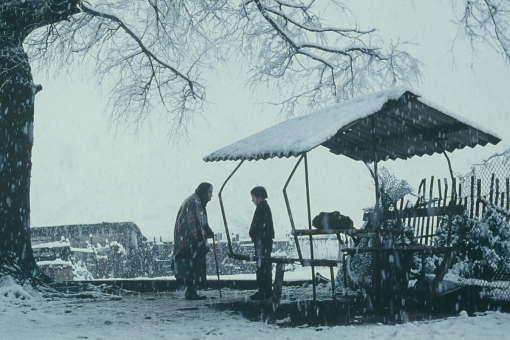 Georgia has a long history of cinematography which starts at the end of 19th century almost simultaneously with development of cinema in Europe. The first cinema opened in Tbilisi in 1896; by the early 1900s, there were several film theaters throughout Georgia. In 1908 enthusiast Vasili Amashukeli and Aleksndr Digmelov shot first experimental shots. In 1912 they directed the first full-length documentary film Akaki Tsereteli in Racha-Lechkhumi, which effectively marked the beginning of the Georgian film industry. In 1916, Alexander Tsitsunava made first feature film Kristine. In Georgia was shot the first in the Soviet Union full length three-dimensional film Robinson Kruso.
In 1938, the Tbilisi Cinematographic Studio was established in Tbilisi. Many Georgian film directors emerged in this period, notably Mikheil Chiaureli — one of the most important Soviet filmmakers in the 1940. In the 1950s-1960s, Georgian Film studio was established and young generation of talented directors and screenwriters emerged during this period.
Georgian films differed from Soviet films by their expression and graphic forms. The period between the late 1960s and the 1980s was the golden age of the Georgian film industry, which produced up to 60 films a year. In 1972, the Faculty of Cinema was established at the Shota Rustaveli Institute of Theater and later developed into the Tbilisi Institute of Theater and Film. The studio employed many talented and prominent directors. Some of the films produced in this period were censored and kept from public release. During the whole history of Georgian cinematography more than 1000 films were created. Georgian cinema was well respected and has enjoyed wide popularity at many international festivals and forums: Cannes, Berlinale, Oberhousen, Venice, Rome and so on. At various film festivals Georgian films got more than 100 awards.
After the collapse of the Soviet Union, Georgian cinematography suffered difficult period. The financing was catastrophically decreased, for almost 10 years the cinema industry was not technically developed. Most of Georgian film directors continued their work abroad. Different institutions taught just theory of cinematography and just few experienced and talented film directors worked there. The result was deplorable and Georgian cinema industry almost stopped producing new movies.
In early 2000s the situation started to change step-by-step and modern Georgian cinematography, in spite of difficult period, still continues its development. In the last period, films are shot generally by new generation of talented filmmakers such as: Dito Tsintsadze, Levan Koguashvili, Giorgi Ovashvili, Zaza Urushadze, Aleko Tsabadze, etc. Many of them have received a lot of international film festivals awards.
The Georgian section at TOFIFEST is represented by six new films. Majority of them touch upon various problems existing in modern Georgia. Levan Koguashivili’s Women from Georgia and Salome Aleksi-Meskhishvili’s Felicita address the problems of immigrant women living and working abroad (USA and Italy respectively). In Street Days (Levan Koguashvili) various social problematic, drug addiction issues are depicted. The Other Bank by George Ovashvili tells story of 12 years old boy, who belongs to the generation, which was subject to mass displacement during civil war in Abkahzia region. Salome Jashi’s film The Leader Is Always Right shows patriotic camps where high school children spent around two weeks and where leader is always right ideology is cultivated. The film Three Houses (Zaza Urushadze) consists of three novels united by a story of the picture encompassing three cenuries
We hope that New Georgian Cinema section will be interesting and well accepted by audience at TOFIFEST. On behalf of BIAFF we want to express our gratitude to TOFIFEST for giving us an opportunity to present modern Georgian cinema to the Polish (and not only) audience.
Giorgi Gogiberidze and Zviad Eliziani
BIAFF (Batumi International Art-House Film Festival)
Curators of New Georgian Cinema Section
Felicità Felicitàdir. Salomé Aleksi, Georgia 2009, 30’
The Leader is Always Right Lideri Khoveltvis Martaliadir. Salome Jashi, Georgia 2010, 43’
The Other Bank Gagma Napiridir. George Ovashvili, Georgia, Kazakhstan 2009, 90’
Three Houses Sami Sakhlidir. Zaza Urushadze, Georgia 2008, 96’
Women from Georgia Kalebi Sakartvelodandir. Levan Koguashvili, Georgia 2009, 54’
Thursday, June 17, 2010
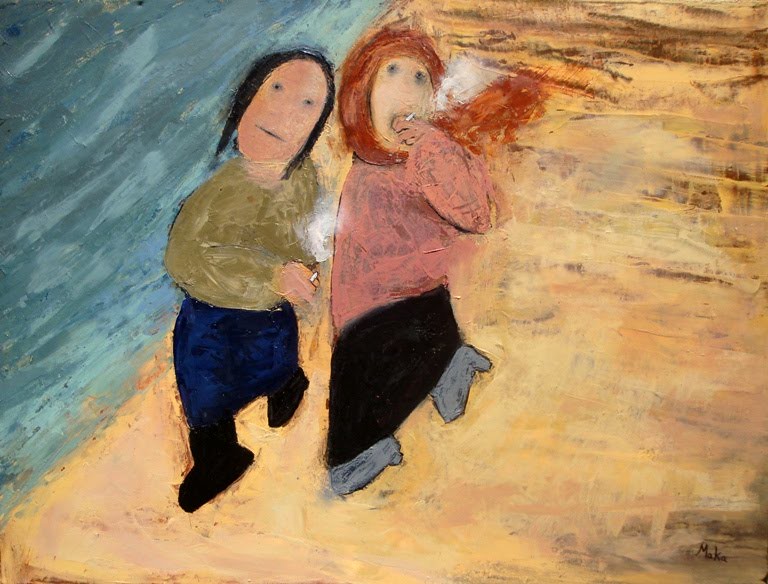
ART: New Drawings by Maka Batiashvili (maka.batiashvili.net)
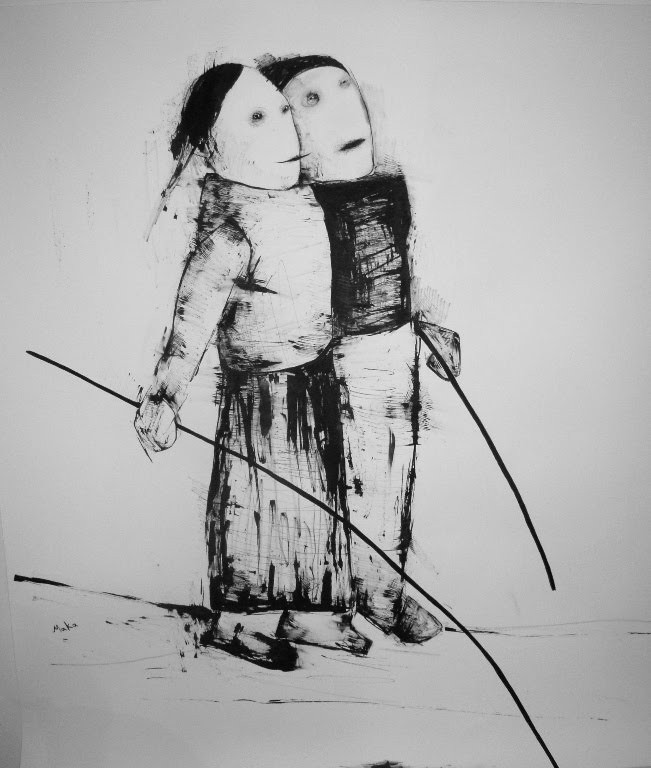
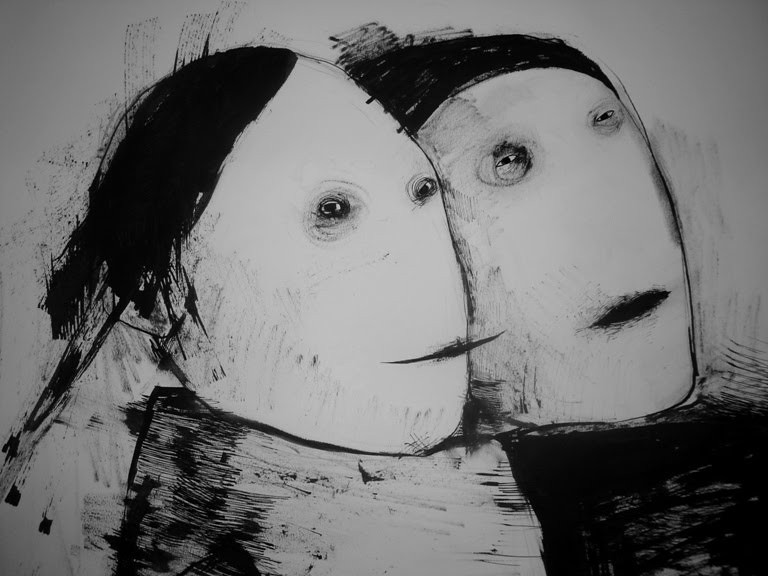
Drawing by Maka Batiashvili, Sticks, 120x150cm, 2010

Drawing by Maka Batishvili: Sticks, 160x180cm, 2010
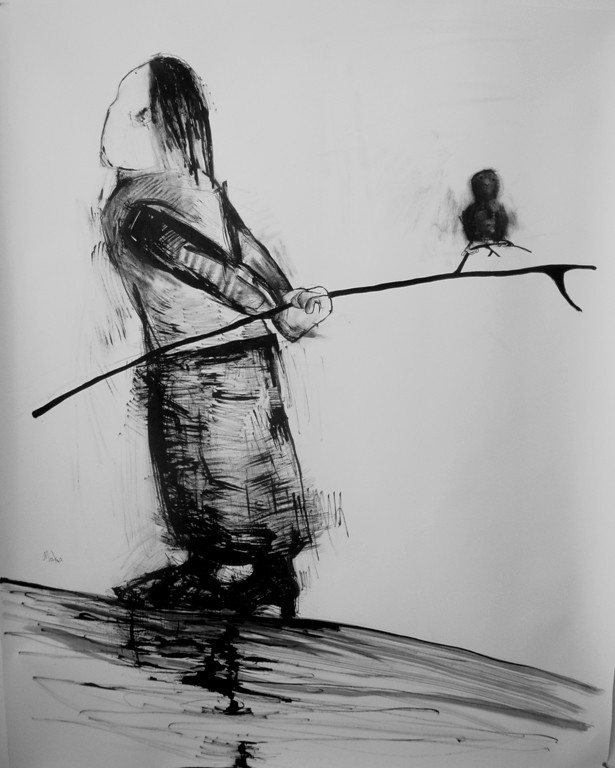
Drawing by Maka Batishvili: Sticks, 160x180cm, 2010
PHOTOSTORY: Russia's rebellious regions: a trip through Chechnya and Dagestan. By Miriam Elder - GlobalPost
CHECHNYA AND DAGESTAN, Russia — Russia likes to present itself as a solid monolith, a country crafted into stability by the strong hand of Vladimir Putin.
The easiest way to shatter that myth is to tell a Russian that you have just returned from a trip to Chechnya and Dagestan. They’ll ask if you were scared. They’ll ask if you got hurt. One Moscow taxi driver said, “I know they’re strategically important, but at this point I wonder why we don’t just let them go.”
The north Caucasus — the mountainous region that includes Chechnya and Dagestan, and a half-dozen other republics — has long fascinated, and terrified, the Russian consciousness. Nestled between the Black and Caspian seas, the region provides Russia key maritime access. But as the home since the mid-1990s to a persistent Islamic insurgency, as well as dozens of ethnic groups, many governed by intense clan interests, these republics have proved difficult to govern.
The easiest way to shatter that myth is to tell a Russian that you have just returned from a trip to Chechnya and Dagestan. They’ll ask if you were scared. They’ll ask if you got hurt. One Moscow taxi driver said, “I know they’re strategically important, but at this point I wonder why we don’t just let them go.”
The north Caucasus — the mountainous region that includes Chechnya and Dagestan, and a half-dozen other republics — has long fascinated, and terrified, the Russian consciousness. Nestled between the Black and Caspian seas, the region provides Russia key maritime access. But as the home since the mid-1990s to a persistent Islamic insurgency, as well as dozens of ethnic groups, many governed by intense clan interests, these republics have proved difficult to govern.
ANALYSIS: The risks of losing a special role in the Caucasus. By Thomas de Waal (europeanvoice.com)
 Leaders in the South Caucasus need to think regionally – and, to encourage that, the EU should keep a special representantive there.
 A ripple of alarm has gone through the community of those dealing with the south Caucasus at reports that the EU's new External Action Service is considering getting rid of the office of EU special representative (EUSR) for the south Caucasus.
Why is the post currently occupied by the Swedish diplomat Peter Semneby still needed in the EU's new, post-Lisbon treaty era? First of all because, in the old-fashioned vertical hierarchies of these countries, personalities matter. The two or three leaders who take the key decisions in each place like regular interlocutors with whom they can do business. In the form of an EUSR, the leaders of the south Caucasus have had an answer to Henry Kissinger's question, “What is the telephone number of Europe?”
On a couple of occasions, the envoy's diplomacy has been critical. Semneby's predecessor, Finland's Heiki Talvitie, helped mediate a peaceful solution to the crisis over Georgia's autonomous province of Ajaria in 2004. In June 2008, Semneby, in late-night talks, persuaded Georgia's President Mikheil Saakashvili not to declare the Russian peacekeeping force in Abkhazia illegal, thereby sparing Abkhazia a potential conflagration. Sadly, he and others could not pull off the same trick when the crisis in South Ossetia escalated into war two months later.
Secondly, international policy towards the south Caucasus would be shackled if it turned into three bilateral policies towards Georgia, Armenia and Azerbaijan. If this region is to have a promising future, it has to work, eventually, as a region. That entails resolving its conflicts, rebuilding its broken railway network, tearing down customs barriers and unlocking borders so as to make it into an attractive and open thoroughfare between Russia, Turkey and Iran. Currently, far too many feudal lords in the Caucasus are comfortable with the status quo of closed borders, which enables them to maintain cartels and monopolies and control their local fiefdoms. Inevitably, one-country agendas pursued by the West encourage the governments in Baku, Tbilisi and Yerevan to look inward and forget about regional co-operation. They reinforce divisions, rather than break them down. Only an outsider who works with the whole region can lobby effectively for regional integration.
That also means working in the three shadowy conflict regions of the south Caucasus. South Ossetia has been closed to the outside world since the 2008 war, but Semneby has been successful in keeping up vital links with the de facto republic of Abkhazia – something that a diplomat based in Tbilisi is no longer able to do. (In parallel to Semneby, the EU delegation to the Geneva talks on Georgia's conflicts is led by Pierre Morel, who is also the EUSR on Central Asia. This thankless task must eventually be reviewed, as the Geneva talks are completely deadlocked.)
The third unresolved conflict in the region, between Armenia and Azerbaijan over the province of Nagorno-Karabakh is the biggest, the most hidden and the most dangerous. The EU currently has no proper role in the peace process, although France is one of the three mediators in the political negotiations of the Minsk process. Sooner or later, if this emaciated peace process is to acquire some flesh, the EU will be required to play a role it performed in the post-Dayton Balkans, as the guarantor of reconstruction, policing and political reform. But, again, it would need a supra-regional envoy to argue for this role and assert the EU's right to be an agent of peaceful change.
The south Caucasus is the EU's most fragile neighbourhood and potentially the one most conducive to its transforming capacities. It needs the agile personal leadership of a single envoy to help make that mission achievable.
Thomas de Waal is a senior associate at the Carnegie Endowment for International Peace in Washington, DC.
Source: www.europeanvoice.com
Tuesday, June 15, 2010

STUDIES: Center for Balkan and Black Sea Studies (Yildiz Technical University Istanbul), Istanbul 06.-07.12.2010, YTU Auditorium, Istanbul, TURKEY
Deadline: 05.07.2010
The Center for Balkan and Black Sea Studies (BALKAR) at Yildiz Technical University, Istanbul, organizes an international symposium on the "Caucasian Migration of 1864" on December 6-7, 2010. The forced migration of 1864 was the largest migration movement from Caucasus during the period of the Russian occupation. More than a million people were affected by this event. The largest group among the migrants was the Circassians, but other Muslim groups from the Caucasus were to join this migration movement. Ottoman authorities settled this population mainly in the Balkans, Anatolia and the Middle East. Their successors are still living in these territories, especially in Turkey and Jordan.
The aim of this international symposium is threefold: 1- to examine to which extent this forced migration, almost entirely unknown to the general public, has been a subject of academic research; 2- to bring together experts of the topic; and 3- to encourage young academicians to carry out research on the subject.
The symposium will examine the Migration of 1864 from four different angles:
1. The causes of the 1864 Caucasian Migration: The Ottoman-Russian relations in the 19th century, the Caucasus policy of Russia and the political, economic and social situation of the Muslims of Caucasus in the 19th century, the causes of migration.
2. The forced migration of 1864 and waves of migration in the following years: The Russian expansion in the Caucasus, wars, resistance, migration movements, migration routes, epidemics during the migration and death etc.
3. The situation of the Muslim Caucasians after the Migration of 1864: the establishment of the Russian administration in Caucasus, the situation of the Muslims under Russian administration until the present day.
4. The Settlement of the Caucasian migrants and the process of their integration: The areas of settlement for the Caucasian migrants, the process and problems of their integration, the developments until the present day.
Scholars willing to participate in the symposium shall send the title of their presentation with an abstract of 200-300 words as a Word document to the organizing committee by July 5, 2010. Among the applications those papers which are based on archive research or field work, and particularly those of young scholars writing a master thesis or PhD dissertation on this theme will be given priority.
Following the symposium, the papers will be published in an edited book titled "The Caucasian Migration of 1864."
Organization Committee:
Doç. Dr. Mehmet Hacisalihoglu (Director of BALKAR):
Hacisalihoglu.Mehmet@gmx.de
Yaprak Has (YTU undergraduate student): hasyaprak@gmail.com
Keisuke Wakizaka (YTU graduate student): kafkaslikeisuke85@gmail.com
For further information and update: www.bal-kar.org
The Center for Balkan and Black Sea Studies (BALKAR) at Yildiz Technical University, Istanbul, organizes an international symposium on the "Caucasian Migration of 1864" on December 6-7, 2010. The forced migration of 1864 was the largest migration movement from Caucasus during the period of the Russian occupation. More than a million people were affected by this event. The largest group among the migrants was the Circassians, but other Muslim groups from the Caucasus were to join this migration movement. Ottoman authorities settled this population mainly in the Balkans, Anatolia and the Middle East. Their successors are still living in these territories, especially in Turkey and Jordan.
The aim of this international symposium is threefold: 1- to examine to which extent this forced migration, almost entirely unknown to the general public, has been a subject of academic research; 2- to bring together experts of the topic; and 3- to encourage young academicians to carry out research on the subject.
The symposium will examine the Migration of 1864 from four different angles:
1. The causes of the 1864 Caucasian Migration: The Ottoman-Russian relations in the 19th century, the Caucasus policy of Russia and the political, economic and social situation of the Muslims of Caucasus in the 19th century, the causes of migration.
2. The forced migration of 1864 and waves of migration in the following years: The Russian expansion in the Caucasus, wars, resistance, migration movements, migration routes, epidemics during the migration and death etc.
3. The situation of the Muslim Caucasians after the Migration of 1864: the establishment of the Russian administration in Caucasus, the situation of the Muslims under Russian administration until the present day.
4. The Settlement of the Caucasian migrants and the process of their integration: The areas of settlement for the Caucasian migrants, the process and problems of their integration, the developments until the present day.
Scholars willing to participate in the symposium shall send the title of their presentation with an abstract of 200-300 words as a Word document to the organizing committee by July 5, 2010. Among the applications those papers which are based on archive research or field work, and particularly those of young scholars writing a master thesis or PhD dissertation on this theme will be given priority.
Following the symposium, the papers will be published in an edited book titled "The Caucasian Migration of 1864."
Organization Committee:
Doç. Dr. Mehmet Hacisalihoglu (Director of BALKAR):
Hacisalihoglu.Mehmet@gmx.de
Yaprak Has (YTU undergraduate student): hasyaprak@gmail.com
Keisuke Wakizaka (YTU graduate student): kafkaslikeisuke85@gmail.com
For further information and update: www.bal-kar.org
PHOTOESSAY: On and Off the Walls: Mari Bastashevski’s “File 126 (Disappearing in the Caucasus)” (newyorker.com)
 Posted by Whitney Johnson
While Jan Banning’s “Bureaucratics” may be the most delightful contribution to “Moving Walls 17,” at the Open Society Institute, Mç’s is arguably the most courageous. Her long-term project “File 126 (Disappearing in the Caucasus)” documents a decade of abductions in Chechnya, Ingushetia, and Dagestan, believed to be largely the work of military and security forces.
Overwhelmed by the magnitude and impenetrability of the human-rights abuses in the North Caucasus, Bastashevski feared that reading through hundreds of files would only leave her numb. She used photography not only to draw attention to the countless abductions, most of which have never been investigated, but to acknowledge the human beings behind the paperwork. Taken inside the homes of the abducted, her pictures juxtapose intimacy and atrocity: “The relatives would explain what happened on the day of the abductions—then ask me to tea.” Bastashevski told me. “It has become part of their normality.”
As for courage, Bastashevski said that she’s been detained and questioned dozens of times in the past year. “I’m almost comfortable with it,” she said, but it’s “merely an occupational hazard compared to the risks that human-rights advocates and journalists in the region put themselves in daily.”
The exhibition is open to the public Monday through Friday, 9 A.M. to 4:30 P.M., through February 11, 2011, at 400 West 59th Street.
Read more: www.newyorker.com
PHOTOESSAY: Emerging Photographer Grant 2010 Recipient: Davide Monteleone, Northern Caucasus (burnmagazine.org)
With the 1991 radical transformations involving the entire Warsaw Pact coalition, and the storm caused by the collapse of the Soviet Union, new and ancient disputes resurfaced, and in some cases worsened, and revived political and economic aims of supremacy in the area.
This project takes into account the regions in which these disputes are not over yet, or may be apparently concluded, as intermittent fires under the political rhetoric of normalization and pacification. I intend to investigate with without prejudices such reality, beginning with the daily life of people living in the Northern Caucasus, who never reached their coveted independence and are still suffering the ramifications of the Russian Empire during the colonial age. They are divided between the claim for independence and the pride for their diversity, economic subordination, the historical-political and mental affiliation, the condemnation to an eternal geographic position in a limbo limes, and the elaboration of a new post-soviet identity. My goal is to go further away from the bird’s eye view of the geopolitical analysis, gliding down to a low altitude to find the details of such a complex world, with the aim to give a new key to the present day Russian Caucasus.
I’ve been working from Chechnya to Dagestan, from Northern to Southern Ossetia, just after the war in August 2008, all the way to Abkhazia, from the Caspian Sea to the Black Sea coasts, crossing geographical and political borders. My interest isn’t to cover the news that brought the region back under the international floodlights, but to carry on a considered path by making notes of the tracks left behind.
Bio
Born in 1974, Davide Monteleone spent the first 18 years of his life moving to various cities of Italy because of the work of his parents. After graduating, he studied engineering and then stopped to move to the U.S. and after that to England. Is here that he discovered his interest in photography and journalism. Back in Italy in 2000, he completed his studies in photography and journalism and began working with the major Italian magazines. At the end of 2001 he moved again, this time to Moscow, where he lived until 2003 working as correspondent for the photo agency Contrasto. This choice proved to be determining for his career. He started working regularly with major national and international newspapers such as D, Io Donna L’espresso, New York Times, Time, Stern, and the New Yorker. Since 2003 he lives both in Italy and Russia, where he is pursuing long-term personal projects and continues his editorial work. He published his first book Dusha, Russian Soul in 2007.
Editor’s Note:
Davide will receive $15,000. from Burn Magazine through the Magnum Cultural Foundation to continue his work in the Northern Caucasus.
Monday, June 14, 2010
VIDEO: Rena Effendi: Pipe Dreams (youtube.com)
Eine Chronik des Lebens entlang der Pipeline.
more: www.benteli.ch
Rena Effendi at HOST Gallery
Rena Effendi, photographer from Azerbaijan, speaks to Jon levy about her project "Pipe dreams" on the oil pipeline that runs from Azerbaijan through Georgia and Turkey. An exhibition of the same title was held at HOST to coincide with the release of "Pipe Dreams" as a book, published by Schilt Publishing in November 2009.
more: www.benteli.ch
Rena Effendi at HOST Gallery
Rena Effendi, photographer from Azerbaijan, speaks to Jon levy about her project "Pipe dreams" on the oil pipeline that runs from Azerbaijan through Georgia and Turkey. An exhibition of the same title was held at HOST to coincide with the release of "Pipe Dreams" as a book, published by Schilt Publishing in November 2009.
Wednesday, June 09, 2010
ART: Solo Exhibition: Lali Daniluk - in Tbilisi

“is rac mindoda meTqva”l
ali danilukis personalurი gamofena
19:00 სთ.
19:00 სთ.
Tibisi galerea
მარჯანიშვილის ქ. 16. თბილისი, საქართველო
+995 32 27 27 27
“What I wanted to say”
Solo exhibition of Lali Daniluk
10 June, 19.00 pm.
10 June, 19.00 pm.
TBC Gallery16, Marjanishvili st. Tbilisi, Georgia
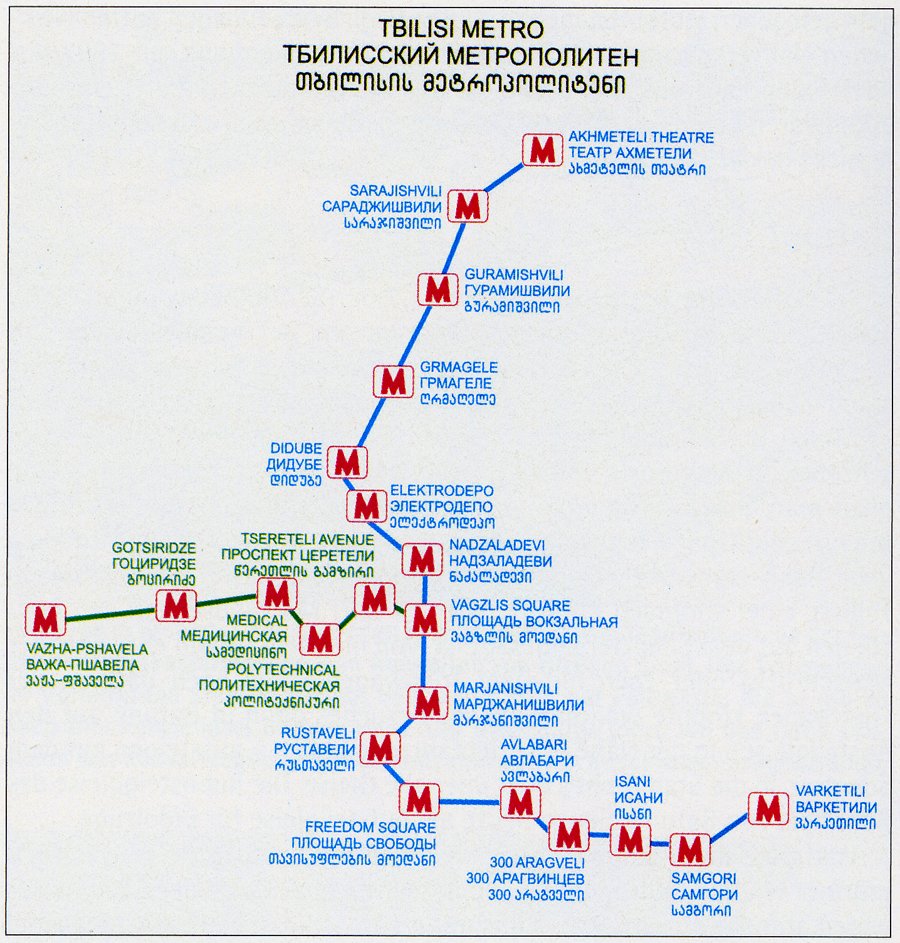
MAP: Tbilisi Metro (urbanrail.net)
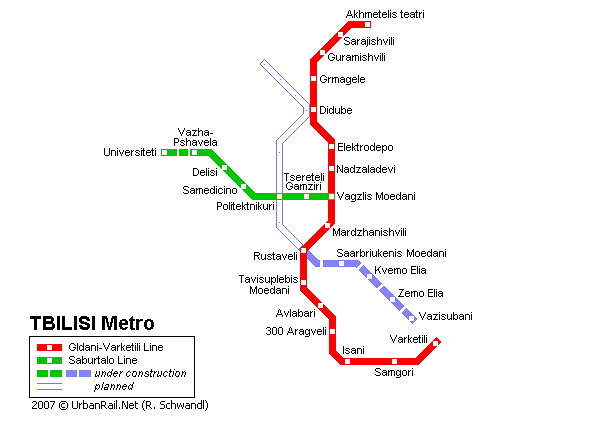
Tbilisi (Tiflis) is the capital of the former Soviet republic of Georgia, situated in the Caucasus. The city has 1.2 million inhabitants and extends 40 km north - south along the river Mtkwari (Kura). The valley is surrounded by mountains what makes road traffic especially difficult. Therefore plans for a subway system were made already in the early 1950's when the city had only 750,000 inhabitants.
The first line (Gldani-Varketili Line, formerly Didube-Samgorskaya) opened in 1966 from Dibude to Rustaveli (6.3 km, 6 stations) via the city centre. A few years later it was extended towards the south to 300 Aragveli (1967) and Samgori (1971). During the 1980's it reached its current length of 19.6 km with 16 stations.
In 1979, the second line (Saburtalo Line) began operating between Vagzlis Moedani (railway station) and Victor Gotsiridze. In the year 2000 it was extended to its current terminus Vazha Pshavela. The line has a total length of 6.7 km with 6 stations.
Most station names were changed during the 1990's after the dissolution of the former USSR and the independence of Georgia. Trains in service are of the 81-717 and 81-714 series also running in Moscow and other ex-Soviet cities. Stations have 100 m long platforms for 5-car trains, although only 3 or 4-car trains are currently used.
The first line (Gldani-Varketili Line, formerly Didube-Samgorskaya) opened in 1966 from Dibude to Rustaveli (6.3 km, 6 stations) via the city centre. A few years later it was extended towards the south to 300 Aragveli (1967) and Samgori (1971). During the 1980's it reached its current length of 19.6 km with 16 stations.
In 1979, the second line (Saburtalo Line) began operating between Vagzlis Moedani (railway station) and Victor Gotsiridze. In the year 2000 it was extended to its current terminus Vazha Pshavela. The line has a total length of 6.7 km with 6 stations.
Most station names were changed during the 1990's after the dissolution of the former USSR and the independence of Georgia. Trains in service are of the 81-717 and 81-714 series also running in Moscow and other ex-Soviet cities. Stations have 100 m long platforms for 5-car trains, although only 3 or 4-car trains are currently used.
Lines and History:
Gldani-Varketili Line - 19.6 km, 16 stations
11 Jan 1966: Dibude - Rustaveli (6.3 km, 6 stations)06 Nov 1967: Rustaveli - 300 Aragveli (ex 300 Aragvinzev)05 May 1971: 300 Aragveli - Samgori08 Nov 1985: Samgori - Varketili16 Nov 1985: Didube - Guramishvili (ex TEVZ) 07 Jan 1989: Guramishvili - Akhmetelis teatri
Saburtalo Line - 6.7 km, 6 stations
15 Sept 1979: Vagzlis Moedani (ex Pl. Vokzalna) - Victor Gotsiridze (ex Delisi) (6.2 km, 5 stations)02 April 2000: Victor Gotsiridze - Vazha Pshavela
Some (or all) station names have been changed from Russian into Georgian, so older names found on some maps are given in brackets. Other former names: Pl. Lenina for Tavisuplebis Moedani (Freedom Sq.); 26 Komissarov for Avlabari; Okyabrskaya for Nadzeladevi; Komsomolskaya for Medikal Institut.
11 Jan 1966: Dibude - Rustaveli (6.3 km, 6 stations)06 Nov 1967: Rustaveli - 300 Aragveli (ex 300 Aragvinzev)05 May 1971: 300 Aragveli - Samgori08 Nov 1985: Samgori - Varketili16 Nov 1985: Didube - Guramishvili (ex TEVZ) 07 Jan 1989: Guramishvili - Akhmetelis teatri
Saburtalo Line - 6.7 km, 6 stations
15 Sept 1979: Vagzlis Moedani (ex Pl. Vokzalna) - Victor Gotsiridze (ex Delisi) (6.2 km, 5 stations)02 April 2000: Victor Gotsiridze - Vazha Pshavela
Some (or all) station names have been changed from Russian into Georgian, so older names found on some maps are given in brackets. Other former names: Pl. Lenina for Tavisuplebis Moedani (Freedom Sq.); 26 Komissarov for Avlabari; Okyabrskaya for Nadzeladevi; Komsomolskaya for Medikal Institut.
Projects
An extension of the second line to the University and the first section of a third line is under construction, although no dates for completion are known.
- OPERATION
The Tbilisi Metro operates from 6:00 until 1:00, every 2.5 minutes during rush hours and every 4 minutes during the day.
- FARES (2007)
Single fare - GEL 0.40 (lari)
Plastic cards with multiple rides: 20 Lari (60 rides) - 145 Lari (720 rides)
The Tbilisi Metro operates from 6:00 until 1:00, every 2.5 minutes during rush hours and every 4 minutes during the day.
- FARES (2007)
Single fare - GEL 0.40 (lari)
Plastic cards with multiple rides: 20 Lari (60 rides) - 145 Lari (720 rides)
Links
metro.ge (Official Website)
Official Metro Map 2007
Tbilisi Metro on Wikipedia
Metrosoyuza by Peter Donn includes nice station pictures
Tbilisi Metro at Mir metro/Metroworld by Aksenov Dmitry
Tbilisi Metro Track Map
Tbiltrans
Salinas, Julian; a.o.: METRO. TBILISI. - Portraits of metro passengers. Christoph-Merian-Verlag, Basel. 50p, ISBN 3856161481 (May 2001)
Official Metro Map 2007
Tbilisi Metro on Wikipedia
Metrosoyuza by Peter Donn includes nice station pictures
Tbilisi Metro at Mir metro/Metroworld by Aksenov Dmitry
Tbilisi Metro Track Map
Tbiltrans
Salinas, Julian; a.o.: METRO. TBILISI. - Portraits of metro passengers. Christoph-Merian-Verlag, Basel. 50p, ISBN 3856161481 (May 2001)
LERNEN: Sprachenlernen24.de Georgisch-Express-Sprachkurs
CD-ROM für Windows/Linux/Mac OS X + MP3-Audio-CD für Computer/MP3-Player/MP3-fähigen CD-Player (Audio CD)
Audio CD: 1 Seiten
Verlag: Udo Gollub; Auflage: 1., (11. Mai 2007)
Sprache: Deutsch
ISBN-10: 386725057X
ISBN-13: 978-3867250573
Die Sprachkurs-CD-ROM beinhaltet einen thematisch sortieren Wortschatz mit den 450 wichtigsten Wörtern zur Verständigung im Urlaub, 21 Wortlisten mit realistischen Urlaubssituationen. Zahlreiche interaktive Lernmethoden zur Erweiterung des Wortschatzes: fortschrittlich und effektiv zur Verständigung im Urlaub!
Die Lernmöglichkeiten mit diesem Sprachkurs sind vielfältig: Sie können Vokabeln und Redewendungen am Bildschirm lesen, diese per Mausklick anhören, über Ihre Tastatur eingeben, im Multiple-Choice-Verfahren auswählen oder als Liste und auf Karteikarten ausdrucken. Zusätzlich bietet Ihnen der Sprachkurs ein einzigartiges Lernprogramm, um das Gelernte dauerhaft in Ihrem aktiven Langzeitgedächtnis zu speichern, wo es jederzeit abgerufen werden kann: die so genannte 'Sprachenlernen24-Lernmethode'.
Mit der MP3-Audio-CD haben Sie einen Vokabeltrainer für unterwegs: Kopieren Sie die Vokabeln und Wortlisten auf Ihren MP3-Player, um auch flexibel unterwegs zu lernen. Selbstverständlich lernen Sie in diesem Sprachkurs das georgische Alphabet Mchedruli. Damit Sie wissen wie die Schrift zu lesen ist, finden Sie unter jedem eine lateinische Umschreibung.
Systemvoraussetzungen: Ob Windows, Linux oder Mac, unsere multimediale Lernsoftware läuft auf jedem Betriebssystem. Sie müssen nichts installieren, einfach die CD-ROM ins Laufwerk einlegen und los geht's!
Details: In wenigen Tagen fit für die Reise!
Lernsoftware mit Wortlisten, 450 Vokabeln, MP3-Audio-CD mit Vokabeltrainer für unterwegs, zahlreiche multimediale Lern- und Testmethoden zum Lesen, Testen und Anhören, Karteikarten zum Vokabellernen, Wort für Wort lernen mit Muttersprachlern.
Lauffähig ohne Installation und auf jedem Betriebssystem
Über den Autor
Sprachenlernen24 gehört zu der 1997 gegründeten Firma 'Online Media World', die mit einem Team aus erfahrenen Programmieren, Sprachwissenschaftlern, Autoren und Designern seit 2002 erfolgreich Sprachkurse entwickelt. Mittlerweile enthält das Sprachkursangebot über 60 Sprachen in bis zu drei verschiedenen Lernstufen.
AmazonShop: Books, Maps, Videos, Music & Gifts About The Caucasus
Audio CD: 1 Seiten
Verlag: Udo Gollub; Auflage: 1., (11. Mai 2007)
Sprache: Deutsch
ISBN-10: 386725057X
ISBN-13: 978-3867250573
Die Sprachkurs-CD-ROM beinhaltet einen thematisch sortieren Wortschatz mit den 450 wichtigsten Wörtern zur Verständigung im Urlaub, 21 Wortlisten mit realistischen Urlaubssituationen. Zahlreiche interaktive Lernmethoden zur Erweiterung des Wortschatzes: fortschrittlich und effektiv zur Verständigung im Urlaub!
Die Lernmöglichkeiten mit diesem Sprachkurs sind vielfältig: Sie können Vokabeln und Redewendungen am Bildschirm lesen, diese per Mausklick anhören, über Ihre Tastatur eingeben, im Multiple-Choice-Verfahren auswählen oder als Liste und auf Karteikarten ausdrucken. Zusätzlich bietet Ihnen der Sprachkurs ein einzigartiges Lernprogramm, um das Gelernte dauerhaft in Ihrem aktiven Langzeitgedächtnis zu speichern, wo es jederzeit abgerufen werden kann: die so genannte 'Sprachenlernen24-Lernmethode'.
Mit der MP3-Audio-CD haben Sie einen Vokabeltrainer für unterwegs: Kopieren Sie die Vokabeln und Wortlisten auf Ihren MP3-Player, um auch flexibel unterwegs zu lernen. Selbstverständlich lernen Sie in diesem Sprachkurs das georgische Alphabet Mchedruli. Damit Sie wissen wie die Schrift zu lesen ist, finden Sie unter jedem eine lateinische Umschreibung.
Systemvoraussetzungen: Ob Windows, Linux oder Mac, unsere multimediale Lernsoftware läuft auf jedem Betriebssystem. Sie müssen nichts installieren, einfach die CD-ROM ins Laufwerk einlegen und los geht's!
Details: In wenigen Tagen fit für die Reise!
Lernsoftware mit Wortlisten, 450 Vokabeln, MP3-Audio-CD mit Vokabeltrainer für unterwegs, zahlreiche multimediale Lern- und Testmethoden zum Lesen, Testen und Anhören, Karteikarten zum Vokabellernen, Wort für Wort lernen mit Muttersprachlern.
Lauffähig ohne Installation und auf jedem Betriebssystem
Über den Autor
Sprachenlernen24 gehört zu der 1997 gegründeten Firma 'Online Media World', die mit einem Team aus erfahrenen Programmieren, Sprachwissenschaftlern, Autoren und Designern seit 2002 erfolgreich Sprachkurse entwickelt. Mittlerweile enthält das Sprachkursangebot über 60 Sprachen in bis zu drei verschiedenen Lernstufen.
AmazonShop: Books, Maps, Videos, Music & Gifts About The Caucasus
REISE: Tipps für die Motorradreise in Georgien (motorradonline.de)
 Der seit 1991 unabhängige GUS-Staat Georgien gewinnt als Reiseland zunehmend Beachtung: Landschaften zwischen Schwarzem Meer und den Fünftausendern des Kaukasus, die im Norden die Grenzlinie zu Rußland markieren, eine jahrtausendealte Kultur und nicht zuletzt seine gastfreundlichen Bewohner machen es vor allem für Enduristen zu einem ganz besonderen Reiseziel. Allerdings zu keinem einfachen. Intensive Vorbereitung und in einigen Landesteilen auch die Inanspruchnahme von Führern ist aus Sicherheitsgründen unerläßlich. Hier die wichtigsten Tips.
Anreise/Fähre:
Auf dem Landweg: Wegen der problematischen Sicherheitslage und der zeitweise gesperrten Grenzübergänge zwischen Rußland und Georgien (Soci/Suhumi) sowie über die Georgische Heerstraße A 301 wird von der Nordumfahrung des Schwarzen Meers über Polen, die Ukraine und Südrußland dringend abgeraten (3000 Kilometer ab Leipzig). Auch wenn damit die Möglichkeit, den Nord-Kaukasus zu bereisen, entfällt. Sicherer ist die südliche Umrundung des Schwarzen Meeres über Ungarn, Rumänien, Bulgarien und die Türkei (Grenzübergänge Sarpi/Batumi oder Posof/Ahalciche). Die ab München rund 3300 Kilometer lange Anreise kann durch Fährpassagen um bis zu 1500 Kilometer verkürzt werden. Die folgenden Preise gelten jeweils für eine Person mit Motorrad, Deckspassage/Kabine, Hauptsaison, einfach Fahrt. Auf Rückfahrticktes werden bis zu 30% Rabatt gewährt. Die preisgünstigste Möglichkeit ist die rund 20stündige Überfahrt ab Venedig, Triest oder Ancona nach Igoumenitsa für 180/320 Mark. Nach der Weiterreise durch Nordgriechenland läßt sich die Fahrt ab Istanbul per 44stündiger Schwarzmeerfähre nach Trabzon/Türkei für 205 Mark (nur Kabine) nochmals um satte 1100 Küstenkilometer verkürzen. (Abfahrt jeweils montags.) Tickets gibt´s nur vor Ort, Reservierungen sind unter Telefon 0090-212/2499222, Fax 2519025 möglich. Eine Alternative dazu ist zweitägige Überfahrt von Burgas/Bulgarien nach Poti/Georgien (jeweils dienstags) für 400 Mark (nur Kabine). Informationen über Spedition Betz (siehe »Motorradtransport«) oder direkt in Burgas, Telefon 00359-564/5359, Fax 8115. Die bequemste, aber auch teuerste Möglichkeit ist die Überfahrt von Venedig direkt nach Izmir/Türkei mit der Turkish Maritime Lines. Im Preis von 475/655 Mark ist auf der 65-stündigen Adria-Ägäis-Kreuzfahrt in allen Kategorien Vollpension inklusive. Flug/MotorradtransportWer sich die Anreise erleichtern will, fliegt nach Tiflis und läßt sein Motorrad per Spedition schicken. Flüge werden von Air Georgia, Turkish Airlines, Austrian Airlines und Swissair für rund 1100 Mark angeboten. Graumarkt-Tickets gibt es bereits ab zirka 900 Mark, zum Beispiel bei Travel Overland, Telefon 089/272760.Motorradtransporte organisiert die Spedition Willi Betz, Max-Planck-Str. 68, 72766 Reutlingen, die seit kurzem Sammelguttransporte nach Georgien anbieten. Die Motorräder werden dafür undemontiert auf einer 2,50 x 1,20 - Palette festgezurrt. Kosten rund 1150 Mark, Infos unter Telefon 07121/141-230, Fax 392.
Dokumente:
Vorgeschrieben sind Internationaler Fahrzeugschein, Internationaler Führerschein sowie ein gültiger Reisepaß plus Visum. Letzteres erteilt die Botschaft der Republik Georgien, Am Kurpark 6, 53177 Bonn, Telefon 0228/957510.
Das Motorrad wird im Paß eingetragen, daher ist derzeit noch kein Carnet de Passages notwendig, aber in Planung (beim ADAC erkundigen). Die grüne Versicherungskarte ist in Georgien nicht gültig, doch viele Versicherer stellen eine Bescheinigung aus, daß der Versicherungsschutz auch in den GUS-Staaten sowie dem asiatischen Teil der Türkei gilt. Dennoch kann bei der Einreise über die Türkei am Grenzübergang Sarpi/Batumi unter Umständen eine Kurzhaftpflichtversicherung für zirka 40 Mark verlangt werden. Der ADAC-Auslandsschutzbrief ist in Georgien, der Ukraine, Rußland (bis zum Ural) und in der gesamten Türkei gültig.
Reisezeit:
Im westlichen Tiefland herrscht von April bis September subtropisches Klima, im Kaukasus Hochgebirgsklima. Im Osten bestimmen zunehmend kontinentale Einflüsse das Wetter, es ist trockener und die Tag-Nachttemperaturen differieren stärker. Beste Reisezeit: Mai bis Oktober.
Finanzen:
Landeswährung ist der georgische Lari (1 GEL = 1,35 DM), der weder ein- noch ausgeführt werden darf. US-Dollar in kleinen Scheinen bieten die beste Wechselbasis (Banken und Wechselstuben in Tiflis), Reiseschecks und Kreditkarten sind außerhalb der Hauptstadt unbrauchbar. Die Preise für Westprodukte bewegen sich auf deutschem Niveau, Unterkünfte sind für den gebotenen Standard teuer, Benzin und die lokalen Produkte auf den Märkten hingegen günstig.
Tanken:
Verbleites Benzin in guter bis ausreichender Qualität (0,45 - 0,70 GEL pro Liter) ist flächendeckend erhältlich, Bleifrei gibt es dagegen nicht. Bei Reisen in abgelegene Gebiete sollte eine Reichweite von 250 Kilometern gewährleistet sein. ÜbernachtenIn Tiflis gibt es neben dem Sheraton einige Unterkünfte der Mittelklasse, die aber mit 60 bis 120 US-$ fürs DZ recht teuer sind. Preisgünstiger ist das ehemalige Intourist-Hotel »Adjara« mit 50 GEL pro DZ; Telefon 0099532/365519; Fax 364476) sowie die über ERKA (siehe organisierte Touren) zu buchende Pension »Kartli«. Zentrumsnahe Privatzimmer vermittelt SAK-Tours für 30 bis 35 GEL pro Person. Außerhalb von Tiflis gibt es Hotels nur in den größeren Städten. Für die Anreise empfehlenswert ist das Hotel Casino Imperial Maltakwa, Zalatoi Ozero Str., im sogenannten Sportkomplex in Poti, Telefon 21426. Liegt am Ortsausgang Richtung Batumi und die ist die 25 GEL pro Person locker wert.
Auf dem Land sind Privatunterkünfte (über ERKA/SAK-TOURS zu buchen) für rund 40 GEL inklusive Halbpension eine hervorragende Möglichkeit, georgische Küche und Gastfreundschaft hautnah zu erleben. Wenn man in abgelegenen Gegenden kein Zimmer reserviert hat, kann man direkt in den Dörfern nach einer Unterkunft gegen Bezahlung fragen. Meist bricht dann rege Betriebsamkeit aus, und in einem Haus wird ein Gastzimmer hergerichtet. Unter Umständen wird man auch von Menschen, die man gerade erst kennengelernt hat, eingeladen und großzügig bewirtet. Bitte die Gastfreundschaft nicht ausnutzen, sondern beim Abschied ein Geschenk oder (dezent!) einige Lari zurücklassen.
Camping:
Speziell eingerichtete Zeltplätze gibt es nicht, und vom wilden Campen muß insbesondere in Swanetien und anderen entlegenen Bergregionen aus Sicherheitsgründen abgeraten werden. Besser auf Bauernhöfen fragen, ob man auf deren Grund zelten darf.
Essen und Trinken:
Die abwechslungsreiche Küche ist es wert, den eigenen Kocher kalt zu lassen.
Neben vielen Straßenständen, an denen gekochte Maiskolben und Chatschapuri (mit Käse gefüllte Teigtaschen) angeboten wird, gibt es unzählige kleine Restaurants, in denen man für wenige GEL landestypisch essen kann: Schaschlik-Spieße, Chinkali (gefüllte Teigtaschen), mit Walnußpaste gefüllte Auberginen (Badridschani) und Salat.
Straßenzustand/Enduro:
Georgiens Straßen sind schlecht. Mit Ausnahme der gut ausgebauten West-Ost-Verbindung Batumi-Tiflis bestehen sie mehr aus Löchern denn aus Asphalt. Gegenstände und Tiere auf der Fahrbahn, hochstehende Schienen, tieferliegende Kanaldeckel, langsame Fuhrwerke und der bei Nässe sehr rutschige Asphalt sorgen oft für heikle Situationen. Unbedingt defensiv Fahren und von Nachtfahrten absehen. Für die Interpretation der Straßenwegweiser sollte Kenntnis über das kyrillische Alphabet herrschen, da sie, wenn überhaupt, nur in Kyrillisch oder dem blumigen Georgisch vorhanden sind. Alle Nebenstraßen aber auch viele als Hauptstraßen ausgewiesene Strecken sind mehr oder weniger Naturpisten. Je nach Region staubig bis felsig, bei Feuchtigkeit sehr rutschig und oft von Lkw extrem zerpflügt, zehren die oft langen Etappen auch bei geübten Fahrern beladener Enduros ziemlich an der Kondition. Aber gleichzeitig bieten sie ein Enduro-Terrain von paradiesischen Ausmaßen. Bei technischen Problemen finden sich an der Ost-West-Magistrale M 27 viele Reifenläden und Reparaturwerkstätten mit viel Improvisationstalent. Ersatzteile sollten im Gepäck sein.SicherheitDas größte Risiko bei Motorradreisen in Länder außerhalb Mitteleuropas sind statistisch weniger Unruhen und Terroranschläge, sondern schlicht und einfach Verkehrsunfälle und die folgende mangelhafte medizinische Versorgung. So auch in Georgien, wo Verkehrsregeln eher ignoriert als beachtet werden, die Sicherheitslage in den meisten Regionen aber eher unbedenklich ist.Schwierig sind dagegen Abhaszien und Südossetien. In der seit 1992 abtrünnigen Republik Abhaszien im Nordwesten Georgiens herrscht zwar Waffenruhe, doch Minen, bewaffnete Banden und das Fehlen jeglicher staatlicher Ordnung verbieten jede Form von Tourismus. Südossetien sollte nur in Begleitung und nach vorheriger Kontaktaufnahme mit den lokalen Behörden bereist werden. Swanetien und Tuschetien wurde ebenfalls mit Guide bereist, jedoch hier mangels Ortskenntnis und fehlender Übernachtungsmöglichkeiten. Für den russischen Nordkaukasus liegt eine Reisewarnung des Auswärtigen Amtes vor. GesundheitImpfungen sind nicht zwingend vorgeschrieben, sollten jedoch für Polio, Tetanus und Diphterie bestehen und für Hepatitis A+B sowie Typhus in Absprache mit dem Arzt oder Gesundheitsamt erwogen werden. Das Centrum für Reisemedizin in Düsseldorf, Telefon 0221/90429-0, Fax -99) bietet für 15 Mark pro Land in einem »Reise-Gesundheitsbrief« individuelle Informationen zur Gesundheitsvorsorge. Der ADAC hat für Mitglieder unter Telefon 089/767677, Fax 76763677 einen medizinischen Info-Service eingerichtet.Bei Problemen im Land sind die schottischen Ärzte der Ölgesellschaft OMS (Odessa Str. 25, Tbilissi) hilfreich und kompetent. Telefon 941498, Fax 943516. Gut ausgebildete Mediziner sind in Tiflis in der Praxis Curatio, Telefon 968679, oder im Sheraton Hotel zu finden, Telefon 9464, Fax 957376.
Organisierte Motorradreisen:
ERKA-Reisen, Robert-Stolz-Str. 21, 76646 Bruchsal, Telefon 07257/93039-0, Fax -2, ist mit der Agentur SAK-Tours in Georgien präsent und bietet von Studien- bis Sportreisen ein breites Angebot im Land an. Ab Frühjahr 1999 sind Mietmotorräder und geführte Enduro-Touren geplant sowie Beratung, Quartierbuchung und Tourenausarbeitung für individuell reisende Motorradfahrer. Informationen· Differenzierte Reisehinweise für die Kaukasusländer gibt es im Auswärtigen Amt, Adenauerallee 99-103, 53113 Bonn, Telefon 0228/17-0, unter den Durchwahlnummern -1836, -2715 und -3210. Hilfreich ist auch die Deutsche Botschaft in Tiflis, Agmashenebeli Prospekt 166, 380012 Tbilissi, Telefon 00995/32953326, Fax 32950936.
Touristik-Informations-Programme, in München, Telefon 089/4166-1333, Fax -1301 bieten in »reiseTIP« aktuelle Reiseinformationen für das gewünschte Land für zehn Mark pro Land.
Besonders Interessierte können auch mit dem Autor unter Telefon und Fax 07031/385536 Kontakt aufnehmen.
Literatur:
Derzeit sind keine aktuellen Reiseführer über Georgien auf dem Markt. Allerdings sind ostdeutsche Flohmärkte und Antiquariate gute Fundgruben für ältere Kaukasus-Literatur. In Vorbereitung für 1999 sind ein Georgien-Reiseführer im ERKA-Verlag sowie ein englischsprachiger Lonely Planet-Band.
Zumindest weitergeholfen haben die Bücher:
R. Rosen: The Georgian Republic, Passport Books, NTC Publishing Group,Chicago,1975;
B. Löwe: Kulturschock Rußland, Reise-Know-How, 1997, 24,80 Mark;
Bakradse: Georgisch - Wort für Wort, Kauderwelsch, 14,80
Mark. Karten: Mairs, GUS, Großblatt 5 1:750.000; International Travel Map Georgia. 1:625.000; Freytag & Berndt, Georgien 1:800.000.
Sowjetische Generalstabskarten in 1:500.000, 1:200.000 und 1:100.000 gibt es beim Därr Expeditionsservice in München, Telefon 089/282033.
Monday, June 07, 2010
BOOK: Rena Effendi: Pipe Dreams: A chronicle of lives along the pipeline (refendi.com)
Dear all,
Hope you are doing well and your loved ones too. Just wanted to give you a quick update on my book "Pipe Dreams: a chronicle of lives along the pipeline". The book of five chapters depicting lives of ordinary people living along the Baku-Tbilisi-Ceyhan oil pipeline is finally available online, if you are in Europe, for English and German books please go to:
Unfortunately, the books have not made it to Azerbaijan, all my personal copies are still held up by the customs, indefinitely.
Thank you!
rena
--
www.refendi.com
AmazonShop: Books, Maps, Videos, Music & Gifts About The Caucasus
Kurzbeschreibung
Das Geschäft mit Öl, dem schwarzen Gold, ist eines der lukrativsten auf der Welt. Dienneue Pipeline vom Kaspischen Meer zum Mittelmeer verspricht der westlichen Welt einen ungehinderten Zugang zum Öl jenseits des Kaukasus. Doch für die unmittelbaren Anwohner der 1700 Kilometer langen Röhre ist sie vor allem ein unheimliches Ding, das nur wenigen viel Geld und den meisten Unglück bringt.Die Fotografin Rena Effendi bereiste die Länder entlang der Pipeline, die auf ihren eindrucksvollen Fotos nicht sichtbar ist, da sie tief im Erdboden vergraben verläuft. Sichtbar hingegen sind die Anwohner und ihre Lebensumstände. Und spürbar wird die Kluft zwischen ihrem Dasein und der Welt derer, die das Öl erhalten werden oder es vermarkten. Beispielsweise fliessen täglich 70 Millionen Dollar unter Häusern hindurch, die seit Jahrzehnten aus Mangel an Gas nicht mehr beheizt werden können...Eine Pipeline birgt stets eine Glücksverheissung, auf die man kaum zu hoffen wagt. Das Buch von Rena Effendi ist all jenen Menschen Aserbaidschans, Georgiens und der Türkei gewidmet, die durch die Ölpipeline und die gescheiterte Hoffnung auf eine bessere Zukunft schicksalshaft miteinander verbunden sind.
Über den Autor
Rena Effendi, geb. 1977 in Baku, Aserbaidschan, gelangte über die Malerei zur Fotografie, die sie seit 2001 professionell ausübt. Neben zahlreichen Auszeichnungen gewann Rena Effendi 2004 den Fifty Crows International Fund Award für Dokumentarfotografie und 2006 den Giacomelli Memorial Fund Award. Vom Photo District News Magazine wurde sie als eine der dreissig Newcomer-Fotografen 2007 gewählt. 2008 gewann sie den National Geographic All Roads Photography Award.
Hope you are doing well and your loved ones too. Just wanted to give you a quick update on my book "Pipe Dreams: a chronicle of lives along the pipeline". The book of five chapters depicting lives of ordinary people living along the Baku-Tbilisi-Ceyhan oil pipeline is finally available online, if you are in Europe, for English and German books please go to:
Unfortunately, the books have not made it to Azerbaijan, all my personal copies are still held up by the customs, indefinitely.
Thank you!
rena
--
www.refendi.com
AmazonShop: Books, Maps, Videos, Music & Gifts About The Caucasus
Kurzbeschreibung
Das Geschäft mit Öl, dem schwarzen Gold, ist eines der lukrativsten auf der Welt. Dienneue Pipeline vom Kaspischen Meer zum Mittelmeer verspricht der westlichen Welt einen ungehinderten Zugang zum Öl jenseits des Kaukasus. Doch für die unmittelbaren Anwohner der 1700 Kilometer langen Röhre ist sie vor allem ein unheimliches Ding, das nur wenigen viel Geld und den meisten Unglück bringt.Die Fotografin Rena Effendi bereiste die Länder entlang der Pipeline, die auf ihren eindrucksvollen Fotos nicht sichtbar ist, da sie tief im Erdboden vergraben verläuft. Sichtbar hingegen sind die Anwohner und ihre Lebensumstände. Und spürbar wird die Kluft zwischen ihrem Dasein und der Welt derer, die das Öl erhalten werden oder es vermarkten. Beispielsweise fliessen täglich 70 Millionen Dollar unter Häusern hindurch, die seit Jahrzehnten aus Mangel an Gas nicht mehr beheizt werden können...Eine Pipeline birgt stets eine Glücksverheissung, auf die man kaum zu hoffen wagt. Das Buch von Rena Effendi ist all jenen Menschen Aserbaidschans, Georgiens und der Türkei gewidmet, die durch die Ölpipeline und die gescheiterte Hoffnung auf eine bessere Zukunft schicksalshaft miteinander verbunden sind.
Über den Autor
Rena Effendi, geb. 1977 in Baku, Aserbaidschan, gelangte über die Malerei zur Fotografie, die sie seit 2001 professionell ausübt. Neben zahlreichen Auszeichnungen gewann Rena Effendi 2004 den Fifty Crows International Fund Award für Dokumentarfotografie und 2006 den Giacomelli Memorial Fund Award. Vom Photo District News Magazine wurde sie als eine der dreissig Newcomer-Fotografen 2007 gewählt. 2008 gewann sie den National Geographic All Roads Photography Award.
PHOTOGRAPHY: AKT NOW: DAVID MESKHI (art-magazin.de)
 Unsere Serie präsentiert jede Woche die besten Aktbilder junger Fotografen. Diesmal: der in Berlin lebende Künstler David Meskhi.
31 Jahre alt, akademischer Hochschulabschluss im Fachbereich Fotojournalismus an der "Shota Rustavel Theatre and Film University", Tbilisi, Georgien

RADIO: Tschetschenien – das Ende des Krieges ist noch kein Frieden (drs.ch)
Zehn Jahre Krieg haben die autonome Kaukasus-Republik Tschetschenien praktisch dem Erdboden gleich gemacht. Offiziell waren die Kämpfe 2003 zu Ende, aber faktisch dauerte Russlands Anti-Terror-Kampf noch bis 2009.
Entsprechend wach sind auch noch die Ängste vor Entführungen, Folter und Mord. Und doch wachsen auch Hoffnungen, denn der umstrittene Präsident Kadyrow hat Tschetschenien mit russischer Finanzhilfe in atemberaubendem Tempo neu aufgebaut - aber die Republik braucht mehr als eine blosse Friedenskulisse.
Entsprechend wach sind auch noch die Ängste vor Entführungen, Folter und Mord. Und doch wachsen auch Hoffnungen, denn der umstrittene Präsident Kadyrow hat Tschetschenien mit russischer Finanzhilfe in atemberaubendem Tempo neu aufgebaut - aber die Republik braucht mehr als eine blosse Friedenskulisse.
Gesamte Sendung:
Hören
Download (MP3, 13.1MB)
Sendezeiten +++ Samstag, 5.6.2010, 09.08-09.38 Uhr, DRS +++ Samstag, 5.6.2010, 23.03-23.30 Uhr, DRS 4 News +++ Sonntag, 6.6.2010, 18.30-19.00 Uhr, DRS 1
Verantwortlich für diese Sendung:
Autor/Autorin: Brigitte Zingg
Thursday, June 03, 2010
KONZERT: The Shin A Filetta. Musik aus Georgien und Korsika - KLANGVOKAL Musikfestival Dortmund (klangvokal-dortmund.d)
Wann 03.06.2010 20:00
The Shin A Filetta
www.theshin.de und www.myspace.com/afiletta
Konzertinfo Spielerisch begegnen sich die Seelen zweier Kulturen: Die zur musikalischen Elite ihres Landes zählenden The Shin aus Georgien treffen erstmals auf das exzellente korsische Gesangsensemble A Filetta, das sich der Tradition des mehrstimmigen korsischen Gesangs verschrieben hat. Sie begegnen sich in ihrem Repertoire und kulturellen Erbe, bisweilen reiben sie sich, dann verschmelzen sie miteinander, während ihr musikalischer Dialog die Herzen öffnet. Es ist eine Begegnung voller tiefgründiger Schönheit und berührender Intensität und doch auch vieler spielerischer Überraschungen und Ausflüge in unerwartete musikalische Welten – „bezaubernd wie die Nacht, tief wie die Hoffnung“ (L‘Express).
Mehr unter:
www.klangvokal-dortmund.de
Domicil
D-44137 Dortmund
The Shin A Filetta
www.theshin.de und www.myspace.com/afiletta
Konzertinfo Spielerisch begegnen sich die Seelen zweier Kulturen: Die zur musikalischen Elite ihres Landes zählenden The Shin aus Georgien treffen erstmals auf das exzellente korsische Gesangsensemble A Filetta, das sich der Tradition des mehrstimmigen korsischen Gesangs verschrieben hat. Sie begegnen sich in ihrem Repertoire und kulturellen Erbe, bisweilen reiben sie sich, dann verschmelzen sie miteinander, während ihr musikalischer Dialog die Herzen öffnet. Es ist eine Begegnung voller tiefgründiger Schönheit und berührender Intensität und doch auch vieler spielerischer Überraschungen und Ausflüge in unerwartete musikalische Welten – „bezaubernd wie die Nacht, tief wie die Hoffnung“ (L‘Express).
Mehr unter:
www.klangvokal-dortmund.de
Domicil
D-44137 Dortmund
REVIEW: Aft er the August War: A New Strategy for U.S. Engagement with Georgia. By Lincoln Mitchell and Alexander Cooley (harrimaninstitute.org)
THE HARRIMAN REVIEW
Volume 17, Numbers 3-4 May 2010
Special Double Issue
After the August War:
A New Strategy for U.S. Engagement with Georgia
The Harriman Review would like to thank Matt hew Schaaf
for his considerable assistance in putt ing together this special issue.
THE HARRIMAN REVIEW, successor to The Harriman Institute Forum, is published quarterly by the Harriman Institute,
Columbia University. Annual subscription rates: U.S. and Canada: $35.00 (1 year), $60.00 (2 years); elsewhere: $45.00 (1 year),
$85.00 (2 years). Back issues: $10.00 (includes postage). Check or money order should be made payable to Columbia University.
U.S. funds only. Send all orders, changes of address, and subscription inquiries to: The Harriman Review, 1216 International Aff airs
Building, Columbia University, 420 West 118th Street, New York, New York 10027. FAX: (212) 666-3481.
The Harriman Review is indexed by PAIS and ABSEES.
Harriman Institute
Timothy Frye, Director
htt p://www.harriman.columbia.edu/
420 West 118th Street, MC 3345, Columbia University, New York, New York 10027
Contents
List of Maps, Charts, and Tables 5
Acknowledgments 7
Executive Summary 9
Map of the Region 12
Introduction 13
1. The U.S. Georgia Charter on Strategic Partnership 17
2. Abkhazia and South Ossetia Before and Aft er the War 23
3. Democracy 34
4. U.S. Assistance to Georgia 43
Conclusion 54
Appendices
Timeline 1: Major Military and Legal Events Regarding Abkhazia, Ajara,
and South Ossetia Since 1921 59
Timeline 2: Russian-Georgian Relations from 2003 to 2008 62
Timeline 3: June to October 2008 64
Major Agreements Signed between the Russian Federation and Abkhazia,
August 2008-March 2010 67
Bibliography 69
This project is the product of good will, cooperation and constructive engagement from a great
number of individuals and organizations. We are thankful to the Smith Richardson Foundation for a grant to undertake and disseminate the fi ndings of this research from July 2009 through December 2010. We are especially grateful to Nadia Schadlow for her support, advice and confi dence that we could deliver a product that could be of service to the broader policy community.
Columbia University’s Harriman Institute oversaw the project. We deeply appreciate the support and encouragement of Director Tim Frye, his predecessor Catharine Theimer Nepomnyashchy, as well as the Harriman Institute’s faculty, staff and affi liates. We owe a special thank you to Matthew Schaaf for his superb research assistance and help with the preparation of the final report. During the grant period, Harriman also sponsored three
special seminars of the Limited Sovereignty and Soft Borders in Southeastern Europe and the Former Soviet States: The Challenges and Political Consequences of Future Changes in Legal Status series, co-directed by Alexander Cooley and Gordon Bardos, on the topics of the Georgia aid and reconstruction package, dynamics of unrecognized and partially recognized states, and the U.S.-Georgia Charter of Strategic Partnership. We thank the presenters of these sessions – Tom de Waal, Cory Welt, Ken Yalowitz, Chris Walker, Tamuna Karosanidze, and Janine Wedel – as well as the seminar participants for stimulating and challenging our thinking about these topics. Finally, we thank Ron Meyer for his work in preparing the report for publication as well as releasing it as a special issue of the Harriman Review.
The cooperation of a number of organizations and individuals across Washington D.C., Moscow, Brussels, Tbilisi and Sukhumi were invaluable to our efforts. On the U.S. side, we appreciate the help and guidance we received from the Department of State, Department of Defense, National Security Council, U.S. Congress, and USAID.
In Moscow, we thank Moscow State University and Moscow State Institute of International Relations for organizing special roundtable seminars involving their experts on the topics of U.S.-Georgia-Russia relations and the future of the South Caucasus. We also appreciate our meetings with members of the Russian think-tank community and print and electronic media who specialize in the South Caucasus for their insights.
In Brussels, we benefi ted from meetings with the European Union Special Representative to the South Caucasus, Georgia confl ict and the European Union External Relations and Trade divisions. We also thank representatives of NATO, the European Policy Centre, LINKS, and the German Marshall Fund of the United States for their insights.
In Georgia, we are especially thankful to the State Ministry of Reintegration and the Ministry for Foreign Affairs for their support. We met with a variety of government and opposition political representatives, as well as civil society groups representing a range of political views. We also thank the U.S. Embassy and the EU Mission in Tbilisi for their helpful assistance. Nina Khatiskasi was indispensable for our trip’s planning.
In Sukhumi we appreciate the efforts of the Abkhaz authorities to help arrange our April 2010 visit and providing us with important meetings and perspectives.
Ultimately, none of these partners are responsible for any errors in the report or any other of its shortcomings.
Finally, the authors deeply appreciate the support of our families—Marta, Asher, Reuben, Nicole and Greta —through these extended periods of overseas travel.
Lincoln Mitchell and Alexander Cooley
New York, May 2010
full document (pdf) >>>
Volume 17, Numbers 3-4 May 2010
Special Double Issue
After the August War:
A New Strategy for U.S. Engagement with Georgia
The Harriman Review would like to thank Matt hew Schaaf
for his considerable assistance in putt ing together this special issue.
THE HARRIMAN REVIEW, successor to The Harriman Institute Forum, is published quarterly by the Harriman Institute,
Columbia University. Annual subscription rates: U.S. and Canada: $35.00 (1 year), $60.00 (2 years); elsewhere: $45.00 (1 year),
$85.00 (2 years). Back issues: $10.00 (includes postage). Check or money order should be made payable to Columbia University.
U.S. funds only. Send all orders, changes of address, and subscription inquiries to: The Harriman Review, 1216 International Aff airs
Building, Columbia University, 420 West 118th Street, New York, New York 10027. FAX: (212) 666-3481.
The Harriman Review is indexed by PAIS and ABSEES.
Harriman Institute
Timothy Frye, Director
htt p://www.harriman.columbia.edu/
420 West 118th Street, MC 3345, Columbia University, New York, New York 10027
Contents
List of Maps, Charts, and Tables 5
Acknowledgments 7
Executive Summary 9
Map of the Region 12
Introduction 13
1. The U.S. Georgia Charter on Strategic Partnership 17
2. Abkhazia and South Ossetia Before and Aft er the War 23
3. Democracy 34
4. U.S. Assistance to Georgia 43
Conclusion 54
Appendices
Timeline 1: Major Military and Legal Events Regarding Abkhazia, Ajara,
and South Ossetia Since 1921 59
Timeline 2: Russian-Georgian Relations from 2003 to 2008 62
Timeline 3: June to October 2008 64
Major Agreements Signed between the Russian Federation and Abkhazia,
August 2008-March 2010 67
Bibliography 69
This project is the product of good will, cooperation and constructive engagement from a great
number of individuals and organizations. We are thankful to the Smith Richardson Foundation for a grant to undertake and disseminate the fi ndings of this research from July 2009 through December 2010. We are especially grateful to Nadia Schadlow for her support, advice and confi dence that we could deliver a product that could be of service to the broader policy community.
Columbia University’s Harriman Institute oversaw the project. We deeply appreciate the support and encouragement of Director Tim Frye, his predecessor Catharine Theimer Nepomnyashchy, as well as the Harriman Institute’s faculty, staff and affi liates. We owe a special thank you to Matthew Schaaf for his superb research assistance and help with the preparation of the final report. During the grant period, Harriman also sponsored three
special seminars of the Limited Sovereignty and Soft Borders in Southeastern Europe and the Former Soviet States: The Challenges and Political Consequences of Future Changes in Legal Status series, co-directed by Alexander Cooley and Gordon Bardos, on the topics of the Georgia aid and reconstruction package, dynamics of unrecognized and partially recognized states, and the U.S.-Georgia Charter of Strategic Partnership. We thank the presenters of these sessions – Tom de Waal, Cory Welt, Ken Yalowitz, Chris Walker, Tamuna Karosanidze, and Janine Wedel – as well as the seminar participants for stimulating and challenging our thinking about these topics. Finally, we thank Ron Meyer for his work in preparing the report for publication as well as releasing it as a special issue of the Harriman Review.
The cooperation of a number of organizations and individuals across Washington D.C., Moscow, Brussels, Tbilisi and Sukhumi were invaluable to our efforts. On the U.S. side, we appreciate the help and guidance we received from the Department of State, Department of Defense, National Security Council, U.S. Congress, and USAID.
In Moscow, we thank Moscow State University and Moscow State Institute of International Relations for organizing special roundtable seminars involving their experts on the topics of U.S.-Georgia-Russia relations and the future of the South Caucasus. We also appreciate our meetings with members of the Russian think-tank community and print and electronic media who specialize in the South Caucasus for their insights.
In Brussels, we benefi ted from meetings with the European Union Special Representative to the South Caucasus, Georgia confl ict and the European Union External Relations and Trade divisions. We also thank representatives of NATO, the European Policy Centre, LINKS, and the German Marshall Fund of the United States for their insights.
In Georgia, we are especially thankful to the State Ministry of Reintegration and the Ministry for Foreign Affairs for their support. We met with a variety of government and opposition political representatives, as well as civil society groups representing a range of political views. We also thank the U.S. Embassy and the EU Mission in Tbilisi for their helpful assistance. Nina Khatiskasi was indispensable for our trip’s planning.
In Sukhumi we appreciate the efforts of the Abkhaz authorities to help arrange our April 2010 visit and providing us with important meetings and perspectives.
Ultimately, none of these partners are responsible for any errors in the report or any other of its shortcomings.
Finally, the authors deeply appreciate the support of our families—Marta, Asher, Reuben, Nicole and Greta —through these extended periods of overseas travel.
Lincoln Mitchell and Alexander Cooley
New York, May 2010
full document (pdf) >>>
VORTRAG: Formen der Vergangenheitsbewältigung am Beispiel der monumentalen Kunst Georgiens
 Der Vortrag findet am
Montag, 07.06.2010 von 18:30 Uhr - 20:00 Uhr im Klubsaal der
Österreichische Orient-Gesellschaft Hammer-Purgstall
Titel des Vortrages:
Formen der Vergangenheitsbewältigung am Beispiel der monumentalen Kunst
Georgiens (inkl. einer virtuellen Stadtführung durch Tbilisi)
Mag. Siegfried Wöber ist Vorsitzender der Österreichisch-Kaukasischen
Gesellschaft und Kaukasus Experte
http://www.orient-gesellschaft.at/
http://www.orient-gesellschaft.at/data/Georgien_Vergangenheitsbewaeltigung.pdf
Abendkarte: € 4 (€ 2)
Im Anschluss an den Vortrag dürfen wir Sie zu einem Gläschen georgischen Wein einladen!
silvia de carvalho
information center for central asia and southern caucasus c/o austrian
association for the middle east
dominikanerbastei 6/6, 1010 vienna, austria
phone: ++43 1 512 89 36 /16
e-mail: silvia.carvalho@orient-gesellschaft.at
www.orient-gesellschaft.at
Subscribe to:
Posts (Atom)