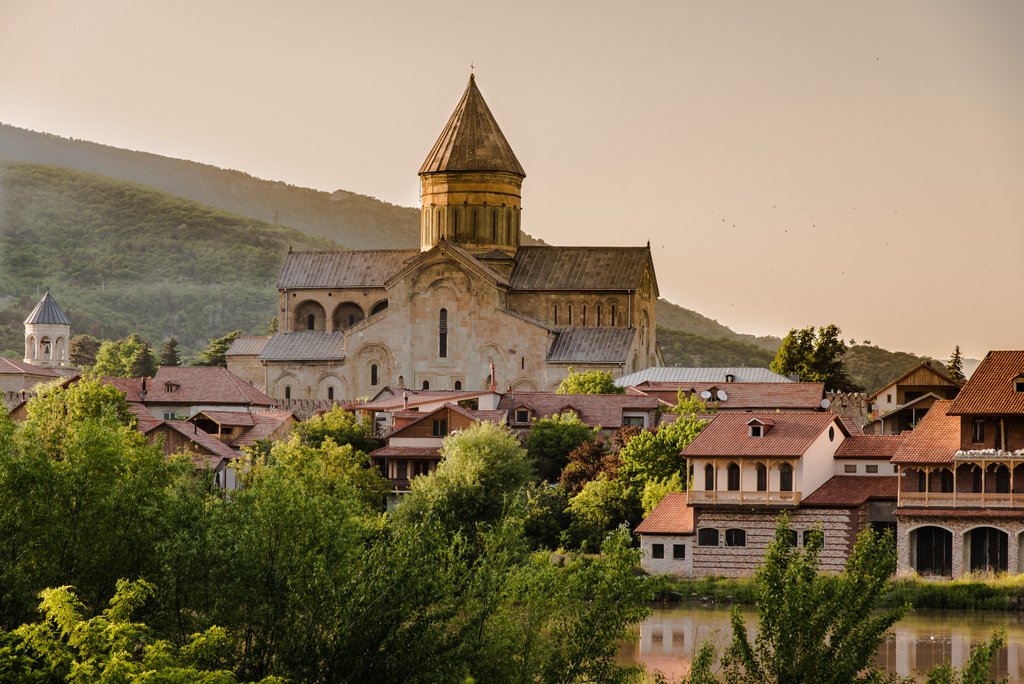
Vom 06. bis 13. August 2011 wird in der Stadt Gabala und ihrer Umgebung die „Internationale VIP-Fahrradtour in Aserbaidschan“ stattfinden. Diese Sportveranstaltung richtet sich an alle engagierten Fahrradfreunde aus der ganzen Welt und soll Gelegenheit bieten, sportbegeisterte Menschen aus den unterschiedlichsten Fachbereichen wie Politik, Verwaltung, Kultur, Journalismus, Wirtschaft etc. zu einer gemeinsamen Radtour in einer der interessantesten und schönsten Gebiete Aserbaidschans zusammenzubringen.
Wir laden herzlich alle Radfreunde ein, die über Aserbaidschan, seine wunderschöne Landschaft und seinen ländlichen Raum mehr erfahren wollen, sich für diese einmalige Veranstaltung zu bewerben. Die aufgenommenen Bewerber werden durch die Botschaft der Republik Aserbaidschan in der Bundesrepublik Deutschland informiert. Die Veranstalter decken alle Unterkunft- und Lebenshaltungskosten der Teilnehmer in Aserbaidschan.
+++
Internationale Aserbaidschan-Fahrradtour. In der Stadt Gabala und Umgebung 06.-13.08.2011
Aserbaidschan ist mit seinen neun von weltweit elf Klimazonen, seinen herrlichen Küsten am Kaspischen Meer und dem beeindruckenden Kaukasus-und Talischgebirge eine der interessantesten und attraktivsten Tourismusziele der Welt. Doch nicht nur die atemberaubende Landschaft beeindruckt seine Besucher. Aserbaidschan ist ein uraltes Kulturland und begeistert auch den Architektur- und geschichtsinteressierten Besucher mit seinen vielen faszinierenden antiken und mittelalterlichen Denkmälern u.a. in der uralten Hauptstadt des „Kaukasischen Albaniens“ Gabala und in ihrer historischen Umgebung.
Vom 06. bis 13. August 2011 wird in der Stadt Gabala und Umgebung die „Internationale VIP-Fahrradtour in Aserbaidschan“ durchgeführt. Diese Sportveranstaltung richtet sich an alle Fahrradfreunde aus der ganzen Welt und soll Gelegenheit bieten, sportbegeisterte Menschen aus den unterschiedlichsten Fachbereichen wie Politik, Verwaltung, Kultur, Journalismus, Wirtschaft etc. zu einer gemeinsamen Radtour in einer der interessantesten und schönsten Gebiete Aserbaidschans zusammenzubringen.
Der gesamte Trip besteht in den ersten vier Tagen aus vier Fahrradtouren in Gabala und in die umliegenden Städte Schamachi, Schaki, und Zagatala. Nach der interessanten Radtour werden die Teilnehmer am fünften Tag an einer Fachkonferenz über die sozio-ökonomische Entwicklung der Regionen in Aserbaidschan teilnehmen können und mehr über Land und Leute erfahren. Die Veranstaltung soll den Teilnehmern auch die Möglichkeit bieten, sich gegenseitig über die regionalen Entwicklungen in ihrer eigenen Länder und über entsprechende Probleme und Erfahrungen auszutauschen.
Wir laden herzlich alle Radfreunde ein, die über Aserbaidschan, seine wunderschöne Landschaft und seinen ländlichen Raum mehr erfahren wollen, sich für diese einmalige Veranstaltung zu bewerben. Die Veranstalter decken alle Unterkunft- und Lebenshaltungskosten der Teilnehmer in Aserbaidschan. In Einzelfällen ist nach Absprache auch die Teilerstattung von Reisekosten möglich.
Kontaktperson: Herr Zaur Gulamaliyev, Attaché der Botschaft der Republik Aserbaidschan, Tel. 030 219 16 157, Email: z_gulamaliyev@mfa.gov.az.
Bewerbungsschluss ist der 30. April 2011.
Die aufgenommenen Bewerber werden durch die Botschaft der Republik Aserbaidschan in der Bundesrepublik Deutschland informiert. )
Hubertusallee43 ,1 4193 Berlin
Tel.:+49(30)2191613
Fax:+49(30)21916152
E-mail: berlin@mission.mfa.gov.az
www.azembassy.de
Mit freundlichen Grüßen,
Botschaft der Republik Aserbaidschan
Hubertusalle 43, 14193 Berlin
Tel: +49 (30) 219 16 13
Fax:+49 (30) 219 16 152
E-mail: z_gulamaliyev@mfa.gov.az
Web: www.azembassy.de
Saturday, March 19, 2011


Friday, March 18, 2011
VORTRAG: Sprachpolitik und Sprachpflege am Beispiel der Republik Armenien
In einer Woche, am Donnerstag, 24.03.2011, wird von 18:00 Uhr - 19:30 Uhr bei uns in der ÖOG/HP im Klubsaal ein Vortrag von der bei uns sehr beliebten Referentin Frau Univ.-Doz. Dr. Jasmine Dum-Tragut von der Universität Salzburg, Fachbereich Linguistik, zum Thema:
Das Streben nach Unabhängigkeit zwischen Entrussifizierung und Nationalsprache - Sprachpolitik und Sprachpflege am Beispiel der Republik Armenien
stattfinden.
Wer Frau Dr. in Dum-Tragut kennt, weiß, dass wir uns auf einen spannenden und interessanten Vortrag freuen können.
Nach dem Vortrag werden wir den Abend gemütlich mit Wein aus Georgien ausklingen lassen!
Ich freue mich auf Ihren Besuch bei uns.
Liebe Grüße
Ihre Silvia de Carvalho
Leiterin des Informationszentrums für Zentralasien und Südkaukasien
Österreichische Orient-Gesellschaft Hammer-Purgstall
Orient-Akademie
A-1010 Wien
Dominikanerbastei 6/6
www.orient-gesellschaft.at
Das Streben nach Unabhängigkeit zwischen Entrussifizierung und Nationalsprache - Sprachpolitik und Sprachpflege am Beispiel der Republik Armenien
stattfinden.
Wer Frau Dr. in Dum-Tragut kennt, weiß, dass wir uns auf einen spannenden und interessanten Vortrag freuen können.
Nach dem Vortrag werden wir den Abend gemütlich mit Wein aus Georgien ausklingen lassen!
Ich freue mich auf Ihren Besuch bei uns.
Liebe Grüße
Ihre Silvia de Carvalho
Leiterin des Informationszentrums für Zentralasien und Südkaukasien
Österreichische Orient-Gesellschaft Hammer-Purgstall
Orient-Akademie
A-1010 Wien
Dominikanerbastei 6/6
www.orient-gesellschaft.at
REZENSION: Lamara oder die private Weltgeschichte. Eine Buchrezension von György Dalos (georgien-aktuell.de)
31. August 2010
Helga Kurzchalias Briefroman hat eine einfache Handlung: Vom 1984 bis 1996 werden zwischen Tbilissi und Berlin, bzw. Heidelberg Briefe gewechselt. Die Briefpartner sind: Die in der DDR lebende Clara und ihr georgischer Ehemann, der Wissenschaftler Dito, während für die georgische Sippe Ditos Mutter, die Literaturwissenschaftlerin Lamara Feder führt. Ursprünglich beinhalten die Botschaften kleine familiäre Angelegenheiten, beziehen sich auf Geschwister, Enkel und Freunde und behandeln die Geschehnisse der Außenwelt eher am Rande. Aus dieser Sicht könnte man sie sogar als intim und banal bezeichnen, wenn nicht die Historie in das Leben der kleinen Leute eingebrochen wäre. Spätestens von der Mitte der achtziger Jahre ab verändert sich jedoch das Umfeld der Korrespondenten in rapider Weise: In der Sowjetunion beginnt die hoffnungsvolle Ära der Perestrojka, die auch in der DDR einiges in Bewegung bringt. Während jedoch die Republik in Deutschlands östlicher Hälfte 1989 ihre friedliche Revolution und 1990 die Wiedervereinigung mit der Bundesrepublik erlebt, gerät das kleine kaukasische Land durch seine Unabhängigkeitsbestrebungen bald in den blutigen Strudel der Gewalt und inneren Fehden, in eine Zeit nicht enden wollender Kriege. Die Politik dringt in die Existenz der Familie ein und scheint zunächst sogar dominieren. Alles fängt in jenem verhängnisvollen April 1989 an, von dem Lamara berichtet: „Über uns ist ein großes Unglück, vor zwei Tagen gab es hier ein schreckliches Blutvergießen. Inzwischen spricht man von 18 Toten. Gestern haben wir erfahren, dass auch Liana aus unserer Nachbarschaft unter den beklagten Opfern ist…“
Wenn eine hervorragende Charakteristik von Helga Kurzchalias Roman die enge Verknüpfung des Privaten mit dem Historischen ist, dann besteht die andere in der Person der Korrespondentin auf Tbilissi. Mit Lamara gelingt der Autorin eine außergewöhnlich starke Protagonistin, die in einer Mischung aus Humor, Fatalismus und Lebensbejahung gegen die wachsende, innere und äußere Entfernung zwischen den beiden Welten anschreibt. Das ist ein Kunstgriff, der dem deutschen Leser nicht nur erlaubt, eine georgische Sicht kennen zu lernen, sondern auch Deutschland „mit fremden Augen zu betrachten“. Dabei verfügen Lamaras Kommentare zu den um die Familie herumtobenden Elementen der „Weltgeschichte“ über einen eigenen stilistischen Wert. So versucht sie in georgisch-grotesker Weise über die schreckliche Situation zur Tagesordnung zu gehen. Die alte Frau schreibt an die Ihrigen in Deutschland anno 1991: „Wir leben hier in Angst und Schrecken, und nie hätte ich mir vorgestellt, dass mein Leben wieder so von Politik dirigiert wird wie zuletzt im Krieg. (…) Aber lassen wir die hohe Politik beiseite. Am Ende des Tages schnell noch etwas Praktisches: 1. Bitte, kauft eine Bratpfanne aus Teflon oder einfach aus Aluminium, wie es sie in Eurer Kaufhalle gibt. 2. Zahnpasten, Haarshampoo sowie Vanillezucker Backstolz und Tortenguss, farblos oder Rot. 3. Und für mich wie gewöhnlich Blutdrucktabletten.“
Lamara zeigt sich in diesen lapidaren Sätzen fast wie eine symbolische Figur, eine klassische Muttergestalt, deren Anliegen darin besteht, die Waage zu halten. Wenn auf der einen Seite Krieg, Blut und Gewalt herrschen, dann müssen diese Schrecknisse auf der anderen Seite eben Zahnpaste, Haarshampoo, Blutdrucktabletten und andere winzige Dinge ausgleichen. Denn nur so kann man weiterleben. „Lamaras Briefe oder vom Untergang des Kommunismus“. Roman. Lichtig, Berlin, 2010. 126 Seiten.
AmazonShop: Books, Maps, Videos, Music & Gifts About The Caucasus
Helga Kurzchalias Briefroman hat eine einfache Handlung: Vom 1984 bis 1996 werden zwischen Tbilissi und Berlin, bzw. Heidelberg Briefe gewechselt. Die Briefpartner sind: Die in der DDR lebende Clara und ihr georgischer Ehemann, der Wissenschaftler Dito, während für die georgische Sippe Ditos Mutter, die Literaturwissenschaftlerin Lamara Feder führt. Ursprünglich beinhalten die Botschaften kleine familiäre Angelegenheiten, beziehen sich auf Geschwister, Enkel und Freunde und behandeln die Geschehnisse der Außenwelt eher am Rande. Aus dieser Sicht könnte man sie sogar als intim und banal bezeichnen, wenn nicht die Historie in das Leben der kleinen Leute eingebrochen wäre. Spätestens von der Mitte der achtziger Jahre ab verändert sich jedoch das Umfeld der Korrespondenten in rapider Weise: In der Sowjetunion beginnt die hoffnungsvolle Ära der Perestrojka, die auch in der DDR einiges in Bewegung bringt. Während jedoch die Republik in Deutschlands östlicher Hälfte 1989 ihre friedliche Revolution und 1990 die Wiedervereinigung mit der Bundesrepublik erlebt, gerät das kleine kaukasische Land durch seine Unabhängigkeitsbestrebungen bald in den blutigen Strudel der Gewalt und inneren Fehden, in eine Zeit nicht enden wollender Kriege. Die Politik dringt in die Existenz der Familie ein und scheint zunächst sogar dominieren. Alles fängt in jenem verhängnisvollen April 1989 an, von dem Lamara berichtet: „Über uns ist ein großes Unglück, vor zwei Tagen gab es hier ein schreckliches Blutvergießen. Inzwischen spricht man von 18 Toten. Gestern haben wir erfahren, dass auch Liana aus unserer Nachbarschaft unter den beklagten Opfern ist…“
Wenn eine hervorragende Charakteristik von Helga Kurzchalias Roman die enge Verknüpfung des Privaten mit dem Historischen ist, dann besteht die andere in der Person der Korrespondentin auf Tbilissi. Mit Lamara gelingt der Autorin eine außergewöhnlich starke Protagonistin, die in einer Mischung aus Humor, Fatalismus und Lebensbejahung gegen die wachsende, innere und äußere Entfernung zwischen den beiden Welten anschreibt. Das ist ein Kunstgriff, der dem deutschen Leser nicht nur erlaubt, eine georgische Sicht kennen zu lernen, sondern auch Deutschland „mit fremden Augen zu betrachten“. Dabei verfügen Lamaras Kommentare zu den um die Familie herumtobenden Elementen der „Weltgeschichte“ über einen eigenen stilistischen Wert. So versucht sie in georgisch-grotesker Weise über die schreckliche Situation zur Tagesordnung zu gehen. Die alte Frau schreibt an die Ihrigen in Deutschland anno 1991: „Wir leben hier in Angst und Schrecken, und nie hätte ich mir vorgestellt, dass mein Leben wieder so von Politik dirigiert wird wie zuletzt im Krieg. (…) Aber lassen wir die hohe Politik beiseite. Am Ende des Tages schnell noch etwas Praktisches: 1. Bitte, kauft eine Bratpfanne aus Teflon oder einfach aus Aluminium, wie es sie in Eurer Kaufhalle gibt. 2. Zahnpasten, Haarshampoo sowie Vanillezucker Backstolz und Tortenguss, farblos oder Rot. 3. Und für mich wie gewöhnlich Blutdrucktabletten.“
Lamara zeigt sich in diesen lapidaren Sätzen fast wie eine symbolische Figur, eine klassische Muttergestalt, deren Anliegen darin besteht, die Waage zu halten. Wenn auf der einen Seite Krieg, Blut und Gewalt herrschen, dann müssen diese Schrecknisse auf der anderen Seite eben Zahnpaste, Haarshampoo, Blutdrucktabletten und andere winzige Dinge ausgleichen. Denn nur so kann man weiterleben. „Lamaras Briefe oder vom Untergang des Kommunismus“. Roman. Lichtig, Berlin, 2010. 126 Seiten.
AmazonShop: Books, Maps, Videos, Music & Gifts About The Caucasus
KLASSIK: Georgische Pianistin Dudana Mazmanishvili auf Tournee in Deutschland (georgien-aktuell.de)
14 Konzerte bestätigt, darunter Auftritte in Hamburg, Berlin und München
Liebhaber der klassischen Musik haben im Jahr 2011 gleich mehrfach die Gelegenheit, die georgische Ausnahmepianistin Dudana Mazmanishvili live in Deutschland zu erleben. Bisher wurden insgesamt 14 Konzerte im Zeitraum Februar bis Mai bestätigt, darunter Auftritte in Hamburg, Berlin und München.
Ihre herausragenden Fähigkeiten wurden Dudana quasi in die Wiege gelegt. Ihre Mutter Tamar Apakidze gilt selbst als begnadete Pianistin und hat das Talent ihrer Tochter schon in jungen Jahren sehr gefördert. So nahm Dudana im Alter von 3 Jahren ihre ersten Klavierstunden und absolvierte bereits als 8-jährige ihren ersten Auftritt mit dem georgischen Staatsorchester in Tbilisi.
Seitdem begeistert die junge georgische Pianistin ihr Publikum in der ganzen Welt. Zu den Höhepunkten ihrer bisherigen Karriere zählt zweifelsohne ihr Auftritt in der New Yorker Royal Carnegie Hall im Jahr 2006. Nicht unerwähnt bleiben dürfen darüber hinaus Dudanas großen Erfolge bei den international renommiertesten Klavierwettbewerben: 2005 war sie Preisträgerin bei der Washington International Piano Competition sowie 2 Jahre später beim Busoni-Wettbewerb in Bozen.
Konzerttermine 2011:
15. März - Bielefeld, Oetkerhalle / Beethoven Concerto No 3 /Klassische Philharmonie Bonn
16. März - Wiesbaden, Beethoven Concerto No 3 /Klassische Philharmonie Bonn
17. März - Bad Neuenahr, Beethoven Concerto No 3 /Klassische Philharmonie Bonn
20. März - Hamburg, Laieszhalle / Beethoven Concerto No 3 /Klassische Philharmonie Bonn
24. März - Berlin, Konzerthaus / Recital / Bach & Prokofieff / Classic Young Stars Festival
25. März - Bonn, Beethovenhalle / Beethoven Concerto No 3 /Klassische Philharmonie Bonn
29. März - Stuttgart, Liederhalle / Beethoven Concerto No 3 /Klassische Philharmonie Bonn
30. März - München, Philharmonie, Gasteig / Beethoven Concerto No 3 /Klassische Philharmonie Bonn
31. März - Nürnberg, Meistersingerhalle / Beethoven Concerto No 3 /Klassische Philharmonie Bonn
01. April - Karlsruhe, Brahmssaal / Beethoven Concerto No 3 /Klassische Philharmonie Bonn
04. April - Kempten, Residenz / Recital / Bach & Prokofieff /
06. Mai - Düsseldorf / Recital / Bach & Prokofieff / Bechstein Concert Series
08. Mai - Nettetal / Recital / Bach & Prokofieff
Quelle: www.dudana.de
Liebhaber der klassischen Musik haben im Jahr 2011 gleich mehrfach die Gelegenheit, die georgische Ausnahmepianistin Dudana Mazmanishvili live in Deutschland zu erleben. Bisher wurden insgesamt 14 Konzerte im Zeitraum Februar bis Mai bestätigt, darunter Auftritte in Hamburg, Berlin und München.
Ihre herausragenden Fähigkeiten wurden Dudana quasi in die Wiege gelegt. Ihre Mutter Tamar Apakidze gilt selbst als begnadete Pianistin und hat das Talent ihrer Tochter schon in jungen Jahren sehr gefördert. So nahm Dudana im Alter von 3 Jahren ihre ersten Klavierstunden und absolvierte bereits als 8-jährige ihren ersten Auftritt mit dem georgischen Staatsorchester in Tbilisi.
Seitdem begeistert die junge georgische Pianistin ihr Publikum in der ganzen Welt. Zu den Höhepunkten ihrer bisherigen Karriere zählt zweifelsohne ihr Auftritt in der New Yorker Royal Carnegie Hall im Jahr 2006. Nicht unerwähnt bleiben dürfen darüber hinaus Dudanas großen Erfolge bei den international renommiertesten Klavierwettbewerben: 2005 war sie Preisträgerin bei der Washington International Piano Competition sowie 2 Jahre später beim Busoni-Wettbewerb in Bozen.
Konzerttermine 2011:
15. März - Bielefeld, Oetkerhalle / Beethoven Concerto No 3 /Klassische Philharmonie Bonn
16. März - Wiesbaden, Beethoven Concerto No 3 /Klassische Philharmonie Bonn
17. März - Bad Neuenahr, Beethoven Concerto No 3 /Klassische Philharmonie Bonn
20. März - Hamburg, Laieszhalle / Beethoven Concerto No 3 /Klassische Philharmonie Bonn
24. März - Berlin, Konzerthaus / Recital / Bach & Prokofieff / Classic Young Stars Festival
25. März - Bonn, Beethovenhalle / Beethoven Concerto No 3 /Klassische Philharmonie Bonn
29. März - Stuttgart, Liederhalle / Beethoven Concerto No 3 /Klassische Philharmonie Bonn
30. März - München, Philharmonie, Gasteig / Beethoven Concerto No 3 /Klassische Philharmonie Bonn
31. März - Nürnberg, Meistersingerhalle / Beethoven Concerto No 3 /Klassische Philharmonie Bonn
01. April - Karlsruhe, Brahmssaal / Beethoven Concerto No 3 /Klassische Philharmonie Bonn
04. April - Kempten, Residenz / Recital / Bach & Prokofieff /
06. Mai - Düsseldorf / Recital / Bach & Prokofieff / Bechstein Concert Series
08. Mai - Nettetal / Recital / Bach & Prokofieff
Quelle: www.dudana.de
THEATER: "Das Jahr von meinem schlimmsten Glück" von Nino Haratischwili
Liebe Freunde in Berlin,
sehr geehrte Damen und Herren, 18./19. März 2011 gibt es ein interessantes georg./deutsches Theaterstück in Berlin im Ballhaus Ost, Pappelallee 15, 10437 Berlin
Beginn 20 Uhr
"Das Jahr von meinem schlimmsten Glück" von Nino Haratischwili
mit Nino Burduli, Lisa Grosche, Solveig Krebs, Susanne Pollmeier, Verena Reichardt, Anja Topf
Text, Regie Nino Haratischvili,
Regieassistenz Reyka Kobiella,
Bühne Silke Rudolph, Daniela Herzberg
Kostüme Gunna Meyer
Dramaturgie Julia Doan Licht Sönke C. Herm
Produktionsleitung, Öffentlichkeitsarbeit Agnieszka Harmanci
Hospitanz Sandrs Engels
Eine Frau liegt nach einem Autounfall verletzt im Graben. Im Auto auf der gegenüberliegenden Straßenseite sitzt bewegungslos ein Mann. Die Frau erinnert sich an nichts, nicht einmal an ihren Namen. Nur Gloomy Sunday, das aus dem Autoradio dringt, scheint eine Spur zu sein – eine Spur zum Puzzle ihrer Identität und zugleich zu einer traurigen, kitschigen, pathetischen Liebesgeschichte.Die deutsch-georgische Autorin und Regisseurin NINO HARATISCHWILI (*1983 in Tiflis) studierte Filmregie in Tiflis und Schauspieltheaterregie in Hamburg. 2010 erschien ihr erster Roman Juja (Longlist Deutscher Buchpreis 2010).
sehr geehrte Damen und Herren, 18./19. März 2011 gibt es ein interessantes georg./deutsches Theaterstück in Berlin im Ballhaus Ost, Pappelallee 15, 10437 Berlin
Beginn 20 Uhr
"Das Jahr von meinem schlimmsten Glück" von Nino Haratischwili
mit Nino Burduli, Lisa Grosche, Solveig Krebs, Susanne Pollmeier, Verena Reichardt, Anja Topf
Text, Regie Nino Haratischvili,
Regieassistenz Reyka Kobiella,
Bühne Silke Rudolph, Daniela Herzberg
Kostüme Gunna Meyer
Dramaturgie Julia Doan Licht Sönke C. Herm
Produktionsleitung, Öffentlichkeitsarbeit Agnieszka Harmanci
Hospitanz Sandrs Engels
Eine Frau liegt nach einem Autounfall verletzt im Graben. Im Auto auf der gegenüberliegenden Straßenseite sitzt bewegungslos ein Mann. Die Frau erinnert sich an nichts, nicht einmal an ihren Namen. Nur Gloomy Sunday, das aus dem Autoradio dringt, scheint eine Spur zu sein – eine Spur zum Puzzle ihrer Identität und zugleich zu einer traurigen, kitschigen, pathetischen Liebesgeschichte.Die deutsch-georgische Autorin und Regisseurin NINO HARATISCHWILI (*1983 in Tiflis) studierte Filmregie in Tiflis und Schauspieltheaterregie in Hamburg. 2010 erschien ihr erster Roman Juja (Longlist Deutscher Buchpreis 2010).
MUSIC: Tusia Beridze - Wound (youtube.com)
Natalie Beridze, also known as Tusia Beridze, or TBA, doesn’t spend a lot of time worrying about her many aliases. Instead, she’s been literally holed up in a bunker-based studio in the former Soviet republic of Georgia making evocative, often heartbreaking glitchy techno. With three previous, critically-acclaimed albums on Thomas Brinkmann’s Max.Ernst label, Beridze has once again eclipsed her own best work on her most dazzling recording to date, The Other.
With Beridze’s subtle, expressive singing getting equal space alongside The Other’s sparse but beautiful instrumentals, comparisons to great experimental divas like Laurie Anderson, Liz Frasier, or Bjork are inevitable. The Other is stocked with the type of memorable, melancholy songs that could propel Beridze to Homogenic heights.
A member of Tbilisi, Georgia-based art collective Goslab, Beridze’s experimental textures, which recall Aphex Twin, Seefeel, and Thomas Fehlmann, are tempered by superb pop melodies. “Into Lost Moments” sounds as fresh as early O.M.D. or Depeche Mode tracks, as soft, clicky electro-rhythms bloom into a darkly emotional ballad. Likewise, “Water From Ur Eyes” is a bittersweet, glitch-pop number reminiscent of Radiohead’s recent techno-oriented tracks.
The eastern classical music-influenced instrumental track “Break,” commissioned for Ryuichi Sakamoto’s Chain Music label, reportedly made the Yellow Magic Orchestra founder cry. Pluramon’s Markus Schmickler adds vocals to “Beam Plaster,” while “Love U” is a thrilling instrumental that feels like running through the forest under a full moon. With The Other, Tusia Beridze steps into the spotlight with more acclaim for her equally engaging production and vocal talents.
source: xlr8r.com
ARCHITECTUR: Trump Signs Deal to Develop Two Towers in Georgia, the Former Soviet State (nytimes.com)
By CHARLES V. BAGLI and ANDREW E. KRAMER Source: nytimes.com
For Georgia’s president, it was a chance to show that his country, the former Soviet republic, is grand enough to attract the world’s best-known real estate developer. And for that developer, Donald J. Trump, it was yet another opportunity to demonstrate that he is world class.
In a ceremony with caviar and wine at Trump Tower in Manhattan on Thursday, Mr. Trump signed a deal to develop the two tallest towers in the republic of Georgia, the former Soviet state at the nexus of Eastern Europe and Western Asia.
Giving his blessing to the deal was Mikheil Saakashvili, the flamboyant, English-speaking president of Georgia. Mr. Saakashvili is eager to attract foreign investment as he tries to yank his impoverished country from the Russian orbit and align it more closely with the United States.
Mr. Trump, the world’s first virtual developer, will not actually build the towers. At this point in his career, he is more inclined to license use of the Trump name on someone else’s building than develop a property himself — although he still occasionally erects skyscrapers, like Trump World Tower in New York.
Mainly, the deal is another chance to extend the global reach of the Trump brand, whose brassy gold letters are already stamped on buildings on four continents, as well as a long-running television program, a Scottish golf course, vodka, chocolate, books and jewelry. (The signing ceremony was held at the bottom of the Trump Tower’s four-level atrium, where the surrounding shops include Trump Grill, Trump Bar and a Trump t-shirt stand.)
Any actual construction, if it begins as scheduled in 2013, would be overseen by Giorgi Ramishvili, chairman of the Silk Road Group, one of the largest private investment companies in the south Caucasus region.
The deal, which the partners estimate at $300 million, calls for two projects. The Trump Tower Tbilisi would go up on Rose Revolution Square in Georgia’s capital. The Trump Riviera would be part of a planned Silk Road complex that includes a casino, an exhibition hall and a marina, in the resort city of Batumi on the Black Sea, near Turkey.
The residential buildings will each contain 100 apartments and rise nearly 40 stories — average by New York standards, but nearly twice the size of the republic’s tallest structures.
The partnership was born of a two-year friendship between Mr. Trump and Mr. Saakashvili.
The Georgian president sought out Mr. Trump during a trip to New York after reading Mr. Trump’s 2008 book “Trump Never Gives Up.” The men formed a friendship, and last year Mr. Trump sent an executive, Michael Cohen, to Georgia to consider working with Silk Road on several projects.
Mr. Saakashvili said in an interview that although Mr. Trump was sometimes criticized as being self-centered, he found him "intellectually curious" and knowledgeable about Georgia and its region. “I think Donald Trump has amazing intuition,” he said.
Mr. Saakashvili himself is known for a gregarious style. Elected president in 2004, he is a staunch American ally. At one point Georgia contributed the third-largest force to the mission in Iraq, after the United States and Great Britain. A street in the capital is named after George W. Bush.
After tamping down corruption in the police, Mr. Saakashvili built a new ministry of interior building, designed by the Italian architect Michele De Lucchi, with an all-glass facade to symbolize transparency. Now, all new police stations in Georgia are made of glass, too.
And he has lavished attention on the resort town of Batumi, where 35 hotels have gone up in the last four years. In 2007, to inaugurate a new amusement park in the town, Mr. Saakashvili and his young presidential staff rode the carnival rides themselves.
In Georgia, Mr. Trump will license his name, and his company will manage the two properties. He will also work with Silk Road to line up financing for the projects and market the towers. Mr. Trump said that so far he had no plans to put his own cash into the deal. "We’ll decide whether or not we want to invest," he said.
Mr. Saakashvili has been eager to draw celebrity foreign investors to show Georgia is again open for business, after the global recession and a war with Russia in 2008 dried up the foreign direct investment that had been propelling the economy.
Georgians remain poor. The average income, in a country of about 4.3 million people, was $2,455 in 2009.
Before the Russian war, Georgia had attracted about $2 billion a year in foreign investment. Mr. Saakashvili welcomed the inflow as an endorsement of his pro-Western reforms.
During the crisis, Georgia pivoted to work with Middle Eastern investors like the sovereign wealth fund of Ras al-Khaimah, one of the United Arab Emirates. That fund bought the Georgian port of Poti on the coast just north of the site of Mr. Trump’s planned tower in Batumi.
Georgia has squeaked by with foreign aid donated after the war by the United States and European countries. But with the new deal, Mr. Saakashvili is sure to try to use the Trump imprimatur to encourage other American investors to put money in the tourism and transportation projects he sees as the future of his country’s economy.
While Mr. Trump is the first large American developer to come to Georgia, some locals have worked with American partners or financing from United States banks, Irakli Matkava, a deputy minister of economy, said in a telephone interview.
Silk Road, which recently opened the Radisson Tbilisi hotel in the capital, expects to open another hotel, the Batumi Radisson this summer. Tourism is a relative new field for Silk Road, which is a major fuel trader and transporter, and also the largest Internet provider in Georgia. The company also has a contract to move American military equipment to Afghanistan from Iraq.
The Georgians seem to have had their eye on the Trump clan for some time. Two years ago, Giorgi Rtskhiladze, an assistant to the chairman of Silk Road, invited Mr. Trump’s Czech-born ex-wife, Ivana Trump, to Georgia to consider investing there.
She visited Batumi and met with President Saakashvili during her stay. It was a tough decision, Mr. Rtskhiladze said, and although Mr. Trump has yet to visit the country, “we went with the husband.”
Andrew E. Kramer reported from Moscow.
This article has been revised to reflect the following correction:
Correction: March 10, 2011
An earlier version of this article misidentified Giorgi Rtskhiladze as an aide to the president of Georgia.
more: Donald Trump to invest $250 mln in Georgia towers
For Georgia’s president, it was a chance to show that his country, the former Soviet republic, is grand enough to attract the world’s best-known real estate developer. And for that developer, Donald J. Trump, it was yet another opportunity to demonstrate that he is world class.
In a ceremony with caviar and wine at Trump Tower in Manhattan on Thursday, Mr. Trump signed a deal to develop the two tallest towers in the republic of Georgia, the former Soviet state at the nexus of Eastern Europe and Western Asia.
Giving his blessing to the deal was Mikheil Saakashvili, the flamboyant, English-speaking president of Georgia. Mr. Saakashvili is eager to attract foreign investment as he tries to yank his impoverished country from the Russian orbit and align it more closely with the United States.
Mr. Trump, the world’s first virtual developer, will not actually build the towers. At this point in his career, he is more inclined to license use of the Trump name on someone else’s building than develop a property himself — although he still occasionally erects skyscrapers, like Trump World Tower in New York.
Mainly, the deal is another chance to extend the global reach of the Trump brand, whose brassy gold letters are already stamped on buildings on four continents, as well as a long-running television program, a Scottish golf course, vodka, chocolate, books and jewelry. (The signing ceremony was held at the bottom of the Trump Tower’s four-level atrium, where the surrounding shops include Trump Grill, Trump Bar and a Trump t-shirt stand.)
Any actual construction, if it begins as scheduled in 2013, would be overseen by Giorgi Ramishvili, chairman of the Silk Road Group, one of the largest private investment companies in the south Caucasus region.
The deal, which the partners estimate at $300 million, calls for two projects. The Trump Tower Tbilisi would go up on Rose Revolution Square in Georgia’s capital. The Trump Riviera would be part of a planned Silk Road complex that includes a casino, an exhibition hall and a marina, in the resort city of Batumi on the Black Sea, near Turkey.
The residential buildings will each contain 100 apartments and rise nearly 40 stories — average by New York standards, but nearly twice the size of the republic’s tallest structures.
The partnership was born of a two-year friendship between Mr. Trump and Mr. Saakashvili.
The Georgian president sought out Mr. Trump during a trip to New York after reading Mr. Trump’s 2008 book “Trump Never Gives Up.” The men formed a friendship, and last year Mr. Trump sent an executive, Michael Cohen, to Georgia to consider working with Silk Road on several projects.
Mr. Saakashvili said in an interview that although Mr. Trump was sometimes criticized as being self-centered, he found him "intellectually curious" and knowledgeable about Georgia and its region. “I think Donald Trump has amazing intuition,” he said.
Mr. Saakashvili himself is known for a gregarious style. Elected president in 2004, he is a staunch American ally. At one point Georgia contributed the third-largest force to the mission in Iraq, after the United States and Great Britain. A street in the capital is named after George W. Bush.
After tamping down corruption in the police, Mr. Saakashvili built a new ministry of interior building, designed by the Italian architect Michele De Lucchi, with an all-glass facade to symbolize transparency. Now, all new police stations in Georgia are made of glass, too.
And he has lavished attention on the resort town of Batumi, where 35 hotels have gone up in the last four years. In 2007, to inaugurate a new amusement park in the town, Mr. Saakashvili and his young presidential staff rode the carnival rides themselves.
In Georgia, Mr. Trump will license his name, and his company will manage the two properties. He will also work with Silk Road to line up financing for the projects and market the towers. Mr. Trump said that so far he had no plans to put his own cash into the deal. "We’ll decide whether or not we want to invest," he said.
Mr. Saakashvili has been eager to draw celebrity foreign investors to show Georgia is again open for business, after the global recession and a war with Russia in 2008 dried up the foreign direct investment that had been propelling the economy.
Georgians remain poor. The average income, in a country of about 4.3 million people, was $2,455 in 2009.
Before the Russian war, Georgia had attracted about $2 billion a year in foreign investment. Mr. Saakashvili welcomed the inflow as an endorsement of his pro-Western reforms.
During the crisis, Georgia pivoted to work with Middle Eastern investors like the sovereign wealth fund of Ras al-Khaimah, one of the United Arab Emirates. That fund bought the Georgian port of Poti on the coast just north of the site of Mr. Trump’s planned tower in Batumi.
Georgia has squeaked by with foreign aid donated after the war by the United States and European countries. But with the new deal, Mr. Saakashvili is sure to try to use the Trump imprimatur to encourage other American investors to put money in the tourism and transportation projects he sees as the future of his country’s economy.
While Mr. Trump is the first large American developer to come to Georgia, some locals have worked with American partners or financing from United States banks, Irakli Matkava, a deputy minister of economy, said in a telephone interview.
Silk Road, which recently opened the Radisson Tbilisi hotel in the capital, expects to open another hotel, the Batumi Radisson this summer. Tourism is a relative new field for Silk Road, which is a major fuel trader and transporter, and also the largest Internet provider in Georgia. The company also has a contract to move American military equipment to Afghanistan from Iraq.
The Georgians seem to have had their eye on the Trump clan for some time. Two years ago, Giorgi Rtskhiladze, an assistant to the chairman of Silk Road, invited Mr. Trump’s Czech-born ex-wife, Ivana Trump, to Georgia to consider investing there.
She visited Batumi and met with President Saakashvili during her stay. It was a tough decision, Mr. Rtskhiladze said, and although Mr. Trump has yet to visit the country, “we went with the husband.”
Andrew E. Kramer reported from Moscow.
This article has been revised to reflect the following correction:
Correction: March 10, 2011
An earlier version of this article misidentified Giorgi Rtskhiladze as an aide to the president of Georgia.
more: Donald Trump to invest $250 mln in Georgia towers
WIEN: Transkaukazja 2011: "My blood doesn't remember your history" (iz.or.at)
Hiermit darf ich Euch zu einer weiteren Transkaukazja Veranstaltung in Wien sehr herzlich einladen, kuratiert von Tatia Skirtladze, unter dem Titel "My blood does not remember your history". Unter diesem Titel präsentiert am 22. März (20h) die armenische Videokünstlerin Luisne Talalyan ihre Werke im Now-Wow Kino an der Universität für Angewandte Kunst in Wien (Oskar Kokoschka-Platz 2), was ich sehr empfehlen kann.
Lusine Talalyan wurde 1975 in Jerewan geboren. Von 1992 bis 1998 studierte sie an der Terlemezian Painting Academy und anschließend bis 2003 Cinematografie am Film und Theater Institut in Jere... wan. In dieser Zeit wechselte sie auch ihr Ausdrucksmedium: Die Videokamera wird zum Werkzeug ihres künstlerischen Schaffens. Sie arbeitet mit einer alten Kamera aus der Sowjet-Ära und dadurch erhält das Filmmaterial nochmals einen ganz eigenen Charakter. Seit 2009 arbeitet sie gemeinsam mit der Schriftstellerin Shushan Avagyan am Buch Zarubyan’s Women (Զարուբյանի կանայք). Außerdem ist Lusine Talalyan Mitglied der Gruppe "Queering Yerevan", die sich hauptsächlich in der virtuellen Welt bewegt: queeringyerevan.blogspot.com Programm- & Einladungsfolder anbei, sowie zum Download hier >>>
Das Frauenrat Projekt der Oesterreichisch-Kaukasischen Gesellschaft wurde uebrigens fuer den Sozialmarie Preis nominiert, wem das gefaellt, bitte vor Ort "linken":
Weitere Termine rund um den Kaukasus werden folgen,
bis dahin alles Liebe,
Ziggy
Ihre Silvia de Carvalho
Leiterin des Informationszentrums für Zentralasien und Südkaukasien
Österreichische Orient-Gesellschaft Hammer-Purgstall
Orient-Akademie
A-1010 Wien
Dominikanerbastei 6/6
www.orient-gesellschaft.at
Lusine Talalyan wurde 1975 in Jerewan geboren. Von 1992 bis 1998 studierte sie an der Terlemezian Painting Academy und anschließend bis 2003 Cinematografie am Film und Theater Institut in Jere... wan. In dieser Zeit wechselte sie auch ihr Ausdrucksmedium: Die Videokamera wird zum Werkzeug ihres künstlerischen Schaffens. Sie arbeitet mit einer alten Kamera aus der Sowjet-Ära und dadurch erhält das Filmmaterial nochmals einen ganz eigenen Charakter. Seit 2009 arbeitet sie gemeinsam mit der Schriftstellerin Shushan Avagyan am Buch Zarubyan’s Women (Զարուբյանի կանայք). Außerdem ist Lusine Talalyan Mitglied der Gruppe "Queering Yerevan", die sich hauptsächlich in der virtuellen Welt bewegt: queeringyerevan.blogspot.com Programm- & Einladungsfolder anbei, sowie zum Download hier >>>
Das Frauenrat Projekt der Oesterreichisch-Kaukasischen Gesellschaft wurde uebrigens fuer den Sozialmarie Preis nominiert, wem das gefaellt, bitte vor Ort "linken":
Weitere Termine rund um den Kaukasus werden folgen,
bis dahin alles Liebe,
Ziggy
Ihre Silvia de Carvalho
Leiterin des Informationszentrums für Zentralasien und Südkaukasien
Österreichische Orient-Gesellschaft Hammer-Purgstall
Orient-Akademie
A-1010 Wien
Dominikanerbastei 6/6
www.orient-gesellschaft.at
FERNSEHEN: Schön, schrill, geistreich – Künstler in Tbilisi. Von Katrin Molnár und Ralph Hälbig (mdr.de)
Click for watching video: FERNSEHEN / AUF GUTE NACHBARSCHAFT / Schön, Schrill, Geistreich - Künstler in Tbilisi: www.mdr.de/mediathek
 MDR +++ Sa., 19.03. +++ 18:00 Uhr
Ein Film von Katrin Molnár und Ralph Hälbig
Lebendige Folklore und Tradition – der georgische Alltag ist voll davon. Doch in den Hinterhöfen von Tbilisi existiert auch eine andere Welt – eine Welt, die sich moderner Kunst und zeitgenössischem Design verschrieben hat.
Ob Fotografie, Streetart, Performance-Kunst oder Raumgestaltung – überall dürstet man nach neuen Formen und klugen Inhalten: Lederkleider, die zu Skulpturen der Erbsünde werden, Fotos, die die Frau als "schönste Seele der Natur" zeigen, und Graffiti, die Sexualität enttabuisieren.
Obwohl einige der Künstler im Ausland gefeiert werden, ringen sie im eigenen Land oft um Akzeptanz. Nur die wenigsten können von ihrer Kunst leben. Doch das hält sie nicht ab von immer quirligeren Ideen.
Quelle: mdr.de
photo: Irma Sharikadze
MDR +++ Sa., 19.03. +++ 18:00 UhrEin Film von Katrin Molnár und Ralph Hälbig
Lebendige Folklore und Tradition – der georgische Alltag ist voll davon. Doch in den Hinterhöfen von Tbilisi existiert auch eine andere Welt – eine Welt, die sich moderner Kunst und zeitgenössischem Design verschrieben hat.
Ob Fotografie, Streetart, Performance-Kunst oder Raumgestaltung – überall dürstet man nach neuen Formen und klugen Inhalten: Lederkleider, die zu Skulpturen der Erbsünde werden, Fotos, die die Frau als "schönste Seele der Natur" zeigen, und Graffiti, die Sexualität enttabuisieren.
Obwohl einige der Künstler im Ausland gefeiert werden, ringen sie im eigenen Land oft um Akzeptanz. Nur die wenigsten können von ihrer Kunst leben. Doch das hält sie nicht ab von immer quirligeren Ideen.
Quelle: mdr.de
photo: Irma Sharikadze
Sunday, March 13, 2011
BOOK: Uncertain Democracy: U.S. Foreign Policy and Georgia's Rose Revolution (foreignaffairs.com)
Lincoln A. Mitchell
Reviewed by By Robert Legvold / Source: foreignaffairs.com
March/April 2011
Books & Reviews are sponsored by World Bank Publications
Mitchell argues that in its democracy-promotion efforts, the United States should be more critical of its perceived democratic allies, less focused on single benchmarks such as elections, and more attuned to the many elements needed to create an engaged citizenry.
As much as Western governments wanted Georgia, even before the 2003 Rose Revolution, to be the poster child for democracy in the post-Soviet region, reality fell short. Georgia under Eduard Shevardnadze, who led Georgia from 1993 to 2003, raised U.S. and European expectations and, with them, proportionately large sums of money to make them come true. But as Mitchell describes, although Georgia in that era was freer than most of its neighbors, it also slid into the ditch of corruption and economic incompetence. Eventually, Shevardnadze "tried to steal one too many elections." The "accidental revolution" this fathered, although genuinely popular, was scarcely democratic. Those who led it, for all their indisputable success in fighting corruption, salvaging a badly decayed infrastructure, and rallying public support, have attended far more to strengthening and modernizing the state than building democracy -- priorities Washington has mostly excused. So, Mitchell argues, in its democracy-promotion efforts, the United States should be more critical of its perceived democratic allies, less focused on single benchmarks such as elections, and more attuned to the many elements needed to create an engaged citizenry.
Author Lincoln A. Mitchell
Publisher University of Pennsylvania Press
Year 2008
Pages 192 pp.
ISBN 0812241274
Price $45.00
AmazonShop: Books, Maps, Videos, Music & Gifts About The Caucasus
Reviewed by By Robert Legvold / Source: foreignaffairs.com
March/April 2011
Books & Reviews are sponsored by World Bank Publications
Mitchell argues that in its democracy-promotion efforts, the United States should be more critical of its perceived democratic allies, less focused on single benchmarks such as elections, and more attuned to the many elements needed to create an engaged citizenry.
As much as Western governments wanted Georgia, even before the 2003 Rose Revolution, to be the poster child for democracy in the post-Soviet region, reality fell short. Georgia under Eduard Shevardnadze, who led Georgia from 1993 to 2003, raised U.S. and European expectations and, with them, proportionately large sums of money to make them come true. But as Mitchell describes, although Georgia in that era was freer than most of its neighbors, it also slid into the ditch of corruption and economic incompetence. Eventually, Shevardnadze "tried to steal one too many elections." The "accidental revolution" this fathered, although genuinely popular, was scarcely democratic. Those who led it, for all their indisputable success in fighting corruption, salvaging a badly decayed infrastructure, and rallying public support, have attended far more to strengthening and modernizing the state than building democracy -- priorities Washington has mostly excused. So, Mitchell argues, in its democracy-promotion efforts, the United States should be more critical of its perceived democratic allies, less focused on single benchmarks such as elections, and more attuned to the many elements needed to create an engaged citizenry.
Author Lincoln A. Mitchell
Publisher University of Pennsylvania Press
Year 2008
Pages 192 pp.
ISBN 0812241274
Price $45.00
AmazonShop: Books, Maps, Videos, Music & Gifts About The Caucasus
Saturday, March 12, 2011
CULTURE: Endangered Caucasian Languages in Georgia (uni-frankfurt.de)
The Svan language is located in the high mountain region of North West Georgia along the gorges of the rivers Enguri, Cxenis-c̣q̇ali and Ḳodori. Today, linguists assume that it consists of five dialects: The so-called "Upper Svan" dialects Upper and Lower Bal, distributed in the Enguri valley above and below the Bal mountain, and the "Lower Svan" dialects Lashkh, Lentekhian and Cholurian spoken along the Cxenis-c̣q̇ali river (cf. Schmidt 1991, 475 where Cholurian is not yet recognised as a separate dialect, however). The main differences between the dialects and sub-dialects are observable in their sound systems, but there are also considerable divergences in morphology and syntax.
According to the most recent statistics (1997), the number of speakers of Svan does not exceed 30,000 people today, with ca. 15,000 speakers of Upper Svan and less than 12,000 speakers of Lower Svan dialects (there are no reliable numbers available for speakers of the Ḳodori region which belongs to Abkhazia; the esteemed number is about 2,500). Contrasting this with the data given by Džaošvili (1968) according to whom the number of inhabitants of Upper and Lower Svanetia was more than 32,000 in the 1960ies, we can easily see that there has been a steadily decrease of speakers of Svan in recent times. All speakers of Svan are bilingual speaking Georgian alongside Svan, with the latter being used as a familiar means of communication only while Georgian is the language of administration and school teaching everywhere in the Svan speaking areas. It is clear from historical sources that the impact of Georgian has lasted for centuries, with Christianization serving as a primary stimulus.
While the Svan population resisted the unpleasant conditions of the high mountain environment they lived in for centuries, the increasing economic difficulties of the last two decades have brought about a strong tendency towards migration which will result in a radical dissolution of the Svan linguistic communities. Only in a few cases, complete villages were transferred to different regions of Georgia, among them three Svan villages which were founded 50 km south of Tbilisi about fifteen years ago. In most cases, however, families or single persons preferred to leave Svanetia and to settle in other parts of Georgia when their houses were destroyed by avalanches or other natural catastrophes.
Although there were some attempts to create a basis for writing Svan as early as the middle of the 19th century (Anban 1864), Svan has never developed a written standard. It is true that from the beginning of Caucasian studies in Czarist times, a large amount of textual material has been published for both the Upper Svan dialects and the Lower Svan dialects of Lashkh and Lentekh, and several grammatical descriptions and dictionaries have been prepared, mostly for the Upper Bal dialect. Nevertheless, there are considerable gaps in the description of Svan, esp. for the Cholurian variety which was regarded as a subdialect of Lentekhian in former times, and there is practically no material available at all of the Svan language as spoken in the Ḳodori valley which was resettled by speakers of the Upper Svan dialects. It must be added that the published texts do not cover the spoken language in its entirety, most of them representing folk songs, fairy tales or other folkloristic narratives, mostly without translations into Georgian or other languages, and dialogue material is completely missing. This is also true for the phonographic recordings that have been made so far. The first specimen of spoken Svan which is available to scholarly investigation is the recording of a speaker of Upper Bal made by A. Dirr in 1909, preserved in the Phonogrammarchiv of the Austrian Academy (Vienna), which was edited by Gippert (1986). The only web publication of Svan is the tape recording of a Lashkh text which was prepared by Gippert in 1984. There is no audiovisual material available yet. Taking these preliminaries into account, the most urgent task of the present project consists in a documentation of the Cholurian dialect and the varieties of Svan as spoken in the Ḳodori valley for which there is practically no material available so far. Furthermore, it is necessary to document the variation of all Svan dialects contrastively by providing recordings of material spoken or told in similar conditions and covering similar subjects, esp. of everyday life.
more: titus.fkidg1.uni-frankfurt.de
According to the most recent statistics (1997), the number of speakers of Svan does not exceed 30,000 people today, with ca. 15,000 speakers of Upper Svan and less than 12,000 speakers of Lower Svan dialects (there are no reliable numbers available for speakers of the Ḳodori region which belongs to Abkhazia; the esteemed number is about 2,500). Contrasting this with the data given by Džaošvili (1968) according to whom the number of inhabitants of Upper and Lower Svanetia was more than 32,000 in the 1960ies, we can easily see that there has been a steadily decrease of speakers of Svan in recent times. All speakers of Svan are bilingual speaking Georgian alongside Svan, with the latter being used as a familiar means of communication only while Georgian is the language of administration and school teaching everywhere in the Svan speaking areas. It is clear from historical sources that the impact of Georgian has lasted for centuries, with Christianization serving as a primary stimulus.
While the Svan population resisted the unpleasant conditions of the high mountain environment they lived in for centuries, the increasing economic difficulties of the last two decades have brought about a strong tendency towards migration which will result in a radical dissolution of the Svan linguistic communities. Only in a few cases, complete villages were transferred to different regions of Georgia, among them three Svan villages which were founded 50 km south of Tbilisi about fifteen years ago. In most cases, however, families or single persons preferred to leave Svanetia and to settle in other parts of Georgia when their houses were destroyed by avalanches or other natural catastrophes.
Although there were some attempts to create a basis for writing Svan as early as the middle of the 19th century (Anban 1864), Svan has never developed a written standard. It is true that from the beginning of Caucasian studies in Czarist times, a large amount of textual material has been published for both the Upper Svan dialects and the Lower Svan dialects of Lashkh and Lentekh, and several grammatical descriptions and dictionaries have been prepared, mostly for the Upper Bal dialect. Nevertheless, there are considerable gaps in the description of Svan, esp. for the Cholurian variety which was regarded as a subdialect of Lentekhian in former times, and there is practically no material available at all of the Svan language as spoken in the Ḳodori valley which was resettled by speakers of the Upper Svan dialects. It must be added that the published texts do not cover the spoken language in its entirety, most of them representing folk songs, fairy tales or other folkloristic narratives, mostly without translations into Georgian or other languages, and dialogue material is completely missing. This is also true for the phonographic recordings that have been made so far. The first specimen of spoken Svan which is available to scholarly investigation is the recording of a speaker of Upper Bal made by A. Dirr in 1909, preserved in the Phonogrammarchiv of the Austrian Academy (Vienna), which was edited by Gippert (1986). The only web publication of Svan is the tape recording of a Lashkh text which was prepared by Gippert in 1984. There is no audiovisual material available yet. Taking these preliminaries into account, the most urgent task of the present project consists in a documentation of the Cholurian dialect and the varieties of Svan as spoken in the Ḳodori valley for which there is practically no material available so far. Furthermore, it is necessary to document the variation of all Svan dialects contrastively by providing recordings of material spoken or told in similar conditions and covering similar subjects, esp. of everyday life.
more: titus.fkidg1.uni-frankfurt.de
Wednesday, March 09, 2011
VORTRAG: Ethnien, Staaten und Grenzziehungen in Zentralasien und in Kaukasien. Von Bert Fragner
Unser Präsident, Univ.-Prof. Dr. Bert Fragner, wird an seinen im letzten Semester gehaltenen Vortrag anschließen und am
Donnerstag, 10.03.2011, 18:30 Uhr - 20:00 Uhr
folgenden Vortrag halten:
Ethnien, Staaten und Grenzziehungen in Zentralasien und in Kaukasien - 2. Teil: die sowjetische Nationalitätenpolitik und ihre Auswirkungen bis heute
Univ.-Prof. Dr. Bert Fragner, Präsident der ÖOG, w. Mitglied der ÖAW
Der Vortrag findet wie immer Klubsaal in der ÖOG/HP, statt.
Abendkarte: € 4,- (€ 2,-)
www.orient-gesellschaft.at
www.orient-gesellschaft.at/Fragner.pdf
Donnerstag, 10.03.2011, 18:30 Uhr - 20:00 Uhr
folgenden Vortrag halten:
Ethnien, Staaten und Grenzziehungen in Zentralasien und in Kaukasien - 2. Teil: die sowjetische Nationalitätenpolitik und ihre Auswirkungen bis heute
Univ.-Prof. Dr. Bert Fragner, Präsident der ÖOG, w. Mitglied der ÖAW
Der Vortrag findet wie immer Klubsaal in der ÖOG/HP, statt.
Abendkarte: € 4,- (€ 2,-)
www.orient-gesellschaft.at
www.orient-gesellschaft.at/Fragner.pdf
FOTOGRAFIE: "5 days with Georgia" - Jan Wilken (jannwilken.net)

Tbilisi: Street

Tbilisi: Metro

Tbilisi: Internet-Café
"5 days with Georgia" - eine 5-tägige Kennenlernreise nach Georgien im Rahmen des Projektes "Salon Tbilisi-Berlin" unter der künstlerischen Leitung von Mareike Wenzel - mehr unter "links".
Website: http://www.jannwilken.net/
KUNST: Parallelwelten. Der Künstler Andro Wekua in Wien (3sat.de)
 Video: Täuschend echt auf den ersten Blick: Andro Wekuas Skulptur "Untitled", 2010
 Man muss Kunst nicht immer interpretieren und verstehen. Manchmal reicht es, wenn sie einen berührt, wie beispielsweise in der Ausstellung des Georgiers Andro Wekua in der Wiener Kunsthalle. Wekua redet nicht gerne über seine Kunst, er macht sie lieber.
Man steht vor einer riesigen Leinwand in der Wiener Kunsthalle und ist einfach fasziniert von dieser unheimlichen Welt, in die Andro Wekua uns mitnimmt. Irgendwie kommt einem das alles bekannt vor - aus amerikanischen Science-Fiction und Horrorfilmen. Oder sind es doch die eigenen Träume, Sehnsüchte und Ängste? "Das Unheimliche interessiert mich", so der Künstler.
"Comeback des Surrealismus"
Sehr gesprächig ist der 34-jährige Georgier nicht, wohl eher ein wenig schüchtern. Er sieht keinen Sinn darin, sich zu erklären. Er könne seine Kunst mit Worten nicht besser oder aufschlussreicher machen als sie ist, sagt er. Stumm und geheimnisvoll abwesend wirken auch Andro Wekuas perfekt gearbeitete Skulpturen. Der Direktor der Wiener Kunsthalle, Gerald Matt, ist begeistert von der speziellen Atmosphäre, die Wekuas Kunst ausstrahlt. Aber nicht nur deshalb hat er den Shootingstar nach Wien geholt. Das Jahresprogramm der Kunsthalle Wien ist dem "Comeback des Surrealismus" gewidmet, von dem Matt überzeugt ist.
"Vielleicht wollen die Künstler auch wieder mehr träumen, Parallelwelten entwickeln", so Matt. "Ich glaube, wir brauchen diese anderen Welten um unsere Wirklichkeit zu verstehen und um unsere Wirklichkeit zu verändern. Der Möglichkeitsraum, nicht der Wirklichkeitsraum - um Musil zu paraphrasieren - ist auch in der Kunst entscheidend."
Mit der Realität spielen
Die kommunistische Utopie seiner ehemals sowjetischen Heimat Georgien schwingt auch in Wekuas erstem Film mit. Was war damals real und was war nur Traum? Szenen aus der Kindheit Wekuas wechseln sich mit Traumsequenzen und dokumentarischem Material ab. "Für mich ist interessant, mit der Realität zu spielen", so der Künstler, "weil es auch eine andere Realität gibt als ich sie selbst kenne. Und dann gibt es vielleicht ein paar Sachen, die sich parallel kreuzen oder unterwegs sind. Ich schlafe auch gerne und sehr viel." Anziehend und gleichzeitig abstoßend, schrill und tiefgründig; weltfremd und dennoch von heute - die Kunst des Georgiers spielt mit solchen Gegensätzen und sie lebt davon.
"Never Sleep With A Strawberry In Your Mouth" oder "My Bike And Your Swamp" sind die kryptischen Titel dieser traumhaften Kunst. "Ich finde, wenn es gut klingt, ist es okay", so Wekua. "Es ist keine Botschaft dahinter. Wer Andro Wekuas Kunst unbedingt verstehen möchte, sollte Sigmund Freud lesen. Auch das ist ein überaus spannender Zugang. Wer hervorragende Kunst einfach nur genießen will, der sollte in diese Ausstellung gehen. Sie ist ein echtes Erlebnis.

Der Künstler Andro Wekua mit seinem Werk "4:52 a.m. (Blue)", 2008 © Andro Wekua Foto Stephan Wyckoff

"My Bike and Your Swamp ( 6 pm)", 2008 © Andro Wekua
SendedatenKulturzeit: montags bis freitags,
um 19.20 Uhr
Ausstellung"Andro Wekua. Never Sleep With A Strawberry In Your Mouth"
Kunsthalle Wien
bis 05.06.2011
Ausstellungen"Andro Wekua. Pink Wave Hunter"
Fridericianum, Kassel
12.03. bis 05.06.2011
Nominierte für den Preis der Nationalgalerie für junge Kunst 2011
Hamburger Bahnhof, Berlin
09.09.2011 bis 08.01.2012
source: 3sat.de
ARTICLE: How to Make Tbilisi Greener. By Koka Kalandadze. (finchannel.com)
The FINANCIAL -- (Tbilisi, Georgia) Planting trees, developing parks, installing solar panels or even constructing eco-friendly buildings are just a small part of what we could do to make our city environment greener. But taking into account that 90% of total emissions are made by transport in Tbilisi then you could easily imagine what impact the introduction of green/fuel efficient transport would have on the city en masse.
Although fuel efficient transport such as bicycles or motor-scooters have poor public perception in Tbilisi , worsening of the city’s air quality, which is already noticeable, needs to be addressed somehow. Therefore the development of bicycle lanes and tram lines is inevitable. This would cut reliance on public transportation, reduce CO² emissions, and simultaneously minimize greater petroleum usage that would lead to healthier people’s lifestyles in the end.
Retail petroleum prices have been rising steadily over the past few months reaching 2.30 GEL (1.30 USD) per litre last week, tracking crude oil prices as claimed by oil importers in Georgia.
The developments in the Middle East are also having greater impact on the rise of oil prices. Hence the cost of owning and operating vehicles is drastically increasing. At the same time people are also getting plagued by congested traffic and longer commute times in Tbilisi . The only alternative, that people in many developed countries of Central Europe/Asia have already chosen, is moving to bicycles or motor-scooters.
In Amsterdam bikes have overtaken cars’ usage. Studies showed that in the period 2005 to 2007 residents used their bicycle an average of 0.87 times a day and their car 0.84 times.
In Japan, a country with a population of roughly 128 million, people who own bicycles amount to about 90 million, or about two for every three Japanese. In addition approximately 11 million bicycles are sold in Japan every year. Young women in high heels, men in black suits and teenagers on cell phones all ride bikes. Even mothers are frequently using them to go shopping, taking their children to day care and then running errands.
Bicycle lanes in Japan are mainly between the road and sidewalk.
In 2009 Tokyo launched a public bike programme similar to ones found in many European cities in which bicycles are left in designated areas and people can pick them up and use them and drop them off in different designated areas. People who use the system in Tokyo have to pay a ¥1,000 registration fee and pay ¥100 for every 10 minutes of use.
A similar system could also work in Tbilisi once bicycle racks are installed all over the city. As Khvicha Sanaia from Tbilisi municipality transport division told The FINANCIAL, there’s an idea of building bicycle lanes in Tbilisi in the coming years although no precise plans exist yet regarding how that will be accomplished. “It will not be used solely for transportation purposes, but also for the development of bicycle tourism in Georgia,” he said.
“Specifically, we are currently administering a nationwide Fuel Economy Project as part of the Global Fuel Economy Initiative’s 50by50 campaign, which aims to reduce car emissions by 50% by 2050,” Humfrey Legge from Caucasus Environment NGO network (CENN) said.
CENN is holding an event on 22 April (Earth Day) at Europe House, to showcase fuel efficient cars on sale in Tbilisi .
“Fuel efficient transport such as bicycles and motorcycles have poor public perception in Tbilisi , this is compounded by a lack of infrastructure for these methods of transport. Unfortunately, without increased public interest in these methods of transport the Government is unlikely to invest in such infrastructure and without investment there will be little increased interest from the public,” he said.
“The Tbilisi Municipality should take the lead in green infrastructural initiatives in the city; however it’s essential that local populations, environmental civil society and local businesses are all involved through extensive consultations about any project,” claimed Legge.
“The development of bicycle lanes and tram lines in Tbilisi would have an extremely positive effect on the city for a number of reasons. Firstly these kinds of initiatives will ease congestion and facilitate cheap, easy travel within the city, increasing residents’ mobility.
Secondly, they will reduce environmental degradation as they support non-petrochemical forms of transport, simultaneously reducing CO² emissions and improving air quality in Tbilisi .
Finally, the construction of green transport routes will have highly beneficial effects on the local population’s health, encouraging exercise, reducing noise pollution and reducing the levels of harmful chemicals emitted from car exhausts,” noted Legge.
In Tbilisi fuel efficient cars are imported by several companies including Strada Motors which imports Fiat (Italian) automobiles, consuming between 4.5-5 litres per 100 km. As Tea Iremadze, Marketing Manager at Strada Auto told The FINANCIAL, such automobiles were introduced roughly two months ago and now over 20 units of them are sold. Their price ranges between 8.5-9 EUR according to Iremadze.
“It’s true that the depletion of global oil reserves, increasing insecurity in oil exporting countries and climate change all indicate rising gasoline prices over the coming years; however rising prices are not always enough to convince people to make green choices in their transport methods. To change attitudes in Tbilisi we have to offer viable, cheap, attractive alternatives to cars with low fuel efficiency,” said Legge.
“The first step towards a greener transport system in Tbilisi is development of traffic optimization. This includes infrastructural road expansion, as well as strategic traffic management and city-wide integrated transport policies.
The second step needs to be the installation of effective and accurate monitoring and enforcement systems for air quality, imported cars and fuel quality. Once authorities can understand the exact level of pollution in Tbilisi appropriate targets can be set and enforced accordingly.
Other steps include the expansion and improvement of public transports systems, phased increases in fuel taxes, public information campaigns about green transport and government subsidies for fuel efficient and hybrid electric vehicles (HEVs),” concluded Legge.
You can join the Tbilisi Bike Lane Initiative on: www.facebook.com/TbilisiBike
source: finchannel.com
Although fuel efficient transport such as bicycles or motor-scooters have poor public perception in Tbilisi , worsening of the city’s air quality, which is already noticeable, needs to be addressed somehow. Therefore the development of bicycle lanes and tram lines is inevitable. This would cut reliance on public transportation, reduce CO² emissions, and simultaneously minimize greater petroleum usage that would lead to healthier people’s lifestyles in the end.
Retail petroleum prices have been rising steadily over the past few months reaching 2.30 GEL (1.30 USD) per litre last week, tracking crude oil prices as claimed by oil importers in Georgia.
The developments in the Middle East are also having greater impact on the rise of oil prices. Hence the cost of owning and operating vehicles is drastically increasing. At the same time people are also getting plagued by congested traffic and longer commute times in Tbilisi . The only alternative, that people in many developed countries of Central Europe/Asia have already chosen, is moving to bicycles or motor-scooters.
In Amsterdam bikes have overtaken cars’ usage. Studies showed that in the period 2005 to 2007 residents used their bicycle an average of 0.87 times a day and their car 0.84 times.
In Japan, a country with a population of roughly 128 million, people who own bicycles amount to about 90 million, or about two for every three Japanese. In addition approximately 11 million bicycles are sold in Japan every year. Young women in high heels, men in black suits and teenagers on cell phones all ride bikes. Even mothers are frequently using them to go shopping, taking their children to day care and then running errands.
Bicycle lanes in Japan are mainly between the road and sidewalk.
In 2009 Tokyo launched a public bike programme similar to ones found in many European cities in which bicycles are left in designated areas and people can pick them up and use them and drop them off in different designated areas. People who use the system in Tokyo have to pay a ¥1,000 registration fee and pay ¥100 for every 10 minutes of use.
A similar system could also work in Tbilisi once bicycle racks are installed all over the city. As Khvicha Sanaia from Tbilisi municipality transport division told The FINANCIAL, there’s an idea of building bicycle lanes in Tbilisi in the coming years although no precise plans exist yet regarding how that will be accomplished. “It will not be used solely for transportation purposes, but also for the development of bicycle tourism in Georgia,” he said.
“Specifically, we are currently administering a nationwide Fuel Economy Project as part of the Global Fuel Economy Initiative’s 50by50 campaign, which aims to reduce car emissions by 50% by 2050,” Humfrey Legge from Caucasus Environment NGO network (CENN) said.
CENN is holding an event on 22 April (Earth Day) at Europe House, to showcase fuel efficient cars on sale in Tbilisi .
“Fuel efficient transport such as bicycles and motorcycles have poor public perception in Tbilisi , this is compounded by a lack of infrastructure for these methods of transport. Unfortunately, without increased public interest in these methods of transport the Government is unlikely to invest in such infrastructure and without investment there will be little increased interest from the public,” he said.
“The Tbilisi Municipality should take the lead in green infrastructural initiatives in the city; however it’s essential that local populations, environmental civil society and local businesses are all involved through extensive consultations about any project,” claimed Legge.
“The development of bicycle lanes and tram lines in Tbilisi would have an extremely positive effect on the city for a number of reasons. Firstly these kinds of initiatives will ease congestion and facilitate cheap, easy travel within the city, increasing residents’ mobility.
Secondly, they will reduce environmental degradation as they support non-petrochemical forms of transport, simultaneously reducing CO² emissions and improving air quality in Tbilisi .
Finally, the construction of green transport routes will have highly beneficial effects on the local population’s health, encouraging exercise, reducing noise pollution and reducing the levels of harmful chemicals emitted from car exhausts,” noted Legge.
In Tbilisi fuel efficient cars are imported by several companies including Strada Motors which imports Fiat (Italian) automobiles, consuming between 4.5-5 litres per 100 km. As Tea Iremadze, Marketing Manager at Strada Auto told The FINANCIAL, such automobiles were introduced roughly two months ago and now over 20 units of them are sold. Their price ranges between 8.5-9 EUR according to Iremadze.
“It’s true that the depletion of global oil reserves, increasing insecurity in oil exporting countries and climate change all indicate rising gasoline prices over the coming years; however rising prices are not always enough to convince people to make green choices in their transport methods. To change attitudes in Tbilisi we have to offer viable, cheap, attractive alternatives to cars with low fuel efficiency,” said Legge.
“The first step towards a greener transport system in Tbilisi is development of traffic optimization. This includes infrastructural road expansion, as well as strategic traffic management and city-wide integrated transport policies.
The second step needs to be the installation of effective and accurate monitoring and enforcement systems for air quality, imported cars and fuel quality. Once authorities can understand the exact level of pollution in Tbilisi appropriate targets can be set and enforced accordingly.
Other steps include the expansion and improvement of public transports systems, phased increases in fuel taxes, public information campaigns about green transport and government subsidies for fuel efficient and hybrid electric vehicles (HEVs),” concluded Legge.
You can join the Tbilisi Bike Lane Initiative on: www.facebook.com/TbilisiBike
source: finchannel.com
Tuesday, March 08, 2011
BOOK: The Girl King, By Meg Clothier (independent.co.uk)
 Royal romp is fresh and fast-moving
 source: independent.co.uk
Reviewed by Oliver Bullough
The first novelists to realise the potential of the Tudor period struck gold.
The multiple wives, the intrigue, the war, the costumes: it is perfect for historical fiction. Sadly, over the years, that vein has been strip-mined.
Happily for lovers of historical romps, Meg Clothier has found a new lode to exploit: medieval Georgia, and it is glittering. She discovered Georgia when working in Moscow, where we were colleagues at Reuters news agency. We co-operated on rather dry political stories about Russian-Georgian relations, and I had no idea this was what she planned. Dry, it is not.
The "girl-king" is Tamar, proud daughter of a king without a male heir. Surrounded by enemies, stalked by suitors, underestimated and betrayed, she is – in short – Georgia's Elizabeth I with the distinct advantage for plot purposes of not having been a "virgin queen". The book opens with her fleeing to the Caucasus mountains on Georgia's northern border, where she lives incognito with a family of highlanders. Drawn back into the war for control of her father's kingdom, she is thrust into the centre of politics when he names her his heir. As queen, she is surrounded by powerful men who would have her, or her kingdom, or, ideally, both.
Georgia, home to both rich farmland and soaring mountains, has an ancient Christian culture that was closely linked to the Byzantine empire until its defeat by the invading Turks. Cut off from the rest of Christendom, it drifted out of the mainstream, and has remained there to this day. Its current government is almost pathologically pro-Western, but it is almost unknown to tourists. Those who do visit, however, tend to fall in love with the place, thanks to Georgia's deep red wine, pristine landscape, complex cuisine and noble architecture. It is clear that Clothier is among them.
Georgia's notoriously complex language, unrelated to any other and written in its own unique and elegant alphabet, does occasionally block the flow of the book. Every time I came to the character called Gamrekeli or, worse, Mkhargrdzeli, I felt a little trip. But that is a minor quibble.
The plot is fast-moving, the story is fresh, and it culminates in a dramatic Armada moment. It is as if Henry VIII, Mary and Elizabeth were combined into one character, and unleashed for the first time: so much more fun than another Boleyn book.
AmazonShop: Books, Maps, Videos, Music & Gifts About The Caucasus
BICYCLING: Canadian Girls Bike to the Caucasus to Study Transboundary Nature Conservation (finchannel.com)
more photos >>>
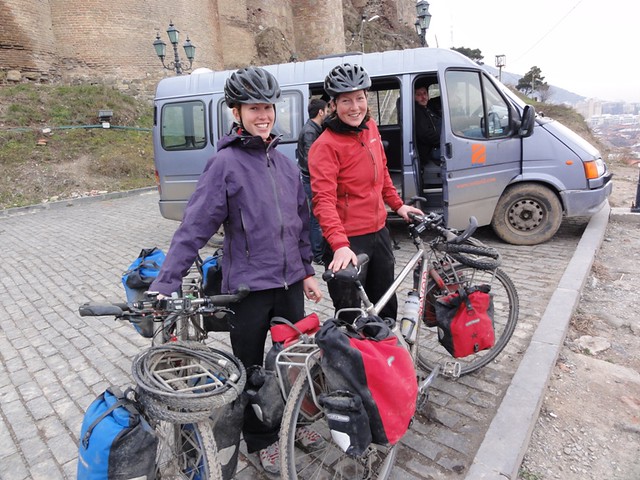
(Tbilisi, Georgia) Two Canadian girls arrived by bicycle in Tbilisi , Georgia, today as part of their year-long research expedition called Cycling Silk. The goal of this expedition is to study and raise awareness about nature conservation and connectivity across political borders. For all of 2011, Kate Harris and Melissa Yule, both young scientists, are cycling nearly 13,000 kilometers through the mountains, forests, and deserts of the Silk Road.
They started biking in Istanbul, Turkey in mid-January, and after spending time in Georgia, they will continue to Azerbaijan, cross the Caspian Sea by ferry boat, and continue biking from Kazakhstan through Uzbekistan, Tajikistan, Kyrgyzstan, China, and Nepal to the expedition’s final destination in northern India.
Along the way, they are studying and documenting the natural and social impacts of existing and proposed transboundary protected areas, including those in the South Caucasus. As one of the world’s biodiversity hotspots, the Caucasus border region of Georgia, Armenia, Azerbaijan, Russia, eastern Turkey, and northern Iran is renowned worldwide for its natural beauty. “The greatest threats our planet faces today transcend political borders, whether climate change, poverty, peace and security, water issues, or habitat and biodiversity loss,” says Harris. “These are all tightly interlinked challenges, and to tackle them we need to think beyond borders.” While in Georgia the team is speaking with people working on nature conservation, and visiting protected areas such as Lagodekhi, which lies adjacent to the Dagestan and Zakatala protected areas in Russia and Azerbaijan.
Cycling Silk is comprised of two scientist-explorers, Kate Harris and Melissa Yule, friends since childhood. Kate is a writer, scientist, adventurer and photographer. She won a Rhodes Scholarship to Oxford University where she completed her Master's thesis on transboundary conservation and peace parks. She also holds a Master's degree from MIT in earth and planetary sciences. Melissa is a social scientist, environmentalist and endurance athlete. In her work and research, Mel combines community development with environmental science to study ecological impacts on human health. She holds a Master's degree in International Development from the University of Guelph, and worked as a researcher at the International Development Research Centre in Canada. Harris and Yule have previously biked coast-to-coast across the continental USA in 2005, and they spent four months cycling through Xinjiang and Tibet in western China in 2006.
Harris and Yule will share their journey through a documentary film and a multimedia website, www.cyclingsilk.com, since raising public awareness is a key goal of the expedition. “We believe that people must first care for a place before they feel compelled to protect it, so our goal with Cycling Silk is to leverage adventure into environmental advocacy,” says Yule. “We hope to instill a deeper understanding and inspire a greater appreciation for wild spaces and species that transcend borders, both on the Silk Road and beyond.”
Website: www.cyclingsilk.com
Contact: Kate Harris and Melissa Yule, team@cyclingsilk.com
source: finchannel.com

EXHBITION: >IMAGO< 09.04.2011 - 13.06.2011 - Georgische Künstler in Leipzig. Kuratiert von Nino Palavandishvili (gfzk.de)
dr.-klaus-schaffner-preis
kuratiert von Nino Palavandishvili
>IMAGO<
Eine Reihe von georgischen KünstlerInnen haben ihr Land verlassen und Karriere im Ausland gemacht. Viele werden nicht nach Georgien zurückkehren. Andere blieben in ihrem Geburtsland und kämpfen um Anerkennung und Aufmerksamkeit. Staatliche oder auch private Unterstützung, wie sie in westlichen Ländern nach wie vor üblich ist, gibt es kaum. In der Ausstellung wird danach gefragt, wie sich lokale und globale Kontexte in den Arbeiten von KünstlerInnen aus unterschiedlichen Generationen widerspiegeln. Der Titel >IMAGO< spielt auf Bilder an, die man sich vom jeweils Anderen macht, von Georgien und den GeorgierInnen, von sich selbst bzw. vom „Westen“. Dieser dient in erster Linie als Hoffnungsträger für bessere Möglichkeiten. Diese Vorstellungen sind auch wesentlich medialer Natur. Die Ausstellung geht dem Einfluss von Massenmedien und neuen Kommunikationsformen, wie Facebook oder Twitter, auf Identitätsvorstellungen nach. Ferner untersucht sie die MediatorInnen-Rolle georgischer KünstlerInnen, die häufig zwischen den unterschiedlichen Vorstellungen – zwischen Authentizität und Klischees – vermitteln.
Eröffnung am 08. April 2011, 19 Uhr
Galerie für Zeitgenössische Kunst
Karl-Tauchnitz-Straße 9-11, D-04107 Leipzig
www.gfzk.de
kuratiert von Nino Palavandishvili
>IMAGO<
Eine Reihe von georgischen KünstlerInnen haben ihr Land verlassen und Karriere im Ausland gemacht. Viele werden nicht nach Georgien zurückkehren. Andere blieben in ihrem Geburtsland und kämpfen um Anerkennung und Aufmerksamkeit. Staatliche oder auch private Unterstützung, wie sie in westlichen Ländern nach wie vor üblich ist, gibt es kaum. In der Ausstellung wird danach gefragt, wie sich lokale und globale Kontexte in den Arbeiten von KünstlerInnen aus unterschiedlichen Generationen widerspiegeln. Der Titel >IMAGO< spielt auf Bilder an, die man sich vom jeweils Anderen macht, von Georgien und den GeorgierInnen, von sich selbst bzw. vom „Westen“. Dieser dient in erster Linie als Hoffnungsträger für bessere Möglichkeiten. Diese Vorstellungen sind auch wesentlich medialer Natur. Die Ausstellung geht dem Einfluss von Massenmedien und neuen Kommunikationsformen, wie Facebook oder Twitter, auf Identitätsvorstellungen nach. Ferner untersucht sie die MediatorInnen-Rolle georgischer KünstlerInnen, die häufig zwischen den unterschiedlichen Vorstellungen – zwischen Authentizität und Klischees – vermitteln.
Eröffnung am 08. April 2011, 19 Uhr
Galerie für Zeitgenössische Kunst
Karl-Tauchnitz-Straße 9-11, D-04107 Leipzig
www.gfzk.de
WIRTSCHAFT: Ausländische Investoren. Gefangen in Tiflis (wiwo.de)
Von Paul M. Barrett (Bloomberg Businessweek)
Unter Mitarbeit von Helena Bedwell.
In Werbekampagnen wirbt Georgien um ausländische Investoren. Doch wie gefährlich Geschäfte in Georgien sind, zeigt der Fall Rony Fuchs, in dem auch der Allianz-Konzern eine wichtige Rolle spielt.
Seit Oktober sitzt Rony Fuchs wegen geplanter Beamtenbestechung in einem Gefängnis in Tiflis. Peinlich dabei: Das Land, das sich öffentlichkeitswirksam dem Kampf gegen Korruption und Vetternwirtschaft verschrieben hat, schuldet dem Geschäftsmann zufällig auch 100 Millionen Dollar.
Die Einladung an Ölhändler Rony Fuchs war äußerst ungewöhnlich. Nika Gilauri, Ministerpräsident Georgiens, lud ihn in den Schwarzmeer-Urlaubsort Batumi ein. Es ging darum, einen Vergleich in einem handelsrechtlichen Streitfall zu schließen, in dem Fuchs seit fast 15 Jahren rund 100 Millionen Dollar vom georgischen Staat fordert. „Ein solches Treffen gibt uns die Gelegenheit, alle Einzelheiten zu besprechen, und wird zweifellos einen positiven Beitrag zu einer einvernehmlichen Lösung der Angelegenheit leisten“, schrieb der Ministerpräsident. Das Briefpapier trug das offizielle Siegel und den Briefkopf der ehemaligen Sowjetrepublik, und Gilauri hatte schwungvoll unterschrieben. Das war im vergangenen Oktober.
Fuchs entschloss sich zu der Reise. Der israelische Geschäftsmann ist als Investor in der Türkei tätig und dient gleichzeitig als türkischer Honorarkonsul – eine Position, in der er wirtschaftliche Belange mit inoffizieller Diplomatie verbindet. Zuvor arbeitete er 15 Jahre lang in New York als Energiehändler, und er ist mit dem israelischen Präsidenten Shimon Peres befreundet. Aus jahrzehntelanger Erfahrung mit der unübersichtlichen Interessenlage im Überschneidungsbereich von Handel und Politik interpretierte Fuchs Gilauris Brief als Signal: Georgien, vermutete er, wollte endlich den Streit beilegen, der zurückreicht bis zur Lossagung des Landes von Moskau.
Der ganze Text >>>
Unter Mitarbeit von Helena Bedwell.
In Werbekampagnen wirbt Georgien um ausländische Investoren. Doch wie gefährlich Geschäfte in Georgien sind, zeigt der Fall Rony Fuchs, in dem auch der Allianz-Konzern eine wichtige Rolle spielt.
Seit Oktober sitzt Rony Fuchs wegen geplanter Beamtenbestechung in einem Gefängnis in Tiflis. Peinlich dabei: Das Land, das sich öffentlichkeitswirksam dem Kampf gegen Korruption und Vetternwirtschaft verschrieben hat, schuldet dem Geschäftsmann zufällig auch 100 Millionen Dollar.
Die Einladung an Ölhändler Rony Fuchs war äußerst ungewöhnlich. Nika Gilauri, Ministerpräsident Georgiens, lud ihn in den Schwarzmeer-Urlaubsort Batumi ein. Es ging darum, einen Vergleich in einem handelsrechtlichen Streitfall zu schließen, in dem Fuchs seit fast 15 Jahren rund 100 Millionen Dollar vom georgischen Staat fordert. „Ein solches Treffen gibt uns die Gelegenheit, alle Einzelheiten zu besprechen, und wird zweifellos einen positiven Beitrag zu einer einvernehmlichen Lösung der Angelegenheit leisten“, schrieb der Ministerpräsident. Das Briefpapier trug das offizielle Siegel und den Briefkopf der ehemaligen Sowjetrepublik, und Gilauri hatte schwungvoll unterschrieben. Das war im vergangenen Oktober.
Fuchs entschloss sich zu der Reise. Der israelische Geschäftsmann ist als Investor in der Türkei tätig und dient gleichzeitig als türkischer Honorarkonsul – eine Position, in der er wirtschaftliche Belange mit inoffizieller Diplomatie verbindet. Zuvor arbeitete er 15 Jahre lang in New York als Energiehändler, und er ist mit dem israelischen Präsidenten Shimon Peres befreundet. Aus jahrzehntelanger Erfahrung mit der unübersichtlichen Interessenlage im Überschneidungsbereich von Handel und Politik interpretierte Fuchs Gilauris Brief als Signal: Georgien, vermutete er, wollte endlich den Streit beilegen, der zurückreicht bis zur Lossagung des Landes von Moskau.
Der ganze Text >>>
Sunday, March 06, 2011
PAPER: Fighting corruption in public procurement in post-communist states: Obstacles and solutions. By Åse Berit Grødeland and Aadne Aasland
Christian Michelsen Institute, Norway
Established in 2005, the Azerbaijani Studies Group (astg) is an academic forum for those interested in Azerbaijan for research purposes. Our webpage on Academia.edu: http://lists/.academia.
Norwegian Institute for Urban and Regional Research, Norway
Published in: Communist and Post-Communist Studies
Article in Press doi:10.1016/ j.postcomstud. 2011.01.004
Available online 3 March 2011.
Abstract Anti-corruption efforts in Europe’s post-communist states have been less successful than anticipated. Criticism has been raised against the role of the international community in promoting anti-corruption programmes. Besides, such programmes have been deemed vague and “all-inclusive”. They have largely failed to address local factors “informing” corrupt behaviour in post-communist states, such as (a) negative perceptions of law, and (b) informal practice.‘ I'd be grateful if you could retain the original sentence as it is more precise. Keywords: Anti-corruption; Corruption; Public procurement; Legal culture; Informal practices
Article Outline 1. Introduction 2. Methodology 3. General attitudes towards the law: the public procurement officials’ perspective 4. Public procurement: general perceptions of informal practice 5. Public procurement: personal use of informal practice 6. Conclusions References source url: http://tiny/.cc/1024b
Published in: Communist and Post-Communist Studies
Article in Press doi:10.1016/ j.postcomstud. 2011.01.004
Available online 3 March 2011.
Abstract Anti-corruption efforts in Europe’s post-communist states have been less successful than anticipated. Criticism has been raised against the role of the international community in promoting anti-corruption programmes. Besides, such programmes have been deemed vague and “all-inclusive”. They have largely failed to address local factors “informing” corrupt behaviour in post-communist states, such as (a) negative perceptions of law, and (b) informal practice.‘ I'd be grateful if you could retain the original sentence as it is more precise. Keywords: Anti-corruption; Corruption; Public procurement; Legal culture; Informal practices
Article Outline 1. Introduction 2. Methodology 3. General attitudes towards the law: the public procurement officials’ perspective 4. Public procurement: general perceptions of informal practice 5. Public procurement: personal use of informal practice 6. Conclusions References source url: http://tiny/.cc/1024b
Established in 2005, the Azerbaijani Studies Group (astg) is an academic forum for those interested in Azerbaijan for research purposes. Our webpage on Academia.edu: http://lists/.academia.
PAPER: Pathologies of Europeanization - Fighting Corruption in the Southern Caucasus. By Tanja A. Börzel and Yasemin Pamuk (.euce.org)
Freie Universität Berlin 21/02/2011
Full-text paper: euce.org.pdf
ABSTACT Studies on “Neighbourhood Europeanization” have shown that the EU’s capacity to hit across its borders has been limited. Our paper argues that the EU has induced some formal institutional change, which, however, has helped to stabilize rather than change existing regimes. Thus, we do observe the Europeanization of domestic structures of formerly Soviet republics, which, however, appears to have opposite effects of what the EU intends to achieve with its ENP. In order to explore these pathologies of Europeanization, we focus on the EU’s attempts to promote good governance, and in particular the fight against corruption. The PostSoviet area features some of the most corrupt countries in the world, including the Southern Caucasus region. High adaptation costs and limited incentives render Armenia, Azerbaijan, and Georgia least likely cases for Europeanization and domestic change. Our comparative study will show that despite high misfit and low pressure for adaptation from above and below, all three have responded to the EU’s demands for good governance introducing similar formal institutional changes. Yet, rather than systematically fighting corruption, incumbent regimes have instrumentalized the EU selectively implementing anti-corruption policies to cut the power resources of their political opponents.
Authors' Address: SFB 700 “Governance in Areas of Limited Statehood"
Freie Universität Berlin
Full-text paper: euce.org.pdf
ABSTACT Studies on “Neighbourhood Europeanization” have shown that the EU’s capacity to hit across its borders has been limited. Our paper argues that the EU has induced some formal institutional change, which, however, has helped to stabilize rather than change existing regimes. Thus, we do observe the Europeanization of domestic structures of formerly Soviet republics, which, however, appears to have opposite effects of what the EU intends to achieve with its ENP. In order to explore these pathologies of Europeanization, we focus on the EU’s attempts to promote good governance, and in particular the fight against corruption. The PostSoviet area features some of the most corrupt countries in the world, including the Southern Caucasus region. High adaptation costs and limited incentives render Armenia, Azerbaijan, and Georgia least likely cases for Europeanization and domestic change. Our comparative study will show that despite high misfit and low pressure for adaptation from above and below, all three have responded to the EU’s demands for good governance introducing similar formal institutional changes. Yet, rather than systematically fighting corruption, incumbent regimes have instrumentalized the EU selectively implementing anti-corruption policies to cut the power resources of their political opponents.
Authors' Address: SFB 700 “Governance in Areas of Limited Statehood"
Freie Universität Berlin
Binger Str.40, 14197 Berlin
Tel.: +49 (0) 30 838 54830
Email: tanja.boerzel@fu-berlin.de
Web: www.sfb-governance.de
www.euce.org
Tel.: +49 (0) 30 838 54830
Email: tanja.boerzel@fu-berlin.de
Web: www.sfb-governance.de
www.euce.org
Wednesday, March 02, 2011
NEUES BUCH: Tod im Kaukasus - der neue Krimi. Von Friederike Schmöe (schreibenundschreiben.blogspot.com)
Die Münchner Ghostwriterin Kea Laverde nimmt einen Auftrag ihrer ehemaligen Agentin Lynn Digas an. Der droht ein Geschäft durch die Lappen zu gehen: eine Reportage über den Tourismus in Georgien nach dem Augustkrieg von 2008. Lynns Reporterin Mira ist zwar nach Tiflis gereist, hat sich aber von dort aus nicht mehr gemeldet.
Kea tritt die Reise an. Als sie Kontakt zu Mira sucht, stellt sich heraus, dass Keas Kollegin auf einer Reise in das Höhlenkloster Vardzia an der türkischen Grenze spurlos verschwunden ist. In einer nahe gelegenen Schlucht ist eine bis zur Unkenntlichkeit verbrannte Leiche gefunden worden. Kea forscht nach. Kurz vor ihrem Verschwinden hatte Mira ein Konzert der deutsch-georgischen Mezzosopranistin Clara Cleveland, die eigentlich an der Bayerischen Staatsoper in München ein Engagement hat und von den Medien hochgelobt wird, besucht. Aber auch Clara ist nicht mehr aufzufinden …
Ein Roman wie ein Roadmovie! Erfolgsautorin Friederike Schmöe schickt ihre Leser auf eine aufregende Reise durch das Land zwischen Kaukasus und Schwarzem Meer – und in die Abgründe zutiefst verletzter menschlicher Seelen. Brillant!
Wernievergibt. Ein fünfter Fall für Kea Laverde. Von Friederike Schmöe. ISBN 978-3-8392-1135-9. € 9,90.
Erscheint Mitte Februar 2011.
Quelle: schreibenundschreiben.blogspot.com
AmazonShop: Books, Maps, Videos, Music & Gifts About The Caucasus
Kea tritt die Reise an. Als sie Kontakt zu Mira sucht, stellt sich heraus, dass Keas Kollegin auf einer Reise in das Höhlenkloster Vardzia an der türkischen Grenze spurlos verschwunden ist. In einer nahe gelegenen Schlucht ist eine bis zur Unkenntlichkeit verbrannte Leiche gefunden worden. Kea forscht nach. Kurz vor ihrem Verschwinden hatte Mira ein Konzert der deutsch-georgischen Mezzosopranistin Clara Cleveland, die eigentlich an der Bayerischen Staatsoper in München ein Engagement hat und von den Medien hochgelobt wird, besucht. Aber auch Clara ist nicht mehr aufzufinden …
Ein Roman wie ein Roadmovie! Erfolgsautorin Friederike Schmöe schickt ihre Leser auf eine aufregende Reise durch das Land zwischen Kaukasus und Schwarzem Meer – und in die Abgründe zutiefst verletzter menschlicher Seelen. Brillant!
Wernievergibt. Ein fünfter Fall für Kea Laverde. Von Friederike Schmöe. ISBN 978-3-8392-1135-9. € 9,90.
Erscheint Mitte Februar 2011.
Quelle: schreibenundschreiben.blogspot.com
AmazonShop: Books, Maps, Videos, Music & Gifts About The Caucasus
Subscribe to:
Posts (Atom)