Förderverein
Gedenkbibliothek zu Ehren der Opfer des Stalinismus e.V.
Nikolaikirchplatz 5-7
10178 Berlin ( Nikolaiviertel)
Tel.: 2834327 Fax: 28097193
________________________________________________
EINLADUNG - Dienstag, 27. Oktober 2009, 19 Uhr
Dr. Tengis Khachapuridse, Schriftsteller aus Georgien, schildert seine Erlebnisse vor und nach
dem Fall der Mauer unter dem Titel: „Zwei Steine“.
Bettina Buske, (Ost-)Berliner Autorin, berichtet in ihrer Erzählung „Ist ja wirklich so!“ mit leichtem Augenzwinkern über erste Erkundungen und Erlebnisse in West-Berlin und die Schwierigkeiten der Annäherung.
Diese Zeugnisse sind erschienen im Buch Mauerstücke – Erinnerungsgeschichten, herausgegeben von Bettina Buske und Patricia Koelle. Es sind zwei von siebenundzwanzig Geschichten zur Erinnerung an die Berliner Mauer und die deutschdeutsche Grenze, die das Land von 1961 bis 1989 in zwei
feindliche Lager teilten und bis heute, 20 Jahre danach, tiefe Wunden hinterlassen haben. Autoren aus Ost und West haben ihre Erlebnisse und Erfahrungen festgehalten. Darunter sind einerseits
Zeitzeugen, die sich noch an den Bau der Mauer im Jahre 1961 erinnern können und andererseits auch solche, die noch Kind waren, als im Jahre 1989 die Mauer fiel.
Showing posts with label Tengis Khachapuridse. Show all posts
Showing posts with label Tengis Khachapuridse. Show all posts
Saturday, October 24, 2009
VERANSTALTUNG: Dr. Tengis Khachapuridse und Bettina Buske in der Gedenkbibliothek zu Ehren der Opfer des Stalinismus e.V.


Tuesday, September 02, 2008
POST AUS TIFLIS: Ein sonniger Augustnachmittag. (perlentaucher.de)
Von Tengis Khachapuridse 28.08.2008.
Seit gestern ist Georgien ungefähr um ein Drittel kleiner... Impressionen aus einem verletzten Land
Seit gestern ist Georgien ungefähr um ein Drittel kleiner geworden. Mit strahlendem Gesicht und feierlicher Stimme hat der russische "Präsident’ (wer im Kreml in Wirklichkeit das Sagen hat, weiß jetzt wohl jeder) diese Entscheidung getroffen und das russische Fernsehen weltweit verkündet. Etwa eine halbe Stunde später kommt der Anruf aus Deutschland. Es ist mein Freund Herbert aus Hannover "Ich… ich weiß es schon. Ich verstehe natürlich, dass meine Frage dumm klingen kann, aber was ist jetzt im Lande los … Wie geht es euch?" Ich weiß nicht, was im Lande los ist und blicke instinktiv durchs Fenster. Nichts. Was soll denn passieren? Ein sonniger Augustnachmittag.
Auf der Straße alles ruhig. Ich überlege kurz. "Mir persönlich geht es ungefähr so, wie es dir sicherlich gegangen wäre, wenn die Russen die DDR wieder okkupiert hätten und ihre Panzer nicht mehr bei Magdeburg, sondern irgendwo zwischen Helmstedt und Braunschweig stünden." Mein Freund hat ein sehr gutes Vorstellungsvermögen, aber sogar er muss eine Weile schweigen um meinen spontanen Vergleich so schnell wie möglich zu verarbeiten. Dann höre ich ihn zischen: "Scheiße! Scheiße!" Ich glaube, passender könnte man sich dazu im Moment nicht äußern. Wir sprechen noch eine Weile und legen dann auf.
Der ganze Text >>>
Seit gestern ist Georgien ungefähr um ein Drittel kleiner... Impressionen aus einem verletzten Land
Seit gestern ist Georgien ungefähr um ein Drittel kleiner geworden. Mit strahlendem Gesicht und feierlicher Stimme hat der russische "Präsident’ (wer im Kreml in Wirklichkeit das Sagen hat, weiß jetzt wohl jeder) diese Entscheidung getroffen und das russische Fernsehen weltweit verkündet. Etwa eine halbe Stunde später kommt der Anruf aus Deutschland. Es ist mein Freund Herbert aus Hannover "Ich… ich weiß es schon. Ich verstehe natürlich, dass meine Frage dumm klingen kann, aber was ist jetzt im Lande los … Wie geht es euch?" Ich weiß nicht, was im Lande los ist und blicke instinktiv durchs Fenster. Nichts. Was soll denn passieren? Ein sonniger Augustnachmittag.
Auf der Straße alles ruhig. Ich überlege kurz. "Mir persönlich geht es ungefähr so, wie es dir sicherlich gegangen wäre, wenn die Russen die DDR wieder okkupiert hätten und ihre Panzer nicht mehr bei Magdeburg, sondern irgendwo zwischen Helmstedt und Braunschweig stünden." Mein Freund hat ein sehr gutes Vorstellungsvermögen, aber sogar er muss eine Weile schweigen um meinen spontanen Vergleich so schnell wie möglich zu verarbeiten. Dann höre ich ihn zischen: "Scheiße! Scheiße!" Ich glaube, passender könnte man sich dazu im Moment nicht äußern. Wir sprechen noch eine Weile und legen dann auf.
Der ganze Text >>>
Friday, June 06, 2008
NEW PHOTO BOOK: Christa Frieda Vogel: Georgia - Encounter with Origin and Time.
CHRISTA FRIEDA VOGEL studied Visual Communication at the College of Arts in Berlin and Photography at Arno Fischer, today known as the Ostkreuzschule.
She lives and works as a freelance photographer in Berlin and for years has also carried out projects abroad.
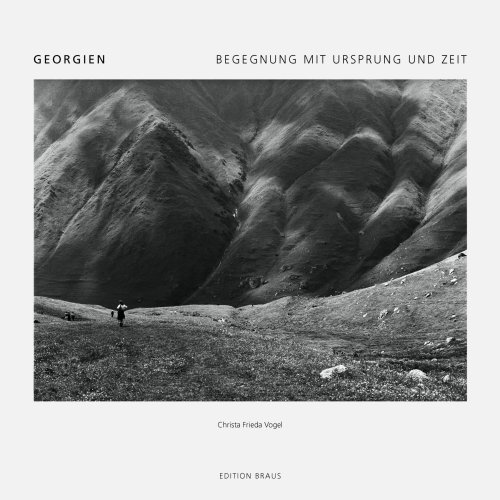
Christa Frieda Vogel – Georgia. Encounter with Origin and Time.
Texts: Levan Beridse, Dr. Naira Gelashvili, Nino Haratishvili, Tengis Khachapuridse, Givi Margvelashvili, Aka Morkhiladze, Zaza Tvaradse
30 x 30 cm
168 pages
85 duotone pictures
Hardcover with dust jacket
ISBN 978-3-89904-305-1
€ 49.90 SFr 83.90
To be released in Mach 2008
Flyer >>> (in german)
Foreword
The Blink of an Eye of a Journey…
by Thomas Roth
The Rustavelli, the splendid main boulevard of Tbilisi, the capital of Georgia, has seen a lot. Revolution, for example. The last one named itself after the “Roses”. Where, if not in Georgia, would one drape that wreath around it? One can regard it as one will, politically: the name alone shows that even the driest matters turn into poetry in Georgia. And the Rustavelli has seen the euphoria of the very early 1990s, when the country set off again on its way to itself, when the seemingly iron encasing of the Soviet Union had simply fallen apart. What emerged was an old country, an old culture. At that time, the songs echoed through the city, the flags waved, and, even as a guest and outsider, one was tempted to embrace the people celebrating their freedom. For the blink of an eye, joy – that was followed by darker days. Today the Rustavelli has put on another dress. It is literally rebuilding itself. And it is trying not to lose its character in the process. No, it seems more the reverse: it is beginning to take that character on again in the never-resting gears of Georgian time.
And yet, one must leave the capital and its cafes and theaters, the enchanting alleys of the ancient city, the little parks with their seemingly Mediterranean character, if one wants to get to know the very different time that this country has breathed for so long. A country in which, measured against its ancient culture, even a century is little more than the blink of an eye. A country in which politics, which loves to rush precipitously, finds itself embedded once again in the long stream of history. Even if that is not always immediately recognizable. And to understand all this, one must leave the capital. Out into any of the provinces, each of which possesses its own beauty. The soft lines of the hills and vineyards, the austere face of the approaching mountains, or the impressive power of the great Caucasus, which can teach one awe, if one is open to it – as is definitely advisable. And he who then has the good fortune to sit at a Georgian table and to make the acquaintance not only with its fascinating hospitality, but also with the boundless imagination of the natural poets seated there, is on his way to opening this land up for himself. A country where every inhabitant seems to be an artist. And that recounts the biographies of whole generations in the faces of its people. The pictures in this book point out such a path. They tell of the Georgian temperament and of the great calm that can descend upon everything. He who wants to could say they also retell much about Europe and our common roots. Georgia is part of it. But sometimes, it seems to me, Europe hasn’t noticed yet. Or has forgotten what it once knew. That can be changed. To a degree with this book. But even better by taking one’s own journey to this country. That too would be only the blink of an eye in the stream of Georgian time. But it would be a pity not to have at least experienced it.
print version >>>
She lives and works as a freelance photographer in Berlin and for years has also carried out projects abroad.
Christa Frieda Vogel – Georgia. Encounter with Origin and Time.
Texts: Levan Beridse, Dr. Naira Gelashvili, Nino Haratishvili, Tengis Khachapuridse, Givi Margvelashvili, Aka Morkhiladze, Zaza Tvaradse
30 x 30 cm
168 pages
85 duotone pictures
Hardcover with dust jacket
ISBN 978-3-89904-305-1
€ 49.90 SFr 83.90
To be released in Mach 2008
Flyer >>> (in german)
Foreword
The Blink of an Eye of a Journey…
by Thomas Roth
The Rustavelli, the splendid main boulevard of Tbilisi, the capital of Georgia, has seen a lot. Revolution, for example. The last one named itself after the “Roses”. Where, if not in Georgia, would one drape that wreath around it? One can regard it as one will, politically: the name alone shows that even the driest matters turn into poetry in Georgia. And the Rustavelli has seen the euphoria of the very early 1990s, when the country set off again on its way to itself, when the seemingly iron encasing of the Soviet Union had simply fallen apart. What emerged was an old country, an old culture. At that time, the songs echoed through the city, the flags waved, and, even as a guest and outsider, one was tempted to embrace the people celebrating their freedom. For the blink of an eye, joy – that was followed by darker days. Today the Rustavelli has put on another dress. It is literally rebuilding itself. And it is trying not to lose its character in the process. No, it seems more the reverse: it is beginning to take that character on again in the never-resting gears of Georgian time.
And yet, one must leave the capital and its cafes and theaters, the enchanting alleys of the ancient city, the little parks with their seemingly Mediterranean character, if one wants to get to know the very different time that this country has breathed for so long. A country in which, measured against its ancient culture, even a century is little more than the blink of an eye. A country in which politics, which loves to rush precipitously, finds itself embedded once again in the long stream of history. Even if that is not always immediately recognizable. And to understand all this, one must leave the capital. Out into any of the provinces, each of which possesses its own beauty. The soft lines of the hills and vineyards, the austere face of the approaching mountains, or the impressive power of the great Caucasus, which can teach one awe, if one is open to it – as is definitely advisable. And he who then has the good fortune to sit at a Georgian table and to make the acquaintance not only with its fascinating hospitality, but also with the boundless imagination of the natural poets seated there, is on his way to opening this land up for himself. A country where every inhabitant seems to be an artist. And that recounts the biographies of whole generations in the faces of its people. The pictures in this book point out such a path. They tell of the Georgian temperament and of the great calm that can descend upon everything. He who wants to could say they also retell much about Europe and our common roots. Georgia is part of it. But sometimes, it seems to me, Europe hasn’t noticed yet. Or has forgotten what it once knew. That can be changed. To a degree with this book. But even better by taking one’s own journey to this country. That too would be only the blink of an eye in the stream of Georgian time. But it would be a pity not to have at least experienced it.
print version >>>
Subscribe to:
Posts (Atom)