Showing posts with label Bibliography. Show all posts

Saturday, July 21, 2012

BIBLIOGRAPHIE: Georgien : Bibliographie des deutschsprachigen Schrifttums. Von Heinrich Rohrbacher.

Georgien : Bibliographie des deutschsprachigen Schrifttums / Heinrich Rohrbacher. Mit einem Vorw. von Karl Horst Schmidt. - Wiesbaden : Harrassowitz, 2008. - XII, 562 S. ; 25 cm. - ISBN 978-3-447-05778-3 : EUR 78.00

(ifb.bsz-bw.de) Die hier mit ungebührlicher Verspätung angezeigte Bibliographie der deutschsprachigen Monographien, Aufsätze und sonstiger unselbständiger Publikationen von den Anfängen bis etwa zum Jahr vor der Drucklegung (das Berichtsende ist nicht genannt) ersetzt die Bibliographie des Verfassers aus dem Jahr 1981. Bereits beim Vergleich allein des Seitenumfangs wird die gewaltige Umfangsvermehrung deutlich, und die Zahl der verzeichneten Titel stieg von damals 2086 auf nunmehr 7236 Nummern. Berücksichtigt ist nicht nur die Literatur über den heutigen Staat, sondern auch die über die ehemaligen georgischen Territorien und georgischen Siedlungsgebiete außerhalb des Staatsgebietes, und zwar für alle Bereiche, einschließlich der natürlichen Grundlagen. Die Verzeichnung erfolgt möglichst nach Autopsie und strebt nach Vollständigkeit, abgesehen von den auf S. IX genannten vier Bereichen, für die bereits andere Bibliographien3 und sonstige Nachschlagewerke vorliegen, auch wenn der Zeitungsindex, da veraltet und unvollständig, keinen wirklichen Ersatz bietet. Nicht berücksichtigt sind Rezensionen.

FrontcoverDie Anlage in neun Hauptgruppen (von 0 bis 9; Inhaltsverzeichnis auf S. V) mit weiteren vier Untergliederungspunkten ist auf S. 19 - 336 bis in alle Feinheiten aufgeschlüsselt und durch typographische Mittel7 differenziert; innerhalb der engsten Gruppe, die mit Hilfe entweder einer Überschrift oder von Begriffen auf dem Außenrand bezeichnet sind, ordnen die Titel chronologisch. Die Titelaufnahmen erfolgen "nach bibliothekarischen Regeln" (S. XI) und enthalten alle notwendigen bibliographischen Angaben, auch wenn die Vornamen grundsätzlich abgekürzt sind; "fast die Hälfte" der Titel ist zudem mit Annotationen versehen (ebd.). Die Siglen für die ausgewerteten Sammelwerke sind auf S. 1 - 18 aufgelöst. Das Personennamen-Register (S. 487 - 562) nennt auch die Vornamen und verweist von abweichenden Namensformen auf eine tandardansetzung; Personen als Gegenstand der Darstellung sind durch Kursivierung der laufenden Ob der BibNliuomgrmapehr msiacrhkiemritt. dem Gedanken trägt, im Alter selbst oder mit Hilfe anderer seine Bibliographie fortzuschreiben, erfahren wir nicht. Nützlich wäre das allemal, erscheinen doch weiterhin zahlreiche und auch gewichtige Publikationen über Georgien in deutscher Sprache, wovon etwa die neue Geschichte Georgiens9 Zeugnis ablegt. (Von Klaus Schreiber)


Das Werk spiegelt die engen Kontakte des deutschsprachigen Schrifttums mit dem Kaukasus und insbesondere mit der bereits im 5. Jahrhundert christianisierten alten Kulturregion Georgien wider. Die Bibliographie enthält über 7000 z. T. annotierte Titel über Georgien, ehemalige georgische Provinzen in Nordost- Anatolien und georgische Siedlungsgebiete außerhalb des Mutterlandes unter den Gliederungspunkten: Archäologie, Kultur- und Kunstgeschichte, Byzantinistik, Geschichte, Literaturwissenschaft und Philologie, Theologie, Kirchengeschichte, Christlicher Orient und Sprachwissenschaft. Soweit wie möglich wurden die Titel in Autopsie nach bibliothekarischen Regeln aufgenommen. Die zehn Hauptabschnitte der Bibliographie sind durch weitere Stufen gegliedert, wobei in der jeweils letzten das Material nach Erscheinungsjahren angeordnet ist. Die Benutzung der Bibliographie wird erleichtert durch verschiedene Übersichten: abgekürzt aufgeführte Sammelwerke, Sachliche Gliederung, Abkürzungsverzeichnis, Umschrift-Tabelle, Personennamen- Register.
 
AmazonShop: Books, Maps, Videos, Music & Gifts About The Caucasus

Friday, October 23, 2009

WISSENSCHAFT: NEUE KAUKASISCHE POST (rzuser.uni-heidelberg.de)

Nachrichtenblatt der Studiengruppe für gegenwartsbezogene Kaukasien-Forschung

Inhaltsverzeichnis:
Abonnement der Neuen Kaukasischen Post
Adressen und Interessengebietsverzeichnis
Danksagung
Aufruf zur Mitarbeit
Nachrichten aus der Studiengruppe
Laufende Forschungsprojekte
Selbstdarstellung von Institutionen und Organisationen
Wissenschaftliche Kooperationen
Tagungs- und Veranstaltungskalender
Berichte
Ankündigungen
Präsidentschaftswahlen in Armenien
Die Verfassung der Republik Armenien
Deutsch-Kaukasische Beziehungen
Reportagen
Kurzinformationen
Bibliographie
Neue Zeitschriften, Newsgroups und Mailing Lists
Adressenliste der Studiengruppe

Redaktion: Raoul Motika & Miriam Kubina (unter Mitarbeit v. B. Lauer)

Adresse:
Universität HeidelbergIslamwissenschaft (Osmanistik)

Sandgasse 7, 69117 Heidelberg
Tel.: 06221/542969
Fax: 06221/542963
E-mail:
raoul.motika@urz.uni-Heidelberg.de

Monday, January 05, 2009

RADIO: 15. Dezember 1858. Der Geburtstag des deutschen Theologen Johannes Lepsius (mp3)

In der Reihe "Zeitzeichen" auf WDR 5 lief im Dezember die folgende 20minütige Radiosendung.

Der deutsche Theologe Johannes Lepsius tat alles, was er konnte, um 1915 den Völkermord an den Armeniern zu verhindern. Lepsius traf sogar Enver Pascha, den Kriegsminister des Osmanischen Reiches. Doch der zeigte sich unbeeindruckt von den Protesten des deutschen Pfarrers.
Lepsius blieb nicht viel mehr als Zeugnisse zu sammeln über den Massenmord an den Armeniern in der heutigen Türkei, dem bis zu 1,5 Millionen Menschen zum Opfer fielen. Und er half mit seinem armenischen Hilfswerk Flüchtlingen.
Zurück in Deutschland konnte Lepsius seinen Bericht über den Völkermord noch in 20.000 Exemplaren an alle evangelischen Pfarrämter schicken, bevor die Schrift beschlagnahmt wurde. Denn die Reichsregierung wollte sich mitten im Ersten Weltkrieg nicht mit ihrem Verbündeten am Bosporus überwerfen. Lepsius hielt an seinem Einsatz für das armenische Volk fest, auch nach dem Weltkrieg. Bis zu seinem Tod 1926 setzte er sich für Armenier ein.

Autor/in: Heiner Wember
Redaktion: Ronald Feisel
WDR 2008

Weitere Informationen >>>

Die Sendung zum Anhören oder zum Herunterladen als Podcast >>>

Literatur
Andreas Baumann: Der Orient für Christus: Johannes Lepsius - Biographie und Missiologie. Brunnen, Gießen 2007
Johannes Lepsius: Die Wiedergeburt des Orients: Texte zur Mission, hrsg. von Andreas Baumann, VTR, Nürnberg 2008.
Brigitte Troeger: Brennende Augen: Johannes Lepsius - Sein Leben für die Armenier. Sein Kampf gegen den Völkermord. Biographische Erzählung. Brunnen, Gießen 2008
Deutsches Geschlechterbuch, Artikel Lepsius in den Bänden 4 (1896), 5 (1897) und 10 (1903)
Bernhard Lepsius: Das Haus Lepsius. Berlin 1933
Cem Özgönül: Der Mythos eines Völkermordes: eine kritische Betrachtung der Lepsiusdokumente sowie der deutschen Rolle in Geschichte und Gegenwart der "Armenischen Frage". Önel-Verlag, Köln 2006,
ISBN 3-933348-93-5

Mikrofiche-Ausgabe des Lepsius-Archiv
Hermann Goltz (Hrsg.): Deutschland, Armenien und die Türkei 1895-1925. Dokumente und Zeitschriften aus dem Dr. Johannes-Lepsius-Archiv an der Martin-Luther-Universität Halle-Wittenberg. Katalog, Mikrofiche-Edition und Thematisches Lexikon, ISBN 3-598-34406-6

Weblinks
Literatur von und über Johannes Lepsius im Katalog der Deutschen Nationalbibliothek (Datensatz zu Johannes LepsiusPICA-Datensatz) • Einträge im Musikarchiv
Johannes Lepsius. In: Biographisch-Bibliographisches Kirchenlexikon (BBKL).
Johannes Lepsius (1858-1926): ein Mann mit Vision
Beeindruckende Dokumentation zur Tragödie des armenischen Volkes wurde vollendet
Der Völkermord an den Armeniern im Ersten Weltkrieg, Dokumente aus dem Politischen Archiv des deutschen Auswärtigen Amts
Deutsch-Armenische Akademie

Monday, July 14, 2008

INTERNET: BRIEF HISTORY OF GEORGIA

Edited by Andrew Andersen

SUPPORT THIS WEBPROJECT >>>
Source >>>

ca 1118 – 763 BC
Diaokhi (Pre-history) By Givi Koberidze

ca 600 BC – 620 AD
Early Georgian History in a Nutshell By Andrew Andersen
The Kingdom of Colchis By Givi Koberidze and George Nikoladze
Colchis / Lazica By Xenophon, Strabo, Procopius and Agathius
Caucasian Iberia By Givi Koberidze and George Nikoladze
Description of Iberia By Strabo
Iberian and Lasic Wars By Givi Koberidze


ca 500 BC – 1125
Concise History of the Georgians By Juansher Juansheriani
Rise and Fall of Georgian Kings By David Marshall Lang

620 - 1089
Early Medieval Georgia By Andrew Andersen
The Kingdom of
Egris-Abkhazia By Givi Koberidze
Life of Egrisi, Abkhazeti or Imereti By Vakhushti Bagrationi
Smbat Davitisdze, Abkhazia & Georgian Unification By Stephen H. Rapp
Theme of Iberia & Byzantine-Georgian Wars By Givi Koberidze
Tao-Klarjeti TBA
Emirate of Tbilisi TBA

1090 - 1221
Medieval Georgia: “The Golden Age” By Andrew Andersen
The Georgians and the Crusades By Theodore E. Dowling

1222 - 1500
Late Medieval Georgia By Andrew Andersen
Mongol Invasions of Georgia TBA
Description of Georgia By Marco Polo

546 BC – 1826 AD
History of Georgian-Iranian Relations By Keith Hitchins

1501 - 1801
Georgia in the 16th – 19th Centuries By David Marshall Lang

1783-1801
The Annexation of Georgia by the Russian Empire By Giorgio Catalano (in Italian)

1801 - 1917
Georgia under Russian Imperial Rule By David Marshall Lang
Russian Orthodox Church in Georgia By Manana Gnolidze-Swanson
National Committee in Berlin and German Initiative to Encourage Georgian Separatism By Hew Strachan

1918 - 2008
Independent Georgia (1918-1921) By David Marshall Lang
Soviet-Georgian War and Sovietization of Georgia, February-March, 1921 By Andrew Andersen & George Partskhaladze
Georgia under Soviet Rule By David Marshall Lang
The Georgian Emigrés By David Marshall Lang
The Soldiers of Georgia in Polish Service (1923 - 1939) By Dmitri Shalikashvili
Georgian Legion: Georgians on the Wrong
Side of World War 2 By Andrew Andersen (in Russian)
Leuville-sur-Orge : a Little Georgia 25 Kilometers away Southward from Paris By Eva Csergo
Political Turmoil in Georgia and the Ethnic Policies of Zviad Gamsakhurdia By Ghia Nodia
Ethnic Conflicts in Georgia By Ben Fowkes
Ethnic Conflicts in Georgia By Alexei Zverev


RECOMMENDED BOOKS:
Allen, W.E.D.: A History of the Georgian People [1932]
Curtis, G.E.: Armenia, Azerbaijan and Georgia: Country Studies. [1995]
Daskhuranci, M.: A History of the Caucasian Albanians. [1961]
Denikin, A.: The Russian Turmoil. [1924]
Iosseliani, P.: The Concise History of Georgian Church. [1883]
Kazemzadeh, F.: The Struggle for Transcaucasia: 1917-1921. [1951]
Lang, D.M.: The Last Days of the Georgian Monarchy, 1658-1832. [1957]
: A Modern History of Georgia. [1962]
Villari, L.:
Fire and Sword in the Caucasus [1906]

ST. NINO (1460 - 1524) AND THE CONVERTION OF GEORGIA
By Darejan Bregvadze, Juansher Juansheriani, David M. Lang, Besiki Sisauri, Marjorie & Oliver Wardrop
Origins of Georgian Christianity By David Marshall Lang
St. Nino and the Conversion of Georgia By Besiki Sisauri
St. Nino and the Conversion of Georgia By Darejan Bregvadze
St. Nino and the Conversion of Georgia
Exerpts from "Studia Biblica et Ecclesiastica",Vol. 5 / 1903
St. Nino and the Conversion of Georgia
Excerpts from “The Georgian Chronicle”

GEORGIAN HERALDRY
By Andrew Andersen
NEW COAT OF ARMS
HISTORICAL ARMS OF GEORGIA AND GEORGIAN FEUDAL STATES
ARMS OF GEORGIAN NOBILITY
ARMS OF TBILISI

Thursday, June 19, 2008

BUCH: Ein Identitätskünstler zwischen Baku und Berlin

18. Juni 2008, Neue Zürcher Zeitung
Das historische Buch


Tom Reiss auf den Spuren des Bestsellerautors Essad Bey
Von David Motadel

Wahlweise trug er Turban oder osmanischen Fez. Sich selbst beschrieb er als «Muslim, Monarchisten, Orientalen». Mohammed Essad Bey war ein gefeierter Bestsellerautor der Weimarer Republik, eine prominente Persönlichkeit der avantgardistischen Kulturszene Berlins. Als Bühne dienten ihm die verqualmten Räume extravaganter Kaffeehäuser am Kurfürstendamm. Hier trafen sich die Redakteure der angesehenen Wochenzeitschrift «Literarische Welt», für die Bey über den Osten berichtete. In seinen Beiträgen informierte er das staunende deutsche Publikum über «Seine Majestät den König von Buchara», «Die Tradition im Orient» oder «Ibn Saud und die Wahhabiten». Zu internationalem Renommee gelangte Bey schliesslich durch Biografien des Propheten Mohammed, des Schahs von Persien, Atatürks und Stalins sowie durch eine Enthüllungsschrift über die bolschewistische Geheimpolizei. – «Wer ist dieser Essad Bey?», wunderte sich Leo Trotzki 1931 im Exil.

Der ganze Text >>>

Friday, June 06, 2008

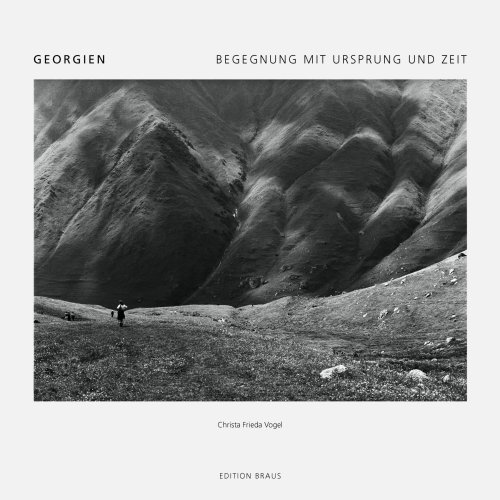
NEW PHOTO BOOK: Christa Frieda Vogel: Georgia - Encounter with Origin and Time.

CHRISTA FRIEDA VOGEL studied Visual Communication at the College of Arts in Berlin and Photography at Arno Fischer, today known as the Ostkreuzschule.
She lives and works as a freelance photographer in Berlin and for years has also carried out projects abroad.


Christa Frieda Vogel – Georgia. Encounter with Origin and Time.

Texts: Levan Beridse, Dr. Naira Gelashvili, Nino Haratishvili, Tengis Khachapuridse, Givi Margvelashvili, Aka Morkhiladze, Zaza Tvaradse

30 x 30 cm
168 pages
85 duotone pictures
Hardcover with dust jacket
ISBN 978-3-89904-305-1
€ 49.90 SFr 83.90
To be released in Mach 2008


Flyer >>> (in german)


Foreword

The Blink of an Eye of a Journey…
by Thomas Roth

The Rustavelli, the splendid main boulevard of Tbilisi, the capital of Georgia, has seen a lot. Revolution, for example. The last one named itself after the “Roses”. Where, if not in Georgia, would one drape that wreath around it? One can regard it as one will, politically: the name alone shows that even the driest matters turn into poetry in Georgia. And the Rustavelli has seen the euphoria of the very early 1990s, when the country set off again on its way to itself, when the seemingly iron encasing of the Soviet Union had simply fallen apart. What emerged was an old country, an old culture. At that time, the songs echoed through the city, the flags waved, and, even as a guest and outsider, one was tempted to embrace the people celebrating their freedom. For the blink of an eye, joy – that was followed by darker days. Today the Rustavelli has put on another dress. It is literally rebuilding itself. And it is trying not to lose its character in the process. No, it seems more the reverse: it is beginning to take that character on again in the never-resting gears of Georgian time.


And yet, one must leave the capital and its cafes and theaters, the enchanting alleys of the ancient city, the little parks with their seemingly Mediterranean character, if one wants to get to know the very different time that this country has breathed for so long. A country in which, measured against its ancient culture, even a century is little more than the blink of an eye. A country in which politics, which loves to rush precipitously, finds itself embedded once again in the long stream of history. Even if that is not always immediately recognizable. And to understand all this, one must leave the capital. Out into any of the provinces, each of which possesses its own beauty. The soft lines of the hills and vineyards, the austere face of the approaching mountains, or the impressive power of the great Caucasus, which can teach one awe, if one is open to it – as is definitely advisable. And he who then has the good fortune to sit at a Georgian table and to make the acquaintance not only with its fascinating hospitality, but also with the boundless imagination of the natural poets seated there, is on his way to opening this land up for himself. A country where every inhabitant seems to be an artist. And that recounts the biographies of whole generations in the faces of its people. The pictures in this book point out such a path. They tell of the Georgian temperament and of the great calm that can descend upon everything. He who wants to could say they also retell much about Europe and our common roots. Georgia is part of it. But sometimes, it seems to me, Europe hasn’t noticed yet. Or has forgotten what it once knew. That can be changed. To a degree with this book. But even better by taking one’s own journey to this country. That too would be only the blink of an eye in the stream of Georgian time. But it would be a pity not to have at least experienced it.

print version >>>

Sunday, May 11, 2008

WISSENSCHAFT: Historische Hintergründe und politische Motive des abchasischen Separatismus in Georgien

Von Tamar Janelidze

Kurzfassung
Das Problem des abchasischen Separatismus existiert in Georgien, seit die Kaukasus-Region an das Russische Imperium angegliedert wurde. Der Separatismus hat tiefe Wurzeln und ist politisch bedingt. Da der Separatismus einen Störfaktor für die Beilegung des Konfliktes in Abchasien darstellt, möchte ich in dieser Arbeit dieses Phänomen aus historischer und politischer Perspektive untersuchen. Die vorliegende Arbeit soll zeigen, dass der abchasische Separatismus von der zaristischen Administration der Kaukasus-Region begründet wurde, wobei er durch die 70 Jahre andauernde sowjetische Regierung systematisch gefördert wurde. In dieser Arbeit soll versucht werden, die Methoden der Sowjetregierung zur Förderung des abchasischen Separatismus im Einzelnen darzulegen und sie in Bezug auf die erfolgreiche Durchsetzung der politischen Interessen Moskaus in Georgien und damit in der gesamten Kaukasus-Region zu untersuchen. Der abchasische Separatismus wurde von der Regierung der Russischen Föderation als Instrument gegen die Staatlichkeit und Unabhängigkeit Georgiens in den 90er Jahren des 20. Jahrhunderts eingesetzt.

pdf-Format:
Dokument 1.pdf (772 KB)

Sunday, May 04, 2008

SCIENCE: Review from Alexander Bainbridge about the Caucasian Peripheries

Caucasian Peripheries
von TransCaucasus von Alex JTB

Shorena Kurtsikidze & Vakhtang Chikovani, Ethnography and Folklore of the Georgia-Chechnya Border - Images, Customs, Myths & Folk Tales of the Peripheries, LINCOM Studies in Anthropology 09, 2008

"The aim of this book is to acquaint a wide audience with the traditional culture of the Christian and Muslim highlanders who live on the border of Europe and Asia in the central part of the Caucasus Main Mountain Range.

Under one cover, the publication features unique materials on visual anthropology, ethnography, mythology, and folklore of the region.The book portrays the mysterious subgroup of Georgian highlanders, the Khevsur, who are considered to be the champions of Georgian patriotism and at the same time, according to one popular theory, are believed to be direct descendants of the last Crusaders.

Featuring 158 black and white original photographs and accompanying explanatory texts, the publication gives a detailed description of the exotic religious institutions and examples of material culture of this group of highlanders, illustrating the closeness of their lifestyle to the ways of the Frankish crusaders. The emphasis is on the spheres of folk culture that bear clear traces of centuries of confrontations between two ethnic groups: Christian Georgian highlanders and their neighbors, Muslim Vainakh or Chechen and Ingush.

The authors attempt to show how the traditional mode of life of the highlanders affects the contemporary ethnic and political situation in the region. The publication includes original translations of Georgian folk tales and myths. The latter are narratives representing mythologized chronicles of “holy wars” of old times once carried out on the border of Europe and Asia by the ancestors of the Khevsurs.

Shorena Kurtsikidze and Vakhtang Chikovani are cultural anthropologists and natives of Georgia. They have been teaching the Georgian language, culture, and folklore courses at the University of California, Berkeley. Both authors are affiliates of the Institute of Slavic, East European and Eurasian Studies at the same university and regularly give talks and public lectures about Georgia and the Caucasus."

This book sounds like a truly amazing read, and can be bought here on the Lincom website (164 EUR).

There is also an extremely interesting online gallery of photographs taken by Vakhtang Chikovani in the Arkhoti, Shatili, and Gudamaqari temebi (regions) in the 1970s - Images from the Georgia-Chechnya Border 1970-1980

Visual Anthropology of the Peripheries - which can be seen here on the website of the Phoebe A. Hearst Museum of Anthropology at the University of California, Berkeley.

Vakhtang Chikovani and Shorena Kurtsikidze are also the authors of the excellent Georgia's Pankisi Gorge: An Ethnographic Survey, which is available online as a pdf.

BOOK: Blogger from "Social Science in the Caucasus" offer a book review from Thomas Goltz.

Book Review: Georgia Diary: A Chronicle of War and Political Chaos in the Post-Soviet Caucasus Thomas Goltz
von
Social Science in the Caucasus von AaronE

This reviewer is not the first to review Goltz’s Georgia Diary: A Chronicle of War and Political Chaos in the Post-Soviet Caucasus. Most notably the Wall Street Journal lauded the book and the hardcover published by M.E Sharpe gathers teasers from a wide variety of noteworthy folks on the back cover.
However, for those new to Goltz, Georgia Diary forms the third part of a trilogy of books about the Post-Soviet Caucasus, the first two covering the bad old times in the 1990s in Chechnya and Azerbaijan. This last addition to the trilogy differs from the other two in that it is written long after the events at the heart of the book took place. In that sense, it will not be quoted in the same way in academic circles as Goltz’s earlier books were. Though some take issue with the sometimes anecdotal style of Goltz’s accounts, his work is widely cited and he often speaks to academic audiences on the topic of Azerbaijan.
Though Georgia Diary, may be quoted by fewer academics, Goltz attempts to be much more academic than he was Azerbaijan Diary. But the academic part of the book is not the book’s strongest and seems to pale in comparison to Tony Anderson’s Bread and Ashes, where the academic background makes Anderson’s trek through the high Georgian Caucasus all the more delightful.
Nevertheless, Goltz’s unforgettable fast-paced writing returns when he recounts time spent in Sukhumi before and during and after the withdrawal of Georgian troops from Abkhazia. This is Goltz at his best and his work serves to highlight for many the multiple angles of the Georgian civil war and the difficulty in writing about it clearly or classifying well from an academic perspective what exactly was going on.
For instance, the fact the supporters of the first Georgian President Gamsakhurdia were based out of Sukhumi created a complexity for those, under the banner of Eduard Shevardanadze, who were allied against Gamsakhurdia and in control of the Georgian military. While Abkhaz aligned forces were attacking Sukhumi, there was still a battle for territory in Western Georgia going on between those allied with Gamsakhurdia and those with Shevardnadze. As Goltz regales, these sides were known as the Position and the Opposition, however, which was the Position and which was Opposition appears to depend on what side you were on, and caused never ending confusion to outsiders trying to figure out what the heck was going on in a land so few in the West had ever heard of.
To someone familiar with Georgia, some of the mistakes slightly grate. The Russian use of the ploshchad instead of the Georgian moedani when Goltz claims to be speaking Georgian, the referral to Mingrelian as a dialect of Georgian rather than a separate language, or the mistranscription of the Georgian name Avtandil as Artvandil highlight Goltz’s self-proclaimed lack of familiarity with Georgia. Nevertheless, all in all, Goltz adds yet another readable volume, to what is now his trilogy on the Caucasus.This post is also published in the
Georgian Times.

AmazonShop: Books, Maps, Videos, Music & Gifts About The Caucasus

Wednesday, April 23, 2008

BUCH: Der Orient für Christus. Johannes Lepsius - Biographie und Missiologie. Von Andreas Baumann

Kurzbeschreibung
Der Theologe Johannes Lepsius (1858-1926) war Pionier der Mission unter Muslimen. Er erhob während des ersten Weltkrieges seine Stimme gegen den Völkermord am armenischen Volk, während andere aus diplomatischen Gründen schwiegen. Seine wohl wichtigste Schrift wurde während des 1. Weltkrieges vom Innenministerium des deutschen Kaiserreichs verboten. Das Buch bietet zum einen die bisher umfangreichste biographische Aufarbeitung des Lebens von Johannes Lepsius. Zum anderen wird ein Gesamtüberblick über seine Missiologie erarbeitet, die eine Fülle von interessanten Impulsen auch für die heutige Diskussion, besonders über die Frage nach dem Verhältnis von Missionsauftrag und gesellschaftlichem

Broschiert: 566 Seiten
Verlag: Brunnen-Verlag, Gießen; Auflage: 1 (14. Mai 2007)
Sprache: Deutsch
ISBN-10: 3765595462
ISBN-13: 978-3765595462


AmazonShop: Books, Maps, Videos, Music & Gifts About The Caucasus
Monday, April 14, 2008

SERVICE & STUDIES: Subscribtion Of A Quarterly Bibliography On The Countries Of The Caucasus And Central Asia.

KICES announces the start of a quarterly bibliography on the countries of the Caucasus and Central Asia.

The bibliography covers recent Western language academic publications on politics, foreign policy, economic, social and environmental issues. It is distributed by email as a pdf file free of charge. To subscribe send an email to info@kices.org

The quarterly bibliography on the Caucasus and Central Asia complements the bibliographical email services of KICES, which already cover the Czech Republic, Poland, Russia, Slovakia and
Ukraine.

For more information and an online archive of back issues please visit http://www.kices.org/publication_0E.php

We hope you find our services of interest.
E-Mail Services

Koszalin Institute of Comparative European Studies
www.kices.org
info@kices.org

Sunday, April 06, 2008

PUBLIKATION: Buch zur "Krisenregion Kaukasus"

Mit seinen bedeutenden Öl- und Gasvorkommen sowie seinen wichtigen Transit-Pipelines hat der Kaukasus eine herausragende strategische und sicherheitspolitische Bedeutung für Europa. Das macht ihn heute zum Zankapfel und zur Krisenregion. Darüber vergißt man allerdings oft seine reiche Kultur und große landschaftliche Schönheit. Namhafte Experten beleuchten in diesem Buch Armenien, Aserbaidschan und Georgien, die russischen Regionen im Nordkaukasus (Tschetschenien, Dagestan, Inguschetien) sowie die Nachbarstaaten Türkei und Iran. Die großen Konfliktregionen – Abchasien, Süd-Ossetien, Berg-Karabach sowie Tschetschenien werden ausführlich historisch und politisch beschrieben. Mit seinen Länder-, Konflikt- und Kulturanalysen bietet das Buch einen umfassenden und einmaligen Einblick in die „Krisenregion“ Kaukasus.

NEU
Marie-Carin von Gumppenberg, Udo Steinbach
Der Kaukasus
Geschichte, Kultur, Polititk
2008. 256 S.: mit 6 Karten. PaperbackC.H.Beck ISBN 978-3-406-56800-8
Herausgegeben von Marie-Carin von Gumppenberg und Udo Steinbach
Das Werk ist Teil der Reihe: (Beck`sche Reihe: bsr;1791)
Erschienen: 17.03.2008
sofort lieferbar!
12,95 € inklusive MwSt.

Leseprobe
Zur Einführung
Leseprobe Kaukasus.pdf[245,42 KB]

Zur Einführung

Die Länder
Armenien – Überleben am Fuße erloschener Vulkane
Georgien – Transitland im Süden
Aserbaidschan – Machtpoker um die Petrodollars
Nordkaukasus – Porträt einer spannungsreichen Region
Iran – Großmacht mit Ambitionen?
Türkei – Politik in historischem Hinterland

Die Konflikte
Abchasien – Kämpfe um den schönsten Teil der Schwarzmeerküste
Berg Karabach – Krieg um die «Schwarzen Berge»
Der ungelöste Streit um Südossetien
Krisenregion Nordkaukasus – Ursachen, Akteure, Perspektiven
Internationale Organisationen – Hemmschuh oder Motor für eine Konfliktlösung im Südkaukasus?
Energie und Sicherheit – Das «neue Spiel» um die Ressourcen

Die Kulturen
Ethnische Vielfalt – Wahrnehmung und Fakten
Der «Berg der Sprachen» – die Sprachenvielfalt
Religionen – Identitätsstiftende Momente
Kunsttradition, Minnesang und Heldenepik
Politische Kultur: Autoritäre Herrscher – pragmatische Loyalitäten
Rechtsbewusstsein und Rechtsverständnis

Autorenverzeichnis
Abkürzungen

Monday, March 31, 2008

LITERATUR: Gesammelte Werke von Clemens Eich

Von DETLEF KUHLBRODT

Die "Aufzeichnungen über Georgien", Clemens Eichs letztes, unvollendetes Buch, das in Folge einer Dichterverschickung entstanden war, gefällt mir sehr gut. Einige Georgienkenner und -freunde verurteilten es wegen Subjektivismus. Das Fragmentarische dieses Sammelsuriums aus Tagebucheintragungen, Notizen, Aphorismen lässt einen aber vielleicht besser an einer Reise teilnehmen, als es eine geschlossenere, widerspruchsfreiere, politisch abwägende Schilderung vermögen könnte. Vor allem ist es nicht mehr so durchgehend in Moll. Gern zitiert man auch einen Satz, dem damals sicher viele westdeutsche Intellektuelle zugestimmt hätten: "Ich habe keine Angst, nach Georgien zu fahren, aber ich habe Angst, nach Ostdeutschland zu fahren."

Clemens Eich: Gesammelte Werke. Hrsg. von Elisabeth Eich und Ulrich Greiner. 2 Bände; Band 1: "Das steinerne Meer"/"Aufzeichnungen aus Georgien", Band 2: Prosa/Drama/Lyrik. Fischer, Frankfurt am Main 2008, zus. 768 Seiten, 29,90 Euro

taz.de - Gesammelte Werke von Clemens Eich: Abstoßende Romanhelden
Die Bände von Clemens Eich bieten sehr Gelungenes, Ekliges und auch pathetisch Verunglücktes. VON DETLEF KUHLBRODT.


AmazonShop: Books, Maps, Videos, Music & Gifts About The Caucasus

Sunday, March 23, 2008

TALK: A Cultural Journey Through Georgia - An illustrated talk by Tony Anderson

at the Belle Vue Conservatory
7 to 9pm, 10 April 2008


Tony Anderson read English at Oxford, and has taught both in Britain and abroad. He has worked as an editor and writer for television, books and theatre, and has recently edited works on Russia and the Caucasus. His book “Bread and Ashes” tells the story of his walk through the mountains of Georgia.

Tickets £5.00 from Derek Butler 421081
or Cath Phillpot 421103

A glass of wine or fruit juice is included in ticket price

Poster >>>

Saturday, March 15, 2008

KULTUR: Tom Reiss: Der Orientalist auf den Spuren von Essad Bey

Leider erfuhr ich etwas zu spät, dass der Publizist Tom Reiss, der eine fabelhafte Biografie über den Orientalisten mit mehreren Namen geschrieben hatte, zu Gast in Hamburg war.
Trotzdem möchte ich auf diese Lesung noch einmal hinweisen, da sie in dem neu gegründeten Jüdischen Salon Am Grindel e.V. stattfand ...

Skurrile Story im neuen Café Leonar im Grindelhof

Der neu gegründete Jüdische Salon im Café Leonar im Grindelhof hat sein Kulturprogramm aufgenommen und startete nach ersten Musikveranstaltungen jetzt mit seinen Lesungen. Der erste Gast: der New Yorker Publizist Tom Reiss. Und dieser hat in diesen Tagen ein bemerkenswertes Buch vorgelegt, das in bewährter amerikanischer Tradition die Grenzen des Sachbuchs sprengt: Sein "Der Orientalist" enthüllt die wahre Identität des aserbaidschanischen Nationaldichters Essad Bay und erzählt im Gegenzug das Leben des 1905 in Baku geborenen Lev Nussimbaum, Sohn eines jüdischen Ölmillionärs und einer Revolutionärin.

Nussimbaum gelangt in den Revolutionswirren von 1917 auf abenteuerlichem Wege nach Berlin, wo er erstmal und zur Abendschule geht, um das Abitur zu erlangen. Dann hält er sich in russischen Immigrantenkreisen auf, konvertiert bald zum Islam, gibt sich nun als Essad Bay und als Kind eines mal türkischen, mal persischen, aber in jedem Fall muslimischen Adelsgeschlechts aus, auch um seine jüdische Herkunft zu verbergen.

Schreibend ist er ungeheuer produktiv, veröffentlicht 16 Bücher, darunter den Klassiker "Ali und Nino", den in Aserbaidschan bis heute jeder kennt.

Parallel bietet Reiss' Buch ganz ausgezeichnete Einblicke in die Zeitepochen der 20er bis 40er Jahre im chaotischen Europa von eben Aserbaidschan über Deutschland bis nach Italien, wo Bay alias Nussimbaum 1942 stirbt. Nicht zuletzt erzählt der Reiss selbst unumwunden von den Mühen, den Überraschungen, aber auch Skurrilitäten seiner Recherche; etwa wenn sich eine wichtige Zeitzeugin als leicht überspannte Baroness erweist, die seit Jahren an einem Rockmusical für eine deutsch-israelische Gesellschaft arbeitet, aber selbst noch nie ein Musical besucht hat.

Quelle: welt.de

PUBLIKATION.: Biograph. Studie ueber Frauen in Tschetschenien

Marit Cremer: Fremdbestimmtes Leben. Eine biographische Studie über Frauen in Tschetschenien
Transcript Verlag, Bielefeld 2007. 203 Seiten, kart., 21,80 Euro.
ISBN: 978-3-89942-630-4

Die Auflösung der Sowjetunion hat in den Nachfolgestaaten zu einer Suche nach neuen verbindlichen gesellschaftlichen Werten geführt. In der Tschetschenischen Republik kam es unter dem sowjetischen General Dudajew seit 1991 zu einer Wiederbelebung traditioneller Werte, die historischen Überlieferungen entnommen wurden. Unter den extremen Bedingungen von Krieg, Flucht und Exil stellt sich für viele Bewohner Tschetscheniens die Frage nach Herkunft und Identität neu. Die Autorin lässt tschetschenische Frauen ihre Lebensgeschichten erzählen und analysiert anhand des umfangreichen Materials den Wandel ihrer Einstellungen zur Geschichte und Kultur ihres Volkes, ihre Positionierung zu Traditionen, dem Islam und ihrer Rolle als Frauen.

Marit Cremer (Dipl.-Soz.) beschäftigt sich v.a. mit Transformationsprozessen in Russland und Tschetschenien. Außerdem arbeitet sie in Berlin freiberuflich als Dolmetscherin, u.a. im
Behandlungszentrum für Folteropfer e.V. und ist im Vorstand von Memorial Deutschland e.V.


Nachfolgend die Rezension von Hans-Joachim Neubauer aus dem Rheinischen Merkur:

Frauenleben
Was ist Tschetschenien, ein Fleck auf der Landkarte, ein Beispiel für Gewaltherrschaft, eine kleine Karte im Poker der Supermächte? In Tschetschenien wird mit blutigen Mitteln Geschichte geschrieben. Und die Berliner Sozialwissenschaftlerin Marit Cremer nun lässt die zu
Wort kommen, die in dieser Geschichte sonst keine Stimme haben, die Frauen. Fünf Tschetscheninnen berichten von Krieg und Flucht, von Wunden und Schuldgefühlen, von der Desorientierung. Sie erzählen vom Verlust ihrer männlichen Verwandten, vom Weg in die Berge, von Bomben und Attentaten. Der Krieg wies ihnen neue Rollen und Aufgaben zu, da er ihnen die Männer nahm. Damit verändert er auch die Macht der Tradition.

Die Frage, was Tschetschenien sein wird, hängt von den Chancen der Frauen ab. Cremers unsentimentaler Blick auf deren Seite entdeckt die Konsequenzen verfehlter Politik für die einfachen Menschen. Gerade weil Cremer so nüchtern beschreibt, wie die tschetschenischen Frauen ihre Erfahrungen verarbeiten, enthüllt sich das kollektive Trauma in seiner ganzen Drastik. Kein leichtes Buch, aber ein großes und kluges; eines, das schwer wiegt.

Wednesday, February 27, 2008

BOOK REVIEW: The Post-Soviet Wars: Rebellion, Ethnic Conflict and Nationhood in the Caucasus. By Christoph Zürcher

Gebundene Ausgabe: 285 Seiten
Verlag: New York Univ Pr; Auflage: illustrated edition (15. Dezember 2007)
Sprache: Englisch
ISBN-10: 0814797091
ISBN-13: 978-0814797099
Größe und/oder Gewicht: 22,9 x 15,5 x 2,5 cm


Kurzbeschreibung "The Post-Soviet Wars" is a comparative account of the organized violence in the Caucusus region, looking at four key areas: Chechnya, Armenia, Azerbaijan, Georgia, and Dagestan. Zurcher's goal is to understand the origin and nature of the violence in these regions, the response and suppression from the post-Soviet regime and the resulting outcomes, all with an eye toward understanding why some conflicts turned violent, whereas others not. Notably, in Dagestan actual violent conflict has not erupted, an exception of political stability for the region. The book provides a brief history of the region, particularly the collapse of the Soviet Union and the resulting changes that took place in the wake of this toppling. Zurcher carefully looks at the conditions within each region - economic, ethnic, religious, and political - to make sense of why some turned to violent conflict and some did not and what the future of the region might portend. This important volume provides both an overview of the region that is both up-to-date and comprehensive as well as an accessible understanding of the current scholarship on mobilization and violence.

Synopsis "The Post-Soviet Wars" is a comparative account of the organized violence in the Caucusus region, looking at four key areas: Chechnya, Armenia, Azerbaijan, Georgia, and Dagestan. Zurcher's goal is to understand the origin and nature of the violence in these regions, the response and suppression from the post-Soviet regime and the resulting outcomes, all with an eye toward understanding why some conflicts turned violent, whereas others not. Notably, in Dagestan actual violent conflict has not erupted, an exception of political stability for the region. The book provides a brief history of the region, particularly the collapse of the Soviet Union and the resulting changes that took place in the wake of this toppling. Zurcher carefully looks at the conditions within each region - economic, ethnic, religious, and political - to make sense of why some turned to violent conflict and some did not and what the future of the region might portend. This important volume provides both an overview of the region that is both up-to-date and comprehensive as well as an accessible understanding of the current scholarship on mobilization and violence.


Georgian Times , February 25: The earliest books that came out about the Caucasus after the collapse of the Soviet Union were firsthand accounts of events. Now, a second spate of books, which attempts to apply analytical frameworks to the turbulent events that occurred after the breakup of the Soviet Union, are beginning to appear. Christoph Zürcher’s The Post-Soviet Wars: Rebellion, Ethnic Conflict and Nationhood in the Caucasus falls into this category. The book examines where in the Caucasus wars occurred (Georgia, Nagorno-Karabakh and Chechnya) and where they didn’t (Dagestan and Ajara) and places those case studies within the context of international quantitative literature that attempts to explain why internal wars occur.

Those who are knowledgeable about the Caucasus will find much information they have already come across. However, for those interested in international conflict who possess little regional understanding, the tersely written detail provides a good overview.

To whet your appetite for some of the details about why wars started in the Caucasus, Zürcher argues that, in Georgia, anti-Soviet rhetoric allowed for no maintenance of Soviet institutions, increasing the likelihood of conflict, since state institutions utterly collapsed as a result. Furthermore, the fallback on nationalist rhetoric, which was seen as the only way of creating a cohesive political force, then alienated both Abkhaz and Ossetians. Zürcher, perhaps controversially, also claims that Armenian politics looked very similar to Baltic politics (and different from Georgian and Chechen) in that the same type of state weakness did not exist. However, Zürcher makes the claim, which has been echoed in much of the democratization commentary about Armenia, that instead of the Baltic states’ orientation towards Europe, Armenia’s politicians unified around war in Nagorno-Karabakh, creating an anti-reform minded regime.

From a more technical standpoint, the book is a rare breed within political science literature, as it is specifically concerned about testing existing theories about internal wars by examining a series of case studies. In doing so, the volume seeks to refine those theories. While this type of book is out of vogue because the academic nomenklatura does not perceive the endeavor as groundbreaking, it serves an important role in refining theories, something Zürcher does throughout the book.

So what does Zürcher find in relationship to the international quantitative literature? Several variables that are generally cited as determinants of internal war do not appear to hold true in the Caucasus: low economic development and mountainous terrain do not help in explaining the conflagrations in the Caucasus. Despite the Caucasus being mountainous, most conflicts occurred in urban environs or in the plains. In the conflicts where mountains played a role, the guerillas (which conflict theory supposes are aided by mountains) had the mountains against them. In fact, Zürcher seeks to refine the theory about the relationship between mountains and war and suggests several plausible alternative hypotheses, part of the intellectual merit of the book. One interesting hypothesis is that mountains are a proxy for the cheap recruitment of male soldiers, since mountainous areas often have high unemployment rates and hence a male population ready to mobilize.

The volume also reinforces the idea found in the international quantitative literature that states that weakness often plays an important role – perhaps much more so than underdevelopment – as does the role of one ethnic group constituting the majority of the population. This ethnicity argument is well-highlighted in Zürcher’s case study of Dagestan, where ethnicity did not play the same role as in Georgia, Armenia or Chechnya, in part because of the fact that no ethnic group had a majority.

Overall, this reviewer found the findings sound, but would have like to see more analysis of some of the interesting proxy variables discussed above. This, however, could form the basis of a new and fruitful conflict research agenda in the Caucasus.


AmazonShop: Books, Maps, Videos, Music & Gifts About The Caucasus
Thursday, February 21, 2008

BOOK: "Ali & Nino", The novel by Kurban Said


"We were a very mixed lot, we forty schoolboys
who were having a Geography lesson one hot afternoon
in the Imperial Russian Humanistic High School of Baku, Transcaucasia:
thirty Mohammedans, four Armenians, two Poles, three Sectarians, and one Russian".
[Blame the translator for the word 'Mohammedans'].

So begins Kurban Said's first of two novels, mostly set in the town of Baku and Persia, and generally on the cusps of Asia and Europe and war and peace, and it is in Baku that a young Muslim named Ali falls in love with a lovely Christian named Nino. Their relationship, if it is to be, must overcome many obstacles. In many ways Baku, with its multi-ethnic population, is a metaphorical marriage of East and West.

First published in Vienna in 1937, this classic story of romance and adventure has been compared to Dr. Zhivago and Romeo and Juliet. Out of print for nearly three decades until the hardcover re-release in 2000, Ali and Nino is Kurban Said's masterpiece. It is a captivating novel as evocative of the exotic desert landscape as it is of the passion between two people pulled apart by culture, religion, and war.

------------------------------------------------------

The Orientalist, the biography of Kurban Said, by Tom Reiss.

www.theorientalist.info by Tom Reiss

Part history, part cultural biography, and part literary mystery, The Orientalist traces the life of Lev Nussimbaum, a Jew who transformed himself into a Muslim prince and became a best-selling author in Nazi Germany.

Born in 1905 to a wealthy family in the oil-boom city of Baku, at the edge of the czarist empire, Lev escaped the Russian Revolution in a camel caravan. He found refuge in Germany, where, writing under the names Essad Bey and Kurban Said, his remarkable books about Islam, desert adventures, and global revolution, became celebrated across fascist Europe. His enduring masterpiece, Ali and Nino–a story of love across ethnic and religious boundaries, published on the eve of the Holocaust–is still in print today.

But Lev’s life grew wilder than his wildest stories. He married an international heiress who had no idea of his true identity–until she divorced him in a tabloid scandal. His closest friend in New York, George Sylvester Viereck–also a friend of both Freud’s and Einstein’s–was arrested as the leading Nazi agent in the United States. Lev was invited to be Mussolini’s official biographer–until the Fascists discovered his true origins. Under house arrest in the Amalfi cliff town of Positano, Lev wrote his last book–scrawled in tiny print in half a dozen notebooks never before read by anyone–helped by a mysterious half-German salon hostess, an Algerian weapons-smuggler, and the poet Ezra Pound.


AmazonShop: Books, Maps, Videos, Music & Gifts About The Caucasus

Saturday, February 09, 2008

BUCH: "Russland gibt Gas" von Alexander Rahr

Am 7. Februar erscheint das neue Buch von Alexander Rahr. In "Russland gibt Gas"
(Hanser 2008) sprechen die sogenannten Siloviki - Putins Geheimdiensbund - eine klare Sprache. Russland will unbedingt wieder Großmacht werden und der Energiereichtum des Landes verhilft dem Land zu diesem Aufstieg. Was bedeutet Russlands Wiederkehr auf die politische Bühne für den Westen, für Russlands Nachbarn?

Rahr zeigt die Gefahren der möglichen Entwicklung ebenso klar auf, wie auch die Chancen einer Kooperation zwischen EU und Moskau. Im Buch wird der Versuch einer Regenerierung einer Ostpolitik II unternommen. Kann man Russland trauen? Rahr lässt auch einige Kremlkritiker, wie Garri Kasparow dazu sprechen. Das Bild das er zeichnet ist differenziert: Ist Russland defekt oder repariert? Ist das Wirtschaftswachstum real oder hängt Russland nur am Energietropf? Nach der Lektüre von mehr als der Hälfte des Buches sind beim Leser eher neue Fragen entstanden. Eine präzise Antwort gibt der Autor nicht.

Spannend schildert er den Präsidentschaftswahlkampf zwischen den beiden Kronprinzen Dimitrij Medwedew und Sergej Iwanow. Letzteren besucht Rahr sogar in Moskau. Doch Putin entscheidet sich für Medwedew, den Aufsichtsratsvorsitzenden von Gazprom. Also marschiert Moskau doch nur Richtung Energiegroßmacht? Am Ende des Buches versetzt Rahr den Leser mitten in einen Kaminabend auf einer Regierungsdatscha. Dort diskutiert der Geheimdienst unverhohlen über seine Zukunftspläne.

Der so genannte Putin Code wird geknackt. Herkömmliche Russlandforscher werden Rahr kritisieren, denn er schreibt gegen den bestehenden Mainstream in Deutschland und Europa. Er kritisiert sogar den Westen, dass dieser Russland in den 90er Jahren nicht richtig beigestanden ist.

Insgesamt ist das Buch erfrischend, es enthält auch viele verlässliche Wirtschaftsdaten zum aktuellen Russlandbild. Deshalb ist das Buch auch für Einsteiger auf den russischen Markt von herausragendem Interesse.


AmazonShop: Books, Maps, Videos, Music & Gifts About The Caucasus

Monday, February 04, 2008

STUDY: Articles from Soviet Studies

Ethnoregional Socio-Economic Fragmentation and Soviet Budgetary Policy
By Peter Zwick
In: Soviet Studies, Vol. 31, No. 3 (Jul., 1979), pp. 380-400
This article consists of 21 page(s).

Transcaucasia: Nationalism and Social Change. Essays in the History of Armenia, Azerbaijan, and Georgia
by Ronald Grigor Suny
Author(s) of Review: Rob Parsons
In: Soviet Studies, Vol. 37, No. 2 (Apr., 1985), pp. 294-296
This article consists of 3 page(s).