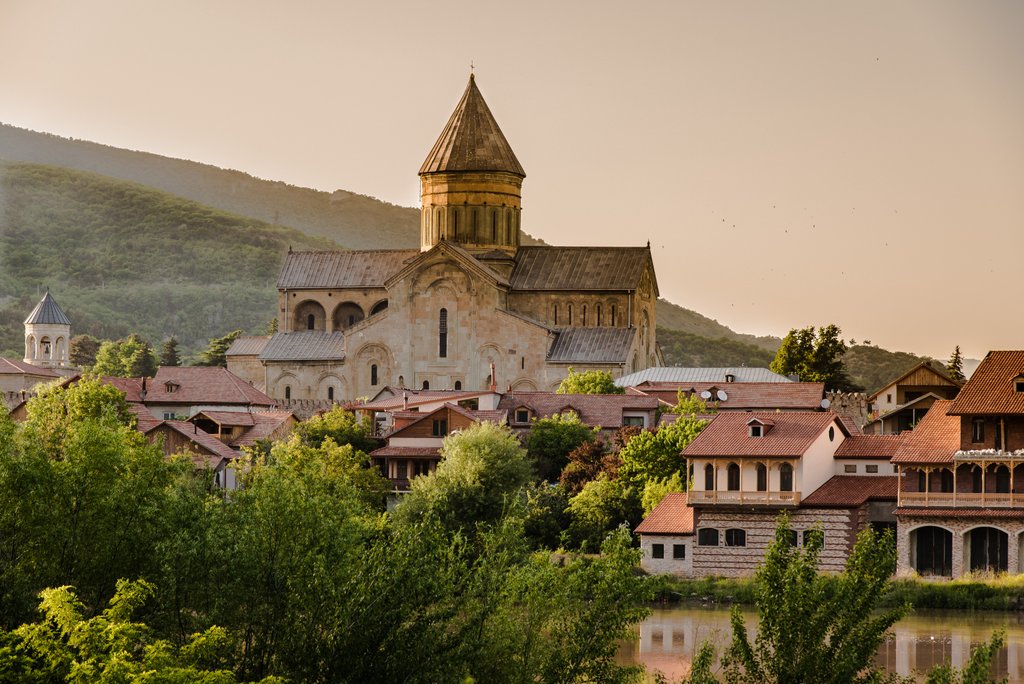
The Azerbaijanian film festival "STOP" is an exclusive opportunity to get acquainted with the best examples of contemporary Azerbaijani cinematography. The Festival is an island of secure environment for direct communication surrounded by the conditions of distorted human values, and propaganda that poisons healthy civilized relations.
CAUCASUS CENTER OF PEACE - MAKING INITIATIVES INVITES:
November 12, at 4 p.m. - Festival competition program:
A series of 4 short films: 1 documentary and 3 feature films produced in Azerbaijan in 2007-2008. Duration: 1 hour 33 min. There is only one - the Audience sympathy award – determined through viewers votes.
November 13, at 2 p.m - Festival competition program.- At 4 p.m.:
Special feature film presentation produced in Azerbaijan in 2008. Duration: 1 hr 28 min. There is a discussion at the end.
5 Tamanyan str, ap. 2, Yerevan, Armenia
(near the Cascade)
ENTRANCE IS FREE
Caucasus Center of Peace Making Initiatives
Supported by US Embassy in Armenia
SEE ALSO:
Azerbaijan Film Festival in Yerevan Sparks Hatred and Xenophobia
Armenian Writer Threatened for Facebook Pageon Azerbaijan Film Screenings in Yerevan
No Enemy Nations, Only Regressive Societiesand Governments: Ara Nedolyan
Intolerance Hidden Under Veilof Patriotism is Dangerous: Opinion
US Embassy Respondsto Azerbaijani Film Festival Backlash
Unlike Armenia's President,Vanyan Doesn't SqueezeIlham Aliyev's Hand: Opinion
Protest Against Azerbaijani Film Festival in Yerevan Didn't Happen
Azerbaijani Film Festival in YerevanWelcoming If...
Azerbaijani Film Festival in YerevanStill On, Location Changed
The Show Must Go On: Azerbaijani Film Festival in YerevanDates Announced
Showing posts with label Xenophobia. Show all posts
Showing posts with label Xenophobia. Show all posts
Wednesday, November 10, 2010


Tuesday, November 09, 2010
RUSSLAND: "Russische Märsche" gegen Gastarbeiter und Andersdenkende. Von Ulrich Heyden (heise.de)
Nachdem Rechtsradikale den russischen Feiertag der "Volkseinheit" mit ihrem "Russischen Marsch" prägten, hat nun die Kreml-nahe Jugendorganisation Naschi den Markennamen übernommen
Die Fenster in dem 13geschossigen Plattenbau im Moskauer Bezirk Ljublino öffneten sich, trotz Nieselregen. Neugierige Anwohner schauten nach unten auf die breite Pererwa-Straße. Dort zog am 4. November ein "Russischer Marsch" vorbei. 5.000 Rechtsradikale marschierten nach Polizeiangaben, 12.000 waren es nach Meinung der Veranstalter. Die meist sehr jungen Demonstranten riefen, "Es lebe Russland" und "Moskau den Moskauern". Die Gastarbeiter aus dem Kaukasus und Zentralasien – so genannte Schwarzärsche - sollen aus Moskau verschwinden, grölte die Demonstranten, die oft nicht älter als 20 Jahre waren.
Der ganze Artikel >>>
Sunday, February 22, 2009
BOOK: Gay Novel Shocks Azeris. By Nigar Musayeva. (iwpr.net)
 Book about love affair between Azeri and Armenian sells well, despite uproar over its publication.
By Nigar Musayeva in Baku (CRS No. 481, 20-Feb-09)
Artush and Zaur were two schoolchildren growing up in the great multi-ethnic city of Baku, but fate was not kind to them. Just when they were discovering their love for each other, they were torn apart by war.
Artush, an Armenian, ended up in Armenia, while the Azeri Zaur was left to mourn the memories of his lost love as he walked the streets of Azerbaijan’s capital.As a plot for a novel, it is not the most original in the world. But the twist has shocked Azerbaijan and made author Alekper Aliev infamous in his homeland. For both Zaur and Artush are men.
Setting a love affair between two men in the midst of the conflict over the region of Karabakh, which is ruled by Armenians but claimed by Azerbaijan, has proved controversial.
“I think that only a sick or completely cynical person could write such gibberish, someone who spits on his own country and on the millions of people harmed by the Karabakh war. It is just filth, that’s what it is,” said Sultan Gafarov, a student in Baku.
Such attitudes are widespread in the country. Homosexuality has been legal in Azerbaijan since September 2000, and it is illegal to discriminate against homosexuals, but openly gay Azeris meet abuse in many areas of life.
“There is xenophobia against homosexuals in society, which is stirred up by publications about AIDS. It is not universal. For example, homosexuals who achieve a high place in society are not criticised. In society, a rich homosexual appears more of a man than a poor heterosexual,” said Eldar Zeynalov, director of the Human Rights Centre of Azerbaijan.
In such a complex atmosphere, Aliev knew that publishing his book would not prove easy.
“In Azerbaijan not one publishing house would agree to issue a homoerotic book, which in their opinion dirtied the good name of the Azeri people,” he told IWPR.“
The main theme of the book is the conflict between Armenia and Azerbaijan, the theme of homosexuality is not essential, just a way of attracting attention. Everyone knows the negative opinion of homosexuality in the South Caucasus. Against this background, I tried to show the mosaic of conflicts in the three neighbouring republics.”He finally had to publish it through a private publishing house last month, but it has proved successful. One shopkeeper said the controversial novel had been “selling like hot cakes”.
“I am very glad that a novel finally emerged to shock conservative opinion in Azerbaijan. This is long overdue, to break stereotypes, to have a joke with public opinion,” said Khanlar Agayev, a businessman in Baku.
“I hope now the author manages to survive the many attacks that will come from readers and critics.”Such attacks have come from all sides, including from the religious hierarchy in the mainly Muslim country. Haji Fuad Nurulla, deacon of the Baku Islamic University, is among the strongest opponents of homosexuality, which he thinks has come in from abroad and is weakening national culture.
“In the Koran this is strongly condemned. It is a sin, abnormal. It is completely unacceptable for a man to wear women’s clothes, to behave like a woman,” he said.
“Such people must be isolated from healthy members of society, so they do not infect them.” Only one charity is helping Azerbaijan’s homosexuals with the difficulties of life in such an environment, the Union of Gender Development and Flourishment, which started work in 2006. Its funding primarily comes from The Netherlands. According to its chairman, Kamran Rzayev, homosexuals in the country have most trouble within their own families.
“There have been cases when parents, finding out about the non-traditional orientation of their children, have beaten them and thrown them out of the house,” he said.
“In such cases, we provide psychological support to these boys and girls and try to speak to their parents. Some parents, particularly those who are younger, come to our office themselves, and we explain that their children are not drug addicts, are not criminals, they are normal people who work, earn money, study, have their own interests.”
Natavan, a lesbian, is among the young people who gathered in the organisation’s kitchens to smoke and talk about their lives. She said her parents knew about it, but they did not talk about it in the family.
“Any conversation turns into an argument. They think it is a perversion, and probably think I am an ill-fated child,” she said.
“I want to have a normal family, I would like to live together with a loved one. But men just don’t interest me, and if I lived with a woman then everyone would spurn me.”
Rzayev said that a handful of single-sex couples do live in Baku, and that some of them had even been together for a decade or more. Some had even gone abroad to have their union recognised in one of the countries were gay marriage is legal.
As it turned out, that is exactly what happened to Artush and Zaur. After long years separated by the tense relations between Armenia and Azerbaijan, which have still not signed a peace deal, they find each other in Tbiliisi – a city where Azeris and Armenians can go and be friends again – and were married by a friend of Georgian president Mikheil Saakashvili’s Dutch wife.
Nigar Musayeva is a journalist from the Trend news agency and a participant in the IWPR Neighbours programme.
more:
Azerbaijan: Artush and Zaur, New Book by Alekper Aliyev, a Gay Love Story Between Armenian and Azerbaijani Published in Baku (in: http://gayswithoutborders.wordpress.com)
Alekper Aliyev, editor-in-chief of kultura.az, has published, as he put it, his “most scandalous” novel “Artush and Zaur” in Baku. It’s a gay love story between an Azeri and Armenian, a sort of partial deconstruction of Ali and Nino (a heterosexual love story of Azeri Ali and Georgian Nino) having instead Azeri and Armenian male lovers against the backdrop of the emerging Karabakh conflict.
Tuesday, June 26, 2007
BLOG:
Sean’s Russia Blog
reports on the fight between ethnic Russians and Caucasus natives that took place in downtown Moscow last Friday.
Sean’s Russia Blog
reports on the fight between ethnic Russians and Caucasus natives that took place in downtown Moscow last Friday.
Wednesday, June 20, 2007
VORTRAG:
Xenophobie und Ausländerfeindlichkeit auch gegen Kaukasier in Russland
Link: Vortrag "Faschismus und Ultrakonservatismus im heutigen Russland"
Faschismus und Ultrakonservatismus imheutigen Russland: Definition und Interpretation
Vortrag von Dr. Andreas Umland
Termin: Dienstag, 26. Juni 2007, 12:00-13:30 Uhr
Ort: Interimsgebäude der Universität Leipzig in der Dresdner Bank, Dittrichring 5-7, EG, Raum 13
Seit Beginn der 90er Jahre haben fremdenfeindliche, rassistische undantisemitische Gewalttaten in Russland stark zugenommen. Heute schätzt man allein die Skinhead-Szene auf rund 50.000 Personen, hinzukommen Zehntausende Anhänger höchst unterschiedlicher rechtsextremer Gruppierungen und Organisationen. Übergriffe aufAngehörige nationaler Minderheiten, vor allem aus dem Kaukasus undZentralasien, sowie Attacken gegen Juden, Homosexuelle und andere Bevölkerungsgruppen bis hin zu Morden gehören in einer Reihe russischer Städte inzwischen zum Alltag. Allein im Jahr 2005 wurden in Russland 40 fremdenfeindlich motivierte Morde gezählt. Die Politikunter Präsident Putin übt an solchen Erscheinungen zwar öffentlich Kritik, neigt insgesamt aber dazu, die Problematik zu unterschätzen bzw. zu verharmlosen.
Dr. Andreas Umland ist Lektor am Institut für Internationale Beziehungen der Nationalen Taras-Schew tschenko-Universität Kiew,Ukraine. Er promovierte an der Freien Universität Berlin zum Aufstieg Vladimir Zirinovskijs in der russischen Politik 1990-1993 und ist seit Sommer 2004 Herausgeber der Buchreihe „Soviet and Post-SovietPolitics & Society" des ibidem-Verlags Stuttgart(http://www.ibidem-verlag.de/spps.html).
In seinem anschaulichen Vortrag präsentiert Herr Umland exklusive und hoch brisante Bilder zu seinem Thema und geht auf die Frage ein, wie auf der förderalen Ebene der politische Wettbewerb im Russland Putins zwischen verschiedenen Ausprägungen von gemäßigtem Nationalismusund von Ultranationalismus stattfindet.
Kontakt:Kompetenzzentrum Mittel- und Osteuropa Leipzig (KOMOEL)
Steffi Nickel
Tel.: 0341 /973 78 65
Mail: snickel@uni-leipzig.de
Subscribe to:
Posts (Atom)