Showing posts with label IWPR. Show all posts

Wednesday, December 18, 2013

ENERGY: Armenia's Greens Take On Hydro-Schemes. Too many dams will dry up rivers downstream, they warn. By Gayane Mkrtchyan (iwpr.net)


(iwpr.net) Armenia lacks oil and gas reserves and is trying to develop hydroelectric power as a way of reduce its reliance on fuel imports. Ecologists, however, say that damming up rivers destroys waterways and the unique ecosystems they support.

Environmentalists in Armenia say a strategy of building multiple hydroelectric stations to harness the country’s rivers is storing up problems for the future

In one recent case of direct action, environmental activists joined residents of the village of Marts in the northern Lori region on November 17 to protest against plans to build a third power station on a river there. They blocked a major highway, causing traffic chaos, but left before police could arrive to disperse them.

“Rivers are being turned into pipelines,” Levon Galstyan of the All-Armenian Ecological Front told IWPR. “No public consultations were organised in the village [Marts], and people’s interests have been ignored.”

Liparit Simonyan, director of Martz Energy, the company in charge of the dam project, said its activities were entirely within the law.

“There’s a sense that it isn’t the locals protesting, but a group of activists representing some outside forces. They are spreading false information and setting people against one another other,” Simonyan told reporters.

“We are spending money; we are creating jobs,” he added.

Robert Galstyan, the village head in Marts, confirmed that the company was going to employ seven locals and had promised to provide the village with street lighting and a mains gas supply.

Karen Harutiunyan, an activist from the environmentalist group 100 Point, said claims of public consultation were untrue since the majority of local residents were clearly against the scheme.

In a separate development, villagers in the western Aragatsotn region turned out to protest against work on a fourth power station on the river Amberd.

Local resident Sasun Hayrapetyan told IWPR that villagers in the area would lose their water supplies.

“This hydropower station is being built next to us without any consultation,” she added.

Armenia has gone from having just 11 small hydroelectric power plants in 1997 to 137, with another 77 being built. It also has bigger plants arranged in two series or “cascades” – Sevan-Hrazdan and Vorotan.

The construction drive is underpinned by a 2004 law which assumes that dams on mountain rivers could meet around 30 per cent of Armenia’s electricity needs.

That is still some way away. As Aram Gabrielyan, head of electricity supplies at the energy ministry, points out, nuclear power provided 28 per cent of the country’s power last year, 42 per cent was generated by gas-fired stations, and most of the rest by hydroelectric plants.

Galstyan said the government’s strategy was all wrong.

“Construction of hydroelectric power stations has reached such a level that in 20 or 30 years’ time, this state will be facing a social and ecological catastrophe,” he said. “There will be power stations on 90 per cent of rivers, and in the dry season they will all dry up.”

Inga Zarafyan of Ecolur agreed that the threat was real, warning that “the number of sick rivers is constantly rising”.

“Twelve power stations have been built on the river Yeghegis, another nine are to be built on the Meghri river, and six more on the Getik and Marts, and also on rivers that feed Lake Sevan,” she told IWPR. “The biggest is being built on the Argichi, with nine kilometres of pipes and four ten-megawatt turbines. We are scared to imagine what will be left of that river.”

Inessa Gabayan, national coordinator of an Armenian-Norwegian project to develop small hydroelectric power plants, urged local residents to contribute constructively rather than just objecting to them.

“The aim of our project is to identify problems and secure stable development in this sector. I believe new technologies can resolve the problems,” she told IWPR.

Gayane Mkrtchyan is a reporter with Armenianow.com

Sunday, October 27, 2013

ANALYSIS: Georgia's Election and its Impact on the Region (iwpr.net)

(iwpr.net) Armenian and Georgian analysts link up to discuss implications.

Thursday, September 12, 2013

VIDEO: Georgia: Life in "Dream Town" (youtube.com)


Mountain villagers take over disused army base because their own homes are falling apart.

This film shows the lives of villagers from the mountains of Ajara in southwest Georgia. Because landslides have destroyed their homes or left them at serious risk of collapse, they have moved to a lowland area and set up a makeshift settlement.

With no basic amenities, the squatter camp on a disused army base at Khelvachauri, southwest of Batumi, is jocularly known as "Dream Town" by the residents.

The villagers are in limbo, as the authorities say they must move out, but have yet to complete a process that is supposed to determine whose claim to resettlement is genuine.

Successive Georgian governments have had a policy of shifting mountain communities to lowland areas wherever seismic or other conditions mean life is no longer viable. But it is a slow process, and not everyone benefits from rapid resettlement after their village is hit by a landslide. (For more on this issue, see Georgian Villagers on Shaky Ground: go.iwpr.net)

This documentary film was made as part of IWPR's Building Bridges/Building Capacity project, supported by the Norwegian foreign ministry.

Tuesday, December 18, 2012

ARTICLE: Grand Designs on Hold in Georgia. By Nino Gerzmava

(iwpr.net) Plans for whole new city shelved, but port may yet be built.
By Nino Gerzmava - Caucasus
CRS Issue 669, 14 Dec 12

Georgia’s new government has placed all of President Mikhail Saakashvili’s ambitious infrastructure plans on hold. Thousands of people have been put out of work while the administration reviews the economic rationale for a range of projects including an all-new city. 
 
Prime Minister Bidzina Ivanishvili’s administration argues that many projects like building a city called Lazika are too far-fetched to go ahead.

Deputy Economy Minister Dmitri Kumsishvili says the government will still push ahead with plans to develop tourism and industry, although projects in these sectors also need to be looked at.

“Tourism is one of the main priorities for the Georgian government. The projects that are on hold will be re-examined with regard to cost and effectiveness,” he said. “Our first step will be to create a council of consultants to study the tourism sector and present recommendations.”

It was just a year ago that Saakashvili unveiled plans for Lazika, which he promised would be Georgia’s second city with a population of half a million, and the major gateway on the Black Sea. Apart from the residential homes, shops and official buildings that would be required, Lazika was to get a port larger than the existing ones at Poti and Batumi. (See Georgian Leader Unveils Grand City Plan.)

Three years earlier, Saakashvili launched resort projects at Anaklia and Ganmukhuri by the sea, and at Mestia in the Caucasus mountains.

Along a two-kilometre seafront at Anaklia, workers rapidly built a promenade, hotels, swimming pools, restaurants, a concert hotel, a yacht club and a 500-metre bridge over the mouth of the River Inguri. Mestia got a ski centre, hostels, a new bridge and 130 km of road for access.

The construction boom created a lot of new jobs – 3,000 in the Samegrelo–Zemo Svaneti region, according to provincial governor Alexander Kobalia.

“For years, we sat at home with nothing to do,” Anaklia resident Goga Gerantia recalled. “At least recently we’ve been able to breathe a little. Some people worked as builders, others opened shops, and some of my neighbours got jobs in hotels and restaurants.

“In Samegrelo, where no one had laid one brick on top of another for decades, they built a whole resort. People were hoping for a better future.”

President Saakashvili’s party lost a parliamentary election on October 1, leaving the government in the hands of billionaire Ivanishvili’s Georgian Dream coalition.

A constitutional reform is in train to make the prime minister and parliament more powerful than the president, and as a result Saakashvili is left unable to force through his pet projects.

A wave of unemployment has hit Samegrelo–Zemo Svaneti, where much of the work was focused.

“A few months ago, Anaklia, Ganmukhuri and Mestia were flourishing,” Levan Konjaria, chairman of the town council in Zugdidi, the centre of Samegrelo-Zemo Svaneti, said. “Now there’s just a few cows wandering around. The building work has stopped. This region needs attention, or all that work will have been in vain.”

Visiting the region on December 4, Saakashvili expressed regret that the projects had been frozen. He put the number of people who had lost their jobs at 6,500 people.

“You can’t sacrifice work on which so many families depend just to spite one man,” he said. “Forget that it was Saakashvili’s idea, say the idea came from the prime minister or someone else, but just build.”

He stressed that Lazika was still a good idea. “Forty-five per cent of Georgia’s population lives in villages. We need a new urban centre that offers people job opportunities,” he said.

Most of the building companies under contract have declined to speak to the press, with some saying they are under investigation by state prosecutors.

Soso Keidia, one of the founders of the Sunny construction firm, said its director had been arrested.

“No one wants to say anything. Everyone is awaiting the next steps taken by the new government,” he said. “Over 1,000 Sunny workers on big building projects in the new resort zone have been thrown out into the street as work stop for an unknown period.”

Saakashvili alluded to the investigations during his visit, saying, “Even local government is feeling the pressure from prosecutors. It is being asked why it spent money on building Lazika.”

He insisted, “This money was spent because I ordered it. I did this, and whatever they say, I will finish the job.”

Even if Lazika is dead as a concept, the port facilities may yet see the light of day.

“Building a city is absurd, but as for a port, that’s more realistic,” Ivanishvili said. “But right now, I don’t have a precise project or a precise answer.”

David Narmania, the minister for regional development and infrastructure, said discussions on the port were still going on, even though work on it was suspended.

“Negotiations are taking place with investors about building a port,” he said.

Nino Gerzmava is an IWPR-trained journalist in Georgia.

Monday, October 29, 2012

REPORT: Caucasus Report - New Georgian Leadership To Reopen Investigation Of Ex-Prime Minister’s Death

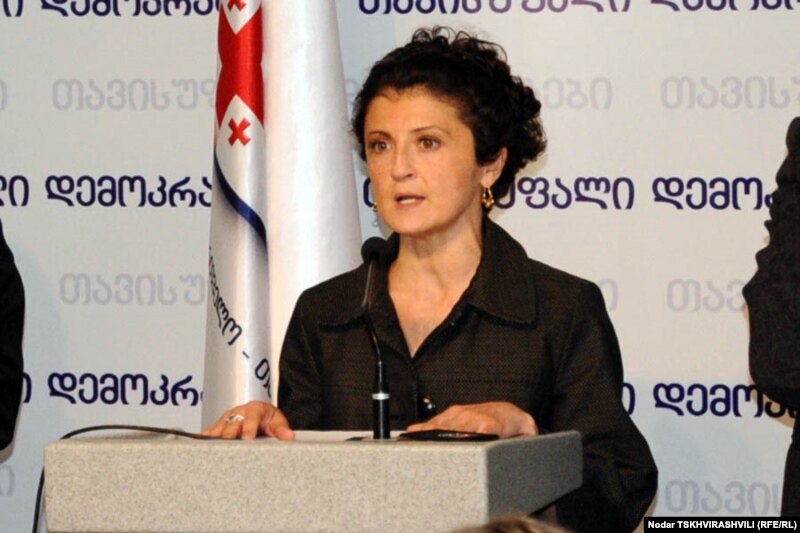
(rferl.org) Speaking to journalists one week after her nomination as justice minister in Bidzina Ivanishvili’s new cabinet, Tea Tsulukiani said the investigations into the deaths of banker Sandro Girgvliani and Prime Minister Zurab Zhvania will be reopened as numerous questions remain unanswered.

Georgia's incoming Justice Minister Tea Tsulukiani (file photo)

Girgvliani was found beaten and stabbed in the throat on the outskirts of Tbilisi in January 2006 after an altercation in a bar the previous night with senior Interior Ministry personnel and the wife of Interior Minister Vano Merabishvili. Zhvania was found dead with another man in a rented Tbilisi apartment early on February 3, 2005. Georgian officials, including Merabishvili, immediately said their deaths were caused by carbon monoxide poisoning from an Iranian-manufactured heater that had been incorrectly installed. But FBI experts who traveled to Tbilisi to assist the investigation failed to confirm that assumption.

Zhvania’s brother Giorgi subsequently adduced circumstantial evidence suggesting the two men died elsewhere and their bodies were then transported to the apartment where they were found. Giorgi Zhvania has now openly accused Merabishvili and two other former senior officials of staging, at the behest of President Mikhail Saakashvili, the scene at the apartment intended to create the impression that the two men were the accidental victims of asphyxiation. Zhvania stressed, however, that he is "not saying that it was these persons who killed my brother."

The apartment where the bodies of Zhvania and Kvemo Kartli Deputy Governor Raul Usupov were discovered had been rented several months previously by Misha Dzadzamia, one of Zhvania’s bodyguards, for clandestine assignations with his mistress, according to UPI on November 28, 2005. Zhvania had requested the temporary use of it "for a secret meeting." When Zhvania failed to make regular contact with his bodyguards, Dzadzamia broke a window to enable another bodyguard to enter the apartment. That man found Zurab Zhvania and Yusupov dead and "a terrible smell...like something was burning."

Merabishvili announced within hours that the two men had died of carbon monoxide poisoning, but carbon monoxide has no odor. Moreover, the main gas supply to the entire street had been cut hours before the bodies were discovered because residents had reported a suspected gas leak. FBI experts invited to Tbilisi by the Georgian authorities failed to confirm that the heater could have produced lethal quantities of carbon monoxide, according to an IWPR article by investigative journalist Vakhtang Komakhidze published a year after Zhvania’s death.

In that article, Komakhidze also listed Giorgi Zhvania’s doubts that his brother died in the apartment where his body was found. Giorgi Zhvania had earlier pointed out repeatedly that neither his brother’s fingerprints nor those of Yusupov were found anywhere in that apartment. He said Zurab never smoked a cigarette to the end and always twisted it when stubbing it out, but only one of the several dozen cigarette butts found in the apartment had been extinguished that way. Giorgi Zhvania also noted that the food laid out on the table (together with a bottle of cognac) included sausage, which his brother did not eat, according to www.rustavi2.com on April 4, 2005.

Komakhidze later made a TV documentary questioning the official version of the circumstances of Zhvania’s death that was shown in October 2007 on Russia’s REN TV channel.

In the September 2007 TV interview in which he accused Saakashvili of condoning corruption and the murder of political opponents, former Defense Minister Irakli Okruashvili also said he knows that Zhvania did not die at the location where he was found. Zurab Noghaideli, who succeeded Zhvania as premier but fell out with Saakashvili in 2008, has also hinted that he knows incriminating details about Zhvania’s death, but he has not revealed them.

In his interview with Maestro TV, Giorgi Zhvania named three former top officials who he claims engineered the transport of the bodies of his brother and Yusupov to the apartment where they were found. The three are Merabishvii; former Deputy Prime Minister Giorgi Baramidze, now a deputy parliament speaker representing Saakashvili’s United National Movement (EEM); and former Prosecutor General Zurab Adeishvili, who according to Tsulukiani left Georgia after the EEM’s defeat in the October 1 parliamentary election. 

more here: Georgia Justice Hinges On Who Is the Leader

Read more: in The Moscow Times
themoscowtimes.com

Wednesday, July 11, 2012

CONTEST: Radio and Video Reporting on Women’s Issues

The Institute for War and Peace Reporting (IWPR) is launching a radio and video reporting contest for stories related to women's issues in Armenia.

The aim of the contest is to promote active media coverage of women's issues in Armenia, in order to encourage democratic accountability and sensitive and informed reporting on key concerns facing women.

Eligibility:

Radio, TV and online media journalists as well as freelance reporters are eligible to submit audio and video pieces for the contest.

The materials submitted must have been broadcast between January 1 and August 31, 2012, and cover issues relating to health, unemployment, education, engagement of women in governance, and other social and economic topics of concern to women living in remote areas of Armenia.

Radio and video pieces should be no more than four minutes in length.

Submissions will be judged according to the criteria below:

- Balance and fairness.
- Thoroughness of reporting: new information, factual detail, illustrative examples, diversity of sources.
- Reporting techniques: engaging the audience, emotional impact, structure, creativity and style.

The deadline for submission of materials is 5 pm on August 31, 2012.

The panel of judges will award certificates and cash prizes, as follows:

First prize (radio): 85,000 AMD

Second place (radio): 55,000 AMD

Third place (radio): 45,000 AMD


First prize (video): 85,000 AMD

Second place (video): 55,000 AMD

Third place (video): 45,000 AMD

IWPR Armenia’s partners will award additional prizes for the best radio/video reports covering specific thematic subjects:

www.womennet.am will award a special prize for the best radio or video report covering women’s engagement in politics.

The Women’s Resource Centre will award a special prize for the best radio/video report covering public involvement or civil initiatives by young women and girls in community action, education or other areas of civic activism.

UNFPA, United Nations Population Fund Armenia Country Office will award a special prize for the best report covering access of young women and adolescent girls to reproductive health services.

IWPR reserves the right to republish winners’ reports on www.iwpr.net and other resources. Republished materials may be edited to meet IWPR’s editorial standards.

ABOUT IWPR

IWPR strengthens local media at the frontlines of conflict and change, working in two dozen countries and territories around the world. This includes establishing independent local media; training local reporters, editors and producers; supporting extensive in-depth reporting on human rights, good governance and related issues; disseminating professional reporting in developing countries and internationally; and strengthening communications capacity of local human rights, international justice and women’s organisations.

In Armenia, IWPR raises public awareness and helps build significant dialogues by strengthening local media skills and capacities.

Wednesday, February 23, 2011

ARTICLE: Azeri Theatre Struggles to Survive in Georgia (iwpr.net)


Theatre director Gocha Kapanadze. (Photo: Vafa Zeynalova)

Minority-language theatre desperately short of funding.
By
Vafa Zeynalova - Caucasus source: iwpr.net
CRS Issue 577,
4 Feb 11

Tbilisi’s Azerbaijani-language theatre, re-opened just eight years ago after being shut down by Stalin, is close to shutting its doors again because it has no money to carry out restorations.

The theatre building urgently needs refurbishment, and performances currently have to take place elsewhere.


“Things aren’t too comfortable, so we’re being forced to rent space in other theatres. That’s unfortunate both for the troupe and for members of the audience, who are obliged to find out… which stage the Azeri National Theatre will be appearing on,” theatre director Gocha Kapanadze said.


Kapanadze said the cost of complete repairs to the main stage were estimated at 500,000 laris, around 280,000 US dollars, three years ago, and its condition had deteriorated since then. Repairing the rest of the building would be even more expensive. Georgian government funding of 130,000 laris a year was insufficient to cover these costs, he said.


The theatre has also asked the government of neighbouring Azerbaijan for help, which came in the form of a computer and some musical instruments. It has also approached private companies, but has not secured enough funding to continue.


During the many years the theatre was closed, much of the building was taken over and used as housing. Although President Mikhail Saakashvili has decreed that the building belongs to the theatre company, it will still have to compensate the families living there if it wants them to move out.
The theatre is also short of Azeri-speaking actors, especially for female roles.


“It’s only help from our colleagues and a little assistance from the state that keep us on our feet and allow us to keep on staging performances,” Kapanadze said. “But it isn’t enough. We never know in advance where we will be performing a play, or whether we’ll even have anywhere to do it.”

The theatre was founded in 1909 with a first performance in a caravanserai owned by an ethnic Azeri businessman called Haji-Hashim Mardanov. Under Soviet rule, it won the status of “state theatre” in 1922, only to be closed down by the Stalinist authorities in 1937. It only re-opened after President Saakashvili came to power in 2003.


Namig Hajiev, an actor and director who has staged two performances at the theatre, is all too aware of the challenges facing it.


“The situation is catastrophic – our actors have to come from Gardabani,” he said, referring to a town in the Kvemo Kartli region, where most of Georgia’s Azerbaijanis minority. “It costs four lari to travel here and back every day, and their wages are often not enough to pay for even that.”


The handful of professional actors earn 320 laris a month, the equivalent of 180 dollars. Hajiev has to do a second job as a magazine designer to earn enough to get by. Plays are only staged two or three times every couple of months, so he has plenty of spare time.


“Sometimes we get help from the [Georgian] culture ministry, and sometimes from the Azerbaijan Embassy, but it’s infrequent,” Hajiev said. “We have to cover all the costs ourselves. Renting space in another theatre costs between 500 and 10,000 laris a time.


“We tell ourselves we must work to save the theatre and its traditions. We want to restore the spirit of Azeri theatre, but it’s very hard doing it on such low salaries and without no working conditions, no theatre space of our own and rehearsals in unheated premises.”


When IWPR approached the Azerbaijani embassy in Tbilisi, representatives said all questions about the theatre should be referred to the Georgian authorities.


The Georgian culture ministry did not indicate that further assistance was likely, and Kapanadze said the situation was now desperate.


“You can compare our theatre with a child who’s just learning to walk,” he said. “If you don’t help him, he’ll stay where he is. Above all, we need a well-built auditorium.”

Vafa Zeynalova is a freelance journalist.

Thursday, January 27, 2011

REPORT: Old Wine, New Bottles in Armenia (iwpr.net)

Cave in Armenia containing the world’s oldest known winery. (Photo: Nazik Armenakyan)

Discovery of ancient wine-press could help raise profile of Armenian wines abroad.
By
Naira Melkumyan - Caucasus
CRS Issue 575,
21 Jan 11

Quelle: IWPR

Boosted by archaeological evidence of the world’s oldest known wine production, Armenians are optimistic about the chances of reviving this ancient industry.

Earlier this month, an archeological dig in a cave in southeast Armenia unearthed a 6,000-year-old basin thought to have served as a wine press, as well as the remains of grapes, seeds and vines. Remarkably, these belong to the Areni strain of grapes still grown and turned into wine in Armenia.
Ninety per cent of grape production goes towards the famous Armenian brandy, but deputy agriculture ministry Samvel Avetisyan says wine production is picking up, with 2010 data showing nearly a 20 per cent rise on the previous year.

Total wine production last year was just over four million litres, a fraction of the 15 million litres the government is hoping to achieve by 2020. Even that figure is only half of peak production in the Soviet period.

“We can recreate our wine culture, because our wine is good quality, and we have lots of sun and a good climate for raising vines,” Vazgen Safaryan, chairman of the Union of National Producers, told IWPR.

Aside from the commercial producers, Armenians have a long tradition of turning out home-made wine.

“My grandfathers grew grapes and made wine, and I’m just continuing the business,” Hrayr Asatryan, a resident of the village of Aghavnadzor in the southern Yegheknadzor region. “I follow the old recipe, trying to add some new elements, and I reckon I end up with good homemade wine.”
Asatryan still uses the old family wine-press to squeeze the juice from the grapes, and lets the wine mature in an earthenware amphora.

Nine out of ten households in his village make wine, like 40,000 others across Armenia.
Industry experts say Armenia’s climatic conditions are suited to viticulture. The catch is that Armenians do not drink much wine, preferring stronger stuff like vodka. Average per capita consumption of wine is one litre a year, much lower than in comparable European states.
Avag Harutyunyan, chairman of Armenia’s Union of Wine-Makers, added another note of caution, saying local wines had not attained the quality needed to break into the high end of the international market.

“Armenia doesn’t have the… high technology needed to produce expensive wines, [although] we’re well represented in the mid-range niche priced between five and ten euros,” he said.
Most wine exports currently go to Russia, with a smaller amount going to the United States, which has a large Armenian diaspora.

Harutyunyan said this was where the archaeological find could come in handy.
“To be well represented on the world market, we need a story to sell,” he said. “A historical narrative about the oldest wine tradition could form the basis of a state programme to establish a national brand. But the state isn’t doing anything about it.”

Avetisyan responded by saying that his ministry had been working on marketing for years.
“The ministry has drawn up a policy to find organisations that will assist producers, and this is continuing as part of the Centre for the Agribusiness and Rural Development Programme,” he said. “There’s no area where we aren’t prepared to help. However, wine production is private-sector business, and we can’t control everything.”

Industry experts say the country’s wine needs to develop the same reputation abroad as Armenian brandy, which is governed by legal standards defining its quality and source.

Eleven brandy producers agreed last year to form a manufacturer’s association to keep quality high. Aram Minasyan, a former wine producer, said wine companies needed to do the same.
“This would help protect Armenian wine as a brand that wouldn’t be held by any one company but would instead be the international brand of an Armenian product,” he said.

Naira Melkumyan is a freelance journalist in Armenia.

Thursday, December 30, 2010

REPORT: Letter From Tbilisi. A New Georgian Gamble in the Caucasus? By Oliver Bullough (foreignaffairs.com)

By Oliver Bullough

Summary:
With a new visa-free travel regime and other overtures of "soft power," Georgia is attempting to win the favor of the citizens of the Russian North Caucasus. Is Moscow right to fear Tbilisi's new plan?
OLIVER BULLOUGH is Caucasus Editor for the Institute of War and Peace Reporting and the author of
Let Our Fame Be Great.

The Ossetians, long Russia's closest allies in the Caucasus, have plenty of reasons to dislike Georgia and its president, Mikheil Saakashvili. They are one of the few groups living on both the Russian and Georgian sides of the Caucasus Mountains, and they have fought two wars against Georgia since the collapse of the Soviet Union, the second of which ended with Russian troops pouring into Georgia to defend them in 2008.
In late November, Alan, a stocky Ossetian man, was waiting to cross back to his home in Russia at the Georgian customs post at Upper Lars, a red-roofed complex overhung by cliffs crowned by a medieval fortress. He was no longer among those Ossetians who detest Saakashvili -- though he could still not quite bring himself to utter the Georgian president's name. "Say thanks to," he said, pausing and flicking his head southward toward Tbilisi, "him."
Alan had not been to Georgia since the border was closed in 2006 and was grateful to Saakashvili for giving him the chance to see his brother who lives there. He was a beneficiary of a new Georgian policy, announced in October, granting visa-free travel to residents of Russia's half of the Caucasus Mountains. (Previously, Russian citizens in the North Caucasus had to travel to Moscow, hundreds of miles in the wrong direction, to apply for a visa and fly to Georgia; now they are free to simply drive the few hours to Georgia whenever they want.) Georgia's surprising and unilateral step has left Moscow flapping for a response.
Since the collapse of the Soviet Union, Russia has taken great offense at what it sees as Georgia's defection from its orbit. Georgia, for example, has pushed to join both NATO and the European Union. In Moscow's view, the Georgians and the Russians had been brothers since the eighteenth century, when Russia agreed to protect its fellow Christians in Tbilisi from invading Muslims. Georgians, however, see it differently, saying the Russians occupied their country in 1801 and interrupted their attempt to build a modern European state.
This historical tension reached its peak in 2008, when Russia repelled a Georgian attempt to regain control of South Ossetia, a self-declared independent state carved out of Soviet-era Georgia. Seizing the moment, Moscow then recognized the independence of South Ossetia and Abkhazia, another region Georgia regards as its territory, and declared that it would guarantee their security.
Georgia was left feeling beaten and betrayed. It had counted too heavily on its friendship with the United States and seemed to believe, foolishly, that it already enjoyed the rights of NATO membership. Stung by being left to fight Russia alone, its military's puniness relative to its huge northern neighbor, and the loss of 20 percent of its territory in the war, Georgia decided to set out a new course.
In short, it turned away from its distant and unreliable partners in the West and instead began to focus on its regional relationships and influence. "Before the August 2008 war, we were aiming for NATO and the European Union, neglecting the region," said Ghia Nodia, the director of a new school for Caucasus studies at Tbilisi's Ilia State University. "Now, our foreign policy is more region-centric. We are trying to develop relations with Iran, Armenia, Azerbaijan."
Indeed, Georgia now buys gas from Iran, is a transit point for oil from Azerbaijan, and has a free-trade agreement with Turkey. These relationships existed before 2008 but have received much more time and effort since the war, as Georgia is pushing to turn itself into a business-friendly regional hub. Taken together, these moves represent a less ambitious and more achievable post-2008 foreign policy -- but they shrink beside the giant gamble Georgia is now taking with Russia.
Saakashvili outlined his rhetorical vision of a "united Caucasus" at the United Nations in September. "We might belong to different states and live on different side of the mountains," he said, "but in terms of human and cultural space, there is no North and South Caucasus; there is one Caucasus, that belongs to Europe and will one day join the European family of free nations, following the Georgian path."
Although this speech may sound like a platitude, to Russia it came off as a threat. If Saakashvili succeeds and the peoples of the North Caucasus do indeed follow his "Georgian path" -- which, for Saakashvili, means democratization, open markets, free media, and friendship with the West -- then Russia's influence would be extinguished along its southern border.
Moscow was inevitably furious, calling the surprise lifting of visas for some of its citizens a "provocation." The Russian Foreign Ministry stated that any "attempt to divide the population of Russia into different categories contradicts the norms of civilized interstate relations."
The Russian government had spotted the likely endgame of Georgia's plan. If the residents of the North Caucasus are divided from other Russian citizens and start looking to Tbilisi for markets, money, power, and prestige, then Moscow will have to work harder to secure their loyalty. The Kremlin already funds most of the budgets of the North Caucasus republics and gives regional politicians unprecedented freedom of action; anything more would be expensive and embarrassing. Above all, Moscow's attention and resources would be forced away from Abkhazia and South Ossetia, where it maintains military garrisons, thus taking some of the pressure off Georgia.
Visa-free travel to Georgia has opened up new trading markets that Russian citizens to the north of the mountains previously could not reach. In Tbilisi, Russians are coming over to buy cars at the relatively lower Georgian prices and then selling them back home. Meanwhile, the Georgian government is launching PIK, a new Russian-language satellite channel, to give Russians access to the Georgian press, much of which is anti-Moscow in its rhetoric.
Georgia's gambit, however, is not universally loved in Tbilisi. Some Georgian opposition politicians worry that Russia will use the change in visa policy as an excuse to smuggle Russian agents into Georgia and otherwise undermine the Georgian state. Besides, some argue, Georgia cannot craft a new Caucasus policy on its own. "A border has two sides, and the Russians will only allow the people they want to pass," said Sozar Subari, formerly a human rights ombudsman in Georgia and now an opposition politician.
Meanwhile, other Georgian political figures are afraid that Tbilisi is inviting the violence that plagues the North Caucasus to spread into Georgia. Over the last decade, suicide bombings, shoot-outs, and kidnappings have spread out of Chechnya and into the other republics of the North Caucasus, especially Dagestan, Ingushetia, and Kabardino-Balkaria.
Any decline of Russian influence on its side of the mountains could spur interethnic conflict -- a possibility perhaps even more worrying for outside powers. Ethnic distrust burst into violence between Ingush and Ossetians in the 1990s, and tension is growing between Turkic Karachai-Balkars and Circassians. Both the Karachai-Balkars and the Circassians -- who live in the Russian regions of Kabardino-Balkaria, Adygea, and Karachaevo-Cherkessia, as well as in diaspora communities throughout the Middle East -- suffered deportation at Russian hands. These two deportations, the Circassians in 1864 and the mountain Turks in 1943-44, left behind accusations of land theft and complicity in genocide. If Georgia's policy opens the fissures of ethnic conflict in Russian territory, the results could prove uncontrollable.
But these counter-arguments have little sway in Tbilisi, where the ruling elite has little but contempt for Russia. At the moment, the Georgian parliament is discussing potential resolutions that would officially recognize the Russian deportations of the Circassians and Chechens in the nineteenth and twentieth centuries as genocide, which would simultaneously enrage Russia and encourage the more hard-line nationalists within those groups.
So far, Washington appears to be dangerously silent on the provocative, and potentially destabilizing, moves of its ally. During the buildup to the 2008 war, Georgia's friends in the West neglected their duty to calm Saakashvili's government -- and they may be doing the same thing today.
Last month, I attended a conference on the Caucasus in Tbilisi co-hosted by the Jamestown Foundation, a U.S. policy center that focuses in part on the former Soviet Union and has former George W. Bush administration officials on its board. U.S. and other Western academics at the conference fed Georgia's anti-Russian sentiment. Many openly compared the North Caucasus to the national republics of the Soviet Union, as if independence is just round the corner.
I spoke with Glen Howard, the president of Jamestown, who worked in the American Committee for Peace in Chechnya with Zbigniew Brzezinski. "My view is: learn as much as you can about the nationalities," he told me, referring to the disparate ethnic groups in the Caucasus, which one day, he seemed to be suggesting, may have independent homelands. After all, he said, similar things have happened. "I remember when Azerbaijan got independence, the State Department opened a two-person embassy and was looking for experts on Baku."
After the conference finished, I drove toward the Russian border. It was clear that maintenance crews had not managed to keep up with the Georgian government's strategic planning: the road was a potholed wreck. There was only a small trickle of Russian cars braving the ruts to make the journey to Tbilisi, but if the Georgians repair the road, that could become a steady flow.
It is just a few hours' drive for Ossetians, Chechens, Circassians, and others in the Russian North Caucasus to reach Tbilisi. The Georgians genuinely have the possibility of creating a capital for the Caucasus. It remains to be seen, however, if they have the responsibility to wield the power that such a role would give them.

Wednesday, November 03, 2010

REPORT: Minority Language Controversy in Georgia (iwpr.ne)

Critics of European language charter warn that granting legal rights to linguistic minorities could weaken Georgian statehood.

By Natia Kuprashvili - Caucasus
CRS Issue 563,
22 Oct 10

The Georgian government regularly says it wants to live up to European standards, but the question of granting rights to minority language groups remains deeply divisive.

Back in 1999, the then government gave itself a year to decide whether to ratify the European Charter for Regional or Minority Languages. More than a decade on, no decision has been taken either way.

The debate in Georgia is complicated by the question of Abkhazia and South Ossetia, two separatist regions with their own languages which Moscow has recognised as independent states.

In Georgia, there are fears that awarding a formal status to languages and dialects might promote other separatist tendencies in this small country, perhaps spurred on by Russia.

Experts who took part in a September 13-14 conference in Tbilisi expressed concern that ratifying the European language charter could weaken the state.

more:
iwpr.net

Thursday, May 06, 2010

JOURNALISM: Seda Muradyan Is A Great Armenian Journalist With Two Blogs (documentarybysedamuradyan.weebly.com)

Seda Muradyan is a journalist, journalism educator based in Yerevan, Armenia. She works for the Institute for War and Peace Reporting as the Armenia Branch Country Director. She has completed her first documentary "From Home To Home" (co-director Arsen Gasparyan, produced by Documentary Studio "Hayk") in 2008. She has worked at the Caucasus Institute from 2002-2005 and was on the team of "A1+" TV company from 1997-2002. She is selected for The John S. Knight professional journalism fellowship at Stanford and she will spend about a year at Stanford University, CA, USA from August 2010.

Blogs:
documentarybysedamuradyan.weebly.com
sedocnews.blogspot.com

"In 2008 I completed my first documentary "From Home To Home". "From Home to Home" tells the story of Azerbaijanis and Armenians caught up in the Nagorno Karabakh conflict that started in 1989. The inhabitants of two villages in Armenia and Azerbaijan decided to exchange their villages and countries, before the actual war began, promising each other to look after the village graves. The promise is kept until now. Villagers sometimes exchange photo or video materials, to prove that the cemeteries are there, untouched and not destroyed. You can read interview with me at The Armenian Reporter newspaper in English or at the France Armenie newspaper in French."
(Seda Muradyan)


Monday, December 28, 2009

NEWS: 26 Nov 09 | Caucasus Reporting Service 521 until 24 Dec 09 | Caucasus Reporting Service 525 (iwpr.net)

24 Dec 09 Caucasus Reporting Service 525
Armenia: Nuclear Plant Controversy
Yerevan pushes ahead with new station in face of protests from ecologists. By Gayane Mkrtchyan in Yerevan (CRS No. 525, 24-Dec-09)
Georgian Conflict Exploitation Concerns
Some observers suspect the authorities are taking advantage of people caught up in Georgia’s wars. By Natia Kuprashvili in Tbilisi and Davit Gaimsonia in Gori (CRS No. 525, 24-Dec-09)

18 Dec 09 Caucasus Reporting Service 524
Armenia: Media Reach Out to Turkey
But commentators say they should not be too quick to let down their guard. By David Muradian and Sara Khojoian in Yerevan (CRS No. 524, 18-Dec-09)
Azeris Turn to Satellite TV in Propaganda Battle
Armenians wooed with TV news broadcasts from the enemy. By Samira Hasanli in Baku (CRS No. 524, 18-Dec-09)
Chechens Mark Ten Years of Exile
A decade after they fled their homeland, Chechens in Georgia still fear it is unsafe to go back. By Lizaveta Zhahanina in Tbilisi (CRS No. 524, 18-Dec-09)
Abkhazia Gets Recognition Boost After Poll
Bagapsh says his re-election showed Abkhaz desire to be independent. By Anaid Gogorian in Sukhum (CRS No. 524, 18-Dec-09)


11 Dec 09 Caucasus Reporting Service 523
Greens Protest Over Georgian Airport Plans
Environmentalists oppose controversial hub close to Black Sea nature reserve. By Lasha Zarginava in Poti (CRS No. 523, 09-Dec-09)

Gyumri Residents Recall Catastrophic Tremor
Destructive force of 1988 earthquake was so swift that people thought the Armenian city had been bombed. By Ashley Killough in Gyumri (CRS No. 523, 09-Dec-09)

4 Dec 09 Caucasus Reporting Service 522
Tbilisi Criticised Over Repatriation Requests
Tens of thousands of Meskhetians apply to come home, but Georgian officials accused of not doing enough to help them. By Fati Mamiashvili in Tbilisi (CRS No. 522, 04-Dec-09)

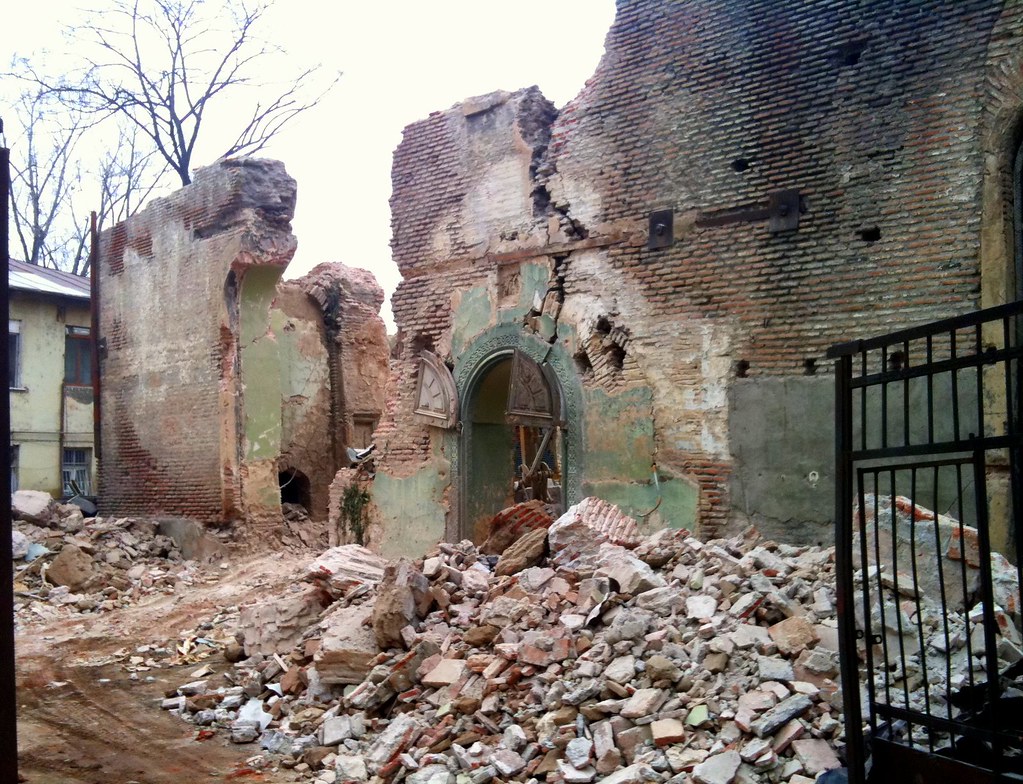
Georgia: Collapse of Armenian Church Provokes Row
Armenian minority say incident illustrates their limited rights in the country. By Lela Iremashvili in Tbilisi and Hasmik Hambardzumyan in Yerevan (CRS No. 522, 04-Dec-09)

Azeris Face Spending Crunch
Economic experts warn budget cut resulting from falling oil revenues could harm most vulnerable. By Kenan Guluzade in Baku (CRS No. 522, 03-Dec-09)

Project Highlights
Caucasus: Oct/Nov ‘09
IWPR Karabakh workshop participants find out how web journalism can enhance work of journalists and activists. By IWPR staff (4-Dec-09)


Reporting Impact
Caucasus: Oct/Nov ‘09
IWPR discussion events prompt Tbilisi officials to cooperate with Georgian NGOs on refugee issues. By IWPR staff (4-Dec-09)


26 Nov 09 Caucasus Reporting Service 521
Azerbaijan: Ethnic Azeri Immigrants in Rights Struggle
They say the country’s immigration law makes it hard for them to gain permanent residence permits. By Samira Ahmedbeyli in Baku (CRS No. 521, 24-Nov-09)
Armenia Surprised by Anti-Russian Agitation
Emails and text messages seek to spark campaign over military bases. By Naira Melkumyan in Yerevan (CRS No. 521, 24-Nov-09)
Abkhazia Sees Tourism Boom
Russians flock to breakaway territory despite accommodation shortage and poor service. By Anaid Gogorian in Sukhum (CRS No. 521, 26-Nov-09)

Sunday, December 20, 2009

RELIGION: Destroyed Armenian Church, Tbilisi


more here: Georgia: Collapse of Armenian Church Provokes Row >>>

Saturday, November 21, 2009

NEWS: 20 Nov 09 | Caucasus Reporting Service 520 (iwpr.net)

Georgia: Russian Border Opening Plan Under Scrutiny
Mixed motives seen in proposed move to end three-year frontier closure. By Dimitri Avaliani in Tbilisi and Samvel Avagian in Yerevan (CRS No. 520, 20-Nov-09)
Azeri Fishermen Lament Vanished Shrimps
Environmentalists say crustaceans victims of pollution but demand also cited. By Idrak Abbasov on Pirallahi (CRS No. 520, 20-Nov-09)

Sunday, November 15, 2009

NEWS: 6 Nov 09 | Caucasus Reporting Service 518 until 13 Nov 09 | Caucasus Reporting Service 519 (iwpr.net)

Spoof of Georgian Patriarch Sparks Row
Orthodox leader at the centre of argument over whether the church is too involved in public life. By Ana Kandelaki in Tbilisi (CRS No. 518, 06-Nov-09)
Early Marriages Worry Azerbaijan Officials
Unscrupulous mullahs accused of marrying young girls whose health and education then suffer. By Diana Isayeva in Baku (CRS No. 518, 06-Nov-09)
Karabakh Children’s Home Reveals Strains of Life
Once an orphanage, the institution has evolved to care for the child victims of a broken society. By Karine Ohanian in Stepanakert (CRS No. 518, 06-Nov-09)


Azerbaijan Wrestles With Nationality Poser
Young Armenian, born in Azerbaijan, faces bureaucratic struggle to gain citizenship rights. By Aytan Farhadova in Baku and Mammad-Sadiq Fataliyev in Sheki (CRS No. 519, 13-Nov-09)
Children Haunted by Georgia-Russia War
Volunteers try to help bereaved youngsters still traumatised by the conflict. By Natia Kuprashvili in Tbilisi (CRS No. 519, 13-Nov-09)
IWPR Probes Shushi Prison Concerns
Prison authorities allow reporter in to check conditions following claims inmates are mistreated. By Lusine Musaelyan in Shushi (CRS No. 519, 13-Nov-09)

Thursday, November 05, 2009

NEWS: 28 Oct 09 | Caucasus Reporting Service 517 until 16 Oct 09 | Caucasus Reporting Service 515 (iwpr.net)

Special Report: Opposition in south Caucasus
Opposition Battles Bias, Indifference to Change
Governments of south Caucasus mostly left with a clear run despite allegations of repression. By IWPR staff in south Caucasus (CRS No. 517, 30-Oct-09)
Georgian Street Protesters Ponder Next Move
They considers new tactics after having little to show for months of demos. By Tea Topuria in Tbilisi (CRS No. 517, 30-Oct-09)
Limited Scope for Different View in Abkhazia
Statelet’s opposition struggles with lack of ideas, resources. By Anaid Gogoryan in Sukhum (CRS No. 517, 30-Oct-09)
Bickering Undermines Azeri Opposition Credibility
They have an uphill task but disunity gives the government an easy ride. By Shahin Rzayev and Samira Ahmedbeyli in Baku (CRS No. 517, 30-Oct-09)
Fear of Police Curbs Armenian Dissent
Opposition say they are subjected to police persecution and their business supporters are intimidated. By Gegham Vardanian in Yerevan (CRS No. 517, 29-Oct-09)
Karabakh Government Faces Little Competition
Tiny Karabakh’s opposition moribund, lacks issues to fight on.By Anahit Danelian in Stepanakert (CRS No. 517, 30-Oct-09)


Project Highlights
Caucasus: Sept ‘09
IWPR runs practical war reporting exercise with journalists from Armenia, Azerbaijan and Georgia. By IWPR staff (28-Oct-09)


Reporting Impact
Caucasus: Sept ‘09
IWPR events help activist groups in Armenia and Georgia communicate refugee concerns to government officials. By IWPR staff (28-Oct-09)


Photo Essay
Learning About Risk
Photographs by IWPR staff (04-Oct-09)


Ankara and Baku Put Up United Front
Turkey and Azerbaijan seek to soothe anger over Armenia deal. By Kenan Guluzade in Baku (CRS No. 516, 23-Oct-09)

Georgia Accused of Holding Political Prisoners
Activists cite cases where they claim members of opposition convicted in totally - or partially - fabricated trials. By Tea Topuria in Tbilisi (CRS No. 516, 23-Oct-09)


Armenia: Turkey Accord Rings Alarm Bells
Armenians do not share world’s joy over protocols, fear Ankara has a hidden agenda. By Naira Melkumian and Gayane Mkrtchian in Yerevan, and Karine Ohanian in Stepanakert (CRS No. 514, 16-Oct-09)
Turkey’s Caucasus Allies Ponder Armenia Deal
Azeris say Turkey’s border accord with Armenia is a betrayal of their alliance. By Kenan Guluzade in Baku (CRS No. 514, 15-Oct-09)
Zurich Ceremony Baffles Armenians
Live TV feed interrupted by Armenia v Spain football game, as last minute hitches delay signing of historic deal with Turkey. By Seda Muradyan in Yerevan (CRS No. 514, 16-Oct-09)
Grim Month for Azeri Journalists
Jailings and detentions raise fresh concerns over fairness of country’s defamation laws. By Idrak Abbasov in Baku (CRS No. 514, 16-Oct-09)


IWPR Comment
Why Turkey Should Confront its Past
By Seda Muradyan, IWPR’s Armenian country director (20-Oct-09)

Saturday, October 10, 2009

NEWS: 2 Oct 09 | Caucasus Reporting Service 513 until 9 Oct 09 | Caucasus Reporting Service 514 (iwpr.net)

Georgians Accuse Media of Pro-Government Bias
Press and broadcasters seen as subservient, misleading many about their safety. By Natia Kuprashvili in Tbilisi (CRS No. 513, 02-Oct-09)

Azeris Left in Legal Limbo
People abandoned as children struggle with bureaucracy to get official documents. By Ayten Farkhadova in Baku (CRS No. 513, 02-Oct-09)


Armenians Take Stock of Turkey Peace Deal
On eve of the historic agreement with Ankara, Armenians discuss its implications. By Hasmik Hambardzumian in Yerevan, Yeranuhi Soghoian in Gyumri and Naira Bulghadarian in Vanadzor (CRS No. 514, 09-Oct-09)
Mayoral Fight Unleashed in Tbilisi
Georgian politicians start local election campaign seven months early. By Anna Kandelaki in Tbilisi (CRS No. 514, 09-Oct-09)
Baku Metro Demo Gains Support
Youth protest could be sign of new opposition in Azerbaijan. By Seymur Kazimov (CRS No. 514, 09-Oct-09)
Karabakh Radio’s Peace Mission Falters
Azeris wary of Armenian station’s attempts to reach out to them. By Lusine Musayelian in Stepanakert and Shahin Rzayev in Baku (CRS No. 514, 09-Oct-09)

Wednesday, September 30, 2009

NEWS: 25 Sep 09 | Caucasus Reporting Service 512 (iwpr.net)

Armenians Lick Lips at Prospect of Turkish Trade
Economists predict huge boost for Armenian economy if ties between Yerevan and Ankara are normalised. By Hasmik Hambardzumian in Yerevan (CRS No. 512, 25-Sep-09)
Abkhaz Media Fear Free Speech Under Threat
Journalist’s conviction viewed as a warning to critics ahead of presidential elections. By Anaid Gogoryan in Sukhum (CRS No. 512, 25-Sep-09)

Tuesday, September 22, 2009

NEWS: 18 Sep 09 | Caucasus Reporting Service 511 (iwpr.net)

“Judo Diplomacy” Eases Karabakh Tensions
Bid to improve Turkish-Armenian ties started with a football match, so could Judo tournament do same for Armenia and Azerbaijan?
By Gegham Vardanian in Yerevan (CRS No. 511, 18-Sep-09)
Karabakh Villagers Yearn for Normal Life
For Azeris living close to frontline the war is an ever-present fact.
By Joshqun Eldaroglu in Alkhanli CRS No. 511, 18-Sep-09)
Georgians’ War Anger Vented at Stalin Monument
But reluctance to remove figure from town damaged in August war reflects nation’s ambivalence towards dictator.
By Natia Kuprashvili in Gori (CRS No. 511, 18-Sep-09)


Sunday, September 13, 2009

NEWS: 11 Sep 09 | Caucasus Reporting Service 510 (iwpr.net)

South Caucasus Frontier Squabble
New Georgian border splits Armenian villagers from their land. By Naira Melkumian, Yeranuhi Soghoian and Nana Mamagulishvili in Bavra (CRS No. 510, 11-Sep-09)
Crumbling Homes Add to Georgia's Woes
Tbilisi struggles to pay for repairs to country's Soviet-era housing. By Tamar Uchidze in Vale (CRS No. 510, 11-Sep-09)