სახელოვნებო დიალოგი საქართველოსა და გერმანიას შორის
Gruppenausstellungen im Juni 2017 im CCA- Center for Contermporary Art Tbilisi, Georgien und im September 2017 im Museum Goch, NRW.
16. Juni 2017, 20.00 Uhr
CCA - Center for Contemporary Art & Medea Museum of Medicine
uznadze street, 51 Dimitri Uznadze St, Tbilisi 0102, Georgien
cca.ge
georgian translation: www.tavidan.net/tavidan-ge
english translation: www.tavidan.net/tavidan-artistic-dialogue
Zum Jubiläum der 200-jährigen Freundschaft zwischen Georgien und Deutschland beteiligen sich das Museum Goch, das CCA - Center for Contemporary Art Tbilisi und die Kuratorin Maria Wildeis mit dem Frauenkulturbüro NRW e.V. im Sommer und Herbst 2017 an gemeinsamen Gruppenausstellungen in Georgien und NRW.
TAVIDAN ist der georgische Ausdruck für „von hier aus, bzw. vom Kopf aus“ und beschreibt den Ausgangspunkt einer Idee oder eines Weges. Die direktionale Bedeutung des Ausstellungstitels verweist einerseits auf den Austausch zwischen zwei sehr unterschiedlichen Kulturräumen: dem streng westeuropäisch geprägten Deutschland und Georgien, dem geografischen und kulturellen Knotenpunkt zwischen Asien, Europa und Russland. An beiden Orten arbeiten Künstler/innen gemeinsam am Kunstbegriff der Gegenwart und bedienen sich einer globalen und kulturenübergreifenden Bildsprache.
Die Ausstellung möchte die Auseinandersetzung mit künstlerischen Praktiken in der Gegenwartskunst anregen und dabei unterschiedliche Herangehensweisen beleuchten. Der Titel referiert auch auf Kunstwerke, die sich als zeitbasierte Prozesse und atmosphärische Kompositionen begreifen und nicht allein an ein Objekt gebunden wirken. Fragen innerhalb des künstlerischen Austauschs richten sich an die vielfältigen Ausdrucksweisen in der Gegenwartskunst, die in Form von Installationskunst oder Performance, aber auch in Objekten und deren Platzierung oder der Integration der Besucher in das Werk eine ästhetische Erfahrung erzeugen.
Die ausgewählten Künstler arbeiten in nahezu allen Bereichen der Bildenden Kunst, wie Malerei, Neue Medien, Installation, Film, Fotografie, raumbezogene Objektkunst und sind darüber hinaus auch in anderen Disziplinen zu Hause, wie Musik, Mode, Biofarming oder in der Bildung. Ihre Arbeitsweisen befinden sich vielfach an einer Schnittstelle zwischen Kunst und Gesellschaft, Architektur, Bildung oder Musik.
"Weder allein das rezipierende Subjekt noch das solitäre Kunstwerk in seinen Grenzen konstituieren die Realität der Kunst." (Ludger Schwarte: Notate für eine künftige Kunst, Berlin 2016, S. 11)
Künstler:
CAROLINE BAYER (Berlin, DE)
LARS BREUER (Köln, DE)
ANA CHADUNELI (Rustavi, GE)
TAMAR CHADUNELI (Rustavi, GE)
NINO CHUBINISHVILI (Tbilisi, Ge)
HÖRNER|ANTLFINGER (Köln, DE)
MAMUKA JAPHARIDZE (Tbilisi, Ge)
GVANTSA JISHKIRIANI (Rustavi, GE)
NIKA MACHAIDZE (Tbilisi, Ge)
MICHAEL POHL (Berlin, DE)
KAI RHEINECK (Düsseldorf, DE)
PATRICK RIEVE (Köln, DE)
PETER SCHLOSS (Köln, DE)
SCULPTRESS OF SOUND (JULIA BÜNNAGEL, PATRICIA KÖLLGES, TAMARA LORENZ) (Köln, DE)
NINO SEKHNIASHVILI (Tbilisi, Ge)
KOTE SULABERIDZE (Tbilisi, Ge)
GIO SUMBADZE (Tbilisi, Ge)
WATO TSERETELI (Tbilisi, Ge)
Während des Aufenthaltes in Georgien finden Workshops mit Kunststudent/innen aus Georgien und den deutschen Künstlern statt.
Ein begleitender Katalog dokumentiert den künstlerischen Austausch und wird anlässlich der Ausstellung im Museum Goch, im Herbst 2017 präsentiert.
TAVIDAN wird gefördert vom Ministerium für Familie, Kinder, Jugend, Kultur und Sport des Landes Nordrhein-Westfalen. Der Frauenkulturbüro NRW e.V. und das Museum Goch fördern seit 2013 den Künstlerinnenaustausch zwischen Deutschland, Georgien und Armenien und stehen so in einer persönlichen, freundschaftlichen Nähe zum Kaukasus.
www.tavidan.net
Kuratorin: Maria Wildeis
Assitenz: Leksi Sosela, Project Manager CCA
TAVIDAN: GE
Programm:
15. Juni, 7.30 p.m .: Gallery Nectar (Project Space): "Soul-tracks", butoh-dance by Wolfgang Schäfer
16. Juni 2017, 20.00 Uhr: Eröffnung TAVIDAN
21.00 Uhr: Performance Sculptress of Sound
Laufzeit: 17. Juni - 17. Juli 2017
Ausstellungsort: CCA - Center for Contemporary Art & Medea Museum of Medicine
uznadze street, 51 Dimitri Uznadze St, Tbilisi 0102, Georgien
cca.ge
TAVIDAN: DE
Eröffnung: 24. Sept. 2017
Laufzeit: 25.9. - 15.11.2017
Ausstellungsort: Museum Goch, NRW
Künstler:
KOTE SULABERIDZE (Tbilisi, Ge)
ANA CHADUNELI (Rustaveli, Ge)
CAROLINE BAYER (Berlin, De)
PATRICK RIEVE (Köln, De)
Akteure
Das Frauenkulturbüro NRW e.V. startete 2013 mit einem Internationalen Austauschprogramm. Zwei Künstlerinnen aus Nordrhein-Westfalen besuchen für zwei Monate die Länder Georgien und Armenien. Eine georgische und eine armenische Künstlerin kommen im Gegenzug für zwei Monate nach Nordrhein-Westfalen. Ziel des Stipendiums ist es, die Künstlerinnen auf internationaler Ebene zu fördern, ihr Netzwerk auszubauen und sie damit auf dem Kunstmarkt für weitere internationale Aktivitäten sichtbarer zu machen. Die Kooperationspartner sind das WELTKUNSTZIMMER in Düsseldorf und das Museum Goch.
Museum Goch: Mit seiner Sammlung spätgotischer Skulpturen des Niederrheins bis zur jungen Gegenwartskunst vereint das Museum 600 Jahre Kunstgeschichte. Seine spannungsreich inszenierte Sammlungsräume laden zu einem interessanten Dialog mit der Geschichte und Kunst ein.Wechselnde Ausstellungen insbesondere zur aktuellen Gegenwartskunst bereichern das Museum.
Maria Wildeis (*1984) studierte Kunstgeschichte, Philosophie und klassische Literaturwissenschaft in Köln und ist seit ihrem Magisterabschluss 2010 freiberufliche Kuratorin und Projektmanagerin in Köln und NRW. Seit 2015 leitet sie das Internationale Austauschprogramm für Bildende Künstlerinnen für das Frauenkulturbüro NRW e.V. und gründete im gleichen Jahr den Kunstraum Tiefgarage am Ebertplatz Köln, den sie seitdem leitet und kuratiert (www.tiefgarage.org). Andere Projekte, die sie verantwortlich leitete waren unter anderem: Heritage Heroes (eine Fotografieausstellung für die dt. UNESCO Kommission und das Auswärtige Amt 2015), 3. Kunstfestival Strom (Kunsthaus Rhenania 2013), Projektleitung Videonale.13 im Kunstmuseum Bonn (2011), Zeitzeugen, eine Ausstellung zum Anlass des Jubiläums des 1. Weltkrieges (2014) und TAVIDAN:Düsseldorf (im WELTKUNSTZIMMER Düsseldorf, 2014). www.mariawildeis.com
CCA – Center for Contemporary Art Tbilisi ist seit Oktober 2010 eine unabhängige gemeinnützige Einrichtung für Gegenwartskunst. Neben dem internationalen Ausstellungs- und Künstleraustauschprogramm fokussieren CCA ihre Arbeit besonders auf ihr eigenständiges Studienprogramm für georgische Kunststudent/innen.
Beide Ausstellungen werden vom Ministerium für Familie, Kinder, Jugend, Kultur und Sport des Landes Nordrhein-Westfalen gefördert.
www.tavidan.org
Showing posts with label Center of Contemporary Art Tbilisi – CCAT. Show all posts
Wednesday, June 14, 2017
KUNST: TAVIDAN – Georgien und Deutschland im künstlerischen Dialog im Juni 2017 (Georgien) - im September 2017 (Deutschland)
Tuesday, April 08, 2014
ART: GeoAIR Bulletin #1, 2014 from Tbilisi/Georgia (geoair.blogspot.de)
RESIDENCY: January-March 2014
January-February
Sezgin Boynik and Minna Henriksson (Finland) stayed for two months in Georgia. Activities implemented by them in the framework of GeoAIR residency included: Presentation by Minna Henriksson - Art and Power @ CCA-Tbilisi 14.01.2014; Public Lecture “Nationalism and Contemporary Art” - 23.01.2014 @ Ilia State University. SEE VIDEO; Presentation by Sezgin Boynik - "History and Forms of Situationist International" @ CCA-Tbilisi 29.01.2014
Additionally, presentation of works by Sezgin Boynik and Minna Henriksson created during their stay at GeoAIR residency took place at Nectar Gallery 26.02.2014. Minna Henriksson presented the newspaper Golden Dragon and Silver Star - New Georgia: Change of Symbols after the fall of the Soviet Union as
a result of an art workshop around the topics of power, politics and
symbols and in a collaboration with CCA-Tbilisi. Sezgin Boynik presented
his publication ‘Still Stealing Steel: Historical Materialistic Study of Zaum’. Still Stealing Steel
is ideological diary which attempts to theorize zaum as an
indispensable political language, and experimenting on ways
how to conceptualize the use-value of such expressions. >>>
The residency stay at GeoAIR was supported by the Arts Promotion Centre Finland.
March
Oleksandr Burlaka's (Ukraine) practice
as an architect questions and studies the role, ideology and
responsibility of architects today. Oleksandr has been contributing to Soviet Modernism 1955-1991: Unknown History published by Vienna Centre of Architecture, where he was responsible for research and collecting materials on that topic. During his residency together with GeoAIR,
Oleksandr worked on the mapping of Soviet Modernist buildings in
Tbilisi. As a result, online map with visual material will be published.
>>>
Also, Oleksanrd Burlaka participated in public discussion organised by GeoAIR and Docomomo Georgia with the topic: "Laguna Vere" and forgotten architecture "Monuments" of Soviet Modernism."
Residency was part of program organized in the frame of the EU project SPACES. The SPACES project is financed by the European Union through the Eastern Partnership Culture Programme.
RESIDENCY: April-June 2014 (upcoming)
April
Levente Polyák - KÉK (Hungary), Šárka Svobodová and Jaroslav Sedlak - 4AM (Czech Republic) in collaboration with GeoAIR will work on a project VCEE (Vacant Central and Eastern Europe). For this we organize 10-Day workshops in Tbilisi. The Vacant Central and Eastern Europe project follows the project VAC (Vacant Central Europe) initiated in 2013 by KÉK -Hungarian Contemporary Architecture Centre.
It aims to address the problem of vacancy by mapping empty properties,
by researching planning instruments, architectural tools and by
exchanging experiences and strategies of intervention that make the
temporary use of empty properties and their conversion for another use
possible. >>>
Residency and workshop are part of program organized in the frame of the EU project SPACES. The SPACES project is financed by the European Union through the Eastern Partnership Culture Programme.
Geraldine Paoli (Morocco, France) - artist, curator, founder and director of PALIMPSESTE.
During her residency, together with GeoAIR
Geraldine Paoli will work on the conceptual framework and possible
participants from Georgian side for an upcoming project for 2015 "Resonants Confluence".
Residency is supported by French Institute of Georgia.
May-June
Though the collaboration with AIRLAB at Tirana Institute for Contemporary Art (TICA), Albanian artist Donika Cina will have a residency stay at GeoAIR. She was invited specially to participate in the project "Discover Eliava Market". The
project sets the goal to demarginalize micro space of the street market
and draw attention of the society to the issue of reduction of negative
impact on environment, as well as effective use of resources (among
them energy resources) through cultural intervention, establishment of a
dialogue between different social and professional groups of the
society and support of the experience sharing. she will work on and
develop the project together with Georgian artist.
The project "Discover Eliava Market" is implemented in the frame of EC funded (cultural program) project Green Art Lab Alliance (GALA).
TICA AIRLAB is supported by Prince Claus Fund, Network Partnership Program.
RESIDENCY EXCHANGES
AIRLAB at Tirana Institute for Contemporary Art (TICA) will host Georgian artist, Keto Logua within their yearly theme: Storytelling as artistic practice.
TICA AIRLAB is supported by Prince Claus Fund, Network Partnership Program.
GeoAIR
collaborated with TICA AIRLAB in selection process of the artist from
Georgia. In exchange, Albanian artist is participating in GeoAIR residency program.
K.A.I.R will host Georgian documentary film maker Ana Tsimintia for two month residency in Košice, Eastern Slovakia (June and July 2014). In the frame of European Capital of Culture the NGO Košice 2013
is running an international Artist-in-Residence-program for the artists
from all over the world and out of all artistic disciplines and
expressions. Open call and selection was organised as a collaboration
between K.A.I.R and GeoAIR.
COLLABORATIVE CULTURAL PROJECTS
February, 2014 - GeoAIR started the project "Cooking Imaginations - Tbilisi Migrant Stories",
which addresses the issue of migration, foodways and public space in
Tbilisi, as well as the practice of interdisciplinary collaboration in
contemporary art. Intensive fieldwork will be followed by public cooking
events, international residencies and other activities addressing
topics within the project >>>
The project is supported by Prince Claus Fund.
February 14-16, 2014 - In the framework of SUPERMARKET 2014 – Stockholm Independent Art Fair GeoAIR presented itself in collaboration with artist run Gallery Nectar.
Nini Palavandishvili from GeoAIR participated in panel discussion with a topic:
Life Beyond Budgets – a panel discussion about alternative financial strategies. >>>
March 26-30, 2014 -
Sophia Lapiashvili from GeoAIR took part in the Partner Forum of Tandem /Shaml project in Tunis. It is a program for cultural exchange between Europe and the Arab-Mediterranean region, started in partnership with MitOst (Germany), Al Mawred Al Thaqafy – Culture Resource (Cairo) and Anadolu Kültür (Istanbul). Tandem Shaml offers eight cultural organisations based in Germany and other European countries (incl. Turkey and Georgia) a unique opportunity to establish long-term cooperation links with partner organisations from the Arab countries across the Mediterranean.
The programme is supported by the Robert Bosch Stiftung, Stichting DOEN and Mimeta.
ARCHIDROME – CONTEMPORARY ART ARCHIVE AND DISCUSSIONS
24.03.2014 @ Club Frontline Georgia GeoAIR and Docomomo Georgia organised public discussion: "Laguna Vere" and forgotten architecture "Monuments" of Soviet Modernism"
During recent period we have
been systematically witnessing functional and aesthetical impoverishment
of city of Tbilisi. Hence, losing uniquely preserved city’s
recreational spots and significant architectural buildings/constructions
dating from the Soviet era. One of the symbols of Soviet Georgian
modernist architecture, the Swimming complex "Laguna Vere" might be
facing the same threat by becoming a victim of the tendency. >>>
Discussion was realised in the frame of the EU project SPACES.
This project is funded by the European Union through the Eastern Partnership Culture Programme.
Sincerely yours, GeoAIR team.
Saturday, August 31, 2013
ART: Publication 1st Tbilisi Triennial. Offside Effect. Out Now. (metropolism-webshop.com)
(metropolism-webshop.com) Over the last decade, art education has been confronted time and again
with neoliberal thought and attitudes. Although the debate on artistic
research demands space for a free artistic space for thought, it also
seems necessary now to raise the question regarding the potential of
educational platforms outside the Bologna rules.
The 1st Tbilisi Triennial (Offside Effect, Tbilisi 2012), curated by Henk Slager and Wato Tsereteli, concentrated on this specific issue. In a forum-like display system, a number of keynote artists (among others Anton Vidokle, Stephan Dillemuth, Marion von Osten) and lecturers in collaboration with their students from a dozen of experimental academies from all over the world presented their strategic ways of working.
CCA Tbilisi served as the base for the 1st Tbilisi Triennial. On the outside wall of CCA, Marion von Osten created a statistic mural connecting education, migration, and debts. Frankfurt's Staedelschule realized the Crypt-bar for screenings, readings, drinks and inter-disciplinary relaxation. F+F (Zurich) developed the Unexpected Sites Effect project that transformed the neo-liberal 'living from art' into a free 'living for art'. In Mildred's Lane's (New York) living room situation visitors were invited to actively participate in a research project pointing to a revolutionary, rigorously rethinking of the contemporary art complex. Across from the CCA building, in the Vladimir Kurtishvili Memorial House, the atmosphere was more contemplative: the Maumaus program (Lisbon) reflected on a number of parameters significant for contemporary art practice.
The presentations in the Literature Museum were mainly discursive or even counter-discursive. Kaywon College (Young June Lee, Seoul) focused on a reversed educational practice. Kadir Has University's (Inci Eviner, Istanbul) performative project Acting in the Library revealed the discursive domain of archiving and descriptive knowledge. CCA Tbilisi's Informal Masters Program (Wato Tsereteli, Katharina Stadler) engaged in an exploration of exporting creativity to non-art contexts. Annette Krauss (MaHKU Utrecht) organized a test-site in the form of a para-educational department directed towards the significance of 'unlearning'.
Two context-specific case studies were presented on the second floor. One presentation dealt with the situation of the colonial adoption of art education in Africa and the significance of informal institutes for developing an alternative discourse departing from Addis Contemporary (Lucrezia Cippitelli). Another presentation by the doctoral program of the Finnish Academy of Fine Arts (Jan Kaila, Sami van Ingen) demonstrated how an art university could give an idiosyncratic interpretation of artistic freedom by giving shelter to vulnerable image productions.
For the Georgian National Museum, a clean display system was based on the vernacular architecture and its inherent curatorial logic. Rene Francisco (ISA Habana) showed documentary work related to his Pedagogia Pragmatica workshops taking place outside the art academy in Havana's urban landscape. Tiong Ang's Pavilion of Distance project (MaHKU, Utrecht) was initiated as an experimental platform to pursue a collective artistic production. Stephan Dillemuth (Munich) translated the lecture The Academy and the Corporate Public in an installation drawing attention to issues such as bohemian research and squatted institutional spaces.
The venue Europe House mainly showed archiving presentations. Some presentations gave a survey of various experimental education platforms such as the documentation of Anton Vidokle's unitednationsplaza project, a display of the curricular structure of the experimental seminar program of ICA Yerevan (Armenia), and the activities of Visual Culture Research Center (Kiev) shown in the logic of an application form. Other presentations showed documentation of the various Tbilisi Triennial workshops, such as Sarah Cowles' Ruderal Academy Project, Nedko Solakov's Selling & Buying, and Rainer Ganahl's Reading Lenin's Imperialism. Also in Europe House, Tara McDowell (San Francisco) lectured weekly on the topical meaning of historical models of alternative academies.
Previous to the Triennial's opening, the above sketched ideas, perspectives, and strategies were presented and discussed in a two-day forum in Tbilisi's Goethe Institute. Critical referents were Irena Popiashvili (Tbilisi) and Mick Wilson (Gothenburg).
The editorial logic of the Offside Effect publication follows the line-up of presentations, workshops, and seminars. The publication's ultimate goal is to not only document the 1st Tbilisi Triennial, but to also incite further diagnoses and developments in the debate on current art academies and their contexts.
Editor: Henk Slager Final Editor: Annette W. Balkema Design: Joris Kritis
More information
This publication was also made possible by the support of the Utrecht School of the Arts, the Mondriaan Fund and the Tbilisi Embassy of the Kingdom of the Netherlands.
Tuesday, May 14, 2013
SPACES: “Travelling Foodways. Betlemi Quarter Stories” (geoair.blogspot.de)
(geoair.blogspot.de) May
17th 2013, Betlemi Quarter, Tbilisi
17:00-21:00
Betlemi Quarter is
a very old historical part of Tbilisi, where people of different ethnic groups
lived throughout years. It was revitalized by ICOMOS Georgia and local
community. Project addresses the issue of displacement and “migrants’”
lives through transforming their household and foodways in the engaged artistic
works, transforming their stories and private space into public. During
the project we worked with people of three different ethnic groups, which have
been living in Betlemi Quarter for generations - Greeks, Armenians and
Jewish.
It is a popular
understanding that Tbilisi has been multi-cultural ever since its existence and
people of different ethnic and cultural backgrounds have lived here in peace.
This might be referring to 'the traditional groups' living in here, but again
recent changes in the history, political developments and gentrification
processes show active displacement of these ethnic groups to outskirts of
the city, for example Kurds are almost invisible in their original place.
Foodways
have always been an important aspect of one's identity, as well as crucial for
the communication between people. Hence, with the project of cooking food
linked to their ethnic identity, as well as telling stories and serving it
publicly, distributing artistic leaflets about the 'cooking events', providing
the information through media and by creating art projects regarding the
matter, the project aims to provide communication between and raise awareness
of different groups in contemporary Tbilisi.
The
project also involves young professionals and on this case introduces them
anthropological approach and interdisciplinary collaboration in contemporary
art. By involving young professionals from socio-cultural anthropology and
arts, we aimed to demonstrate and teach-in-practice how the knowledge can be
transformed in the applied site-specific project and benefit its participants.
Therefore, it also demonstrates how the linkage of prior research and intended
artistic practice can be an important source for further creative exploration
and application in practice.
Three
“migrant” groups living in Betlemi Quarter were selected for the project and
extensive fieldwork was carried out with them, including placing emphasis on
their foodways and households. Based on the information obtained from the
fieldwork, selected artists (visual artist, photographers, graphic designers
from Tbilisi State Academy of Arts and CCA Tbilisi) collaborated with
anthropologists (students from Tbilisi State University) for transforming the
findings of their household (visual appearance, stories, artifacts) into
publication and outdoor public cooking events. For each public cooking event we
produced small fanzines. Foodways and food-related practices are the big part
of the project, showing how migrants’ identity is seen and expressed in food
and while making food of their own culture in a different country, what remains
of their own and what transforms to the specifics of the host country, what
external contacts are made to their home communities for keeping the foodways
of their own.
Therefore,
placing emphasis on this aspect we link to and elucidate how the environment
they live in, both interior and exterior is affected and the other way around.
Moreover, the living environment represented in outdoor space will serve as a
place for eating where the audience is invited to try the food of “migrants”,
as well as exchange stories of migration, history of their home country,
recipes and extend it from there.
During
the festival day, chosen three families will publicly cook their ethnic food
and audience will have a possibility to taste it in or close by their houses,
hear their (hi)stories etc. Guests will also have a chance to get involved in
the cooking process and share their culinary stories. Moreover, on festival day
specially prepared brochures, containing recipes and different textual and/or
visual material of these families, will be distributed. Guests are asked for
small monetary contribution, which will lay a foundation for next year Betlemi
Quarter Festival.
Within this
project we also plan workshop for children/youngsters regarding
recycling material, which we will collect on spot after public joint cleaning
project (with the active involvement of students). Workshop will concentrate mainly
on raising awareness on environment, and reusing plastic bottles and
bags, for gardening and creating small art works. Workshop will be led by CCA
Tbilisi students.
Festival programe
“Garden On The Wheels” is two trailers with plants. After finding a place, trailers are transformed into the garden, which has its own infrastructure: benches, small library, projection screen.
17:00-19:00
Project is financed by The Swiss Agency for Development and Cooperation (SDC) / The Swiss Development Cooperation for the South Caucasus. The project has been awarded The Culture and Management Lab (CML) Grant.
dooronthecorner.blogspot.com
2. SPACES: Travelling Foodways. Betlemi Quarter Stories
The project aims showing the diversity of Old Tbilisi through food culture and supports raising awareness about various ethnic groups living in Tbilisi, by presenting and spreading their (hi)stories to broader audience.
18:00 - Nazi Beridze (2.1.)
19:00 - Larisa Mezhdoiani (2.2.)
20:00 - Lala Karaiani (2.3.)
www.spacesproject.net
3. Concert
19:30
4. Screening of short film directed by local kids about the Betlemi Quarter.
20:00–21:00
Exhibition of Samson Lejava and Asmat Oqropiridze’s works / Family collection of musical instruments.
5. Backgammon contest in Ateshgah yard.
6. Visit to Ateshgah and entertainment;
Get to know the history of Ateshgah.
7. Recycling material workshop by CCA Tbilisi students.
8. Exhibition of works by Betlemi Quarter kids.
9. Exhibition of works by Tbilisi State Academy of Arts student.
10. Works by “Artist Studio - Workshop 49.”
11. Presentation of original pot flowers, creation of handmade flower crowns and flower compositions.
12.Exhibition of handmade objects - cultural fair.
13. Tree of wishes
Collecting ideas, wishes for the next festival, imagining the postcard of Tbilisi.
14. Plein air and exhibition of Murtaz Shvelidze.
18:30-19:10
Clown for kids
Performance by Pantomime Theater
The project is initiated by GeoAIR (Nini Palavandishvili and Data Chigholashvili) in collaboration with ICOMOS Georgia and anthropology and graphic faculty students (Ana Benidze, Anna Gzirishvili, Maja Malinovska, Ana Ramazashvili, Nini Khuroshvili, Tatia Khutsishvili, Irakli Sharvadze).
This project is funded by the European Union through the Eastern Partnership Culture Programme.
Printing of the accompanying publications is supported by Tbilisi Center of Cultural Events.
Wednesday, February 27, 2013
ART: Reflections by Wato Tsereteli from Georgia
Reflections by Wato Tsereteli
'The artist produces something that did not exist before; an element of study determines the consciousness of the next generation.'
in: ArtAsiaPacific Almanac 2013 Volume VIII
Friday, December 07, 2012
ART: Vortrag - Alternative Kunst-Erziehung im Südkaukasus mit Katharina Stadler
Liebe Freunde und Freundinnnen des Kaukasus,
ich möchte Sie/Euch alle ganz herzlich zur letzten Veranstaltung des IZK in diesem Kalenderjahr einladen:
Montag, 10.12.2012, 18:30 Uhr - 20:00 Uhr – Vortrag € 4,- (€ 2,-)
Der Vortrag findet im Klubsaal der ÖOG statt
Alternative Art Education - südkaukasische Visionen
Mag.a Katharina Stadler, Sound Artist und Educational Programs curator at the center of contemporary art Tbilisi
Katharina Stadler, aufgewachsen in Wien und in Berlin ausgebildet, arbeitet mit 'sound', Polaroid, Film und diversen Handarbeitstechniken.
Ihre theoretischen Überlegungen beschäftigen sich mit Konzepten kreativer Imagination sowie 'art education' im verlauf ideologischer Umwälzungen und Transformationen. Sie unterrichtet 'sound art' am Center of Contemporary Art-Tbilisi, wo sie zur Zeit auch die Ausbildungsprogramme als 'educational programs curator' neu organisiert. Des weiteren gibt sie Workshops in ganz Europa zu Thematiken wie 'city soundscapes' und 'documentary/anthropological filmmaking'.
Die 1. Tbilisi Triennial for art, education and research 'Offside Effect' (e-flux.com) welche vom 20.10. bis 20.11.2012 am Center of Contemporary Art-Tbilisi stattfinden wird, und welche die Diskussion sowohl in Ausstellungsformat als auch in einem zweitägigen Forum auf Zukunftsperspektiven alternativer 'art education' zentral beinhaltet, gibt Anstoß für eine Auseinandersetzung mit der aktuellen staatlichen sowie alternativen 'art education' im südkaukasischen Vergleich. In unterschiedlicher Weise und Ausrichtung werden (nicht nur) in den drei Hauptstädten Armeniens, Aserbaidschans und Georgiens neue Formen der höheren, künstlerischen Bildung gesucht und ausprobiert. Diese Programme, ob sie nun auf zeitlich begrenzter Kursbasis oder an längerfristig gedachten Modellen orientiert sind, bedienen sich sehr unterschiedlichen Unterrichts- und Kommunikationskonzepten. Gemein ist ihnen, dass sie den interregionalen sowie internationalen Austausch suchen.
Der Vortrag soll einen umfassenden Einblick in die vielfältigen Initiativen und Bemühungen geben sowie sie in ihrer Funktion als Ergänzung oder Alternative staatlicher Programme aufzeigen.
Ihre Silvia de Carvalho
Mag.a Silvia de Carvalho
Leiterin des Informationszentrums für Zentralasien und Südkaukasien
Österreichische Orient-Gesellschaft Hammer-Purgstall
Orient-Akademie
A-1010 Wien
Dominikanerbastei 6/6
www.orient-gesellschaft.at
Friday, June 01, 2012
ART-FESTIVAL: რე-ანიმაცია // re-animation // Re-Animation (noplaces.wordpress.com)
Source: noplaces.wordpress.com

რე-ანიმაცია
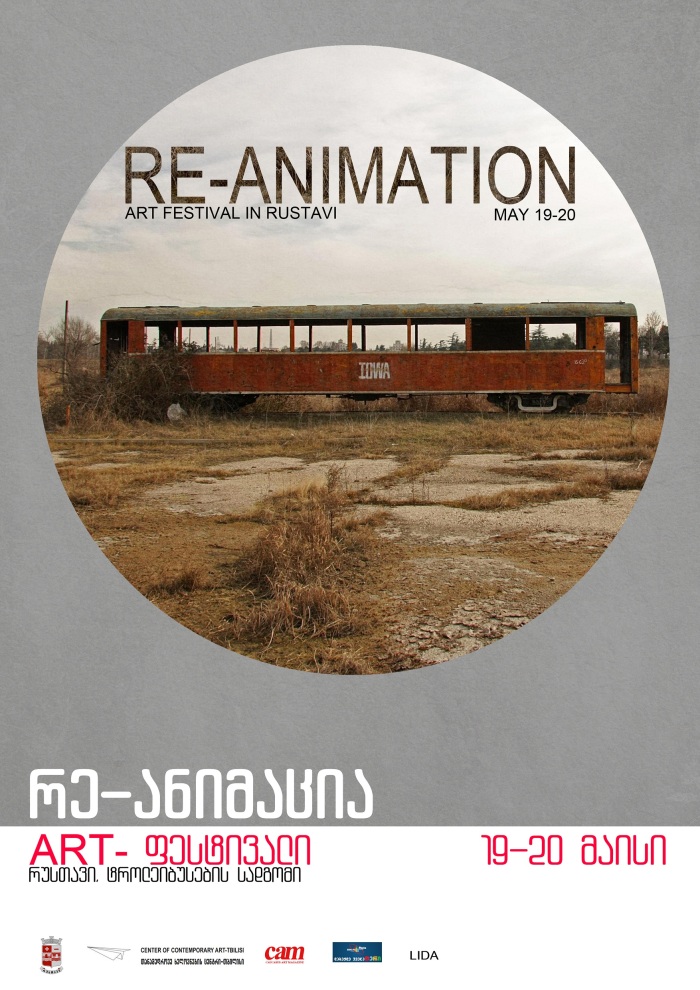
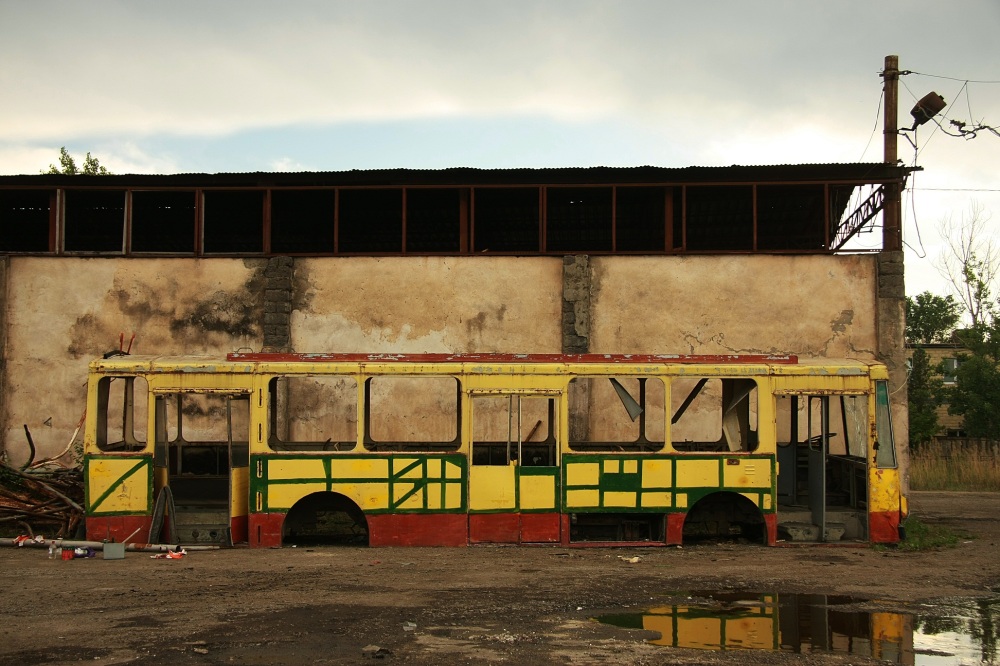
პროექტი „რე-ანიმაცია“ ჩატარდა რუსთავის ალტერნატიული სივრცეებზე კვლევის შედეგად, ქალაქში პირველი თანამედროვე ხელოვნების ფესტივალის სახით. როგორც ქალაქის ტრანსფორმაციის ერთ-ერთ მკვეთრ მაგალითად, ტროლეიბუსების სადგომზე 2 დღის მანძილზე წარმოდგენილი იქნა ფერწერული, ფოტო და აუდიო ნამუშევრები ასევე როგორც ინსტალაციები, პროექციები, პერფორმანსები და ელექტრონული მუსიკა.
re-animation
„re-animation“ is the first festival of contemporary art to take place in Rustavi. Its concept is mainly based a research concerning the alternative spaces of the city. For 2 days, the issue of transformation, symbolized by the abandoned trolleybus parking lot and its reassessment, found its manifestation in paintings, photographs, audiovisual installations, performances, projections and electronic music.
Re-Animation
“Re-Animation” ist das erste Festival für zeitgenössische Kunst in Rustavi. Der Abstellplatz für die stillgelegten Oberleitungsbusse steht in diesem Fall symbolisch für die Transformation der Stadt und wurde für zwei Tage Schauplatz audiovisueller Installationen, Projektionen, Performances, ausgestellten Photographien und Bildern sowie elektronischer Musik.
ორგანიზატორები // Organizers // Organisatoren
გალაქტიონ ერისთავი // Galaqtion Eristavi
ალექსი სოსელია // Aleksi Soselia
თათა მუსხელიშვილი // Tamar Muskhelishvili
მონაწილეები // Participants // Teilnehmer
ანა ბერიძე // Anna Beridze
ბესა ქართლელიშვილი // Bessa Kartlelishvili
კოკა ვაშაკიძე // Koka Vashakidze
სანდრო სულაბერიძე // Sandro Sulaberidze
ანა ჩადუნელი // Ana Chaduneli
თამარ ჩადუნელი // Tamar Chaduneli
კატარინა შტადლერი // Katharina Stadler
ჰანს ჰაინერ ბური // Hans Heiner Buhr
ავთო მესხი // Avto Meskhi
შალვა ხუნდაძე // ShallArt
მიკ მოწყობილი // Mik Motskobili
ტურგენევსკაია // tyrgenevskaya
გალაქტიონ ერისთავი // Galaqtion Eristavi
ალექსი სოსელია // Aleksi Soselia
თათა მუსხელიშვილი // Tamar Muskhelishvili
მუსიკა // Music // Musik
Shanshika
recycle sun warp
TTrakovski
Kancheli
Ash
ტექსტი და კონცეფცია // Text and Concept // Text und Konzept
თათა მუსხელიშვილი // Tamar Muskhelishvili
კონცეფცია // concept PDF poster side 2
პრესა // Press // Presse
24 saati – Georgian newspaper
თვითმმართველი ქალაქ რუსთავის ოფიციალურ გვერდზე // on the official site of the self-governing city of Rustavi // auf der offiziellen Seite der Stadt Rustavi

ფოტოები // photos
Aleksi Soselia, Tata Muskhelishvili, Anna Beridze, Sandro Sulaberidze, Giorgi Nemsitsveridze
მხარდაჭერა // Support
City of Rustavi. Photo Center Konica, Center of Contemporary Art – Tbilisi

რე-ანიმაცია
პროექტი „რე-ანიმაცია“ ჩატარდა რუსთავის ალტერნატიული სივრცეებზე კვლევის შედეგად, ქალაქში პირველი თანამედროვე ხელოვნების ფესტივალის სახით. როგორც ქალაქის ტრანსფორმაციის ერთ-ერთ მკვეთრ მაგალითად, ტროლეიბუსების სადგომზე 2 დღის მანძილზე წარმოდგენილი იქნა ფერწერული, ფოტო და აუდიო ნამუშევრები ასევე როგორც ინსტალაციები, პროექციები, პერფორმანსები და ელექტრონული მუსიკა.
re-animation
„re-animation“ is the first festival of contemporary art to take place in Rustavi. Its concept is mainly based a research concerning the alternative spaces of the city. For 2 days, the issue of transformation, symbolized by the abandoned trolleybus parking lot and its reassessment, found its manifestation in paintings, photographs, audiovisual installations, performances, projections and electronic music.
Re-Animation
“Re-Animation” ist das erste Festival für zeitgenössische Kunst in Rustavi. Der Abstellplatz für die stillgelegten Oberleitungsbusse steht in diesem Fall symbolisch für die Transformation der Stadt und wurde für zwei Tage Schauplatz audiovisueller Installationen, Projektionen, Performances, ausgestellten Photographien und Bildern sowie elektronischer Musik.
ორგანიზატორები // Organizers // Organisatoren
გალაქტიონ ერისთავი // Galaqtion Eristavi
ალექსი სოსელია // Aleksi Soselia
თათა მუსხელიშვილი // Tamar Muskhelishvili
მონაწილეები // Participants // Teilnehmer
ანა ბერიძე // Anna Beridze
ბესა ქართლელიშვილი // Bessa Kartlelishvili
კოკა ვაშაკიძე // Koka Vashakidze
სანდრო სულაბერიძე // Sandro Sulaberidze
ანა ჩადუნელი // Ana Chaduneli
თამარ ჩადუნელი // Tamar Chaduneli
კატარინა შტადლერი // Katharina Stadler
ჰანს ჰაინერ ბური // Hans Heiner Buhr
ავთო მესხი // Avto Meskhi
შალვა ხუნდაძე // ShallArt
მიკ მოწყობილი // Mik Motskobili
ტურგენევსკაია // tyrgenevskaya
გალაქტიონ ერისთავი // Galaqtion Eristavi
ალექსი სოსელია // Aleksi Soselia
თათა მუსხელიშვილი // Tamar Muskhelishvili
მუსიკა // Music // Musik
Shanshika
recycle sun warp
TTrakovski
Kancheli
Ash
ტექსტი და კონცეფცია // Text and Concept // Text und Konzept
თათა მუსხელიშვილი // Tamar Muskhelishvili
კონცეფცია // concept PDF poster side 2
პრესა // Press // Presse
24 saati – Georgian newspaper
თვითმმართველი ქალაქ რუსთავის ოფიციალურ გვერდზე // on the official site of the self-governing city of Rustavi // auf der offiziellen Seite der Stadt Rustavi


ფოტოები // photos
Aleksi Soselia, Tata Muskhelishvili, Anna Beridze, Sandro Sulaberidze, Giorgi Nemsitsveridze
მხარდაჭერა // Support
City of Rustavi. Photo Center Konica, Center of Contemporary Art – Tbilisi
Labels:
Art,
Art Club Caucasus International,
Artists,
Blog,
Center of Contemporary Art Tbilisi – CCAT,
Festival,
Rustavi
Location:
Rustavi, Georgia
Tuesday, August 23, 2011
PODCAST: Kunst - Georgische Impressionen. Reportage aus der Kunstszene Tiflis. Von Anna Soucek (orf.at)
Kulturjournal 22.08.2011 +++ (u. a. Interviews mit Nini Palavandishvili und Wato Tsereteli). Ein Beitrag von Anna Soucek
Podcast >>>
Zeitgenössisches Kunstschaffen hat es schwer in Georgien. Es gibt keine zuständigen Institutionen, und daher auch keine öffentliche Sammlung oder den Anforderungen von Gegenwartskunst entsprechende Ausstellungsräume. Trotzdem hat sich in den letzten Jahren in Tiflis eine interessante Kunstszene entwickelt.
Einige Künstlerinnen und Kuratoren sind nach der Rosenrevolution von 2003 aus dem Exil nach Georgien zurückgekehrt und beleben die lokale Szene mit ihren internationalen Kontakten und Erfahrungen.
Wo geht's hier zur Kunst?
Auf den Holzbrettern eines Bauzauns im Zentrum von Tiflis steht in großen Buchstaben gesprayt: "Sorry, where is the contemporary art museum???", als würde ein Ortsunkundiger das Museum für Gegenwartskunst suchen. Eine rhetorische Frage, denn ein solches Museum gibt es in Tiflis nicht. Es wird zwar von vielen Kulturschaffenden gefordert, doch fehlt das Geld vorne und hinten, und in der Kulturpolitik Georgiens hat Gegenwartskunst keinen besonders hohen Stellenwert. Die Aufgabe, junge, experimentelle Kunst zu fördern und öffentlich zu machen, wird unterdessen von Individuen und kleinen Institutionen ausgeführt.
Rote Tür zur Welt
Am Ende einer verwinkelten Seitengasse des Rustaveli-Boulevards, der Prachtstraße, stößt man auf eine rot gestrichene Tür. geoAIR steht darauf. In der Wohnung, die einer Künstlerin gehört, ist eine Artist-in-Residence-Unterkunft und auf wenigen Quadratmetern ein Büro untergebracht. Nino Palavandishvili betreibt mit anderen Kuratorinnen die 2003 gegründete Organisation "geoAIR - collaborative cultural projects" als Schnittstelle zwischen Georgien und der internationalen Kunstwelt. Es gibt eine Bibliothek mit Katalogen und Portfolios von Künstlern aus Georgien, aber auch aus Armenien, Aserbeidschan und der Türkei.
Zwischen Aufbruch und Apathie
Es sind zwei amerikanische Künstlerinnen zu Gast, die in einer Reihe von performativen Diskussionen mit dem Publikum über kreative Arbeit in Georgien sprechen. Sie hätten in der Kunstszene zwar eine latente Aufbruchsstimmung wahrgenommen, so Anne Elizabeth Moore und Elizabeth White aus Chicago, doch ließen sich viele vom Mangel an Interesse, Räumen und Mitteln für zeitgenössische Kunst bremsen.
Außer dem Artist-in-Residence-Programm organisiert geoAIR eigene Projekte an wechselnden Orten - die nächste Veranstaltung ist Ende August in einem oktopusartigen, phantastischen Raumgebilde am Meer, in dem früher ein Café war. Demnächst soll es abgerissen werden, obwohl es ein architektonisch wertvolles Monument ist, wie die Kuratorin Nini Palavandishvili meint.
Wiederbelebung utopischer Baukunst
In einem anderen solchen Relikt aus der Sowjet-Zeit hat sie vor zwei Jahren gemeinsam mit einer polnischen Kuratorin eine erfolgreiche Ausstellung gemacht. Das Straßenbau-Ministerium in Tiflis wurde 1976 von George Chakhava entworfen, der Architekt damals auch Straßenbau-Minister war, also gleichzeitig Bauherr und Hauptarchitekt. Das Hochhaus aus aufeinander gestapelten Querbalken, in denen jeweils zwei Stockwerke sind, ist eine Ikone der sowjetischen Moderne und steht mittlerweile unter Denkmalschutz. Nach der Unabhängigkeit Georgiens von der Sowjetunion stand es jahrelang leer, bis es von einer Bank gekauft und zum Hauptquartier umgebaut wurde.
Dass ein Teil des Gebäudes vor dem Umbau durch die Ausstellung "Frozen Moments" kurz der Öffentlichkeit zugänglich gemacht wurde, sei nicht einfach zu erreichen gewesen, erinnert sich Nino Palavandishvili. Vielleicht habe geholfen, dass die Kuratorin nicht Georgierin war: "Das Problem ist, dass solche Menschen, wie die Bankmanager, uns Georgiern nicht zutrauen, gute Ideen zu haben, wenn es um außergewöhnliche Projekte geht. Sie haben diese merkwürdige Einstellung, dass wir weniger drauf haben und schenken "ausländischen Experten" größeres Vertrauen. Noch einen weiteren Vorteil hatte die polnische Herkunft der Kuratorin: das gesamte Projekt wurde von Polnischen Institutionen finanziert, während Georgien oder Tiflis überhaupt nichts beisteuerten. Die Stadt Warschau zahlte der Stadt Tiflis eine Ausstellung. Es ist absurd, aber zumindest konnten wir das Projekt machen."
Tiflis-Kunsthalle oder lieber Venedig-Biennale?
geoAIR organisiert einmal im Monat Diskussionen zu kulturpolitischen Themen, etwa zur Frage ob Tiflis eine Kunsthalle braucht, oder zur Selbstdarstellung Georgiens auf der Biennale di Venezia. Denn in diesen Auftritt fließt ein großer Teil des ohnehin ständig sinkenden Budgets des Kulturministeriums. Palavandishvili kritisiert den undurchsichtigen Auswahlprozess: "Es gab einen open call an Künstler, Projekte einzureichen, aber es gab keine Jury, die die Entscheidung treffen würde. Dass die Einreichungen im Ministerium nie wirklich besprochen wurden, weiß ich von Künstlern, die nicht einmal einen offiziellen Absagebrief oder irgendeine andere Reaktion auf ihren Vorschlag bekommen hatten. Die Künstlerin, die nun Georgien in Venedig vertritt, und das auch schon 2007 getan hat, verlautbarte bei der Eröffnung, es hätte keine Einreichungen gegeben und sie hätte sich daher großzügigerweise angeboten, ihre Kunst in Venedig auszustellen."
Funktionären was erklären
Wenn man mit Politikern, ebenso wie mit Sponsoren aus der Wirtschaft, eine gemeinsame Kommunikationsebene findet, dann kann man durchaus etwas erreichen. Diese Erfahrung hat der Künstler und Kurator Wato Tsereteli gemacht: "Ich finde es wichtig, wenn man mit Funktionären arbeitet, dass man das Anliegen der Kunst gut argumentiert. Ihre Aufgabe ist ja nicht, die Kunst zu verstehen, sondern zu sehen, warum es wichtig für das Land ist."
Unabhängige Schule für freie Kunst
An der Kunstakademie hat Tsereteli die Fotografie-Abteilung aufgebaut, die er leitet, und vor einigen Monaten hat er eine eigene Kunstschule aufgemacht. Im ehemaligen Bürogebäude eines zentral gelegenen Heizkraftwerks sind Ateliers und die Ausstellungsräume des Center for Contemporary Art Tbilissi untergebracht, finanziert von einer Bank und anderen Sponsoren. Für umgerechnet 100 Euro im Monat können Studierende, die bereits künstlerisch tätig sind, die Ateliers benützen und in Gruppen oder in Einzelgesprächen mit unterrichtenden Künstlern ihre Arbeiten praktisch und theoretisch weiterentwickeln.
Eine Sound-Klasse gibt es in der Schule, eine für Fotographie und eine für Malerei, konzeptuelle Malerei betont Wato Tsereteli. Von dem in der Sowjetunion verordneten sozialistischen Realismus sei eine Fetischisierung von Ästhetik übrig geblieben - dass Malerei jedoch inhaltlich über Oberflächengestaltung hinaus gehen kann, hat er in einer Ausstellung mit dem Titel "Writing in Colour" zeigen wollen. "Auf georgisch heißt 'malen' soviel wie ‚schreiben mit Farbe‘. Schreiben hat etwas mit Semantik zu tun, und das erwarte ich auch von der Malerei. In der Ausstellung hatten wir Arbeiten von 15 Künstlern. Sie hat gezeigt, dass es eine Welle junger Leute gibt, die Botschaften entwickeln und malerisch ausdrücken."
Die Wunden verheilen lassen
Die Ausstellungsräume sind perfekt hergerichtete white cubes, wie sie überall in der Welt zu finden sind. Oft sagen Besucher, sie fühlen sich hier wie in einer anderen Stadt, so Tsereteli. Und das sei gut so, denn für ihn soll Kunst, wie eine Reise, neue Ansichten auf das gewohnte Umfeld ermöglichen. Er hält es für wichtig, dass die Künstler in ihren Ausstellungen im Center of Contemporary Art den lokalen historischen und politischen Kontext mitdenken. 70 Jahre sowjetischer Diktatur, sowie Bürgerkriege in den 1990er Jahren und zuletzt der Kaukasuskrieg im August 2008 haben Traumata hinterlassen. "Ein holländischer Künstler wollte Zeitungsfotos aller Konflikte der letzten Jahrzehnte auf dem Boden verteilen. Ich habe ihm gesagt, das kannst Du in New York machen, aber nicht hier. Du brauchst die Leute nicht daran erinnern, was sie durchlebt haben, sie wissen das ohnehin."
Zu Gast bei Mamuka
Der Künstler Mamuka Japhardize hat sich auf einem Hügel über Tiflis ein ländliches Refugium geschaffen. Er arbeitet mit Film, Video und Sound - gelegentlich macht er Auftragsmalereien. An der Wand seines Ateliers hängen Schwarzweiß-Fotografien von konzeptuellen Installationen. "Diese Arbeiten sind 1993 entstanden, als Bürgerkrieg war. Es war eine rauhe Zeit, Chaos, Gewalt und Zerstörung überall", sagt Japhardize, "Auch in der Kunst - die Künstler verhielten sich damals wie Neo-Expressionisten à la Anselm Kiefer. Ich setzte diesem Trend sehr reduzierte, strukturalistische Arbeiten entgegen. Ich wollte dem Chaos mit Ordnung begegnen - die Umstände verlangten das kreative Konzept zu ändern."
Gemeinsam mit Wato Tsereteli und den Studierenden der freien Kunstschule wird Mamuka Japhardize im Garten rund um sein Haus ein verspieltes Kunstprojekt mit dem Arbeitstitel "Biofarming and Art" beginnen: Gemüseanbau und Gartenpflege als pädagogisches Konzept, um das verlorene Gefühl für Zeit und Kreisläufe zu erfahren.
Über den Wolken von Tiflis
Cloud Library, also die Bibliothek über den Wolken, nennt Mamuka Japhardize, der in seinem Auftreten schamanenhaft und bodenständig zugleich wirkt, sein Haus. Gebaut hat er es selbst, am Rande eines kleinen Bauerndorfes, auf einem Grundstück mit Blick auf die Hauptstadt im Tal. "Als wir das Haus bauten, hatten wir die Befürchtung, dass es einsam wird hier oben und dass wir uns von der Stadtgesellschaft entfremden - aber das ist nicht eingetreten, es sind ständig Gäste hier, jeden Tag. Die Leute kommen gerne her", meint Japhardize und wir von einem Besucher-Anruf unterbrochen. "Siehst Du, sie sind schon im Anmarsch!"
Diese Beispiele zeigen: Städtische Kunsthallen sind wichtig und gehören aus öffentlicher Hand finanziert, keine Frage, aber was kleine Organisationen und manche Individuen an Grundlagenarbeit und Vernetzung - auch mit Gleichgesinnten im Ausland - leisten, ist mit Staatsgold nicht aufzuwiegen.
geoAIR
Center of Contemporary Art, Tbilissi
Subscribe to:
Posts (Atom)