Showing posts with label Art Club Caucasus International. Show all posts

Monday, October 21, 2019

VIDEO: ERTI Gallery presents Koka Ramishvili's solo exhibition "Light Machines", curated by Karine Tissot. Project partner SOLO, Galleries X Tbilisi Photo Festival


Koka Ramishvili
Light Machines
Curator: Karine Tissot
Project Partner: SOLO
Galleries x Tbilisi Photo Festival
ERTI Gallery, 19 P. Ingorokva str / 5 9April str, 0108 Tiflis
September 15 - October 23 

Link: Koka Ramishvili's solo show "Light Machines" curated by Karine Tissot [artsy.net]

Koka Ramishvili’s Light Machines are much more than still lifes for they are systematically animated by movement – which situates the work in a perfect contradiction of a genre normally characterized by the inertia of the motif (still life). Nor can they be reduced to a mere expression of a certain experimentation since there is a deliberately studied aesthetic to them.

Between art and a sort of demonstration, Ramishvili creates geometrical shapes – sometimes inspired by the world of de Chirico or the sculptures of Brancusi –to reveal, through photography, a light that the artist breaks down into a monochrome array of soft grays. No black and white contrasts that would strictly separate the tones and reduce the world to a Manichean view of things. On the contrary, a generous array of nuances with blurred outlines offers the eye the chance to penetrate these intermediary worlds lying between bright and dark, somewhere between dreams and reality, beyond a truth that is unique, sharp, and caught in a fraction of a second by a photo journalist.

Koka Ramishvili works the light of his photos and acts on the very way light is perceived. Eschewing all spiritual meaning, he fosters a perceptual, sensory experience where time is superimposed over transparency. Everything moves towards impermanence. Everything is becoming. Process is essential. Here lies the essence of this work. In the challenge of expressing light as an abstract structure, he animates the installations of his invention so that they retain a fleeting impression. Thanks to movement, real objects shed their materiality in subtle plays of shade and light. His images thus create visions that are inaccessible to the human eye and his simplest staged scenes suddenly verge on the abstract, making the photograph nothing less than photography, in other words, a writing with light in the etymological sense of the word. On the other hand, when he is looking outside the studio to express a form of combustion in the landscape, Ramishvili will occasionally polish the image in the touching-up process. Light is manipulated after the fact. A pair of real-looking suns, for instance, appears in an immaculate sky (Ascension, pp. 22-23), and three glowing celestial bodies create a sequence on the horizon (Three Stars (Evolution), 2019, pp. 30-31), while a bright illumination takes over a face (The Shining (Face) – 2017, p. 24).

As a visual artist who has always sought to slip his thinking into multiple mediums – while making sure to master them perfectly, each according to its use – Koka Ramishvili took up photography again in 2016. Having abandoned the documentary practice seen in the early years of his career, he is now devoting himself to photography as he would were he working on a painting, that is, his compositions are first elaborated conceptually before they are executed, making his work both a form of thinking and a realization, a perfect marriage of content and form, a paragon of comprehensiveness. They promise to stretch the limits of representing the world thanks to his working of the light. Indeed, although his work follows in the wake of themes in art that go back centuries – like portraiture or landscape – Ramishvili regularly puts light at the center of his thinking and reminds us of what Laszlo Moholy-Nagy pointed out in 1925 in his foundational book, Painting Photography Film, “I am convinced that a new art of light is being born.” Until then the history of art had been punctuated by works that placed front and center the play of shadows and light, from the research of Renaissance painters into chiaroscuro to the expression of the sensation of light by Turner and Monet, although photography opened a field of possibilities that proved vaster by far.

Koka Ramishvili is following a trail first blazed by modernity a century ago. Nevertheless, his experience, renewed by the summers he has spent in Greece over the last few years, feeds into a singular approach filled with striking patches of white, reliefs formed from gentle lines, and clement skies that give voice to a harmonious world in black and white, whose light is the condition of the visible. It is indeed what makes the perception of shapes and limits of objects and spaces possible. If the role played by light in art has often been inextricably linked to the deepening of scientific knowledge and the appearance of technologies that put it to work, Koka Ramishvili raises it to the level of the main protagonist in order to speak about the essence of art and life in a singular impulse of freedom and intuition that avoids the pitfall of the cliché.

Karine Tissot, 2019

more links:
haeusler-contemporary.com/koka-ramishvili
www.kokaramishvili.org

Friday, December 19, 2014

EXHIBITION AND PUBLICATION LUNCH: Lost Heroes of Tbilisi. Soviet Period Mosaics - In The Trade Union Palace of Culture of Georgia, so called "Tsereteli Hall"

GeoAIR (facebook.com/geoair.archidrome) Just for one day different working material were on display, including private archives of authors, documents, sketches, catalogues and photos.

The exhibition included private archive material from Demur Bashaleishvili, Giorgi Chakhava, Saurmag Ghambashidze, Iden Tabidze, Radish Tordia, Kukuri Tsereteli, and photo material by GeoAIR, Zura Dumbadze, Nika Kapanadze, Alexi Kedelashvili and Nino Siradze.

On the same day we launched the publication, which includes research findings and photo documentation of monumental-decorative mosaics from various ‘public’ spaces of Tbilisi.

The intensive changes within public space, that have been taking place during the past 20 years, gave rise to our interest in the monumental-decorative mosaics. Unsystematic transformation of our urban environment, amateur interventions in forming the image of the city and façade ‘beautifications’ have led to the destruction of mosaics in the public spaces of Tbilisi.

It became the reason for documenting them, creating database and the online map, which can be found on the Google maps - Soviet Period Mosaics in Tbilisi

"Lost Heroes of Tbilisi. Soviet Period Mosaics" is part of SPACES project, funded by the European Union through the Eastern Partnership Culture Programme.

source: geoair.blogspot.de

more: Georgia’s Soviet Mosaics (23 Photos). By Mirian Jugheli


Created with flickr slideshow.


Sunday, November 23, 2014

OPENING: Upcoming Group Show in LIA on 28th of November: "A Topology of Memory" with international artists - with David Kukhalashvili from Georgia (liap.eu)


(liap.eu) We would cordially like to invite you to the LIA Group Show: 'A Topology of Memory'

Opening on 28th of November 2014 at 7 pm

with international awardees:

Catalina Bauer (Chile)
Anne Bertoin (France/Canada)
David Kukhalashvili (Georgia)
Natalia Ossef (Syria/Netherlands)
Carlos Sagrera (Spain)

We thank LIA main partner BMW and Consejo National de la Cultura y las Artes Fondart Chile.

Opening Hours: Saturday, 29th from 11 am till 8 pm
Spinnereistr. 7, Halle 18, 2nd Floor
www.LIAP.eu // k.semenova@liap.eu
facebook.com/christina.semenova 

David Kukhalashvili from Tbilisi in his studio. He studied from 2005 till 2009 at Tbilisi State Academy of Art, Georgia. But by rector's decision his diploma was denied because of his critic on the Academy's system. In his drawings and paintings he shows a critical approach to and the reflection on contemporary Georgian society makes — mit David Kukhalashvili.

more: facebook.com/lia.leipzig

Saturday, October 11, 2014

AUSSTELLUNG: Begegnung mit Pirosmani - Eröffnung am 21.10.2014 in Tbilisi


Die Georgisch-Deutsche Gesellschaft lädt herzlich ein zur Eröffnung der Ausstellung Pirosmani und die zeigenössische Kunst im Rahmen des Projekts Begegnung mit Pirosmani. 

Eröffnung der Ausstellung:

I. Teil - 21.10.2014, 16.00 Uhr, Georgisches Nationalmuseum, D. Schewarnadse National Galerie, Schota Rustavelli-Allee 11

II. Teil - 21.10.2014, 18.00 Uhr, Georgisches Nationalmuseum, I. Grischaschwili Historisches Museum, Tbilisi, (Karwasla-Gebäude), Sionistraße 8

TEILNEHMER:

Maler: Michael Augustinski, Inga Batatunashvili, Maka Batiashvili, Dorit Bearach, Joachim Böttcher, Heidi Brambach, Sophio Cherkezishvili, Levan Chogoshvili, Georges Fricker, Dieter Goltzsche, Karen Graf, Bernd Hahn, Volker Henze, Dagmar Hintzmann, Robert Honegger, Kote Jincharadze, Karlo Kacharava, Petra Kasten, Iosseb Kumsiashvili, Achim Niemann, Papuna Papaskiri, Bodo Rott, Thomas Schmidt-Dankward, Peter Schöttle, Matthias Schroller, Murtaz Shvelidze, Kakhaber Tatishvili

Zeichnerin: Doris Leue

Bildhauer: Valerie Buchow, Klaus Duschat, Vladimer Imerlishvili, Gudrun Kühne, Johannes Leidenberger, Andreas Theurer

Keramik: Nino Kalandia, Gudrun Sailer

Video: Volker Henze

Collage: Mischa Pitskhelauri

Fotografen: Archil Kikodze, Lasha Meskhi, Thea Nili

Schriftsteller: Shalva Bakuradze, Bela Chekurishvili, Ela Gochiashvili, Norbert Hummelt

Galeristinnen: Kathleen Krenzlin, Sigrid Walther-Goltzsche

Literaturabend im Rahmen des Projekts Begegnung mit Pirosmani [facebook.com]

Begegnung mit Pirosmani [facebook.com]

Saturday, October 04, 2014

KUNST: Karlo Katscharawa und Deutschland. Ausstellungseröffnung und Präsentation des Katalogs in Georgien

Ausstellung zum 20. Jubiläum des Goethe-Institut Georgien.

Vor 20 Jahren wurde das Goethe-Institut in Tbilissi gegründet. In demselben Jahr, 1994, starb ein knapp über dreißig Jahre alter Kunstkritiker und Künstler namens Karlo Katscharawa in einem Tifliser Krankenhaus an einer Gehirnblutung. Im Lebenswerk dieses zum Zeitpunkt seines Todes noch ganz jungen Mannes verkörpert sich die deutsch-georgische intellektuelle und menschliche Synthese, für die unser Haus steht, auf eine einzigartige und künstlerisch glänzende Weise.

Das Werk Karlo Katscharawas ist entscheidend beeinflusst von den Malern des deutschen Expressionismus und von den Künstlern der neoexpressionistischen deutschen Kunstrevolution der achtziger Jahre in Köln und Berlin. Es zitiert Joseph Beuys, Jörg Immendorf, August Macke, Ludwig Kirchner, Karl-Horst Hödicke. Es atmet den Geist der Märchen der Gebrüder Grimm und der deutschen Romantik. Ohne dass wir es in Deutschland wußten, gab es damals im tiefen Süden der Sowjetunion ein korrespondierendes Mitglied der neuen deutschen Kunst der achtziger Jahre, die wir in den Kölner und Stuttgarter Galerien oder im Berliner SO 36 bestaunten.

Zum 50. Geburtstag von Karlo Katscharawa und unserem 20. Jubiläum eröffnen wir, Irina, unsere gemeinsame Freundin Lika Katscharawa und unsere Partner von der Firma "Silk Road/Zinanadali" ein analoges Projekt mit den großen Leinwänden, auf denen Karlo seine Liebe zur deutschen Kunst und seine spezifisch georgische Weiterentwicklung der deutschen Kultur für die Zukunft - für eine gemeinsame Zukunft unserer Kulturen - dokumentiert und künstlerisch festgehalten hat. Auch diese Ausstellung ist Teil eines deutsch-georgischen Gemeinschaftsunternehmens, für das wir wieder mit "Silk Road/Zinandali" dankenswerterweise zusammenarbeiten dürfen und das ab 11. Oktober nicht nur in Tbilissi für die Öffentlichkeit zugänglich wird, sondern auch in Zinandali.

Goethe-Institut Georgien
11.10.2014 18.00 Uhr

Tzinandali Museum
12.10.2014 14.00 Uhr

Dauer der Ausstellungen:
12.12.2014, 10.00-18.00 Uhr Mo.-Fr. 

facebook.com


Created with flickr slideshow.

Link: Late Georgian artist’s work admired in anniversary exhibition [agenda.ge]

Saturday, September 06, 2014

PHOTOESSAY Georgian Online Magazine. June-July Issue 2014


more: issuu.com/photoessaymag

www.photoessay.ge

facebook.com/photoessaymag

Sunday, July 06, 2014

AUSSTELLUNG: UNGEDULD DER FREIHEIT SALON HANSA Berlin goes GALERIE HOLGER JOHN Dresden (galerie-holgerjohn.com)

(galerie-holgerjohn.com) ... mit Malerei von Hans Heiner Buhr aus Tbilisi


Created with flickr slideshow.


Rähnitzgasse 17 | Ecke Heinrichstrasse
01097 Dresden - Neue Königsstadt - Barockviertel

Ausstellung von 30.5 – 22.6.2014
Dienstag – Sonntag 14 – 19 Uhr

Artisten

JUNIOR TOSCANELLI, PIA DEHNE, JONNY STAR, FRANK BAUER, ISA GENZKEN, OLIVIA BERKEMEYER, ARMIN BOEHM, SASCHA BOLDT, LUKAS BUGLA, SASKIA BUWERT, LISA JUNGHANß, JACOB COENDERS, LEOPOLD COENDERS, FRANK DIERSCH, SEBASTIAN LUKAß, BJÖRN DRESSLER, NICOLAS DUPONT, OLIVER BORNER, ROEY HEIFETZ, FLORIAN HEINKE, CHRISTIAN HOISCHEN, ERIKA LUST, ANDREW DICK, HANS HEINER BUHR, MARCUS MÜLLER SCHOENEICH, SILKE HÖPPNER, ANDREY KLASSEN, MAXIMILIAN RÖDEL, DIETMAR MÜLLER, MICHA KOCH, MARC GROESZER, ALEXANDER KLENZ, FRANZISKA KLOTZ, CLAUDIA VAN KOOLWIJK, SVENJA KREH, ANNE LANGENBACH, ISA MELSHEIMER, LEA ASJA PAGENKEMPER, REGINE MÜLLER WALDECK, ANDREAS BRÄUNSDORF, SADOR WEINSCLUCKER, EVA RAEDER, JENNY ROSEMEYER, DENNIS RUDOLPH, MORITZ SCHLEIME, TORSTEN SOLIN, MIRIAM VLAMING, BJÖRN WELTBRANDT WALLBAUM, MARCUS WITTMERS, MICHAEL WUTZ, HANSA WIẞKIRCHEN, HOLGER JOHN

GALLERY OPEN AIR special guest: SALON SUISSE SÄCHSISCHE SCHWEIZ HELMUT OTTO RABISCH (tout les jours en plein air) STEFFEN FISCHER (Dresden/Dürrrörsdorf) VOLKER LENKEIT (Pirna) ICEMANN (staatenlos) CHRISTOPHER HALEY SIMPSON (Dresden/Greater Lancaster & Morecambe)

Galerie Holger John

Monday, June 30, 2014

AUSSTELLUNG: Der georgische Künstler Gocha Gulelauri am Vorabend zur Vernissage - Galerie Roy, Zülpich (galerieroy.de)


Gocha Gulelauri, 28.6.-27.7.2014
Zeit im Raum, Malerei

Ausstellungseröffnung: Samstag, 28. Juni 2014 ab 18.00 Uhr

zur Vernissage spielt
TTT - F. Wollny (Bass), R. Carniaux (Trompete), G. Dudek (Saxophon)

Öffnungszeiten
Mittwoch-Freitag 14.00-19-00 Uhr
Samstag 11.00-15.00 Uhr

Galerie Roy
Nideggener Strasse 25
53909 Zülpich 
facebook.com/galerieroy

Tuesday, February 04, 2014

ART: Colours of the Soul - Minas Avetisyan (youtube.com)


(youtube.com) Armenian painter (1928-1975), studied in Yerevan and Leningrad (Saint Petersburg), had been exhibiting fro 1956. Avetisyan is one of those Armenian artists who put the color back into painting. "Put the color back into painting"-such an expression might seem strange, but if you go into the Matenadaran and look through the yellowed pages of the ancient manuscripts there, you will understand what is meant: there on the parchment, in all their splendor, shine the bright, sonorous colors- blue, yellow, green, red... Color plays an enormous role in the work of Avetisyan. In the night of the January 1, 1972, while the artist was in Djadjur with his family, his Yerevan studio was burnt down together with a large portion of his best canvases selected for a one-man show. Music by Mychael Danna from Atom Egoyan's film 'The Adjuster' (1991). Piano: Eve Egoyan, violin: Mark Fewer, duduk: Djivan Gasparyan.

KUNST: Minas und Narek Avetisyan - Moderne und Avantgarde in Armenien (stiftung-moritzburg.de)

Stiftung Moritzburg, Halle
Vom 21. Februar bis zum 4. Mai. 2014 


Die neue Ausstellung im Kunstmuseum Moritzburg ist ein wichtiger Schritt, die zeitgenössische Kunst Armeniens hierzulande bekannter zu machen. Mit den Werken der Künstler Minas und Narek Avetisyan - Vater und Sohn - entsteht ein dichtes Bild von nahezu fünfzig Jahren Geschichte der Malerei in Armenien.

Minas Avetisyan (1928-1975) zählt zu den herausragenden Künstlern der armenischen Moderne. Während seines kurzen Lebens - er starb im Alter von 47 Jahren - hat er ein beachtliches Œuvre geschaffen. Als einer der ersten Künstler in der Sowjetunion wandte sich Minas Avestisyan vom propagierten "Sozialistischen Realismus" ab. Er gilt als der Begründer der "neuen Kunst" der 1960er-Jahre.

Narek Avetisyan (*1969) ist der jüngste Sohn Minas Avetisyans. Anlässlich der 48. Biennale in Venedig 1999 vertrat er die Republik Armenien mit einer multimedialen Installation. Mit seinen großformatigen, durch leuchtende Farbgebung ausgezeichneten Gemälden, steht Narek Avetisyan integriert im internationalen Kontext.

Von Vater Minas Avetisyan zeigt die Stiftung Moritzburg 20 ausgewählte Arbeiten, von Narek Avetisyan zwölf Gemälde. Am Ende der Ausstellung wird es ein armenisches Fest geben, zu dem die Armenische Gemeinde in Sachsen-Anhalt einlädt.

+++ 
 
Minas und Narek Avetisyan. Moderne und Avantgarde in Armenien 
 
(stiftung-moritzburg.de) Ein Kooperationsprojekt der Stiftung Moritzburg Halle (Saale) und der Stiftung KulturDialog ARMENIEN, gefördert aus Mitteln des Landes Sachsen-Anhalt.

Verfügen wir auch über ein allgemeines Wissen über die Geschichte und Kultur Armeniens, so ist unsere Kenntnis über die zeitgenössische Kunst in dem Land sehr mangelhaft.

Die Ausstellung im Kunstmuseum Moritzburg ist der erste Schritt auf dem Weg, dies zu ändern. Mit den Werken der beiden ausgewählten Künstler Minas und Narek Avetisyan – Vater und Sohn – entsteht ein fokussiertes Bild von nahezu fünfzig Jahren Geschichte der Malerei in Armenien.

Minas, dem Vater, gelang in seiner Malerei unter Rückbesinnung auf traditionelle Farbkonzeptionen und auf inhaltlich wie formal in der armenischen Kultur wurzelnde Vorstellungen die Herausbildung einer ganz eigenen Bildsprache, die bis an die Ungegenständlichkeit heranreicht. Damit gelang es ihm, der Vereinnahmung durch einen sozialistischen Realismus sowjetischer Prägung zu begegnen.

Der Sohn Narek setzte dort an und ging konsequent den Weg zum Anschluss an die internationalen Kunstbewegungen. In seinen großformatigen, durch leuchtende Farbgebung ausgezeichneten Gemälden steht er voll integriert im internationalen Kontext.

Sunday, January 19, 2014

ART: Nataliya Goncharovaʼs Hay Cutting and David Kakabadzeʼs Cubist Self-Portrait; a comparison. By Inge Snip (adjapsandali.wordpress.com)

(adjapsandali.wordpress.com) The start of the 20th century saw a blossoming of modern art in both Russia and Georgia, where in an intense period of time a ʻcultural evolutionʼ took place. In Russia, in rejection of the West, through neo-primitivism, a search was initiated to find new shapes, colors and conceptions. However, in Georgia no such rejection of the West took place, nevertheless, through collaboration of different art movements the same goal was set.

Two major figures who influenced the development in modern art in respectively Russia and Georgia are Nataliya Goncharova and David Kakabadze. Comparing their artworks, will lead to a more comprehensive overview of the developments of those times, as Goncharova clearly had the desire to move away from the West, and Kakabadze, on the other hand, was obsessed with accumulating as much different views on art and sciences during his life. In the following essay two of their paintings will be analyzed, the neo-primitive work ʻHay Cuttingʼ by Nataliya Goncharova in 1910, and David Kakabadzeʼs cubist self-portrait of 1914. Although both artworks are very different in style, and both artists have made works which are more alike, it is interesting to compare these two, as Goncharova was very much interested in the works of Georgian self-taught artist Niko Pirosmanishvili and was not impressed by cubism on its own, while Kakabadze was experimenting with different styles at the same time.

Hay-Cutters – Nataliya Goncharova, 1910

cutting-hayʻWe have learned much from Western artists, but from where do they draw their inspiration, if not from the East?’. In her 1912s essay on neo-primitivism, Nataliya Goncharova explains her rejection of the west and her interest in old forms of art. Already for several years before 1912, she and her partner Mikhail Larionov were intrigued with folk art, children’s paintings and self-taught artists, such as Georgian Niko Piromanishvili.

As explained by Goncharova, the need to go back to these naive forms of art, are necessary to find new forms.

Moreover, Goncharova was clearly inspired by her own countryʼs traditions and culture, and argued that the folklore colors and surroundings of the East and Russia should be part of modern art in order to create something new: ʻI aspire toward nationality and the East, not to narrow problems of art but, on the contrary, to make it all-embracing and universalʼ.

In her neo-primitivist work of 1910, ʻHay Cuttingʼ, her search for naive forms, the east and parts of the russian nationality can be evidentially traced back. Although the work obviously has elements of Cubism and Gauguin (a symbolist western artist), the rural sight depicts a very Russian subject. Furthermore, the colors, the lines, the flatness and the deformed characters show the spectator Goncharovaʼs inspiration for this artwork: primitive, naive art.


David Kakabadze, Cubist self-portrait, 1914 

ka_au2
Although both Nataliya Goncharova and David Kakabadze shared their love for the works of Georgian self-taught painter Niko Pirosmani, they differed opinion on several other subjects. For instance, Goncharova stated in her introduction on Cubism in 1912 that the artists had gone too much into theory and, in doing so, had lost the soul of art; however, David Kakabadze believed that in order to find the ʻtrueʼ art, one should study as much as one could about it. As he said while living in Paris in the 1920s: “First Theory, then practice”.

Kakabadze identified himself with masterʼs such as Leonardo da Vinci; as his desire was to not only be a painter, but also a philosopher and a scientist. His theory entailed that all is interconnected, and in order to understand all aspects of life, one ought to study all.

For him his artistic works were both a foundation for, as the result of, his search for knowledge: ʻPainting is nearly the philosophy of natureʼ.

His quest to learn as much about art and life in general already started in 1911 when he received a scholarship to study in St. Petersburg. Although he was more interested in studying at the Academy of Arts, he was not accepted there because his drawings were not well developed yet, however, he did not want to waste time and decided to study Physics. Nevertheless, he did take some classes in drawing at the studio of Lev Dmitriev-Kavkazskii, and painted among his famous ʻMother and Imeretiʼ and ʻSelf-portrait with pomegranatesʼ, his cubist self-portrait (1914).

It is important to note that Kakabadzeʼs cubism is different from European style cubism, such as Pablo Picassoʼs. Although there are some linkages with cubist artis George Braque when it comes to his analytical approach, Kakabadze was not concerned with the form, but rather with colors and unification of the forms. His obsession with color, the expressiveness of color and forms, are very distinct and could be categorized as a form of ʻGeorgian Cubismʼ.

Although both Goncharova and Kakabadze had several different influences, their artwork at times is comparable and at times is not. With Goncharova it is eminent that her artworks have influenced the manner in which Russian modern art developed before she left for Paris after the Bolsheviks took power. However, the influence of Kakabadze on the Georgian modern art field should not be disregarded either. Both had in common their desire to find new art forms, to find a true language of art, and both have attempted so in different ways – Goncharovaʼs neo-primitive and Kakabadzeʼs cubo-futurist influenced artworks are perfect examples of their strategy.

link: facebook.com/adjapsandali

Sunday, October 20, 2013

ART: Jörg Herold will be the Artist in Residence in Tbilisi (geoairresidency.blogspot.de)

10 day workshop on theme ethnology - 21.10- 31.10. 2013

http://www.eigen-art.com/files/jherold_bergwacht.jpg
Jörg Herold, Bergwacht (Schwerin)
(geoairresidency.blogspot.de) Jörg Herold was born in Leipzig in 1965. He studied painting in Hochschule für Grafik und Buchkunst in Leipzig and in Kunsthochschule Berlin-Weißensee.

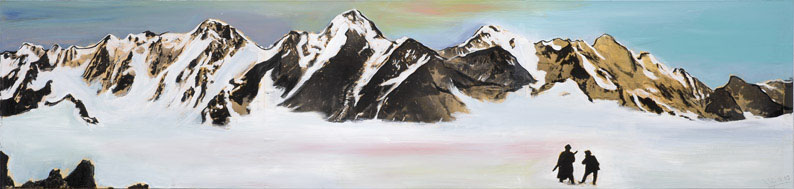
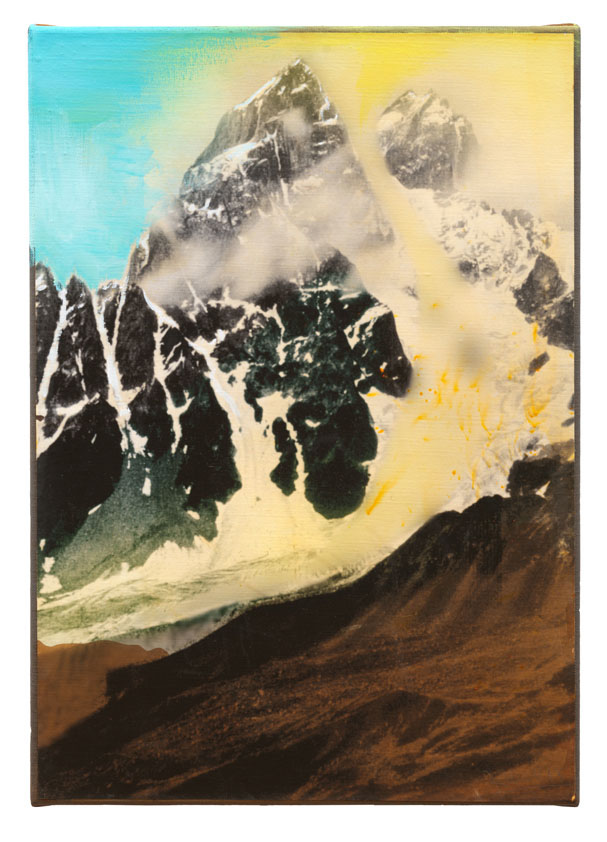
Jörg Herold, Ushba

Jörg Herold, as a documentary archaeologist (as he refers to himself) researches memories. As a contemporary, purposely he searches for utilizing memories in various mediums: painting, installation, sculpture, film. After travelling to the real and unreal worlds of memories, his installations, films, paintings are created. The function of documentary archaeology is to show the possibilities of memories to the future and underline the conflict between ethical and aesthetic representations.

Jörg Herold has been awarded with various prices, including: Leipziger Volkszeitung, 1999 and Kunstpreis der Stadt Wolfsburg, 2005. He is exhibitied in various museums and art institutions (Museum der Bildende Künste Leipzig, Heydt-Museum Wuppertal, Staatlichen Museum Schwerin, Galerie der Stadt Wolfsburg,Kunstverein Bielefeld). Also, he has participated in numerous international exhibitions, such as: Venice Biennial (1995); Documenta X (1997); exhibition dedicated to 40 years of video art at Leipzig Fine Art Museum; South Korea Seongnam Arts Center and LEEAHN Gallery (2012).

From 1985, Jörg Herold works with Gallery EIGEN + ART, which presents him occasionally in Leipzig and Berlin.

GeoAIRThe GeoAIR residency program is a self directed residency program, that offers primarily curators and cultural producers the opportunity to base themselves in Tbilisi and use this location as a starting point to build networks, meet artists, cultural institutions and curators from the Caucasus region, and develop and deepen their knowledge and research of the Caucasus context. In return local artists, curators and organizations will have the opportunity to extend their knowledge about the innovative ways that many international curators are working. GeoAir has designated her residency mainly for curators or cultural producers because it feels that they are most able to affect multiplier effects through exchange and production and are more equipped to use the residency as a platform from which to jump for to instigate future collaborations between the resident and artists and organizations form the Caucasus region. The aim of GeoAIR is to encourage different ways of thinking about and approaching issues of artistic and professional development, dialogue, exchange, and research within the Caucasus context. GeoAIR offers a dynamic residency model designed around tapping into the regional context of the residency. The program encourages the resident to delve into his/her perception of this context and to revisit their perception and question it. This is viewed as mutually benefiting for the curator’s repertoire and professional development in general and for the region’s exposure to new artistic experiences.

GeoAIRTechnical information:
GeoAIR assists in the realization, investigation and conception of new productions and research through connecting the resident with the suited organizations, curators, artists, venues and research opportunities in relation to the proposed project. GeoAIR’s flexible platform enables the program and the resident to work with a wide variety of partners on innovative project collaborations. In addition GeoAIR offers a substantial archive that sets out to map the art activity within the Caucasus region, and asks from each resident to contribute to this database. In this archive one will find artists, curators, writers and organizations who have contributed to past and current GeoAIR projects and initiatives and additional information about the GeoAIR network and activities in the Caucasus including catalogues, reviews, artist portfolios, art magazines and other publications. The database reflects the history of people and places that, in the end, define GeoAIR and outlines the potential of the region and its future possibilities.

GeoAIRStudio information:
This program is managed on a not-for-profit basis. Residents will receive their own housing (50qm) and office-style studio (10qm) with access to all GeoAIR facilities including the archive. The program provides residents access to the vast GeoAIR network that includes individuals spanning different disciplines, professions, and regions. GeoAIR provides residents with all the necessary support and connections to help them achieve their proposal and research goals primarily in Georgia, Armenia and Azerbaijan. A related community based network can provide professional and personal support to the artists.

more photos >>>


Address (residency first)
Brother Zubalashvili 56A
Tbilisi 0108
Georgia
Contact info
http://geoair.blogspot.com
2010
Georgian, English

Residents are expected to make at least one public presentation of their work or related topic for Georgia public.

Residents are asked to look for their own funding. GeoAIR assists them in this and provide invitation letters.

GeoAIR does not propose a set program or conditions. Instead GeoAIR is responsive to ideas and opportunities that emerge from our network and proposed resident projects. The term self directed residency reflects this approach.
Application for GeoAIR Residency Program, must be made by submitting the completed application form to the e-mail: infogeoair@gmail.com

Wednesday, September 25, 2013

ART: Painting by the Georgian Levan Chelidze


Levan Chelidze, from the series "Gossip", 2013, oil on canvas, 200 x 200 cm

Saturday, August 31, 2013

ART: Publication 1st Tbilisi Triennial. Offside Effect. Out Now. (metropolism-webshop.com)

Offside Effect(metropolism-webshop.com) Over the last decade, art education has been confronted time and again with neoliberal thought and attitudes. Although the debate on artistic research demands space for a free artistic space for thought, it also seems necessary now to raise the question regarding the potential of educational platforms outside the Bologna rules.
The 1st Tbilisi Triennial (Offside Effect, Tbilisi 2012), curated by Henk Slager and Wato Tsereteli, concentrated on this specific issue. In a forum-like display system, a number of keynote artists (among others Anton Vidokle, Stephan Dillemuth, Marion von Osten) and lecturers in collaboration with their students from a dozen of experimental academies from all over the world presented their strategic ways of working.

CCA Tbilisi served as the base for the 1st Tbilisi Triennial. On the outside wall of CCA, Marion von Osten created a statistic mural connecting education, migration, and debts. Frankfurt's Staedelschule realized the Crypt-bar for screenings, readings, drinks and inter-disciplinary relaxation. F+F (Zurich) developed the Unexpected Sites Effect project that transformed the neo-liberal 'living from art' into a free 'living for art'. In Mildred's Lane's (New York) living room situation visitors were invited to actively participate in a research project pointing to a revolutionary, rigorously rethinking of the contemporary art complex. Across from the CCA building, in the Vladimir Kurtishvili Memorial House, the atmosphere was more contemplative: the Maumaus program (Lisbon) reflected on a number of parameters significant for contemporary art practice.

The presentations in the Literature Museum were mainly discursive or even counter-discursive. Kaywon College (Young June Lee, Seoul) focused on a reversed educational practice. Kadir Has University's (Inci Eviner, Istanbul) performative project Acting in the Library revealed the discursive domain of archiving and descriptive knowledge. CCA Tbilisi's Informal Masters Program (Wato Tsereteli, Katharina Stadler) engaged in an exploration of exporting creativity to non-art contexts. Annette Krauss (MaHKU Utrecht) organized a test-site in the form of a para-educational department directed towards the significance of 'unlearning'.

Two context-specific case studies were presented on the second floor. One presentation dealt with the situation of the colonial adoption of art education in Africa and the significance of informal institutes for developing an alternative discourse departing from Addis Contemporary (Lucrezia Cippitelli). Another presentation by the doctoral program of the Finnish Academy of Fine Arts (Jan Kaila, Sami van Ingen) demonstrated how an art university could give an idiosyncratic interpretation of artistic freedom by giving shelter to vulnerable image productions.

For the Georgian National Museum, a clean display system was based on the vernacular architecture and its inherent curatorial logic. Rene Francisco (ISA Habana) showed documentary work related to his Pedagogia Pragmatica workshops taking place outside the art academy in Havana's urban landscape. Tiong Ang's Pavilion of Distance project (MaHKU, Utrecht) was initiated as an experimental platform to pursue a collective artistic production. Stephan Dillemuth (Munich) translated the lecture The Academy and the Corporate Public in an installation drawing attention to issues such as bohemian research and squatted institutional spaces.

The venue Europe House mainly showed archiving presentations. Some presentations gave a survey of various experimental education platforms such as the documentation of Anton Vidokle's unitednationsplaza project, a display of the curricular structure of the experimental seminar program of ICA Yerevan (Armenia), and the activities of Visual Culture Research Center (Kiev) shown in the logic of an application form. Other presentations showed documentation of the various Tbilisi Triennial workshops, such as Sarah Cowles' Ruderal Academy Project, Nedko Solakov's Selling & Buying, and Rainer Ganahl's Reading Lenin's Imperialism. Also in Europe House, Tara McDowell (San Francisco) lectured weekly on the topical meaning of historical models of alternative academies.

Previous to the Triennial's opening, the above sketched ideas, perspectives, and strategies were presented and discussed in a two-day forum in Tbilisi's Goethe Institute. Critical referents were Irena Popiashvili (Tbilisi) and Mick Wilson (Gothenburg).

The editorial logic of the Offside Effect publication follows the line-up of presentations, workshops, and seminars. The publication's ultimate goal is to not only document the 1st Tbilisi Triennial, but to also incite further diagnoses and developments in the debate on current art academies and their contexts.

Editor: Henk Slager
Final Editor: Annette W. Balkema Design: Joris Kritis
More information
This publication was also made possible by the support of the Utrecht School of the Arts, the Mondriaan Fund and the Tbilisi Embassy of the Kingdom of the Netherlands.

Monday, August 19, 2013

ART: New paintings by Georgian Maka Batiashvili (maka.batiashvili.net)

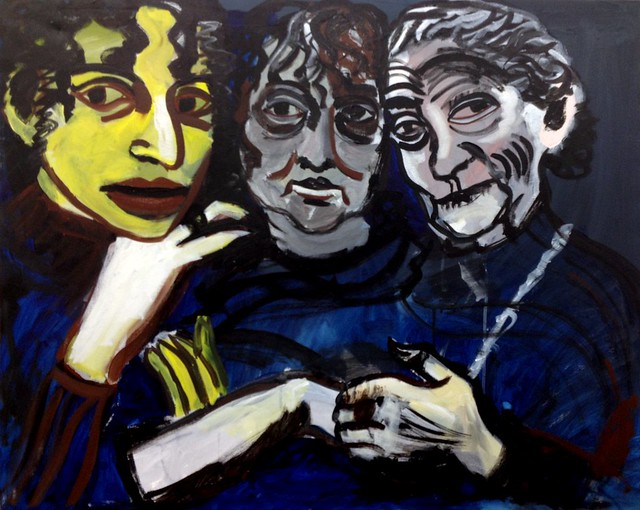
Silence 160x120cm oil on canvas  2013


Portrait, 160x122cm oil on canvas 2013


Portrait, 100x160cm oil on canvas 2013


Portrait, 27x38cm oil on cardboard 2013


Pause 120x160cm oil on canvas 2012


The Fire 60x50cm oil on canvas 2013


Snow 24x18cm oil on canvas 2013


Snow 24x18cm oil on canvas 2013


Snow 24x18cm oil on canvas 2013


The Window 122x122cm oil on canvas 2013

Source: maka.batiashvili.net

Monday, August 12, 2013

ART: "ARS MEDICINA" Zura Gikashvili and Zura Apkazashvili in Galla Galery - opening 16/05/2013. (youtube.com)

Sunday, March 17, 2013

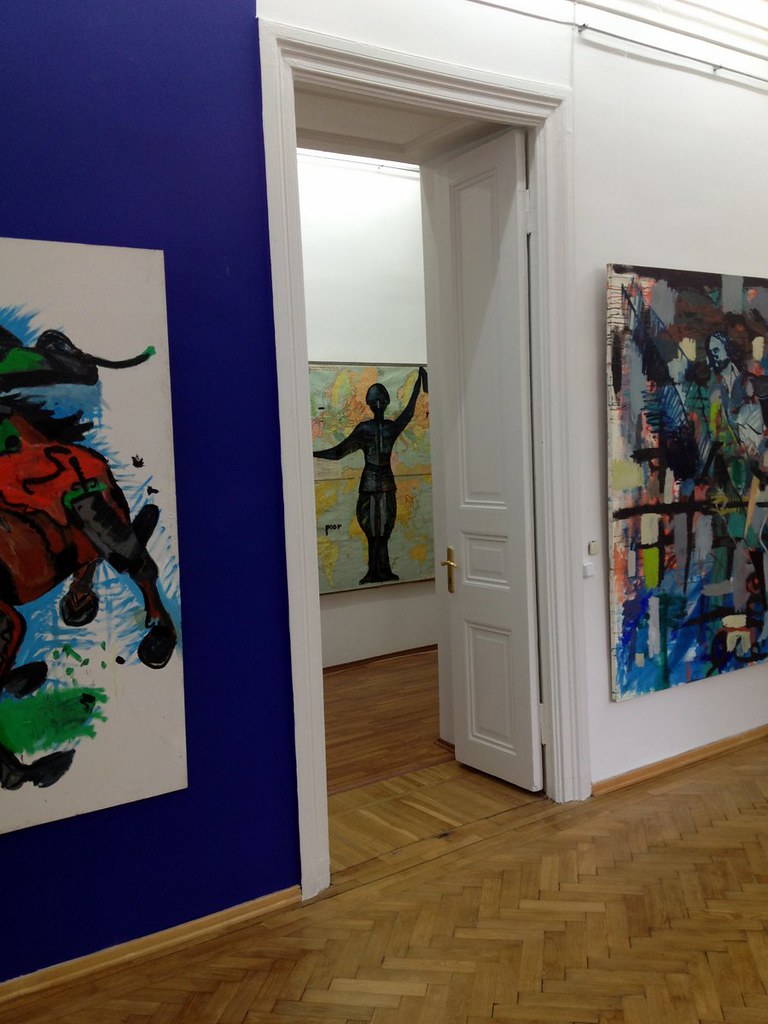
EXHIBITION: Paintings in Gamrekeli Gallery in Tbilisi 6-15 March 2013. By Hans Heiner Buhr


"The PDF of the show "The Turkish Rider" here docs.google.pdf

Slideshow from the exhibition here: flickr.com

More paintings: heinerbuhr.de
  
Gamrekeli Gallery, in Tbilisi, Georgia: facebook.com/Gamrekeli-Gallery

more photos - opening the exhibition: facebook.com//Gamrekeli-Gallery


Plakat:artclubcaucasus.blogspot.de

Friday, January 04, 2013

PHOTOGRAPHY: Privat Museum. By Guram Tsibakhashvili (tsibakha.com)

(tsibakha.com) Guram Tsibakhashvili
Date and place of birth - 01/02, 1960, Tbilisi, Georgia
Citizenship - Georgian
Civil status - Married
Education – 1977-1982 Tbilisi State University

Scholarships:
2006 – “Rezidenz”, Exchange Atelier for 1 and half month, Die drom, France
1999 – CMS Stifftung Grant, Exchange Atelier for 3 Months, Basel, Switzerland
1996 – “Kulturkonatct” grant, Austria

Working experience:
2007-Present, Chief Editor of “Photo Magazine” (The first photo magazine in Caucasus);
2007- Present, Tbilisi Photographer’s House, Co-founder;
2000 - Caucasian Center for Cultural Development - Media Art Farm (MAF), The First Institution of High Education in Photography in Caucasus, Co-founder;
1999- 2007 Photo editor of the magazine “Amarta”;
1988 - Present, Photographer of Local and international newspapers and magazines;

Taught programs in the theory and history of photography:
2008- Present, Caucasian University, Media School;
2007 -2009, Tbilisi State Academy of Art;
2001- 2006, Caucasian Center for Cultural Development, Media Art Farm (MAF);
1990-1994, Tbilisi State University


more: tsibakha.com