In 1966, Georgian folklorists, Prof. Grigol Chkhikvadze and Kakhi Rosebashvili invited the accomplished chanter Artem Erkomaishvili to Tbilisi State Conservatoire for the recording session of old Georgian sacred hymns.
The recording was performed with two tape-recorders in the so-called 'combined' manner. The first-voice part was recorded on tape-recorder and Artem tuned the second and bass parts to the top voice which was recorded with the second tape-recorder.
This way the unique recordings of all three parts of about 107 chants performed by the 79-year-old Artem survived; the recordings were cleaned, processed and the voice-parts were mixed as part of the joint project of Georgian Chanting Foundation and Tbilisi State Conservatoire.
The CD includes 37 selected chants.
℗ Tbilisi State Conservatoire, 1966
© Georgian Chanting Foundation, 2016
© Ilia Jgharkava, 2013-2016
My Grandfather, Artem Erkomaishvili (DVD and CD Included)
Authors: Anzor Erkomaishvili (Art Director of Rustavi, State Academic Ensemble of Georgian Folk Song and Dance, Tbilisi, Republic of Georgia)
Book Description:
In the book My Grandfather, Artem Erkomaishvili, the musical biography of the great Georgian singer-chanter Artem Erkomaishvili is described.
He was born to a traditional family of singers in 1887. He finished school for chanters and became a professional chanter thereafter (he knew more than 2,000 hymns). After the October Revolution, chanting was forbidden in Georgia. Artem formed a choir in Batumi that won in the first Olympiad of the Republic. Since that time, Artem Erkomaishvili’s choirs have always deserved the highest appraisals.
Though Artem experienced a difficult life that was quite painful and tragic, he channeled his talent in order to persevere. The book also comprises quite a few references about old singers-chanters.
This book informs readers about old traditions and customs like the Georgian New Year, Christmas, and Easter holidays. It also contains information on the rules for performing the traditional songs “Batonebo” (a healing song), “Alilo” (a Christmas song), “Elesa” (a work song), etc.
The book is also interesting in terms of its ethnographic point of view. Cultural activities such as tree cutting, wine-making, the distillation of spirits like Russian vodka, Japanese sake, and Georgian araki, the raising of the silkworms, or the carving of the chonguri (traditional Georgian musical instrument) are described and detailed within this monograph.
The musical epoch of Artem Erkomaishvili’s period, which was full of severe repressions under the Communist regime echoes throughout the pages. Church hymns, traditional songs, and anything connected to this question was strictly banned. Artem Erkomaishvili and his followers saved Georgian songs chants at their own risk. It is Artem’s outstanding contribution to the recognition of the Georgian polyphony as a masterpiece by UNESCO.
The book will act as a detailed reference for folklorists, and lovers of Georgian folk music will enjoy it very much. (Nova)
Table of Contents:
Preface
Chapter 1. At Grandfather Artem’s Grave
Chapter 2. How I Remember Batumi
Chapter 3. The History of the Erkomaishvilis
Chapter 4. First Gramophone Records
Chapter 5. Artem Erkomaishvili at the Chant School
Chapter 6. Philimon Qoridze
Chapter 7. Artem Erkomaishvili’s Biography (His Own Handwriting)
Chapter 8. The First Group Festival in Kutaisi
Chapter 9. Artem Erkomaishvili’s Group in Leningrad
Chapter 10. Tbilisi Festival (1937)
Chapter 11. Artem Erkomaishvili’s Group on Festivals (1934-1941)
Chapter 12. How I Remember Gigo Erkomaishvili
Chapter 13. Recording of Chants in Ozurgeti (1949)
Chapter 14. How I Was Baptized
Chapter 15. VI Republican Festival
Chapter 16. Artem, the Head of Ozurgeti Choir
Chapter 17. Brothers Artem, Ladiko, and Anania Erkomaishvili
Chapter 18. Gigo Erkomaishvili’s Family
Chapter 19. Grigol Berdzenishvili
Chapter 20. Chanters Artem Erkomaishvili, Varlam Simonishvili and Dimitri Patarava
Chapter 21. Artem Erkomaishvili’s Family Tragedy
Chapter 22. Anzor Erkomaishvili in Tbilisi
Chapter 23. Giorgi Nakashidze
Chapter 24. Artem Erkomaishvili in Makvaneti
Chapter 25. Table Rules in Guria
Chapter 26. Ceremonial and Ritual Songs in Guria
Chapter 27. Nadi and Naduri (Work) Songs
Chapter 28. Artem Agriculturist
Chapter 29. Artem Erkomaishvili a Virtuosic Performer on the Chonguri
Chapter 30. Artem’s Relatives
Chapter 31. The Last Period of my Grandfather’s Life
Chapter 32. Artem Erkomaishvili’s Decease
Chapter 33. The Main Moments from Artem Erkomaishvili's Creative Life
Chapter 34. At the Tomb of Artem Erkomaishvili
Index
Series: Fine Arts, Music and Literature
Binding: ebook
Pub. Date: 2018 - 1st Quarter
ISBN: 978-1-53612-638-9
Status: AV
Further links:
GEORGIAN FOLK Artem Erkomaishvili [alazani.ge]
Analysis of the Tbilisi State Conservatory Recordings of Artem Erkomaishvili in 1966 [researchgate.net]
Showing posts with label CD. Show all posts
Showing posts with label CD. Show all posts
Saturday, June 23, 2018


Tuesday, January 10, 2012
LOOKING FOR FUND: MARIA AND THE OCEANS by Natalie beridze/tba and Uta Bekaia
Leipzig, 2004: Wee invited Tusia Beridze and Nika Machaidze to Germany for playing their music and sounds during our festival OFF EUROPA (bfot.de). It was amazing! It was for me the first real contact with Tusia and Nikakoi. Later I followed their artwork. There was some concerts in Germany too ... together with Gudrun Guth (www.m-enterprise.de) for example... And some years ago I could meet the people for our small film for the German TV (MDR) in Tbilisi again. (VIDEO: youtube.com)
Now I will support the new project by Natalie Beridze and Uta Bekaia. AND otherwise I recommend in facebook, twitter and in other virtual places all my friends and people to do the same for this good artists - to getting find funds!! Also a small FUND can help to realize the PROJECT: MARIA AND THE OCEANS by Natalie beridze/tba and Uta Bekaia - A Music project in New York, NY by Paata U. Bekaia
ABOUT THIS PROJECT:
"Maria and the oceans" is a music album, of 13 songs, produced by electronic music producer, composer and singer Natalie Beridze/TBA and a multimedia artist and costume designer Uta Bekaia.
This project is a long-distance collaboration between New York and Tbilisi, Georgia, which was basically created via internet. Natalie produced music and prepared the arrangement in her studio and later sent it to Uta, to NY. they worked on lyrics separately and combined them like a patchwork afterwords. in the end Uta recorded vocals and sent them back to Natalie in Tbilisi for mixing.
"Maria and the oceans" is a multimedia project, consisting of music, music videos (director Nika Machaidze) and costumes (by Uta Bekaia), which are going to be created and used exclusively for videos, cover artwork and future live performances.
The album is ready in terms of music. we need funds for shooting TWO VIDEOS, that will come along with the album.
We've chosen a visionary Georgian director and musician Nika Machaidze (nikakoi), who we've worked with many times before. We're very much hoping to receive support.
Source: kickstarters.com
Now I will support the new project by Natalie Beridze and Uta Bekaia. AND otherwise I recommend in facebook, twitter and in other virtual places all my friends and people to do the same for this good artists - to getting find funds!! Also a small FUND can help to realize the PROJECT: MARIA AND THE OCEANS by Natalie beridze/tba and Uta Bekaia - A Music project in New York, NY by Paata U. Bekaia
ABOUT THIS PROJECT:
"Maria and the oceans" is a music album, of 13 songs, produced by electronic music producer, composer and singer Natalie Beridze/TBA and a multimedia artist and costume designer Uta Bekaia.
This project is a long-distance collaboration between New York and Tbilisi, Georgia, which was basically created via internet. Natalie produced music and prepared the arrangement in her studio and later sent it to Uta, to NY. they worked on lyrics separately and combined them like a patchwork afterwords. in the end Uta recorded vocals and sent them back to Natalie in Tbilisi for mixing.
"Maria and the oceans" is a multimedia project, consisting of music, music videos (director Nika Machaidze) and costumes (by Uta Bekaia), which are going to be created and used exclusively for videos, cover artwork and future live performances.
The album is ready in terms of music. we need funds for shooting TWO VIDEOS, that will come along with the album.
We've chosen a visionary Georgian director and musician Nika Machaidze (nikakoi), who we've worked with many times before. We're very much hoping to receive support.
Source: kickstarters.com
Monday, October 25, 2010
MUSIK: KlangWelten- WeltMusikFestival 2010 - mit Russudan Meipariani aus Georgien (klangwelten.com)
 KW 20045
CD im Digipack, 24-seitiges Booklet, 20 Titel
Gesamtspielzeit: ca 74 min
Ayarkhaan (Sibirien), Russudan Meipariani (Georgien), Lotus Duo (Vietnam), Jatinder Thakur (Indien), Rüdiger Oppermann (Europa)
Subskriptionspreis bis 18.11.2010: 16,00 €
Auf dieser CD spielen alle Beteiligten des 2010er KlangWelten-Festivals. Die Stücke sind von unterschiedlichster Herkunft und Entstehungsgeschichte. Da gibt es Feldaufnahmen, die Rüdiger Oppermann im Dorf von Odongo Oganga gemacht hat, Studioaufnahmen aus Jakutsk, Stücke die durch nachträgliches Überspielen neu gemischt wurden...
Alle Musiker präsentieren sich in Reinform, aber auch im ersten Zusammenspiel... Darunter gibt es auch einen Titel, in dem alle zusammenspielen.
Erstaunliche Kombinationen ergeben sich auch in kleinen Formaten: Da spielt Oppermann den Mundbogen zusammen mit sibirischen Maultrommeln, Russudan Meipariani singt mit den Schamaninnen zusammen, Jatinder Thakur spielt auf Russudans Musik. Ogangas Leier wird ergänzt durch Oppermanns afrikanische Bass-Harfe.... eine faszinierende CD mit starker ethischen Komponente und noch nie gehörten Kombinationen. Sorgfältig produziert in der bekannten kompromisslosen Qualität , Booklet mit wunderschönen Fotos aus den Herkunftsregionen der Musikerinnen. Ein Genuss für Herz, Hirn und Bauch.
Produziert von Rüdiger Oppermann.
mehr: www.klangwelten.com
Wednesday, July 14, 2010
MUSIC: Polyphonic Voices Of Georgia - The Anchiskhati Choir (soundsoftheuniverse.com)

Tracklisting
 1. Alilo PLAY
2. O, Holy God PLAY
3. God Is The Lord PLAY
4. St Nino's Collect-Hymn PLAY
5. O Come, Let Us Worship PLAY
6. The Angels In Heaven PLAY
7. Alilo (ver.2) PLAY
8. Alilo (ver.3) PLAY
9. You Are A Vine PLAY
10. Cross Your Worship PLAY
11. That We May Raise PLAY
12. A Mercy Of Peace PLAY
13. O Come, Let Us Worship (Ver.2) PLAY
14. Lord Forces, Be With Us PLAY
15. Christ Is Risen From The Dead PLAY
16. O Lord, Save Thy People PLAY
Information
The second release on our own World Audio Foundation sub-label features the deep sacred and spiritual vocal music from the Georgian Republic in Eastern Europe - at the border between Europe and Asia. Dating back to pre-Christian times, Georgian polyphonic chants are uniquely complex polyphonic melodies and comprise music sung for the Georgian Orthodox liturgical services. In 2001, Georgian polyphonic singing was proclaimed by Unesco as one of the Oral and Intangible Masterpieces of Humanity. The aim of this proclamation is to help sustain cultural diversity and human creativity in the face of the perceived effects of globalisation. The Anchiskhati Choir is the world’s leading exponent of Georgian polyphonic music. Recorded in Tbilisi, the members of the choir are both celebrated musicians and ethno-musicologists performing the documenting the history of this unique music. The CD comes with accompanying text, postcards and poster as well as coming in a distinctive WAF CD casing!
more here >>>
Wednesday, June 09, 2010
LERNEN: Sprachenlernen24.de Georgisch-Express-Sprachkurs
CD-ROM für Windows/Linux/Mac OS X + MP3-Audio-CD für Computer/MP3-Player/MP3-fähigen CD-Player (Audio CD)
Audio CD: 1 Seiten
Verlag: Udo Gollub; Auflage: 1., (11. Mai 2007)
Sprache: Deutsch
ISBN-10: 386725057X
ISBN-13: 978-3867250573
Die Sprachkurs-CD-ROM beinhaltet einen thematisch sortieren Wortschatz mit den 450 wichtigsten Wörtern zur Verständigung im Urlaub, 21 Wortlisten mit realistischen Urlaubssituationen. Zahlreiche interaktive Lernmethoden zur Erweiterung des Wortschatzes: fortschrittlich und effektiv zur Verständigung im Urlaub!
Die Lernmöglichkeiten mit diesem Sprachkurs sind vielfältig: Sie können Vokabeln und Redewendungen am Bildschirm lesen, diese per Mausklick anhören, über Ihre Tastatur eingeben, im Multiple-Choice-Verfahren auswählen oder als Liste und auf Karteikarten ausdrucken. Zusätzlich bietet Ihnen der Sprachkurs ein einzigartiges Lernprogramm, um das Gelernte dauerhaft in Ihrem aktiven Langzeitgedächtnis zu speichern, wo es jederzeit abgerufen werden kann: die so genannte 'Sprachenlernen24-Lernmethode'.
Mit der MP3-Audio-CD haben Sie einen Vokabeltrainer für unterwegs: Kopieren Sie die Vokabeln und Wortlisten auf Ihren MP3-Player, um auch flexibel unterwegs zu lernen. Selbstverständlich lernen Sie in diesem Sprachkurs das georgische Alphabet Mchedruli. Damit Sie wissen wie die Schrift zu lesen ist, finden Sie unter jedem eine lateinische Umschreibung.
Systemvoraussetzungen: Ob Windows, Linux oder Mac, unsere multimediale Lernsoftware läuft auf jedem Betriebssystem. Sie müssen nichts installieren, einfach die CD-ROM ins Laufwerk einlegen und los geht's!
Details: In wenigen Tagen fit für die Reise!
Lernsoftware mit Wortlisten, 450 Vokabeln, MP3-Audio-CD mit Vokabeltrainer für unterwegs, zahlreiche multimediale Lern- und Testmethoden zum Lesen, Testen und Anhören, Karteikarten zum Vokabellernen, Wort für Wort lernen mit Muttersprachlern.
Lauffähig ohne Installation und auf jedem Betriebssystem
Über den Autor
Sprachenlernen24 gehört zu der 1997 gegründeten Firma 'Online Media World', die mit einem Team aus erfahrenen Programmieren, Sprachwissenschaftlern, Autoren und Designern seit 2002 erfolgreich Sprachkurse entwickelt. Mittlerweile enthält das Sprachkursangebot über 60 Sprachen in bis zu drei verschiedenen Lernstufen.
AmazonShop: Books, Maps, Videos, Music & Gifts About The Caucasus
Audio CD: 1 Seiten
Verlag: Udo Gollub; Auflage: 1., (11. Mai 2007)
Sprache: Deutsch
ISBN-10: 386725057X
ISBN-13: 978-3867250573
Die Sprachkurs-CD-ROM beinhaltet einen thematisch sortieren Wortschatz mit den 450 wichtigsten Wörtern zur Verständigung im Urlaub, 21 Wortlisten mit realistischen Urlaubssituationen. Zahlreiche interaktive Lernmethoden zur Erweiterung des Wortschatzes: fortschrittlich und effektiv zur Verständigung im Urlaub!
Die Lernmöglichkeiten mit diesem Sprachkurs sind vielfältig: Sie können Vokabeln und Redewendungen am Bildschirm lesen, diese per Mausklick anhören, über Ihre Tastatur eingeben, im Multiple-Choice-Verfahren auswählen oder als Liste und auf Karteikarten ausdrucken. Zusätzlich bietet Ihnen der Sprachkurs ein einzigartiges Lernprogramm, um das Gelernte dauerhaft in Ihrem aktiven Langzeitgedächtnis zu speichern, wo es jederzeit abgerufen werden kann: die so genannte 'Sprachenlernen24-Lernmethode'.
Mit der MP3-Audio-CD haben Sie einen Vokabeltrainer für unterwegs: Kopieren Sie die Vokabeln und Wortlisten auf Ihren MP3-Player, um auch flexibel unterwegs zu lernen. Selbstverständlich lernen Sie in diesem Sprachkurs das georgische Alphabet Mchedruli. Damit Sie wissen wie die Schrift zu lesen ist, finden Sie unter jedem eine lateinische Umschreibung.
Systemvoraussetzungen: Ob Windows, Linux oder Mac, unsere multimediale Lernsoftware läuft auf jedem Betriebssystem. Sie müssen nichts installieren, einfach die CD-ROM ins Laufwerk einlegen und los geht's!
Details: In wenigen Tagen fit für die Reise!
Lernsoftware mit Wortlisten, 450 Vokabeln, MP3-Audio-CD mit Vokabeltrainer für unterwegs, zahlreiche multimediale Lern- und Testmethoden zum Lesen, Testen und Anhören, Karteikarten zum Vokabellernen, Wort für Wort lernen mit Muttersprachlern.
Lauffähig ohne Installation und auf jedem Betriebssystem
Über den Autor
Sprachenlernen24 gehört zu der 1997 gegründeten Firma 'Online Media World', die mit einem Team aus erfahrenen Programmieren, Sprachwissenschaftlern, Autoren und Designern seit 2002 erfolgreich Sprachkurse entwickelt. Mittlerweile enthält das Sprachkursangebot über 60 Sprachen in bis zu drei verschiedenen Lernstufen.
AmazonShop: Books, Maps, Videos, Music & Gifts About The Caucasus
Friday, April 10, 2009
CONCERT: Europa-Premiere!!! KITKA Women's Vocal Ensemble - "The Rusalka Cycle" by Mariana Sadovska (kitka.org)
I have known Shira Cion - Executive Director and Vocalist of this fabulous ensemble KITKA - about her interests for the Georgian Polyhonic Music. Now I am very glad that she can come together with her members of this choir to Europe for a concert tour. She wrote me than she was very interested in the music of the choir Tutarchela from Rustavi.
Links:
www.myspace.com/kitkawomensvocalensemble
en.wikipedia.org/wiki/Kitka
kitkablog.wordpress.com
www.myspace.com/marianasadovska

[for english version, please scroll down]
Liebe Freunde von Mariana Sadovska!
Wir freuen uns sehr auf den Besuch der acht Sängerinnen von KITKA Women's Vocal Ensemble (San Francisco), die auf ihrer Europa-Tournee in Köln den von Mariana Sadovska komponierten Zyklus "The Rusalka Cylce -Songs between the worlds" aufführen werden:
+++ +++ +++
So,19.04.2009 20 Uhr
"The Rusalka Cycle - Songs between the worlds" (Europa-Premiere)
Kitka Women's Vocal Ensemble (San Francisco) & Instrumentalisten
Komposition: Mariana Sadovska
Hypnotisierend sind ihre Gesänge. Gleich den Sirenen ziehen die Rusalki - geheimnisvolle Unterwasserschönheiten der slawischen Mythologie - arglose Unschuldige in den Untergang. Kitka präsentiert das Werk der Komponistin Mariana Sadovska zum ersten und einzigen Mal in Deutschland.
Stimmgewaltig. Betörend.
Im Rahmen der internationalen Plattform für Tanz und Theater "globalize:cologne" der Freihandelszone - ensemblenetzwerk köln
ORT: Lutherkirche, Martin-Luther-Platz, 50677 Köln
TICKETS: 0221/ 985 45 30 info@freihandelszone.org
www.globalizecologne.de
Mit Unterstützung durch das NRW Kultursekretariat (Wuppertal) und den Ministerpräsidenten des Landes NRW (gefördert im Rahmen von "das 3. Ohr") sowie von Mid Atlantic Arts Foundation durch USArtists International, Andrew W. Mellon Foundation, National Endowment for the Arts und Trust for Mutual Understanding.
+++ +++ +++
Herzliche Einladung und - frohe Ostern!
Alexandra Kalka
The Rusalka Cycle: Songs Between the Worlds
Music from the 2005 vocal-theater project co-created by Kitka, composer and music director Mariana Sadovska, and stage director Ellen Sebastian Chang.
In Slavic folklore, Rusalki are the restless spirits of women who have died unjust, untimely or unnatural deaths. They inhabit the waters, forests, and fields, luring people to them with their mesmerizing songs and wild laughter. Performed by the eight powerful vocalists of Kitka, The Rusalka Cycle is a riveting dream-like journey that weaves traditional Eastern European folk song together with original music by Mariana Sadovska. This CD features Kitka singing as you’ve never heard them sing before. With stirring accompaniment by cellists Moses Sedler and Elaine Kreston, and percussionist Kevin Mummey, this CD captures the highly dramatic and risk-taking performance piece that took the San Francisco Bay Area by storm in the fall of 2005. Plans are currently underway to tour The Rusalka Cycle nationally and internationally in 2007-2008.
--------
Dear friends of Mariana Sadovska!
We are very much looking forward to the European premiere of Mariana Sadovska's work "The Rusalka Cycle..." by Kitka Women's Vocal Ensemble (San Francisco) in Cologne:
+++ +++ +++
Sun,19/04/2009 20h00
The Rusalka Cycle - Songs between the worlds
Kitka Women's Vocal Ensemble (San Francisco) & instrumentalists
Music: Mariana Sadovska
Beware of the mesmerizing songs of the siren-like beauties that inhabit the streams and lakes, the forests and fields. In Slavic folklore, these restless spirits called Rusalki will draw unsuspecting innocents to their doom. Kitka presents this work, composed by Mariana Sadovska, for the first time and only once in Germany - a haunting and bewitching experience.
In the frame of the international performance-series "globalize:cologne" of the theater label Freihandelszone - ensemblenetzwerk köln
VENUE: Lutherkirche, Martin-Luther-Platz, 50677 Köln
TICKETS: 0221/ 985 45 30 info@freihandelszone.org
www.globalizecologne.de
Supported by: NRW Kultursekretariat (Wuppertal) and the Ministerpräsident of Northrhine Westphalia (in the frame of "das 3. Ohr") and by Mid Atlantic Arts Foundation through USArtists International, Andrew W. Mellon Foundation, National Endowment for the Arts and Trust for Mutual Understanding.
+++ +++ +++
Glad to meet you there.... and - Happy Easter!
Best wishes
Alexandra Kalka
+++ -- +++ -- +++
BORDERLAND Mariana Sadovska & Band
info@borderlandmusic.de
www.borderlandmusic.de
Grolmanstr. 26
50825 Köln
GERMANY
--
Shira Cion, Executive Director and Vocalist
Kitka
1201 Martin Luther King Jr. Way, Oakland, CA 94612 USA
510.444.0323 shira@kitka.org
www.kitka.org
UPCOMING KITKA EVENTS:
4/11/09-4/18/09: Residency at the Grotowski Institute Forest Base, Brzezinka, Poland
4/19/09: THE RUSALKA CYCLE at Lutherkirche, Globalize Festival, Cologne, Germany
4/20/09: THE RUSALKA CYCLE on WDR Radio, Cologne, Germany
4/22-26/09: THE RUSALKA CYCLE at Giving Voice Festival, Wroclaw, Poland
4/29/09: THE RUSALKA CYCLE at Mohylanka Theatre Academy, Kiev, Ukraine
4/30-5/2/09: Ukrainian Village Expeditions with Ensemble Bozhychi
5/9/09: SANCTUARY: Kitka in Concert with Tzvetanka and Ivan Varimezovi, Early Music Now at St. Josephat Cathedral, Milwaukee, WI
For more info: www.kitka.org
Links:
www.myspace.com/kitkawomensvocalensemble
en.wikipedia.org/wiki/Kitka
kitkablog.wordpress.com
www.myspace.com/marianasadovska
[for english version, please scroll down]
Liebe Freunde von Mariana Sadovska!
Wir freuen uns sehr auf den Besuch der acht Sängerinnen von KITKA Women's Vocal Ensemble (San Francisco), die auf ihrer Europa-Tournee in Köln den von Mariana Sadovska komponierten Zyklus "The Rusalka Cylce -Songs between the worlds" aufführen werden:
+++ +++ +++
So,19.04.2009 20 Uhr
"The Rusalka Cycle - Songs between the worlds" (Europa-Premiere)
Kitka Women's Vocal Ensemble (San Francisco) & Instrumentalisten
Komposition: Mariana Sadovska
Hypnotisierend sind ihre Gesänge. Gleich den Sirenen ziehen die Rusalki - geheimnisvolle Unterwasserschönheiten der slawischen Mythologie - arglose Unschuldige in den Untergang. Kitka präsentiert das Werk der Komponistin Mariana Sadovska zum ersten und einzigen Mal in Deutschland.
Stimmgewaltig. Betörend.
Im Rahmen der internationalen Plattform für Tanz und Theater "globalize:cologne" der Freihandelszone - ensemblenetzwerk köln
ORT: Lutherkirche, Martin-Luther-Platz, 50677 Köln
TICKETS: 0221/ 985 45 30 info@freihandelszone.org
www.globalizecologne.de
Mit Unterstützung durch das NRW Kultursekretariat (Wuppertal) und den Ministerpräsidenten des Landes NRW (gefördert im Rahmen von "das 3. Ohr") sowie von Mid Atlantic Arts Foundation durch USArtists International, Andrew W. Mellon Foundation, National Endowment for the Arts und Trust for Mutual Understanding.
+++ +++ +++
Herzliche Einladung und - frohe Ostern!
Alexandra Kalka
The Rusalka Cycle: Songs Between the Worlds
Music from the 2005 vocal-theater project co-created by Kitka, composer and music director Mariana Sadovska, and stage director Ellen Sebastian Chang.
In Slavic folklore, Rusalki are the restless spirits of women who have died unjust, untimely or unnatural deaths. They inhabit the waters, forests, and fields, luring people to them with their mesmerizing songs and wild laughter. Performed by the eight powerful vocalists of Kitka, The Rusalka Cycle is a riveting dream-like journey that weaves traditional Eastern European folk song together with original music by Mariana Sadovska. This CD features Kitka singing as you’ve never heard them sing before. With stirring accompaniment by cellists Moses Sedler and Elaine Kreston, and percussionist Kevin Mummey, this CD captures the highly dramatic and risk-taking performance piece that took the San Francisco Bay Area by storm in the fall of 2005. Plans are currently underway to tour The Rusalka Cycle nationally and internationally in 2007-2008.
--------
Dear friends of Mariana Sadovska!
We are very much looking forward to the European premiere of Mariana Sadovska's work "The Rusalka Cycle..." by Kitka Women's Vocal Ensemble (San Francisco) in Cologne:
+++ +++ +++
Sun,19/04/2009 20h00
The Rusalka Cycle - Songs between the worlds
Kitka Women's Vocal Ensemble (San Francisco) & instrumentalists
Music: Mariana Sadovska
Beware of the mesmerizing songs of the siren-like beauties that inhabit the streams and lakes, the forests and fields. In Slavic folklore, these restless spirits called Rusalki will draw unsuspecting innocents to their doom. Kitka presents this work, composed by Mariana Sadovska, for the first time and only once in Germany - a haunting and bewitching experience.
In the frame of the international performance-series "globalize:cologne" of the theater label Freihandelszone - ensemblenetzwerk köln
VENUE: Lutherkirche, Martin-Luther-Platz, 50677 Köln
TICKETS: 0221/ 985 45 30 info@freihandelszone.org
www.globalizecologne.de
Supported by: NRW Kultursekretariat (Wuppertal) and the Ministerpräsident of Northrhine Westphalia (in the frame of "das 3. Ohr") and by Mid Atlantic Arts Foundation through USArtists International, Andrew W. Mellon Foundation, National Endowment for the Arts and Trust for Mutual Understanding.
+++ +++ +++
Glad to meet you there.... and - Happy Easter!
Best wishes
Alexandra Kalka
+++ -- +++ -- +++
BORDERLAND Mariana Sadovska & Band
info@borderlandmusic.de
www.borderlandmusic.de
Grolmanstr. 26
50825 Köln
GERMANY
--
Shira Cion, Executive Director and Vocalist
Kitka
1201 Martin Luther King Jr. Way, Oakland, CA 94612 USA
510.444.0323 shira@kitka.org
www.kitka.org
UPCOMING KITKA EVENTS:
4/11/09-4/18/09: Residency at the Grotowski Institute Forest Base, Brzezinka, Poland
4/19/09: THE RUSALKA CYCLE at Lutherkirche, Globalize Festival, Cologne, Germany
4/20/09: THE RUSALKA CYCLE on WDR Radio, Cologne, Germany
4/22-26/09: THE RUSALKA CYCLE at Giving Voice Festival, Wroclaw, Poland
4/29/09: THE RUSALKA CYCLE at Mohylanka Theatre Academy, Kiev, Ukraine
4/30-5/2/09: Ukrainian Village Expeditions with Ensemble Bozhychi
5/9/09: SANCTUARY: Kitka in Concert with Tzvetanka and Ivan Varimezovi, Early Music Now at St. Josephat Cathedral, Milwaukee, WI
For more info: www.kitka.org
Tuesday, March 10, 2009
MUSIC: Course of Armenian Duduk by Gevorg Dabaghyan. 20 March 2009 - 22 March 2009
Armenian News Network / Groong, March 9, 2009
By Minas Lourian
In collaboration with the music section of the Studies and Documentation Centre of Armenian Culture, Venice, directed by Minas Lourian, the Intercultural Institute of Comparative Music Studies (Cini Foundation) has organized, for the fourth consecutive year, a course on the duduk, a double-reed woodwind instrument made of apricot wood. A symbol of the Armenian musical tradition, the duduk (conventionally called the "Armenian oboe") is a very popular instrument with a warm slightly nasal tone creating evocative sounds. It is played to accompany songs and dancing in all the regions of Armenia and is the principal instrument at weddings and funerals. In 2005 the duduk (or dziranapogh in Armenian) was decreed a masterpiece representing the Armenian musical tradition in the UNESCO "Programme of Masterpieces of the Oral and Intangible Heritage of Humanity".
Gevorg Dabaghyan is a major living expert on this very ancient instrument. He has founded several ensembles, including Shoghaken, a group dedicated to conserving the very rich Armenian folk music heritage. Liturgical music also features prominently in Dabaghyan's vast repertory and is a fundamental part of a thousand-year old tradition characterised by strong Christian roots, going back to when Armenia was the first country to proclaim Christianity as its state religion in 301.
Participants are required to enrol: musica.comparata@cini.it
Minas Lourian can be reached at Minas Lourian
Location Centro Studi e Documentazione della Cultura Armena - Biblioteca
Zenobiana del Temanza
Corte Zappa, Dorsoduro 1602, I- 30123 VENEZIA (ITALY)
Time Friday 20 March, 2.00-6.00 pm/Saturday 21 and Sunday 22 March, 11.00
am - 3.00 pm
http://www.dabaghyan.com/
VIDEO: Dreams (Anurjner) By Gevorg Dabaghyan
AmazonShop: Books, Maps, Videos, Music & Gifts About The Caucasus
By Minas Lourian
In collaboration with the music section of the Studies and Documentation Centre of Armenian Culture, Venice, directed by Minas Lourian, the Intercultural Institute of Comparative Music Studies (Cini Foundation) has organized, for the fourth consecutive year, a course on the duduk, a double-reed woodwind instrument made of apricot wood. A symbol of the Armenian musical tradition, the duduk (conventionally called the "Armenian oboe") is a very popular instrument with a warm slightly nasal tone creating evocative sounds. It is played to accompany songs and dancing in all the regions of Armenia and is the principal instrument at weddings and funerals. In 2005 the duduk (or dziranapogh in Armenian) was decreed a masterpiece representing the Armenian musical tradition in the UNESCO "Programme of Masterpieces of the Oral and Intangible Heritage of Humanity".
Gevorg Dabaghyan is a major living expert on this very ancient instrument. He has founded several ensembles, including Shoghaken, a group dedicated to conserving the very rich Armenian folk music heritage. Liturgical music also features prominently in Dabaghyan's vast repertory and is a fundamental part of a thousand-year old tradition characterised by strong Christian roots, going back to when Armenia was the first country to proclaim Christianity as its state religion in 301.
Participants are required to enrol: musica.comparata@cini.it
Minas Lourian can be reached at Minas Lourian
Location Centro Studi e Documentazione della Cultura Armena - Biblioteca
Zenobiana del Temanza
Corte Zappa, Dorsoduro 1602, I- 30123 VENEZIA (ITALY)
Time Friday 20 March, 2.00-6.00 pm/Saturday 21 and Sunday 22 March, 11.00
am - 3.00 pm
http://www.dabaghyan.com/
VIDEO: Dreams (Anurjner) By Gevorg Dabaghyan
AmazonShop: Books, Maps, Videos, Music & Gifts About The Caucasus
CD: Anthology of Azerbaijani Mugam (amazon.com)
Heritage of the centuries..., July 25, 2005
By E. R. "Shirvanshah"(Baku, Azerbaijan)
The art of mugham is an important branch of verbal heritage of the culture of Azerbaijan professional music. It has deep roots in cultural traditions and history of Azerbaijan people. Great number of followers of this cultural tradition in the country, and an important role it plays in the national culture as a source of endless enthusiasm for the composers, painters, sculptors and poets of speak about the basis of this culture in Azerbaijan. Several common features relate Azerbaijani mugham with Iran destgahs, Uzbek and Tajik shashkoms, Uygur mukams, India ragas, Arabian nubas and Turkish tegsims. They comprise the common artistic traditions of the oriental music. The art of mugham is one of the main cultural wealth that forms the basis for national self-consciousness and self-identification of the Azerbaijanis. This kind of art is also famous among the Talishes, the mountain the Jewess, the Armenians, the Lezgins, the Georgians, the Avars and other ethnic groups living in the territory of Azerbaijan.
Artistic values of Azerbaijani mugham for national culture and the culture of the whole world and its high sense acknowledged by highly authorized international organization YUNESKO in 2003. YUNESKO appreciated mugham as 'one of the masterpieces of the verbal and non-material heritage of the world'.
The term 'mugham' in Azerbaijan music also means the categories of fret, melody and genre.
In the meaning of 'fret' the term 'mugham' is used at least 700 years. In the booklet of the prominent theoretician, performer and composer of Azerbaijani music Abdulgadir Maragai lived in the 14th century, mugham is applied to 12 main frets wide spread in the music of the Near and the Middle East (Buselik, Neva, Ushshag, Irag, Isfahan, Zirafkend, Bozurg,Rehavi, Huseyni and Hijaz). Today mugham is not only the main 7 melodies in Azerbaijani music (Rast, Shur, Segah, Chahargah, Bayati-Shiraz, Humayun, Shushter)but also a number of tonic variants (Mahur, Dugah, Bayati-Gajar, Kharic Segah, Orta Segah, Mirza Huseyn Segahi, Yetim Segah, etc.). Thus in its wide meaning the term 'mugham' is also applied to the main subclasses of the main frets and generally reflect them as fret.
Melodies with free measure in modern life of Azerbaijan music are also called 'mugham'. In spite of the fact that the traditional repertoire of mugham comprises different types, i.e. the melodies without any measure or improvised melodies ('bahrsiz hava'), melodies with tact measure('bahrli hava') and melodies of mixed types of the measure ('garishig bahrli hava'),when a singer is asked to perform a mugham he surely understands 'bahrsiz hava'. The wide spread idea is that melodic style of mugham derived from the traditional reading of Koran, but according to the opinion of some scientists it is alike the traditions of anthem performing of Avesta. The opinions differ on one hand and overlap in sacral character of mugham on the other.
Mugham is the general name of the largest genre of traditional Azerbaijan music and is applied to all of its forms. Nevertheless they all carry their own names. Main forms of music representing this genre are destgah (vocal-instrumental or instrumental), mugham (vocal-instrumental, solo-instrumental and solo-vocal) and zerbi-mugham. The largest for the volume and literary idea among the forms of mugham in Azerbaijan music is destgah.
Vocal-instrumental destgahs (the earliest variety of the destgah) widely spread in Shusha, Shamakhi, Baku, Ganja, Lenkeran and Sheki cities of Azerbaijan in the 19th century. Mir Mohsun Nevvab Garabagi gave first scientific description of mugham in the booklet 'Vuzuhul-erqam'(1884). Despite of the fact the destgahs had stable principles of form till 20th of the 20th century. The same destgah might be performed differently by mugham schools of Garabag, Baku and Shamakhi.
In 1922 teaching of mugham included in to the curriculum of the first European type musical school established in Baku. Construction of the curriculum caused reforms in the structure of Azerbaijan destgahs and the relative unification of traditional district schools. According to the request of Uzeyir Hajibayov (1885-1948) a group of the prominent musicians (Mirza Faraj Rzayev, Mirza Mansur Mansurov, Ahmed khan Bakikhanov, Seyid Shushunski, Zulfi Adigozalov) worked out reduced versions of the destgahs for education. Nevertheless in 1920s and 1930s versions extended by the-that time masters existed simultaneously with the versions for education. Reduced versions started to be performed later in concerts, radio and recorded to the gramophones thus strengthening its position. Many melodies performed in Azerbaijan destgahs in the first decade of the 20th century were already forgotten in the 1960-1970s.
As a musical term 'destgah' means 'set or sum of the tons and steps'. The form is based on the set of the several definite melodies-'mughams' different in each destgah. For example, the set of the melodies in 'Rast' destgah is differed from the set of the frets of 'Chahargah' destgah. The pattern of the destgah in Azerbaijan music, i.e. composition of the fret cycle may only have the abovementioned main melodies and their tonal variants. The main difference between the forms of destgah and that of mugham is that the musical pattern of the destgah comprises several various mugham- fret system, while mugham is composed of the musical composition of one mugham-fret with all the possible tonal varieties. Destgah and mugham also differ in their volumes. (Rahab mugham is an exception here, as in the process of its historical evolution it changed from destgah to mugham and in some degree preserved the principles of the fret and composition of the destgah).
Vocal-instrumental varieties of the compositions are performed by the group of the performers. The group is composed of a singer-khanende, playing on gaval (percussion musical instrument), tar (a musical instrument) and kamancha (a musical instrument).
This group of the mugham and destgah performers is called 'trio of mugham' and spread in Azerbaijan since the late 19th century. There exist larger groups of performers, too. Performance of the destgah by one soloist-khanende (singer) has widely spread in the practice of Azerbaijan music during the recent times.
Vocal-instrumental destgah is composed of standard musical measure (Deramed, Tesnifs, Regler (colours)) and free verse improvising parts (Berdasht, Maye and Shohbet). There are some destgahs based on the simultaneous sequence of both melody types (Zerbi-Mugham). Practically,all the parts of the destgah, except Berdasht might be performed apart from destgah in the form of small musical forms. Each of the parts of the destgah has their definite function and form. Deramed and Berdasht are prelude instrumental plays. The third part, Maya (translated as the base, dough leaven) is the main and the largest part of each destgah. Deramed, Berdasht and Shohbet are inseparable parts of the vocal instrumental destgah; they determine its motion and logics. The Tesnifs (music type vocal instrumental melodies) and Rengler (shades) (mainly in instrumental plays supposed for dances) divide the destgah into layers and bring beauty to it. The performer is free to choose them for his/her wish, taste and the literary meaning.
The rule of following of the parts in destgah is as follows: from tonic (Maya) melody rises to the highest level of the tonic and again returns to Maya; this form the stepping structure of the raise and then destgah is completed. The dramaturgy of destgah is a cycle of the changing spiritual condition of a human. The sequence of those conditions is directed to the emotional peak at each destgah. Artistic conception of the destgah takes the human through emotional cases ('moments') morally freeing and purifying him and embodies the idea of the moral way of human's personality. This way is laid through gradual release of human spirit from the social ties, through separation from the outer world and interference the world of the personal feelings and experiences. Sometimes the peak of this process is the ecstatic reflection of the feelings. Then comes freedom.
The art of mugham is tightly related with the classic poetry.
Some of the melodies in the mughams carry the names of the forms of the poems, such as, mesnevi, saginame, semai, shehrashub, dubeyti. This shows the relation of the melodic pattern to those forms of the poetry, or even the source of those patterns. The melodies of the vocal mugham are performed by the poems of the quantitative meter fitted to the peculiarities of Azerbaijan language.
Gazal, a genre of the classical poetry is the main form of the poems performed in mughams. The singers of the past prefer the gazals of the middle age Azerbaijani poets, such as Nizami Ganjavi and Khagani Shirvani (12th centiry), Imadeddin Nasimi(14th century),Shah Ismail Khatai and Mahammad Fuzuli (16th century), Molla Panah Vagif (18th century), Khurshid banu Natavan and Seyid Ezim Shirvani (19th century).The singers of the modern period mainly prefer the gazals of Aliaga Vahid(20th century), the latter classic poet of Azerbaijan.
Alongside with the gazal it is possible to use in mughams (especially in zerbi-mughams) national poems in the forms of goshma or bayati. Singer is free to choose the kind of the poem, but he should take into consideration the melodic peculiarities of the mugham he performs. For instance, gazals chosen for 'Rast' mugham that have positive emotive shades would not fit to 'Humayun' mugham, that according to the description of U.Hajibeyov carries the shades of 'deep sadness' or to 'Shushter' mugham mainly performed at religious or mourning ceremonies.
Till the early 20th century Azerbaijani khanendes (singers) followed the tradition to perform the mugham with Persian poems. The tradition broken by the prominent Azerbaijani khanende Jabbar Garyagdioglu (1861-1944); foundered the tradition to perform the mughams in Azerbaijani language. This tradition was popular not in Azerbaijan, but also in the South Caucasus.
Among the instrumental varieties of the mugham have the same structure and the principles of extension of the form as in the vocal-instrumental varieties. The difference is that Deramed, Berdasht and Tesnifs are not performed in the instrumental compositions.
Instrumental kinds of the mugham widely spread at early 20th centuries when new talented instrumentalists appeared in Azerbaijan and developed instrumental performance. Particular role in the process plaid the changes made on the tar (musical instrument) by Mirza Sadig Asad oglu. Once brought to Azerbaijan from Iran, the tar possessed stronger sound useful for the concerts. Today the destgahs might be solely performed on other traditional instruments, for example on kamancha, ud, canon (stringed), zourna, balaban, ney(breathing). Beginning with the 20th century some European instruments (clarinet, oboe, accordion) penetrated the traditional music and performance of mugham on them is appreciated by the audience as authentic.
Both the vocal-instrumental and instrumental varieties of the genre might be performed both in the form of melody cycle (destgah) or in one-part melodic improvisation in one fret.
Small mughams (vocal-instrumental and instrumental)-'Rahab', 'Gatar', 'Shahnaz', 'Sarenj', 'Bayati-Kurd', 'Neva', 'Deshti', 'Hijaz', etc. in comparison with the other destgahs are free musical compositions of smaller volume. If tesnifs may comprise from 5 to 10-12 subdivisions, with the exception of the tesnifs and the shades, mughams are generally composed of about 3 subdivisions. The only mugham that have more than 5 divisions is 'Rahab'.
Vocal mugham (without instrumental accompaniment) is performed in the ceremonies or in mourning, and is performed by the gazals and gasidaz written in religious or mourning character.
Zerbi-mughams (rhythmic mughams) are composed of one-part vocal-instrumental composition performed within one fret and referred to the group of the small independent forms of mugham.18 samples of this mugham used in the 19th century are preserved in 'Garabag shikestesi', 'Shirvan shikestesi', 'Kesme shikeste', 'Zerbi-Simayi-Shems', 'Zerbi-Mensuriyye', 'Arazbari', 'Ovshari', 'Maani' and 'Heyrati'. The characteristic feature of those compositions is co-ordination of the independent in measure vocal melodies (usually of high register) with rhythmic instrumental accompaniment. There are totally instrumental patterns ('Heydari') of this genre that are kept within the frames in definite measure ('bahri hava').
Culture of mugham performance
Literary and musical societies established in Azerbaijan cities beginning from 20thsof the 19th century to the beginning of the 20th century played great role in extension of mugam performance and gave it professional shape. The most famous among them were 'Mejlisi-Feramushan', 'Mejlisi-Uns', 'Society of mucisians' in Shusha, 'Beytus-safa' and musical society of Mahmud aga in Shamakhi,'Majma-ush-suara' in Baku, 'Divani-hikmet' in Ganja, 'Anjuman-Ush-shuara' in Ordubad, 'Fovjul-fusaha' in Lenkeran. The poems, literary men, musicians, intellectuals, experts and connoisseurs of the classical poetry and music gathered in those societies, carefully listened to mughams, made discussions around tender performance of the music and the poem. In the 19th century the society was one of the main forms where mugham performed before the auditory. Concert form of musical performance at early 20th century and democratization of Azerbaijan music caused disappearance of those societies.
The societies formed tasteful, understanding auditory level ('the society of the wise') that required particular culture and careful listening of the mugam as well as its high artistic performance. At late 19th and early 20th centuries the societies stimulated professional perfection of Azerbaijan musicians.
The school of rovzakhanlar (performers of musical repertoire in the ceremonies) under the mosques also carried some educational importance. The boys with good voice were taught here perfect performance of mughams and correct pronunciation of the classical poems. Till the 20s of the 20th century those schools were the only educational institutions that served professional perfection of mugham performers.
Since 20s of the 20th century-in the Soviet Period, musical education, as well as the education of mugham in Azerbaijan crossed 3 steps: secondary school-technical school-conservatoire. Thus the process of teaching mugham formally takes 14-15 years. According to the opinions of mugham performers, professional perfection is achieved not less than in 5-10 years of the professional training. To master mugham and to become the professional of his/her profession the performer needs 20-25 years. Such higher level of the requirements raises mugham to the level of professional art of verbal tradition.
The art of mugham performance requires the performer special musical memory and comprehension, capability of improvising, talent of composing. Professional musician should know all the mugham repertoires, be able to perform before the audience without repetition. Khanende should know the classical poetry and the measures of eruz, the range of his/her voice should not be less than two octaves. The instrumentalist (sazende) should be able to perform mugham in different solo and accompanied versions. Mugham performer possessing all the abovementioned peculiarities is called a master.
The process of mugham teaching was and is realized in the form of the repetitions started by the teacher and continued by the student. The teacher performs parts from the melody and the student repeats till strengthening in the mind, the process goes on with the following fragment of the melody. In majority of the cases the students use the compact disks with the melody that they learn. They also use Dictaphones to write the melody they learn and the advices of their teachers.
The culture of mugham performance formed of the creative achievements of the prominent musicians- the heritages of the khanendes and sazendez famous in all the Caucasus and Iran. The great khanendez of the past were Mirza Sattar, Haji Husu, Meshedi Isi, Ebulhasan khan Azer Igbal, Mirza Mukhtar Mammadzadeh, Jabbar Garyagdi oglu, Alesker Abdullayev, Abdulbagi Zulalov, Agasaid Agabalaoglu, Mirtagi Mirbabayev, Majid Behbudov, Kechesi oglu Mahammad, Islam Abdullayev, Meshedi Mammad Farzaliyev, Huseyngulu Sarabski, Seyid and Khan Shushinskis, Bulbul and Zulfu Adigozalov, the prominent sazendez(instrumentalists) of the past tar players Mirza Sadig Asad oglu, Mirza Faraj Rzayev, Meshedi Jamil Amirov, Shirin Akhundov, Meshedi Zeynal Hagverdiyev, Mirza Mansur Mansurov, Gurban Pirimov, brothers Bakikhanovs , Pasha Aliyev and Firuz Alizadeh, kamancha players Ismail Talishinsli, Gilman Salahov, the prominent clarinet players Abutalib Yusifov, Kamranbeyim, Ehed Aliyev, Kerbalayi Letif, Teyyub Demirov and the zourna player Ali Kerimov.
In the Soviet period the art of mugham was preserved by the khanendes Abulfat Aliyev, Gulu Asgarov, Nariman Aliyev, Hagigat Rzayeva, Yaver Kelenterli,Zehra Rahimova, Jahan Talishinskaya, Fatma Mehraliyeva, Rubaba Muradova, Shovket Alekberova, Tohfa Aliyeva, Hajibaba Huseynov and Yagub Mammadov, the tar players Ahsan Dadashov, Bahram Mansurov, Baba Salahov, Kamil Ahmadov, Haji Mammadov, Habib Bayramov, Mammadaga Muradov, Amirulla Mammadbeyli, Khosrov Malikov, Geray Melikov, Adil Geray and Anver Mansurov, the kaman players Gilman Salahov, Talat Bakhikhanov, Elman Badalov and Adalet Vezirov, the clarinet players Latif Alitev, Abutalib Yusifov, Ahad Farzali Oglu, Meshedi Ali and Teyyub Demirov and the national music performers Nadir Akhundov, Agasef Seyidof and Firuza Zeynalova.
Performers and pedagogues like the khanendes Islam Rzayev, Arif Babayev, Alibaba Mammadov, Janali Akberov, Agakhan Abdullayev, Alim Gasimov, Mansum Ibrahimov, Sakina Ismayilova, Gandab Guliyeva, Melekhanum Eyyubova, Zabit Nabizadeh, Zahid Guliyev, the tar players Agaselim Abdullayev, Vamig Mammadaliyev, Mohlet Muslumov, Firuz Aliyev, Server Ibrahimov and kaman players Habil Aliyev, Mirnazim Asadullayev, Shafiga Eyvazova and Fakhraddin Dadashov also made great contribution to Azerbaijan culture of mugham performance.
Azerbaijani musicians were the first in the Moslem East who started tours to the Europe. They recorded gramophones and attracted the auditory which was non-traditional to mugham. For the first time in 1906 an English Joint-Stock Company 'Gramophone' recorded Azerbaijani music to gramophone records in the performance of the famous khanende Jabbar Gryagdi and other musicians of Azerbaijan. In the period 1906-1914 some gramophone-recording studios, as well as French company 'Brothers Pate', Germanic Joint-Stock Company 'Sport- Record', Russian companies 'Extraphone', 'Concert-Record', 'Monarc-Record', 'Gramophone-Record' and 'Premier- Record' issued tens of records with Azerbaijani mughams, tesnifs and colours(shades).
After the establishment of the Soviet regime in Azerbaijan, particularly beginning with 1930s, culture of music had completely been taken under the state control. Policy of 'Iron barrier' applied by the soviet state, for a long time created and obstacle for Azerbaijani music and Azerbaijani musicians to the international music market. On the first decade of the 20th century, in the period when Western auditorium interested in the culture of the East, traditional musicians of the Soviet East had for evident political situation an obstacle on their ways as well. The large place in artistic market of the West, among all the music cultures of the Moslem Middle East occupied traditional Arabic, Iran and Turkish music. Azerbaijan mugham lost its position in the foreign cultural environment and nihilist tendency expressed in evident slogans ('down with tar!', 'down with mugham') of the 20-30s of the past century gradually weakened the social status of mugham.
Beginning with the 30s of the 20th century to 1970s the primitive attitude to mugham gradually strengthened its position in Azerbaijan society, but it still remained popular in part of this society. Attitude toward the art of mugham started to be changed only at 1970s, when the first international symposiums and festivals of traditional music held under YUNESKO's support (Moscow 1971, Alma-Ata 1973, Samergend 1978, 1983) and when those processes caused the reaction in the soviet society. Thus those measures gave start to interest towards art of mugham and negative attitude toward mugham changed to highly professional art.
Beginning with the 1990s art of Azerbaijan mugam attracts the attentions of the audience, specialists and the managers in the world. Traditional musicians of Azerbaijan participate at the international festivals, made tours about the world, their disks produced in the largest record-studios of the West.
The art of mugham stimulated creation of the 20th century Azerbaijan composers. Beginning with 1908, when Azerbaijani composer Uzeyir Hajibeyov staged his first opera in Baku and gave the start to professional musical theatre in Azerbaijan, many new musical works created on the basis of mugham. Those are opera of mugham( brothers Uzeyir and Jeyhun Hajibeyovs and others), symphonic and chorus mughams (Fikret Emirov, Niyazi, Suleyman Alesgerov, Nzim Aliverdibeyov), sonta-mugham (Agshin Alizadeh, Nariman Mammadov), jazz-mugham (Vagif Mustafazadeh, Rafig Babayev, Azize Mustafazadeh). Growing list of works of Azerbaijani composers is based on the principles of mugham.
more:
* datacomm.ch
* wikipedia.org/wiki/Mugham
* Aserbaidschanisches Mugam
* WELLCOME TO «MUGAM»
* mugam.ru/en/
* azeriyoungsters.blogspot.com
* Azerbaijani mugham between tradition and innovation
AmazonShop: Books, Maps, Videos, Music & Gifts About The Caucasus
By E. R. "Shirvanshah"(Baku, Azerbaijan)
The art of mugham is an important branch of verbal heritage of the culture of Azerbaijan professional music. It has deep roots in cultural traditions and history of Azerbaijan people. Great number of followers of this cultural tradition in the country, and an important role it plays in the national culture as a source of endless enthusiasm for the composers, painters, sculptors and poets of speak about the basis of this culture in Azerbaijan. Several common features relate Azerbaijani mugham with Iran destgahs, Uzbek and Tajik shashkoms, Uygur mukams, India ragas, Arabian nubas and Turkish tegsims. They comprise the common artistic traditions of the oriental music. The art of mugham is one of the main cultural wealth that forms the basis for national self-consciousness and self-identification of the Azerbaijanis. This kind of art is also famous among the Talishes, the mountain the Jewess, the Armenians, the Lezgins, the Georgians, the Avars and other ethnic groups living in the territory of Azerbaijan.
Artistic values of Azerbaijani mugham for national culture and the culture of the whole world and its high sense acknowledged by highly authorized international organization YUNESKO in 2003. YUNESKO appreciated mugham as 'one of the masterpieces of the verbal and non-material heritage of the world'.
The term 'mugham' in Azerbaijan music also means the categories of fret, melody and genre.
In the meaning of 'fret' the term 'mugham' is used at least 700 years. In the booklet of the prominent theoretician, performer and composer of Azerbaijani music Abdulgadir Maragai lived in the 14th century, mugham is applied to 12 main frets wide spread in the music of the Near and the Middle East (Buselik, Neva, Ushshag, Irag, Isfahan, Zirafkend, Bozurg,Rehavi, Huseyni and Hijaz). Today mugham is not only the main 7 melodies in Azerbaijani music (Rast, Shur, Segah, Chahargah, Bayati-Shiraz, Humayun, Shushter)but also a number of tonic variants (Mahur, Dugah, Bayati-Gajar, Kharic Segah, Orta Segah, Mirza Huseyn Segahi, Yetim Segah, etc.). Thus in its wide meaning the term 'mugham' is also applied to the main subclasses of the main frets and generally reflect them as fret.
Melodies with free measure in modern life of Azerbaijan music are also called 'mugham'. In spite of the fact that the traditional repertoire of mugham comprises different types, i.e. the melodies without any measure or improvised melodies ('bahrsiz hava'), melodies with tact measure('bahrli hava') and melodies of mixed types of the measure ('garishig bahrli hava'),when a singer is asked to perform a mugham he surely understands 'bahrsiz hava'. The wide spread idea is that melodic style of mugham derived from the traditional reading of Koran, but according to the opinion of some scientists it is alike the traditions of anthem performing of Avesta. The opinions differ on one hand and overlap in sacral character of mugham on the other.
Mugham is the general name of the largest genre of traditional Azerbaijan music and is applied to all of its forms. Nevertheless they all carry their own names. Main forms of music representing this genre are destgah (vocal-instrumental or instrumental), mugham (vocal-instrumental, solo-instrumental and solo-vocal) and zerbi-mugham. The largest for the volume and literary idea among the forms of mugham in Azerbaijan music is destgah.
Vocal-instrumental destgahs (the earliest variety of the destgah) widely spread in Shusha, Shamakhi, Baku, Ganja, Lenkeran and Sheki cities of Azerbaijan in the 19th century. Mir Mohsun Nevvab Garabagi gave first scientific description of mugham in the booklet 'Vuzuhul-erqam'(1884). Despite of the fact the destgahs had stable principles of form till 20th of the 20th century. The same destgah might be performed differently by mugham schools of Garabag, Baku and Shamakhi.
In 1922 teaching of mugham included in to the curriculum of the first European type musical school established in Baku. Construction of the curriculum caused reforms in the structure of Azerbaijan destgahs and the relative unification of traditional district schools. According to the request of Uzeyir Hajibayov (1885-1948) a group of the prominent musicians (Mirza Faraj Rzayev, Mirza Mansur Mansurov, Ahmed khan Bakikhanov, Seyid Shushunski, Zulfi Adigozalov) worked out reduced versions of the destgahs for education. Nevertheless in 1920s and 1930s versions extended by the-that time masters existed simultaneously with the versions for education. Reduced versions started to be performed later in concerts, radio and recorded to the gramophones thus strengthening its position. Many melodies performed in Azerbaijan destgahs in the first decade of the 20th century were already forgotten in the 1960-1970s.
As a musical term 'destgah' means 'set or sum of the tons and steps'. The form is based on the set of the several definite melodies-'mughams' different in each destgah. For example, the set of the melodies in 'Rast' destgah is differed from the set of the frets of 'Chahargah' destgah. The pattern of the destgah in Azerbaijan music, i.e. composition of the fret cycle may only have the abovementioned main melodies and their tonal variants. The main difference between the forms of destgah and that of mugham is that the musical pattern of the destgah comprises several various mugham- fret system, while mugham is composed of the musical composition of one mugham-fret with all the possible tonal varieties. Destgah and mugham also differ in their volumes. (Rahab mugham is an exception here, as in the process of its historical evolution it changed from destgah to mugham and in some degree preserved the principles of the fret and composition of the destgah).
Vocal-instrumental varieties of the compositions are performed by the group of the performers. The group is composed of a singer-khanende, playing on gaval (percussion musical instrument), tar (a musical instrument) and kamancha (a musical instrument).
This group of the mugham and destgah performers is called 'trio of mugham' and spread in Azerbaijan since the late 19th century. There exist larger groups of performers, too. Performance of the destgah by one soloist-khanende (singer) has widely spread in the practice of Azerbaijan music during the recent times.
Vocal-instrumental destgah is composed of standard musical measure (Deramed, Tesnifs, Regler (colours)) and free verse improvising parts (Berdasht, Maye and Shohbet). There are some destgahs based on the simultaneous sequence of both melody types (Zerbi-Mugham). Practically,all the parts of the destgah, except Berdasht might be performed apart from destgah in the form of small musical forms. Each of the parts of the destgah has their definite function and form. Deramed and Berdasht are prelude instrumental plays. The third part, Maya (translated as the base, dough leaven) is the main and the largest part of each destgah. Deramed, Berdasht and Shohbet are inseparable parts of the vocal instrumental destgah; they determine its motion and logics. The Tesnifs (music type vocal instrumental melodies) and Rengler (shades) (mainly in instrumental plays supposed for dances) divide the destgah into layers and bring beauty to it. The performer is free to choose them for his/her wish, taste and the literary meaning.
The rule of following of the parts in destgah is as follows: from tonic (Maya) melody rises to the highest level of the tonic and again returns to Maya; this form the stepping structure of the raise and then destgah is completed. The dramaturgy of destgah is a cycle of the changing spiritual condition of a human. The sequence of those conditions is directed to the emotional peak at each destgah. Artistic conception of the destgah takes the human through emotional cases ('moments') morally freeing and purifying him and embodies the idea of the moral way of human's personality. This way is laid through gradual release of human spirit from the social ties, through separation from the outer world and interference the world of the personal feelings and experiences. Sometimes the peak of this process is the ecstatic reflection of the feelings. Then comes freedom.
The art of mugham is tightly related with the classic poetry.
Some of the melodies in the mughams carry the names of the forms of the poems, such as, mesnevi, saginame, semai, shehrashub, dubeyti. This shows the relation of the melodic pattern to those forms of the poetry, or even the source of those patterns. The melodies of the vocal mugham are performed by the poems of the quantitative meter fitted to the peculiarities of Azerbaijan language.
Gazal, a genre of the classical poetry is the main form of the poems performed in mughams. The singers of the past prefer the gazals of the middle age Azerbaijani poets, such as Nizami Ganjavi and Khagani Shirvani (12th centiry), Imadeddin Nasimi(14th century),Shah Ismail Khatai and Mahammad Fuzuli (16th century), Molla Panah Vagif (18th century), Khurshid banu Natavan and Seyid Ezim Shirvani (19th century).The singers of the modern period mainly prefer the gazals of Aliaga Vahid(20th century), the latter classic poet of Azerbaijan.
Alongside with the gazal it is possible to use in mughams (especially in zerbi-mughams) national poems in the forms of goshma or bayati. Singer is free to choose the kind of the poem, but he should take into consideration the melodic peculiarities of the mugham he performs. For instance, gazals chosen for 'Rast' mugham that have positive emotive shades would not fit to 'Humayun' mugham, that according to the description of U.Hajibeyov carries the shades of 'deep sadness' or to 'Shushter' mugham mainly performed at religious or mourning ceremonies.
Till the early 20th century Azerbaijani khanendes (singers) followed the tradition to perform the mugham with Persian poems. The tradition broken by the prominent Azerbaijani khanende Jabbar Garyagdioglu (1861-1944); foundered the tradition to perform the mughams in Azerbaijani language. This tradition was popular not in Azerbaijan, but also in the South Caucasus.
Among the instrumental varieties of the mugham have the same structure and the principles of extension of the form as in the vocal-instrumental varieties. The difference is that Deramed, Berdasht and Tesnifs are not performed in the instrumental compositions.
Instrumental kinds of the mugham widely spread at early 20th centuries when new talented instrumentalists appeared in Azerbaijan and developed instrumental performance. Particular role in the process plaid the changes made on the tar (musical instrument) by Mirza Sadig Asad oglu. Once brought to Azerbaijan from Iran, the tar possessed stronger sound useful for the concerts. Today the destgahs might be solely performed on other traditional instruments, for example on kamancha, ud, canon (stringed), zourna, balaban, ney(breathing). Beginning with the 20th century some European instruments (clarinet, oboe, accordion) penetrated the traditional music and performance of mugham on them is appreciated by the audience as authentic.
Both the vocal-instrumental and instrumental varieties of the genre might be performed both in the form of melody cycle (destgah) or in one-part melodic improvisation in one fret.
Small mughams (vocal-instrumental and instrumental)-'Rahab', 'Gatar', 'Shahnaz', 'Sarenj', 'Bayati-Kurd', 'Neva', 'Deshti', 'Hijaz', etc. in comparison with the other destgahs are free musical compositions of smaller volume. If tesnifs may comprise from 5 to 10-12 subdivisions, with the exception of the tesnifs and the shades, mughams are generally composed of about 3 subdivisions. The only mugham that have more than 5 divisions is 'Rahab'.
Vocal mugham (without instrumental accompaniment) is performed in the ceremonies or in mourning, and is performed by the gazals and gasidaz written in religious or mourning character.
Zerbi-mughams (rhythmic mughams) are composed of one-part vocal-instrumental composition performed within one fret and referred to the group of the small independent forms of mugham.18 samples of this mugham used in the 19th century are preserved in 'Garabag shikestesi', 'Shirvan shikestesi', 'Kesme shikeste', 'Zerbi-Simayi-Shems', 'Zerbi-Mensuriyye', 'Arazbari', 'Ovshari', 'Maani' and 'Heyrati'. The characteristic feature of those compositions is co-ordination of the independent in measure vocal melodies (usually of high register) with rhythmic instrumental accompaniment. There are totally instrumental patterns ('Heydari') of this genre that are kept within the frames in definite measure ('bahri hava').
Culture of mugham performance
Literary and musical societies established in Azerbaijan cities beginning from 20thsof the 19th century to the beginning of the 20th century played great role in extension of mugam performance and gave it professional shape. The most famous among them were 'Mejlisi-Feramushan', 'Mejlisi-Uns', 'Society of mucisians' in Shusha, 'Beytus-safa' and musical society of Mahmud aga in Shamakhi,'Majma-ush-suara' in Baku, 'Divani-hikmet' in Ganja, 'Anjuman-Ush-shuara' in Ordubad, 'Fovjul-fusaha' in Lenkeran. The poems, literary men, musicians, intellectuals, experts and connoisseurs of the classical poetry and music gathered in those societies, carefully listened to mughams, made discussions around tender performance of the music and the poem. In the 19th century the society was one of the main forms where mugham performed before the auditory. Concert form of musical performance at early 20th century and democratization of Azerbaijan music caused disappearance of those societies.
The societies formed tasteful, understanding auditory level ('the society of the wise') that required particular culture and careful listening of the mugam as well as its high artistic performance. At late 19th and early 20th centuries the societies stimulated professional perfection of Azerbaijan musicians.
The school of rovzakhanlar (performers of musical repertoire in the ceremonies) under the mosques also carried some educational importance. The boys with good voice were taught here perfect performance of mughams and correct pronunciation of the classical poems. Till the 20s of the 20th century those schools were the only educational institutions that served professional perfection of mugham performers.
Since 20s of the 20th century-in the Soviet Period, musical education, as well as the education of mugham in Azerbaijan crossed 3 steps: secondary school-technical school-conservatoire. Thus the process of teaching mugham formally takes 14-15 years. According to the opinions of mugham performers, professional perfection is achieved not less than in 5-10 years of the professional training. To master mugham and to become the professional of his/her profession the performer needs 20-25 years. Such higher level of the requirements raises mugham to the level of professional art of verbal tradition.
The art of mugham performance requires the performer special musical memory and comprehension, capability of improvising, talent of composing. Professional musician should know all the mugham repertoires, be able to perform before the audience without repetition. Khanende should know the classical poetry and the measures of eruz, the range of his/her voice should not be less than two octaves. The instrumentalist (sazende) should be able to perform mugham in different solo and accompanied versions. Mugham performer possessing all the abovementioned peculiarities is called a master.
The process of mugham teaching was and is realized in the form of the repetitions started by the teacher and continued by the student. The teacher performs parts from the melody and the student repeats till strengthening in the mind, the process goes on with the following fragment of the melody. In majority of the cases the students use the compact disks with the melody that they learn. They also use Dictaphones to write the melody they learn and the advices of their teachers.
The culture of mugham performance formed of the creative achievements of the prominent musicians- the heritages of the khanendes and sazendez famous in all the Caucasus and Iran. The great khanendez of the past were Mirza Sattar, Haji Husu, Meshedi Isi, Ebulhasan khan Azer Igbal, Mirza Mukhtar Mammadzadeh, Jabbar Garyagdi oglu, Alesker Abdullayev, Abdulbagi Zulalov, Agasaid Agabalaoglu, Mirtagi Mirbabayev, Majid Behbudov, Kechesi oglu Mahammad, Islam Abdullayev, Meshedi Mammad Farzaliyev, Huseyngulu Sarabski, Seyid and Khan Shushinskis, Bulbul and Zulfu Adigozalov, the prominent sazendez(instrumentalists) of the past tar players Mirza Sadig Asad oglu, Mirza Faraj Rzayev, Meshedi Jamil Amirov, Shirin Akhundov, Meshedi Zeynal Hagverdiyev, Mirza Mansur Mansurov, Gurban Pirimov, brothers Bakikhanovs , Pasha Aliyev and Firuz Alizadeh, kamancha players Ismail Talishinsli, Gilman Salahov, the prominent clarinet players Abutalib Yusifov, Kamranbeyim, Ehed Aliyev, Kerbalayi Letif, Teyyub Demirov and the zourna player Ali Kerimov.
In the Soviet period the art of mugham was preserved by the khanendes Abulfat Aliyev, Gulu Asgarov, Nariman Aliyev, Hagigat Rzayeva, Yaver Kelenterli,Zehra Rahimova, Jahan Talishinskaya, Fatma Mehraliyeva, Rubaba Muradova, Shovket Alekberova, Tohfa Aliyeva, Hajibaba Huseynov and Yagub Mammadov, the tar players Ahsan Dadashov, Bahram Mansurov, Baba Salahov, Kamil Ahmadov, Haji Mammadov, Habib Bayramov, Mammadaga Muradov, Amirulla Mammadbeyli, Khosrov Malikov, Geray Melikov, Adil Geray and Anver Mansurov, the kaman players Gilman Salahov, Talat Bakhikhanov, Elman Badalov and Adalet Vezirov, the clarinet players Latif Alitev, Abutalib Yusifov, Ahad Farzali Oglu, Meshedi Ali and Teyyub Demirov and the national music performers Nadir Akhundov, Agasef Seyidof and Firuza Zeynalova.
Performers and pedagogues like the khanendes Islam Rzayev, Arif Babayev, Alibaba Mammadov, Janali Akberov, Agakhan Abdullayev, Alim Gasimov, Mansum Ibrahimov, Sakina Ismayilova, Gandab Guliyeva, Melekhanum Eyyubova, Zabit Nabizadeh, Zahid Guliyev, the tar players Agaselim Abdullayev, Vamig Mammadaliyev, Mohlet Muslumov, Firuz Aliyev, Server Ibrahimov and kaman players Habil Aliyev, Mirnazim Asadullayev, Shafiga Eyvazova and Fakhraddin Dadashov also made great contribution to Azerbaijan culture of mugham performance.
Azerbaijani musicians were the first in the Moslem East who started tours to the Europe. They recorded gramophones and attracted the auditory which was non-traditional to mugham. For the first time in 1906 an English Joint-Stock Company 'Gramophone' recorded Azerbaijani music to gramophone records in the performance of the famous khanende Jabbar Gryagdi and other musicians of Azerbaijan. In the period 1906-1914 some gramophone-recording studios, as well as French company 'Brothers Pate', Germanic Joint-Stock Company 'Sport- Record', Russian companies 'Extraphone', 'Concert-Record', 'Monarc-Record', 'Gramophone-Record' and 'Premier- Record' issued tens of records with Azerbaijani mughams, tesnifs and colours(shades).
After the establishment of the Soviet regime in Azerbaijan, particularly beginning with 1930s, culture of music had completely been taken under the state control. Policy of 'Iron barrier' applied by the soviet state, for a long time created and obstacle for Azerbaijani music and Azerbaijani musicians to the international music market. On the first decade of the 20th century, in the period when Western auditorium interested in the culture of the East, traditional musicians of the Soviet East had for evident political situation an obstacle on their ways as well. The large place in artistic market of the West, among all the music cultures of the Moslem Middle East occupied traditional Arabic, Iran and Turkish music. Azerbaijan mugham lost its position in the foreign cultural environment and nihilist tendency expressed in evident slogans ('down with tar!', 'down with mugham') of the 20-30s of the past century gradually weakened the social status of mugham.
Beginning with the 30s of the 20th century to 1970s the primitive attitude to mugham gradually strengthened its position in Azerbaijan society, but it still remained popular in part of this society. Attitude toward the art of mugham started to be changed only at 1970s, when the first international symposiums and festivals of traditional music held under YUNESKO's support (Moscow 1971, Alma-Ata 1973, Samergend 1978, 1983) and when those processes caused the reaction in the soviet society. Thus those measures gave start to interest towards art of mugham and negative attitude toward mugham changed to highly professional art.
Beginning with the 1990s art of Azerbaijan mugam attracts the attentions of the audience, specialists and the managers in the world. Traditional musicians of Azerbaijan participate at the international festivals, made tours about the world, their disks produced in the largest record-studios of the West.
The art of mugham stimulated creation of the 20th century Azerbaijan composers. Beginning with 1908, when Azerbaijani composer Uzeyir Hajibeyov staged his first opera in Baku and gave the start to professional musical theatre in Azerbaijan, many new musical works created on the basis of mugham. Those are opera of mugham( brothers Uzeyir and Jeyhun Hajibeyovs and others), symphonic and chorus mughams (Fikret Emirov, Niyazi, Suleyman Alesgerov, Nzim Aliverdibeyov), sonta-mugham (Agshin Alizadeh, Nariman Mammadov), jazz-mugham (Vagif Mustafazadeh, Rafig Babayev, Azize Mustafazadeh). Growing list of works of Azerbaijani composers is based on the principles of mugham.
more:
* datacomm.ch
* wikipedia.org/wiki/Mugham
* Aserbaidschanisches Mugam
* WELLCOME TO «MUGAM»
* mugam.ru/en/
* azeriyoungsters.blogspot.com
* Azerbaijani mugham between tradition and innovation
AmazonShop: Books, Maps, Videos, Music & Gifts About The Caucasus
MUSIC: Next selection round in first Mugham Competition to be held today (anspress.com)
Selected performers will represent the country in the first International Mugham Festival.
The next selection round in the 1st Mugham Competition will be held today. The selected performers will represent the country in the first International Mugham Festival to be held in Baku The selection will be carried out by a board of jury including a number of prominent Azerbaijani arts and culture figures.
The selected candidates will later join the “The World of Mugham” international festival where they will have to work hard to perform programs best depicting the richness and the diversity of the national music heritage within a half an hour. The jury of seven persons will judge the performances based on the rating assessment system.
source: anspress.com
Qasimov, Alim (Aserbaidschan) THE LEGENDARY ART OF MUGHAM
World-Network Serie 6. Le Monde nennt ihn "eine der größten Stimmen der Welt". Die FAZ spricht von einem "Stimmwunder: Qasimov explodiert in dramatische Triller, schlägt verwirrende Salti, stürzt aus sphärischen Höhen wie ein Raubvogel in die Tiefe und fliegt elegant der Erleuchtung entgegen. Begleitet wird Alim Qasimov von zwei vielfach ausgezeichneten Musikern an Laute und Spießgeige. Unesco-Musikpreis 1999. Choc du Monde de la Musique. Network. Nur bei uns. CD 9,99 €. Nr. 495101. Bestellen Wünschen Trackliste
1-01 Elinde Sazin Kurban/Sen Sümbül - Alim Qasimov Ensemble (12:42)
1-02 Mugham Shour - Alim Qasimov Ensemble (38:53)
1-03 Getme Getme/Aman Avdji - Alim Qasimov Ensemble (9:58)
1-04 Mihriban Olam - Alim Qasimov Ensemble (2:25)
1-05 Beh Beh - Alim Qasimov Ensemble (3:22)Gesamtspielzeit: 67:20
source: zweitausendeins.de
The next selection round in the 1st Mugham Competition will be held today. The selected performers will represent the country in the first International Mugham Festival to be held in Baku The selection will be carried out by a board of jury including a number of prominent Azerbaijani arts and culture figures.
The selected candidates will later join the “The World of Mugham” international festival where they will have to work hard to perform programs best depicting the richness and the diversity of the national music heritage within a half an hour. The jury of seven persons will judge the performances based on the rating assessment system.
source: anspress.com
Qasimov, Alim (Aserbaidschan) THE LEGENDARY ART OF MUGHAM
World-Network Serie 6. Le Monde nennt ihn "eine der größten Stimmen der Welt". Die FAZ spricht von einem "Stimmwunder: Qasimov explodiert in dramatische Triller, schlägt verwirrende Salti, stürzt aus sphärischen Höhen wie ein Raubvogel in die Tiefe und fliegt elegant der Erleuchtung entgegen. Begleitet wird Alim Qasimov von zwei vielfach ausgezeichneten Musikern an Laute und Spießgeige. Unesco-Musikpreis 1999. Choc du Monde de la Musique. Network. Nur bei uns. CD 9,99 €. Nr. 495101. Bestellen Wünschen Trackliste
1-01 Elinde Sazin Kurban/Sen Sümbül - Alim Qasimov Ensemble (12:42)
1-02 Mugham Shour - Alim Qasimov Ensemble (38:53)
1-03 Getme Getme/Aman Avdji - Alim Qasimov Ensemble (9:58)
1-04 Mihriban Olam - Alim Qasimov Ensemble (2:25)
1-05 Beh Beh - Alim Qasimov Ensemble (3:22)Gesamtspielzeit: 67:20
source: zweitausendeins.de
Wednesday, June 18, 2008
JAZZ: Die neue CD von Stephan Micus - "Snow" - Der Kaukasus war die Inspiration
 Die Anregungen zum neuen Album ergaben sich zu einem guten Teil aus einer längeren Studienreise nach Armenien und Berg-Karabach und in die Berge des Kaukasus. Micus durchstreifte die unwegsamen und extrem einsamen Gebiete teilweise per Jeep, teilweise auch auf ausgedehnten Touren zu Fuß. Er traf Menschen unterschiedlichster Milieus und lernte ihre Lebensumstände und ihre Musiktraditionen näher kennen.
Wie immer reiste er jedoch mit dem konkreten Ziel, neue instrumentale oder vokale Techniken bei traditionellen Meistern zu erlernen. Im Herbst 2006 hielt sich Micus zum zweiten Mal für längere Zeit in der armenischen Hauptstadt Eriwan auf, um intensiven Duduk-Unterricht zu nehmen. Das armenische Doppelrohrblattinstrument aus Aprikosenholz, dessen Existenz schon in vorchristlicher Zeit belegt ist und das heute auf der UNESCO-Liste der Meisterwerke des mündlichen und immateriellen Erbes der Menschheit steht, spielte schon auf dem Album "Towards The Wind" (ECM 1804; erschienen 2002) eine wichtige Rolle.
"Snow" (Ecm Record (Universal) 2008) stellt es nun quasi als Hauptakteur des musikalischen Geschehens in den Mittelpunkt und läßt es in bisher ungehörten Konstellationen mit Instrumenten aus Afrika, Asien, Süd- und Nordamerika und Europa auftreten, unter anderem in einem besonders ausdrucksvollen Duo mit der bayerischen Zither. Auch auf "Snow" setzt Micus die verwendeten Klangerzeuger aus aller Welt in unorthodoxen Kontexten ein, er verändert sie überdies aber auch technisch und benutzt modifizierte Weiterentwicklungen, die er bei Instrumentenbauern vor Ort bestellt hat. So wird etwa das traditionelle Bordun- und Begleitinstrument Bass-Duduk mit weit ausgreifenden Melodielinien betraut, und zugleich spielt Micus eine vergrößerte Version, deren Tonumfang tiefer reicht und die noch einen dunkleren Klang hervorbringt. "Ich habe immer die Neigung zu möglichst großen und tiefen Instrumenten, und jedes Mal, wenn ich irgendwo in der Welt eine dieser Sonderanfertigungen bestelle, zeigen die Meister in den Werkstätten ihre Skepsis. Doch meist folgt dieser Skepsis wachsende Begeisterung, sobald das neue Instrument klingt und seine erweiterten Möglichkeiten zu erkennen gibt", sagt Micus. [...]
"Ich empfinde eine starke Verbundenheit mit den Klängen dieser traditionsreichen Instrumente. Für mich stehen sie irgendwo an der Grenze zwischen Gegenstand und Lebewesen, zwischen Objekt und Person, und manchmal denke ich, daß sie tatsächlich zu den beseelten Wesen zählen. Man muß zu hören versuchen, was sie selbst erzählen wollen, daraus entsteht fast zwangsläufig eine Verbindung mit ihrer traditionellen Klangsprache. Dabei ist es mir sehr wichtig, daß ich keine bereits existierenden Melodien übernehme oder auch nur Fragmente davon, sondern eine ganz eigene Sprache entwickle."
Mitunter kommt es auch zu einer ganz bewußten Verfremdung des herkömmlichen Charakters der Instrumente. Auf "Snow" wird dies deutlich hörbar beim sehr freien Umgang mit der bayerischen Zither, die das große Duduk-Solo von "Midnight Sea" begleitet. Während sie auf dem Vorgängeralbum "On The Wing" komplett ausgespart war, spielt Micus' - mitunter zum mächtigen Chor vervielfachte - Gesangsstimme nun wieder eine zentrale Rolle. Viermal reiste der Musiker in den vergangenen zwölf Jahren nach Georgien, um dort die Kunst des traditionellen Chorgesangs zu erlernen. Zusammen mit zwei Lehrern erforschte er die polyphonen, meist dreistimmigen Gesänge des Landes zwischen Kaukasus und Schwarzem Meer. Weitere Anregungen erhielt Micus bei einem Studienaufenthalt in Bulgarien, dessen berühmte Frauenchöre er seit langem bewundert. ....
Der ganze Text >>>
Saturday, May 31, 2008

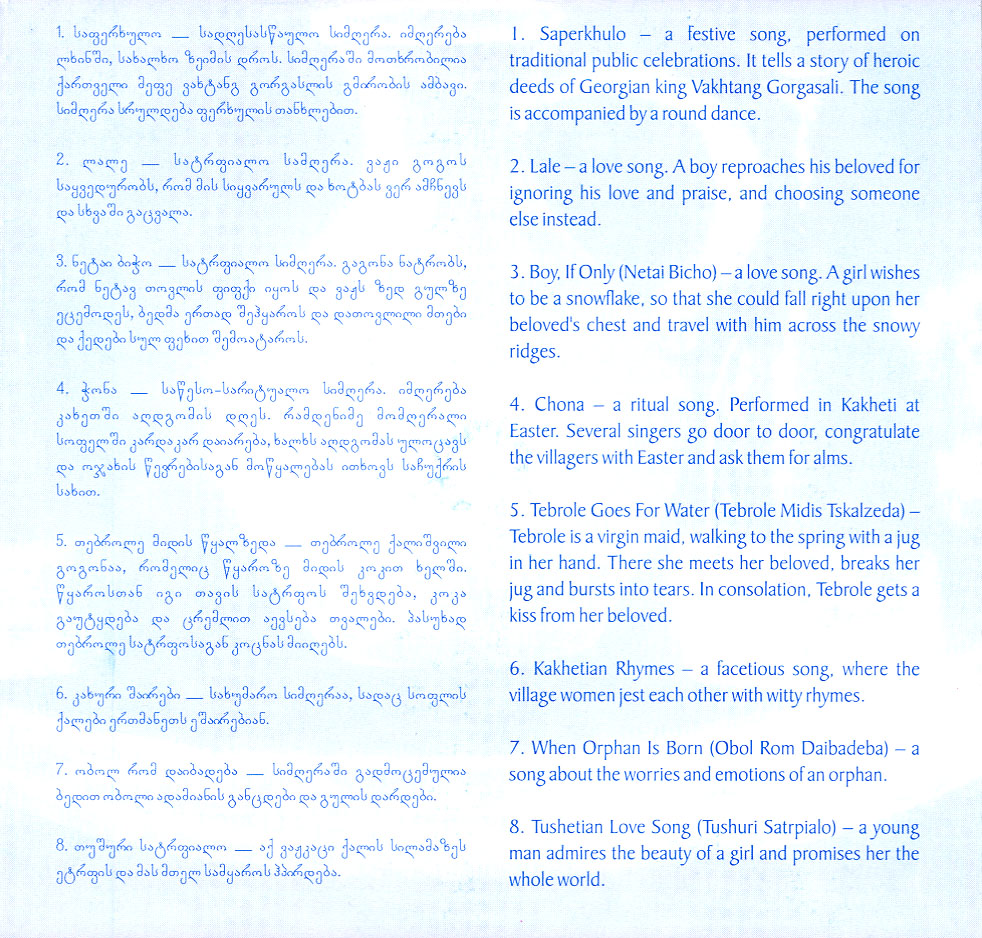
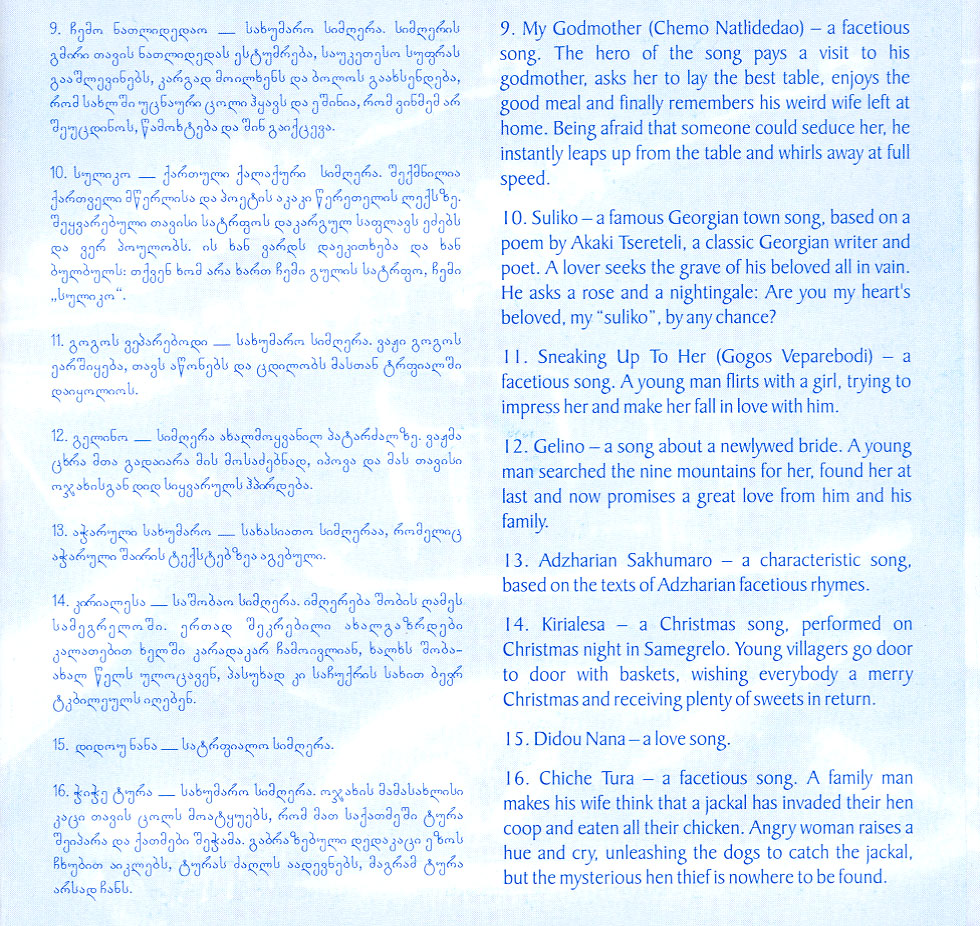

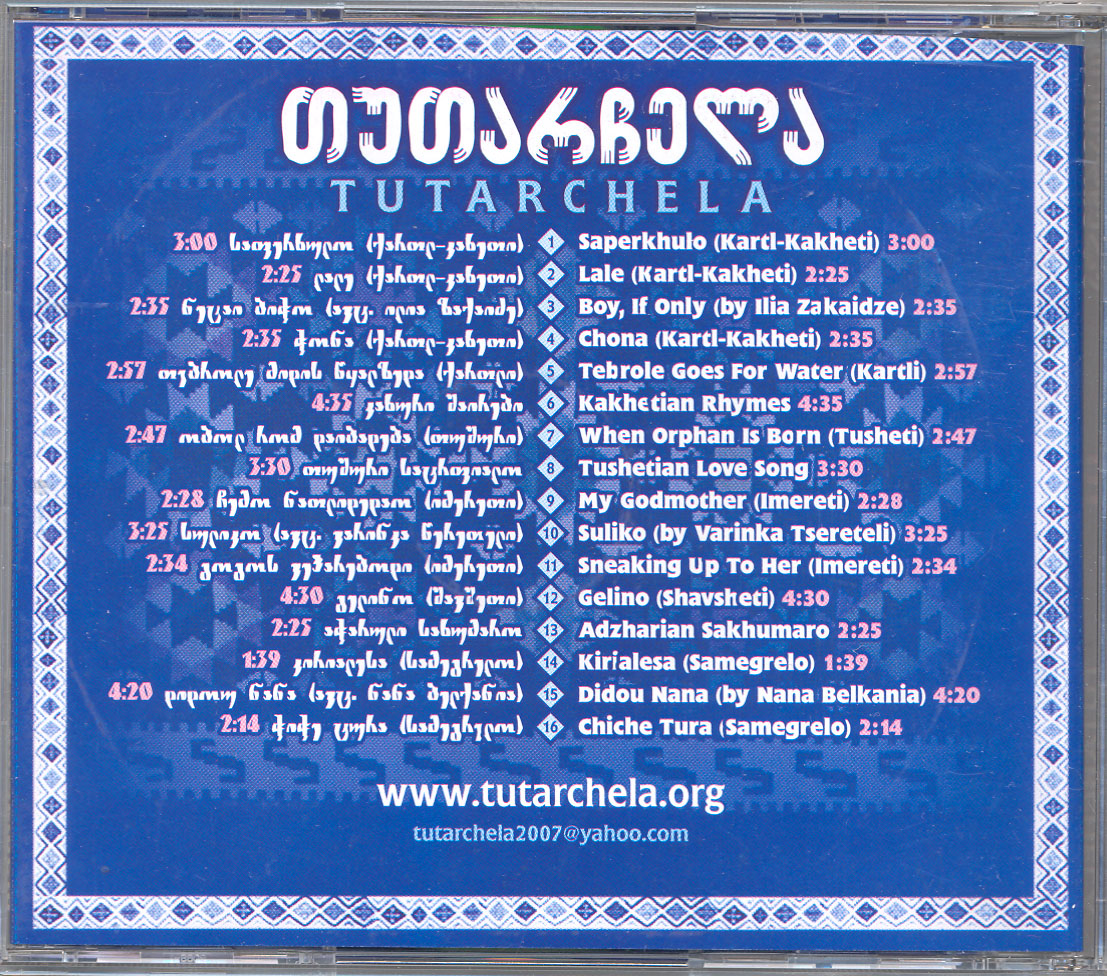
Monday, March 31, 2008
LITERATUR: Gesammelte Werke von Clemens Eich
Von DETLEF KUHLBRODT
Die "Aufzeichnungen über Georgien", Clemens Eichs letztes, unvollendetes Buch, das in Folge einer Dichterverschickung entstanden war, gefällt mir sehr gut. Einige Georgienkenner und -freunde verurteilten es wegen Subjektivismus. Das Fragmentarische dieses Sammelsuriums aus Tagebucheintragungen, Notizen, Aphorismen lässt einen aber vielleicht besser an einer Reise teilnehmen, als es eine geschlossenere, widerspruchsfreiere, politisch abwägende Schilderung vermögen könnte. Vor allem ist es nicht mehr so durchgehend in Moll. Gern zitiert man auch einen Satz, dem damals sicher viele westdeutsche Intellektuelle zugestimmt hätten: "Ich habe keine Angst, nach Georgien zu fahren, aber ich habe Angst, nach Ostdeutschland zu fahren."
Clemens Eich: Gesammelte Werke. Hrsg. von Elisabeth Eich und Ulrich Greiner. 2 Bände; Band 1: "Das steinerne Meer"/"Aufzeichnungen aus Georgien", Band 2: Prosa/Drama/Lyrik. Fischer, Frankfurt am Main 2008, zus. 768 Seiten, 29,90 Euro
taz.de - Gesammelte Werke von Clemens Eich: Abstoßende Romanhelden
Die Bände von Clemens Eich bieten sehr Gelungenes, Ekliges und auch pathetisch Verunglücktes. VON DETLEF KUHLBRODT.
AmazonShop: Books, Maps, Videos, Music & Gifts About The Caucasus
Die "Aufzeichnungen über Georgien", Clemens Eichs letztes, unvollendetes Buch, das in Folge einer Dichterverschickung entstanden war, gefällt mir sehr gut. Einige Georgienkenner und -freunde verurteilten es wegen Subjektivismus. Das Fragmentarische dieses Sammelsuriums aus Tagebucheintragungen, Notizen, Aphorismen lässt einen aber vielleicht besser an einer Reise teilnehmen, als es eine geschlossenere, widerspruchsfreiere, politisch abwägende Schilderung vermögen könnte. Vor allem ist es nicht mehr so durchgehend in Moll. Gern zitiert man auch einen Satz, dem damals sicher viele westdeutsche Intellektuelle zugestimmt hätten: "Ich habe keine Angst, nach Georgien zu fahren, aber ich habe Angst, nach Ostdeutschland zu fahren."
Clemens Eich: Gesammelte Werke. Hrsg. von Elisabeth Eich und Ulrich Greiner. 2 Bände; Band 1: "Das steinerne Meer"/"Aufzeichnungen aus Georgien", Band 2: Prosa/Drama/Lyrik. Fischer, Frankfurt am Main 2008, zus. 768 Seiten, 29,90 Euro
taz.de - Gesammelte Werke von Clemens Eich: Abstoßende Romanhelden
Die Bände von Clemens Eich bieten sehr Gelungenes, Ekliges und auch pathetisch Verunglücktes. VON DETLEF KUHLBRODT.
AmazonShop: Books, Maps, Videos, Music & Gifts About The Caucasus
Wednesday, February 13, 2008
ART: David Kakabadze and Ivane Javakhishvili
 The creative work of David Kakabadze clearly tells about unique ethnogenesis of Georgian culture; here is some definitive information: David Kakabadze (1889-1952) was a painter, graphic artist, theatre and movies painter, art researcher (one of his inventions concerned the already well known category of stereoscopic picture and its equipment implementation. David had presented the materials for author’s right but the materials, as he was told, had been lost, though in some years the authorship of some Russian was acknowledged in the sphere of stereoscopic pictures... This happened in the 40th of the XX century!)
Studying at the faculty of physics and mathematics of Petersburg University David Kakabadze in parallel mastered in painting and arts history, took active part in the work of ”Georgian Students Scientific Circle” - the group of Georgian students living in Russia. This circle was headed by Ivane Javakhishvili and at the same time he taught David history of Georgian arts. It was from then that Ivane became acquainted with David Kakabadze’s painting and highly appraised his works ...
At the time of studying in Petersburg David Kakabadze was so short-handed that on October 6, 1912 Ivane Javakhishvili sent a letter to G. Zdanovich (Maiashvili), the head of the Black Stone Producers Society with the request that the Society Board grant David Kakabadze a stipend or render one-time assistance to the young intellectual. In the letter Ivane Javakhishvili characterizes David Kakabadze as an excellent student and, at the same time, a good artist. In the same letter it is also noted that in 1911 Ivane Javakhishvili had given a sample of ancient Georgian painting (a painting preserved in Georgian manuscript by Vakhtang VI and S.-S.Orbeliani) to David Kakabadze and asked him to make a copy. By the statement of Ivane Javakhishvili David Kakabadze had brilliantly executed the mission. Also by the advice of Iv.Javakhishvili the Georgian Society of History and Ethnography had entrusted David Kakabadze to make colored copies of frescos of Quinn Mariam and other historical persons preserved at the Svetitskhovelihich cathedral in Mtskheta; the work was successfully accomplished by the painter.

In the letter to Zdanovich Ivane Javakhishvili points out that since 1912 David Kakabadze under the supervision of Ivane Javakhishvili prepared the research “Development of ornamented fretwork [ornament] in Georgian goldsmith art according to Georgian icons”. The finding and publishing of this work will save such materials of Georgian cultural heritage that is priceless for our church and art and indisputably will enrich the world art treasury.
The report “Development of ornamented fretwork [ornament] in Georgian goldsmith art according to Georgian icons” David Kakabadze presented to the meeting of the Scientific Circle in October 25, 1912. All the samples of Georgian ornaments are compiled in this work and chronologically dated according to the stages of its development (it is, surely, clear what kind of research we are having to deal with - this is irreplaceable basis of knowledge – of Georgian church architecture, iconography, painting and art studies ...).
In 1915 in Tbilisi was issued “Works of Georgian Students Scientific Circle” of Petersburg University with the preface and editorship of Ivane Javakhishvili where the work “The types of Georgian icons setting” by David Kakabadze was published. In the preface Ivane Javakhishvili notes: “David Kakabadze has studied all known materials and edited pictures, made copies of setting types and investigated chronologically and configurationally, what is that that expresses the development of these types “ ...
Publishing of these materials in high polygraphic level and in several (Georgian, Russian, English, French, German, Hispanic, Italian) languages will have a great importance for the history of Georgian nation, for our cultural heredity, history of Georgian Orthodox apostolic church, for presenting, once more, of Georgia as one of the foundation makers of European Renaissance and for future generations of Georgians, as well. It is time that the civilized world became acquainted with the beginning steps of creative work of David Kakabadze.
Mamuka Matsaberidze
Website about David Kakabadze
Wednesday, September 05, 2007
KONZERT:
Kulturamt der Stadt Leipzig (15. September 2007, 16 Uhr)
Maestro Ogan Durjan' Narc 85
Alte Handelsbörse Leipzig am Naschmarkt
Armenisch-französischer Dirigent und Komponist
Erster Kapellmeister des Moskauer Sinfonieorchesters Stas Namin Center
"CHEVALIER DES L'ORDRE DES ARTS ET DES LETTRES"
Ogan Durjan'Narc (Ohan Dourian) wurde 1922 im armenischen Viertel in Jerusalem geboren. Dort studierte er Komposition und Dirigieren und begab sich anschließend auf Konzerttourneen nach Europa. Sein phänomenales Gedächtnis, sein tiefes musikalisches Empfinden und mitreißendes Gestalten ließen aufhorchen. In den Jahren 1962-1969 war Ogan Durjan'Narc ständiger Gastdirigent beim Gewandhausorchester Leipzig.
H O M M A G E
für O G A N D U R J A N ' N A R C
am 15. September 2007, 16 Uhr,
Alte Handelsbörse Leipzig am Naschmarkt
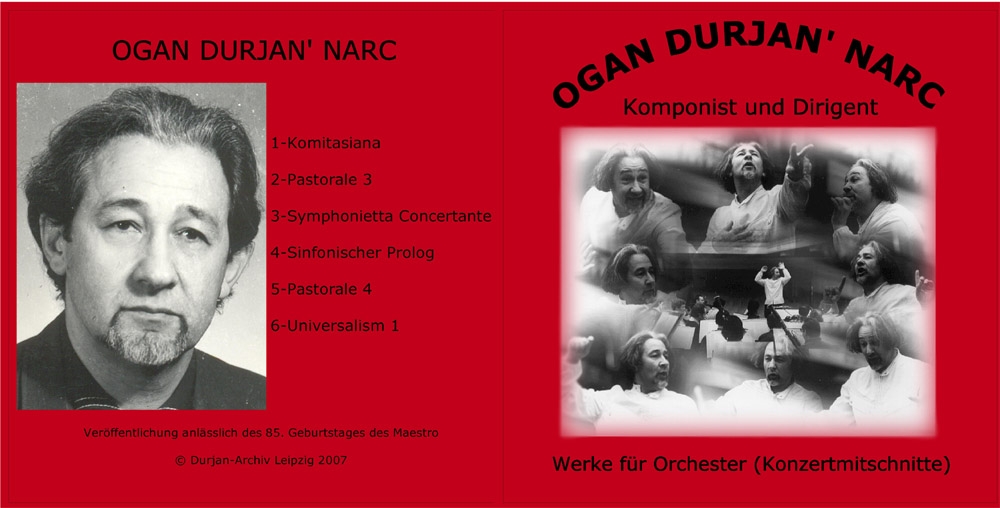
Kulturamt der Stadt Leipzig (15. September 2007, 16 Uhr)
Maestro Ogan Durjan' Narc 85
Alte Handelsbörse Leipzig am Naschmarkt
Armenisch-französischer Dirigent und Komponist
Erster Kapellmeister des Moskauer Sinfonieorchesters Stas Namin Center
"CHEVALIER DES L'ORDRE DES ARTS ET DES LETTRES"
Ogan Durjan'Narc (Ohan Dourian) wurde 1922 im armenischen Viertel in Jerusalem geboren. Dort studierte er Komposition und Dirigieren und begab sich anschließend auf Konzerttourneen nach Europa. Sein phänomenales Gedächtnis, sein tiefes musikalisches Empfinden und mitreißendes Gestalten ließen aufhorchen. In den Jahren 1962-1969 war Ogan Durjan'Narc ständiger Gastdirigent beim Gewandhausorchester Leipzig.
19 Konzertprogramme, die er alle ohne Partitur und ohne Taktstock, nur mit seinen "sprechenden Händen" gestaltete, wurden zu frenetisch umjubelten und unauslöschlichen Höhepunkten in Leipzigs Musikleben. Er wäre gern noch einmal nach Leipzig gekommen. Doch seine körperlichen Kräfte lassen es nicht zu. In Presseberichten wurde Ogan Durjan oft mit Nikisch, Bernstein, Karajan und Toscanini verglichen.
Der Maestro vollendet im September 2007 sein 85. Lebensjahr. Er arbeitete mit 110 Orchestern weltweit und versetzte Musiker und Publikum gleichermaßen in Ekstase.
Die Leipziger Musikerin Anne-Kristin Mai möchte an diesen genialen Künstler anläßlich seines 85. Geburtstages erinnern und damit auch an die facettenreiche Geschichte des Leipziger Musiklebens. Das Kulturamt der Stadt Leipzig sieht hierin ein Beispiel bürgerlichen Engagements, wodurch sich die Messe-und Buchstadt durch die Jahrhunderte immer wieder als Kulturzentrum empfahl.
Der Maestro vollendet im September 2007 sein 85. Lebensjahr. Er arbeitete mit 110 Orchestern weltweit und versetzte Musiker und Publikum gleichermaßen in Ekstase.
Die Leipziger Musikerin Anne-Kristin Mai möchte an diesen genialen Künstler anläßlich seines 85. Geburtstages erinnern und damit auch an die facettenreiche Geschichte des Leipziger Musiklebens. Das Kulturamt der Stadt Leipzig sieht hierin ein Beispiel bürgerlichen Engagements, wodurch sich die Messe-und Buchstadt durch die Jahrhunderte immer wieder als Kulturzentrum empfahl.
H O M M A G E
für O G A N D U R J A N ' N A R C
am 15. September 2007, 16 Uhr,
Alte Handelsbörse Leipzig am Naschmarkt
mit Künstlern des Gewandhausorchesters, der OPER LEIPZIG, der Hochschule für Musik und Theater "Felix-Mendelssohn-Bartholdy" Leipzig und armenischen Gästen.
DIE F E S T S C H R I F T
"Ogan Durjan' Narc. Dirigent und Komponist MAGNET VULKAN MYSTIKER"
herausgegeben von Anne-Kristin Mai sowie eine CD mit seinen Orchesterkompositionen sind zu erwerben.
DIE F E S T S C H R I F T
"Ogan Durjan' Narc. Dirigent und Komponist MAGNET VULKAN MYSTIKER"
herausgegeben von Anne-Kristin Mai sowie eine CD mit seinen Orchesterkompositionen sind zu erwerben.
Die Festschrift ist über die Herausgeberin, akh.mai@web.de, Tel.: 0341 8772034 und in Leipzig im Gewandhausshop sowie in der Musikalienhandlung Oelsner, Schillerstraße, erhältlich.
mehr: www.anne-kristin-mai.de
Saturday, September 24, 2005
A NEW CD-COMPILATION: JOURNEY THROUGH GEORGIA
 Sebastian Punk lives near Leipzig. He made a journey trugh Georgia and published on his label "Raumklang" a fabolous Double-CD (146:28) about georgian music that he researched and recorded in different territories of Georgia about a few of years. "Georgian journey. Secular and spiritual vocal music" ist a great work!
edition waran
Neuheit im Juni 2005
Georgische Reise
Geistliche und weltliche Gesänge
Georgian journey
Secular and spiritual vocal music
Antchis Chati Chor (Tbilissi)
Tsinandali Chor (Telavi)
Drei alte Sänger (Gurien)
RK 2304 (2CD)
Rezension (german): Eine Reise mit Nachwirkung (klassik.com)
Die Idee und ihre Umsetzung verdienen absolute Bestnoten: im Jahr 2003 machte sich Sebastian Pank in einem alten VW-Bus nach Georgien auf, um die landestypische Musikkultur (übrigens die einzige Musikkultur der Welt, die den Schutz der UNESCO genießt) zu erkunden, aufzunehmen und damit einen wesentlichen Beitrag zu leisten, diese faszinierenden Klänge, die vielleicht der Ursprung aller Polyphonie in Europa sind, zu dokumentieren und auch außerhalb der georgischen Landesgrenzen bekannter zu machen.
edition waran
Georgische Reise. Geistliche und weltliche Gesänge.
Voyage en Géorgie. Musique vocale profane et sacrée.
Georgian journey. Secular and spiritual vocal music
Best-.Nr.: RK 2304 1/2 (2 CD)
EAN: 4 018767 23046
Total: CD 1: 78:43 / CD 2: 67:45
Antchis Chati Chor (Tbilissi) / Tsinandali Chor (Telavi/Kachetien) / Drei alte Sänger/Three elderly singers/Trois chanteurs âgés (Gurien).
CD-Programm
GEORGISCHE REISE CD 1
KACHETIEN
1 gamkhiaruldi bukharo (bekannt als/popularly known as/connu sous le nom de « Tshakrulo ») 5:28
2 mravaljamier („Was die Feindseligkeit zerstört hat, baut die Liebe wieder auf.“/“That which was destroyed by hostility, love rebuilds.”/« Ce que l'hostilité a détruit, l'amour le reconstruit. ») 5:26
3 shen bitsho anagurelo („Junge aus Anagurien“/“Youth from Anaguria”/«Garcon d'Anagourie ») 4:16
4 shemodzakhili (Liebeslied/love song/chanson d'amour) 4:26
5 urmuli 2:07
6 makruli (Hochzeitslied, wird gesungen, wenn die Braut vom Bräutigam und seinem Gefolge abgeholt wird/ wedding song, sung while the groom and his entourage are fetching the bride/chant de mariage, chanté lorsque le fiancé et son cortège viennent chercher la fiancée) 2:55
7 zamtari (Winterlied/winter song/chanson d'hiver) 3:18
8 alilo (Weihnachtslied/Christmas song/chant de Noël, trad.) 3:28
9 ovorela (altes Lied über die Feldarbeit/ancient field worksong/chanson ancienne sur les travaux des champs) 4:26
KARTLI
10 tshona (Osterlied/Easter song/chant pascal) 3:41
MEGRELIEN
11 masi vardi (Liebeslied/love song/chanson d'amour)2:0912 eukunat kakutebi(Lied über die Faulheit/song about laziness/chanson sur la paresse) 3:00
SWANETIEN
13 lile (Gottesanbetungslied mit überlieferten heidnischen Bräuchen/Christian song of worship with surviving pagan rituals/chant chrétien d'adoration de Dieu, transmis avec des rites païens) 3:07
IMERETIEN
14 shavi shashvi 3:20
15 adila, adila (Lied über einen Verräter/song about a traitor/chanson sur un traître) 2:13
16 krialesso (volkstümlich verändertes Kyrie eleison/adaptedvernacular Kyrie eleison/Kyrie eleison changé sur le mode populaire) 3:24
17 naduri (Lied der Bauern, wird zur Arbeit im Maisfeld gesungen/ peasant song, sung while working in the corn fields/ chanson de paysans, chantée lors du travail dans les champs de maïs) 9:12
GURIEN
18 dila (Lied über den erwachenden Morgen/song to greet the waking day/chanson sur le matin naissant)2:28
19 bagia tshveni kvekana (patriotisches Lied/patriotic song/chant patriotique) 1:49
20 maspindzelsa mkhiarulsa („Dem fröhlichen Gastgeber“/“The happy host”/« À l'hôte joyeux ») 1:12
21 me rustveli (aus „Der Recke im Tigerfell“/from “The Hero in Tiger Skins”/extrait de « Le preux dans une peau de tigre », Epos von/epic poem by/épopée de Shota Rusthaweli) 3:11
ADJARIEN
22 atsharuli popuri (adjarischer Potpourri, zu dem Gandagana getanzt werden kann/Adjarian potpourri; can be danced to the Gandagana/potpourri adjarien, sur lequel Gandagana peut être dansé) 3:42
GEORGISCHE REISE CD 2
GURIEN
1 me rustveli (s. CD 1/21) 2:50
2 ai odelia (Liebeslied/love song/chanson d'amour) 1:59
3 brevalo („Was die Feindseligkeit zerstört hat, baut die Liebe wieder auf.“/“That which was destroyed by hostility, love rebuilds.”/« Ce que l'hostilité a détruit, l'amour le reconstruit. ») 1:43
4 supris khelkhvavi (Lied auf den Gastgeber, am Ende eines Festmahls zu singen/song for the host, sung at the end of a feast/ chanson pour l'hôte, chantée à la fin d'un banquet) 3:03
5 tshven mshvidoba („Friede sei mit uns!“– Lied auf die Gäste und den Gastgeber/“ Peace be with us.”; song for the guests and their hosts / « La paix soit avec nous. » – chanson pour les invités et les hôtes) 2:53
6 lataria (Liebeslied/love song/chanson d'amour) 3:56
7 bagia tshveni kvekana (s. CD 1/19)
8 Glocken des Motsameta-Klosters/Bells of the Motsameta monastery/Cloches du cloître Motsameta 1:34
9 – 22 Geistliche Gesänge im Schemo kmedi Kloster / Sacred songs from theSchemokmedi monastery / Chants sacrésdu cloître Schemokmedi9 adidebs suli tshemi upalsa („Meine Seele erhebet den Herrn.”/“My soul dothmagnify the Lord.”/« Mon âme s'élève vers le Seigneur. ») 3:58
10 agdgomisa dge ars Gelati-Kloster: Irmos zur 1. Ode des Festkanonszu Ostern/irmos from the 1st ode of the Easter feast canon/irmos sur la 1ère ode du Canon pascal 1:59
11 satsinastsarmetkvelo Liturgischer Gesang aus der Bibel/liturgical songs from the Bible/chant liturgique de la Bible: Genesis, 1. Buch Mose1,1–13/Buch Hiob 38,1– 23 und 42, 1– 55:59
12 az ganuteve aus dem Abendgottesdienst/from the eveningmass/extrait des vêpres, Kartli/Kachetien 2:40
13 dideba tshvens shekrebas („Ein Lob auf unsere Versammlung!“/”A toast to our assembly!”/ « Une louange soit sur notre assemblée. »)aus Gurien 2:19
14 eklesiasa shina (Psalm 68, 27: „Lobet Gott in den Versammlungen.“/ “Praise God in the assemblies.“/« Louez Dieu dans les assemblées. ») 3:09
15 gvtismshobelo aus dem Abendgottesdienst/from the eveningmass/extrait des vêpres, Ostgeorgien 2:11
16 krmata gvtismsakhurta Gelati-Kloster: Irmos zur 7. Ode des Kanons/from the 7th canon ode/sur la 7ème ode du Canon 2:50
17 mobrdzanebita tkvenita („Durch euer Erscheinen sind unsere Herzen voller Freude.“/“Through thine advent are our hearts full of joy.“/ « Votre apparition emplit notre cœur d'allégresse. ») aus Gurien 3:09
18 shen khar venakhi („Du bist die Weinrebe.“/“You are the grapevine.“/ « Tu es la vigne. ») Gelati-Kloster: Hymnus der Mutter Gottes/hymn to the Mother of God/hymne à la Mère de Dieu 2:43
19 sikvarulma mogikvana Schemokmedi-Kloster: Irmos zur Auferweckungdes Lazarus/irmos for the awakening of the Lazarus/ irmos sur la résurrection de Lazare 3:21
20 sulo tshemo Gelati-Kloster: Große Fastenzeit vor Ostern, Kontakion aus dem Großen Buß-Kanon des Andreas von Kreta/ for the time of fasting before Easter, a kontakion from the great canon of penance by Andreas of Crete/ grande période de jeûne avant Pâques, kontakion du grand Canon d’André de Crète 1:43
21 tkveta ganmantavisuplebeli Schemokmedi-Kloster: Troparion des heiligen Georg/ troparion for Saint George/troparion de Saint Georges 1:37
22 upalo romelman Glocken des Motsameta-Klosters/bells of theMotsameta monastery/cloches du cloître Motsameta Schemokmedi-Kloster: aus den Stundengebeten Troparion der Dritten Stunde/from the hourly prayers, a troparion for the third hour/extrait des heures, troparion de la tierce 2:38
23 Abschied von Georgien /Farewell to Georgia / Adieu à la Géorgie 15:33
Die georgische Musik steht als einzige Musikkultur der Welt unter dem Schutz der UNESCO. Ihrem Ursprung nach ist sie eine mehrstimmige Musik, wie sie in keinem der Nachbarländer zu finden ist. Der Antchis Chati Chor hat sich vorgenommen, diese einzigartige polyphone Musik in ihren Grundformen zu rekonstruieren und zu erhalten. Die Sänger sind oft in kleinen Dörfern Georgiens unterwegs, um alle noch gesungenen Varianten verschiedenster Lieder aufzunehmen. Im Sommer 2003 bereiste Sebastian Pank (Raumklang) Georgien und traf neben dem Antchis Chati Chor auch auf die Lieder des Tsinandali Chores und auf drei alte Sänger aus Gurien. Die Aufnahmen wurden mit Hilfe eines Notstromaggregats in einer alten Klosterkirche, einem verlassenen Kinosaal und einem ehemaligen Kulturhaus produziert. Die CD vollzieht musikalisch eine Reise durch die verschiedenen Landstriche Georgiens. Von den kraftvollen weltlichen Gesängen aus Kachetien, Kartli und Megrelien - Lieder, die zur Feldarbeit gesungen wurden, Lieder auf die Gastfreundschaft und die Liebe, Lieder zu Hochzeiten und Festen – bis hin zu den geistlichen Gesängen im Schemokmedi-Kloster.
The traditional music of Georgia is the only music in the world to be under UNESCO protection. The music of Georgia is at its origins polyphonic. That none of the neighbouring countries have produced anything similar, eliminates the possibility that Georgians were directly influenced by other musical cultures. The Antchis Chati Choir has set itself the goal of reconstructing the Georgian repertoire in its original form. Its members maintain contacts with Georgian music experts all over the country. They often travel to villages, to record the song variations that are still sung today. In summer 2003 Raumklang (Sebastian Pank) travelled to Georgia and met there beside the Antchis Chati Choir the Tsinandali Choir and three older singers from Guria. This recording was produced with an emergency generator in an old monastery, an abandoned cinema, and a former cultural centre. With this CD one can travel through Georgia in a musical way. From the powerful songs of Kachetia, Kartli and Megrelia - songs of love, about the host, wedding songs, an ancient field work song and others - to the sacred music from the Schemokmedi monastery.
La musique géorgienne est le seul patrimoine musical placé sous la protection de l’UNESCO. Elle est à l’origine une musique polyphonique qui ne trouve son pendant dans aucun des pays limitrophes. Le choeur Antchis Chati s’est fixé pour but de reconstituer la musique géorgienne dans ses formes originelles. La particularité du chœur Antchis Chati consiste à entretenir des contacts avec des experts de la musique géorgienne disséminée sur l’ensemble du territoire. Ses membres sont également en perpétuel déplacement dans les villages pour y enregistrer toutes les variations encore existantes de différents chants. Pendant l’été de 2003 Raumklang (Sebastian Pank) est voyagé vers géorgia. La bás il a rencontré, le choeur Tsinandali et trois chanteurs âgés de Guria. Ce registrement avait produit dans une vieille église de cloître, une salle de cinéma déserte et une ancienne maison de la culture grâce à un générateur de secours. Ce cd est un voyage musical vers Georgia. Commencé avec des chansons de kachétie, gurie et megrélie – des chansons d’amour, une chanson ancienne sur les travaux des champs, un chant de mariage et d’autres fêtes et une chanson pour l'hôte - jusqu'à les chants sacrés du cloître shemokmedi á gurie.
Liedtexte GEORGISCHE REISE CD 1
KACHETIEN
2 mravaldjamier
Der Feind wird euch niemals besiegen, wir sind mit euerem Wein aufgelebt, die Nüchternheit hat uns verlassen. Das Leben ist so, die Tage siegen über die Nächte. Was die Feindschaft zerstört, baut die Liebe wieder auf.
3 schen bitscho anagurelo
Du Junge aus Anagurien, deine Stimme haben wir gehört, deine süße Stimme. Als du auf dem Feld gearbeitet hast, haben wir dich hier am Ufer gehört.
6 makruli (ein Hochzeitslied, wenn die Braut abgeholt wird)
Haraloo, wir kommen mit Freude. Wir bringen einen roten Fasan, ich mag die Zunge des Fasans. Der Fasan ist für uns, und der Falke für euch, Jungs.
7 zamtari
Der Winter trocknet die Rose aus, sie verliert ihre Blätter. Aus den Augen verliert Tränen, das schöne Mädchen.
8 alilo
Am 25. dieses Monats ist Christus geboren, alilo, Junge, freue dich! Eine fröhliche Botschaft, die Weihnacht ist gekommen, alilo, Junge, freue dich! Das Haus gebaut zu Festen und zur Freude, Gott erbaue es.
9 ovorela
Fahr mein Pflüger, ich singe dir den Bass, mit deinem scharfen Hackenpflug werden wir die Wurzeln des Unkrauts heraushacken. Mein Lieber, du bringst mir das Brot, du erfreust mein Herz.
10 tsschona (ein Osterlied aus Kartli)
Mutter, ich sage dir Tsschona,wenn du nicht in Trauer bist. Das in dieser Wiege schlafende Kind wird vom Herrgott im Himmel geschützt, Mutter, gib mir ein Ei, der Herrgott möge deine Gaben vermehren.
11 masi vardi
Ich habe für dich eine Rose...
12 eukunat kakutebi
Die Arbeit bringt uns Reichtum. Der Faule isst das Fertige, der Faule bremst den Fleiß, weg mit ihm.
13 lile (Lied aus Swanetien)
Du bist großartig, Lob euch unsere Erzengel, voll mit goldenen Schmuck, habt einen Goldenen Ring um euch herum Für euch geopferte Ochsen, haben Glocken am Hals,… An seinem Tor liegen die goldenen Gefäße. Die Gewehre sind im Schloss, nieder liegen Steinböcke und Gemsen, oben fliegen die Geier und Adler Herr Gott segne uns.
15 adila, adila
Alipascha hat uns verraten, er hat uns nach Kviriketi gebracht. Selbst hat er Gelder eingesteckt, hat uns in russische Hände verraten. Doch damit hat er nichts erreicht, mit einem Strick hat man ihn in die Schlucht gerissen. Sein Geschrei konnte man hinter Supsa bis nach Baialeti hören.
17 naduri
Der Falke liebt die Wachtel, der Bussard liebt die Jagd. Wenn der Gastgeber Nadi (Feldarbeit) mag, gibt es hier eine gute Malzeit, mit einem Krug voller Wein, kommt ein Topf mit Gomi (Meisbrei). Zu Essen gibt es genug.
18 dila
Es ist Morgen, der Himmel ist blau, gefärbt mit Sonnenstrahlen, versteckt versammelt sind der Mond und die Sterne. Rosen und Blumen zeigen ihre Herzen, das Land wacht auf, bereitet sich zum Ball.
20 maspindzelsa mkhiaruls
Der fröhliche Gastgeber hat liebeswürdige Gäste, Herr Gott lass ihn alles frei geben,dass er immer solche hat. 21 me rustveli
Ich, Rusthveli, ein Besessener, setz der Töne Satz mit Kunst: Herrscherin der großen Heere, sieh den Wahnwitz meiner Brunst!Ich vergeh’ und keine Heilung bannt den giftig-süßen Dunst. Lass dem Grabe mich geweiht sein oder heile mich durch Gunst! (aus „Der Recke im Tigerfell“ Epos von Shota Rusthaveli, Übers: Huggo Huppert, Rütten und Loening 1955)
22 atscharuli popuri (aus Adjarien)
Junge, Alex, lache nicht die Weiber an, deren Eltern werden dich bestrafen. Ich bin von Räubern überfallen worden, habe mit Großvaters Trick sie geschlagen und Gandagana getanzt.
GEORGISCHE REISE CD 2
2/13 dideba tshvens shekrebas
D: Ein Lob auf unsere Versammlung. Und wir bitten Gott, die Gäste und die Gastgeber zu segnen. E: A toast to our assembly!And we beseech God to bless the guests and their hosts. F: Une louange soit sur notre assemblée. Et nous prions Dieu de bénir les hôtes et les maîtres de maison.
2/14 eklesiasa shina
D: Lobet Gott in den Versammlungen, den Herrn, die ihr von Israel herstammt! E: Praise God in the assemblies, praise the Lord in the assemblies from Israel! F: Louez Dieu dans les assemblées, bénissez le Seigneur, descendants d'Israël.
2/17 mobrdzanebita tkvenita
D: Durch euer Erscheinen sind unsere Herzen voller Freude und wir singen mit Freude und loben Euch. Wir loben und ehren die Würdigen und unsere Versammlung. Seid fröhlich ihr Erfreulichen, unsere Gäste! E: Through thine advent are our hearts full of joy,we sing with gladness, and we praise thee.We praise and honour the worthy and our assembly.Be glad oh joyous ones, our guests! F: Votre apparition emplit notre cœur d'allégresse et nous chantons avec joie et nous vous louons. Nous louons et honorons les Dignes et notre assemblée. Soyez joyeux, vous qui êtes réjouis, nos hôtes.
2/19 sikvarulma mogikvana
D: Mit Liebe bist du gekommen, Herr, und lässt den Lazarus heute auferstehen, du hast ihn nach vier Tagen vom Tod aufgeweckt, da du gnädig bist. E: With love have you come, oh Lord, and let the Lazarus today be resurrected;you woke him from death after four days, for you are full of grace. F: Avec amour tu es venu, Seigneur, et a ressucité Lazare aujourd'hui, tu l'as ranimé de la mort après quatre jours, dans ta miséricorde. © RAUMKLANG 2005
Interpretation: *****
Klangqualität: *****
Repertoirewert:*****
Booklet: *****
Sebastian Punk lives near Leipzig. He made a journey trugh Georgia and published on his label "Raumklang" a fabolous Double-CD (146:28) about georgian music that he researched and recorded in different territories of Georgia about a few of years. "Georgian journey. Secular and spiritual vocal music" ist a great work!edition waran
Neuheit im Juni 2005
Georgische Reise
Geistliche und weltliche Gesänge
Georgian journey
Secular and spiritual vocal music
Antchis Chati Chor (Tbilissi)
Tsinandali Chor (Telavi)
Drei alte Sänger (Gurien)
RK 2304 (2CD)
Rezension (german): Eine Reise mit Nachwirkung (klassik.com)
Die Idee und ihre Umsetzung verdienen absolute Bestnoten: im Jahr 2003 machte sich Sebastian Pank in einem alten VW-Bus nach Georgien auf, um die landestypische Musikkultur (übrigens die einzige Musikkultur der Welt, die den Schutz der UNESCO genießt) zu erkunden, aufzunehmen und damit einen wesentlichen Beitrag zu leisten, diese faszinierenden Klänge, die vielleicht der Ursprung aller Polyphonie in Europa sind, zu dokumentieren und auch außerhalb der georgischen Landesgrenzen bekannter zu machen.
edition waran
Georgische Reise. Geistliche und weltliche Gesänge.
Voyage en Géorgie. Musique vocale profane et sacrée.
Georgian journey. Secular and spiritual vocal music
Best-.Nr.: RK 2304 1/2 (2 CD)
EAN: 4 018767 23046
Total: CD 1: 78:43 / CD 2: 67:45
Antchis Chati Chor (Tbilissi) / Tsinandali Chor (Telavi/Kachetien) / Drei alte Sänger/Three elderly singers/Trois chanteurs âgés (Gurien).
CD-Programm
GEORGISCHE REISE CD 1
KACHETIEN
1 gamkhiaruldi bukharo (bekannt als/popularly known as/connu sous le nom de « Tshakrulo ») 5:28
2 mravaljamier („Was die Feindseligkeit zerstört hat, baut die Liebe wieder auf.“/“That which was destroyed by hostility, love rebuilds.”/« Ce que l'hostilité a détruit, l'amour le reconstruit. ») 5:26
3 shen bitsho anagurelo („Junge aus Anagurien“/“Youth from Anaguria”/«Garcon d'Anagourie ») 4:16
4 shemodzakhili (Liebeslied/love song/chanson d'amour) 4:26
5 urmuli 2:07
6 makruli (Hochzeitslied, wird gesungen, wenn die Braut vom Bräutigam und seinem Gefolge abgeholt wird/ wedding song, sung while the groom and his entourage are fetching the bride/chant de mariage, chanté lorsque le fiancé et son cortège viennent chercher la fiancée) 2:55
7 zamtari (Winterlied/winter song/chanson d'hiver) 3:18
8 alilo (Weihnachtslied/Christmas song/chant de Noël, trad.) 3:28
9 ovorela (altes Lied über die Feldarbeit/ancient field worksong/chanson ancienne sur les travaux des champs) 4:26
KARTLI
10 tshona (Osterlied/Easter song/chant pascal) 3:41
MEGRELIEN
11 masi vardi (Liebeslied/love song/chanson d'amour)2:0912 eukunat kakutebi(Lied über die Faulheit/song about laziness/chanson sur la paresse) 3:00
SWANETIEN
13 lile (Gottesanbetungslied mit überlieferten heidnischen Bräuchen/Christian song of worship with surviving pagan rituals/chant chrétien d'adoration de Dieu, transmis avec des rites païens) 3:07
IMERETIEN
14 shavi shashvi 3:20
15 adila, adila (Lied über einen Verräter/song about a traitor/chanson sur un traître) 2:13
16 krialesso (volkstümlich verändertes Kyrie eleison/adaptedvernacular Kyrie eleison/Kyrie eleison changé sur le mode populaire) 3:24
17 naduri (Lied der Bauern, wird zur Arbeit im Maisfeld gesungen/ peasant song, sung while working in the corn fields/ chanson de paysans, chantée lors du travail dans les champs de maïs) 9:12
GURIEN
18 dila (Lied über den erwachenden Morgen/song to greet the waking day/chanson sur le matin naissant)2:28
19 bagia tshveni kvekana (patriotisches Lied/patriotic song/chant patriotique) 1:49
20 maspindzelsa mkhiarulsa („Dem fröhlichen Gastgeber“/“The happy host”/« À l'hôte joyeux ») 1:12
21 me rustveli (aus „Der Recke im Tigerfell“/from “The Hero in Tiger Skins”/extrait de « Le preux dans une peau de tigre », Epos von/epic poem by/épopée de Shota Rusthaweli) 3:11
ADJARIEN
22 atsharuli popuri (adjarischer Potpourri, zu dem Gandagana getanzt werden kann/Adjarian potpourri; can be danced to the Gandagana/potpourri adjarien, sur lequel Gandagana peut être dansé) 3:42
GEORGISCHE REISE CD 2
GURIEN
1 me rustveli (s. CD 1/21) 2:50
2 ai odelia (Liebeslied/love song/chanson d'amour) 1:59
3 brevalo („Was die Feindseligkeit zerstört hat, baut die Liebe wieder auf.“/“That which was destroyed by hostility, love rebuilds.”/« Ce que l'hostilité a détruit, l'amour le reconstruit. ») 1:43
4 supris khelkhvavi (Lied auf den Gastgeber, am Ende eines Festmahls zu singen/song for the host, sung at the end of a feast/ chanson pour l'hôte, chantée à la fin d'un banquet) 3:03
5 tshven mshvidoba („Friede sei mit uns!“– Lied auf die Gäste und den Gastgeber/“ Peace be with us.”; song for the guests and their hosts / « La paix soit avec nous. » – chanson pour les invités et les hôtes) 2:53
6 lataria (Liebeslied/love song/chanson d'amour) 3:56
7 bagia tshveni kvekana (s. CD 1/19)
8 Glocken des Motsameta-Klosters/Bells of the Motsameta monastery/Cloches du cloître Motsameta 1:34
9 – 22 Geistliche Gesänge im Schemo kmedi Kloster / Sacred songs from theSchemokmedi monastery / Chants sacrésdu cloître Schemokmedi9 adidebs suli tshemi upalsa („Meine Seele erhebet den Herrn.”/“My soul dothmagnify the Lord.”/« Mon âme s'élève vers le Seigneur. ») 3:58
10 agdgomisa dge ars Gelati-Kloster: Irmos zur 1. Ode des Festkanonszu Ostern/irmos from the 1st ode of the Easter feast canon/irmos sur la 1ère ode du Canon pascal 1:59
11 satsinastsarmetkvelo Liturgischer Gesang aus der Bibel/liturgical songs from the Bible/chant liturgique de la Bible: Genesis, 1. Buch Mose1,1–13/Buch Hiob 38,1– 23 und 42, 1– 55:59
12 az ganuteve aus dem Abendgottesdienst/from the eveningmass/extrait des vêpres, Kartli/Kachetien 2:40
13 dideba tshvens shekrebas („Ein Lob auf unsere Versammlung!“/”A toast to our assembly!”/ « Une louange soit sur notre assemblée. »)aus Gurien 2:19
14 eklesiasa shina (Psalm 68, 27: „Lobet Gott in den Versammlungen.“/ “Praise God in the assemblies.“/« Louez Dieu dans les assemblées. ») 3:09
15 gvtismshobelo aus dem Abendgottesdienst/from the eveningmass/extrait des vêpres, Ostgeorgien 2:11
16 krmata gvtismsakhurta Gelati-Kloster: Irmos zur 7. Ode des Kanons/from the 7th canon ode/sur la 7ème ode du Canon 2:50
17 mobrdzanebita tkvenita („Durch euer Erscheinen sind unsere Herzen voller Freude.“/“Through thine advent are our hearts full of joy.“/ « Votre apparition emplit notre cœur d'allégresse. ») aus Gurien 3:09
18 shen khar venakhi („Du bist die Weinrebe.“/“You are the grapevine.“/ « Tu es la vigne. ») Gelati-Kloster: Hymnus der Mutter Gottes/hymn to the Mother of God/hymne à la Mère de Dieu 2:43
19 sikvarulma mogikvana Schemokmedi-Kloster: Irmos zur Auferweckungdes Lazarus/irmos for the awakening of the Lazarus/ irmos sur la résurrection de Lazare 3:21
20 sulo tshemo Gelati-Kloster: Große Fastenzeit vor Ostern, Kontakion aus dem Großen Buß-Kanon des Andreas von Kreta/ for the time of fasting before Easter, a kontakion from the great canon of penance by Andreas of Crete/ grande période de jeûne avant Pâques, kontakion du grand Canon d’André de Crète 1:43
21 tkveta ganmantavisuplebeli Schemokmedi-Kloster: Troparion des heiligen Georg/ troparion for Saint George/troparion de Saint Georges 1:37
22 upalo romelman Glocken des Motsameta-Klosters/bells of theMotsameta monastery/cloches du cloître Motsameta Schemokmedi-Kloster: aus den Stundengebeten Troparion der Dritten Stunde/from the hourly prayers, a troparion for the third hour/extrait des heures, troparion de la tierce 2:38
23 Abschied von Georgien /Farewell to Georgia / Adieu à la Géorgie 15:33
Die georgische Musik steht als einzige Musikkultur der Welt unter dem Schutz der UNESCO. Ihrem Ursprung nach ist sie eine mehrstimmige Musik, wie sie in keinem der Nachbarländer zu finden ist. Der Antchis Chati Chor hat sich vorgenommen, diese einzigartige polyphone Musik in ihren Grundformen zu rekonstruieren und zu erhalten. Die Sänger sind oft in kleinen Dörfern Georgiens unterwegs, um alle noch gesungenen Varianten verschiedenster Lieder aufzunehmen. Im Sommer 2003 bereiste Sebastian Pank (Raumklang) Georgien und traf neben dem Antchis Chati Chor auch auf die Lieder des Tsinandali Chores und auf drei alte Sänger aus Gurien. Die Aufnahmen wurden mit Hilfe eines Notstromaggregats in einer alten Klosterkirche, einem verlassenen Kinosaal und einem ehemaligen Kulturhaus produziert. Die CD vollzieht musikalisch eine Reise durch die verschiedenen Landstriche Georgiens. Von den kraftvollen weltlichen Gesängen aus Kachetien, Kartli und Megrelien - Lieder, die zur Feldarbeit gesungen wurden, Lieder auf die Gastfreundschaft und die Liebe, Lieder zu Hochzeiten und Festen – bis hin zu den geistlichen Gesängen im Schemokmedi-Kloster.
The traditional music of Georgia is the only music in the world to be under UNESCO protection. The music of Georgia is at its origins polyphonic. That none of the neighbouring countries have produced anything similar, eliminates the possibility that Georgians were directly influenced by other musical cultures. The Antchis Chati Choir has set itself the goal of reconstructing the Georgian repertoire in its original form. Its members maintain contacts with Georgian music experts all over the country. They often travel to villages, to record the song variations that are still sung today. In summer 2003 Raumklang (Sebastian Pank) travelled to Georgia and met there beside the Antchis Chati Choir the Tsinandali Choir and three older singers from Guria. This recording was produced with an emergency generator in an old monastery, an abandoned cinema, and a former cultural centre. With this CD one can travel through Georgia in a musical way. From the powerful songs of Kachetia, Kartli and Megrelia - songs of love, about the host, wedding songs, an ancient field work song and others - to the sacred music from the Schemokmedi monastery.
La musique géorgienne est le seul patrimoine musical placé sous la protection de l’UNESCO. Elle est à l’origine une musique polyphonique qui ne trouve son pendant dans aucun des pays limitrophes. Le choeur Antchis Chati s’est fixé pour but de reconstituer la musique géorgienne dans ses formes originelles. La particularité du chœur Antchis Chati consiste à entretenir des contacts avec des experts de la musique géorgienne disséminée sur l’ensemble du territoire. Ses membres sont également en perpétuel déplacement dans les villages pour y enregistrer toutes les variations encore existantes de différents chants. Pendant l’été de 2003 Raumklang (Sebastian Pank) est voyagé vers géorgia. La bás il a rencontré, le choeur Tsinandali et trois chanteurs âgés de Guria. Ce registrement avait produit dans une vieille église de cloître, une salle de cinéma déserte et une ancienne maison de la culture grâce à un générateur de secours. Ce cd est un voyage musical vers Georgia. Commencé avec des chansons de kachétie, gurie et megrélie – des chansons d’amour, une chanson ancienne sur les travaux des champs, un chant de mariage et d’autres fêtes et une chanson pour l'hôte - jusqu'à les chants sacrés du cloître shemokmedi á gurie.
Liedtexte GEORGISCHE REISE CD 1
KACHETIEN
2 mravaldjamier
Der Feind wird euch niemals besiegen, wir sind mit euerem Wein aufgelebt, die Nüchternheit hat uns verlassen. Das Leben ist so, die Tage siegen über die Nächte. Was die Feindschaft zerstört, baut die Liebe wieder auf.
3 schen bitscho anagurelo
Du Junge aus Anagurien, deine Stimme haben wir gehört, deine süße Stimme. Als du auf dem Feld gearbeitet hast, haben wir dich hier am Ufer gehört.
6 makruli (ein Hochzeitslied, wenn die Braut abgeholt wird)
Haraloo, wir kommen mit Freude. Wir bringen einen roten Fasan, ich mag die Zunge des Fasans. Der Fasan ist für uns, und der Falke für euch, Jungs.
7 zamtari
Der Winter trocknet die Rose aus, sie verliert ihre Blätter. Aus den Augen verliert Tränen, das schöne Mädchen.
8 alilo
Am 25. dieses Monats ist Christus geboren, alilo, Junge, freue dich! Eine fröhliche Botschaft, die Weihnacht ist gekommen, alilo, Junge, freue dich! Das Haus gebaut zu Festen und zur Freude, Gott erbaue es.
9 ovorela
Fahr mein Pflüger, ich singe dir den Bass, mit deinem scharfen Hackenpflug werden wir die Wurzeln des Unkrauts heraushacken. Mein Lieber, du bringst mir das Brot, du erfreust mein Herz.
10 tsschona (ein Osterlied aus Kartli)
Mutter, ich sage dir Tsschona,wenn du nicht in Trauer bist. Das in dieser Wiege schlafende Kind wird vom Herrgott im Himmel geschützt, Mutter, gib mir ein Ei, der Herrgott möge deine Gaben vermehren.
11 masi vardi
Ich habe für dich eine Rose...
12 eukunat kakutebi
Die Arbeit bringt uns Reichtum. Der Faule isst das Fertige, der Faule bremst den Fleiß, weg mit ihm.
13 lile (Lied aus Swanetien)
Du bist großartig, Lob euch unsere Erzengel, voll mit goldenen Schmuck, habt einen Goldenen Ring um euch herum Für euch geopferte Ochsen, haben Glocken am Hals,… An seinem Tor liegen die goldenen Gefäße. Die Gewehre sind im Schloss, nieder liegen Steinböcke und Gemsen, oben fliegen die Geier und Adler Herr Gott segne uns.
15 adila, adila
Alipascha hat uns verraten, er hat uns nach Kviriketi gebracht. Selbst hat er Gelder eingesteckt, hat uns in russische Hände verraten. Doch damit hat er nichts erreicht, mit einem Strick hat man ihn in die Schlucht gerissen. Sein Geschrei konnte man hinter Supsa bis nach Baialeti hören.
17 naduri
Der Falke liebt die Wachtel, der Bussard liebt die Jagd. Wenn der Gastgeber Nadi (Feldarbeit) mag, gibt es hier eine gute Malzeit, mit einem Krug voller Wein, kommt ein Topf mit Gomi (Meisbrei). Zu Essen gibt es genug.
18 dila
Es ist Morgen, der Himmel ist blau, gefärbt mit Sonnenstrahlen, versteckt versammelt sind der Mond und die Sterne. Rosen und Blumen zeigen ihre Herzen, das Land wacht auf, bereitet sich zum Ball.
20 maspindzelsa mkhiaruls
Der fröhliche Gastgeber hat liebeswürdige Gäste, Herr Gott lass ihn alles frei geben,dass er immer solche hat. 21 me rustveli
Ich, Rusthveli, ein Besessener, setz der Töne Satz mit Kunst: Herrscherin der großen Heere, sieh den Wahnwitz meiner Brunst!Ich vergeh’ und keine Heilung bannt den giftig-süßen Dunst. Lass dem Grabe mich geweiht sein oder heile mich durch Gunst! (aus „Der Recke im Tigerfell“ Epos von Shota Rusthaveli, Übers: Huggo Huppert, Rütten und Loening 1955)
22 atscharuli popuri (aus Adjarien)
Junge, Alex, lache nicht die Weiber an, deren Eltern werden dich bestrafen. Ich bin von Räubern überfallen worden, habe mit Großvaters Trick sie geschlagen und Gandagana getanzt.
GEORGISCHE REISE CD 2
2/13 dideba tshvens shekrebas
D: Ein Lob auf unsere Versammlung. Und wir bitten Gott, die Gäste und die Gastgeber zu segnen. E: A toast to our assembly!And we beseech God to bless the guests and their hosts. F: Une louange soit sur notre assemblée. Et nous prions Dieu de bénir les hôtes et les maîtres de maison.
2/14 eklesiasa shina
D: Lobet Gott in den Versammlungen, den Herrn, die ihr von Israel herstammt! E: Praise God in the assemblies, praise the Lord in the assemblies from Israel! F: Louez Dieu dans les assemblées, bénissez le Seigneur, descendants d'Israël.
2/17 mobrdzanebita tkvenita
D: Durch euer Erscheinen sind unsere Herzen voller Freude und wir singen mit Freude und loben Euch. Wir loben und ehren die Würdigen und unsere Versammlung. Seid fröhlich ihr Erfreulichen, unsere Gäste! E: Through thine advent are our hearts full of joy,we sing with gladness, and we praise thee.We praise and honour the worthy and our assembly.Be glad oh joyous ones, our guests! F: Votre apparition emplit notre cœur d'allégresse et nous chantons avec joie et nous vous louons. Nous louons et honorons les Dignes et notre assemblée. Soyez joyeux, vous qui êtes réjouis, nos hôtes.
2/19 sikvarulma mogikvana
D: Mit Liebe bist du gekommen, Herr, und lässt den Lazarus heute auferstehen, du hast ihn nach vier Tagen vom Tod aufgeweckt, da du gnädig bist. E: With love have you come, oh Lord, and let the Lazarus today be resurrected;you woke him from death after four days, for you are full of grace. F: Avec amour tu es venu, Seigneur, et a ressucité Lazare aujourd'hui, tu l'as ranimé de la mort après quatre jours, dans ta miséricorde. © RAUMKLANG 2005
Interpretation: *****
Klangqualität: *****
Repertoirewert:*****
Booklet: *****
Subscribe to:
Posts (Atom)