Showing posts with label Silk Road. Show all posts
Showing posts with label Silk Road. Show all posts
Tuesday, April 18, 2017
DOCUMENTARY: Silk Road IV 1/5 "South Caucasus - The Flame and the Cross"
Silk Road IV Central and West Asia (2007)
Episode 1 of 5 - The Flame and the Cross -- The South Caucasus
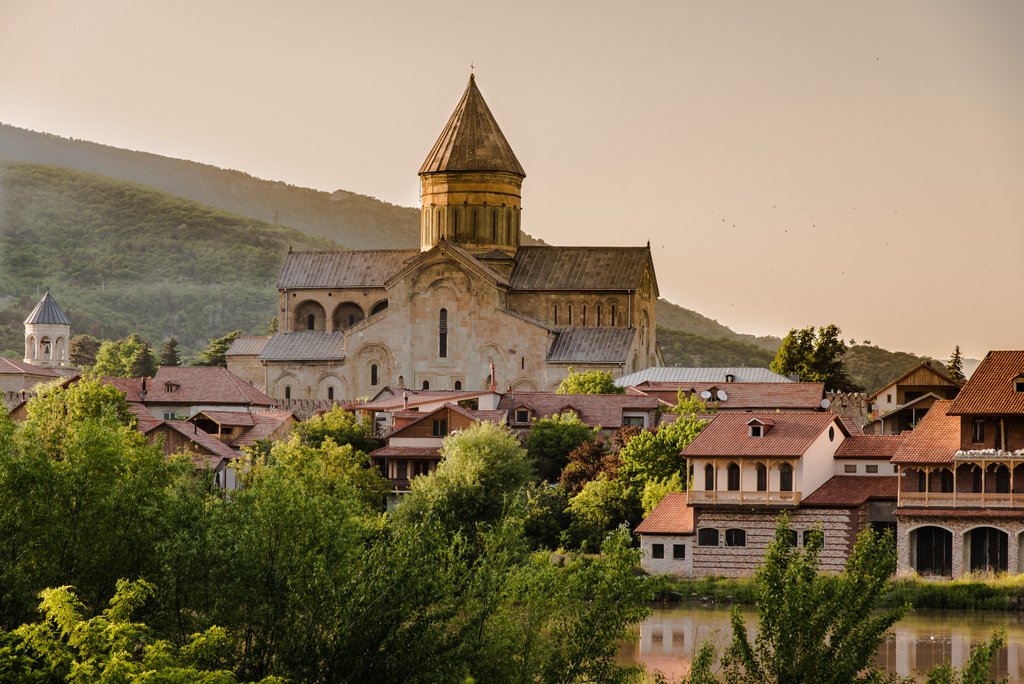
Surrounded by 5,000-meter high mountains, the South Caucasus was a strategic point tying together all directions of the Silk Road. Home to 50 ethnic groups, the region is a cultural treasure trove of unique ethnic music, religious architecture, wines, and so on. It has also been invaded by the Roman, Mongol, and Ottoman empires. Wars still rage even now, and over one million people have become refugees. The region is truly representative of both the blessings and the historical calamities brought on by the Silk Road. This leg of the journey will take you to three countries -- Azerbaijan, Armenia, and Georgia -- countries that have long fostered unique cultures tempered by the flames of war.
Launched in 1980, NHK's renowned Silk Road series was the first foreign TV program allowed to film Silk Road inside communist China. The series sparked enormous interest. A quarter of a century later, NHK re-visits Silk Road with high-definition cameras, and continues further through Central and West Asia.


Monday, June 30, 2014
SILK ROAD REPORTERS: The Caspian Connection. Published by Joshua Noonan (silkroadreporters.com)
 (silkroadreporters.com) The 826-kilometer (513-mile) Baku-Tbilisi-Kars (BTK) Railway is expected to be completed by late 2015, according to Azerbaijani Transportation Minister Ziya Mammadov who recently attended a tripartite meeting of ministers from Turkey, Georgia, and Azerbaijan.
It is anticipated that this railroad will transport up to 1 million passengers after its launch, ramping up to 3 million passengers and 15 million tons of freight within the first few months of operation. The railroad is seen as the most important strategic infrastructure project in recent history for the region, and will have major implications for the three partners with secondary ramifications for Armenia and Kazakhstan as East-West energy transport routes link the Caspian Basin to Europe.

The BTK is being coupled with the Nakhchivan-Kars Railway, which will connect the politically important Azerbaijani exclave of Nakhchivan with Kars. The deepening of links with Turkey and Georgia will provide for the further westerly economic integration that the leaders of the country seek that started with the Baku-Tbilisi-Ceyhan and the Baku-Tbilisi-Erzurum oil and gas pipelines, signaling the development of the Southern Energy Corridor.
This has continued recently with further Azerbaijan-driven investment in the downstream distribution and sales of gasoline and diesel in Georgia and the continued expansion of natural gas pipelines through Turkey with TANAP and TAP, linking Greece, Albania, and Italy. These mega-projects have been spearheaded by investors originating from Azerbaijan, Turkey, and other partner countries. Politically, these projects allow for the consolidation of Azerbaijani influence in Georgia through its State Oil Company of Azerbaijan Republic (SOCAR) service stations, while providing increased leverage over its adversary Armenia through the deployment of its natural-resource-derived wealth in the guise of SOCAR and State Oil Fund of Azerbaijan (SOFAZ).
Since the Rose Revolution in November 2003, Georgia has been seeking inflows of foreign direct investment (FDI) through internal reforms, cooperation with its neighbors, and integration into the Euro-Atlantic Community. As the current Georgian government has prioritized and campaigned on the promotion of rural development, market access that will be granted through these improved transportation links if coupled with subsequent reforms to the tariff and import regimes of Turkey and Azerbaijan. Georgia ranked eighth in the World Bank Ease of Doing Business Report in 2014. As labor costs increase in Turkey, Georgia could become a source of intermediary-product production, with the process speeded by the development of the BTK. This coupled with extant trade links, geopolitical trends, and entrepreneurial opportunities will assure the continued development of Georgia through this project.
Turkey will continue to develop its role as a hub-state for the transportation of resources and a interconnector for Europe, Asia, and the Middle East. In that role, actions involved with the development of the BTK are quite useful. This mega-project will be paired with the Marmaray Bosphorus Tunnel Project, which will cross the Bosphorus, knitting the European and Asian sides of Turkey together. This action will link the rails of the Absheron Peninsula with those in Berlin. Continued investments in eastern Turkey, linking booming Azerbaijan with this underdeveloped region, will allow for an accelerated growth-path and increased market access for businesses from the Caucasus, as well as provide additional export opportunities for this less developed region while expanding access to cheap and reliable natural gas, petroleum, foodstuffs, and commodities.
The last two countries are not transit countries for the BTK, but rather adjacent countries. The first, Armenia, has protested its exclusion from regional mega-projects. Though it would be a shorter and cheaper route from Baku through Yerevan to Kars, this possibility was forestalled by the over-20-year-old frozen conflict in Nagorno-Karabakh. This has led to its continued regional marginalization, and the BTK is only the latest example. Despite the lack of direct investment, consumers and intermediaries in Armenia will benefit from a more developed method of importing goods from Turkey, all of which are currently transshipped via Georgia on semi-tractor trailers. Moreover, exports from Armenia not bound for Russia or Iran could benefit from transshipment from Tbilisi westwards to European markets.
Kazakhstan as a major commodity and energy exporter may be able to benefit from the export of commodities to Turkey and from there to the Balkans via the Caspian. Issues concerning shipments on the Caspian, including terminals, are starting to be rectified on both shores. Nevertheless, a deeper East-West integration across the Caspian would take additional political capital that the respective leaders do not seem prepared to spend.
Nevertheless, as Europe and the Caucasus are knit together, leaders across the Caspian will start to take due notice of these opportunities.
There are still many hurdles for the project to clear – both technical and politcal – but when this project is finished and finally goes online, the world will behold an important realignment of how it interacts and trades with this once-distant region.
Monday, April 29, 2013
VORLESUNGSREIHE: GESCHICHTE UND KULTUR EINES TRANSKULTURELLEN RAUMS: DIE „SEIDENSTRASSE“
Wissenschaftliche Leitung: Univ.-Prof. Dr. Bert FRAGNER
Studium der orientalistischen Fächer Islamwissenschaft,
Turkologie, Arabistik und Iranistik sowie Völkerkunde und Slawistik an der Universität Wien.
Habilitation an der Universität Freiburg i.Br./D im Fach Islamwissenschaft,
Professuren an den deutschen Universitäten Freiburg, Berlin und zuletzt am Lehrstuhl
für Iranistik in Bamberg. Prof. Dr. Bert G. Fragner leitete vom April 2003 bis zu
seiner Pensionierung 2010 als Direktor das Institut für Iranistik der
Österreichischen Akademie der Wissenschaften. Präsident der ÖOG
ÖSTERREICHISCHE ORIENT-GESELLSCHAFT
7. Mai, 14. Mai, 28. Mai, 4. Juni, 11. Juni 2013
jeweils
Dienstag, 18.00-19.30 Uhr, Klubsaal der ÖOG
Teilnahmegebühr für 5 Abende: € 12,- für Mitglieder gratis
+++
7. Mai: Das
Innere des eurasischen Kontinents: die Topographische
Gestaltung eines multikulturellenRaums; tribale und nomadische Lebensformen im
Inneren Asiens; Verschiebung der Perspektive: aus der Sicht der innerasiatischen
Steppen- und Gebirgslandschaften sind die "hohen" Zivilisationen (China, Indien, antikes
Vorderasien, Griechenland und Ost-Mitteleuropa) allesamt randständig
14. Mai: Antike,
spätantike und frühmittelalterliche Zivilisationen zwischen dem Mittelmeer, dem Indischen Ozean und der pazifischen Küste in
überregionalem Kontakt; iranische und türkische Völker im Inneren Asiens
28. Mai: Islam,
Christentum und Buddhismus im mittelalterlichen Innerasien – das erste weiträumige "Globalisierungsphänomen" in der Geschichte: das "Mongolische Weltreich" und seine Folgereiche
4. Juni: Die Entwicklung
der "Seidenstraße" in der frühen Neuzeit;
der Bruch in der Geschichte: Kolonialmächte in Asien; die beginnende
Rivalität zwischen Russland und Großbritannien in Asien im 18./19. Jahrhundert
11. Juni: Das "Great
Game" und der Zusammenbruch der Seidenstraße; die Sowjetunion in Asien; der Aufstieg der kommunistischen Vorherrschaft in
China und ihre Konsequenzen in Zentralasien; die Gegenwart: postsowjetische unabhängige
Republiken in Asien
+++
Herzliche Grüße,
Ihre Silvia de Carvalho
Mag.a Silvia de Carvalho
Leiterin des Informationszentrums für Zentralasien und Südkaukasien
Österreichische Orient-Gesellschaft Hammer-Purgstall
Orient-Akademie
A-1010 Wien
Dominikanerbastei 6/6
www.orient-gesellschaft.at
Mag.a Silvia de Carvalho
Leiterin des Informationszentrums für Zentralasien und Südkaukasien
Österreichische Orient-Gesellschaft Hammer-Purgstall
Orient-Akademie
A-1010 Wien
Dominikanerbastei 6/6
www.orient-gesellschaft.at
Saturday, December 22, 2012
DOKUMENTATION: CNN berichtet über aserbaidschanische Seidenstadt Şəki (business.blogs.cnn.com)
(business.blogs.cnn.com) In einer Folge seiner aktuellen Dokumentarserie "Along the Silk Road" berichtet der US-Sender CNN über die nordaserbaidschanische Stadt Şəki. Die Serie begibt sich auf die Spuren der berühmten Seidenstraße, einer rund 6.000 Kilometer langen antiken Handelsroute zwischen Europa und Asien. Unterwegs erkundet das CNN-Team die exportgestützte Wirtschaft von Ländern, die über erhebliche Bodenschätze und Rohstoffvorkommen verfügen und deshalb in den nächsten 25 Jahren voraussichtlich ein immenses Wachstum verzeichnen werden.
Şəki war ein wichtiges Handelszentrum der Seidenroute und Knotenpunkt zwischen dem russischen Dagestan und den nördlichen Handelsstrecken, die durch den Kaukasus verliefen.
Der CNN-Reporter Jim Boulden besichtigt die traditionelle Karawanserei, wo sich Reisende und Händler von ihrem Tagesmarsch erholen konnten, eine Kirche aus dem 12. Jahrhundert, den berühmten Khanspalast aus dem 18. Jahrhundert und spricht mit dem Leiter der gemeindebasierten Tourismusbehörde von Şəki.
The series surveys the export-driven economies, countries with vast capitals of reserve and natural resources, that economic forecasters pinpoint as ringleaders of growth for the next quarter of a century.
Catch “Along the Silk Road” every Wednesday on CNN International within Global Exchange:
1100 ET
1600 GMT
1700 CET
Follow the show on Twitter @CNNGlobalEx and use the hashtag #CNNGlobalEx to join the conversation.
Shaki, Azerbaijan (CNN) – Trading is in the life blood
of Azerbaijan. As the link to east and west it was a vital rest stop
along the old silk route. In the northwest city, Shaki, there are
reminders of the country’s rich trading history and single remaining
silk factory.
Along the Silk Road
“Along the Silk Road” explores the burgeoning trade and investment
links from the Middle East to Asia – Beijing, Mumbai, Istanbul, Kabul,
Moscow, Hong Kong, Jakarta and Dubai.The series surveys the export-driven economies, countries with vast capitals of reserve and natural resources, that economic forecasters pinpoint as ringleaders of growth for the next quarter of a century.
Catch “Along the Silk Road” every Wednesday on CNN International within Global Exchange:
1100 ET
1600 GMT
1700 CET
Follow the show on Twitter @CNNGlobalEx and use the hashtag #CNNGlobalEx to join the conversation.
Friday, November 23, 2012
DOK-SERIE: Auf der Seidenstrasse in Aserbaidschan. Von Venedig nach Xi'an mit Peter Gysling. (sendungen.sf.tv)
(sf.tv/seidenstrasse) Die Seidenstrasse ist ein Netz von Strassen, die das Mittelmeer mit Ostasien verbindet. Auf ihr brachten einst Karawanen Seide, Schiesspulver und Papier von China nach Europa. Wo sich einst Karawanen durch den Staub schleppten, entstehen heute Schnellstrassen und Eisenbahnlinien. Folgen Sie unseren Reportern von Venedig nach Xi’an. In unserem Webdok und im Fernsehen, ab 9. November 2012, jeweils freitags, 21 Uhr, auf SF1.
Peter Gysling nimmt das Fernsehpublikum mit auf ein grosses Abenteuer: Er bereist eine der Nordrouten der Seidenstrasse, von Venedig nach Xi‘an.
Von Venedig nach Xi'an mit Peter Gysling
 Folge 3: Von traumhaften Teppichen, heilenden Ölbädern, riesigem
Rohstoff-Reichtum, vergessenen Vertriebenen und hinreissenden
Liebesgeschichte
Folge 3: Von traumhaften Teppichen, heilenden Ölbädern, riesigem
Rohstoff-Reichtum, vergessenen Vertriebenen und hinreissenden
Liebesgeschichte
Freitag, 23. November 2012, 21.00 Uhr auf SF1
+++
Traumhafte Teppiche
 Aserbaidschan ist berühmt für seine Teppichtradition. Die Zeiten der
kleinen Familienbetriebe sind allerdings vorbei. Peter Gysling besucht
die privatisierte Seidenfabrik Sheki, einst die grösste Seidenproduktion
der Sowjetunion. Heute arbeiten hier rund 900 Weberinnen, fertigen in
Handarbeit Baumwoll- und Seidenteppiche nach traditionellen Vorlagen und
bewahren so das kulturelle Erbe.
Aserbaidschan ist berühmt für seine Teppichtradition. Die Zeiten der
kleinen Familienbetriebe sind allerdings vorbei. Peter Gysling besucht
die privatisierte Seidenfabrik Sheki, einst die grösste Seidenproduktion
der Sowjetunion. Heute arbeiten hier rund 900 Weberinnen, fertigen in
Handarbeit Baumwoll- und Seidenteppiche nach traditionellen Vorlagen und
bewahren so das kulturelle Erbe.
Heilendes Ölbad
 In der Stadt Naftalan tritt das Schweröl ohne komplizierte Förderung an
die Erdoberfläche. Das Kurbaden im schwarzen Gold ist seit Sowjetzeiten
ein Hit: es hilft angeblich gegen Rheuma, Arthritis und Schuppenflechte.
Das TV-Team gewinnt einen heiteren Einblick in die skurrile Welt der
Ölwannen, in der ein Bademeister seinen Gast aufwändig vom Öl
freischabt.
In der Stadt Naftalan tritt das Schweröl ohne komplizierte Förderung an
die Erdoberfläche. Das Kurbaden im schwarzen Gold ist seit Sowjetzeiten
ein Hit: es hilft angeblich gegen Rheuma, Arthritis und Schuppenflechte.
Das TV-Team gewinnt einen heiteren Einblick in die skurrile Welt der
Ölwannen, in der ein Bademeister seinen Gast aufwändig vom Öl
freischabt.
Schwarzes Gold
 Neft Daslari, der Ölfelsen mitten im Kaspischen Meer, ist die grösste
offshore Plattform der Welt. Hier erleben wir die Faszination des
aserbaidschanischen Ölbooms. Nur wenige erhalten vom halbstaatlichen
Ölkonzern eine Drehgenehmigung, dem Team von „SRF Seidenstrasse“ ist es
gelungen. SOCAR übernimmt in der Schweiz die ESSO-Tankstellen und
entwickelt sich zu einem der Hauptlieferanten für Gas und Öl für Europa.
Neft Daslari, der Ölfelsen mitten im Kaspischen Meer, ist die grösste
offshore Plattform der Welt. Hier erleben wir die Faszination des
aserbaidschanischen Ölbooms. Nur wenige erhalten vom halbstaatlichen
Ölkonzern eine Drehgenehmigung, dem Team von „SRF Seidenstrasse“ ist es
gelungen. SOCAR übernimmt in der Schweiz die ESSO-Tankstellen und
entwickelt sich zu einem der Hauptlieferanten für Gas und Öl für Europa.Vergessene Vertriebene
 Die Fotografin Rena Effendi nennt man „das soziale Gewissen
Aserbaidschans“. Sie dokumentiert in Bildern das Schicksal all jener,
die trotz des Ölreichtums Armut leiden. Rena Effendi zeigt dem
Fernsehteam ein Betonfabrik, in der Vertriebene aus Berg-Karabach leben.
Sie warten seit Jahren darauf, von der Regierung menschenwürdiges Dach
überm Kopf zu erhalten.
Die Fotografin Rena Effendi nennt man „das soziale Gewissen
Aserbaidschans“. Sie dokumentiert in Bildern das Schicksal all jener,
die trotz des Ölreichtums Armut leiden. Rena Effendi zeigt dem
Fernsehteam ein Betonfabrik, in der Vertriebene aus Berg-Karabach leben.
Sie warten seit Jahren darauf, von der Regierung menschenwürdiges Dach
überm Kopf zu erhalten. Mutige Blogger
 Freie Wahlen, freie Medien gibt es nicht in Aserbaidschan. Als junger
Mensch müsse man seine Wahl treffen, die schwerwiegende Konsequenzen
haben kann: Zugunsten des autokratischen Präsidenten Aliyev - oder
zugunsten einer ersehnten freien Demokratie. Peter Gysling trifft eine
unerschrockene Gruppe aus der Blogger-Szene in Baku.
Freie Wahlen, freie Medien gibt es nicht in Aserbaidschan. Als junger
Mensch müsse man seine Wahl treffen, die schwerwiegende Konsequenzen
haben kann: Zugunsten des autokratischen Präsidenten Aliyev - oder
zugunsten einer ersehnten freien Demokratie. Peter Gysling trifft eine
unerschrockene Gruppe aus der Blogger-Szene in Baku.
Hinreißende Liebesgeschichte
 „Ali und Nino“ ist das aserbaidschanische Nationalepos, ein tragischer
Liebesroman zwischen einer Christin und einem Muslim, an der Nahtstelle
zwischen Europa und Asien. Das TV-Team portraitiert ein modernes junges
interreligiöses Paar: wir lernen Natalja und Tural kennen, ihren Alltag
und die kulturellen Hürden, die das Liebespaar im eurasischen
Knotenpunkt Baku auch heute noch überwinden muss. Im Hintergrund und an
verschiedenen Schauplätzen schwingt das Nationalepos immer mit.
„Ali und Nino“ ist das aserbaidschanische Nationalepos, ein tragischer
Liebesroman zwischen einer Christin und einem Muslim, an der Nahtstelle
zwischen Europa und Asien. Das TV-Team portraitiert ein modernes junges
interreligiöses Paar: wir lernen Natalja und Tural kennen, ihren Alltag
und die kulturellen Hürden, die das Liebespaar im eurasischen
Knotenpunkt Baku auch heute noch überwinden muss. Im Hintergrund und an
verschiedenen Schauplätzen schwingt das Nationalepos immer mit.
Wiederholungen:
Samstag, 24. November 2012, 05.45 Uhr auf SF1
Sonntag, 25. November 2012, 14.05 Uhr auf SF1
Donnerstag, 03. Januar 2013, 20.15 Uhr auf 3sat
Sonntag, 06. Januar 2013, 17.15 Uhr auf 3sat
Friday, November 16, 2012
DOK-SERIE: Auf der Seidenstrasse in Georgien. Von Venedig nach Xi'an mit Peter Gysling. - über Georgien und Aserbaidschan (sendungen.sf.tv)
(sf.tv/seidenstrasse) Die Seidenstrasse ist ein Netz von Strassen, die das Mittelmeer mit Ostasien verbindet. Auf ihr brachten einst Karawanen Seide, Schiesspulver und Papier von China nach Europa. Wo sich einst Karawanen durch den Staub schleppten, entstehen heute Schnellstrassen und Eisenbahnlinien. Folgen Sie unseren Reportern von Venedig nach Xi’an. In unserem Webdok und im Fernsehen, ab 9. November 2012, jeweils freitags, 21 Uhr, auf SF1.
Link: Interaktive WEB-Dokumentation
Peter Gysling nimmt das Fernsehpublikum mit auf ein grosses Abenteuer: Er bereist eine der Nordrouten der Seidenstrasse, von Venedig nach Xi‘an. Von Venedig nach Xi'an mit Peter Gysling
 Folge 2: Von trinkfreudigen Bauern, felsenfesten Glaubensbrüdern, vergessenen Flüchtlingen und menschenfreundlichen Milliardären
Freitag, 16. November 2012, 21.00 Uhr auf SF1
+++
 Die Ferienmetropole am Schwarzen Meer wird rigoros ausgebaut. Die neuen Casinos und Fünfsternhotels wirken wie ein potemkinsches Dorf, eine Kulisse, welche die wirkliche Situation der Stadt und des Landes kaschiert. Eter Turadse, engagierte Chefredaktorin der kritischen Zeitung Batumelebi, die gegen den staatlichen Pressestrom schwimmt, führt Peter Gysling durch protzige Baustellen, gegen die Bürgerproteste nichts auszurichten vermögen, und zeigt ihm die zerfallenden Hinterhöfe der Hafenstadt.
 In der wilden Bergwelt der Region Adscharien trifft Peter Gysling auf ein ganz anderes Georgien. Die Menschen, die von einer bescheidenen Landwirtschaft leben, wirken besonders engagiert und selbstbewusst.
 Das monumentale Felskloster Wardzia hat Nachwuchs bekommen, das georgisch-orthodoxe Christentum erlebt ein Revival der Blut-und-Boden-Tradition. Vater Lazare betet für Gott, für sein Land und für sein Volk. Der steilen Felswand wurden vor 800 Jahren Tunnel und Terrassen für bis zu 50'000 Menschen abgetrotzt, die Höhlenräume sind bis heute auf sieben Stockwerken labyrinthartig verbunden. Die göttliche Ruhe wird jedoch gestört: Georgien möchte seine marode Wirtschaft durch den Tourismus ankurbeln, Zufahrtswege werden ausgebaut, gefährliche
Stellen abgesichert.
Das monumentale Felskloster Wardzia hat Nachwuchs bekommen, das georgisch-orthodoxe Christentum erlebt ein Revival der Blut-und-Boden-Tradition. Vater Lazare betet für Gott, für sein Land und für sein Volk. Der steilen Felswand wurden vor 800 Jahren Tunnel und Terrassen für bis zu 50'000 Menschen abgetrotzt, die Höhlenräume sind bis heute auf sieben Stockwerken labyrinthartig verbunden. Die göttliche Ruhe wird jedoch gestört: Georgien möchte seine marode Wirtschaft durch den Tourismus ankurbeln, Zufahrtswege werden ausgebaut, gefährliche
Stellen abgesichert.
 Bei Gori trifft Peter Gysling auf Mzia Gagloeva Jojischvili. Die 69-jährige Südossetin hat mit ihrem Mann, einem ethnischen Georgier, in Südossetien einen Hof betrieben. Bei Kriegsausbruch und ethnischen
Säuberungen vor vier Jahren ist ihr die Flucht ins georgische Zentralland gelungen, von ihrem zurück gebliebenen Mann aber fehlt jede Spur. Die Rentnerin ist froh, dass ihr das IKRK hier ein Dach zum Überleben zur Verfügung stellt. Ihr Schicksal ist typisch für die vielen ungelösten Minoritätenprobleme im Kaukasus.
Bei Gori trifft Peter Gysling auf Mzia Gagloeva Jojischvili. Die 69-jährige Südossetin hat mit ihrem Mann, einem ethnischen Georgier, in Südossetien einen Hof betrieben. Bei Kriegsausbruch und ethnischen
Säuberungen vor vier Jahren ist ihr die Flucht ins georgische Zentralland gelungen, von ihrem zurück gebliebenen Mann aber fehlt jede Spur. Die Rentnerin ist froh, dass ihr das IKRK hier ein Dach zum Überleben zur Verfügung stellt. Ihr Schicksal ist typisch für die vielen ungelösten Minoritätenprobleme im Kaukasus.
 In Tiflis besucht Peter Gysling seinen Freund Lasha Bakradze, Leiter des georgischen Literaturmuseums. Er ist ein humorvoller Historiker und vor allem auch ein äusserst geistreicher Mensch. Lasha zeigt ihm erstaunliche Dokumente, die wertvollen Aufschluss über das Leben und den
kulturellen und religiösen Austausch auf der Seidenstrasse geben. Lasha erzählt in ironischem Klartext, warum die Georgier ein gespaltenes Verhältnis zu Russland haben und sich lieber nach Westen orientieren.
In Tiflis besucht Peter Gysling seinen Freund Lasha Bakradze, Leiter des georgischen Literaturmuseums. Er ist ein humorvoller Historiker und vor allem auch ein äusserst geistreicher Mensch. Lasha zeigt ihm erstaunliche Dokumente, die wertvollen Aufschluss über das Leben und den
kulturellen und religiösen Austausch auf der Seidenstrasse geben. Lasha erzählt in ironischem Klartext, warum die Georgier ein gespaltenes Verhältnis zu Russland haben und sich lieber nach Westen orientieren.
 Der 56-jährige Bidsina Iwanischwili hat in Russland sehr erfolgreich mit Computern, Telefongeräten und einer Kreditbank geschäftet. Seit der
Rückkehr nach Georgien versteht sich Iwanischwili als Menschenfreund, und hat - anfänglich noch heimlich - mit zig Millionen zahlreiche Staatsaufgaben finanziert und seinen Heimatbezirk Satschkere mit seinem Geldsegen beglückt. Der öffentlichkeitsscheue, milliardenschwere Mäzen führt Peter Gysling ganz selbstverständlich durch seinen Tifliser Glaspalast, der an James Bond-Filme erinnert. Mit seinem Parteienbündnis hat Iwanischwili jüngst die Parlamentswahlen gewonnen. Sein Ziel: Hunderttausende von Arbeitsplätzen schaffen und Georgien von der Armut befreien.
Der 56-jährige Bidsina Iwanischwili hat in Russland sehr erfolgreich mit Computern, Telefongeräten und einer Kreditbank geschäftet. Seit der
Rückkehr nach Georgien versteht sich Iwanischwili als Menschenfreund, und hat - anfänglich noch heimlich - mit zig Millionen zahlreiche Staatsaufgaben finanziert und seinen Heimatbezirk Satschkere mit seinem Geldsegen beglückt. Der öffentlichkeitsscheue, milliardenschwere Mäzen führt Peter Gysling ganz selbstverständlich durch seinen Tifliser Glaspalast, der an James Bond-Filme erinnert. Mit seinem Parteienbündnis hat Iwanischwili jüngst die Parlamentswahlen gewonnen. Sein Ziel: Hunderttausende von Arbeitsplätzen schaffen und Georgien von der Armut befreien.
Wiederholungen:
Samstag, 17. November 2012, 05.45 Uhr auf SF1
Sonntag, 18. November 2012, 14.05 Uhr auf SF1
Mittwoch, 02. Januar 2013, 21.00 Uhr auf 3sat
Sonntag, 06. Januar 2013, 16.30 Uhr auf 3sat
Mehr: sendungen.sf.tv/seidenstrasse
Peter Gysling nimmt das Fernsehpublikum mit auf ein grosses Abenteuer: Er bereist eine der Nordrouten der Seidenstrasse, von Venedig nach Xi‘an. Von Venedig nach Xi'an mit Peter Gysling
Folge 2: Von trinkfreudigen Bauern, felsenfesten Glaubensbrüdern, vergessenen Flüchtlingen und menschenfreundlichen MilliardärenFreitag, 16. November 2012, 21.00 Uhr auf SF1
+++
Boomendes Batumi
Die Ferienmetropole am Schwarzen Meer wird rigoros ausgebaut. Die neuen Casinos und Fünfsternhotels wirken wie ein potemkinsches Dorf, eine Kulisse, welche die wirkliche Situation der Stadt und des Landes kaschiert. Eter Turadse, engagierte Chefredaktorin der kritischen Zeitung Batumelebi, die gegen den staatlichen Pressestrom schwimmt, führt Peter Gysling durch protzige Baustellen, gegen die Bürgerproteste nichts auszurichten vermögen, und zeigt ihm die zerfallenden Hinterhöfe der Hafenstadt.
Hochprozentige Reise
In der wilden Bergwelt der Region Adscharien trifft Peter Gysling auf ein ganz anderes Georgien. Die Menschen, die von einer bescheidenen Landwirtschaft leben, wirken besonders engagiert und selbstbewusst.
Auf der abenteuerlichen Fahrt über den Goderdzipass begegnet das TV-Team dem umtriebigen Polizeiermittler Jumber Balkvadze, der nebenbei noch ein Gästehaus betreibt, und den feucht-fröhlichen Bauern, die Peter Gysling im hochgelegenen Krämerladen in die hochprozentigen Trinksitten
einführen.
Felsenfeste Glaubensbrüder
Das monumentale Felskloster Wardzia hat Nachwuchs bekommen, das georgisch-orthodoxe Christentum erlebt ein Revival der Blut-und-Boden-Tradition. Vater Lazare betet für Gott, für sein Land und für sein Volk. Der steilen Felswand wurden vor 800 Jahren Tunnel und Terrassen für bis zu 50'000 Menschen abgetrotzt, die Höhlenräume sind bis heute auf sieben Stockwerken labyrinthartig verbunden. Die göttliche Ruhe wird jedoch gestört: Georgien möchte seine marode Wirtschaft durch den Tourismus ankurbeln, Zufahrtswege werden ausgebaut, gefährliche
Stellen abgesichert. Flüchtlinge in Gori
Bei Gori trifft Peter Gysling auf Mzia Gagloeva Jojischvili. Die 69-jährige Südossetin hat mit ihrem Mann, einem ethnischen Georgier, in Südossetien einen Hof betrieben. Bei Kriegsausbruch und ethnischen
Säuberungen vor vier Jahren ist ihr die Flucht ins georgische Zentralland gelungen, von ihrem zurück gebliebenen Mann aber fehlt jede Spur. Die Rentnerin ist froh, dass ihr das IKRK hier ein Dach zum Überleben zur Verfügung stellt. Ihr Schicksal ist typisch für die vielen ungelösten Minoritätenprobleme im Kaukasus. Humorvoller Historiker
In Tiflis besucht Peter Gysling seinen Freund Lasha Bakradze, Leiter des georgischen Literaturmuseums. Er ist ein humorvoller Historiker und vor allem auch ein äusserst geistreicher Mensch. Lasha zeigt ihm erstaunliche Dokumente, die wertvollen Aufschluss über das Leben und den
kulturellen und religiösen Austausch auf der Seidenstrasse geben. Lasha erzählt in ironischem Klartext, warum die Georgier ein gespaltenes Verhältnis zu Russland haben und sich lieber nach Westen orientieren.
Georgisches Märchen
Der 56-jährige Bidsina Iwanischwili hat in Russland sehr erfolgreich mit Computern, Telefongeräten und einer Kreditbank geschäftet. Seit der
Rückkehr nach Georgien versteht sich Iwanischwili als Menschenfreund, und hat - anfänglich noch heimlich - mit zig Millionen zahlreiche Staatsaufgaben finanziert und seinen Heimatbezirk Satschkere mit seinem Geldsegen beglückt. Der öffentlichkeitsscheue, milliardenschwere Mäzen führt Peter Gysling ganz selbstverständlich durch seinen Tifliser Glaspalast, der an James Bond-Filme erinnert. Mit seinem Parteienbündnis hat Iwanischwili jüngst die Parlamentswahlen gewonnen. Sein Ziel: Hunderttausende von Arbeitsplätzen schaffen und Georgien von der Armut befreien.
Wiederholungen:
Samstag, 17. November 2012, 05.45 Uhr auf SF1
Sonntag, 18. November 2012, 14.05 Uhr auf SF1
Mittwoch, 02. Januar 2013, 21.00 Uhr auf 3sat
Sonntag, 06. Januar 2013, 16.30 Uhr auf 3sat
Mehr: sendungen.sf.tv/seidenstrasse
Friday, November 09, 2012
DOK-SERIE: Seidenstrasse. Von Venedig nach Xi'an mit Peter Gysling. - über Georgien und Aserbaidschan (sendungen.sf.tv)
(sf.tv/seidenstrasse) Die Seidenstrasse ist ein Netz von Strassen, die das Mittelmeer mit Ostasien verbindet. Auf ihr brachten einst Karawanen Seide, Schiesspulver und Papier von China nach Europa. Wo sich einst Karawanen durch den Staub schleppten, entstehen heute Schnellstrassen und Eisenbahnlinien. Folgen Sie unseren Reportern von Venedig nach Xi’an. In unserem Webdok und im Fernsehen, ab 9. November 2012, jeweils freitags, 21 Uhr, auf SF1.
Link: Interaktive WEB-Dokumentation
Peter Gysling nimmt das Fernsehpublikum mit auf ein grosses Abenteuer: Er bereist eine der Nordrouten der Seidenstrasse, von Venedig nach Xi‘an. Die erste Etappe führt von Venedig in Italien bis nach Trabzon in der Türkei.
Von Venedig nach Xi'an mit Peter Gysling
 Folge 1: Von geschichtsbewussten Kostümkünstlern, geschäftstüchtigen Chinesen, modernen und traditionellen Türken
Freitag, 9. November 2012, 21.00 Uhr auf SF1
Wiederholungen:
Samstag, 10. November 2012, 05.45 Uhr auf SF1
Sonntag, 11. November 2012, 14.05 Uhr auf SF1
Mittwoch, 02. Januar 2013, 20.15 Uhr auf 3sat
Sonntag, 06. Januar 2013, 15.45 Uhr auf 3sat
Mehr: sendungen.sf.tv/seidenstrasse
Peter Gysling nimmt das Fernsehpublikum mit auf ein grosses Abenteuer: Er bereist eine der Nordrouten der Seidenstrasse, von Venedig nach Xi‘an. Die erste Etappe führt von Venedig in Italien bis nach Trabzon in der Türkei.
Von Venedig nach Xi'an mit Peter Gysling
Folge 1: Von geschichtsbewussten Kostümkünstlern, geschäftstüchtigen Chinesen, modernen und traditionellen TürkenFreitag, 9. November 2012, 21.00 Uhr auf SF1
Wiederholungen:
Samstag, 10. November 2012, 05.45 Uhr auf SF1
Sonntag, 11. November 2012, 14.05 Uhr auf SF1
Mittwoch, 02. Januar 2013, 20.15 Uhr auf 3sat
Sonntag, 06. Januar 2013, 15.45 Uhr auf 3sat
Mehr: sendungen.sf.tv/seidenstrasse
Friday, May 04, 2012
PHOTOESSAY: The New Silk Road. By Brett Forrest. Photograph by Alex Webb (ngm.nationalgeographic.com)
(ngm.nationalgeographic.com) A railroad through the southern Caucasus will soon connect Europe and Asia, fueling dreams and discord in the region.
 The dynamite comes from Ankara. Ten tons, and it takes two days. The truck climbs carefully, screwing 2,500 feet up the mountains of northeastern Turkey, where the clouded sun makes faraway ice fields roll like a distant sea. This is beautiful, forbidding country, through which a new railroad will soon run.
Arslan Ustael awaits the dynamite in the snow, with night temperatures reaching 40 below. Standing before the rail tunnel, Ustael says that in this weather your spit freezes before it hits the ground. He is a young man still, 30, and free with Turkish good humor, even up here in the cold clouds waiting for the dynamite that will make the volcanic mountain agreeable to his demand to bore a tunnel through it. Free with good humor because he knows this is an undertaking that could make a young engineer's career: building the Baku-Tbilisi-Kars (BTK) railway, an "Iron Silk Road" that will connect the oil-rich Caspian Sea region to Turkey—and beyond to Europe.
The travels of antiquity are tiring to contemplate. The 750-mile stretch of land between the Black Sea and the Caspian Sea is known as the Caucasus, named for the mountain range through which Ustael is digging his tunnel. Before the region got swallowed up by the Russian Empire, the Caucasus served as a transit point between Europe and Asia; the old Silk Road passed through it. Yet transport between West and East has never been easy. For centuries, to get from one sea to the other, you had to paddle north up the Don River from the Sea of Azov, portage over the steppe, then drift down the Volga to the Caspian. Only when the Russians began building railroads over the Caucasus in the 19th century could you travel more directly across the region.
The Iron Silk Road will launch a new chapter in the history of the Caucasus. After the Soviet Union collapsed in 1991, the newly independent republics of the southern Caucasus—Georgia, Armenia, and Azerbaijan—regained strategic importance. A realization of the enormity of the oil and natural gas reserves lying beneath and along the Caspian Sea ignited a scramble to lay pipelines across the southern Caucasus to bring those resources to the European market. Today the pipelines are operational, and the BTK is being built to grease a trade boom, transporting European goods east and petroleum products west across the southern Caucasus. Once completed, by 2012, the railway will begin at the Azerbaijani capital of Baku and travel through the Georgian city of Tbilisi, before carrying on to Kars, a Turkish post town on the southwestern lip of the Caucasus region.
The participation of Turkey signals a new alignment in a region often viewed as Russia's backyard. Like the Baku-Tbilisi-Ceyhan (BTC) pipeline—which opened in 2005 to bring oil from Baku to the Turkish port city of Ceyhan, on the Mediterranean—the BTK railway is the result of an alliance between Turkey, Georgia, and Azerbaijan; neighboring Armenia was deliberately left out of the party. And like the pipeline, this east-west corridor will provide an alternative to going through Russia to the north or Iran to the south. It is a more than $600-million project of economic development, social engineering, or shrewd geopolitics, depending on your point of view, which in the southern Caucasus shifts as quickly as the snow that obscures the mountain road.
For Ustael, chief of the tunnel operation on the Turkish-Georgian border, this railroad has become something else: a road to loneliness. Back in Trabzon, a temperate, Turkish Black Sea coastal town, his girlfriend's face clouded when she imagined two years in the Caucasus Mountains, for that is how long it will take to build this tunnel. She just couldn't do it. Ustael exhales, stirs the sugar through his tea. A man must make choices. Smoke hangs over the canteen. Workers chalky with tunnel dust stare distantly at the men in sun and shorts chasing a ball across the TV. Through the windows, another blizzard is mixing up the air. In World War I, 90,000 Ottoman soldiers waited in these mountains for the Russians to come. "Some froze to death without firing a shot," Ustael says. He grabs a hard hat and walks to the door. Tunnel work progresses in round-the-clock, three-hour shifts.
Work is likewise endless for the Turkish state, toiling to gain acceptance into the European Union (EU). Turks look indignantly at countries like Bulgaria and Romania that have already been accepted, places with much less developed economies and greater corruption. Turkey, the Cold War NATO ally, meanwhile, waits for an invitation that may never come. This "raises questions of fairness, at least," says N. Ahmet Kuşhanoğlu, the Turkish deputy director of transport in charge of railways. "Turkey's face is turned westward since two centuries." Now Turkey is looking east in order to make itself indispensable to the West. Once the Marmaray rail tunnel opens in 2013 beneath the Bosporus in Istanbul, trains from Baku will reach all the way to London. "It is easy to see that this railway shall serve Europe also," says Kuşhanoğlu.
Looking directly east, Turkey has lately sought to repair relations with its neighbor Armenia. In 1993 it had closed the border and shut down its rail service with Armenia as a sign of loyalty to Azerbaijan—a close Turkish ally with the same Muslim religion—after Christian Armenia helped ethnic Armenians in the Azerbaijan enclave of Nagorno-Karabakh wage a bloody war to secede. Last year in Zurich, under the watchful eyes of the EU and the U.S., Turkey signed an agreement with Armenia to mend diplomatic ties and reopen the border. But the Armenians then demanded that Turkey acknowledge that the 1915 massacres of its people constituted genocide, which Turkey is loath to do. For their part, the Turks began insisting on some resolution to the Nagorno-Karabakh conflict. Since neither is likely to happen anytime soon, the deal—and the opportunity for a rapprochement—collapsed last spring.
A bridge between Turkey and Armenia actually does exist, though most of it has crumbled into the Akhuryan River, which cuts deeply through a gorge that serves as the border between the two countries. The Silk Road city of Ani stands abandoned along this part of the border, its mosques and churches intact after a thousand years, its bazaars echoing in a winter wind. Beyond an electric fence and across the river, Armenian guard towers keep watch over the ruins.
Some 50 miles north of Ani, Ustael's workers continue to dig 13 feet every day. Once completed, the tunnel will run for a mile and a half, 1,300 feet beneath the surface. It will be one of the longest in Turkey, Ustael says, and everyone will know his name. "Maybe then I can go work someplace warm."
Ustael spends his downtime in Kars, 42 miles south of the border, the two-hour drive made eventful by the slippery fact of coming down the mountain. Along icy roads, the car twists through slopeside villages, past minarets and the mud roofs of stone huts overgrown with grass. A vast westward migration of people in search of jobs has robbed these villages of all but the least mobile. Foxes forage at the roadside, headlights igniting their eyes.
In Kars, the site of great 19th-century battles between Ottoman Turks and Russians, the hilltop citadel remains. The women stay indoors. The men walk arm in arm down the streets, savoring a drink of raki in the saloons that exist in this region of lax Islam. Raki tastes like the anise-flavored pastis of France, but there is little European refinement in Kars. That could change when the BTK links this city to Baku, its wealthy antipode on the Caspian, injecting new revenue into the local economy. The governor of Kars, Ahmet Kara, talks of how the railroad will transform Kars into a city "important in the world's eyes." Behind Kara hangs a photo of Mustafa Kemal, or Atat�rk, the first president of Turkey, who turned the Ottoman Empire into a modern, secular state, encouraging Western ways and outlawing the fez.
With a knit cap on his head and bundled in a thick anorak, Ustael watches a drill needle the far wall of the tunnel, making small stones out of solid rock. A front loader strains up the tunnel's incline, its bucket carrying a ton of freshly dislodged stone. It emerges from the tunnel and rolls into the blizzard, driving past Ustael toward a waiting truck. He says he wants to contribute to modern Turkey, to help bridge East and West. When the dynamite arrives, he laughs when he sees that it was made in China; it has already crossed this border once before.
There will be no explosions today. The mountain rock is soft enough for the drill to do its work without dynamite. Ustael looks down the tunnel toward Georgia. "We haven't found gold yet," he jokes. The stones tumble from the front loader into the truck, the crash almost drowning out his voice. "The Silk Road will live again."
They're not hiring in Akhalkalaki. There's no gold here either. Not much glitters in the hardscrabble hills near this town in the Georgian south. This is where the old railroad from Georgia's capital city of Tbilisi terminates. Beginning here, 60 miles of new rail will be laid, running south through Ustael's mountain tunnel to Kars. Another 75 miles of existing rail will be rehabilitated. Work begins with the thaw.
Akhalkalaki is in Georgia, but most of its residents are ethnically Armenian—and desperately poor. The factories in Akhalkalaki were dismantled after the Soviet collapse, their components sold off in the new capitalism. Since the agricultural collectives shut down, once fertile lands have overgrown with weeds. Bandits clipped the aluminum wires and copper connectors that helped propel rail cars, selling the metal in Iran and Turkey. The economy took a big hit in 2007, when the Russians closed a military base here.
There is to work, so the men go to Moscow, where they step into the orange jumpsuits of the street cleaner, sending money back home. Many who have stayed feel neglected by the central Georgian government. Protests have been frequent. Very few people in Akhalkalaki and the surrounding Javakheti region speak Georgian, and in the schools there is no one to teach the language. During the 1990s the prospect loomed that Javakheti could be Georgia's next breakaway region, like Abkhazia and South Ossetia in the north, which declared independence in the early 1990s but remain largely unrecognized.
Now Georgia is counting on the BTK railway to boost economic activity and help integrate this turbulent Armenian enclave into the rest of the country. When plans to open the railway were first announced, Georgia's Armenians opposed its construction, citing the unfairness of its bypassing Armenia. But today in Akhalkalaki there is a small hope that the new railroad will alleviate this long postcommunist endurance.
Grigoriy Lazarev stands guard at Akhalkalaki's outdoor bazaar. He takes potatoes on consignment from a local farmer, barters them for mandarins, then sells the fruit at the bazaar for 40 tetri a kilo, or about ten cents a pound. He would like to work on the railroad. "I am a mechanic, a welder, a master engineer," he says. "Selling mandarins is not good for my psyche." He stands before a pile of fruit in the trunk of his green Moskvitch, looking left and right at the many others who also sell mandarins here. In Soviet days this street had order, Lazarev says. "But everybody became sellers." He is 58 years old, has only enough teeth to chew soft food like citrus fruit. He has two young children, and a few tetri jangle in his coat pocket.
When Lazarev drove two hours to the town of Kartsakhi to apply for work on the railroad, the contractors turned him away. He visited the camp forming on the outskirts of Akhalkalaki, where Turkish and Azerbaijani skilled workers will soon congregate. You cannot operate a Komatsu excavator, they said. You do not speak Georgian.
The ministers in Tbilisi say Akhalkalaki will be the site of a critical station on the Iron Silk Road, where trains will switch between European and Russian rail gauges. For people in Akhalkalaki, it is difficult to imagine how they will benefit. Like Lazarev, many hundreds of locals have petitioned for railroad work, yet such work remains elusive.
Conditions have improved since Mikheil Saakashvili assumed the Georgian presidency—people in Akhalkalaki will admit that. Under Eduard Shevardnadze, they had electricity only five hours a day—while they slept—long enough for bread to bake in time for morning. It was subsistence living: no TV, poor roads, little interaction with Tbilisi, and a rationing of the wood that fueled the house stoves that kept people from freezing in their beds. Now there are a few good roads and electricity all day, if not running water in every home. It is often cold in Akhalkalaki, even indoors, and the abiding stress makes the people wander these streets weakly, nothing like the powerful Narts, the fabled giants that inhabited the Caucasus before humans arrived and that inspired them to carve mountains into kingdoms and then into nations.
Just 19 years old as a nation, Georgia is struggling through its adolescence. Seven years ago the Rose Revolution engendered all manner of youthful aspiration. Membership in NATO. Inclusion in the European Union. Bringing the breakaway regions of Abkhazia and South Ossetia under firm federal control. Reworking relations with Russia. Saakashvili wanted it all, wanted it quickly. If not for Georgia's northerly neighbor, he might have gotten it all.
The Russians have long felt a sense of entitlement toward Georgia, for they were the ones who folded Georgian nobility into their ranks during the 19th century, forming many principalities into a single governable entity, a Christian fortification in a region otherwise allied with the Ottomans or Persians. Russia also feels a deep emotional attachment to a land romanticized by Aleksandr Pushkin and Leo Tolstoy. But benevolence is a matter of perspective. Soon after Alexander I attempted to adopt Georgia in 1801, the widowed Georgian queen greeted the tsar's envoy with a dagger in the side, killing him.
More recently tensions spiked as Russia, fed up with Georgia's Western desires, closed the border between the two countries in 2006. Russia worries that if Georgia gains entry to the Western institutions it so esteems, this could inspire similar freethinking in the northern Caucasus—including the Russian regions of Dagestan, Ingushetiya, and Chechnya—which continues to shudder with explosions and assassinations that threaten Moscow's territorial hold.
The long-running tensions between Russia and Georgia escalated into war in the summer of 2008. Russia moved to assert control over the breakaway regions. Its troops routed Georgia's army, and Russia recognized South Ossetia and Abkhazia as new nations. It was a reminder that a small skirmish in these borderlands could spark a global showdown. Yet the EU and the U.S. were notably indisposed to intervene. Since the war, Georgia's pro-Western policy has stalled. Though the border between the two countries reopened last March, tensions are still high.
Like Prometheus, whom the gods chained to the Caucasus as punishment for giving humanity the power of fire, Georgia cannot escape its coordinates. Yet its position on the map may be its strongest asset. For NATO, the southern Caucasus is now viewed as a needed route for supplying the war in Afghanistan, ever since terrorist attacks in November 2008 began threatening the supply route through Pakistan's Khyber Pass. For Turkey, an important trade partner, Georgia is the gate to Central Asia. Armenia and Russia cannot trade with each other without going through Georgia. And Azerbaijani oil cannot reach the Mediterranean without passing through Georgia, earning the country $65 million in annual transit fees.
Georgia is a small player at the table, left to stack small chips. Indeed, the most significant impact of the Iron Silk Road on Georgia may prove to be the dismay it will create in the Black Sea ports of Batumi and Poti, the country's most dynamic economic centers, once freight can be diverted to Turkey instead. Still, Georgia can hope that if there's another conflict with Russia, European countries will cry foul if their trade through the southern Caucasus is disrupted.
In Akhalkalaki, Grigoriy Lazarev packs up his scale and its rusted one- and five-kilogram weights, and slowly walks away from the bazaar. He passes a funeral procession running along the main thoroughfare, a photo of the deceased man affixed to the windshield of a sedan. Arms linked, men walk up the mud of the street, women up the mud of the sidewalk.
Lazarev's small house was built in 1850, in the time of hard-willed Nicholas I. The roof leans severely, threatening to cave. Lazarev cannot pay to fix it. He and his family live off his mother's 90-lari (about $50) monthly pension. Still, when they have guests, Lazarev's wife, Liza, busies herself setting the table with what food they possess. A daughter, Gohar, sits at an old upright piano and practices her lessons, filling the small room with music and missteps. Lazarev grieves over his bad luck with the railroad and more generally, but not so loudly that his family will hear.
He rummages through a wardrobe and returns to the table. In his hand is a felt-backed shoulder board, its green fabric faded nearly to gray. It is the emblem of a lieutenant, an engineer with the Russian border service. "My grandfather served under Nicholas II," Lazarev says. "He built roads to Akhaltsikhe and Batumi." Lazarev smiles, a rare incident, and then the room goes dark. The electricity has gone out in Akhalkalaki, and the Lazarevs fall silent, but for the sound of the old piano.
It is electricity that initially impresses in Baku, its roadway lamps gilding the new asphalt from airport to city. Baku no longer supplies half the world's petroleum needs, as it did at the opening of the 20th century. But it feels like it does. In the past three years all manner of luxe stores have opened along the boulevard Neftchiler Prospekti, their windows reflecting the Caspian waters. Plans are progressing on a $4.5-billion, carbon-neutral resort on Zira Island, in the bay beyond the city. A Four Seasons Hotel will open shortly to house the guests drawn to Baku by the wealth of the state oil monopoly, located across the street. In the five years since the BTC pipeline began pumping oil out of the Caspian and money into Baku, Azerbaijan's economy has grown by more than 100 percent.
In the years after the former Turkish president, Süleyman Demirel, broached the topic of the Iron Silk Road in a Tbilisi speech in the late 1990s, the parties involved attempted to secure international funding for its construction. But the Armenian diaspora blocked all financing efforts, arguing convincingly that the routing of the railroad, like that of the oil pipeline before it, was a punitive gesture linked to Nagorno-Karabakh. Washington, the EU, and the World Bank stayed away. When the oil spigot turned on in 2005, briefly making Azerbaijan the world's fastest growing economy, the hesitance of international financiers no longer mattered. Azerbaijan can now afford its own portion of the railroad, upgrading 313 miles of outdated lines to the Georgian border. It is also loaning Georgia a few hundred million dollars for its section on neighborly terms—25 years at one percent annually. Magnanimity is a pleasure of abundance.
No train passed through Musa Panahov's hometown in the Azerbaijani west, so he went out looking for one. He graduated from the Moscow Transportation Institute during the time of Leonid Brezhnev, then joined the Soviet railroad fraternity. The Soviet Union administered the world's largest, by volume, rail system; all strategic goods were transported by train. This centrally commanded network was a key part of the national security infrastructure, protected and privileged. Train employees had their own separate hospitals, their own schools, even their own militia. "We had everything except a foreign ministry," says Panahov, now Azerbaijan's deputy minister of transport.
Railroads are less important in Azerbaijan today. Oil and gas predominate, according to the plan of the late Heydar Aliyev, the country's third president and primary citizen, who by force of will forged Azerbaijan into what it is today: the relatively secure, relatively independent economic dictator of the region. Aliyev possessed the foresight to invite foreign firms to cooperate in Caspian development, and he understood the importance of the Iron Silk Road. Panahov is the man laying another plank in Aliyev's plan for Azerbaijanis' continued independence.
Panahov, 51, unrolls a map of the southern Caucasus across a table in his office and slowly runs his fingers from east to west, from sea to sea. At this table he negotiated with transport ministers from Georgia and Turkey in discussions that lasted until early in the morning. Cherubic but with graying hair, he speaks in a soft voice as he delineates the numbers. Total length of the Iron Silk Road: 500 miles. Total annual cargo capacity: 25 million tons. He speaks of the Azerbaijanis who fled to Turkey to escape communism. "It gives me a sense of happiness to connect brothers again," he says.
Azerbaijan became a Muslim parliamentary republic in 1918 and enjoyed that status for a couple of years. Since the breakup of the Soviet Union, however, little about Azerbaijan is visibly Muslim or parliamentarian. It is difficult to locate a minaret or an honest vote in Baku, less so a Bentley. Prosperity and social equality need not be strangers, but when a country has oil, it is tempting to focus on the former at the expense of the latter. More tempting still when the world needs what it has to give. The BTC is the only pipeline that delivers non-Russian, non-OPEC, non-Arabic oil to Mediterranean tankers. With the global oil supply diminishing, Azerbaijani influence has only risen.
Social justice is not a topic of public debate in Azerbaijan. More important to those in power is the fact that this small nation has managed to survive—and now thrive—in a difficult neighborhood. As one official said, "The optimists live in Georgia, the people who are complaining all the time live in Armenia, but the realists live in Azerbaijan."
Or rather in Baku. A short ride on the existing rail leading northwest from the capital reveals not political realists but reality itself, the hovels that house those who have not felt the benefits of Baku's oil boom. A quarter of Azerbaijanis live below the poverty line.
These train cars retain the cracked gloss of Soviet adornment, frills and curtains that are rough to the touch, landscape paintings that hang in the spaces between the windows. A sorority of railway workers in starched uniforms tends to the train as it rolls through a world cleanly separated from Bakuvian luxury. One woman shovels coal into a furnace that heats the car's interior.
Musa Panahov knows these trains, knows they do not rival their German, Japanese, or American counterparts. He is a railway man in an oil country. "But oil and gas will end someday," he says, smiling. "The railroad will live always."
Brett Forrest reports frequently from the former Soviet Union. Photographer Alex Webb’s most recent book is Istanbul: City of a Hundred Names.
The dynamite comes from Ankara. Ten tons, and it takes two days. The truck climbs carefully, screwing 2,500 feet up the mountains of northeastern Turkey, where the clouded sun makes faraway ice fields roll like a distant sea. This is beautiful, forbidding country, through which a new railroad will soon run.
Arslan Ustael awaits the dynamite in the snow, with night temperatures reaching 40 below. Standing before the rail tunnel, Ustael says that in this weather your spit freezes before it hits the ground. He is a young man still, 30, and free with Turkish good humor, even up here in the cold clouds waiting for the dynamite that will make the volcanic mountain agreeable to his demand to bore a tunnel through it. Free with good humor because he knows this is an undertaking that could make a young engineer's career: building the Baku-Tbilisi-Kars (BTK) railway, an "Iron Silk Road" that will connect the oil-rich Caspian Sea region to Turkey—and beyond to Europe.
The travels of antiquity are tiring to contemplate. The 750-mile stretch of land between the Black Sea and the Caspian Sea is known as the Caucasus, named for the mountain range through which Ustael is digging his tunnel. Before the region got swallowed up by the Russian Empire, the Caucasus served as a transit point between Europe and Asia; the old Silk Road passed through it. Yet transport between West and East has never been easy. For centuries, to get from one sea to the other, you had to paddle north up the Don River from the Sea of Azov, portage over the steppe, then drift down the Volga to the Caspian. Only when the Russians began building railroads over the Caucasus in the 19th century could you travel more directly across the region.
The Iron Silk Road will launch a new chapter in the history of the Caucasus. After the Soviet Union collapsed in 1991, the newly independent republics of the southern Caucasus—Georgia, Armenia, and Azerbaijan—regained strategic importance. A realization of the enormity of the oil and natural gas reserves lying beneath and along the Caspian Sea ignited a scramble to lay pipelines across the southern Caucasus to bring those resources to the European market. Today the pipelines are operational, and the BTK is being built to grease a trade boom, transporting European goods east and petroleum products west across the southern Caucasus. Once completed, by 2012, the railway will begin at the Azerbaijani capital of Baku and travel through the Georgian city of Tbilisi, before carrying on to Kars, a Turkish post town on the southwestern lip of the Caucasus region.
The participation of Turkey signals a new alignment in a region often viewed as Russia's backyard. Like the Baku-Tbilisi-Ceyhan (BTC) pipeline—which opened in 2005 to bring oil from Baku to the Turkish port city of Ceyhan, on the Mediterranean—the BTK railway is the result of an alliance between Turkey, Georgia, and Azerbaijan; neighboring Armenia was deliberately left out of the party. And like the pipeline, this east-west corridor will provide an alternative to going through Russia to the north or Iran to the south. It is a more than $600-million project of economic development, social engineering, or shrewd geopolitics, depending on your point of view, which in the southern Caucasus shifts as quickly as the snow that obscures the mountain road.
For Ustael, chief of the tunnel operation on the Turkish-Georgian border, this railroad has become something else: a road to loneliness. Back in Trabzon, a temperate, Turkish Black Sea coastal town, his girlfriend's face clouded when she imagined two years in the Caucasus Mountains, for that is how long it will take to build this tunnel. She just couldn't do it. Ustael exhales, stirs the sugar through his tea. A man must make choices. Smoke hangs over the canteen. Workers chalky with tunnel dust stare distantly at the men in sun and shorts chasing a ball across the TV. Through the windows, another blizzard is mixing up the air. In World War I, 90,000 Ottoman soldiers waited in these mountains for the Russians to come. "Some froze to death without firing a shot," Ustael says. He grabs a hard hat and walks to the door. Tunnel work progresses in round-the-clock, three-hour shifts.
Work is likewise endless for the Turkish state, toiling to gain acceptance into the European Union (EU). Turks look indignantly at countries like Bulgaria and Romania that have already been accepted, places with much less developed economies and greater corruption. Turkey, the Cold War NATO ally, meanwhile, waits for an invitation that may never come. This "raises questions of fairness, at least," says N. Ahmet Kuşhanoğlu, the Turkish deputy director of transport in charge of railways. "Turkey's face is turned westward since two centuries." Now Turkey is looking east in order to make itself indispensable to the West. Once the Marmaray rail tunnel opens in 2013 beneath the Bosporus in Istanbul, trains from Baku will reach all the way to London. "It is easy to see that this railway shall serve Europe also," says Kuşhanoğlu.
Looking directly east, Turkey has lately sought to repair relations with its neighbor Armenia. In 1993 it had closed the border and shut down its rail service with Armenia as a sign of loyalty to Azerbaijan—a close Turkish ally with the same Muslim religion—after Christian Armenia helped ethnic Armenians in the Azerbaijan enclave of Nagorno-Karabakh wage a bloody war to secede. Last year in Zurich, under the watchful eyes of the EU and the U.S., Turkey signed an agreement with Armenia to mend diplomatic ties and reopen the border. But the Armenians then demanded that Turkey acknowledge that the 1915 massacres of its people constituted genocide, which Turkey is loath to do. For their part, the Turks began insisting on some resolution to the Nagorno-Karabakh conflict. Since neither is likely to happen anytime soon, the deal—and the opportunity for a rapprochement—collapsed last spring.
A bridge between Turkey and Armenia actually does exist, though most of it has crumbled into the Akhuryan River, which cuts deeply through a gorge that serves as the border between the two countries. The Silk Road city of Ani stands abandoned along this part of the border, its mosques and churches intact after a thousand years, its bazaars echoing in a winter wind. Beyond an electric fence and across the river, Armenian guard towers keep watch over the ruins.
Some 50 miles north of Ani, Ustael's workers continue to dig 13 feet every day. Once completed, the tunnel will run for a mile and a half, 1,300 feet beneath the surface. It will be one of the longest in Turkey, Ustael says, and everyone will know his name. "Maybe then I can go work someplace warm."
Ustael spends his downtime in Kars, 42 miles south of the border, the two-hour drive made eventful by the slippery fact of coming down the mountain. Along icy roads, the car twists through slopeside villages, past minarets and the mud roofs of stone huts overgrown with grass. A vast westward migration of people in search of jobs has robbed these villages of all but the least mobile. Foxes forage at the roadside, headlights igniting their eyes.
In Kars, the site of great 19th-century battles between Ottoman Turks and Russians, the hilltop citadel remains. The women stay indoors. The men walk arm in arm down the streets, savoring a drink of raki in the saloons that exist in this region of lax Islam. Raki tastes like the anise-flavored pastis of France, but there is little European refinement in Kars. That could change when the BTK links this city to Baku, its wealthy antipode on the Caspian, injecting new revenue into the local economy. The governor of Kars, Ahmet Kara, talks of how the railroad will transform Kars into a city "important in the world's eyes." Behind Kara hangs a photo of Mustafa Kemal, or Atat�rk, the first president of Turkey, who turned the Ottoman Empire into a modern, secular state, encouraging Western ways and outlawing the fez.
With a knit cap on his head and bundled in a thick anorak, Ustael watches a drill needle the far wall of the tunnel, making small stones out of solid rock. A front loader strains up the tunnel's incline, its bucket carrying a ton of freshly dislodged stone. It emerges from the tunnel and rolls into the blizzard, driving past Ustael toward a waiting truck. He says he wants to contribute to modern Turkey, to help bridge East and West. When the dynamite arrives, he laughs when he sees that it was made in China; it has already crossed this border once before.
There will be no explosions today. The mountain rock is soft enough for the drill to do its work without dynamite. Ustael looks down the tunnel toward Georgia. "We haven't found gold yet," he jokes. The stones tumble from the front loader into the truck, the crash almost drowning out his voice. "The Silk Road will live again."
They're not hiring in Akhalkalaki. There's no gold here either. Not much glitters in the hardscrabble hills near this town in the Georgian south. This is where the old railroad from Georgia's capital city of Tbilisi terminates. Beginning here, 60 miles of new rail will be laid, running south through Ustael's mountain tunnel to Kars. Another 75 miles of existing rail will be rehabilitated. Work begins with the thaw.
Akhalkalaki is in Georgia, but most of its residents are ethnically Armenian—and desperately poor. The factories in Akhalkalaki were dismantled after the Soviet collapse, their components sold off in the new capitalism. Since the agricultural collectives shut down, once fertile lands have overgrown with weeds. Bandits clipped the aluminum wires and copper connectors that helped propel rail cars, selling the metal in Iran and Turkey. The economy took a big hit in 2007, when the Russians closed a military base here.
There is to work, so the men go to Moscow, where they step into the orange jumpsuits of the street cleaner, sending money back home. Many who have stayed feel neglected by the central Georgian government. Protests have been frequent. Very few people in Akhalkalaki and the surrounding Javakheti region speak Georgian, and in the schools there is no one to teach the language. During the 1990s the prospect loomed that Javakheti could be Georgia's next breakaway region, like Abkhazia and South Ossetia in the north, which declared independence in the early 1990s but remain largely unrecognized.
Now Georgia is counting on the BTK railway to boost economic activity and help integrate this turbulent Armenian enclave into the rest of the country. When plans to open the railway were first announced, Georgia's Armenians opposed its construction, citing the unfairness of its bypassing Armenia. But today in Akhalkalaki there is a small hope that the new railroad will alleviate this long postcommunist endurance.
Grigoriy Lazarev stands guard at Akhalkalaki's outdoor bazaar. He takes potatoes on consignment from a local farmer, barters them for mandarins, then sells the fruit at the bazaar for 40 tetri a kilo, or about ten cents a pound. He would like to work on the railroad. "I am a mechanic, a welder, a master engineer," he says. "Selling mandarins is not good for my psyche." He stands before a pile of fruit in the trunk of his green Moskvitch, looking left and right at the many others who also sell mandarins here. In Soviet days this street had order, Lazarev says. "But everybody became sellers." He is 58 years old, has only enough teeth to chew soft food like citrus fruit. He has two young children, and a few tetri jangle in his coat pocket.
When Lazarev drove two hours to the town of Kartsakhi to apply for work on the railroad, the contractors turned him away. He visited the camp forming on the outskirts of Akhalkalaki, where Turkish and Azerbaijani skilled workers will soon congregate. You cannot operate a Komatsu excavator, they said. You do not speak Georgian.
The ministers in Tbilisi say Akhalkalaki will be the site of a critical station on the Iron Silk Road, where trains will switch between European and Russian rail gauges. For people in Akhalkalaki, it is difficult to imagine how they will benefit. Like Lazarev, many hundreds of locals have petitioned for railroad work, yet such work remains elusive.
Conditions have improved since Mikheil Saakashvili assumed the Georgian presidency—people in Akhalkalaki will admit that. Under Eduard Shevardnadze, they had electricity only five hours a day—while they slept—long enough for bread to bake in time for morning. It was subsistence living: no TV, poor roads, little interaction with Tbilisi, and a rationing of the wood that fueled the house stoves that kept people from freezing in their beds. Now there are a few good roads and electricity all day, if not running water in every home. It is often cold in Akhalkalaki, even indoors, and the abiding stress makes the people wander these streets weakly, nothing like the powerful Narts, the fabled giants that inhabited the Caucasus before humans arrived and that inspired them to carve mountains into kingdoms and then into nations.
Just 19 years old as a nation, Georgia is struggling through its adolescence. Seven years ago the Rose Revolution engendered all manner of youthful aspiration. Membership in NATO. Inclusion in the European Union. Bringing the breakaway regions of Abkhazia and South Ossetia under firm federal control. Reworking relations with Russia. Saakashvili wanted it all, wanted it quickly. If not for Georgia's northerly neighbor, he might have gotten it all.
The Russians have long felt a sense of entitlement toward Georgia, for they were the ones who folded Georgian nobility into their ranks during the 19th century, forming many principalities into a single governable entity, a Christian fortification in a region otherwise allied with the Ottomans or Persians. Russia also feels a deep emotional attachment to a land romanticized by Aleksandr Pushkin and Leo Tolstoy. But benevolence is a matter of perspective. Soon after Alexander I attempted to adopt Georgia in 1801, the widowed Georgian queen greeted the tsar's envoy with a dagger in the side, killing him.
More recently tensions spiked as Russia, fed up with Georgia's Western desires, closed the border between the two countries in 2006. Russia worries that if Georgia gains entry to the Western institutions it so esteems, this could inspire similar freethinking in the northern Caucasus—including the Russian regions of Dagestan, Ingushetiya, and Chechnya—which continues to shudder with explosions and assassinations that threaten Moscow's territorial hold.
The long-running tensions between Russia and Georgia escalated into war in the summer of 2008. Russia moved to assert control over the breakaway regions. Its troops routed Georgia's army, and Russia recognized South Ossetia and Abkhazia as new nations. It was a reminder that a small skirmish in these borderlands could spark a global showdown. Yet the EU and the U.S. were notably indisposed to intervene. Since the war, Georgia's pro-Western policy has stalled. Though the border between the two countries reopened last March, tensions are still high.
Like Prometheus, whom the gods chained to the Caucasus as punishment for giving humanity the power of fire, Georgia cannot escape its coordinates. Yet its position on the map may be its strongest asset. For NATO, the southern Caucasus is now viewed as a needed route for supplying the war in Afghanistan, ever since terrorist attacks in November 2008 began threatening the supply route through Pakistan's Khyber Pass. For Turkey, an important trade partner, Georgia is the gate to Central Asia. Armenia and Russia cannot trade with each other without going through Georgia. And Azerbaijani oil cannot reach the Mediterranean without passing through Georgia, earning the country $65 million in annual transit fees.
Georgia is a small player at the table, left to stack small chips. Indeed, the most significant impact of the Iron Silk Road on Georgia may prove to be the dismay it will create in the Black Sea ports of Batumi and Poti, the country's most dynamic economic centers, once freight can be diverted to Turkey instead. Still, Georgia can hope that if there's another conflict with Russia, European countries will cry foul if their trade through the southern Caucasus is disrupted.
In Akhalkalaki, Grigoriy Lazarev packs up his scale and its rusted one- and five-kilogram weights, and slowly walks away from the bazaar. He passes a funeral procession running along the main thoroughfare, a photo of the deceased man affixed to the windshield of a sedan. Arms linked, men walk up the mud of the street, women up the mud of the sidewalk.
Lazarev's small house was built in 1850, in the time of hard-willed Nicholas I. The roof leans severely, threatening to cave. Lazarev cannot pay to fix it. He and his family live off his mother's 90-lari (about $50) monthly pension. Still, when they have guests, Lazarev's wife, Liza, busies herself setting the table with what food they possess. A daughter, Gohar, sits at an old upright piano and practices her lessons, filling the small room with music and missteps. Lazarev grieves over his bad luck with the railroad and more generally, but not so loudly that his family will hear.
He rummages through a wardrobe and returns to the table. In his hand is a felt-backed shoulder board, its green fabric faded nearly to gray. It is the emblem of a lieutenant, an engineer with the Russian border service. "My grandfather served under Nicholas II," Lazarev says. "He built roads to Akhaltsikhe and Batumi." Lazarev smiles, a rare incident, and then the room goes dark. The electricity has gone out in Akhalkalaki, and the Lazarevs fall silent, but for the sound of the old piano.
It is electricity that initially impresses in Baku, its roadway lamps gilding the new asphalt from airport to city. Baku no longer supplies half the world's petroleum needs, as it did at the opening of the 20th century. But it feels like it does. In the past three years all manner of luxe stores have opened along the boulevard Neftchiler Prospekti, their windows reflecting the Caspian waters. Plans are progressing on a $4.5-billion, carbon-neutral resort on Zira Island, in the bay beyond the city. A Four Seasons Hotel will open shortly to house the guests drawn to Baku by the wealth of the state oil monopoly, located across the street. In the five years since the BTC pipeline began pumping oil out of the Caspian and money into Baku, Azerbaijan's economy has grown by more than 100 percent.
In the years after the former Turkish president, Süleyman Demirel, broached the topic of the Iron Silk Road in a Tbilisi speech in the late 1990s, the parties involved attempted to secure international funding for its construction. But the Armenian diaspora blocked all financing efforts, arguing convincingly that the routing of the railroad, like that of the oil pipeline before it, was a punitive gesture linked to Nagorno-Karabakh. Washington, the EU, and the World Bank stayed away. When the oil spigot turned on in 2005, briefly making Azerbaijan the world's fastest growing economy, the hesitance of international financiers no longer mattered. Azerbaijan can now afford its own portion of the railroad, upgrading 313 miles of outdated lines to the Georgian border. It is also loaning Georgia a few hundred million dollars for its section on neighborly terms—25 years at one percent annually. Magnanimity is a pleasure of abundance.
No train passed through Musa Panahov's hometown in the Azerbaijani west, so he went out looking for one. He graduated from the Moscow Transportation Institute during the time of Leonid Brezhnev, then joined the Soviet railroad fraternity. The Soviet Union administered the world's largest, by volume, rail system; all strategic goods were transported by train. This centrally commanded network was a key part of the national security infrastructure, protected and privileged. Train employees had their own separate hospitals, their own schools, even their own militia. "We had everything except a foreign ministry," says Panahov, now Azerbaijan's deputy minister of transport.
Railroads are less important in Azerbaijan today. Oil and gas predominate, according to the plan of the late Heydar Aliyev, the country's third president and primary citizen, who by force of will forged Azerbaijan into what it is today: the relatively secure, relatively independent economic dictator of the region. Aliyev possessed the foresight to invite foreign firms to cooperate in Caspian development, and he understood the importance of the Iron Silk Road. Panahov is the man laying another plank in Aliyev's plan for Azerbaijanis' continued independence.
Panahov, 51, unrolls a map of the southern Caucasus across a table in his office and slowly runs his fingers from east to west, from sea to sea. At this table he negotiated with transport ministers from Georgia and Turkey in discussions that lasted until early in the morning. Cherubic but with graying hair, he speaks in a soft voice as he delineates the numbers. Total length of the Iron Silk Road: 500 miles. Total annual cargo capacity: 25 million tons. He speaks of the Azerbaijanis who fled to Turkey to escape communism. "It gives me a sense of happiness to connect brothers again," he says.
Azerbaijan became a Muslim parliamentary republic in 1918 and enjoyed that status for a couple of years. Since the breakup of the Soviet Union, however, little about Azerbaijan is visibly Muslim or parliamentarian. It is difficult to locate a minaret or an honest vote in Baku, less so a Bentley. Prosperity and social equality need not be strangers, but when a country has oil, it is tempting to focus on the former at the expense of the latter. More tempting still when the world needs what it has to give. The BTC is the only pipeline that delivers non-Russian, non-OPEC, non-Arabic oil to Mediterranean tankers. With the global oil supply diminishing, Azerbaijani influence has only risen.
Social justice is not a topic of public debate in Azerbaijan. More important to those in power is the fact that this small nation has managed to survive—and now thrive—in a difficult neighborhood. As one official said, "The optimists live in Georgia, the people who are complaining all the time live in Armenia, but the realists live in Azerbaijan."
Or rather in Baku. A short ride on the existing rail leading northwest from the capital reveals not political realists but reality itself, the hovels that house those who have not felt the benefits of Baku's oil boom. A quarter of Azerbaijanis live below the poverty line.
These train cars retain the cracked gloss of Soviet adornment, frills and curtains that are rough to the touch, landscape paintings that hang in the spaces between the windows. A sorority of railway workers in starched uniforms tends to the train as it rolls through a world cleanly separated from Bakuvian luxury. One woman shovels coal into a furnace that heats the car's interior.
Musa Panahov knows these trains, knows they do not rival their German, Japanese, or American counterparts. He is a railway man in an oil country. "But oil and gas will end someday," he says, smiling. "The railroad will live always."
Brett Forrest reports frequently from the former Soviet Union. Photographer Alex Webb’s most recent book is Istanbul: City of a Hundred Names.
Subscribe to:
Posts (Atom)