Tuesday, August 28, 2012
ADSCHARIEN: Doppelmayr-Lifte befördern Skifahrer am Kleinen Kaukasus. Von Evelin Past (wirtschaftsblatt.at)
Tuesday, January 11, 2011
SKI: Weekend Tour to Svaneti (skigeorgia.ge)
Detailed Itinerary
Day 1/ Tbilisi – Mestia
In the morning fly to Mestia – center of Svaneti province by 19 seats Plane. Arrive to Mestia. Transfer tohotel. Whole day in Mestia for skiing and own arrangements. Overnight at hotel. (-/-/-)
Day 2/ Mestia – Tbilisi
Breakfast at hotel. Free morning for skiing and own arrangements. Transfer to the local airport and flyback to Tbilisi. End of Services. (B/-/-)
Tour Price:
(Based on hotel Tetnuldi in Mestia)
From 385 GEL Per/Person
Price Includes:
Airfare – Tbilisi – Mestia – Tbilisi
Accommodation:
Mestia – (1 night) / at 4* hotel ‘Tetnuldi’;
Transfers (2) from local Mestia Airport to hotel;
1 breakfast at hotel ‘Tetnuldi’;
Tour Price:
(Based on local guesthouse in Mestia)
From 380 GEL Per/Person
Price Includes:
Airfare – Tbilisi – Mestia – Tbilisi
Accommodation:
Mestia – (1 night) / at local guesthouse; Clean and nice rooms with shared facilities;
Transfers (2) from local Mestia Airport to guesthosue;
1 breakfast at local guesthouse;
1 dinner at local guesthouse;
*Please kindly note that the tour depends of weather conditions.
EXPLORE GEORGIA LtdAddress: 5, Shevchenko str., 0108, Tbilisi, Georgia
Tel./Fax: (+995 32) 92 19 11
Tel: (+995 32) 180201
more: skigeorgia.ge
Saturday, January 08, 2011
TRAVEL: New York Times: The 41 Places to Go in 2011; 6. Republik of Georgia (nytimes.com)

photo: David Turnley/Corbis
By THE NEW YORK TIMES
Published: January 7, 2011
From the beaches of Mexico to the wilds of Kurdistan, the places on this year’s list take you to the end of the world and back.
6. Republic of Georgia
And now, in efforts spearheaded by the Georgian president Mikheil Saakashvili, the ski-resort bug is spreading even further. In Mestia, the first groomed slopes of a new resort opened in December. Also earmarked as a winter hot spot is Goderdzi pass, which can have snow coverage six months a year. — KIMBERLY BRADLEY
more: travel.nytimes.com
Monday, January 03, 2011
ARTICLE: Georgia’s Mysterious Wonder – Svaneti Unveiled. By Phillip Butler (argophilia.com)

Published on Jan 02, 2011 by Phillip Butler / Photographies by Davide Cassenti
Georgia’s President Mikheil Saaklashvili believes that the newly opened Svaneti alpine area of the Caucasus may well become one of the most popular Winter sports areas in the world. The recently built roads and a newly opened airport promise easier travel to this world renowned botanical paradise. Already investors line up to build a world class ski paradise, but what of the ecology and politics of the place? Some fear the spirit of this highest of mountain fortresses will be lost forever.
A proud and resilient people await what progress has in store for them and their sacred mountains.
Svaneti is legendary as an adventure skiing enclave, as well as for being one of the most significantly mysterious places on Earth. Not many outside the elite ski wanderers of the world actually know about the remote Northwest region of the Georgian Republic, save the botanists who come to revel in an alpine wonderland. This abode of the fascinating Svans people, who speak their own ancient tongue.
The now complete ski resort is actually Georgia’s 3rd, but as Saaklashvili predicts, most likely her most popular when all is said and done. For the reader who cannot imagine such a place, we have included what images we could. But suffice it to say, not many have ever been to such a place. Another tidbit about Svaneti is that is it the highest inhabited place in the world, surrounded by 4 of the 10 tallest peaks in Europe.
The problem with Svaneti has been its remoteness and accessing the place. Half the year the mountainous area is unreachable by road, or at least was. And only since the upgraded airport opened has the region been accessible even by commercial air. But it looks like all of that has changed, or will very soon. The games at Sochi, not far off time wise or geographically, have already had their impact. This UNESCO World Heritage Site Georgia’s Caucasus Mountains are less well known than the Alps or even the Canadian Rockies where the Vancouver Olympics were held in last year, but for sheer beauty and majesty, the area around Svaneti rivals any place on Earth. Dotted with its medieval villages and radiant stone towers, there is a spirit to this place unlike any other. And soon the world will know more of it.
Very soon private hoteliers and other resort conglomerates will be lured into this fantastic mountain retreat. For some this is a good thing, and for others a sort of disaster really. Environmentalists have warned of the dangers of such development in this delicate world of landslides and instability at so many turns.
But progress seems unassailable for even the most remote of places. The best is to be hoped for where sustainable development is concerned. As for the road President Saaklashvili promises? Work goes on day and night under the shadows of mystical towers built centuries ago – the beauty of Georgia, as you will soon see, is breathtaking. The Winter ski season has opened in Mestia.
I leave you with a video that will give you a taste of this mystical and unbelievably beautiful spot on planet Earth. A bit of the spirit that carried young luger Nodar Kumaritashvili down mountainous icy slopes many times in preparation for his trip to the Olympic Games in Vancouver. His home in Bakuriani, not so far aways from here. So you know, his name will always appear when this writer touches on alpine sport or his beloved homeland. His death so unnecessary, but worse still dishonored by the IOC.
For more information about traveling to Svaneti and the rest of Georgia, try visiting these sites, or check out the Visit Georgia Facebook pages.
Source: argophilia.com
Monday, November 15, 2010
HELISKIING: Im Schnee auf den Gipfeln des Kaukasus. Von Koka Kalandadze. (finchannel.com)
The FINANCIAL -- Heliskiing, namentlich helicopter skiing, downhill skiing ist jetzt auch in georgien erschlossen. Nicht weit von der Georgischen Heerstraße mit seiner Basis in Gudauri.
Das Georgisch-französische Unternehmen Heliksir startet seine ersten Touren im Jahr 2009 und bringt seither Touristen mit einem französischen Hubschrauber auf die höchsten Gipfeln des Kaukasus.
Heliskiing ist für Extremsport-Liebhaber, und zwar für alle, die lange Abfahrten und natürliches Gelände für Snowboard-und Skifahrten bevorzugen. Helisport gab es erstmals in Kanada in der Mitte der 1950er Jahre und dannnach gab es diese Möglichkeit des Wintersports auch in Italien, Alaska, Deutschland, Frankreich und anderen Ländern mit Hochgebirgen.
Heliksir erobert jetzt den Markt für diese Sportart, jedoch startete schon 1992 ein sowjetischer Hubschrauber mit Besatzung und österreichischen Touristen in den Kaukasus.
Levan Ananiaschwili, Executive Director von Heliksir, erzählte, dass Heliskiing immer populärer wird in Georgien.
"Im Jahr 2009, als wir unser Unternehmen gründeten, konnten wir bis zu 20 Touristen mit einem Helikopter in die Berge bringen. Mittlerweile haben wir zwei französische Hubschrauber mit Besatzung und sind in der Lage bis zu 400 Touristen abzufertigen", sprach Ananiaschwili.
"Heliksir ist eine georgische Gesellschaft, obwohl es von einem georgischen und zwei französischen Investoren gegründet wurde. Wir haben zwei erstklassige, von dem französischen Unternehmen SAF (Service aérien Francais - Französisch Air Service - einer der weltweit führenden Unternehmen in der Zivilluftfahrt) erworbenen Hubschrauber", sagte er.
"Eigentlich wollten wir mit dem Unternehmen Heliksir früher beginnen, aber wegen des August-Krieges 2008 und anderer ungünstigen Bedingungen konnten wir das nicht gewährleiten", betonte er.
"Der kaukasus ist einer der besten Optionen für Heliskiing auf der ganzen Welt aufgrund der Tatsache, dass der Kaukasus die höchsten Berge in Europa bietet, beispielsweise die Hänge des Berges des Skhara-Massivs mit einer Höhe von 5.210 m. Besonders hervorzuheben ist, dass der Kaukasus ein leicht zu erreichendes Ziel aus Europa ist. Man benötigt nur 3-4 Stunden Flugzeit", sagte der Ananiaschwili.
Angebote von Heliksir sind wie folgt: Standard 7 Tages- und 3 Tages-Tour-Pakete kosten zwischen 6.000 und 2.700 EUR pro Person.
Eine 7-tägige Tour beinhaltet Gruppen von 4 Personen und ein Guide für jede Gruppe inklusive Transport, Unterkunft, Verpflegung und 30.000 Höhenmeter Skifahrt.
Eine 3 Tages-Tour beinhaltet das gleiche, aber mit nur 11.500 Höhenmeter Skifahrt.
Es gibt auch ein Gast-Paket, das die Unterkunft in Gudauri ausschließt. Der Gast-Paket kostet 650 EUR pro Person und Tag, die eine Führung, Einsatz von Pulver Ski-und Sicherheitsausrüstung und 4.500 Höhenmeter Skifahrt beinhaltet. Es gibt sogar Halbtagestouren mit demselben Service, die jedoch 450 EUR mit nur 3.000 Höhenmeter Skifahrt kosten.
Touristen zahlen 30% des Reisepreisesvor antritt der Reise nach Georgien, und den Rest nach ihrer Ankunft. Touristen sind in der Lage, elektronisch bezahlen.
Laut Ananiaschwili sind bisher die meisten Besucher Franzosen, aber dieses Jahr erwarten sie auch Interessierte aus anderen Ländern.
"Die Saison selbst beginnt ab Mitte Januar und dauert bis Ende März", sagte er.
"Wir bieten ein Full-Service für Touristen, enthalten sind der Shuttle vom Flughafen nach Tbilisi und dann geht es mit dem Auto nach Gudauri, in das 4 Sterne Hotel "Gudauri Hotel" in das gleichnamige Skigebiet. Dort haben sie die besten Routen, die Gudauri zu bieten hat.", sagte Ananiaschwili.
"In einem Hubschrauber können auf einmal vier Personen aufgenommen werden. Während eines Tages kann der Hubschrauber bis zu 16-20 Personen abhängig von der Entfernung der Reise dienen. Ein Guide zeigt die Tour vom Gipfel den Berg hinunter. Während einer 7-tägigen Tour wird Heliskier sie 30.000 Meter vertikale Höhenmeter anbieten", erklärt Ananiaschwili.
"Es gibt mehr als 30 Routen von unterschiedlicher Länge und Schwierigkeit in sechs der malerischsten Gegenden Gudauri's. Wir haben eine grüne, blaue, rote und schwarze Tour - jenach dem Grad der Schwierigkeit und Steigung", betonte er.
"Dieser zuverlässige, nahezu geräuschloses B3 Hubschrauber, kann einen Piloten, ein Führer und vier Skifahrer aufnehmen. Die Touristen werden auch durch französisch sprechende Piloten und Ingenieure während des gesamten Aufenthalts durch Heliksir begleitet", sagte er.
"Wenn die Touristen sich für ein anderes Hotel oder Gästehaus entscheiden dann zahlen sie nur 650 EUR für einen Tagesausflug. Wir können auch einige zusätzliche Tage nach dem Ende der eigentlichen Pauschalreise auf Anfrage hinzufügen, aber nur wenn es die Schneeverhältnisse zulassen. Darüber hinaus sollten alle Besucher über eine Krankenversicherung verfügen", sagte Ananiaschwili.
Informationen über das Heliksir Unternehmen können nur in den großen Fluggesellschaften "Onboard Magazine" gefunden werden. Touristen können auch auf unserer Website heliskir.com mehr über das Unternehmen erfahren.
Die allgemeine Geschichte von Heliski-Sport in Georgien gehen auf 1992 zurück, als das Unternehmen mit sowjetischen Hubschraubern in Tuschetien 80-100 Personen in einer Saison dienten - die meisten waren Österreicher. Aber wegen der instabilen politischen Umfeldes und andere Faktoren wurde das Heliskiing in Georgien gestoppt. Heliksir leistete Pionierarbeit in Georgien.
Laut Ananiaschwili hat Georgien viele eigene Vorteile im Heliskiing: "Wir können mit anderen Ländern, die diesen Sport anbieten - wie die USA (Alaska), Russland und Neuseeland - aufgrund des einfachen Fluges von und nach Europa konkurrieren. Wenn man beispielsweise von Europa nach Kanada zum Heliskiing fliegt, beträgt der Kartenpreis mindestens 2 / 3 mal mehr und benötigt eine Flugzeit von 9-12 Stunden. Nach Georgien dauert der Flug von Europa aus 3-4 Stunden ohne großartige die Zeitverschiebunmgen", sagte Ananiaschwili.
"Schließlich, wenn die Nachfrage nach Heliskiing sich erhöht dann werden wir im nächsten Jahr 12 Sitz Hubschrauber einführen ... ", fügte er hinzu.
Source: finchannel.com
Tuesday, February 24, 2009
Wednesday, January 14, 2009
Friday, August 08, 2008
EURASISCHES MAGAZIN: Der Elbrus trotzt dem Klimawandel
Saturday, July 19, 2008
SKIING: Uncharted territory: Skiing in Georgia With Hans Saari Memorial Fund
photos >>>
The Hans Saari Memorial Fund (HSMF) was created to honor the life of Hans Saari, a young mountaineer who lost his life in a skiing accident in 2001. The fund's mission: "Is to foster an appreciation for skiing and its personal challenges, alpine environments, and mountain cultures by promoting ski exploration and education." (hansfund.org)
A native of Washington State, 27-year-old Jason Thompson skied for the first time at age 12 and when he moved to Bozeman, Montana, for college, he traded in soccer cleats for ski boots. With the help of the Hans Saari Memorial Fund, Thompson and his ski pals, Seth Waterfall and Tyler Jones, traveled beyond the mountains of Montana to explore relatively unknown ski terrain. With its western edge along the Black Sea, Georgia is nestled between Turkey (southwest), Armenia (south), Azerbaijan (southeast), and Russia (north). Home to the Caucasus Mountains and slightly smaller than South Carolina, Georgia binds Eastern Europe and Western Asia and is not typically a ski destination. Instead, it is better known for a history of political strife and economic and cultural struggles. Jason, Seth, and Tyler honored Saari and the goals of the fund by traveling to Georgia's highest peak, 17,063-foot Mount Shkhara, to explore mountain cultures and "promote ski exploration and education."
POWDER: How did you hear about the Hans Saari Memorial Fund?
Jason Thompson: I knew about Hans and what he was doing with Alex Lowe and Kris Erickson while I was living in Bozeman prior to his death. I still remember the day when I heard about Hans' accident. I never had the opportunity to meet him. I guess I first heard about the fund when calling the avalanche center every morning for the report since the fund would sponsor reports.
P: What pushed you to apply for the fund?
JT: I wanted to experience a new culture and I wanted to go skiing. I figured that there would be a lot of folks applying for this grant; grants for skiing are hard to come by. It is a privilege to have received this grant in honor of Hans.
P: Why did you decide to ski in Georgia’s Caucasus Mountains of all places?
JT: I started looking in the Caucasus on the Russian side, but was curious about Georgia, especially when I couldn't find any information about it. I was intrigued. I saw that Mt. Shkhara was in Georgia; I googled it and found a stunning image - an image that says, "These two couloirs are here to be skied." I looked at maps to locate the nearest town or village; I found Ushguli. The more research and time I spent, the more fascinated I became with the history of the region and culture. Skiing where no one else has and to see fascinating history and people all along the way, that's when I knew I wanted to travel to Georgia.
P: Where in the country were you and how long was the trip?
JT: We left Seattle on May 16 and returned June 7. We flew from Seattle to Amsterdam and then into Tbilisi, the Capitol of Georgia. From Tbilisi we drove around 14 to 15 hours to Ushguli, which is at the base of Mount Shkhara, in the Central Caucasus Range. We spent a total of 15 days on Mount Shkhara.
P: Georgia has struggled economically and politically in the past with its ties to the former Soviet Union. Did you feel any tension within the country or among the people?
JT: We felt completely safe our entire trip and very welcomed. Georgians want to welcome guests and make them feel at home - specifically, the Svans, where we spent most of our time. We ate and drank with them until we couldn't do it any more. Many people didn't realize that we were from the States; they would guess Sweden or Germany and many times we had to tell them. Then they were very excited to meet us.
P: What surprised you most when you got to Georgia?
JT: They love Tupac in Georgia. We had just left our hotel beginning our drive to Ushguli. We stopped at a stoplight and a BMW pulled up next to us. Tupac's lyrics filled the air with a loud bass line. Messages to Tupac were written on bus stop stations. It seemed like there was a large discrepancy between the poor and rich, especially once you get out of Tbilisi, the capitol. The techno-dance parties in Tbilisi were an experience.
P: What was the hardest part of the trip?
JT: We had five and a half days of bad weather. It was tough. Sitting in our tent beginning to wonder if we were going to be able to ski anymore. But we were awarded with some great ski conditions after the long wait.
P: What was one of the best parts of the trip?
JT: Being able to ski on Georgian snow. To climb and ski some of our main objectives got us really jazzed. On our return to Ushguli, our host family welcomed us with excitement celebrating with us. As I sat next to the fire, happy to be inside warm and dry as it rained outside, Seth and Tyler sat across from me. Our host dad Temrez, his wife, and his uncle looked over my shoulder viewing some video footage and images. I think it was then that they were able to grasp what we were trying to do.
P: Was the skiing similar to anything or anywhere else you have skied before?
JT: It was a very unique region to ski; we only experienced one very small zone of a large mountain range. On our drive into Ushguli, we were in the forest, where all the trees were green and there was plenty of water. But then you break out above treeline around 6,000 feet and see steep hillsides - probably beautiful meadows in the summer time. Around 11,000 feet, the terrain becomes very steep and rocky. The terrain reminded me of a mix between Chamonix, the Pacific Northwest and a little of Alaska.
P: How, if at all, has this experience changed the way you look at life and skiing?
JT: I remember on our drive into Ushguli, we had stopped for a quick break and our driver asked me about what type of skis I used. He didn't speak English, so with hand motions and gestures, we discussed skinny skis, shaped skis and fat skis. Most of the folks had no concept of what we were trying to do while we were there. Skiing offers a great opportunity to travel and experience new cultures. Skiing and climbing, often times are self-centered acts, but they always open the door to give back. Skiing also forges friendships, and being in the mountains keeps you humble and gives you perspective.
P: Any final words?
JT: We want to thank the HSMF for the opportunity. We want to thank Hans for his passion and enthusiasm for mountain cultures and getting others excited about skiing. He used his skis to paint his emotions on a canvas, and his life will live on because of that. Thanks to everyone that helped make this trip happen: Smith Optics, Organic Valley Farms, Sterling Ropes, Clif Bar, and many others along the way. Thanks to Merab, our interpreter, for showing us his beautiful country and the people. This fall we will be promoting the HSMF and the Svaneti Mountaineering Tourism Center (SvanetiProject.com)
Photo 11. September 2007 von Susan AstraySvaneti (Album)
Monday, March 24, 2008
REISE: Freeride-Trip in den Kaukasus
Reisebericht: Freeride-Trip in den Kaukasus
Sunday, March 09, 2008
Wednesday, March 05, 2008
TRAVEL: Skiing in Georgia: Bakuriani and Gudauri - Europe’s best kept secret
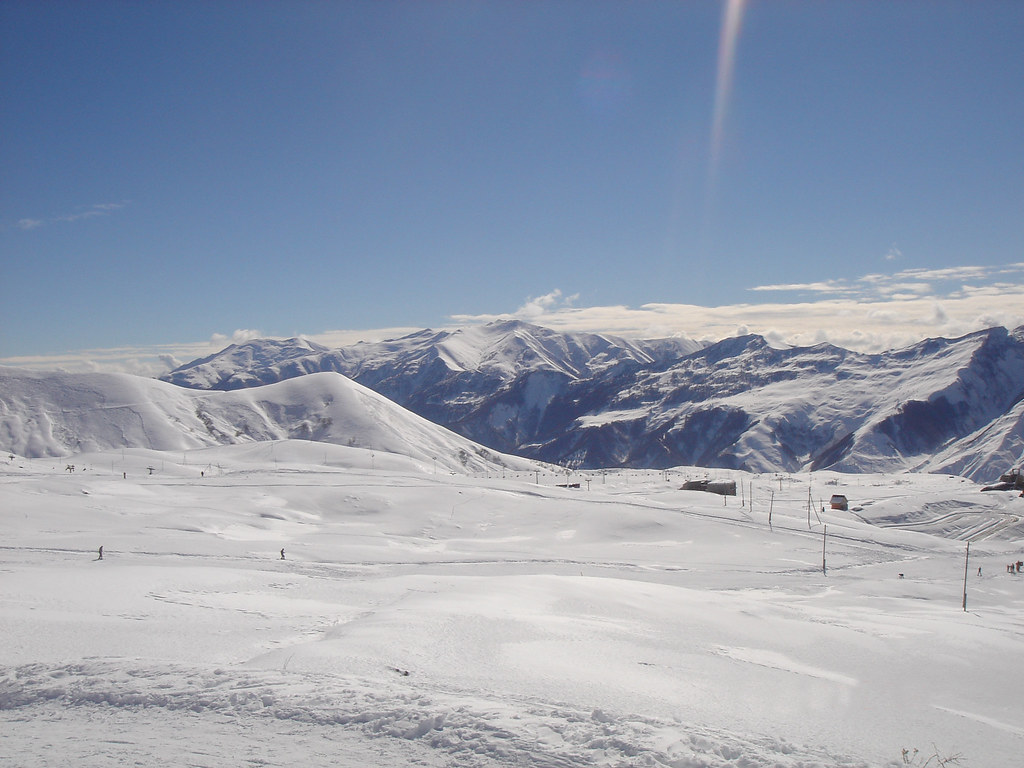
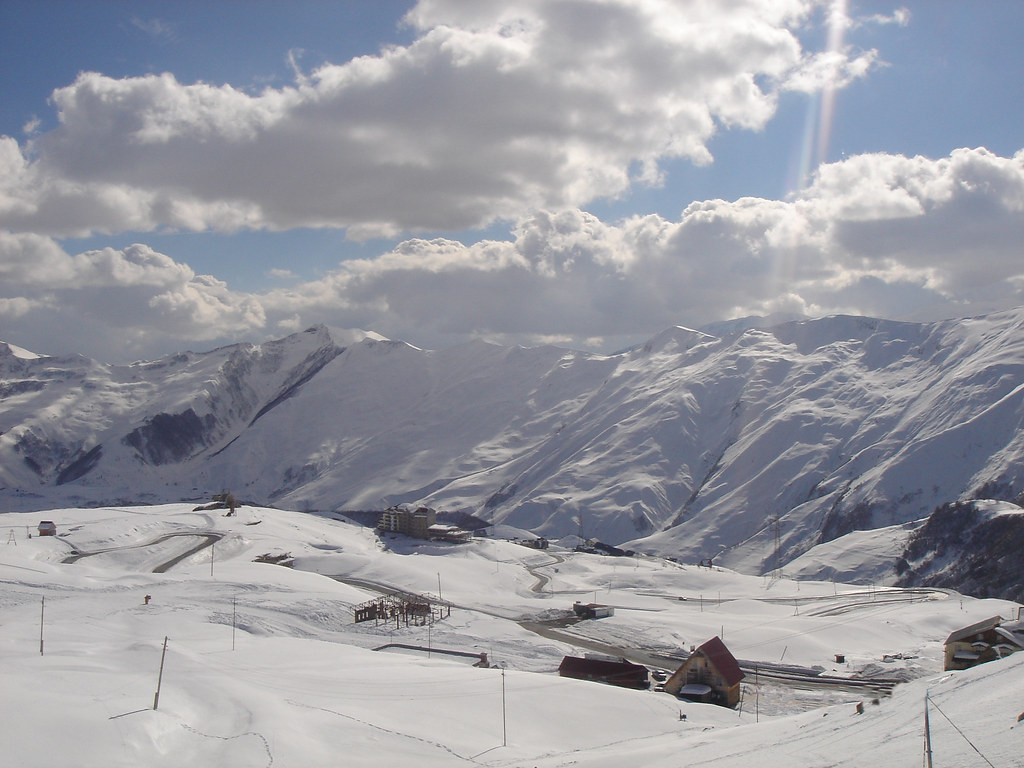
Georgian Business Week, March 3: While world’s various ski slopes are already running on snow and ice, local and foreign holidaymakers keep flocking to Georgia’s Gudauri and Bakuriani resorts. It takes about two hours to reach either from the capital, Tbilisi.
In January, when the season was in full swing, 9,000 tourists visited the two resorts combined, meaning that Bakuriani saw 40% more visitors than at that time last year and Gudauri saw 30% more, according to the Department of Statistics. Sopho Mdinaradze, 23, an amateur skier, says Gudauri and Bakuriani “are paradise” for ski-lovers. “Last weekend the weather was excellent and all three chairlifts worked in Gudauri. It was great!”
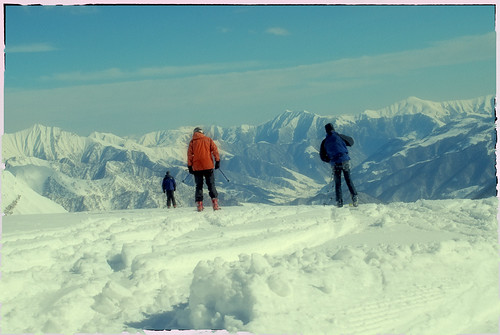
Gudauri on March 4, 2008 by Dato Rostomashvili
Gudauri in the Greater Caucasus and Bakuriani in the Lesser Caucasus are valuable resorts for Georgia’s tourism industry. During Soviet times Bakuriani was a very popular winter destination, hosting Soviet competitions. Situated 29 km from Borjomi on the northern slope of the Trialeti Range, Bakuriani is 1,700-2,000 metres above sea level. Here a blanket of snow covers the slopes for 4-5 months. However, the resort remains attractive in summer as well, due to its wonderful nature and curative climate. Doctors treating tuberculosis and lung disease sufferers frequently advise them to holiday in Bakuriani, as it is covered with coniferous trees, particularly spruce. “Often it [Bakuriani] gives a better effect than costly medicines,” says therapeutist Tamar Badridze.
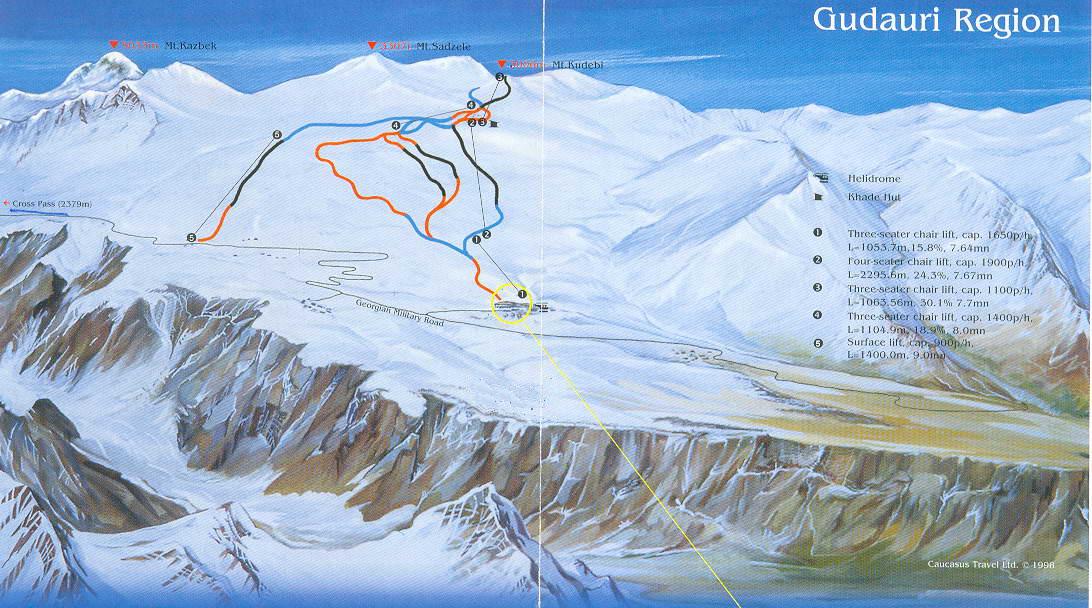
Since the collapse of the Soviet Union Gudauri has also emerged to compete with Bakuriani. It is located in the Stepantsminda District, along the Georgian Military Highway near the Cross Pass, 2,196 metres above sea level. For experienced skiers Gudauri provides slalom, giant slalom, super g, speed skiing and heliskiing - one of its most impressive offerings.
Presently both Bakurani and Gudauri are rapidly developing sites with mushrooming lifts and hotels. In Gudauri the first, lower lift station is 1,990 metres above sea level and the top station, called Kudebi (“Tails”) is at 3,007 metres. At Bakuriani, the highest point used for skiing is Mount Kokhta (“Smart”), around 2,200 metres above sea level. Eleven ski runs are currently in use in Bakuriani, together with ropeways, ski-jumps, ski-tracks, cross-country skiing courses, horse-riding facilities and snowmobiles. An average price for renting skis is 5 GEL per hour.
“Gudauri and Bakuriani are terrific, but foreign people have little or no information about them, compared to European resorts,” Sopho says. Statistics appear to confirm this. This year, the Department of Statistics says, only 3% of visitors to Bakuriani came from outside Georgia. 28% of these were Russian, 24% Latvian, another 24% Armenian, 18% from Great Britain and 6% came from Ukraine. “We try to attract foreign tourists to Bakuriani and Gudauri and are developing a promotional campaign. As a result we had many tourists from Great Britain this year,” commented Beka Jakheli, the head of Tourism Department.
The statistics show another interesting tendency. The overwhelming majority of holidaymakers - 97% - organised their stay at Bakuriani or Gudauri on their own. Only 3% asked for help from travel agencies. This choice, they explain, gains them more affordable prices and more importantly, more assurance of finding a proper place to stay. “Last year my friends and I reserved rooms through a Tbilisi-based travel agency and you know what happened? - When we arrived we found the hotel closed. It was only due to open two days later. It was New Year’s Eve and we were just lucky enough to find a home on our own. No hotel room was available,” Nino, 29, complained. But the mix-up led Nino and her companions to pay less for their cheery time in the resort since prices in Bakuriani start from 90 USD for a hotel room, while at family hotels one can find a bedroom for 30 GEL.
However, Nino then had to undergo the discomfort of “handling the travel agency guys” to claim her money back. “I will never trust travel agencies, at least until I forget this incident,” she says. But concerning conditions in the resort, she notes “things are getting better. Every year things are improving in Bakuriani but still there are no entertainment centres, clubs, bars, cafes, fast food outlets and others.” Most visitors seem to agree with her. A survey conducted by the Tourism Department suggests that 55% of the tourists want to see improved fast food service and quality. 17% want better infrastructure and apartments.
“The survey showed many aspects to which we have to pay particular attention for next season. We believe Georgia’s winter resorts will meet European standards and attract more foreigners,” Jakheli says.
Skiing in the Caucasus / View as slideshow >>>
NEWS: Georgia News Digest 03-04-08
Attached PDF file easily navigable with Bookmarks pane
Archives and associated files at groups.google.com/group/genewsfiles (from February 2008) and groups.google.com/group/genews (before February 2008)
1. Republican Party withdraws from opposition: is strength found through breaking-up?
2. Opposition, government bargaining over pending constitutional amendments
3. Georgia counts on Poland’s support for joining NATO
4. Saakashvili hopes for "irreversibility" of NATO accession
5. “Republicans” condemn latest developments in Armenia
6. Georgian “Conservators” call on international society to respond to events in Armenia
7. Burjanadze expressed condolences to families of people who died in Armenia
8. Saakashvili hopes that situation in Armenia improves in nearest future
9. Russian paper compares Armenian protests with earlier events in Georgia, Ukraine
10. NGOs rally in Tbilisi in protest at Armenian government's use of force
11. Tbilisi’s reaction to Armenian crisis
12. A week in the Russian blogosphere, 16-22 February
13. Moscow mayor slams Georgian leader's "aggressive actions"
14. Further Russian-Georgian relations will only depend on Tbilisi – Luzhkov
15. Burjanadze hopeful of improved Russian ties under new president
16. video: Interview: Aslan Abashidze
17. Burjanadze hopes for improvement of Georgian-Russian relations after presidential elections in Russia
18. Kosovo and Abkhazia: they could not be more different
19. Situation was calm in Russian presidential election in Abkhazia – Bagapsh
20. Abkhazia votes in Russian presidential election
21. Medvedev receives 90% in Abkhazia, S. Ossetia
22. Burjanadze calls on dialogue between sides regarding detention of Malkhaz Basilaia
23. Burjanadze urges Abkhaz separatists to release journalist
24. Detained journalist treated well in Abkhazia – Georgian Minister
25. Abkhazia to free Georgian reporters if found to only have violated "border"
26. Abkhaz reporters urged to act over detained journalist
27. Shida Kartli journalists demand release of Malkhaz Basilaia
28. Journalist in Sokhumi appealed Bagapsh for the release of their Georgian colleagues
29. Georgian journalists’ address to their Abkhaz colleagues was released
30. Kutaisi journalists demand release of Malkhaz Basilaia
31. Zugdidian mothers held manifestations supporting the journalist
32. Kidnapped journalist offered in ‘hostage swap’
33. Office of Abkhazian Public Persecutor leveled charges against Malkhaz Basilaia and Davit Tsotsoria
34. New defence minister of South Ossetia appointed
35. South Ossetian leader demands tighter security to thwart Georgian "terrorism"
36. South Ossetia votes for "independence" in Russian poll - separatist leader
37. War looming for once-Jewish city?
38. Two socially vulnerable mothers handed vouchers on GEL 1000
39. President pardoned 9 female convicts
40. Gigi Ugulava congratulated mothers with many children
41. Burjanadze and Kvitashvili congratulated inmates of boardinghouse for old people on mother’s day
42. ICC seeks international trade safeguards: New policy statement confirms position
43. Bee’s milk production cannot cope with demand
44. Skiing in Georgia: Bakuriani and Gudauri - Europe’s best kept secret
45. Old numbers, new sums: New study more critical about Georgia
46. New board for Public Broadcaster: ‘Independent from politics’
47. Education certification process postponed: Nodia: ‘more time is needed’ for planning
48. Badri Patarkatsishvili buried in Tbilisi – fate of Imedi still clouded
49. Try, try again
50. The President of Georgia makes a statement on Sophiko Chiarulei’s death
51. Correspondent of Asaval-Dasavali newspaper is starting hunger strike
52. Tsiskarishvili opened tractors service center in village Velistsikhe
53. Local population holds rally in village Duisi
54. Young Christian-Democrats rally at Healthcare Ministry
55. Rustavi 2 TV denies chief's dismissal
56. Ethnic groups in Georgia # 4 –Roms
57. Smoking risks widely unknown in Georgia
full digest: Georgia News Digest - Ansicht in Groups BetaNeu!
Jonathan Kulick, Ph.D., Director of Studies, Georgian Foundation for Strategic and International Studies, 3a Chitadze, Tbilisi 0108, Georgia (Republic), jonathan.kulick@gfsis.org, office: +995 32 47 35 55, mobile: +995 95 33 33 40, USA voicemail: 310.928.6814
Monday, March 03, 2008
SKIING: Great Places In The South Caucasus
Tuesday, February 05, 2008
PHOTOGRAPHY: Adventure In The Caucasian Mountains
Friday, February 01, 2008
PHOTOGRAPHY: Snowslopes In The Caucasus
Tuesday, January 29, 2008
BLOGGER: Tony Hanmer überwintert in Svanetien

more: http://geosynchronicity.blogspot.com
Tony Hammer wohnte in Großbritanien, Kanada, Rhodesien, Österreich, Russland, Aserbaidschan; und gegenwärtig residiert er den Winter über in einer der höchst gelegenen Regionen Europas: in Georgien - in Svanetien. Hammer ist vielseitig interessiert, vor allem an dem Kaukasus, seinen Einwohnern, wahrscheinlich ist er gar ein Anthropologe. Auf jeden Fall ist er auch ein ausgezeichneter Fotograf, der auf seinem Blog beeindruckende Luftaufnahmen von Svanetien und Ushguli zu bieten hat!
Für Heiner: Er notierte, dass 14 Leute aus Deutschland für eine Stunde "Heli-Skiing" 2700 $ bezahlten (inklusive Helikopter, drei Piloten, ein Guard, einen vollen Tank, etc.)
Jedenfalls macht er neben seinem Englisch-Unterricht hoch oben in den Bergen bei weniger als minus 22 Grad Celsius, noch exzellente Fotos, filmte, schrieb, las und bloggte aus dieser schönen und bizarren Winterlandschaft!
Tom, all the best for you!!! And I wish you a great time there! Ralph
Diashow >>>