Showing posts with label Ethnography. Show all posts

Wednesday, August 12, 2020

BOOK: Ethnography and Folklore of the Georgia-Chechnya Border. Images, Customs, Myths & Folk Tales of the Peripheries. By Shorena Kurtsikidze & Vakhtang Chikovani

The aim of this book is to acquaint a wide audience with the traditional culture of the Christian and Muslim highlanders who live on the border of Europe and Asia in the central part of the Caucasus Main Mountain Range. Under one cover, the publication features unique materials on visual anthropology, ethnography, mythology, and folklore of the region. The book portrays the mysterious subgroup of Georgian highlanders, the Khevsur, who are considered to be the champions of Georgian patriotism and at the same time, according to one popular theory, are believed to be direct descendants of the last Crusaders. Featuring 158 black and white original photographs and accompanying explanatory texts, the publication gives a detailed description of the exotic religious institutions and examples of material culture of this group of highlanders, illustrating the closeness of their lifestyle to the ways of the Frankish crusaders. The emphasis is on the spheres of folk culture that bear clear traces of centuries of confrontations between two ethnic groups: Christian Georgian highlanders and their neighbors, Muslim Vainakh or Chechen and Ingush. The authors attempt to show how the traditional mode of life of the highlanders affects the contemporary ethnic and political situation in the region. The publication includes original translations of Georgian folk tales and myths. The latter are narratives representing mythologized chronicles of “holy wars” of old times once carried out on the border of Europe and Asia by the ancestors of the Khevsurs. Shorena Kurtsikidze and Vakhtang Chikovani are cultural anthropologists and natives of Georgia. They have been teaching the Georgian language, culture, and folklore courses at the University of California, Berkeley. Both authors are affiliates of the Institute of Slavic, East European and Eurasian Studies at the same university and regularly give talks and public lectures about Georgia and the Caucasus.

Link: amazon.de

Thursday, April 12, 2018

VIDEO: The Pankisi Stigma - documentary film. via @RFERL


Locals of Pankisi are sick and tired of asserting they are not terrorists. The dwellers of the small Georgian gorge bordering Russia believe that the stigma dates back to the late XX c., the time of Moscow’s wars in Chechnya, the so-called "boeviks" (militants) and criminals. They also say that it was largely due to Russia’s influence that the place has become a kind of international "brand" for terrorism. In their words, it’s a hindrance to the development of the region since both the businesses and tourists stay away. Against the backdrop of the ISIS activities and certain reported facts, which sometimes raise unanswered questions, the stigma grows stronger. For all the differences about the customs and heated arguments, both fervent supporters of the traditional Islam and Islamic fundamentalists are at one where the security of the gorge is concerned. According to some sources, the Salafite community of the Islamic fundamentalists, often referred to as Vahabites account for 30%-35% of Pankisi’s total Muslim population while others say they make up as much as 75%-80%. Young people form the majority of the Salafites, and it was the radical Salafites who recruited people to fight in Syria a few years ago. The community members claim they feel sidelined by the State. Regardless of their religious beliefs, the Kists (Chechens residing in Georgia) point out at their closer involvement in the public affairs as the pre-requisite of their safety. The population, mostly the Kists of the small Georgian gorge of the Akhmeta municipality Kakheti region, is reportedly as small as 6000-7000.

Monday, April 09, 2018

FOTOGRAFIE: Emil Uhl, Bei den Tschefsuren in Chewsuretien (Großer Kaukasus) in der Deutschen Fotothek, @Fotothek

Uhl, Emil Franz (1864 – 1945) * 1.3.1864 Brüx (Most) † 1945 österreichischer Kunstmaler und Reisender


Uhl, Sohn eines Hotelbesitzers im nordböhmischen Brüx, studierte Kunst an den Akademien in Düsseldorf, München und 1889 bis 1892 in Paris. Bereits während seines Studiums unternahm er die ersten Reisen. Nach 1889 hielt er sich sieben Jahre in Ägypten (Kairo) auf und unternahem von hier aus Reisen nach Palästina, Syrien und in den Libanon. 1899/1900 folgte eine elfmonatige Reise durch das Osmanische Reich über den Kaukasus nach Zentralasien (Buchara, Samarkand). Zu seiner Zeit galt Uhl als bedeutendster Orientmaler, auch als Fotograf trat Uhl in Erscheinung. Auf mehr als 60 Ausstellungen, unter anderem in Wien, Prag, Aussig, Karlsbad, Berlin, Paris, London und München, wurden seine Gemälde gezeigt. Nach dem Ersten Weltkrieg ließ er sich in München nieder, wo er als Kopf einer sudetendeutschen Künstlergruppe galt. Seit 1935 nahm er seinen Altersruhesitz in Bayrisch‐Gmein. Die größte Sammlung seiner Gemälde und Fotografien befindet sich im Heimatmuseum seiner Geburtsstadt (Oblastní muzeum v Most) in Tschechien.


Emil Uhl in der Fotogalerie der Deutschen Fotothek [deutschefotothek.de]


Saturday, October 07, 2017

VIDEO: Ethnic minorities in Georgia - via @takosvanidze


National minorities who live in towns and villages across Georgia usually have a common problem - poor knowledge or lack of knowledge of the state language. This forces them to be in an ‘information vacuum’, where they are cut off from social and political life of Georgia and consequentially, have a weak interest in the elections.

Journalist: Tamar Svanidze
Camera Operator: Ramaz Giorgashvili
Film was made within the project of Internews Georgia

Thursday, May 11, 2017

BOOK: Georgian Portraits. Essays on the Afterlives of a Revolution. By Katrine Gotfredsen, Martin Demant Frederiksen (zero-books.net)

(zero-books.net) The ethnographic portraits telling the story of the social and political aftermaths of revolution.

Georgian Portraits chronicles everyday life in the Republic of Georgia in the decade that followed the Rose Revolution of 2003. Recent anthropological developments argue for the use of “afterlives” as an analytical notion through which to understand processes of socio-political change. Based on a series of portraits, Martin Demant Frederiksen and Katrine Bendtsen Gotfredsen employ the theory of social afterlives to examine the role of revolution in the formation of a modern Georgia. The book contributes to a deeper understanding of life in the aftermath of political reform, depicting the hopefulness of the Georgian population, but also the subsequent return to political disillusionment which lead them to a revolution in the first place.

REVIEWS & ENDORSEMENTS

What happens after a revolution, when the bright and shiny finish has worn off its ideals? Capturing the weirdness and the wonder of post-revolutionary Georgia, Frederiksen and Gotfredsen also capture people's very real struggles to get by, their fears of war and their dreams of a "European" future. Beautifully and hauntingly written, this book captures not only Georgia's politics, but its soul. ~ Elizabeth Cullen Dunn, author of Privatizing Poland: Baby Food, Big Business and the Remaking of Labor

Revolutions are as much made of dreams as real events, and these dreams have afterlives as ghosts as the revolutionary hope fades into disappointment or despair. Writing the history of a revolutionary period is difficult, especially writing one that deals with the fundamentally emergent nature of a revolutionary period, as this one does, embracing the confusion of tenses in which the present is pregnant with the future and the future becomes a past as a condition of narration. This book tracks the lively history of Rose Revolutionary Georgia in a lovely and vivid manner, an engaging narrative full of lively characters, beginning always from small things and local perspectives that show the Rose Revolutionary period as a series of hopes and dreams, programs and disappointments. Misha Saakashvili appears throughout, sometimes as a real historical person, sometimes also an imagined demiurge, sometimes a fraudulent trickster. The ways a revolution changes a society are here portrayed from many perspectives, and the way the revolutionary dreams sometimes became haunting ghosts shows how a single moment can become a whole period of social life. ~ Paul Manning, author of Love Stories: Private Love and Public Romance in Georgia

This book is crafted as a compendium of tacit knowledge about Georgia, harboring an array of insights that capture the tensions and ambiguities of a country that finds itself back from the future and poised between assembly and disassembly. The image of the portrait is therefore very accurate, reflecting the make-believe realities and re-enactments faced by the authors. Thumbing through its pages, I discovered how anthropological variations can be interwoven through biographies, social affects and political afterlives. This type of scholarship is not only inspiring and informative, but also pleasure to read. Georgia is a country for storytellers and vernacular Sisyphus of life, being Martin Demant Frederiksen and Katrine Bendtsen Gotfredsen the perfect example of this contagious ardor. The intimate and sharp look achieved by the authors makes this collection an important milestone in the discussion of contemporary social dynamics in Eastern Europe and the understanding of human condition overall. ~ Francisco Martínez, author of Playgrounds and Battlefields: Critical Perspectives of Social Engagement


+++


Katrine Bendtsen Gotfredsen holds a PhD in anthropology from the University of Copenhagen. She has done extensive fieldwork in the Republic of Georgia focusing on subjects such as history, identity, morality, and uncertainty in the context of social and political transformation. Works include her PhD dissertation, “Evasive politics: Paradoxes of history, nation, and everyday communication in the Republic of Georgia” (2013) and the journal articles “Void pasts and marginal presents: On nostalgia and obsolete futures in the Republic of Georgia” (Slavic Review, 2014) and “Enemies of the people: Theorizing dispossession and mirroring conspiracy in the Republic of Georgia” (Focaal, 2016). She is currently lecturer in Caucasus Studies at Malmö University and Programme Manager for Eastern Europe and the Caucasus in the Danish NGO Cross Cultures.


Martin Demant Frederiksen is assistant professor at the Department of Cross-Cultural and Regional Studies, University of Copenhagen, Denmark. He holds a PhD in anthropology and has conducted a total of 22 months of ethnographic fieldwork in the Republic of Georgia since 2006 in the cities Tbilisi, Batumi and Ambrolauri. His work focuses on subcultures (such as youth criminals and declared nihilists), urban development, temporality and socio-political change. He is author of the monograph "Young Men, Time, and Boredom in the Republic of Georgia" (2013) and co-editor of the anthology "Ethnographies of Grey Zones in Eastern Europe" (2015). Aside from research and teaching, he is co-founder and co-editor of the independent art-zine "a...issue".

Tuesday, January 20, 2015

ETHNOLOGY: Video-Channel der Kaukasiologie in Jena

Alawerdoba 2006 (Dokumentarfilm Mühlfried/Kvachadze)

Ein Film von Dato Kvachadze (Regisseur) und Florian Mühlfried (Autor). Georgisch mit deutschen Untertiteln (18 Min).


Deserteursmarkt Tbilisi, Oktober 1997 / Deserters' Bazar, October 1997 (Florian Mühlfried)

Foto- und Tonaufnahmen des größten Straßenmarktes der georgischen Hauptstadt Tbilissi, des sogenannten Deserteurs-Marktes bzw. Deserteurs-Basar, im Sommer 1997, von Florian Mühlfried / Photo and sound recordings from summer 1997 of the so-called deserters’-market (bazar) in the Georgian capital Tbilisi, taken by Florian Mühlfried.

Friday, October 31, 2014

VIDEO: Die Doukhobors in Gorelovka - einem georgischen Dorf in Javakheti (newscafe.ge)

(newscafe.ge) Doukhobors kamen 1841 in das Dorf Gorelovka. Heute ist dort die größte Gemeinschaft von Doukhobors. Die leben zusammen in dem Dorf mit Armeniern und Öko-Migranten aus Adscharien.

Transkript des Videos: Doukhobors sind nicht getauft. Sie tragen kein Kreuz und gehen nur in ihren eigenen Kapellen beten. Sie sind gegen jede Art von Gewalt. Doukhobors glauben, dass Gott in jedem Geschöpf ist. Die Doukhobors kamen nach Javakheti 1841. Die Familie Kalmikov führten die Gemeinde damals. Die Kalmikovs wurden als die Nachkommen von Gott betrachtet. Luschka war der letzte Spross der Familie, dessen Grab ist jetzt ein heiliger Platz bei den Doukhobors. Zu Beginn der 80er Jahre wanderten einige Doukhobors aus nach Tula. Die zweite Stufe der Emigration fand in den späten 90er Jahren statt, als ein großer Teil der Gemeinde nach Brjansk zog. Im Jahr 2008, kurz vor dem georgisch-russischen Krieg, emigriert der dritte Strom nach Tambow. Heute gibt es noch etwa 200 Doukhobors , die in Georgien leben. Gorelovka ist das Dorf, wo sie die größte Gemeinde haben. Armenier und Öko-Migranten aus Adscharien leben gemeinsam in dem Dorf mit den Doukhobors.


Gute Website: doukhobor.org

Wednesday, October 15, 2014

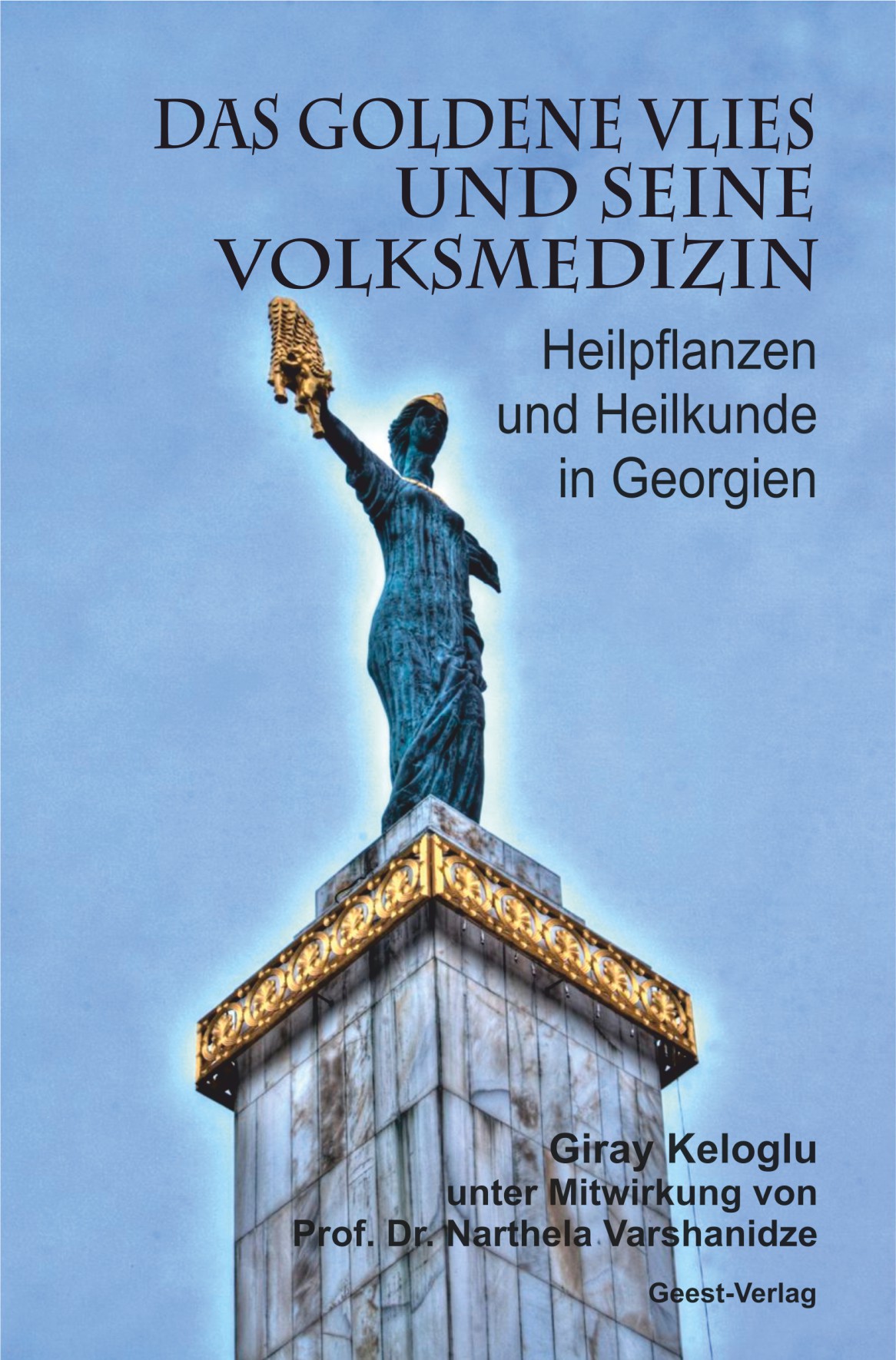
BUCH: Keloglu, Giray unter Mitarbeit von Prof. Dr. Narthela Varshanidze: Das Goldene Vlies und seine Volksmedizin - Heilpflanzen und Heilkunde in Georgien

Keloglu, Giray unter Mitarbeit von Prof. Dr. Narthela Varshanidze, Associated Professor of Biology
University of Rustaveli – Batumi/Georgien
Das Goldene Vlies und seine Volksmedizin. Heilpflanzen und Heilkunde in Georgien
Geest-Verlag 2013, ca.610 S., 19,80 Euro

Das Buch gibt mit einer Auswahl von 150 Heilpflanzen einen Überblick über die Georgische Volksmedizin. Keine zufällige Auswahl, vielmehr vor allem Heilpflanzen, die auch in Deutschland bekannt sind. Dem Leser bietet sich damit die Möglichkeit, sein Wissen über die Anwen­dungsmöglichkeiten von Heilpflanzen zu erweitern oder auch ganz neu zu schaffen. Erklärtes Ziel des Autors ist es, das Wissen der Volksmedizin über die Wirkung der Heilpflanzen in einfacher und zugleich verantwortlicher Weise zu vermitteln. Zugleich vermittelt er uns damit ein Bewusst-sein zum verantwortungsvollen Umgang mit der Natur und ihren wichtigen Ressourcen auch vor unserer Haustür.

Giray Keloglu knüpft mit seinem Buch über die Volksmedizin in Georgien an eige­ne Traditionen an, wurde sein Großvater doch in Tiflis geboren, sein Vater in Aser­baid­schan. Er selbst erblickte in Kars, in der Türkei, das Licht der Welt, lebt aber bereits seit seinem ersten Lebensjahr in Deutschland, wo er auch Schule und Aus­bildung absolvierte. Sein gesellschaftliches und ökologisches Engagement (Mitglied bei den Grünen, aktives Engagement in den Bereichen Um­weltschutz, Integration, Soziales und Ju­gend) führte ihn näher an Fragen der Volks­medizin und Heilkunde, ließ ihn eine Heilpraktiker- und eine Phyto­therapie-Aus­bildung bei Arnd Groeneveld absol­vie­ren. 2009 begann er mit den Arbeiten an die­sem Buch, seit 2010 mit Unterstützung der University of Rustaveli – Batumi / Georgien, insbesondere mit Prof. Dr. Narthela Varshanidze.

Die vorgestellten Heilpflanzen

1 Ackerschachtelhalm
2 Ackerstiefmütterchen
3 Adjarisches Alpenveilchen
4 Adlerfarn
5 Amerikanische Gleditschie
6 Bergminze
7 Birke
8 Bischofskraut
9 Blauer Eukalyptus
10 Bocks-Hauhechel
11 Breitwegerich
12 Chinesischer Tee
13 Chrysantheme
14 Dreiblättriger Fieberklee
15 Dreiteiliger Zweizahn
16 Echte Feige
17 Echte Goldrute
18 Echte Kamille
19 Echte Nelkenwurz
20 Echte Walnuss
21 Echter Alant
22 Echter Baldrian
23 Echter Ehrenpreis
24 Echter Eibisch
25 Echter Hopfen
26 Echter Lorbeer
27 Echter Seidelbast
28 Echter Wurmfarn
29 Echtes Johanniskraut
30 Echtes Leinkraut
31 Echtes Tausendgüldenkraut
32 Fichte
33 Flatter-Binse
34 Flohknöterich
35 Frauenmantel
36 Gartenbohne
37 Gartenpetersilie
38 Gemeine Schafgarbe
39 Gemeine Wegwarte
40 Gemeiner Dost (Oregano)
41 Gemeiner Fenchel
42 Gemeiner Kürbis
43 Gemeiner Spargel
44 Gemeiner Stechapfel
45 Gewöhnliche Berberitze
46 Gewöhnliche Rosskastanie
47 Gewöhnlicher Beifuß
48 Gewöhnlicher Schneeball
49 Gewöhnliches Hirtentäschel
50 Gewöhnliches Seifenkraut
51 Gewürzsumach
52 Goethe-Pflanze
53 Granatapfel
54 Griechische Baumschlinge
55 Große Klette
56 Gundermann
57 Gurke
58 Hanf
59 Heidelbeere
60 Herbstzeitlose
61 Herzgespann (fünflappig)
62 Himbeere
63 Huflattich
64 Hundsrose
65 Immergrüne Magnolie
66 Japanische Wollmispel
67 Kahles Bruchkraut
68 Kalmus
69 Kartoffel
70 Kastanienbraunes Zypergras
71 Kaukasische Fetthenne (Mauerpfeffer)
72 Kaukasische Linde
73 Kaukasische Schneerose
74 Kaukasische Tollkirsche
75 Kaukasisches Maiglöckchen
76 Kaukasusapfel
77 Kaukasus-Tanne
78 Keulen-Bärlapp
79 Kiefer Sosnovkii
80 Kirschbaum
81 Kiwi
82 Klebriger Salbei
83 Kleinblütige Königskerze
84 Kleines Immergrün
85 Knoblauch
86 Knollensellerie
87 Kolchischer Efeu
88 Koriander
89 Kornelkirsche
90 Kratzbeere
91 Krauser Ampfer
92 Kriechquecke
93 Kümmel
94 Lakritze (Süßholz)
95 Lorbeerkirsche
96 Löwenzahn
97 Mais
98 Meerrettich
99 Orthosiphon (Echter Katzenbart)
100 Paprika (Spanischer Pfeffer)
101 Passionsblume
102 Preiselbeere
103 Primel (Schlüsselblume)
104 Quitte
105 Radieschen
106 Rhododendron
107 Ringelblume
108 Rosafarbene Catharante
109 Rossminze
110 Rostfarbiger Fingerhut
111 Rote Bete
112 Roter Fingerhut
113 Rotklee
114 Sal-Weide
115 Sanddorn
116 Saumfarn
117 Scharfer Mauerpfeffer
118 Scheinhanf
119 Schiefer Schillerporling
120 Schlangen-Knöterich
121 Schöllkraut
122 Schwarze-Erle
123 Schwarze Johannisbeere
124 Schwarzer Holunder
125 Schwarzer Nachtschatten
126 Schwarzes Bilsenkraut
127 Sommer Knotenblume
128 Spitzwegerich
129 Strohblume, Stark durftende
130 Sumpfhelmkraut
131 Tintenfisch-Aloe
132 Vogelbeere
133 Vogelknöterich
134 Walderdbeere
135 Waldmeister
136 Wald-Sanikel
137 Wald-Ziest
138 Wasserpfeffer
139 Weinrebe
140 Weißbeerige Mistel
141 Weißdorn
142 Weißdorn (fünfgriffiger)
143 Weißer Germer
144 Weißkohl
145 Wermut
146 Wilde Malve
147 Wilde Möhre
148 Woronow Schneeglöckchen
149 Zitrone
150 Zitronenmelisse (Melisse)
151 Zwergholunder (Attich)

AmazonShop: Books, Maps, Videos, Music & Gifts About The Caucasus

Friday, August 01, 2014

FILMPROJEKT: "Supra Paranoia". Idee von Florian Mühlfried

Im Zentrum dieses Dokumentarfilms steht ein Fremdkörper im öffentlichen Raum und die daraus folgenden sozialen Reaktionen.

Der Fremdkörper ist das georgische Bankett, genannt "supra". Fremd ist dieses Fest nur außerhalb Georgiens, als exotischer Brauch, der auf der sprichwörtlichen kaukasischen Gastfreundschaft beruht. Es geht um den Einbezug von Fremden und deren Transformation zu Freunden mittels gemeinsamen Essens und Trinkens. Die Unterhaltung wird dabei durch Trinksprüche strukturiert und von Musik begleitet.

Der öffentliche Raum befindet sich in einer von fünf ausgesuchten europäischen Städten. Es ist ein sehr belebter Raum, dessen Nutzung jedoch zunehmend eingeschränkt wird, von privaten Wachdiensten, aufdringlicher Lautsprechermusik oder unbequemen Bänken. Es geht um die Privatisierung von öffentlichem Raum und die Verdrängung problematischer Menschen. Die zunehmende Ungastlichkeit wird durch das Sinnbild von Gastlichkeit, eine reich gedeckte Tafel, hintertrieben.

Die sozialen Reaktionen gehen von dieser Tafel aus sowie von den Menschen, die an ihr sitzen. Es handelt sich dabei mehrheitlich um Georgierinnen und Georgier, die hier wohnen. Sie feiern und laden Passanten ein. Das Geschehen entfaltet sich unvorhersehbar, vielleicht treten irgendwann Ordnungskräfte hinzu.

Neben dem Geschehen stellt der Film die Orte in den Vordergrund und erzählt deren jüngere Geschichte. Auch über die feiernden Menschen wird berichtet – wer sie sind, was sie interessiert, wie sie hergekommen sind und wo sie sich sehen. Auf diese Weise entsteht ein komplexes Portrait von europäischen Städten, Menschen aus dem Kaukasus und neoliberaler Politik.

Zur Anbahnung des Films müssen fünf europäische Städte mit aussagekräftigen öffentlichen Orten sowie die Protagonistinnen und Protagonisten ausgewählt werden. Als "europäisches Projekt" kann ggf. auf europäische Geldgeber abgezielt werden. Wer Interesse an einem solchen Filmprojekt hat, möge sich bitte in Verbindung setzen mit Florian Mühlfried c/o ethno.kaukasus@gmail.com.

Friday, May 30, 2014

REVIEW: ETHNOGRAPHIES OF ABSENCE IN CONTEMPORARY GEORGIA (slavicreview.illinois.edu)

(slavicreview.illinois.edu) Elizabeth Cullen Dunn and Martin Demant Frederiksen, Special Section Guest Editors
Introduction
Elizabeth Cullen Dunn and Martin Demant Frederiksen 241

Void Pasts and Marginal Presents: On Nostalgia and Obsolete Futures in the Republic of Georgia
Katrine Bendtsen Gotfredsen 246

Once Upon a Time, There Was Sex in Georgia
Paul Manning 265

Humanitarianism, Displacement, and the Politics of Nothing in Postwar Georgia
Elizabeth Cullen Dunn 287

The Would-Be State: Reforms, NGOs, and Absent Presents in Postrevolutionary Georgia
Martin Demant Frederiksen 307

ARTICLES

Christian Hajjis-the Other Orthodox Pilgrims to Jerusalem
Valentina Izmirlieva 322

Reconstructing the Meaning of Being “Montenegrin”
Jelena Džankić 307

FEATURED REVIEWS

David Frick, Kith, Kin, and Neighbors: Communities and Confessions in Seventeenth-Century Wilno (Theodore R. Weeks) 372

Keith Brown, Loyal unto Death: Trust and Terror in Revolutionary Macedonia (Isa Blumi) 375

Derek Sayer, Prague, Capital of the Twentieth Century: A Surrealist History (Thomas Ort) 378

Omer Bartov and Eric D. Weitz, eds., Shatterzone of Empires: Coexistence and Violence in the German, Habsburg, Russian, and Ottoman Borderlands (Mark von Hagen) 381

Katherine Lebow, Unfinished Utopia: Nowa Huta, Stalinism, and Polish Society, 1949-56 (Anthony Kemp-Welch) 384

Diane P. Koenker, Club Red: Vacation Travel and the Soviet Dream (Polly Jones) 387

BOOK REVIEWS

Pauline Fairclough, ed., Twentieth-Century Music and Politics: Essays in Memory of Neil Edmunds (Linda Edmondson) 391

Albert Kaganovitch, The Long Life and Swift Death of Jewish Rechitsa: A Community in Belarus, 1526-2000 (Eugene M. Avrutin) 392

Walter Richmond, The Circassian Genocide (Sufian Zhemukhov) 393

Benjamin C. Fortna, Stefanos Katsikas, Dimitris Kamouzis, and Paraskevas Konortas, eds., State-Nationalisms in the Ottoman Empire, Greece and Turkey: Orthodox and Muslims, 1830-1945 (Evguenia Davidova) 395

Olga Litvak, Haskalah: The Romantic Movement in Judaism (Israel Bartal) 396

Marcin Wodziński, Hasidism and Politics: The Kingdom of Poland, 1815-1864 (Gershon Bacon) 398

Joshua M. Karlip, The Tragedy of a Generation: The Rise and Fall of Jewish Nationalism in Eastern Europe (Barry Trachtenberg) 399

Karen Auerbach, The House at Ujazdowskie 16: Jewish Families in Warsaw after the Holocaust (Antony Polonsky) 401

Marinia Cattaruzza, Stefan Dyroff, and Dieter Langewiesche, eds., Territorial Revisionism and the Allies of Germany in the Second World War: Goals, Expectations, Practices (Nancy M. Wingfield) 402

James Mace Ward, Priest, Politician, Collaborator: Jozef Tiso and the Making of Fascist Slovakia (Melissa Feinberg) 404

Olaf Leiße, Martin Roth, and Christian Gesellmann, eds., Die Republik Kosovo-Der jüngste Staat Europas: Eine politische Bestandsaufnahme seit der Unabhängigkeitserklärung (Sabrina P. Ramet) 405

Anna Moskal, Im Spannungsfeld von Region und Nation: Die Polonisierung der Stadt Posen nach 1918 und 1945 (Winson Chu) 406

Cathleen M. Guistino, Catherine J. Plum, and Alexander Vari, eds., Socialist Escapes: Breaking Away from Ideology and Everyday Routine in Eastern Europe, 1945-1989 (Scott Moranda) 408

Charles King, Odessa: Genius and Death in a City of Dreams (Rebecca Stanton) 409

Alex Drace-Francis, The Traditions of Invention: Romanian Ethnic and Social Stereotypes in Historical Context   (Keith Hitchins) 411

Mark Thompson, Birth Certificate: The Story of Danilo Kiš (David A. Norris) 412

Catherine Portuges and Peter Hames, eds., Cinemas in Transition in Central and Eastern Europe after 1989 (Gordana P. Crnković) 413

Ewa Stańczyk, Contact Zone Identities in the Poetry of Jerzy Harasymowicz: A Postcolonial Analysis (Charles S. Kraszewski) 415

Katka Reszke, Return of the Jew: Identity Narratives of the Third Post-Holocaust Generations of Jews in Poland (Genevieve Zubrzycki) 417

Jesse Paul Lehrke, The Transition to National Armies in the Former Soviet Republics, 1988-2005 (Dmitry Gorenburg) 418

Richard Connolly, The Economic Sources of Social Order Development in Post-Socialist Eastern Europe (Béla Greskovits) 419

János Mátyás Kovács and Violetta Zentai, eds., Capitalism from Outside? Economic Cultures in Eastern Europe after 1989 (Ivan T. Berend) 421

Marlene Laruelle and Sebastien Peyrouse, Globalizing Central Asia: Geopolitics and the Challenges of Economic Development (Emilian Kavalski) 422

N. N. Pokrovskii and G. D. Lenkhoff [Gail D. Lenhoff], eds., Stepennaia kniga tsarskogo rodosloviia po drevneishim spiskam: Teksty i kommentarii, 3 vols. Vol. 3, Commentary, G. D. Lenkhoff (David K. Prestel) 424

Alanna E. Cooper, Bukharan Jews and the Dynamics of Global Judaism (Albert Kaganovitch) 425

Anna Kuxhausen, From the Womb to the Body Politic: Raising the Nation in Enlightenment Russia (Katherine Pickering Antonova) 426

A. S. Tumanova, ed., Samoorganizatsiia rossiiskoi obshchestvennosti v poslednei treti XVIII-nachale XX v. (Lynn M. Sargeant) 428

Ol’ga Malinova-Tziafeta, Iz goroda na dachu: Sotsiokul’turnye faktory osvoeniia dachnogo prostranstva vokrug Peterburga (1860-1914) (Natalia Baschmakoff) 429

Catherine Wanner, ed., State Secularism and Lived Religion in Soviet Russia and Ukraine (Roy R. Robson) 431

Annie Epelboin and Assia Kovriguina, La littérature des ravins: Écrire sur la Shoah en URSS (Leona Toker) 433

Gary Rosenshield, Challenging the Bard: Dostoevsky and Pushkin, a Study of Literary Relationship (Ian Helfant) 434

Boris Dralyuk, Western Crime Fiction Goes East: The Russian Pinkerton Craze 1907-1934 (Elena Baraban) 435

Greta N. Slobin, Russians Abroad: Literary and Cultural Politics of Diaspora (1919-1939), ed. Katerina Clark, Nancy Condee, Dan Slobin, and Mark Slobin (Adrian Wanner) 436

Lidiia Ginzburg, Prokhodiashchie kharaktery: Proza voennykh let; Zapiski blokadnogo cheloveka, ed. Emily Van Buskirk and Andrei Zorin; Emily Van Buskirk and Andrei Zorin, eds., Lydia Ginzburg’s Alternative Literary Identities: A Collection of Articles and New Translations (Evgenii Bershtein) 438

Simon Morrison, Lina and Serge: The Love and Wars of Lina Prokofiev (Neil Minturn) 440

Stephen M. Norris, Blockbuster History in the New Russia: Movies, Memory, and Patriotism (Anna Lawton) 442

Carol Apollonio and Angela Brintlinger, eds., Chekhov for the 21st Century (Andrew R. Durkin) 443

Brian Donahoe and Joachim Otto Habeck, eds., Reconstructing the House of Culture: Community, Self, and the Makings of Culture in Russia and Beyond (Melissa L. Caldwell) 445

Denis Kozlov, The Readers of Novyi Mir: Coming to Terms with the Stalinist Past (Donald J. Raleigh) 446

COLLECTED ESSAYS 448
OTHER BOOKS OF INTEREST
451
LETTERS
453
IN MEMORIAM
455

Thursday, April 10, 2014

PHOTOREPORTAGE: Post-Crimea, Phantom of Armenian Separatism Haunts Georgia. By Paul Rimple and Photography by Justyna Mielnikiewicz (eurasianet.org)

Amarcum Arakyan, an ethnic Armenian, cuts the hair of Josif Petriashvili, a Georgian, in the city of Akhaltsikhe.


Slideshow with Photos are here >>>

(eurasianet.org) For many in Georgia, Russia’s annexation Crimea is reigniting fears about separatism rooted in ethnic conflict and Kremlin meddling. But now Georgians aren’t just worrying about the breakaway entities of Abkhazia and South Ossetia, they also are concerned about the loyalty of the predominantly ethnic-Armenian region of Samtskhe-Javakheti.

  While locals dismiss separatism concerns as nonsense, some say the speculation on the issue is indicative of a failure on the Georgian central government’s part to address complaints of the country’s Armenian-speaking minority in Samtskhe-Javakheti, which is roughly a three-hour drive south of the Georgian capital, Tbilisi. Officials contend progress has been made, but concede more can be done on the inclusivity issue.

A mountainous, ragtag region bordering both Turkey and Armenia, Samtskhe‐Javakheti contains roughly 250,000 ethnic Armenians; 55 percent of the region’s total population, according to Georgia’s latest census, compiled in 2002. Knowledge of the Georgian language here can run thin. At the same time, in the view of some outsiders, sympathy for Russia, which, until 2007, operated a 15,000-man base in the regional town of Akhalkalaki, can run strong.

Over the past few weeks, suspicions among Georgians about the country’s Armenian minority have risen, fueled by memories of Tbilisi’s 2008 conflict with Russia, as well as the Kremlin’s recent land-grab in Crimea. Underscoring those suspicions was the appearance of unconfirmed media reports about ethnic Armenians from Samtskhe-Javakheti allegedly applying, en masse, to receive Russian passports.

Senior Georgian government officials have denied categorically these reports, but, as Russia-Ukraine tension threatens to boil over, such media coverage, condemned as sensationalism by three local watchdog groups, could well continue. “Somebody is interested in stirring up the water,” commented Seda Melkumian, the Samtskhe‐Javakheti representative for the Ombudsman’s Office. “So far, I haven’t met one person with a Russian passport.”

Interethnic suspicion stems from a long-time tug-of-war over greater language rights for the region’s Armenian speakers; for some Georgians, it’s a campaign reminiscent of ethnic Russians’ complaints in Crimea.

But residents adamantly deny that such a struggle could encourage them to break with Tbilisi. “We aren’t separatists,” asserted Melik Raisian, a former member of the ruling Georgian Dream coalition from Akhalkalaki. “We are Georgian citizens. Why do we always have to prove we’re not separatists for wanting our rights?”

The separatist perception is generally connected to the United Javakh Democratic Alliance (“Javakh”), a nationalist movement that has called for political autonomy in the past. Many of the movements’ key members, including leader Vahag Chakhalian, were arrested in 2008 following a fatal bombing near the home of a police chief in the town of Akhalkalaki. Chakhalian was released in 2013 as part of Georgia’s mass amnesty of prisoners.

Javakh has little influence today, although many can identify with its grievances. The 2007 closure of Akhalkalaki’s Russian army base left many locals unemployed; as of 2012, the official unemployment rate stood at 7.5 percent. Many had hoped to find work on the Kars–Tbilisi–Baku railway, which goes through Javakheti, yet few have been employed.

The lack of economic opportunities drives many residents to Russia for work. Melkumian estimates that about half of Javakheti’s families have some family member in Russia. “In the villages, every family has somebody there,” she said.

That situation, though, is no different from elsewhere in Georgia, noted Ewa Chylinski, director of the European Center for Minority Issues in Tbilisi. As of this January, the Russian Federation ranked as the largest source of Georgia’s remittances, roughly $46.6 million in 2013, according to the National Bank of Georgia.

Nonetheless, the money trail does not mean a desire for independence. Chylinski rejected the notion of a separatist threat in Javakheti as “groundless.” The main problem is not autonomy, but language, she said. People cannot participate in Georgian society if they do not speak Georgian.

But for many in Samtskhe-Javakheti, that does not affect their identification with Georgia. “I’m Armenian, but I was born in Georgia. My father was born in Georgia. His father was born in Georgia and I will live in Georgia,” declared octogenarian Artush Artkopian, speaking via a teenage translator in Armenian since his knowledge of Georgian and Russian is limited.

Last year, Akhalkalaki's local council announced plans to petition the Georgian parliament to ratify the European Charter for Regional of Minority Languages, a Council of Europe convention that would make Armenian an official local language for Samtskhe-Javakheti. Getting no support in Tbilisi, where opposition from the Georgian Orthodox Church and politicians runs strong, the matter was soon dropped.

The central government, though, has taken some concrete steps to increase knowledge of Georgian. In 2010, the Ministry of Education established a program, called the “4 + 1” system,” which established a 5-percent quota for ethnic minorities in Georgian universities. Minority applicants to four-year higher educational facilities take an entrance exam in their own language, as well as an intensive one-year Georgian-language course.

Shorena Tetvadze, director of the Akhalkalaki branch of the Zurab Zhvania School of Public Administration, deems the program a success. After six years of 4 + 1, 130 ethnic Armenians graduated from Georgian universities in 2013, compared with only two in 2006, she said.

Akhalkalaki’s five grammar schools all teach Georgian, a policy the State Ministry for Reconciliation and Civic Equality calls a relative success. Three are Armenian-language schools, one is Russian and the other a Georgian school, with an enrollment of 120. Tetvadze, who is half ethnic Armenian, thinks more parents would enroll their children in the Georgian school if they did not fear assimilation. But 45 kilometers north of Akhalkalaki, in the ethnically mixed regional seat of Akhaltsikhe, 68-year-old barber Ambarcum Arakian dismissed that concern.

“Here, we’re all natives. The Georgians know Armenian and the Armenians know Georgian,” Arakian emphasized. He added that his grandson is attending university via the 4+1 program, and his granddaughter is going to a Georgian-language kindergarten “so she will know Georgian better.”

“I’m not afraid of assimilation,” he said. “We won’t lose our culture.” 

Editor's Note: Paul Rimple is a freelance reporter based in Tbilisi. Justyna Mielnikiewicz is a freelance photojournalist also based in Tbilisi.

Sunday, January 26, 2014

NEW PUBLICATION: Caucasus Conflict Culture: Anthropological Perspectives on Times of Crisis. Voell, Stéphane and Ketevan Khutsishvili (eds.) 2013 (caucasusconflict.wordpress.com)

(caucasusconflict.wordpress.com) Voell, Stéphane and Ketevan Khutsishvili (eds.) 2013. Caucasus Conflict Culture: Anthropological Perspectives on Times of Crisis (Curupira Workshop, 18). Marburg: Curupira. 296 pp.
“At beginning there was a conference in Tbilisi. At the end there is this book. The latter is closely related to the former. The book would not have been possible without the initial conference. But the conference and the book are very different from each other. In November 2011 the Institute of Ethnology of the Ivane Javakhishvili Tbilisi State University hosted the conference ‘Caucasus, Conflict, Culture: First Symposium on Anthropology and the Prevention of Conflicts in Armenia, Azerbaijan and Georgia‘ (CCC1). The event was organised together with the Department of Cultural and Social Anthropology of the Philipps-Universität Marburg. It was probably the first purely anthropological conference (just three years after the Georgian-Russian War in August 2008) to deal with conflictual relations in the South Caucasus, focussing on the perspective ›from below‹ and including numerous local scholars. Many papers given at CCC1 referred explicitly or implicitly to the conflict-torn Caucasian present. The presenters touched a wide variety of topics, from mass protest rallies in Yerevan preceding the Nagorno-Karabakh war to staged skirmishes between prominent chefs in local restaurants, enacting a culture war on which nation supposedly invented which dish.” (Khutsishvili/Voell in the Preface of the book).
The cover image for this book is a detail of a collage by the artist and film maker Sergey Parajanov (1924-1990). It is taken from collage from the series ‘Several Episodes from Gioconda’s Life’ (1989). The same image was used for the programme booklet of the conference CCC1. We used to call it ‘Mona Lisa in Conflict’. We can use this picture for the cover with the kind permission of the ›Sergey Parajanov Museum‹ in Yerevan.
(note: Even though the books has been officially published in 2013 for some ‘technical’ reason it will only be available in the next days to come).
The edited volume contains the following chapters:
  • Ketevan Khutsishvili and Stéphane Voell. Preface
  • Stéphane Voell. Going Beyond Essentialism: Introduction
  • Mkhitar Gabrielyan and Artak Dabaghyan. At Borders as in Islands: Steps of Anthropology into the Field
  • Levon Abrahamian and Gayane Shagoyan. Rallies as Festival and the Festival as a Model for Rallies
  • Philipp Naucke. Gene Sharp: Nonviolent Action and the Rose Revolution – On the Confusion of Political and Scholarly Success
  • Sergey Rumyansev and Sevil Huseynova. Peaceful Interethnic Cooperation during the Nagorno-Karabakh Crisis: a Criticism of Attempts to Essentialise Conflicts
  • Arsen Hakobyan. New Life in a New Space: the Appropriation of ‘Alien’ Space Armenian Refugees in the Village of Dzyunashogh
  • Ilham Abbasov. From ›Friendship of Peoples‹ to a Discourse of ‘Tolerance’: Constructing Ethnic Boundaries in Post-Soviet Azerbaijan
  • Sascha Roth. The Making of Home, the Making of Nation: Cultural Notions of Conflict and Displacement in Post-Soviet Azerbaijan
  • Yulia Antonyan. Reminiscences of the Future: the Social Life of Monuments in Refugee-Villages
  • Tea Kamushadze. Conceptualisation of the Past: the Place of the Socialist City in Georgian National History
  • Melanie Krebs. Negotiating Cosmopolitanism in Baku
  • Sevil Huseynova. Ethno-cultural Diversity in the Imperial and Post-Imperial City: Communal Violence, Nationalist Conflicts and Interethnic Cooperation in Baku in the 19th-21st Centuries
  • Nino Aivazishvili-Gehne. Ingiloy – Ingiloi: the Ethnicity and Identity of a Minority in Azerbaijan
  • Natia Jalabadze and Lavrenti Janiashvili. Perspectives for the Integration of Ethnic Minorities in a 
    Multicultural Region: the Example of Kvemo Kartli
  • Giorgi Cheishvili and Natalie Wahnsiedler. Student’s Report on ‘Caucasus, Conflict, Culture 1′