Saturday, June 14, 2008
NEWS: EurasiaNet Weekly Update 06-22-08
POST-MARCH 1, DOES ARMENIA HAVE AN AGENDA FOR CHANGE?
Gayane Abrahamyan
http://www.eurasianet.org/departments/insight/articles/eav060508a.shtml
AZERBAIJAN: BAKU LIKELY TO REJECT RUSSIAN OFFER TO BUY NATURAL GAS
Rovshan Ismayilov
http://www.eurasianet.org/departments/insight/articles/eav060308a.shtml
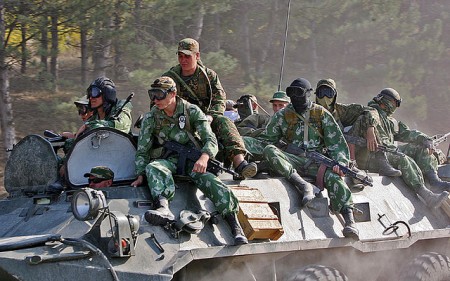
GEORGIA: "HUMANITARIAN" RUSSIAN RAILWAY TROOPS IN ABKHAZIA CAUSE FOR FRESH ALARM
Nina Akhmeteli
http://www.eurasianet.org/departments/insight/articles/eav060208a.shtml
AZERBAIJAN: PRESIDENTIAL JOB PROMISES FALL SHORT
Elkhan Salahov
http://www.eurasianet.org/departments/insight/articles/eav053008a.shtml
Saturday, May 24, 2008
NEWS: EurasiaNet Weekly Update 05-22-08 and 05-15-08
Giorgi Lomsadze
http://www.eurasianet.org/departments/insight/articles/eav052208aa.shtml
BORDER ATTACK SPURS FRESH TENSION BETWEEN GEORGIA, ABKHAZIA
Paul Rimple
http://www.eurasianet.org/departments/insight/articles/eav052208b.shtml
AZERBAIJAN: OFFICIALS PLAN FOR "PROBLEM-FREE" PRESIDENTIAL ELECTION
Rovshan Ismayilov
http://www.eurasianet.org/departments/insight/articles/eav052108a.shtml
A FREE AND FAIR VOTE? GEORGIA'S POLITICAL PARTIES SEE THINGS DIFFERENTLY
Molly Corso
http://www.eurasianet.org/departments/insight/articles/eav052108.shtml
GEORGIA: A CLEAN VOTE ON MAY 21?
Molly Corso
http://www.eurasianet.org/departments/insight/articles/eav052008a.shtml
GEORGIA: OPTIMISM PREVAILS IN TBILISI-CONTROLLED SECTION OF ABKHAZIA
Elizabeth Owen
http://www.eurasianet.org/departments/insight/articles/eav051908.shtml
GEORGIA: DIRECTOR'S DETECTIVE FILM PROMISES NEW LIFE FOR A SLEEPING INDUSTRY
http://www.eurasianet.org/departments/insight/articles/eav051608a.shtml
NEW POLITICAL PARTY PROMOTES CHURCH AS GEORGIA'S STRONGEST DEFENDER
Molly Corso
http://www.eurasianet.org/departments/insight/articles/eav051408a.shtml
IS BIGGER BETTER FOR AZERBAIJAN'S BUDGET?
Rovshan Ismayilov
http://www.eurasianet.org/departments/insight/articles/eav051308a.shtml
MEDIA PART OF THE DEBATE IN GEORGIAN ELECTION
Nina Akhmeteli
http://www.eurasianet.org/departments/insight/articles/eav051308b.shtml
OFFICIAL TO US: AZERBAIJAN "PROCEEDING ON ITS OWN PATH"
Mina Muradova
http://www.eurasianet.org/departments/insight/articles/eav051208a.shtml
GEORGIA: US AND EU SUPPORT FOR TBILISI GROWS AMID ESCALATING TENSION WITH RUSSIA
Nina Akhmeteli
http://www.eurasianet.org/departments/insight/articles/eav050908.shtml
CASPIAN BASIN: NO WAY TO HALT STURGEON POACHING
http://www.eurasianet.org/departments/insight/articles/eav050808.shtml
ARMENIA: ADMINISTRATION, OPPOSITION TAKE TENTATIVE STEPS TOWARD OPENING DIALOGUE
Marianna Grigoryan
http://www.eurasianet.org/departments/insight/articles/eav050808a.shtml
Friday, May 02, 2008
NEWS: EurasiaNet Weekly Update 05-02-08
IRAN: TEHRAN COMES UNDER PRESSURE TO HALT SUPPORT FOR MILITIAS OPERATING IN IRAQ
By Kamal Nazer Yasin
A high-level Iraqi delegation was in Iran on May 1 for talks aimed at curtailing Tehran's support for Sh'ia militias operating in Iraq. The Iraqi officials were said to possess hard evidence that elements of Iran's Revolutionary Guards are supplying tactical and logistical support to militant groups in Iraq.
http://www.eurasianet.org/departments/insight/articles/eav050108.shtml
GEORGIA: RUSSIAN PEACEKEEPER BUILDUP IN ABKHAZIA "ILLEGITIMATE" --
OFFICIAL
By Molly Corso
http://www.eurasianet.org/departments/insight/articles/eav050108b.shtml
OLDEST TEMPLE ON PLANET DISCOVERED NEAR TURKISH-SYRIAN BORDER
By Nicholas Birch
http://www.eurasianet.org/departments/insight/articles/rp042408.shtml
THE KREMLIN: ENTER A NEW FALSE DMITRY?
By Igor Torbakov
http://www.eurasianet.org/departments/insight/articles/eav043008.shtml
AZERBAIJAN: DID WASHINGTON HAVE A HAND IN STOPPING NUCLEAR SHIPMENT HEADED FOR IRAN?
http://www.eurasianet.org/departments/insight/articles/eav042908.shtml
GEORGIA: A SIGN OF CHANGE? GEORGIA FLOATS ITS FIRST INTERNATIONAL BONDS
By Nino Patsuria
http://www.eurasianet.org/departments/insight/articles/eav042908a.shtml
FREEDOM HOUSE MEDIA REPORT PAINTS BLEAK PICTURE FOR CENTRAL ASIA,
CAUCASUS
By Deirdre Tynan
http://www.eurasianet.org/departments/insight/articles/eav042908b.shtml
CENTRAL ASIA: WATER WOES STOKE ECONOMIC WORRIES
By Joanna Lillis
http://www.eurasianet.org/departments/insight/articles/eav042808.shtml
AMID WAR WORRIES, ABKHAZIA HAILS THE END OF EMBARGO
By Paul Rimple
http://www.eurasianet.org/departments/insight/articles/eav042808a.shtml
IN GEORGIA, POLITICAL VIEWS ARE OFTEN BEST SAID IN SONG
A EurasiaNet Photo Story: Text by Giorgi Lomsadze; Photos by Molly
Corso.
http://www.eurasianet.org/departments/insight/articles/eav042508.shtml
******************************************************************
ANNOUNCEMENTS
OPEN FORUM SPEAKER SERIES
If you live in the New York City or Washington, DC area, join Open Society Institute for its Open Forum speaker series.
The Open Forum speaker series aims to enhance policy debate on key issues facing Central Asia, the South Caucasus, and the Middle East, and to raise public awareness of important developments in these regions.
Bi-monthly Open Forum events are held in New York and Washington, DC, and are attended by leading policymakers, scholars, NGO staff, and journalists. The series is sponsored by OSI's Central Eurasia Project (http://www.blogger.com/www.soros.org/initiatives/cep) and Middle East and North Africa Initiative. All events are free and open to the public. To receive Open
Forum announcements, please email to cepopenforum@sorosny.org.
******************************************************************
-----------------------------------------------------------------
EurasiaNet (http://www.eurasianet.org/) is a leading Internet News service, covering the countries of Central Asia and the Caucasus, as well as Afghanistan, Turkey, the Middle East and Mongolia. A comprehensive resource, the website provides exclusive analysis, emphasizing in-depth coverage of political economic and social issues largely unaddressed by other information sources. It provides an outlet for opinions that challenge conventional wisdom. Contributors are based both in the West and in the region.
EurasiaNet is also a consolidator of news and information from outside sources, including the British Broadcasting Corporation, Radio Free Europe-Radio Liberty and Interfax. Its database of links and resources concerning the Caucasus and Central Asia is perhaps the most
comprehensive found anywhere on the World Wide Web.
Sunday, April 27, 2008
STUDIES: Georgia, Russia in public relations battle
By Richard Weitz for EurasiaNet (25/04/08)
Georgian officials are scoring points in the court of public opinion, as the spat between Georgia and Russia over the downing of a drone reconnaissance plane escalates into a broader, more philosophical discussion over the sovereignty of nations.
Georgia and Russia have traded accusations of skullduggery and nefarious intentions since the 20April downing of an unmanned Georgian reconnaissance plane off the coast of the separatist territory of Abkhazia. [For background see the Eurasia Insight archive]. On 23April, following a closed-door session of the United Nations Security Council, Georgia appeared to have gained the upper hand in the PR battle. After the session, which featured a debate on the drone shoot-down, four leading western countries issued a statement critical of Russia's recent behavior. The statement expressed specific concern over Russian leader Vladimir Putin's April 16 order enabling an expansion of commercial and political contacts between Russia and Abkhazia. [For background see the Eurasia Insight archive]. "We call on the Russian Federation to revoke or not to implement its decision," said the statement, issued by the United States, Britain, France and Germany.
Russian officials, having lost the round at the UN Security Council, effectively told the Western allies that they were dreaming if they thought Moscow would back down. "This is not something which is going to happen," Vitaly Churkin, Russia's envoy to the UN, said in reference to the statement.
Georgian officials, meanwhile, are intent on focusing international attention on the broader geopolitical picture in the Caucasus, believing that doing so will boost Tbilisi's efforts to gain membership in the North Atlantic Treaty Organization. [For background see the Eurasia Insight archive]. Top Georgian leaders in recent days have been asserting that the shoot-down incident is part of a pattern of aggressive and expansionist behavior on Russia's part. Ultimately, Tbilisi hopes that if it can convince the West that Russia is an inveterate bully, then French and German resistance to Georgian membership in NATO will recede, if not evaporate.
Georgian Foreign Minister David Bakradze gave a detailed overview of recent Russian moves in Abkhazia - from Tbilisi's perspective - during an appearance 22 April at the Central Asia-Caucasus Institute at the School of Advanced International Studies in Washington, DC. Russian behavior has "very much intensified the process of de-facto control over Georgian territories," Bakradze said. The Georgian foreign minister condemned Putin's 16 April edict, saying it represented "a very big step forward towards the practical absorption of this space into Russian legal system."
Bakradze also voiced concern about Russia's renunciation of its commitment to uphold the 1996 decision of the Commonwealth of Independent States not to deal directly with the separatist regime in Abkhazia without the approval of the central government in Tbilisi. [For background see the Eurasia Insight archive]. By unilaterally withdrawing from the agreement, the Russians have "freed up their hands for their possible increased military presence in Abkhazia and that is a very, very, dangerous development," Bakradze said.
Bakradze said that developments related to NATO and Kosovo help explain Russia's actions in the Caucasus. At NATO's Bucharest summit in early April, Georgia saw its hopes for obtaining a Membership Action Plan (MAP) frustrated. Experts attributed the reluctance of France, Germany and other European members to give Georgia a MAP to a determined Russian PR offensive. [For background see the Eurasia Insight archive].
To placate Georgian leaders, NATO issued a statement essentially assuring that Georgia and Ukraine would become NATO members, without setting any timetable for accession. NATO also said that it would revisit the MAP issue in December. [For background see the Eurasia Insight archive]. In Washington, Bakradze characterized the statement as a "compromise between supporters and skeptics" of Georgia's and Ukraine's membership bids. The problem with the Bucharest statement, according to Bakradze, is that it left Georgia in a "kind of grey zone" until at least December, which "worries us" since "people in Moscow" believe they have only a few months to try to frighten the Europeans into blocking Georgia's near-term MAP aspirations. "So from that viewpoint, we are now in the increased risk area, and I think one of the reasons of more active and more aggressive [Russian] policies is exactly the fact that this is the window of opportunity: to blow up Georgia in order not to make MAP in December possible."
Bakradze also believes that the circumstances surrounding Kosovo's declaration of independence have heavily influenced Russian behavior toward Georgia. In particular, "people in Moscow think that after Kosovo they obtained a kind of moral high ground, vis-à-vis United States, and vis-à-vis European Union, because of the way Kosovo was recognized." [For background see the Eurasia Insight archive]. Moscow now feels more comfortable supporting separatists in Georgia's breakaway regions of Abkhazia and South Ossetia.
Another speaker at the SAIS forum, Matthew Bryza, the US deputy assistant secretary of state for Caucasus and Southeastern Europe, called the current crisis a "test" for all parties involved in the Abkhazia peace process. "It's a test for the international community," Bryza said. "It's a test for my government as one of the members of the 'friends' process on Abkhazia. It's a test for me personally as the US mediator."
The US government seeks "to do everything possible first and foremost to help Georgia restore its territorial integrity" through "a peaceful process to negotiate a compromise political settlement in Abkhazia as well as South Ossetia," Bryza continued.
He called recent Russian policy disappointing since, although Moscow formally recognizes Tbilisi's sovereignty over the two regions, the Kremlin has taken actions that seem to call that recognition into question. "So it's extremely serious when any steps are undertaken that seem to work against [...] that stated policy," Bryza said.
The existing peace process for Abkhazia and South Ossetia is not working, Bryza suggested, adding that participants have become bogged down in various details without ever "being able to get to a real discussion of the political settlement." The international community had yet to decide, for example, how internally displaced people might safely return to their former homes and how to prevent the inappropriate sale of their property until their return. In the past, Bryza and other US officials had urged the Georgian government not to try to change the format of the negotiations, but "now we're getting to a point where it doesn't seem like this friends process is making headway. And in fact is going a bit background. So we need to rejuvenate that process."
Richard Weitz is a senior fellow at the Hudson Institute in Washington, DC.
EurasiaNet provides information and analysis about political, economic, environmental, and social developments in the countries of Central Asia and the Caucasus, as well as in Russia, the Middle East, and Southwest Asia. The website presents a variety of perspectives on contemporary developments, utilizing a network of correspondents based both in the West and in the region. The aim of EurasiaNet is to promote informed decision making among policy makers, as well as broadening interest in the region among the general public. EurasiaNet is operated by the Central Eurasia Project of the Open Society Institute.
In Georgia, Political Views Are Often Best Said in Song
A EURASIANET PHOTO ESSAY: TEXT BY GIORGI LOMSADZE; PHOTOS BY MOLLY CORSO
Georgian politics has never been short on drama. But with less than a month to go before the country’s parliamentary elections, politicians are hoping that that the glitterati of Georgia’s music world can help them attract votes.
Georgia: Gaining the Upper Hand in the PR Battle With Russia
BY RICHARD WEITZ
Georgian officials are scoring points in the court of public opinion, as the spat between Georgia and Russia over the downing of a drone reconnaissance plane escalates into a broader, more philosophical discussion over the sovereignty of nations.
Monday, April 21, 2008
NEWS: EurasiaNet Weekly Update 04-17-08
GEORGIA HOLDS STEADY AS MOSCOW INCHES CLOSER TO ABKHAZIA, SOUTH OSSETIA
By Molly Corso
http://www.eurasianet.org/departments/insight/articles/eav041708c.shtml
ARMENIA'S GOVERNMENT: WHAT CHANCE FOR CHANGE?
By Marianna Grigoryan
http://www.eurasianet.org/departments/insight/articles/eav041708d.shtml
AZERBAIJAN: IT'S BACK TO THE DRAWING BOARD FOR KARABAKH TALKS
By Rovshan Ismayilov
http://www.eurasianet.org/departments/insight/articles/eav041608a.shtml
OSCE: EFFORTS TO THAW FROZEN CONFLICTS GROWING MORE COMPLICATED
By Jean-Christophe Peuch
http://www.eurasianet.org/departments/insight/articles/eav041608b.shtml
GEORGIA BANKS ON CHEAP CREDIT AND LAND FOR ECONOMIC, POLITICAL DIVIDENDS
By Giorgi Lomsadze
http://www.eurasianet.org/departments/insight/articles/eav041508a.shtml
CENTRAL ASIA: REGIONAL ART TRENDS ARE ON DISPLAY IN NEW YORK
By Deirdre Tynan
http://www.eurasianet.org/departments/insight/articles/eav041108.shtml
GEORGIA: GOVERNING PARTY TO RELY ON STAR POWER AS IT AIMS TO DOMINATE NEXT PARLIAMENT
By Molly Corso
http://www.eurasianet.org/departments/insight/articles/eav041108a.shtml
AZERBAIJAN: BAKU HESITATES ON NABUCCO PIPELINE PROJECT
By Khadija Ismayilova
http://www.eurasianet.org/departments/insight/articles/eav041008a.shtml
Friday, March 28, 2008
NEWS: EurasiaNet Weekly Update 03-20-08
TURKMENISTAN: WILL BERDYMUKHAMEDOV COMMIT TO THE TRANS-CASPIAN PIPELINE DURING HIS TURKEY VISIT?
Amid the explosive growth of Central Asian natural gas prices, energy analysts are bracing for a possible blockbuster announcement from Turkmenistan. The upcoming visit of Turkmen leader Gurbanguly Berdymukhamedov to Turkey offers an ideal opportunity for Central Asia's leading gas producer to make a firm commitment to a trans-Caspian pipeline that is strongly backed by the United States and European Union.
http://www.eurasianet.org/departments/insight/articles/eav032008.shtml
AZERBAIJAN: ATTACK ON JOURNALIST PROMPTS FRESH CONCERNS ABOUT MEDIA
FREEDOM By Rovshan Ismayilov
http://www.eurasianet.org/departments/insight/articles/eav032008b.shtml
CHINA AND RUSSIA: THE GENDARMES OF EURASIA By Stephen Blank
http://www.eurasianet.org/departments/insight/articles/eav032008a.shtml
GEORGIA MUM ON DETAILS OF NEW ABKHAZIA PROPOSAL By Molly Corso
http://www.eurasianet.org/departments/insight/articles/eav031908a.shtml
RUSSIA MULLS STRONGER ENERGY POLICIES IN CENTRAL ASIA By Sergei Blagov
http://www.eurasianet.org/departments/insight/articles/eav031808.shtml
GEORGIA: GOVERNMENT, OPPOSITION REMAIN AT LOGGERHEADS By Molly Corso
http://www.eurasianet.org/departments/insight/articles/eav031808a.shtml
GEORGIA SEEKS TO MODIFY SOUTH OSSETIAN PEACE NEGOTIATION FORMAT By Jean-Christophe Peuch
http://www.eurasianet.org/departments/insight/articles/eav031808b.shtml
IRAN: IS THE UNITED STATES TRYING TO STIR UP DISCONTENT AMONG MINORITY GROUPS? By Joshua Kucera
http://www.eurasianet.org/departments/insight/articles/eav031708a.shtml
RUSSIA MAKES FINANCIAL GAMBLE TO RETAIN CONTROL OF CENTRAL ASIAN ENERGY EXPORTS By Joanna Lillis
http://www.eurasianet.org/departments/insight/articles/eav031408.shtml
Monday, March 24, 2008
NEWS: EurasiaNet Weekly Update 03-13-08
BAKU AND ASHGABAT SOLVED LONG-LASTED PROBLEM WHILE US IS PUSHING FOR TRANS-CASPIAN DEAL Rovshan Ismayilov
Russia on March 13 went on the diplomatic offensive in an attempt to undermine Azerbaijan's credibility as an energy exporter, and cast doubt on the financial viability of a Western-backed pipeline plan. The Russian criticism, experts believe, is a response to earlier moves by Baku and the United States to press ahead with the construction of a trans-Caspian pipeline.
http://www.eurasianet.org/departments/insight/articles/eav031308.shtml
ARMENIA: OFFICIALS, OPPOSITION TAKE TENTATIVE STEPS TOWARD CONCILIATION
http://www.eurasianet.org/armenia08/news/031308.shtml
ARMENIA: A POLITICAL WORLD TURNED UPSIDE DOWN
http://www.eurasianet.org/departments/insight/articles/eav031108.shtml
IRAN: US GOVERNMENT PLANNING AZERI-LANGUAGE BROADCASTS TO IRAN
Joshua Kucera
http://www.eurasianet.org/departments/insight/articles/eav031008a.shtml
ARMENIA: AUTHORITIES ADVANCE CONSPIRACY THEORY
http://www.eurasianet.org/departments/insight/articles/eav030708c.shtml
UIGHUR ACTIVIST: CHINA IS MAKING "A FRONTAL ATTACK ON OUR ETHNIC IDENTITY" Joshua Kucera
http://www.eurasianet.org/departments/insight/articles/eav030708.shtml
THE CIS: A VANISHING REALITY? Igor Torbakov
http://www.eurasianet.org/departments/insight/articles/eav030708a.shtml
GEORGIA: TBILISI STARTS TO FEEL THE BACKLASH OF KOSOVO INDEPENDENCE Molly Corso
http://www.eurasianet.org/departments/insight/articles/eav030608a.shtml
ARMENIA: CRITICISM OF KOCHARIAN ADMINISTRATION BUBBLES TO SURFACE Rovshan Ismayilov
http://www.eurasianet.org/departments/insight/articles/eav030608.shtml
Saturday, March 15, 2008
NEWS: EurasiaNet Weekly Update 03-15-08
ARMENIA: CRITICISM OF KOCHARIAN ADMINISTRATION BUBBLES TO SURFACE
The shockwaves created by the March 1 events in Yerevan are being felt beyond Armenia's borders, heightening concern about a regional war. Meanwhile, criticism of President Robert Kocharian's handling of the crisis is starting to surface.
http://www.eurasianet.org/departments/insight/articles/eav030608.shtml
GEORGIA: TBILISI STARTS TO FEEL THE BACKLASH OF KOSOVO INDEPENDENCE
Molly Corso
http://www.eurasianet.org/departments/insight/articles/eav030608a.shtml
MEDIA SITUATION REMAINS APPALLING IN MOST CIS COUNTRIES, EXPERTS SAY
Jean-Christophe Peuch
http://www.eurasianet.org/departments/insight/articles/eav030508b.shtml
ARMENIA: THE UNITED STATES IS MUTED ON THE ARMENIAN POLITICAL CRISIS
Joshua Kucera
http://www.eurasianet.org/departments/insight/articles/eav030508.shtml
ARMENIA: TOP CHALLENGE NOW IS REPAIRING THE RIFT
http://www.eurasianet.org/departments/insight/articles/eav030408.shtml
ARMENIA: IS A GOVERNMENT COVER-UP IN PROGRESS?
http://www.eurasianet.org/departments/insight/articles/eav030308.shtml
Friday, February 01, 2008
NEWS: EurasiaNet Weekly Update 01-31-08
RUSSIA STRIKING BACK IN ENERGY GAME, MAKES PLAY FOR KYRGYZ NATIONAL GAS COMPANY
The Kremlin, via its strategic surrogate Gazprom, is not standing by idly as the United States strives to revive its geopolitical fortunes in the Central Asian energy contest. Gazprom in recent weeks has gone on an acquisition and joint-venture binge in its effort to secure Russia's dominating position as the controller of Central Asian energy exports and of European Union supplies. Kyrgyzstan's national energy company, Kyrgyzgaz, appears to be Gazprom's newest take-over target.
http://www.eurasianet.org/departments/insight/articles/eav013108.shtml
PRIVATIZING GEORGIA'S RAILWAY: BIDS BEFORE STRATEGY
Nino Patsuria
http://www.eurasianet.org/departments/insight/articles/eav013108a.shtml
GEORGIA: EX-DEFENSE MINISTER OUT OF PRISON
Nina Akhmeteli
http://www.eurasianet.org/departments/insight/articles/eav013108b.shtml
GEORGIAN OPPOSITION VOWS "PERMANENT PROTESTS"
Nina Akhmeteli
http://www.eurasianet.org/departments/insight/articles/eav013008a.shtml
ARMENIA: MEASURES TO PROMOTE FREE-AND-FAIR PRESIDENTIAL VOTE FACE SCRUTINY
Gayane Abrahamyan
http://www.eurasianet.org/departments/insight/articles/eav012908.shtml
GEORGIA: IMEDI TV LICENSE AGAIN UNDER REVIEW, NEWS CORP. ROLE MURKY
Molly Corso
http://www.eurasianet.org/departments/insight/articles/eav012908b.shtml
THE IRANIAN-TURKMEN GAS ROW: AND THE WINNER IS ... RUSSIA
Yigal Schleifer
http://www.eurasianet.org/departments/insight/articles/eav012808.shtml
CENTRAL ASIA: LOOKING AT LANGUAGE POLITICS
Richard Weitz
http://www.eurasianet.org/departments/insight/articles/eav012808a.shtml
MEDIA SCUFFLE MARKS START OF ARMENIA'S PRESIDENTIAL CAMPAIGN
Marianna Grigoryan
http://www.eurasianet.org/departments/insight/articles/eav012508.shtml
GEORGIA'S NEW CABINET: NOT THE TOTAL MAKE-OVER THAT SOME EXPECTED
Molly Corso
http://www.eurasianet.org/departments/insight/articles/eav012508a.shtml
AZERBAIJAN: US TRYING TO SHORE UP ITS DIPLOMATIC POSITION IN CASPIAN BASIN
Rovshan Ismayilov
http://www.eurasianet.org/departments/insight/articles/eav012508b.shtml
GEORGIA: PM ANNOUNCES CABINET SHAKE-UP
http://www.eurasianet.org/departments/insight/articles/eav012408a.shtml
COPPER CONTROVERSY HAUNTS ARMENIAN TOWN
Marianna Grigoryan
http://www.eurasianet.org/departments/insight/articles/eav012308.shtml
Sunday, January 27, 2008
BOOK REVIEW: The Ghost of Freedom: A History of the Caucasus. By Charles King
1/18/08 A Book Review by Alex van Oss (www.eurasianet.org)
The Ghost of Freedom: A History of the Caucasus
By Charles King2008 Oxford Press, 291 p., ISBN: 978-0-19-517775-6
Most Caucasus writing these days is either journalistic or academic, obsessed for the most part with conflicts or oil. The Ghost of Freedom manages to break the mold: Charles King, a professor of government and international affairs at Georgetown University, has produced a work that is at once informative, eclectic, and immensely satisfying.In fewer than 300 pages King provides a comprehensive and gracefully written account of the South and North Caucasus, plus Black Sea regions of Russia, such as Sochi, site of the 2014 Winter Olympics.
Excellent maps by Chris Robinson depict political boundaries of 1780, 1890, and 2008, showing dramatically how Persian or Ottoman territory one century became Russian the next, and now, independent. The title, "The Ghost of Freedom," comes from Pushkin’s 1821 poem "Captive of the Caucasus" whose Byronic protagonist, tiring of Mother Russia,
"...quit the confines of his native land, and flew away to a far off strand with freedom’s cheerful apparition..."
… Or its illusion. The hero gets captured by locals, finds romance, and then escapes. The poem inspired sundry other stories, operas, a ballet, a book, plus a film or two--all with the same title; and it prompted thousands of restless Russians to "go West" (go south, that is) and seek love, profit, epiphany, and adventure in the mountains.
***
So much for Pushkin. When pondering this seductive part of the world, it is useful to keep a couple of points in mind; first, the Caucasus is not Russia, and second, Russia is not the Caucasus. The Ghost of Freedom explains why the region is no longer the "jewel in the crown," or a proving ground for a Big Brother; nor can it in any way be considered a single political entity. Rather, its extremely variegated terrain also harbors distinct cultural ecosystems that at various times have been called a "museum of mankind," a "mountain of tongues," and even a "sculpture" (see below), with a bewildering array of languages, ethnicities, and views of history.
Indeed, the Caucasus can be likened to the classic children’s finger-puzzle in which 15 little sliding squares, enclosed in a frame, must be reconfigured in correct sequence. This is devilishly hard to do. In the living puzzle of the Caucasus there are of course many more pieces, which King rearranges in various illuminating ways, while neatly summarizing vast amounts of history.
King begins at the beginning, 25 million years ago, with the collision of continents that forced up most of the mountain ranges of Eurasia, including the Caucasus and its deposits of oil and gas. (By the way, this geological train-wreck is still in progress, albeit in extremely slow motion.) There has been much cultural as well as tectonic grinding in the Caucasus over the centuries. Scores of indigenous peoples and invaders have collided, traded, and genetically intermingled, leaving remnants and pockets of themselves in valleys, among alpine meadows, and in isolated auls (aerie-like highland villages) between the Black and Caspian Seas. The Caucasus has paid the price of being a cultural crossroads, and has weathered incursions from every quadrant: Persians from the southeast; Greeks and Romans (plus Byzantines, Arabs, Ottomans, and Turks) from the southwest; Huns, Avars, Mongols (and Russians, British, Germans, and so forth) from the north. The result--as cartographers soon discover to their dismay -- is what King describes as "borders on the move" (a concept reminiscent of certain ancient Caucasus legends that describe a time when the mountains could actually walk around...on ’legs’ of clouds!)
Maps are never the territory, of course, but King’s "surfeit of borders" precisely describes a neck of land historically chock-a-block with feudal clans and feuding vassalages, suzereinties, satrapies, and client states--and their shifting alliances. Add to this the poking and prodding by great powers and no wonder Caucasus politics displays a certain operatic quality (Bolshevik Revolution here, Rose Revolution there, charming folk dances and drinking songs over yonder, while oil wheeler-dealers and ’frozen conflict peacekeepers’ wait in the wings). Readers of The Ghost of Freedom will perhaps not be surprised to learn that the maneuvering continues, the United States being but the latest partner (or padrone) active in the South Caucasus. Tomorrow--who knows?--that role may revert to Russia, Turkey, or even China, and once again we would need to redraw the maps.
***
Today’s nations can be old or spanking new. Azerbaijan, King writes, is only a 20th-century construct; but even ancient entities such as Georgia and Armenia can wink on and off over the centuries:
"Two hundred years ago the map of the Caucasus looked very different from the one that exists today. Unified places called Georgia and Armenia had long ago disappeared, the former in the fifteenth century, and the latter in antiquity. Both were geographical rather than political expressions. A place called Azerbaijan, when the term was used at all, was more likely to refer to what one would now call northwestern Iran [p. 14-15].
"Modern maps that show great swaths of colored territory as clearly belonging to one or another khanate, kingdom, principality, or empire are fundamentally misleading about the real nature of sovereignty on the ground. The goal of any political power was to control the locus of extraction, such s a key bridge, port, mountain pass, or fortress. When borders did serve something like a modern purpose, they were usually meant not to keep people out but to keep them in." [ p.21]
The photographs in this volume are subtle and bear close examination. Two poignant images from the Library of Congress depict victims of war and massacres in 1919: one shows a row of Armenian orphans (bareheaded, barefoot), the other a similarly posed rank of Muslim/Turkish orphans (shod, hatted, holding staves). A 1935 photograph from the Hoover Institution Archives portrays Stalin’s henchman, Lavrenty Beria, standing next to three colleagues from Armenia, Abkhazia, and Azerbaijan. In retrospect it is a chilling artifact, for the following year the Armenian and Abkhazian would die under unusual circumstances after meeting with Beria (expiring by ’suicide’ and spasms, or possibly a ’heart-attack,’ respectively); the Azerbaijani was liquidated three years later. The Caucasus can be unkind to its own.
Battle and treaty dates can make for notoriously tedious reading; happily King manages to quick-march through history with panache, pausing frequently to clarify events and their wider implications (which events in the Caucasus always have). He also de-romanticizes the region:
"The legendary horsemanship and daring of Caucasus fighters were acknowledged even by their enemies. Russian painters depicted engagements between [Russian allied] Cossacks-of-the-line and their Circassian and Daghestani counterparts, with riders galloping at full tilt toward one another, meetings with the clash of saber and lance. However, such engagements were probably the exception rather than the rule. The Caucasus wars were always partly guerilla campaigns--what would today be called seasonal counterinsurgency operations. They rarely involved anything approximating pitched battles, at least of the type that Russian officers and men knew from their wars with other empires." [p.73]
The world learned about the Caucasus from travel accounts, 19th century Russian writers (Pushkin, Lermontov, Tolstoy, and others), and from press coverage of the long wars between highlanders and tsarist armies. To this must be added the allure of show business: Buffalo Bill Cody featured "Cossack" horsemen--actually Georgians--in his Wild West Show, while P.T. Barnum hawked "Circassian Beauties" (Irish, perhaps) as sideshow attractions. Exotic representations of the Caucasus continue to this day: John le Carré’s spy-thriller Our Game takes readers to some of the wilder-and-woolier parts of southern Russia; and John Ringo has a popular series of science fiction novels set in eastern Georgia: Ghost, Kildar, Choosers of the Slain, Unto the Breach.
The Caucasus was home to early Christian and Muslim states, and even earlier Jewish and Zoroastrian communities; paganism, once widespread, continues to exist. While never a paragon of tolerance, the Caucasus has avoided "clashes-of-civilizations"--although imperial Russia periodically used religion in its recruitment of Armenians to fight the Ottomans, and radical imams sought to unite the North Caucasus in jihad against the Russian advance. But somehow the spark never caught fire, due in part to the region’s heterogeneity. This was its strength and also its weakness. King describes the tsarist strategy of dividing and conquering the Caucasus by way of its geographical "flanks" (corresponding roughly to the Caspian and Black Sea watersheds):
"The middle ground... between the right and the left flanks was also home to a variety of peoples, some of whom were loyal to the tsar, while others lived in out-of-the-way areas and consequently posed no immediate threat to imperial power. Among the latter groups were the Turkic-speaking Karachai and Balkars; the Ossetians, whose villages helped insulate the road against highlander attacks; and the peoples of mountainous Georgia, the Svans, Khevsurs, Pshavs, and Tush. The great dream of some highland leaders was to unite the two flanks, which were separated by no more than 150 miles, into a single front. The great success of Russian policy was that it prevented them from ever doing so." [p.68]
The quaint term "Caucasian," as an ethnic category, harks back to Johann Friedrich Blumenbach’s On the Natural Variety of Mankind (1775), in which the German physician tried to link physical characteristics (such as skull size) to culture. Blumenbach considered Caucasians to be the world’s most ancient--and beautiful--white people. (Caucasians actually come in all shapes, sizes, and hues of hair and skin color.) Ethnography has often been politicized, and in the Caucasus Russian and Soviet academics demonstrated what King calls the "Enlightenment urge to taxonomize." As King puts it, Russian popular imagination fed upon the works of writers and painters (sometimes one and the same, as with Mikhail Lermontov), who in turn fed on volumes of ethnography. Their curiosity was wide and deep; King includes the instructions from the St. Petersburg imperial academy to a German explorer, Julius von Klaproth, in 1807; the academy wanted to know:
"Are there traditions respecting the existence of Amazons? Who are the likely descendants of the Scythians, the ancient steppe dwellers described by Herodotus? Where are the passes in the mountains? What is to be found in the districts south of the highlands, especially along the black Sea? What s the word for "tribe" in the Lezgin dialects? Are the women of the Caucasus as beautiful as is often claimed?" [p.104]
Another scholar, Semyon Bronevskii, toiled for years over a massive two-volume overview of earlier explorers’ notes, all the while working at administrative posts. The fruits of his labor, titled The Latest Geographical and Historical Information on the Caucasus, brought the Caucasus out of academia and into Russian consciousness--and King continues this tradition for western readers.
***
The Ghost of Freedom perforce covers a lot of ground. Divided into five chapters, the book describes geology and geography; imperial and colonial designs on the Caucasus (and staunch resistance to it); Caucasus ethnography and imagery in popular culture; the Bolshevik, Soviet, and independence periods--and much more. Thirty subsections bear catchy titles, such as "Ermolov Comes!," "There is Something to Be Gained on the Heights," and "Eros and the Circassian."
For the most part it is smooth sailing, but some sections are filled to bursting and dense. Chapter Two, for example, covers the complexities of Islam, Caucasus military strategy, fighting techniques, biographies of imams, Georgia’s bureaucracy, the Circassian diaspora--all fascinating, but a lot to absorb. More headings would have been helpful; as it is, readers will need to rely on the index or write notes in the margins (a shame, for this book is too handsome to mark up).
That said, King certainly writes engagingly: he leavens the narrative with anecdotes and verse, and swoops and soars on his magic Caucasus carpet from region to region and one time period to another. Such verve conveys a marvelous sense of the Caucasus as being almost a work of art, physically and culturally: a natural sculpture, no part of which can be truly understood without awareness of the whole--a whole which underwent considerable modification in the 1800s, as Russian troops fortified, cut down vast forests, and built military highways in order to extirpate resistance.
***
The Ghost of Freedom brings together current research, and also classic works by English, French, German, and Russian adventurers, and scholars. We read of Douglas Freshfield’s epiphanies while climbing in the Caucasus mountains in 1869--epiphany, King points out, being a crucial aspect of climbing in those days that was soon to be overcome by the newer craze of seeking ever greater technological challenges, not just a good view. (This is a pity: I recall my own delight at discovering in my local public library a rare masterpiece of Victorian nature writing by James Bryce, a British parliamentarian and ambassador to the United States. Bryce climbed Mount Ararat in 1876 in one of the earliest ascents on record. It was an arduous adventure; nevertheless Bryce took careful notes and describes every interesting pebble encountered, every geological formation, every species of flora and fauna, and every fog patch, cloud and shift of light. Evidently Lord Bryce carried no camera.)
Charles King offers a wealth of surprising and trenchant perceptions about, for example, the ambiguous role of British officers during the fighting between Russians and highlanders, and the fate of soldiers taken into slavery. There is a long Caucasus tradition of slaves, hostages, deserters, and renegades; the analogy to North America is inescapable: many soldiers in the Caucasus "went Indian" by choice, or by an offer they couldn’t refuse.
Sometimes Caucasus history can seem like musical chairs, and in this regard King tackles a delicate subject: the fact that Georgia, Armenia, and Azerbaijan, despite their ancient artistic and religious heritage, owe a considerable cultural debt to Russia and Europe. Printing, jurisprudence, pedagogy, theater, literature, music, philosophical inquiry, and more: all got a vitamin injection from 19th century graduates of universities in St. Petersburg and abroad. Consider the remarkable British-educated Mikhail Vorontsov, whom Tsar Nicholas I made commander-in-chief of Caucasus forces; he was certainly ruthless, but also cosmopolitan:
"Vorontsov was convinced that the Caucasus needed a genuine political, cultural, and economic center--much as Odessa had become the effective capital of New Russia--and Tiflis was to be it. Parts of the city had remained in ruins since the Persian onslaught of 1795. Vorontsov laid on plans for its rebuilding, creating wide thoroughfares and designing new residential districts...the first drama theaters were established in 1850 and 1851 (one for Georgian plays, another for Russian), and the famous Tiflis opera house was soon inaugurated, complete with an Italian company regularly performing well-known pieces...the booming cultural life in Vorontsov’s Tiflis was a sign of the city’s gradual rise from garrison town to urban imperial outpost." [p.86]
Baku was soon to boom as well, thanks to oil; Yerevan had to wait until after the First World War, when its population swelled from the influx of Armenians uprooted from Ottoman Turkey.
***
One of the lesser known chapters of world history concerns the 19th century mass expulsion by Russians of Circassians and other groups from the northwestern Caucasus and Black Sea coast. Highlanders and Abkhaz were forced into Anatolia, the Balkans, and further corners of the Ottoman Empire. Inadequately housed and fed, a great many perished from disease or in storms at sea. Up to 500,000 Caucasus peoples (often labeled as ’Circassians,’ regardless of origin) left in the 1860s; King puts the total from 1859-1878 at 2 million. These deportees resettled and often attained high military and administrative positions in their new homes. From revolutionary Russia and the Middle East, thousands emigrated to Europe and the United States, not infrequently maintaining their traditional vocations and codes of honor, and finding employment in diplomacy, various military or security agencies, and other government services. To this day there are Circassian villages in Turkey, Jordan, Israel, and elsewhere.
The ripple effects of Caucasus politics spread outwards, even to the United States, in the form of business ventures to political misadventures (an Armenian bishop was assassinated in New York in 1933) and political lobbying. Wrangling on Capitol Hill over official United States recognition of an Armenian genocide has, directly or indirectly, ended the career of one American ambassador to Armenia, obstructed the ratification of another, and threatens to be a perennial stone in many peoples’ shoes. On the matter of Ottomans, Armenians, and genocide, King states bluntly:
"In nearly all instances of large-scale violence, state manipulation and local circumstances come together in a contingent, complicated, and ultimately deadly mix. The Armenian genocide was neither explicitly ordered as a single act of violence, nor was it the unavoidable consequence of some ancient quarrel between Muslims and Christians. Rather, it was the result of communal fear, ethnic reprisals, government paranoia, and fitful experimentation with targeted killing as a tool of modern statecraft." [p 197]
King continually reminds us of the multiple dramas unfolding in Anatolia at the turn of the 20th century: the collapse of empires and the formation of new nations, the First World War, the brutality and chaos of times a-changing, and the eruption of local antagonisms into something widespread and genocidal. Such a saga ought to inspire great novels, films, and television series--of the scope and subtlety, say, of Paul Scott’s The Raj Quartet, about the final years of British rule in India--but they have yet to appear.
***
The last part of The Ghost of Freedom brings us into the present, and shows how today Caucasus is of a piece with the region in earlier times, and how post-Soviet changes have been a mixed blessing:
"The real story [post-Soviet] ... is not about deep-rooted sentiments of ethnicity or ancient grievances but about the ways in which personal ambition, structural incentives, and the simple presence of sufficient quantities of guns led to bloody conflict." [p.212]
The author evenhandedly describes the political ecology of the intractable "legacy conflicts" in Abkhazia, South Ossetia, Nagorno-Karabakh, and in the North Caucasus. Too often the dreary occurrences in Chechnya, Ingushetia, and increasingly other regions--lawless police arrests, citizen ’disappearances,’ executions, systemic brutality, and also acts of terrorism, such as the occupation of the Beslan elementary school in North Ossetia--are viewed as remote and internal Russian affairs. Journalists traveling to those regions risk their lives. The sad truth is that Caucasus unrest only undermines Russia’s security, as it lines the pockets of the purveyors of weapons, narcotics, and contraband. Human trafficking and illegal wheeling and dealing, while not new or unique to the Caucasus, is increasingly profitable and international.
Paul Goble, a specialist on CIS minorities, asserts ominously that Russia has never controlled the North Caucasus without first controlling the South. But control need not be the result of invasion or occupation. Russia now owns and coordinates much of the Caucasus energy infrastructure, while militarily it fosters close ties with Armenia and maintains proxies and "peacekeepers" in Abkhazia and South Ossetia. However, Russia is not the only player in this region: newcomers to the game include the United States (which openly pursues its interests and maintains agents of influence, including military, in the South Caucasus), not to mention Kazakhstan and China.
Finally, The Ghost of Freedom touches upon an old and extremely important question: Is the Caucasus a part of Asia, the Middle East, or Europe? The first two certainly. As for the latter, I have heard all kinds of enthusiastic assertions: that, for example, Europe and the Caucasus have a natural affinity, and that everything from chivalry and horsemanship, to the "look" of Hellenic statues and temples, to Romanesque and Gothic construction techniques, to the fancy footwork of "Irish" dancing--in short, many of the key aspects of European culture arose in those parts. Be that as it may, the European Union, motivated by its need for Caspian energy resources, has finally begun to adjust its bureaucratic gears to become more usefully engaged in the Caucasus. Should Georgia, Armenia, and Azerbaijan ever find themselves in the EU, it would mean radical changes in self-perception throughout Europe, and the Black Sea and Caspian regions. Charles King’s The Ghost of Freedom helps us understand why.
Editor’s Note: Alex van Oss is the Chair of Caucasus Advanced Area Studies at the Foreign Service Institute in Washington, DC.
NEWS: EurasiaNet Weekly Update 01-26-08
GEORGIA: PM ANNOUNCES CABINET SHAKE-UP
http://www.eurasianet.org/departments/insight/articles/eav012408a.shtml
COPPER CONTROVERSY HAUNTS ARMENIAN TOWN
Marianna Grigoryan
http://www.eurasianet.org/departments/insight/articles/eav012308.shtml
TRACKING THE COMPLEXITIES OF THE CAUCASUS
Alex van Oss
A Book Review by Alex van Oss
http://www.eurasianet.org/departments/insight/articles/eav011808a.shtml
GEORGIA: OPPOSITION'S CRITICISM OF WEST ONLY GOES SO FAR
Nina Akhmeteli
http://www.eurasianet.org/departments/insight/articles/eav011808b.shtml
Monday, January 14, 2008
ELECTION: EurasiaNet.org published a huge WebSite to the Election in Georgia 2008

Monday, December 10, 2007
NEWS: EurasiaNet Weekly Update 12-06-07
CENTRAL ASIA AND CAUCASUS: GOVERNMENTS RELY ON OLD-STYLE METHODS TO
CONTAIN INFLATION
Deirdre Tynan
Soaring inflation rates across the former Soviet Union are causing food price to spiral upward.
http://www.eurasianet.org/departments/insight/articles/eav120607.shtml
CAMPAIGN FINANCE A "SHADOWY" ISSUE IN GEORGIA'S PRESIDENTIAL RACE
Nino Patsuria
http://www.eurasianet.org/departments/insight/articles/eav120607a.shtml
THE FUTURE OF NABUCCO PIPELINE UP IN THE AIR
Khadija Ismayilova
http://www.eurasianet.org/departments/insight/articles/eav120507.shtml
GEORGIA: SCRUTINY OF TYCOON'S INTERESTS GOES BEYOND IMEDI
Molly Corso
http://www.eurasianet.org/departments/insight/articles/eav120507a.shtml
TBILISI TO NEWS CORP.: SHOW US THE OWNERSHIP DOCUMENTS FOR PRO-OPPOSITION TV STATION
http://www.eurasianet.org/departments/insight/articles/eav120307.shtml
CENTRAL ASIA: RETHINKING BORDER-CONTROL ASSISTANCE
A EurasiaNet Commentary by Nick Megoran
http://www.eurasianet.org/departments/insight/articles/eav120307a.shtml
AZERBAIJAN: EVALUATING THE RADICAL ISLAMIC SECURITY THREAT
Rovshan Ismayilov
http://www.eurasianet.org/departments/insight/articles/eav113007.shtml
FOLK MUSIC ONCE AGAIN THRIVES IN CENTRAL ASIA AND THE CAUCASUS
Gelya Leshchinskiy
http://www.eurasianet.org/departments/insight/articles/eav113007a.shtml
CASPIAN BASIN: A LOOK AT THE SOUTHERN FACTOR IN THE REGIONAL ENERGY
EQUATION
http://www.eurasianet.org/departments/insight/articles/eav112907a.shtml
Tuesday, November 27, 2007
NEWS: EurasiaNet Weekly Update
RUSSIANS IN ABKHAZIA: A TOOL FOR GEORGIA'S ELECTION CAMPAIGN?
Giorgi Lomsadze
While international attention focuses on the upcoming Georgian presidential elections, Tbilisi's tussle with the opposition has coincided with a stepped-up campaign against Russian peacekeepers in Abkhazia. The opposition contends that the alarm bells about an alleged Russian military build-up in the region are politically motivated. Some analysts, meanwhile, say that President Mikheil Saakashvili's administration stands to gain little, if any, domestic political benefit from confronting Russia at this time.
http://www.eurasianet.org/departments/insight/articles/eav112107a.shtml
ARMENIA: IN CAPITAL'S CONSTRUCTION BOOM, WHAT GOES UP MAY COME DOWN
Gayane Abrahamyan
http://www.eurasianet.org/departments/insight/articles/eav112107.shtml
GEORGIA: ANALYSTS BELIEVE CHANCES FOR NATO SLIM
Nina Akhmeteli
http://www.eurasianet.org/department/insight/articles/eav112007a.shtml
GEORGIA: ANALYSTS BELIEVE CHANCES FOR NATO SLIM
Nina Akhmeteli
http://www.eurasianet.org/departments/insight/articles/eav112007a.shtml
GEORGIA: OFFICIAL STATES CONDITION FOR IMEDI'S RE-OPENING
Molly Corso
http://www.eurasianet.org/departments/insight/articles/eav111907a.shtml
GEORGIA GETS NEW PRIME MINISTER
Molly Corso
http://www.eurasianet.org/departments/insight/articles/eav111607.shtml
GEORGIA: STATE OF EMERGENCY DENTS TBILISI'S NATO HOPES
Joshua Kucera
http://www.eurasianet.org/departments/insight/articles/eav111607b.shtml
GEORGIAN EX-DEFENSE MINISTER'S TRIAL OPENS
http://www.eurasianet.org/departments/insight/articles/eav111607c.shtml
GEORGIA: OPPOSITION RAISES POSSIBILITY OF PRESIDENTIAL ELECTION BOYCOTT
Molly Corso
http://www.eurasianet.org/departments/insight/articles/eav111507a.shtml
GEORGIA: IMEDI TELEVISION MAY FADE TO BLACK
Molly Corso
http://www.eurasianet.org/departments/insight/articles/eav111407.shtml
GEORGIA: IMEDI TELEVISION MAY FADE TO BLACK
Molly Corso
http://www.eurasianet.org/departments/insight/articles/eav111407f.shtml
DIPLOMATS: ELECTIONS ARE GEORGIA'S CHANCE FOR A DEMOCRATIC COMEBACK
Elizabeth Owen
http://www.eurasianet.org/departments/insight/articles/eav111307.shtml
AZERBAIJAN: ARRESTS BOLSTER MEDIA CONCERNS
Mina Muradova
http://www.eurasianet.org/departments/insight/articles/eav111307b.shtml
POST-CRACKDOWN, GEORGIA KEEPS EYE ON FOREIGN INVESTMENT
Nino Patsuria
http://www.eurasianet.org/departments/insight/articles/eav111207a.shtml
GEORGIAN OPPOSITION ANNOUNCES PRESIDENTIAL CANDIDATE
Molly Corso
http://www.eurasianet.org/departments/insight/articles/eav111207.shtml
ARMENIA: GOVERNING PARTY PREPARES FOR PRESIDENTIAL ELECTION
Haroutiun Khachatrian
http://www.eurasianet.org/departments/insight/articles/eav111207b.shtml
Friday, November 09, 2007
NEWS: Georgia News Digest 11-09-07
A service of the Georgian Foundation for Strategic and International Studies
Attached PDF file easily navigable with Bookmarks pane
Archives and associated files at groups-beta.google.com/group/genews/files
N.b. Headlines in the digest header are now linked to the items, in both the email body and the attached PDF file.
1. Georgian president calls snap polls to resolve crisis
2. Georgia's president moves up elections
3. Beleaguered Georgian President Sets Elections
4. Early vote may save Georgian leader after violence
5. Georgia leader seeks to cool unrest, Western criticism by calling early presidential election
6. video: Georgia to elect new president in January
7. President offers to hold early election to defuse crisis, opposition leaders missing By Molly Corso; Photos by Sophia Mizante
8. Georgia's Besieged President Calls Early Election
9. video: Georgian president bows to protestors' demands
10. Opposition claims victory after Georgian president calls snap poll
11. President takes bold gamble with election call: analysts
12. video: Georgian President promises to lift state of emergency
13. Opposition Hails Snap Presidential Polls
14. Saakashvili proposes snap presidential election for 5 January – text
15. Georgia declares state of emergency
16. Georgian president concerns West and angers Russia
17. video: More troops to Tblissi as Russia weighs retaliation
18. video: State of emergency in Georgia: independent media gagged
19. video: Interview with Konstantin Beloruchev
20. video: Interview with Viktor Linnik
21. audio: Protests Spark State of Emergency in Georgia
22. audio: Georgia, Russia Square Off in a State of Emergency
23. video: Georgian police accused of brutality
24. Decree of the President of Georgia
25. Q&A: Georgia's state of emergency
26. Statement by the Secretary General on the situation in Georgia
27. Transparency International Georgia Comments on Events of November 7, 2007 in Tbilisi
28. Domestic and Foreign Broadcasting Silenced by State of Emergency
29. State of Emergency in Georgia Should Be Lifted; Democratic Gains since Rose Revolution Jeopardized
30. Authorities must promptly investigate police actions in dispersing demonstrators
31. U.N. rights boss rebukes Georgia for use of force
32. OSCE media freedom representative concerned about suspension of television stations in Georgia
33. Declaration to the Events in Georgia from the Beginning of November 2007
34. Press Statement: Need for Restraint and Respect for Rule of
35. CoE Calls for Restraint
36. PACE Monitors to Visit Georgia
37. EU Temporary Shuts Down its Office in Georgia
38. NATO Criticizes Georgian President for Emergency Rule
39. EU and Lithuania concerned over situation in Georgia
40. Closure of Media Outlets Not in Line with NATO Values – Scheffer
41. EU concerned over turmoil in Georgia
42. Luzhkov Urged to Recognize Abkhazia’s Independence
43. Russia expels three Georgian diplomats
44. Moscow denies Tbilisi's claims about Russia meddling in Georgia's affairs
45. Russian ambassador worried by growing anti-Russian sentiments in Georgian politics
46. Russian diplomats to leave Georgia within shortest time frame
47. Russia calls Georgian events violation of human rights
48. Russia urges Georgia to punish attackers of Russian journalists during crackdown
49. Subversive Activities
50. Duma Speaker displeased with 'bloodshed' in Georgia
51. U.S. stake on Saakashvili proves to be wrong – Sliska
52. Russian possible NATO envoy says Georgian political elite unfit to rule
53. Russian press review
54. Russia concerned with situation in Georgia
55. Russia expels three Georgian diplomats in tit-for-tat move
56. Georgia says readying proof of Russian role
57. Pakistani TV Tutorial on How to Declare Emergency Rule
58. Russian Foreign Minister Says Georgia Is Fuelling Mistrust In Breakaway Regions
59. Russian diplomats' expulsion from Georgia "unprecedented provocation" – envoy
60. US ambassador to Tbilisi in charge in Georgia, opinion
61. Police tighten security at Georgian Embassy in Moscow
62. Georgia's former minister says Russia did not manipulate with opposition
63. Georgians residing in Russia shocked at latest events in Tbilisi
64. Georgian leaders' impunity may threaten lives, stability – Kamynin
65. Georgia's provocations in conflict areas create distrust – Lavrov
66. Duma dubs Saakashvili attacks on Russia persecution complex
67. Rogozin calls for reinforcing vigilance on RF borders
68. Georgian Charge d'Affaires arrives at Russian foreign ministry
69. Georgia events bode ill for Caucasus - Russian senator
70. Moscow Says Human Rights Violated in Georgia
71. Expulsions raise fears of conflict with Moscow
72. Azerbaijan concerned over latest events in Georgia
73. Tajikistan's former oppositionist comments on situation in Georgia
74. MP fears more tension in Abkhazia and South Ossetia
75. Peacekeepers not notified about Georgia's state of emergency
76. Timeline: Political Standoff in Georgia
77. US expert: USA must help out Saakashvili
78. Home truths in Tbilisi
79. State of emergency takes Georgia by surprise: Russian media cry 'Revolution'
80. Eye on Georgia: Does unrest in Tbilisi signal similar action in Yerevan?
81. The Rose Revolution Wilts (photos)
82. The sad end of the Rose Revolution
83. How the Georgian president lost the support of his people
84. “Saakashvili committed a political suicide”
85. Less Than Rosy
86. A faded rose
87. People power: The president tries to face down protests from