Showing posts with label Khevsureti. Show all posts

Monday, April 09, 2018

FOTOGRAFIE: Emil Uhl, Bei den Tschefsuren in Chewsuretien (Großer Kaukasus) in der Deutschen Fotothek, @Fotothek

Uhl, Emil Franz (1864 – 1945) * 1.3.1864 Brüx (Most) † 1945 österreichischer Kunstmaler und Reisender


Uhl, Sohn eines Hotelbesitzers im nordböhmischen Brüx, studierte Kunst an den Akademien in Düsseldorf, München und 1889 bis 1892 in Paris. Bereits während seines Studiums unternahm er die ersten Reisen. Nach 1889 hielt er sich sieben Jahre in Ägypten (Kairo) auf und unternahem von hier aus Reisen nach Palästina, Syrien und in den Libanon. 1899/1900 folgte eine elfmonatige Reise durch das Osmanische Reich über den Kaukasus nach Zentralasien (Buchara, Samarkand). Zu seiner Zeit galt Uhl als bedeutendster Orientmaler, auch als Fotograf trat Uhl in Erscheinung. Auf mehr als 60 Ausstellungen, unter anderem in Wien, Prag, Aussig, Karlsbad, Berlin, Paris, London und München, wurden seine Gemälde gezeigt. Nach dem Ersten Weltkrieg ließ er sich in München nieder, wo er als Kopf einer sudetendeutschen Künstlergruppe galt. Seit 1935 nahm er seinen Altersruhesitz in Bayrisch‐Gmein. Die größte Sammlung seiner Gemälde und Fotografien befindet sich im Heimatmuseum seiner Geburtsstadt (Oblastní muzeum v Most) in Tschechien.


Emil Uhl in der Fotogalerie der Deutschen Fotothek [deutschefotothek.de]


Wednesday, February 11, 2015

DOKUMENTATION: Meine Traumreise durch den Kaukasus: Zu Pferd in unendliche Weiten. (3sat.de)

(3sat.de) Ein Film von Sven Ihden 

16.02.2015 | 15:05 Uhr | 3sat 

Foto: Simone Frewer 
Laura Jaeckel, 30 Jahre und in ihrem normalen Leben Schauspielerin in Paris und Berlin, erfüllt sich einen lange gehegten Traum: zu Pferd unterwegs im hohen Kaukasus zu sein. Mit ihrem Guide Jago reitet sie eine Woche durch Chewsuretien, eine der abgelegensten und einsamsten Regionen Georgiens. Ist dieses Land tatsächlich der Sehnsuchtsort von dem Laura geträumt hat, ein Flecken Erde voller wilder Poesie und unendlicher Weiten, oder ist es einfach nur schwer dort oben zu überleben? Und ist eine Stute mit Fohlen wirklich der beste Reisebegleiter, wenn es gilt, über dreitausend Meter hohe Pässe zu überwinden? 

Video: sr-mediathek.sr-online.de

Guide Jago Arabuli: www.kaukasus-tour.de

Quelle: sr-online.de/meine_traumreise

Wednesday, December 31, 2014

GREAT SONGS FROM KHESURETI: Teona Qumsiashvili from Georgia (soundcloud.com)


more: facebook.com/teonaqumsiashviliofficial

Wednesday, June 18, 2014

MAGAZINE: The Caucasus Mountains, in the spirit of writer Lermontov. By Bill Donahue (washingtonpost.com)

(washingtonpost.com) By the time I reached the snowfield, four hours into the hike and roughly 11,000 feet up in the Caucasus Mountains of Georgia, it was raining, and a late afternoon fog was drifting in, soon to veil the rocky peaks. I kept climbing, kicking the toes of my sneakers into the remnant June snow for a foothold, scrabbling on my hands and knees over rocks in steep places. Near the top of the pass leading to Juta, the highest village of the Khevsureti people, I spied three hikers emerging out of the mist, shuffling downhill, exhausted. They were Slovakian. “We are lost,” one of them said. “Now we go down. We look for rest in the willage.”

They were lean and in their 20s, with enough common sense to have invested in stiff-soled, snow-suitable hiking boots. Which underscored how flimsy my own preparations had been. Did I really want to die in some half-baked scheme to conquer the Caucasus? I had started out that morning amid the winding dirt roads and the little stone houses of Georgia’s sparsely settled Khevsureti region; it was time to go back. So now I began slinking downhill behind the Slovaks, and in the endless creases of the valley below, I swear I heard a man snickering, his voice a gleeful mockery as it caromed off the rocks.

The Russian poet and novelist Mikhail Lermontov (1814-41) had been there in the Georgian Caucasus before me. These mountains are the setting of his signature work, the 1840 novel “A Hero of Our Time,” and I had become convinced that Mikhail and I hated each other.

Lermontov was a short, bowlegged man, prematurely balding, with a bent back and a nasty temper. After his mother died young, he was raised in Moscow by his indulgent grandmother, a society dowager who permitted little Mishenka to rage on the servants and tear out her manicured shrubbery. He was annoying right up until his death. The day before, his friend was fraternizing with a young woman Lermontov fancied. Lermontov goaded him into a duel with guns. Lermontov lost. We can credit him with the dumbest death in literary history.

Or we can remember him by his eyes. They were captivating and coal black and set in dark sockets. They were plaintive and sad. When you look at old oil paintings, it’s impossible to forget that this dyspeptic brat was also a sensitive Romantic artist. His eyes saw things. They saw beauty, even as Lermontov himself was consumed by a haughty nihilism. Most critically, they saw the Caucasus Mountains straddling Russia and Georgia, more than 900 miles from the salons of Moscow.

When Lermontov was 3 and suffering from rheumatic fevers, his grandmother packed him, along with his French tutor and German governess, into a horse-drawn wagon and set out for the curative airs of the mountains. Lermontov returned at ages 5 and 10, and again when he was in his 20s and an officer in Czar Nicholas I’s army. Russia was occupying Georgia then, engaged in a century-long campaign to conquer the Caucasus’s peoples: the Chechens and Ossetians, and the largest group, the Circassians. Lermontov spent a pivotal year fighting and gathering material for his novel.

“Hero” is a slim, ironically titled autobiographical tale that follows Pechorin, a young Army officer, as he womanizes his way up the Georgia Military Highway, northeast from the capital, Tbilisi, and over the Caucasus into what is today Russian Chechnya. It is filled with grandiose riffs. Lermontov writes, “The dark-blue mountain tops, furrowed with wrinkles, covered with layers of snow, were silhouetted against the pale horizon.”One Georgian damsel comes off as “beautiful: tall, slender, with black eyes which resembled that of a mountain gazelle.”

After Vladimir Nabokov rendered the definitive English-language translation of “Hero” with his son, Dmitri, in 1958, he said Lermontov’s language “is the tool of an energetic, incredibly gifted, bitterly honest, but definitely inexperienced young man.”

Lermontov had almost zero compassion. For him, Caucasians were noxious when they weren’t being exotic. “What wretched people,” his alter ego Pechorin remarks.

“An extremely foolish people,” adds a fellow officer, “incapable of any education.”

I was there in Georgia in part to see what Lermontov had vainly overlooked. But I was also there in homage, for I loved the thrill in Lermontov’s voice. I wanted to know this brilliant young man who tossed away all his talent but still looms large in the Caucasus, remembered by all, reviled by some, and as important to his region as, say, Nathaniel Hawthorne is to Americans. To this day, most Georgian and Russian schoolchildren read Lermontov.

I got down out of the snow, eventually. The slope grew gentler and the sky cleared as I began descending toward the village of Roscha, following goat paths through the clover. The valley grew wider, until it was about a half-mile across — a huge, stunning expanse of rocky green land set against the patchy snow in the distance. After an hour, I saw a few grazing cows.

The first house in Roscha was a crude bed-and-breakfast with a woodshed in the back yard and a cowshed affixed with a TV satellite dish. As I lay in my room there, resting, I could hear a man grunting in labor on the grass just below me. I went outside and found a large, muscle-bound athlete throwing 50-pound rocks. — so they thudded softly on the spongy turf.

Zviadi Gogochuri competes for Georgia’s national judo squad in the 90-kilogram weight class. He was oblivious to me, ensconced next in some exercise that involved pulling on a thick rubber chord. A kid stood nearby, spectating in rapt admiration. “He is training,” Uturga Tsiklauri, 16, said in careful English. “He comes to the mountains for the fresh air. It is important.”

Uturga lives at the bed-and-breakfast with his parents. His father was away overnight, so his mother entrusted him with all the manly duties — such as turning on the hot-water heater so I could take a shower out in one shed. His manner was watchful and serious. He knew things. When he took food scraps out to the chickens, he did so with a solemn reverence. And as we dined — the judoist, Uturga and I — Uturga worked his angles, ensuring that when I got a taxi out the next morning, he and his mother would ride along for free.

The cab arrived at 7:30. The road toward the next town, Korsha, was more of a path, cut into a steep mountainside and scattered with basketball-size boulders. We descended at seven miles an hour. At one point Uturga saw a stray rooster bobbing along through some scrub grass near a wooden drop-off. He leaped out and began chasing the bird into the woods, throwing smalls rocks at it. His mother leaped out, and (why not?) I, too, joined in the chase. By now the bird was scurrying at top speed, squawking in terror. I had an elevated vantage point, with the rooster running right before me. But Uturga, holding his arm up, stopped me. Then he trailed the rooster until it was cornered in the nook of a cliff. He grabbed it by its feet, then carried it upside down, wings flapping, back to the cab. We resumed rolling, now with a live, useful farm animal on board. In the back seat, Uturga’s mother laughed with pride and delight.

“Giji,” I said to the driver, drawing on my scant Georgian skills. “Crazy.”

The driver laughed, too, then pointed his finger to his head and said: “No. Smart.”

About half the size of Rhode Island and separated from Chechnya only by the Caucasus Mountains, the Khevsureti region is just 50 miles outside Tbilisi, but the route there is steep. The place has always felt remote, and its people — nature-worshiping Christians descended from the last crusaders of Europe — are fiercely independent. As late as 1915, Khevsureti men wore chain mail armor when they galloped their horses into Tbilisi.

Today, slender medieval stone watchtowers still dot the hillsides, bearing tiny slit windows, and in the ghost town of Shatili, on the Chechen border, there’s an ancient stone fortress.

The old Khevsureti is crumbling, though, challenged by Georgia’s mounting prosperity and urbanization, and the Khevsureti people boast few cultural preservationists. I was there in Korsha to stay with one of them — a visual artist named Shota Arabuli, who runs the Korsha Guesthouse.

One of my fellow guests, Otari Laliashvili, 62, is a painter and a night guard at a museum outside Tbilisi. A bald chain smoker with a wry, playful laugh, he has extensively studied Georgian history, honing a worldview that is at once hypernationalist and slightly surreal. “Georgians,” he told me, “were the first humans. Before the Tower of Babel, everyone spoke Georgian.” Laliashvili had read all of Lermontov, and his take was decisive: “Lermontov was an unhappy genius-idiot. He knew nothing about the Caucasus.”

Laliashvili had arrived with three friends and a five-liter decanter of red wine purchased at a gas station. As we sat in the airy dining room, we sampled that vintage and homed in on the Circassian war. Over 100 years, the Russians killed roughly 400,000 Circassians, and in 1864, Czar Alexander II formally expelled 500,000 more. Today, Islamic leaders in Chechnya still do not accept Russian authority.

“Lermontov was writing history from the perspective of an occupier,” Laliashvili told me. The novelist’s greatest error, Laliashvili felt, was his failure to lionize a Circassian ruler named Shamil, a guerrilla leader who defeated the Russians in several battles as he spent 25 years trying, unsuccessfully, to unite the disparate tribes of the Caucasus in battle. “Shamil was the true hero of the Circassian war,” Laliashvili said. “Shamil fought for his land, for his own earth. He had a reason to fight, and he told the Russians, ‘Your country is huge. I can ride my horse around my whole kingdom in a day. Why do you need it?’ ”

We replenished our wine glasses, and in time Laliashvili revised his take on the war. The true hero, he declared, was not Shamil, but his deputy, Boysangur, who upbraided Shamil when the warlord at last surrendered, in 1859. According to Laliashvili, Boysangur said: “Don’t give up. You are Shamil. Remember you said we should fight to the end?” Boysangur kept fighting. “It didn’t matter that he had only one arm, one leg and one eye,” Laliashvili said. “He fought until the Russians caught him and hanged him.”

By the end of the evening, we had finished the bottle.

The next morning, Laliashvili woke late and looked somewhat rumpled as shambled to the bathroom. “If you don’t drink, why live?” he said to me with a groggy smirk. “That is the philosophy of your friend Lermontov, and I have been sacrificing myself at his altar.”

Later in the day I settled down with my Lermontov books. There are few quiet moments in the works of Mikhail Lermontov. Reading him, you feel as if you are up in the middle of the night with insomnia — in some spare hotel room, perhaps, watching a super-dramatic old movie on a black-and-white TV, with the contrast dial notched up to 10. His epic poem, “The Demon,” stars an outcast soul who sadly flies over the sinful world, only to launch an ill-fated romance with a Georgian princess. Another long poem, “The Novice,” is about a young monk who flees his monastery (and organized religion) and contemplates dying “between the abrupt and dark rocks.” The poem begins with an epigraph paraphrasing the Bible’s First Book of Samuel: “I have barely tasted the honey; And I must die.”

“Hero’s” wanton antics can be hard to take, but there are passages that sing with enchantment. “All these snows burned with a ruddy glow,” Lermontov writes, “so merrily, so brightly, that it made one wonder why one should not stay here forever.” The Russian dramatist Nikolai Gogol said of one chapter, “No one among us has yet written a prose so perfect, so beautiful, so full of flavor.”

But I, myself, was taken most by a letter Lermontov wrote in 1837: “As I careered up and down the mountains in Georgia, I abandoned the cart and took to horseback; I’ve climbed the snowy mountain of the Cross to the very top, which isn’t altogether easy; from it, one can see half of Georgia as though it were on a saucer. … For me the mountain air is balm; the blues go to the devil, the heart thumps, the breast breathes high.”

By “the Cross,” Lermontov meant Mount Kazbek, a 16,512-foot peak that forms the border with Russia, looming over the Georgian village of Stepantsminda. I boarded a bus headed there the next afternoon. En route, we came upon a green hillside where throngs of people toiled up a narrow path, many wearing heavy crucifix necklaces as they towed bleating sheep on ropes. I deduced that things would not work out well for the sheep at the top.

I began climbing. Beside me were young families carrying children, and old women barefoot and bent over walking sticks. Finally, using hand signals to query my fellow travelers, I ascertained that we were all on a pilgrimage. It was Lomisoba, an ancient pagan feast updated 15 centuries ago after Christianity came to Georgia. We were climbing to the Lomisa Monastery to slaughter farm animals and pray at the stone shrine of Georgia’s patron, Saint George.

Lermontov had skipped this one, I’m pretty sure — it was beneath him to mingle with the hoi polloi — but I loved the sight of the crowds before me, moving now through a steep, shadowed meadow spotted with wildflowers. I loved that, even on this holy mission, they had weighted their backpacks with chacha, a grape-based moonshine.

It was dusk. The monastery sits on a knoll at 7,500 feet, and it took most people three hours to hike there. I didn’t have any food, never mind a tent for the inevitable night out in the chill. But I’d built up a certain trust in Georgians by now. Somehow I knew I’d find spirit and warmth up at the top.

There must have been 1,000 people there — a constellation of small groups scattered amid a jumble of giant boulders and grassy ravines. Campfires glimmered, and hundreds of believers waited for hours to light devotional candles before icons of George.

Mostly, though, the top was a party — and, for me, a primer on the delights and perils of chacha. Every time I opened my mouth, pilgrims swarmed around me with bottles of homemade chacha. A typical conversation, translated from Georgian and hand signals, went roughly like this:

Pilgrim: Drink! Drink!

Me: But I have already had four shots of chacha.

Pilgrim: But it is the national drink of Georg-ee-ah! You must take one more shot, for Georg-ee-ah!

Me: I, uh —

Pilgrim: Just one more, for Georg-ee-ah! For the friendship of nations!

A serious, bearded man, a frame maker who shared bread and cheese and olives with me, sold tiny framed portraits of Saint George bearing a broad sword and a gilt Byzantine halo. Some university students, English speakers, hailed me with Bob Dylan’s “Knockin’ on Heaven’s Door” as they strummed guitars by their campfire. I heard a long medley of patriotic folk songs as we perched there on rocks in the smoky darkness, and I remember thinking that, even now, 170-odd years after Lermontov’s death, Georgia is still overwhelmed by Russian imperialism. The two countries fought a war in 2008, over a tiny Caucasian territory, South Ossetia. Georgia got crushed, and the sting lingers. After each folk song, the woman sitting beside me synopsized the lyrics the same way: “Finally,” she said, “it is about Georgia.”

I learned the refrain to one song, kind of, but then things got blurry, and I got very tired of being asked to drink chacha. At about 1:30, I located a declivity in a remote meadow and, hiding inside it, drifted into a merciful sleep. Then I was rousted. “Drink!” commanded the man hovering above me with a bottle. “Drink!”

Finally, at 2:45, I began weaving back down the mountain. It was quiet, and in the pitch black hundreds more pilgrims were climbing to the top, intent on making the morning Mass. They scarcely spoke. I heard the hard rasp of their lungs and the slight patter of their feet on the soil.

I would never attempt Mount Kazbek after my vigorous worshiping at Lermontov’s altar. But when I reached the highway at dawn, I stuck out my thumb and caught a ride north, toward Stepantsminda, with a beefy Russian in a sports car. Russian techno music blared over the stereo, so loud the vehicle vibrated. I strapped on my seat belt. We swooped along through small towns, past churches and little stores and patches of snow. I watched the sun rise into the blue sky over the lofty crags of the Caucasus. I was on an adventure way up in the mountains, and at least part of me forgot how bratty and mean and difficult Mikhail Lermontov had been. For a moment, I wished that he were sitting right there beside me, savoring the thin mountain air.

Bill Donahue is a writer living in Portland, Ore.

Georgian highlights

What to do

The 17th-century Orbeliani Baths, in Tbilisi, offer communal sulfur pools beneath domed bathhouse roofs in a blue-tiled palace.

The Gergeti Trinity Church is a 14th-century stone church that sits on a hilltop in the shadows of snowcapped Mount Kazbek. Hike or drive there from the picturesque village of Stepantsminda.

Lomisoba is a holy celebration and a wild party. On a Wednesday near the summer solstice, thousands of people hike uphill from the village of Arakhveti to Lomisa ridge, to pray to Georgia’s patron, Saint George, and spend the night drinking homemade spirits before they greet the sunrise with a Mass.

Where to stay

Korsha Guesthouse. Two hours north of Tbilisi, this rustic six-room lodge features a stone replica of a Khevsureti tower and sprawling gardens with sculptures of animals carved out of sticks. 011-995-599-74-11-99 or e-mail korshaltd@gmail.com.

Where to eat

Rooms Hotel. Set in Stepantsminda, with a breathtaking view of Mount Kazbek, the restaurant here offers gourmet dining in an exquisitely renovated Soviet-era resort. 011-995-322-71-00-99.

— Bill Donahue

Friday, June 13, 2014

REISE UND ABENTEUER: Geheimtipp in Georgien - Der Berg des Prometheus. Von Stephanie Geiger (nzz.ch)

Schöner Bericht und Foto von Stephanie Geiger hier >>>

(nzz.ch) Der Grosse Kaukasus hat alles zu bieten, was sich Bergsteiger wünschen: einsame Täler, hohe Berge und Touren, die eine echte Herausforderung sind. Trotzdem ist die Gegend bis heute nicht über den Status «Geheimtipp» hinausgekommen.

«Auf einen Berg steigen, und noch dazu auf den Kasbek?» Luisa findet das so abwegig, dass sie unsere Frage noch einmal wiederholt. Luisa, 68 Jahre alt, eine kleine rundliche Frau, graue Haare, blaue Schürze, ist unsere Gastgeberin in Stepanzminda. Das golden schimmernde Kaffeeservice in der Vitrine, ein Teppich an der Wand, eine alte Speisezimmergarnitur, das alles trägt dazu bei, dass sich schnell zu Hause fühlt, wer hier übernachtet. Und wer aus dem Fenster schaut, hat einen phantastischen Blick auf den dritthöchsten Gipfel Georgiens. «Der Kasbek ist ein wunderschöner Berg», sagt Luisa. Doch ihr Herz und die Lunge würden eine Besteigung nicht mehr zulassen.

Viel unberührte Natur

Aber auch früher ist Luisa nie auf die Idee gekommen, auf den Kasbek oder einen anderen Berg zu steigen. Bergsteigen ist an den Südhängen des Grossen Kaukasus längst nicht so verbreitet wie in den Alpen. Dabei hat der Grosse Kaukasus alles zu bieten, was sich Bergsteiger von einem Gebirge wünschen: einsame Täler, hohe Berge und neben gemütlichen Wanderungen auch Touren, die eine echte Herausforderung sind. Schon früh war die Region deshalb auch Ziel von Bergsteigern aus dem Alpenraum. Der deutsche Geograf, Alpinist und Forschungsreisende Gottfried Merzbacher reiste 1891 in den Kaukasus, bestieg den Elbrus und kam auch am Kasbek vorbei. 1903 fuhr eine österreichische Expedition nach Georgien. Die Tiroler bestiegen dort einen 3860 Meter hohen namenlosen Berg, der heute noch als «Tsentsi Tau» im Register des Alpine Club of London zu finden ist, benannt nach Cenzi von Ficker, einer Teilnehmerin der Expedition. Doch nicht nur das: Für ihren Mut bei einer schwierigen Rettung bekam die Innsbruckerin vom Fürsten von Swanetien die Uschba (4737 Meter), einen formschönen Berg mit Doppelgipfel, formell geschenkt.

Über den Status «Geheimtipp» scheint der Grosse Kaukasus aber in Europa in den vergangenen hundert Jahren nicht hinausgekommen zu sein. Als einer der Seven Summits dominiert der Elbrus (5642 Meter) das Bergsteigen in der Region. Die anderen Berge werden meist nur von Bergsteigern aus dem ehemaligen Ostblock in Angriff genommen. Auch hat das georgische Tourismusministerium erst im vergangenen Jahr begonnen, bewusst den naturorientierten Tourismus im Südkaukasus zu vermarkten. Die landschaftliche Vielfalt, das milde Klima und die unberührte Natur sollen Bergsteiger und Wandergruppen locken.

Wir sind mit Otari Jafaridze unterwegs. Mit dem Bergsteigen begonnen hat der Dreissigjährige während des Studiums. Der Kaukasus ist seine Spielwiese. Einmal ist er auch darüber hinausgekommen, bestieg den Khan Tengri (7010 Meter) im Tien Shan in Turkestan. Jetzt ist Otari aber überwiegend mit Trekkinggruppen unterwegs, oder er führt Bergsteiger auf den Kasbek.

Uns bringt Otari zuerst an den Fuss des Tschauchi-Massivs. Die Wolken hängen tief an diesem Augusttag, an dem Otari mit uns von Tbilissi aus auf der Georgischen Heerstrasse vorbei am Heliskiing-Resort Gudauri und über den Kreuzpass Richtung Norden fährt. Kurz vor Stepanzminda verlassen wir die Hauptroute nach Osten. Auf den ersten Kilometern ist die Strasse noch geteert. Zu verdanken ist das dem georgischen Patriarchen. Er kommt aus dem kleinen Ort Sno. Doch hinter Sno verstehen wir, weshalb Otari ein Geländefahrzeug hat. Durch Schlaglöcher, einen reissenden Gebirgsbach und eine holprige, vom Regen ausgewaschene Bergstrasse fahren wir hinauf nach Djuta.

Djuta ist ein kleines Bergdorf. Es soll das am zweithöchsten gelegene Dorf Europas sein, wenn man den Südkaukasus noch zu Europa zählt. Wie so viele abgelegene Dörfer ist auch Djuta vom Aussterben bedroht. Die Jungen gehen weg, weil sie in der Einöde keine Arbeit finden. In seiner bescheidenen Ärmlichkeit ist Djuta aber eine zauberhafte Idylle: vom Regen aufgeweichte Wege; eine alte Frau, die vor ihrem einstöckigen Häuschen in der Sonne sitzt; ein Kaukasischer Hirtenhund, der mit seiner Grösse und dem lauten Gebell fast so furchteinflössend ist wie der Bär, vor dem er seine Herde schützen soll.

Und doch gibt es auch für Djuta ein Fünkchen Hoffnung. Anano, eine junge Frau Ende zwanzig, hat in dieser Einöde, eine Viertelstunde Fussweg oberhalb des Dorfes, eine Hütte gebaut, um Touristen und Einheimischen in der Einsamkeit des Kaukasus Übernachtungsmöglichkeiten zu bieten. Otari hat uns dorthin gebracht, damit wir uns an die Höhe des Kasbek gewöhnen.

Mehr als nur ein Berg

Als wir am nächsten Tag zum Muchadze (3240 Meter) aufbrechen, regnet es in Strömen. Der Weg führt uns durch ein breites Tal am Basislager der Tschauchi-Kletterer vorbei. Doch an diesem frühen Morgen ist das Zeltlager wie ausgestorben. Die einen seien in der Wand, vom Regen überrascht, die anderen noch tief in ihren Schlafsäcken verkrochen, erzählen uns zwei junge Frauen. Das Tschauchi-Massiv ist das berühmteste Klettergebiet im Ostkaukasus, eine Mischung aus Drei Zinnen und Tofana di Rozes, auch deshalb kaukasische Dolomiten genannt. Von den mächtigen Wänden des Tschauchi, die uns am Vortag noch in Staunen versetzt hatten, sehen wir nichts. Sie verstecken sich hinter dichten Regenwolken.

Wir setzen unseren Weg dennoch fort, hinauf zum Gipfel des Muchadze. Die Rhododendren sind schon verblüht. Nur einzelne farbige Blätter lassen erahnen, welches Blütenmeer wir vor wenigen Wochen hier hätten antreffen können. Mit der Höhe mischen sich immer mehr Schneeflocken unter den Regen. Ein eisiger Wind pfeift über den Grat. Wir sind froh, als wir auf dem höchsten Punkt stehen. Dass wir bei diesem fürchterlichen Wetter hinaufgewandert sind, lässt sich einzig mit der Höhenanpassung begründen. Keine Chance auf Wetterbesserung und wieder keine Chance, den Kasbek zu sehen.

Erst am übernächsten Morgen, bei Luisa, geben die Wolken den Blick frei auf unser eigentliches Ziel. Luisa hat uns ein Zimmer gegeben, in dem wir schon vom Bett aus den Kasbek sehen können: die sonnenbeschienenen, strahlend weissen Flanken, die Grashänge weiter unten und auf einer Anhöhe oberhalb von Stepanzminda das Kloster Gergeti. Jetzt verstehen wir, dass der Kasbek nicht einfach nur ein Berg, sondern eine Art Nationalheiligtum ist. Er ist von Mythen umrankt, die bis zu den alten Griechen zurückreichen: Prometheus soll zur Strafe dafür, dass er gegen den Willen des Zeus den Menschen das Feuer gebracht hatte, an den Kasbek gebracht und dort angekettet worden sein. Jeden Tag kam ein Adler, um von seiner Leber zu fressen. Erst Herakles sollte Prometheus viele Jahrhunderte später erlösen, indem er den Adler tötete.

Göttliche Mächte haben Prometheus an den Kasbek gebracht. Wir fahren die ersten Höhenmeter mit Otaris Geländewagen zum Kloster Gergeti hinauf. Von dort führt unser Weg über Moränen und dann einen der Kasbek-Gletscher. Unser erstes Ziel: die Bethlemi-Hütte (3653 Meter), einstmals eine meteorologische Station, benannt nach einem Kloster in der Nähe. Das massige Bauwerk, etwa fünfzig Meter lang, ragt auf der Moräne wie ein mächtiger Dampfer in das Wolkenmeer. Doch die Bethlemi-Hütte ist keine Hütte mit Alpenstandard. Sie ist eine windgeschützte Unterkunft, nicht mehr und nicht weniger. Schmelzwasser tropft uns in der Eingangshalle, einem dunklen schwarzen Loch, auf den Kopf. In den wenigen notdürftig hergerichteten Zimmern gibt es Pritschen, zweistöckig, mit einem abwaschbaren braunen Bezug und etwas Schaumstoff darunter. Nicht einladend, aber praktisch.

Die Politik bleibt im Tal

Weil die Hütte nur begrenzt Schlafplätze hat, campieren die meisten Bergsteiger in Zelten. Schwer beladen schleppen sie ihre Ausrüstung den Berg hinauf. Bequemer ist der Weg, wenn man das Gepäck auf den Rücken von Pferden lädt, die man unten in Stepanzminda mieten kann. Nur runter muss man den schweren Rucksack dann selbst tragen.

Ein buntes Völkchen findet auf der Bethlemi-Hütte zusammen. Die Georgier kennen sich meist. Viele von ihnen gehören zu den Stammgästen. Von den wenigen Georgiern, die auf Berge steigen, kommen alle immer wieder an den Kasbek. Politische Reibereien werden im Tal gelassen. Die Russen, gegen die Georgien vor wenigen Jahren Krieg geführt hat, werden geduldet. Genauso wie die Bergsteiger aus den ehemaligen sowjetischen Bruderländern. Westeuropäer sind hier Exoten und werden vielleicht deshalb auch besonders freundlich empfangen.

Am nächsten Morgen stehen wir früh auf. Otari hat schon eine halbe Stunde vorher begonnen, Wasser zu kochen. Noch in der Dunkelheit marschieren wir los, an steilen Hängen vorbei, von denen immer wieder unberechenbar Steine gross wie Medizinbälle donnern. Erst kurz vor dem Hochlager, wo einige ihre Zelte aufgeschlagen haben, stossen wir auf den Gletscher, auf dem wir dann über einen steilen Aufschwung zum Gipfel hinaufsteigen. Elbrus (5642 Meter), Dychtau (5204 Meter), Koschtantau (5152 Meter) Uschba (4737 Meter), rattert Otari die Namen der Berge herunter, die wir von dort oben sehen können. Und er zählt Gipfel auf, von denen wir noch nie gehört haben. Im Kaukasus gibt es ganz offensichtlich noch viel zu entdecken.

Gut zu wissen

Anbieter: Der Anbieter Top Mountain Tours (www.top-mountain-tours.de) hat in diesem Sommer zwei zehntägige Reisen mit Ziel Kasbek im Angebot. Eine achttägige Kasbek-Besteigung kann bei Diamir (www.diamir.de) gebucht werden. Vor Ort unterstützt die deutschsprachige Agentur Georgia-Insight Reisende bei der Planung einer Kasbek-Besteigung (www.georgia-insight.eu

Literatur: Marlies Kriegenherd: Georgien. Erschienen in der Reihe Reise-Know-how, 3., neu bearbeitete und komplett aktualisierte Auflage für 2013/2014, 29.90 Franken.

Saturday, January 18, 2014

KAUKASUS REISEN: Sicherheit - Wie sicher ist Chewsuretien ? (kaukasus-reisen.de)

(kaukasus-reisen.de) Das Reisen in Georgien und in der historischen Bergregion Chewsuretien ist sehr sicher. Die Grenze nach Russland trennen hohe Berge und die natürlichen Zugänge über Pässe oder Täler werden von der nach Vorbild des Bundesgrenzschutzes aufgebauten Georgischen Grenzpolizei und auf der russischen Seite von Russischen Grenztruppen zuverlässig bewacht.

Die Infrastruktur entspricht nicht der der Alpen. Die Wanderwege sind eher schmale Pfade und es existieren keine Berghütten oder Unterstände. Die Wanderetappen gehen von Dorf zu Dorf.

Dabei geht es zum Teil über steinige Strecken, durch matschig-ausgetretene Kuhpfade, durch reißende Bäche und kurze Distanzen über Altschneefelder. Es muss besonders vorsichtig und immer sicher gelaufen werden.

Auf der Reise kommt man oft in Kontakt mit freilaufenden Tieren, wie Pferden, Rindern, Haushunden und seltener auch Wildtieren. Tiere können unvorhersehbar reagieren und man sollte sich vorsichtig und souverän verhalten. Im Zweifelsfalle hören Sie auf die Anweisungen des Guides und bleiben bei der Gruppe.

Unsere Guides und Helfer sind lokale Chewsuren. Das Verhältnis zwischen den Chewsuren und gegenüber Fremden ist freundlich, höflich und manchmal herzlich. Kaukasus-Reisen ist in der Gegend gut bekannt und unsere Gäste werden sehr freundlich aufgenommen.

REISE: Trekking in der Bergwelt von Chewsuretien, 2 Termine im Juli und August 2014 [kaukasus-reisen.de]

Eine 12-Tage-Trekkingtour mit Packpferden durch die Gebirgsregion Chewsuretien (English Version here) (русская версия)

more here: How safe is Georgia ? [quora.com] 

Wednesday, January 08, 2014

MUSICIAN: Teona Kumsiashvili from Georgia


listen music by Teona Kumsiashvili: 
soundcloud.com - Teona Qumsiashvili

more in facebook: facebook.com/ Teona Qumsiashvili

Tuesday, January 07, 2014

MUSIC: ანა მალაზონია და გელა დაიაური - მე შენთვის ვწერდი / Ana Malazonia & Gela Daiauri -Me Shentvis Vcerdi (youtube.com)


დააჭირეთ "Subscribe - გამოიწერე"
Facebook / ფეისბუქი: facebook.com/gmustv

Sunday, December 01, 2013

ENVIROMENT: Pshav-Khevsureti mountains to become protected area (dfwatch.net)

(dfwatch.net) The mountainous Pshav-Khevsureti region in the northeast of Georgia is to be made a protected area.

This is a historical region and remains one of the most popular tourist attractions in the country.

The environment committee in parliament has proposed granting the region status as protected area and will present a legislative draft about the issue in a week.

Committee Chair Giorgi Tsagareishvili said this Friday, and added that the area also is a strategically important zone which borders with the Russian Federation.

He said that Georgia has received a 9 million euro grant by the assistance of its German partners and after Pshav-Khevsureti is made into a protected area about 50 persons will get employment there.

Tsagareishvili said he thinks the decision is the perfect way to save Pshav-Khevsureti.

Monday, January 21, 2013

WORLD INTERIORS AWARD: Rooms Hotel, Georgia (worldarchitecturenews.com)

Award banner(worldarchitecturenews.com) Designers Nata and Keti, born in Tbilisi, Georgia in spring, 1981, studied together at Tbilisi Academy of Arts on Interior Design faculty. After the graduation they founded the company Rooms. They live in Tbilisi, have a nice studio and work on lots of local interior and product design projects. They are proud to be the first Georgian designers, whose work was also presented at the international exhibitions and at Moooi showroom, as they decided to produce our Position lamp.

Though they are  busy with our interior projects: like hotels, restaurants shops, and private apartments, their successes on the international market motivated and challenged them to be part of an international design industry. They started to use their products in their own projects, international exhibitions helped them with good press and sales.

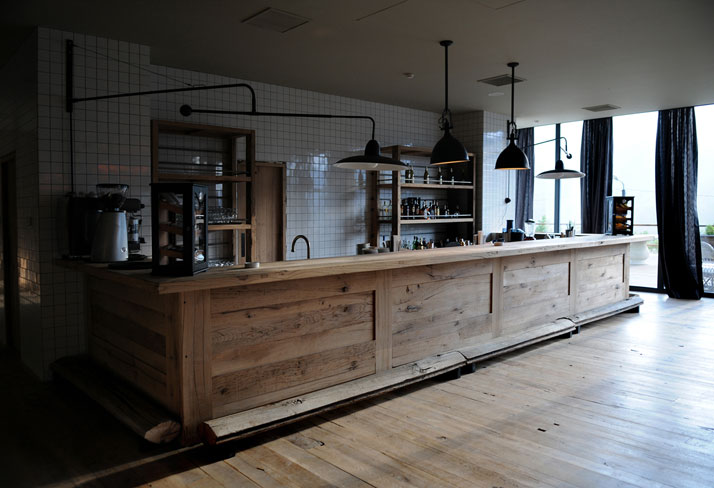
The first product was The Dressed Chair in 2007, which is still a topical and demanded product. As they are from the country, where they had to live in different eras: Soviet childhood and the era of changes, passion for independence and development, mix of Asian and European cultures, one can feel an influence on their design ideas. Rooms were aimed to create a interior and exterior concept for mountain hotel with 156 rooms . As “Rooms Hotel” is situated in magical Caucasian mountains, Rooms wanted to create a dream hotel. The mountainous environment and the existing structure of a former tourist center from Soviet times were considered when creating the mood of the hotels exterior and interior design created by Rooms is simple.

Looking at this former soviet Tourist Center’s building exterior structure and cladding, it is obvious that it has been designed based on the surrounding environment. If you observe the exterior from a distance, at a particular angle, you read the mountaintops as the building’s roof design. The façade is decorated with wood & metal partitions dividing the rooms and balconies while creating vertical and horizontal lines, which give the entire building a simple, geometric look. The exact same concept is perceived in the tones and the shapes of the structure.

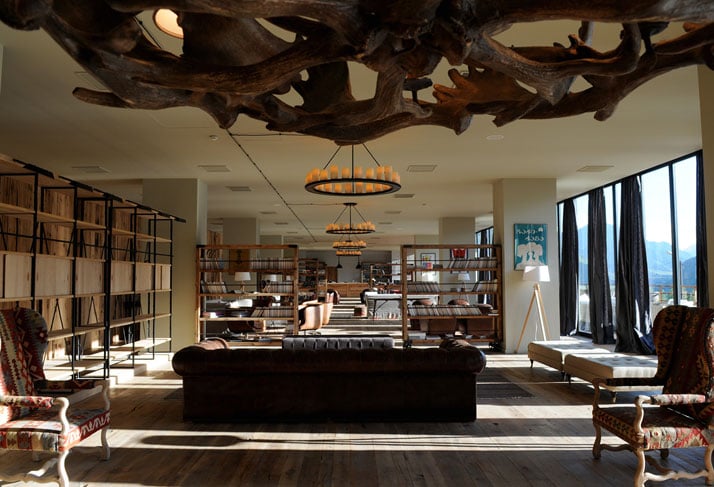
These features both organically compliment the great outdoors and they can dare say that this building adds to the beauty of the landscape. The presence of the specific wood finish on such a green environment is breathtakingly dynamic and inviting. The effect of a mountain lodge in a mod structure is perceived with great success. The use of natural materials in the interior creates “mountain hotel” style, guests feel themselves immediately at home. The ambiance of the lobby is very contemporary, with elements of industrial design combined with comfortable leather armchairs found in a club or cigar lounge. Bookshelves divide the space and create comfortable space with the privacy encountered in a living room.

Address:1 V.Gorgasali street, Stepantsminda, Georgia. www.roomshotel.ge Client: Rooms Hotel chain Georgia. 
Photographer: Irakli Bluishvili 
Interior and Exterior: Rooms , www.rooms.ge

Sunday, October 28, 2012

TRAVEL: The Rooms Hotel in Kazbegi, Georgia (yatzer.com)

(yatzer.com) published in: Travel By Tina Komninou, 24 October 2012 

photos © Irakli Bluishvili 

There are certain idyllic locations around the world that simply remain as an ideal of a dream to visit in person and see these wonders up close. However, the beauty of architecture & design is that they sometimes make the visit closer to reality with the creation of one more reason to entice you to realize your dream. One such realization is the Rooms Hotel located in the magical Caucasus Mountains in Kazbegi, Georgia.
The complete creation of this hotel was achieved by Georgian Designers Nata Janberidze & Keti Toloraia. Founders of their company Rooms in 2003 which specialize in Interior and Product Design, they took the decision to mark their identity with this spectacular addition to their brand.  This year the hotel opened its doors and put the Caucasus Mountains on the map for a completely new audience. 

Looking at this former soviet Tourist Center’s building exterior structure and cladding, it is obvious that it has been designed based on the surrounding environment. If you observe the exterior from a distance, at a particular angle, you read the mountaintops as the building’s roof design. The façade is decorated with wood & metal partitions dividing the rooms and balconies while creating vertical and horizontal lines, which give the entire building a simple, geometric look. The exact same concept is perceived in the tones and the shapes of the structure. These features both organically compliment the great outdoors and we can dare say that this building adds to the beauty of the landscape. The presence of the specific wood finish on such a green environment is breathtakingly dynamic and inviting. The effect of a mountain lodge in a mod structure is perceived with great success.

Indoors, the portrayal of this ideology was of equal importance. The use of natural materials in the interior retains the 'mountain hotel' style environment, providing maximum comfort where guests feel the complete leisure and relaxation of the surroundings.  Large open spaces decorated with lounging sofas, armchairs, bookshelves, carpets and mountain accessories while taking advantage of the great views by the large glazing’s, is all that you need for a recipe of success.  The sole materials used are wood, steel & brick retaining a continuity and simplicity throughout the interior and giving focus to detailing as opposed to finishes. A design philosophy which you know that we strongly believe in.

Simply put, the Rooms Hotel is not just a destination, it is a successful determination.

sources: Rooms Hotel
  

Friday, October 26, 2012

VIDEO: ყაზბეგი - kazbegi (youtube.com)

Thursday, August 23, 2012

PHOTOGRAPHY: Khevsurs. By Archil Kikodze. (georgianphotographers.com)

(georgianphotographers.com) Khevsureti is a mountain province located between the northern and southern chains of the Eastern Caucasus. The particular cultural history of this people has long held the interests of scholars and poets. Traditional livelihoods and religious practices, rooted in pagan belief systems, have added to the mythology of the Khevsurs.

This remote region, sparsely populated due to relocation schemes under Soviet rule, presents a harsh life for its inhabitants. Isolated in winter, and exposed to the wildness that surrounds them, these strong people bear the scars of their history and daily existence.

PHOTOGRAPHY: Older KHEVSURETI – “The lost paradise”. By Mariam Amurvelashvili (georgianphotographers.com)


(georgianphotographers.com) Despite the ongoing democratization and socio-economic changes in Georgia, variety of problems, especially of the mountainous regions, still stay unsettled : economical difficulties, lack of roads and infrastructure, and as a result total migration of the population is the main issue.

The aim of the proposed project is to highlight aforesaid issues in order to raise awareness amongst Georgian and International society and thus draw more attention to these problems and involve this society in problem solving proccess. located 3000 meters high in the mountains near the Georgian – Russian border Khevsureti is one of the highest Regions in Georgia. The region and its inhabitants date back to XIV century. In the last decade economic pressures have been forcing more people from Khevsureti to migrate to the cities.

The road to Khevsureti is closed for many months every year due to snowfall and it’s only open to 4 wheel drive vehicles from May to October.

The project is against devastation of Georgia’s picturesque mountainous regions. Khevsureti is the “lost Paradise” A beautiful place with less population every year. This is very unique place with its own ethic and religious rites. A place which struggles because of economic and social changes in Georgia.

Posts by: Mariam Amurvelashvili

Wednesday, August 15, 2012

CLIMBING: 2010: Chaukhi Mountains, by S. Richardson (aaj.americanalpineclub.org)

(aaj.americanalpineclub.org) Chaukhi Mountains, Javakishvili, Perseverance.

By Simon Richardson, Alpine Club

Asatiani south face showing the Normal Route.
During April, while Graham Dudley was making a ski ascent of Kazbek (Kasbegi, or more properly Mkinvartsveri, 5,034m) in the Eastern Caucasus, he noticed an attractive range of lightly glaciated peaks c30km to the southeast, and was determined to come back for a ‘look’. I joined him for a seven-day visit in September.

Research revealed these were the Chaukhi mountains, close to the Russian border and known as the Dolomites of Georgia, boasting fine alpine rock routes. The massif consists of a ridge of unusual, metamorphic, volcanic rock, with four separate summits, the highest, Asatiani, 3,820m. It is surrounded by grassy hills rising to 3,500m, although to the southwest a steep peak holds a big wall that typically takes three days to aid climb and is rarely ascended. The area is attractive and can be reached in a three-hour 4WD from Tbilisi (local bus or normal taxi is much cheaper but slower), and a two-hour walk with horses (cheap and easy to arrange). We established base camp at 42°33.256′ N, 44°46.321′ E.

http://aaj.americanalpineclub.org/wp-content/uploads/2010/12/ChaukhiNFaceRichardson.jpg
The north face of the Chaukhi Group. (A) Asatiani (B) Kameruni, (C) Leonidze, and (D) Javakhishvili. (1) Russian 6A, (2) 4B, (3), 5A. (4) 4A, (5) 5B, (6) 4A, (7) 5A, (8) 5A, and (9) 5B. Simon Richardson
Our stay caused a little local excitement. Apparently we were the first foreigner visitors to climb technical routes. The area is popular with trekkers; we saw a couple of parties each day and invariably they proved to be from Israel. Non local climbing parties, for example from Estonia, have either hill walked or made simple Grade I scrambles. However, we were certainly not the first overseas party as it is possible that Asatiani was first climbed by the Scottish female, Una Cameron (Una Cameron's Climbs and Expeditions), in 1932. Russians must certainly have climbed here, and there was mention of a Czechoslovak team in the 1980s.

Since we knew nothing of the area, we spent our first day climbing the Normal Route on Javakishvili (3,650m), Chaukhi’s second highest summit, with Georgian guide Tito Nadiratze. Graded 3A, this was about Alpine PD, following an easy snow/scree couloir, and then British VD rock to the summit. Next day we climbed the Normal Route on Asatiani. This took a long couloir, then climbed four, long, protectionless pitches up slabs at British Hard Severe. Graded 4A, the route equated to Alpine D-, and descending our line proved quite serious. The first ascent of this peak was made via the southwest ridge at 2, but is apparently rarely repeated these days.

We then took a rest day and our run of good weather ended. I think we were unlucky in this, because the previous eight weeks had been perfect. Thereafter we made three attempts to climb a 5A on the north face of Javakishvili but on each occasion were beaten by cold and rain. However, we managed a route on the south face, which Nadiratze had pointed out to us as unclimbed. On September 10, starting midway between the Nadiradze-Gujabidze route and the ridge of the Normal Route, we followed weaknesses up the face at British VS (not sustained) to join the Normal Route a little before the summit. Our line, named Perseverance, was 320m (around six pitches) and grade 4A. 

http://aaj.americanalpineclub.org/wp-content/uploads/2010/12/JavakhishviliSFaceRichardson.jpg
South face of Javakhishvili with (1) Guiabidez-Nadiradez Route, (2) Perseverance, and (3) Standard Route from south. Simon Richardson
Despite the weather, we managed to do something every day. After our various failed attempts we would go off walking in the rain, eventually reaching the tops of almost all the surrounding 3,500m peaks.

The Chaukhi region is breathtakingly beautiful and very much unknown outside Georgia. The best rock is on the north face of Javakishvili, where routes reached 600m in length. In my opinion a one-week visit to Chaukhi, followed by an ascent of Kazbek, would make an excellent two-week mountaineering holiday.

Wednesday, July 25, 2012

PHOTOESSAY: Legends of Khevsureti. By Archil Kikodze (cenn.org)

(cenn.org) Iakhsar (1) rushed into Lake Abudelauri after the devi (2) and killed him there with a whip. The devi shed so much blood that Iakhsar was trapped in the water for three years. The Khevsuretians became sad. They could not help their deity who had saved them. Finally, after three years, a sorcerer advised them to sacrifice a ram from the village of Blo, which had four ears and four horns. The devi's blood subsided, and Iakhsar could get out of the lake.

I tell Eleanor this old legend while we are sitting on the shore of the lake. Lake Abudelauri is too small to be the arena for a fight of two supernatural beings - one kind, one malicious - but the silence around us, the rocky peaks of Chaukhi (3) behind us, and a small lake at the edge of glacial moraines lost in green really create a mystical effect ...

We are in Khevsureti, a region of Georgia where myths are mixed with reality and concrete geography. A young hunter was lost on one of the peaks of Chaukhi - Sindaura when hunting for Caucasian goats. His death gave rise to many folk verses and poems. Mindia,(4) who drank snake's blood when he was in the captivity of enemies, understood the language of plants and animals and became an invincible hero and protector of the Khevsuretians, lived in the village of Amga, in the Arkhoti community, which is at a distance of one days journey from here. The legend about Mindia is one of the most popular legends in Georgia. Many famous writers in different times tried to develop this theme ...

But we do not have far to go to meet a legend. It is near, several meters from us. A high rock rises from the middle of the lake. It is cleft in two - the work of Iakhsar, rescuing the people from the devi. The first stroke of his whip missed the devi and broke the rock ...

The etymology of the word "Khevsureti" belongs to the late middle ages. Formerly, Khevsureti, together with the neighboring region Pshavi, was called Pkhovi. This ancient name is retained in the language of Chechens, neighbors of Khevsuretians, who call then "Pkhie" even now.

Today the proximity of the northern borders is felt as never before. My guest and I felt it in the first village we came to in Khevsureti and at the regional centre of Barisakho. There are a lot of people in military uniform (Khevsuretians, like other mountaineers of Georgia, undergo military training on their native land). The road going to Chechnya is controlled. A military unit is now based in Arkhoti too, where the border three years ago was protected only by several locals. We met the military helicopter several times on the road from Roshka to the lake Abudelauri. The situation is rather depressing for the average tourist, but Eleanor is not an average tourist. She is a writer and adventurer, an experienced naturalist and former member of the Greenpeace. Moreover, she comes from Ireland; therefore the only problem for her is a delicacy of the people of Pshavi - a nutritious but very greasy cottage cheese (we spent some days in Pshavi before coming to Khevsureti). Eleanor hunted for seals and whales and ate uncooked meat together with the Eskimos so as not to offend her hosts. But the cottage cheese did its work, and now she eats only potatoes in Roshka.

At the end of our path we could now see Roshka, where about twenty families sharing one surname - Tsiklauri - live. It is a very large village for Khevsureti and has a great deal of pastures and meadows. The Khevsuretians are very good mowers. They mow on very steep slopes and often have to use climbing equipment. In this regard the denizens of Roshka have easier conditions - their meadows are not so steep. They gather a good harvest of potato, a main crop of our mountains, which Eleanor knows better than I do now.

We reach Roshka in the evening, when the cattle come back from pastures. The villagers, like other Khevsuretians, breed cattle. They used to breed sheep as well, but unlike their neighbors, (the people of Pshavi, Gudamakari and especially Tusheti), they had never engaged in nomadic sheep breeding. Khevsuretians consider pigs to be foul animals, and even now refrain from breeding them. This is probably the influence of their Muslim neighbors. One old villager complained that his son, who lives on the plain, brought him pigs for rearing and offended and dishonored the old man ...

The migration of the people of Khevsureti to the plain started in the nineteenth century, but in the 1950s this voluntary migration became obligatory. At the direction of the government of that time, many high-mountainous villages were deserted. The people from these places settled for the most part in the southeast of Georgia. The majority of their descendants live there even now. As a rule, at least once a year these people visit the mountains to attend the summer pagan holidays or just to see the homeland ...

If you have an occasion to travel with a Khevsuretian going to his native land, it is an unforgettable show. As the road goes up to the mountains and his native land gets closer, the Khevsuretian becomes brighter and more cheerful. The way back to the plain is the opposite. The man who used to laugh and sing a few hours ago now becomes taciturn and sits silent in the car near you. Khevsuretians especially avoid the large capital. If they have a business there, they try to arrange everything very quickly and immediately come back without even visiting their close friends, if such live in the town.

Yesterday Eleanor and I met four Khevsuretians living in Kakheti5 on their way to Arkhoti. They rushed into the village by a car that had broken down several times during their trip, brought out drinks, and the sounds of their feast were heard all night long from the house where they stayed. Everybody knew about the presence of drunken Khevsuretians in the village. But early in the morning, they saddled their horses and headed to their villages by the road through the pass, occasionally shooting from their guns...

We are at home already. Our host Shota came back very tired: all day long he had been dragging hay with the bulls. Shota and his wife Tina have got three daughters and a three year old son Uturga who is supposed to continue the family name. The girls help their mother cook dinner. Tired Eleanor leaves to have a rest, Shota finishes his work in the courtyard. I look at the village from the balcony. I see the cattle coming back from pastures like a live current. Farther on I can see the road going to Northern Khevsureti and the mountain pass, Bears Cross. That part of Khevsureti is still illuminated by the sun, but in Roshka it is evening. An old woman comes out the verandah of the next house and looks over the village with binoculars. Perhaps her cow has not come yet. I go into the house for my camera, but the woman notices me, hides the binoculars, and enters the house grumbling ...

I am thinking about tomorrow and my way back to the large city without pleasure. It is October now and probably I will not be able to come here until next year. Most likely I will be silent and thoughtful on my way back like a real Khevsuretian ...

-----------------------------------------------------

1 A pagan deity of the people living in the mountainous region of Georgia - Tusheti, Pshavi, and Khevsureti.
2 A fabulous monster; a huge, ugly and evil creature having immense strength.
3 The mountains in the Central Caucasus.
4 A hero of Georgian legends.
5 Region in the Southeast part georgia.

Full Photoessay >>>


Archil Kikodze

He is a professional photographer, famous Georgian writer, ethnographer and finally wildlife tracking guide. He has traveled widely in Caucasus and knows every corner of Georgia well with its people’s traditions and culture, that’s why his interesting stories make every trip unforgettable. His photographs have won many awards and have participated in various national and international photo exhibitions. Furthermore Archil has published various articles on environmental, ethnographic and social themes in magazines: “Surviving Together”, “Caucasus Environment”, Horizonti, “Mshvenieri Sakartvelo”, “Tskheli Shokoladi” Author of three guidebooks for developing science tourism in Georgia (Khevi, Svaneti, Bakuriani), Switzerland. At the request of Ministry of Environment of Georgia wrote books on Kolkheti, Tusheti and Vashlovani National Parks and Lagodekhi Reserve.

facebook.com/archil.kikodze