Showing posts with label Paata Vardanashvili. Show all posts

Wednesday, October 28, 2009

CULTURE: Pankisi Folk Evening (paata.ge)


Pankisi Folk Evening, ursprünglich hochgeladen von www.paata.ge

www.paata.ge/sultan1.mp3

October 31
14 Grishashvili street, Tbilisi
6:00 pm
Admision Free
www.paata.ge

Wednesday, August 12, 2009

CRAFT: Handmade knifes by Roland Odishelidze


Contact: Paata Vardanashvili
E-mail -
pvardanashvili@gmail.com
mobile - (+995 99) 91 46 55, (+995 99) 35 13 53
Skype - paatavar
Gtalk - pvardanashvili

www.paata.ge

Wednesday, July 08, 2009

MUSIC: One of Georgia's greatest singers, Lela Tataraidze. (transcaucasian.blogspot.com)

Here is a beautiful Georgian folk song ("You, Lion, Killed by a Lion"), performed by one of Georgia's greatest singers, Lela Tataraidze.

Born in 1952, Lela grew up in a family from Tusheti, the mountainous region of Georgia. With her sad eyes but a happy face, she is an excellent accordion and panduri player, and also a brilliant vocalist, who sings the popular songs of the mountains with a lot of emotion. She was brought up in the musical atmosphere of her family and continued her studies at the school of music and later on at the philharmonic ensemble of Tbilisi, the capital of Georgia. She toured in Hungary, Romania, Yugoslavia, Czechoslovakia, Bulgaria and France. She made her first recordings with Melodiya Records in 1988. She founded the trio ensemble of Kesane ("myosotis, forget-me-not", a flower of Tusheti) and recorded her first CD in Holland in 1999, "Janghi" ("morning fog"). Her last CD is from June 2007, it is entitled "Songs of Survival: traditional music of Georgia". Lela Tataraidze is the great lady of Georgian traditional song, a popular art coming from time immemorial and from the majestic landscapes of the legendary Georgia. Enjoy!


Lela Tataraidze is Tusheti's most famous singer. She was first described to me as Article by ALEXANDER BAINBRIDGE (source: transcaucasian.blogspot.com)

TuSeTis jeniper lopez i.e. "Tusheti's Jennifer Lopez" - some indication of her fame and popularity! She was born in Dano, a small, nearly abandoned hamlet in Pirikiti Tusheti. Like most Tush families, hers had no doubt been spending the harsh winters down in the valley of the Alazani, in Kvemo Alvani (where her house - and indeed her mother! - are still to be seen). Her haunting songs are THE music played by all the Tush, irrespective of origin (Tchaghma, Pirikiti, Gometsri, Tsova, Tbilisi Tush, etc.), and some of them - particularly "How beautiful is Tusheti!" - have come to represent the very soul of Tusheti - indeed, to the detriment of other Tush artists: Ask any Georgian (or Tush) to name a singer from Tusheti, and every single one will come up with Lela Tataraidze. But ask them to name a singer from Tusheti other than Lela Tataraidze, however, and you will most likely draw a blank. -
Here are two of her many songs:
- "ra lamazia tusheti", or "How beautiful is Tusheti", and a lamentation for the death of several [Tush] people carried away in an avalanche (in the 1970s or -80s, I believe). - - For more traditional Georgian songs - not from Tusheti, however - please see my previous post on two songs by Sandro Kavsadze


Lela Tataraidze: Lomo, She Lomis Moklulo


ლელა თათარაიძე, LELA TATARAIDZE


Georgian folk music from Tusheti region. Performed by Ensemble "Kelaptari" and legendary Lela Tataraidze (accordion). The pictures by Georgian photograper, Paata Vardanashvili, website: www.paata.ge


Monday, February 09, 2009

ARTICLE: Royal wedding historic day for Georgia

Prince David Bagrationi-Mukhran, 32, and Princess Anna Bagrationi-Gruzinsky, 31, were wed in Tbilisi's Trinity Cathedral in the capital of Georgia, Sunday, joining two strands of the royal house that once ruled over the impoverished and war torn Caucasusnation.

full article >>>

Slideshow: Head of Georgian Royal Family and princess Anna Gruzinsky tie knots (2)

+++++

by Onnik Krikorian

Yesterday's wedding between two descendants of the Bagrationi dynasty which ruled Georgia for at least 10 centuries has captured the imagination of royal watchers worldwide. However, for those pondering the state of democracy in the post-Soviet country since the November 2007 unrest, the marriage between Prince David Bagrationi-Mukhraneli and Princess Anna Bagrationi-Gruzinsky has also reinvigorated talk of reestablishing the monarchy.

Last August, for example, Gerald Warner wrote on the Daily Telegraph blog that a constitutional monarchy might be the best model for Georgia to follow.

more >>>


Head of Georgia's Royal Family to marry in February

Prince David Bagration-Mukhrani, who is the head of the royal house of Georgia, is getting married on February 8 in Tbilisi. His bride is Princess Anna Bagration-Grunzinsky, who is the daughter of a rival claimaint for Georgia's throne. David now lives full time in Tbilsi, having obtained Georgian nationality in 1994. He also has Spanish citizenship.

Anna, who was born in Tbilsi in 1976, is the daughter of Prince Nuzgar and his wife Leila Kipiani. Prince Nuzgar has considered that his line is superior to Prince David's as he descends in the male line from the last king of Georgia, George XII, who died in 1800. This line of succession, which is a senior line to the Bagration branch, would make Nuzgar the king of Georgia, and his elder daughter, as heir. The Georgian succession is based on male primogeniture. Prince Nuzgar has no sons. Thus, a marriage between Anna and David would eliminate dual claims as their son or daughter would represent both lines.

The religious wedding will take place at Tiblisi's Holy Trinity (Sameba) Cathedral.

David, who was born in Madrid in June 1976, succeeded to the headship of the Georgian royal house in January 2008, following the death of his father, Jorge. David's older brother, Prince Irakli, renounced his rights to the throne.

Prince David is related to the Russian Imperial Family as his paternal great aunt Leonide, is the widow of Grand Duke Wladimir of Russia. Their daughter, Grand Duchess Maria, is David's first cousin once removed.

Sunday, January 25, 2009

MUSIC: Gela Daiauri, his wife Teona Kumsiashvili and Sultan Borchashvili

Together with Gela and his wife, I would like to introduce you Kist (Chechen) singer Sultan Borchashvili, who sings Georgian folk songs and performs with Gela as well. Please find attached links where you can listen to Gela's, Teona's (Gela's wife) and Sultan's songs.

P.S. Please note that the songs are not recorded in the studio and I appologize for poor quality

Thanks for the music to Paata Vardanashvili

Tuesday, September 09, 2008

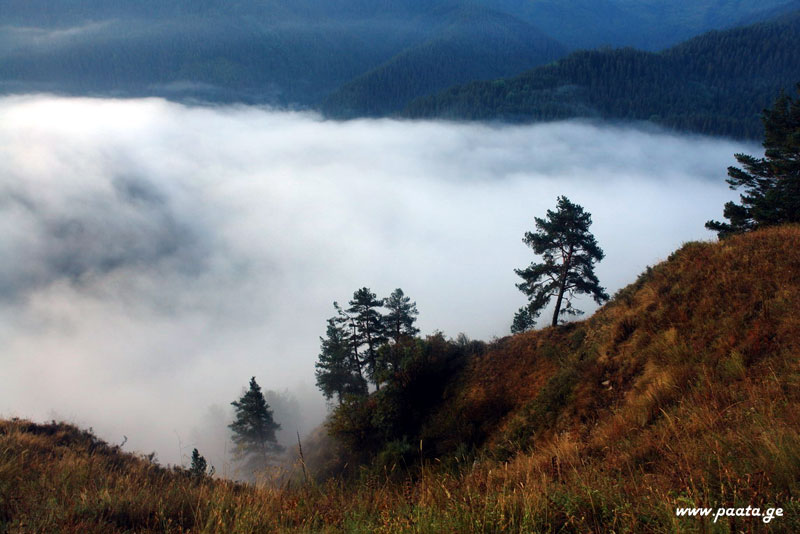
PHOTO: Clouds Over Tusheti.

Photo 8. September 2008 von Paata Vardanashvili (www.paata.ge)

some more pics >>>

Tuesday, September 02, 2008

NACHRICHTEN: Russland trumpft auf.

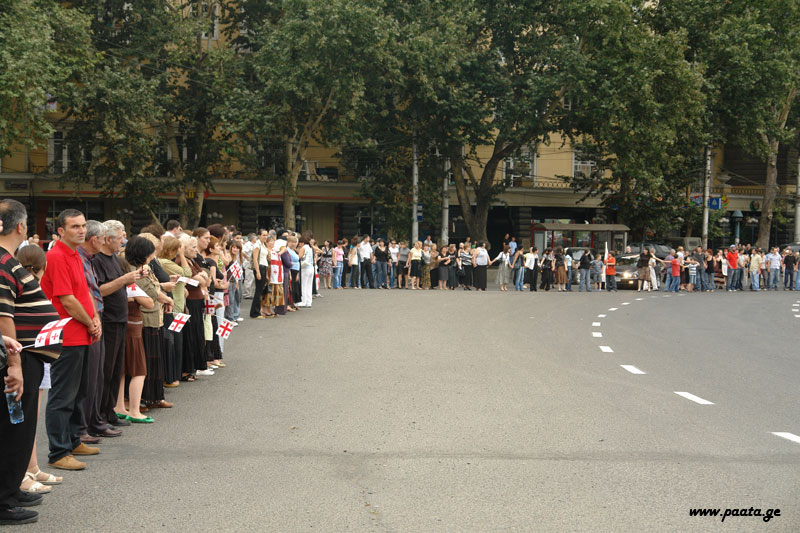
Foto am 1. September 2008 von Paata Vardanashvili (www.paata.ge)

more: Live Chain. Tbilisi, Georgia. 1 September 2008

Georgien-Sondergipfel: EU schreckt vor Sanktionen zurück Die Presse - vor 6 Stunden gefunden
100 Beobachter sollen aber den Frieden in Georgien sichern helfen. BRÜSSEL. Hunde, die bellen, beißen nicht. Wochenlang hatten europäische Spitzenpolitiker ...
Kaukasus-Sondergipfel: Sanktionsdrohungen und scharfe Rüge für ... FOCUS Online
EU schickt 100 Beobachter nach Georgien Financial Times Deutschland
Georgien und Russland fordern gegeneinander Massnahmen Swissinfo
Georgien-Konflikt Stern - vor 12 Stunden gefunden
Polen hatte dafür plädiert, den georgischen Präsidenten Michael Saakaschwili zu dem Gipfel einzuladen. Dieser Plan wurde schnell verworfen - um Russland ...
Saakaschwili ruft EU zu Hilfe sueddeutsche.de
Russische Entscheidung zu Provinzen in Georgien ist endgültig Georgien Nachrichten - vor 14 Stunden gefunden
Internationale Experten vertreten hingegen die Ansicht, der Einmarsch in Georgien und die Besetzung des Kernlands Georgien verstoße gegen das Völkerrecht.

Kaukasus-Konflikt: Massendemonstrationen in Georgien gegen Moskaus ... FOCUS Online - vor 9 Stunden gefunden
Zeitgleich zum EU-Sondergipfel zum Kaukasus-Konflikt in Brüssel demonstrierten hunderttausende Menschen gegen die Politik Moskaus in der georgischen ...
Georgien: Hunderttausende protestierten gegen Moskau Die Presse
EU-Parlament debattiert Ergebnisse des Sondergipfels zu Georgien FOCUS Online - vor 55 Minuten gefunden
Brüssel (dpa) - Nach dem EU-Krisengipfel zu Georgien hat das Europaparlament die Lage in dem Kaukasus-Land debattiert.
EU verschiebt Gespräch zu Partnerschaftsabkommen ... (zwei) Frankfurter Allgemeine Zeitung - vor 6 Stunden gefunden
Zudem skizzierte Frankreichs Staatspräsident einen Plan für humanitäre Hilfe und den Wiederaufbau in
Georgien
Kaukasischer Paukenschlag Eurasische Magazin
EU sucht Antwort auf die Kaukasus-Krise Deutsche Welle
Botschafter: Russland ist nicht das Pferdchen des Westens RIA Novosti
DER KAUKASUS-KONFLIKT ZWISCHEN GEORGIEN UND RUSSLAND Ad-Hoc-News (Pressemitteilung) - vor 12 Stunden gefunden
Der Kaukasus-Konflikt zwischen Georgien und Russland ist mit dem Fünf-Tage-Krieg Anfang August wieder in den Blickpunkt der Öffentlichkeit gerückt. ...
Lawrow warnt vor Unterstützung für Saakaschwili Frankfurter Allgemeine Zeitung
Starkes Signal Handelsblatt
US-Schiff legt in Georgien an Basler Zeitung
Georgien hat in Südossetien Streubomben abgeworfen NZZ Online - vor 5 Stunden gefunden
Nach Funden von Streubomben im Südkaukasus hat Georgien erstmals den Einsatz der weltweit geächteten Waffen im Krieg mit Russland eingestanden. ...
Auch Georgien setzte Streubomben ein taz
Georgien gibt Streubomben-Einsatz zu Tages-Anzeiger Online
Tiflis gibt Einsatz von Streubomben zu derStandard.at
EU demonstriert Einigkeit in Sachen Georgien - vorerst Schwäbische Zeitung - vor 3 Stunden gefunden
BRÜSSEL (dpa) Eigentlich waren die Staatschefs zerstritten über den künftigen Umgang mit Moskau nach Russlands Einmarsch in Georgien. Doch sie schafften es, ...
Gipfel pocht auf Truppenabzug Kölner Stadt-Anzeiger
EU droht Moskau: Kein Partnerschaftsabkommen Coburger Tageblatt
EU verschärft Ton in Kaukasus-Krise – Russland drohen Konsequenzen Mittelbayerische
EU: Beziehung zu Russland «am Scheideweg» Basler Zeitung - vor 4 Stunden gefunden
«Nach der Krise in Georgien steht das Verhältnis zwischen Russland und der EU am Scheideweg», heisst es in der Abschlusserklärung. ...
Sondergipfel: EU erhöht Druck auf Russland FOCUS Online
Sarkozy und Merkel kochen EU-Hardliner weich Spiegel Online
EU setzt Gespräche mit Russland aus Financial Times Deutschland
EU verstärkt im Kaukasuskonflikt Druck auf Russland AFP - vor 4 Stunden gefunden
Zugleich stellte die EU Georgien ein Freihandelsabkommen, Visaerleichterungen und internationale Wiederaufbauhilfe in Aussicht. ...
EU stellt Bedingungen für Verhandlungen mit Moskau NZZ Online
Georgien zufrieden mit EU-Gipfel: "Wir sind sehr ermutigt" Schwäbische Zeitung
Die EU stellt Bedingungen an Russland Deutsche Welle
Georgien-Krise: Sarkozy will erneut vermitteln FOCUS Online - vor 15 Stunden gefunden
Der amtierende EU-Ratsvorsitzender Nicolas Sarkozy will zu Vermittlungen nach Georgien und Russland reisen. Frankreich ist neben Deutschland gegen die ...
Europäer stellen Russland unter Aufsicht Financial Times Deutschland
Georgien-Konflikt: Lawrow fordert Waffenembargo gegen Tiflis FOCUS Online - vor 14 Stunden gefunden
Vor dem EU-Krisengipfel zum Kaukasus-Konflikt hat der russische Außenminister Lawrow den Westen davor gewarnt, Georgiens Präsident Saakaschwili weiter zu ...
Georgien-Konflikt Stern
Lawrow warnt Westen vor Unterstützung Georgiens Die Presse
Georgien-Konflikt: Bessere Menschen ZEIT ONLINE - vor 14 Stunden gefunden
Saakaschwili hat sich vielmehr stets für eine Autonomie Südossetiens und Abchasiens in Georgien stark gemacht.
Lawrow: Georgien-Konflikt zeigt Russlands neue Strategie Reuters Deutschland - vor 14 Stunden gefunden
Moskau (Reuters) - Das russische Vorgehen in Georgien zeigt Außenminister Sergej Lawrow zufolge eine neue Strategie Moskaus in nationalen Sicherheitsfragen.
EU gegenüber Russland in Verlegenheit NZZ Online - vor 8 Stunden gefunden
Die EU sucht eine gemeinsame Haltung gegenüber Russland, vor dem Hintergrund des Kriegs in Georgien. Sanktionen werden nicht erwogen, hingegen ein Verzicht ...
Moskau weiter unnachgiebig n-tv
Stop Russia: Georgien demonstriert Einheit Georgien Nachrichten - vor 4 Stunden gefunden
Ein Großteil der georgischen Bevölkerung hat sich am Montag an Demonstrationen gegen Russland beteiligt. Unter dem einprägsamen Motto „Stop Russia“ ...
Stop Russia: Zehntausende Teilnehmer bei Menschenkette in Georgien Georgien Nachrichten
Ethnische Säuberungen nach Georgien-Krieg OÖNachrichten - 31. Aug. 2008
Kurz vor dem EU-Krisengipfel zum Russland-Georgien-Krieg setzen südossetische Milizen und russisches Militär ethnische Vertreibungen fort.
EU verurteilt Moskaus Intervention - Großmanöver im Ural GiNN/BerlinKontor.de (Pressemitteilung) - vor 6 Stunden gefunden
Die Europäische Union verurteilt scharf die militärische Intervention in Georgien und die einseitige Anerennung der Unabhängigkeit Abchasiens und ...
EU ergreift Partei für Tbilissi Junge Welt
EU-Gipfel will klares Signal an Moskau senden sueddeutsche.de
Kouchner: Russland könnte "andere Ziele" haben sueddeutsche.de
Schlagabtausch im Sicherheitsrat zu Georgien NZZ Online
Türkei droht mit eigenen Sanktionen Handelsblatt - vor 14 Stunden gefunden
Ein Großteil der türkischen Exporte nach Russland läuft auf dem Landweg über Georgien. Seit Beginn der Kaukasus-Krise hält der russische Zoll dort rund 10 ...
Türkei droht Russland FR-online.de
Schröder nimmt Russland in Schutz Spiegel Online - vor 4 Stunden gefunden
Die Verhandlungen würden erst wieder aufgenommen, wenn Russland seine Truppen aus Georgien abgezogen habe, sagte Kommissionspräsident Jose Manuel Barroso. ...
Gerhard Schröder gibt dem Westen die Schuld WELT ONLINE
Fehler des Westens FR-online.de
Rüge für Russland, Geld für Georgien ZEIT ONLINE - 31. Aug. 2008
Wissen Sie denn nicht, was sich in Georgien die letzten Jahre abgespielt hat?
» Russische Selbstfindung « Financial Times Deutschland - vor 13 Stunden gefunden
Der Professor ist überzeugt: Im Frühjahr entschied der Kreml, das amerikatreue Georgien aufzuspalten. Dem vorausgegangen waren die Unabhängigkeit des Kosovo ...
Weiter in Russland investieren? FinanzNachrichten.de
Neutralität ade - Finnen und Schweden nähern sich der Nato WELT ONLINE - vor 20 Stunden gefunden
September 2008, 02:02 Uhr Kopenhagen - In Schweden und Finnland beginnt anlässlich des Georgien-Konflikts die Diskussion um einen möglichen Nato-Beitritt. ...
Finnland und Schweden diskutieren Nato-Beitritt Berliner Morgenpost
Finnen und Schweden denken über Nato-Beitritt nach WELT ONLINE
Die Opposition verpflichtet sich zum Schweigen Eurasische Magazin - vor 8 Stunden gefunden
Und was denken die Georgier über den Krieg? Es gibt nur wenige Anhaltspunkte. Denn eine freie Presse gibt es in Georgien nicht.
Kaukasus-Konflikt "Nicht warten, bis das nächste Land dran ist" sueddeutsche.de - vor 12 Stunden gefunden
Bakradze war Außenminister und Sondergesandter bei der Nato und der EU, seit Juni ist er Parlamentspräsident von Georgien.
Signale an Opposition in Georgien Georgien Nachrichten - 31. Aug. 2008
Der georgische Präsident Micheil Saakaschwili hat am Wochenende der Opposition in Georgien mehrere Vorschläge zur Zusammenarbeit gemacht.
Russland trumpft auf Eurasische Magazin - vor 8 Stunden gefunden
Von Rudolf Maresch H at der Einmarsch der russischen Armee in Georgien für den Westen eine ähnliche Bedeutung wie der Fall der Berliner Mauer 1989? ...
Realitätsverlust: Saakaschwili und der Westen Eurasische Magazin

Gespaltene Ukraine in der Georgien-Frage NZZ Online - 29. Aug. 2008

Massendemonstrationen gegen Moskaus Politik 20minuten - vor 5 Stunden gefunden
Nach Angaben der Polizei war dies die grösste Protestaktion in Georgien seit dem Zusammenbruch der Sowjetunion. Rund eine Million Georgier versammelte sich ...

Monday, July 28, 2008

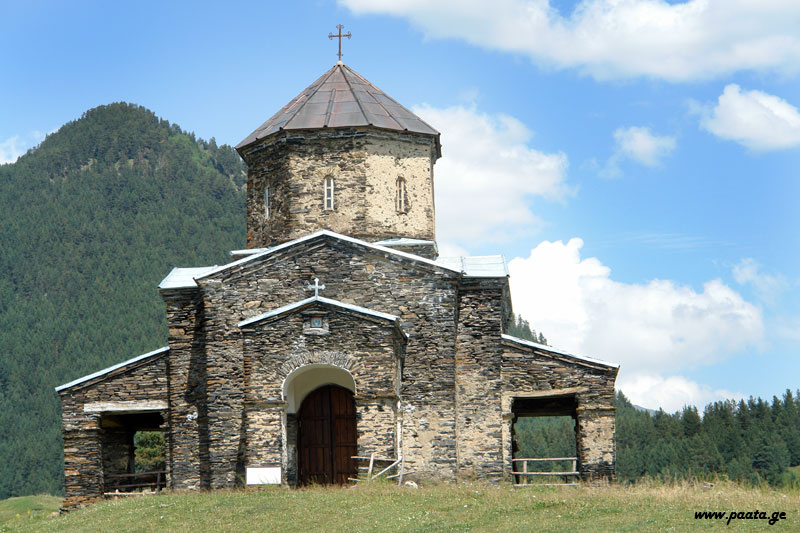
PHOTOGRAPHY: Shenaqo In Tusheti.


Saturday, May 24, 2008

PHOTOGRAPHY: Internet in Shatili


Photo 19. Mai 2008 on www.paata.ge

Based on the initiative of the Pshav-Khevsuretian Revival Foundation ''Phkhovi'', satelite internet antenna was installed in Khevsureti. The satellite internet is the only means of communication for Khevsureti.
Khevsureti remains closed for the outside world for 7-8 months due to climate conditions, there is no mobile or other type communication available, except of internet communication.
Soon the 3 months funding for connecting the only computer to the internet world will be over.
The monthly internet prescribing fee amounts to 155 Euros.
The foundation "Phkhovi'' kindly asks you to make your contribution for paying internet prescribing fee for Shatili.
This is not only for connecting one computer to the internet. This is one step towards retaining and developing of one of the most beautiful regions of Georgia - 'Pirikita Khevsureti' - contributions made by companies will be priceless for the history.

We count on your support.

Our banking details are as follows:
TBC BANKBank code - 220101850
Beneficiary - ''Phkhovi'' (Pshav-Khevsuretian Revival Charitable Foundation)
account number - 70836080100003 / GEL

Friday, May 09, 2008

FILM: The Actress Sofiko Chiaureli

Sofiko Chiaureli was a Georgian actress, thought to be the muse of filmmaker Sergei Parajanov. She played a wide variety of roles on stage of the Kote Mardzhanishvili Theatre (1960-1964, 1964-2008) and the Rustavelli Theatre (1964-1968).

She appeared in Soviet films including:
Sayat Nova, a 1968 masterpiece in which she played no less than six roles;
Don't Grieve, a popular Georgi Daneliya film;
Natvris khe;
Peristsvaleba;
Ambavi erti kalishvilisa;
Ambavi Suramis tsikhitsa;
Ashug-Karibi;
Khevsurian Ballad (Best Actress Award at the Locarno International Film Festival);
Ischite zhenschinu;
Million v brachnoy korzine.

Married to:
Giorgi Shengelaya (? - ?) (divorced) 2 children;
Kote Makharadze (? - 19 December 2002) (his death).

Honors
People's Artist of Georgia (1976);
People's Artist of Armenia (1979);
Best Actress Award at The All-Union Film Fesival (1966, 1972, 1974);
Best Actress Award at the Locarno International Film Festival (1965);
USSR State Prize (1980).

Trivia
Daughter of Mikheil Chiaureli (director) and Veriko Andjaparidze (Georgian actress). Former sister-in-law of Eldar Shengelaya. Mother of Nikoloz Shengelaya

Thanks to www.paata.ge

Wednesday, May 07, 2008

HISTORY: The battle of Didgori - Photography and Article by Paata Vardanashvili


The battle of Didgori was fought between the armies of the Kingdom of Georgia and the crumbling Great Seljuq Empire at the place of Didgori, 40 km southwest of Tbilisi, the modern-day capital of Georgia, on August 12, 1121. The battle resulted in King David IV of Georgia’s decisive victory over a Seljuk invasion army under Ilghazi and the subsequent reconquest of a Muslim-held Tbilisi, which became the royal capital. The victory at Didgori inaugurated medieval Georgia’s "Golden Age" and is celebrated in the Georgian chronicles as a "miraculous victory" (ძლევაჲ საკვირველი, dzlevay sakvirveli), while modern Georgians continue to remember the event as an annual September festival known as Didgoroba ("[the day] of Didgori").

Background
The Kingdom of Georgia had been a tributary to the Great Seljuq Empire since the 1080s. However, in the 1090s, the energetic Georgian king David IV was able to exploit an internal unrest in the Seljuq state and the success of the Western European First Crusade against the Muslim control of the Holy Land, and established a relatively strong monarchy, reorganizing his military and recruiting Kipchak, Alan, and even "Frankish" mercenaries to lead them to the reconquest of lost lands and the expulsion of Turkish raiders. David renounced the tribute to the Seljuqs in 1096/7, put an end to the seasonal migrations of the Turks into Georgia, and recovered several key fortresses in a series of campaigns from 1103 to 1118. His major goal being the reconquest of Tbilisi, an ancient Georgian city which had been under the Muslim rule for over four centuries, David launched his military activities outside Georgia, penetrating as far as the Araxes basin and the Caspian littoral, and terrorizing Muslim trade throughout the South Caucasus. By June 1121, Tbilisi had actually been under a Georgian siege, with its Muslim élite being forced into paying a heavy tribute to David IV.

The battle
The resurgence of Georgians’ military energies brought about a coordinated Muslim response. Both Georgian and Islamic sources testify that, on the complaints of the Muslims of Tbilisi, Sultan Mahmud II b. Muhammad (r. 118-1131) sent an expedition into Georgia in which the Artuqid Ilghazi of Mardin, the Mazyadid Dubays II b. Sadaqa of Al Hillah and the sultan’s brother Tughrul, lord of Arran and Nakhichevan, with his atabeg Kun-toghdi all took part. This combined army under the overall command of Ilghazi entered the valley of Trialeti in eastern Georgia and encamped in the vicinities of Didgori and Manglisi in mid-August 1121.
The number of combatants as well as the course of the battle is differently related in the contemporaneous historical records. The strength of the Seljuq army is variously put, with an obvious exaggeration, by the medieval Islamic, Georgian, Armenian and European sources from 200'000 to 600,000. King David’s army has traditionally been estimated at 40,000 Georgians, 15,000 Kipchaks, 500 Alans and 100 "Frankish" Crusaders. According to the Arab chronicler Ibn al-Asir, David sent 200 soldiers to the Seljuq camp prior to the battle. They pretended to be renegades and suddenly attacked as they reached the enemy’s lines. Meanwhile, the main Georgian forces under David and his son, Demetre, stroke against the Seljuq flanks. In a pitched three-hour action, the Seljuq troops were overrun and forced them into flight, leaving a large amount of booty to the victors.

Capture of Tbilisi
Following the victory, David moved relentlessly against the remaining pockets of Muslim resistance and next year, in 1122, he stormed Tbilisi, so that the city might become, according to a Georgian chronicler, "for ever an arsenal and capital for his sons." The medieval sources emphasize David’s acts of revenge against the Muslims of Tbilisi. However, the Arab historian al-'Ayni (1360-1451), who utilizes sources, some of which have not survived, admits that the city was pillaged but says that the Georgian king eventually show patience and "respected the feelings of the Muslims more than Muslim rulers had done."

Thursday, April 24, 2008

DONATION FOR THE INTERNET: Satelite Internet Antenna Was Installed In Khevsureti

Photo 24. April 2008 by www.paata.ge
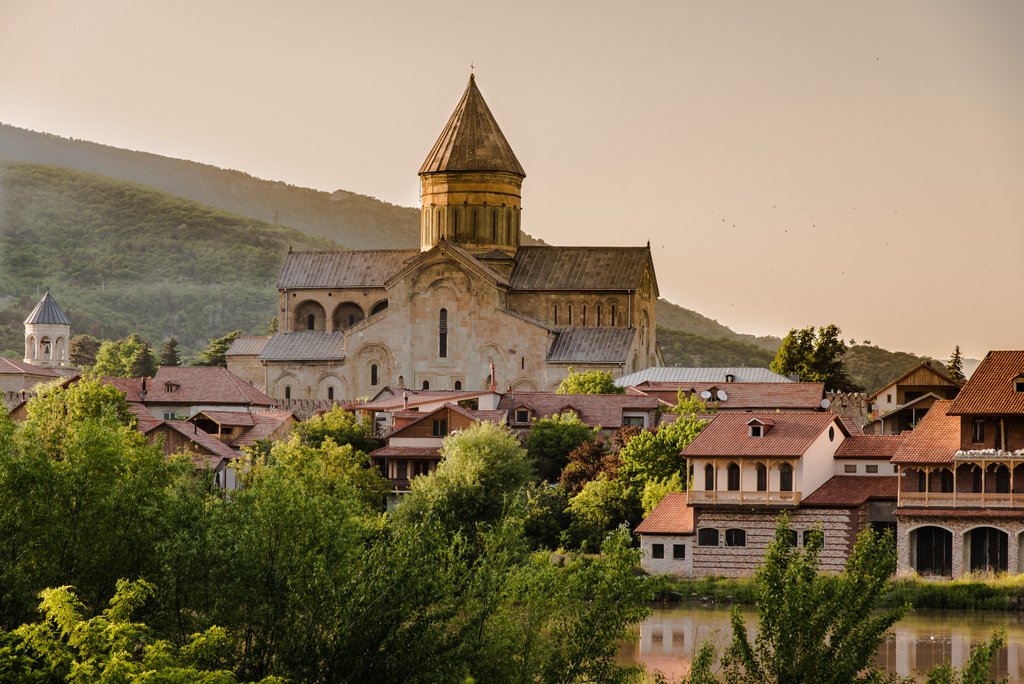

Based on the initiative of the Pshav-Khevsuretian Revival Foundation ''Phkhovi'', satelite internet antenna was installed in Khevsureti. The satellite internet is the only means of communication for Khevsureti.
Khevsureti remains closed for the outside world for 7-8 months due to climate conditions, there is no mobile or other type communication available, except of internet communication.
Soon the 3 months funding for connecting the only computer to the internet world will be over.
The monthly internet prescribing fee amounts to 155 Euros.
The foundation "Phkhovi'' kindly asks you to make your contribution for paying internet prescribing fee for Shatili.
This is not only for connecting one computer to the internet. This is one step towards retaining and developing of one of the most beautiful regions of Georgia - 'Pirikita Khevsureti' - contributions made by companies will be priceless for the history.We count on your support.Our banking details are as follows:

TBC BANKBank code - 220101850
Beneficiary - ''Phkhovi'' (Pshav-Khevsuretian Revival Charitable Foundation)
account number - 70836080100003 / GEL


ფშავ-ხევსურეთის აღორძინების ფონდ "ფხოვის" ინიციატივით, 2008 წლის იანვრიდან ხევსურეთში დაიდგა სატელიტური ინტერნეტი. ეს არის ერთადერთი საშუალება კავშირის დასამყარებლად. ხევსურეთი 7-8 თვის განმავლობაში მოწყვეტილია გარე სამყაროს, არ არის მობილური კავშირი და არანაირი სხვა საშუალებები გარდა ინტერნეტით კავშირისა.
ამჟამად, სამწუხაროდ, ის 3 თვიანი დაფინანსებაც იწურება, რისი წყალობითაც შატილი ინტერნეტსამყაროს ერთადერთი კომპიუტერით დააკავშირეს. ინტერნეტით სარგებლობის ყოვთლთვიური სააბონენტო გადასახადია 155 ევრო (შესაბამისი კურსით ლარებში).
ფონდი "ფხოვი" მოგმართავთ შეიტანოთ თქვენი წვლილი შატილში ინტერნეტის სააბონენტო გადასახადის გადახდაშიეს უბრალოდ ერთი კომპიუტერის ინტერნეტში ჩართვა არ არის.
ეს საქართველოს ულამაზესი მხარის - პირიქითა ხევსურეთის შენარჩუნების და განვითარებისკენ გადადგმული ერთერთი პირველი ნაბიჯია და და ამ საქმეში ნებისმიერი კომპანიის წვლილი ბევრად მეტი იქნება ისტორიაში იმედი გვაქვს თქვენი დახმარებისა, საბანკო ანგარიშებს აქვე მივაწერ:

საბანკო კოდი (მფო) – 220101850
მიმღების დასახელება – "ფხოვი" (ფშავ-ხევსურეთის აღორძინების საქველმოქმედო ფონდი)ანგარიშსწორების ანგარიში – 70836080100003 / GEL

Sunday, February 17, 2008

ART: Paintings from Khevsureti by Shota Arabuli


Photos on February 17, 2008 by Paata Vardanashvili

Tuesday, January 29, 2008

PHOTOGRAPHY: Flying Above Khevsureti


Wednesday, January 09, 2008

PHOTOGRAPHY: Alilo in Tbilisi

Can anywhere explain this celebration? What is happen there? And what is the meaning of this parade?


Monday, December 03, 2007

WETHER: Snow in Georgia

Kurmukhi Saint George Church. Saingilo

Queen Tamaras bridge in Saingilo


Photos on December 1, 2007 by Paata Vardanashvili (www.paata.ge)

Monday, November 12, 2007

PHOTOGRAPHY: Snow in Khevsureti


Saturday, October 13, 2007

PHOTOGRAPHY:

Goran Bregovic was in Tbilisi

Thursday, September 13, 2007

PHOTOGRAPHY: Svaneti & Ushguli. Photo & Text on September 13, 2007 by Paata Vardanashvili


Svanetia or Svaneti is a historic province in Georgia, in the northwestern part of the country. It is inhabited by the Svans, an ethnic subgroup of the Georgians.

Geography
Surrounded by 3,000-5,000-meter peaks, Svanetia is the highest inhabited area in Europe. Four of the 10 highest peaks of the Caucasus are located in the region. The highest mountain in Georgia, Mount Shkhara at 5,201 meters (17,059 feet), is located in the province. Other prominent peaks include Tetnuldi (4,974m./16,319ft.), Shota Rustaveli (4,960m./16,273ft.), Mt. Ushba (4,710m./15,453ft.), and Ailama (4,525m./14,842ft.).Situated on the southern slopes of the central Greater Caucasus, Svanetia extends over the upper valleys of the Rioni, Enguri and Tskhenistskali. Geographically and historically, the province has been divided into two parts – Upper Svanetia (Zemo Svaneti; the present day Mestia Raioni) and Lower Svanetia (Kvemo Svaneti; the present day Lentekhi Raioni) – centering on the valleys of the upper reaches of the two rivers Enguri and Cxenis-c’q’ali, respectively. They are distributed between the present-day regions of Samegrelo-Zemo Svaneti and Racha-Lechkhumi and Kvemo Svaneti respectively. Historical Svanetia also included the Kodori Gorge in the adjoining rebel province of Abkhazia, and part of the adjacent river valleys of Kuban and Baksan of Russia.

Landscape
The landscape of Svanetia is dominated by mountains that are separated by deep gorges. Most of the region which lies below 1,800 meters (5,904ft.) above sea level is covered by mixed and coniferous forests. The forest zone is made up of tree species such as spruce, fir, beech, oak, and hornbeam. Other species that are less common but may still be found in some areas include chestnut, birch, maple, pine and box. The zone which extends from 1,800 meters to roughly about 3,000 meters (5,904-9,840ft.) above sea level consists of alpine meadows and grasslands. Eternal snows and glaciers take over in areas that are over 3,000 meters above sea level. The region is notable for its glaciers and picturesque summits. Svanetia's signature peak is probably Mt. Ushba which towers over the Inguri Gorge and can be seen from many parts of the region.

Climate
The climate of Svanetia is humid and is influenced by the air masses coming in from the Black Sea throughout the year. Average temperatures and precipitation vary considerably with elevation. Annual precipitation ranges between 1000 and 3200mm (39 and 126 inches). The highest amount of precipitation falls on the Greater Caucasus Mountains. The region is characterized by very heavy snowfall in the winter and avalanches are a frequent occurrence. Snow cover may reach 5 meters (16.4 feet) in some areas. In general, the lowest regions of Svanetia (800-1200 meters/2624-3936 feet above sea level) are characterized by long, warm summers and relatively cold and snowy winters. Middle altitudes (1200-1800 meters above sea level) experience relatively warm summers and cold winters. Areas above 2000 meters above sea level lie within a zone that experiences short, cool summers (less than 3 months) and long and cold winters. Large parts of Svanetia lie above 3000 meters (9840 feet) above sea level, a zone which does not have a real summer. Due to Svanetia's close proximity to the Black Sea, the region is spared from the extremely cold winter temperatures that are characteristic of high mountains.

History
The Svans are usually identified with the Soanes mentioned by Greek geographer Strabo, who placed them more or less in the area still occupied by the modern-day Svans. The province had been a dependency of Colchis, and of its successor kingdom of Lazica (Egrisi) until AD 552, when the Svans took advantage of the Lazic War, repudiated this connexion and went over to the Persians. The Byzantines wanted the region, for if they secured its passes, they could prevent Persian raids on the border areas of Lazica. With the end of the war (562), Svanetia again became part of Lazica. Then, the province joined the Kingdom of Abkhazia to form a unified monarchy which was incorporated into the Kingdom of Georgia in the early 11th century. Svanetia became a duchy (saeristavo) within it, governed by an duke (eristavi). The province’s Orthodox culture flourished particularly during the Georgian “golden age” under Queen Tamar (r. 1184-1213), who was respected almost as goddess by the Svanetians. The legend has it that the duchy was annually visited by Tamar. The Svans had been known as fierce warriors for centuries. Their inflatable war banner was named Lemi (Lion) because of its shape.The marauding Mongols never reached Svanetia and, for a time, the region became a cultural safe house. Following the final disintegration of the Kingdom of Georgia in the 1460s, fighting broke out for controlling the province. Part of Upper Svanetia formed an independent principality, while Lower Svanetia was gradually subdued by the Mingrelian princes. Facing serious internal conflict, Prince Tsioq’ Dadeshkeliani of Svanetia signed a treaty of protectorate with the Russian Empire on November 26, 1833. Difficult to access, the region retained significant autonomy until 1857, when Russia took advantage of the dynastic feud in Svanetia and effectively abolished the principality’s autonomy. In 1875, the Russians toughened their rule by imposing additional taxes. Protests ensued, and Russia deployed troops against the province. Despite having suffered heavy losses, the Russian army units eventually crushed the rebels burning their stronghold Khalde to the ground in 1876.Part of the Russian governorate of Kutais, Svanetia was divided into two raions (districts) – Mestia (former Sethi) and Lentekhi – under the Soviet rule. The unsuccessful anti-Soviet Svanetian Uprising took place in the region in 1921.In 1987, avalanches destroyed several homes and killed seventy, mostly school children. Collapse of the Soviet Union, and subsequent Georgian Civil War created severe socioeconomic problems in the region. While the Svanetian population resisted the unpleasant conditions of the high mountain environment they lived in for centuries, the increasing economic difficulties of the last two decades and frequent natural disasters – floods and landslides as of April 2005 have brought about a strong tendency towards migration. The province became a safe haven for criminals threatening local residents and tourists. Large-scale anti-criminal operations carried out by the Georgian Special Forces as of March 2004 resulted in significant improvement of the situation.

Culture and tourism
Svanetia is known for their architectural treasures and picturesque landscapes. The Botany of Svanetia is legendary among travelers. The famous Svanetian towers erected mainly in the 9th-12th centuries, make the region’s villages more attractive. In the province are dozens of Georgian Orthodox churches and various fortified buildings. Architectural monuments of Upper Svanetia are included in a list of UNESCO World Heritage Sites.Svan culture survives most wonderfully in its songs and dances. Svanetia boasts the most complex form of Georgian polyphonic singing, traditional to Georgian vocal music.

Ushguli or Ushkuli is a community of villages located at the head of the Enguri gorge in Upper Svaneti, Georgia. Ushguli comprises the villages Zhibiani (some 2100 m above sea level), Chvibiani (Chubiani), Chazhashi (or Chajashi) and Muqmeri (Merqmer).
The Ushguli villages contain buildings that are part of the UNESCO Heritage site of Upper Svaneti.Altitude claims for Ushguli villages vary from 2086 to 2200 metre and it is sometimes referred to as the highest village in Europe.It is located at the feet of Shkhara one of the higher Caucasian summits. About 70 families (about 200 people) live in the area and there is a small school. For 6 months of the year snow covers the whole are and often the road to Mestia is closed. Typical Svanetian protective towers are found throughout the village. The Ushguli Chapel located on a hilltop near the village dates back to the 12th century.

Wednesday, September 12, 2007

PHOTOGRAPHY:

Ushba - in the Caucasian Mountains of Georgia


Ushba is one of the most notable peaks of the Caucasus Mountains. It is located in the Svaneti region of Georgia, just south of the border with the Kabardino-Balkaria region of Russia. Although it does not rank in the 10 highest peaks of the range, Ushba is known as the "Matterhorn of the Caucasus" for its picturesque, spire-shaped double summit. Due to its steep profile and unstable weather[citation needed], Ushba is considered by many climbers as the most difficult ascent in the Caucasus. A high number of climbing fatalities occur each year.[citation needed]

Ushba's south summit is slightly higher than its north summit, which has an elevation of 4,690 m (15,387 ft). The north summit was first climbed in 1888 by John Garford Cokklin and Ulrich Almer, while the south summit saw its first ascent in 1903 by a German-Swiss-Austrian expedition led by B. Rickmer-Rickmers.[1]

Ushba's north summit is more accessible than the south summit: the standard route, the Northeast Ridge, ascends from the Russian side of the range to a high plateau and thence to the summit. (Hence a summit ascent on this route technically involves crossing the border.)