Showing posts with label Crossfire War. Show all posts

Thursday, March 05, 2009

ARTIKEL: Verloren oder Gewonnen? Achalgori, Georgien – Leningor, Südossetien (caucaz.com)

Von Nicolas LANDRU

Ubersetzt von Nicolas LANDRU und Birgit KUCH

Die Region von Achalgori, oder Leningor, wie sie von den Osseten ihrem sowjetischen Namen nach genannt wird, stellte einst den einzigen Teil des ehemaligen Südossetischen Autonomen Territoriums dar, der vom Konflikt der frühen 1990er Jahre zwischen Georgiern und Osseten geschont geblieben war. Sie blieb unter unbestrittener georgischer Kontrolle. Nach dem Krieg im August 2008 und der Niederlage der georgischen Armee brachten sie südossetische Milizen unter ihre Kontrolle. Sie zwangen die georgischen Polizeikräfte, sich zurückzuziehen und einen großen Teil der georgischen Bevölkerung zur Flucht.

Der ganze Text >>>

Tuesday, September 09, 2008

REPORT: Collateral Damage. (tol.cz)

by Nestan Tsetskhladze, 5 September 2008
Nestan Tsetskhladze is a reporter for the Batumelebi newspaper in Ajara.

As travelers fled Ajara during hostilities with Russia, this Black Sea tourist mecca learned the cost of war.

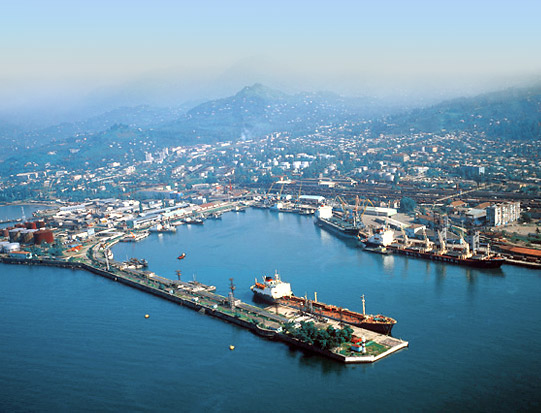
BATUMI, Georgia Just five kilometers north of the Turkish border on the Black Sea, Gonio is one of the most popular tourist destinations in Ajara, an autonomous republic in western Georgia. But these days Gonio's beach, hotels, and cafes are deserted – as is the entire Ajaran seaside.


In Batumi, Ajara's capital and a large port city, the only excitement recently was the 27 August arrival of U.S. Coast Guard cutter “Dallas,” which brought humanitarian aid and which was rerouted here to avoid confrontation with Russian ships patrolling the Black Sea around the main Georgian port of Poti. It motored into a Black Sea tourist hot spot that saw thousands of travelers flee as Georgia’s conflict with Russia escalated hundreds of kilometers away in South Ossetia. Around 34,000 vacationers were in Ajara before hostilities erupted 7 August in Tskhinvali, according to figures from Ajara’s Tourism Department. But most left its coastal towns in the days that followed, at a steep cost to a local tourism industry in the middle of peak season.The exodus was so extreme that some local guesthouse owners could open their rooms to refugees from the conflict zone.
"I had a guest from Gori," said 47-year-old Shushana Abashidze, who rents rooms to travelers in Gonio. "When the situation got complicated in South Ossetia, he left and came back with friends. I felt sorry for them and let them stay for free.”

BAD FOR BUSINESS
Tourism officials are still totaling up the financial losses, but Zurab Beridze of the Finance Ministry said the figure will approach 6 million lari, or just over $4 million. That's equal to Ajara's total tourism revenue from 2007 and more than 70 percent of this year's projected revenue.The disruption of high season, which runs until the end of September on Ajara's coast, has been a crushing blow to many small businesspeople.
Giorgi Tsereteli, co-owner of the Bungalow café in Gonio, took out a 30,000 lari bank loan to start his business this season and spent 15,000 lari on a personal watercraft.
"We intended to invite different disc jockeys from abroad, to attract tourists," he said. "When the war started, there was one Dutch DJ, and we barely managed to get him out through Turkey. Now we’re going to close down the Bungalow. We operated only four days. I have no idea how to cover the loan."
Many entrepreneurs are in the same fix, as Ajara banks have a large portfolio of tourism-related loans (none will specify a figure). Some businesses have applied to the government of the republic to extend their payment deadlines, but there are no guarantees. A spokeswoman at ProCredit Bank in Tbilisi said the bank will decide on changing its payment policy after individual discussions with debtors.

A FALSE SENSE OF SECURITY
When Russian forces started bombing Georgian military targets, Ajara, itself a former breakaway region that Georgia reasserted control over in 2004, was thought to be secure because of its proximity to Turkey, a NATO member.
"I thought that if anything happened here, I would go to the Turkish border, which is the safest place since Turkey is a NATO member country, and Russia couldn’t dare attack it," said Maia Afridonidze, 33, who left Batumi 25 August to return home to Tbilisi.
Ajara, however, was not insulated from the conflict. On 8 August Batumi Airport shut down and began evacuating staff. A day later the town was disconnected from the electrical grid. By this time as many as 2,000 workers at Batumi's port and oil terminal had fled, and many residents feared Russia would begin shelling the town that night. On 10 August Russian forces bombed Khelvachauri, a suburb of Batumi near the Turkish border, targeting a military base nearby. No one was injured.
After a request from the Ministry of Economy of Georgia, two airlines began transferring travelers stranded in Batumi to Tbilisi. Many of the people vacationing in Ajara, about half of whom were Georgian, left its capital this way.
Many foreign travelers escaped through Turkey, according to tourism officials, though crossing the border quickly became difficult as Georgian highways and rail lines were closed.

GETTING BACK TO NORMAL
Despite the lingering tension, Ajara is not in danger of losing larger tourism-related investment, including from Russia and Kazakhstan, according to the government.
"Investments don’t have a nationality," Vazha Bolkvadze, minister of finance and economy of Ajara, recently told the Batumelebi newspaper.
Indeed, after a two a two-day break, construction of new hotels in Batumi, backed by Turkish and Kazakh investors, resumed.Even local residents are feeling more secure, following the arrival of the warship USS "McFaul" in Batumi 24 August. Onlookers greeted the ship warmly, waving both Georgian and American flags.

source >>>

TOL domain names: www.tol.org, www.tol.cz, www.transitions-online.org, www.omri.cz, and www.ijt.cz.

Friday, August 29, 2008

PHOTOGRAPHY: in Gori. Russians left a few hours ago. By George Kvizhinadze


photo 29. August 2008 by George Kvizhinadze

more: part one >>>

more: part two >>>

more: part three >>>

Saturday, August 23, 2008

COMMENT: Personal Stories. Part Ten. & War-Photographies By Levani Chkhatarashvili


Photos 23. August 2008 by Levani Chkhatarashvili

For the period of 6 7 and 8 August Village Tamarasheni has been shelled. On our way from Tamarasheni to Gori we have witnessed the bombing of five store house building located next to the tank divions.
I do not remember exactly the date because of the stress, I would assume it was 9 August around 4 pm. The air strike was launched by the Russian air planes. Our neighbors found refuge in this building, however the only one dead body of female was found ,the other corpse must have been burnt.
By the time the village was bombed the Georgian army was located nearby, but there were no fighting. The bombing was unexpected and sudden.

None of my family members stayed at the occupied territory, however, there is couple of old aged neighbors who stayed in the caller of my house. They hoped the situation would get better. I have not heard about their fate until this moment.

------------------------

12. On 8, 9 August I came back to my house in village Brotsleti to take my clothes with me. And I became an eyewitness of an air strike. My house got also damaged by the air attack. I saw the bomb falling down 50 meters away from me, where Georgian soldiers were disposed. I approached the military unit and saw 2 dead soldiers. After that I heard some more explosions and ran away. When the attack ended I headed the street towards Tbilisi and someone took me by a car to Tbilisi.

-----------------------

I was already going to leave Gori when on 12 August, at about 13:00 I was in a private chemist's, Stalin 13. Suddenly the sky lightened and I heard an explosion, one bomb fell in front of Stalin statue and another in front of "Trialeti", the broadcasting company. Some journalists got injured and some civilians died. I believe there was no Georgian army in Gori at that time, there were just peaceful civilians there. The air attack was performed by a Russian aircraft.
The building of the chemist's and the apartments above it got also damaged.


----------------------

I, Tamaz Javakhishvili was living in the village Avnevi and was forced to flee as the Russian forced army entered the village on 7 August.
Me and my family have incurred the moral, physical and material loss. Russian army has looted our house and burnt it-we are not homeless.
My brother has been wounded right next to the house door during the shelling. Both civilians and solders were wounded during the shelling.


----------------------

My father Hamlet Maisuradze and my cousin Otar Maisuradze were killed by bombing. They were buried in the garden in front of my house with the help of my neighbors.
I also lost my car due to this military aggression. Both of my houses were looted and all the household items were taken away from there. I also witnessed its bombing. I also lost 3 cows and 10 000 tomato sprouts.


---------------------

Yesterday they held 2 'Ikarus'-type buses and about 10 Gazel minibuses and motorcars in front of the Gali Administrative Building. They withdrew people from villages - Otobaya, Nabaki, and Bargebi; they also brought medical staff from Shegali, by ambulance cars. They forced people at markets to go with them; to say openly - Suram Jinjolia – the Market Director threatened people that if somebody did not come to the meeting, he or she would never enter the market territory for private trade. Many people went to the meeting just because of fear, but many of them did not, and it is not known yet what sanctions will be imposed on them because of it in the future. They forced many teachers from town and villages to come to the meeting. And the teachers agreed to do so because of the current state of affairs – they fear that they will lose their jobs. I have information and I have seen myself that the Russian soldiers sell stolen things from Georgia in Abkhazia, I am an eye-witness - I saw how they sold everything they had for 500 rouble.

---------------------

Me and my spouse left on 10 August, prior to what my daughter in law and two grandchildren left. My son has been a combatant. We tried to remain calm but we could not. When tank division has been bombed, we were told that there were 20 dead and 10 wounded solders. Among them was Vasik Ganjelidze- planning his wedding in few days. He used to be my student. I am a teacher. Georgia does not remember the corpse that shall not be buried- dead body of Vasiko however, could not have been buried for a long time.

There were facts of vandalism, harassment and killings in Kharateli and Tkviavi . We have fled to Kaspi where air strikes has been still continuing. On the way to Kaspi we saw the big vehicles that were full of corpse.


----------------------

I don't remember exactly the date of leaving my village and living place. Presumably on the 8th of August I and my villagers were gathered at the meeting place in the centre of the village Eredvi. At about 10 o'clock I saw 2 flying plains above the village, which belonged to Russian military forces. They attacked village Eredvi and its peaceful population. The bomb shells fell just 500 meters away from where we were, demolishing houses and killing peaceful villagers- Seiran Ozgenishvili, Tsiala Tarielashvili and so on… The mentioned bombing was witnessed by many villagers, whose names I don't remember. The bombing has been going on for few minutes, after that the planes left the territory, though after just a while they carried out a new air attack. At the time of air attack the Georgian armed forces were positioned on the territory of our village. They were under the attack of Russian military planes as well. The Georgian forces started firing in response. During the air attack I fell on the ground, though didn't get any injuries. After that accident I and my wife left the village Eredvi immediately. The next day I returned to the village to take the documents of my family members. The village was totally abandoned.

---------------------

On August 11 I heard shooting and went outside. Bibilashvili Alexandre, Zalikashvili Vasiko and Zazarashvili Niko were standing on the street of Karaleti. The vehicle passed with Ossetian soldiers. The soldiers opened fire and Alexandre Bibilashvili was killed.
On August 10 I was hiding in my backyard together with my neighbor, Vakhtang Terterashvili. Meanwhile Ossetian soldiers (in military forms) robbed the house of my neighbor – Guram KHaribegashvili and stole his car. Then I moved to the cellar of another neighbor - Amiran Bazandarishvili. Amiran himself and his wife were there. Ossetian soldiers entered the cellar and were threatening us. Amiran's wife is Ossetian. She saved our lives. They would kill us if Amiran's wife was not there. We reached Tbilisi by hitchhiking.


-----------------------

On August 11 at 10a.m. Russian air forces entered the central part of Gori. Greek and Georgian journalists were gathered around the monument of Stalin. We did not leave the town as we thought Russians would not bomb the city- so many journalists were there, but the bomb fell in the center of Gori. One shell fell in our yard, but did not explode. The incident caused panic and chaos, one of our neighbors - Tamaz Bolotashvili was wounded. We had a private house, which was damaged as one of the bombs exploded near it and soldiers standing nearby were also wounded. I witnessed Russian troops and military equipment entered the town. I saw this by my own eyes and left the town immediately for the safety of my children and family, but the danger was following us, surroundings of the town were also under the attack. We ran 5 kilometeres and then managed to get a car to Tbilisi. Georgian troops were not there as Russian military forces were already in Gori. Zurab Lomradze can confirm this.

-----------------------

The bombings began on 10.08.08 by the air forces and by the artillery, I saw it with my own eyes, it was about 7 am and lasted until 7:30 am. At 12 in the afternoon tanks entered the village, followed by the troops wearing Russian uniforms comprised of Russians, Ossetians, Cossacks and Chechen armed men. On 13.08.08 they came to me and requested to given them my own automobiles. I gave them my "tricycle" (the so called "trangaletka") and tractor. They also took away from my house TV set, stereo system, electric hair drier and oth. That evening I hid myself in the yard near to my house. In the evening of August 13th I noticed how a jeep, the so called "willis", has approached my house, three armed men wearing Russian uniforms have disembarked the jeep they were accompanied with two dogs of the German shepherd breed. They were searching for the population who were hiding in the houses and the adjacent territory. Me and 10 of my co-villagers were forced to leave the village and walk all the way to Igoeti from Tkviavi, through yards and fields.
I witnessed how they burned houses of Tamaz Kapanadze, Zaza Razmadze and Misha Melitauri. Melitauri Misha, Chokheli Gogia and Melitauri Shaqro (78 years old) were first murdered and afterwards they burnt their houses.
They set Demetrashvili's house on fire, the population was able to put it off, however the combatants set the house on fire for the second time.
My co-villagers who were in the field – Vano Chikhladze, Korinteli Roin and Kapanadze Tamaz (Kapanadze still remains there), told me that armed men wearing Russian uniforms took with them about 30 women and men via a minibus allegedly for the purpose of cleaning up Tskhinvali. Since then nobody has seen these 30 people.


-----------------------

We were forced to leave our house. They burnt the house and banished us on August 7. They robbed us - took money, car, robbed our shop. We could hardly reach the basement after the bombing started. We had to stay there for three days and three nights without any food.
My father Givi Djavaxishvili (war veteran) was wounded. He is in Gudushauri clinic now, his health condition is critical. He was the only supporter of our family, which has three children.


----------------------

I am Ossetian by nationality, but I am married with Georgian and have two children, mother-in-low, sister-in-low and two under aged grandchildren.
I am refugee for the second time. First time I was banished from Tskinvali 18 years ago. After that I started living in the village Avnevi. Here I was attacked again. They took everything from me - property, house, car, money, jewelry.
We are in a very difficult situation. I saw many wounded people. My relative was also wounded by Osetian and Russian soldiers.


------------------------

I left village Variani on 7th of August because of the bombardments. At about 9 or 10 AM the first bomb was dropped on the territory of Variani, what resulted in the death of two local residents, father and son. Son's name was Makho Bedoshvili. Bomb has also wounded 8 people: Ilia Aduashvili, Temo Aduashvili, Beqa Giorgishvili, Nikoloz Kereselidze, Mikhail Khizanishvili, 12-year-old Vako Urjumelashvili 11-years-old Tsira Urjumelashvili who were immediately transferred to the Gori Public Hospital and then to Tbilisi.
From 8th to 13th of August we were near the village Kheltubani, where we could hear gunshots as well as bomb explosions. I saw two dead civilians and one dead soldier called Vitali in Kheltubani.
On 13th of August after the invasion of Cossacks and Ossetians I left Kheltubani. I left because gangs of Cossacks and Ossetians were robbing houses and killing innocent people.
While travelling on the highway I encountered a division of Russian armed forces with tanks and trucks (Kamaz and Ural trucks). They had more than 100 vehicles. One of the soldiers asked me for Vodka. I was able to see the writing on the white wristband soldiers were wearing. It said "Giorgadze".
I got to Tbilisi on 13th of August.
On 15th of August I got a notification from my father Emzar Makiashvili about our house having been robbed. They took everything: clothes, dishes, knives, forks, china, TV. Above-mentioned information can be confirmed by my wife – Lali Khutsishvili.


-----------------------

Bombardments started on 2nd of August and were incessant for a few days. We left our cattle and an unlocked house in the village. We could hear gunshots from artillery. Ossetian soldiers were very aggressive. There is a Georgian Trinity Church on the opposite side of our village, which is one of the most precious things for each one of us. It has been occupied by Ossetian soldiers for 6 years now. Ossetian gangs have confiscated our church, our territories and our cattle's valleys. We have been patient all this time, but recently their actions have become too aggressive to keep up with. They have forbidden entrance to the church for us and burnt down the whole village. They had a bridge-head in front of the church at first; 2-3 weeks ago they have dug up holes preparing for the war. They had tanks and weapons.

When we got to Gori we were supposed to live in the secondary school #7. However, bombardments began and several people were wounded. We had to hide irregulars from the bombs and we kept them at that school. When the first bomb was dropped it fell on a public residence area and one family got killed off. Even small children were found dead. In fact, there was a baby's leg found, while a pregnant woman is still missing. They could not find her in the ruins.

We know for sure that airplanes belonged to Russians and Ossetian gangs were all over our village Nuli. When we heard shootings we used to turn off the lights and hide in the house. Unfortunately, I did not have a digital camera to take pictures of what was going on. There are our neighbors left in the village: those, who did not want to leave their houses and who were not afraid of armed forces.

This is the second time I have become a refugee: at first I ran away from Tskhinvali, now from Nuli. I strongly agree to the statement that the whole world should oppose Russians and they should bear consequences for what they have done to us.

I confirm my consent to submit this document to the European Court of Human Rights.
The information has been provided by me. I confirm it with my signature.


-----------------------

The reason of forcible displacement from my house was Russians impatient invasion and systematic bombing of Georgia, which was followed by ground forces, warships and airplanes, who were robbing local inhabitants, taking away everything we possessed. Afterwards they used to set a fire and burn everything. They totally destroyed by double-starred house, infatuated my car "Ford", forcibly took away my golden jewelry by beating, insulted and assaulted me morally and physically. When my neighbor, George, with Ossetian nationality tried to assist me, they riddled him right then.
The text is prompted by me and is totally true.


-----------------------

Military operations started on August 6, the rumors spread that Russian aviation was going to bomb us and as a result large number of people started to leave their houses on fled. I left with my family on my neighbor's car and witnessed how two buildings caught fire. The car behind us was hit by missile dropped by the plane, as a result of which two women died, the driver was severely injured. The bombing started in August 8 after 19:00 o'clock and I don't know how long it lasted, because I already left with my family. As far as I know, at that point the Georgian army wasn't in village Kurta.

-----------------------

Bombing started at the 8th of August, from 10 o'clock and lasted till the 10th of August. Inhabited, as well as uninhabited territories were being bombed. One of the shell fell into our yard, our house was damaged , fruit-bearing trees were just cut into two parts. They destroyed the whole harvest, we are left without house and crop.
We left our house at the 8th of August , the next day, we tried to enter the village and see our houses: everything were being desrtoyed and burn! When we were leaving the village, Russian militaries, as well as Ossetian separatists were located at the Tkviavi bridge. We were ordered to get out of our own car, from which they stole our accumulator.
According to the all abovementioned, I, as a citizen of Georgia, want my claim to be sent to the European Court of Justice.


-----------------------

contact: georgiawar@gmail.com

REPORT: Russia vs Georgia: The Fallout. (crisisgroup.org)

Europe Report N°195 22 August 2008

EXECUTIVE SUMMARY AND RECOMMENDATIONS
The Russia-Georgia conflict has transformed the contemporary geopolitical world, with large consequences for peace and security in Europe and beyond. Moscow’s initial moves into South Ossetia as large-scale violence broke out there on 7-8 August were in part a response to a disastrous miscalculation by a Georgian leadership that was impatient with gradual confidence building and a Russian-dominated negotiations process. But Russia’s disproportionate counter-attack, with movement of large forces into Abkhazia and deep into Georgia, accompanied by the widespread destruction of economic infrastructure, damage to the economy and disruption of communications and movement between different regions of the country, constitutes a dramatic shift in Russian-Western relations. It has undermined regional stability and security; threatened energy corridors that are vital for Europe; made claims with respect to ethnic Russians and other minorities that could be used to destabilise other parts of the former Soviet Union, with Ukraine a potential target; and shown disregard for international law.

Russian actions reflected deeper factors, including pushback against the decade-long eastward expansion of the NATO alliance, anger over issues ranging from the independence of Kosovo to the placement of missile defence systems in Europe, an assertion of a concept of limited sovereignty for former Soviet states and a newfound confidence and aggressiveness in foreign affairs that is intimately linked with the personality and world view of Russia’s predominant leader, Prime Minister Vladimir Putin.

Georgia, too, has mishandled its relationships with Russia, South Ossetia and Abkhazia since 2004, abandoning real confidence building and often following confrontational policies towards the conflict regions. With patience it might have demonstrated that the regions would be better served by enjoying extensive autonomy within an increasingly prosperous and democratising Georgia. Instead, President Mikheil Saakashvili and a small inner circle of bellicose officials used menacing and arrogant rhetoric that made the dispute with Moscow and the conflict regions bitter and personal. All sides bear responsibility for the humanitarian consequences of the violence, as tens of thousands of civilians in South Ossetia, Abkhazia and the rest of Georgia have been displaced amid disturbing reports of atrocities.

Western nations must eschew the worst of the Cold War mentality that would further isolate Russia, but engagement, as UK Foreign Secretary David Miliband has put it, has to be “hard-headed”. Russia cannot be allowed to maintain a military force in Georgia except as part of an international peacekeeping mission with non-Russian command, with a clear and mutually acceptable mandate in South Ossetia and Abkhazia. The ceasefire signed on 15-16 August must be respected, and Russian troops must return promptly to the positions they held on 7 August, honouring the spirit of a loosely worded agreement. International monitors should be deployed in Georgia proper to observe Russian withdrawal and return of displaced persons (IDPs) and then serve as an interim measure to help maintain the ceasefire in South Ossetia and Abkhazia until a peacekeeping mission can be created.

Russian participation is probably necessary as a practical matter in the peacekeeping mission, although serious questions should be raised about the motives of the Russian forces that Moscow describes as peacekeepers. Command and composition should be genuinely international. All Georgian and Ossetian civilians displaced since 7 August need to be immediately allowed to return to their homes. The Russians and Georgians should agree to and cooperate with investigations to establish responsibility for human rights abuses during the conflict, including by the International Criminal Court (ICC) and perhaps the Organization for Security and Co-operation in Europe (OSCE).

None of this will be easy or even possible without a combination of significant pressures and pragmatic incentives to gain essential Russian approval. Moscow must be made to understand the advantages for its prestige, power and economy of being a partner in ensuring security in Europe rather than an outlier, subject to threats of exclusion from such institutions as the G8 and World Trade Organization (WTO).

The crisis also reflects serious mistakes by the U.S. and the European Union (EU) in Georgia since 2004, most significantly failing to adequately press President Saakashvili to abandon a quick-fix approach toward restoring Georgian control over South Ossetia and Abkhazia. The Georgian army was trained and sold weapons without ensuring that these would not be used to recover the conflict territories, and Russia’s anger over these actions and other perceived post-Cold War slights was misread. Instead of concentrating on democratic institutions and rule of law, the U.S. too often focused its support on Saakashvili personally, even as he engaged in reckless and authoritarian behaviour. As the long-frozen conflicts in South Ossetia and Abkhazia began to heat up, Georgia’s partners did too little to encourage it to engage more substantially in confidence building and dialogue with the de facto authorities and Russia.

With regard to NATO, the division evident at its Bucharest Summit in April 2008 on whether to approve a membership action plan (MAP) for Georgia has been exacerbated. Those countries, led by the U.S., who support Georgia’s accession are pointing to the Russian attacks as clear proof that Georgia needs the protection of NATO security guarantees; those that oppose it believe that NATO dodged a bullet by not committing itself to go to war against Russia in defence of a capricious and reckless government in Tbilisi. A decision on MAP or membership status should not be taken in the heat of the current crisis. It will be difficult to finally resolve the membership issue, in relation to both Georgia and other potential members, without addressing the larger question of NATO’s future role as a security organisation.

At the broader level, the crisis raises significant questions about the capacity of the EU, the UN and NATO to address fundamental issues. While European leaders stepped forward to achieve the ceasefire agreement, their inability to put forward a forceful response to the Russian action reflects a lowest common denominator approach that discourages stronger and more innovative policies. Similarly, the UN Security Council, divided by whether to include references to Georgia’s territorial integrity in either a resolution or statement, has issued nothing on the conflict since it began to boil over on 7 August. In an unhappy reminder of the Cold War years, the conflict has called into question the Council’s capacity to address any issue over which P-5 members have significantly different interests. And in the process of seeking justification for its actions, Russia has also misstated and distorted the UN-approved principle of “responsibility to protect”.


Full Text >>>

read media release >>>

To find out more, visit our "War in Georgia" page, which has links to Crisis Group’s reports and opinion pieces on the situation, details of our advocacy efforts to date, links to other resources, and information on what you can do to support Crisis Group’s efforts.

Contacts:
Andrew Stroehlein (Brussels) +32 (0) 2 541 1635
Kimberly Abbott (Washington) +1 202 785 1601
To contact Crisis Group media please
click here
Read the full Crisis Group report on our website: http://www.crisisgroup.org

Tbilisi/Brussels, 22 August 2008

KOMMENTAR: Invasion in Georgien. Falsche Zugeständnisse an Moskau. (FAZ.NET)

Von Berthold Kohler

Der Autor ist verärgert und kommentiert die politischen und medialen Statements zu dem anmaßenden Verhalten der russichen Streikkräfte in Georgien. Für ihn ist und bleibt das Ganze eine Invasion und Annexion mit weitreichenden Folgen! Nicht zuletzt wird dadurch das ganze Land Georgien in einem übermäßigen Maße kontrolliert und in ihrer Entwicklung zurückgeworfen!


Von den „Randgebieten“ ist gar nicht mehr die Rede. Sind sie nach der Invasion im Geiste schon auf den Kreml überschrieben worden? Der hinterlässt dem Westen im Tausch ein zerstörtes Restgeorgien, damit die Nato etwas zum Streiten hat. Doch Hauptsache, man bleibt im Gespräch.


Der ganze Text >>>


© Crisis Group Europe Report / FAZ.NET

Thursday, August 21, 2008

REVIEW: In Memoriam Alexander Klimchuk, Giga Chikhladze & Stan Storiman


A man shows a wound he said he received during a shootout in the village of Upper Nikozi in the Georgian-controlled part of South Ossetia some 100 km (62 miles) from Tbilisi August 2, 2008.

18. August 2008 von Alexander Klimchuk (killed in the war - Tskhinvali)

Fotostream von Alexander Klimchuk

~~~~~~~~~~~~~~~~~~~~~~~~~~

A Review of Alexander Klimchuks pictures he has taken the last years while working as photographer for european media.

Alexander (Sasha) Klimchuk and his fellow Giga Chikhladze were killed on 08. August 2008 while covering the beginning war in South Ossetia.

Both of them were in the South Ossetian capital Tskhinvali and died there on August 8, when their car was fired on. Their relatives and friends are doing everything they can to try and get their bodies delivered home to Tbilisi.

Giga was working for Newsweek and had been employed by a number of publications in Georgia, such as Eurasianet and Civil Georgia. He was 30 and leaves behind his wife Nata and two children, Sopho and Luka. He was the only breadwinner in his family and was also supporting his wife's parents.

Alexander (Sasha) was 27. He began his career as a print journalist, then became a photographer and worked for ITAR-TASS news agency. His pictures were also published in foreign publications such as Le Monde, Newsweek and the Financial Times. He was unmarried. His parents relied on him for an income.

The two, who were great friends, had both worked for IWPR. Giga wrote many stories for the Caucasus Reporting Service on subjects as diverse as Dukhobors, Kurds, AIDS sufferers and ostrich farms. Sasha took photographs that were published in our newspaper Panorama and also formed a photo-exhibition in our office."

I loved working with Giga," said Marina von Koenig, IWPR's former Caucasus director. "He would always try to find interesting angles to stories, talk to lots of people until he was sure that there was nothing he could have missed. He loved to travel on assignment. Even without a commission, he would follow his intuition and bits of information to remote areas of Georgia to return with an exciting story."

South Ossetia was one of the places he went to regularly, coming back with features, interviews or pictures. He had friends there."

Giga was a great nature-lover and once walked all the way from Bakuriani in central Georgia to Tbilisi. He also loved literature. "I heard his parents and neighbours saying that he was quoting Pushkin's poems when he was just three," said Marina. "They loved to retell this story."

Timo Vogt, a German photographer with whom Sasha built the Caucasus-Images agency, said of his colleague, "Sasha often reacted with humour to the problems and difficulties in his country."

Photography became his life. He always approached foreign photographers who visited Georgia, and invited them to his house.

"All the fees he earned as a photographer were spent immediately on his parents who cannot work any longer. Once when he wanted to buy a new lens for his camera, his washing machine broke and the lens had to wait. His family was a priority. He wanted a simple life, he wanted to travel and to take pictures. But his last trip brought him into a war."

Unfortunately Giga and Sasha are not the only journalists to have died in the conflict. A Dutch cameraman, Stan Storiman, 39, was killed in Gori on August 12. At least more than ten journalists have been wounded.

An appeal has been set up to help Giga and Sasha's families.

Go to

www.caucasus-images.com/georgia_war/index.html

www.caucasus-images.com

Monday, August 18, 2008

COMMENT & PHOTOGRAPHY: IDP Stories, Letter and Voices from Georgians and other people. Part Nine.

Refugees from South Ossetia sheltering in an abandoned school building in Tbilisi.

Photo am 18. August 2008 von s.o.s.georgia

Fotostream von s.o.s.georgia

35A Tsereteli St. , Refugee shelter, 13. August 2008
Mamisashvili Venera, 51, resident of Eredvi (village in S. Ossetia)
I left on 11th of August. At first they told us there would be terrible bombardments. That's why we left…we were hiding on the valleys at first, but they did not allow us to stay there either. So I decided to go back to the village, because, you know, my heart was pushing me there, I did not want to leave my house. They were urging me to leave, saying "go auntie (Georgian way of calling an unknown woman), go, leave", but I was insisting on entering my house. Finally, they forcefully took me out of the house. Bombs were being dropped in every corner, it was getting blurry, you would not be able to see anything in a few minutes… bombs destroyed everything, people were dying. Even though military base is far from the village, civilians were involved in the fight as well. They were tackling the civilians. Village is 5-6 kilometers away from the base. However, bombs were dropped right in the heart of it. One of the bombs was dropped on a bus getting civilians out of the gorge. Houses were burnt down along with the people in them. I got out; I am sitting here and crying now. We walked all the way here; I don't even remember how we got to this place.
We have not seen the troops. We were frightened because of the bombs. All the glasses in our houses shattered. If they got into the house, they would have broken everything, they would harm our cattle. It's true that the house is still there, but it is burnt down. I am here and I don't know exactly in what conditions it is, but people say the villages have been burnt down and destroyed.
At first there were a few gun shots, I don't know if Russians or Ossetians were shooting, but I guess they were Russian, because they were holding Russia's flags. Troops were definitely from Russia. They were shooting from what we call Russian spots.
We were not afraid of the shots, because we could hide in a lot of places, but bombs scared us to death. That's why everybody left the village. Airplanes and fighters were
bombing us. Houses were destroyed, cattle were killed, and people were dead.
Our relatives are still there. I have a sister in Vanati. Can you imagine? She is walking through the village during those bombardments, when everyone is shooting. She is hiding in the bushes sometimes. We need help to get people like my sister out of the village, they need help… How can we get them out of the village?
That's the trouble we are in. See how our country has been destroyed? My heart is aching…


------------------------

IDP story
We barely managed to get out; we left by Kamaz (truck). Two days ago we took our kids to Gori. Then when the situation in Gori was escalating they went back to the villages. And when situation in Gori was getting worse they met us with Kamaz truck on the road and we took it to Gori, where we transferred to doctors' bus and left by it.
While we were in the village it was constantly bombed. Since then, as we are here we hear rumors that they are going around and robbing houses, they even set houses on fire after they're done robbing.
I don't know what the situation is; I don't know anything so far. We have no contacts with the village. My relatives are probably devastated, but weather they are dead or wounded, I don't know. Before the army came, we witnessed bombing and my neighbors' house, I don't know weather it was a bomb or what, but six people was killed. This is what we witnessed.


--------------------------

IDP stories
- I left when the first explosions happened, practically I fled.
I left by bus. We left during chaos and panic.
I don't know what happened to my house. My husband's parents are still in the village, the elderly, and I don't know what the situation is. We left them alone without any supervision.

- I am from Nokozi.
We left Nikozi, the shootings were intense. We came to Gori and then we went to my sister's and then we came here. There were non-stop shootings. Planes were bombing. My house is completely destroyed. I don't know if my relatives are dead or alive so far.

- I am from Achabeti. When the shooting already began they told us to take children and leave the village immediately. There was no transport and we walked. Sometimes we walked through woods and sometimes we walked and walked alongside the road, and finally, we barely made it to here. They were shooting in our village too, but I don't know now if it's destroyed. We have no contact, they are saying that Ossetians came in, but I don't know.


------------------------

IDP Story
- It was on TV, I saw it

– he said: Chechen fighters were coming through sewerage system. They know that survivors and wounded people are hiding in basements and wherever they meet them they shot them to death. It's impossible to transport dead bodies out of there. I was there for so long and they didn't let the ambulance in. And now can you imagine when they go in with tanks and everything, they probably drove all over everything. Now they are sending Chechens in sewerage pipes to see if someone is hiding there. To my mind, I am speaking from my own experience, what happened in Chechnya, I know a little. Now the whole city is occupied, where would one hide?! Even if you are healthy
– you can't get out, can you?! You go hide in basements when you see it. When they start to clean up basements you go to hide in ruins. Chechens even manage to find hidden people there. Well the last thing that the enemy will think to look is sewerage system. Well, you go to sewerage pipe to hide. Even there they lifted up the leads and sent in Chechens. That's what's happening as I think. God save those guys who get caught in their hands. They are in a terrible position. The first thing that should have been done is the corridor to let people out.


Photo 18. August 2008 von gstop@ymail.com

Fotostream von gstop@ymail.com

--------------------------

IDP, Lower Nikozi (Tskhinvali Region)
- We are from lower Nikozi. We left amidst cross-fire. During the shooting as we got very scared the village started to get deserted and people were leaving; every time it got a little bit quieter – we used to go back. Finally explosions became so violent that now children were in panic and we decided to leave. The next day the road was blocked. We left, reservists were taken and they were followed by bus, which we took.
I have no idea about the condition of my house. My in-laws (father-in-law and mother-in-law) stayed there and I don't even know how they are. We were able to contact them briefly only once and they said nothing is happening so far. There are lots of robberies. There are burglaries of houses. They are saying if the hose is descent (looks good from outside), they're going in and robbing it, but as for destroying, I think…well, I don't know. I was speaking on a cell phone, and the connection was bad. The only thing we ask "What is the situation, how are you?"- like that. They are saying they go out in a yard at night and staying at home during the day. When it's little bit quiet, we are coming – they said – because usually shootings used to occur at night, but I don't know now.


---------------------------

Makvala Archvadze
I am scared of them... My husband is very sick, an invalid of the 1st class and we could not get him out, he remained there. I hope they did not kill him ... Sister and niece came from Tbilisi to take care of him and they also remained there, they are Georgians and have not heard anything from them yet. I am very worried about them too. Two of my brothers, niece and husband are all there, have no idea whether they are dead or still alive.
We used to Live in Tskhinvali. First, when we lost Tkhinvali we were forced to move and find a temporary shelter, my husband's family had a house in the village so we decided to settle there, renovated a house and started farming to support the family. Now we were forced to leave the village house too, we lost 2 homes, have neither village nor town house. I am here now at my sister's, she herself is in Tskhinvali and I am here with her husband... I am here sweltering with tears of whearabouts of my sister... It has been three days now since I lef the village, before I used to be with my husband all the time. My husband has a brain blood clot and he cannot move.
We left Tskhinvali many years ago when there were first signs of political unrest and moved to Eredvi village, where we used to have the family house. Our village was the largest village and we used to fortefy Gori. Now Eredvi is all aloof, every village is empty... they entered Gori.
Our village was heavily bombed... houses are destroyed, some are burnt, our house is also destroyed, we were inside the house when the first bomb fell. All our neghborhood is distructed to the carpet level. I togather with my brother in law walked all the way from Gori region, bombs were thrown over our heads many times, one of them wounded my brother in law and poor creature crawled wounded several killometers. Not only bombs were thrown, they also fired guns at us, they saw people in the streets and were targeting specifically on civilians.
Cannot distringuish weather they were Ossetians or Russians. Ossetians are backed by Russians and they tell them who lives there and here, this is one big gang. One never knows what is in their minds.
I had a very good relationship with Ossetians. I myself grew up in Tskhnivali and had many Ossetian neighbors.
As I said it is three days we left Eredvi... I stayed there and continued taking care of my husband, until military jets started firing at us, we hid in basements, until the heavy bomberdment, but then had to leave.
Eredvi village is all wiped out. Every single house is burnt, very few people remained. There was one mentally sick man, they could not get him out from the village, many elderly women stayed thought they would not be killed becuase of their age. I do not know what happened with them now. are they alive? I do not know what happaned to my husband either.
My husband is so sick he cannot even talk... Even if he was not bombed how would he remained alive not eating for all these days. One of the elderly women told me to leave and promised she'd take care of him. One thing I know is I left a full house and was forced to move.


-----------------------

contact: georgiawar@gmail.com

You received this message because you are subscribed to the Google Groups "PersonalStories" group. To post to this group, send email to personalstories@googlegroups.com
To unsubscribe from this group, send email to personalstories+unsubscribe@googlegroups.com
For more options, visit this group at http://groups.google.com/group/personalstories?hl=en

CONCERT FOR PEACE: "Solidarni z Gruzja;" - tribute to Georgia. Warsaw, 14.08.2008.

News from Poland from www.kaukaz.pl:

A concert "Solidarity with Georgia" was organized in Warsaw evening to show Solidarity with Georgia.

The concert took place by the Warsaw Rising Museum, which is co-organising the concert with Poland's public television broadcaster, TVP. A few renowned Polish bands were performed, including Perfect and Pogodno. The concert was transmitted by Polish radio Trójka and TVP1.

The concert was held in the place where Polish and Georgian Presidents, Lech Kaczyn'ski and Micheil Saakashvilli, paid homage in May 2007 to the Georgian contract officers who fought in the Polish Army, and who were killed at Katyn, the Warsaw Rising and on all fronts of the Second World War.

With best regards, Beata Szczesniak
www.kaukaz.pl

The concert took place in the "Freedom Park" by the Warsaw Rising Museum, which is co-organising the event with Poland’s public television broadcaster, TVP. The concert was transmitted by Polish radio trójka and TVP.


IRA sang a song "Hope"


It was many Georgian flags...


The Georgian vocalist Aida sang the lullaby song from Batumi

full gallery >>>

ARTIKEL: Wladimir, der Börsenschreck. Politische Börsen haben kurze Beine. (finanzen.net)

Russland, Rohstoffe, Georgien, Öl, Gas. Die Wirtschaft reagiert auf ihre Art auf diesen Krieg

Der Krieg in Georgien vertrieb die Anleger aus Moskaus rohstofflastiger Börse. Doch die niedrigen Notierungen verlocken zum Einstieg. Bevor Privatanleger aufgrund der niedrigen Notierungen auf Geschäfte hoffen, sollten sie jedoch erst einmal abwarten, ob sich auch diesmal wieder die Investorenweisheit „politische Börsen haben kurze Beine“ bestätigt.

Der ganze Text >>>

Sunday, August 17, 2008

COMMENTS: Letter and Voices from Georgians and other people. Part Seven.

Makhniashvili Zeinab, village Vanati of Gori region
We arrived at half past six in the evening of August 10. We barely made it. The whole population was forced to leave the village. There was no military base in the proximity, nor were Georgian troops located in the village. They attacked the peaceful population, they threw bombs on peaceful civilians, and we had no means to defend ourselves. We were with bare hands. The bombs were flying right above our roofs. By fortunate chance we found a wagon car and soon it was filled with people and then we drove to the village Tkviavi. Then from Tkviavi somehow we managed to reach Gori. Once we arrived to Gori, the bombing attack started there. We barely made through that night... In the vicinity there was a train with about eighty wagons loaded with petroleum products. Close by were the youths, about the age of my children, I asked them to help me to climb on one of the wagons, in the hope to reach Tbilisi thereby. They lifted me and sat me on the wagon. On the way I was thinking if they bomb this train then I will die and nobody will find my corpse, even if they had blown just one wagon all the rest would follow the explosion. That is how we came to Tbilisi...


-------------------------------------

State, medical department of border protection of Georgia. 14 Augsut 2008.
Gia Gurgenidze, 39 years old, from village Eredvi, Head of the finance and customs commission of the municipality.
The reason for my displacement is aggression of Russian troops in the region of Georgia in general. First the bombings began by Russian planes, and then followed the intervention of Russian military formations.

My father is wounded as a result of the bombings by the Russians. My house is bombed. 80% of the houses in Eredvi are completely destroyed. Heavy bombs were thrown onto peaceful civilians. There were no military formations on the territory of Eredvi. Three planes flew in and started to bomb villages. Four women and two men died. They were our neighbors. The bombings lasted for about 45 minutes, one by one the planes would fly toward us throw the bomb and fly away, and while one plane was turning back the next one would fly over and bomb us again. These were the planes from Russian air forces. They were visible, we could even see the pilots sitting in their cabins. When we stepped outside they would fire at us, my fellow villagers were wounded, mostly women and old people. They would follow us while we were moving and open their fire upon us.


---------------------------------------

Katsitadze Eteri, from village Eredvi
I left my place of residence when the explosions have started from the side of Tskhinvali, then the bomb hit our village, it fell right into the yard and destroyed our whole garden and shattered all window glasses, however the house remained intact. We were in the basement of the house at that time, it was about 2 am, we spent the whole night there. The sounds of explosions started to lessen towards morning, but in the evening some huge explosions took place, as if tons of bombs hit the ground. Downward from our house, on the main raid, where our troops were located something really big exploded, five minutes later another explosion followed. Close to that place is the house where my daughter and her husband's family live, and the bomb hit their house as well. In a nutshell, all of the houses are destructed and ruined. I saw my husband running towards me, he had gone to our daughter to check if she was doing fine, he told me that two blocks were totally destructed and said that women shall leave the village. I don't even remember what day it was, I am so lost, I do not even know what day is today, I think it was Friday that day. My husband was telling other women as well to leave the village, but they would not listen, he forced me to leave anyways. We went downwards to the lower part of the village, and drove towards Gori villages with a minibus of our neighbor, the next day from there we went to Tbilisi.
Everybody from my daughter's family left the village as well. Bombs hit the whole village, the sound was terrible, my ears have calmed just now. None of our people remain in the village any more.
15-20 minutes after we left for Tbilisi, they bombed Gori.
Mainly the destruction occured as a result of bombings from the airplanes, apart from that fire came from heavy military technoclogy as well, I do not know their names or types for certain. They obliterated the results of our efforts and sweat, the gardens are flattened like an airport ground. We, the villagers had great hopes for the harvest from those gardens and now everything is so wiped out that I don't know...
Here, some spaces were allcated to us, and we recieve attention as well, but we prefer our delapidated houses, we still want to be there.


-----------------------

Shorena Gagulishvili, city of Gori, Tsminatskali district.
I was not going to leave my city despite the bombing. But my husband called me, who is solder and told me to leave the city immediately. I left the home and run out of house together with the children. The city was being bombed and we were running without destination. When we were near the stadium my husband called again and told that it was dangerous zone. Then I started to search for a vehicle, then my brother-in-law called me, he lives in Kaspi. He told me to get to the station; he promised to come there through the mountains. I could find a ride until village until Khidistavi. There we saw an empty car, the driver was so kind that offered us to bring to any place for free. So we came to Kaspi and settled there. Later on we heard that Russian were coming for Kaspi as well, people told us that they were kidnapping women and taking as hostages. We were very scared and left for Tbilisi. We could hardly find a shelter in Tbilisi, most of the places here were packed with IDPs. I left two houses in Gori region, I left all my life there and now I live this miserable life.


-----------------------

Man from Tskhinvali Region, August 17, 2008
I left there the day before yesterday (on August 14, 2008). When they starting attacking us I got in my car and drove here. I knew the way how to get here. I don't know how my house is. I did not even lock my house door. I just left my cattle and chicken there too. I did not expect the things to get this bad. Whole family, six of us left there.

Lady from Village Koshki, August 17, 2008
All I want to do is cry… it was horrible… we ran through farms… we got here on the 13th. .We walked to Tkviavi. Then a man from Kirbari picked us up on the road and drove us to Tbilisi.
When the airplanes started flying over us, first we laid down then we got up and ran away. My brother-in-law is still there and also there was one lady – Maria Chalauri, we don't know whether she survived or not. We don't know anything else.


------------------------

Lady from Tskhinvali, August 17, 2008
It is five of us from our family who left Tskhinvali. We don't know where to go, what to do…
We buried two bodies. We just got here yesterday morning. I have four children: three girls and one boy. They were still bombing when we left but our house was not burned yet. People were saying that the village must be evacuated. I do not know who said it first. We were in Gori already when they start bombing. My uncle was hit by the airplane bomb which ripped his leg off. We took him to Gori's Hospital but it was too late, he died there. Then we were carrying his body trying to get back to the village to properly bury him but they would not let us back so we had to bury him close by the road.
Kazaks are burning the village and torturing people. My father is still there. I don't know how he is going to be there.


--------------------------

contact: georgiawar@gmail.com

You received this message because you are subscribed to the Google Groups "PersonalStories" group.
To post to this group, send email to personalstories@googlegroups.com
To unsubscribe from this group, send email to personalstories+unsubscribe@googlegroups.com For more options, visit this group at http://groups.google.com/group/personalstories?hl=en

COMMENTS: Letter and Voices from Georgians and other people. Part Fife.

When Russians occupied and devastated Chechnya, many people said, Georgia may be the next. The common reply of the Europeans was"Georgia is a different story, it is an independent recognizedcountry".when Russians occupied and devastated Georgia, many people said,Ukraine may be the next. The common reply of the Europeans was"Ukraine is a different story, it is a big country".when Russians will occupy Ukraine, many people will say, Estonia maybe the next. The common reply of the Europeans will be "Estonia is adifferent story, it is a NATO member country".when Russians will occupy Estonia, many people will say, Germany maybe the next. The common reply of the Europeans will be "Germany is adifferent story, it is a part of old Europe that never was underRussians". They will forget German history of the last 60 years.

Prof. David Tarkhnishvili


--------------------

Yesterday while wandering Ossetians, Russians, etc saw a car in the garden, started it and drove away. They take everything one can take with them wherever they come across. No matter the owner is at home or not. They are a danger to young people but not to old people. The young people are hiding in cribs. Several persons remained there and can't get away. One boy was killed by a bomb and his relatives had to cover his body with linen and run away. One boy from Gori was injured, he died in Tbilisi and it is impossible to move his body back to Gori for his funeral.

--------------------

Being just three years old little Shotiko has seen a lot of things already. Currently he is at the safe place in one of the kindergartens in Tbilisi, but just few days ago bombs were exploding very close to his house. He was barely saved by his mother.

- We were at home, suddenly we heard explosion, the noise was so great that the walls started shaking, I rolled down the stairs with my child in my hands, rand outside, the panic has started... I walked several kilometers to a bus... People say that my house is ruined... I left everything there...


----------------------------

Father of little Shotiko remained in the conflict zone. He was a military servant and has been internally displaced twice already. First, they had to leave Abkhazia, and now their family is one of those 72000 ergistered internally displaces persons.

- I brought only this bag alongside, I left everything there, the first thing I grabbed by hand was the baptism towel of my child. I remembered nothing else... These things have been brought here by people.... People bring food as well....


--------------------

This lady – little Shotiko's grandmother has been living in the village Achabeti, 8 kilometers away from Tskhinvali. She remembers that they left the village at the midnight, when the bombs have been falling on every step in the area populated by the civilians.

In that Georgian village, 8 kilometers away from Tskhinvali, she left her 81 year old mother in law, being seized by panic, she was unable to bring her mother in law, who is sightless, alongside her. According to her only the old people remain in the village and the houses are all destroyed completely.

- It was midnight when we left the village, it was impossible to stay there any longer, everybody ran, I was staying with my friends when the explosion destroyed the balcony. My mother-in-law begged me not to leave her alone, but how could I bring her along. She may not be alive now, she is sightless and cannot even cook for herself... I barely reached Gori, then Tbilisi. My husband is still there, I have not heard from him for 5 days already.... What do they want from us, what did we ever do to them...

There are thousands of families with similar stories in Georgia. Some of the stories are even more tragic. No one knows how the story of the Khetaguri family, the three members of which still remain in the conflict zone, will end.


--------------------------

An elderly man from Kekhvi, Tskhinvali region; didn't give a name
I was there when the houses were being bombed; bombs were droppiong on every square meter. Three aircrafts and two „MIGS" were bombing. I was sitting there in a cellar like a rabbit and waiting for death. Heavy shootings were on for several days. I had a car of my son at home, so I decided to leave with the car. I ot up very early, at 5 in the morning hoping to get away before shootings started. But I think they wre waiting for me (similing): as soon as I got up, they started bombing. Bpmbs were coming down like rain. Houses were being blown up. Very scared I ran into the house, grabbed whatever I could, dumped in the car and started. I was together with a neighbor guy.

We met Russian troops in Achabeti. The forest nearby was occupied by Chechens. I thought if I managed to get where Russians were based, they wouldn't drop bombs on me and I'd survive. And I was right.

When I got to Russians, they searched me. I had a couple of shirts with me, I think they liked them and took. Then they looked at me and let me go. I don't know why, probably because I was an old man they pitied me.

After that I met Chechens on a hill. They stopped me. I got out of the car, walked up to a Chechen soldier and hold him: „how are you, drug?" Then they asked me what I was taking with me. I said I had 10 bottles of wine and offered it to them. They didn't take. Then they searched me and the car, one of them liked one t-shirt of mine and put on. Then they let me go.

After this I arrived in Gori. My family members had left before. My wife had gone to a nearby village Tkviavi to a funeral couple of days ago, a young guy died there. She's still there and cannot get out because the tanks are already based there. I cannot get in touch with her anymore. Looks like she's hiding somehwere and cannot get to Gori.

My house was not destroyed when I left, but as I know it got burnt yesterday or the day before yesterday. People who are still there are informing us about situation there: they burn any house where they find military uniform or police uniform. They loot, rob and kill people. In most cases they rob houses and after that burn. Ossetians are doing this. My tractor was stiolen and they took 400 liters of wine from my house (smiling).

They took the cattle to Vladikavkaz. Ossetians are backed by Russians, so they are free to do anything. I remember a case many years ago, when Ossetians took our cattle. Then some peacekeeper helped our people find them, people recognized their cows and took back. Now if I see that someone has my Chrela and Nisha (names of cows) in Orjonikidze (old name of Vladikavkaz), wouldn't they feel ashamed?

Three Ossetians lived in our village, we were on evry good terms with each other. Ossetians from Tskhinvali were quite different but our Ossetians were good.

And you know what? Russians killed Ossetians themselves. We watched it with our own eyes. Six aircrafts were bombing Tskhinvali. They did it on purpose – to make it look like as if Georgians did it. But we know the truth – it was Russians, our aviation was not there!

Right now what I'm asking everyone of is to let me go back home. I'll just put up a roof and sit under it, that's all I want. I cannot stay here, I cannot breath here, I cannot sleep here, I want home!


------------------------

Eshmakurashvili Galina, 61 years old
I am from village Shindisi, Gori. I was down in the bakery when intensive bombing started, six bombs fell right next to my house. I don't know why I didn't hear the sound, I must have been very upset and confused. I was alone at home, I opened the doors and was just standing there, for some time I couldn't even move. I couldn't see anything in the yard. When I went to street, I saw my neighbors down on earth – the blow from bombs had swept them from their feet. I couldn't see some of the guys (neighbors) and I was afraid for them. But then it turned out they'd gone to the next village and came back.

My house was not destroyed yet when we left. But the furniture, glasses, dishes were all broken. Still we didn't leave that day. I was thinking that it would get better. So we were hiding in a neighbor's cellar for 2 days and nights.

My daughter-in-law and two grandchildren had already left couple of days ago. So we were alone – my son and me. My son stayed there when I left on the 10th. And he left to Sachkhere – where his wife and children are – next day.

There are relatives and neighbors who stayed there, we cannot get in touch with them any more – electricity is cut off and they cannot charge their cell phones.

Here we are more or less ok thanks to god and people. We have enough food now – bread and sausages. We can stay one week more. After that we hope very much that we'll be able to get back. The villages maybe mined but hopefully they'll clean it. As long as the walls of our houses are there we don't need anything else, if nothing worse than this happens we'll be fine!


--------------------------

Beka and Giga, brothers, 11 and 10 years old
Beka: we used to live in Kekhvi. I'm a sixth-grader and Giga is a fifth-grader. We used to go to Achabeti – a neighboring village to play football and take wresting classes. We used to walk there. We both love football. Chelsey is my favorite team.

They say our school was blown up. I don't know exactly. I don't like going to school that much, but still it's bad if it's true. I only like literature classes.

My grandma stayed in the village. We don't know anything about her now. Some people say Russian troops are withdrawing. My father called grandma and she said she's together with a neighbor woman and they are ok. She said they only burn houses of those people where they find military uniform or guns. So our house should be ok now. I think they took only clothes and a\other stuff.

I don't like living in Tbilisi, I prefer home. I used to live here for a year and didn't like it at all. I've got a lot of friends there, in my village. I don't know where they are right now. I only know about two of them. We went to city council building to ask government for help yesterday and there I met one of my classmates who also escaped with his family. I was so glad to see him.


----------------------------------

contact: georgiawar@gmail.com

Friday, August 15, 2008

SUPPORT: Killed journalists: Support their relatives!

Georgian photographer Alexander (Sasha) Klimchuk and his fellow Giga Chikhladze were killed while covering the conflict in the breakaway region of South Ossetia. We are deeply shocked and mourn the death of our good friends and fellow journalists.

Caucasus Images calls for Support. Sasha and Giga were the breadwinner of their relatives.

Sashas elderly parents and Gigas wife and little children Sophie and Luca need our help to manage the next difficult time.

PLEASE VISIT our donation site >>>

THANK YOU VERY MUCH!
Timo Vogt/caucasus-images and Marina von König
caucasus-images.com

International:
via Paypal:
Subject: Support for Alexander and Giga

For european remittance:
Timo Vogt
IBAN: DE25 2585 0110 0042 2276 94
BIC: NOLADE 21 UEL
Subject: Support for Alexander and Giga

For german account owners:
Timo Vogt
Kreissparkasse Uelzen
BLZ. 2585 0110
Kto-Nr. 4222 7694
Stichwort: Hilfe für Alexander und Giga


Any donation will be given without deduction to Alexanders and Gigas relatives. For further information, questions or any indication please contact Timo Vogt: info@randbild.de


Special Thanks to Reporter without Borders for giving us support!

PRESSE: Raketenschild, NATO, Europäische Aussenpolitik und Russland (euro|topics)

Gazeta Wyborcza Online - Polen
Wichtiges Signal an Russland
Die Regierungen Polens und der USA haben sich über den Aufbau eines Raketenschilds in Polen geeinigt und gestern Abend in Warschau ein vorläufiges Abkommen darüber geschlossen. Die Onlineausgabe der Tageszeitung Gazeta Wyborcza feiert das Ereignis als Erfolg und bringt es in Zusammenhang mit dem Kaukasuskrieg. "Entgegen dem, was Premier Tusk und das US-Außenministerium offiziell sagen, hat der Krieg in Georgien eine Schlüsselrolle bei der Beschleunigung der polnisch-amerikanischen Gespräche über den Schutzschild gespielt. Es ist eine Folge des Krieges, dass Tusk grünes Licht für die Unterzeichnung des Abkommens gab. ... Und das ist gut so. Dieses Abkommen ist die Anerkennung der Wirklichkeit - die USA sind und müssen Polens wichtigster Verbündeter bleiben. Dies ist in der aktuellen Lage auch ein wichtiges Signal an die Russen: Im Kaukasus erfüllt ihr euch den Traum von der Rückkehr zur Hegemonie. Vergesst aber euren zweiten Traum: dass Mitteleuropa ein strategischer Leerraum bleibt. In Georgien können wir uns euch nicht wirksam entgegen stellen, aber Mitteleuropa ist und bleibt ein Teil des Westens. ... Die Verhandlungen zwischen Warschau und Washington waren lang und hitzig, beide Seiten begingen dabei viele Fehler. Aber das Ergebnis lässt sich sehen. Vor allem in den heutigen, unsicheren Zeiten." (15.08.2008)
» zum ganzen Artikel (externer Link, polnisch)
Mehr aus der Presseschau zu den Themen » Internationale Beziehungen, » Sicherheitspolitik / Krisen / Kriege, » Polen, » Russland, » USA, » Georgien
Alle verfügbaren Texte von » Marcin Bosacki


Diário Económico - Portugal
Drohender Weltkrieg?
Der Journalist und Autor Domingos Amaral argumentiert in der Tageszeitung Diário Económico, dass der Krieg zwischen Georgien und Russland ein erstes Zeichen des nächsten Weltkriegs sein könnte: "Russland wurde provoziert und erklärte daraufhin Georgien den Krieg. Dabei nutzte Russland die Gelegenheit, um der Welt zu zeigen, dass die Zeiten der Demütigung vorbei sind und dass Russland es sich nicht gefallen lassen wird, dass die NATO sich in seine 'Einflusszone' einmischt. Eines scheint mir logisch zu sein: Wer die Unabhängigkeit des Kosovos unterstützt, hat kein Recht, dies anderen Regionen wie Südossetien zu verweigern. Es handelt sich jedoch nicht nur um Rechte, sondern auch um Macht. Russland hat seine Macht zurück erobert und wird sie Ländern wie der Ukraine, Georgien und eines Tages vielleicht auch den baltischen Staaten aufzwingen und sie von Europa und Amerika trennen, falls nötig mit Gewalt. Wladimir Putin sagte einmal: 'Das Ende der UdSSR war das Schlimmste, was der Welt im 20. Jahrhundert passiert ist'. Ich sagte damals, dass er sich nur im Jahrhundert geirrt hatte. Die wahren Konsequenzen der sowjetischen Implosion werden wir erst jetzt erleben. Nach den amerikanischen Fehlern der letzten Jahre wird sich der nächste US-Präsident entscheiden müssen: Entweder er zieht zurück und setzt viele östliche Länder Russlands Einfluss aus oder er macht es nicht und wir werden einen Krieg zwischen den USA und Russland erleben. Der Kosovo und Georgien sind die ersten Episoden eines Films, der unglücklich enden kann." (15.08.2008)
» zum ganzen Artikel (externer Link, portugiesisch)
Mehr aus der Presseschau zu den Themen » Internationale Beziehungen, » Sicherheitspolitik / Krisen / Kriege, » Russland, » Global, » Georgien
Alle verfügbaren Texte von » Domingos Amaral


Politiken - Dänemark
EU braucht aktive Außenpolitik
Wenn die EU weiterhin eine wichtige Rolle in der Welt spielen will, muss sie eine aktivere Außenpolitik entwickeln, argumentiert Lars Trier Mogensen, Leiter der Meinungsredaktion der linksliberalen Tageszeitung Politiken. "Natürlich hat niemand jemals behauptet, dass die EU alleine einschreiten soll, um Kriegshandlungen zu beenden. Aber unsere mangelnde Fähigkeit, aus schönen Worten Ernst zu machen, hat dazu beigetragen, regionalen Großmächten in den Regionen, in denen sie eigene Interessen verfolgen, freies Spiel zu lassen. Das gilt nicht zuletzt für Russland im Kaukasus, die Türkei in Kurdistan, Israel in Palästina und den Sudan in Darfur. ... Die EU hat eine große Verantwortung für die Konflikte in Kurdistan, Palästina und Darfur, aber so lange wir noch nicht einmal Russland an unserer eigenen Grenze im Zaum halten können, ist es schwer, optimistisch zu bleiben. ... Wenn das 21. Jahrhundert etwas anderes als ein Jahrhundert der Illusionen sein soll, müssen die EU-Länder eine neue, aktive Außenpolitik entwickeln, die Russland und anderen Aggressoren Widerstand leisten kann." (15.08.2008)
» zum ganzen Artikel (externer Link, dänisch)
Mehr aus der Presseschau zu den Themen » Internationale Beziehungen, » Sicherheitspolitik / Krisen / Kriege, » EU-Politik, » Russland, » Europa
Alle verfügbaren Texte von » Lars Trier Mogensen

eurotopics - Aktuell