Showing posts with label Dagestan. Show all posts

Thursday, April 24, 2014

KUNST: Taus Makhacheva: „A Walk, A Dance, A Ritual“ - in der GfZK Leipzig (gfzk-leipzig.de)

(gfzk-leipzig.de) Kunstpreis "Europas Zukunft" 2014
kuratiert von Ilina Koralova
12. April – 29. Juni 2014, Galerie für Zeitgenössische Kunst Leipzig


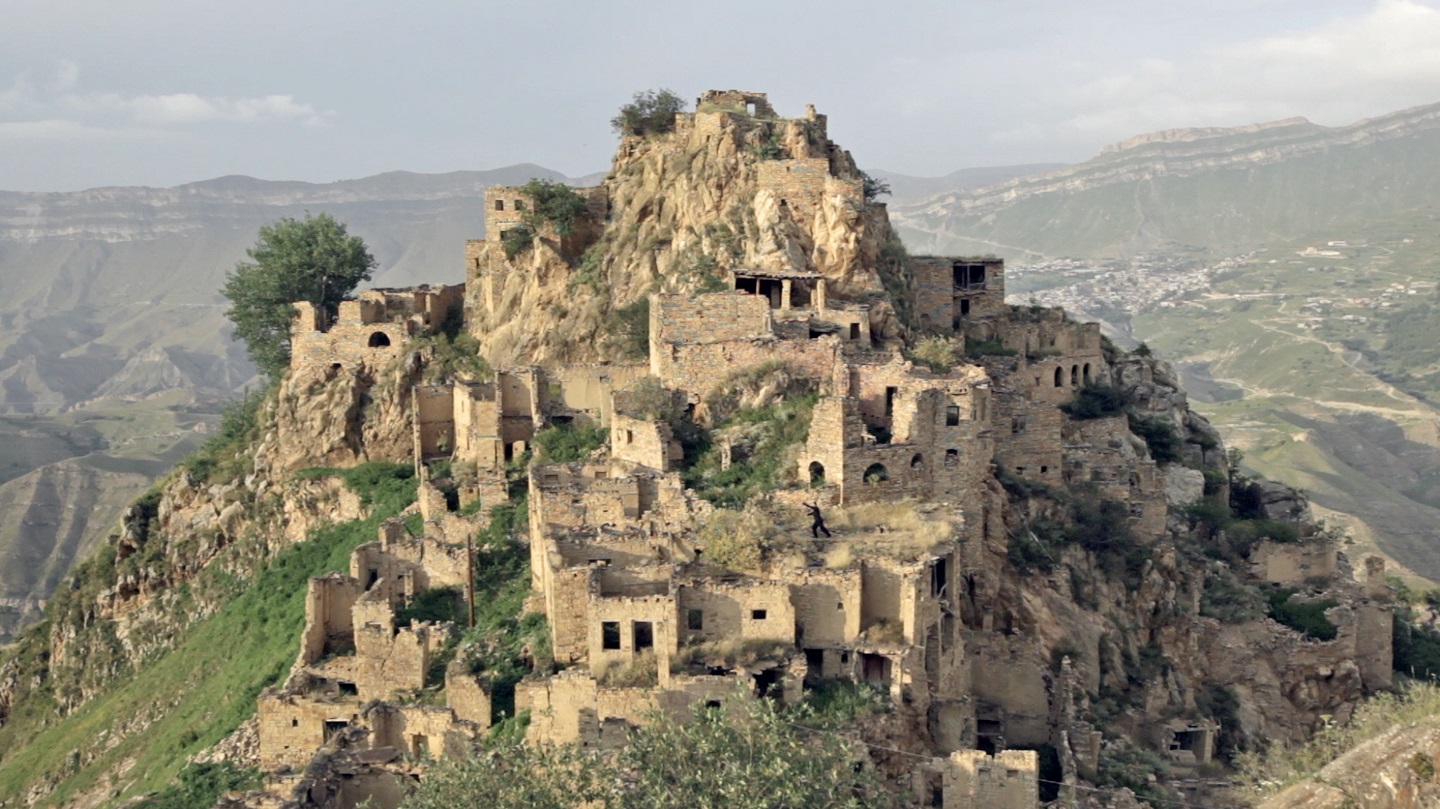
Taus Makhacheva, Gamsutl, HD video, 16.01 min, colour, sound, Dagestan, 2012


Die Ausstellung "A Walk, A Dance, A Ritual" zeigt zum ersten Mal in Deutschland eine umfangreiche Auswahl von Arbeiten Taus Makhachevas, der Preisträgerin des Kunstpreises "Europas Zukunft" 2014.

Taus Makhacheva stammt aus der russischen Republik Dagestan im Kaukasus. Ihr Interesse für die komplexe Beziehung zwischen Geschichte, Gegenwart und Erinnerungspolitik hängt mit der Geschichte des Landes zusammen und bildet den Ausgangspunkt der meisten ihrer in der GfZK präsentierten Werke. Mittels ihres bevorzugten Mediums Video, aber auch in Fotografien, Installationen und Objekten, untersucht und reflektiert sie Motive und Begriffe der Kunstgeschichte, der Anthropologie und Kulturwissenschaften. Die Aufmerksamkeit der Künstlerin richtet sich immer wieder auf Traditionen, wie sie vor der Sowjetisierung der multi-ethnischen Regionen des Kaukasus existierten. Sie beschäftigt sich mit den Fragen: Was ist von dieser Vergangenheit übrig geblieben? In welcher Weise werden die Überbleibsel dieser Zeit und ihrer Traditionen in den heutigen Alltag integriert? – wo sie den Zweck erfüllen sollen, zur Konsolidierung der postsowjetischen Gesellschaft Dagestans beizutragen.

Die Perspektive der Künstlerin ist keineswegs eine nostalgische, vielmehr erfasst sie den Prozess des Verschmelzens, der Aneignung und Einverleibung und der Interaktion zwischen dem Altvertrauten und dem Fremden. In diesem Sinne setzt Makhacheva mit ihrer Arbeit der offiziellen ideologischen Behauptung einer authentischen kulturellen Identität etwas entgegen. Sie nimmt die „wiedererfundenen“ Traditionen, etwa die inzwischen durch und durch kommerzialisierten und überaus üppigen Hochzeitsfeiern (in „A Space of Celebration“, 2009) oder das neue Initiationsritual illegaler Autorennen (in „The Fast and The Furious“, 2011) gleichsam unter die Lupe.

Der Titel der Ausstellung „A Walk, A Dance, A Ritual“ verweist auf die Handlungen und Motive, die in Makhachevas Werk immer wieder eine Rolle spielen. In der Neubelebung vergessener Rituale und Gesten erkundet der Mensch mit seinem Körper – in vielen Fällen agiert die Künstlerin selbst in ihren Videos – sein unmittelbares (soziales) Umfeld in dem Bestreben, seine Umgebung zu erfassen, eine Verbindung zu ihr herzustellen und von ihr akzeptiert zu werden. So lotet Makhachevas künstlerische Praxis eine soziale Erfahrung aus, wie man sie nicht nur in den Gesellschaften des Kaukasus machen kann: den scheinbar unauflöslichen Widerspruch, zu einer bestimmten Gesellschaft oder Gemeinschaft zu gehören und sie gleichzeitig wie ein Außenstehender zu beobachten.

Taus Makhacheva wurde 1983 in Moskau geboren. 2012 erhielt sie den "Innovation Prize", den russischen Staatspreis für zeitgenössische Kunst, in der Kategorie "New Generation", (mit dem Projekt "The Fast and The Furious"), 2011 wurde sie für den Kandinsky-Preis, Kategorie "Media Project of the Year", nominiert. Ihren Bachelor der bildenden Künste hat sie am Goldsmiths College, London, gemacht und ihren Master of Arts am Royal College of Art, London.

Ausstellungen (Auswahl): Story Demands to be Continued (2013, Ausstellungshalle der Künstlervereinigung der Republik Dagestan, Makhachkala), Love me, Love me not (2013, 55. Biennale von Venedig, Collateral Event), Re: emerge – Towards a New Cultural Cartography (2013, 11 Sharjah Biennial), Liverpool Biennial 2012: City States – Makhachkala, Topography of Masculinity (LJMU Copperas Hill Building), Rewriting Worlds (2011, The Fourth Moscow Biennale of Contemporary Art, Main Project, ArtPlay Сentre), Greater Caucasus (2011, PERMM Museum of Contemporary Art, Perm); Affirmative Action (Mimesis) (2011, Laura Bulian Gallery, Mailand), Practice for Everyday Life (2011, Calvert 22, London), History of Russian Video Art, Volume 3 (2010, Moscow Museum of Modern Art)

Der Kunstpreis >Europas Zukunft< wurde 2003 von Matthias Brühl und Dietmar Schulz in Zusammenarbeit mit der GfZK aus dem Wunsch heraus ins Leben gerufen, europäische Künstler und Künstlerinnen für ihre Arbeit auszuzeichnen. Der mit 5000 Euro dotierte Preis ist inzwischen eine wichtige Auszeichnung im Bereich der gegenwärtigen Kunst. Er ist nicht an ein konkretes künstlerisches Projekt gebunden und beinhaltet nicht den Ankauf eines Werkes, sondern ist als eine Ermutigung für Künstlerinnen und Künstler gedacht, ihren Weg fortzusetzen. Dank seiner Stifter ist der Preis zu einem Beispiel für die langfristige Verbindung zwischen Kunst und privatem Engagement geworden.

"Heute gibt es viele Konzepte darüber, was Europa ist oder sein sollte. Deutschland könnte im besten Fall eine wichtige Mittlerrolle spielen und ein friedliches Miteinander fördern. Es ist wichtig, den Austausch zu unterstützen, und in der Kunst sehen wir ein geeignetes Mittel, um sich miteinander zu beschäftigen, ohne sich gleich politisch oder wirtschaftlich zu binden." Matthias Brühl, Dietmar Schulz, Preisstifter

Mit der freundlichen Unterstützung von peri foundation.


E n d e a v o u r HD video / 9.00 min., colour, sound / Tsada mountain village, Dagestan, 2010 from Taus Makhacheva on Vimeo.


more: vimeo.com/tausmakhacheva

more links:
Her Dagestan Taus Makhacheva Profiles BY Stephanie Baile [artasiapacific.com]
Taus Makhacheva Hall of the Artists’ Union, Makhachkala, Russia [frieze.com] 

At the Crossroads: Conversation with Taus Makhacheva

Tuesday, February 11, 2014

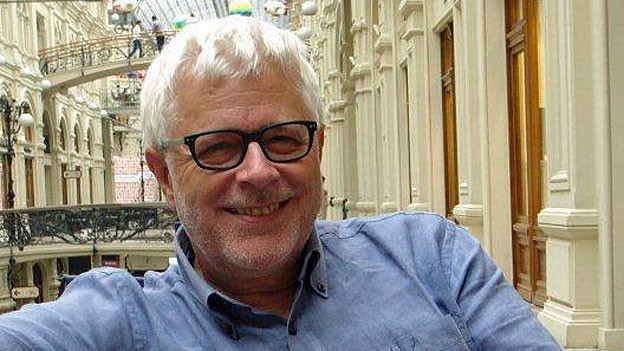
INTERVIEW: Friedliche Spiele im Kaukasus - Interview mit Uwe Halbach. Von Armin Siebert (german.ruvr.ru)

Dr. phil. Uwe Halbach(german.ruvr.ru) STIMME RUSSLANDS Der Kaukasus ist die Heimat vieler Völker und seit Jahrhunderten eine Gegend friedlichen Miteinanders, aber auch Brennpunkt vieler Konflikte. Die Tschetschenienkriege, der Konfrontation zwischen Russland und Georgien, die Unabhängigkeitsbestrebungen von Abchasien und Süd-Ossetien und der verbissene Kampf um die Region Bergkarabach sorgen seit dem Zerfall der Sowjetunion für Spannungen. In unmittelbarer Nachbarschaft finden nun die Olympischen Winterspiele statt. Kaukasus-Experte Uwe Halbach von der Stiftung Wissenschaft und Politik hofft auf friedliche Spiele.

Podcast hier >>>

Monday, November 18, 2013

CHACHA: Kisljarka: Armee-Wodka mit sanftmütigem Charakter. Von Dmitri Suchodolski (russland-heute.de)

(russland-heute.deDagestans Kisljarka spiegelt die Vielfalt des Kaukasus wider. Der Wodka, der weder aus Weizen noch aus Roggen destilliert wird, vereint den Charakter von Grappa und edlem Whiskey auf einzigartige Weise.

In der Familie der russischen Wodkasorten gibt es einen Sonderfall, der eigentlich gar kein Wodka ist, obwohl er die Bezeichnung trägt. Im Unterschied zu seinen Namensvettern, die aus Weizen oder Roggen destilliert und mit Quellwasser auf trinkbare Stärke verdünnt werden, ist der „Kisljarka" – ähnlich dem Grappa – eine hochprozentige Spirituose (45 Vol. %) aus Traubentrester.

Vom „Dienst"-Schnaps des russischen Heeres bis in die klassische russische Literatur

Wie diese südliche Schönheit in die Wodka-Familie der Nordlichter geriet, ist eine interessante Geschichte. Der Kisljarka hat seinen Namen von der dagestanischen Stadt Kisljar, einer Ansiedlung im Kaukasus mit einer jahrhundertealten Geschichte.

An einer günstig gelegenen Uferstelle des Terek, an der man über den Fluss übersetzte, ließen sich zuerst persische Kaufleute nieder. In der zweiten Hälfte des 16. Jahrhunderts tauchte eine Einheit der russischen Palastgarde auf, die die wichtige Handelsader bewachen sollte. Bereits hundert Jahre später bestand die Stadt aus acht verschiedenen ethnischen Stadtvierteln: Außer dem russischen und persischen gab es das armenische und das georgische Viertel, eine kleine Gemeinde getaufter Kaukasier, ein Viertel für die Tschetschenen-Akinzen, die der russischen Zarenkrone dienten, und die Viertel der Tataren und Tscherkessen.

Dieses Bevölkerungsgemisch, das sich hauptsächlich mit Handel und Armeedienst beschäftigte, verfügte über ähnliche Sitten und Bräuche. Insbesondere wurde gern gezecht, wobei die ansässigen Muslime den Christen in nichts nachstanden. Die Weinherstellung war den Bewohnern des heutigen Dagestan von alters her bekannt und sie zeigten eine liberale Haltung den Gesetzen der Scharia gegenüber.

Im 19. Jahrhundert begann die Industrialisierung der bisher auf den Bauernhöfen in der Umgebung von Kisljar praktizierten privaten Weinherstellung. Französische Rebsorten wurden in einem für den Weinbau ideal geeigneten Tal angebaut. Aus den Abfallprodukten, die bei der Weinproduktion entstanden, brannte man massenhaft hochprozentigen Schnaps.

Er galt als firmeneigener Wodka der dort lebenden georgischen Fürstenfamilie Zizianow, die dem russischen Reich, welches das Branntweinmonopol besaß, eine spezielle Lizenz abgekauft hatte. Die Produktion, die bis heute läuft, ist jedoch dem Armenier David Saradschew zu verdanken, der in Westeuropa zum Doktor der Chemie und Handelsberater ausgebildet wurde und in ganz Südrussland als Wohltäter bekannt war.

An den von Saradschew eröffneten Produktionsorten wird der Kisljarka auch heute noch hergestellt, wiewohl die Produktion der lokalen Brennereien schon seit Anfang des 19. Jahrhunderts einen wohlverdienten Bekanntheitsgrad erworben hatte. Da gab es den „Dienst"-Schnaps für das russische Heer, das den Kaukasus kolonisierte. Über den dort erworbenen Ruf gelangte der Kisljarka in die klassische russische Literatur. Er findet Erwähnung in den Werken von Lew Tolstoi und Nikolai Leskow.

Französische Winzer nutzen vermehrt kaukasische Qualitätsprodukte

Im Vergleich zu anderen Grappa-Sorten hat der Kisljarka einen sehr weichen, ausgewogenen Geschmack mit einer stark ausgeprägten Vanillenote, die der kaukasischen Bergeiche zu verdanken ist. In den aus ihr hergestellten Eichenfässern lagert er zwischen sechs Monaten und einigen Jahren.

Der Kaukasus ist Russlands natürliche, exotische Orangerie: die einheimischen subtropischen Wälder und Bergalmen sind berühmt für ihre biologische Vielfalt. Hier wachsen einige Eichenarten, aber für die Eichenfassherstellung eignen sich vor allem zwei: die Traubeneiche und die Stieleiche. Wie gut ihr Holz für die Weinlagerung geeignet ist, kann man an zwei Fakten erkennen: Das einheimische Material für die Fässer wird immer häufiger von französischen Winzern aufgekauft, die Dauben aus Limousin-Eichenholz mit der kaukasischen Traubeneiche verflechten.

Außerdem ist die kaukasische Traubeneiche der nächste Verwandte der in England wachsenden walisischen Traubeneiche, die als Fassholz für die Whiskeyherstellung verwendet wird und besonders für ihre Vanillenote berühmt ist. Exotik-Liebhaber brauchen allerdings nicht bis ins ferne nördliche Dagestan zu fahren, um diese Spirituose zu probieren, die sich Wodka nennt und in der sich die Qualitäten von Grappa und Single-Malt-Whiskey vereinen.

Der Kisljarka, hergestellt in der 1880 eröffneten Fabrik Saradschews, wird in vielen großen russischen Städten verkauft. Man kann ihn leicht an seiner kräftigen Goldfarbe und an seinem Etikett erkennen, das mit dem Porträt des berühmten russischen Heerführers aus der Zeit der napoleonischen Kriege geschmückt ist: dem Fürsten Pjotr Bagration, dessen Geschlecht ebenfalls mit dem Ort Kisljar verbunden ist.

Sunday, November 10, 2013

DIE WELT: Eine 5000 Jahre alte Welt für sich (welt.de)

(welt.de) Khinalig ist ein altes Dorf. Es befindet sich im kaukasischen Gebirge von Aserbaidschan, an der Grenze zu Dagestan. Die Geschichte von Khinalig geht 5000 Jahre zurück. Khinalig ist ein einer der ältesten bewohnten Orte der Welt. Außerdem ist Khinalig das höchstgelegene und abgeschiedenste Dörfchen in Aserbaidschan. Um die 63 Kilometer von der Stadt Quba nach Khinalig zurückzulegen, braucht man fast drei Stunden. Die Straße ist holprig und liegt mitten zwischen Bergen, Flüssen und Wasserfällen. Gerade im Winter ist das Dorf nicht zugänglich, der Schnee und die Wetterbedingungen isolieren es vom Rest der Welt. Das hat Khinalig über die Jahrtausende hinweg vor Eindringlingen und Besetzungen bewahrt. Die rund 2000 Bewohner sprechen ihre eigene Sprache und kleiden sich noch immer traditionell.


Mehr: boergen.de

Travelling to Khinalig: shekiazerbaijan.blogspot.com

Thursday, August 01, 2013

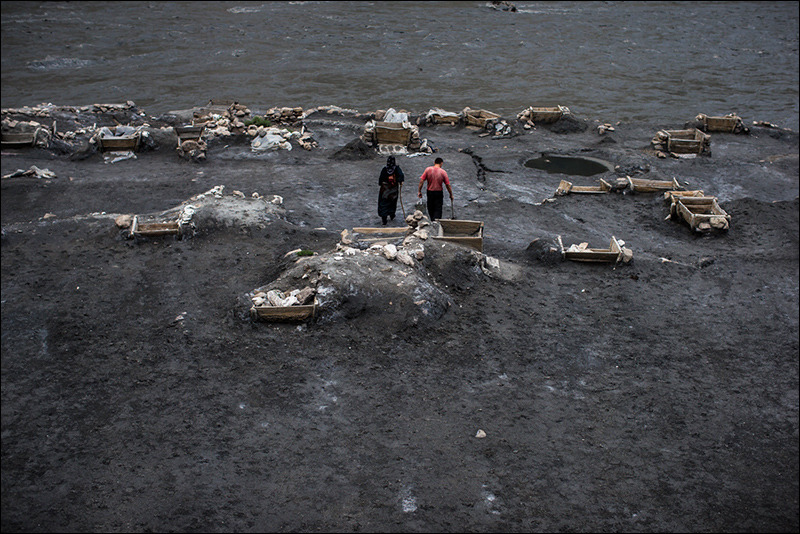
PHOTOREPORTAGE: Extracting Salt In The Village Of Kvanhidatli in Dagestan. By Max Avdeev (blog.maxavdeev.com)

Hadizhat Shahbanova, 73, and her nephew Izudin Abakarov, 18, extract salt in the village of Kvanhidatli. They are using a technique that has been passed through generations of their family for over six centuries. A few kilometers away from their village there is a saline stream from which they draw water, then pour it onto a lump of loose earth. The earth is then dried, the salt is exuded onto the dried surface of the earth and the process is repeated several times. The salted earth is then spread onto a tray and sprayed with water from the stream again, followed by evaporation over burning twigs and roots (few if any trees grow there). A typical production cycle lasts for a week. If lucky, the family could end up with two sacks of salt in a week. Normally, it&#8217;s a sack that one can divide into 80 cans at 100 rubles each (about $3 apiece). Operations are only possible within the dry season that lasts from April to September, mostly July to August. Dagestan, Russia, June 2013. More photos here: http://www.flickr.com/photos/avdeev/sets/72157634768632480

(blog.maxavdeev.com) Hadizhat Shahbanova, 73, and her nephew Izudin Abakarov, 18, extract salt in the village of Kvanhidatli. They are using a technique that has been passed through generations of their family for over six centuries. A few kilometers away from their village there is a saline stream from which they draw water, then pour it onto a lump of loose earth. The earth is then dried, the salt is exuded onto the dried surface of the earth and the process is repeated several times. The salted earth is then spread onto a tray and sprayed with water from the stream again, followed by evaporation over burning twigs and roots (few if any trees grow there). A typical production cycle lasts for a week. If lucky, the family could end up with two sacks of salt in a week. Normally, it’s a sack that one can divide into 80 cans at 100 rubles each (about $3 apiece). Operations are only possible within the dry season that lasts from April to September, mostly July to August. Dagestan, Russia, June 2013.

More photos here: flickr.com

Thursday, June 27, 2013

REPORTAGE: Durchs wilde Dagestan. Inhalt Durchs wilde Dagestan Unentdecktes Land im Kaukasus. Ein Film von Ina Ruck (daserste.de)

Hier können sie das Video anschauen mediathek.daserste.de

(daserste.de) Wir wissen nur wenig von diesem Land: vom wilden Dagestan. Eine Region im Kaukasusgebirge, die zu Russland gehört – und die doch so weit von Russland entfernt scheint.


Tabasaran Gebiet - Hier leben dutzende Völker und sie sprechen dutzende Sprache. Die alte Handwerkskunst ist hier erhalten.
Zwischen Imam und Bergjuden

Seit Jahrtausenden ist die Gegend besiedelt, die alten Römer waren hier, Perser, Araber und Mongolen. Die Festungsstadt Derbent, malerisch am kaspischen Meer gelegen, ist die älteste Stadt des heutigen Russland. Sie ist muslimisch geprägt, gilt aber auch als Heimat der sogenannten kaukasischen Bergjuden. ARD-Korrespondentin Ina Ruck und ihr Team treffen dort einen muslimischen Imam, der seine predigten per Skype in die dagestanischen Hochgebirgstäler schickt. Einige seiner Gemeindemitglieder werden sie auf der Weiterreise besuchen.


In Kubatschi, liegt in 1080 Meter Höhe, herrscht eine jahrelange Tradition. Jedes Haus hat ein Zimmer voller Schätze.
Im atemberaubend schönen gebirgigen Hinterland leben Dutzende verschiedener Nationen – so zerklüftet sind die Berge, dass in jedem Tal eine andere Sprache, in jedem Dorf ein anderer Dialekt gesprochen wird. Und jedes Dorf hat seine Besonderheit – Kubatschi ist bekannt für seine Silberschmieden, Chutschni für seine bunten Teppiche. Und in Zowkra beherrscht jeder den Seiltanz.


Die Wasserträgerinnen aus Kubatschi holen täglich ihr Wasser, es gibt kein fliessendes.
Früher gab es hier keine Brücken, man nutzte dicke gespannte Seile – bis heute lernt jedes Kind, wie man auf einem Seil läuft. Aus Zowkra kommen deshalb bis heute viele Zirkusartisten. In den Ebenen des nördlichen Dagestans werden Pferde gezüchtet – auch die berühmte Pferderasse der Achal-Tekkiner. Russlands Präsident Putin überreicht diese besonderen Pferde gern als Gastgeschenk. 

Mehr: Der Kaukasuskonflikt - Ursachen und Hintergründe

Monday, May 27, 2013

ARTICLE: Blood and Tragedy: The Caucasus in the Literary Imagination. By Alexander Nazaryan (newyorker.com)


caucasus-literature.jpg
(newyorker.com) At the beginning of “The Cossacks,” Leo Tolstoy’s early novel about imperial Russia’s military campaign in the Caucasus, the protagonist Olenin muses about the battles to come: “All his dreams about the future were connected with… Circassian maids, mountains, precipices, fearsome torrents and dangers.” He imagines, with predictable vigor, “killing and subduing a countless number of mountaineers.” Much less predictably, he identifies himself with the Central Asian people he is being sent to subjugate: “He was himself one of the mountaineers, helping them to defend their independence against the Russians.”
That subjugation of the Caucasus would continue for another two centuries, culminating in the two successive wars waged by Yeltsin and Putin. From somewhere within that region—it is not clear where, exactly—emerged the Tsarnaev family, immigrating (apparently) to the Boston area about a decade ago. On Monday, the two Tsarnaev brothers—Dzhokhar and Tamerlan—allegedly committed the first act of terror on American soil since 9/11.

Whether the two accused bombers had specific grievances about the plight of their native Chechnya is unclear. But as the details of their lives emerge, people will inevitably be searching for links between the two young men and the conflict-riven place they come from. It’s a conflict that started with the Cossack encroachments of the eighteenth century and continued with imperial invasions under Catherine the Great, mass deportations by Stalin, and the post-Soviet cruelties of the contemporary Kremlin.
And the Caucasus—a region loosely encompassing Armenia, Georgia, Azerbaijan, Chechnya, Dagestan, Ossetia, and Ingushetia—has always occupied a mystical place in Russian literature. It is a region of rough natural beauty but also a place of exile, where those who ran afoul of the tsar were sent to ponder their fealty to the empire. A place to conquer but also a place before which to stand in awe. If Russia has a cultural subconscious, it lies east of the Don River.
For Russian writers of the nineteenth century, being banished to the Caucasus was usually a sign that one was on the path to glory. Pushkin’s democratic poem “Ode to Liberty” earned him banishment to “the south” for the next three years, where he wrote “A Prisoner in the Caucasus.” Removed from his beloved Petersburg, he nevertheless found inspiration in this foreign land where, as the work’s dedication has it, “warlike raiders roam the hills / and a wild imagination / lies in ambush in the empty silence.”
It may be ironic that writers, like Pushkin, who badly wanted Mother Russia to catch up to her Western European neighbors could at the same time celebrate the unabashedly pre-modern ways of the mountains. There is Orientalism at work here, sure, but also something else—an anxiety about progress, a suspicion that the Caucasian way of life, with its horses, mountains, and wine, is somehow more true to the human condition.
After Pushkin died, the poet Mikhail Lermontov wrote “Death of the Poet,” in 1837, resurrecting some of the themes that Pushkin trumpeted, provoking the ire of Nicholas I, who sent him away to military service the Caucasus. This again proved auspicious: three years later, Lermontov published his greatest work, “A Hero of Our Time,” and briefly enjoyed his literary celebrity. Like his hero Pushkin, he became entangled in a duel, and was killed, in 1841.
The tale of a romantic officer, “Hero” is at its best in describing the landscape of the Caucasus and the people who live there. (However, Lermontov also repeated stereotypes of Caucasians as violent, lascivious tricksters. As one character says, “What a people…. They can’t even say ‘bread’ in Russian, but they’ve learned how to say ‘Officer, tip for vodka!’ ”) The land is the real hero: beguiling, alien, always faintly exuding death.
Of nighttime passage through the mountains, Lermontov writes, “To the right and left of us were gloomy, mysterious chasms, into which the mists crept down, billowing and writhing like serpents…. All was quiet in the heavens and on the earth, as it is in the human heart at morning prayer.” Reading the book today, I am reminded, oddly enough, of “Apocalypse Now,” of journeys that are as perilous within as they are without.
The morning prayer is a reference to Islam, which makes its appearance in Caucasian narratives less as a cultural force than as a descriptive trope, local color to paint characters with. Tolstoy—who went to the Caucasus willingly in the eighteen-fifties, as a soldier with the Cossacks to tidy up the remains of a dissolute youth—wrote in his novel “Hadji Murat” that the titular character possessed an “oriental, Muslim dignity.” In tales like “The Prisoner of the Caucasus,” he presents Muslim rites journalistically, as curiosities that are sure to pique the interest of readers in Moscow and Petersburg.
But for whatever simplicities he employed, Tolstoy understood the travails heaped upon the Chechens and their brethren better than the poets who came before him. In fact, as the New York Times noted, in 2009, he is probably the most revered Russian writer in Chechnya, where a museum (supported by Chechen authorities close to the Kremlin and thus eager to build the peace) to him stands. As a great-great-grandson of Tolstoy told the Times, “The Chechen people think that Tolstoy wrote most truthfully of the events that happened then and the character of the mountain peoples, their striving to be independent, for freedom, and their religious, ethnic and other particularities…Tolstoy, in spite of the fact that he was an aristocrat, a Russian count, was very democratic and open. He had friends among the Chechens.” Surely that arises in good part from Tolstoy’s ability to understand, and even sympathize with, Chechens’ animosity toward “those Russian dogs”—a sentiment that no amount of money can erase.
Ironically, it was when Russia was ruled by a Georgian—Stalin—that cruelty toward people of the Caucasus was most vehemently recrudescent. In 1944, he simply deported about a half a million of them eastward from land on which they had lived for centuries. The only reason this mass displacement is little remembered is because there were so many other atrocities taking place.
It is surprising, then, that one of the most sensitive portrayals of the region comes from that cruel age. “An Armenian Sketchbook” was published nearly a decade after Stalin’s death (and has recently been translated into English by the New York Review Classics), by Vasily Grossman, a writer who had suffered much during Stalin’s life, and was himself to shortly die from cancer. “Armenian Sketchbook” is a minor work—but that is only because Grossman’s major work, “Life and Fate,” is the twentieth-century equivalent of “War and Peace.”
Indeed, much like Tolstoy, Grossman understands the Caucasus as more than just the plaything of empires. Grossman cannot help but be astounded by the landscape, writing that “The whole of Armenia is awash with light.” And though the comity of the Soviet era was enforced by iron rule, he finds a hospitality that is absent in earlier narratives of the region: “What more do I need? On the street people greet me with a smile…. People share their stories with me; they tell me about their lives, about their sorrows…. It’s all right here. I’m accepted; I’m one of them.”
This kind of simplistic celebration of Armenians played unwittingly but conveniently into the Kremlin’s propagandistic purpose (even if Grossman was far from an establishment cheerleader himself). Maybe the saddest feature of all the literature about the Caucusus is that almost none of what is widely read and celebrated is written by Caucasians themselves.
The dissolution of the Soviet Union gave rise to the tumult that the Tsarnaev family apparently fled in hopes of a calmer life in the United States. The story of the Tsarnaev brothers—if they are indeed responsible for the bombing in Boston—spills well out of the boundaries of the Caucasian region. But it is tied to the stories of blood, lust, and tragedy that Russians have been writing about for centuries.
Alexander Nazaryan is on the editorial board of the New York Daily News, where he edits the Page Views book blog.
Photograph: Library of Congress

Tuesday, April 23, 2013

RADIO: Peter Gysling über die Republik Dagestan (srf.ch)

Peter Gysling, SRF-Korrespondent in Moskau.
Peter Gysling, SRF-Korrespondent in Moskau. Gabriela Brönnimann, SRF
(srf.ch) Montag, 22. April 2013, 13:00 Uhr

Podcast >>>

Ein Stück Land im Kaukasus, das nur wenig grösser ist als die Schweiz, machte im Zusammenhang mit den Attentätern von Boston plötzlich Schlagzeilen: Dagestan. SRF-Korrespondent Peter Gysling kommt eben von dort zurück.

«Es hat mich nicht abgeschreckt, dass meine Assistentin aus Angst nicht mitkommen wollte nach Dagestan», sagt SRF-Korrespondent Peter Gysling. In Dagestan verüben Islamisten fast täglich Anschläge: «Die Islamisten wollen sich abspalten von Russland und einen islamischen Gottesstaat gründen», so Gysling. Die russische Armee ihrerseits verhaftet, foltert, und tötet auf der Jagd nach Islamisten oft willkürlich junge Muslime und sät dadurch Hass. Dagestan, ein Gebiet, das man laut EDA eher meiden sollte, weil die Entführungsgefahr so gross sei. Die Region gilt auch als Armenhaus der russischen Föderation: «Wie arm Dagestan ist, zeigt sich überall, zum Beispiel auch am Preis eines Bieres: es kostet einen Zehntel im Vergleich zu einem Bier in Moskau». Peter Gysling, jetzt wieder in Moskau, ist Gast von Susanne Brunner.


Neue Moscheen im russischen Nordkaukasus
Dagestan Überall im russischen Nordkaukasus stehen neue Moscheen Peter Gysling

Monday, September 10, 2012

VERANSTALTUNG: Über Leben im Nordkaukasus. Zivilgesellschaftliche Akteure berichten (boell.de)

(boell.deDi, 11.9.12 19 bis 21 Uhr Heinrich-Böll-Stiftung 

Die Situation im Nordkaukasus wird in Russland und in der internationalen Öffentlichkeit nur sporadisch wahrgenommen. Positive Nachrichten sind selten, meist gerät die Region durch Gewalt und Menschenrechtsverletzungen in die Schlagzeilen. Viele Menschen werden Opfer der Gewaltspirale zwischen unkontrollierter Staatsmacht und terroristischen Gruppen; Morde an Menschenrechtlerinnen und Menschenrechtlern erzeugen eine Atmosphäre der Angst, Unsicherheit und Unterdrückung.

In dieser Situation haben es unabhängige zivilgesellschaftliche Akteure besonders schwer: Meist werden sie verdächtigt, Vaterlandsverräter und „Spione des Westens“ zu sein. Dennoch gibt es in allen nordkaukasischen Republiken zahlreiche Initiativen, die sich für den Schutz vor Willkür, für Bildungsangebote und für eine zivile demokratische Kultur engagieren. Wir haben vier Gäste aus Dagestan, Tschetschenien und Kabardino-Balkarien eingeladen, uns einen tieferen Einblick in die gegenwärtigen Entwicklungen in den nordkaukasischen Teilrepubliken und in ihre eigene Arbeit zu gewähren. Welche Freiräume gibt es für zivilgesellschaftliches und politisches Engagement? Wie stark ist der Druck von offizieller Seite? Und welche (Über-)Lebensstrategien entwickeln Menschen?

Mit:
Elena Denisenko, Juristin, Memorial, Dagestan
Azret-Ali Afov, Internationales Rotes Kreuz, Kabardino-Balkarien
Marina Seferova, Dagestan
Fatima Gudieva, NGO Denial, Tschetschenien
Moderation: Dana Jirous, OWEN - Mobile Akademie für Geschlechterdemokratie und Friedensförderung e.V.
* angefragt

Sprache: Russisch/ Deutsch mit Simultanübersetzung

Information: Lisa Eichhorn, Projektbearbeiterin Telefon 030/28534388 Email RG_Osteuropa@boell.de

Veranstalter: Heinrich-Böll-Stiftung, Berlin
Veranstaltungsort: Heinrich-Böll-Stiftung, Berlin
10117 Berlin, Schumannstr. 8

Mit der S-Bahn oder mit der U-Bahn bis Bahnhof Friedrichstraße. Ausgang über die Spree, dann Albrechtstraße, Reinhardtstraße überqueren und nach links in die Schumannstraße.
Lageplan

Friday, August 31, 2012

KOMMENTAR: Georgisch-russischer Grenzzwischenfall? Von Rainer Kaufmann (kaukasische-post.com)

(kaukasische-post.com) Die Medien der Welt sind sich offensichtlich einig: Es gibt wieder einmal neue Spannungen an der georgisch-russischen Grenze. Sogar die “EU zeigt sich über die jüngsten Kämpfe an der georgisch-russischen Grenze besorgt”, wie ein Sprecher EU-Außenpolitikbeauftragten Catherine Ashton am Donnerstag in Brüssel erklärte. Der österreichische Standard, sonst eigentlich ein besonnener Beobachter der Vorgänge im Kaukasus, übernimmt mit dieser Formulierung einen Agenturtext. Und BBC titelt online: “Georgian army operation on Russian border leaves 14 dead”. Und alle Agenturen bringen diese neuen Spannungen flugs in den direkten Zusammenhang mit dem georgisch-russischen Krieg um Südossetien im Jahr 2008.

Nach allem, was man zur Stunde aus seriösen georgischen Quellen weiß, ist wohl folgendes passiert: Ein Dutzend schwer bewaffnete Freischärler aus Dagestan, wo es regelmäßig zu Zusammenstößen zwischen der russischen Ordnungsmacht und muslimischen Fundamentalisten unterschiedlichster Gattung kommt, haben sich über die Grenze nach Georgien durchgeschlagen, aus welchem Grund auch immer. Dort haben sie ein paar junge Georgier als Geiseln genommen. Über die Motivation dieser Geiselnahme ist noch nichts bekannt. Nach erfolglosen Verhandlungen über die Freilassung der Geiseln wurden diese von der georgischen Polizei befreit. Bei dieser Operation starben elf Geiselnehmer und drei Georgier, zwei Angehörige einer Spezialeinheit des georgischen Innenministeriums und ein Militärarzt. Die Aktion, so die Information der georgischen Regierung von heute, ist mittlerweile abgeschlossen, die toten Geiselnehmer seien ihrer religiösen Tradition folgend bereits bestattet worden.

Eine reine Polizeiaktion, wie sie von jedem Staat der Welt in seinem Territorium durchgeführt werden muss, will er seine Bürgerinnen und Bürger vor Kriminellen schützen. Eine Aktion, die sicher auch notwendig war, damit Russland den Aufenthalt von islamistischen Aktivisten aus Dagestan in Georgien nicht etwa für eigene propagandistische Ziele einsetzen kann. Über die Schweizer Botschaft, die zwischen Georgien und Russland vermittelt, da beide Länder keine diplomatischen Beziehungen unterhalten, sei Russland über alle georgischen Schritte informiert gewesen, heißt es in Georgien.

Ein Vorfall demnach, der eigentlich keine größere, weltweite Aufmerksamkeit verdient, zumindest keine, die in Zusammenhang mit der politischen Großwetterlage zu stellen wäre. Georgien hatte Ende der 90-er Jahre große Probleme mit nordkaukasischen Aufständischen, die sich auf seinem Territorium eingerichtet hatten, damals auch mit Geiselnahmen und vielen anderen unangenehmen Nebenerscheinungen. Einer Wiederholung dieser Geschichte wurde schnell ein Riegel vorgeschoben. Mehr nicht, aber auch nicht weniger. Daraus, von welcher Seite auch immer, irgendein politisches Propagandasüppchen zu kochen, ist ein durchsichtiges Manöver, das Beobachter klar benennen sollten. Diesen Vorgang aber in den Zusammenhang mit den Ereignissen um Südossetien und Abchasien zu stellen, ist nicht nur oberflächlich, es hat mit einer seriösen, analytischen Berichterstattung aus dem Kaukasus nichts zu tun.

Warum bei aller Sorge der EU die EUMM-Beobachter nicht unverzüglich in das georgisch-dagestanische Grenzgebiet geschickt wurden, bleibt überdies ein Brüsseler Geheimnis. Das EUMM-Mandat gilt nämlich ausdrücklich für das gesamte georgische Staatsgebiet.

Friday, August 10, 2012

SPORT: The Wrestlers of Chechnya: Photographs by Yuri Kozyrev (lightbox.time.com)

(lightbox.time.com) Wednesday, July 25, 2012 | By Simon Shuster

Boys train to become professional wrestlers at their school in Khasav-Yurt, Russia. 
Yuri Kozyrev–NOOR for TIME

In 1994, when Russia invaded the breakaway region of Chechnya, Yuri Kozyrev, then a freelance photographer, captured some of the most iconic images of the ensuing war. It was too dangerous at the time to live in the Chechen capital of Grozny, which faced heavy Russian bombardment. So he and a group of other reporters (including Marie Colvin, who was killed this year while covering the siege of the Syrian city of Homs) took up residence at a kindergarten called Solnyshka (Sunshine), in the nearby town of Khasavyurt. Lying on the border between Chechnya and the neighboring Russian republic of Dagestan, this town of 130,000 suffered relatively little damage during the war, so journalists, as well as some of the Chechen rebels, used it as a place to rest and resupply before heading back into the war zone.

In June, Kozyrev returned to Khasavyurt to photograph how the town—and its conflict—have evolved. Although heavy fighting ended with the Russian conquest of Chechnya in 2000, the war left behind an Islamist insurgency that Russia still struggles to quell. On an almost daily basis, rebels inspired by a radical sect of Sunni Islam called Salafism continue to clash with security forces in the region, costing hundreds of lives every year. In Khasavyurt, the Russian effort to counter their influence still scars the unpaved streets. In most neighborhoods, gutted homes mark the sites of “special operations,”the commando raids that use heavy artillery to flush out suspected insurgents. But the town has also been shaped by the central element of Russian soft power in the region: the development of wrestling schools. Much like soccer in the favelas of Sao Paolo and basketball in Harlem, wrestling in Khasavyurt is meant to serve as an inoculation against violence, or at least a distraction from it, by offering the local boys an outlet for their frustrations that does not involve ”going to the woods,” the Russian slang for joining the insurgency.

Every year, Moscow pumps roughly a million dollars into Khasavyurt’s five wrestling academies, which have produced an impressive crop of champions. In the past four Olympic cycles, freestyle wrestlers from Khasavyurt have brought home a total of eight gold medals, along with at least 12 world championship titles and countless trophies in national and European tournaments. At the Olympic Games in London, at least two wrestlers from Khasavyurt will compete to affirm the town’s nickname—The Foundry of Champions—which is scrawled on green signs near the central bazaar, showing the legendary Buvaysar Saytiev in the middle of a grapple.

During his visit in June, Kozyrev’s photography focused on Saytiev and his younger brother Adam, who have won four Olympic gold medals in freestyle wrestling between them. For more than a decade, the Saytiev brothers, who are ethnic Chechens, have served as somewhat reluctant poster boys for the notion of pacification through sport. Their wrestling schools have inspired thousands of young men from Khasavyurt to channel their strength into wrestling rather than rebellion, and Kozyrev spent much of his time photographing them train for the London Olympics. But away from the gyms, members of the Khasavyurt wrestling community revealed that the idea of sport as an antidote to extremism is not quite working out as planned. Some of the town’s leading athletes have started “going to the woods” in recent years, and an alarming number of them have been killed as insurgents during shootouts with police. No longer a haven from conflict, the wrestling schools of Khasavyurt, whose students are often as young as 8, have become recruiting ground for Islamists. As Kozyrev concluded after his visit: “This is a town that remains at war.”

Read more about the Chechen wrestlers of Khasavyurt on TIME.com

Simon Shuster is TIME’s Moscow reporter.

Yuri Kozyrev is a contract photographer for TIME and was named the 2011 Photographer of the Year in the Pictures of the Year International competition. 

Related Topics:  , , , , , , , , , ,

Saturday, July 21, 2012

TRAILER: On the Edge of Time. By Stefan Tolz (youtube.com)


Trailer of the feature documentary by Stefan Tolz on male domains in the Caucasus. The documentary was shot in 2000 and 2001 in Georgia, Dagestan and Azerbaijan and received serveral awards among which are the Golden Gate Award (San Francisco) and the Grand Prize of the Taiwan International Documentary Film Festival.  

More information at www.on-the-edge-of-time.de

Friday, June 15, 2012

VORTRAG: "New Moslims in Dagestan" Von Iwona Kaliszewska

Am Montag (18.06.) wird Frau Iwona Kaliszewska am Institut für Kaukasiologie in Jena zu Gast sein. Die junge polnische Ethnologin wird über die Ergebnisse ihrer Feldforschung zur jüngsten Entwicklung des Islam in Daghestan berichten.


Iwona Kaliszewska arbeitet derzeit an ihrer Dissertation und unterrichtet am Istitut für Ethnologie und Kulturanthropologie an der Universität Warschau. Sie ist Vorsitzende der Stiftung 'Kaukaz.net', schreibt für das 'New Eastern Europe journal' und hat an dem Buch 'Matryoshka in Hijab. Essays on Dagestan and Chechnya' (2010) mitgewirkt.


+++


Mrs. Iwona Kaliszewska in Jena guest will be on Monday (18.06). The young Polish Ethnologist will report on the results of their fieldwork to the recent development of Islam in Daghestan.


Iwona Kaliszewska is currently working on her dissertation and teaches at the Istitut for Ethnology and cultural anthropology at the University of Warsaw. She is Chair of the 'Kaukaz.net', writes Foundation for the ' new Eastern Europe journal' and has the book ' matryoshka in hijab. Essays on Dagestan and Chechnya' (2010) had with.


More: 
“Stateless” Places in the North Caucasus? Localized Forms of Sovereignty in Dagestan (pdf)

Saturday, February 26, 2011

NEWS: RFE/RL Caucasus Report, January 29, 2011 - February 25, 2011 (rferl.org)

A review of RFE/RL reporting and analysis about the countries of the South Caucasus and Russia's North Caucasus region. For more stories on the Caucasus, please visit and bookmark our Caucasus page .

Who Are Kabardino-Balkaria's 'Black Hawks'? The Kabardino-Balkaria-Karchai jamaat headed by Asker Jappuyev will have to contend with a second adversary in the shape of the "Black Hawks," a band of armed, masked, black-clad men who have vowed to kill him and others for having "brought shame upon their race" by killing innocent civilians and by aligning themselves with Chechen insurgent commander Doku Umarov. More
Abkhazia Asks Georgia To Hand Over Former Guerrilla Commander The Abkhaz delegation to confidence-building talks has demanded that Georgia hand over Dato Shengelia, commander of the now-disbanded Forest Brothers guerrilla group. More
Azerbaijani Anticorruption Campaign Unfolds Before Wary Public Eyes Three weeks have passed since the Azerbaijani government launched a well-publicized anticorruption campaign, but authorities have so far failed to convince the public of the sincerity of their intentions. More
A Look Inside Kadyrov's Villa Thanks to the Internet, we now have photos of Ramzan Kadyrov's mansion in Tsentoroi. The photos don't tell us much about the man aside from a penchant for expensive, if tasteless, furnishings. More
Proposed U.S. Budget Trims Assistance To Caucasus, Central Asia While the State Department isn't experiencing the same belt-tightening pressure as other branches of the U.S. government, an effort to cut corners -- and to free up funds for Iraq, Afghanistan, and Pakistan -- has resulted in a proposed reduction in funding for assistance programs in Central Asia and the Caucasus in 2012. More
Rift Opens In Georgia Between The Church And State Georgia's plans with Turkey to sign an accord preserving religious heritage sites in the two countries has exposed a growing rift between the government and the Orthodox Church. More

Aliyev Steps Up Corruption Fight Azerbaijan's president has called for more vigilance in the fight against corruption and urged people to help heal what he called the "wounds" of sleaze. More
Rally Against Iran Held In Baku A rally took place on February 9 in front of the Iranian Embassy in Baku to protest what are widely perceived to be anti-Azerbaijani statements appearing in the Iranian media and Iran’s warmer ties with Armenia. More
Facebook Lands Activist In Hot Water An Azerbaijani opposition activist has been questioned by police after using his Facebook page to call on people to protest against the government. More
Mr. Bryza: They're Locking Up Our Youth After nearly a year and a half, a new U.S. ambassador has finally taken up residence in Baku. Matthew Bryza became the seventh U.S. ambassador to Azerbaijan last December and says he wants to deepen U.S.-Azeri ties. His timing is perfect. His arrival has coincided with a renewed government crackdown on youth activists. More
Armenian Daily Fined For Libel An Armenian court has found the country's leading pro-opposition daily newspaper guilty of libel and ordered it to pay a fine. More
Chechen Rebel Says He Ordered Russian Bombing Chechen Islamist rebel leader Doku Umarov says he ordered a suicide bombing that killed 36 people at Russia's busiest airport last month. More
Protests At Baku's Mubarak Statue A group of Azerbaijani youth activists staged a demonstration February 6 near a statue of Egyptian President Hosni Mubarak in Baku, in a gesture of solidarity with anti-Mubarak protesters in Egypt, More
Azeri Activist Detained On Drugs Charges An opposition youth activist has been detained on drugs-possession charges his supporters say are trumped up. More
Foreign Investors Eye Nagorno-Karabakh A group of entrepreneurs from Austria, the Czech Republic, and Slovakia have visited the breakaway Azerbaijani region of Nagorno-Karabakh to look at investment opportunities. More
Largest Flag Flying Again In Baku The troubled Azerbaijani flag recognized as the world's largest -- when mounted -- is flying again. More

Small Corners Of Hell Russian investigative journalist Anna Politkovskaya was gunned down in Moscow in October 2006 primarily for her articles criticizing Russian policy in Chechnya, in particular the vindictiveness, intimidation, corruption and arbitrary brutality that are the hallmarks of the pro-Moscow Chechen leadership. More
Armenia To Probe Noncombat Deaths Armenian President Serzh Sarkisian said he would pay "special attention" to investigations into noncombat army deaths after being confronted by angry parents of dead soldiers. The parents are concerned that the authorities are not telling the truth or taking the deaths seriously. More
Mubarak Sitting Pretty In Azerbaijan Despite troubles at home, Egyptian President Hosni Mubarak is still sitting pretty in Azerbaijan. More
It May Be Too Late For A New North Caucasus Policy Faced with the galloping jihadization in the region, Russian experts are ever more frequently calling for a new state policy for the North Caucasus. Such calls are misguided insofar there can be no one-size-fits-all set of measures, only individually tailored solutions for specific republics. More
Armenian Economy Rebounded In 2010 Armenia's economy grew 2.6 percent last year as it rebounded from a sharp decline in 2009 caused by the global financial crisis. Growth in 2010 was driven primarily by industry and the mining sector, which benefited from a rally in prices for nonferrous metals. More
Was Daghestan Jamaat Behind Domodedovo Bombing? No group has yet claimed responsibility for the deadly blast at Moscow's Domodedovo airport. But Russian media have floated the idea that the suicide bomber was linked to the Daghestan wing of the North Caucasus insurgency, whose leader warned last October that his men would continue to "inflict horrors on the unbelievers" on their own territory. More
Why Is Georgia So Quiet About Tunisia’s Revolution? When I asked several Georgian politicians from the ruling party what the country’s position on the recent events in Tunisia is, they were caught by surprise. It is worth saying a few things about this Georgian indifference to the so-called Jasmine Revolution. More
Azeri Activist Held Over Military Service Police detained Baxtiyar Haciyev while he was on his way to neighboring Georgia. Haciyev told RFE/RL that police kept him in the police station in the western town of Qazax until 3 a.m. He was then transferred to the western city of Ganca. More
Georgia Offers Russian-Language Alternative To Kremlin TV Georgia begins broadcasts of a new Russian-language television station that seeks to bring balanced news about the Caucasus to Russian-speaking countries around the world. The director of the Kanal PIK station says the move is meant to shed light on the strategically important region of the Caucasus by breaking the Kremlin's near-monopoly on coverage. More
Russians Rethink Security President Dmitry Medvedev vows to destroy "the nests of the bandits" who perpetrated the devastating attack on Moscow's premier airport. More
Your Responses: 'What Boorishness...It Is To Talk Politics When People Are Dying!' Russians have reacted with shock and grief to the tragic terrorist bombing of Moscow’s Domodedovo airport on January 24. Here we present translations of some of the comments left on the website of RFE/RL’s Russian Service and other popular Russian-language websites. More
Armenia Downplays Tax Revenue Armenian Finance Minister Vache Gabrielian has downplayed a more than 13 percent rise in the tax revenues, saying more needs to be done to improve tax collection in the country. More
Azerbaijani Commits Self-Immolation An Azerbaijani villager has died after setting himself and his home ablaze in desperation after police pressured him to pay a fine for chopping down trees. More
Azeri Islamic Leader Gets 90 Days The chairman of the unregistered Islamic Party of Azerbaijan (AIP), Movsum Samadov, has been sentenced to three months in pretrial detention on charges of illegal arms possession, inciting terror, and seeking to change the constitutional system, Samadov was initially detained along with several members of his party on January 7 and was held for 13 days for allegedly resisting police. Samadov's lawyer says his client will appeal the detention. More
Armenian Soldier Killed In Karabakh An Armenian soldier was shot dead in continuing truce violations at Armenian-Azerbaijani "line of contact" around the breakaway Azerbaijani region of Nagorno-Karabakh. More
Yerevan Street Traders Protest Ban Yerevan's city administration is facing angry streets protests after its decision to ban street traders, Mayor Karen Karapetian ordered the ban after taking office last month. Police began enforcing it this week. Hundreds of traders now risk losing their sole source of income. More

Wednesday, February 02, 2011

FERNSEHEN: Russland/ Dagestan: Neuer Hort für Terroristen? Ein Film von Christoph Wanner (mdr.de)

Mi., 02.02., 13:15 Uhr, 14:30 min

Video in der MDR Mediathek / Rubrik "Auf Gute Nachbarschaft >>>

Ein Film von Christoph WannerWieder wurde Moskau Ziel eines Anschlages, als am Montag die Explosion den Moskauer Flughafen erschütterte. Schnell kam der Verdacht auf, dass die Hintermänner aus Russlands Süden kommen. Das Zentrum des Terrors hat sich in den letzten Jahren verlagert. Moskaus Stadthalter in Grosni, Ramsan Kadirow, hat die meisten Untergrundkämpfer mit eiserner Hand aus der Kaukasusrepublik Tschetschenien vertrieben. Viele sind gleich nebenan in Dagestan untergetaucht und treiben nun dort ihr Unwesen. Und auch gerade diese Terroristen sollen für viele Anschläge verantwortlich sein. Selten gewährt die russische Regierung westlichen Journalisten einen tiefen Einblick in die Unruheregion am kaspischen Meer.

Friday, January 07, 2011

NEWS: RFE/RL Caucasus Report, December 17, 2010 - January 7, 2011 (rferl.org)

A review of RFE/RL reporting and analysis about the countries of the South Caucasus and Russia's North Caucasus region. For more stories on the Caucasus, please visit and bookmark our Caucasus page .

Azeri Villagers Protest Hijab Ban Several thousand people taking part in an Ashura ceremony in a village near Baku have protested a ban on the wearing of hijabs in schools. More
Daghestan's President Tries To (Re)Make History On December 15, a congress of Daghestan's various nationalities took place in the capital, Makhachkala, which the republic's authorities touted as the third such congress in Daghestan's recent history. More
Gas Chief Named Yerevan Mayor Yerevan has a new mayor, a week after the Armenian capital's top official resigned following allegations he beat up a member of the president's staff. More
Independent Armenian TV Loses Another Frequency Tender Armenia's embattled A1+ TV company, which has been off the air for almost a decade, has been defeated in another frequency tender administered by the state regulator after allegedly submitting fraudulent documents. More
Armenian Military Launches Hotline For Complaints Armenia's Defense Ministry has launched a hotline for reporting complaints, following a recent surge of violent incidents and non-combat deaths within the armed forces. More
Armenia Approves Army Plan Armenian President Serzh Sarkisian and his National Security Council have approved a five-year plan to modernize the armed forces, including the acquisition of long-range, precision-guided weapons. More
Armenia: Would Recognize Karabakh Armenian President Serzh Sarksian says his country will recognize Nagorno-Karabakh as an independent country if Azerbaijan uses force to resolve their dispute over the breakaway region. More
Armenian Justice Minister Fired Over 'Violent' Subordinate Armenian Justice Minister Gevorg Danielian has been dismissed for what the government describes as a failure to punish one of his high-ranking subordinates allegedly involved in violent conduct. More
A Daunting Challenge With globalization multiplying the avenues by which corrupt practices span the globe, experts are debating the nature of corruption and how to stop it. More
As Corruption Rises Worldwide, Georgia Proves The Exception Corruption is on the rise worldwide, as highlighted in Transparency International's latest Global Corruption Barometer. The surprise exception? Georgia, where only 3 percent of residents say they've paid a bribe in the past year. More
Corruption, And Outrage About It, Is On The Rise Corruption is on the rise in many countries, but so is the number of people willing to report incidents of it, according to a new report by the watchdog group Transparency International. More
Yerevan Mayor Quits In Scandal Yerevan's controversial mayor has resigned following allegations he beat up a member of President Serzh Sarkisian's staff. More
Armenian Oppositionist Set Free Another Armenian opposition activist jailed on charges stemming from postelection unrest in Yerevan in 2008 has been granted parole and released from jail. More
NATO Reassures Russia Over Plans NATO has reiterated that the alliance and Russia pose no threat to each other. More
Ukraine May Ease Georgia Travel Curb Meeting with a visiting delegation from Georgia's Finance Ministry, Ukrainian Prime Minister Mykola Azarov said it was necessary to allow Georgian citizens to stay in Ukraine for one year without a visa. More
Chechens Praise European Court Ruling A Chechen woman has welcomed a ruling by the European Court of Human Rights that awarded her and more than two dozen others record compensation for a deadly Russian air raid on their village. More
Armenia Threatens To Recognize Karabakh Armenia has threatened to formally recognize the breakaway Azerbaijani region of Nagorno-Karabakh as an independent state if Baku tries to use force to win back the disputed enclave and other Armenian-controlled territories near it. More
'No Armenia Effect' On U.S. From Leaks U.S. Ambassador to Armenia Marie Yovanovitch says the publication of thousands of leaked U.S. diplomatic documents will not have a negative impact on Washington's "very close" relations with Yerevan. More

U.S. Woman Said Detained In Iran 'Did Not Use Armenian Territory' Armenian authorities have insisted that a U.S. woman reportedly detained in Iran on suspicion of espionage did not travel to Iran from neighboring Armenia. More
New Azerbaijani Youth Group Aims At 'Positive Change' Counting on the power of example, a group of young people were trying to advocate standing in queues in Baku, notorious for its allergy to such orderliness. This was an action by a new youth group -- one aimed at positive change. More
Daghestan's President Suffers Further Rebuff The Daghestan wing of the North Caucasus Islamic insurgency's rejection of calls by President Magomedsalam Magomedov to lay down its arms calls into question the relevance of the government commission recently created to "help" repentant fighters readapt to civilian life and of the appeal to Russian President Dmitry Medvedev adopted last month at a Congress of Peoples of Daghestan to declare an amnesty for fighters who surrender. More
Ruling Azeri Party Touts 'Young' Base The ruling Yeni Azerbaijani Party (YAP) has claimed an increase in the number of young people who joined the party last year. More
Georgian Veterans Fined Over Protest Eleven people arrested when police dispersed a war veterans protest in Tbilisi were fined today in court for petty hooliganism. More
U.S. And Azerbaijan: Best Friends With Dirty Faces The state-owned "Azerbaijan" newspaper published an article at the end of 2010 that criticized U.S. foreign policy as “dishonest and immoral." Titled “USA: Tempting 'Liberty,'” the article also accused several U.S. presidents and lawmakers of having illicit sexual relationships. More
Ten Days In Baku That Shook My World Contributor Christel Fricke says her experience in Azerbaijan has given her a better understanding of what it is like to live on the front lines of the wrong life without any ticket of escape. More
Armenian PM Lays Out Economic Goals Armenian Prime Minister Tigran Sarkisian says manufacturing, information technology, and infrastructure projects will increasingly replace agriculture and construction as the driving forces of economic growth in the country. More
Grozny In The Holiday Spirit After an unsuccessful search far and wide for a suitably ostentatious tree, Grozny's planners decided to fasten together smaller trees together to produce a massive centerpiece that lacked only a dusting of snow during unseasonably warm temperatures in the area. More
Armenia Grapples With Galloping Inflation, Mushrooming Foreign Debt President Serzh Sarkisian predicts the country will fully emerge from its recession in 2011. But a report compiled by the Civilitas Foundation in Yerevan, offers a more nuanced and less optimistic picture, highlighting such pernicious trends as high inflation, a budget deficit, and the huge increase in Armenia's foreign debt over the past three years. More
Sidelined Azerbaijani Opposition Plans 'Public Chamber' Two months after the elections in which Azerbaijan's mainstream opposition parties lost their tiny handful of parliament mandates, veteran political figures have adopted a new strategy for promoting democratization and consensus-building. More
Georgian Opposition Leader Agrees To Defends IDPs' Interests While Georgia's Minister for Internally Displaced Persons, has said that "a fantastic amount" has been done this year to alleviate the plight of tens of thousands of internally displaced persons (IDPs) living in temporary accommodation in Tbilisi. Many IDPs diagree. More
A Cake Fit For A 'King'? For the fifth year in a row, the Azerbaijani city of Ganca has baked a 49-meter cake in honor of President Iham Aliyev's 49th birthday. More
In Azerbaijan, Hijab Debate A Mounting Challenge For Government In Azerbaijan, a recent ban on schoolgirls wearing the hijab, or Muslim head scarf, has sparked angry public protests that are taking on an increasingly political flavor and raising the specter of religious extremism in a country that is both Muslim-majority and largely secular. More
Russia's Minorities Have Plenty Of Questions For Putin In his recent, nationally televised question-and-answer session, Prime Minister Vladimir Putin claimed that "the state exists to provide for the interests of the majority." Fair enough, but what about minorities? Who will protect them from the majority? More