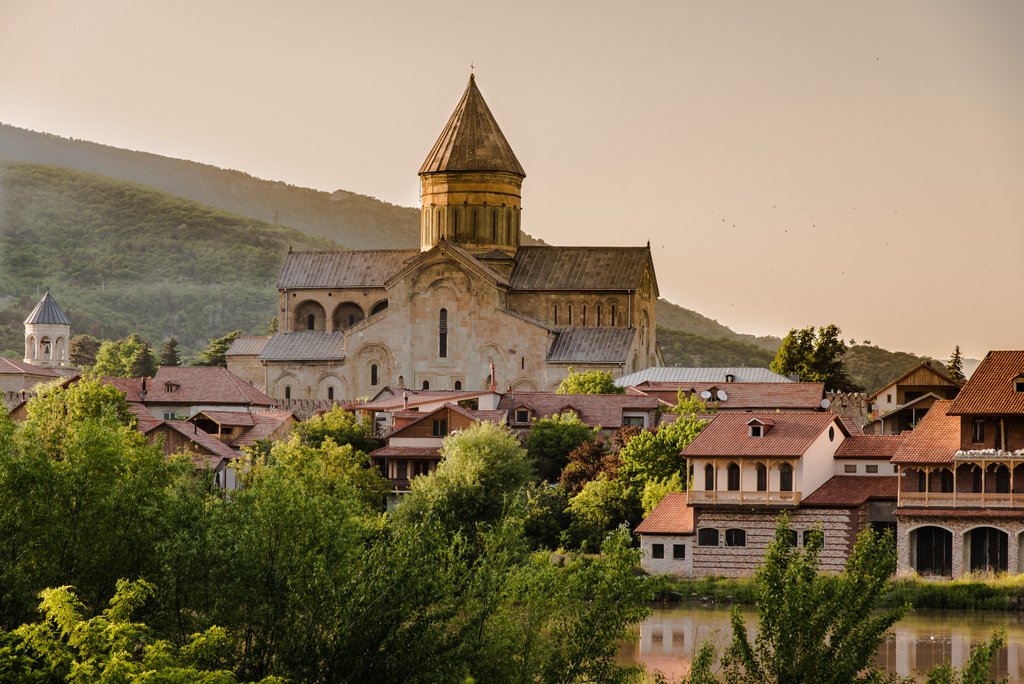
PONARS Eurasia Policy Memo No. 67
Kornely K. Kakachia
Tbilisi State University
September 2009
Georgia has been one of the most vocally independent-minded countries among the Soviet Union’s successor states. As Georgia’s ambitions to draw closer to Europe and the transatlantic community have grown, its relations with Russia have deteriorated. After the Rose Revolution, Russian-Georgian relations remained problematic due to Russia’s continuing political, economic, and military support for the separatist movements in Abkhazia and South Ossetia. Nonetheless, Georgia sought to maintain good relations with Russia, despite the evidence that various Russian political and military forces rejected Georgia’s state-building project as contradictory to Russia’s national interests.
Russia is uncomfortable with Georgia’s democratic and independent nature, as well as with the West’s close ties to a country within Moscow's “legitimate” sphere of influence. Moscow worries that the successful integration of Georgia into Euro-Atlantic structures may cause Russia to lose influence and credibility not only in the Caucasus, but throughout the post-Soviet space. Georgia has demonstrated in recent years that there can exist in the Caucasus a functioning modern democratic state, one in which the economy can develop without government interference and where corruption does not reign. An economically and politically stable Georgia, which might, in the long run, become a successful Eastern European country, can be a model for development that other post-Soviet states, as well as Caucasian republics within the Russian Federation, might emulate. To the Kremlin, this scenario is a dangerous, and potentially costly, zero sum game.
full text >>>
Saturday, September 12, 2009
ANALYSIS: Can Russia Win the Ideological Battle in Georgia? By Kornely K. Kakachia (ceres.georgetown.edu)


SUCHE: Wer kann georgische Jugendliche in Tegel abholen und ihnen ein wenig Berlin zeigen?
Vom 20.09.-04.10. haben wir hier in Dresden wieder eine Jugendbegegnung mit den kaukasischen Freunden.
Die georgische Gruppe - 5 Personen - kommt bereits am 19.09. morgens in Berlin an und würde sich gern dort ein bisschen die Stadt anschauen, bevor sie am 20.09. vormittags nach Dresden weiterfahren.
Nun wird jemand in Berlin gesucht, der sie in Tegel abholen kann und ein bisschen die Stadt zeigt.
Großartig wäre es, wenn sie jemand privat unterbringen könnte, ansonsten müsste ich ein günstiges Hostel buchen.
Kennt jemand junge Leute (Studenten, etc.), die das interessiert und die sich da ein bisschen kümmern könnten?
Wäre super - wenn diese Annonce weitergeleitet wird!
Schöne Grüße aus Dresden
Tina
KULTUR AKTIV e.V.
Tina Wünschmann
Projektkoordinatorin
Mail: Louisenstr. 29 / D - 01099 Dresden
Office: Bautzner Str. 49 / D - 01099 Dresden
(open daily 9:00 - 19:00)
tel: +49-(0)-351-811 37 55
mobi: +49-(0)-151-1729 3403
Fax: +49-(0)-351-811 37 54
mail: tina.wue@gmx.net
www.kulturaktiv.org
Die georgische Gruppe - 5 Personen - kommt bereits am 19.09. morgens in Berlin an und würde sich gern dort ein bisschen die Stadt anschauen, bevor sie am 20.09. vormittags nach Dresden weiterfahren.
Nun wird jemand in Berlin gesucht, der sie in Tegel abholen kann und ein bisschen die Stadt zeigt.
Großartig wäre es, wenn sie jemand privat unterbringen könnte, ansonsten müsste ich ein günstiges Hostel buchen.
Kennt jemand junge Leute (Studenten, etc.), die das interessiert und die sich da ein bisschen kümmern könnten?
Wäre super - wenn diese Annonce weitergeleitet wird!
Schöne Grüße aus Dresden
Tina
KULTUR AKTIV e.V.
Tina Wünschmann
Projektkoordinatorin
Mail: Louisenstr. 29 / D - 01099 Dresden
Office: Bautzner Str. 49 / D - 01099 Dresden
(open daily 9:00 - 19:00)
tel: +49-(0)-351-811 37 55
mobi: +49-(0)-151-1729 3403
Fax: +49-(0)-351-811 37 54
mail: tina.wue@gmx.net
www.kulturaktiv.org
AUSSTELLUNG: Jenseits der Klischees (maerkischeallgemeine.de)
Zehn Magnum-Fotografen zeigen in Berlin Bilder aus dem heutigen Georgien
Ein alter Mann verkauft Kartoffeln aus dem Kofferraum eines Wolgas. Alltag in Georgien. Das Foto des Briten Martin Parr ist Teil der Ausstellung „Georgischer Frühling“ in den Uferhallen in Berlin-Wedding. Zehn Fotografen der renommierten Agentur Magnum bereisten das Land zwischen Februar und April dieses Jahres, unterstützt vom georgischen Kulturministerium. Sie zeigen ein altes Land, einen jungen Staat – zehn Aspekte, zehn subjektive Sichtweisen.
Friday, September 11, 2009
ART: Superstar in Love. New Drawings by Salome Machaidze
Yesterday I have seen my friend Nini Palavandishvili. We had a conversation about many things for example the political situation in this region, the mentality of Georgians, the art in Georgia and above all about the magnum project from foreign photographers in Georgia.
Result of all was the catalog from the magnum photographers about Georgia. We agree each other that this book is a great document about different aims in this official project. You can see there different point of views about Georgia. I think for the Georgian Government is this exhibition not really a success but for the western world is it a good quality ... Maybe this photos could be a "picturesque turn" for the daily life there ...
Late in the evening Nini told me more about Salome Machaidze. She has published in facebook her new drawings. At the time Salome is living in Berlin. Last year we invited her for an exhibition in Leipzig. But now you can see her new works here.
Result of all was the catalog from the magnum photographers about Georgia. We agree each other that this book is a great document about different aims in this official project. You can see there different point of views about Georgia. I think for the Georgian Government is this exhibition not really a success but for the western world is it a good quality ... Maybe this photos could be a "picturesque turn" for the daily life there ...
Late in the evening Nini told me more about Salome Machaidze. She has published in facebook her new drawings. At the time Salome is living in Berlin. Last year we invited her for an exhibition in Leipzig. But now you can see her new works here.
Wednesday, September 09, 2009
NEW POST: I am Georgian, Therefore I Am European. By Alexander Bagrationi (bagrationi.wordpress.com)
My friend Alexandeer is back in Georgia from a long trip through Europe. First photos are from Amsterdam. More you can find here >>>

RADIO: Europas neue Ufer. Rundreise um das Schwarze Meer. Von Tom Schimmeck (dradio.de)
 Europas neue Ufer
Eine Rundreise um das Schwarze Meer (Teil 1)
Von Tom Schimmeck, Moderation: Simonetta Dibbern
Wer einmal ums Schwarze Meer fährt, muss sechs mal Geld wechseln, wenigstens Danke und Guten Tag in sechs verschiedenen Sprachen sagen können und in vielerlei Hinsicht abenteuerlustig sein. Einmal ums schwarze Meer, eine Reise in die Vergangenheit und vielleicht in die Zukunft Europas. Im Uhrzeigersinn entlang der Küstenlinie. Mal an Land, mal auf dem Wasser. Die Reise beginnt in Istanbul.
Europas neue Ufer
Rundreise um das Schwarze Meer (Teil 2)
Von Tom Schimmeck; Moderation Simonetta Dibbern
"Hüte dich vor Fischern, Kriegsschiffen und griechischen Frachtern", sagt der Kapitän, während sein Schiff Kurs auf Odessa nimmt. Der Beginn einer Rundreise um das Schwarze Meer, mit Schiffen, Zügen, Bussen und Sammeltaxis. In eine Weltregion, die immer Grenzgebiet der Reiche und Religionen war - zwischen Europa und Asien, Ost und West, Christentum und Islam.
BOOK: The President, the World Champion and I. By Rusudan Gvazava (geotimes.ge)
 Lali Moroshkina reveals unknown details about Mikheil Saakashvili and her ex-sweetheart Giorgi Kandelaki
 The book will be launched on September 17 at the M.Berdzensihvili centre. After the presentation of the Georgian and Russian version in Georgia the book will go to Frankfurt in October to the book fair there. “Now we are negotiating with foreign publishers and hope that if there is interest it will also be published in English,” she said.
AmazonShop: Books, Maps, Videos, Music & Gifts About The Caucasus
PHOTOGRAPHY: Impression. By Levan Kakabadze (notathomeyet.com)

Additionell ... Levan Kakabadze publishing new posts in his Blog: notathomeyet.com
SCIENCE: A skull that rewrites the history of man (independent.co.uk)
It has long been agreed that Africa was the sole cradle of human evolution. Then these bones were found in Georgia...
By Steve Connor, Science Editor
The conventional view of human evolution and how early man colonised the world has been thrown into doubt by a series of stunning palaeontological discoveries suggesting that Africa was not the sole cradle of humankind. Scientists have found a handful of ancient human skulls at an archaeological site two hours from the Georgian capital, Tbilisi, that suggest a Eurasian chapter in the long evolutionary story of man.
The skulls, jawbones and fragments of limb bones suggest that our ancient human ancestors migrated out of Africa far earlier than previously thought and spent a long evolutionary interlude in Eurasia – before moving back into Africa to complete the story of man.
Experts believe fossilised bones unearthed at the medieval village of Dmanisi in the foothills of the Caucuses, and dated to about 1.8 million years ago, are the oldest indisputable remains of humans discovered outside of Africa.
full article >>>
Related articles
Steve Connor: Out of Africa... and back again? The story of humans unravels
By Steve Connor, Science Editor
The conventional view of human evolution and how early man colonised the world has been thrown into doubt by a series of stunning palaeontological discoveries suggesting that Africa was not the sole cradle of humankind. Scientists have found a handful of ancient human skulls at an archaeological site two hours from the Georgian capital, Tbilisi, that suggest a Eurasian chapter in the long evolutionary story of man.
The skulls, jawbones and fragments of limb bones suggest that our ancient human ancestors migrated out of Africa far earlier than previously thought and spent a long evolutionary interlude in Eurasia – before moving back into Africa to complete the story of man.
Experts believe fossilised bones unearthed at the medieval village of Dmanisi in the foothills of the Caucuses, and dated to about 1.8 million years ago, are the oldest indisputable remains of humans discovered outside of Africa.
full article >>>
Related articles
Steve Connor: Out of Africa... and back again? The story of humans unravels
PALEOANTHROPOLOGY: Fossil find in Georgia challenges theories on early humans. By Ian Sample (guardian.co.uk)
Early humans may have taken a detour into Eurasia before embarking on their epic journey out of Africa, according to new fossil evidence.
Palaeontologists in Georgia have unearthed remains of five primitive humans that date back to 1.8m years ago, suggesting some of our oldest ancestors lived in the region at the time.
The partial skeletons, which represent the earliest humans discovered outside Africa, challenge the theory that our ancestors evolved entirely on the continent and left the cradle of humanity only 60,000 years ago.
David Lordkipanidze, director of the Georgian National Museum, said the primitive humans were short, with small brains and strongly developed legs. Other remains suggest they lived alongside predators including sabre-toothed cats.
The fossils are thought to be early Homo erectus, a forerunner of modern humans, which lived in Africa 2m years ago. Lordkipanidze said some Homo erectus may have left Africa for Eurasia before returning much later.
The fossils were uncovered at the Dmanisi archaeological site south-west of the Georgian capital of Tbilisi. Remains thought to belong to two males and three females were found next to stone tools and animal bones bearing cut marks, suggesting the species prepared meat for food.
"The Dmanisi fossils are extremely important in showing us a very primitive stage in the evolution of Homo erectus," said Chris Stringer, head of human origins at the Natural History Museum in London. "They raise important questions about where that species originated."
By piecing the skeletal remains together, researchers estimate they stood about 1.5 metres tall and had brains a little more than half the size of those in modern humans.
Lordkipanidze said: "The Dmanisi people were almost modern in body proportions and were highly efficient walkers and runners. Their arms moved in a different way, and their brains were tiny compared to ours. They were sophisticated tool makers with high social and cognitive skills."
text >>>
Palaeontologists in Georgia have unearthed remains of five primitive humans that date back to 1.8m years ago, suggesting some of our oldest ancestors lived in the region at the time.
The partial skeletons, which represent the earliest humans discovered outside Africa, challenge the theory that our ancestors evolved entirely on the continent and left the cradle of humanity only 60,000 years ago.
David Lordkipanidze, director of the Georgian National Museum, said the primitive humans were short, with small brains and strongly developed legs. Other remains suggest they lived alongside predators including sabre-toothed cats.
The fossils are thought to be early Homo erectus, a forerunner of modern humans, which lived in Africa 2m years ago. Lordkipanidze said some Homo erectus may have left Africa for Eurasia before returning much later.
The fossils were uncovered at the Dmanisi archaeological site south-west of the Georgian capital of Tbilisi. Remains thought to belong to two males and three females were found next to stone tools and animal bones bearing cut marks, suggesting the species prepared meat for food.
"The Dmanisi fossils are extremely important in showing us a very primitive stage in the evolution of Homo erectus," said Chris Stringer, head of human origins at the Natural History Museum in London. "They raise important questions about where that species originated."
By piecing the skeletal remains together, researchers estimate they stood about 1.5 metres tall and had brains a little more than half the size of those in modern humans.
Lordkipanidze said: "The Dmanisi people were almost modern in body proportions and were highly efficient walkers and runners. Their arms moved in a different way, and their brains were tiny compared to ours. They were sophisticated tool makers with high social and cognitive skills."
text >>>
LESUNG: Einmal Sotschi und zurück. Eine literarische Reise ans Schwarze Meer (inter-est.de)
In Lesung und Gespräch: Katja Lange-Müller (Autorin, Berlin), Katja Petrowskaja (Autorin, Berlin), Serhij Zhadan (Autor, Ukraine)
Moderation: Katharina Raabe (Suhrkamp Verlag)
Mittwoch, 23.09.2009
Wie Raumstationen an den äußersten Ende des Universums erschienen den alten Griechen ihre Küstenstädte am Schwarzen Meers. Über Tausende von Jahren verlief hier die Grenze zwischen Europa und Asien, fast ein halbes Jahrhundert die zwischen Ostblock und westlichem Bündnis. Die dünne Schicht organischen Lebens über einer gewaltigen toten Tiefe; zwei Strömungen, deren obere westwärts, deren untere ostwärts zieht - das geheimnisvolle Meer symbolisiert geradezu die Spannung, die Gleichzeitigkeit des Ungleichzeitigen.
"Last & Lost", dem Atlas des verschwindenden Europas, folgt "Odessa Transfer", eine Fahrt an die Grenzen früherer Imperien, an Orte des Exils und der Zuflucht. Was entsteht hier, zwischen Constanza und Odessa, Jalta und Sotschi, Batumi und Istanbul, auf den Trümmern der ältesten und der jüngsten Geschichte? In Essays, literarischen Reportagen und Erzählungen wird die Schwarzmeerregion sichtbar - als ein Raum, dessen Zauber und Zerstörtheit die poetische Einbildungskraft herausfordert.
Mit Texten von Neal Ascherson, Attila Bartis, Mircea Cartarescu, Nicoleta Esinencu, Karl-Markus Gauß, Katja Lange-Müller, Sibylle Lewitscharoff, Aka Morchiladze, Emine Sevgi Özdamar, Katja Petrowskaja, Andrzej Stasiuk, Takis Theodoropoulos und einem Fotoessay von Andrzej Kramarz.
Von Grenzen zerschnitten, von Konflikten erschüttert, mit Glücksversprechen gesegnet, ist die Schwarzmeerregion eine Landschaft der europäischen Zukunft: voller Unruhe, Aufbruch und Freiheitsverlangen. Was entsteht hier, zwischen Constant und Odessa, Jalta und Sotschi, Batumi und Istanbul, auf den Trümmern der ältesten und der jüngsten Geschichte? Was könnte sein an den Bruchstellen zwischen Asien und Europa?
In "Odessa Transfer: Nachrichten vom Schwarzen Meer" (Suhrkamp Verlag und Czarne 2009) versammeln Katharina Raabe und Monika Sznajderman Essays, literarischen Reportagen und Erzählungen, die diese Region sichtbar machen - als ein Raum, dessen Zauber und Zerstörtheit die poetische Einbildungskraft herausfordert.
Drei der Autoren, Katja Lange-Müller, Katja Petrowskaja und Serhij Zhadan, erzählen an diesem Abend von den Ufern des Schwarzen Meeres, den unterirdischen Strömungen und überirdischen Gegensätzen - eine Reise von den rumänischen Badeorten nahe der bulgarischen Grenze über die Krimküste bis nach Sotschi.
Im Rahmen des Festivals "Neue Ufer. Das Schwarze Meer in Europa" in Berlin, München, Leipzig, Hamburg und Frankfurt am Main.
Veranstalter: inter:est Kulturprojekte in Kooperation mit dem Suhrkamp Verlag und der Literaturwerkstatt Berlin. www.inter-est.de
Mit freundlicher Unterstützung der Robert Bosch Stiftung
Literaturwerkstatt Berlin
Knaackstr. 97
10435 Berlin
Tel.: 030. 48 52 45 0
Eintritt 5/3 EUR
Weitere Veranstaltungen zur Reihe "Odessa Transfer":
23.09.2009 20:00 Uhr Odessa Transfer Berlin
Lesung
24.09.2009 15:00 Uhr Odessa Transfer Berlin
Gespräch
24.09.2009 17:00 Uhr Odessa Transfer Berlin
Gespräch
28.09.2009 20:00 Uhr Odessa Transfer München
Lesung
29.09.2009 20:00 Uhr Odessa Transfer Leipzig
Lesung
30.09.2009 20:00 Uhr Odessa Transfer Hamburg
Lesung
01.10.2009 19:30 Uhr Odessa Transfer Hamburg
Filme und Musik
09.10.2009 20:00 Uhr Sibylle Lewitscharoff - Odessa ... Odessa Transfer Dresden
Lesung
17.10.2009 16:30 bis 17:30 Uhr Odessa Transfer Frankfurt
Buchmesse
Alle Veranstaltungen »
AmazonShop: Books, Maps, Videos, Music & Gifts About The Caucasus
Moderation: Katharina Raabe (Suhrkamp Verlag)
Mittwoch, 23.09.2009
Wie Raumstationen an den äußersten Ende des Universums erschienen den alten Griechen ihre Küstenstädte am Schwarzen Meers. Über Tausende von Jahren verlief hier die Grenze zwischen Europa und Asien, fast ein halbes Jahrhundert die zwischen Ostblock und westlichem Bündnis. Die dünne Schicht organischen Lebens über einer gewaltigen toten Tiefe; zwei Strömungen, deren obere westwärts, deren untere ostwärts zieht - das geheimnisvolle Meer symbolisiert geradezu die Spannung, die Gleichzeitigkeit des Ungleichzeitigen.
"Last & Lost", dem Atlas des verschwindenden Europas, folgt "Odessa Transfer", eine Fahrt an die Grenzen früherer Imperien, an Orte des Exils und der Zuflucht. Was entsteht hier, zwischen Constanza und Odessa, Jalta und Sotschi, Batumi und Istanbul, auf den Trümmern der ältesten und der jüngsten Geschichte? In Essays, literarischen Reportagen und Erzählungen wird die Schwarzmeerregion sichtbar - als ein Raum, dessen Zauber und Zerstörtheit die poetische Einbildungskraft herausfordert.
Mit Texten von Neal Ascherson, Attila Bartis, Mircea Cartarescu, Nicoleta Esinencu, Karl-Markus Gauß, Katja Lange-Müller, Sibylle Lewitscharoff, Aka Morchiladze, Emine Sevgi Özdamar, Katja Petrowskaja, Andrzej Stasiuk, Takis Theodoropoulos und einem Fotoessay von Andrzej Kramarz.
Von Grenzen zerschnitten, von Konflikten erschüttert, mit Glücksversprechen gesegnet, ist die Schwarzmeerregion eine Landschaft der europäischen Zukunft: voller Unruhe, Aufbruch und Freiheitsverlangen. Was entsteht hier, zwischen Constant und Odessa, Jalta und Sotschi, Batumi und Istanbul, auf den Trümmern der ältesten und der jüngsten Geschichte? Was könnte sein an den Bruchstellen zwischen Asien und Europa?
In "Odessa Transfer: Nachrichten vom Schwarzen Meer" (Suhrkamp Verlag und Czarne 2009) versammeln Katharina Raabe und Monika Sznajderman Essays, literarischen Reportagen und Erzählungen, die diese Region sichtbar machen - als ein Raum, dessen Zauber und Zerstörtheit die poetische Einbildungskraft herausfordert.
Drei der Autoren, Katja Lange-Müller, Katja Petrowskaja und Serhij Zhadan, erzählen an diesem Abend von den Ufern des Schwarzen Meeres, den unterirdischen Strömungen und überirdischen Gegensätzen - eine Reise von den rumänischen Badeorten nahe der bulgarischen Grenze über die Krimküste bis nach Sotschi.
Im Rahmen des Festivals "Neue Ufer. Das Schwarze Meer in Europa" in Berlin, München, Leipzig, Hamburg und Frankfurt am Main.
Veranstalter: inter:est Kulturprojekte in Kooperation mit dem Suhrkamp Verlag und der Literaturwerkstatt Berlin. www.inter-est.de
Mit freundlicher Unterstützung der Robert Bosch Stiftung
Literaturwerkstatt Berlin
Knaackstr. 97
10435 Berlin
Tel.: 030. 48 52 45 0
Eintritt 5/3 EUR
Weitere Veranstaltungen zur Reihe "Odessa Transfer":
23.09.2009 20:00 Uhr Odessa Transfer Berlin
Lesung
24.09.2009 15:00 Uhr Odessa Transfer Berlin
Gespräch
24.09.2009 17:00 Uhr Odessa Transfer Berlin
Gespräch
28.09.2009 20:00 Uhr Odessa Transfer München
Lesung
29.09.2009 20:00 Uhr Odessa Transfer Leipzig
Lesung
30.09.2009 20:00 Uhr Odessa Transfer Hamburg
Lesung
01.10.2009 19:30 Uhr Odessa Transfer Hamburg
Filme und Musik
09.10.2009 20:00 Uhr Sibylle Lewitscharoff - Odessa ... Odessa Transfer Dresden
Lesung
17.10.2009 16:30 bis 17:30 Uhr Odessa Transfer Frankfurt
Buchmesse
Alle Veranstaltungen »
AmazonShop: Books, Maps, Videos, Music & Gifts About The Caucasus
Monday, September 07, 2009
REPORTAGE: Stalin - Unheimlich stark. Von Ulrike Linzer (freitag.de)
Pfeifchen, Stiefel und Wodka - Geschichtsklitterung auf Georgisch. Das staatliche Josef-Stalin-Museum in Gori frönt fröhlich unreflektiert dem Diktatoren-Kult.
Am Sockel des Denkmals lassen Kinder ihre Murmeln rollen, die Mütter sitzen daneben in der Sonne und rauchen. Ein Sommernachmittag in Gori, einer 50.000-Einwohnerstadt in Georgien, 75 Kilometer westlich von der Hauptstadt Tiflis. Vom Sockel blickt Josef Stalin mit sanftem Blick auf seine Heimat.
Iosseb Dschughaschwili, der sich später Stalin nannte, kam 1879 in Gori als Sohn eines Schusters zur Welt. Noch heute, 130 Jahre später, wird der sowjetische Diktator, unter dessen Herrschaft Millionen von Menschen starben, in der georgischen Provinz als Held verehrt: In Gori ist ein Museum dem bekanntesten Sohn der Stadt gewidmet. Vor dem Museum steht eine Marmorstatue, auf dem Hauptplatz der Stadt außerdem noch ein monumentales Stalin-Denkmal aus Basalt, knapp 20 Meter hoch, dahinter weht die georgische Flagge. Es ist das einzige auf dem Gebiet der ehemaligen Sowjetunion, das noch an seinem Platz steht. Überall sonst wurden die Städte entstalinisiert.
Der ganze Text >>>
museum: http://www.stalinmuseum.ge/
Am Sockel des Denkmals lassen Kinder ihre Murmeln rollen, die Mütter sitzen daneben in der Sonne und rauchen. Ein Sommernachmittag in Gori, einer 50.000-Einwohnerstadt in Georgien, 75 Kilometer westlich von der Hauptstadt Tiflis. Vom Sockel blickt Josef Stalin mit sanftem Blick auf seine Heimat.
Iosseb Dschughaschwili, der sich später Stalin nannte, kam 1879 in Gori als Sohn eines Schusters zur Welt. Noch heute, 130 Jahre später, wird der sowjetische Diktator, unter dessen Herrschaft Millionen von Menschen starben, in der georgischen Provinz als Held verehrt: In Gori ist ein Museum dem bekanntesten Sohn der Stadt gewidmet. Vor dem Museum steht eine Marmorstatue, auf dem Hauptplatz der Stadt außerdem noch ein monumentales Stalin-Denkmal aus Basalt, knapp 20 Meter hoch, dahinter weht die georgische Flagge. Es ist das einzige auf dem Gebiet der ehemaligen Sowjetunion, das noch an seinem Platz steht. Überall sonst wurden die Städte entstalinisiert.
Der ganze Text >>>
museum: http://www.stalinmuseum.ge/
FEATURES: Czech Journalist Hitchhikes Across North Caucasus In A Journey Full Of Surprises (rferl.org)
September 03, 2009 Click here for a slideshow of Polacek's photographs
It all began last year, when Tomas Polacek, a reporter for the Czech newspaper “Mlada fronta Dnes,” suggested to his editors that he could hitchhike from Prague to China and write a daily blog -- something to liven up the summer ahead of the Olympics. To his surprise, they agreed. Three weeks later, Polacek had reached Beijing and the blog was a hit.This year, Polacek, who speaks Russian, suggested a follow-up: How about hitchhiking through the Caucasus, a year after the Russia-Georgia conflict and amid growing local insurgencies, to see what life was like on the ground? Polacek’s editors did a double take, but they didn’t hesitate.Three weeks, 105 cars, and 5,000 kilometers later, Polacek found himself in the ruined capital of South Ossetia, after a journey full of surprises. He shared his impressions with RFE/RL correspondent Jeremy Bransten after his return home to Prague.
full interview >>>
It all began last year, when Tomas Polacek, a reporter for the Czech newspaper “Mlada fronta Dnes,” suggested to his editors that he could hitchhike from Prague to China and write a daily blog -- something to liven up the summer ahead of the Olympics. To his surprise, they agreed. Three weeks later, Polacek had reached Beijing and the blog was a hit.This year, Polacek, who speaks Russian, suggested a follow-up: How about hitchhiking through the Caucasus, a year after the Russia-Georgia conflict and amid growing local insurgencies, to see what life was like on the ground? Polacek’s editors did a double take, but they didn’t hesitate.Three weeks, 105 cars, and 5,000 kilometers later, Polacek found himself in the ruined capital of South Ossetia, after a journey full of surprises. He shared his impressions with RFE/RL correspondent Jeremy Bransten after his return home to Prague.
full interview >>>
NEWS: 3 Sep 09 | Caucasus Reporting Service 509 (iwpr.net)
Progress by Protocol
Armenia and Turkey move towards peace via “football diplomacy”. By Tatul Hakobian in Yerevan (CRS No. 509, 03-Sep-09)
Inching Forward in Armenian-Turkish Ties
Football diplomacy: where are we now? By Tevan Poghosyan (CRS No. 509, 03-Sep-09)
Armenian Border Doubts
Armenian border villagers distrust moves to open up to Turkey. By Davit Muradian in Bagaran (CRS No. 509, 03-Sep-09)
Survivors Wary of Rapprochement
Armenians, recalling killings, oppose peace talks with Turkey. By Gayane Mkrtchian (CRS No. 509, 03-Sep-09)
Thaw Praised in Enclave
Armenians in Karabakh welcome move on Turkey-Armenia ties. By Karine Ohanian in Stepanakert (CRS No. 509, 04-Sep-09)
Armenia and Turkey move towards peace via “football diplomacy”. By Tatul Hakobian in Yerevan (CRS No. 509, 03-Sep-09)
Inching Forward in Armenian-Turkish Ties
Football diplomacy: where are we now? By Tevan Poghosyan (CRS No. 509, 03-Sep-09)
Armenian Border Doubts
Armenian border villagers distrust moves to open up to Turkey. By Davit Muradian in Bagaran (CRS No. 509, 03-Sep-09)
Survivors Wary of Rapprochement
Armenians, recalling killings, oppose peace talks with Turkey. By Gayane Mkrtchian (CRS No. 509, 03-Sep-09)
Thaw Praised in Enclave
Armenians in Karabakh welcome move on Turkey-Armenia ties. By Karine Ohanian in Stepanakert (CRS No. 509, 04-Sep-09)
Friday, September 04, 2009
EXHIBITION: Georgia through the lens of Magnum photographers. By Anna Chichinadze. (georgiatoday.ge)
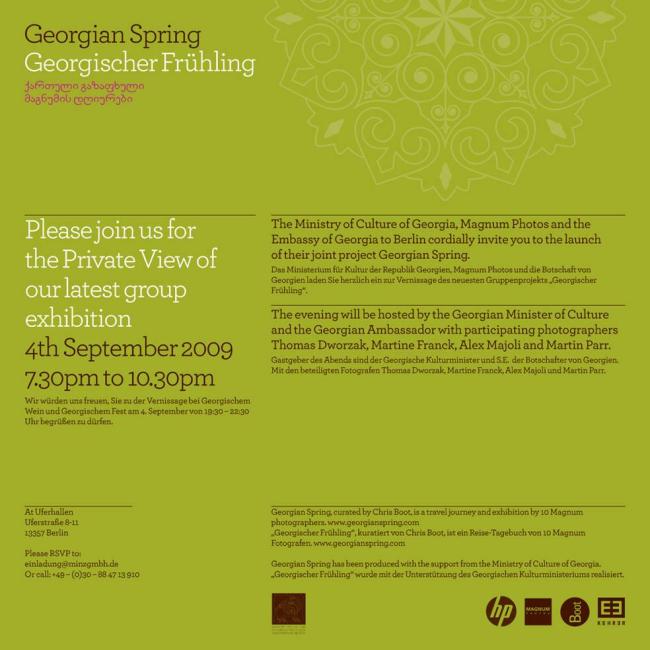
Georgia through the lens of Magnum photographers
Print version
Starting Sept. 5, Berlin will host the presentation of a newly published book about Georgia.
"Georgian Spring" is the name of a photo album in which 10 Magnum photographers collaborated over their three-month stay in the country. The Culture Ministry initiated the project to “demonstrate Georgia as a European country,” according to Culture Minister Nikoloz Rurua.
Rurua said he gave full freedom to the photographers to decide how to depict Georgia.
“Honesty is the main value of the book,” Rurua told Georgia Today. Indeed, the album is too realistic to serve as a traditional tourist book.
Beautiful postcards depicting typical sightseeing photos of the country are used only as the opening and closing details of the book.
Thomas Dworzak, one of the Magnum photographers who also wrote the forward for “Georgian Springs,” said the book portrays a new, contemporary image of Georgia after the Soviet Union crackdown.
“I think the book will raise awareness of Georgia,” Dworzak told Georgia Today. “European society has stereotypes toward the country, they know nothing about contemporary Georgia, but those old-fashioned pictures and images, churches, funerals, all those photographs have already been photographed and that was biggest attraction for all of us for some time.”
Dworzak said he has a 17-year-old “love-story” with Georgia that started in the early 1990s. He worked in the first Georgian-Abkhazian conflict and lived in Georgia for six years. Today he said he notices numerous changes in the country and thinks the new reality should be delivered to the international community.
Together with Dworzak, Jonas Bendiksen, Antoine D’Agata, Martine Franck, Alex Majoli, Martin Parr, Paolo Pellegrin, Gueorgui Pinkhassov, Mark Power and Alec Soth worked on the 264 page travel journal. Each photographer was responsible for 20 pages of the book, which includes photographs and texts that each photographer wrote about their works and journey within Georgia.
Wendell Steavenson, a journalist and writer, also wrote about her own experience of living and working in Georgia. Chris Boot, a well-known photo publisher, coordinated and organized the project.
Each of the photographers chose their field of interest. New generation, luxury, consumer and gambling, family portraits, construction and industry, minorities and other angles of ordinary Georgian life are showcased in the album together with photos from Abkhazia and South Ossetia.
The album is realistic. The pictures capture ugly Soviet blocks and suburbs and women in the markets and streets who do not look happy or comfortable. The modest feasts in ordinary families look too vital among the everyday routine of sadness.
The texts under the photos, which are written in a diary-like manner, express the bare feelings of the photographers. D’agata worked on the Industry and the Economy section of the book and after visiting Kutaisi he wrote about what he saw.
“In Kutaisi, I photographed the renovation of the old town. To be fair, it was not finished and some businesses had moved back in, but the face felt like an enormous film set, strangely soulless and phoney,” he wrote. “Meanwhile on the other side of the town, the municipal market was dominated by huge (and astonishingly beautiful) Soviet frieze, which was crumbling in disrepair.”
President Mikheil Saakashvili is also featured in the book. Dworzak decided to take photographs of the president that are a mix of official visits and some unofficial moments caught in various circumstances, like sitting at the UN assembly listening to world leaders.
“He liked the idea and helped me a lot,” Dworzak said. “He even gave me a chance to enter places I was not allowed. When other photographers stayed behind the closed doors he managed to take me inside.”
The last section of the book is reserved for the Magnum Agency archive. Among other photographs it consists of Robert Capa’s photo essay, which he made during his visit to the Soviet Union and Georgia together with John Steinbeck in 1947. There are also photos by the famous photographer Henri Cartier-Bresson.
Saakashvili was the first to promote the book when he publicly presented it to U.S. Vice President Joe Biden during his visit to Georgia in July.
Soon after its tour through Germany the book will be showcased in Spain and be on sale across the globe. To date, the book has been published in many languages including Georgian, English, Spanish, German and French.
source: georgiatoday.ge
photos by Ralph Hälbig
Thursday, September 03, 2009
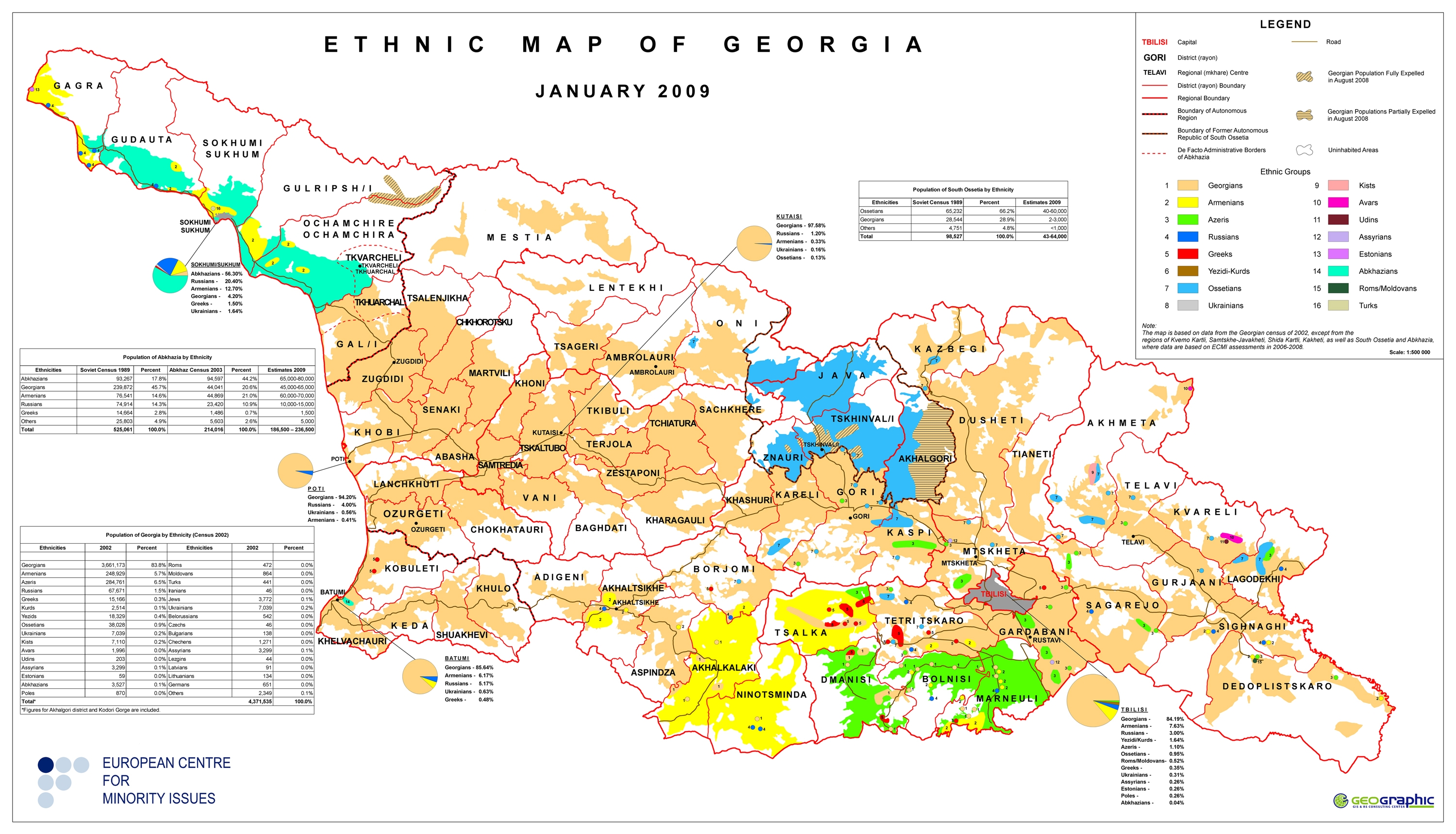
PHOTORAPHY: Amazing Slideshow with photos from Justyna Mielnikiewicz - honored at Perpignan (lens.blogs.nytimes.com)
 Erin Cunningham a Gaza-based freelance print and photojournalist sent me in twitter this great new link about photos from one of my favourite photographers from the South Caucasus. I am so thankful to Erin for this amazing stuff from Justyna Mielnikiewicz!
Showcase: Neighborly Hatred
By James Estrin
PERPIGNAN, France — If you want to understand why Justyna Mielnikiewicz has spent eight years photographing border disputes and ethnic conflicts in the South Caucasus, you should know two stories from her childhood.
...
This eight-year journey has now brought Ms. Mielnikiewicz to the Visa pour l’Image photojournalism festival in France, where she is to receive the Canon Female Photojournalist Award on Saturday. It is presented by the French Association of Female Journalists and includes a prize of 8,000 euros ($11,418) that will enable Ms. Mielnikiewicz to finish a project that will be exhibited at next year’s festival in Perpignan.
Ms. Mielnikiewicz photographed the war in South Ossetia for The Times. Her coverage included an audio slide show, “Photographers Journal: Fleeing the Georgian Conflict” and her pictures appeared in “Conflict in South Ossetia.”
full text with the great slideshow (19 photos) >>>
Wednesday, September 02, 2009
BOOK: The Caucasus: An Introduction. By Frederik Coene
The Caucasus is one of the most complicated regions in the world: with many different peoples and political units, differing religious allegiances, and frequent conflicts, and where historically major world powers have clashed with each other. Until now there has been no single book for those wishing to learn about this complex region. This book fills the gap, providing a clear, comprehensive introduction to the Caucasus, which is suitable for all readers. It covers the geography; the historical development of the region; economics; politics and government; population; religion and society; culture and traditions; alongside its conflicts and international relations. Written throughout in an accessible style, it requires no prior knowledge of the Caucasus. The book will be invaluable for those researching specific issues, as well as for readers needing a thorough introduction to the region. --This text refers to the Hardcover edition.
About the Author
European Commission, Belgium --This text refers to the Hardcover edition.
Hardcover
Publisher: Routledge (September 2009)
Language: English
ISBN-10: 0203870719
ISBN-13: 978-0203870716
AmazonShop: Books, Maps, Videos, Music & Gifts About The Caucasus
About the Author
European Commission, Belgium --This text refers to the Hardcover edition.
Hardcover
Publisher: Routledge (September 2009)
Language: English
ISBN-10: 0203870719
ISBN-13: 978-0203870716
AmazonShop: Books, Maps, Videos, Music & Gifts About The Caucasus
PHOTOGRAPHY: NACHKLANG – Georgia one year after the war. By Uwe Schober, Tbilisi, August 2009. (blurb.com)
I have been visiting Georgia during the Russian-Georgian war in August 2008 when I have been photographing in particular the situation of internally displaced people during that time.
Now, one year after the war, I have been revisiting Georgia and the places that I have been photographing a year ago. Through a series of decidedly allegorical and metaphorical composites I am attempting to highlight the situation in Georgia as it represents itself to me now: a country still marred by the repercussions and after-effects of the war, a country more than ever torn between denied access to the west and a territorial integrity in tatters, and its people being left with a broken democracy. A Georgia more than ever in limbo.
My concept is to create composites consisting of one image taken in August 2008 and one image taken a year later at the same location, and – in a sense - by combining the two images and collapsing them into one frame, stripping off the dimension of time and leaving the continuum of space: so much has changed and yet so little.
My aim is not to create one “seamless” composite image but one that is clearly and visibly a combined image, the photographic equivalent of a Brecht epic theatre piece, a disturbance to the viewer.
Uwe Schober, Tbilisi, August 2009.
Hardcover, ImageWrap US $94.95

Now, one year after the war, I have been revisiting Georgia and the places that I have been photographing a year ago. Through a series of decidedly allegorical and metaphorical composites I am attempting to highlight the situation in Georgia as it represents itself to me now: a country still marred by the repercussions and after-effects of the war, a country more than ever torn between denied access to the west and a territorial integrity in tatters, and its people being left with a broken democracy. A Georgia more than ever in limbo.
My concept is to create composites consisting of one image taken in August 2008 and one image taken a year later at the same location, and – in a sense - by combining the two images and collapsing them into one frame, stripping off the dimension of time and leaving the continuum of space: so much has changed and yet so little.
My aim is not to create one “seamless” composite image but one that is clearly and visibly a combined image, the photographic equivalent of a Brecht epic theatre piece, a disturbance to the viewer.
Uwe Schober, Tbilisi, August 2009.
Hardcover, ImageWrap US $94.95
AUSSTELLUNG: Tilflis Transfer - Patricia London ante Paris und georgische Künstler (tiflistransfer.blogspot.com)
Saarländisches Künstlerhaus Saarbrücken e.V.
Das Projekt „Tiflis Transfer“ wurde konzipiert von der Münchner Künstlerin Patricia London ante Paris, die sich von Oktober 2007 bis Juli 2009 in Tiflis aufhielt. Catalog as PDF here
In dieser Zeit entstanden die „Music Videos By Tbilisi Artists“ mit Beiträgen von 8 georgischen Künstlern, das von Patricia London ante Paris edierte digitale Magazin DEEPART sowie das Video „tender transitory transport“, eine Kooperation mit Nika Machaidze und Koka Ramishvili. „Tender transitory transport“ ist ein filmisches Umherschweifen in der georgischen Hauptstadt Tiflis. Die grafische Bearbeitung der Bilder korreliert mit dem gesprochenen Text und der unterlegten Musik. Die Erkundung der Stadt als Architektur, als politischer Raum und als Klimazone hat poetische Wurzeln. Es entsteht eine suggestive, psychosoziale Stadtlandschaft.
Aus der Ausstellung „New Medea Theater collectif in a digital-metafisikal state of emergency“, die Patricia London ante Paris im Juli 2009 in Tiflis im New Art kuratierte, sind in Saarbrücken die Videos „landerror“ von Koka Ramishvili und „Georgian Sexual Revolution“ von Natia Tzulukidze zu sehen, sowie Papierarbeiten von 7 georgischen Künstlern.
Um die alle bewegende Frage: „Wie kann ich die Welt sehen, wenn ich kein Visum erhalte?“ kreisen die Tifliser Architekturzeichnungen von Patricia London, denn für GeorgierInnen gibt es keine selbstverständliche Reisefreiheit.
Mit Beginn der Ausstellung startet der täglich aktualisierte Blog TIFLIS TRANSFER unter http://tiflistransfer.blogspot.com.
Termine
27.08.2009 bis 27.09.2009
Di Mi Do Fr Sa So
Büro: Di. - Fr. 10 - 18 Uhr
Galerie/Studio: Di. - So. 10 - 18 Uhr
Saarländisches Künstlerhaus Saarbrücken e.V.
Karlstraße 166111 Saarbrücken
Kontakt:Saarländisches Künstlerhaus Saarbrücken e.V.
Karlstraße 166111 Saarbrücken
info@kuenstlerhaus-saar.de
http://www.Kuenstlerhaus-saar.de
Telefon: (0681) 37 24 85

Das Projekt „Tiflis Transfer“ wurde konzipiert von der Münchner Künstlerin Patricia London ante Paris, die sich von Oktober 2007 bis Juli 2009 in Tiflis aufhielt. Catalog as PDF here
In dieser Zeit entstanden die „Music Videos By Tbilisi Artists“ mit Beiträgen von 8 georgischen Künstlern, das von Patricia London ante Paris edierte digitale Magazin DEEPART sowie das Video „tender transitory transport“, eine Kooperation mit Nika Machaidze und Koka Ramishvili. „Tender transitory transport“ ist ein filmisches Umherschweifen in der georgischen Hauptstadt Tiflis. Die grafische Bearbeitung der Bilder korreliert mit dem gesprochenen Text und der unterlegten Musik. Die Erkundung der Stadt als Architektur, als politischer Raum und als Klimazone hat poetische Wurzeln. Es entsteht eine suggestive, psychosoziale Stadtlandschaft.
Aus der Ausstellung „New Medea Theater collectif in a digital-metafisikal state of emergency“, die Patricia London ante Paris im Juli 2009 in Tiflis im New Art kuratierte, sind in Saarbrücken die Videos „landerror“ von Koka Ramishvili und „Georgian Sexual Revolution“ von Natia Tzulukidze zu sehen, sowie Papierarbeiten von 7 georgischen Künstlern.
Um die alle bewegende Frage: „Wie kann ich die Welt sehen, wenn ich kein Visum erhalte?“ kreisen die Tifliser Architekturzeichnungen von Patricia London, denn für GeorgierInnen gibt es keine selbstverständliche Reisefreiheit.
Mit Beginn der Ausstellung startet der täglich aktualisierte Blog TIFLIS TRANSFER unter http://tiflistransfer.blogspot.com.
Termine
27.08.2009 bis 27.09.2009
Di Mi Do Fr Sa So
Büro: Di. - Fr. 10 - 18 Uhr
Galerie/Studio: Di. - So. 10 - 18 Uhr
Saarländisches Künstlerhaus Saarbrücken e.V.
Karlstraße 166111 Saarbrücken
Kontakt:Saarländisches Künstlerhaus Saarbrücken e.V.
Karlstraße 166111 Saarbrücken
info@kuenstlerhaus-saar.de
http://www.Kuenstlerhaus-saar.de
Telefon: (0681) 37 24 85
BLOG: Friedhelm Weinberg aus Dresden notierte sich die Auffälligkeiten seines Aufenthaltes in Georgien (plaste.wordpress.com)
Das Land, in dem Mama Vater heißt – Georgien (1)
Das Land, in dem sich Kinder die Fußnägel lackieren - Georgien (2)
Das Land, in dem die Kirchen leuchten - Georgien (3)
Das Land, in dem es regnet und die Sonne scheint, gleichzeitig - Georgien (4)
Das Land, in dem Präsidenten in Palästen wohnen - Georgien (5)
Das Land, in dem die Fassaden sehr schön sind - Georgien (6)
Das Land, in dem gegen Windmühlen gekämpft wird - Georgien (7)
Das Land, in dem sich Kinder die Fußnägel lackieren - Georgien (2)
Das Land, in dem die Kirchen leuchten - Georgien (3)
Das Land, in dem es regnet und die Sonne scheint, gleichzeitig - Georgien (4)
Das Land, in dem Präsidenten in Palästen wohnen - Georgien (5)
Das Land, in dem die Fassaden sehr schön sind - Georgien (6)
Das Land, in dem gegen Windmühlen gekämpft wird - Georgien (7)
AUSSTELLUNG: Magnum Photos-Agentur zeigt Bilder aus Georgien (georgian-season.de)
Die Magnum Photos-Agentur präsentiert vom 5. bis 13. September die Ausstellung «Georgischer Frühling - Ein Magnum Tagebuch» in den Uferhallen Berlin.
Täglich zwischen 11.00 und 19 Uhr wird ein fotografisches Tagebuch einer Georgienreise von zehn Fotografen der Agentur zu sehen sein. Der Eintritt ist nach Angaben der Veranstalter frei. Bereits am 4.September findet um 19.30 Uhr eine Vernissage statt.
www.georgianspring.com
Auf Einladung des Georgischen Kulturministeriums sind im Frühling dieses Jahres 10 der bekanntesten Magnum-Fotografen aufgebrochen, um das Land zu beschreiben. Die Aufgabe der Fotografen war es, das zu sein, was sie sind: Reisende, Individualisten mit eigenen Sichtweisen auf ihrer eigenen Entdeckungstour. Mitgebracht hat jeder von ihnen ein Tagebuch in Worten und Bildern, dem jeweils 20 Fotos in der Ausstellung gewidmet sind.
Ein Teil der Ausstellung mit den besten Georgien-Fotos aus dem Magnum-Archiv erinnert zudem an die Gründungsjahre der Fotoagentur. Unter anderem mit Robert Capas berühmtem Fotoessay von 1947, das entstand, als er mit John Steinbeck die Sowjetunion besuchte.
Eine Ausstellung mit Fotografien von Jonas Bendiksen, Antoine D’Agata,Thomas Dworzak, Martine Franck, Alex Majoli, Martin Parr, Paolo Pellegrin, Gueorgui Pinkhassov, Mark Power und Alec Soth, Archivaufnahmen von Robert Capa und Henri Cartier-Bresson – kuratiert von Chris Boot.
Der Programmflyer zum Download
www.georgian-season.de
Programmübersicht
Georgische Kulturtage 2009 // 4.-13. September Berlin
Fr 04.09.
19:30 Uhr Uferhallen
Magnum Photos: Georgischer Frühling
Ausstellung — Vernissage
Magnum Photos vereint die weltbesten Fotografen. Sie zeichnen die Welt durch ihre Objektive neu, geben Einsichten in Menschen und Völker. 10 von ihnen reisten durch Georgien – ein fotografisches Tagebuch.
Uferhallen, Uferstraße 8, 13357 Berlin
www.georgianspring.com
Die Ausstellung läuft vom 5. bis 13. September 2009, tägl. 11:00 –19:00.Eintritt frei
weitere Details
Mi 09.09.
19:00 Uhr Georgia Berlin Galerie
Georgische Einsichten
Ausstellung — Vernissage
Mit Landschafts-Fotografien von Archil Kikodze und aktueller Malerei von Zaza Tuschmalischvili.
Georgia Berlin Galerie, Bleibtreustr. 17, 10623 Berlin
www.georgiaberlingalerie.de
Laufzeit: 10. Sept. bis 9. Okt.2009, Mo–Fr 11:00–19:00, Sa 11:00–16:00Eintritt frei
weitere Details
Do 10.09.
19:30 Uhr Französische Friedrichstadtkirche
Polyphonie des Lebens in Klang und Bild
Eröffnungskonzert der Georgischen Kulturtage
Von dem Rolling Stone Magazine bis zur BBC sind sich die Kritiker einig: der Jahrtausende alte, polyphone Gesang des Rustavi-Ensembles ist ein absolutes Klangerlebnis. Seit der Gründung 1968 schrieb das Ensemble eine der größten Erfolgsgeschichten Georgiens: neben zahlreichen CD-Veröffentlichungen führten mehr als 3.500 Auftritte das Rustavi Ensemble in über 60 Länder der Welt. In Berlin präsentieren sie sich erstmalig mit dem Sulkhan-Tsintsadze-Streichquartett.
Französische Friedrichstadtkirche am Gendarmenmarkt
Tickets: 12 €, ermäßigt 8 €
weitere Details
Fr 11.09.
19:30 Uhr Französische Friedrichstadtkirche
Geboren in Georgien
Konzert
Junge Solisten spielen Bekanntes von Chopin, Weber, Mozart und Schubert. Echte Entdeckungen sind hierzulande die georgischen Komponisten im Programm. Mit Levan Tskhadadze (Klarinette), Giorgi Gvantseladze (Oboe), Nino Gvetadze (Klavier) und dem Sulkhan-Tsintsadze-Streichquartett.
Französische Friedrichstadtkirche am Gendarmenmarkt
Tickets: 12 €, ermäßigt 8 €
weitere Details
Sa 12.09.
17:00 Uhr Konzerthaus Berlin am Gendarmenmarkt
Georgischer Tag: Aka Morchiladze
Lesung beim Internationalen Literaturfestival Berlin
Das literarische Feuerwerk des bedeutendsten georgischen Autors der Gegenwart entführt den Leser in eine manchmal ironisch-skurrile, manchmal leise melancholische, jedoch immer faszinierende Welt: auf die imaginären Santa-Esperanza-Inseln im Schwarzen Meer.
„Santa Esperanza“ erschienen im Piper Pendo Verlag 2006.Eine Veranstaltung in Kooperation mit dem Internationalen Literaturfestival Berlin, www.literaturfestival.comCarl Maria von Weber-Saal im Konzerthaus, Tickets: 6 €, ermäßigt 5 €
weitere Details
Sa 12.09.
18:00 Uhr Konzerthaus Berlin am Gendarmenmarkt
Georgischer Tag: Rustavi-Ensemble
Konzert
Polyphoner Gesang von Georgiens führendem Vokal-Ensemble erklingt über den gesamten Gendarmenmarkt. Seit der Gründung 1968 schrieb das Ensemble eine der größten Erfolgsgeschichten Georgiens: neben zahlreichen CD-Veröffentlichungen führten mehr als 3.500 Auftritte das Rustavi Ensemble in über 60 Länder der Welt.
Freitreppe des Konzerthauses, Eintritt frei
weitere Details
Sa 12.09.
18:30 Uhr Konzerthaus Berlin am Gendarmenmarkt
Georgischer Tag: Magnum Photos und Georgischer Wein
Einführung „Georgien – Ein Land in Bewegung“
Einführung in das Land im Kaukasus mit Multimedia-Projektion zu der Ausstellung „Georgischer Frühling“ aus der Reihe „Magnum In Motion“ und georgischem Wein.
Ludwig van Beethoven-Saal im Konzerthaus, Eintritt mit Ticket zu den Veranstaltungen um 17 oder um 20 Uhr
weitere Details
Sa 12.09.
20:00 Uhr Konzerthaus Berlin am Gendarmenmarkt
Georgischer Tag: Georgien – Ein Land in Bewegung
Abschlusskonzert der Georgischen Kulturtage
Das Kammerorchester der Staatlichen Kunstakademie Tiflis wurde erst vor einem Jahr gegründet und wird bereits als die Klassik-Institution schlechthin gehandelt. Es ist gemeinsam mit dem Pianisten Alexander Korsantia zu erleben, der seit Jahren für Begeisterung sorgt. Zum „leisen Freigeist, der dem Werk neues Leben einhaucht“ erhob ihn der Daily Telegraph. Mit Werken von Schostakowitsch über Mozart bis Giya Kancheli.
Großer Saal im Konzerthaus, Tickets: 15 €, ermäßigt 10 €
weitere Details
Täglich zwischen 11.00 und 19 Uhr wird ein fotografisches Tagebuch einer Georgienreise von zehn Fotografen der Agentur zu sehen sein. Der Eintritt ist nach Angaben der Veranstalter frei. Bereits am 4.September findet um 19.30 Uhr eine Vernissage statt.
www.georgianspring.com
Auf Einladung des Georgischen Kulturministeriums sind im Frühling dieses Jahres 10 der bekanntesten Magnum-Fotografen aufgebrochen, um das Land zu beschreiben. Die Aufgabe der Fotografen war es, das zu sein, was sie sind: Reisende, Individualisten mit eigenen Sichtweisen auf ihrer eigenen Entdeckungstour. Mitgebracht hat jeder von ihnen ein Tagebuch in Worten und Bildern, dem jeweils 20 Fotos in der Ausstellung gewidmet sind.
Ein Teil der Ausstellung mit den besten Georgien-Fotos aus dem Magnum-Archiv erinnert zudem an die Gründungsjahre der Fotoagentur. Unter anderem mit Robert Capas berühmtem Fotoessay von 1947, das entstand, als er mit John Steinbeck die Sowjetunion besuchte.
Eine Ausstellung mit Fotografien von Jonas Bendiksen, Antoine D’Agata,Thomas Dworzak, Martine Franck, Alex Majoli, Martin Parr, Paolo Pellegrin, Gueorgui Pinkhassov, Mark Power und Alec Soth, Archivaufnahmen von Robert Capa und Henri Cartier-Bresson – kuratiert von Chris Boot.
Der Programmflyer zum Download
www.georgian-season.de
Programmübersicht
Georgische Kulturtage 2009 // 4.-13. September Berlin
Fr 04.09.
19:30 Uhr Uferhallen
Magnum Photos: Georgischer Frühling
Ausstellung — Vernissage
Magnum Photos vereint die weltbesten Fotografen. Sie zeichnen die Welt durch ihre Objektive neu, geben Einsichten in Menschen und Völker. 10 von ihnen reisten durch Georgien – ein fotografisches Tagebuch.
Uferhallen, Uferstraße 8, 13357 Berlin
www.georgianspring.com
Die Ausstellung läuft vom 5. bis 13. September 2009, tägl. 11:00 –19:00.Eintritt frei
weitere Details
Mi 09.09.
19:00 Uhr Georgia Berlin Galerie
Georgische Einsichten
Ausstellung — Vernissage
Mit Landschafts-Fotografien von Archil Kikodze und aktueller Malerei von Zaza Tuschmalischvili.
Georgia Berlin Galerie, Bleibtreustr. 17, 10623 Berlin
www.georgiaberlingalerie.de
Laufzeit: 10. Sept. bis 9. Okt.2009, Mo–Fr 11:00–19:00, Sa 11:00–16:00Eintritt frei
weitere Details
Do 10.09.
19:30 Uhr Französische Friedrichstadtkirche
Polyphonie des Lebens in Klang und Bild
Eröffnungskonzert der Georgischen Kulturtage
Von dem Rolling Stone Magazine bis zur BBC sind sich die Kritiker einig: der Jahrtausende alte, polyphone Gesang des Rustavi-Ensembles ist ein absolutes Klangerlebnis. Seit der Gründung 1968 schrieb das Ensemble eine der größten Erfolgsgeschichten Georgiens: neben zahlreichen CD-Veröffentlichungen führten mehr als 3.500 Auftritte das Rustavi Ensemble in über 60 Länder der Welt. In Berlin präsentieren sie sich erstmalig mit dem Sulkhan-Tsintsadze-Streichquartett.
Französische Friedrichstadtkirche am Gendarmenmarkt
Tickets: 12 €, ermäßigt 8 €
weitere Details
Fr 11.09.
19:30 Uhr Französische Friedrichstadtkirche
Geboren in Georgien
Konzert
Junge Solisten spielen Bekanntes von Chopin, Weber, Mozart und Schubert. Echte Entdeckungen sind hierzulande die georgischen Komponisten im Programm. Mit Levan Tskhadadze (Klarinette), Giorgi Gvantseladze (Oboe), Nino Gvetadze (Klavier) und dem Sulkhan-Tsintsadze-Streichquartett.
Französische Friedrichstadtkirche am Gendarmenmarkt
Tickets: 12 €, ermäßigt 8 €
weitere Details
Sa 12.09.
17:00 Uhr Konzerthaus Berlin am Gendarmenmarkt
Georgischer Tag: Aka Morchiladze
Lesung beim Internationalen Literaturfestival Berlin
Das literarische Feuerwerk des bedeutendsten georgischen Autors der Gegenwart entführt den Leser in eine manchmal ironisch-skurrile, manchmal leise melancholische, jedoch immer faszinierende Welt: auf die imaginären Santa-Esperanza-Inseln im Schwarzen Meer.
„Santa Esperanza“ erschienen im Piper Pendo Verlag 2006.Eine Veranstaltung in Kooperation mit dem Internationalen Literaturfestival Berlin, www.literaturfestival.comCarl Maria von Weber-Saal im Konzerthaus, Tickets: 6 €, ermäßigt 5 €
weitere Details
Sa 12.09.
18:00 Uhr Konzerthaus Berlin am Gendarmenmarkt
Georgischer Tag: Rustavi-Ensemble
Konzert
Polyphoner Gesang von Georgiens führendem Vokal-Ensemble erklingt über den gesamten Gendarmenmarkt. Seit der Gründung 1968 schrieb das Ensemble eine der größten Erfolgsgeschichten Georgiens: neben zahlreichen CD-Veröffentlichungen führten mehr als 3.500 Auftritte das Rustavi Ensemble in über 60 Länder der Welt.
Freitreppe des Konzerthauses, Eintritt frei
weitere Details
Sa 12.09.
18:30 Uhr Konzerthaus Berlin am Gendarmenmarkt
Georgischer Tag: Magnum Photos und Georgischer Wein
Einführung „Georgien – Ein Land in Bewegung“
Einführung in das Land im Kaukasus mit Multimedia-Projektion zu der Ausstellung „Georgischer Frühling“ aus der Reihe „Magnum In Motion“ und georgischem Wein.
Ludwig van Beethoven-Saal im Konzerthaus, Eintritt mit Ticket zu den Veranstaltungen um 17 oder um 20 Uhr
weitere Details
Sa 12.09.
20:00 Uhr Konzerthaus Berlin am Gendarmenmarkt
Georgischer Tag: Georgien – Ein Land in Bewegung
Abschlusskonzert der Georgischen Kulturtage
Das Kammerorchester der Staatlichen Kunstakademie Tiflis wurde erst vor einem Jahr gegründet und wird bereits als die Klassik-Institution schlechthin gehandelt. Es ist gemeinsam mit dem Pianisten Alexander Korsantia zu erleben, der seit Jahren für Begeisterung sorgt. Zum „leisen Freigeist, der dem Werk neues Leben einhaucht“ erhob ihn der Daily Telegraph. Mit Werken von Schostakowitsch über Mozart bis Giya Kancheli.
Großer Saal im Konzerthaus, Tickets: 15 €, ermäßigt 10 €
weitere Details
Subscribe to:
Posts (Atom)