Showing posts with label Women. Show all posts

Tuesday, June 24, 2014

EXHIBITION: Supra of Her Own / საკუთარი სუფრა - 25th until July 22th 2014, at the Nectar Gallery in Tbilisi (gallerynectar.ge)

(gallerynectar.ge) We cordially invite you to ‘Supra of Her Own’ – an exhibition about gender-based violence against women in Georgia. From June 25th until July 22th 2014, at the Nectar Gallery in Tbilisi, we offer a reflection about the social invisibility of women’s painful experiences and propose new possibilities of making it public.

Supra of Her Own is a collaboration between an artist - Tamuna Chabashvili (Georgia/Netherlands), an anthropologist - Agnieszka Dudrak (Poland/Switzerland), a Georgian NGO (Anti-Violence Network of Georgia), and a grassroots initiative გესმით ქალების ხმა?. The exhibition will also host five days of performances by Mareike Wenzel (Germany), a lecture by Nadia Tsulukidze (Georgia/Netherlands), and sound installation by Eliza Proszczuk (Poland).

In patriarchal societies, many women’s experiences remain invisible, hidden, taboo, or even nameless. This exhibition will become a temporary, open space, resembling Virginia Woolf’s a Room of One’s Own, where diverse testimonies of abuse will become visible and open for interpretation and discussion.

Inspired by the traditional Georgian dinner – a supra - we will place on our metaphorical table that which is generally banned from the table – stories of women who experienced gender-based violence. Our project conceives of our supra as something more than a male-dominated and suppressive performance of social norms. For us, supra can be an improvised performance where deep, personal feelings can be expressed publicly in an atmosphere of hope, of laughter, of creativity and freedom. Using the supra with all its normative and subversive potential as a metaphorical platform will allow us to make the invisible visible, and raise awareness of the ways in which many of us conspire in the process of silencing of some women’s experiences.

The installation and videos are based on the quotations from interviews; mostly survivors of domestic abuse. In addition, women who experienced this type of violence, some members of the grassroots initiative “გესმით ქალების ხმა?” created memorabilia based on their personal experience. In this way we wish to give voice to those who are generally silenced.

In her performance the actress Mareike Wenzel will inhabit the installation of Tamuna Chabashvili for several days. She is going to explore the space by living there and creating a kind of shadow character and a moment of irritation for the observer. It is not about creating a big scenario but rather about images showing how women experiencing violence, are often made invisible in our society. It is more about the looking from the outside into space, about what is visible and what stays hidden. Mareike will start after the opening on Tuesday night and stay till Friday morning.

Project initiated by: Tamar Chabashvili, Agnieszka Dudrak
Supra installation by Tamar Chabashvili
Video by Agnieszka Dudrak
Sound installations by Agnieszka Dudrak, Eliza Proszczuk

Project is kindly supported by: Mondriaan Fund (The Netherlands), South Caucasus Regional Office of the Heinrich Boell Foundation (Georgia)

Opening ceremony: June 24th at 19h

Location: Nectar Gallery (Aghmashanabeli Avenue 16), Tbilisi, Georgia

Duration: June 25th - July 22th 2014

Friday, January 03, 2014

PHOTOREPORTAGE: Four Rooms. By Giorgi Amuni Shengelia (giorgi-amuni-shengelia.ideastap.com/four-rooms)

(giorgi-amuni-shengelia.ideastap.com/four-rooms) The most of Georgian familes destroy when women leave families and can't see their children and husbands. It is too hard for children to live without their mothers

Four Rooms
Khatuna, 40, 8 monthe in Italy. She is praying. She left a child in Georgia, who got married recently. Khatuna was not able to attend her child's wedding celebration.


the reportage here:  
giorgi-amuni-shengelia.ideastap.com/four-rooms

Wednesday, July 03, 2013

STORIES: 50 Women from Georgia (ge.boell.org)

(ge.boell.org) In Georgia, there are many women who have created new things, who made discoveries, who brought about change and weren't afraid of alterations. They did all this without knowing that their efforts would be of importance for future generations. Probably, they never imagined that for decades to come, people would still want to find out more about them, or, in some cases, that someone would at all be interested in them.

50 women tell their own stories – some by telling us altogether new ones, others by reminding us of the ones we already know. We hope that these short stories will communicate the strength and courage, with which these 50 women acted in 19th and 20th century Georgia. The Heinrich Böll Foundation South Caucasus Regional Office has gathered pictures and biographies from museums as well as private and state archives.

The history of Georgian feminism is difficult and conflicting. From the end of the 19th century, when new social and educational movements were emerging in the West, in Georgia, too, a small group of people began demanding a rethinking of the role and function of women in Georgian society. However, this natural development was hindered by political cataclysms: in the “Country of Victorious Socialism”, feminism didn't exist. The totalitarian state, which formally ascribed an equal role to men and women, was in fact deeply patriarchal.

The Heinrich Böll Foundation introduces you the women from Georgia – both Georgian and foreign – who have changed Georgia.

More here: facebook.com


Monday, August 27, 2012

KULTUR: Tanz & Balz - Der Neid der Russen auf die Männer im Kaukasus. Von Volker Pabst (nzz.ch)

(nzz.ch) Volker Pabst, Maikop (Republik Adygeja) ⋅ Das Sozialleben ist im Nordkaukasus durch eine Vielzahl gesellschaftlicher Tabus und Gebote bestimmt, die bis heute weitestgehend befolgt werden. Insbesondere das Geschlechterleben ist streng reglementiert. Öffentlicher Körperkontakt zwischen Mann und Frau ist strikt untersagt.

Der kaukasische Paartanz, die Lesginka, spielt mit diesem Verbot. Dabei tanzt der junge Mann mit Sprüngen und Pirouetten auf seine Partnerin zu, die in letzter Sekunde in anmutigen Schritten der Bedrohung entschwebt. Je näher sich die Tänzer kommen, desto besser – bloss Berührung darf nicht sein. Geschieht das Missgeschick dennoch, so will es der Brauch, dass der Mann den Begleitern der Frau zur Entschädigung eine Runde spendiert. Früher, so heisst es, habe die Ehre nur durch eine sofortige Eheschliessung der beiden Tänzer gerettet werden können.

Auch heute noch ist die Familienehre bei Hochzeitsvorbereitungen von grosser Bedeutung. Die Verhandlungen sind so aufwendig, dass mancher Verehrer die Angebetete lieber entführt und erst dann Emissäre zur Brautfamilie entsendet, die unter diesen Umständen oftmals eher bereit ist, einer Ehe zuzustimmen. Die Furcht, die junge Frau könnte dem Abenteuer nicht unbefleckt entkommen und Schande über die ganze Familie bringen, spielt dabei keine unbedeutende Rolle.

Doch auch nach korrekter Eheschliessung bleibt alles Geschlechtliche suspekt. Für die Brauteltern repräsentiert der Schwiegersohn zeitlebens die Unschicklichkeit, durch welche die Tochter von der Jungfrau zur Frau wurde. Ein anständiger Mann geht daher aus Respekt den Eltern seiner Braut aus dem Weg, vor der Hochzeit und danach. Nicht selten bekommen sich die beiden Parteien ein Leben lang nicht zu Gesicht.

Die meisten Russen haben wenig Sinn für die Sitten und Gebräuche ihrer nichtrussischen Landsleute. Besonders Menschen aus dem Kaukasus werden im russischen Kernland oft offen diskriminiert. «Doch zumindest um etwas beneiden uns die Russen im Geheimen», hört man manchen Mann im Kaukasus lachen. «Wir führen ein Leben ohne Schwiegermütter!»

Thursday, August 16, 2012

VIDEO: Traditional Armenian Garments. Photography by Ilya Vartanian and Karen Adriano (youtube.com)

A selection of beautiful Armenian traditional lady costumes.

Photography by: Ilya Vartanian & Karen Adriano 


Lyrics to the song with translation.

Armenian:
ganchum em ari ari,
yar boyit mernem
ches kali mukhet mari
asa inch anem

puncherov vart em kakhel,
yar boyit mernem
ko tartzin jampi shakhnel
asa inch anem

varteri shakhov tatsen,
yar boyit mernem
shakhere sirdis latsne
asa inch anem

English:
i'm calling you, come my love,
i'd die for your tall body
you aren't coming, may your hearth go out;
tell me, what can i say?

i gathered boquets of roses, my love,
i'd die for your tall body
the roads are crying, awaiting your return;
tell me, what can i say?

the roses are wet with dew, my love,
i'd die for your tall body
those drops of dew are my heart's tears,
tell me, what can i say?


Saturday, August 11, 2012

SPORT: Die Last des Kaukasus. Von Tigran Petrosya

(taz.de) Frauen und Gewichtheben? Für viele Menschen in der ehemaligen Sowjetrepublik Armenien geht das nicht zusammen. Deswegen sind die Athletinnen Trendsetterinnen.

Armeniens Olympia-Hoffnungen ruhen auf breiten Schultern. Die 25-jährige Gewichtheberin Hripsime Khurschudyan hat bei Welt- und Europameisterschaften bereits zahlreiche Medaillen eingeheimst. Auch jetzt hat sie gute Chancen. Aber Frauen und Gewichtheben – das geht für viele Menschen in der Kaukasusrepublik nicht zusammen.

Nazik Avdalyan (26), 2009 Weltmeisterin in der Klasse bis 69 Kilogramm, hat das erlebt. „Für die Mehrheit ist Gewichtheben eine männliche Sportart. Armenische Frauen, so sieht das die Gesellschaft, sollen in erster Linie auf ihre Weiblichkeit achten. Ich und meine Freundinnen, wie haben solche Ansichten immer ignoriert.“

Manche Personen würden das Wort „Gewichtheberin“ sogar als Schimpfwort benutzen. „Es ist sehr unangenehm, wenn Menschen auf der Straße mit dem Finger auf mich zeigen und sich über mich lustig machen. Aber es gibt auch solche, die mich grüßen und sich bei mir bedanken“.

Auf die Auffassung, Gewichtheberinnen könnten keine guten Ehefrauen sein, reagiert Nazik Avdalyan gelassen: „Ich habe vor einen Monat geheiratet.“ Für Armine Ghasaryan, Psychologin in der armenischen Hauptstadt Jerewan, ist diese Betonung der Weiblichkeit keine kaukasische Besonderheit. Das sei für jede Frau wichtig. Eingeschränkte „Tätigkeitsbereiche“

Doch sei die armenische Gesellschaft intolerant, was die Rolle von Mann und Frau in der Gesellschaft betreffe. „Jungen werden dazu erzogen, später eine dominierende Position in der Gesellschaft einzunehmen. Demgegenüber sind die Frauen wirtschaftlich, politisch, psychologisch und sozial von den Männern abhängig. Deswegen sind die Tätigkeitsbereiche der Frauen eingeschränkt und das ist auch im Sport so.“

Nazik Avdalyan hatte 2011 einen Autounfall, bei dem sie sich schwere Verletzungen der Wirbelsäule zuzog. Deshalb musste sie ihre aktive Karriere beenden. Dennoch will sie sich weiter für ihren Sport engagieren. Derzeit arbeitet sie an einer Dissertation zum Thema „Methodik des Gewichthebens für Frauen“. Demnächst will sie in Jerewan eine Sportschule für Frauen eröffnen. Es soll Trainungseinheiten für Gewichtheben geben, später auch weitere Sportarten.

In diesem Jahr nahmen bereits 30 Gewichtheberinnen aus verschiedenen Städten und Dörfern Armeniens an den Republikmeisterschaften teil, wie die armenische Nachrichtagentur „PanArmenian.Net“ vermeldet. Gewichtheben wird bei jungen Mädchen immer beliebter. Sollte Hripsime Khurschudyan mit Edelmetall heimkehren, dürfte sich dieser Trend verstärken.

Friday, August 10, 2012

REPORTAGE: The Girls of Chechnya. The Photographer Diana Markosian (lightbox.time.com)


(lightbox.time.com) Monday, April 16, 2012 | By Lily Rothman
At sunset in the outskirts of Grozny, Kazbek Mutsaev, 29, fires celebratory gun shots as part of an old Chechen wedding tradition. Photo: Diana Markosian

In 2010, when she was working for a news agency in Moscow, Diana Markosian asked to be sent to Chechnya. The photographer, who is Russian but studied in the United States, was 20 years old and curious about the history of the embattled region.

“They wouldn’t send me so I decided to go by myself,” she remembers. “Grozny became my destination and later became my home.”

Markosian went back repeatedly after that first visit and soon became a specialist in covering a region where, she says, many of her colleagues don’t want to go. She moved to Chechnya last November to live there full-time. But, she says, her close relationship with the area doesn’t mean that it’s not a risky place to live and work—kidnappings are frequent, she says—or that such risk does not affect her photographs. Although Russian leaders declared the region normalized and peaceful three years ago today, following more than a decade of wars against rebels, life is still fraught. They may not appear in the frames, but Chechen authorities are the unseen presence in the work shown in this gallery, a personal project through which Markosian addresses the lives of girls growing up in Chechnya.

“It’s one thing to come here for a week like I used to do. It’s another to start living here, and not only hear what these women are going through but actually experience it yourself,” she says.

Markosian says that Chechnya has experienced a wave of Islamicization since the collapse of the Soviet Union: religious dress codes are mandatory, young (and polygamous) marriages are frequent and gender roles are increasingly conservative. The president, Ramzan Kadyrov, has said publicly that women are the property of their husbands. And at the same time, high unemployment has meant that many young women who are already becoming mothers still live with their own parents.

For Markosian, this has meant that—after she was told by security officers that her belt full of lenses made her look like a suicide bomber—she carries a handbag rather than the photographer’s gear bag to which she was accustomed, and that she has gotten used to being questioned or having her photographs deleted by officers. “As a regular citizen I don’t feel danger,” she says, “but just because I’m doing something a little out of the ordinary, especially for a woman, I’m looked at more carefully.”

It has also changed her working process. Because of what she says is widespread but justified distrust, people are wary of being shown doing anything that could be perceived as unusual. Something as seemingly innocent as a photograph of a woman smoking a cigarette could have dire consequences. The fear of being different has been a particular obstacle for photographing teenagers, as their parents are worried about what might happen if their children are seen as nonconforming.

But Markosian says that, by spending weeks with her subjects before taking a single photograph, she has been able to gain the access necessary for the project. And, in doing so, she says she has found these women to be a mirror for Chechnya as a whole. “That entire idea of a generation building itself and the resilience these girls have really motivated me,” she says. “They are trying to make something of themselves at the same time that this region is trying to build after almost two decades of war.”

Diana Markosian is a photographer based in Chechnya. See more of her work here. Website: www.dianamarkosian.com

Saturday, May 05, 2012

CALL: Freiwilligendienst Georgien - "From Danube to Black Sea - Youth for Equality in Europe"

Die Austrian Helsinki Association (AHA) – For Human Rights and International Dialogue (Wien) bietet in Kooperation mit einer der führenden georgischen NGOs im Bereich Gender Equality, Internally Displaced Persons (IDPs) und Peace-building, dem Women’s Information Center (WIC), 2 Personen die Möglichkeit an einem 9monatigen Freiwilligen-Projekt im Rahmen des European Voluntary Service (EVS) teilzunehmen, beginnend mit August 2012 (angesucht).

Die Volunteers werden dabei in die verschiedenen Aktivitäten und Projekte des Women Information Center eingebunden und unterstützen das Team bei seiner Arbeit, unter anderem in:
• Organisation von consultation meetings mit Binnenflüchtlingen und öffentlichen Behörden im Rahmen des „One Window Shop“ Projekts
• Zusammenarbeit mit internationalen Organisationen und NGOs (UN Women, OSCE, EUMM, etc.)
• Fundraising
• Erstellung von Projektanträgen
• Planung und Durchführung von Konferenzen und Trainings
• Informationskampagnen

Die zukünftigen Voluntäre erhalten während des Freiwilligendienstes:
• Informationen und Betreuung vor und während des EVS-Projekts
• Unterkunft, Verpflegung, Sprachtraining in Georgisch/Russisch (keine Vorkenntnisse erforderlich)
• Taschengeld
• Fortbildungsmöglichkeiten vor Ort sowie Seminar Teilnahmen mit anderen Europäischen Freiwilligen (teilweise verpflichtend, in Österreich sowie in Georgien)

Interessierte, aufgeschlossene und engagierte Bewerber im Alter 18-30 Jahre, wohnhaft in Österreich, richten ihre Anfragen und Interessensbekundung (CV und Motivationsschreiben von max. 1 Seite) bitte an Siegfried Wöber unter: evsviennavanadzor@gmail.com

Deadline für Bewerbungen: 31.5.2012

Für weitere Informationen:

2 TeilnehmerInnen für das EVS-Projekt "From Danub to Black Sea - Youth for Equality in Europe" Ort: Tbilisi, Georgia
Dauer: 9 months
Start: August 2012
Ende: May 2013
Women Information Center: www.wicge.org; www.ginsc.net

Thursday, March 08, 2012

PHOTO-ESSAY: Georgia: In a Valley of Tradition, Women Struggle To Build Independent Lives - March 8, 2012 - By Justyna Mielnikiewicz

More than 20 years after the collapse of the Soviet Union, women in many parts of Georgia have become more outspoken on gender issues. But in Georgia’s Pankisi Gorge, a three-kilometer-wide, 30-kilometer-long valley that borders Russia, change is complicated.
Photogallery here


As part of a photo project called “What Will People Say?” I traveled to Pankisi, one of Georgia’s more remote areas. There, I documented the challenges women face as they try to reconcile their own ambitions and desires with long-standing cultural traditions that do not recognize women as independent decision-makers. [Note: the project was funded by the Open Society Georgia Foundation, which is part of the Soros Foundations Network. EurasiaNet.org operates under the auspices of the Open Society Foundations, a separate entity in the network].
Inhabited largely by Kists, ethnic Chechens who have lived in Georgia for more than 150 years, the Gorge is situated about an hour’s drive northeast of Tbilisi. It is a predominantly Muslim area, where strict traditions govern family conduct and the role of women.
While Pankisi long ago shed its reputation as a haven for bandits and Chechen rebel fighters, jobs are scarce and access to higher education requires travel. And since the 2008 war between Georgia and Russia, it’s no longer easy for Pankisi residents to get to the nearby Chechen capital of Grozny for work or education.
The lack of career and educational options has stymied the entire community, but it has proven particularly damaging for the Gorge’s women. Watched closely and judged severely by family members and neighbors, they live in an even more closely confined world than do Pankisi’s male inhabitants. They are judged mostly in terms of whether they act as upstanding wives and mothers. Little attention is paid to their own psychological needs. Little thought is given to self-fulfillment.
“Always, you have two choices to follow: your traditions and, of course, not to lose yourself as a person,” commented Shorena Khangushvili, an English teacher and the single mother of a 15-year-old girl. “Sometimes I think I can overcome that barrier, but I always keep in mind that I am a member of this society, and if you have no authority in this society, it means you are lost. So, I have to be very careful.”
For many of these women, the opinions of their family and the local community are their guide for making any decision in life. As Lia, the manager of a local English-language school, phrased it, the thought is “what would people say if I do a certain thing?”
The project’s title was inspired by that comment, but its relevance reoccurred in later stories for this project, too. As Georgia pushes ahead with attempts to build a more integrated society, perhaps one day it will be a question no longer asked.
Editor's Note: Justyna Mielnikiewicz is a freelance photojournalist based in Tbilisi.

Tuesday, December 07, 2010

VERANSTALTUNG: Abend der tschetschenischen Kultur, 17.12.2010, Wien

Ich möchte Ihnen gerne folgende Einladung von Herrn Mag. Siegfried Wöber weiterleiten.
Liebe Grüße, Silvia de Carvalho

Sehr geehrte FreundInnen des Kaukasus!

Hiermit lade ich Euch/Sie sehr herzlich zur Jahresabschlussfeier der Österreichisch-Kaukasischen Gesellschaft ein, die am 17.12.2010 im 2. Bezirk stattfindet (Max-Winter Platz 23; 18 - 22 Uhr). Es wird tschetschenisches Essen und Musik geben, und unsere Kindertanzgruppe "Laman Az" wird auftreten...

Die gesammelten Spenden kommen auch ihr zugute. Organisiert wird dieser Abend im Rahmen unseres Projekts "Tschetschenischer Frauenrat" - einem psycho-sozialen Dienst und Lebensberatung für Tschetscheninnen auf tschetschenisch (www.frauenrat.kaukasus.or.at), dass von der Kahane Stiftung, MA17 und MA57 unterstützt wird. Im Namen unseres Vereins bitte ich darum, diese Einladung weiterzuverteilen und es würde mich freuen, wenn wir uns am 17. Dezember sehen!
Alles Gute, Siegfried

Tuesday, November 16, 2010

NEWS: RFE/RL Caucasus Report, November 12, 2010 (rferl.org)

A review of RFE/RL reporting and analysis about the countries of the South Caucasus and Russia's North Caucasus region. For more stories on the Caucasus, please visit and bookmark our Caucasus page .

Armenian Army Scrambles To Tackle Abuse After Spate Of Deaths Armenian Defense Minister Seyran Ohanian this month faced the uneasy task of comforting parents whose sons were found dead after suffering vicious treatment in the army. More
Kazakhstan's Jihadists Solicit Assistance From Ingush Insurgency Website More
Interview: One Year After Husband's Sentence, Wife Of Azerbaijani 'Donkey Blogger' Speaks Out One year ago, Azerbaijani youth activists Emin Milli and Adnan Hajizada were jailed for 2 1/2 and two years in a case that has generated interest far beyond the Caucasus. Dubbed the "donkey bloggers," the two men had posted a satirical video shortly before their arrest in which a person dressed as a donkey led a government press conference. More
Azerbaijani Government Crackdown Follows Bear Video After the video was posted on RFE/RL's website, Azerbaijani officials conducted raids on two restaurants, confiscating two bears and placing them in an Environment Ministry rehabilitation center. More
Azerbaijan's Most Prominent Opposition Parties Lose Parliament Mandates As widely anticipated, the November 7 Azerbaijani parliamentary elections replicated to varying degrees the most egregious failings of previous ballots. For the first time, not a single candidate from the main right-wing opposition Azerbaijan Popular Front or Musavat parties was elected to parliament. More
Armenian Government Dismissals: Turning Point, Or PR Exercise? Armenian Prime Minister Tigran Sarkisian has followed up on his trenchant criticism last week of government corruption by announcing the dismissal of two deputy ministers and a senior Finance Ministry official. In addition, he requested the sacking of a civil servant employed at the Ministry of Agriculture. It's not yet clear, however, whether this marks the start of the systematic crackdown on corruption that many analysts argue is long overdue. More
It Depends on What You Mean by 'Elected'.... In the aftermath of Azerbaijan's parliamentary elections on November 7, the Organization for Security and Cooperation in Europe said "the country needs to do much more to make progress in developing a truly pluralist democracy." Khadija Ismaiylova of RFE/RL's Azerbaijani Service spoke about the vote and the future of democracy in Azerbaijan with Ambassador Audrey Glover, head of the OSCE's Office for Democratic Institutions and Human Rights (ODIHR) Election Observation Mission in Baku. More
Former Georgian President Speaks Out For several years after his ouster in Georgia's November 2003 Rose Revolution, Eduard Shevardnadze lived quietly outside Tbilisi and rarely spoke to the press. But over the past year he has spoken out with increasing frequency, not only criticizing the present Georgian leadership but candidly admitting to his own grave errors of judgment. More
End Of Part 1 The two high-profile attacks by Chechen suicide bombers in late August and mid-October have eclipsed the more frequent, and more deadly attacks committed almost on a daily basis by Islamic insurgents in Kabardino-Balkaria. More
New Georgian Opposition Party Under Pressure Georgia's newest opposition party took shape less than a month ago, and has still to hold its founding congress. But already the brother of one of its five leaders has been arrested on fraud charges, two of its activists have been arrested and accused of perpetrating explosions in Tbilisi, and someone opened fire on the son and daughter-in-law of a third. More
Interview: Top U.S. Diplomat Discusses Regional Developments, Abuses, Stalemates, And Cooperation Assistant U.S. Secretary of State for European and Eurasian Affairs Philip Gordon sat down with RFE/RL for a wide-ranging interview on the U.S. position on everything from the jailed bloggers in Azerbaijan to Ukraine's improving relationship with Moscow, Georgia's right to territorial sovereignty, to Russia's role in brokering a deal over Nagorno-Karabakh. More
Stefan Fuele's Revolution That Never Was A small revolution came close to taking place in the European Union right about now -- only to dissolve into the kind of self-doubt so characteristic of the bloc of late, leaving behind only the barest ripple among (mostly bemused) officials. More

Monday, May 17, 2010

FERNSEHEN: Armenien. Frauenpower in Männerdomäne. Von Thomas Eichberg (mdr.de)

Während die Männer außer Landes nach Arbeit suchen, bleiben die armenischen Frauen zurück. Dennoch sind sie im öffentlichen Leben kaum an entscheidenden Stellen zu finden, trotz ihrer oft guten Ausbildung. Jede fünfte Frau hat inzwischen einen Hochschulabschluss. Eine junge Generation von Frauen will nun Männerdomänen durchbrechen.

Eine Demonstration in den Straßen der armenischen Hauptstadt Jerewan. Die Frauen fordern die Freilassung von politischen Häftlingen und die Einhaltung der Menschenrechte. Dass sich gerade Frauen stark machen für öffentliche Interessen, ist neu in Armenien. Hier herrscht eigentlich noch immer das Bild von der Frau als Seele des Hauses. Eine dieser rebellischen Aktivistinnen ist Ani Matevosyan. Die Studentin ist gerade 20 Jahre alt und müsste sich nach traditioneller Vorstellung jetzt eigentlich einen Mann zum Heiraten suchen. Stattdessen arbeitet sie für NGOs und Vereine, knüpft Netzwerke mit anderen Frauen.

mit:
Ani Matevosyan, Studentin und Aktivistin
Shushan Harutyunyan, Kuratorin
Miqayel Grigoryan, Landschaftsgärtner
Sona Bunatjan, Studentin

Der ganze Beitrag >>>

Saturday, January 02, 2010

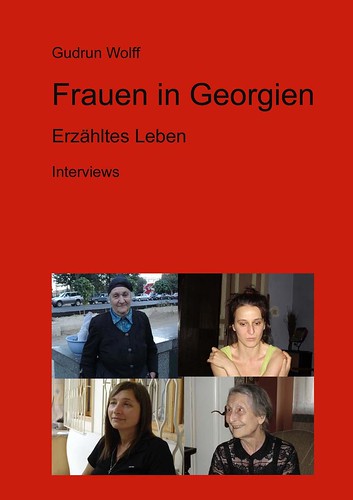
RADIO & PODCAST: Frauen in Georgien – erzähltes Leben. 3.1. zwischen 18.05 und 19.00 (wdr3.de)

Am 3.1. zwischen 18.05 und 19.00 kam auf WDR 3 ein 6-Minüter über "Frauen in Georgien". Hier der Link/Podcast (zum nachhören!): www.wdr3.de/resonanzen-weltweit

herausgegeben von Gudrun Wolff

Rund vier Millionen Menschen leben in Georgien, diesem uralten Kulturland zwischen Kaukasus und Schwarzem Meer. "Garten Gottes" wird es genannt: Denn als Gott die Länder an die Völker der Erde verteilte, verspäteten sich die Georgier, so die Legende. Sie hatten gefeiert und alles um sich herum vergessen. Gott hatte ein Nachsehen und überließ sein letztes Stückchen Erde dem singenden, fröhlichen Volk: seinen Garten eben. Die Autorin Gudrun Wolff interviewte zehn Frauen unterschiedlicher Generationen. Die Georgierinnen erzählen aus ihrer Familien- und Lebensgeschichte, die oft geprägt ist von patriarchalischen Geschlechterbeziehungen. Sie berichten über gesellschaftliche Umbrüche und geben den Kriegen im "Garten Gottes" Anfang der neunziger Jahre, zwischen ihrem Land und Abchasien, Südossetien, Russland, ein konkretes Gesicht.


Andrea Lieblang stellt das Buch vor

Frauen in Georgien – erzähltes Leben
herausgegeben von Gudrun Wolff
1. Auflage 2009
ISBN 978-3-00-027842-6
10,80 Euro


Zu bestellen über: www.frauen-in-georgien.pressguide.info

AmazonShop: Books, Maps, Videos, Music & Gifts About The Caucasus

Wednesday, November 11, 2009

BUCH: Frauen in Georgien. Erzähltes Leben. Interviews von Gudrun Wolff. (frauen-in-georgien.pressguide.info)

Buchpräsentation am Dienstag, 17. November, 20.00 Uhr im Café Couleur des internationalen Zentrum "Brücke",
Wilmergasse 2, Münster


Flyer Vorderseite

Flyer Rückseite

Zum Inhalt:
Zehn Frauen aus Georgien erzählen in neun Interviews ihre Lebens- und Familiengeschichte. In Ausschnitten spiegeln sich darin mehr als hundert Jahre Geschichte und Gesellschaft dieses kleinen uralten Kulturlandes zwischen Kaukasus und Schwarzem Meer. Die Zeit unter der Herrschaft des russischen Zarenreichs, die Repressionen der Stalinzeit, Bürger- und Sezessionskriege, Hunger und Not in der jüngsten Geschichte, die Vielfalt der Kulturen des Landes, die patriarchalischen Prägungen in den Geschlechterbeziehungen wie auch die Veränderungen dieses Wertegefüges erhalten in den individuellen Schicksalen ihr konkretes Gesicht.

Veranstalterin: Gesellschaft zur Förderung der deutsch-russischen Begegnungen Münster/Münsterland e.V.

Der Buchtitel:
Frauen in Georgien: Erzähltes Leben. Interviews

Tbilissi-Münster, 2009
ISBN 978-3-00-027842-6

Zu bestellen über:
www.frauen-in-georgien.pressguide.info

---------

Gudrun Wolff
Gesellschaft zur Förderung
der deutsch-russischen Beziehungen Münster/Münsterland e.V.
Mitglied des Vorstands


Von-Holte-Str. 87 b
48167 Münster
T. 02506-3231
F.02506-811024
Mob. 0163 972 3029
wolffkgb@muenster.de


AmazonShop: Books, Maps, Videos, Music & Gifts About The Caucasus

Monday, June 08, 2009

FORSCHUNG: Die Ehre der Frau - die Ehre des Mannes. Ehrvorstellungen in Georgien. Von Elke Kamm (journal-ethnologie.de)

Käseherstellung. Foto: E. Kamm

Ein interessanter Artikel über die Ehrvorstellungen in Georgien. Dabei wird gezeigt, wie die Geschlechter zueinander stehen und daraufhin die Familienstruktur immer wieder generiert wird. Wesentlich ist, dass der Individualismus nicht den Stellenwert hat, dem er in der westlichen Welt zuerkannt wird:
Jeder Einzelne ist dazu angehalten, sich entsprechend den gesellschaftlich-sozialen Ehrvorstellungen zu verhalten. Das „richtige“ Verhalten der Individuen gewährleistet Stabilität und gesellschaftlichen Zusammenhalt in der Gruppe.

Dabei ist gerade der Ehrbegriff die soziale Kontrolle schlechthin, auf ihn beruht die Regel des Zusammenlebens in Georgien. Das hatte sich auch zu Sowjetzeiten erhalten - vor allem im Haus und in der Familie lebten die Traditionen fort, die natürlich respektiert werden, da sich das Überleben der georgischen Kultur auf diese Tradition beruft.

Interessant sind auch die Rollenverteilungen. Die Frau ist die Trägerin der Kultur, der Mann tritt für die Gerechtigkeit ein. Wie es sich mit dem Sexualleben, der Hochzeit und dem Leben in der Ehe verhält wird auch beschrieben bzw. angerissen.

Meistens wurden und werden die Kinder heute noch traditionell erzogen, da die Georgier in der Wahrung der alten Normen und Werte die einzige Möglichkeit sahen und sehen, sich gegen die Fremdherrschaften zu wehren. Obwohl die Georgier das Epos ihres berühmten Dichters Šot´a Rust´aveli in Teilen auswendig aufsagen können und diese folgenden Zeilen verinnerlicht haben: „Die Welpen eines Löwen – egal welchen Geschlechts – seien Löwen“, werden dennoch unterschiedliche geschlechtsspezifische Erziehungsstile praktiziert. Die Mädchen werden stärker überwacht und dazu angehalten, häusliche Tätigkeiten zu übernehmen, während die Jungen größere Freiheiten genießen und die Tätigkeiten des Vaters nachahmen.

Der ganze Text in journal-ethnologie.de >>>


Weiterführende Literatur
Dragadze, Tamara (1988): Rural Families in Soviet Georgia. A Case Study in Ratcha Province. London, New York: Routledge
Dragadze, Tamara (1997): The Sexual Division of Domestic Space among Two Soviet Minorities: The Georgians and the Tadjiks. In: Ardener. Woman and Space: Ground Rules and Social Maps. Oxford, New York: Berg. S. 156 - 164
Herzfeld, Michael (1980): Honour and Shame: Problems in the Comparative Analysis of Moral Systems. In: Man, New Series (15). S. 339–351
Koehler, Jan (2000): Die Zeit der Jungs: Zur Organisaton von Gewalt und der Austragung von Konflikten in Georgien. Münster: LIT
Kotthoff, Helga (1980): Der Recke im Pantherfell und das Veilchen im Moose? Geschlechterrollen in Georgien. In: Mitteilungen des Instituts für Wissenschaft und Kunst, 3/1990. Wien. S. 40-46
Peristiany, John G. (Hg.) (1966): Honour and Shame. The Values of Mediterranean Society. Chicago: The University of Chicago Press

Zur Autorin
Elke Kamm, M. A., Ethnologin. Magisterarbeit zum Thema „Die Ehre der Frau – Annäherung an ein Geschlechterverhältnis in Georgien und der Türkei“. Seit 2001 jährliche Reisen nach Georgien. 2003: Studium an der Staatlichen Universität Tbilisi (TSU). Ab 2009 Forschungsprojekt zu

Monday, May 11, 2009

ARTIKEL: Georgische Frau - Verkauft für 1000 Dollar (fr-online.de)

Es herrscht Rauchverbot im Büro der Hilfsorganisation World Vision, Standort Batumi, Georgien, Stadt am Schwarzen Meer. Doch an diesem Tag wird eine Ausnahme gemacht. Der dunkelhaarigen Frau, die hier Zeugnis ihrer Geschichte ablegen, die Einzelheiten einer Zwangsprostitution erzählen will, zittern die Hände und werden nur ruhiger, wenn sie zu den langen, weißen Zigaretten greifen.

Die Frau heißt in dieser Geschichte Nadja, in Wirklichkeit heißt sie anders, doch sie soll anonym bleiben. Sie ist Georgierin, und man muss ihr versichern, dass ihre Geschichte nicht in Georgien veröffentlicht wird.

Monday, March 02, 2009

BUCH: Die Stellung der Frau im alten Georgien. Von Guliko Vashalomidze. (libreka.de)

Diese Studie geht der Frage nach, wie sich die Stellung der Frau in Georgien während der Sasanidenzeit (224 bis 651) entwickelte. Die bisherige sozialgeschichtliche Geschlechterforschung Georgiens war durchgehend von Vorurteilen geprägt. Insofern leistet dieses Buch einen wichtigen Beitrag zur Erforschung der Geschlechter-, Mentalitäts- und Religionsgeschichte der Kaukasusregion. Dabei wurde der bisherige Forschungsstand nicht nur ergänzt, sondern der Gegenstand auch einer differenzierteren Analyse unterzogen. In Altgeorgien wurde eine verhältnismäßig hohe Anerkennung der Frau als kultureller Code nicht nur über lange Zeiträume, sondern auch über Perioden kulturellen Niedergangs hinweg aufrechterhalten. So erstaunt es nicht, dass der antike Amazonen-Mythos und das mit Medea verbundene Bild der tatkräftigen Frau gerade dort tradiert wurden. Daher bestanden im alten Georgien offensichtlich auch keine Schwierigkeiten, die Entstehungsgeschichte des georgisch-orthodoxen Christentums mit dem Schicksal von Frauen zu verbinden, deren Historizität ausschließlich literarisch bezeugt ist.

mehr >>>

Friday, March 28, 2008

NEWS: Georgia News Digest 03-27-08

A service of the Georgian Foundation for Strategic and International Studies

Attached PDF file easily navigable with Bookmarks pane
Archives and associated files at groups.google.com/group/genewsfiles (from February 2008) and groups.google.com/group/genews (before February 2008)


1. report: The big eviction: Violations of property rights in Georgia
archived as Property Rights (2008).doc at groups.google.com/group/genewsfiles/files?&sort=date on March 26
2. report: Putinization of Georgia: Georgian media after the Rose Revolution
archived as Media After RR (2008) at groups.google.com/group/genewsfiles/files?&sort=date on March 26
Since independence, the Georgian media has not been as restricted as today, at the 4 year anniversary of the Rose Revolution. Many Georgian journalists feel the same on that issue. Many of them have left the field of their activities out of a feeling of protest. Some of them went abroad and some of them continued their career in a more peaceful sphere. The post-revolutionary expectation on enhancing and protecting democratic values was so huge that the Georgian media granted time and opportunity to the new government. But this concession reflected negatively on the freedom of the press in Georgia. Self-censorship of Georgian journalists has continued for too long and when they do have a desire to criticize the government and play the role of objective media, it is a hard job to do. It became difficult to prove facts by argumentation because the government cut all the ways to the regional and central media to gain any information by imposing financial sanctions, forbidding to investigate trials and the doors of governmental structures have become closed for the journalists. So the journalists were unable to discover any facts compromising the government during these years.Almost all governmental structures have blocked access for journalists, even those which were accessible during the previous Shevardnadze government. Journalists have lost their opportunity to get public information. Physical abuse and insults directed at journalists became very frequent. Leading talk-shows have been taken off the air and one of the most famous television journalists was beaten by a governmental official on live television. This official broke his nose, but the official remains in his job. All the law enforcement structures have became unavailable for journalists. The government refuses to take part in television debates. Journalistic investigations have decreased in number. As for the regional journalists, their job has became a struggle for them.The Human Rights Centre represents a media report which completely reflects the situation in Georgia which developed after the Rose Revolution. The report touches upon existing problems in the media throughout the entire country as well. It highlights the pressure journalists are under nowadays.To make the current situation clear, we have decided to single out the pressure exerted in the regions after the Rose Revolution; the closing of offices, the beating of journalists and imposing financial sanctions – these are only a few examples.
3. report: Pankisi deadlock: Plight of Chechen refugees in Georgia
archived as Chechen Refugees (2008) at groups.google.com/group/genewsfiles/files?&sort=date on March 26

4. Opposition calls off hunger strike
5. Hunger strikes end
6. photo gallery: Hunger strike in Georgia
7. Old women stopped hunger striking in Sighnaghi
8. Opposition met with CoE
9. CoE officials arrive in Tbilisi
10. Opposition claims CoE does not believe upcoming elections will be fair
11. Young “Christian-Democrats” declare distrust to Matyas Eorsi
12. Opposition considers cooperation in majoritarian MP elections
13. 60 parties appeal to CEC for running in polls
14. Sixty-two parties file to stand in May parliamentary election
15. Registration deadline for parliamentary elections today
16. Poll: What action should the opposition take?
17. Labour Party to take part in May poll after having threatened boycott
18. Georgian ruling party to stand in May parliamentary election under new name
19. Russia-NATO and more
20. Why Kosovo upsets Russia
21. Interior Ministry says Tbilisi needs to join NATO MAP
22. NATO Membership Action Plans: “Not if but when”?
23. Tbilisi and Kiev step up drive to join Nato
24. Georgia says NATO "no" would fuel conflicts
25. Georgia delegation to discuss in Brussels NATO integration issues
26. Status of NATO country candidate to help settle conflicts
27. FM says decision on Membership Action Plan a "test" for NATO
28. Georgia urges NATO not to bow to Russian pressure
29. Speaker meets with envoys of NATO member states
30. Implementation of IPAP by Georgia to be discussed in Brussels
31. A second Kosovo in Georgia?
32. Georgian-Russian relations offer little to look forward to
33. Postal service between Russia and Georgia to be restored soon
34. Flight from Moscow to Tbilisi delayed as passenger asks to leave jet
35. Soldiers of the Abkhazian unit flee Mukhrovani military base in mass
36. If Georgians refuse Abkhaz passports they will be force to leave the region
37. Residents of Gali are being forced to obtain Abkhaz passports
38. Education center opens in Gali
39. Georgia does not object to Saakashvili-Kokoity meeting
40. Moscow says Georgia-South Ossetia meeting still important
41. Russian peacekeeping commander on recent "tensions" in Georgia's South Ossetia
42. Trail in S. Ossetia terror attacks leads to Georgia - Russian diplomat
43. Russia accuses Tbilisi of ‘terrorist acts’ in S. Ossetia
44. Russia blames Georgia for two blasts in breakaway region, urges restraint
45. Russia points to Georgian involvement in bomb attacks
46. Georgia unlawfully blocks several roads in S. Ossetia - peacekeepers' spokesman
47. Roads to Tskhinvali still blocked by Georgian side
48. Opposition held another protest action to support Imedi TV
49. Opposition rallies ‘to protect Imedi’
50. Matthew Bryza condemned violence against journalists at opposition protest rally
51. Following November 7 government enjoys no moral right to condemn violence against media
52. TV Company Imedi to have no problems with license
53. Imedi TV to resume broadcasting in near future
54. Imedi TV may resume broadcast on April 1
55. News corporation: a farewell to Georgia?
56. Berezovskiy says no links to News Corp,
57. New system of management of risks to be introduced at Georgian Customs
58. Armenian oppositionists extradited by Georgia
59. Businesswomen build ties at Turkish forum
60. Latvian delegation visits Georgia
61. Health minister discusses ‘village doctor’ project with medical staff in Gori
62. MP warns of meddling foreign advisers in business development
63. Statistics Department evaluates MCG projects efficiency
64. Poverty in vineyards: Saakashvili meets only grateful farmers
65. Vardzelashvili preferred regional governor than majority MP
66. Every fifth woman suffers from domestic violence
67. “Cow settlement” reached at Imereti Region Executive Bureau

Jonathan Kulick, Ph.D., Director of Studies, Georgian Foundation for Strategic and International Studies, 3a Chitadze, Tbilisi 0108, Georgia (Republic), jonathan.kulick@gfsis.org, office: +995 32 47 35 55, mobile: +995 95 33 33 40, USA voicemail: 310.928.6814

Thursday, January 10, 2008

NEWS: 09 Jan 08 | Caucasus Reporting Service 426

Georgian Opposition Disputes Saakashvili Election Win
As the incumbent is awarded a clear if not resounding victory, his opponents appear undaunted. By Sopho Bukia and Mari Betlemidze in Tbilisi (CRS No. 426 09-Jan-08)
Saakashvili’s Campaign Effort Pays Off in Western Georgia
The president did predictably well in a region seen as his heartland, although some question the margin by which he won. By Irakli Lagvilava in Zugdidi (CRS No. 426 09-Jan-08)
Troops Hunt Rebels in Dagestan Mountains
Security forces seal off villages as part of a massive sweep to find Islamic militants. By Revaz Alikhanov and Tamara Magomedova in Makhachkala (CRS No. 426 09-Jan-08)
Dress Code for Chechen Women
Morality drive focuses on low-cut clothing and other signs of behaviour seen as un-traditional and therefore inappropriate. By Artur Israilov in Grozny (CRS No. 426 09-Jan-08)

Wednesday, January 31, 2007

GEORGIEN
Das Recht über eine Frau zu verfügen
Von Daniela Haußmann
EM 01-07 · 31.01.2007
Die Unterdrückung der Frau gehört im Kaukasus fast schon zum kulturellen Erbe. Auch nach der Rosenrevolution in Georgien hat sich daran nichts geändert. Manche Männer werden zu regelrechten Peinigern. Die eben erst reformierte Polizei verfolgt ihre Taten nicht. Auf Verständnis brauchen Frauen, die sich wehren, erst gar nicht zu hoffen.

Der ganze Text: Eurasisches Magazin